Case Report

A Rare Case of Didanosine-Induced Mid-Peripheral Chorioretinal Atrophy Identified Incidentally 11 Years after the Drug Cessation

1
Department of Ophthalmology, Centre Hospitalier Regional Universitaire de Tours, Bretonneau Hospital, 37000 Tours, France
2
Department of Ophthalmology, King Abdulaziz University Hospital, Jeddah 21589, Saudi Arabia
3
Unité d’électrophysiologie, Centre Hospitalier National des Quinze-Vingts, 75012 Paris, France
4
Centre Hospitalier National d’Ophtalmologie des Quinze-Vingts, Centre de Référence Maladies Rares REFERET and INSERM-DHOS CIC 1423, 75012 Paris, France
5
Institut de la Vision, Sorbonne Université, INSERM, CNRS, 75012 Paris, France
*
Author to whom correspondence should be addressed.
Medicina 2022, 58(6), 735; https://doi.org/10.3390/medicina58060735

Submission received: 8 May 2022 / Revised: 27 May 2022 / Accepted: 27 May 2022 / Published: 30 May 2022
(This article belongs to the Section Ophthalmology)

Abstract

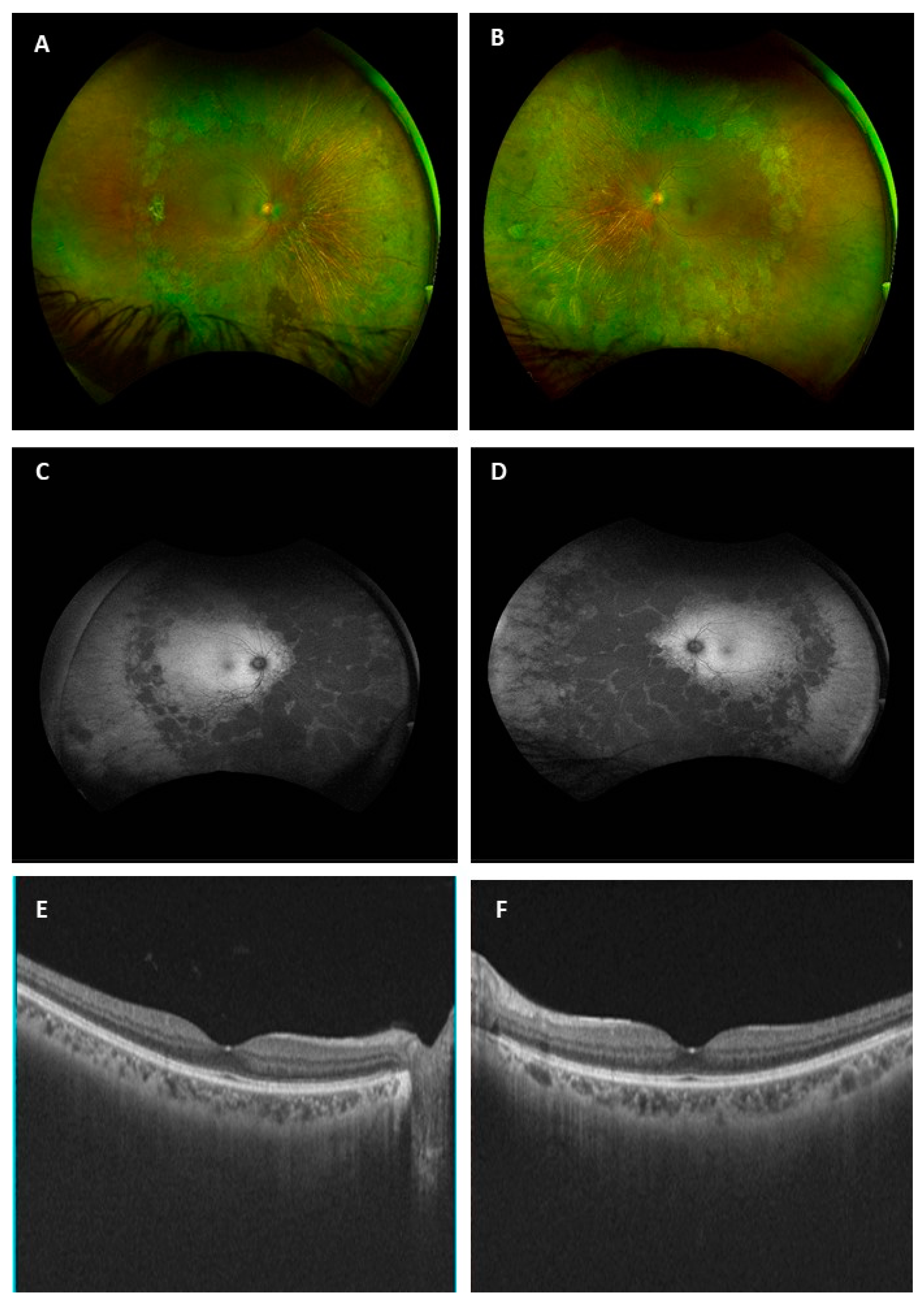
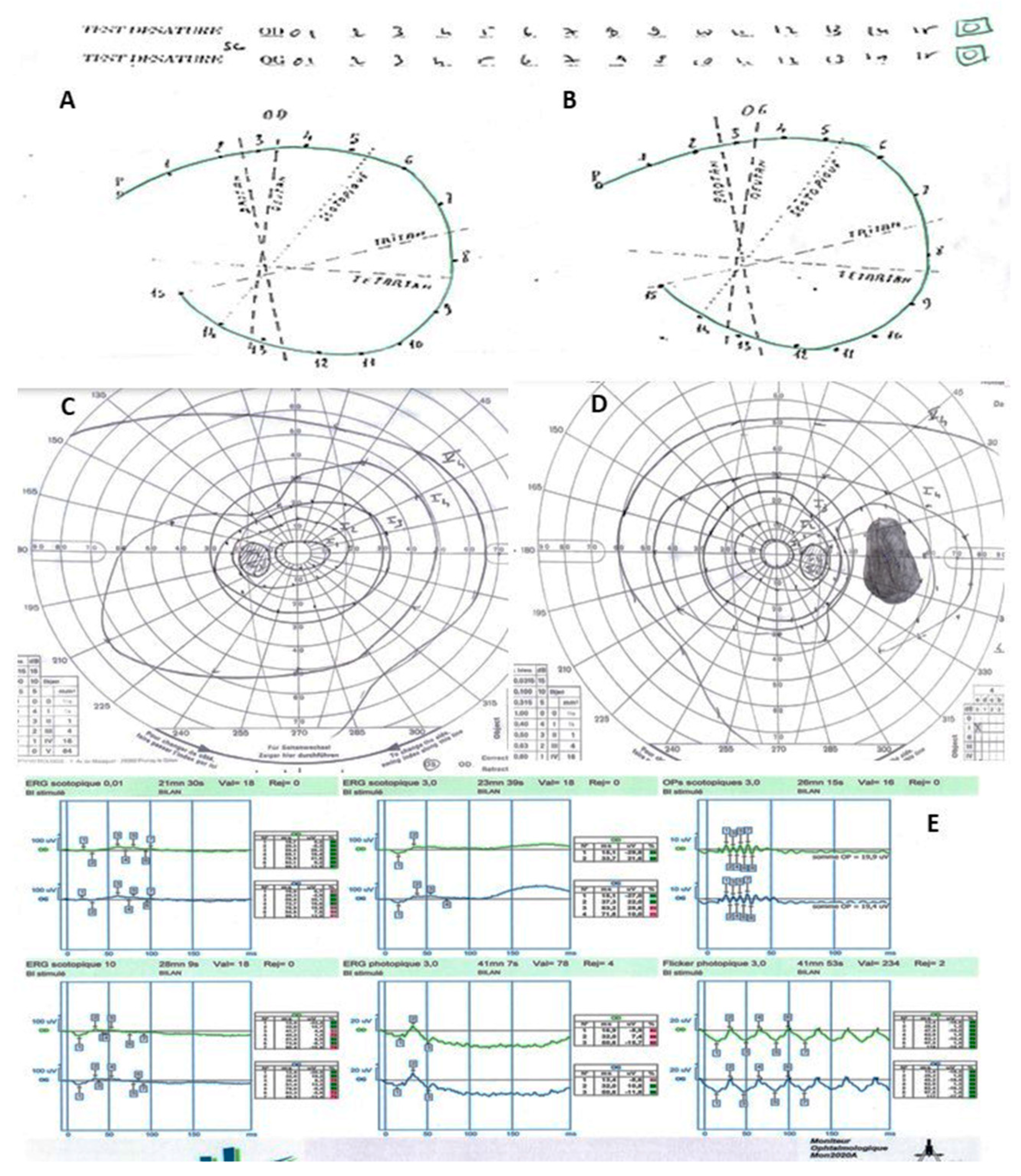
Objective: This article aims to describe a unique case of didanosine-induced retinal degeneration that was discovered 11 years after the drug withdrawal. Case report: The patient is a 42-year-old woman with a medical history of HIV and hepatitis C virus since 2004. She has been prescribed antiretroviral therapy since then. For the first seven years (2004–2011), the patient was prescribed a combination therapy consisting of didanosine, efavirenz, and lamivudine. The protocol was changed to atripla (efavirenz, emtricitabine, and tenofovir) from 2011 to 2021. Recently (October 2021–January 2021), the patient was prescribed eviplera (rilpivirin, emtricitabine, and tenofovir). In addition, her past medical history revealed Gougerot-Sjogren syndrome and rheumatoid arthritis. She was prescribed hydroxychloroquine (HCQ) (2009–2021) at a dose of 400 mg daily. She had no vision complaint. Results: During her routine HCQ screening at the eye clinic, University Hospital Bretonneau, Tours, France, the widefield colour fundus photograph showed well-defined symmetric mid-peripheral areas of chorioretinal atrophy sparing the posterior pole of both eyes. Furthermore, the widefield fundus autofluorescence illustrated mid-peripheral round well-demarcation hypoautofluorescent areas of chorioretinal atrophy of both eyes. Conversely, the macular optical coherence tomography (OCT) was normal. Many of her drugs are known to be associated with retinopathy such as HCQ, tenofovir, efavirenz, and didanosine. Because our data corroborate peripheral retinal damage rather than posterior pole damage, this case report is compatible with didanosine-induced retinopathy rather than HCQ, efavirenz, or tenofovir retinal toxicity. Conclusions: All HIV patients who are presently or were previously on didanosine therapy should have their fundus examined utilising widefield fundus autofluorescence and photography.
Keywords: didanosine; retinopathy; widefield fundus autofluorescence; widefield fundus photography didanosine; retinopathy; widefield fundus autofluorescence; widefield fundus photography