Article

Nutrition, BMI and Motor Competence in Children with Autism Spectrum Disorder


Department of Health and Human Performance, Texas State University, San Marcos, TX 78666, USA
*
Author to whom correspondence should be addressed.
Medicina 2019, 55(5), 135; https://doi.org/10.3390/medicina55050135

Submission received: 6 February 2019 / Revised: 20 March 2019 / Accepted: 13 May 2019 / Published: 15 May 2019
(This article belongs to the Special Issue Autism Spectrum Disorder in Children with Complex Presentations)

Abstract

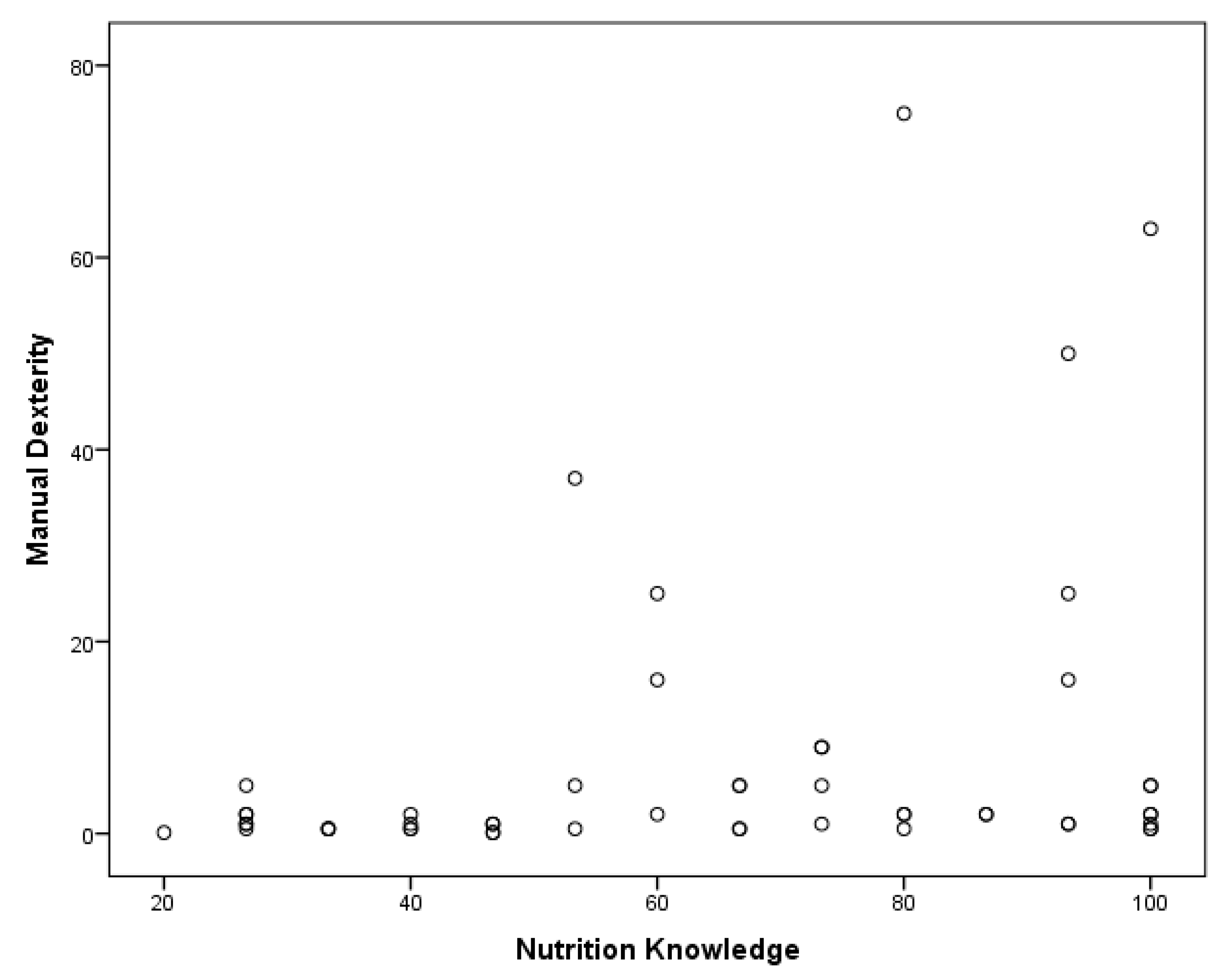
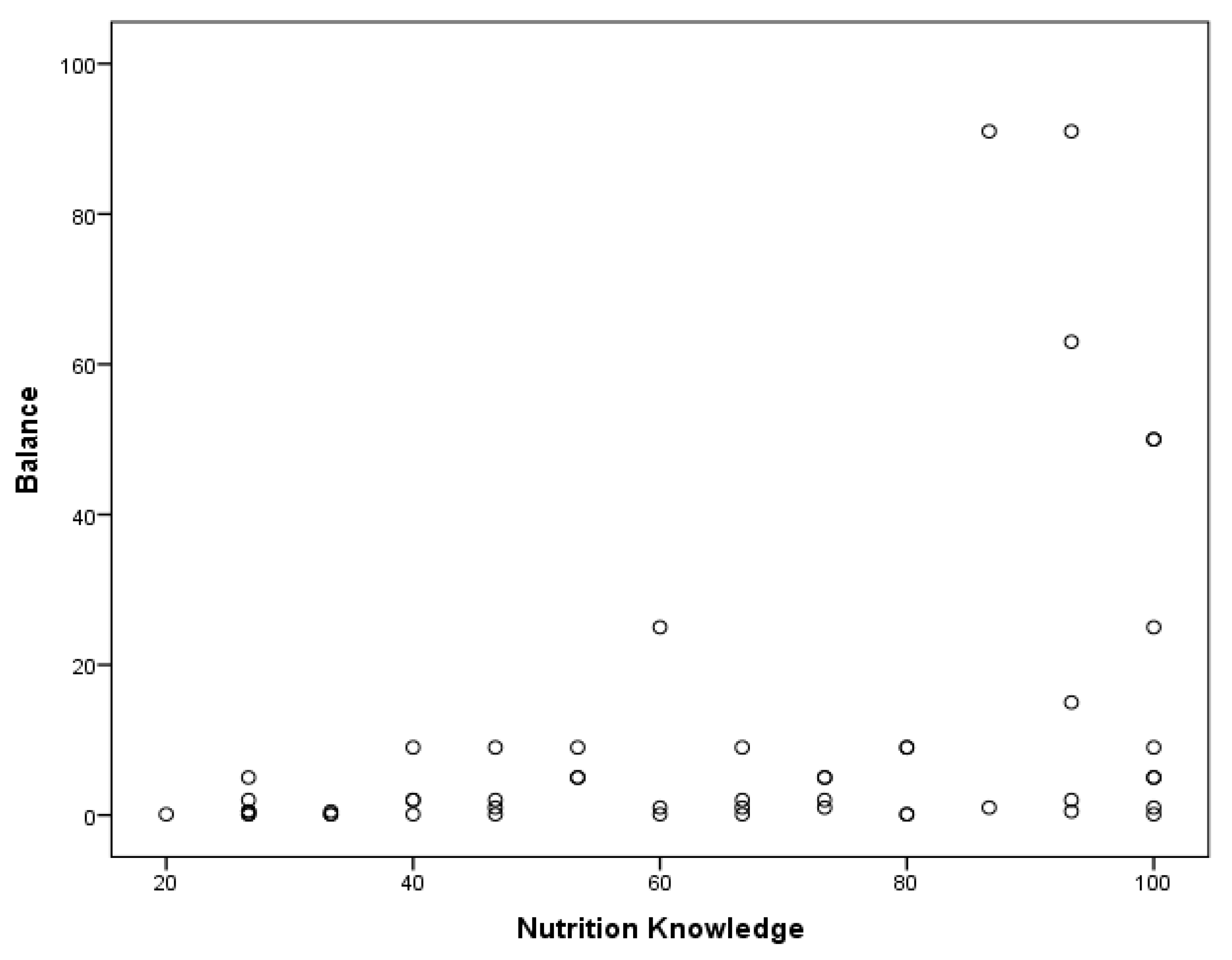
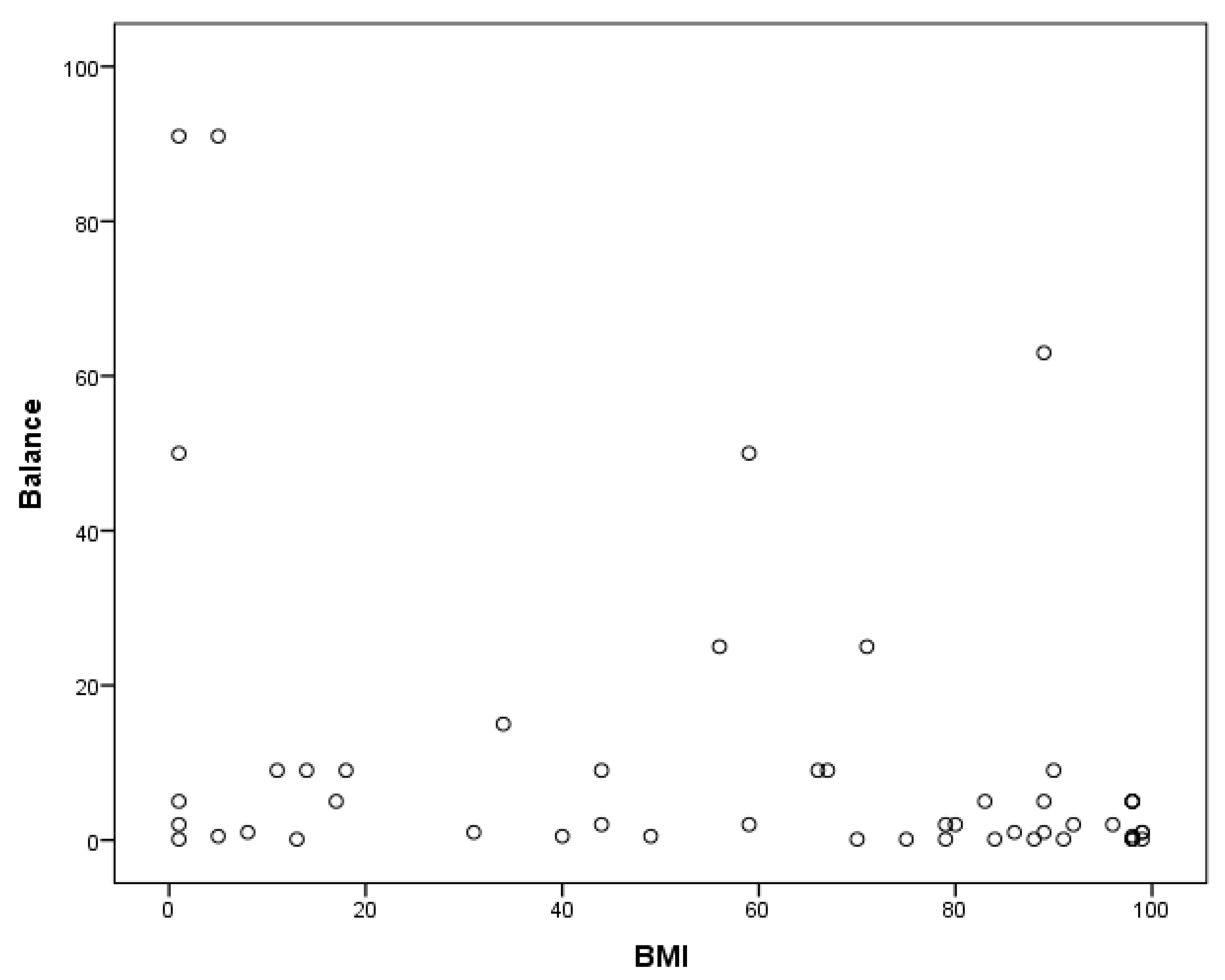
Background and objectives: The purpose of this study was to examine the relationship between motor competence, body mass index (BMI), and nutrition knowledge in children with autism spectrum disorder (ASD). Materials and Methods: Fifty-one children with ASD (five females and 46 males) aged 7–12 participated in the study. The Movement Assessment Battery for Children-2 (MABC-2) was used to examine children’s fine and gross motor skill competence; the nutrition knowledge survey assessed children’s overall knowledge of food groups and healthful eating; and BMI-for-age determined their weight status. Descriptive analysis and Pearson correlation was used to analyze the relationship between nutrition knowledge, BMI, and motor competence in children with ASD. Results: The majority of children with ASD (82%) showed significant motor delays in MABC-2 assessments. The BMI-for-age percentile data suggested that 20% of participants were obese, 17% were overweight, and 12% were underweight. The nutrition knowledge data indicated that 55% of children scored below 70% on accuracy in the nutrition knowledge survey. Pearson correlation analysis revealed a significant positive relationship between MABC-2 manual dexterity and nutrition knowledge (r = 0.327, p < 0.01), and between MABC-2 balance skills and nutrition knowledge (r = 0.413, p < 0.01). A significant negative relationship was also found between BMI and MABC-2 balance skills (r = −0.325, p < 0.01). Conclusions: The findings of the study suggest that nutrition knowledge and motor competence may be key factors influencing BMI in children with ASD and therefore interventions tackling both sides of the energy balance equation are necessary.
Keywords: autism; children; nutrition knowledge; body weight; developmental disorder autism; children; nutrition knowledge; body weight; developmental disorder