1. Introduction
Lower urinary tract (LUT) disorders, such as overactive bladder (OAB) and urinary incontinence (UI), are chronic conditions that significantly reduce quality of life across physical, psychological, social, and sexual domains [
1]. These disorders are primarily characterized by symptoms such as frequent urination, nocturia, urgency, and dysuria. The underlying pathophysiological mechanisms are intricately intertwined, involving abnormal contractions of the bladder smooth muscle, urothelial inflammation and damage, and dysregulation of neural control [
2,
3,
4].
Current therapeutic approaches to male bladder dysfunction target the well-defined anatomical basis of benign prostatic hyperplasia [
5]. In contrast, treatment options for female patients with an overactive bladder predominantly rely on antimuscarinic agents or β3-adrenergic agonists that suppress excessive contractions of the bladder smooth muscle. However, these pharmacological interventions are frequently associated with adverse effects, including a dry mouth, constipation, and blurred vision, and demonstrate variable efficacy across patient populations [
6]. Furthermore, female bladder dysfunction arises from multiple etiological factors, including parturition, menopause, pelvic floor muscle weakness, and hormonal changes [
7]. These multifaceted pathologies necessitate the development of novel therapeutic strategies that move beyond mere symptomatic relief to address underlying tissue remodeling, such as inflammation and fibrosis.
Quisqualis indica is a traditional medicinal herb used in Korean medicine for its anthelmintic properties, as well as for clearing accumulations and strengthening spleen and gastric functions [
8]. Pharmacological studies have revealed that
Quisqualis indica extract (QIE) offers various bioactive properties, including anti-inflammatory [
9], antioxidant [
10], and antibacterial [
11] activities. Recent studies have reported the potential efficacy of
Quisqualis indica in managing urogenital disorders, with preclinical models of benign prostatic hyperplasia [
12,
13,
14] and clinical improvements in male patients with lower urinary tract symptoms (LUTS) [
15]. There is growing interest in the therapeutic potential of
Quisqualis indica for bladder function regulation, yet research on female bladder dysfunction has been limited.
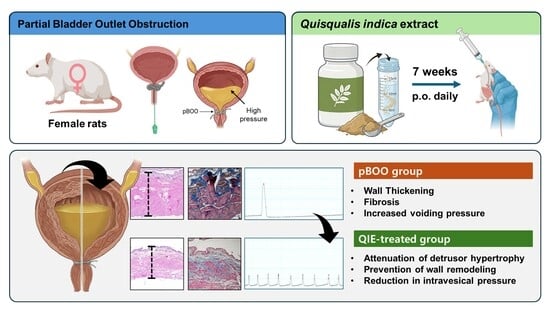
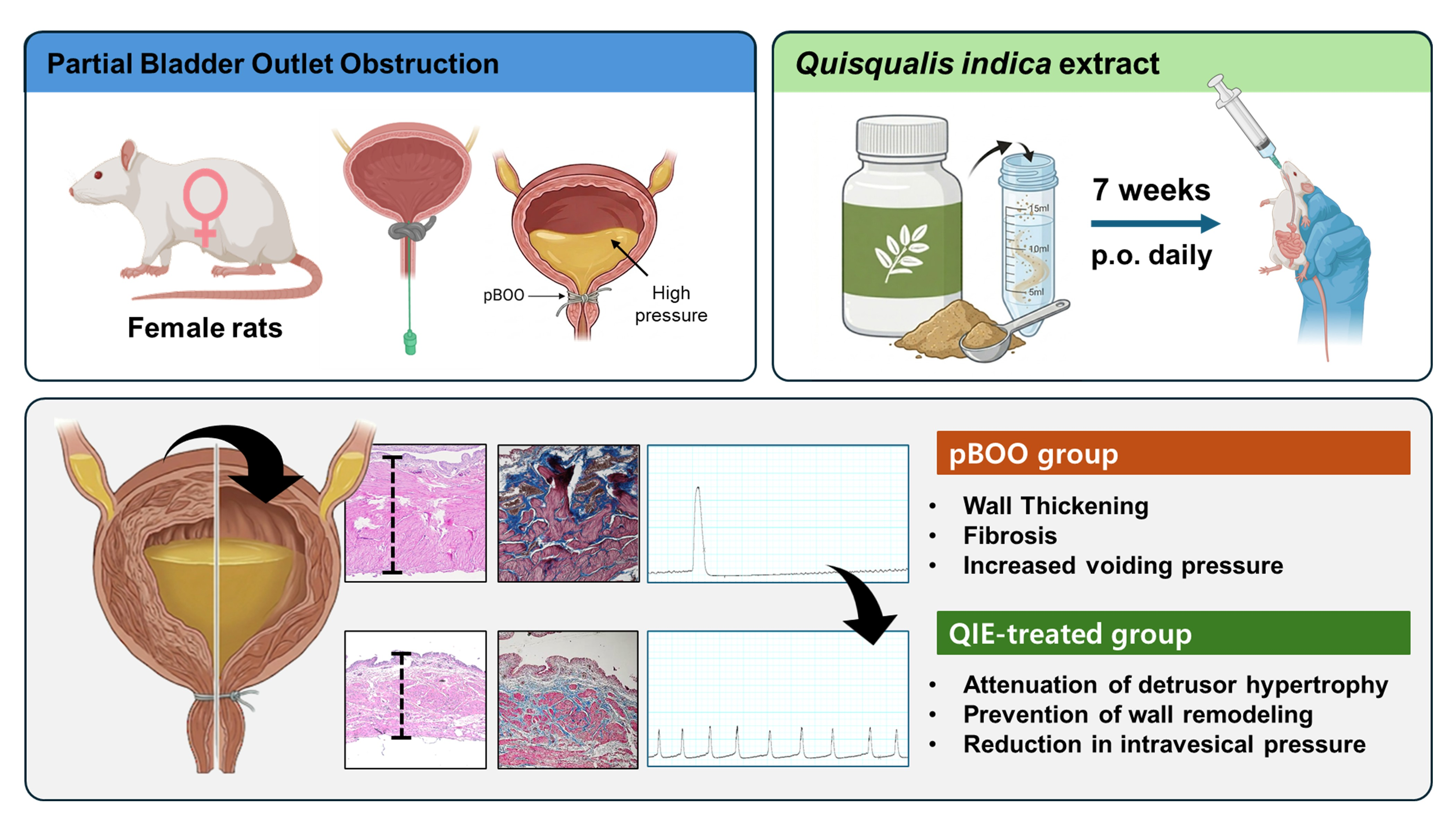
The present study used an animal model comprising partial bladder outlet obstruction (pBOO) induced in female rats to investigate the effects of QIE on female bladder dysfunction. Following pBOO induction, rats were treated with QIE for 7 weeks, and their voiding patterns, bladder function, and histological/molecular markers of inflammation and fibrosis were evaluated. Furthermore, we assessed the direct contraction-relieving effects of QIE using isolated bladder detrusor strips. Our findings demonstrate that QIE alleviates bladder inflammation and fibrosis in a bladder dysfunction model of female rats, which is mechanistically associated with the modulation of muscarinic-mediated bladder contractility.
3. Discussion
In this study, we examined the effects of QIE on bladder dysfunction to evaluate its potential utility as a therapeutic candidate. For this purpose, animal models were used in which bladder dysfunction was induced in female rats via pBOO. The pBOO animal model undergoes sequential pathological stages—hypertrophy, a compensated phase, and a decompensated phase—according to disease progression, thereby manifesting characteristics of both an overactive bladder (OAB) and underactive bladder (UAB) [
16,
17,
18]. In the early stages of pBOO, the bladder undergoes a hypertrophic phase to overcome the resistance imposed by lower urinary tract obstruction. Compensatory changes include hypertrophy of the detrusor muscle and increased expression of M
3 muscarinic receptors to augment contractile force, thereby increasing pressure to expel urine [
19]. The decompensatory stage is characterized by persistent chronic obstruction and overload, culminating in a deterioration in bladder function. This stage is marked by bladder fibrosis, characterized by the replacement of bladder muscle cells with fibrous tissue such as collagen and increased gene expression of TGF-β, α-SMA, and related mediators [
20,
21]. The characteristics of the pBOO model have been confirmed in multiple studies and are observed not only in animal models but also in clinically defined human bladder outlet obstruction (BOO) [
16,
21]. Rat models of bladder dysfunction using pBOO are also commonly used [
17]. In rat models, the compensatory phase is observed during the early stages of obstruction and is characterized by hypertrophy of the bladder muscle and increased contractility. Subsequently, obstruction models persisting for 4–8 weeks or longer exhibit fibrosis of the bladder and decreased contractility, demonstrating features of the decompensated phase [
22,
23]. However, depending on the experimental design, these phases may vary significantly and can manifest in a mixed pattern [
17,
24]. In the pBOO model used over 7 weeks in this study, characteristics of both the compensatory phase, including bladder wall hypertrophy and enhanced bladder contractility, and the decompensatory phase, including an abnormally enlarged, overfilled bladder and bladder fibrosis, were observed.
Within this pBOO model, the present study investigated the effect of QIE in the amelioration of bladder dysfunction.
Quisqualis indica is a vine-like climbing plant traditionally regarded as a medicinal herb and primarily used in anthelmintic treatments, for diarrhea, and for abdominal pain [
8].
Quisqualis indica exhibits antibacterial [
11], antiviral [
25], and anthelmintic [
26] effects, in addition to anti-inflammatory [
9] and antioxidant [
10] effects. Previous studies have demonstrated that
Quisqualis indica alleviates prostatic enlargement and lower urinary tract symptoms in BPH animal models [
12,
13,
14]. A clinical trial involving male LUTS patients has similarly demonstrated that
Quisqualis indica extract also improved symptoms of urinary urgency and frequent urination [
15]. However, there are limited studies examining the effects of
Quisqualis indica in female lower urinary tract disorders. Therefore, the present study aimed to investigate the effects of
Quisqualis indica extract in female lower urinary tract disorders by inducing pBOO in female rats. We employed the pBOO model, despite its higher clinical prevalence in males, to maintain a consistent experimental framework for comparison with prior male-based studies. Furthermore, by utilizing an identical standardized extract to that used in previous male-based studies [
14], we were able to suggest that the therapeutic potential of the extract is not merely secondary to a reduction in prostate size but extends to the direct protection of the bladder wall in females.
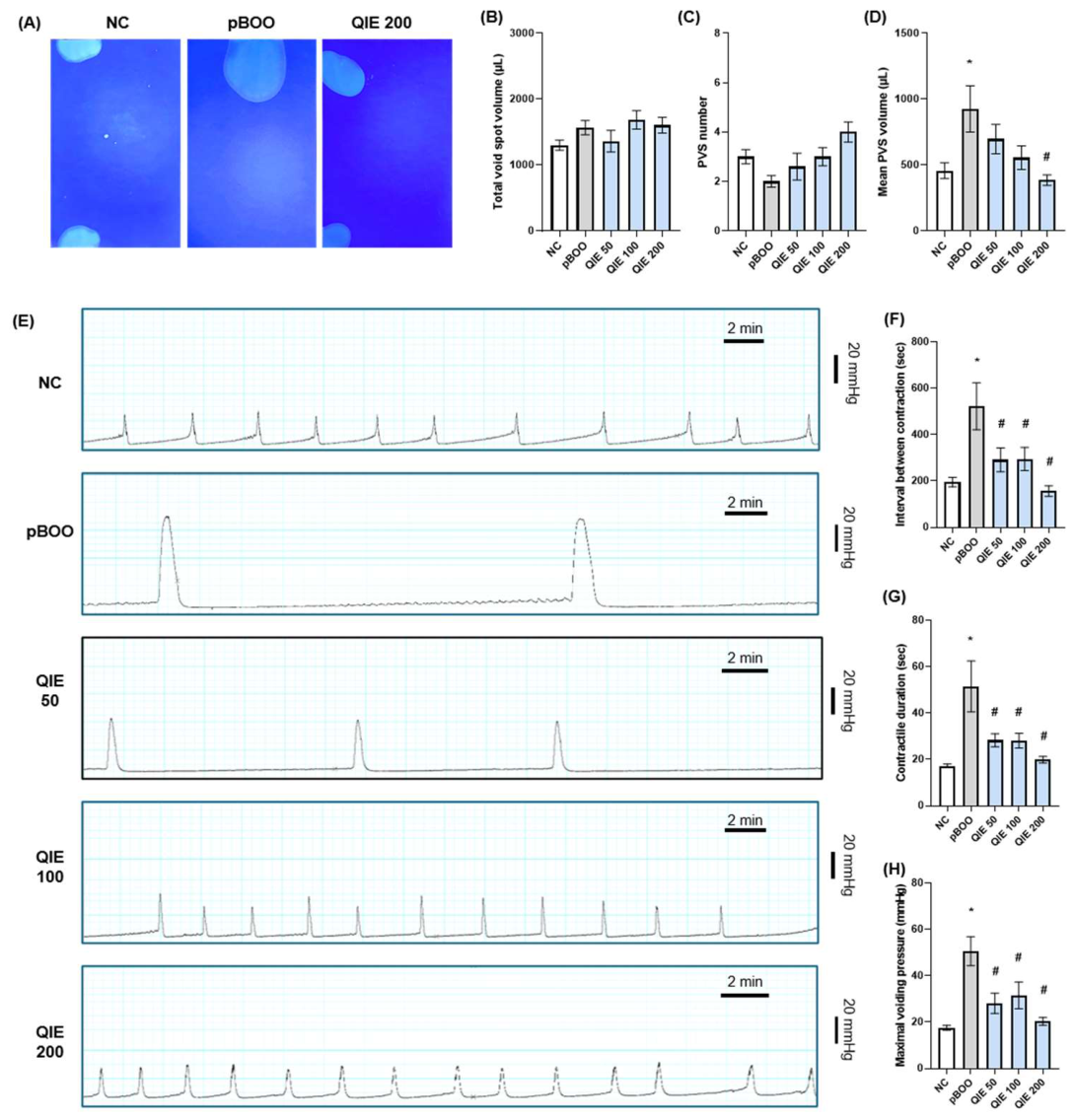
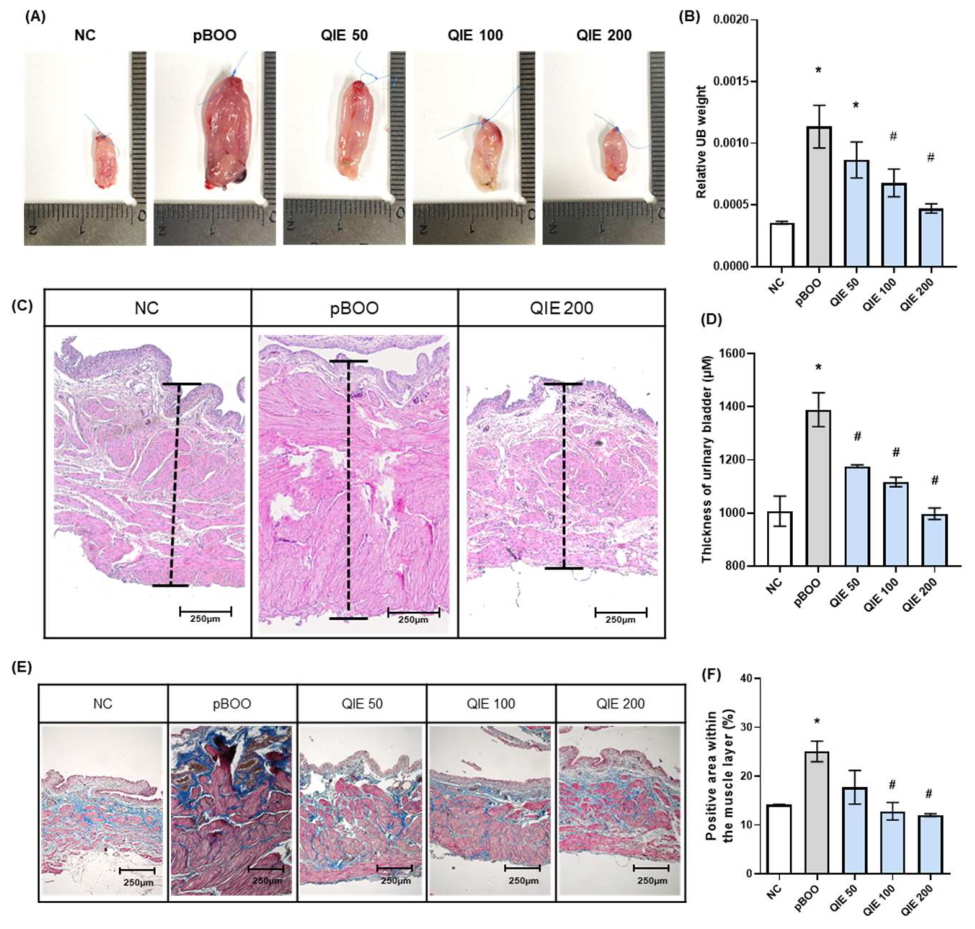
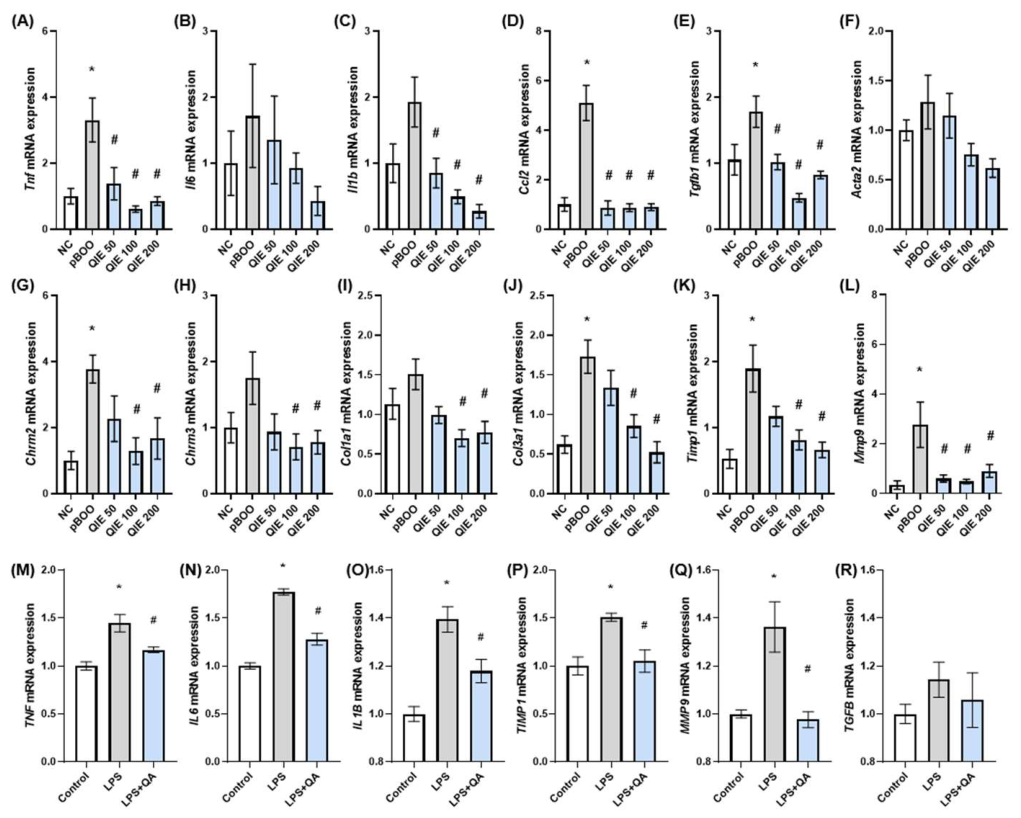
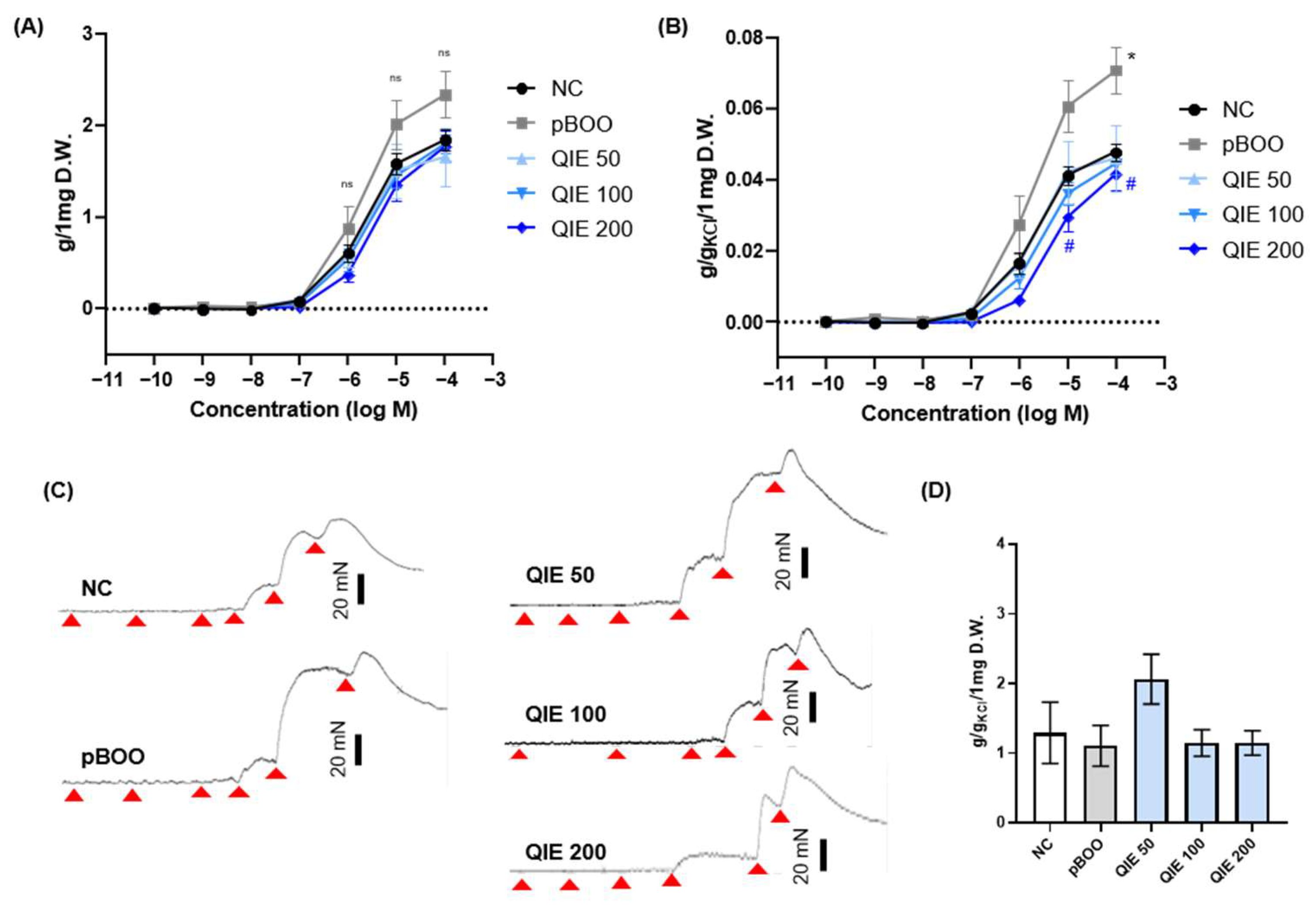
Following the induction of pBOO in female rats, QIE was administered daily for 7 weeks. Our results confirmed that QIE effectively improved urinary dysfunction and simultaneously alleviated pathological changes, including bladder inflammation and fibrosis. The QIE-treated group demonstrated improved voiding patterns, including contraction intervals and intravesical pressure, compared to the untreated pBOO group. With saline infused at a constant rate, ICI served as a functional surrogate for bladder capacity. While residual volume was not measured, the significant changes in ICI, MVP, and contraction duration sufficiently demonstrated QIE’s efficacy in recovering voiding efficiency and ameliorating obstructive pathology. Histological analysis of bladder tissue revealed significant reductions in muscle hypertrophy and collagen deposition. These findings corresponded with a reduced expression of inflammatory factors such as TNF-α, IL-6, IL-1β, and MCP-1, as well as fibrosis-related genes. QIE treatment was accompanied by a reduction in the pBOO-induced upregulation of TGF-β, Collagen type III α1, TIMP-1, and MMP-9, while also showing an inhibitory trend toward Collagen type I α1 expression. To further elucidate whether these protective actions are directly mediated by the active constituents of QIE at the cellular level, we evaluated the effects of QA, a major constituent of QIE, in 5637 human bladder epithelial cells. While these in vitro findings provide valuable insights into the bioactivity of QA, the therapeutic benefits observed in our in vivo experiments likely reflect the integrative actions of the various constituents within the QIE mixture. Consistent with this holistic perspective, pre-treatment with QA significantly suppressed the LPS-induced upregulation of pro-inflammatory cytokines (TNF-α, IL-6 and IL-1β) and tissue remodeling factors (TIMP1 and MMP9). Furthermore, QIE reduced the elevated expression of muscarinic receptors (M2 and M3) in the pBOO model and directly alleviated the contractility of bladder smooth muscle strips induced by muscarinic agonists, suggesting a potential association between the therapeutic effects of QIE and the modulation of muscarinic pathways. Further direct target-specific validation is required to fully elucidate the molecular interactions involved.
In bladder disease models, pathological conditions are frequently accompanied by an increased expression of muscarinic receptors along with excessive contractile activity of the bladder muscle [
23,
27,
28]. Therefore, current therapeutic approaches to bladder dysfunction have primarily focused on inhibiting receptor function [
29]. In contrast, QIE presents a therapeutic strategy that simultaneously alleviates not only urinary dysfunction but also chronic inflammation and fibrosis of the bladder. By reducing the expression of receptors associated with bladder dysfunction, QIE may contribute to the normalization of excessive muscarinic contractility, offering a potential mechanism to address the underlying pathophysiology. Interestingly, the potential of
Quisqualis indica in modulating muscarinic pathways is further supported by recent in silico evidence. Studies have indicated that several bioactive compounds found in
Quisqualis indica leaf extracts, including beta-sitosterol, quercetin, and lupeol, demonstrate favorable binding affinities with the M2 muscarinic receptor [
30]. Future studies employing direct binding assays and functional validation are essential to confirm these molecular interactions and their pharmacological significance. Moreover,
Quisqualis indica is a natural product widely used in traditional medicine, offering the advantage of minimal adverse effects. In this study, QIE was administered daily for 7 weeks without any evidence of weight changes or organ dysfunction. Existing preclinical and clinical trial data support the potential human application of
Quisqualis indica [
15,
31]. Prior toxicological assessments established a no-observed-adverse-effect level (NOAEL) for QIE exceeding 2000 mg/kg/day, with no treatment-related systemic or genotoxic effects. These findings confirm that the doses employed in the current study remain well within a validated safety range [
31].
Despite the significant findings regarding the therapeutic potential of QIE, this study has several limitations. First, this study utilized HPLC analysis to ensure the quality control and batch-to-batch consistency of the standardized extract. However, it is important to acknowledge that this approach provides a targeted quality assessment rather than an exhaustive phytochemical characterization. While the stability of the marker compound, QA, and the consistent presence of major constituents such as asparagine, arginine, and glutamic acid have been confirmed as previously reported, the entire phytochemical profile remains to be verified. Future work should employ comprehensive phytochemical profiling to fully characterize the impact of spray-drying on the extract’s composition. Second, the absence of a maltodextrin-only control group is a methodological constraint. While existing evidence suggests that maltodextrin does not modulate muscarinic receptors or fibrotic signaling pathways [
32], its potential influence on gut microbiota [
33,
34] necessitates the inclusion of a maltodextrin-matched vehicle control in future studies to definitively isolate the effects of the active extract from those of the carrier. We acknowledge that our reliance on a PBS-only control, which lacks the carrier, prevents us from fully excluding the potential contribution of maltodextrin to the observed therapeutic outcomes. Finally, while our study observed significant improvements in inflammatory and muscarinic signals, it is important to interpret these mechanistic findings with caution. Although QA, a major constituent of QIE, exhibited potent anti-inflammatory and anti-fibrotic effects in vitro, the therapeutic efficacy observed in vivo should be considered as the holistic outcome of the entire extract. The potential synergistic interactions between QA and other constituents in the complex mixture of QIE warrant further investigation.
In conclusion, this study demonstrated that QIE alleviates bladder inflammation and fibrosis in a female rat model of pBOO. Quisqualis indica has been utilized primarily for male lower urinary tract disorders; however, our findings suggest its therapeutic potential for female populations as well. Further rigorous research, including the isolation of active ingredients, receptor-binding assays, and direct target-specific validation, is essential to definitively confirm the pharmacological precision and elucidate the underlying mechanisms of QIE.
4. Materials and Methods
4.1. Animals
Seven-week-old female Sprague Dawley (SD) rats were purchased from Orient Bio (Seongnam, Republic of Korea) and acclimated for one week in the animal facility prior to experimental use. The facility had a maintained temperature of 23 ± 1 °C, humidity of 40–60%, and ventilation of 12–15 air changes per hour. A 12 h light–dark cycle was maintained at 200–300 lux, and all light was blocked. Food and water were provided in sufficient quantities without restriction. All experimental protocols were approved by the Chungnam National University Institutional Animal Care and Use Committee (approval number: 202404A-CNU-079).
4.2. Preparation of pBOO Model
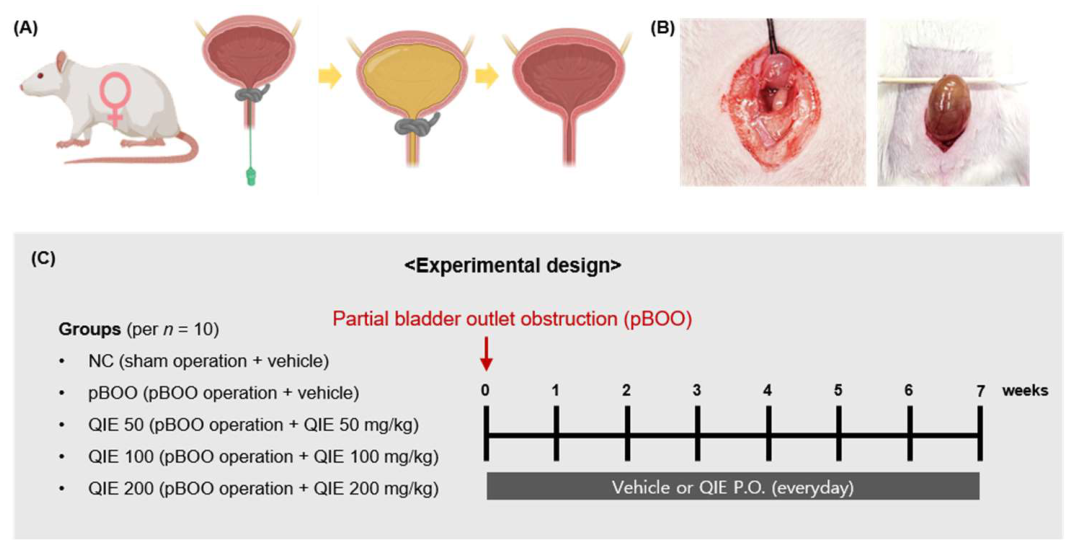
The pBOO model, created by partially ligating the proximal urethra (approximately 30–50%), was selected as an animal model to subject the bladder to sustained mechanical stress. Female SD rats weighing 250–300 g were anesthetized using 2–3% isoflurane. After anesthesia stabilized, a midline incision was made in the lower abdomen to expose the bladder. The surrounding adipose tissue was carefully dissected, and a 22-gauge vascular catheter was inserted through the urethra and up through the bladder. The urethra and vagina were carefully separated at the level of the bladder neck, and the urethra was ligated three times using a 4-0 silk suture with surgeon’s knots. The catheter was then removed. The abdominal wall and skin were closed in layers, and post-operative analgesia and antimicrobial prophylaxis were provided via the administration of meloxicam (1 mg/kg) and enrofloxacin (1 mg/kg). Sham-operated control animals underwent identical surgical procedures excluding urethral ligation.
4.3. QIE Standard Solution Preparation
Quisqualis indica was purchased from a domestic herbal market (Ansan, Republic of Korea) and authenticated by Dr. Yeon before being deposited in the HUONS Research Center Herbarium (specimen number HU033/QQA23025, Ansan, Republic of Korea). The extraction conditions were maintained based on a previously optimized protocol [
14]. Dried
Quisqualis indica was homogenized into a fine powder (50 kg), then reflux-extracted with 500 L of 70% ethanol at 80 °C for 6 h. The extract was concentrated under vacuum at 60 °C until the organic solvent was completely removed. The extraction yield was determined to be 41.4% relative to the raw material, and a total of 20.7 kg of extract was ultimately obtained. The drug–extract ratio (DER) was calculated to be 2.42:1. To ensure the stability of the active compounds, the concentrate was mixed with maltodextrin—a pharmaceutical excipient—in a 1:1 mass ratio (
w/
w) relative to the total soluble solids content. The mixture was then subjected to spray drying using a spray dryer (ODA-25, SeoGang Engineering, Cheonan, Republic of Korea) with the following optimized parameters: an inlet temperature of 170–180 °C, an outlet temperature of 80–90 °C, and a feed rate of 10 mL/min.
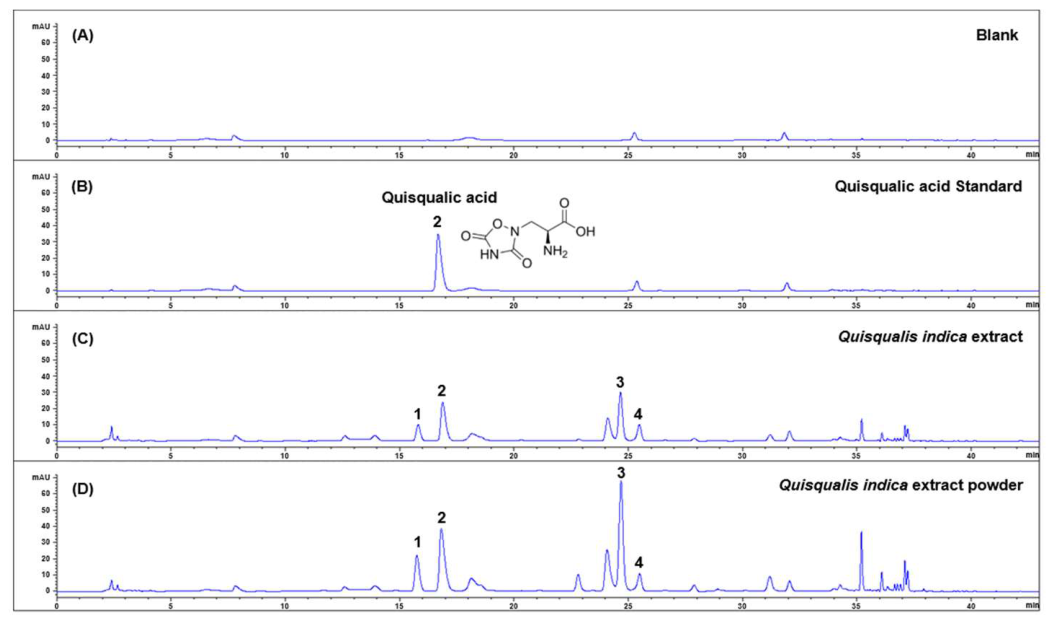
The final product (QIE) was chemically standardized via a validated HPLC method as previously described [
14], with specific modifications detailed below. Chromatographic analysis was performed using an Agilent HPLC system equipped with an Eclipse Plus C18 column (4.6 × 250 mm, 5 μm) maintained at 30 °C. The mobile phase consisted of solvent A (0.2 M acetic acid, 0.01 M sodium acetate, and water; 51:49:900,
v/
v) and solvent B (methanol). A gradient elution was applied as follows: 0–5 min, 20% B; 5–14 min, 20–30% B; 14–30 min, 30–50% B; 30–35 min, 50–100% B; 35–38 min, 100% B; 38–40 min, 100–20% B; and 40–43 min, 20% B, followed by a 3 min post-run re-equilibration. The flow rate was set at 1.0 mL/min. For analysis, 10 μL of the sample was mixed with 50 μL of phthaldialdehyde (OPA) reagent, and an injection volume of 60 μL was used. The effluent was monitored at a detection wavelength of 338 nm with a reference wavelength of 390.2 nm. A representative chromatogram of the QIE is presented in
Figure 2. The administered QIE product was standardized to ensure a consistent QA content of 1% for pharmacological reliability.
4.4. QIE Administration
Before pBOO surgery, a total of 50 female rats were randomly assigned to five experimental groups (
n = 10 per group): (1) NC: sham-operated group receiving vehicle; (2) pBOO: pBOO surgery group receiving vehicle; (3) QIE 50: pBOO surgery group receiving 50 mg/kg QIE; (4) QIE 100: pBOO surgery group receiving 100 mg/kg QIE; (5) QIE 200: pBOO surgery group receiving 200 mg/kg QIE. QIE dosages refer to the total weight of the final standardized formulation (1:1
w/
w with maltodextrin). The sample size was determined based on previous studies [
17,
24]. Phosphate-buffered saline (PBS) was used as the vehicle for both the control and treatment groups. QIE was freshly prepared as a suspension in PBS immediately prior to each administration to maintain its pharmacological consistency and stability. All animals received either the vehicle or QIE once daily for 7 weeks (49 days) using a standard stainless steel feeding needle (oral zonde), and animals were euthanized on the final day of administration.
4.5. Void Spot Assay
Void spot assays were performed on day 48 post-surgery to assess spontaneous voiding behavior. Clean rat cages were prepared with absorbent filter paper (3 mm Whatman CHR, Cytiva, Marlborough, MA, USA) placed on the cage floor. To prevent fecal contamination, filter paper was covered with a stainless mesh. Food and water were restricted, and animals were permitted to move freely in a darkened room to encourage spontaneous urination. After 4 h, the animals were removed, and the filter papers were collected. Voiding spots were photographed under 350 nm ultraviolet illumination, and voiding frequency and volume were evaluated. By dropping serial volumes of saline onto the same filter paper, we plotted an area–volume curve and calculated the void spot size as the urine volume. The primary void spots (PVSs) were defined as spots corresponding to volumes ≥ 20 µL. Individual spots were manually traced along their perimeters, which enabled the distinct identification of boundaries even in cases of partial overlap. Certain samples were excluded due to unquantifiable artifacts, including severe fecal contamination, merged urine stains, or physical damage (e.g., gnawing) to the filter paper.
4.6. Cystometry
On day 49 post-pBOO surgery, cystometric evaluation was performed to assess the bladder function improvement effect of QIE. Animals were anesthetized with an intraperitoneal injection of urethane (1.2 g/Kg diluted in physiological saline) and stabilized for 30–60 min. Following stabilization, animals were placed on a 37 °C temperature-controlled surgical platform, and the surgical site was shaved and disinfected. A lower abdominal midline incision was made to expose the bladder, and the dome of the exposed bladder was incised using an 18-gauge needle. A polyethylene catheter (PE-50, ADInstruments, Dunedin, New Zealand) was inserted into the incised bladder and was fixed using a purse-string suture technique with non-absorbable nylon suture (6-0, Ethicon, Raritan, NJ, USA). The PE catheter was connected using a 3-way valve to both a pressure transducer (Harvard Apparatus, Holliston, MA, USA) and a syringe pump (NE-1000, New Era Pump Systems, Inc., Farmingdale, NY, USA). Following a 30-min stabilization period during which physiological saline was infused at 5 mL/h, bladder voiding functions were recorded. Intravesical pressure changes were recorded using a PowerLab 4/26 (ADInstruments) data acquisition system and analyzed with LabChart software (version 8, ADInstruments). There were no animal deaths or experimental failures during the study; therefore, no data points were excluded from the analysis.
4.7. Histological Analysis
After cystometry, the bladder urine was drained via catheterization, and the catheter was carefully removed. Bladders were excised, incised along the median axis, and fixed in 10% buffered formalin solution for ≥24 h. The fixed bladder tissues were washed with tap water to remove residual formalin and then immersed in a series of ethanol and xylene steps and embedded in paraffin to generate paraffin blocks. The blocks were sectioned at 4 µm thickness and mounted on glass slides. The sections were then deparaffinized in xylene and stained with Harris Hematoxylin Solution (#H08-500R, TissuePro Technology, Gainesville, FL, USA) and Eosin Y Solution (#EY07-500R, TissuePro Technology) for H&E staining. Mounting medium (#H-5700-60, VectaMount Express, Newark, CA, USA) was applied, and dried sections were digitized at 400× magnification using a Digital Slide Scanner (Motic® easy scan Pro-6, Hong Kong, China). Histological evaluation of scanned bladders was performed by a researcher unaware of group assignments using ImageJ software (version 46a; NIH, Bethesda, MD, USA). Bladder wall thickness was measured at five randomly selected areas per specimen, and the average value was obtained.
4.8. Masson’s Trichrome Staining
Bladders were excised, incised medially, and fixed in 10% buffered formalin solution for at least 24 h prior to paraffin embedding. Blocks were sectioned at 4 µm thickness and mounted on glass slides. To evaluate fibrosis of the bladder wall, Masson’s trichrome staining was performed using a commercial kit (#BAQ085, GBioscience, St. Louis, MO, USA) according to the manufacturer’s principles. Briefly, tissues were fixed in Bouin’s reagent at 60 °C for 1 h, rinsed with running water, and cooled for 10 min. Sections were treated with Weigert’s reagent for 5 min, rinsed, stained with Briebrich Scarlet for 15 min, and decolorized in phosphotungstic phosphomolybdic acid for 15 min. Following staining with aniline blue reagent for 10 min and rinsing, the sections were treated with 1% glacial acetic acid for 5 min, dehydrated through graded ethanol, and mounted using mounting medium (#H-5700-60, VectaMount Express). Slides were scanned at 400× magnification using a Digital Slide Scanner (Motic® easy scan Pro-6).
4.9. Quantitative RT-PCR of Bladder Tissue
After euthanasia, bladders were harvested and stored at −80 °C until analysis. Tissues were homogenized using the BIOPERP-24R Bead Homogenizer (Bioand Corporation, Guri, Republic of Korea), and total RNA was extracted using a commercial kit (#SG-RN-TRN-L, SmartGENE, Daejeon, Republic of Korea) according to the manufacturer’s instructions. cDNA was synthesized from 1 µg of RNA using the cDNA Synthesis kit (#SG-cDNAC100, SmartGENE). The synthesized cDNA was diluted 10-fold in RNase-free D.W. and subjected to quantitative PCR using SYBR Green Q-PCR Master Mix (#SG-SYBR-ROXH, SmartGENE). The primer sequences used for q-PCR were as follows: Gapdh (GAPDH) forward primer: 5′-ACA GCA ACA GGG TGT GGA C-3′, reverse primer: 5′-TTT GAG GGT GCA GCG AAC TT-3′, Tnf (TNF-α) forward primer: 5′-GTC TGT GCC TCA GCC TCT TC-3′, reverse primer: 5′-CCC ATT TGG GAA CTT CAC CT-3′, Il6 (IL-6) forward primer: 5′-CTT GGG ACT GAT GTT GTT GA-3′, reverse primer: 5′-CTC TGA ATG ACT CTG GCT TT-3′, Il1b (IL-1β) forward primer: 5′-ATG GCA ACT GCC CTG AAC T-3′, reverse primer: 5′-GTC ATC ATC CCA CGA GTC AC-3′, Ccl2 (MCP-1) forward primer: 5′-GGC CTG TTG TTC ACA GTT GCT-3′, reverse primer: 5′-TCT CAC TTG GTT CTG GTC CAG-3′, Tgfb1 (TGF-β) forward primer: 5′-AGG GCT CAA CTG CTG CAC-3′, reverse primer: 5′-GGG CCC CAG ACA GAA GTT-3′, Acta2 (α-SMA) forward primer: 5′-ATA GAA CAC GGC ATC ATC ACC-3′, reverse primer: 5′-GGT CTC AAA CAT AAT CTG GGT-3′, Chrm2 (M2) forward primer: 5′-CCA CTC CAG AGA TGA CAA CT-3′, reverse primer: 5′-GGC TAC AAC GTT CTG CTT T-3′, Chrm3 (M3) forward primer: 5′-CAC GAA ACC TCT GAC CTA CCC-3′, reverse primer: 5′-TCT GAC CCG ACG ACC CAA CTA-3′, Col1a1 (Collagen type I α1) forward primer: 5′-TCA AGA TGG TGG CCG TTA CT-3′, reverse primer: 5′-CAT CTT GAG GTC ACG GCA TG-3′, Col3a1 (Collagen type III α1) forward primer: 5′-TGG GAT GCA ACT ACC TTG GT-3′, reverse primer: 5′-AGG TGT AGA AGG CTG TGG AC-3′, Timp1 (TIMP-1) forward primer: 5′-CGC AGC GAG GAG GTT TCT CAT-3′, reverse primer: 5′-GGC AGT GAT GTG CAA ATT TCC-3′, Mmp9 (MMP-9) forward primer: 5′-TCG GAT GGT TAT CGC TGG TG-3′, reverse primer: 5′-AAG ACG CAC ATC TCT CCT GC-3′.
4.10. 5637 Cell Cultures and Quantitative RT-PCR
The 5637 human bladder epithelial cell line was obtained from Korean Cell Line Bank (KCLB, Seoul, Republic of Korea). Cells were cultured in RPMI 1640 medium supplemented with 10% fetal bovine serum (FBS) and 1% penicillin/streptomycin at 37 °C in a humidified atmosphere containing 5% CO2. For the experiments, cells were seeded and pre-treated with 1 μM of quisqualic acid (QA) for 2 h prior to stimulation with 10 μg/mL of lipopolysaccharide (LPS) for an additional 24 h.
Total RNA was extracted from the treated 5637 cells using a commercial kit (#SG-RN-TRN-L, SmartGENE, Daejeon, Republic of Korea) according to the manufacturer’s instructions. cDNA was synthesized from 1 µg of RNA using the cDNA Synthesis kit (#SG-cDNAC100, SmartGENE). The synthesized cDNA was diluted 10-fold in RNase-free D.W. and subjected to quantitative PCR using SYBR Green Q-PCR Master Mix (#SG-SYBR-ROXH, SmartGENE). The primer sequences used for q-PCR were as follows: GAPDH (GAPDH) forward primer: 5′-GAA GGT GAA GGT CGG AGT C-3′, reverse primer: 5′-GAA GAT GGT GAT GGG ATT TC-3′, TNF (TNF-α) forward primer: 5′-CCT CTC TCT AAT CAG CCC TCT G-3′, reverse primer: 5′-GAG GAC CTG GGA GTA GAT GAG-3′, IL6 (IL-6) forward primer: 5′-ACT CAC CTC TTC AGA ACG AAT TG-3′, reverse primer: 5′-CCA TCT TTG GAA GGT TCA GGT TG-3′, IL1B (IL-1β) forward primer: 5′-ATG ATG GCT TAT TAC AGT GGC AA-3′, reverse primer: 5′-GTC GGA GAT TCG TAG CTG GAT-3′, TIMP1 (TIMP1) forward primer: 5′-TTT CCG ACC TCG TCA TCA GG-3′, reverse primer: 5′-ATG GTC TGG TTG ACT TCT GGT-3′, MMP9 (MMP9) forward primer: 5′-TTG ACA GCG ACA AGA AGT GG-3′, reverse primer: 5′-GCC ATT CAC GTC GTC CTT AT-3′, TGFB (TGF-β) forward primer: 5′-CCT TTC CTG CTT CTC ATG GC-3′, reverse primer: 5′-TCC GTG GAG CTG AAG CAA TA-3′.
4.11. Bladder Smooth Muscle Strip Contractility
On day 49 post-pBOO surgery, animals were euthanized and the entire urinary system, including the bladder, uterus, and vagina, was excised at once and placed in physiological saline solution (PSS). The composition of PSS consisted of 120 mM NaCl, 2.5 mM CaCl2 (anhydrous), 1.0 mM MgCl2 (anhydrous), 11 mM glucose, 25 mM NaHCO3, 5.9 mM KCl, and 1.2 mM NaH2PO4·H2O. Under a stereomicroscope (Nikon SMZ-2T, Tokyo, Japan) in ice-cold PSS on a silicon-coated Petri dish, the surrounding tissue was carefully removed. A longitudinal incision was then made based on the bladder neck and spread open. Bladder smooth muscle strips approximately 10 mm in length were prepared by quartering the bladder without damaging the urothelium. The bladder strips were connected to the bottom of the organ bath, while the other end was connected to an isometric transducer (FT10, Grass instruments, West Warwick, RI, USA). Bladder tissue was continuously supplied with a 95% O2 and 5% CO2 mixed gas throughout the experiments to maintain physiological pH conditions.
Initially, contractile responses to 100 μM ATP (purinergic agonist) were compared across groups to assess purinergic contractility. To evaluate responsiveness to parasympathetic stimulation, carbachol (a muscarinic receptor agonist) was administered. Each contraction of QIE or vehicle was pre-treated for 30 min, followed by cumulative administration of carbachol at concentrations of 10−10, 10−9, 10−8, 10−7, 10−6, 10−5, and 10−4 M to generate a concentration-response curve. The contractions were detected using the PowerLab Data Acquisition system 4/26 (ADInstruments) and recorded and analyzed using LabChart software (version 8).
4.12. Statistics
All values in the results are expressed as mean ± standard error of the mean (SEM). To ensure objectivity, the outcome assessment and data analysis were performed by investigators who were blinded to the treatment groups using coded samples. All statistical analyses were performed using GraphPad Prism 9 (San Diego, CA, USA). One-way Analysis of Variance (ANOVA) was used to examine the significance between groups. When the significance level (p-value) was less than 0.5, Tukey’s Honestly Significant Difference (HSD) post hoc test was performed to identify specific group differences.




 ,
,