Metformin Treatment Shows Beneficial Effects on RTT-Associated Phenotypical Deficits in Mecp2 T158M Male Mice

 ,
, 
Abstract
1. Introduction
2. Results
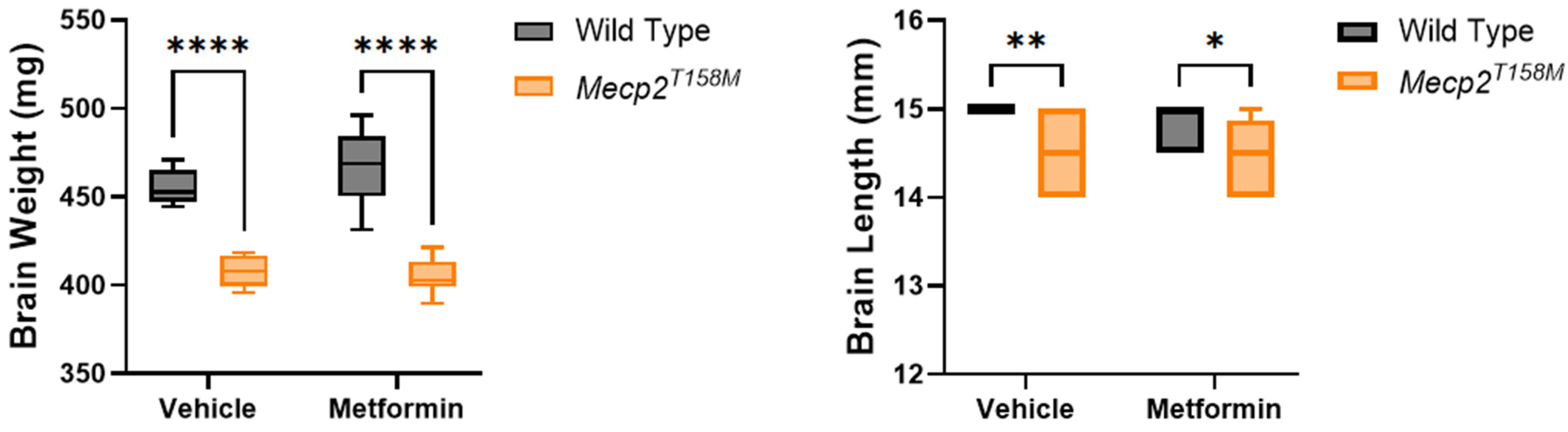
2.1. Metformin Did Not Alleviate Brain Size Deficits in the Hemizygous Male Mecp2T158M Mice
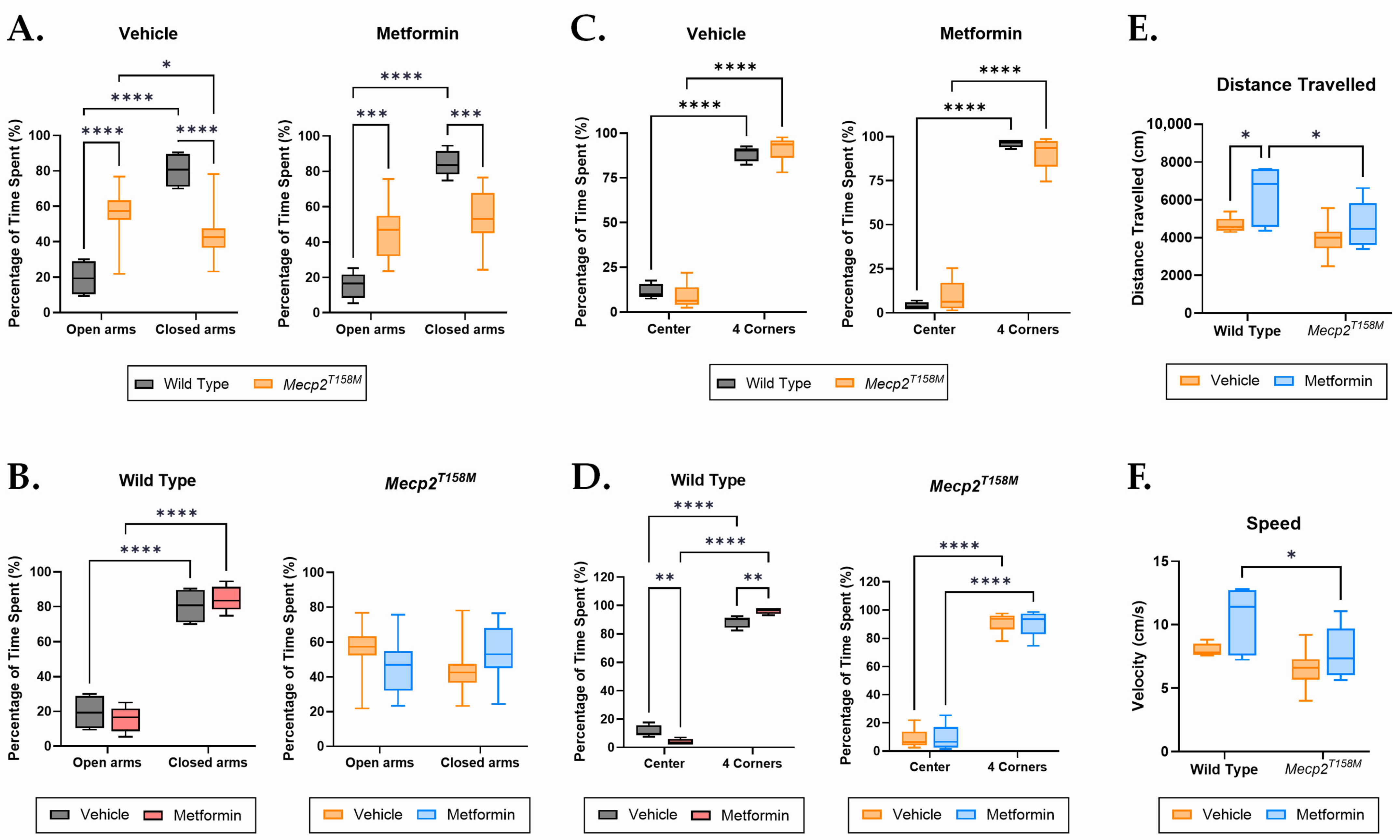
2.2. Metformin May Have a Positive Effect on the Anxiety-like Behavior in the Hemizygous Male Mecp2T158M Mice
2.3. Differential Responses to Metformin in the Wild Type and Hemizygous Male Mecp2T158M Mice During the Open Field Test
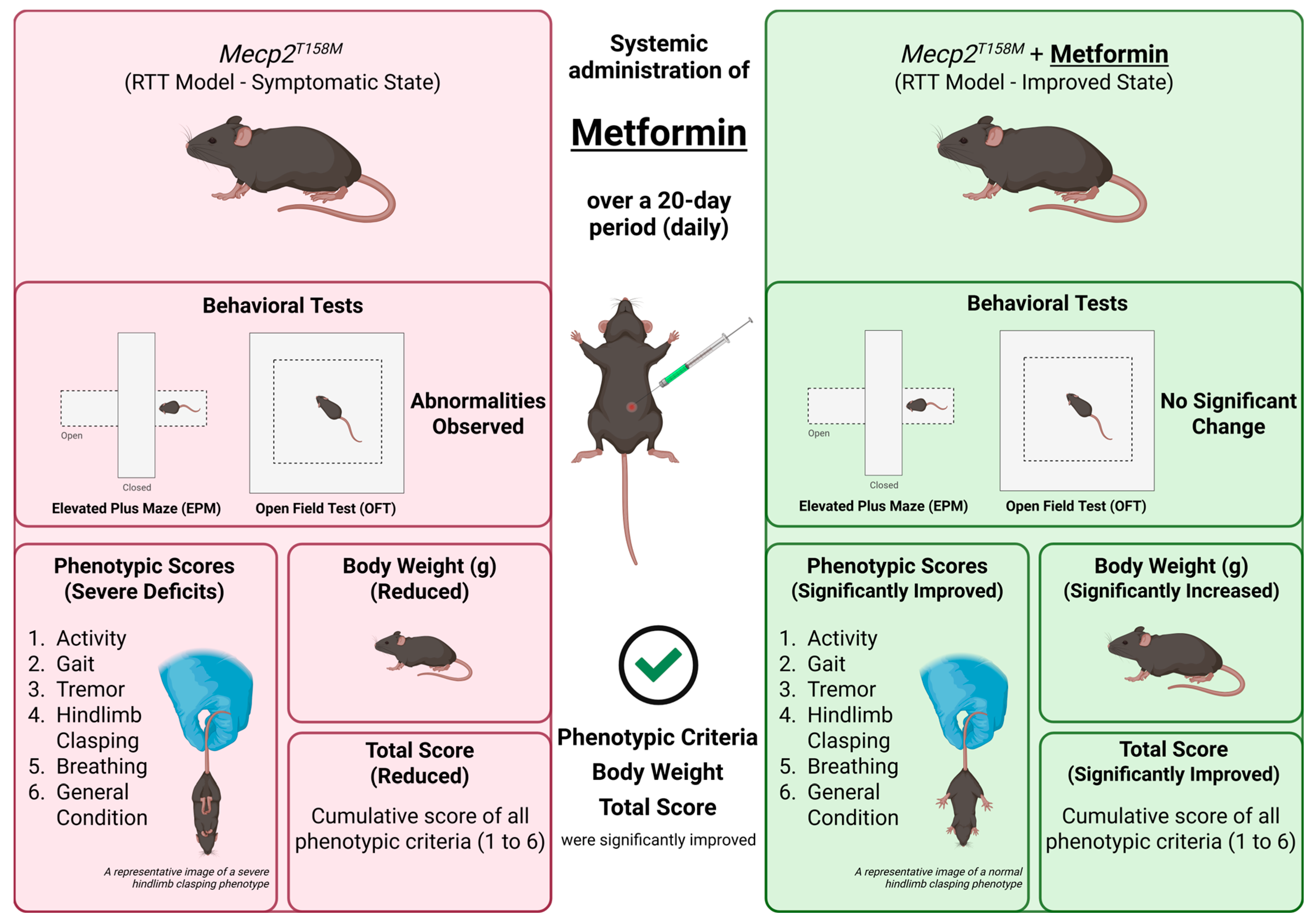
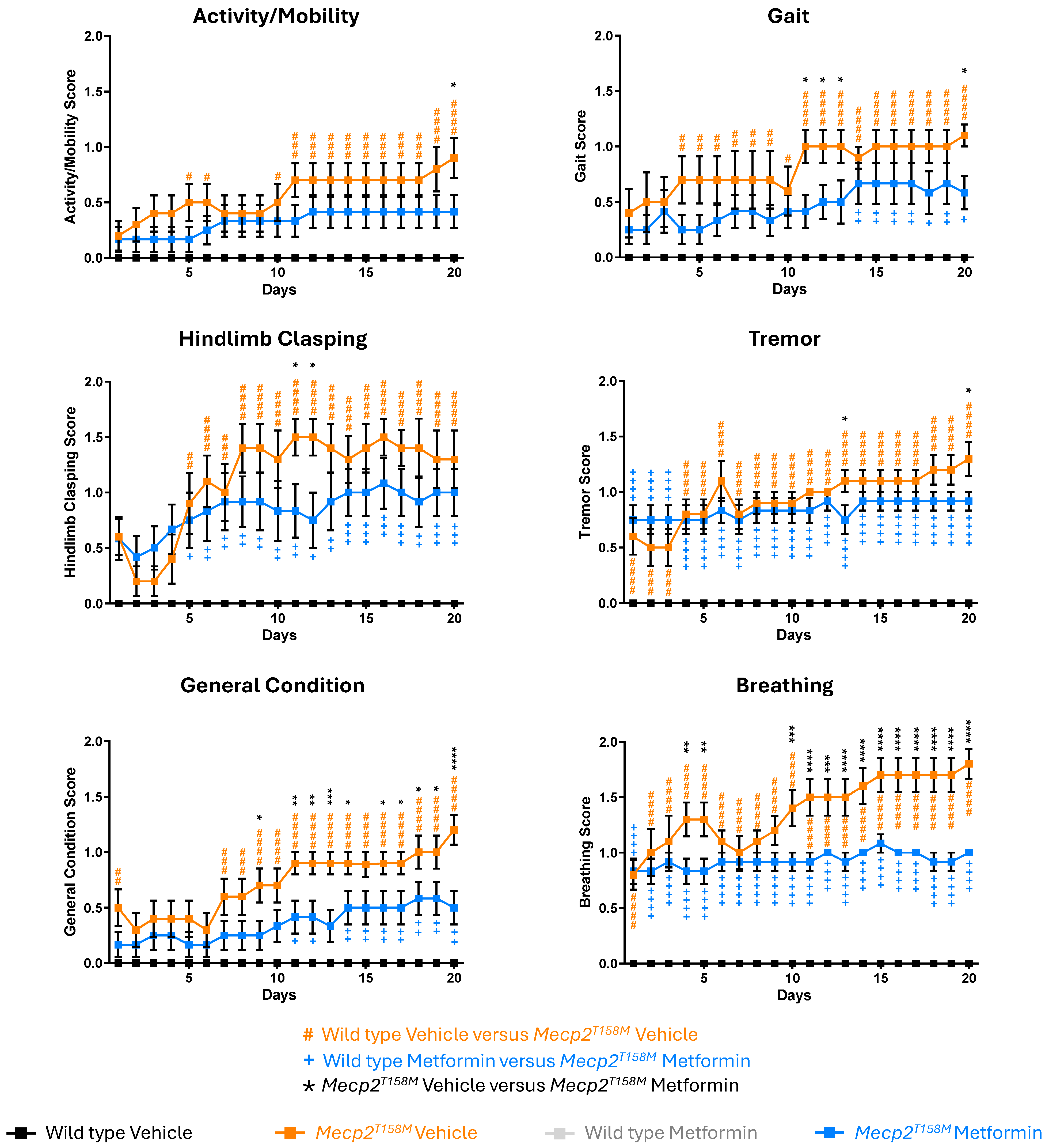
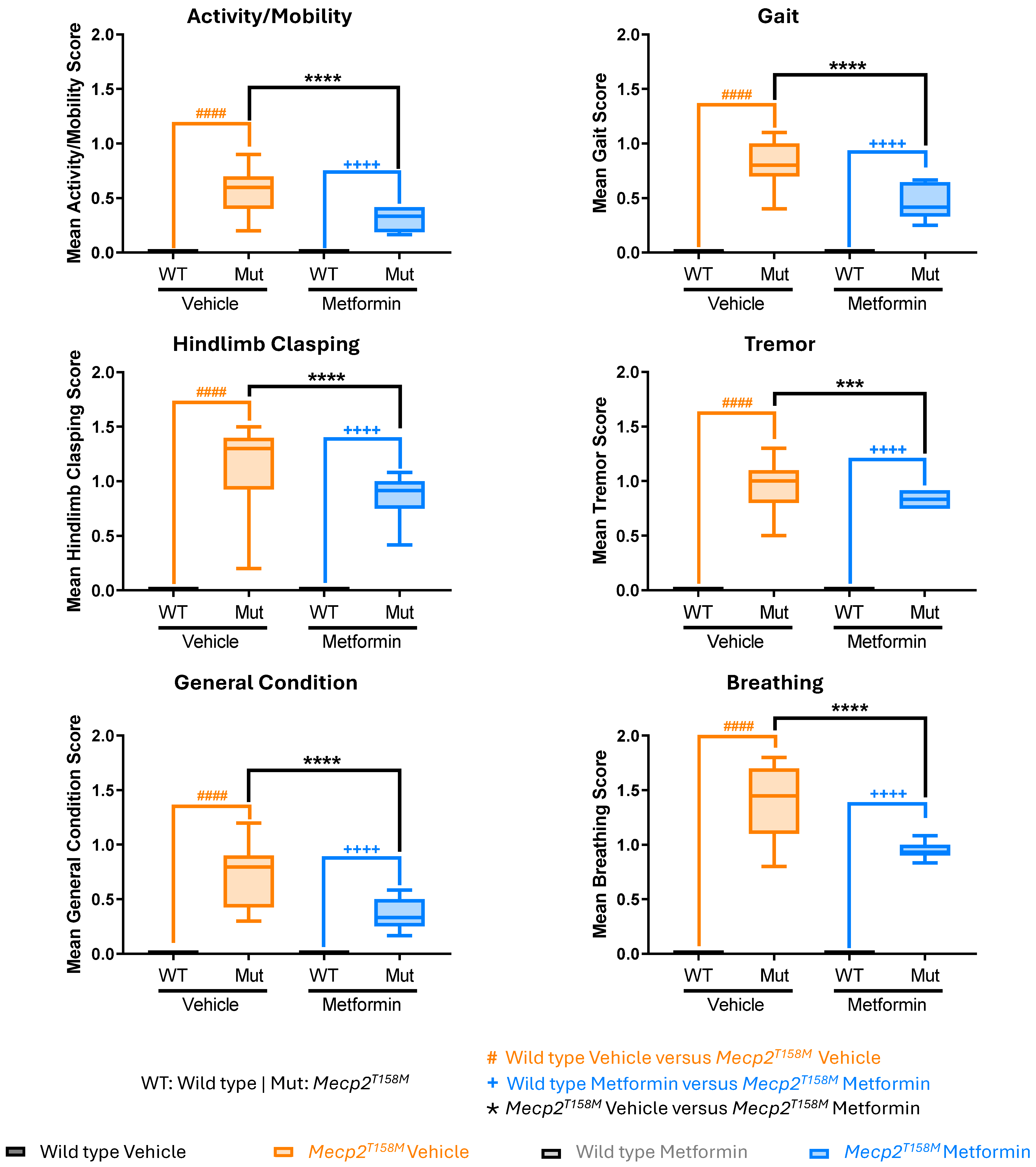
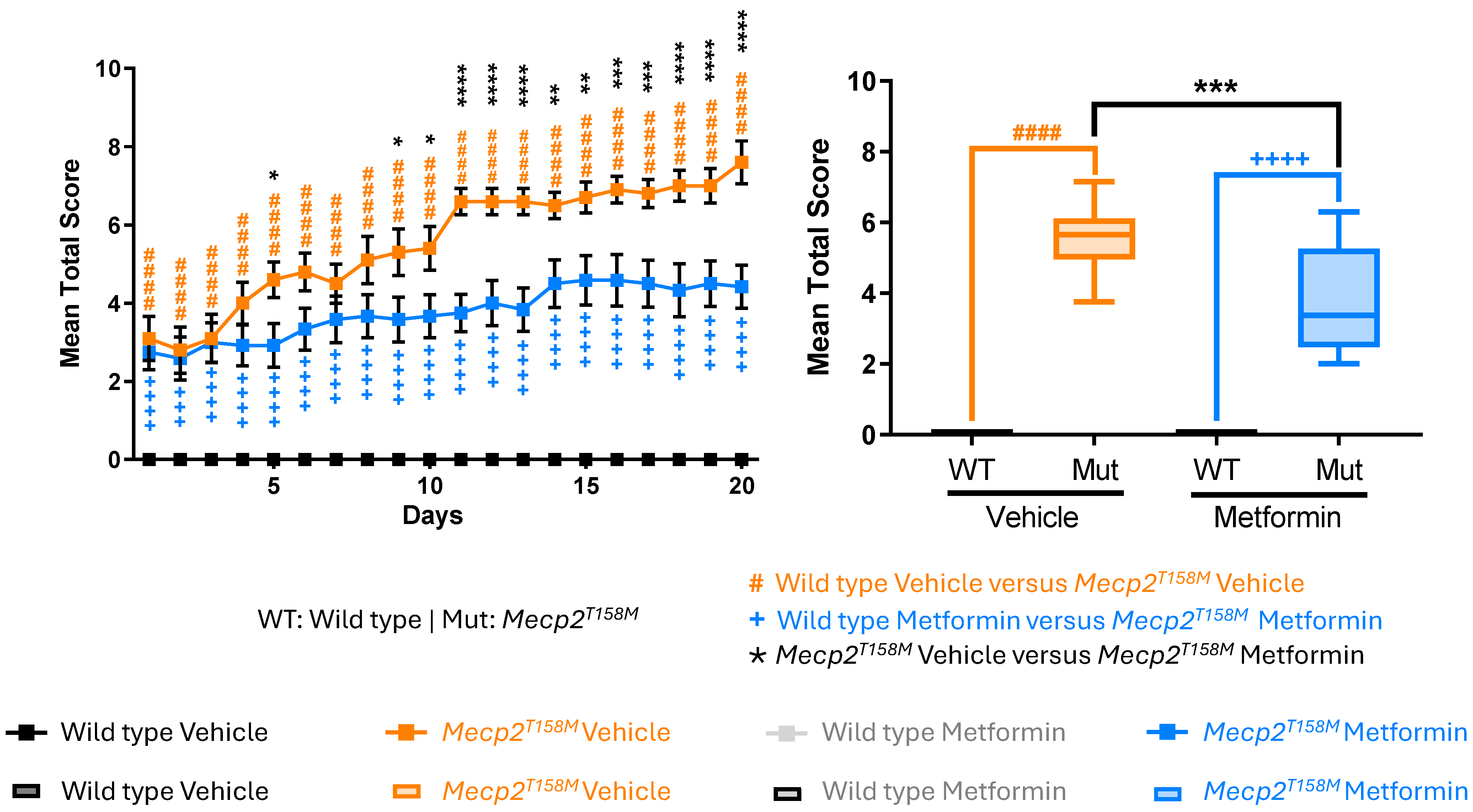
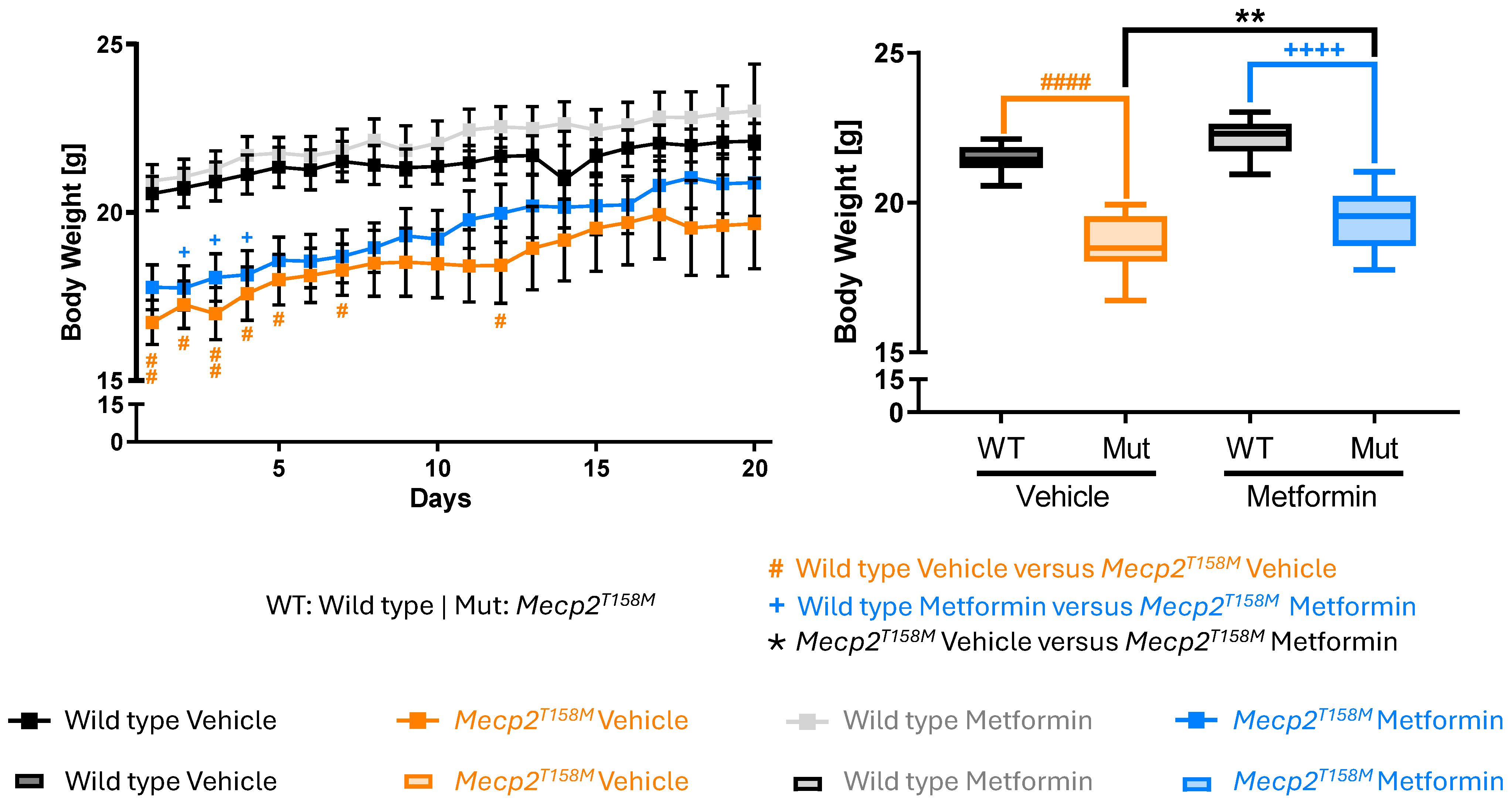
2.4. Metformin Treatment Had a Significant Positive Effect on the RTT-like Phenotypes in the Hemizygous Male Mecp2T158M Mice
3. Discussion
4. Materials and Methods
4.1. T158M Mice and Treatments
4.2. Behavioral Testing
4.3. Statistics for Different Experiments
5. Conclusions
Author Contributions
Funding
Institutional Review Board Statement
Informed Consent Statement
Data Availability Statement
Acknowledgments
Conflicts of Interest
Abbreviations
| AMPK | AMP-activated protein kinase |
| BDNF | Brain-derived neurotrophic factor (gene) |
| BDNF | Brain-derived neurotrophic factor (protein) |
| CCAC | Canadian Council on Animal Care |
| CHRIM | Children’s Hospital Research Institute of Manitoba |
| EPM | Elevated Plus Maze |
| GMC | Genetic Modeling Center |
| IP | Intraperitoneal |
| MeCP2 | Methyl-CpG-Binding Protein 2 (protein) |
| MECP2 | human gene |
| Mecp2 | mouse gene |
| mTOR | mammalian Target of Rapamycin |
| OFT | Open Field Test |
| PBS | Phosphate-Buffered Saline |
| RTT | Rett Syndrome |
| SEM | Standard Error of the Mean |
| WT | Wild type |
References
- Neul, J.L.; Kaufmann, W.E.; Glaze, D.G.; Christodoulou, J.; Clarke, A.J.; Bahi-Buisson, N.; Leonard, H.; Bailey, M.E.; Schanen, N.C.; Zappella, M.; et al. Rett syndrome: Revised diagnostic criteria and nomenclature. Ann. Neurol. 2010, 68, 944–950. [Google Scholar] [CrossRef]
- Amir, R.E.; Van den Veyver, I.B.; Wan, M.; Tran, C.Q.; Francke, U.; Zoghbi, H.Y. Rett syndrome is caused by mutations in X-linked MECP2, encoding methyl-CpG-binding protein 2. Nat. Genet. 1999, 23, 185–188. [Google Scholar] [CrossRef]
- Liu, Y.; Whitfield, T.W.; Bell, G.W.; Guo, R.; Flamier, A.; Young, R.A.; Jaenisch, R. Exploring the complexity of MECP2 function in Rett syndrome. Nat. Rev. Neurosci. 2025, 26, 379–398. [Google Scholar] [CrossRef]
- Ausio, J. Role of MeCP2 in neurological disorders: Current status and future perspectives. Epigenomics 2018, 10, 5–8. [Google Scholar] [CrossRef]
- Choi, G.; Lee, S.; Yoo, S.; Do, J.T. MECP2 Dysfunction in Rett Syndrome: Molecular Mechanisms, Multisystem Pathology, and Emerging Therapeutic Strategies. Int. J. Mol. Sci. 2025, 26, 8277. [Google Scholar] [CrossRef] [PubMed]
- Li, R.; Anzai, M.; Shibata, A.; Ito-Ishida, A. Synaptic disturbance in neurodevelopmental disorders: Perspectives from fragile X and Rett syndromes. Brain Dev. 2025, 47, 104358. [Google Scholar] [CrossRef]
- Goncalez, J.L.; Shen, J.; Li, W. Molecular Mechanisms of Rett Syndrome: Emphasizing the Roles of Monoamine, Immunity, and Mitochondrial Dysfunction. Cells 2024, 13, 2077. [Google Scholar] [CrossRef] [PubMed]
- Muller, M. Disturbed redox homeostasis and oxidative stress: Potential players in the developmental regression in Rett syndrome. Neurosci. Biobehav. Rev. 2019, 98, 154–163. [Google Scholar] [CrossRef] [PubMed]
- Huang, J.L.; Sharifi, O.; Yasui, D.H.; LaSalle, J.M. MeCP2 at the crossroads of hypoxia, oxidative stress, and gene regulation in Rett syndrome. Epigenomics 2025, 17, 1281–1291. [Google Scholar] [CrossRef]
- Boggio, E.M.; Lonetti, G.; Pizzorusso, T.; Giustetto, M. Synaptic determinants of rett syndrome. Front. Synaptic Neurosci. 2010, 2, 28. [Google Scholar] [CrossRef] [PubMed]
- Roberts, C.T.; Kadar Shahib, A.; Arezoumand, K.S.; Akhtar, G.B.; Nejati-Koshki, K.; Jarmasz, J.S.; Ziaee, S.M.; Buist, M.; Raabe, N.; Rezaeian Mehrabadi, A.; et al. Mutation of MeCP2 at T158M Leads to Distinct Molecular and Phenotypic Abnormalities in Male and Female Mice. Cells 2025, 14, 1286. [Google Scholar] [CrossRef]
- Lamonica, J.M.; Kwon, D.Y.; Goffin, D.; Fenik, P.; Johnson, B.S.; Cui, Y.; Guo, H.; Veasey, S.; Zhou, Z. Elevating expression of MeCP2 T158M rescues DNA binding and Rett syndrome-like phenotypes. J. Clin. Investig. 2017, 127, 1889–1904. [Google Scholar] [CrossRef]
- Zuliani, I.; Urbinati, C.; Valenti, D.; Quattrini, M.C.; Medici, V.; Cosentino, L.; Pietraforte, D.; Di Domenico, F.; Perluigi, M.; Vacca, R.A.; et al. The Anti-Diabetic Drug Metformin Rescues Aberrant Mitochondrial Activity and Restrains Oxidative Stress in a Female Mouse Model of Rett Syndrome. J. Clin. Med. 2020, 9, 1699. [Google Scholar] [CrossRef]
- Arezoumand, K.S.; Roberts, C.T.; Rastegar, M. Metformin Induces MeCP2 in the Hippocampus of Male Mice with Sex-Specific and Brain-Region-Dependent Molecular Impact. Biomolecules 2024, 14, 505. [Google Scholar] [CrossRef] [PubMed]
- Hardie, D.G.; Ross, F.A.; Hawley, S.A. AMPK: A nutrient and energy sensor that maintains energy homeostasis. Nat. Rev. Mol. Cell Biol. 2012, 13, 251–262. [Google Scholar] [CrossRef]
- Laplante, M.; Sabatini, D.M. mTOR signaling in growth control and disease. Cell 2012, 149, 274–293. [Google Scholar] [CrossRef] [PubMed]
- Shulyakova, N.; Andreazza, A.C.; Mills, L.R.; Eubanks, J.H. Mitochondrial Dysfunction in the Pathogenesis of Rett Syndrome: Implications for Mitochondria-Targeted Therapies. Front. Cell. Neurosci. 2017, 11, 58. [Google Scholar] [CrossRef]
- Roberts, C.T.; Raabe, N.; Wiegand, L.; Kadar Shahib, A.; Rastegar, M. Diverse Applications of the Anti-Diabetic Drug Metformin in Treating Human Disease. Pharmaceuticals 2024, 17, 1601. [Google Scholar] [CrossRef] [PubMed]
- Lockman, S.; Genung, M.; Sheikholeslami, K.; Sher, A.A.; Kroft, D.; Buist, M.; Olson, C.O.; Toor, B.; Rastegar, M. Transcriptional Inhibition of the Mecp2 Promoter by MeCP2E1 and MeCP2E2 Isoforms Suggests Negative Auto-Regulatory Feedback that can be Moderated by Metformin. J. Mol. Neurosci. 2024, 74, 14. [Google Scholar] [CrossRef]
- Buist, M.; Fuss, D.; Rastegar, M. Transcriptional Regulation of MECP2E1-E2 Isoforms and BDNF by Metformin and Simvastatin through Analyzing Nascent RNA Synthesis in a Human Brain Cell Line. Biomolecules 2021, 11, 1253. [Google Scholar] [CrossRef]
- Armstrong, D.D. Neuropathology of Rett syndrome. J. Child Neurol. 2005, 20, 747–753. [Google Scholar] [CrossRef]
- Woeste, H.; van Agen, L.; Muller, M. Mapping of neuronal redox conditions in a mouse model of Rett syndrome. Neuroimage Rep. 2025, 5, 100297. [Google Scholar] [CrossRef]
- Barnes, K.V.; Coughlin, F.R.; O’Leary, H.M.; Bruck, N.; Bazin, G.A.; Beinecke, E.B.; Walco, A.C.; Cantwell, N.G.; Kaufmann, W.E. Anxiety-like behavior in Rett syndrome: Characteristics and assessment by anxiety scales. J. Neurodev. Disord. 2015, 7, 30. [Google Scholar] [CrossRef] [PubMed]
- Guy, J.; Gan, J.; Selfridge, J.; Cobb, S.; Bird, A. Reversal of neurological defects in a mouse model of Rett syndrome. Science 2007, 315, 1143–1147. [Google Scholar] [CrossRef] [PubMed]
- Vashi, N.; Justice, M.J. Treating Rett syndrome: From mouse models to human therapies. Mamm. Genome 2019, 30, 90–110. [Google Scholar] [CrossRef]
- Yue, Y.; Ash, R.T.; Boyle, N.; Kinter, A.; Li, Y.; Zeng, C.; Lu, H. MeCP2 deficiency impairs motor cortical circuit flexibility associated with motor learning. Mol. Brain 2022, 15, 76. [Google Scholar] [CrossRef]
- Reed, S.; Taka, E.; Darling-Reed, S.; Soliman, K.F.A. Neuroprotective Effects of Metformin Through the Modulation of Neuroinflammation and Oxidative Stress. Cells 2025, 14, 1064. [Google Scholar] [CrossRef]
- Goffin, D.; Allen, M.; Zhang, L.; Amorim, M.; Wang, I.T.; Reyes, A.R.; Mercado-Berton, A.; Ong, C.; Cohen, S.; Hu, L.; et al. Rett syndrome mutation MeCP2 T158A disrupts DNA binding, protein stability and ERP responses. Nat. Neurosci. 2011, 15, 274–283. [Google Scholar] [CrossRef]
- Ghosh, R.P.; Horowitz-Scherer, R.A.; Nikitina, T.; Gierasch, L.M.; Woodcock, C.L. Rett syndrome-causing mutations in human MeCP2 result in diverse structural changes that impact folding and DNA interactions. J. Biol. Chem. 2008, 283, 20523–20534. [Google Scholar] [CrossRef] [PubMed]
- Good, K.V.; Vincent, J.B.; Ausio, J. MeCP2: The Genetic Driver of Rett Syndrome Epigenetics. Front. Genet. 2021, 12, 620859. [Google Scholar] [CrossRef]
- Dy-Hollins, M.E.; Kapur, K.; Prohl, A.K.; Sharma, N.; Yang, E.; Warfield, S.K.; Waugh, J.L. Globally Reduced Brain Volume in Rett Syndrome. Pediatr. Neurol. 2025, 168, 60–66. [Google Scholar] [CrossRef] [PubMed]
- Carter, J.C.; Lanham, D.C.; Pham, D.; Bibat, G.; Naidu, S.; Kaufmann, W.E. Selective cerebral volume reduction in Rett syndrome: A multiple-approach MR imaging study. Am. J. Neuroradiol. 2008, 29, 436–441. [Google Scholar] [CrossRef]
- Pejhan, S.; Siu, V.M.; Ang, L.C.; Del Bigio, M.R.; Rastegar, M. Differential brain region-specific expression of MeCP2 and BDNF in Rett Syndrome patients: A distinct grey-white matter variation. Neuropathol. Appl. Neurobiol. 2020, 46, 735–750. [Google Scholar] [CrossRef] [PubMed]
- La-Vu, M.; Tobias, B.C.; Schuette, P.J.; Adhikari, A. To Approach or Avoid: An Introductory Overview of the Study of Anxiety Using Rodent Assays. Front. Behav. Neurosci. 2020, 14, 145. [Google Scholar] [CrossRef]
- Zhou, G.; Myers, R.; Li, Y.; Chen, Y.; Shen, X.; Fenyk-Melody, J.; Wu, M.; Ventre, J.; Doebber, T.; Fujii, N.; et al. Role of AMP-activated protein kinase in mechanism of metformin action. J. Clin. Investig. 2001, 108, 1167–1174. [Google Scholar] [CrossRef]
- Lu, S.; Chen, Y.; Wang, Z. Advances in the pathogenesis of Rett syndrome using cell models. Anim. Model. Exp. Med. 2022, 5, 532–541. [Google Scholar] [CrossRef]
- Olson, C.O.; Pejhan, S.; Kroft, D.; Sheikholeslami, K.; Fuss, D.; Buist, M.; Ali Sher, A.; Del Bigio, M.R.; Sztainberg, Y.; Siu, V.M.; et al. MECP2 Mutation Interrupts Nucleolin-mTOR-P70S6K Signaling in Rett Syndrome Patients. Front. Genet. 2018, 9, 635. [Google Scholar] [CrossRef]
- Buist, M.; El Tobgy, N.; Shevkoplyas, D.; Genung, M.; Sher, A.A.; Pejhan, S.; Rastegar, M. Differential Sensitivity of the Protein Translation Initiation Machinery and mTOR Signaling to MECP2 Gain- and Loss-of-Function Involves MeCP2 Isoform-Specific Homeostasis in the Brain. Cells 2022, 11, 1442. [Google Scholar] [CrossRef]
- Walsh, L.J.; Espinal-San Miguel, I.M.; Rodriguez, A.V.; Pena, U.M.; Flynn, K.E.; Remillard, W.C.; Brazier, S.R.; Anderson, N.I.; Clark, A.J.; De Varona, T.A.; et al. PTEN deficiency in postnatally developing Purkinje cells disrupts metabolic signaling, leading to dendritic abnormalities and sex-specific behavioral deficits. Sci. Rep. 2025, 15, 24460. [Google Scholar] [CrossRef] [PubMed]
- Li, Y.; Wang, H.; Muffat, J.; Cheng, A.W.; Orlando, D.A.; Loven, J.; Kwok, S.M.; Feldman, D.A.; Bateup, H.S.; Gao, Q.; et al. Global transcriptional and translational repression in human-embryonic-stem-cell-derived Rett syndrome neurons. Cell Stem Cell 2013, 13, 446–458. [Google Scholar] [CrossRef]
- Gantois, I.; Khoutorsky, A.; Popic, J.; Aguilar-Valles, A.; Freemantle, E.; Cao, R.; Sharma, V.; Pooters, T.; Nagpal, A.; Skalecka, A.; et al. Metformin ameliorates core deficits in a mouse model of fragile X syndrome. Nat. Med. 2017, 23, 674–677. [Google Scholar] [CrossRef] [PubMed]
- Owen, M.R.; Doran, E.; Halestrap, A.P. Evidence that metformin exerts its anti-diabetic effects through inhibition of complex 1 of the mitochondrial respiratory chain. Biochem. J. 2000, 348, 607–614. [Google Scholar] [CrossRef]
- Castren, E.; Antila, H. Neuronal plasticity and neurotrophic factors in drug responses. Mol. Psychiatry 2017, 22, 1085–1095. [Google Scholar] [CrossRef]
- Tsai, S.J. Therapeutic Potential of Transcranial Focused Ultrasound for Rett Syndrome. Med. Sci. Monit. 2016, 22, 4026–4029. [Google Scholar] [CrossRef]
- Satterwhite, L.E. Metformin Extended-Release Oral Solution. Clin. Diabetes 2021, 39, 226–227. [Google Scholar] [CrossRef]
- Nair, A.B.; Jacob, S. A simple practice guide for dose conversion between animals and human. J. Basic Clin. Pharm. 2016, 7, 27–31. [Google Scholar] [CrossRef] [PubMed]
- Foretz, M.; Guigas, B.; Bertrand, L.; Pollak, M.; Viollet, B. Metformin: From mechanisms of action to therapies. Cell Metab. 2014, 20, 953–966. [Google Scholar] [CrossRef] [PubMed]
- Walf, A.A.; Frye, C.A. The use of the elevated plus maze as an assay of anxiety-related behavior in rodents. Nat. Protoc. 2007, 2, 322–328. [Google Scholar] [CrossRef]
- Dewhirst, S.; Cheung, W.J.; Wood, T.; Szabo, N.D.; Frank, J.R. The Mean Delta Method: Quantifying Assessor Stringency and Leniency and Identifying Outliers in Workplace-Based Assessments. Acad. Med. 2025, 100, 12–18. [Google Scholar] [CrossRef]


Disclaimer/Publisher’s Note: The statements, opinions and data contained in all publications are solely those of the individual author(s) and contributor(s) and not of MDPI and/or the editor(s). MDPI and/or the editor(s) disclaim responsibility for any injury to people or property resulting from any ideas, methods, instructions or products referred to in the content. |
© 2026 by the authors. Licensee MDPI, Basel, Switzerland. This article is an open access article distributed under the terms and conditions of the Creative Commons Attribution (CC BY) license.
Share and Cite
Arezoumand, K.S.; Akhtar, G.B.; Kadar Shahib, A.; Jarmasz, J.S.; Roberts, C.-T.; Mehrabadi, A.R.; Olson, C.O.; Rastegar, M. Metformin Treatment Shows Beneficial Effects on RTT-Associated Phenotypical Deficits in Mecp2 T158M Male Mice. Pharmaceuticals 2026, 19, 621. https://doi.org/10.3390/ph19040621
Arezoumand KS, Akhtar GB, Kadar Shahib A, Jarmasz JS, Roberts C-T, Mehrabadi AR, Olson CO, Rastegar M. Metformin Treatment Shows Beneficial Effects on RTT-Associated Phenotypical Deficits in Mecp2 T158M Male Mice. Pharmaceuticals. 2026; 19(4):621. https://doi.org/10.3390/ph19040621
Chicago/Turabian StyleArezoumand, Khatereh Saei, Ghanan Bin Akhtar, Ashraf Kadar Shahib, Jessica S. Jarmasz, Chris-Tiann Roberts, Abbas Rezaeian Mehrabadi, Carl O. Olson, and Mojgan Rastegar. 2026. "Metformin Treatment Shows Beneficial Effects on RTT-Associated Phenotypical Deficits in Mecp2 T158M Male Mice" Pharmaceuticals 19, no. 4: 621. https://doi.org/10.3390/ph19040621
APA StyleArezoumand, K. S., Akhtar, G. B., Kadar Shahib, A., Jarmasz, J. S., Roberts, C.-T., Mehrabadi, A. R., Olson, C. O., & Rastegar, M. (2026). Metformin Treatment Shows Beneficial Effects on RTT-Associated Phenotypical Deficits in Mecp2 T158M Male Mice. Pharmaceuticals, 19(4), 621. https://doi.org/10.3390/ph19040621