Review

Boron in Diet and Medicine: Mechanisms of Delivery and Detection

by
Dorota Bartusik-Aebisher
1,
Izabela Rudy
2,
Kacper Rogóż
2,
David Aebisher
3,* and
Gabriela Henrykowska
4,*
1
Department of Biochemistry and General Chemistry, Collegium Medicum, Faculty of Medicine, University of Rzeszów, 35-959 Rzeszów, Poland
2
English Division Science Club, Collegium Medicum, Faculty of Medicine, University of Rzeszów, 35-310 Rzeszów, Poland
3
Department of Photomedicine and Physical Chemistry, Collegium Medicum, Faculty of Medicine, University of Rzeszów, 35-959 Rzeszów, Poland
4
Department of Epidemiology and Public Health, Faculty of Medicine, Medical University of Lodz, 90-419 Lodz, Poland
*
Authors to whom correspondence should be addressed.
Pharmaceuticals 2026, 19(1), 81; https://doi.org/10.3390/ph19010081
Submission received: 25 November 2025 / Revised: 26 December 2025 / Accepted: 28 December 2025 / Published: 30 December 2025

Abstract

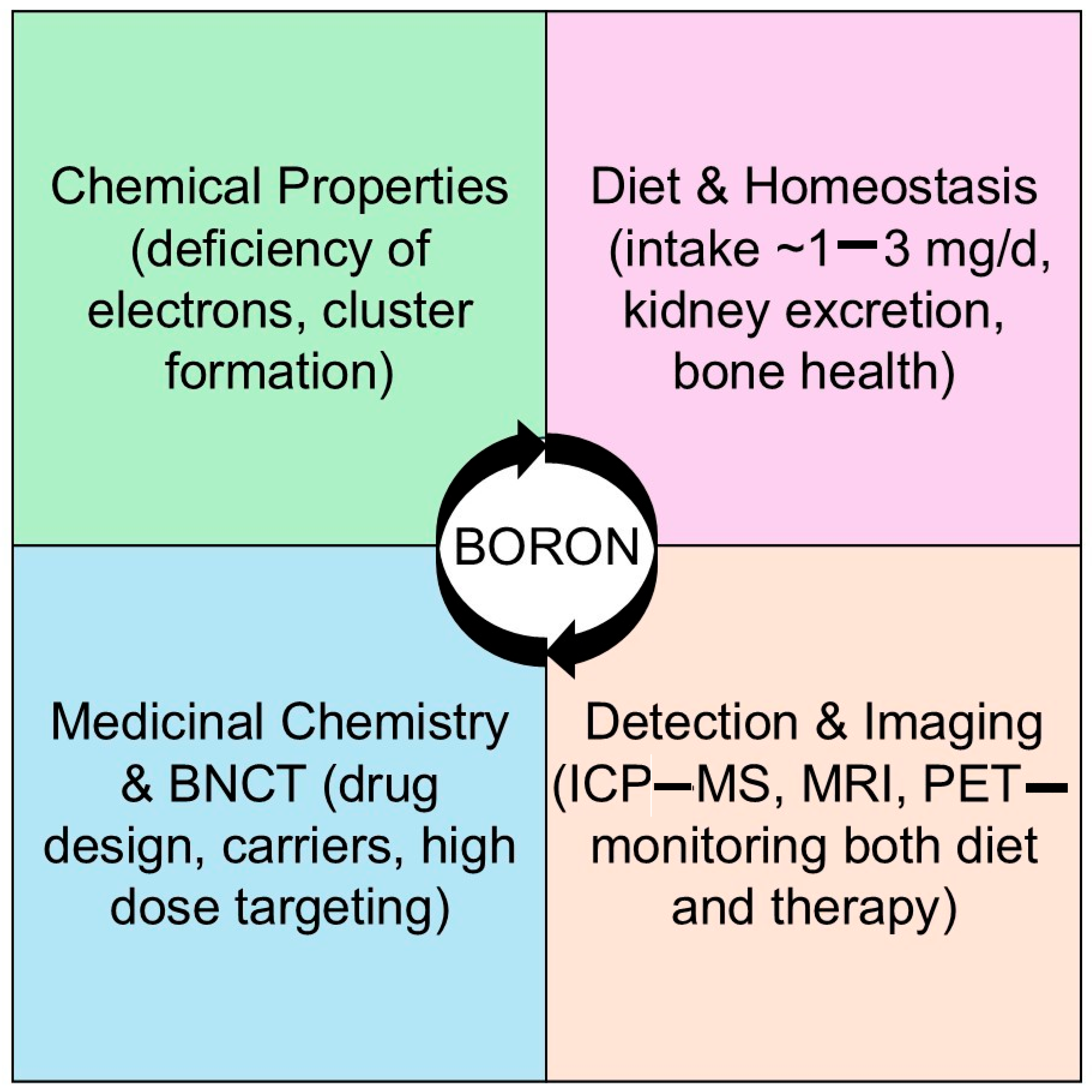
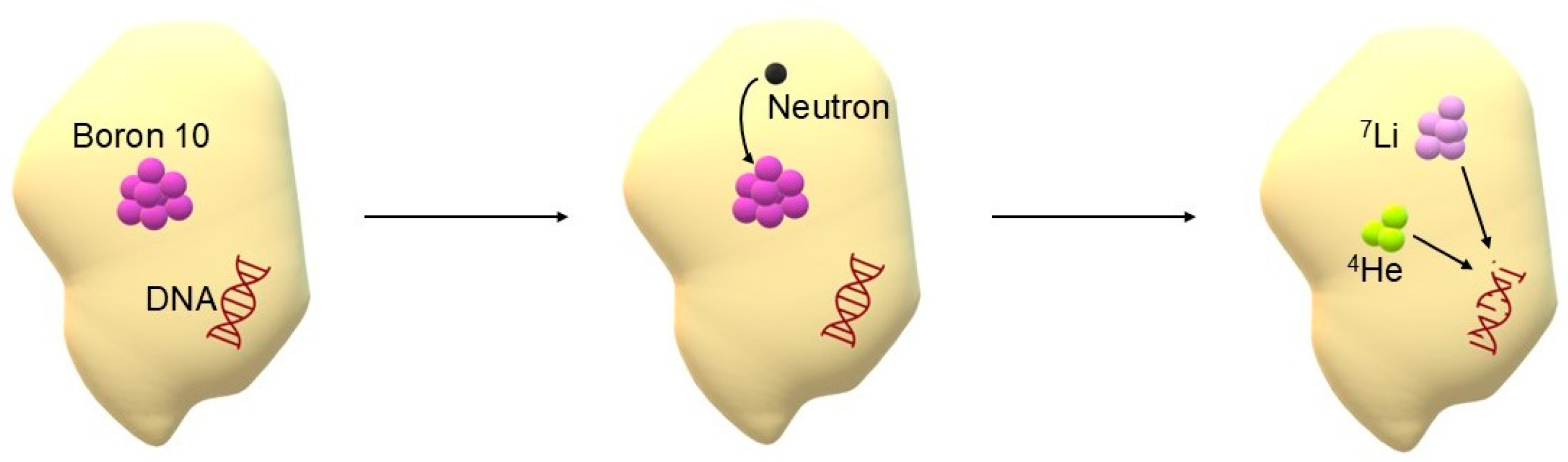
Boron is a trace element with multifaceted chemical and biological properties that underpin its emerging relevance in human health and medicinal chemistry. Although present in organisms at very low concentrations, boron participates in key physiological processes, including mineral metabolism, bone homeostasis, hormonal regulation, immune modulation, and redox balance. Its unique electronic structure—characterized by electron deficiency and the ability to form multi-center bonds—gives rise to diverse allotropic, cluster, and coordination chemistries, enabling the formation of biologically active complexes and therapeutic agents. Dietary boron, derived mainly from plant-based foods, is efficiently absorbed and predominantly excreted by the kidneys, showing a strong correlation between intake and urinary levels. Current evidence suggests beneficial effects of boron on bone mineral density, cognitive function, inflammation, antioxidant defenses, and metabolic regulation, although the precise molecular mechanisms remain partially understood. In medicinal chemistry, a broad spectrum of boron-containing compounds—including borates, boronic acids, boronated amino acids, carboranes, and metallacarboranes—has gained clinical and preclinical importance. These compounds serve as enzyme inhibitors, antimicrobial and anti-inflammatory agents, metabolic modulators, and critical boron carriers in boron neutron capture therapy (BNCT), which leverages the neutron-capture properties of 10B for targeted cancer treatment. Advances in synthesis, functionalization, and nanocarrier design have expanded the therapeutic potential of boron-based molecules. Ongoing research aims to optimize their selectivity, biodistribution, safety, and diagnostic integration. Overall, boron represents a versatile and rapidly developing component of modern biomedical science, with promising implications for oncology, infectious diseases, metabolic disorders, and precision medicine.
Keywords: boron; isotopes; nanocarriers; BNCT boron; isotopes; nanocarriers; BNCT