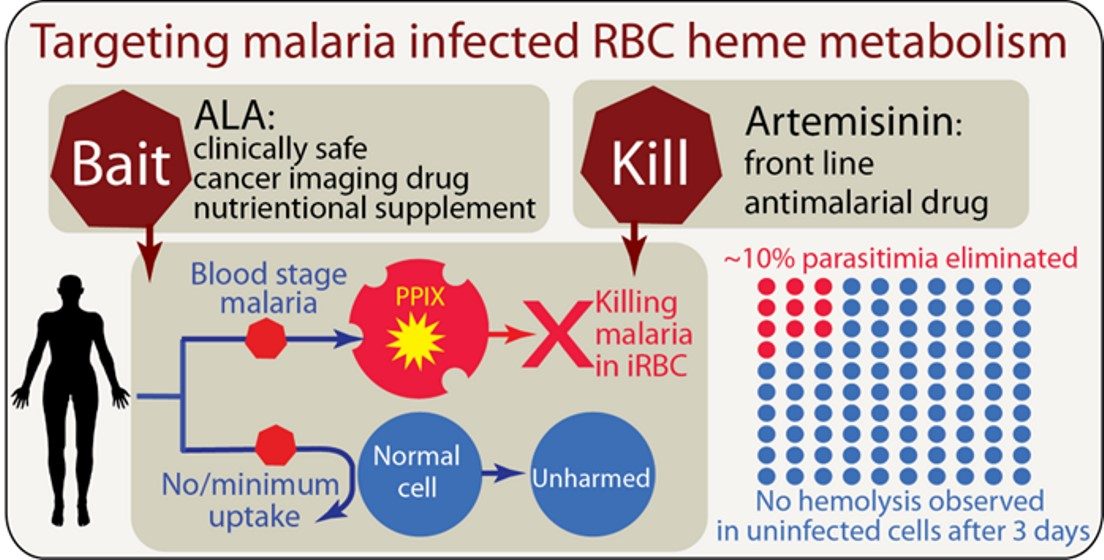
Targeting Infected Host Cell Heme Metabolism to Kill Malaria Parasites

 , , and
Abstract
1. Introduction
2. Results
2.1. Result 1: RBC Possesses a Unique Truncated Heme Biosynthesis Pathway
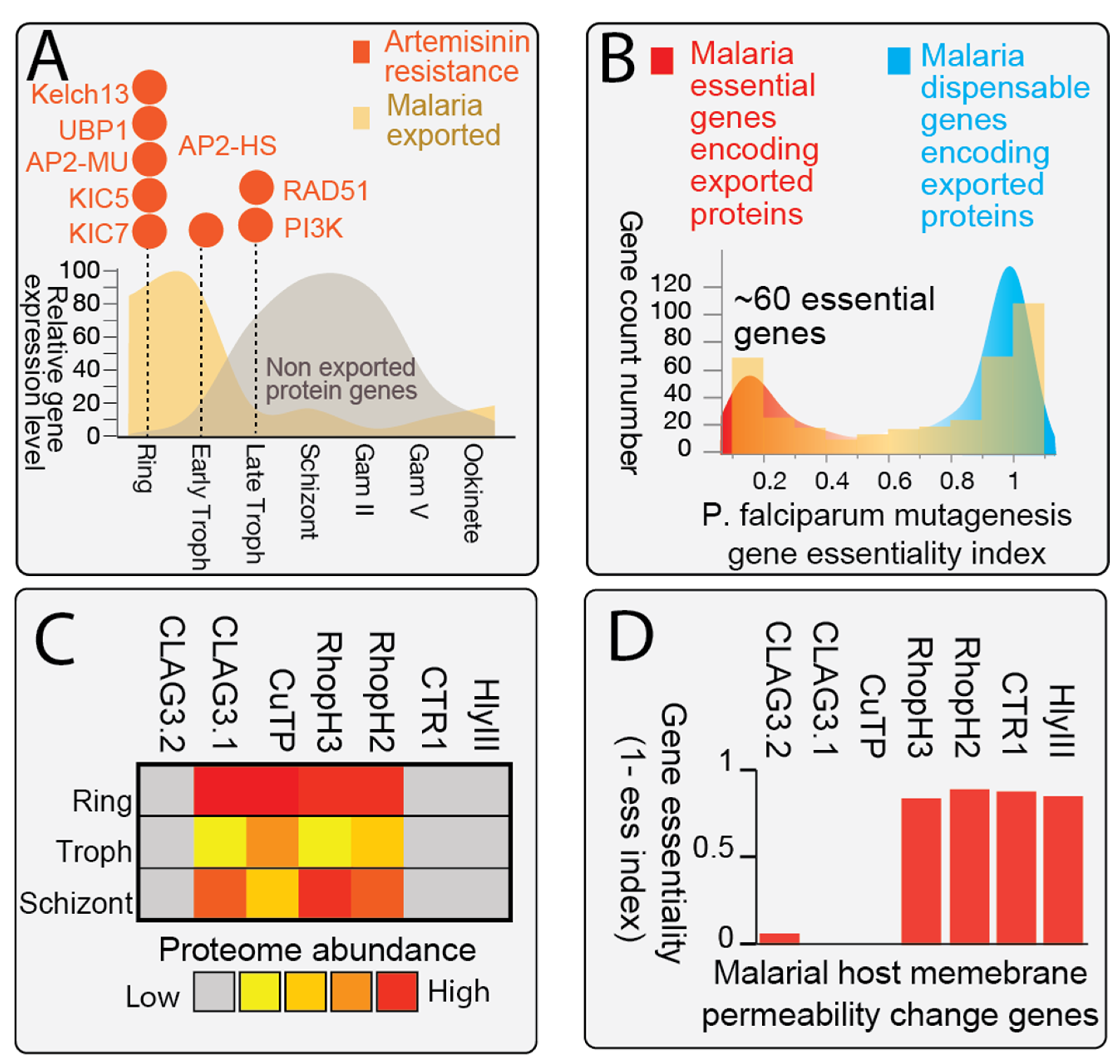
2.2. Result 2: iRBC in Dihydroartemisinin (DHA) Resistance Stage Are Remodeled for Host Cell Permeability Change
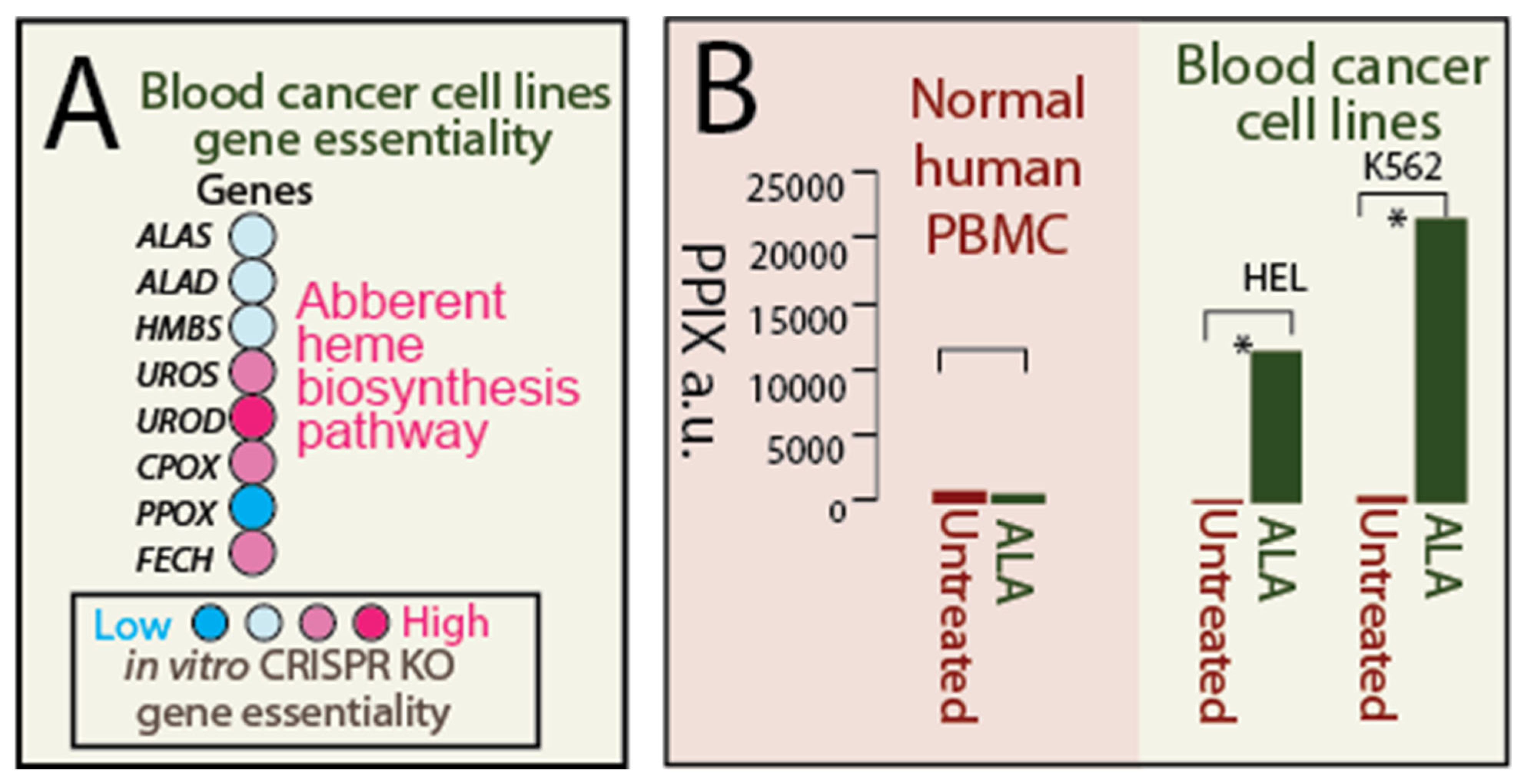
2.3. Result 3: Normal Blood Cells Do Not Accumulate Porphyrin
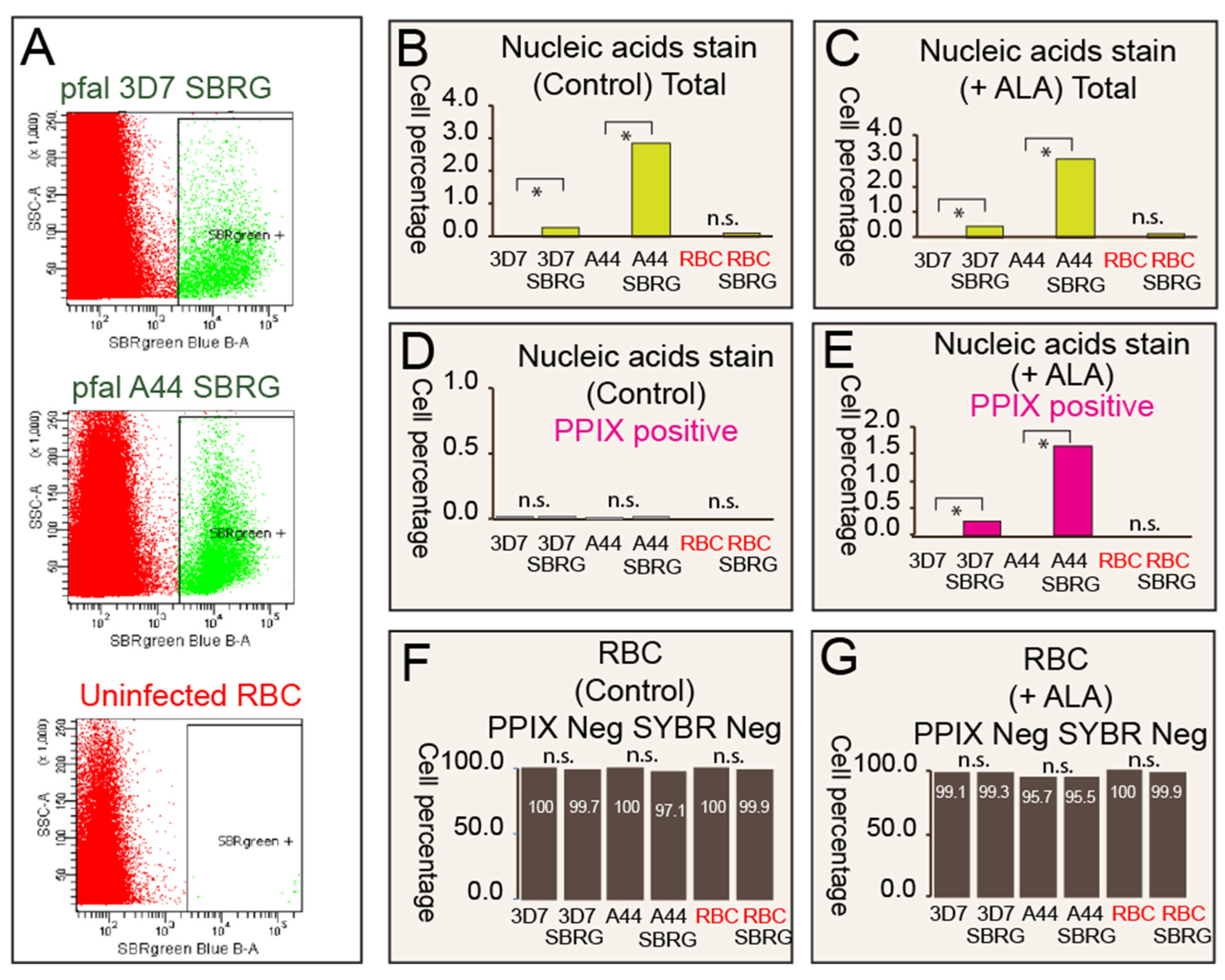
2.4. Result 4: iRBCs Specifically Accumulate Porphyrin
2.5. Result 5: DHA and ALA Synergy Study
2.6. Result 6: DHA and ALA Kill DHA-Resistant Parasites
3. Discussion
4. Methods
4.1. Analysis of Cancer Gene Essentiality in Heme Biosynthesis Using CRISPR KO Data
4.2. Analysis of Human Mature Red Blood Cell (RBC) Heme Biosynthesis and Malaria Parasite Host Remodeling Data
4.3. Primary Liver Cell and Hepatoma Cell Line Preparation
4.4. Cellular PPIX Quantification
4.5. Peripheral Blood Mononuclear Cell (PBMC) Isolation
4.6. Reactive Oxygen Species (ROS) Measurement by Flow Cytometry
4.7. Malaria Parasite Culture
4.8. Malaria Ring-Stage Survival Assays
5. Statistical Analysis
Supplementary Materials
Author Contributions
Funding
Institutional Review Board Statement
Informed Consent Statement
Data Availability Statement
Conflicts of Interest
References
- Bryk, A.H.; Wiśniewski, J.R. Quantitative Analysis of Human Red Blood Cell Proteome. J. Proteome Res. 2017, 16, 2752–2761. [Google Scholar] [CrossRef] [PubMed]
- Sae-Lee, W.; McCafferty, C.L.; Verbeke, E.J.; Havugimana, P.C.; Papoulas, O.; McWhite, C.D.; Houser, J.R.; Vanuytsel, K.; Murphy, G.J.; Drew, K.; et al. The protein organization of a red blood cell. Cell Rep. 2022, 40, 111103. [Google Scholar] [CrossRef]
- Mohandas, N.; Gallagher, P.G. Red cell membrane: Past, present, and future. Blood 2008, 112, 3939–3948. [Google Scholar] [CrossRef] [PubMed]
- Corrons, J.L.V.; Casafont, L.B.; Frasnedo, E.F. Concise review: How do red blood cells born, live, and die? Ann. Hematol. 2021, 100, 2425–2433. [Google Scholar] [CrossRef]
- Kariuki, S.N.; Williams, T.N. Human genetics and malaria resistance. Hum. Genet. 2020, 139, 801–811. [Google Scholar] [CrossRef] [PubMed]
- Wang, J.; Zhang, C.-J.; Chia, W.N.; Loh, C.C.Y.; Li, Z.; Lee, Y.M.; He, Y.; Yuan, L.-X.; Lim, T.K.; Liu, M.; et al. Haem-activated promiscuous targeting of artemisinin in Plasmodium falciparum. Nat. Commun. 2015, 6, 10111. [Google Scholar] [CrossRef]
- Zhang, J.; Ferreira, G.C. Transient State Kinetic Investigation of 5-Aminolevulinate Synthase Reaction Mechanism. J. Biol. Chem. 2002, 277, 44660–44669. [Google Scholar] [CrossRef]
- Shi, Z.; Ferreira, G.C. A continuous anaerobic fluorimetric assay for ferrochelatase by monitoring porphyrin disappearance. Anal. Biochem. 2003, 318, 18–24. [Google Scholar] [CrossRef]
- Adapa, S.R.; Hunter, G.A.; Amin, N.E.; Marinescu, C.; Borsky, A.; Sagatys, E.M.; Sebti, S.M.; Reuther, G.W.; Ferreira, G.C.; Jiang, R.H. Porphyrin overdrive rewires cancer cell metabolism. Life Sci. Alliance 2024, 7, e202302547. [Google Scholar] [CrossRef]
- Adapa, S.R.; Sami, A.; Meshram, P.; Ferreira, G.C.; Jiang, R.H.Y. Uncovering porphyrin accumulation in the tumor microenvironment. Genes 2024, 15, 961. [Google Scholar] [CrossRef]
- Adapa, S.; Meshram, P.; Sami, A.; Jiang, R. Where Does the Heme Go? Unraveling Heme and Porphyrin Metabolism in Healthy and Oncogenic Human Livers. Res. Sq. 2024. [Google Scholar] [CrossRef]
- Krammer, B.; Plaetzer, K. ALA and its clinical impact, from bench to bedside. Photochem. Photobiol. Sci. 2008, 7, 283–289. [Google Scholar] [CrossRef]
- Al-Saber, F.; Aldosari, W.; Alselaiti, M.; Khalfan, H.; Kaladari, A.; Khan, G.; Harb, G.; Rehani, R.; Kudo, S.; Koda, A.; et al. The Safety and Tolerability of 5-Aminolevulinic Acid Phosphate with Sodium Ferrous Citrate in Patients with Type 2 Diabetes Mellitus in Bahrain. J. Diabetes Res. 2016, 2016, 8294805. [Google Scholar] [CrossRef]
- Sigala, P.A.; Crowley, J.R.; Henderson, J.P.; Goldberg, D.E. Deconvoluting heme biosynthesis to target blood-stage malaria parasites. Elife 2015, 4, e09143. [Google Scholar] [CrossRef] [PubMed]
- Lopez-Estraño, C.; Bhattacharjee, S.; Harrison, T.; Haldar, K. Cooperative domains define a unique host cell-targeting signal in Plasmodium falciparum-infected erythrocytes. Proc. Natl. Acad. Sci. USA 2003, 100, 12402–12407. [Google Scholar] [CrossRef]
- Marti, M.; Good, R.T.; Rug, M.; Knuepfer, E.; Cowman, A.F. Targeting malaria virulence and remodeling proteins to the host erythrocyte. Science 2004, 306, 1930–1933. [Google Scholar] [CrossRef]
- Elsworth, B.; Matthews, K.; Nie, C.Q.; Kalanon, M.; Charnaud, S.C.; Sanders, P.R.; Chisholm, S.A.; Counihan, N.A.; Shaw, P.J.; Pino, P.; et al. PTEX is an essential nexus for protein export in malaria parasites. Nature 2014, 511, 587–591. [Google Scholar] [CrossRef]
- Jonsdottir, T.K.; Gabriela, M.; Crabb, B.S.; de Koning-Ward, T.F.; Gilson, P.R. Defining the Essential Exportome of the Malaria Parasite. Trends Parasitol. 2021, 37, 664–675. [Google Scholar] [CrossRef] [PubMed]
- Smith, C.M.; Jerkovic, A.; Puy, H.; Winship, I.; Deybach, J.C.; Gouya, L.; van Dooren, G.; Goodman, C.D.; Sturm, A.; Manceau, H.; et al. Red cells from ferrochelatase-deficient erythropoietic protoporphyria patients are resistant to growth of malarial parasites. Blood 2015, 125, 534–541. [Google Scholar] [CrossRef]
- Ménard, D.; Khim, N.; Beghain, J.; Adegnika, A.A.; Shafiul-Alam, M.; Amodu, O.; Rahim-Awab, G.; Barnadas, C.; Berry, A.; Boum, Y.; et al. A Worldwide Map of Plasmodium falciparum K13-Propeller Polymorphisms. N. Engl. J. Med. 2016, 374, 2453–2464. [Google Scholar] [CrossRef] [PubMed]
- Siddiqui, F.A.; Liang, X.; Cui, L. Plasmodium falciparum resistance to ACTs: Emergence, mechanisms, and outlook. Int. J. Parasitol. Drugs Drug Resist. 2021, 16, 102–118. [Google Scholar] [CrossRef]
- WHO. World Health Organization Guidelines for the Treatment of Malaria, 3rd ed.; World Health Organization: Geneva, Switzerland, 2021.
- Ramos, S.; Jeney, V.; Figueiredo, A.; Paixão, T.; Sambo, M.R.; Quinhentos, V.; Martins, R.; Gouveia, Z.; Carlos, A.R.; Ferreira, A.; et al. Targeting circulating labile heme as a defense strategy against malaria. Life Sci. Alliance 2024, 7, e202302276. [Google Scholar] [CrossRef]
- Lynch, J.; Wang, Y.; Li, Y.; Kavdia, K.; Fukuda, Y.; Ranjit, S.; Robinson, C.G.; Grace, C.R.; Xia, Y.; Peng, J.; et al. A PPIX-binding probe facilitates discovery of PPIX-induced cell death modulation by peroxiredoxin. Commun. Biol. 2023, 6, 673. [Google Scholar] [CrossRef]
- Novershtern, N.; Subramanian, A.; Lawton, L.N.; Mak, R.H.; Haining, W.N.; McConkey, M.E.; Habib, N.; Yosef, N.; Chang, C.Y.; Shay, T.; et al. Densely interconnected transcriptional circuits control cell states in human hematopoiesis. Cell 2011, 144, 296–309. [Google Scholar] [CrossRef]
- Sekine, Y.; Houston, R.; Eckl, E.M.; Fessler, E.; Narendra, D.P.; Jae, L.T.; Sekine, S. A mitochondrial iron-responsive pathway regulated by DELE1. Mol. Cell 2023, 83, 2059–2076.e6. [Google Scholar] [CrossRef]
- Chen, J.-J.; Zhang, S. Heme-regulated eIF2α kinase in erythropoiesis and hemoglobinopathies. Blood J. Am. Soc. Hematol. 2019, 134, 1697–1707. [Google Scholar] [CrossRef] [PubMed]
- Tan, M.K.; Lim, H.J.; Bennett, E.J.; Shi, Y.; Harper, J.W. Parallel SCF adaptor capture proteomics reveals a role for SCFFBXL17 in NRF2 activation via BACH1 repressor turnover. Mol. Cell 2013, 52, 9–24. [Google Scholar] [CrossRef] [PubMed]
- Harigae, H.; Okitsu, Y.; Yokoyama, H.; Fujiwara, T.; Inomata, M.; Takahashi, S.; Minegishi, N.; Kaku, M.; Sasaki, T. Induction of erythroid-specific genes by overexpression of GATA-2 in K562 cells. Int. J. Hematol. 2006, 84, 38–42. [Google Scholar] [CrossRef] [PubMed]
- McHale, C.M.; Winter, P.C.; Lappin, T.R. Erythroid gene expression is differentially regulated by erythropoietin, haemin and delta-aminolaevulinic acid in UT-7 cells. Br. J. Haematol. 1999, 104, 829–837. [Google Scholar] [CrossRef]
- Wang, L.S.; Li, L.; Li, L.; Chu, S.; Shiang, K.D.; Li, M.; Sun, H.Y.; Xu, J.; Xiao, F.J.; Sun, G.; et al. MicroRNA-486 regulates normal erythropoiesis and enhances growth and modulates drug response in CML progenitors. Blood 2015, 125, 1302–1313. [Google Scholar] [CrossRef]
- Kashii, Y.; Uchida, M.; Kirito, K.; Tanaka, M.; Nishijima, K.; Toshima, M.; Ando, T.; Koizumi, K.; Endoh, T.; Sawada, K.; et al. A member of Forkhead family transcription factor, FKHRL1, is one of the downstream molecules of phosphatidylinositol 3-kinase-Akt activation pathway in erythropoietin signal transduction. Blood 2000, 96, 941–949. [Google Scholar] [PubMed]
- Möller, M.N.; Orrico, F.; Villar, S.F.; López, A.C.; Silva, N.; Donzé, M.; Thomson, L.; Denicola, A. Oxidants and Antioxidants in the Redox Biochemistry of Human Red Blood Cells. ACS Omega 2023, 8, 147–168. [Google Scholar] [PubMed]
- D’Alessandro, A.; Anastasiadi, A.T.; Tzounakas, V.L.; Nemkov, T.; Reisz, J.A.; Kriebardis, A.G.; Zimring, J.C.; Spitalnik, S.L.; Busch, M.P. Red Blood Cell Metabolism In Vivo and In Vitro. Metabolites 2023, 13, 793. [Google Scholar] [CrossRef] [PubMed]
- Hess, J.R. Red cell storage. J. Proteomics 2010, 73, 368–373. [Google Scholar] [CrossRef]
- Gibbons, J.; Button-Simons, K.A.; Adapa, S.R.; Li, S.; Pietsch, M.; Zhang, M.; Liao, X.; Adams, J.H.; Ferdig, M.T.; Jiang, R.H.Y. Altered expression of K13 disrupts DNA replication and repair in Plasmodium falciparum. BMC Genom. 2018, 19, 849. [Google Scholar] [CrossRef]
- Hunt, P.; Afonso, A.; Creasey, A.; Culleton, R.; Sidhu, A.B.; Logan, J.; Valderramos, S.G.; McNae, I.; Cheesman, S.; do Rosario, V.; et al. Gene encoding a deubiquitinating enzyme is mutated in artesunate- and chloroquine-resistant rodent malaria parasites. Mol. Microbiol. 2007, 65, 27–40. [Google Scholar] [CrossRef]
- Henriques, G.; Martinelli, A.; Rodrigues, L.; Modrzynska, K.; Fawcett, R.; Houston, D.R.; Borges, S.T.; d’Alessandro, U.; Tinto, H.; Karema, C.; et al. Artemisinin resistance in rodent malaria-mutation in the AP2 adaptor μ-chain suggests involvement of endocytosis and membrane protein trafficking. Malar. J. 2013, 12, 118. [Google Scholar]
- Henriques, G.; van Schalkwyk, D.A.; Burrow, R.; Warhurst, D.C.; Thompson, E.; Baker, D.A.; Fidock, D.A.; Hallett, R.; Flueck, C.; Sutherland, C.J. The Mu subunit of Plasmodium falciparum clathrin-associated adaptor protein 2 modulates in vitro parasite response to artemisinin and quinine. Antimicrob. Agents Chemother. 2015, 59, 2540–2547. [Google Scholar] [CrossRef]
- Simmons, C.F.; Gibbons, J.; Zhang, M.; Oberstaller, J.; Pires, C.V.; Casandra, D.; Wang, C.; Seyfang, A.; Otto, T.D.; Rayner, J.C.; et al. Protein KIC5 is a novel regulator of artemisinin stress response in the malaria parasite Plasmodium falciparum. Sci. Rep. 2023, 13, 399. [Google Scholar] [CrossRef]
- Birnbaum, J.; Scharf, S.; Schmidt, S.; Jonscher, E.; Hoeijmakers, W.A.M.; Flemming, S.; Toenhake, C.G.; Schmitt, M.; Sabitzki, R.; Bergmann, B.; et al. A Kelch13-defined endocytosis pathway mediates artemisinin resistance in malaria parasites. Science 2020, 367, 51–59. [Google Scholar] [CrossRef]
- Mohandas, N.; An, X. Malaria and human red blood cells. Med. Microbiol. Immunol. 2012, 201, 593–598. [Google Scholar] [CrossRef] [PubMed]
- Cooke, B.M.; Mohandas, N.; Coppel, R.L. The malaria-infected red blood cell: Structural and functional changes. Adv. Parasitol. 2001, 50, 1–86. [Google Scholar] [CrossRef]
- López-Barragán, M.J.; Lemieux, J.; Quiñones, M.; Williamson, K.C.; Molina-Cruz, A.; Cui, K.; Barillas-Mury, C.; Zhao, K.; Su, X.Z. Directional gene expression and antisense transcripts in sexual and asexual stages of Plasmodium falciparum. BMC Genom. 2011, 12, 587. [Google Scholar] [CrossRef]
- Zhang, M.; Wang, C.; Otto, T.D.; Oberstaller, J.; Liao, X.; Adapa, S.R.; Udenze, K.; Bronner, I.F.; Casandra, D.; Mayho, M.; et al. Uncovering the essential genes of the human malaria parasite Plasmodium falciparum by saturation mutagenesis. Science 2018, 360, eaap7847. [Google Scholar] [CrossRef]
- Gupta, A.; Bokhari, A.A.B.; Pillai, A.D.; Crater, A.K.; Gezelle, J.; Saggu, G.; Nasamu, A.S.; Ganesan, S.M.; Niles, J.C.; Desai, S.A. Complex nutrient channel phenotypes despite Mendelian inheritance in a Plasmodium falciparum genetic cross. PLoS Pathog. 2020, 16, e1008363. [Google Scholar] [CrossRef]
- Martin, R.E.; Henry, R.I.; Abbey, J.L.; Clements, J.D.; Kirk, K. The ‘permeome’ of the malaria parasite: An overview of the membrane transport proteins of Plasmodium falciparum. Genome Biol. 2005, 6, R26. [Google Scholar] [CrossRef]
- Counihan, N.A.; Chisholm, S.A.; Bullen, H.E.; Srivastava, A.; Sanders, P.R.; Jonsdottir, T.K.; Weiss, G.E.; Ghosh, S.; Crabb, B.S.; Creek, D.J.; et al. Plasmodium falciparum parasites deploy RhopH2 into the host erythrocyte to obtain nutrients, grow and replicate. Elife 2017, 6, e23217. [Google Scholar] [CrossRef] [PubMed]
- Pasternak, M.; Verhoef, J.M.J.; Wong, W.; Triglia, T.; Mlodzianoski, M.J.; Geoghegan, N.; Evelyn, C.; Wardak, A.Z.; Rogers, K.; Cowman, A.F. RhopH2 and RhopH3 export enables assembly of the RhopH complex on P. falciparum-infected erythrocyte membranes. Commun. Biol. 2022, 5, 333. [Google Scholar] [CrossRef] [PubMed]
- Choveaux, D.L.; Przyborski, J.M.; Goldring, J.P. A Plasmodium falciparum copper-binding membrane protein with copper transport motifs. Malar. J. 2012, 11, 397. [Google Scholar] [CrossRef]
- Moonah, S.; Sanders, N.G.; Persichetti, J.K.; Sullivan, D.J., Jr. Erythrocyte lysis and Xenopus laevis oocyte rupture by recombinant Plasmodium falciparum hemolysin III. Eukaryot. Cell 2014, 13, 1337–1345. [Google Scholar]
- Wang, Z.; Shrestha, S.; Li, X.; Miao, J.; Yuan, L.; Cabrera, M.; Grube, C.; Yang, Z.; Cui, L. Prevalence of K13-propeller polymorphisms in Plasmodium falciparum from China-Myanmar border in 2007–2012. Malar. J. 2015, 14, 168. [Google Scholar] [CrossRef] [PubMed]
- Babatunde, K.A.; Mbagwu, S.; Hernández-Castañeda, M.A.; Adapa, S.R.; Walch, M.; Filgueira, L.; Falquet, L.; Jiang, R.H.Y.; Ghiran, I.; Mantel, P.Y. Malaria infected red blood cells release small regulatory RNAs through extracellular vesicles. Sci. Rep. 2018, 8, 884. [Google Scholar] [CrossRef] [PubMed]
- Roth, A.; Maher, S.P.; Conway, A.J.; Ubalee, R.; Chaumeau, V.; Andolina, C.; Kaba, S.A.; Vantaux, A.; Bakowski, M.A.; Thomson-Luque, R.; et al. A comprehensive model for assessment of liver stage therapies targeting Plasmodium vivax and Plasmodium falciparum. Nat. Commun. 2018, 9, 1837. [Google Scholar] [CrossRef]
- Tao, D.; King, J.G.; Tweedell, R.E.; Jost, P.J.; Boddey, J.A.; Dinglasan, R.R. The acute transcriptomic and proteomic response of HC-04 hepatoma cells to hepatocyte growth factor and its implications for Plasmodium falciparum sporozoite invasion. Mol. Cell Proteom. 2014, 13, 1153–1164. [Google Scholar] [CrossRef]
- Sattabongkot, J.; Yimamnuaychoke, N.; Leelaudomlipi, S.; Rasameesoraj, M.; Jenwithisuk, R.; Coleman, R.E.; Udomsangpetch, R.; Cui, L.; Brewer, T.G. Establishment of a human hepatocyte line that supports in vitro development of the exo-erythrocytic stages of the malaria parasites Plasmodium falciparum and P. vivax. Am. J. Trop. Med. Hyg. 2006, 74, 708–715. [Google Scholar] [CrossRef]
- Taubenschmid-Stowers, J.; Orthofer, M.; Laemmerer, A.; Krauditsch, C.; Rózsová, M.; Studer, C.; Lötsch, D.; Gojo, J.; Gabler, L.; Dyczynski, M.; et al. A whole-genome scan for Artemisinin cytotoxicity reveals a novel therapy for human brain tumors. EMBO Mol. Med. 2023, 15, e16959. [Google Scholar] [CrossRef]
- Kaketani, K.; Nakajima, M. Case Reports: Safety, Tolerability, and Efficacy of 5-Aminolevulinic Acid Phosphate, an Inducer of Heme Oxygenase 1, in Combination with Sodium Ferrous Citrate for the Treatment of COVID-19 Patients. Open COVID J. 2021. [Google Scholar] [CrossRef]
- Webber, J.; Kessel, D.; Fromm, D. Plasma levels of protoporphyrin IX in humans after oral administration of 5-aminolevulinic acid. J. Photochem. Photobiol. B 1997, 37, 151–153. [Google Scholar] [CrossRef]
- Rick, K.; Sroka, R.; Stepp, H.; Kriegmair, M.; Huber, R.M.; Jacob, K.; Baumgartner, R. Pharmacokinetics of 5-aminolevulinic acid-induced protoporphyrin IX in skin and blood. J. Photochem. Photobiol. B 1997, 40, 313–319. [Google Scholar] [CrossRef]
- Cappellini, M.D.; Fiorelli, G. Glucose-6-phosphate dehydrogenase deficiency. Lancet 2008, 371, 64–74. [Google Scholar] [CrossRef] [PubMed]
- Egan, E.S.; Jiang, R.H.Y.; Moechtar, M.A.; Barteneva, N.S.; Weekes, M.P.; Nobre, L.V.; Gygi, S.P.; Paulo, J.A.; Frantzreb, C.; Tani, Y.; et al. Malaria. A forward genetic screen identifies erythrocyte CD55 as essential for Plasmodium falciparum invasion. Science 2015, 348, 711–714. [Google Scholar] [CrossRef] [PubMed]
- Vasavda, C.; Kothari, R.; Ammal Kaidery, N.; Chakraborty, S.; Jamuna Tripathi, S.; Dhindsa, R.S.; Ricco, C.; Shanmukha, S.; Saberi, S.; Lefler, J.E.; et al. Biliverdin reductase A is a major determinant of protective NRF2 signaling. Proc. Natl. Acad. Sci. USA 2025, 122, e2513120122. [Google Scholar] [CrossRef]
- Voskou, S.; Aslan, M.; Fanis, P.; Phylactides, M.; Kleanthous, M. Oxidative stress in β-thalassaemia and sickle cell disease. Redox Biol. 2015, 6, 226–239. [Google Scholar] [CrossRef]
- Silva, D.G.H.; Belini Junior, E.; de Almeida, E.A.; Bonini-Domingos, C.R. Oxidative stress in sickle cell disease: An overview of erythrocyte redox metabolism and current antioxidant therapeutic strategies. Free Radic. Biol. Med. 2013, 65, 1101–1109. [Google Scholar] [CrossRef]
- Darghouth, D.; Koehl, B.; Madalinski, G.; Heilier, J.F.; Bovee, P.; Xu, Y.; Olivier, M.F.; Bartolucci, P.; Benkerrou, M.; Pissard, S.; et al. Pathophysiology of sickle cell disease is mirrored by the red blood cell metabolome. Blood 2011, 117, e57–e66. [Google Scholar] [CrossRef]
- Pignatelli, P.; Umme, S.; D’Antonio, D.L.; Piattelli, A.; Curia, M.C. Reactive Oxygen Species Produced by 5-Aminolevulinic Acid Photodynamic Therapy in the Treatment of Cancer. Int. J. Mol. Sci. 2023, 24, 8964. [Google Scholar] [CrossRef]
- Shanks, G.D.; Waller, M. Malaria Relapses Following Parasite-Free Blood Transfusions in the U.S. Army during the Korean War. Am. J. Trop. Med. Hyg. 2022, 106, 1237–1239. [Google Scholar] [CrossRef] [PubMed]
- Ruberto, A.A.; Maher, S.P.; Vantaux, A.; Joyner, C.J.; Bourke, C.; Balan, B.; Jex, A.; Mueller, I.; Witkowski, B.; Kyle, D.E. Single-cell RNA profiling of Plasmodium vivax-infected hepatocytes reveals parasite- and host- specific transcriptomic signatures and therapeutic targets. Front. Cell Infect. Microbiol. 2022, 12, 986314. [Google Scholar] [CrossRef] [PubMed]
- Mancio-Silva, L.; Gural, N.; Real, E.; Wadsworth, M.H., 2nd; Butty, V.L.; March, S.; Nerurkar, N.; Hughes, T.K.; Roobsoong, W.; Fleming, H.E.; et al. A single-cell liver atlas of Plasmodium vivax infection. Cell Host Microbe 2022, 30, 1048–1060.e5. [Google Scholar] [CrossRef]
- Brito, M.A.M.; Baro, B.; Raiol, T.C.; Ayllon-Hermida, A.; Safe, I.P.; Deroost, K.; Figueiredo, E.F.G.; Costa, A.G.; Armengol, M.D.P.; Sumoy, L.; et al. Morphological and Transcriptional Changes in Human Bone Marrow During Natural Plasmodium vivax Malaria Infections. J. Infect. Dis. 2022, 225, 1274–1283. [Google Scholar] [CrossRef]
- Obaldia, N., 3rd; Meibalan, E.; Sa, J.M.; Ma, S.; Clark, M.A.; Mejia, P.; Moraes Barros, R.R.; Otero, W.; Ferreira, M.U.; Mitchell, J.R.; et al. Bone Marrow Is a Major Parasite Reservoir in Plasmodium vivax Infection. mBio 2018, 9. [Google Scholar] [CrossRef]
- Aguirre, A.J.; Meyers, R.M.; Weir, B.A.; Vazquez, F.; Zhang, C.-Z.; Ben-David, U.; Cook, A.; Ha, G.; Harrington, W.F.; Doshi, M.B.; et al. Genomic Copy Number Dictates a Gene-Independent Cell Response to CRISPR/Cas9 Targeting. Cancer Discov. 2016, 6, 914–929. [Google Scholar] [CrossRef] [PubMed]
- Kim, E.; Hart, T. Improved analysis of CRISPR fitness screens and reduced off-target effects with the BAGEL2 gene essentiality classifier. Genome Med. 2021, 13, 2. [Google Scholar] [CrossRef]
- Meyers, R.M.; Bryan, J.G.; McFarland, J.M.; Weir, B.A.; Sizemore, A.E.; Xu, H.; Dharia, N.V.; Montgomery, P.G.; Cowley, G.S.; Pantel, S.; et al. Computational correction of copy number effect improves specificity of CRISPR-Cas9 essentiality screens in cancer cells. Nat. Genet. 2017, 49, 1779–1784. [Google Scholar] [CrossRef]
- Dempster, J.M.; Pacini, C.; Pantel, S.; Behan, F.M.; Green, T.; Krill-Burger, J.; Beaver, C.M.; Younger, S.T.; Zhivich, V.; Najgebauer, H.; et al. Agreement between two large pan-cancer CRISPR-Cas9 gene dependency data sets. Nat. Commun. 2019, 10, 5817. [Google Scholar] [CrossRef]
- Pacini, C.; Dempster, J.M.; Boyle, I.; Gonçalves, E.; Najgebauer, H.; Karakoc, E.; van der Meer, D.; Barthorpe, A.; Lightfoot, H.; Jaaks, P.; et al. Integrated cross-study datasets of genetic dependencies in cancer. Nat. Commun. 2021, 12, 1661. [Google Scholar] [CrossRef] [PubMed]
- Amos, B.; Aurrecoechea, C.; Barba, M.; Barreto, A.; Basenko Evelina, Y.; Bażant, W.; Belnap, R.; Blevins, A.S.; Böhme, U.; Brestelli, J.; et al. VEuPathDB: The eukaryotic pathogen, vector and host bioinformatics resource center. Nucleic Acids Res. 2021, 50, D898–D911. [Google Scholar] [CrossRef]
- Fratz, E.J.; Hunter, G.A.; Ferreira, G.C. Expression of Murine 5-Aminolevulinate Synthase Variants Causes Protoporphyrin IX Accumulation and Light-Induced Mammalian Cell Death. PLoS ONE 2014, 9, e93078. [Google Scholar] [CrossRef] [PubMed]
- Predina, J.D.; Runge, J.; Newton, A.; Mison, M.; Xia, L.; Corbett, C.; Shin, M.; Sulyok, L.F.; Durham, A.; Nie, S.; et al. Evaluation of Aminolevulinic Acid-Derived Tumor Fluorescence Yields Disparate Results in Murine and Spontaneous Large Animal Models of Lung Cancer. Sci. Rep. 2019, 9, 7629. [Google Scholar] [CrossRef]
- Suzuki, S.; Hikosaka, K.; Balogun, E.O.; Komatsuya, K.; Niikura, M.; Kobayashi, F.; Takahashi, K.; Tanaka, T.; Nakajima, M.; Kita, K. In vivo curative and protective potential of orally administered 5-aminolevulinic acid plus ferrous ion against malaria. Antimicrob Agents Chemother 2015, 59, 6960–6967. [Google Scholar] [CrossRef]


Disclaimer/Publisher’s Note: The statements, opinions and data contained in all publications are solely those of the individual author(s) and contributor(s) and not of MDPI and/or the editor(s). MDPI and/or the editor(s) disclaim responsibility for any injury to people or property resulting from any ideas, methods, instructions or products referred to in the content. |
© 2026 by the authors. Licensee MDPI, Basel, Switzerland. This article is an open access article distributed under the terms and conditions of the Creative Commons Attribution (CC BY) license.
Share and Cite
Siddiqui, F.A.; Adapa, S.R.; Li, X.; Miao, J.; Cui, L.; Jiang, R.H.Y. Targeting Infected Host Cell Heme Metabolism to Kill Malaria Parasites. Pharmaceuticals 2026, 19, 167. https://doi.org/10.3390/ph19010167
Siddiqui FA, Adapa SR, Li X, Miao J, Cui L, Jiang RHY. Targeting Infected Host Cell Heme Metabolism to Kill Malaria Parasites. Pharmaceuticals. 2026; 19(1):167. https://doi.org/10.3390/ph19010167
Chicago/Turabian StyleSiddiqui, Faiza A., Swamy R. Adapa, Xiaolian Li, Jun Miao, Liwang Cui, and Rays H. Y. Jiang. 2026. "Targeting Infected Host Cell Heme Metabolism to Kill Malaria Parasites" Pharmaceuticals 19, no. 1: 167. https://doi.org/10.3390/ph19010167
APA StyleSiddiqui, F. A., Adapa, S. R., Li, X., Miao, J., Cui, L., & Jiang, R. H. Y. (2026). Targeting Infected Host Cell Heme Metabolism to Kill Malaria Parasites. Pharmaceuticals, 19(1), 167. https://doi.org/10.3390/ph19010167