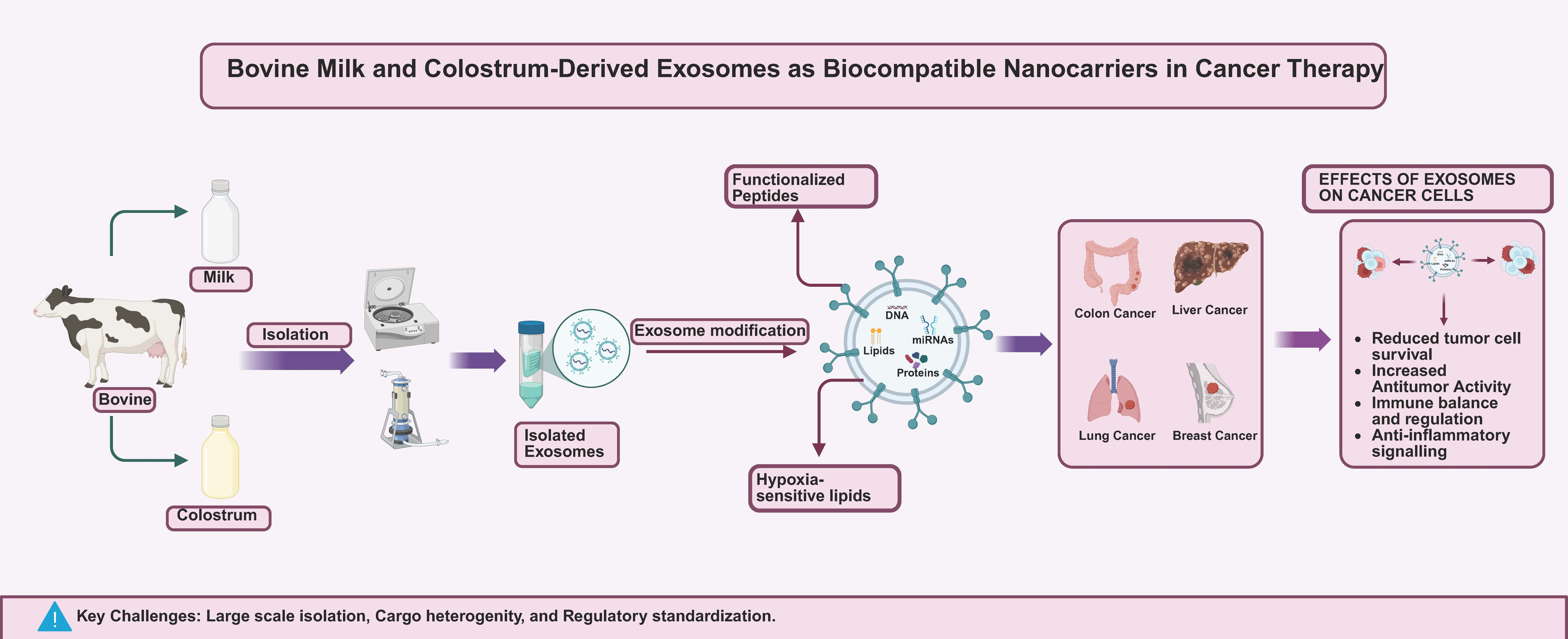

Therapeutic Potential of Bovine Colostrum- and Milk-Derived Exosomes in Cancer Prevention and Treatment: Mechanisms, Evidence, and Future Perspectives



Abstract
1. Introduction
2. Bovine Milk and Colostrum Exosomes
2.1. The Structure and Basic Components of Exosomes
2.2. Distinctiveness of Exosomes Isolated from Milk and Colostrum
2.3. A Brief Overview of Isolation and Characterization Methods
3. Exosomes Mechanisms of Action in Cancer Therapy
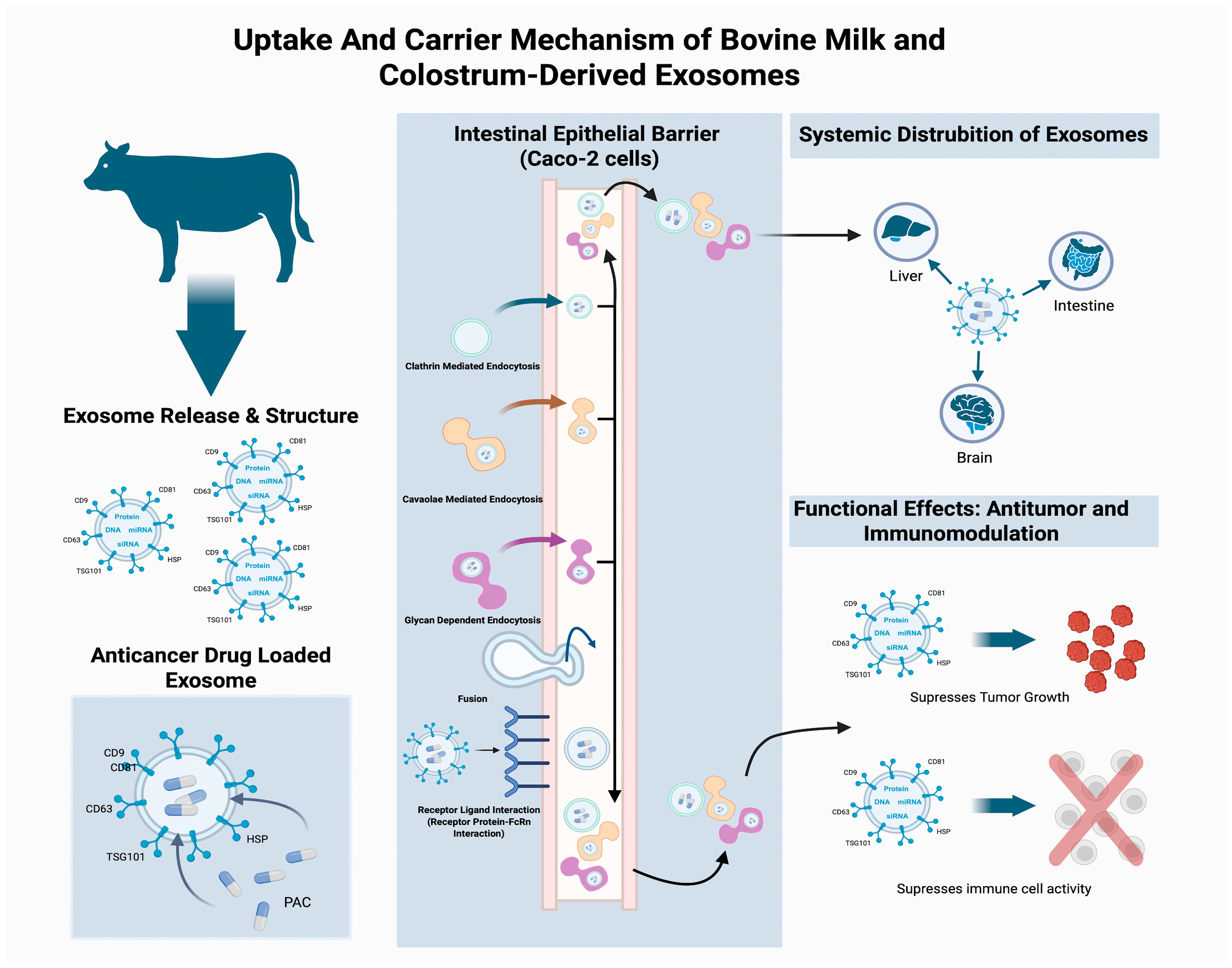
3.1. Uptake and Carrier Potential
3.2. Apoptosis Induction
3.3. Modulation of Cancer-Related Inflammation
3.4. Immunomodulatory Effects
3.5. Exosomal Cargo with Anticancer Potential
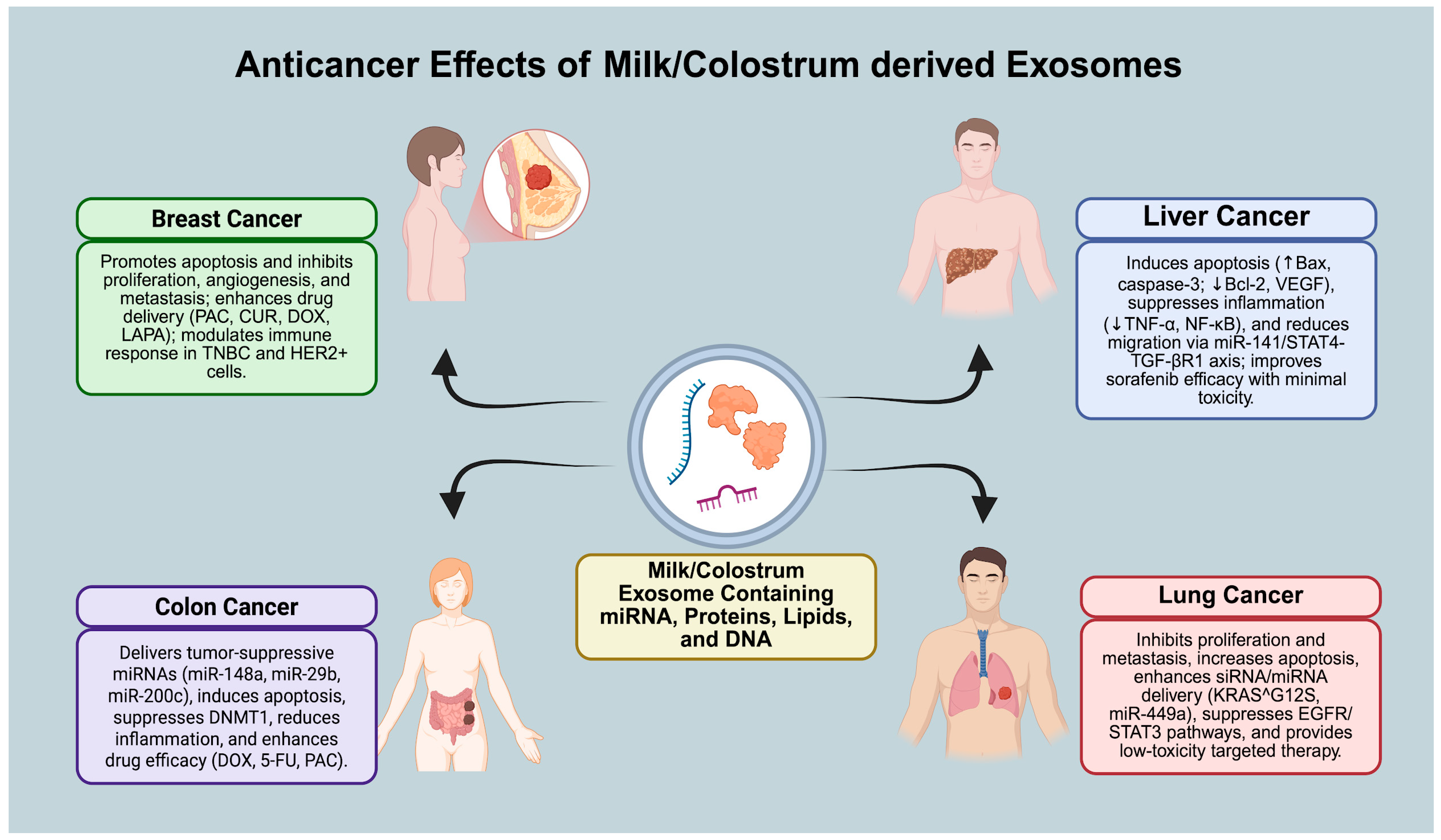
4. Therapeutic Applications in Cancer
4.1. Colon Cancer
4.2. Breast Cancer
4.3. Liver Cancer
4.4. Lung Cancer
4.5. Other Emerging Cancers
5. Preclinical Applications of BM/Colostrum Exosomes in Cancer
6. Challenges and Future Perspectives
7. Conclusions
Author Contributions
Funding
Institutional Review Board Statement
Informed Consent Statement
Data Availability Statement
Conflicts of Interest
References
- Han, G.; Kim, H.; Kim, D.E.; Ahn, Y.; Kim, J.; Jang, Y.J.; Kim, K.; Yang, Y.; Kim, S.H. The Potential of Bovine Colostrum-Derived Exosomes to Repair Aged and Damaged Skin Cells. Pharmaceutics 2022, 14, 307. [Google Scholar] [CrossRef] [PubMed]
- Duman, H.; Karav, S. Bovine Colostrum and Its Potential Contributions for Treatment and Prevention of COVID-19. Front. Immunol. 2023, 14, 1214514. [Google Scholar] [CrossRef]
- Ghosh, S.; Iacucci, M. Diverse Immune Effects of Bovine Colostrum and Benefits in Human Health and Disease. Nutrients 2021, 13, 3798. [Google Scholar] [CrossRef]
- Bursalioglu, E.O. Effect of Cow Colostrum, Mare Milk, and Human Milk on the Viability of Lung Healthy and Cancer Cell Lines. Iran. Red Crescent Med. J. 2021, 23, 5. [Google Scholar] [CrossRef]
- Leischner, C.; Egert, S.; Burkard, M.; Venturelli, S. Potential Protective Protein Components of Cow’s Milk against Certain Tumor Entities. Nutrients 2021, 13, 1974. [Google Scholar] [CrossRef]
- Kim, N.-H.; Kim, J.; Lee, J.-Y.; Bae, H.-A.; Kim, C.Y. Application of Milk Exosomes for Musculoskeletal Health: Talking Points in Recent Outcomes. Nutrients 2023, 15, 4645. [Google Scholar] [CrossRef]
- Kandimalla, R.; Aqil, F.; Alhakeem, S.; Jeyabalan, J.; Tyagi, N.; Agrawal, A.; Yan, J.; Spencer, W.; Bondada, S.; Gupta, R. Targeted Oral Delivery of Paclitaxel Using Colostrum-Derived Exosomes. Cancers 2021, 13, 3700. [Google Scholar] [CrossRef] [PubMed]
- Wallen, M.; Aqil, F.; Spencer, W.; Gupta, R.C. Milk/Colostrum Exosomes: A Nanoplatform Advancing Delivery of Cancer Therapeutics. Cancer Lett. 2023, 561, 216141. [Google Scholar] [CrossRef]
- El-kattawy, A.M.; Algezawy, O.; Alfaifi, M.Y.; Noseer, E.A.; Hawsawi, Y.M.; Alzahrani, O.R.; Algarni, A.; Kahilo, K.A.; El-Magd, M.A. Therapeutic Potential of Camel Milk Exosomes against HepaRG Cells with Potent Apoptotic, Anti-Inflammatory, and Anti-Angiogenesis Effects for Colostrum Exosomes. Biomed. Pharmacother. 2021, 143, 112220. [Google Scholar] [CrossRef] [PubMed]
- Khanam, A.; Yu, J.; Zempleni, J. Class A Scavenger Receptor-1/2 Facilitates the Uptake of Bovine Milk Exosomes in Murine Bone Marrow-Derived Macrophages and C57BL/6J Mice. Am. J. Physiol.-Cell Physiol. 2021, 321, C607–C614. [Google Scholar] [CrossRef]
- Alsayed, A.R.; Hasoun, L.Z.; Khader, H.A.; Basheti, I.A.; Permana, A.D. Bovine Colostrum Treatment of Specific Cancer Types: Current Evidence and Future Opportunities. Molecules 2022, 27, 8641. [Google Scholar] [CrossRef]
- Hanahan, D. Hallmarks of Cancer: New Dimensions. Cancer Discov. 2022, 12, 31–46. [Google Scholar] [CrossRef]
- Jin, M.-Z.; Jin, W.-L. The Updated Landscape of Tumor Microenvironment and Drug Repurposing. Signal Transduct. Target. Ther. 2020, 5, 166. [Google Scholar] [CrossRef]
- Zong, Z.; Wei, Y.; Ren, J.; Zhang, L.; Zhou, F. The Intersection of COVID-19 and Cancer: Signaling Pathways and Treatment Implications. Mol. Cancer 2021, 20, 76. [Google Scholar] [CrossRef]
- Talib, W.H.; Alsalahat, I.; Daoud, S.; Abutayeh, R.F.; Mahmod, A.I. Plant-Derived Natural Products in Cancer Research: Extraction, Mechanism of Action, and Drug Formulation. Molecules 2020, 25, 5319. [Google Scholar] [CrossRef] [PubMed]
- Chen, H.; Wang, L.; Zeng, X.; Schwarz, H.; Nanda, H.S.; Peng, X.; Zhou, Y. Exosomes, a New Star for Targeted Delivery. Front. Cell Dev. Biol. 2021, 9, 751079. [Google Scholar] [CrossRef]
- Kim, H.I.; Park, J.; Zhu, Y.; Wang, X.; Han, Y.; Zhang, D. Recent Advances in Extracellular Vesicles for Therapeutic Cargo Delivery. Exp. Mol. Med. 2024, 56, 836–849. [Google Scholar] [CrossRef] [PubMed]
- Li, J.; Wang, J.; Chen, Z. Emerging Role of Exosomes in Cancer Therapy: Progress and Challenges. Mol. Cancer 2025, 24, 13. [Google Scholar] [CrossRef]
- Admyre, C.; Johansson, S.M.; Qazi, K.R.; Filén, J.-J.; Lahesmaa, R.; Norman, M.; Neve, E.P.A.; Scheynius, A.; Gabrielsson, S. Exosomes with Immune Modulatory Features Are Present in Human Breast Milk. J. Immunol. 2007, 179, 1969–1978. [Google Scholar] [CrossRef] [PubMed]
- Zempleni, J.; Sukreet, S.; Zhou, F.; Wu, D.; Mutai, E. Milk-Derived Exosomes and Metabolic Regulation. Annu. Rev. Anim. Biosci. 2019, 7, 245–262. [Google Scholar] [CrossRef]
- Burtenshaw, D.; Regan, B.; Owen, K.; Collins, D.; McEneaney, D.; Megson, I.L.; Redmond, E.M.; Cahill, P.A. Exosomal Composition, Biogenesis and Profiling Using Point-of-Care Diagnostics—Implications for Cardiovascular Disease. Front. Cell Dev. Biol. 2022, 10, 853451. [Google Scholar] [CrossRef]
- Paskeh, M.D.A.; Entezari, M.; Mirzaei, S.; Zabolian, A.; Saleki, H.; Naghdi, M.J.; Sabet, S.; Khoshbakht, M.A.; Hashemi, M.; Hushmandi, K.; et al. Emerging Role of Exosomes in Cancer Progression and Tumor Microenvironment Remodeling. J. Hematol. Oncol. 2022, 15, 83. [Google Scholar] [CrossRef] [PubMed]
- Gurung, S.; Perocheau, D.; Touramanidou, L.; Baruteau, J. The Exosome Journey: From Biogenesis to Uptake and Intracellular Signalling. Cell Commun. Signal 2021, 19, 47. [Google Scholar] [CrossRef] [PubMed]
- Yue, B.; Yang, H.; Wang, J.; Ru, W.; Wu, J.; Huang, Y.; Lan, X.; Lei, C.; Chen, H. Exosome Biogenesis, Secretion and Function of Exosomal miRNAs in Skeletal Muscle Myogenesis. Cell Prolif. 2020, 53, e12857. [Google Scholar] [CrossRef] [PubMed]
- Lai, J.J.; Chau, Z.L.; Chen, S.; Hill, J.J.; Korpany, K.V.; Liang, N.; Lin, L.; Lin, Y.; Liu, J.K.; Liu, Y.; et al. Exosome Processing and Characterization Approaches for Research and Technology Development. Adv. Sci. 2022, 9, 2103222. [Google Scholar] [CrossRef]
- Chen, Y.-F.; Luh, F.; Ho, Y.-S.; Yen, Y. Exosomes: A Review of Biologic Function, Diagnostic and Targeted Therapy Applications, and Clinical Trials. J. Biomed. Sci. 2024, 31, 67. [Google Scholar] [CrossRef]
- Jan, A.T.; Rahman, S.; Badierah, R.; Lee, E.J.; Mattar, E.H.; Redwan, E.M.; Choi, I. Expedition into Exosome Biology: A Perspective of Progress from Discovery to Therapeutic Development. Cancers 2021, 13, 1157. [Google Scholar] [CrossRef]
- Bahadorani, M.; Nasiri, M.; Dellinger, K.; Aravamudhan, S.; Zadegan, R. Engineering Exosomes for Therapeutic Applications: Decoding Biogenesis, Content Modification, and Cargo Loading Strategies. Int. J. Nanomed. 2024, 19, 7137–7164. [Google Scholar] [CrossRef]
- Donoso-Quezada, J.; Ayala-Mar, S.; González-Valdez, J. The Role of Lipids in Exosome Biology and Intercellular Communication: Function, Analytics and Applications. Traffic 2021, 22, 204–220. [Google Scholar] [CrossRef]
- Medel-Martinez, A.; Redrado-Osta, A.; Crespo-Barreda, A.; Sancho-Albero, M.; Sánchez, L.; Sebastián, V.; Pardo, M.; De La Vieja, A.; Martín-Duque, P. Isolation and Characterization of Milk Exosomes for Use in Advanced Therapies. Biomolecules 2024, 14, 810. [Google Scholar] [CrossRef]
- Ross, M.; Atalla, H.; Karrow, N.; Mallard, B.A. The Bioactivity of Colostrum and Milk Exosomes of High, Average, and Low Immune Responder Cows on Human Intestinal Epithelial Cells. J. Dairy Sci. 2021, 104, 2499–2510. [Google Scholar] [CrossRef]
- Feng, X.; Chen, X.; Zheng, X.; Zhu, H.; Qi, Q.; Liu, S.; Zhang, H.; Che, J. Latest Trend of Milk Derived Exosomes: Cargos, Functions, and Applications. Front. Nutr. 2021, 8, 747294. [Google Scholar] [CrossRef]
- Liu, W.; Du, C.; Nan, L.; Li, C.; Wang, H.; Fan, Y.; Zhang, S. The Difference of Milk-Derived Extracellular Vesicles from Cow Colostrum and Mature Milk on miRNAs Expression and Protecting Intestinal Epithelial Cells against Lipopolysaccharide Damage. Int. J. Mol. Sci. 2024, 25, 3880. [Google Scholar] [CrossRef]
- Lee, K.W.A.; Chan, L.K.W.; Hung, L.C.; Phoebe, L.K.W.; Park, Y.; Yi, K.-H. Clinical Applications of Exosomes: A Critical Review. Int. J. Mol. Sci. 2024, 25, 7794. [Google Scholar] [CrossRef] [PubMed]
- Yun, B.; Kim, Y.; Park, D.J.; Oh, S. Comparative Analysis of Dietary Exosome-Derived microRNAs from Human, Bovine and Caprine Colostrum and Mature Milk. J. Anim. Sci. Technol. 2021, 63, 593–602. [Google Scholar] [CrossRef]
- Samuel, M.; Chisanga, D.; Liem, M.; Keerthikumar, S.; Anand, S.; Ang, C.-S.; Adda, C.G.; Versteegen, E.; Jois, M.; Mathivanan, S. Bovine Milk-Derived Exosomes from Colostrum Are Enriched with Proteins Implicated in Immune Response and Growth. Sci. Rep. 2017, 7, 5933. [Google Scholar] [CrossRef]
- Krupova, Z.; Leroux, C.; Péchoux, C.; Bevilacqua, C.; Martin, P. Comparison of Goat and Cow Milk-Derived Extracellular Vesicle miRNomes. Sci. Data 2023, 10, 465. [Google Scholar] [CrossRef]
- Zhu, L.; Sun, H.-T.; Wang, S.; Huang, S.-L.; Zheng, Y.; Wang, C.-Q.; Hu, B.-Y.; Qin, W.; Zou, T.-T.; Fu, Y.; et al. Isolation and Characterization of Exosomes for Cancer Research. J. Hematol. Oncol. 2020, 13, 152. [Google Scholar] [CrossRef] [PubMed]
- Aziz, M.A.; Seo, B.; Hussaini, H.M.; Hibma, M.; Rich, A.M. Comparing Two Methods for the Isolation of Exosomes. J. Nucleic Acids 2022, 2022, 8648373. [Google Scholar] [CrossRef] [PubMed]
- Coughlan, C.; Bruce, K.D.; Burgy, O.; Boyd, T.D.; Michel, C.R.; Garcia-Perez, J.E.; Adame, V.; Anton, P.; Bettcher, B.M.; Chial, H.J.; et al. Exosome Isolation by Ultracentrifugation and Precipitation and Techniques for Downstream Analyses. Curr. Protoc. Cell Biol. 2020, 88, e110. [Google Scholar] [CrossRef]
- Sidhom, K.; Obi, P.O.; Saleem, A. A Review of Exosomal Isolation Methods: Is Size Exclusion Chromatography the Best Option? Int. J. Mol. Sci. 2020, 21, 6466. [Google Scholar] [CrossRef]
- Guan, S.; Yu, H.; Yan, G.; Gao, M.; Sun, W.; Zhang, X. Characterization of Urinary Exosomes Purified with Size Exclusion Chromatography and Ultracentrifugation. J. Proteome Res. 2020, 19, 2217–2225. [Google Scholar] [CrossRef] [PubMed]
- İNanir, C.; EkiCi, L. Eksozomlar: Kompozisyonları, Biyolojik Fonksiyonları ve Biyoaktif Bileşiklerin Taşınmasındaki Potansiyelleri. Akad. Gıda 2020, 18, 421–432. [Google Scholar] [CrossRef]
- Chen, J.; Li, P.; Zhang, T.; Xu, Z.; Huang, X.; Wang, R.; Du, L. Review on Strategies and Technologies for Exosome Isolation and Purification. Front. Bioeng. Biotechnol. 2022, 9, 811971. [Google Scholar] [CrossRef]
- Shieh, T.-M.; Tseng, Y.-H.; Hsia, S.-M.; Wang, T.-H.; Lan, W.-C.; Shih, Y.-H. Optimization Protocol of the PEG-Based Method for OSCC-Derived Exosome Isolation and Downstream Applications. Separations 2022, 9, 435. [Google Scholar] [CrossRef]
- Xu, W.-M.; Li, A.; Chen, J.-J.; Sun, E.-J. Research Development on Exosome Separation Technology. J. Membr. Biol. 2023, 256, 25–34. [Google Scholar] [CrossRef] [PubMed]
- Ko, M.; Kim, H.J.; Park, J.; Lee, H.; Lee, K.N.; Kim, K.; Lee, J.; Yoon, S.J.; Kim, T.; Jeong, S.; et al. Isolation of Bovine Milk Exosome Using Electrophoretic Oscillation Assisted Tangential Flow Filtration with Antifouling of Micro-Ultrafiltration Membrane Filters. ACS Appl. Mater. Interfaces 2023, 15, 26069–26080. [Google Scholar] [CrossRef]
- Marsh, S.R.; Pridham, K.J.; Jourdan, J.; Gourdie, R.G. Novel Protocols for Scalable Production of High Quality Purified Small Extracellular Vesicles from Bovine Milk. Nanotheranostics 2021, 5, 488–498. [Google Scholar] [CrossRef]
- Davidson, S.M.; Boulanger, C.M.; Aikawa, E.; Badimon, L.; Barile, L.; Binder, C.J.; Brisson, A.; Buzas, E.; Emanueli, C.; Jansen, F.; et al. Methods for the Identification and Characterization of Extracellular Vesicles in Cardiovascular Studies: From Exosomes to Microvesicles. Cardiovasc. Res. 2023, 119, 45–63. [Google Scholar] [CrossRef]
- Zhou, M.; Weber, S.R.; Zhao, Y.; Chen, H.; Sundstrom, J.M. Methods for Exosome Isolation and Characterization. In Exosomes; Elsevier: Amsterdam, The Netherlands, 2020; pp. 23–38. ISBN 978-0-12-816053-4. [Google Scholar]
- Alzhrani, G.N.; Alanazi, S.T.; Alsharif, S.Y.; Albalawi, A.M.; Alsharif, A.A.; Abdel-Maksoud, M.S.; Elsherbiny, N. Exosomes: Isolation, Characterization, and Biomedical Applications. Cell Biol. Int. 2021, 45, 1807–1831. [Google Scholar] [CrossRef]
- Wang, X.; Xia, J.; Yang, L.; Dai, J.; He, L. Recent Progress in Exosome Research: Isolation, Characterization and Clinical Applications. Cancer Gene Ther. 2023, 30, 1051–1065. [Google Scholar] [CrossRef]
- Miron, R.J.; Zhang, Y. Understanding Exosomes: Part 1—Characterization, Quantification and Isolation Techniques. Periodontology 2000 2024, 94, 231–256. [Google Scholar] [CrossRef]
- Singh, K.; Nalabotala, R.; Koo, K.M.; Bose, S.; Nayak, R.; Shiddiky, M.J.A. Separation of Distinct Exosome Subpopulations: Isolation and Characterization Approaches and Their Associated Challenges. Analyst 2021, 146, 3731–3749. [Google Scholar] [CrossRef] [PubMed]
- Samuel, M.; Fonseka, P.; Sanwlani, R.; Gangoda, L.; Chee, S.H.; Keerthikumar, S.; Spurling, A.; Chitti, S.V.; Zanker, D.; Ang, C.-S.; et al. Oral Administration of Bovine Milk-Derived Extracellular Vesicles Induces Senescence in the Primary Tumor but Accelerates Cancer Metastasis. Nat. Commun. 2021, 12, 3950. [Google Scholar] [CrossRef]
- Zhang, D.; Xing, S.; Wang, C.; Wang, X.; Rong, Y.; Gan, Y.; Yang, X.; Xie, N. Milk-Derived Exosomes in Breast Cancer Therapy: Mechanisms and Therapeutic Potential. Food Biosci. 2025, 74, 107953. [Google Scholar] [CrossRef]
- Sahebi, R.; Langari, H.; Fathinezhad, Z.; Bahari Sani, Z.; Avan, A.; Ghayour Mobarhan, M.; Rezayi, M. Exosomes: New Insights into Cancer Mechanisms. J. Cell. Biochem. 2020, 121, 7–16. [Google Scholar] [CrossRef]
- Lu, C.; Tufail, M.; Jiang, C.-H.; Li, N. Exosomal Biomarkers and Immune Checkpoint Inhibitors: Advancements and Future Prospects. Cancer Cell Int. 2025, 25, 234. [Google Scholar] [CrossRef]
- Manca, S.; Upadhyaya, B.; Mutai, E.; Desaulniers, A.T.; Cederberg, R.A.; White, B.R.; Zempleni, J. Milk Exosomes Are Bioavailable and Distinct microRNA Cargos Have Unique Tissue Distribution Patterns. Sci. Rep. 2018, 8, 11321. [Google Scholar] [CrossRef] [PubMed]
- Von Schulze, A.; Deng, F. A Review on Exosome-Based Cancer Therapy. J. Cancer Metastasis Treat. 2020, 6, 42. [Google Scholar] [CrossRef]
- Xu, Z.; Zeng, S.; Gong, Z.; Yan, Y. Exosome-Based Immunotherapy: A Promising Approach for Cancer Treatment. Mol. Cancer 2020, 19, 160. [Google Scholar] [CrossRef]
- Wu, L.; Wang, L.; Liu, X.; Bai, Y.; Wu, R.; Li, X.; Mao, Y.; Zhang, L.; Zheng, Y.; Gong, T.; et al. Milk-Derived Exosomes Exhibit Versatile Effects for Improved Oral Drug Delivery. Acta Pharm. Sin. B 2022, 12, 2029–2042. [Google Scholar] [CrossRef]
- Carobolante, G.; Mantaj, J.; Ferrari, E.; Vllasaliu, D. Cow Milk and Intestinal Epithelial Cell-Derived Extracellular Vesicles as Systems for Enhancing Oral Drug Delivery. Pharmaceutics 2020, 12, 226. [Google Scholar] [CrossRef]
- Ngu, A.; Wang, S.; Wang, H.; Khanam, A.; Zempleni, J. Milk Exosomes in Nutrition and Drug Delivery. Am. J. Physiol.-Cell Physiol. 2022, 322, C865–C874. [Google Scholar] [CrossRef] [PubMed]
- Lin, D.; Chen, T.; Xie, M.; Li, M.; Zeng, B.; Sun, R.; Zhu, Y.; Ye, D.; Wu, J.; Sun, J.; et al. Oral Administration of Bovine and Porcine Milk Exosome Alter miRNAs Profiles in Piglet Serum. Sci. Rep. 2020, 10, 6983. [Google Scholar] [CrossRef]
- Qu, S.; Han, Y.; Liu, Y.; Zhu, J.; Acaroz, U.; Shen, J.; Zhu, K. Milk Exosomes Facilitate Oral Delivery of Drugs against Intestinal Bacterial Infections. J. Agric. Food Chem. 2022, 70, 16069–16079. [Google Scholar] [CrossRef] [PubMed]
- Xing, C.; Li, H.; Li, R.-J.; Yin, L.; Zhang, H.-F.; Huang, Z.-N.; Cheng, Z.; Li, J.; Wang, Z.-H.; Peng, H.-L. The Roles of Exosomal Immune Checkpoint Proteins in Tumors. Mil. Med. Res. 2021, 8, 56. [Google Scholar] [CrossRef]
- Rasihashemi, S.Z.; Sahrai, H.; Rezazadeh-Gavgani, E.; Yazdani, Y.; Khalaji, A.; Lotfinejad, P. Exosomes Carrying Immune Checkpoints, a Promising Therapeutic Approach in Cancer Treatment. Med. Oncol. 2022, 39, 183. [Google Scholar] [CrossRef] [PubMed]
- Martino, E.; Balestrieri, A.; Mele, L.; Sardu, C.; Marfella, R.; D’Onofrio, N.; Campanile, G.; Balestrieri, M.L. Milk Exosomal miR-27b Worsen Endoplasmic Reticulum Stress Mediated Colorectal Cancer Cell Death. Nutrients 2022, 14, 5081. [Google Scholar] [CrossRef]
- Ramezani, R.; Mohammadian, M.; Hosseini, E.S.; Zare, M. The Effect of Bovine Milk Lactoferrin-Loaded Exosomes (exoLF) on Human MDA-MB-231 Breast Cancer Cell Line. BMC Complement. Med. Ther. 2023, 23, 228. [Google Scholar] [CrossRef]
- Kim, K.-U.; Kim, W.-H.; Jeong, C.H.; Yi, D.Y.; Min, H. More than Nutrition: Therapeutic Potential of Breast Milk-Derived Exosomes in Cancer. Int. J. Mol. Sci. 2020, 21, 7327. [Google Scholar] [CrossRef]
- González-Sarrías, A.; Iglesias-Aguirre, C.E.; Cortés-Martín, A.; Vallejo, F.; Cattivelli, A.; Del Pozo-Acebo, L.; Del Saz, A.; López De Las Hazas, M.C.; Dávalos, A.; Espín, J.C. Milk-Derived Exosomes as Nanocarriers to Deliver Curcumin and Resveratrol in Breast Tissue and Enhance Their Anticancer Activity. Int. J. Mol. Sci. 2022, 23, 2860. [Google Scholar] [CrossRef]
- Das, A.; Sonar, S.; Kalele, K.; Subramaniyan, V. Milk Exosomes: Harnessing Nature’s Duality for Cancer Therapy. Clin. Transl. Dis. 2024, 4, e349. [Google Scholar] [CrossRef]
- Xie, M.-Y.; Hou, L.-J.; Sun, J.-J.; Zeng, B.; Xi, Q.-Y.; Luo, J.-Y.; Chen, T.; Zhang, Y.-L. Porcine Milk Exosome MiRNAs Attenuate LPS-Induced Apoptosis through Inhibiting TLR4/NF-κB and P53 Pathways in Intestinal Epithelial Cells. J. Agric. Food Chem. 2019, 67, 9477–9491. [Google Scholar] [CrossRef]
- Cheng, X.; Sun, Q.; Zheng, R.; Sun, Y.; Liang, Z.; Li, N.; Deng, C. Milk-derived Exosomes Exert Anti-inflammatory Activity in Lipopolysaccharide-induced RAW264.7 Cells by Modulating the TLR4/NF-κB and PI3K/AKT Signaling Pathways. Exp. Ther. Med. 2025, 30, 149. [Google Scholar] [CrossRef] [PubMed]
- Karbasi, S.; Erfanian, N.; Dehghan, H.; Zarban, A.; Namaei, M.H.; Hanafi-Bojd, M.Y.; Nasseri, S. Assessment of the Anti-Cancer Effects of Camel Milk Exosomes (CMEXOs) on Murine Colorectal Cancer Cell Line (CT-26). Iran. J. Allergy Asthma Immunol. 2024, 23, 321–329. [Google Scholar] [CrossRef] [PubMed]
- Shaban, A.M.; Raslan, M.; Sharawi, Z.W.; Abdelhameed, M.S.; Hammouda, O.; El-Masry, H.M.; Elsayed, K.N.M.; El-Magd, M.A. Antibacterial, Antifungal, and Anticancer Effects of Camel Milk Exosomes: An In Vitro Study. Vet. Sci. 2023, 10, 124. [Google Scholar] [CrossRef]
- Stremmel, W.; Weiskirchen, R.; Melnik, B.C. Milk Exosomes Prevent Intestinal Inflammation in a Genetic Mouse Model of Ulcerative Colitis: A Pilot Experiment. Inflamm. Intest. Dis. 2020, 5, 117–123. [Google Scholar] [CrossRef]
- Rashidi, M.; Bijari, S.; Khazaei, A.H.; Shojaei-Ghahrizjani, F.; Rezakhani, L. The Role of Milk-Derived Exosomes in the Treatment of Diseases. Front. Genet. 2022, 13, 1009338. [Google Scholar] [CrossRef]
- Wang, M.; Yang, X.; Ye, Y.; Fan, K.; Chen, C.; Zheng, L.; Li, X.; Dong, C.; Li, C.; Dong, N. Anti-Inflammatory and Restorative Effects of Milk Exosomes and Dexamethasone-Loaded Exosomes in a Corneal Alkali Burn Model. Int. J. Pharm. 2024, 666, 124784. [Google Scholar] [CrossRef] [PubMed]
- Mutai, E.; Ramer-Tait, A.E.; Zempleni, J. MicroRNAs in Bovine Milk Exosomes Are Bioavailable in Humans but Do Not Elicit a Robust Pro-Inflammatory Cytokine Response. ExRNA 2020, 2, 2. [Google Scholar] [CrossRef]
- Maralbashi, S.; Aslan, C.; Kahroba, H.; Javadian, M.; Shekari, N.; Safarzadeh, E.; Salari, F.; Kazemi, T. Immunomodulation of the Breast Cancer Microenvironment by Tumor-Derived Exosomes: Implications for Immunotherapy. Cancer Investig. 2025, 43, 412–435. [Google Scholar] [CrossRef]
- Barros, F.M.; Carneiro, F.; Machado, J.C.; Melo, S.A. Exosomes and Immune Response in Cancer: Friends or Foes? Front. Immunol. 2018, 9, 730. [Google Scholar] [CrossRef] [PubMed]
- Şahin, T.Ö.; Yılmaz, B.; Yeşilyurt, N.; Cicia, D.; Szymanowska, A.; Amero, P.; Ağagündüz, D.; Capasso, R. Recent Insights into the Nutritional Immunomodulation of Cancer-related microRNAs. Phytother. Res. 2023, 37, 4375–4397. [Google Scholar] [CrossRef]
- Çelik, E.; Cemali, Ö.; Şahin, T.Ö.; Deveci, G.; Biçer, N.Ç.; Hirfanoğlu, İ.M.; Ağagündüz, D.; Budán, F. Human Breast Milk Exosomes: Affecting Factors, Their Possible Health Outcomes, and Future Directions in Dietetics. Nutrients 2024, 16, 3519. [Google Scholar] [CrossRef]
- Cui, Z.; Amevor, F.K.; Zhao, X.; Mou, C.; Pang, J.; Peng, X.; Liu, A.; Lan, X.; Liu, L. Potential Therapeutic Effects of Milk-Derived Exosomes on Intestinal Diseases. J. Nanobiotechnol 2023, 21, 496. [Google Scholar] [CrossRef]
- Verma, P.; Mohanty, N.; Pruseth, B.; Sahoo, S.; Katiyar, A.; Singh, H.; Jena, S.K.; Das, R.R.; Som, T.K.; Sahoo, S.K.; et al. Identification of Candidate Immune System MicroRNAs DifferentiallyFound in Colostrum and Milk Exosomes. MicroRNA 2022, 11, 216–226. [Google Scholar] [CrossRef]
- Aqil, F.; Munagala, R.; Jeyabalan, J.; Agrawal, A.K.; Kyakulaga, A.-H.; Wilcher, S.A.; Gupta, R.C. Milk Exosomes—Natural Nanoparticles for siRNA Delivery. Cancer Lett. 2019, 449, 186–195. [Google Scholar] [CrossRef] [PubMed]
- Chen, Z.; Xie, Y.; Luo, J.; Chen, T.; Xi, Q.; Zhang, Y.; Sun, J. Milk Exosome-Derived miRNAs from Water Buffalo Are Implicated in Immune Response and Metabolism Process. BMC Vet. Res. 2020, 16, 123. [Google Scholar] [CrossRef] [PubMed]
- Reif, S.; Elbaum Shiff, Y.; Golan-Gerstl, R. Milk-Derived Exosomes (MDEs) Have a Different Biological Effect on Normal Fetal Colon Epithelial Cells Compared to Colon Tumor Cells in a miRNA-Dependent Manner. J. Transl. Med. 2019, 17, 325. [Google Scholar] [CrossRef]
- Timofeeva, A.M.; Paramonik, A.P.; Sedykh, S.S.; Nevinsky, G.A. Milk Exosomes: Next-Generation Agents for Delivery of Anticancer Drugs and Therapeutic Nucleic Acids. Int. J. Mol. Sci. 2023, 24, 10194. [Google Scholar] [CrossRef]
- Melnik, B.C.; Stremmel, W.; Weiskirchen, R.; John, S.M.; Schmitz, G. Exosome-Derived MicroRNAs of Human Milk and Their Effects on Infant Health and Development. Biomolecules 2021, 11, 851. [Google Scholar] [CrossRef]
- Gao, H.N.; Ren, F.Z.; Wen, P.C.; Xie, L.X.; Wang, R.; Yang, Z.N.; Li, Y.X. Yak Milk–Derived Exosomal microRNAs Regulate Intestinal Epithelial Cells on Proliferation in Hypoxic Environment. J. Dairy Sci. 2021, 104, 1291–1303. [Google Scholar] [CrossRef]
- Melnik, B.C.; Stadler, R.; Weiskirchen, R.; Leitzmann, C.; Schmitz, G. Potential Pathogenic Impact of Cow’s Milk Consumption and Bovine Milk-Derived Exosomal MicroRNAs in Diffuse Large B-Cell Lymphoma. Int. J. Mol. Sci. 2023, 24, 6102. [Google Scholar] [CrossRef]
- Badawy, A.A.; El-Hofey, S.M.; Shaban, A.M.; Orif, S.E.; Uyanıkgil, Y.; El-Magd, M.A. Camel Milk Extracellular Vesicles/Exosomes: A Fascinating Frontier in Isolation and Therapeutic Potential. Food Funct. 2025, 16, 344–365. [Google Scholar] [CrossRef]
- Saeed, M.; Alshaghdali, K.; Moholkar, D.; Kandimalla, R.; Adnan Kausar, M.; Aqil, F. Camel Milk-Derived Exosomes as Novel Nanocarriers for Curcumin Delivery in Lung Cancer. Biomol. Biomed. 2024, 26, 132–143. [Google Scholar] [CrossRef] [PubMed]
- Kumar, D.N.; Chaudhuri, A.; Shiromani, U.; Kumar, D.; Agrawal, A.K. An Investigation of In Vitro Anti-Cancer Efficacy of Dihydroartemisinin-Loaded Bovine Milk Exosomes Against Triple-Negative Breast Cancer. AAPS J. 2024, 26, 91. [Google Scholar] [CrossRef]
- Sedykh, S.; Kuleshova, A.; Nevinsky, G. Milk Exosomes: Perspective Agents for Anticancer Drug Delivery. Int. J. Mol. Sci. 2020, 21, 6646. [Google Scholar] [CrossRef] [PubMed]
- Zhang, Q.; Xiao, Q.; Yin, H.; Xia, C.; Pu, Y.; He, Z.; Hu, Q.; Wang, J.; Wang, Y. Milk-Exosome Based pH/Light Sensitive Drug System to Enhance Anticancer Activity against Oral Squamous Cell Carcinoma. RSC Adv. 2020, 10, 28314–28323. [Google Scholar] [CrossRef] [PubMed]
- Ali, M.; Elsayed, G.; Salama, M.; El-Magd, M. Camel Milk Exosomes Had a Selective Anticancer Effect on PANC1 Cells and a Proliferative Effect on H6c7 Cells. Kafrelsheikh Vet. Med. J. 2022, 20, 1–5. [Google Scholar] [CrossRef]
- Yalçıntaş, Y.M.; Bechelany, M.; Karav, S. Exploring the Therapeutic Potential of Bovine Colostrum for Cancer Therapies. Int. J. Mol. Sci. 2025, 26, 7936. [Google Scholar] [CrossRef]
- Barathan, M.; Ng, S.L.; Lokanathan, Y.; Ng, M.H.; Law, J.X. Milk-Derived Extracellular Vesicles: A Novel Perspective on Comparative Therapeutics and Targeted Nanocarrier Application. Vaccines 2024, 12, 1282. [Google Scholar] [CrossRef]
- Babaker, M.A.; Aljoud, F.A.; Alkhilaiwi, F.; Algarni, A.; Ahmed, A.; Khan, M.I.; Saadeldin, I.M.; Alzahrani, F.A. The Therapeutic Potential of Milk Extracellular Vesicles on Colorectal Cancer. Int. J. Mol. Sci. 2022, 23, 6812. [Google Scholar] [CrossRef]
- Yu, M.; Gai, C.; Li, Z.; Ding, D.; Zheng, J.; Zhang, W.; Lv, S.; Li, W. Targeted Exosome-encapsulated Erastin Induced Ferroptosis in Triple Negative Breast Cancer Cells. Cancer Sci. 2019, 110, 3173–3182. [Google Scholar] [CrossRef]
- Huang, C.; Zhou, Y.; Feng, X.; Wang, J.; Li, Y.; Yao, X. Delivery of Engineered Primary Tumor-Derived Exosomes Effectively Suppressed the Colorectal Cancer Chemoresistance and Liver Metastasis. ACS Nano 2023, 17, 10313–10326. [Google Scholar] [CrossRef] [PubMed]
- Zhou, W.; Xu, M.; Wang, Z.; Yang, M. Engineered Exosomes Loaded with miR-449a Selectively Inhibit the Growth of Homologous Non-Small Cell Lung Cancer. Cancer Cell Int. 2021, 21, 485. [Google Scholar] [CrossRef] [PubMed]
- Wolf, T.; Baier, S.R.; Zempleni, J. The Intestinal Transport of Bovine Milk Exosomes Is Mediated by Endocytosis in Human Colon Carcinoma Caco-2 Cells and Rat Small Intestinal IEC-6 Cells. J. Nutr. 2015, 145, 2201–2206. [Google Scholar] [CrossRef] [PubMed]
- Ahmed, F.; Tamma, M.; Pathigadapa, U.; Reddanna, P.; Yenuganti, V.R. Drug Loading and Functional Efficacy of Cow, Buffalo, and Goat Milk-Derived Exosomes: A Comparative Study. Mol. Pharm. 2022, 19, 763–774. [Google Scholar] [CrossRef]
- Panigrahi, A.R.; Samal, S.S.; Lankalapalli, S. Preparation and Evaluation of Exosomes Loaded with Combined Drugs against Colon Cancer. Ind. J. Pharm. Edu. Res. 2025, 59, s572–s584. [Google Scholar] [CrossRef]
- Badawy, A.A.; El-Magd, M.A.; AlSadrah, S.A. Therapeutic Effect of Camel Milk and Its Exosomes on MCF7 Cells In Vitro and In Vivo. Integr. Cancer Ther. 2018, 17, 1235–1246. [Google Scholar] [CrossRef]
- Badawy, A.A.; Othman, R.Q.A.; El-Magd, M.A. Effect of Combined Therapy with Camel Milk-Derived Exosomes, Tamoxifen, and Hesperidin on Breast Cancer. Mol. Cell. Toxicol. 2021, 17, 543–552. [Google Scholar] [CrossRef]
- Pullan, J.; Dailey, K.; Bhallamudi, S.; Feng, L.; Alhalhooly, L.; Froberg, J.; Osborn, J.; Sarkar, K.; Molden, T.; Sathish, V.; et al. Modified Bovine Milk Exosomes for Doxorubicin Delivery to Triple-Negative Breast Cancer Cells. ACS Appl. Bio Mater. 2022, 5, 2163–2175. [Google Scholar] [CrossRef]
- Değirmenci, N.S.; Uslu, M.; Kırbaş, O.K.; Şahin, F.; Önay Uçar, E. Lapatinib Loaded Exosomes as a Drug Delivery System in Breast Cancer. J. Drug Deliv. Sci. Technol. 2022, 75, 103584. [Google Scholar] [CrossRef]
- Jafarpour, S.; Ahmadi, S.; Mokarian, F.; Sharifi, M.; Ghobakhloo, S.; Yazdi, M.; Nedaeinia, R.; Salehi, R. MSC-Derived Exosomes Enhance the Anticancer Activity of Drugs in 3D Spheroid of Breast Cancer Cells. J. Drug Deliv. Sci. Technol. 2024, 92, 105375. [Google Scholar] [CrossRef]
- Halvaei, S.; Daryani, S.; Eslami-S, Z.; Samadi, T.; Jafarbeik-Iravani, N.; Bakhshayesh, T.O.; Majidzadeh-A, K.; Esmaeili, R. Exosomes in Cancer Liquid Biopsy: A Focus on Breast Cancer. Mol. Ther.—Nucleic Acids 2018, 10, 131–141. [Google Scholar] [CrossRef] [PubMed]
- Dong, X.; Bai, X.; Ni, J.; Zhang, H.; Duan, W.; Graham, P.; Li, Y. Exosomes and Breast Cancer Drug Resistance. Cell Death Dis. 2020, 11, 987. [Google Scholar] [CrossRef]
- Qin, W.; Tsukasaki, Y.; Dasgupta, S.; Mukhopadhyay, N.; Ikebe, M.; Sauter, E.R. Exosomes in Human Breast Milk Promote EMT. Clin. Cancer Res. 2016, 22, 4517–4524. [Google Scholar] [CrossRef]
- Mughees, M.; Kumar, K.; Wajid, S. Exosome Vesicle as a Nano-Therapeutic Carrier for Breast Cancer. J. Drug Target. 2021, 29, 121–130. [Google Scholar] [CrossRef]
- Bondhopadhyay, B.; Sisodiya, S.; Alzahrani, F.A.; Bakhrebah, M.A.; Chikara, A.; Kasherwal, V.; Khan, A.; Rani, J.; Dar, S.A.; Akhter, N.; et al. Exosomes: A Forthcoming Era of Breast Cancer Therapeutics. Cancers 2021, 13, 4672. [Google Scholar] [CrossRef] [PubMed]
- Wei, X.-C.; Liu, L.-J.; Zhu, F. Exosomes as Potential Diagnosis and Treatment for Liver Cancer. World J. Gastrointest. Oncol. 2022, 14, 334–347. [Google Scholar] [CrossRef]
- Melnik, B.C.; Weiskirchen, R.; Stremmel, W.; John, S.M.; Schmitz, G. Narrative Review of Bovine Milk Exosomes as a Potential Therapeutic Option for Hepatic Fibrosis. Dig. Med. Res. 2022, 5, 14. [Google Scholar] [CrossRef]
- Yu, H.; Shang, J.; Wu, C.; Bai, X.; Chen, X.; Yang, M. Sequencing Analysis of Bovine Milk Exosomal miRNA and the Effect of Bta-miR-141 on the Biological Function of HepG2 Cells. Food Biosci. 2025, 64, 105993. [Google Scholar] [CrossRef]
- Zhang, J.; Lu, S.; Zhou, Y.; Meng, K.; Chen, Z.; Cui, Y.; Shi, Y.; Wang, T.; He, Q. Motile Hepatocellular Carcinoma Cells Preferentially Secret Sugar Metabolism Regulatory Proteins via Exosomes. Proteomics 2017, 17, 1700103. [Google Scholar] [CrossRef]
- Mo, J.; Da, X.; Li, Q.; Huang, J.; Lu, L.; Lu, H. The Study of Exosomes-Encapsulated mPEG-PLGA Polymer Drug-Loaded Particles for Targeted Therapy of Liver Cancer. J. Oncol. 2022, 2022, 4234116. [Google Scholar] [CrossRef]
- Deng, R.; Wu, J.; Zhu, B.; Song, G.; Zhou, T.; Yang, M.; Pan, L.; Wang, J.; Zou, X.; Lv, Z.; et al. Engineered Exosomes Loaded with M1–8 Peptide for Targeted Therapy of Hepatocellular Carcinoma. Appl. Mater. Today 2024, 37, 102071. [Google Scholar] [CrossRef]
- Kandimalla, R.; Aqil, F.; Tyagi, N.; Gupta, R. Milk Exosomes: A Biogenic Nanocarrier for Small Molecules and Macromolecules to Combat Cancer. Am. J. Rep. Immunol. 2021, 85, e13349. [Google Scholar] [CrossRef] [PubMed]
- Tawfic, A.A.; Ibrahim, H.M.; Mohammed-Geba, K.; El-Magd, M.A. Chitosan Nanoparticles, Camel Milk Exosomes and/or Sorafenib Induce Apoptosis, Inhibit Tumor Cells Migration and Angiogenesis and Ameliorate the Associated Liver Damage in Ehrlich Ascites Carcinoma-Bearing Mice. Beni-Suef Univ. J. Basic. Appl. Sci. 2024, 13, 74. [Google Scholar] [CrossRef]
- Melnik, B.C. Dairy Consumption and Hepatocellular Carcinoma Risk. Ann. Transl. Med. 2021, 9, 736. [Google Scholar] [CrossRef]
- Wang, J.; Zhu, X.; Jiang, H.; Ji, M.; Wu, Y.; Chen, J. Cancer Cell-Derived Exosome Based Dual-Targeted Drug Delivery System for Non-Small Cell Lung Cancer Therapy. Colloids Surf. B Biointerfaces 2024, 244, 114141. [Google Scholar] [CrossRef] [PubMed]
- Vanni, I.; Alama, A.; Grossi, F.; Dal Bello, M.G.; Coco, S. Exosomes: A New Horizon in Lung Cancer. Drug Discov. Today 2017, 22, 927–936. [Google Scholar] [CrossRef]
- Chen, J.; Cao, F.; Cao, Y.; Wei, S.; Zhu, X.; Xing, W. Targeted Therapy of Lung Adenocarcinoma by the Nanoplatform Based on Milk Exosomes Loaded with Paclitaxel. J. Biomed. Nanotechnol. 2022, 18, 1075–1083. [Google Scholar] [CrossRef]
- Li, Y.; Khan, M.Z.; Wang, C.; Ma, Q. The Emerging Role of Milk-Derived Extracellular Vesicles in Gut Pathology and Cancer Management. Crit. Rev. Food Sci. Nutr. 2025; in press. [Google Scholar] [CrossRef]
- Chen, Y.; Gong, L.; Cao, Y.; Liu, Z.; Wang, Y.; Cheng, H.; Feng, Y.; Yao, S.; Yin, Y.; Wu, Z.; et al. Reprogramming Tumor-Associated Macrophages by a Dually Targeted Milk Exosome System as a Potent Monotherapy for Cancer. J. Control. Release 2024, 366, 395–409. [Google Scholar] [CrossRef]
- Ariston Gabriel, A.N.; Wang, F.; Jiao, Q.; Yvette, U.; Yang, X.; Al-Ameri, S.A.; Du, L.; Wang, Y.; Wang, C. The Involvement of Exosomes in the Diagnosis and Treatment of Pancreatic Cancer. Mol. Cancer 2020, 19, 132. [Google Scholar] [CrossRef] [PubMed]
- Melnik, B.C.; Weiskirchen, R.; Schmitz, G. Milk Exosomal microRNAs: Friend or Foe?—A Narrative Review. ExRNA 2022, 4, 22. [Google Scholar] [CrossRef]
- Pan, J.; Ding, M.; Xu, K.; Yang, C.; Mao, L.-J. Exosomes in Diagnosis and Therapy of Prostate Cancer. Oncotarget 2017, 8, 97693–97700. [Google Scholar] [CrossRef] [PubMed]
- Melnik, B.C.; Schmitz, G. Exosomes of Pasteurized Milk: Potential Pathogens of Western Diseases. J. Transl. Med. 2019, 17, 3. [Google Scholar] [CrossRef]
- Vasconcelos, A.; Santos, T.; Ravasco, P.; Neves, P.M. Dairy Products: Is There an Impact on Promotion of Prostate Cancer? A Review of the Literature. Front. Nutr. 2019, 6, 62. [Google Scholar] [CrossRef]
- Melnik, B.C. Milk Disrupts P53 and DNMT1, the Guardians of the Genome: Implications for Acne Vulgaris and Prostate Cancer. Nutr. Metab. 2017, 14, 55. [Google Scholar] [CrossRef]
- Choi, J.; Jang, H.; Park, D.; Park, B.; Jang, Y.; Lee, S.; Kim, S.H.; Shim, M.K.; Yang, Y. Oral Delivery of Photoresponsive Milk-Derived Exosomes for the Local Therapy of Glioblastoma. ACS Mater. Lett. 2024, 6, 4019–4027. [Google Scholar] [CrossRef]
- Ávila-Gálvez, M.Á.; Garay-Mayol, B.; Giménez-Bastida, J.A.; Hazas, M.D.C.L.D.L.; Mazarío-Gárgoles, C.; Brito, M.A.; Dávalos, A.; Espín, J.C.; González-Sarrías, A. Enhanced Brain Delivery and Antiproliferative Activity of Resveratrol Using Milk-Derived Exosomes. J. Agric. Food Res. 2024, 18, 101370. [Google Scholar] [CrossRef]
- Khatami, S.H.; Karami, N.; Taheri-Anganeh, M.; Taghvimi, S.; Tondro, G.; Khorsand, M.; Soltani Fard, E.; Sedighimehr, N.; Kazemi, M.; Rahimi Jaberi, K.; et al. Exosomes: Promising Delivery Tools for Overcoming Blood-Brain Barrier and Glioblastoma Therapy. Mol. Neurobiol. 2023, 60, 4659–4678. [Google Scholar] [CrossRef]
- Munagala, R.; Aqil, F.; Jeyabalan, J.; Gupta, R.C. Bovine Milk-Derived Exosomes for Drug Delivery. Cancer Lett. 2016, 371, 48–61. [Google Scholar] [CrossRef]
- Kumar, D.N.; Chaudhuri, A.; Dehari, D.; Shekher, A.; Gupta, S.C.; Majumdar, S.; Krishnamurthy, S.; Singh, S.; Kumar, D.; Agrawal, A.K. Combination Therapy Comprising Paclitaxel and 5-Fluorouracil by Using Folic Acid Functionalized Bovine Milk Exosomes Improves the Therapeutic Efficacy against Breast Cancer. Life 2022, 12, 1143. [Google Scholar] [CrossRef]
- Li, D.; Gong, L.; Lin, H.; Yao, S.; Yin, Y.; Zhou, Z.; Shi, J.; Wu, Z.; Huang, Z. Hyaluronic Acid-Coated Bovine Milk Exosomes for Achieving Tumor-Specific Intracellular Delivery of miRNA-204. Cells 2022, 11, 3065. [Google Scholar] [CrossRef]
- Li, D.; Yao, S.; Zhou, Z.; Shi, J.; Huang, Z.; Wu, Z. Hyaluronan Decoration of Milk Exosomes Directs Tumor-Specific Delivery of Doxorubicin. Carbohydr. Res. 2020, 493, 108032. [Google Scholar] [CrossRef]
- Zhang, R.; Li, D.; Zhou, Z.; Hong, H.; Shi, J.; Wu, Z. Chemo-Enzymatic Functionalization of Bovine Milk Exosomes with an EGFR Nanobody for Target-specific Drug Delivery. ChemBioChem 2024, 25, e202400512. [Google Scholar] [CrossRef] [PubMed]
- Kumar, D.N.; Chaudhuri, A.; Dehari, D.; Gamper, A.M.; Kumar, D.; Agrawal, A.K. Oral Delivery of Dihydroartemisinin for the Treatment of Melanoma via Bovine Milk Exosomes. Drug Deliv. Transl. Res. 2025, 15, 2862–2877. [Google Scholar] [CrossRef] [PubMed]
- Phutela, K.; Bal, A.; Singh, N.; Sharma, S. Hydroxycitrate-Loaded Exosomes Demonstrate Enhanced Therapeutic Efficacy against Lung Adenocarcinoma by Inhibiting the Metabolic Enzyme ATP Citrate Lyase. Nanoscale Adv. 2025, 7, 3846–3858. [Google Scholar] [CrossRef]
- Phutela, K.; Ahlawat, P.; Kaur, J.; Bal, A.; Singh, N.; Singh, H.; Sharma, S. Inhibition of ATP Citrate Lyase by Hydroxycitrate-Loaded Exosomes Suppresses the Survival of Lung Adenocarcinoma Cells. Appl. Biochem. Biotechnol. 2025, 197, 3800–3818. [Google Scholar] [CrossRef]
- Mudd, A.M.; Gu, T.; Munagala, R.; Jeyabalan, J.; Egilmez, N.K.; Gupta, R.C. Chemoprevention of Colorectal Cancer by Anthocyanidins and Mitigation of Metabolic Shifts Induced by Dysbiosis of the Gut Microbiome. Cancer Prev. Res. 2020, 13, 41–52. [Google Scholar] [CrossRef] [PubMed]
- Li, H.; Sun, Y.; Wang, J.; Wang, Z.; Wu, L.; Lei, J.; Gao, Y. Hyaluronic Acid-Modified Milk Exosomes Carrying ZNF516 Inhibit ABCC5 and Contribute to Pemetrexed Sensitivity in Lung Adenocarcinoma. Hum. Cell 2025, 38, 92. [Google Scholar] [CrossRef]
- Xu, Z.; Wang, L.; Tu, L.; Liu, T.; Zhang, Y.; He, Y.; Xiao, G.; Ouyang, G.; Ma, X.; Luo, F. Folic Acid-Modified Milk Exosomes Delivering c-Kit siRNA Overcome EGFR-TKIs Resistance in Lung Cancer by Suppressing mTOR Signaling and Stemness. Int. J. Biol. Sci. 2025, 21, 382–399. [Google Scholar] [CrossRef]
- Nathani, A.; Aare, M.; Sun, L.; Bagde, A.; Li, Y.; Rishi, A.; Singh, M. Unlocking the Potential of Camel Milk-Derived Exosomes as Novel Delivery Systems: Enhanced Bioavailability of ARV-825 PROTAC for Cancer Therapy. Pharmaceutics 2024, 16, 1070. [Google Scholar] [CrossRef] [PubMed]
- Cotto, N.M.; Chauhan, N.; Adriano, B.; Chauhan, D.S.; Cabrera, M.; Chauhan, S.C.; Yallapu, M.M. Milk Exosome-Glow Nanosystem for Cancer Cellular and Tissue Bioimaging. Chem. Biomed. Imaging 2024, 2, 711–720. [Google Scholar] [CrossRef]
- Tao, H.; Xu, H.; Zuo, L.; Li, C.; Qiao, G.; Guo, M.; Zheng, L.; Leitgeb, M.; Lin, X. Exosomes-Coated Bcl-2 siRNA Inhibits the Growth of Digestive System Tumors Both in Vitro and in Vivo. Int. J. Biol. Macromol. 2020, 161, 470–480. [Google Scholar] [CrossRef] [PubMed]
- Scott, J.L.; Gupta, R.C.; Aqil, F.; Jeyabalan, J.; Schultz, D.J. Exosomal Delivery Enhances the Antiproliferative Effects of Acid-Hydrolyzed Apiaceae Spice Extracts in Breast Cancer Cells. Foods 2024, 13, 2811. [Google Scholar] [CrossRef]
- Ji, Z.-H.; Ren, W.-Z.; Wu, H.-Y.; Zhang, J.-B.; Yuan, B. Exosomes in Mastitis—Research Status, Opportunities, and Challenges. Animals 2022, 12, 2881. [Google Scholar] [CrossRef]
- Salehi, M.; Negahdari, B.; Mehryab, F.; Shekari, F. Milk-Derived Extracellular Vesicles: Biomedical Applications, Current Challenges, and Future Perspectives. J. Agric. Food Chem. 2024, 72, 8304–8331. [Google Scholar] [CrossRef]
- Kleinjan, M.; Van Herwijnen, M.J.; Libregts, S.F.; Van Neerven, R.J.; Feitsma, A.L.; Wauben, M.H. Regular Industrial Processing of Bovine Milk Impacts the Integrity and Molecular Composition of Extracellular Vesicles. J. Nutr. 2021, 151, 1416–1425. [Google Scholar] [CrossRef] [PubMed]
- Palakurthi, S.S.; Shah, B.; Kapre, S.; Charbe, N.; Immanuel, S.; Pasham, S.; Thalla, M.; Jain, A.; Palakurthi, S. A Comprehensive Review of Challenges and Advances in Exosome-Based Drug Delivery Systems. Nanoscale Adv. 2024, 6, 5803–5826. [Google Scholar] [CrossRef]
- Zhang, M.; Hu, S.; Liu, L.; Dang, P.; Liu, Y.; Sun, Z.; Qiao, B.; Wang, C. Engineered Exosomes from Different Sources for Cancer-Targeted Therapy. Signal Transduct. Target. Ther. 2023, 8, 124. [Google Scholar] [CrossRef]
- Li, L.; Wang, F.; Zhu, D.; Hu, S.; Cheng, K.; Li, Z. Engineering Exosomes and Exosome-like Nanovesicles for Improving Tissue Targeting and Retention. Fundam. Res. 2025, 5, 851–867. [Google Scholar] [CrossRef]
- Ma, C. Application of Engineered Exosomes in Tumor Therapy. Am. J. Transl. Res. 2025, 17, 736–747. [Google Scholar] [CrossRef]
- Ye, J.; Li, D.; Jie, Y.; Luo, H.; Zhang, W.; Qiu, C. Exosome-Based Nanoparticles and Cancer Immunotherapy. Biomed. Pharmacother. 2024, 179, 117296. [Google Scholar] [CrossRef] [PubMed]
- Serrano, D.R.; Juste, F.; Anaya, B.J.; Ramirez, B.I.; Sánchez-Guirales, S.A.; Quispillo, J.M.; Hernandez, E.M.; Simon, J.A.; Trallero, J.M.; Serrano, C.; et al. Exosome-Based Drug Delivery: A Next-Generation Platform for Cancer, Infection, Neurological and Immunological Diseases, Gene Therapy and Regenerative Medicine. Pharmaceutics 2025, 17, 1336. [Google Scholar] [CrossRef]
- Li, X.; Su, L.; Zhang, X.; Chen, Q.; Wang, Y.; Shen, Z.; Zhong, T.; Wang, L.; Xiao, Y.; Feng, X.; et al. Recent Advances on the Function and Purification of Milk Exosomes: A Review. Front. Nutr. 2022, 9, 871346. [Google Scholar] [CrossRef]
- Kalluri, R.; LeBleu, V.S. The Biology, Function, and Biomedical Applications of Exosomes. Science 2020, 367, eaau6977. [Google Scholar] [CrossRef]
- Whiteside, T.L. Tumor-Derived Exosomes and Their Role in Cancer Progression. Adv. Clin. Chem. 2016, 74, 103–141. [Google Scholar] [PubMed]
- Rezaie, J.; Feghhi, M.; Etemadi, T. A Review on Exosomes Application in Clinical Trials: Perspective, Questions, and Challenges. Cell Commun. Signal 2022, 20, 145. [Google Scholar] [CrossRef] [PubMed]



| Component | Species Scope | Colostrum | Mature Milk | Reference |
|---|---|---|---|---|
| miR-30a-5p | Human + cow + goat (conserved; commonly observed) | Present/commonly observed | Present/commonly observed | [35] |
| miR-22-3p | Human + cow + goat (conserved; commonly observed) | Present/commonly observed | Present/commonly observed | [35] |
| miR-26a | Human + cow + goat (conserved; commonly observed) | Present/commonly observed | Present/commonly observed | [35] |
| Top abundant EV miRNAs overlap (ruminants) (optional strengthening row) | Cow vs. goat EV miRNomes (early lactation) | Reported as shared among top abundant miRNAs (includes miR-26a, miR-30a-5p) | — | [37] |
| EV miRNA profile differs by lactation stage (stage-difference anchor) | Cow | 329 miRNAs differ between colostrum EVs vs. mature milk EVs (RNA-seq) | 329 miRNAs differ | [33] |
| Exosome proteomes differ in lactation stage (quantitative proteomics) | Cow | Colostrum exosomes enriched in proteins linked to immune response and growth | Mature milk differs | [33] |
| Mechanism Category | Specific Mechanism | Exosomal Cargo (as Stated) | Cancer/Model System | Evidence Level |
|---|---|---|---|---|
| Uptake and carrier potential | Endocytosis, fusion, receptor–ligand interactions | Proteins, lipids, DNA, RNA | General recipient cells | Preclinical |
| Uptake and carrier potential | FcRn-dependent epithelial transport | miRNA | Caco-2 cell monolayers | Preclinical |
| Uptake and carrier potential | Glycan-dependent endocytosis | miRNA | Epithelial cells, macrophages | Preclinical |
| Uptake and carrier potential | Systemic biodistribution after oral intake | miRNA | Intestine, liver, spleen, brain (in vivo) | Preclinical |
| Uptake and carrier potential | Drug and nucleic acid transport | Small molecules, siRNA, miRNA, paclitaxel | Tumor xenograft models | Preclinical |
| Apoptosis induction | Caspase-3 activation, mitochondrial dysfunction, ER stress | miR-27b | CRC cells (buffalo milk exosomes) | Preclinical |
| Apoptosis induction | Gene-level apoptosis regulation | LF-associated cargo | Breast cancer cells | Preclinical |
| Apoptosis induction | Intrinsic apoptotic pathway activation | Bax increased, caspase-3 increased, Bcl-2 reduced | HepaRG liver cancer cells (camel milk exosomes) | Preclinical |
| Apoptosis induction | Protein–lipid complex-mediated apoptosis | HAMLET (α-lactalbumin complex) | Glioblastoma, bladder cancer models | Preclinical |
| Apoptosis induction | Drug-loaded exosome-mediated apoptosis | Curcumin, resveratrol | Cancer cell models (p53-independent) | Preclinical |
| Apoptosis induction | miRNA-driven apoptosis | miR-34a | Prostate cancer cells (goat milk exosomes) | Preclinical |
| Modulation of cancer-related inflammation | NF-κB and PI3K/AKT pathway inhibition | miRNAs, TGF-β | LPS-stimulated inflammatory models | Preclinical |
| Modulation of cancer-related inflammation | Reduction in pro-inflammatory cytokines | IL-6 decreased, TNF-α decreased | LPS-induced systems | Preclinical |
| Modulation of cancer-related inflammation | Oxidative stress suppression and epithelial protection | Not specified | Intestinal epithelium (animal models) | Preclinical |
| Modulation of cancer-related inflammation | Intestinal barrier enhancement | TJP1, CLDN1, OCLN decreased | Murine colitis models | Preclinical |
| Modulation of cancer-related inflammation | Context-dependent pro-tumor inflammatory signaling | TGF-β | Epithelial tumor models | Preclinical |
| Immunomodulatory effects | Immunosuppressive T-cell modulation | miR-214, IL-10 increased | Tumor immune microenvironment | Preclinical |
| Immunomodulatory effects | CD8+ T-cell apoptosis | Fas/FasL | T cells | Preclinical |
| Immunomodulatory effects | MDSC differentiation | TGF-β1, PGE2 | Tumor microenvironment | Preclinical |
| Immunomodulatory effects | Antigen presentation enhancement | MHC-I, MHC-II, CD86 | Dendritic cell–derived exosomes | Preclinical |
| Immunomodulatory effects | NK cell and T-cell activation | HSP70-bearing exosomes | Immune cell models | Preclinical |
| Immunomodulatory effects | Mucosal immune support | Immunoglobulins, immune-related miRNAs | Milk and colostrum exosomes | Preclinical |
| Immunomodulatory effects | Tumor-supporting immune regulation (risk context) | TGF-β2 | Breast cancer cells | Preclinical |
| Immunomodulatory effects | Species-dependent immune modulation | miRNAs | Camel and buffalo milk exosomes | Preclinical |
| Exosomal Cargo with Anticancer Potential | Suppression of steroid metabolism-related genes | miR-148a/miR-148a-3p | Cancer cell lines | Preclinical |
| Exosomal Cargo with Anticancer Potential | Downregulation of AKR1C1, AKR1C2, CYP3A5 expression | Downregulation of AKR1C1, AKR1C2, CYP3A5 expression | miR-148a-3p | Preclinical |
| Exosomal Cargo with Anticancer Potential | NF-κB signaling suppression | miR-148a | Cancer–inflammation context; intestinal barrier models | Preclinical |
| Exosomal Cargo with Anticancer Potential | Activation of p53 signaling and apoptosis | miR-34a | Various cancer types | Preclinical |
| Exosomal Cargo with Anticancer Potential | Regulation of B-cell activation, immune response, and lymphogenesis | miRNAs | Large B-cell lymphoma-related models | Preclinical |
| Exosomal Cargo with Anticancer Potential | Regulation of metastasis | IGF-derived molecules, TGF-β, casein | Camel milk exosome models | Preclinical |
| Exosomal Cargo with Anticancer Potential | ROS induction and oxidative stress regulation | LF, κ-casein mRNA | Cancer cell models | Preclinical |
| Exosomal Cargo with Anticancer Potential | Increased bioavailability and tumor inhibition | Curcumin, DHA, paclitaxel, celastrol | In vitro and in vivo cancer models | Preclinical |
| Exosomal Cargo with Anticancer Potential | Enhanced efficacy in resistant and in vivo models | ExoPAC, FA-ExoPAC | PAC-resistant cancer models | Preclinical |
| Exosomal Cargo with Anticancer Potential | Tumor shrinkage via pH- and NIR-responsive release | Exo@Dox–EPT1 | OSCC models | Preclinical |
| Exosomal Cargo with Anticancer Potential | Dose-dependent proliferation inhibition; DNMT1 reduction | miRNA/siRNA | KRAS-mutant lung cancer models | Preclinical |
| Study Model | Source of Exosomes | Exosomal Cargo Type/Treatment | Administration Route | Sample Size | Dose/Concentration | Cancer Type/Cell Line | Observed Outcome/Effect | Reference |
|---|---|---|---|---|---|---|---|---|
| In vitro (TNBC model) | BME | Doxorubicin-loaded, iRGD-modified, hypoxia-sensitive (iDHRX) | Oral (potential) | NR (number of replicates not specified; 4 TNBC cell lines used) | 10 μM iDHRX (50% cell viability in 3D spheroids) | Triple-negative breast cancer (TNBC) | 50% reduction in cell viability; specific αvβ3 integrin targeting; no adverse effect on targeting; biocompatible and effective drug delivery | [112] |
| In vitro (MDA-MB-231 cell line) | BME | Lactoferrin-loaded (exoLF) | In vitro incubation | NR (number of biological replicates not reported) | 1 mg/mL exoLF (LF loading: 1 mg/mL LF with 30 µg/mL exosomes; loading efficiency 29.72%) | Breast cancer (MDA-MB-231) | 39% late apoptosis; increased Bid gene expression; decreased Bcl-2 expression; high biocompatibility; targeted and effective anticancer delivery | [70] |
| In vitro | BME | Dihydroartemisinin (DHA)-loaded | In vitro incubation | NR (number of cell lines and biological replicates not reported) | NR (no explicit treatment dose reported) | Cancer cell model (unspecified) | Uniform 100 nm particles; rapid then controlled drug release (pH 7.4/5.5); increased cytotoxicity; increased ROS; decreased mitochondrial membrane potential; decreased migration and colony formation; enhanced bioavailability and anticancer efficacy | [97] |
| In vitro | BME | Folic acid-functionalized, PAC and 5-fluorouracil (FA-Exo-PAC/5-FU) | Oral exosome delivery concept discussed; in vitro incubation used for assays | NR (replicates not explicitly reported) | PAC: 0.5 µM equivalent, 5-FU: 1 µM equivalent; other IC50 values reported for various formulations | Breast cancer | 80–100 nm particle size; 82% encapsulation efficiency; 28% loading; sustained 48 h release; decreased IC50 values; increased apoptosis and cell internalization; decreased toxicity; enhanced antitumor effect | [144] |
| In vitro and in vivo | BME | Hyaluronic acid (HA)-coated, miR-204-loaded | In vitro incubation; in vivo intravenous (tail vein) administration | NR (number of animals/cell line replicates not clearly specified) | 0.2 nmol miR-204 per dose (6 doses, every 2 days) | Cancer model (unspecified) | High cell and blood compatibility; no systemic toxicity; miR-204 suppressed BCL2 and RAB22A; increased apoptosis; decreased tumor growth; increased doxorubicin sensitivity; decreased chemotherapy resistance | [145] |
| In vitro | Buffalo milk exosomes | Natural miRNA cargo (miR-148a, miR-15b, miR-27b, miR-125b) | In vitro incubation (cell treatment) | n = 3 independent experiments | 3 kDa milk extract: 40% (v/v), 72 h [treatment] | Colorectal cancer (HCT116, HT-29) and pancreatic cancer | miR-27b increased apoptosis, increased mitochondrial ROS, increased lysosomal accumulation; ER stress via PERK/IRE1/XBP1–CHOP; miR-125b increased EMT and metastasis; regulation of proliferation, migration, invasion | [69] |
| In vitro | BME | Hyaluronic acid-functionalized, doxorubicin-loaded (HA-mExo-Dox) | In vitro incubation | NR (replicate count not reported) | NR (doxorubicin loading dose not explicitly reported) | CD44+ cancer cells (MDA-MB-231, A549, MCF-7) | Increased selective Dox uptake; increased apoptosis; decreased cell viability in CD44+ cells; no cytotoxicity in CD44− HEK293 cells; enhanced targeting via HA-CD44 interaction | [146] |
| In vitro | BME | EGFR nanobody (7D12)-functionalized, doxorubicin-loaded | Not specified (in vitro) | n = 3 (per experiment) | 10 ng/μL (Dox equivalent) | EGFR-positive cancer cells | Increased accumulation in EGFR+ cells; decreased toxicity in EGFR− cells; increased drug uptake; increased antitumor efficacy; selective and stable targeted delivery platform | [147] |
| In vitro | BME | Near-infrared (NIR) dye-loaded (Exo-Glow) | In vitro cell treatment | n = 3 (independent experiments) | 10 μg ICG-EXO dosage | Breast cancer (MCF-7) | Maintained stability after dye loading; selective tumor labeling; no hemolytic effect; no cytotoxicity; safe and biocompatible platform for bioimaging and theranostic use | [155] |
| In vitro and in vivo | BME | Dihydroartemisinin (DHA)-loaded (Exo-DHA) | Oral (rats, mice); Intraperitoneal (DTIC control | In vitro: not specified; in vivo: n = 5/group | In vitro: 36 µM DHA (Exo-DHA); in vivo: 50 mg/kg DHA (oral) | Melanoma | 90–103 nm spherical nanoparticles; increased cytotoxic, proapoptotic, and antimetastatic effects vs. free DHA; decreased Bcl-2, survivin, MMP-9; increased Bax; 2.8× higher bioavailability; increased Cmax (5.431 µg/mL); 3.6× higher AUC0–t; reduced hepatotoxicity | [148] |
| — | Cow milk-derived exosomes | Natural miRNA cargo (miR-148a-3p, miR-155-5p, miR-29b-5p, let-7-5p, miR-125b-5p) | Oral (via milk consumption) | In vitro: 1 × 10⁴ cells/well (MTT); 5 × 10⁵ cells/well (apoptosis) | In vivo: n = 5/group | In vitro: 36 µM DHA (Exo-DHA eq.) | In vivo: Exosomes 25 mg/kg; DHA 50 mg/kg; Exo-DHA 50 mg/kg (DHA eq.) | Diffuse large B-cell lymphoma (DLBCL) | Activation of PI3K–AKT–mTORC1 pathway; increased BCL6 expression; decreased BLIMP1/PRDM1; miR-148a-3p increased BCL6 via DNMT1 suppression; miR-125b inhibits PRDM1; potential role of milk exosomes in DLBCL development | [94] |
| In vivo (urethane-induced lung cancer model) | BME | Folate-functionalized, potassium hydroxide (ACLY inhibitor)-loaded (Exo-KH) | Intraperitoneal (Exo-KH); oral and IP (PK comparison) | 6 mice/group (therapy); 12 mice/group (PK) | 250 mg/kg (KH or Exo-KH) | Non-small cell lung cancer (NSCLC) | Controlled and sustained release; decreased tumor volume; decreased ACLY, FASN, HMGCR, SREBP1c mRNA levels; confirmed ACLY suppression; targeted and biocompatible metabolic therapy | [149] |
| In vitro and in vivo | BME | Doxorubicin and anthracycline endoperoxide derivative-loaded (Exo@Dox–EPT1), pH- and light-responsive | Intravenous | In vivo: n = 5 mice/group (tumor study); biodistribution: n = 4/group | Dox: 0.25 mg/kg (free or NP); exosomes: 60 mg/kg protein | Oral squamous cell carcinoma (HSC-3, CAL-27, SCC-9) | In vitro: decreased cell viability to 48.0%, 36.6%, and 37.4% (p < 0.05) under laser; in vivo: decreased tumor volume to 0.05 ± 0.07 cm3; strong photochemotherapeutic synergy; sustained tumor fluorescence up to 72 h | [99] |
| In vitro and in vivo | BC exosomes | Folic acid-functionalized, paclitaxel-loaded (FA-ExoPAC) | Oral and intravenous | Subcutaneous efficacy: n = 10/group; orthotopic pilot: n = 4/group; orthotopic inhibition: n = 10/group; toxicity: n = 5/group | Efficacy regimens: PAC 6 mg/kg (p.o. 3×/week; i.v. 1×/week); exosome concentration 50 mg/kg (orthotopic); subcutaneous: oral dosing 3×/week with PAC 6 mg/kg; toxicity: Exo/FA-Exo 60 mg/kg/week oral; PAC 6 mg/kg/week i.p.; ExoPAC 9 mg/kg/week p.o.; FA-ExoPAC 9 or 18 mg/kg/week p.o | Non-small cell lung cancer (A549 and PAC-resistant variants) | Increased bioavailability; increased antiproliferative and colony inhibition vs. free PAC; oral: >50% tumor inhibition; IV: 76% tumor suppression; slight size increase after FA modification; reduced toxicity and enhanced antitumor efficacy | [7] |
| In vitro | BME | Potassium hydroxide (KH)-loaded, ACLY-targeted (Exo-KH) | Intraperitoneal | In vitro: technical triplicates (n = 3); Pharmacokinetics: n = 20/group | KH: 250 mg/kg i.p.; PTX: 22.5 mg/kg i.p. (free vs. exosomal forms | Non-small cell lung cancer (A549) | Increased antiproliferative and proapoptotic effects; decreased ACLY, FASN, IDH1 expression; >75% apoptosis; increased ROS and mitochondrial oxidative stress; sustained release (half-life 22.74 h); suppression of lipogenesis and metabolic reprogramming | [150] |
| In vitro | BME | bcl-2 siRNA-loaded (ExosiBcl-2) | Intravenous | In vitro: ≥3 independent experiments; in vivo: n = 5 mice/group | ExosiBcl-2: 1.5 mg/kg siRNA; exosomes alone: 7.5 mg/kg; 5-Fu: 10 mg/kg | Cancer cell lines (unspecified) | Efficient intracellular delivery; decreased proliferation; increased apoptosis; EMT suppression; decreased MAPK, FAK, EGFR, and MMP pathway activity; inhibited migration and invasion; effective siRNA-based gene therapy potential | [156] |
| In vitro | BM/BC exosomes | Medicinal plant extracts (Apiaceae family: celery, cumin, anise, ajwain) loaded via acid hydrolysis (AH) | In vitro (cell culture exposure via media) | Not explicitly reported (HPLC measurements repeated in triplicate; cells seeded per well stated) | Cell assay: extracts 0–1 mg/mL (later max 500 µg/mL) for 68–70 h; exosome loading: 1 mL extract (10 mg/mL) + 20 mg exosomal protein (PBS), incubate 30 min, then wash ×3 | Breast cancer | Increased antiproliferative and cytotoxic effects vs. free extracts; increased bioactivity after AH; increased loading efficiency up to 8× (hydrophobicity-dependent); enhanced bioavailability and anticancer efficacy | [157] |
| In vitro and in vivo (Apc^Min/+ mouse model) | Milk-derived exosomes (UN source) | Fruit-derived anthocyanidins-loaded (ExoAnthos) | In vitro: cell culture exposure; In vivo: oral gavage | In vitro: 3.0 × 10³ cells/well; in vivo: n = 5 mice total (male n = 2, female n = 3) | In vitro: Anthos/ExoAnthos 25–200 µmol/L (24–72 h); in vivo: ~8.6 mg/kg/day, oral, 3 days/week for 4 weeks | CRC | Decreased cell viability (dose-dependent); increased selectivity index; decreased number of colon tumors; restored phase I/II enzyme balance; suppression of CRC development linked to bacterial toxins and carcinogens | [151] |
| In vitro | Camel milk-derived exosomes (colostrum, early, mid-lactation) | Natural cargo (LF, κ-casein, bioactive molecules) | In vitro exposure | Cells: 1 × 10⁴ cells/well (96-well format) | HepaRG: 0–100 µg/mL; THLE-2: 0–500 µg/mL (24 h; IC50-based dosing for mechanistic assays) | Liver cancer (HepaRG) vs. normal hepatocytes (THLE-2) | Colostrum exosomes: strongest antitumor effect; increased Bax, increased caspase-3, decreased Bcl-2; decreased TNFα, NFκB, TGFβ1, COX-2, VEGF; highest DNA damage; IC50 = 20.6 µg/mL; selective cytotoxicity toward cancer cells; particle size 30–100 nm; highest yield ≈ 410 mg/L | [9] |
| In vitro | Milk-derived exosomes | Paclitaxel-loaded, iRGD-functionalized | In vitro (cell culture exposure) | Not explicitly reported | Not explicitly reported | Lung adenocarcinoma | Significant antitumor effect; no cytotoxicity in normal cells; increased intracellular PAC accumulation; effective penetration into 3D tumor spheroids; high selectivity and biocompatibility | [131] |
| In vitro | Camel milk-derived exosomes (CM-EXOs) | Natural cargo | In vitro (cell culture exposure via media) | Not explicitly reported (cells seeded at 1 × 10⁴ cells/well; multiple dose groups defined by IC50 fractions) | CM-EXOs: 0–200 µg/mL (HepG2, CaCo2) and 0–500 µg/mL (Vero); mechanistic assays at ¼ IC50, ½ IC50, IC50 for 24 h | Liver cancer and colorectal cancer (Caco-2) | Dose-dependent cytotoxicity; strongest effect in Caco-2 cells; no toxicity in Vero cells; increased Bax and caspase-3, decreased Bcl-2; increased ROS and oxidative stress; decreased Nrf2/HO-1; apoptosis and oxidative stress-mediated cell death; selective and biocompatible system | [77] |
| In vitro and in vivo | Milk-derived exosomes | Hyaluronic acid (HA)-modified, carrying ZNF516 | In vitro: cell culture exposure. In vivo: intravenous injection (xenograft model) | In vitro: cell culture exposure. In vivo: intravenous injection (xenograft model) | In vitro: HA–mEXOs 3.75–120 μg/mL; EXO uptake studies 30 μg/mL; PMX 0.001–100 μM. In vivo: PMX 100 mg/kg; HA–mEXOs or mEXOs 25 mg/kg, 3×/week | Lung adenocarcinoma (PMX-resistant LUAD cells) | Increased cellular uptake; restored PMX sensitivity; decreased proliferation, invasion, and metastasis; decreased tumor growth in vivo; HA–mEXOs suppressed ABCC5; targeted, biocompatible, and safe nanotherapeutic platform | [152] |
| In vitro and in vivo | Milk-derived exosomes | Folic acid-functionalized, siRNA-loaded targeting c-kit (FA-mExo-siRNA-c-kit) | In vivo: IV (tail vein) for biodistribution, toxicity, and metastasis; intratumoral for mExo treatment; oral gavage for gefitinib. In vitro: cell culture exposure. | Biodistribution: BALB/c nude n = 4/group. Xenograft: BALB/c nude n = 5/group (5 groups). Metastatic liver model: n = 5/group (5 groups). (In vitro: experiments stated triplicate for qRT-PCR) | Biodistribution: DiR-exosomes 60 mg/kg (IV, single). Toxicity: FA-mExo-siRNA-c-kit 60 mg/kg (IV, daily ×7). Xenograft therapy: Gefitinib 5 mg/kg (gavage) ± FA-mExo 60 µg/kg (intratumoral). Metastasis: FA-mExo (±siRNA) 60 µg/kg (IV, qod ×12) + gefitinib 5 mg/kg (gavage ×12). | Gefitinib-resistant lung cancer | Decreased c-kit expression; suppression of EMT and stem-like phenotype; decreased tumor growth; increased survival with gefitinib co-administration; effective strategy against EGFR-TKI resistance | [153] |
| In vitro and in vivo | Milk-derived exosomes | siPDL1-loaded, M2pep- and 7D12-functionalized (7D12-mExo-M2pep-siPDL1) | Intravenous tail injection | In vivo therapy: orthotopic MC38 model 6 groups, n = 6 mice/group. Biodistribution: number of mice not specified. (In vitro: no explicit n; multiple assays performed; loading efficiency via fluorescence standard curve) | In vivo: IV tail vein injection (biodistribution + therapy). In vitro: cell incubation/coculture assays (macrophages, cancer cells) | EGFR+ tumor models | Successful PD-L1 silencing; M2→M1 macrophage conversion; 90% tumor growth inhibition; decreased liver metastasis; increased survival; immunoactive tumor microenvironment; effective TAM-targeted immunotherapy platform | [133] |
| In vitro and in vivo | Camel milk-derived exosomes (CME) | BRD4 inhibitor ARV-825-loaded (ARV-825–CME) | Oral | Tumor uptake (mouse): 3 groups, n = 3/group PK (rat): n = 5/group Intestinal distribution: n = 3/timepoint In vitro: ≥3 repeats (often triplicate) | 5 mg/kg (rats, PK); in vitro 150 µg/mL | Cancer cell lines (SF8628, H1975R) | 42.75% encapsulation; 136.8 nm size; –32.75 mV zeta potential; 5.4× faster release vs. free drug; 1.5–2× lower IC50; 2.55× higher Cmax; 5.56× higher AUC; increased solubility, absorption, and therapeutic efficacy | [154] |
Disclaimer/Publisher’s Note: The statements, opinions and data contained in all publications are solely those of the individual author(s) and contributor(s) and not of MDPI and/or the editor(s). MDPI and/or the editor(s) disclaim responsibility for any injury to people or property resulting from any ideas, methods, instructions or products referred to in the content. |
© 2026 by the authors. Licensee MDPI, Basel, Switzerland. This article is an open access article distributed under the terms and conditions of the Creative Commons Attribution (CC BY) license.
Share and Cite
Karakülah, Y.S.; Yalçıntaş, Y.M.; Bechelany, M.; Karav, S. Therapeutic Potential of Bovine Colostrum- and Milk-Derived Exosomes in Cancer Prevention and Treatment: Mechanisms, Evidence, and Future Perspectives. Pharmaceuticals 2026, 19, 168. https://doi.org/10.3390/ph19010168
Karakülah YS, Yalçıntaş YM, Bechelany M, Karav S. Therapeutic Potential of Bovine Colostrum- and Milk-Derived Exosomes in Cancer Prevention and Treatment: Mechanisms, Evidence, and Future Perspectives. Pharmaceuticals. 2026; 19(1):168. https://doi.org/10.3390/ph19010168
Chicago/Turabian StyleKarakülah, Yusuf Serhat, Yalçın Mert Yalçıntaş, Mikhael Bechelany, and Sercan Karav. 2026. "Therapeutic Potential of Bovine Colostrum- and Milk-Derived Exosomes in Cancer Prevention and Treatment: Mechanisms, Evidence, and Future Perspectives" Pharmaceuticals 19, no. 1: 168. https://doi.org/10.3390/ph19010168
APA StyleKarakülah, Y. S., Yalçıntaş, Y. M., Bechelany, M., & Karav, S. (2026). Therapeutic Potential of Bovine Colostrum- and Milk-Derived Exosomes in Cancer Prevention and Treatment: Mechanisms, Evidence, and Future Perspectives. Pharmaceuticals, 19(1), 168. https://doi.org/10.3390/ph19010168