Therapeutic Potential of Gynostemma pentaphyllum (Thunb.) Makino Against COVID-19 Identified Through Network Pharmacology

 ,
,  , , and
Abstract
1. Introduction
2. Results
2.1. Network Pharmacology Analysis
2.2. Protein–Protein Interaction
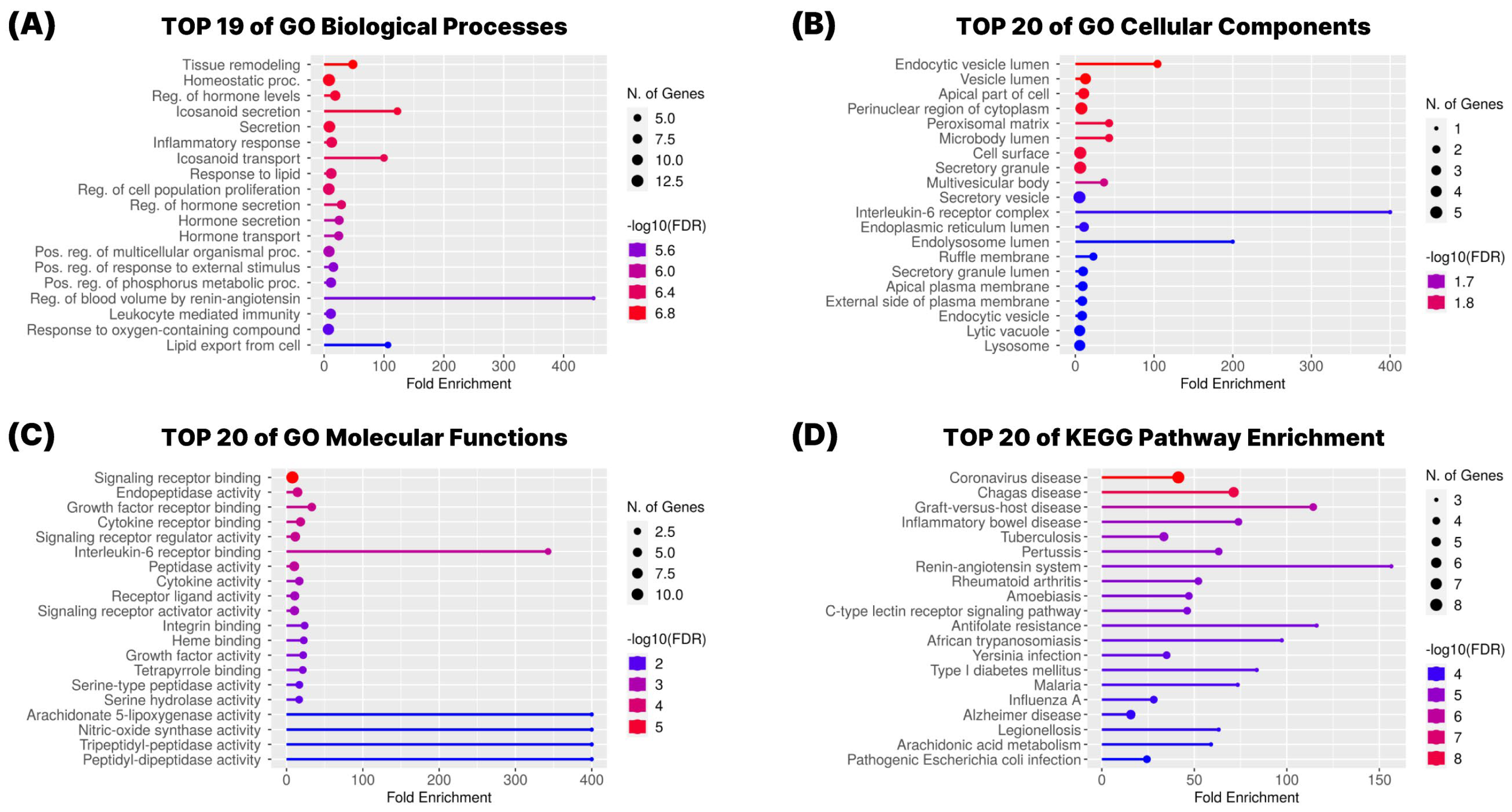
2.3. GO and KEGG Pathway Enrichment Analysis
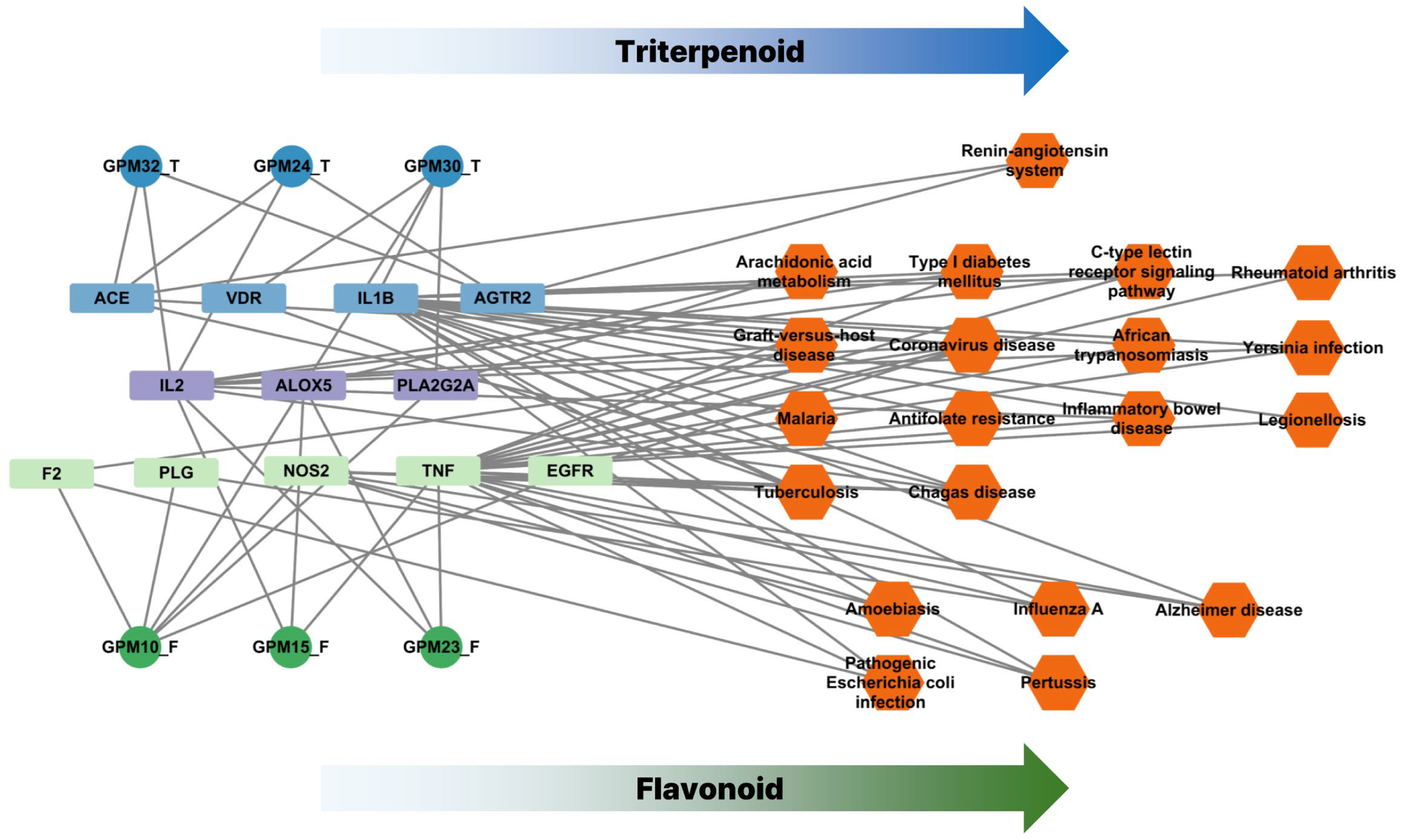
2.4. Compound–Target–Pathway (CTP) Network
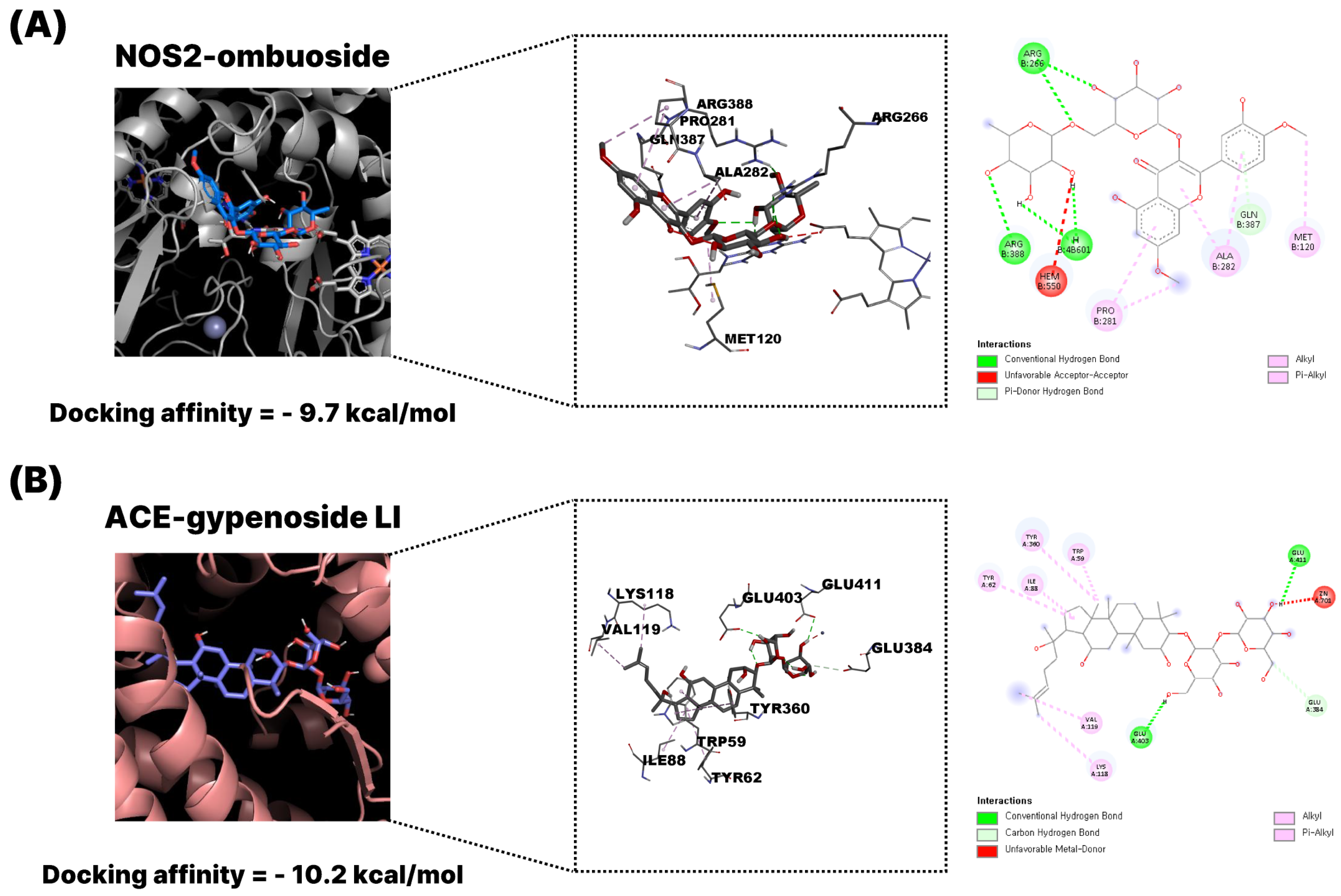
2.5. Molecular Docking Analysis
2.6. Three-Dimensional Quantitative Structure-Activity Relationship (3D-QSAR) Analysis
2.7. Molecular Dynamics (MD) Simulation Analysis
3. Discussion
4. Materials and Methods
4.1. Screening for Active Compounds, Putative Target Proteins and COVID-19 Associated Genes
4.2. Network Construction
4.3. Gene Ontology (GO) Analysis and Kyoto Encyclopedia of Genes and Genomes (KEGG) Pathway Enrichment Analysis
4.4. Molecular Docking
4.5. Three-Dimensional Quantitative Structure-Activity Relationship (3D-QSAR)
4.6. Molecular Dynamics (MD) Simulation
5. Conclusions
Supplementary Materials
Author Contributions
Funding
Institutional Review Board Statement
Informed Consent Statement
Data Availability Statement
Conflicts of Interest
References
- Davis, H.E.; McCorkell, L.; Vogel, J.M.; Topol, E.J. Long COVID: Major Findings, Mechanisms and Recommendations. Nat. Rev. Microbiol. 2023, 21, 133–146. [Google Scholar] [CrossRef] [PubMed]
- Parotto, M.; Gyöngyösi, M.; Howe, K.; Myatra, S.N.; Ranzani, O.; Shankar-Hari, M.; Herridge, M.S. Post-Acute Sequelae of COVID-19: Understanding and Addressing the Burden of Multisystem Manifestations. Lancet Respir. Med. 2023, 11, 739–754. [Google Scholar] [CrossRef]
- Xie, Y.; Choi, T.; Al-Aly, Z. Postacute Sequelae of SARS-CoV-2 Infection in the Pre-Delta, Delta, and Omicron Eras. N. Engl. J. Med. 2024, 391, 515–525. [Google Scholar] [CrossRef]
- Cai, M.; Xie, Y.; Topol, E.J.; Al-Aly, Z. Three-Year Outcomes of Post-Acute Sequelae of COVID-19. Nat. Med. 2024, 30, 1564–1573. [Google Scholar] [CrossRef]
- Zheng, S.; Xue, T.; Wang, B.; Guo, H.; Liu, Q. Application of Network Pharmacology in the Study of the Mechanism of Action of Traditional Chinese Medicine in the Treatment of COVID-19. Front. Pharmacol. 2022, 13, 926901. [Google Scholar] [CrossRef]
- Ahmed, A.; Saleem, M.A.; Saeed, F.; Afzaal, M.; Imran, A.; Nadeem, M.; Ambreen, S.; Imran, M.; Hussain, M.; Al Jbawi, E. Gynostemma pentaphyllum an Immortal Herb with Promising Therapeutic Potential: A Comprehensive Review on Its Phytochemistry and Pharmacological Perspective. Int. J. Food Prop. 2023, 26, 808–832. [Google Scholar] [CrossRef]
- Wang, B.; Li, M.; Gao, H.; Sun, X.; Gao, B.; Zhang, Y.; Yu, L. Chemical Composition of Tetraploid Gynostemma pentaphyllum Gypenosides and Their Suppression on Inflammatory Response by NF-κB/MAPKs/AP-1 Signaling Pathways. Food Sci. Nutr. 2020, 8, 1197–1207. [Google Scholar] [CrossRef]
- Zhou, K.; Zhang, Y.; Zhou, Y.; Xu, M.; Yu, S. Production of Gypenoside XVII from Ginsenoside Rb1 by Enzymatic Transformation and Their Anti-Inflammatory Activity In Vitro and In Vivo. Molecules 2023, 28, 7001. [Google Scholar] [CrossRef]
- Saeedi-Boroujeni, A.; Mahmoudian-Sani, M.-R. Anti-Inflammatory Potential of Quercetin in COVID-19 Treatment. J. Inflamm. 2021, 18, 3. [Google Scholar] [CrossRef] [PubMed]
- Li, Y.; Lin, W.; Huang, J.; Xie, Y.; Ma, W. Anti-Cancer Effects of Gynostemma pentaphyllum (Thunb.) Makino (Jiaogulan). Chin. Med. 2016, 11, 43. [Google Scholar] [CrossRef]
- Khazdair, M.R.; Anaeigoudari, A.; Agbor, G.A. Anti-Viral and Anti-Inflammatory Effects of Kaempferol and Quercetin and COVID-2019: A Scoping Review. Asian Pac. J. Trop. Biomed. 2021, 11, 327. [Google Scholar] [CrossRef]
- Li, L.; Yang, L.; Yang, L.; He, C.; He, Y.; Chen, L.; Dong, Q.; Zhang, H.; Chen, S.; Li, P. Network Pharmacology: A Bright Guiding Light on the Way to Explore the Personalized Precise Medication of Traditional Chinese Medicine. Chin. Med. 2023, 18, 146. [Google Scholar] [CrossRef]
- Su, W.; Chen, P.; Yang, Z.; Zhong, N.; Ma, Q.; Zeng, X.; Zhang, J.; Wang, Y.; Li, P. Network Pharmacology Integrated Molecular Docking Reveals the Potential of Hypericum Japonicum Thunb. Ex Murray against COVID-19. Biotechnol. Biotechnol. Equip. 2021, 35, 453–461. [Google Scholar] [CrossRef]
- Jain, N.K.; Tailang, M.; Chandrasekaran, B.; Khazaleh, N.; Thangavel, N.; Makeen, H.A.; Albratty, M.; Najmi, A.; Alhazmi, H.A.; Zoghebi, K.; et al. Integrating Network Pharmacology with Molecular Docking to Rationalize the Ethnomedicinal Use of Alchornea laxiflora (Benth.) Pax & K. Hoffm. for Efficient Treatment of Depression. Front. Pharmacol. 2024, 15, 1290398. [Google Scholar] [CrossRef] [PubMed]
- Arrari, F.; Ortiz-Flores, R.-M.; Lhamyani, S.; Garcia-Fuentes, E.; Jabri, M.-A.; Sebai, H.; Bermudez-Silva, F.-J. Protective Effects of Spirulina Against Lipid Micelles and Lipopolysaccharide-Induced Intestinal Epithelium Disruption in Caco-2 Cells: In Silico Molecular Docking Analysis of Phycocyanobilin. Nutrients 2024, 16, 4074. [Google Scholar] [CrossRef]
- Hussain, M.S.; Azam, F.; Eldarrat, H.A.; Alkskas, I.; Mayoof, J.A.; Dammona, J.M.; Ismail, H.; Ali, M.; Arif, M.; Haque, A. Anti-Inflammatory, Analgesic and Molecular Docking Studies of Lanostanoic Acid 3-O-α-D-Glycopyranoside Isolated from Helichrysum stoechas. Arab. J. Chem. 2020, 13, 9196–9206. [Google Scholar] [CrossRef]
- Nguyen, N.T.; Dai, V.V.; Meervelt, L.V.; Thao, D.T.; Thong, N.M. 4-(1-Methylamino)Ethylidene-1,5-Disubstituted Pyrrolidine-2,3-Diones: Synthesis, Anti-Inflammatory Effect and in Silico Approaches. Beilstein J. Org. Chem. 2025, 21, 817–829. [Google Scholar] [CrossRef] [PubMed]
- Harrison, C.; Acharya, K.R. ACE for All—A Molecular Perspective. J. Cell Commun. Signal. 2014, 8, 195–210. [Google Scholar] [CrossRef]
- Fadahunsi, O.S.; Olorunnisola, O.S.; Adegbola, P.I.; Subair, T.I.; Elegbeleye, O.E. Angiotensin Converting Enzyme Inhibitors from Medicinal Plants: A Molecular Docking and Dynamic Simulation Approach. Silico Pharmacol. 2022, 10, 20. [Google Scholar] [CrossRef]
- Heo, S.-Y.; Kang, N.; Kim, E.-A.; Kim, J.; Lee, S.-H.; Ahn, G.; Oh, J.H.; Shin, A.Y.; Kim, D.; Heo, S.-J. Purification and Molecular Docking Study on the Angiotensin I-Converting Enzyme (ACE)-Inhibitory Peptide Isolated from Hydrolysates of the Deep-Sea Mussel Gigantidas Vrijenhoeki. Mar. Drugs 2023, 21, 458. [Google Scholar] [CrossRef]
- Oyebamiji, A.K.; Akintelu, S.A.; Akintayo, E.T.; Akintayo, C.O.; Aworinde, H.O.; Adekunle, O.D. Dataset on Substituents Effect on Biological Activities of Linear RGD-Containing Peptides as Potential Anti-Angiotensin Converting Enzyme. Data Brief 2023, 50, 109478. [Google Scholar] [CrossRef]
- Guy, J.L.; Jackson, R.M.; Jensen, H.A.; Hooper, N.M.; Turner, A.J. Identification of Critical Active-Site Residues in Angiotensin-Converting Enzyme-2 (ACE2) by Site-Directed Mutagenesis. FEBS J. 2005, 272, 3512–3520. [Google Scholar] [CrossRef]
- Schultheiß, C.; Willscher, E.; Paschold, L.; Gottschick, C.; Klee, B.; Henkes, S.-S.; Bosurgi, L.; Dutzmann, J.; Sedding, D.; Frese, T.; et al. The IL-1β, IL-6, and TNF Cytokine Triad Is Associated with Post-Acute Sequelae of COVID-19. Cell Rep. Med. 2022, 3, 100663. [Google Scholar] [CrossRef]
- Ni, W.; Yang, X.; Yang, D.; Bao, J.; Li, R.; Xiao, Y.; Hou, C.; Wang, H.; Liu, J.; Yang, D.; et al. Role of Angiotensin-Converting Enzyme 2 (ACE2) in COVID-19. Crit. Care 2020, 24, 422. [Google Scholar] [CrossRef]
- Wang, C.; Wang, P.; Chen, W.; Bai, Y. Mechanisms of Gynostemma pentaphyllum against Non-Alcoholic Fibre Liver Disease Based on Network Pharmacology and Molecular Docking. J. Cell. Mol. Med. 2022, 26, 3760–3771. [Google Scholar] [CrossRef]
- Zhang, Y.; Shi, G.; Luo, Z.; Wang, J.; Wu, S.; Zhang, X.; Zhao, Y. Activity Components from Gynostemma pentaphyllum for Preventing Hepatic Fibrosis and of Its Molecular Targets by Network Pharmacology Approach. Molecules 2021, 26, 3006. [Google Scholar] [CrossRef] [PubMed]
- Qi, J.; Ping, D.; Sun, X.; Huang, K.; Peng, Y.; Liu, C. A Herbal Product Inhibits Carbon Tetrachloride-Induced Liver Fibrosis by Suppressing the Epidermal Growth Factor Receptor Signaling Pathway. J. Ethnopharmacol. 2023, 311, 116419. [Google Scholar] [CrossRef]
- Hu, L.; Zhao, X.; He, X.; Guo, Y.; Cheng, H.; Chen, S.; Zhou, G.; Wang, J.; Lu, Y. Gynostemma pentaphyllum Ameliorates CCl4-Induced Liver Injury via PDK1/Bcl-2 Pathway with Comprehensive Analysis of Network Pharmacology and Transcriptomics. Chin. Med. 2024, 19, 70. [Google Scholar] [CrossRef] [PubMed]
- Li, S.; Li, S.-L.; Liu, J.-K.; Wang, Z.; Yuan, P.-P. Mechanism of Gynostemma pentaphyllum in treatment of metabolism associated fatty liver disease based on network pharmacology and molecular docking. Zhongguo Zhong Yao Za Zhi 2021, 46, 5080–5087. [Google Scholar] [CrossRef] [PubMed]
- Li, X.; Lai, H.; Wang, X. Integrating Transcriptomics, Network Analysis, and Single-Cell RNA Sequencing to Identify and Validate Key Target Genes of Gynostemma in the Treatment of Non-Alcoholic Fatty Liver Disease. Eur. J. Pharm. Sci. 2025, 212, 107214. [Google Scholar] [CrossRef]
- Hong, M.; Cai, Z.; Song, L.; Liu, Y.; Wang, Q.; Feng, X. Gynostemma pentaphyllum Attenuates the Progression of Nonalcoholic Fatty Liver Disease in Mice: A Biomedical Investigation Integrated with In Silico Assay. Evid.-Based Complement. Altern. Med. ECAM 2018, 2018, 8384631. [Google Scholar] [CrossRef]
- Zheng, Y.; Wei, W.; Wang, Y.; Li, T.; Wei, Y.; Gao, S. Gypenosides Exert Cardioprotective Effects by Promoting Mitophagy and Activating PI3K/Akt/GSK-3β/Mcl-1 Signaling. PeerJ 2024, 12, e17538. [Google Scholar] [CrossRef]
- Liang, R.; Wu, J.; Lin, R.; Ran, L.; Shu, B.; Deng, H. Molecular Mechanisms of Gynostemma pentaphyllum in Prevention and Treatment of Non-Small-Cell Lung Cancer. Evid.-Based Complement. Altern. Med. ECAM 2022, 2022, 9938936. [Google Scholar] [CrossRef] [PubMed]
- Qi, Y.-S.; Xie, J.-B.; Xie, P.; Duan, Y.; Ling, Y.-Q.; Gu, Y.-L.; Piao, X.-L. Uncovering the Anti-NSCLC Effects and Mechanisms of Gypenosides by Metabolomics and Network Pharmacology Analysis. J. Ethnopharmacol. 2021, 281, 114506. [Google Scholar] [CrossRef]
- Tu, Q.; Zhu, Y.; Yuan, Y.; Guo, L.; Liu, L.; Yao, L.; Zou, Y.; Li, J.; Chen, F. Gypenosides Inhibit Inflammatory Response and Apoptosis of Endothelial and Epithelial Cells in LPS-Induced ALI: A Study Based on Bioinformatic Analysis and in Vivo/Vitro Experiments. Drug Des. Devel. Ther. 2021, 15, 289–303. [Google Scholar] [CrossRef] [PubMed]
- Qi, Y.-S.; Xiao, M.-Y.; Xie, P.; Xie, J.-B.; Guo, M.; Li, F.-F.; Piao, X.-L. Comprehensive Serum Metabolomics and Network Analysis to Reveal the Mechanism of Gypenosides in Treating Lung Cancer and Enhancing the Pharmacological Effects of Cisplatin. Front. Pharmacol. 2022, 13, 1070948. [Google Scholar] [CrossRef]
- Wang, J.; Shi, J.; Jia, N.; Sun, Q. Network Pharmacology Analysis Reveals Neuroprotection of Gynostemma pentaphyllum (Thunb.) Makino in Alzheimer’ Disease. BMC Complement. Med. Ther. 2022, 22, 57. [Google Scholar] [CrossRef] [PubMed]
- Liu, Y.; Li, Y.; Li, J.; Rao, H.; Sun, J.; Xiu, J.; Wu, N. Gypenosides Alleviate Oxidative Stress in the Hippocampus, Promote Mitophagy, and Mitigate Depressive-like Behaviors Induced by CUMS via SIRT1. J. Ethnopharmacol. 2025, 337, 118823. [Google Scholar] [CrossRef]
- Liu, H.-Y.; Ji, Y.-L.; Du, H.; Chen, S.-H.; Wang, D.-P.; Lv, Q.-L. Bacoside a Inhibits the Growth of Glioma by Promoting Apoptosis and Autophagy in U251 and U87 Cells. Naunyn. Schmiedebergs Arch. Pharmacol. 2024, 397, 2105–2120. [Google Scholar] [CrossRef]
- Wang, W.-X.; He, X.-Y.; Yi, D.-Y.; Tan, X.-Y.; Wu, L.-J.; Li, N.; Feng, B.-B. Uncovering the Molecular Mechanism of Gynostemma pentaphyllum (Thunb.) Makino against Breast Cancer Using Network Pharmacology and Molecular Docking. Medicine 2022, 101, e32165. [Google Scholar] [CrossRef]
- Zhang, Y.; Ji, P.; Xiao, X.; Wang, J.; Wan, Z.; Cao, H.; Kong, L.; Jin, Y. Network Pharmacology, Molecular Docking, and Molecular Dynamics Simulations Shed Light on the Mechanism behind Gynostemma pentaphyllum’s Efficacy against Osteosarcoma. Medicine 2024, 103, e39454. [Google Scholar] [CrossRef]
- Guo, J.; Wu, Z.; Chang, X.; Huang, M.; Wang, Y.; Liu, R.; Li, J. Network Pharmacology Analysis and In Vitro Validation of the Active Ingredients and Potential Mechanisms of Gynostemma pentaphyllum Against Esophageal Cancer. Comb. Chem. High Throughput Screen. 2025, 28, 500–513. [Google Scholar] [CrossRef]
- Wang, H.; Chen, Y.; Lin, T. Based on Network Pharmacology and Molecular Docking Technology to Explore the Pharmacodynamic Components and Mechanism of Gynostemmae Pentaphylli Herba Reversing Cervical Intraepithelial Neoplasia. BMC Complement. Med. Ther. 2025, 25, 112. [Google Scholar] [CrossRef]
- Liu, H.; Li, X.; Duan, Y.; Xie, J.-B.; Piao, X.-L. Mechanism of Gypenosides of Gynostemma pentaphyllum Inducing Apoptosis of Renal Cell Carcinoma by PI3K/AKT/mTOR Pathway. J. Ethnopharmacol. 2021, 271, 113907. [Google Scholar] [CrossRef]
- Liu, H.; Li, X.; Xie, J.; Lv, C.; Lian, F.; Zhang, S.; Duan, Y.; Zeng, Y.; Piao, X. Gypenoside L and Gypenoside LI Inhibit Proliferation in Renal Cell Carcinoma via Regulation of the MAPK and Arachidonic Acid Metabolism Pathways. Front. Pharmacol. 2022, 13, 820639. [Google Scholar] [CrossRef]
- Liu, M.; Liao, H.; Peng, Q.; Huang, J.; Liu, W.; Dai, M.; Li, Z.; Xie, Y.; Liu, J.; Ying, Y.; et al. Comprehensive Network Pharmacology and Experimentation to Unveil the Therapeutic Efficacy and Mechanisms of Gypenoside LI in Anaplastic Thyroid Cancer. BMC Cancer 2025, 25, 870. [Google Scholar] [CrossRef]
- Li, X.; Liu, H.; Lv, C.; Du, J.; Lian, F.; Zhang, S.; Wang, Z.; Zeng, Y. Gypenoside-Induced Apoptosis via the PI3K/AKT/mTOR Signaling Pathway in Bladder Cancer. BioMed Res. Int. 2022, 2022, 9304552. [Google Scholar] [CrossRef]
- Pan, L.; Lan, B.; Li, S.; Jin, Y.; Cui, M.; Xia, Y.; Wei, S.; Huang, H. Gypenoside Inhibits Gastric Cancer Proliferation by Suppressing Glycolysis via the Hippo Pathway. Sci. Rep. 2024, 14, 19003. [Google Scholar] [CrossRef] [PubMed]
- Wu, H.; Lai, W.; Wang, Q.; Zhou, Q.; Zhang, R.; Zhao, Y. Gypenoside Induces Apoptosis by Inhibiting the PI3K/AKT/mTOR Pathway and Enhances T-Cell Antitumor Immunity by Inhibiting PD-L1 in Gastric Cancer. Front. Pharmacol. 2024, 15, 1243353. [Google Scholar] [CrossRef] [PubMed]
- Li, K.; Li, H.; Xu, W.; Liu, W.; Du, Y.; He, J.-F.; Ma, C. Research on the Potential Mechanism of Gypenosides on Treating Thyroid-Associated Ophthalmopathy Based on Network Pharmacology. Med. Sci. Monit. Int. Med. J. Exp. Clin. Res. 2019, 25, 4923–4932. [Google Scholar] [CrossRef] [PubMed]
- Li, X.; Alhasani, R.H.; Cao, Y.; Zhou, X.; He, Z.; Zeng, Z.; Strang, N.; Shu, X. Gypenosides Alleviate Cone Cell Death in a Zebrafish Model of Retinitis Pigmentosa. Antioxidants 2021, 10, 1050. [Google Scholar] [CrossRef]
- Yang, P.; Xu, P.; Cheng, C.; Jiao, J.; Wu, Y.; Dong, S.; Xie, J.; Zhu, X. Integrating Network Pharmacology and Experimental Models to Investigate the Efficacy of QYHJ on Pancreatic Cancer. J. Ethnopharmacol. 2022, 297, 115516. [Google Scholar] [CrossRef]
- Yang, S.; Zhao, M.; Lu, M.; Feng, Y.; Zhang, X.; Wang, D.; Jiang, W. Network Pharmacology Analysis, Molecular Docking Integrated Experimental Verification Reveal the Mechanism of Gynostemma pentaphyllum in the Treatment of Type II Diabetes by Regulating the IRS1/PI3K/Akt Signaling Pathway. Curr. Issues Mol. Biol. 2024, 46, 5561–5581. [Google Scholar] [CrossRef] [PubMed]
- Shen, Z.; Gao, X.; Huang, D.; Xu, X.; Shen, J. The Potential of Gynostemma pentaphyllum in the Treatment of Hyperlipidemia and Its Interaction with the LOX1-PI3K-AKT-eNOS Pathway. Food Sci. Nutr. 2024, 12, 8000–8012. [Google Scholar] [CrossRef] [PubMed]
- Pei, A.; Ma, Y.; Gao, M.; Zhao, Q. Protective Efficacy and Mechanism of Gypenosides against Diabetic Cataracts via the Ferroptosis Pathway: A Study Based on Network Pharmacology. Eur. J. Pharmacol. 2025, 1007, 178175. [Google Scholar] [CrossRef]
- Xie, J.-B.; Xie, P.; Guo, M.; Li, F.-F.; Xiao, M.-Y.; Qi, Y.-S.; Pei, W.-J.; Luo, H.-T.; Gu, Y.-L.; Piao, X.-L. Protective Effect of Heat-Processed Gynostemma pentaphyllum on High Fat Diet-Induced Glucose Metabolic Disorders Mice. Front. Pharmacol. 2023, 14, 1215150. [Google Scholar] [CrossRef]
- Xie, P.; Guo, M.; Xie, J.-B.; Xiao, M.-Y.; Qi, Y.-S.; Duan, Y.; Li, F.-F.; Piao, X.-L. Effects of Heat-Processed Gynostemma pentaphyllum on High-Fat Diet-Fed Mice of Obesity and Functional Analysis on Network Pharmacology and Molecular Docking Strategy. J. Ethnopharmacol. 2022, 294, 115335. [Google Scholar] [CrossRef] [PubMed]
- Ding, Y.; Wang, X.; Feng, Y.; Zhang, X.; Li, C.; Ge, Y.; Yang, Y.; Su, J.; Chu, X. Exploring the Effects of the Anti-Diarrheal Formula on Intestinal Oxidative Stress Based on Network Pharmacology, Molecular Docking, and Microbiomics. Fitoterapia 2025, 185, 106742. [Google Scholar] [CrossRef]
- Yang, L.; Xie, X.; Tu, Z.; Fu, J.; Xu, D.; Zhou, Y. The Signal Pathways and Treatment of Cytokine Storm in COVID-19. Signal Transduct. Target. Ther. 2021, 6, 255. [Google Scholar] [CrossRef]
- Gheblawi, M.; Wang, K.; Viveiros, A.; Nguyen, Q.; Zhong, J.-C.; Turner, A.J.; Raizada, M.K.; Grant, M.B.; Oudit, G.Y. Angiotensin-Converting Enzyme 2: SARS-CoV-2 Receptor and Regulator of the Renin-Angiotensin System. Circ. Res. 2020, 126, 1456–1474. [Google Scholar] [CrossRef]
- Jackson, C.B.; Farzan, M.; Chen, B.; Choe, H. Mechanisms of SARS-CoV-2 Entry into Cells. Nat. Rev. Mol. Cell Biol. 2022, 23, 3–20. [Google Scholar] [CrossRef] [PubMed]
- Alzaabi, M.M.; Hamdy, R.; Ashmawy, N.S.; Hamoda, A.M.; Alkhayat, F.; Khademi, N.N.; Al Joud, S.M.A.; El-Keblawy, A.A.; Soliman, S.S.M. Flavonoids Are Promising Safe Therapy against COVID-19. Phytochem. Rev. 2022, 21, 291–312. [Google Scholar] [CrossRef]
- Choudhary, S.; Nehul, S.; Singh, A.; Panda, P.K.; Kumar, P.; Sharma, G.K.; Tomar, S. Unraveling Antiviral Efficacy of Multifunctional Immunomodulatory Triterpenoids against SARS-COV-2 Targeting Main Protease and Papain-like Protease. IUBMB Life 2024, 76, 228–241. [Google Scholar] [CrossRef]
- Liskova, A.; Samec, M.; Koklesova, L.; Samuel, S.M.; Zhai, K.; Al-Ishaq, R.K.; Abotaleb, M.; Nosal, V.; Kajo, K.; Ashrafizadeh, M.; et al. Flavonoids against the SARS-CoV-2 Induced Inflammatory Storm. Biomed. Pharmacother. 2021, 138, 111430. [Google Scholar] [CrossRef] [PubMed]
- Li, X.-C.; Li, F.-F.; Pei, W.-J.; Yang, J.; Gu, Y.-L.; Piao, X.-L. The Content and Principle of the Rare Ginsenosides Produced from Gynostemma pentaphyllum after Heat Treatment. Molecules 2023, 28, 6415. [Google Scholar] [CrossRef]
- Wu, Q.; Jang, M.; Piao, X.-L. Determination by UPLC-MS of Four Dammarane-Type Saponins from Heat-Processed Gynostemma pentaphyllum. Biosci. Biotechnol. Biochem. 2014, 78, 311–316. [Google Scholar] [CrossRef]
- Xie, P.; Xie, J.-B.; Xiao, M.-Y.; Guo, M.; Qi, Y.-S.; Li, F.-F.; Piao, X.-L. Liver Lipidomics Analysis Reveals the Anti-Obesity and Lipid-Lowering Effects of Gypnosides from Heat-Processed Gynostemma pentaphyllum in High-Fat Diet Fed Mice. Phytomedicine 2023, 115, 154834. [Google Scholar] [CrossRef]
- Wang, Y.-R.; Xing, S.-F.; Lin, M.; Gu, Y.-L.; Piao, X.-L. Determination of Flavonoids from Gynostemma pentaphyllum Using Ultra-Performance Liquid Chromatography with Triple Quadrupole Tandem Mass Spectrometry and an Evaluation of Their Antioxidant Activity in Vitro. J. Liq. Chromatogr. Relat. Technol. 2018, 41, 437–444. [Google Scholar] [CrossRef]
- Jo, H.-G.; Baek, C.Y.; Hwang, Y.; Baek, E.; Park, C.; Song, H.S.; Lee, D. Investigating the Anti-Inflammatory, Analgesic, and Chondroprotective Effects of Gynostemma pentaphyllum (Thunb.) Makino in Osteoarthritis: An In Vitro and In Vivo Study. Int. J. Mol. Sci. 2024, 25, 9594. [Google Scholar] [CrossRef]
- Cao, H.; Xiao, G.; Li, D.; Chen, X.; Chen, W.; Chen, Z. Gynostemma pentaphyllum Promotes Skeletal Muscle Recovery via Its Inhibition of PXR-IL-6 Expression. Phytomedicine Plus 2022, 2, 100305. [Google Scholar] [CrossRef]
- Kao, T.H.; Huang, S.C.; Inbaraj, B.S.; Chen, B.H. Determination of Flavonoids and Saponins in Gynostemma pentaphyllum (Thunb.) Makino by Liquid Chromatography–Mass Spectrometry. Anal. Chim. Acta 2008, 626, 200–211. [Google Scholar] [CrossRef] [PubMed]
- Huang, S.C.; Hung, C.F.; Wu, W.B.; Chen, B.H. Determination of Chlorophylls and Their Derivatives in Gynostemma pentaphyllum Makino by Liquid Chromatography–Mass Spectrometry. J. Pharm. Biomed. Anal. 2008, 48, 105–112. [Google Scholar] [CrossRef]
- Liu, L.; Huang, Y.; Wang, Q.; Wang, Z.; Pan, K.; Zhang, J.; Peng, Y.; Wang, G.; Yin, Z.; Sun, J. Simultaneous Determination of 13 Representative Saponins from the Total Saponins of Gynostemma pentaphyllum in Rat Plasma Using LC-MS/MS for Pharmacokinetic Study. J. Pharm. Biomed. Anal. 2025, 264, 116970. [Google Scholar] [CrossRef]
- Zhang, L.; Lin, Y.; Guan, H.; Hu, L.; Pan, G. Simultaneous Determination of Gypenoside LVI, Gypenoside XLVI, 2α-OH-Protopanaxadiol and Their Two Metabolites in Rat Plasma by LC–MS/MS and Its Application to Pharmacokinetic Studies. J. Chromatogr. B 2015, 1005, 9–16. [Google Scholar] [CrossRef]
- Guo, S.; Sui, C.; Ma, Y. Development of a Targeted Method for Quantification of Gypenoside XLIX in Rat Plasma, Using SPE and LC–MS/MS. Biomed. Chromatogr. 2017, 31, e3898. [Google Scholar] [CrossRef]
- He, Y.; Liang, Q.; Luo, L.; He, Y.; Huang, X.; Wen, C. Determination of Gypenoside A and Gypenoside XLIX in Rat Plasma by UPLC-MS/MS and Applied to the Pharmacokinetics and Bioavailability. Int. J. Anal. Chem. 2022, 2022, 6734408. [Google Scholar] [CrossRef]
- Li, H.; Yang, A.; Yang, M.; Zhou, F.; Zhang, R.; Zheng, Z.; Wang, X. Pharmacokinetic Studies of Gypenoside XLVI in Rat Plasma Using UPLC-MS/MS Method. Curr. Pharm. Anal. 2024, 20, 143–151. [Google Scholar] [CrossRef]
- Wang, H.; Chen, C.; Xue, M.; Zhang, Y.; Chen, K.; Sun, B.; Wang, P.; Tong, X.; Yu, X.; Li, H.; et al. Identification and Mechanism of Hepatoprotective Saponins and Endogenous Metabolites in the Sweet Variant of Gynostemma pentaphyllum. Bioorganic Chem. 2025, 165, 108996. [Google Scholar] [CrossRef] [PubMed]
- Yang, Q.; Zang, H.; Xing, T.; Zhang, S.; Li, C.; Zhang, Y.; Dong, Y.; Hu, X.; Yu, J.; Wen, J.; et al. Gypenoside XLIX Protects against Acute Kidney Injury by Suppressing IGFBP7/IGF1R-Mediated Programmed Cell Death and Inflammation. Phytomedicine 2021, 85, 153541. [Google Scholar] [CrossRef]
- Dejani, N.N.; Elshabrawy, H.A.; da Silva Maia Bezerra Filho, C.; de Sousa, D.P. Anticoronavirus and Immunomodulatory Phenolic Compounds: Opportunities and Pharmacotherapeutic Perspectives. Biomolecules 2021, 11, 1254. [Google Scholar] [CrossRef]
- Wrońska, N.; Szlaur, M.; Zawadzka, K.; Lisowska, K. The Synergistic Effect of Triterpenoids and Flavonoids—New Approaches for Treating Bacterial Infections? Molecules 2022, 27, 847. [Google Scholar] [CrossRef]
- Wu, X.; Xiang, M.; Jing, H.; Wang, C.; Novakovic, V.A.; Shi, J. Damage to Endothelial Barriers and Its Contribution to Long COVID. Angiogenesis 2024, 27, 5–22. [Google Scholar] [CrossRef] [PubMed]
- Aljadah, M.; Khan, N.; Beyer, A.M.; Chen, Y.; Blanker, A.; Widlansky, M.E. Clinical Implications of COVID-19-Related Endothelial Dysfunction. JACC Adv. 2024, 3, 101070. [Google Scholar] [CrossRef] [PubMed]
- Samarelli, F.; Graziano, G.; Gambacorta, N.; Graps, E.A.; Leonetti, F.; Nicolotti, O.; Altomare, C.D. Small Molecules for the Treatment of Long-COVID-Related Vascular Damage and Abnormal Blood Clotting: A Patent-Based Appraisal. Viruses 2024, 16, 450. [Google Scholar] [CrossRef]
- Noce, A.; Marrone, G.; Di Lauro, M.; Vita, C.; Montalto, G.; Giorgino, G.; Chiaramonte, C.; D’Agostini, C.; Bernardini, S.; Pieri, M. Potential Anti-Inflammatory and Anti-Fatigue Effects of an Oral Food Supplement in Long COVID Patients. Pharmaceuticals 2024, 17, 463. [Google Scholar] [CrossRef]
- Chatterjee, D.; Maparu, K. Long COVID Syndrome: Exploring Therapies for Managing and Overcoming Persistent Symptoms. Inflammopharmacology 2025, 33, 4097–4113. [Google Scholar] [CrossRef]
- Peluso, M.J.; Deeks, S.G. Mechanisms of Long COVID and the Path toward Therapeutics. Cell 2024, 187, 5500–5529. [Google Scholar] [CrossRef] [PubMed]
- Oktavianawati, I.; Santoso, M.; Bakar, M.F.A.; Kim, Y.-U.; Fatmawati, S. Recent Progress on Drugs Discovery Study for Treatment of COVID-19: Repurposing Existing Drugs and Current Natural Bioactive Molecules. Appl. Biol. Chem. 2023, 66, 89. [Google Scholar] [CrossRef]
- Afendi, F.M.; Okada, T.; Yamazaki, M.; Hirai-Morita, A.; Nakamura, Y.; Nakamura, K.; Ikeda, S.; Takahashi, H.; Altaf-Ul-Amin, M.; Darusman, L.K.; et al. KNApSAcK Family Databases: Integrated Metabolite–Plant Species Databases for Multifaceted Plant Research. Plant Cell Physiol. 2012, 53, e1. [Google Scholar] [CrossRef]
- Beyerstedt, S.; Casaro, E.B.; Rangel, É.B. COVID-19: Angiotensin-Converting Enzyme 2 (ACE2) Expression and Tissue Susceptibility to SARS-CoV-2 Infection. Eur. J. Clin. Microbiol. Infect. Dis. 2021, 40, 905–919. [Google Scholar] [CrossRef]
- Espe, S. Malacards: The Human Disease Database. J. Med. Libr. Assoc. 2018, 106, 140–141. [Google Scholar] [CrossRef]
- Leyva-López, N.; Gutierrez-Grijalva, E.P.; Ambriz-Perez, D.L.; Heredia, J.B. Flavonoids as Cytokine Modulators: A Possible Therapy for Inflammation-Related Diseases. Int. J. Mol. Sci. 2016, 17, 921. [Google Scholar] [CrossRef]
- Ge, S.X.; Jung, D.; Yao, R. ShinyGO: A Graphical Gene-Set Enrichment Tool for Animals and Plants. Bioinformatics 2020, 36, 2628–2629. [Google Scholar] [CrossRef] [PubMed]
- Hanwell, M.D.; Curtis, D.E.; Lonie, D.C.; Vandermeersch, T.; Zurek, E.; Hutchison, G.R. Avogadro: An Advanced Semantic Chemical Editor, Visualization, and Analysis Platform. J. Cheminformatics 2012, 4, 17. [Google Scholar] [CrossRef]
- Seo, J.I.; Yu, J.S.; Zhang, Y.; Yoo, H.H. Evaluating Flavonoids as Potential Aromatase Inhibitors for Breast Cancer Treatment: In Vitro Studies and in Silico Predictions. Chem. Biol. Interact. 2024, 392, 110927. [Google Scholar] [CrossRef]
- Ali, M.Y.; Zaib, S.; Jannat, S.; Khan, I. Inhibition of Angiotensin-I Converting Enzyme by Ginsenosides: Structure–Activity Relationships and Inhibitory Mechanism. J. Agric. Food Chem. 2021, 69, 6073–6086. [Google Scholar] [CrossRef] [PubMed]



| Targets (kcal/mol) [RMSD] (Å) | ||||||||||||||||
|---|---|---|---|---|---|---|---|---|---|---|---|---|---|---|---|---|
| Type | Compounds (Code) | ACE [0.730] | AGTR2 [0.127] | ALOX5 [1.902] | EGFR [0.925] | F2 [0.919] | IL1B [0.885] | IL2 [2.137] | NOS2 [1.377] | PLA2G2A [N.C.] | PLG [0.599] | TNF [2.298] | VDR [0.790] | Mpro [2.173] | RdRp [0.340] | Spike Protein [0.356] |
| Triterpenoid | Damulin B (GPM24) | −10.3 ± 0.0 | −9.5 ± 0.5 | −9.2 ± 0.0 | −8.2 ± 0.2 | −7.9 ± 0.1 | −6.5 ± 0.1 | −6.5 ± 0.5 | −8.8 ± 0.1 | −6.5 ± 0.2 | −6.1 ± 0.2 | −8.1 ± 0.0 | −7.6 ± 0.0 | −7.3 ± 0.0 | −11.4 ± 0.0 | −6.8 ± 0.6 |
| Gypenoside LI (GPM32) | −10.2 ± 0.0 | −9.5 ± 0.0 | −9.5 ± 0.0 | −8.1 ± 0.0 | −7.7 ± 0.1 | −6.4 ± 0.0 | −6.5 ± 0.0 | −9.5 ± 0.0 | −6.8 ± 0.1 | −6.4 ± 0.1 | −7.7 ± 0.1 | −7.3 ± 0.1 | −7.4 ± 0.1 | −10.7 ± 0.0 | −6.9 ± 0.4 | |
| Gypensapogenin E (GPM30) | −10.0 ± 0.0 | −9.9 ± 0.0 | −10.6 ± 0.8 | −8.3 ± 0.0 | −7.8 ± 0.0 | −6.6 ± 0.0 | −7.5 ± 0.3 | −8.7 ± 0.1 | −7.0 ± 0.0 | −6.6 ± 0.2 | −8.7 ± 0.3 | −7.6 ± 0.3 | −8.0 ± 0.4 | −9.5 ± 0.1 | −7.2 ± 0.1 | |
| Flavonoid | Ombuin (GPM10) | −8.5 ± 0.0 | −7.9 ± 0.1 | −8.7 ± 0.0 | −8.0 ± 0.0 | −7.3 ± 0.0 | −8.2 ± 0.0 | −6.1 ± 0.0 | −8.2 ± 0.0 | −6.4 ± 0.0 | −6.3 ± 0.0 | −7.5 ± 0.0 | −8.6 ± 0.0 | −7.0 ± 0.0 | −8.4 ± 0.0 | −6.7 ± 0.1 |
| Ombuoside (GPM15) | −10.1 ± 0.0 | −9.3 ± 0.1 | −9.5 ± 0.0 | −8.1 ± 0.0 | −8.6 ± 0.0 | −6.5 ± 0.0 | −6.4 ± 0.4 | −9.7 ± 0.0 | −6.5 ± 0.3 | −7.2 ± 0.1 | −8.2 ± 0.0 | −7.5 ± 0.0 | −7.7 ± 0 | −10.4 ± 0.0 | −7.3 ± 0.1 | |
| Rutin (GPM23) | −9.8 ± 0.0 | −10.0 ± 0.0 | −9.3 ± 0.1 | −9.2 ± 0.0 | −9.0 ± 0 | −7.8 ± 0.0 | −6.8 ± 0.0 | −9.8 ± 0.0 | −7.2 ± 0.0 | −6.5 ± 0.5 | −7.8 ± 0.3 | −7.9 ± 0.1 | −7.7 ± 0.1 | −10.7 ± 0.0 | −7.7 ± 0.0 | |
| Reference | Lisinopril (ACE inhibitor) | −7.7 ± 0.1 | −7.1 ± 0.2 | −7.2 ± 0.1 | −6.4 ± 0.0 | −6.7 ± 0.1 | −6.3 ± 0.0 | −5.5 ± 0.0 | −7.8 ± 0.3 | −5.8 ± 0.1 | −5.1 ± 0.4 | −7.4 ± 0.1 | −6.8 ± 1.0 | −6.0 ± 0.1 | −7.6 ± 0.3 | −5.9 ± 0.1 |
| Remdesivir (RdRp inhibitor) | −6.0 ± 0.0 | −5.2 ± 0.0 | −6.2 ± 0.1 | −5.1 ± 0.0 | −5.6 ± 0.3 | −5.4 ± 0.1 | −4.7 ± 0.2 | −6.3 ± 0.1 | −4.8 ± 0.0 | −5.1 ± 0.1 | −5.1 ± 0.0 | −6.2 ± 0.2 | −5.7 ± 0.0 | −6.7 ± 0.0 | −5.1 ± 0.1 | |
| Category | Disease | Pathways | Key Target | Refs. |
|---|---|---|---|---|
| Liver | NAFLD and NASH | Apoptosis; Non-alcoholic fatty liver disease; PI3K-Akt signaling pathway; Lipid and atherosclerosis | AKT1, GSK3B | [25] |
| Hepatic fibrosis | Proteoglycans in cancer; PI3K–Akt signaling pathway; EGFR tyrosine kinase inhibitor resistance; EGFR signaling pathway | AKT1, IL6, STAT3, EGFR | [26,27] | |
| Liver injury | Apoptosis signaling pathway | STAT3, HIF1A, PTGS2, EGFR, PPARG, MTOR, AKT1, ESR1, TNF | [28] | |
| Metabolism-associated fatty liver disease | NF-κB signaling pathway; PI3K-Akt signaling pathway; TNF signaling pathway; HIF-1 signaling pathway | TNF, IL6, PTGS2, TP53, CCL2, VEGFA | [29] | |
| Non-alcoholic fatty liver disease | HIF-1 signaling pathway; AGE-RAGE signaling pathway in diabetic complications; Chagas disease; Beta-oxidation pathway | IL6, PTGS2, NFKB1, CDK6, SERPINE1, ADRB2, PCNA, TOP2A, TYMS, PPARA | [30,31] | |
| Heart | Heart failure | PI3K/Akt signaling pathway; MAPK signaling pathway; Ras signaling pathway | MAPK, EGFR, PI3KCA, MCL1 | [32] |
| Lung | Non-small-cell lung cancer | Chemical carcinogenesis receptor activation; Lipid and atherosclerosis; Human cytomegalovirus infection; Pyrimidine metabolism; Pantothenate and CoA biosynthesis | MMP9, STAT3, TYMS, MYC, ESR1, HIF1A | [33,34] |
| Acute lung injury | TNF-α signaling pathway; NF-κB signaling pathway | CXCL2, CXCL1, CXCL10, CCL2, TNFAIP3, SOCS3, IFIT2, TLR2, IL1, IL6, IRF7, | [35] | |
| Lung cancer | MAPK14/STAT3 signaling pathway | STAT3, MAPK14, EGFR, TYMS | [36] | |
| Brain/nervous system | Alzheimer’s disease | Amoebiasis; African trypanosomiasis; Cytokine-cytokine receptor interaction | EGFR, IL1B, IL6, NOS3, PON1 | [37] |
| Depression | HIF-1 signaling pathway; PI3K-Akt signaling pathway; TNF signaling pathway | SIRT1 | [38] | |
| Glioma | EGFR tyrosine kinase inhibitor resistance; Prolactin signaling pathway; VEGF signaling pathway | STAT3, HSP90AA1, IL6, ESR1, PIK3CA, MTOR, PTPN11, MAPK3, BCL2L1, PTGS2 | [39] | |
| Cancer | Breast cancer | PI3K-Akt signaling pathway; Breast cancer pathway; EGFR tyrosine kinase inhibitor resistance | ALB, EGFR, ESR1, AR, PGR, HSP90AA1 | [40] |
| Osteosarcoma | PI3K-Akt signaling pathway; MAPK signaling pathway; Cellular senescence | CCND1, RELA, TNF | [41] | |
| Esophageal cancer | PI3K-Akt signaling pathway; MAPK signaling pathway; IL-17 signaling pathway | AKT1, TP53, VEGFA | [42] | |
| Cervical intraepithelial neoplasia | Cancer; Fluid shear stress and atherosclerosis; Lipid and atherosclerosis | IL6, IL1B, TNF, TP53, PTGS2 | [43] | |
| Renal cell carcinoma | Cancer; Prolactin signaling pathway; PI3K-Akt signaling pathway, Ras/MAPK pathways | VEGFA, PIK3CA, JAK2, CCND1, MAPK3, EGFR, CASP3, HRAS, STAT3, SRSC | [44,45] | |
| Anaplastic thyroid cancer | Cancer; PI3K-Akt signaling pathway; Proteoglycans in cancer | HSP90AA1, SRC, CASP3 | [46] | |
| Bladder cancer | PI3K-Akt signaling pathway; Pathway in cancer; Proteoglycans in cancer | VEGFA, STAT3, PI3KCA | [47] | |
| Gastric cancer | Glycerophospholipid metabolism; Alanine, aspartate and glutamate metabolism; Central carbon metabolism in cancer; PD-L1 checkpoint in cancer; T-cell receptor signaling pathway; Th17 differentiation | ALB, EGFR, HSP90AA1, MMP9, ESR1, IGF1, PPARG, ANXA5 | [48,49] | |
| Ophthalmopathy | JAK–STAT signaling pathway | STAT1, STAT3, STAT4 | [50] | |
| Retinitis Pigmentosa | Cancer; HIF-1 signaling pathway; TNF signaling pathway; PI3K-Akt signaling pathway | FGF2, IL6, MAPK14, MMP2, MMP9, SLC2A1 | [51] | |
| Pancreatic cancer | Cancer; AGE-RAGE signaling pathway in diabetic complications; hepatitis C; IL-17 signaling pathway; Platinum drug resistance | MET, SPP1, ADRA1A, HMOX1, CCL2, ICAM1, VCAM1, BCL2, PRKCB, NCF1, | [52] | |
| Metabolic/Endocrine | Type II Diabetes | Insulin resistance; PI3K-Akt signaling pathway; FOXO signaling pathway | STAT3, PIK3CA, AKT1, EGFR, VEGFA, INSR | [53] |
| Hyperlipidemia | Lipid metabolism and atherosclerosis; TNF signaling pathway; PI3K-Akt signaling pathway | NCOA2, NR3C2, PGR, PPARG, IL6, PPARG, VEGFA | [54] | |
| Diabetic cataracts | AGE-RAGE signaling pathway in diabetic complications; Fluid shear stress and atherosclerosis; Pathways in cancer | IL6, IL1B, TNF, CASP3, MMP9, AKT1, TGFB1, HIF1A, PTGS2, JUN | [55] | |
| Glucose metabolic disorders | AGE-RAGE signaling pathway | SRC, PIK3CA, HRAS, AKT1 | [56] | |
| Obesity | AGE-RAGE signaling pathway; glycerolipid metabolism; lipid and atherosclerosis metabolism; Cholesterol metabolism | HMGCR, ACE, LIPC, LIPG, PPARA, PPARD, PPARG | [57] | |
| Immune/Inflammatory | Acute Pharyngitis | Cancer; PI3K-Akt signaling pathway; JAK–STAT signaling pathway | EGFR, STAT3, MAPK3, SRC, AKT1 | [58] |
| Diarrhea | Cancer; PI3K-Akt pathway; MAPK pathway | AKT1, STAT3, SRC, ESR1, EGFR, HSP90AA1 | [59] | |
| Respiratory system | COVID-19 | Coronavirus disease; renin–angiotensin system | NOS2, F2, REN *, IL1B, IL6, TNF, ACE, EGFR | This study |
Disclaimer/Publisher’s Note: The statements, opinions and data contained in all publications are solely those of the individual author(s) and contributor(s) and not of MDPI and/or the editor(s). MDPI and/or the editor(s) disclaim responsibility for any injury to people or property resulting from any ideas, methods, instructions or products referred to in the content. |
© 2025 by the authors. Licensee MDPI, Basel, Switzerland. This article is an open access article distributed under the terms and conditions of the Creative Commons Attribution (CC BY) license (https://creativecommons.org/licenses/by/4.0/).
Share and Cite
Kim, M.H.; Won, J.A.; Yu, J.S.; Kim, S.M.; Lee, D.K.; Piao, X.-L.; Yoo, H.H. Therapeutic Potential of Gynostemma pentaphyllum (Thunb.) Makino Against COVID-19 Identified Through Network Pharmacology. Pharmaceuticals 2025, 18, 1851. https://doi.org/10.3390/ph18121851
Kim MH, Won JA, Yu JS, Kim SM, Lee DK, Piao X-L, Yoo HH. Therapeutic Potential of Gynostemma pentaphyllum (Thunb.) Makino Against COVID-19 Identified Through Network Pharmacology. Pharmaceuticals. 2025; 18(12):1851. https://doi.org/10.3390/ph18121851
Chicago/Turabian StyleKim, Min Ho, Jin Ah Won, Jun Sang Yu, Su Min Kim, Dong Keun Lee, Xiang-Lan Piao, and Hye Hyun Yoo. 2025. "Therapeutic Potential of Gynostemma pentaphyllum (Thunb.) Makino Against COVID-19 Identified Through Network Pharmacology" Pharmaceuticals 18, no. 12: 1851. https://doi.org/10.3390/ph18121851
APA StyleKim, M. H., Won, J. A., Yu, J. S., Kim, S. M., Lee, D. K., Piao, X.-L., & Yoo, H. H. (2025). Therapeutic Potential of Gynostemma pentaphyllum (Thunb.) Makino Against COVID-19 Identified Through Network Pharmacology. Pharmaceuticals, 18(12), 1851. https://doi.org/10.3390/ph18121851