1. Introduction
Stroke is a temporary or permanent cerebrovascular occlusion caused by a reduction in local blood supply or local thrombosis, leading to a neurological deficit attributed to an acute focal injury of the central nervous system, which is characterized by high morbidity, a high recurrence rate, and high mortality. It is divided into ischemic stroke (IS) and hemorrhagic stroke. The incidence of IS accounts for 60–70% of all strokes and is one of the leading causes of disability worldwide [
1]. Cerebral ischemia can cause neuronal hypoxia, energy depletion, and other problems in a short time, and can ultimately lead to excitotoxicity, calcium overload, apoptosis, inflammation, oxidative stress, and other pathological reactions [
2]. Timely recovery of blood flow at the ischemic site has become one of the primary principles in the treatment of stroke, but it also increases the risk of ischemia–reperfusion (I/R) injury due to the generation of harmful free radicals such as the superoxide, hydroxyl, and peroxynitrite radicals [
3]. In the United States, recombinant tissue plasminogen activator (r-tPA) remains the sole Food and Drug Administration (FDA)-approved therapy for IS. However, its narrow therapeutic window (less than 4.5 h) and risks such as hemorrhagic transformation significantly limit its use, with only a small percentage of patients benefiting from it [
4]. Therefore, from the perspective of pathogenesis, such as inflammation, there exists a great incentive to explore new methods and new drugs for the treatment of IS [
5]. In cell-based therapy, the acute phase of IS is marked by inflammation and excitotoxicity, creating a hostile microenvironment that compromises graft survival and integration. As the injury progresses to the subacute phase, inflammation subsides, while blood–brain barrier (BBB) repair and angiogenesis begin, opening a more permissive window for successful graft integration [
6]. Thus, suppressing the inflammatory response may help extend this “window of receptivity” following a stroke.
Studies have shown that the degree of inflammatory response in IS is the main factor affecting the prognosis of patients. In the early stage of cerebral ischemia, hypoxia leads to neuronal necrosis and the release of damage-associated molecular patterns (DAMPs), activating microglia and astrocytes and triggering the release of pro-inflammatory cytokines such as tumor necrosis factor-α (TNF-α), interleukin-1β (IL-1β), and other chemokines [
7]. These molecules disrupt the blood–brain barrier and promote peripheral immune cell infiltration [
8]. TNF-α, along with IL-1β and interleukin-6 (IL-6), is recognized as one of the principal pro-inflammatory cytokines [
9]. Following ischemic injury, microglia rapidly initiate localized TNF-α synthesis within the brain parenchyma. This initial response is amplified by subsequent infiltration of peripheral inflammatory cells into the ischemic zone, driving excessive TNF-α production through combined cellular interactions [
10]. In addition, one study showed that IL-1β blocking was effective in improving experimental I/R brain injury in mice, and the cerebral anti-inflammatory effect was mediated by a reduction in neutrophilic infiltration and matrix metalloproteinase-2 (MMP-2) tissue levels in the infarcted parenchyma [
11]. A clinical study found that baseline inflammatory cytokines, including TNF-α, IL-6, and IL-1β, were independent predictors of late recurrence of IS, suggesting that targeted therapy may benefit high-risk patients with elevated baseline inflammation [
12]. For patients who are found to be genetically or biochemically affected by cryptogenic stroke, starting TNF blockade to prevent the development of strokes is essential [
13]. Therefore, the search for a novel anti-inflammatory strategy to treat IS is not only beneficial but critical, especially one that has a longer treatment window than current therapies, based mainly on the principle of reperfusion. Recently, Traditional Chinese Medicine (TCM) has attracted more and more attention in the world because of its unique advantages, such as its wide range of sources, potential for systematic treatment, and fewer side effects than other therapies. Thus, in view of the pathogenesis and pathological process of IS, finding effective drugs from TCM has become a focus of current research, which is of great significance for the clinical prevention and treatment of this disease.
The herb Yinchen, which comprises the dried aerial parts of
Artemisia scoparia Waldst. et Kit. or
Artemisia capillaris Thunb., is included in the ‘Chinese Pharmacopoeia’. The main chemical compositions of Yinchen include flavonoids, coumarins, chromones, steroids, volatile oil, and phenolic acid, and
Artemisia scoparia has a wide range of pharmacological activities, such as anticancer, anti-inflammatory, antibacterial, liver-protective, antiatherogenic, antiviral, and neuroprotective functions [
14]. In the past, Yinchen was mostly used in clinical practice to protect the liver and gallbladder, with the effects of clearing heat and removing jaundice [
15]. But a growing number of studies have shown that
Artemisia scoparia extract (ASE, the extract of Yinchen) has a certain effect on anti-inflammation and anti-oxidation, which can play a role in inhibiting the production of nitric oxide (NO), prostaglandin E2 (PGE2), TNF-α, IL-6, monocyte chemotactic protein-1 (MCP-1), and reactive oxygen species (ROS) [
16]. Zhengan Xifeng Decoction, a TCM prescription written by Zhang Xichun, is composed of
Achyranthes bidentata, Longgu,
Paeonia lactiflora,
Scrophularia ningpoensis,
Asparagus cochinchinensis, Yinchen, and other TCMs. It is one of the most commonly used prescriptions for the treatment of yin deficiency and yang hyperactivity syndrome in patients with IS. It can reduce the toxic effect of excitatory amino acids and inhibit the expression of endothelin-1 (ET-1) and TNF-α, which play a role in neuroprotection [
17]. However, the potential therapeutic effects of Yinchen and its effective active ingredients in the prevention and treatment of IS are still unknown and worth further investigation.
Network pharmacology is a drug discovery approach integrating systems biology, network biology, multi-pharmacology, and other disciplines. It emphasizes that the process of drug action in the body is a complex network, which is a ‘multi-component, multi-target, and multi-channel’ process, and is consistent with the characteristics of TCM. Through the bridge of a compound’s ‘targets’, Through the bridge of the intersecting targets, we can systematically reflect on the complex relationship between TCM components and diseases, explore their mechanisms of action, and analyze the potentially effective components of TCM [
18]. Molecular docking technology can quickly and effectively elucidate the pharmacological basis of drugs and improve the accuracy of predictions through computer simulation of the binding modes and affinities between the active components and targets of TCM [
19].
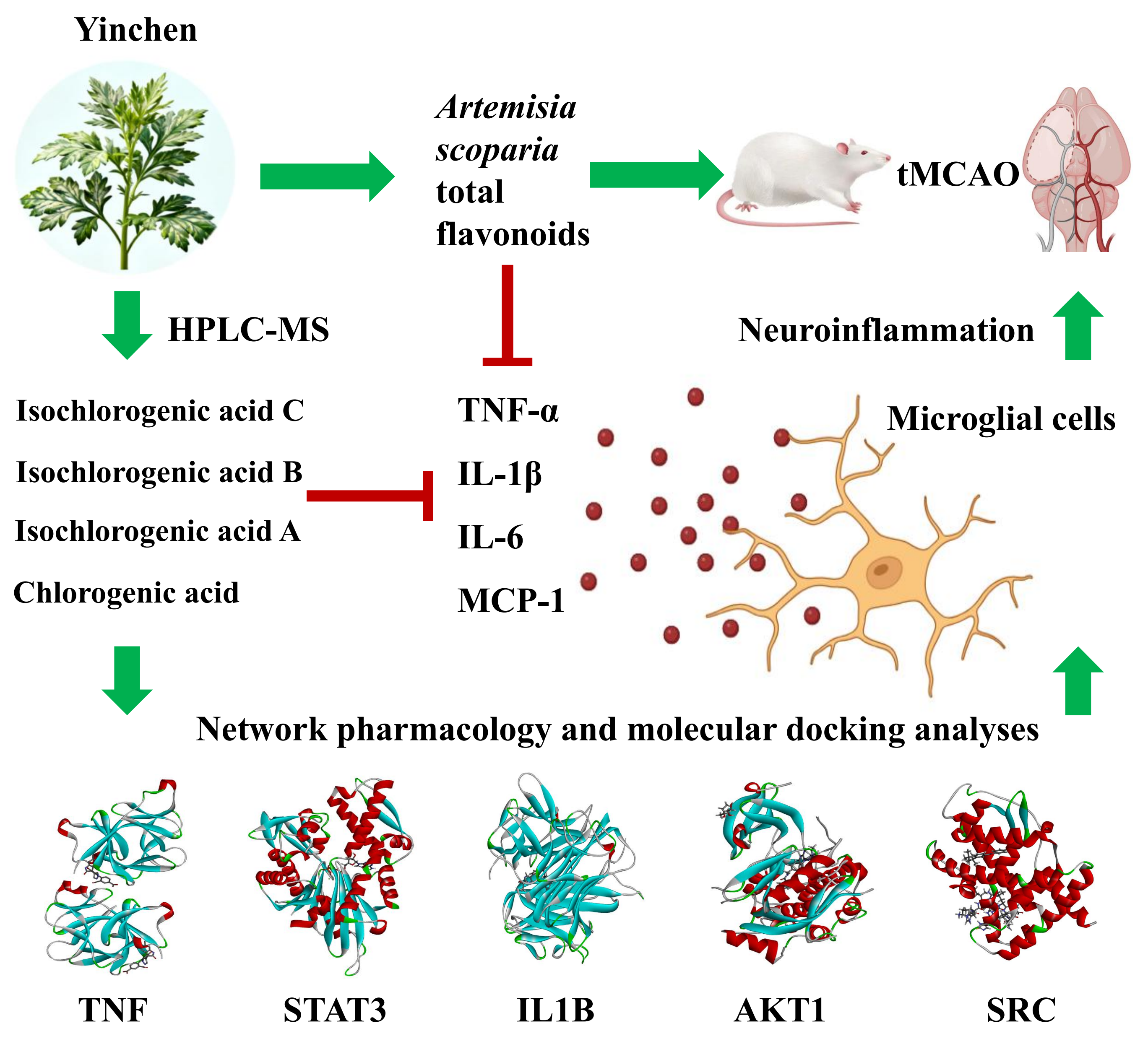
Therefore, this study employed a network pharmacology approach to identify key targets and pathways underlying the therapeutic effects of Yinchen against IS and utilized the molecular docking technique to investigate the interactions between the active components identified in Yinchen and Yinchen–IS-associated core targets. Using the lipopolysaccharide (LPS)-induced BV2 microglial cell inflammatory model for in vitro research, the anti-inflammatory activities of these monomeric active compounds and ASE were detected. Furthermore, using a transient Middle Cerebral Artery Occlusion (tMCAO) rat model for in vivo research, the neuroprotective effect of ASE against I/R injury and its anti-inflammatory activity were investigated. Overall, this study is anticipated to provide a theoretical basis for the application of Yinchen in the treatment of IS and contribute to its therapeutic potential as an innovative treatment modality for IS.
3. Discussion
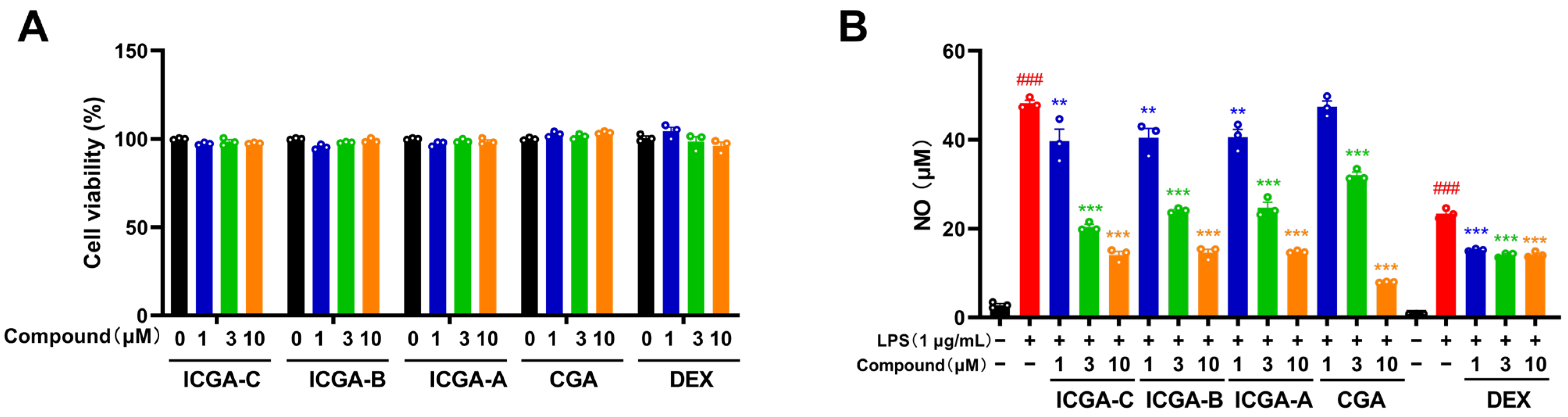
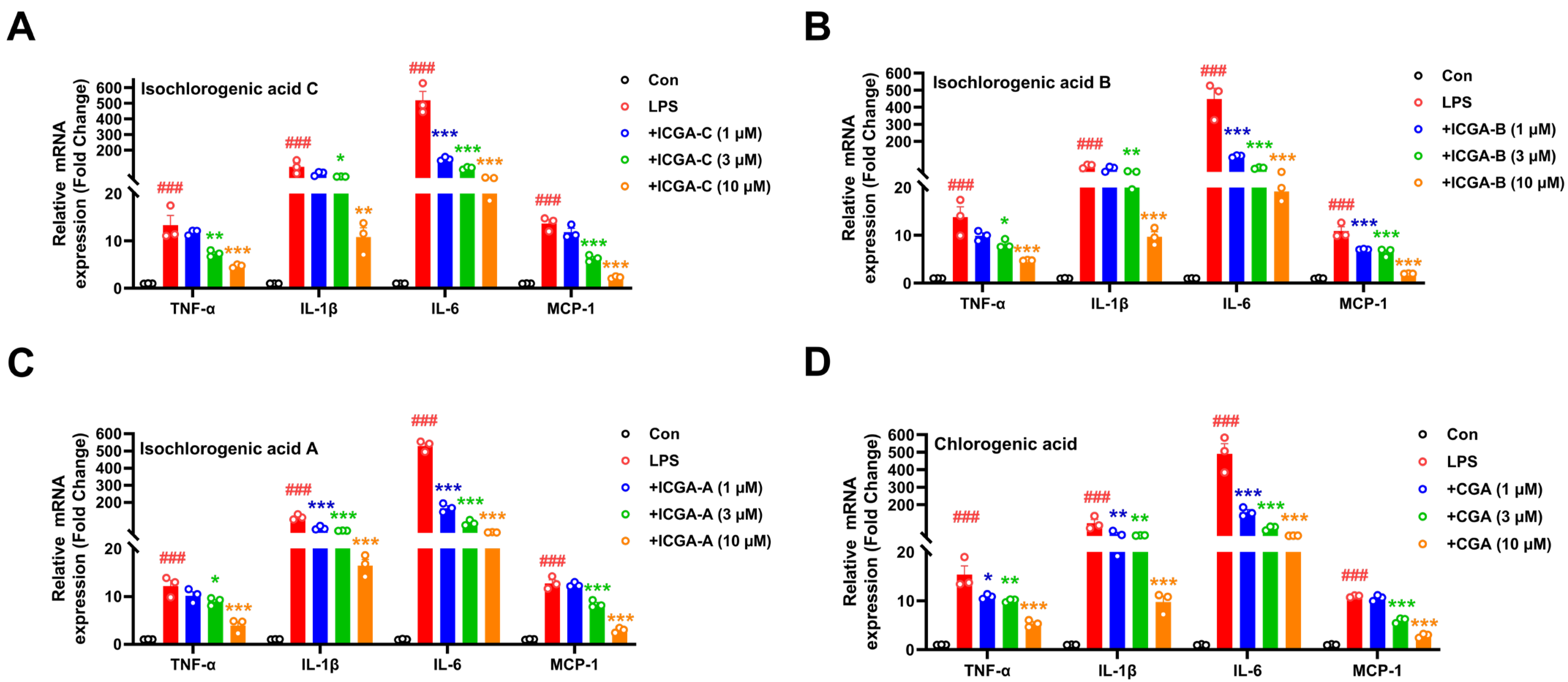
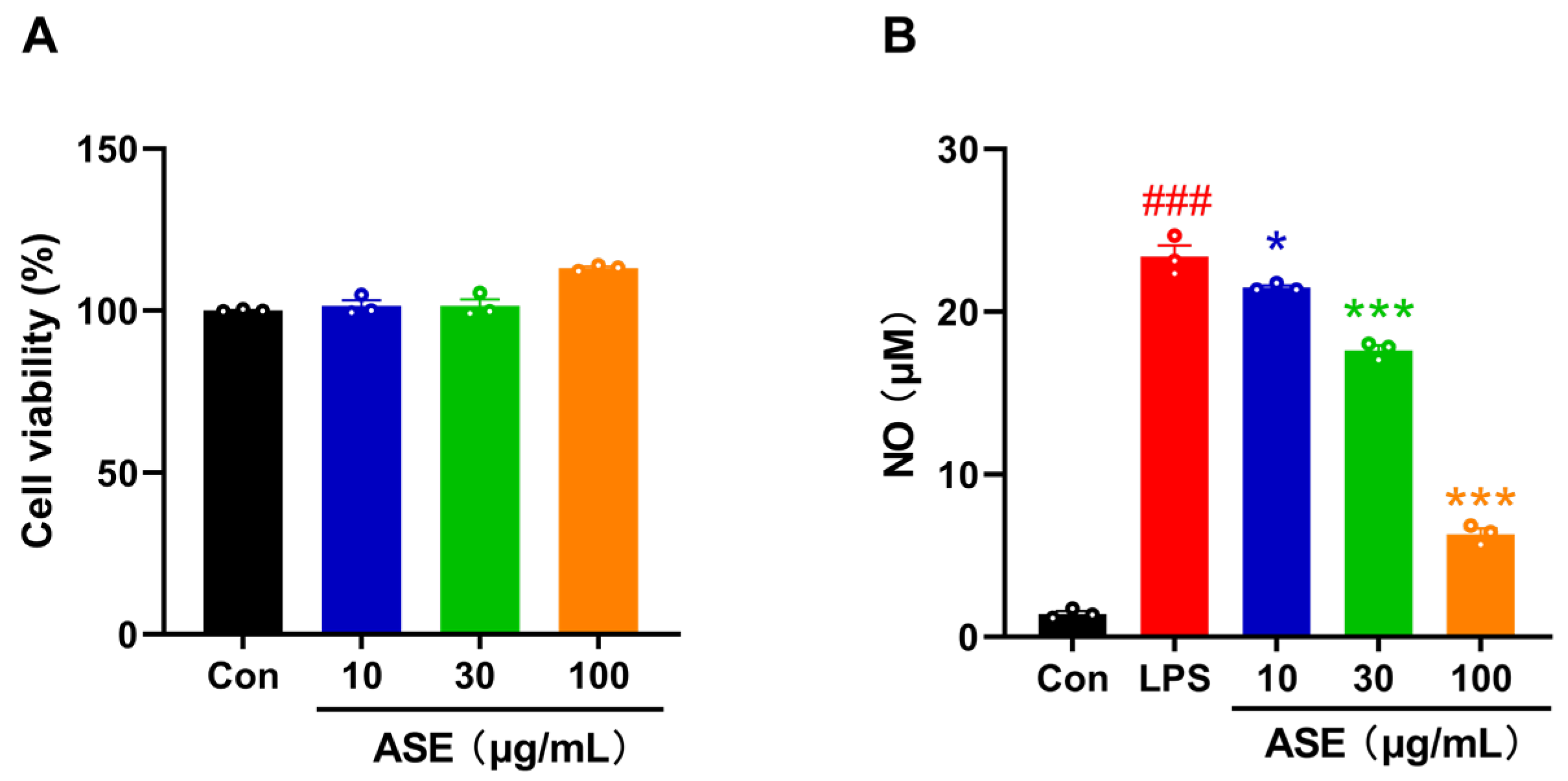
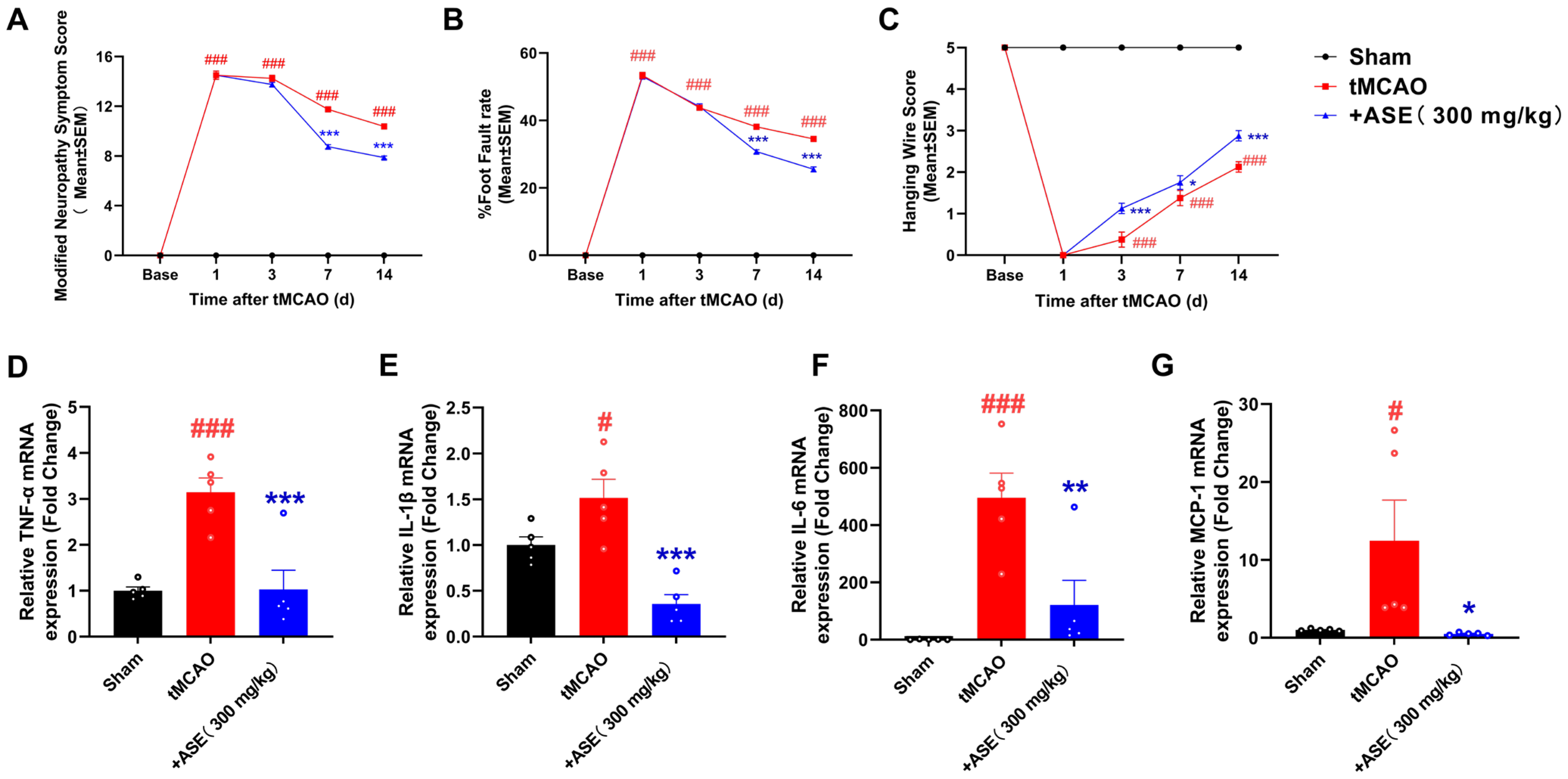
In the present study, we demonstrated that ASE, which is extracted from the TCM component Yinchen, improves neurological outcomes in tMCAO rats by mitigating neuroinflammation. Both ASE and its four characteristic constituents (isochlorogenic acid C, isochlorogenic acid B, isochlorogenic acid A, and chlorogenic acid) exhibited strong binding affinities for the five inflammatory and IS-associated targets (TNF, STAT3, IL1B, AKT1, and SRC) that we identified, and were further found to reduce the production of NO and the generation of pro-inflammatory factors (TNF-α, IL-1β, IL-6, and MCP-1) in LPS-induced BV2 microglial cells. While the traditional formula, Zhengan Xifeng Decoction, which contains Yinchen, has been used to treat IS [
17], the specific role and underlying mechanism of Yinchen itself in IS therapy remained unclear. These findings confirmed our hypothesis that Yinchen possesses therapeutic potential for IS. Furthermore, we identified several of its constituents as promising anti-IS candidates, establishing a material basis for Yinchen’s efficacy, which is primarily mediated through its potent anti-inflammatory properties both in vivo and in vitro.
Inflammation plays a critical role in the pathogenesis of IS. In the progression of IS, inflammatory cytokines and chemokines are produced, exacerbating neuronal damage and neurovascular injury during stroke [
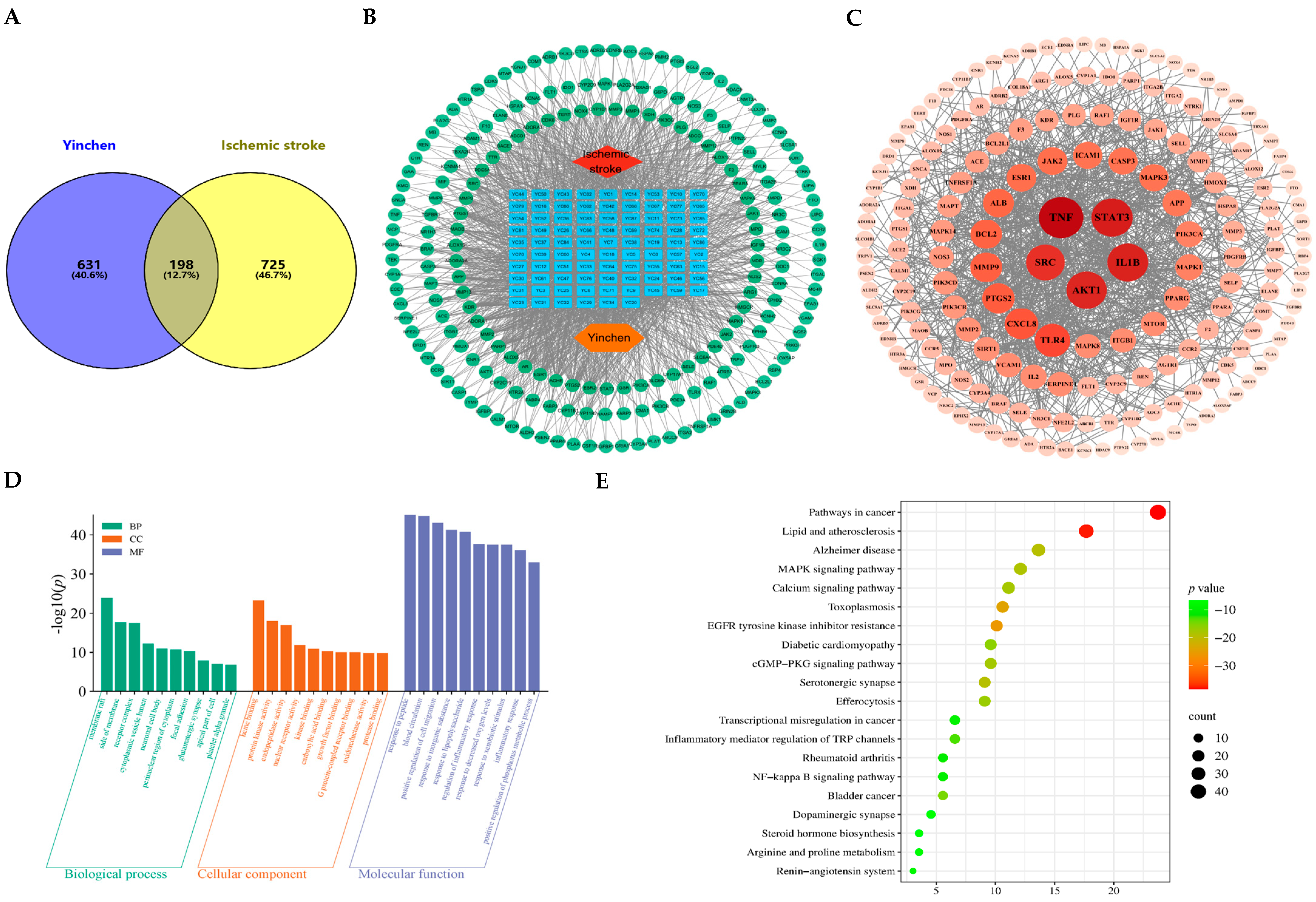
20]. Therefore, combating neuroinflammation is a promising strategy for the treatment of IS. In order to pinpoint the potential key targets of Yinchen for IS treatment, we conducted PPI system analysis. Our results demonstrate that five core genes in Yinchen associated with inflammation and IS, including TNF, STAT3, IL1B, AKT1, and SRC, are significantly related to the treatment of IS. Among them, TNF is an inflammatory cytokine. When brain cells are damaged by ischemia, neurons, microglia, and vascular endothelial cells produce TNF-α. The higher the concentration of serum TNF-α, the larger the volume of cerebral infarction and the more severe the disease is. Therefore, TNF-α is one of the clinical test markers for nerve cell injury after ischemia [
21]. As a chemokine, IL-1β can not only transmit information and regulate immune cells and inflammatory factors; it can also transduce the activation and proliferation of T and B lymphocytes. IL-1β promotes the release of neurotoxicity and aggravates brain nerve damage. At the same time, the expression level of inflammation in the body is up-regulated, which further aggravates post-ischemic injury. TNF-α and IL-1β, as the initiating substances in the inflammatory response chain, are involved in the whole process of stroke and can trigger an inflammatory cascade. After infarction, the content of both is higher than normal [
22]. Our research also revealed that in the classic tMCAO stroke model, the levels of TNF-α and IL-1β, two of the five core target genes, increased significantly. Su’s study demonstrated that Yinchen and a Gancao Decoction significantly reduced the expression levels of IL-1β, IL-6, and TNF-α in the hepatocyte and revealed that hepatocyte necrosis caused by cholestatic liver injury can be alleviated by reducing the release of inflammatory cytokines [
23]. Similarly, our research also found that ASE induced an improvement of neurological function and had anti-inflammatory effects in tMCAO rats. It also had the effect of inhibiting the release of pro-inflammatory factors, including TNF-α, IL-6, IL-1β, and MCP-1, and the downregulation of these factors was dose-dependent. Therefore, the effectiveness and accuracy of the five core targets were confirmed through network pharmacology analysis and the subsequent experimental study results, which demonstrated that Yinchen, when used as a single medicinal herb, has potential beneficial effects against IS by attenuating neuroinflammation via modulating the top five Yinchen and IS intersecting core targets. Still, the mechanism by which the top five core targets are regulated by Yinchen remains to be elucidated.
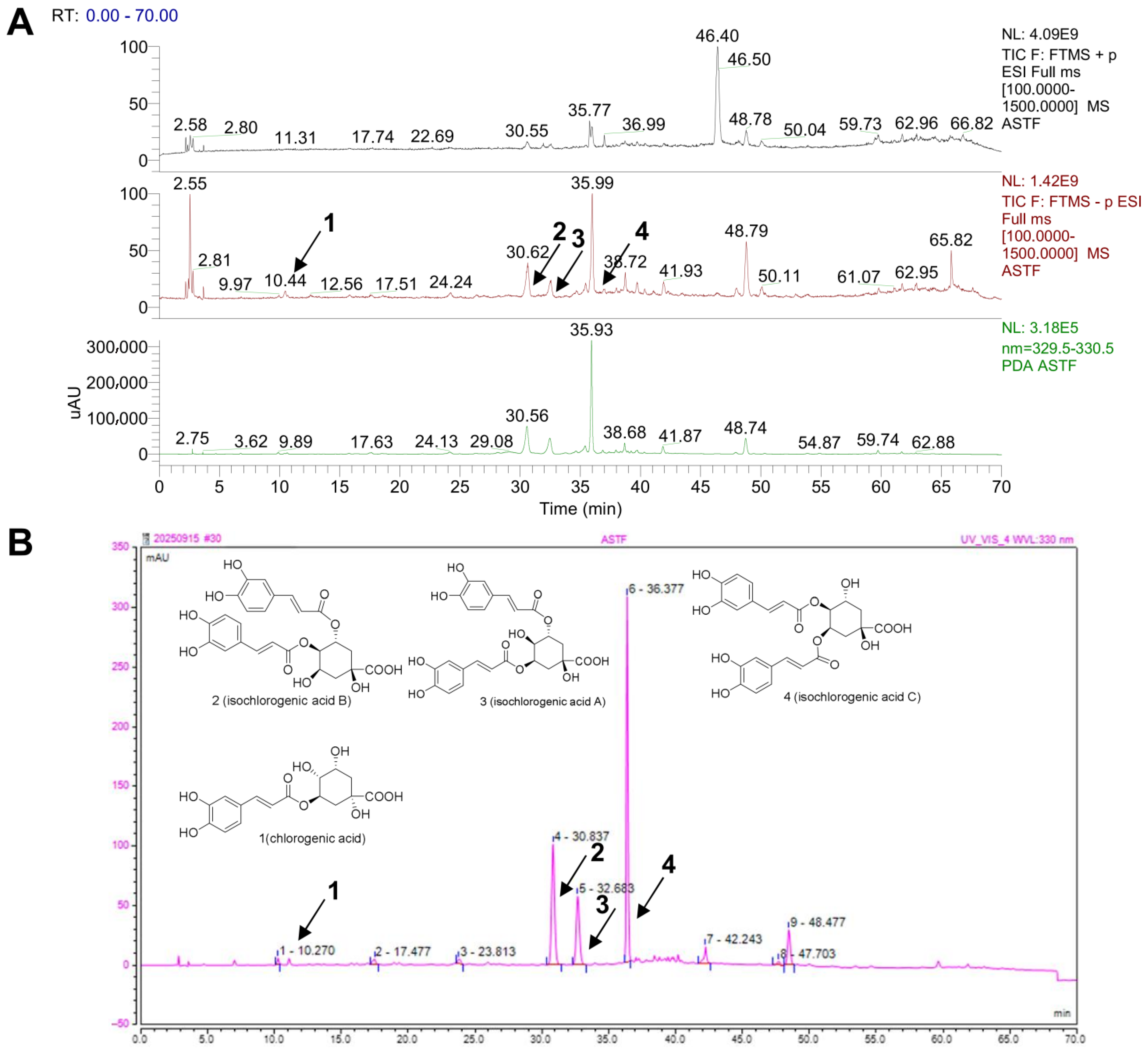
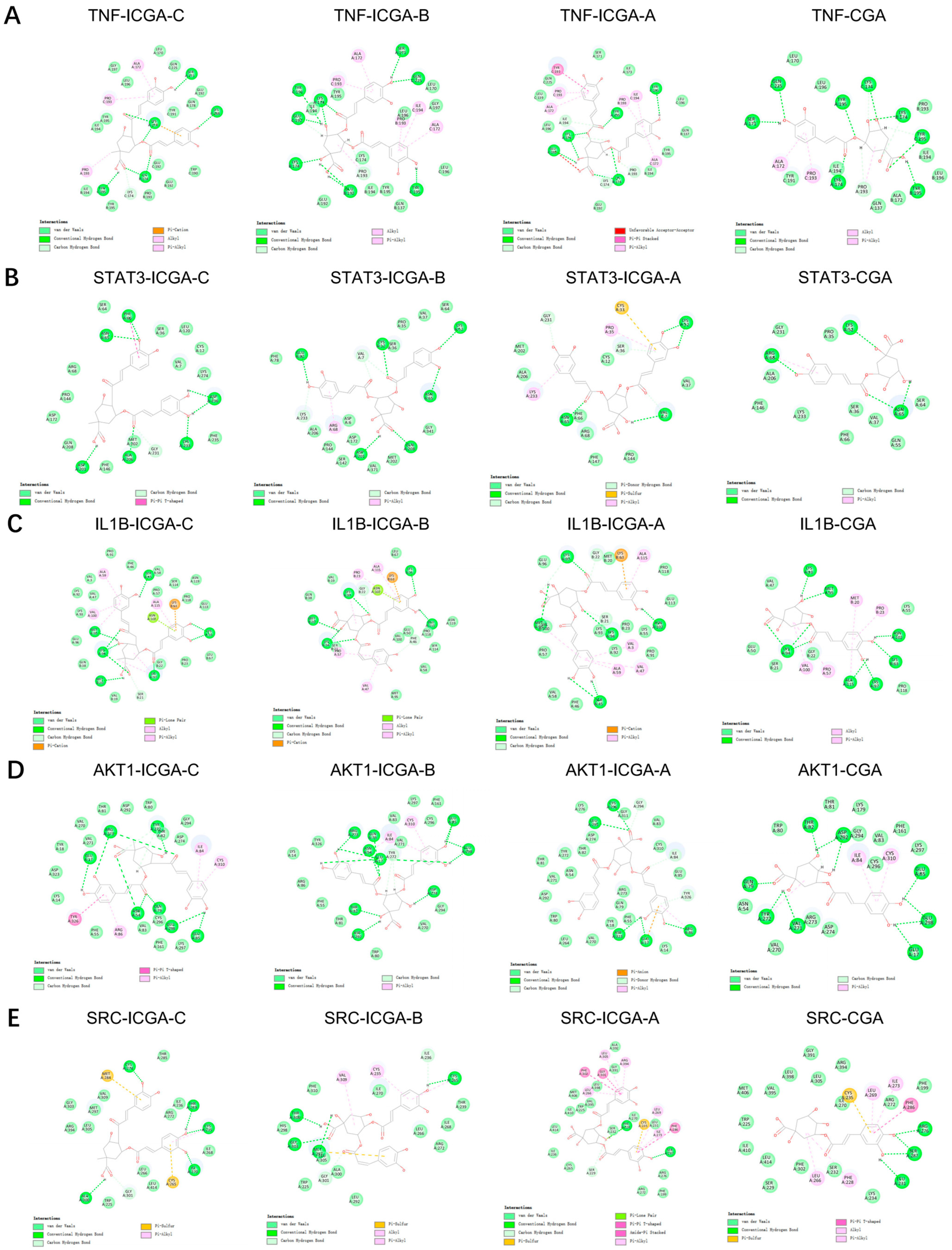
The constituents interacting with the top five Yinchen and IS intersecting core targets may be responsible for Yinchen’s effect against IS. Through HPLC-HRESIMS and HPLC-UV analyses, four active compounds, including isochlorogenic acid C, isochlorogenic acid B, isochlorogenic acid A, and chlorogenic acid, were identified in ASE, and all of them showed good scores in their ability to interact with all of the above five core inflammatory and IS-associated targets. As is consistent with ASE, these four compounds can also reduce the levels of NO and the pro-inflammatory factors (TNF-α, IL-1β, IL-6, and MCP-1). This further proves that it is specifically the interaction between TNF and IL1B among the five core targets that enables Yinchen’s anti-neuroinflammatory effect. Our results are consistent with those previously reported in the literature, demonstrating that these four compounds exert anti-inflammatory effects in various diseases [
24,
25,
26,
27,
28]. A renal herb formula with several characteristic components, including isochlorogenic acid C, was found to protect against hyperuricemic nephropathy by inhibiting apoptosis and inflammation [
24]. Also, isochlorogenic acid B was observed to alleviate Pb-induced inflammation in the brain, as indicated by decreasing TNF-α and IL-6 levels [
25]. Moreover, isochlorogenic acid A was reported to improve liver fibrosis and inflammation by inhibiting toll-like receptor 4 (TLR4)/NF-κB pathways [
26]. Although all four compounds have been reported to have anti-inflammatory activities, chlorogenic acid is the only one reported to be able to alleviate IS by inhibiting TLR4-mediated neuroinflammation [
27]. Also, the effects of the other three major constituents in Yinchen against IS or their anti-neuroinflammatory role in IS have not been specifically studied yet. Chlorogenic acid was found to primarily restrain the synthesis and release of inflammatory mediators such as TNF-α, NO, cyclooxygenase-2 (COX-2), and PGE2 [
28], which was consistent with our experimental results, which showed that it significantly inhibited NO production and reduced TNF-α levels in a dose-dependent manner in LPS-stimulated BV2 microglial cells. Therefore, our preliminary study indicated that the identified ingredients in both Yinchen and ASE exhibited anti-neuroinflammatory effects, and ASE was shown to improve neurological function in tMCAO rats. These findings suggest Yinchen’s therapeutic potential for IS, though further research is needed to elucidate its underlying mechanisms and the precise material basis of its effects against neuroinflammation in IS.
In addition to acting on the inflammatory pathways related to TNF-α and IL-1β among the five core targets, KEGG analysis results further demonstrated several signaling pathways related to the potential treatment of IS by Yinchen. The enriched KEGG pathways included the MAPK signaling pathway, the calcium signaling pathways, the cGMP-PKG signaling pathway, the inflammatory mediator for regulation of TRP channels, the NF-κB signaling pathway, etc. Studies have shown that reduced activation of the NF-κB and MAPK signaling pathways can result in decreased expression and activation of the NOD-like receptor family pyrin domain containing 1 (NLRP1) and NLRP3 inflammasomes, as well as increased expression of anti-apoptotic proteins Bcl-2 and Bcl-xL in primary cortical neurons and/or cerebral tissue under in vitro and in vivo ischemic conditions, thus reducing neuronal cell death and brain injury following IS [
29]. SRC is one of the five core targets and is found to be strongly associated with the inflammatory process in IS [
30]. The pretreatment of agomiR-203a-3p and agomiR-153-3p improved IS-induced neuronal apoptosis by inhibiting the SRC-dependent MAPK signaling pathway, and the inhibition of SRC expression could reduce the level of the expression of NLRP3 inflammasome-related factors [
31]. In addition, the serine/threonine protein kinase known as AKT1 is involved in a variety of physiological and pathological processes, including cell differentiation, apoptosis, inflammation, and metabolism following ischemia [
32,
33]. Once activated, AKT1 triggers a series of signal cascade reactions, which can reduce the death of brain cells, promote the growth of neural cells and vascular endothelial cells, enhance the regeneration and repair of nerve tissue and vessels, and improve neural function after cerebral ischemia [
34]. In addition, the involvement of the janus kinase 2 (JAK2)/STAT3 pathway is crucial in the pathological process underlying IS. The increased expression of JAK2/STAT3 observed in individuals suffering from acute IS may contribute to cellular inflammation [
35]. Therefore, the role of other signaling pathways in the potential of Yinchen to treat IS is worth further investigation.
Though our study has verified the therapeutic potential of Yinchen against IS and elucidated its material basis through network pharmacology analysis and experimental study, it has certain limitations. Firstly, due to the inherent limitations of network pharmacology in comprehensively mapping bioactive entities, certain compounds and their corresponding target genes might be absent from public databases. Secondly, in this study, we established the classic tMCAO rat model of IS and preliminarily confirmed the neuroprotective effect of ASE and its inhibitory effects on pro-inflammatory cytokines in rat ischemic brain tissues. There is still a lack of evidence for its clinical application. Thirdly, though network pharmacology and our preliminary results have demonstrated the critical role of the identified inflammatory core targets and biological processes in enabling Yinchen’s effect against IS, the mechanisms for how Yinchen or its characteristic components specifically modulate these pathways were not investigated in this study. Our future research will still need to evaluate the potential therapeutic mechanisms of Yinchen against IS both in vivo and in vitro.
4. Materials and Methods
4.1. Preparation of the ASE
The aerial parts of
Artemisia scoparia Waldst. et Kit. were harvested in July 2014 from Urumqi, Xinjiang Uygur Autonomous Region, China. An authenticated voucher specimen (No. 20141227) has been archived at the Xinjiang Institute of Materia Medica, with botanical verification conducted by Associate Professor Jiang He from the same institution. Ten kilograms of dried plant material underwent mechanical fragmentation followed by triple aqueous extraction (150 L of water per cycle, 1 h of reflux per extraction). After filtration and vacuum concentration to a relative density of 1.2–1.25 (60 °C measurement), the condensate underwent tenfold aqueous dilution. The diluted solution underwent 12 h adsorption pretreatment before chromatographic separation through a D101 macroporous resin column, using 70% ethanol as eluent. The collected fractions were concentrated under reduced pressure to achieve identical density parameters (1.2–1.25 at 60 °C), followed by vacuum desiccation at 60 °C to yield 74 g of ASE [
16].
4.2. HPLC-UV (DAD) Analysis and UV Spectra of the Major Peaks of the ASE
A quality control analysis of ASE, isochlorogenic acid C, isochlorogenic acid B, isochlorogenic acid A, and chlorogenic acid was performed using HPLC-DAD. Analytical HPLC was performed on a Thermo Ultimate 3000 instrument (Thermo, Waltham, MA, USA) using a Nano Chrom 120 C18 column (250 × 4.6 mm, 5 μm) with a flow rate of 1.0 mL/min, and the gradient program of MeCN/0.1% H3PO4 in H2O was 10:90 (t = 0 min), 15:85 (t = 10 min), 20:80 (t = 30 min), 30:70 (t = 35 min), 35:65 (t = 50 min), 40:60 (t = 55 min), 55:45 (t = 60 min), 65:35 (t = 65 min), and 90:10 (t = 70 min).
4.3. High-Resolution Mass Measurements of Constituents in the ASE
HPLC-UV analyses were performed using a Dionex Ultimate 300 UPLC system (Thermo, Waltham, MA, USA) coupled with a Thermo QExactive Focus (Thermo, Waltham, MA, USA). HPLC separation was carried out on Nano Chrom 120 C18 column (250 × 4.6 mm, 5 μm) with a flow rate of 1.0 mL/min, and the gradient program of MeCN/0.1% formic acid in H2O was 10:90 (t = 0 min), 15:85 (t = 10 min), 20:80 (t = 30 min), 30:70 (t = 35 min), 35:65 (t = 50 min), 40:60 (t = 55 min), 55:45 (t = 60 min), 65:35 (t = 65 min), and 90:10 (t = 70 min). The ESI mass spectrometer was equipped with a binary pump, a DAD, a vacuum degasser, an autosampler, and a column heater–cooler (Thermo, Waltham, MA, USA). The MS conditions were set as follows: Spray voltage: 3.3 kV (+), 2.8 kV (−), sheath gas flow rate: 35 PSI, aux gas flow rate: 10Arb, capillary temperature: 32 °C, flow rate: 1.0 mL/min, split ratio: 1:2.
4.4. Screening of Effective Components and Prediction of Targets
The chemical constituents and 3D structural formulas of Yinchen were obtained by using TCMSP (
https://tcmsp-e.com, accessed on 22 January 2024), TCM Database@Taiwan (
http://tcm.cmu.edu.tw, accessed on 22 January 2024), and the Chinese Natural Products Chemical Component Database (
https://www.pharmdata.ac.cn/, accessed on 22 January 2024). The results were combined, and the duplicate values were deleted. According to Lipinski’s Rules, that is, relative molecular mass <500, number of hydrogen bond donors <5, number of hydrogen bond acceptors <10, oil–water partition coefficient <5, and number of rotatable bonds ≤10, the chemical constituents of Yinchen were analyzed by Discovery studio 2019, and the ADMET descriptors module was used to evaluate the chemical constituents. The effective components with good water solubility and high intestinal bioavailability were selected for subsequent analysis. The structural formulas of the screened active ingredients were imported into the SwissTargetPrediction database (
http://swisstargetprediction.ch/, accessed on 25 January 2024) for target prediction, and the UniProt database (
https://www.uniprot.org/, accessed on 25 January 2024) was used to standardize the obtained targets.
4.5. Construction of Drug-Disease Intersecting Targets
‘Ischemic Stroke’ was used as the keyword to search and screen in the GeneCards (
https://www.genecards.org/, accessed on 28 January 2024) and DisGeNET (
https://www.disgenet.org/, accessed on 28 January 2024) disease–gene databases. The results were combined, the duplicate values were deleted, and the UniProt database was used to standardize the obtained targets. Venny 2.1.0 (
https://bioinfogp.cnb.csic.es/tools/venny/, accessed on 30 January 2024) was used to obtain the intersection between the targets of active ingredients in Yinchen and the disease targets, and the intersection was visualized by a Venn diagram.
4.6. Network Construction of ‘Drug–Active Ingredient–Intersecting Target–Disease’
The obtained relevant data were imported into the software Cytoscape 3.10.1 to construct the ‘drug-effective component–intersecting target–disease’ network of Yinchen. The ‘nodes’ represented the components and targets, and the ‘edges’ represented the relationship between the two. The Network Analyzer analysis tool was used to analyze the characteristics of the network.
4.7. Construction of Protein–Protein Interaction Network
The intersecting targets of Yinchen and IS were imported into the STRING database (
https://cn.string-db.org/, accessed on 2 February 2024) to create a visual PPI network. The data were imported into Cytoscape 3.10.1 software, and the network was topologically analyzed by the Network Analyzer. The selection of the top five core interaction targets was based on sorting the node degrees from largest to smallest.
4.8. GO and KEGG Pathway Enrichment Analysis
The Metascape database (
https://metascape.org/gp/index.html, accessed on 27 August 2024) was used for GO function analysis and KEGG pathway enrichment analysis, and the intersection targets of Yinchen and IS were uploaded to obtain relevant data. The top ten analysis results were selected, and the corresponding data were imported into the Wei Sheng Xin (
http://www.bioinformatics.com.cn/, accessed on 27 August 2024) online mapping tool for visualization. The GO functional analysis bar chart included three parts: biological process, cell component, and molecular function, as well as the bubble diagram of the KEGG enrichment analysis.
4.9. Molecular Docking
Molecular docking was performed on the first five core intersection targets and the effective components, which were identified by HPLC-MS of Yinchen. The 3D structure of the proteins corresponding to the top five core targets was downloaded from the protein database PDB (Protein Data Bank) (
https://www.rcsb.org/, accessed on 1 June 2025) as a protein receptor library. The 3D structures corresponding to the four identified active ingredients of Yinchen were downloaded from the PubChem database (
https://pubchem.ncbi.nlm.nih.gov/, accessed on 1 June 2025). The Prepare Protein tool in Discovery Studio 2019 was used to pretreat the protein by removing water and hydrogenation, and the active center was defined by the Define and Edit Binding Site tool. The location and size of the active center were referred to the position of the protein ligand obtained from the PDB database. The CDOCKER function was then used to perform molecular docking and calculate the -CDOCKER interaction energy. The higher the docking score, the stronger the binding ability of the small ligand molecule to the receptor protein was. The docking scores of the components and targets were statistically analyzed. The agonists or antagonists of the five targets were retrieved from the IUPHAR database (
https://www.guidetopharmacology.org, accessed on 1 June 2025), and the docking scores were used to assess the potential activity of the metabolites in Yinchen. The following agonists and antagonists were used for molecular docking: TNF (antagonist: SPD-304); STAT3 (antagonist: S3I-201); IL1B (antagonist: Diacerein); AKT1 (agonist: SC79); and SRC (antagonist: KX2-391).
4.10. Drugs and Reagents
Isochlorogenic acid A, isochlorogenic acid B, isochlorogenic acid C, and dexamethasone were purchased from Shanghai Yuanye Bio-Technology Co., Ltd. (Shanghai, China); chlorogenic acid was purchased from Jiangsu Aikon Biopharmaceutical R&D Co., Ltd. (Heowns, Tianjin, China). The reagents were dissolved in DMSO (Aladdin, Beijing, China) and diluted in saline. Cell viability was evaluated using a CellTiter 96® AQueous One Solution Cell Proliferation Assay (MTS assay, Promega, Madison, WI, USA). The Griess reagent assay kit was purchased from Applygen Gene Technology Co., Ltd. (Beijing, China). RT-qPCR was performed with specific primers and SYBR® Premix Ex TaqTII (TakaRa Clontech, Dalian, China).
4.11. Cell Culture
The BV2 microglial cell line was obtained from the Cell Resource Center, Institute of Basic Medical Sciences, Chinese Academy of Medical Sciences & Peking Union Medical College (Beijing, China). The cells were maintained in Dulbecco’s modified Eagle medium (DMEM) (gibco, New York, NY, USA) supplemented with 10% fetal bovine serum (FBS) (PAN, Brisbane, Australia) at 37 °C in a humidified atmosphere of 5% CO2.
4.12. Cell Viability Assay
BV2 cells with a density of 2.5 × 10
4 cells per well were seeded in 96-well plates, cultured at 37 °C overnight, and then incubated with ASE (10, 30, and 100 μg/mL) or compounds (1, 3, and 10 μM) for another 24 h. Subsequently, the cells were incubated with MTS reagent at 37 °C for 4 h, and then the absorbance was measured at 490 nm on a microplate reader [
36]. Cell viability was calculated using the following formula: (OD
Experimental group − OD
Blank)/(OD
Control group − OD
Blank) × 100%.
4.13. NO Assay
BV2 cells were seeded in 96-well plates at a density of 2.5 × 10
4 cells per well and incubated for 24 h. The cells were pretreated with compounds at the following stated concentrations (1, 3, and 10 μM) or ASE at the following specified concentrations (10, 30, and 100 μg/mL) for 2 h, followed by stimulation with LPS at 1 μg/mL for 24 h. After the incubation period, 50 μL of cell supernatant was collected, and NO levels were measured using a Griess reagent assay kit. The absorbance was then detected at 540 nm with a microplate reader. The nitrate concentration was calculated according to a standard curve generated from known concentrations of sodium nitrite [
37].
4.14. Real-Time Quantitative Reverse Transcription RT-qPCR
Total RNA was extracted from the cells or the rat IBZ brain tissues using the trizol method and was reverse transcribed using the HiScript III All-in-One RT SuperMix Perfect for qPCR (Vazyme, Nanjing, China). A qPCR (2 × AceQ Universal SYBR qPCR Master Mix, Vazyme, Nanjing, China) was subsequently performed using the CFX96 Touch Real-Time PCR Detection System (Bio-Rad, Hercules, CA, USA). Reactions were performed following the manufacturer’s instructions. The primer sequences were based on previously published primer sequences [
36]. The gene expression levels were quantified using the 2
−ΔΔCq method and normalized to the internal reference gene β-actin [
36].
4.15. Animals
Male adult Wistar rats (weighing 280–320 g) obtained from Beijing Vital River Laboratory Animal Technology Co., Ltd. (Beijing, China) were used in this study. Animals were housed under standard conditions (temperature 24 ± 1 °C; humidity 50–60%; a 12 h light/dark cycle) and had free access to food and water. The Animal Ethics Committee of the Chinese Academy of Medical Sciences and Peking Union Medical College approved the animal protocols before the start of any protocol-specified procedures (IMM-S-25-0038).
4.16. tMCAO
Rats were fasted overnight and housed at 25 °C with free access to water. They were anesthetized with 4% isoflurane in 70% N
2O/30% O
2 and then maintained at 3% isoflurane. Rectal temperature was kept at 37 ± 0.5 °C using a feedback-controlled heating pad. After making a skin incision midway between the left orbit and the external auditory canal, the left common carotid artery, external carotid artery (ECA), and internal carotid artery (ICA) were exposed. A 0.38 mm diameter of silicone-coated monofilament suture was inserted into the ECA and advanced into the ICA until slight resistance was felt, thereby occluding the origin of the middle cerebral artery. After 1.5 h of occlusion, the filament was gently withdrawn to restore blood flow; successful reperfusion was confirmed by immediate hyperemic flushing of the ICA [
38]. The incision was closed, and animals were allowed to recover in a warmed cage. Sham-operated rats (sham group) underwent an identical procedure except for the occlusion step.
4.17. ASE Administration
The rats were randomly assigned into 3 experimental groups of 8 rats each, as follows: sham group, tMCAO group, and ASE + tMCAO group (300 mg/kg) were given an intragastric administration (i.g.) of ASE as an aqueous suspension in 0.5% sodium carboxymethyl cellulose (CMC-Na) starting 24 h after tMCAO and repeated daily for a total of 14 days, and the sham and tMCAO groups were given an equivalent volume of 0.5% CMC-Na.
4.18. Behavioral Tests
Three behavioral tests were used to assess neurological deficits after tMCAO: mNSS, the foot-fault test, and the hanging wire test. The mNSS is an integrated assessment that includes tests of motor function, sensory function, reflexes, and balance. It was evaluated using a scale from 0 to 18, with 0 representing normal function and 18 indicating the most severe impairment [
39]. A modified foot-fault test was employed to measure forelimb placement dysfunction. The total number of steps (movement of each forelimb) that the rat used to cross the grid and the total number of foot faults for the left forelimb were recorded [
40]. The hanging wire test was used to evaluate both limb strength and balance after stroke [
41]. These tests were evaluated on days 1, 3, 7, and 14 after the performance of tMCAO. All surviving animals were euthanized 14 days after tMCAO.
4.19. Statistical Analysis
Data are presented as the mean ± SEM. Statistical analyses were performed using one-way analysis of variance (ANOVA) followed by Dunnett’s multiple-comparisons test or two-way ANOVA followed by Tukey’s multiple-comparisons test. The number of samples per cell group and the number of animals per group are specified in the figure legends. GraphPad Prism 9.0 software (GraphPad Software Inc., La Jolla, CA, USA) was used for all statistical analyses. A p-value < 0.05 was established as the criterion for statistical significance. Post hoc power analysis for the statistical test power of this study was conducted using G*Power 3.1.9.7 software (Heinrich Heine University, Düsseldorf, Germany). The analysis was based on the actual sample size, the predefined significance level (α = 0.05), and the effect size observed in the experiment. The test power (1−β) for all intergroup comparisons was 1.0.
5. Conclusions
In this study, network pharmacology and molecular docking technology were used to systematically analyze the action of Yinchen in the treatment of IS, revealing a process characterized by multi-component, multi-target, and multi-pathway action. Among Yinchen and IS’s intersecting targets, TNF, STAT3, IL1B, AKT1, and SRC were the top five core targets. Through HPLC-HRESIMS and HPLC-UV analyses, four compounds, including isochlorogenic acid C, isochlorogenic acid B, isochlorogenic acid A, and chlorogenic acid, were identified in ASE, which was extracted from Yinchen. These four major representative compounds showed good interaction with all of the above five core targets through molecular docking. Also, they were found to reduce the production of NO as well as the generation of inflammatory factors (TNF-α, IL-1β, IL-6, and MCP-1) in LPS-induced BV2 microglial cells dose-dependently. ASE also demonstrated anti-neuroinflammatory activity in an in vitro experiment. In vivo, ASE showed neurological functional injury attenuation and neuroinflammation alleviation effects in tMCAO rats. In conclusion, our results suggest that Yinchen has the potential to be a candidate drug for IS treatment through its anti-inflammatory effects.
Considering the limited treatment window and the post-stroke inflammatory cascade, ASE and other active components could be explored as an adjunctive therapy to current standards of care. Its role in mitigating secondary neuronal damage through neuroinflammation inhibition may help improve long-term neurological outcomes in stroke patients. This study provides a scientific foundation for the modern application of the traditional herb Yinchen, suggesting its potential utility beyond hepatobiliary disorders and bringing it into the realm of cerebrovascular diseases.