



Integrating EEG Sensors with Virtual Reality to Support Students with ADHD



Abstract
1. Introduction
2. Background
2.1. VR for Education Support
2.2. EEG Sensors Coupled with VR
3. Methodology
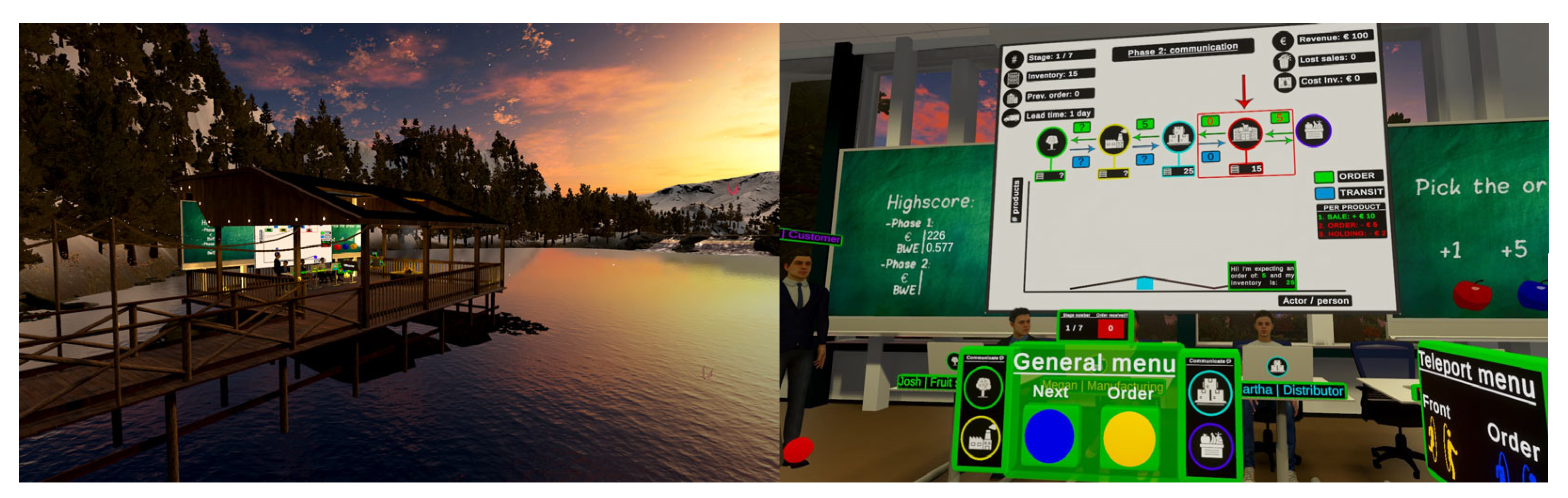
3.1. VR Application Overview
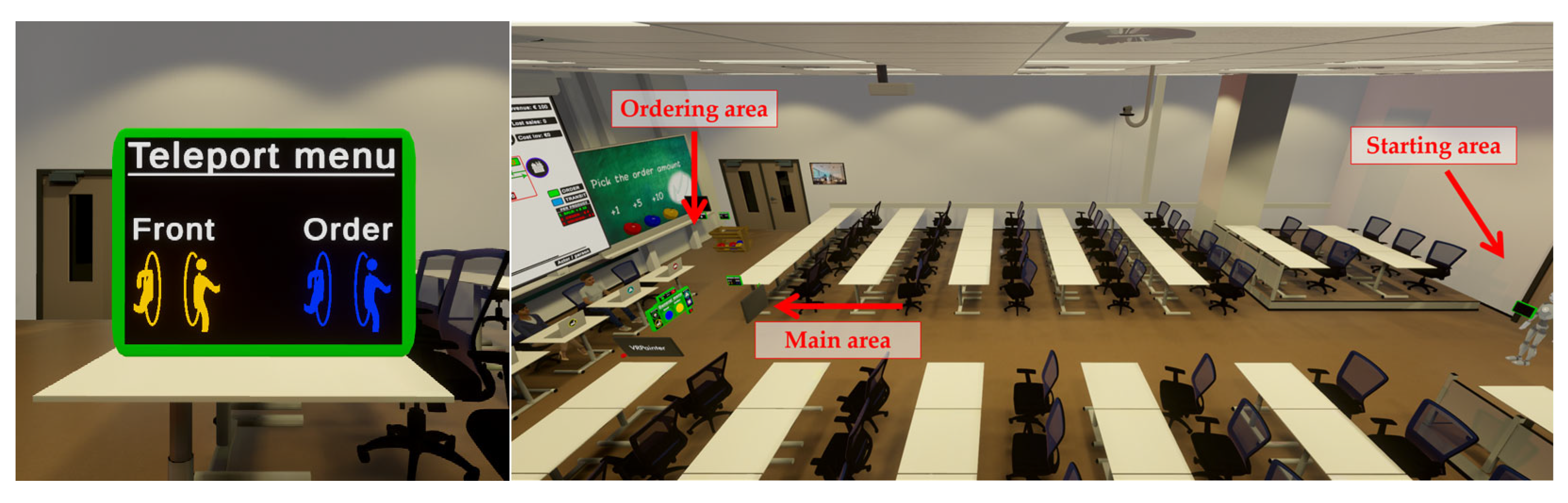
3.1.1. Application Design
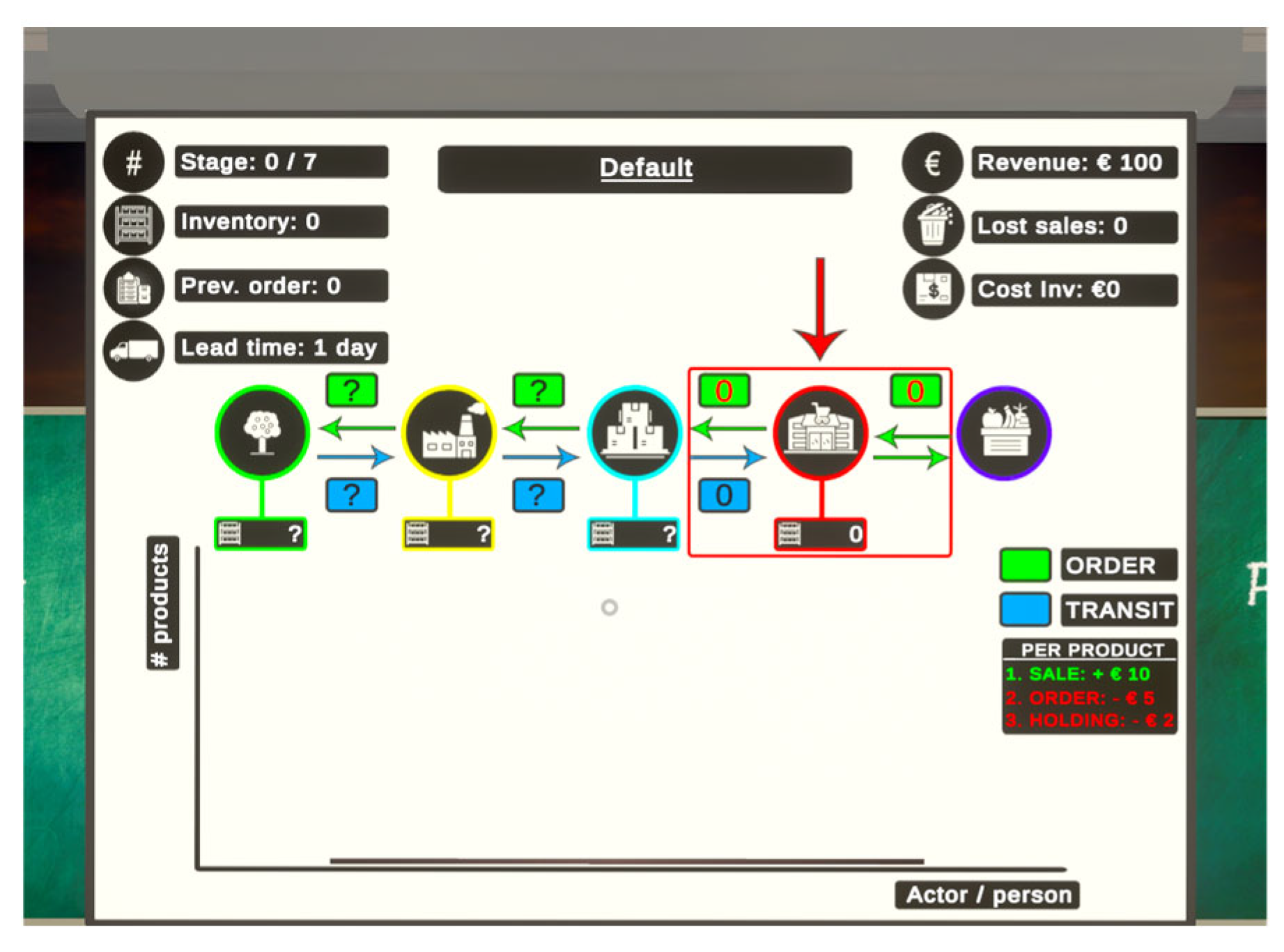
3.1.2. Game Logic
3.2. EEG Sensor and Experiment Processes
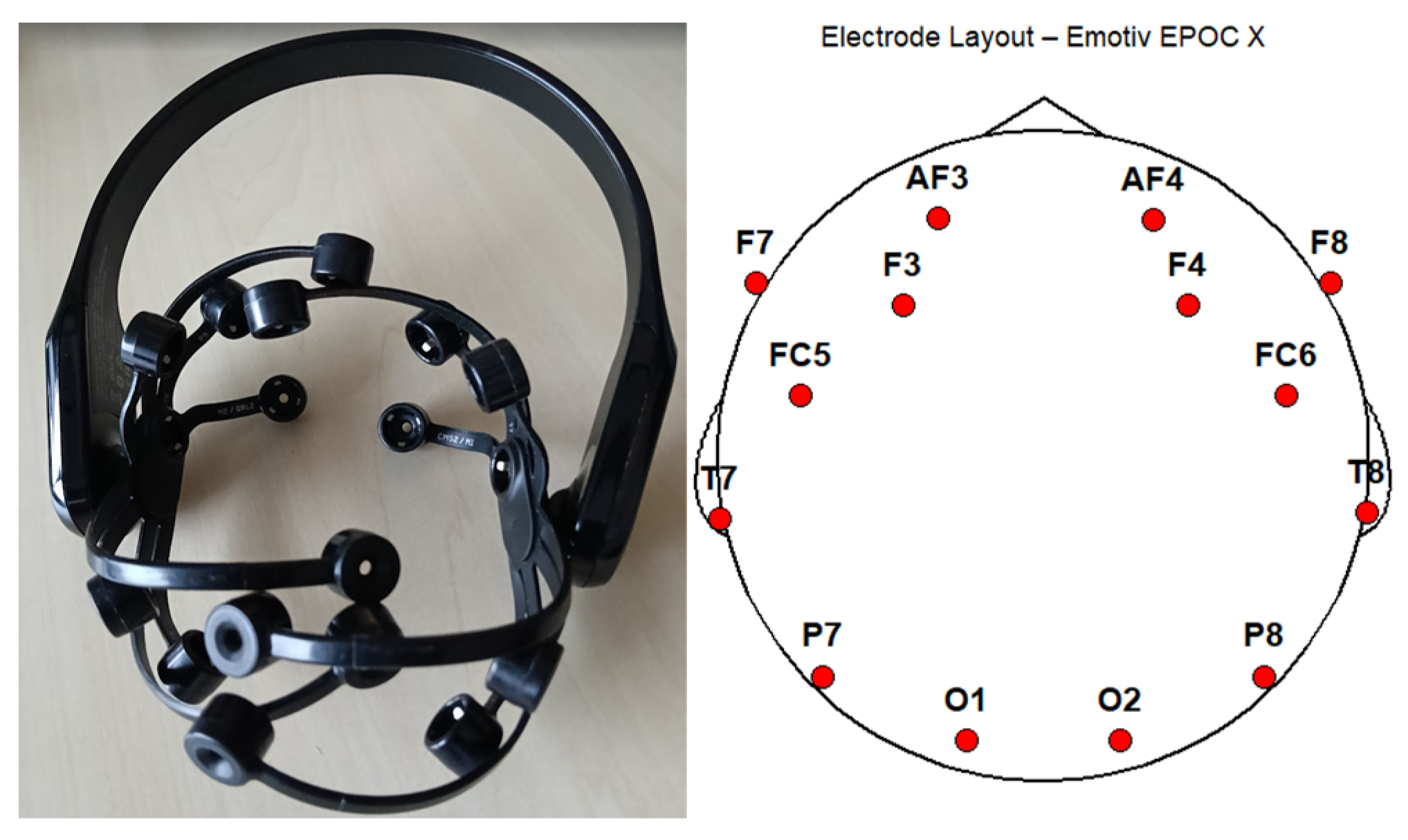
3.2.1. VR Equipment and EEG Sensor
3.2.2. Survey Process
4. Results
4.1. Participant Overview
4.2. Participant Perception of the VR Experience
4.3. EEG Data Analysis
4.4. Discussion
4.4.1. What Was the Effect of the Environment on Effective VR Learning?
4.4.2. Did VR Provide Attention-Span or Learning Improvements for the ADHD Students?
5. Conclusions and Future Work
Author Contributions
Funding
Institutional Review Board Statement
Informed Consent Statement
Data Availability Statement
Conflicts of Interest
References
- Goldman, L.S. Diagnosis and Treatment of Attention-Deficit/Hyperactivity Disorder in Children and Adolescents. JAMA 1998, 279, 1100. [Google Scholar] [CrossRef]
- Dalsgaard, S.; Nielsen, H.S.; Simonsen, M. Consequences of ADHD medication use for children’s outcomes. J. Health Econ. 2014, 37, 137–151. [Google Scholar] [CrossRef]
- Weyandt, L.L.; DuPaul, G.J. ADHD in college students: Developmental findings. Dev. Disabil. Res. Rev. 2008, 14, 311–319. [Google Scholar] [CrossRef]
- Zylowska, L.; Ackerman, D.L.; Yang, M.H.; Futrell, J.L.; Horton, N.L.; Hale, T.S.; Pataki, C.; Smalley, S.L. Mindfulness Meditation Training in Adults and Adolescents With ADHD: A Feasibility Study. J. Atten. Disord. 2008, 11, 737–746. [Google Scholar] [CrossRef]
- Hong, N.; Kim, J.; Kwon, J.-H.; Eom, H.; Kim, E. Effect of Distractors on Sustained Attention and Hyperactivity in Youth With Attention Deficit Hyperactivity Disorder Using a Mobile Virtual Reality School Program. J. Atten. Disord. 2022, 26, 358–369. [Google Scholar] [CrossRef]
- Areces, D.; Rodríguez, C.; García, T.; Cueli, M.; González-Castro, P. Efficacy of a Continuous Performance Test Based on Virtual Reality in the Diagnosis of ADHD and Its Clinical Presentations. J. Atten. Disord. 2018, 22, 1081–1091. [Google Scholar] [CrossRef]
- Ip, H.H.S.; Wong, S.W.L.; Chan, D.F.Y.; Byrne, J.; Li, C.; Yuan, V.S.N.; Lau, K.S.Y.; Wong, J.Y.W. Enhance emotional and social adaptation skills for children with autism spectrum disorder: A virtual reality enabled approach. Comput. Educ. 2018, 117, 1–15. [Google Scholar] [CrossRef]
- Bowling, Z.; Nettleton, A. The diagnosis and management of ADHD (Attention Deficit Hyperactivity Disorder) in children and young people: A commentary on current practice and future recommendations. BJGP Open 2020, 4, bjgpopen20X101043. [Google Scholar] [CrossRef] [PubMed]
- Cuber, I.; Goncalves De Souza, J.G.; Jacobs, I.; Lowman, C.; Shepherd, D.; Fritz, T.; Langberg, J.M. Examining the Use of VR as a Study Aid for University Students with ADHD. In Proceedings of the 2024 CHI Conference on Human Factors in Computing Systems, Honolulu, HI, USA, 11–16 May 2024; ACM: New York, NY, USA, 2024; pp. 1–16. [Google Scholar]
- Romero-Ayuso, D.; Toledano-González, A.; Rodríguez-Martínez, M.D.C.; Arroyo-Castillo, P.; Triviño-Juárez, J.M.; González, P.; Ariza-Vega, P.; Del Pino González, A.; Segura-Fragoso, A. Effectiveness of Virtual Reality-Based Interventions for Children and Adolescents with ADHD: A Systematic Review and Meta-Analysis. Children 2021, 8, 70. [Google Scholar] [CrossRef]
- Makransky, G.; Terkildsen, T.S.; Mayer, R.E. Adding immersive virtual reality to a science lab simulation causes more presence but less learning. Learn. Instr. 2019, 60, 225–236. [Google Scholar] [CrossRef]
- Rus-Calafell, M.; Gutiérrez-Maldonado, J.; Ribas-Sabaté, J. A virtual reality-integrated program for improving social skills in patients with schizophrenia: A pilot study. J. Behav. Ther. Exp. Psychiatry 2014, 45, 81–89. [Google Scholar] [CrossRef]
- Yang, X.; Lin, L.; Cheng, P.-Y.; Yang, X.; Ren, Y.; Huang, Y.-M. Examining creativity through a virtual reality support system. Educ. Technol. Res. Dev. 2018, 66, 1231–1254. [Google Scholar] [CrossRef]
- Pfurtscheller, G.; Da Silva, F.L. Event-related EEG/MEG synchronization and desynchronization: Basic principles. Clin. Neurophysiol. 1999, 110, 1842–1857. [Google Scholar] [CrossRef]
- Antonenko, P.; Paas, F.; Grabner, R.; Van Gog, T. Using electroencephalography to measure cognitive load. Educ. Psychol. Rev. 2010, 22, 425–438. [Google Scholar] [CrossRef]
- Lin, F.R.; Kao, C.M. Mental effort detection using EEG data in E-learning contexts. Comput. Educ. 2018, 122, 63–79. [Google Scholar] [CrossRef]
- Parong, J.; Mayer, R.E. Learning science in immersive virtual reality. J. Educ. Psychol. 2018, 110, 785–797. [Google Scholar] [CrossRef]
- Arico, P.; Borghini, G.; Di Flumeri, G.; Sciaraffa, N.; Colosimo, A.; Babiloni, F. Passive BCI in Operational Environments: Insights, Recent Advances, and Future Trends. IEEE Trans. Biomed. Eng. 2017, 64, 1431–1436. [Google Scholar] [CrossRef] [PubMed]
- Barry, R.J.; Johnstone, S.J.; Clarke, A.R. A review of electrophysiology in attention-deficit/hyperactivity disorder: II. Event-related potentials. Clin. Neurophysiol. 2003, 114, 184–198. [Google Scholar] [CrossRef] [PubMed]
- Krampe, C.; Wolfers, J.; Dean, P. The Integration of Virtual Reality and EEG: A Step-by-Step Guideline. MethodsX 2025, 16, 103770. [Google Scholar] [CrossRef] [PubMed]
- Lui, A.L.C.; Not, C.; Wong, G.K.W. Theory-Based Learning Design with Immersive Virtual Reality in Science Education: A Systematic Review. J. Sci. Educ. Technol. 2023, 32, 390–432. [Google Scholar] [CrossRef]
- Siuly, S.; Li, Y.; Zhang, Y. Electroencephalogram (EEG) and Its Background. In EEG Signal Analysis and Classification; Health Information Science; Springer International Publishing: Cham, Germany, 2016; pp. 3–21. ISBN 978-3-319-47652-0. [Google Scholar]
- SCT-lab VRADHD: Repository for VR ADHD Study. Available online: https://github.com/SCT-lab/VRADHD (accessed on 13 January 2026).
- Alexandrovsky, D.; Putze, S.; Bonfert, M.; Höffner, S.; Michelmann, P.; Wenig, D.; Malaka, R.; Smeddinck, J.D. Examining Design Choices of Questionnaires in VR User Studies. In Proceedings of the 2020 CHI Conference on Human Factors in Computing Systems, Honolulu, HI, USA, 25–30 April 2020; ACM: New York, NY, USA, 2020; pp. 1–21. [Google Scholar]
- Safikhani, S.; Holly, M.; Kainz, A.; Pirker, J. The Influence of in-VR Questionnaire Design on the User Experience. In Proceedings of the 27th ACM Symposium on Virtual Reality Software and Technology, Osaka, Japan, 8–10 December 2021; ACM: New York, NY, USA, 2021; pp. 1–8. [Google Scholar]
- Marangunić, N.; Granić, A. Technology acceptance model: A literature review from 1986 to 2013. Univers. Access Inf. Soc. 2015, 14, 81–95. [Google Scholar] [CrossRef]
- Schwind, V.; Knierim, P.; Haas, N.; Henze, N. Using Presence Questionnaires in Virtual Reality. In Proceedings of the 2019 CHI Conference on Human Factors in Computing Systems, Glasgow Scotland, UK, 4–9 May 2019; ACM: New York, NY, USA, 2019; pp. 1–12. [Google Scholar]
- Taherdoost, H. What is the best response scale for survey and questionnaire design; review of different lengths of rating scale/attitude scale/Likert scale. Int. J. Acad. Res. Manag. IJARM 2019, 8, 1–10. [Google Scholar]
- Paranthaman, P.K.; Bajaj, N.; Solovey, N.; Jennings, D. Comparative Evaluation of the EEG Performance Metrics and Player Ratings on the Virtual Reality Games. In Proceedings of the 2021 IEEE Conference on Games (CoG), Copenhagen, Denmark, 17–20 August 2021; IEEE: New York, NY, USA, 2021; pp. 1–8. [Google Scholar]
- Miller, B.L.; Cummings, J.L. The Human Frontal Lobes: Functions and Disorders; Guilford Publications: New York, NY, USA, 2017. [Google Scholar]
- Rottschy, C.; Eickhoff, S.B.; Schleicher, A.; Mohlberg, H.; Kujovic, M.; Zilles, K.; Amunts, K. Ventral visual cortex in humans: Cytoarchitectonic mapping of two extrastriate areas. Hum. Brain Mapp. 2007, 28, 1045–1059. [Google Scholar] [CrossRef]
- Sharma, Y.; Xu, T.; Graf, W.M.; Fobbs, A.; Sherwood, C.C.; Hof, P.R.; Allman, J.M.; Manaye, K.F. Comparative anatomy of the locus coeruleus in humans and nonhuman primates. J. Comp. Neurol. 2010, 518, 963–971. [Google Scholar] [CrossRef]
- Pardo, J.V.; Pardo, P.J.; Janer, K.W.; Raichle, M.E. The anterior cingulate cortex mediates processing selection in the Stroop attentional conflict paradigm. Proc. Natl. Acad. Sci. USA 1990, 87, 256–259. [Google Scholar] [CrossRef] [PubMed]
- Plassmann, H.; Venkatraman, V.; Huettel, S.; Yoon, C. Consumer neuroscience: Applications, challenges, and possible solutions. J. Mark. Res. 2015, 52, 427–435. [Google Scholar] [CrossRef]
- Sabio, J.; Williams, N.S.; McArthur, G.M.; Badcock, N.A. A scoping review on the use of consumer-grade EEG devices for research. PLoS ONE 2024, 19, e0291186. [Google Scholar] [CrossRef]
- Williams, N.S.; McArthur, G.M.; de Wit, B.; Ibrahim, G.; Badcock, N.A. A validation of Emotiv EPOC Flex saline for EEG and ERP research. PeerJ 2020, 8, e9713. [Google Scholar] [CrossRef] [PubMed]





| Metric | Description |
|---|---|
| Attention | The ability of the participant to focus on one specific task. The depth of their attention is measured, combined with the frequency of their focus switching between other stimuli. A high frequency illustrates poor focus and distraction, which influences the score negatively. |
| Engagement | Illustrates the participant’s attention and alertness towards a certain task-related stimuli and measures the level of immersion, attention, and concentration. A higher score indicates high levels of these measures. |
| Excitement | A high score indicates an increase in the physiological arousal of the participant. Measures the physiological arousal of the participant, which is characterised by a range of physical changes through the body, such as pupil dilation, increased blood flow, and an increase in muscle tightening. |
| Stress | Measures the participant’s comfort towards a given task or challenge. A high score indicates that the participant is overwhelmed and fears negative consequences of failing the current challenge. |
| Interest | The degree of attraction towards a certain stimulus. A high score illustrates a strong attraction towards a specific stimulus. |
| # | Description | Type |
|---|---|---|
| 1 | What is your first and last name? | Open |
| 2 | What is your email address? | Open |
| 3 | What is your age? | Open |
| 4 | What is your gender? | Selected Choice |
| 5 | What is your nationality? | Open |
| 6 | Are you a student/employee of a university? | Selected Choice |
| 7 | Are you diagnosed with or identify as having AD(H)D or ADD? | Selected Choice |
| 8 | Do you take medication or use therapy for AD(H)D or ADD? | Selected Choice |
| 9 | How familiar are you with the term “virtual reality”? | 5-point Likert |
| 10 | Have you ever tried or experienced virtual reality? | Selected choice |
| 11 | Did you feel (motion) sickness while or after experiencing virtual reality? | Selected choice |
| 12 | Is there anything else you would like to add? | Open |
| # | Question | Theme | Type | |
|---|---|---|---|---|
| 1a | How familiar are you with gaming? | - | Player performance | Likert |
| 1b | Taking a look at the environment, can you describe to me what it reminds you of? | - | Player performance | Open |
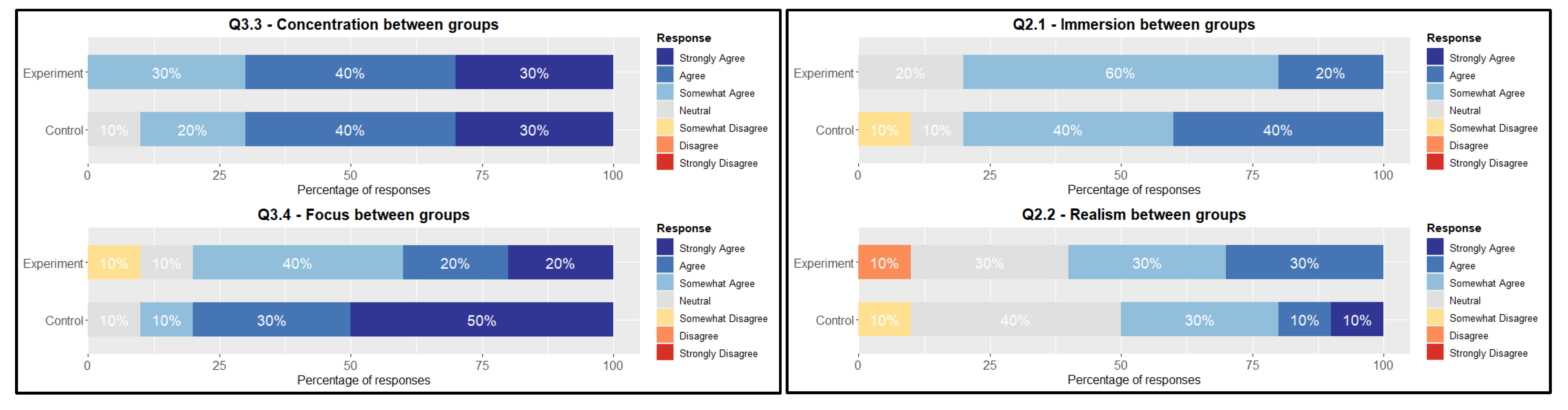
| 2.1 | How immersed did you feel in the virtual environment? | IPQ | Spatial presence | Likert |
| 2.2 | How realistic do you find the environment? | IPQ | Realism | Likert |
| 3.1 | How involved did you feel while playing the virtual reality role play? | IPQ | Involvement | Likert |
| 3.2 | Did you feel that you were losing awareness of your presence in the physical surroundings? | IPQ | Involvement | Open |
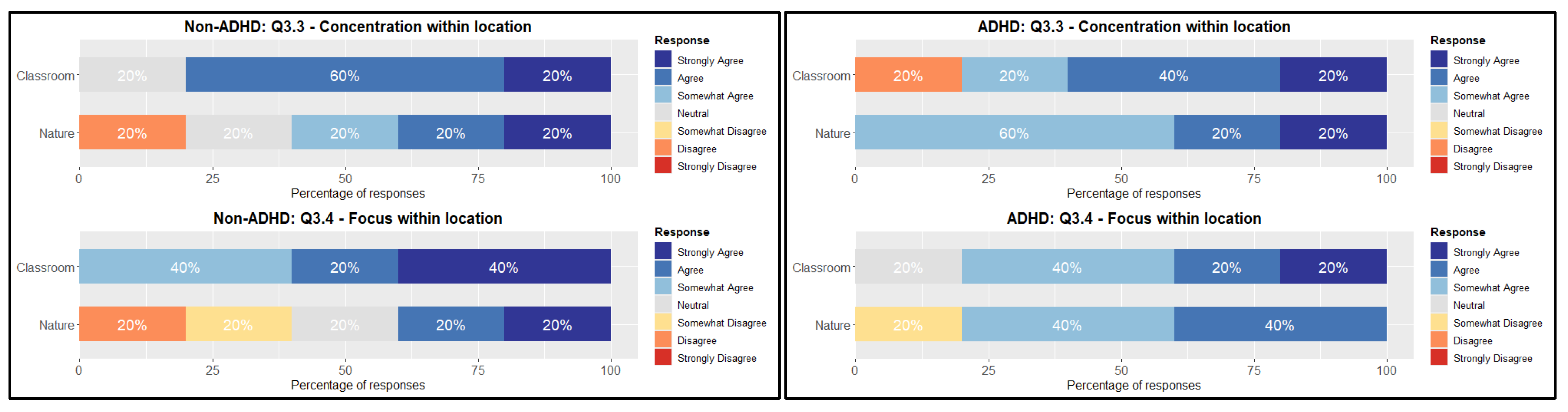
| 3.3 | How well could you concentrate on the assigned tasks of the role play? | IPQ | Involvement | Likert |
| 3.4 | How easy was it to stay focused? | IPQ | Involvement | Likert |
| 4.1 | How well did VR assist you in giving a more engaging experience (compared to the real world)? | IPQ | Immersion | Likert |
| 5.1 | How emotionally engaged (e.g., curiosity or feeling happy) were you while playing the virtual role play? | IPQ | Engagement | Likert |
| 5.2 | Did these emotions impact your ability to learn effectively? | IPQ | Engagement | Open |
| 6.1 | How easy did you find it to learn the controls and interact with the environment/? | TAM | Ease of us | Likert |
| 6.2 | How straightforward do you think VR is for using it for learning purposes? | TAM | Ease of us | Likert |
| 6.3 | Do you find the VR system (equipment and the experience) easy to understand and use for educational activities? | TAM | Ease of us | Open |
| 7.1 | How well did VR assist you in understanding the educational purpose (learn about the Bullwhip-effect and managing a supply chain) of this experiment? | TAM | Usefulness | Likert |
| 7.2 | Would you see yourself using this technology in the future to assist you for educational learning purposes? | TAM | Usefulness | Likert |
| 7.3 | Did VR contribute positively to learning more effectively? | TAM | Usefulness | Open |
| 7.4 | Would you argue that this music genre can assist you in learning more effectively? | - | Qualitative | Open |
| 7.5 | Did you find the music helpful in learning more effectively? | - | Qualitative | Open |
| 7.6 | Were you able to concentrate more effectively? | - | Qualitative | Open |
| Characteristic | Experimental Group | Control Group | Total Participants |
|---|---|---|---|
| Total number of participants | 14 | 21 | 35 |
| Age (mean ± SD and range in years) | 26.24 ± 3.22 (22–32) | 26.71 ± 4.5 (22–39) | 26.43 ± 4.0 (22–39) |
| Gender distribution | M: 71.4%; F: 21.4%; NB: 7.2% | M: 57.1%; F: 42.9.4%; NB: 0% | M: 62.8%; F: 34.3%; NB: 2.9% |
| Characteristic | Experimental Group | Control Group | Total Participants |
|---|---|---|---|
| Wageningen student or employee | 71.4% | 100% | 88.6% |
| Student or employee elsewhere | 21.4% | 0% | 8.6% |
| Other | 7.2% | - | 2.9% |
| Characteristic | Experimental Group | Control Group | Total Participant |
|---|---|---|---|
| Diagnosed AD(H)D | M: 14.3%; F: 14.3%; NB: 0% | – | – |
| Diagnosed ADD | M: 14.3%; F: 7.1%; NB: 7.1% | – | – |
| Identify AD(H)D | M: 28.6%; F: 0%; NB: 0% | – | – |
| Identify ADD | M: 28.6%; F: 0%; NB: 0% | – | – |
| VR familiarity (neg/neutral/pos; scale 1–5) | 7%/14%/79% | 5%/38%/57% | 6%/29%/66% |
| VR experience (neg/neutral/pos; scale 1–5) | 57%/21%/21% | 67%/24%/10% | 63%/23%/14% |
| Question | Result Permutation Test | Question | Result Mann–Whitney U |
|---|---|---|---|
| Q1a (Permutation test) | Z: −0.567, p-value: 0.719 | Q1a (Wilcoxon rank) | W: 49.5, p-value: 1.000 |
| Q2.1 (Permutation test) | Z: 0.271, p-value: 1.000 | Q2.1 (Wilcoxon rank) | W: 57.0, p-value: 0.593 |
| Q2.2 (Permutation test) | Z: 0, p-value: 1.000 | Q2.2 (Wilcoxon rank) | W: 46.0, p-value: 0.783 |
| Q3.1 (Permutation test) | Z: −0.802, p-value: 0.539 | Q3.1 (Wilcoxon rank) | W: 41.0, p-value: 0.501 |
| Q3.3 (Permutation test) | Z: −0.252, p-value: 1.000 | Q3.3 (Wilcoxon rank) | W: 48.5, p-value: 0.936 |
| Q3.4 (Permutation test) | Z: 1.665, p-value: 0.140 | Q3.4 (Wilcoxon rank) | W: 71.5, p-value: 0.099 |
| Question | Result Permutation Test | Question | Result Mann–Whitney U |
|---|---|---|---|
| Q3.3 (Permutation test) | Z: −0.252, p-value: 1.000 | Q3.3 (Wilcoxon rank) | W: 48.5, p-value: 0.936 |
| Q3.4 (Permutation test) | Z: 1.665, p-value: 0.140 | Q3.4 (Wilcoxon rank) | W: 71.5, p-value: 0.099 |
| Question | Result Permutation Test | Question | Result Mann–Whitney U |
|---|---|---|---|
| Q3.3 (Permutation test) | Z: −1.009, p-value: 0.452 | Q3.3 (Wilcoxon rank) | W: 8.5, p-value: 0.448 |
| Q3.4 (Permutation test) | Z: −1.445, p-value: 0.214 | Q3.4 (Wilcoxon rank) | W: 6.5, p-value: 0.242 |
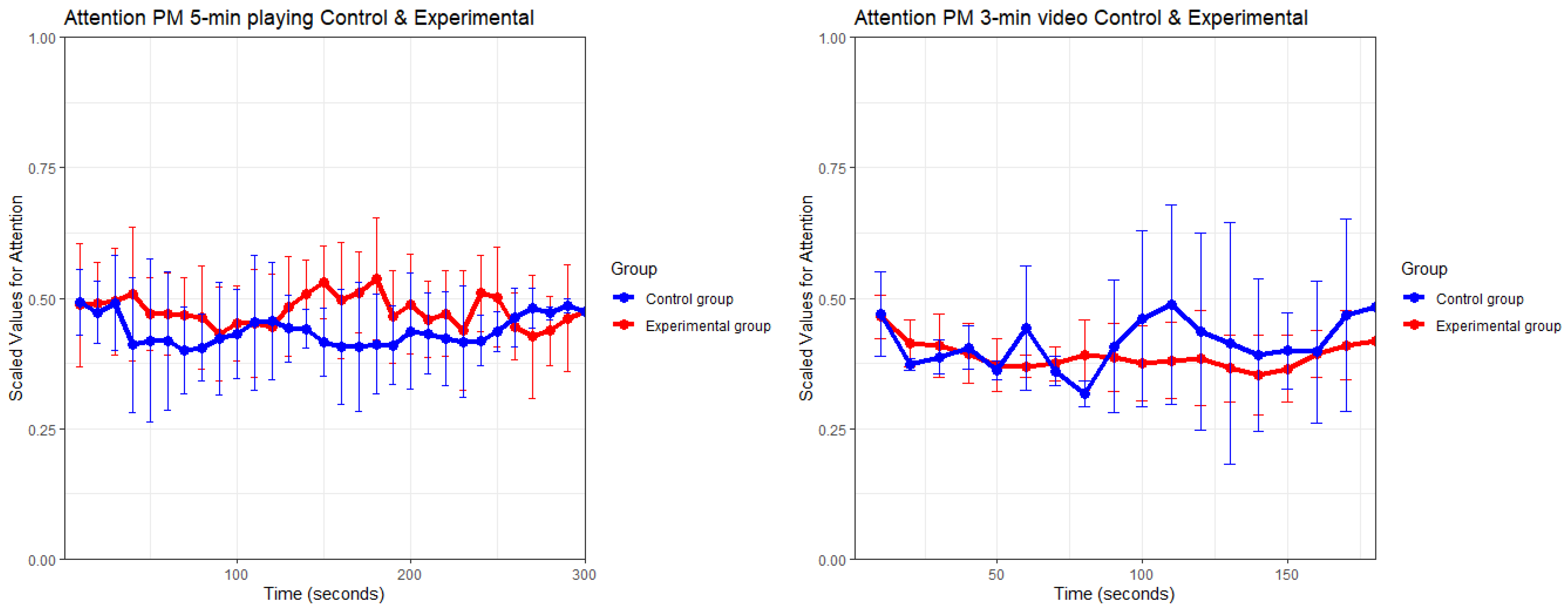
| Performance Metric 5 min Playing | Experimental Group (n = 270; 9 Participants) | Control Group (n = 180; 6 Participants) | Mann–Whitney U Test | Normality (E|C) |
|---|---|---|---|---|
| Attention (mean ± SD, none) | 0.48 ± 0.092 (35 NAs) | 0.44 ± 0.086 (3 NAs) | p-value: <0.001 | p-value: 0.002 p-value: 0.065 |
| Engagement (mean ± SD, none) | 0.70 ± 0.123 (28 NAs) | 0.85 ± 0.139 (0 NAs) | p-value: <0.001 | p-value: <0.001 p-value: <0.001 |
| Excitement (mean ± SD, none) | 0.44 ± 0.256 (0 NAs) | 0.38 ± 0.215 (0 NAs) | p-value: 0.035 | p-value: <0.001 p-value: <0.001 |
| Stress (mean ± SD, none) | 0.54 ± 0.186 (28 NAs) | 0.48 ± 0.158 (0 NAs) | p-value: 0.006 | p-value: <0.001 p-value: <0.001 |
| Relaxation (mean ± SD, none) | 0.49 ± 0.164 (28 NAs) | 0.38 ± 0.144 (0 NAs) | p-value: <0.001 | p-value: <0.001 p-value: <0.001 |
| Interest (mean ± SD, none) | 0.57 ± 0.148 (28 NAs) | 0.56 ± 0.142 (0 NAs) | p-value: 0.380 | p-value: <0.001 p-value: <0.001 |
| Performance Metric 3 min Virtual Lecture | Experimental Group (n = 270; 9 Participants) | Control Group (n = 54; 3 Participants) | Mann–Whitney U Test | Normality (E|C) |
|---|---|---|---|---|
| Attention (mean ± SD, none) | 0.39 ± 0.061 (36 NAs) | 0.41 ± 0.120 (0 NAs) | p-value: 0.785 | p-value: 0.074 p-value: 0.065 |
| Engagement (mean ± SD, none) | 0.72 ± 0.109 (18 NAs) | 0.88 ± 0.093 (0 NAs) | p-value: <0.001 | p-value: <0.001 p-value: <0.001 |
| Excitement (mean ± SD, none) | 0.27 ± 0.195 (0 NAs) | 0.42 ± 0.246 (0 NAs) | p-value: 0.038 | p-value: <0.001 p-value: 0.031 |
| Stress (mean ± SD, none) | 0.47 ± 0.190 (20 NAs) | 0.52 ± 0.177 (0 NAs) | p-value: <0.001 | p-value: <0.001 p-value: <0.001 |
| Relaxation (mean ± SD, none) | 0.34 ± 0.126 (20 NAs) | 0.40 ± 0.154 (0 NAs) | p-value: 0.025 | p-value: <0.001 p-value: 0.002 |
| Interest (mean ± SD, none) | 0.48 ± 0.093 (20 NAs) | 0.51 ± 0.137 (0 NAs) | p-value: 0.139 | p-value: <0.001 p-value: 0.017 |
Disclaimer/Publisher’s Note: The statements, opinions and data contained in all publications are solely those of the individual author(s) and contributor(s) and not of MDPI and/or the editor(s). MDPI and/or the editor(s) disclaim responsibility for any injury to people or property resulting from any ideas, methods, instructions or products referred to in the content. |
© 2026 by the authors. Licensee MDPI, Basel, Switzerland. This article is an open access article distributed under the terms and conditions of the Creative Commons Attribution (CC BY) license.
Share and Cite
Wolfers, J.; Hurst, W.; Krampe, C. Integrating EEG Sensors with Virtual Reality to Support Students with ADHD. Sensors 2026, 26, 1017. https://doi.org/10.3390/s26031017
Wolfers J, Hurst W, Krampe C. Integrating EEG Sensors with Virtual Reality to Support Students with ADHD. Sensors. 2026; 26(3):1017. https://doi.org/10.3390/s26031017
Chicago/Turabian StyleWolfers, Juriaan, William Hurst, and Caspar Krampe. 2026. "Integrating EEG Sensors with Virtual Reality to Support Students with ADHD" Sensors 26, no. 3: 1017. https://doi.org/10.3390/s26031017
APA StyleWolfers, J., Hurst, W., & Krampe, C. (2026). Integrating EEG Sensors with Virtual Reality to Support Students with ADHD. Sensors, 26(3), 1017. https://doi.org/10.3390/s26031017