Post-Fire Forest Pulse Recovery: Superiority of Generalized Additive Models (GAM) in Long-Term Landsat Time-Series Analysis



Highlights
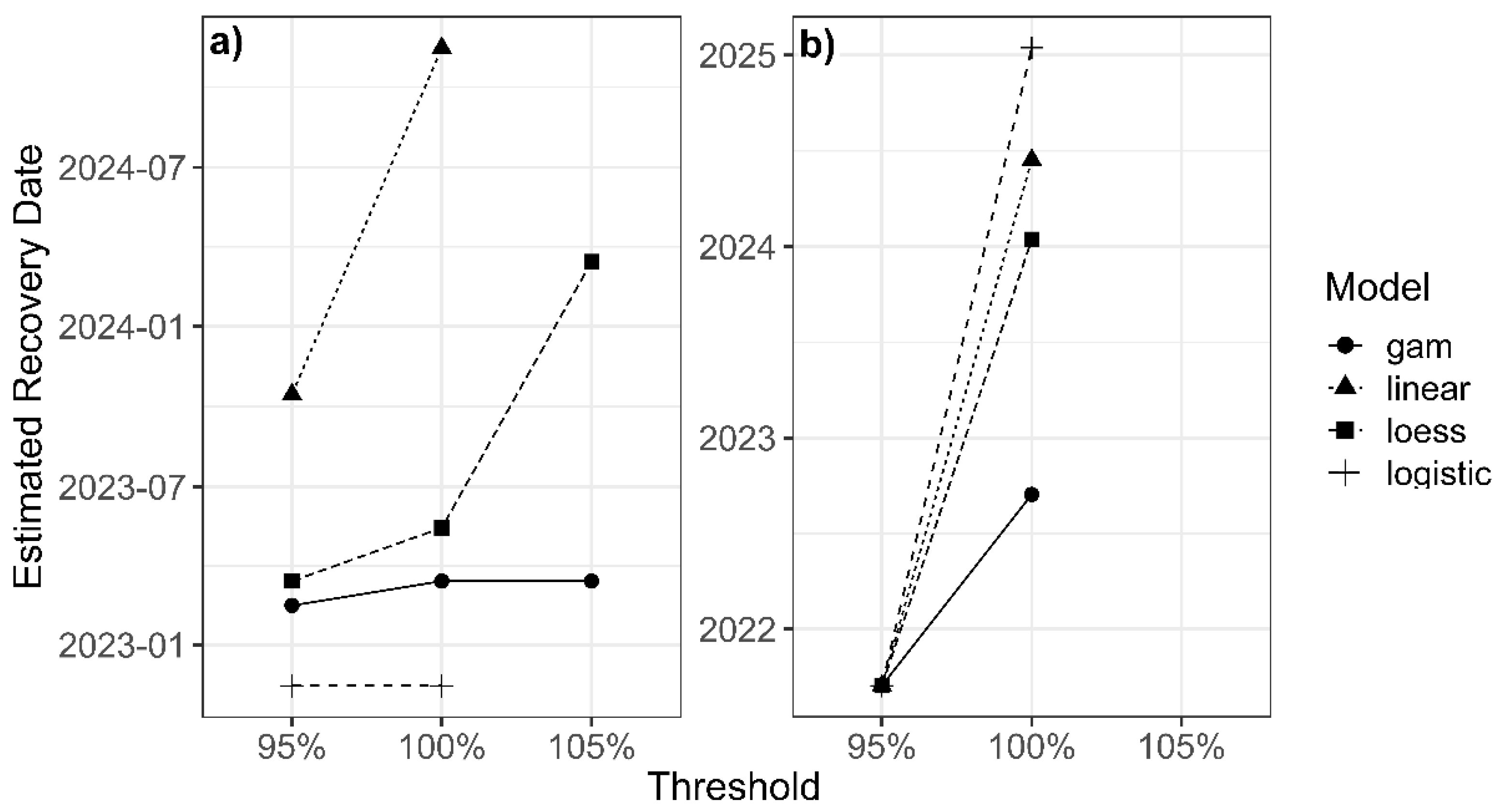
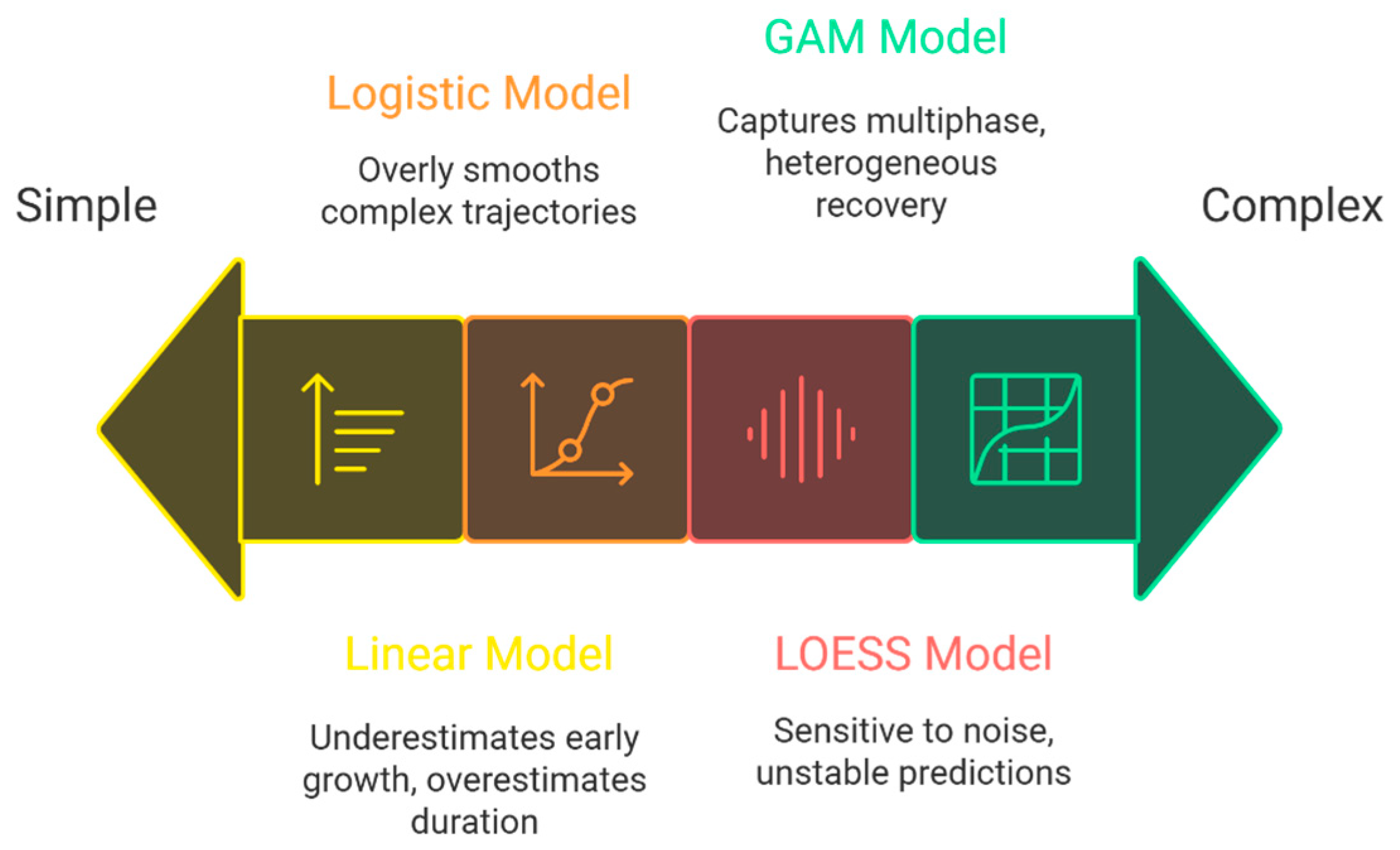
- Generalized Additive Models (GAMs) consistently outperformed other methods in modeling nonlinear post-fire vegetation recovery across two contrasting ecosystems. This model exhibited the lowest AIC and RMSE values, demonstrating an unparalleled ability to capture multiphase recovery patterns.
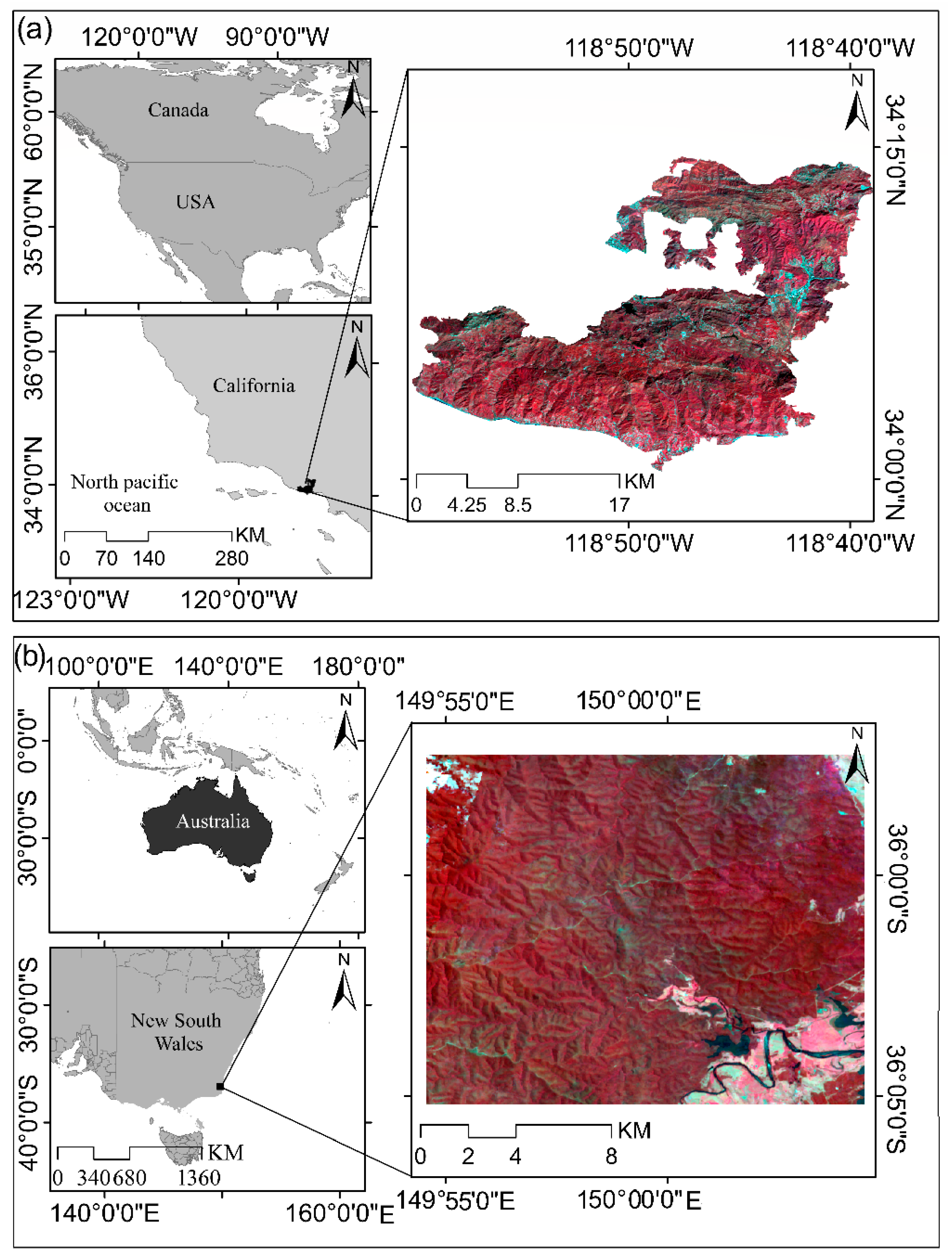
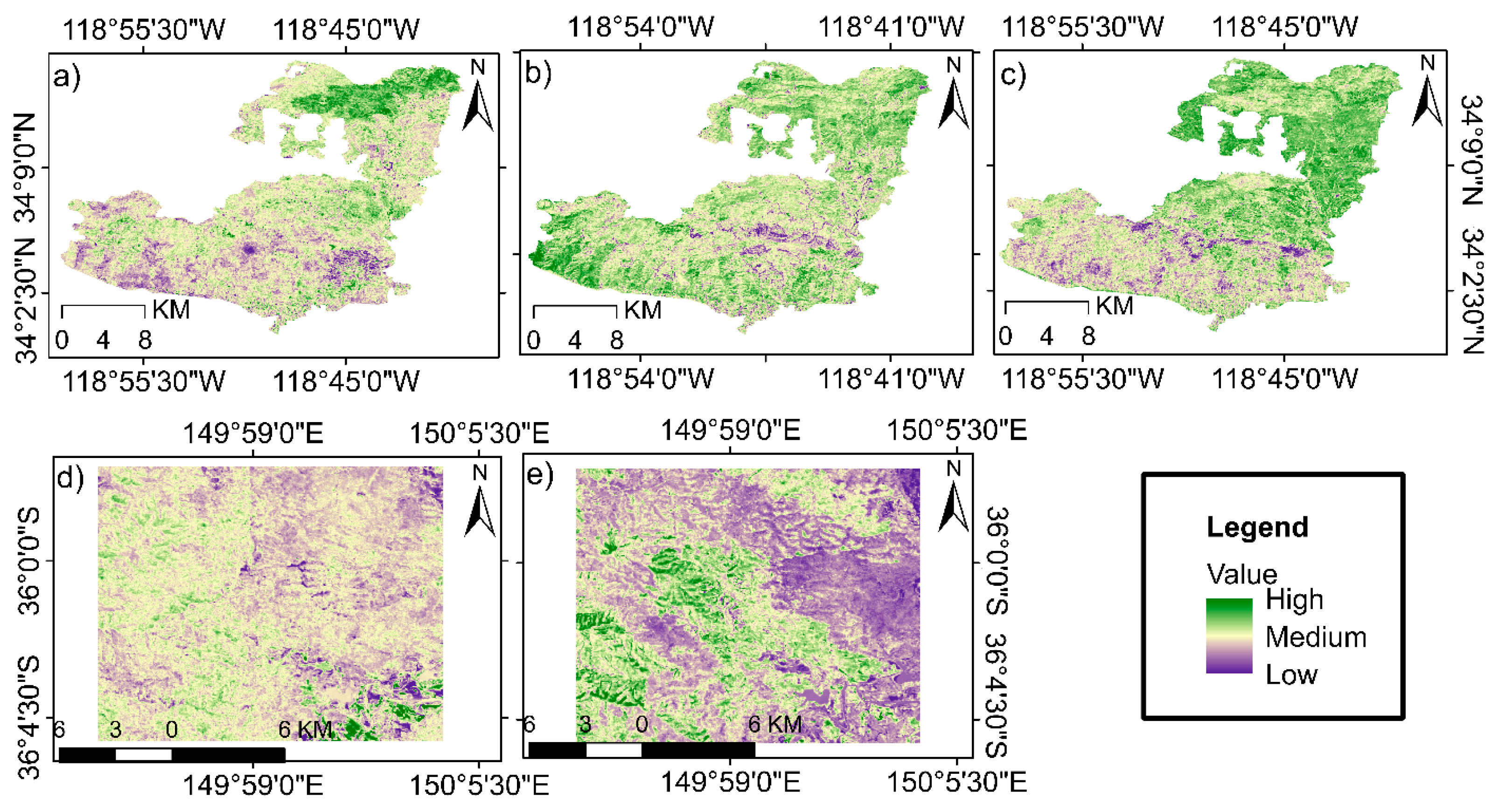
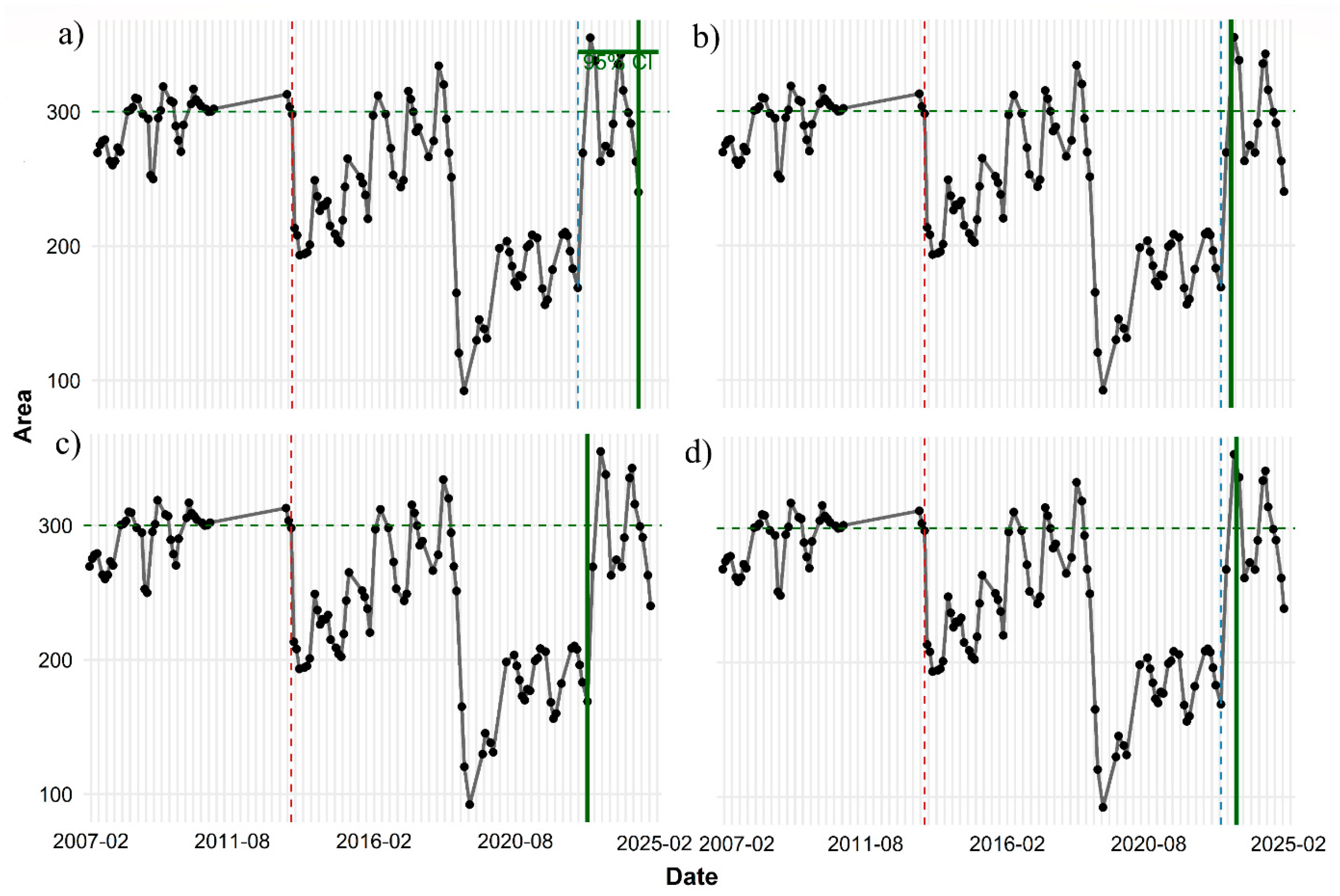
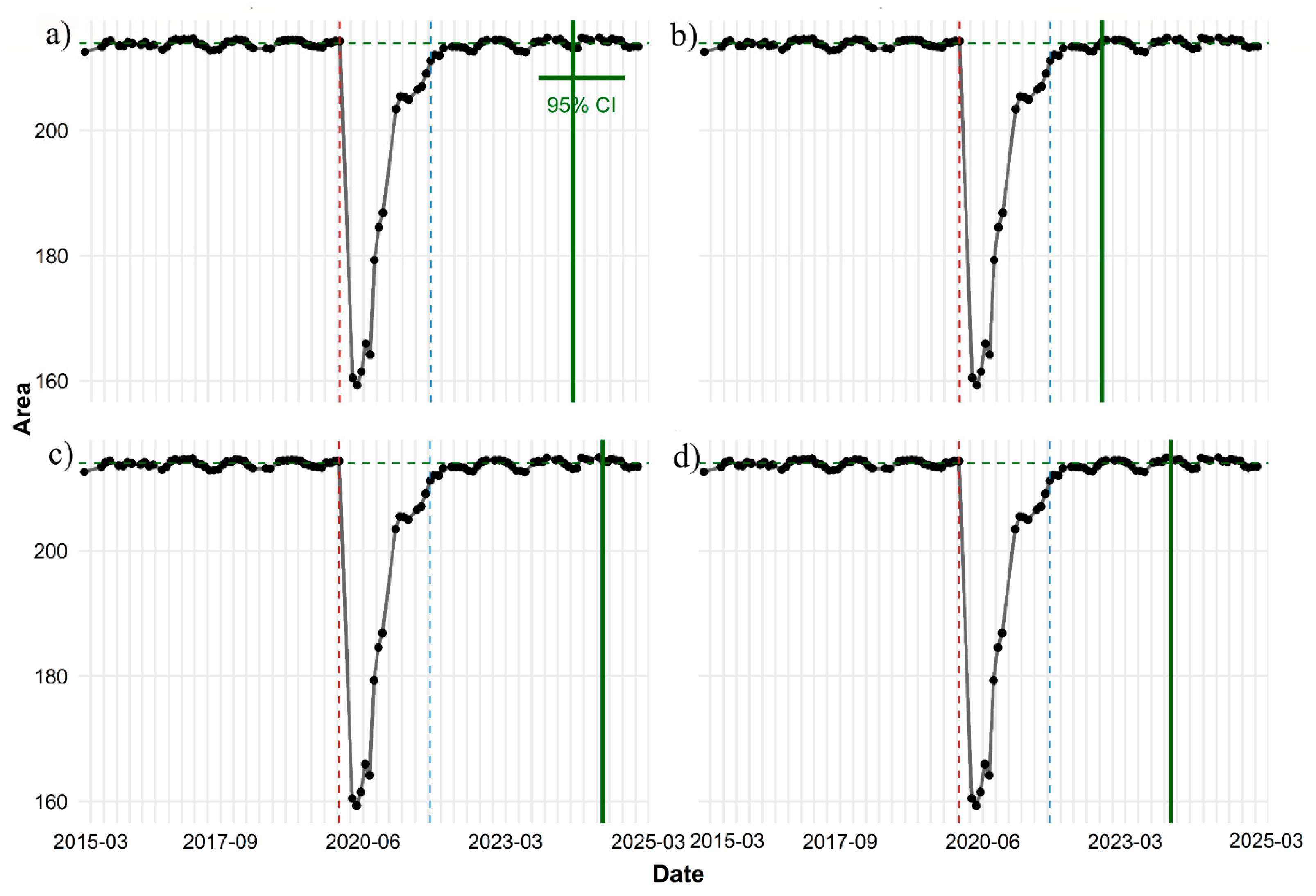
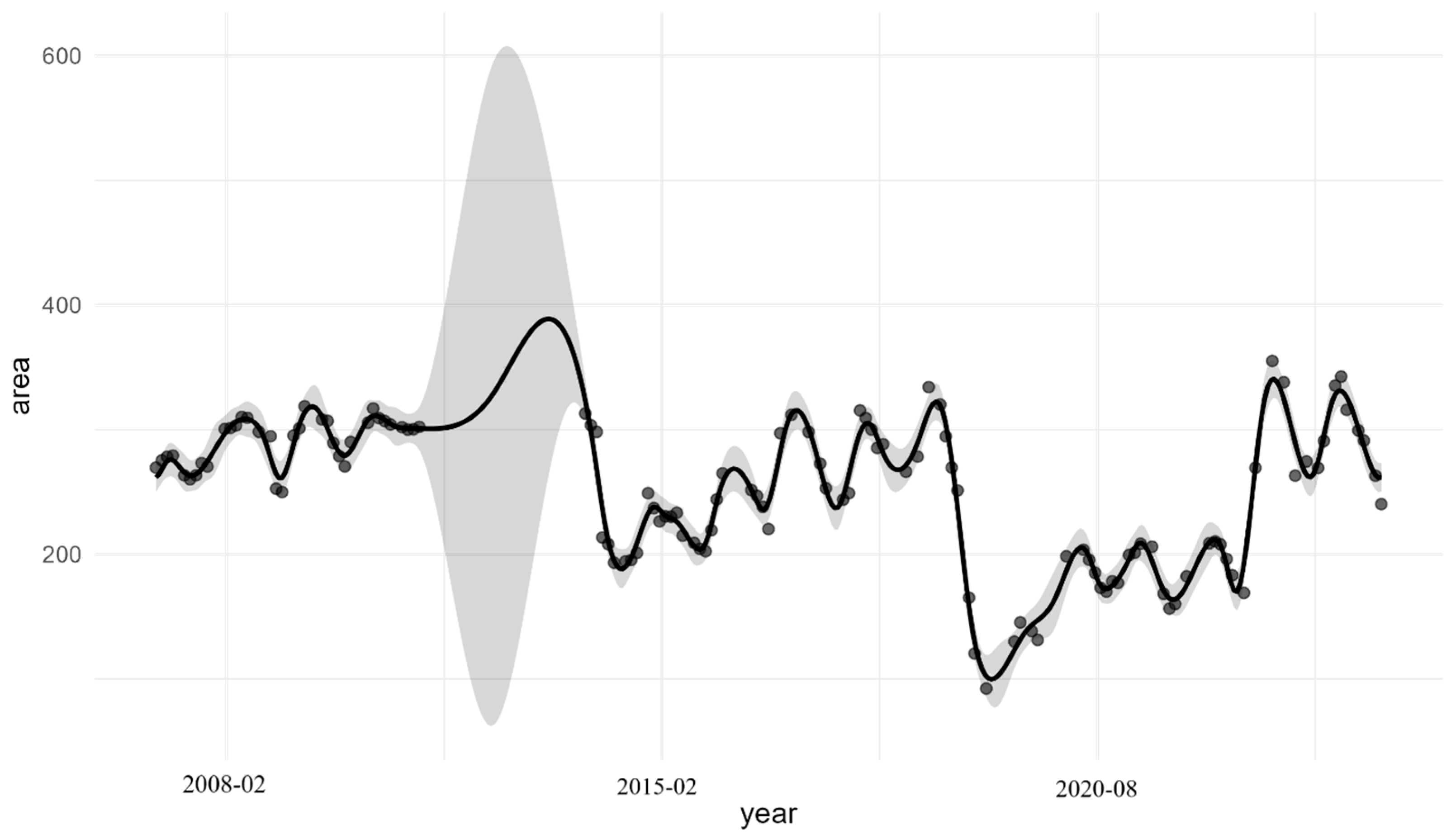
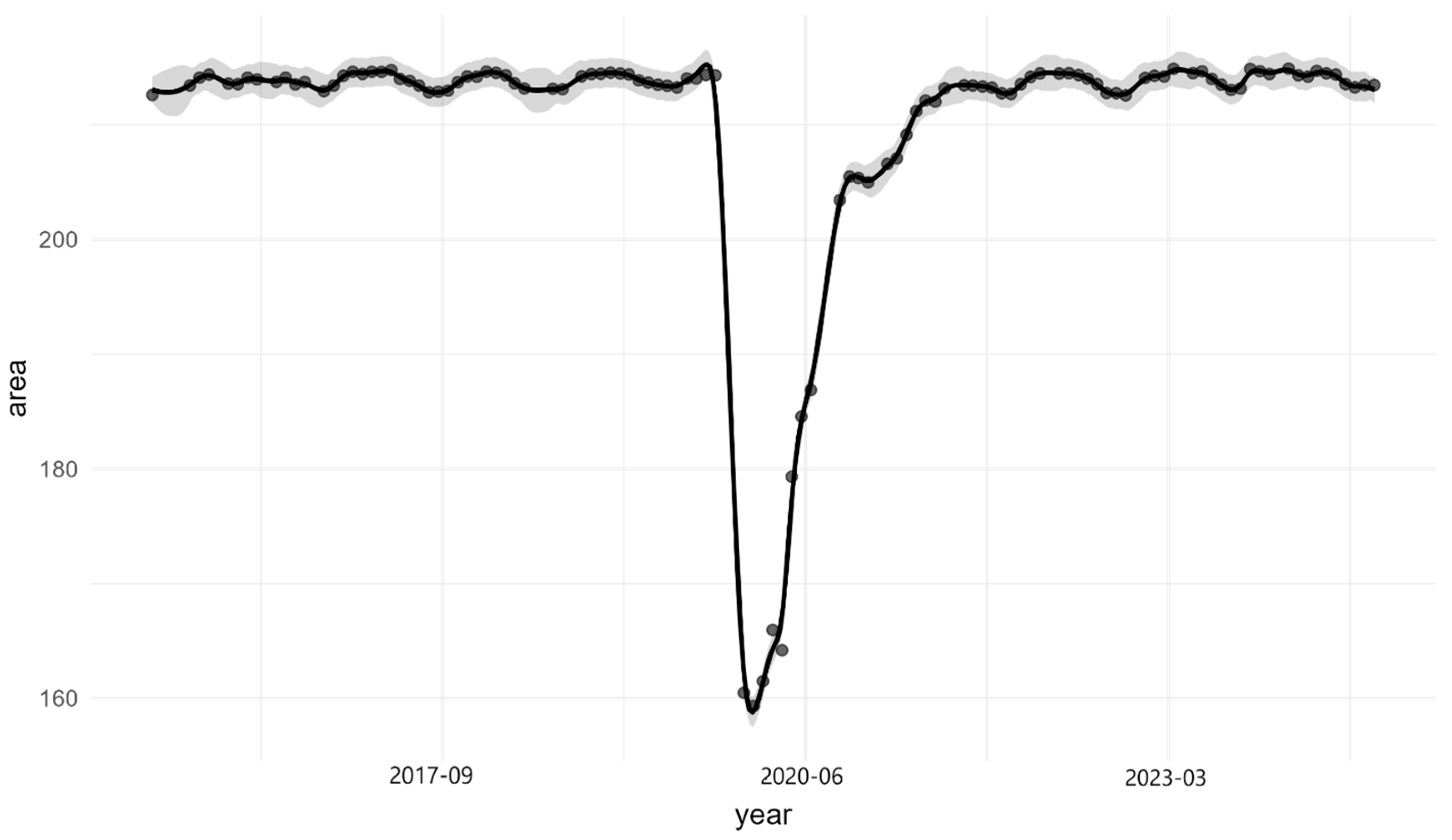
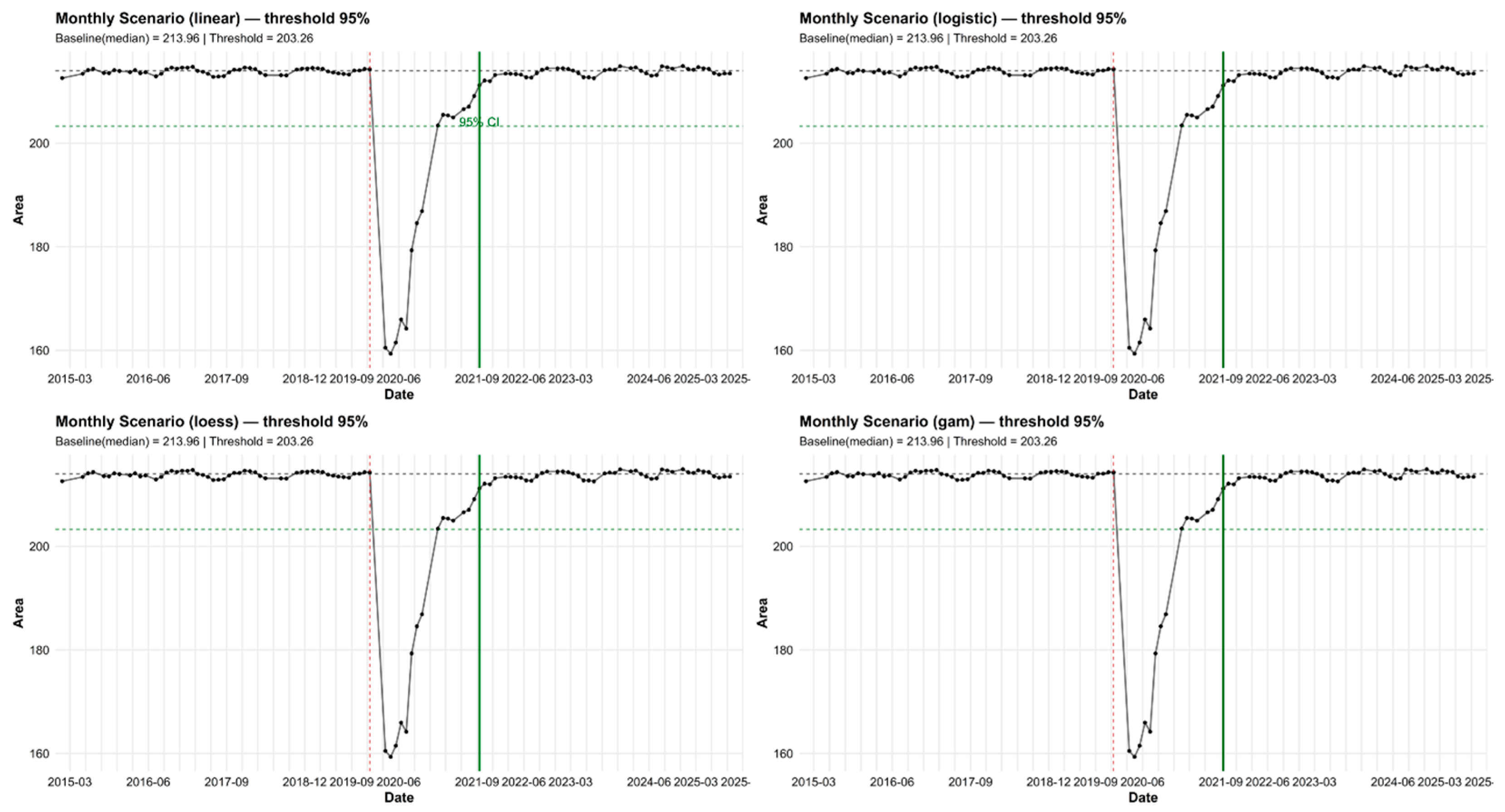
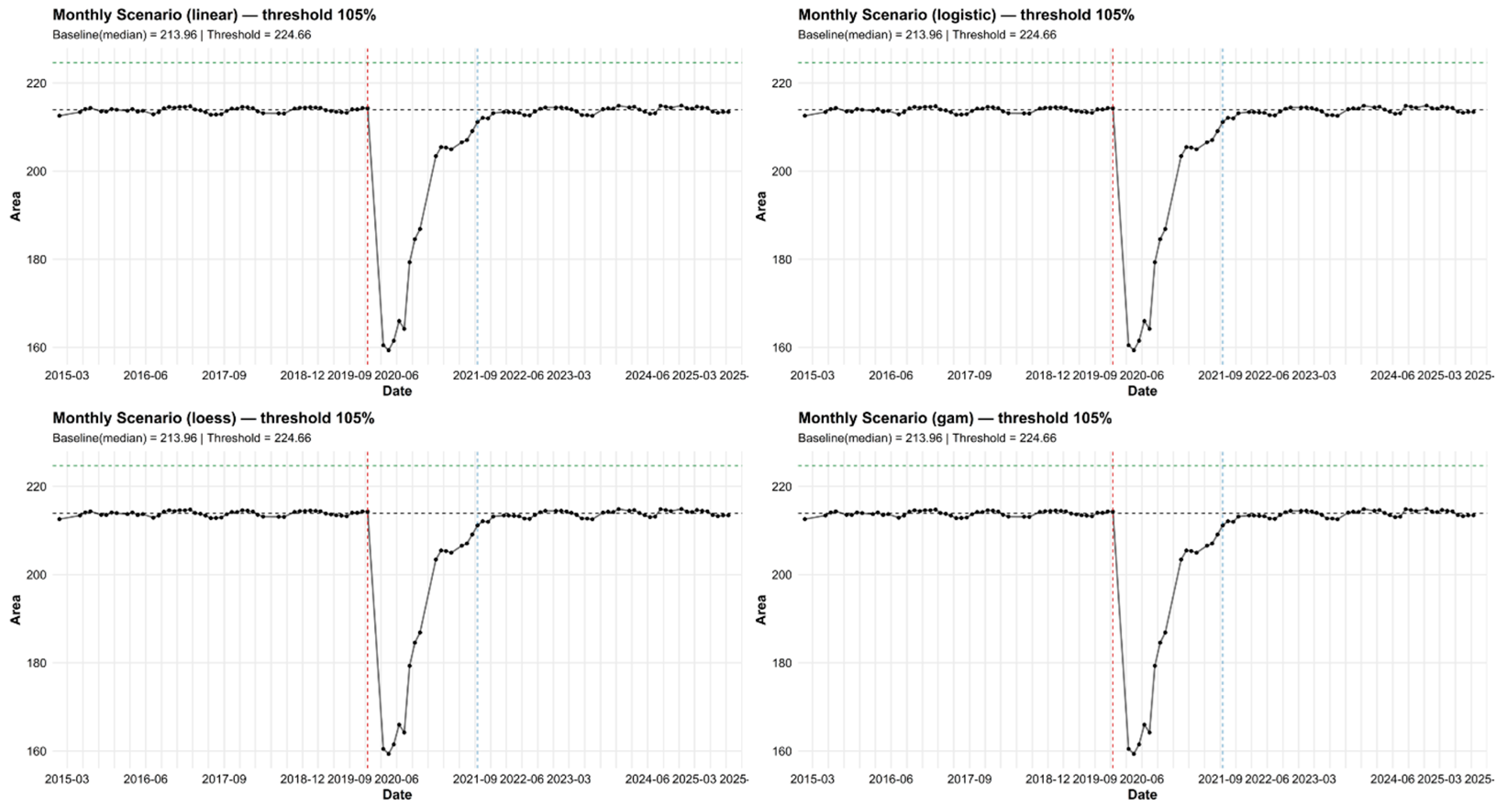
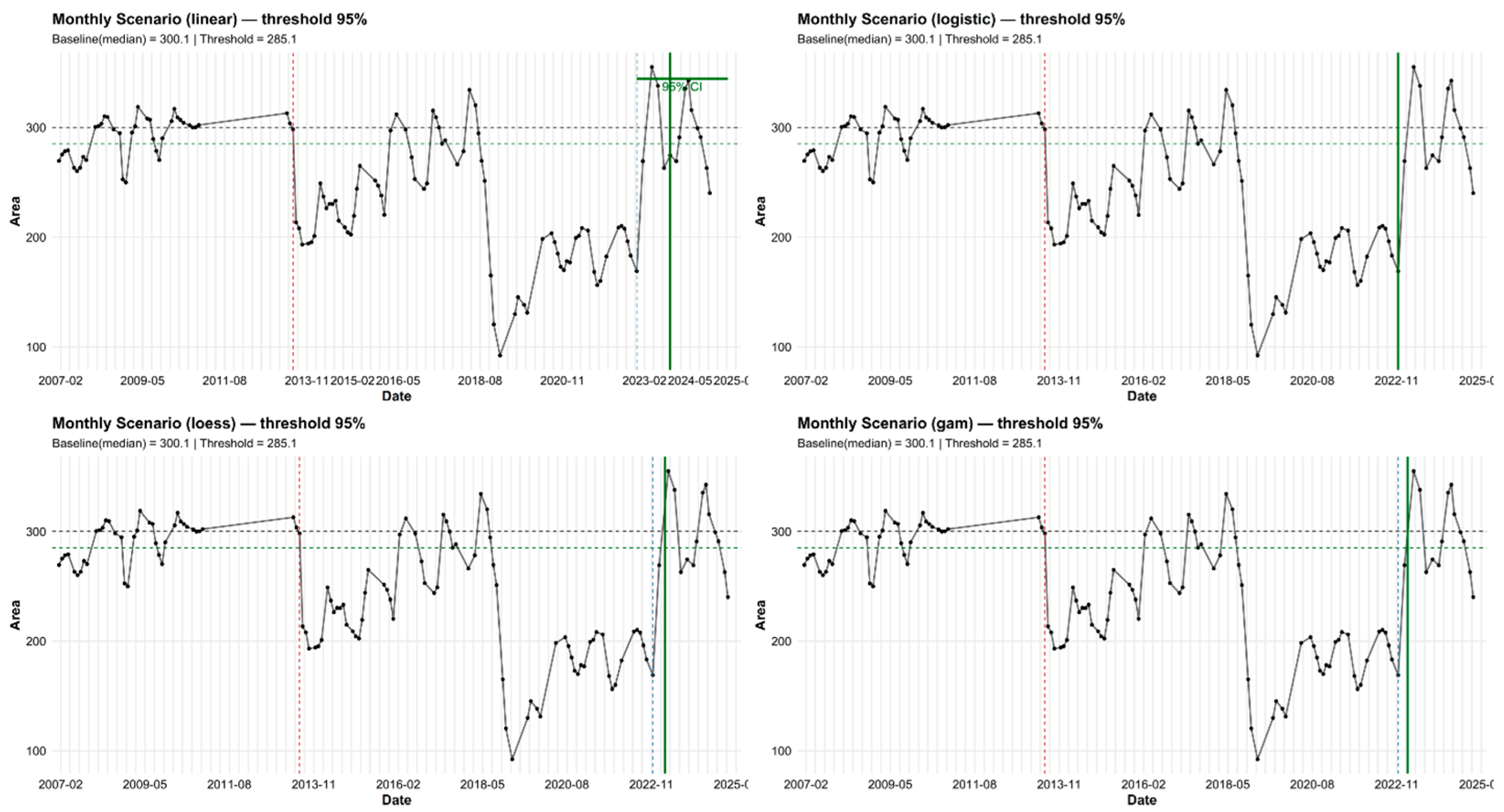
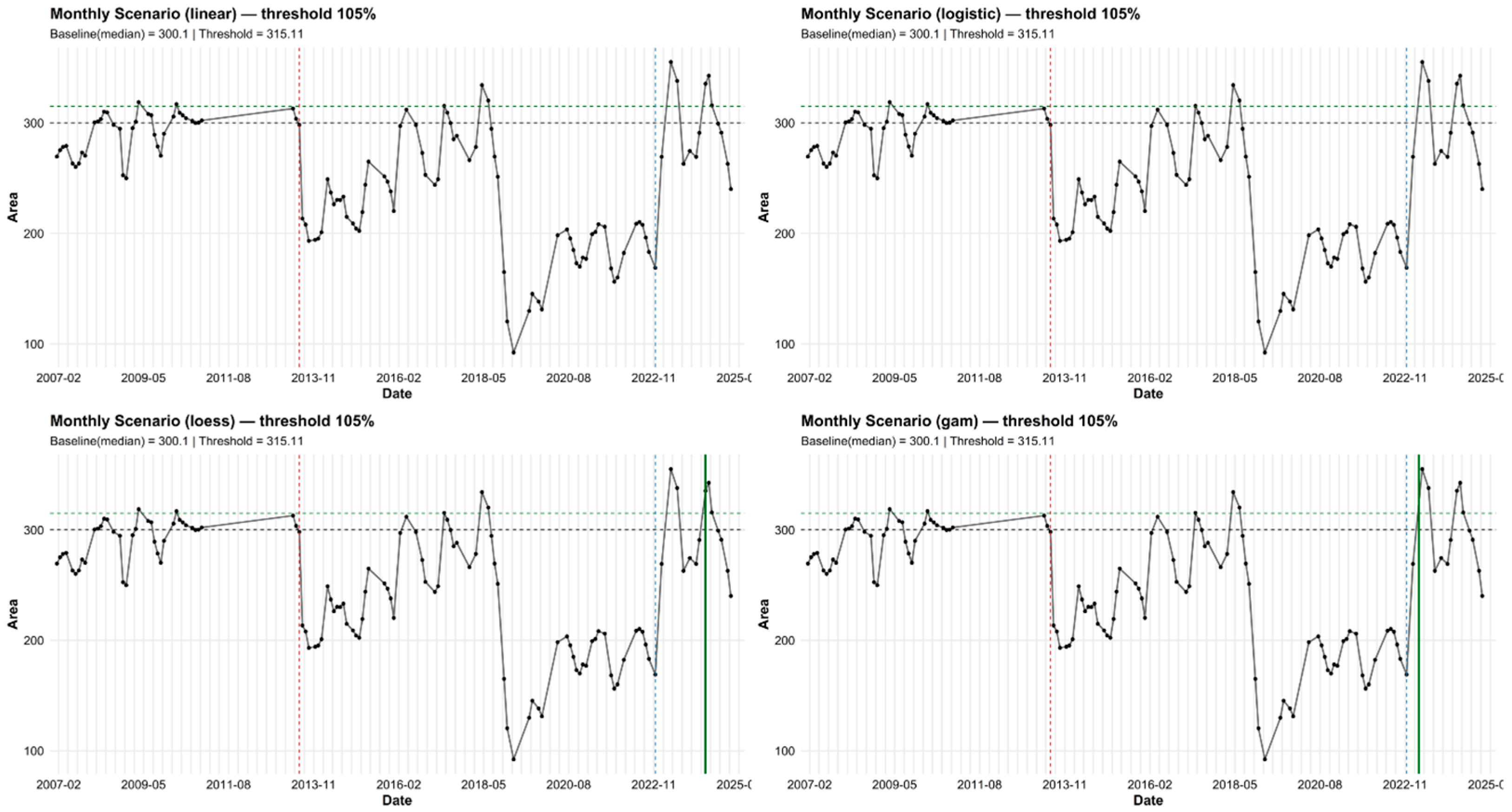
- Post-fire recovery trajectories are inherently nonlinear and ecosystem-specific. Australian (MDSF) forests rapidly returned to baseline levels (within ~2 years), whereas California (SMM) forests with a history of recurrent fires failed to fully recover even after 9 years.
- This study provides a transferable methodological framework for monitoring forest resilience under intensifying global fire regimes. Integrating Landsat time series with flexible semi-parametric models like GAM offers a powerful approach for recovery assessment.
- Simple linear and logistic models are insufficient for accurately estimating vegetation recovery time, as the findings emphasize the need for adopting more complex methods capable of capturing the heterogeneity of recovery pathways.
Abstract
1. Introduction
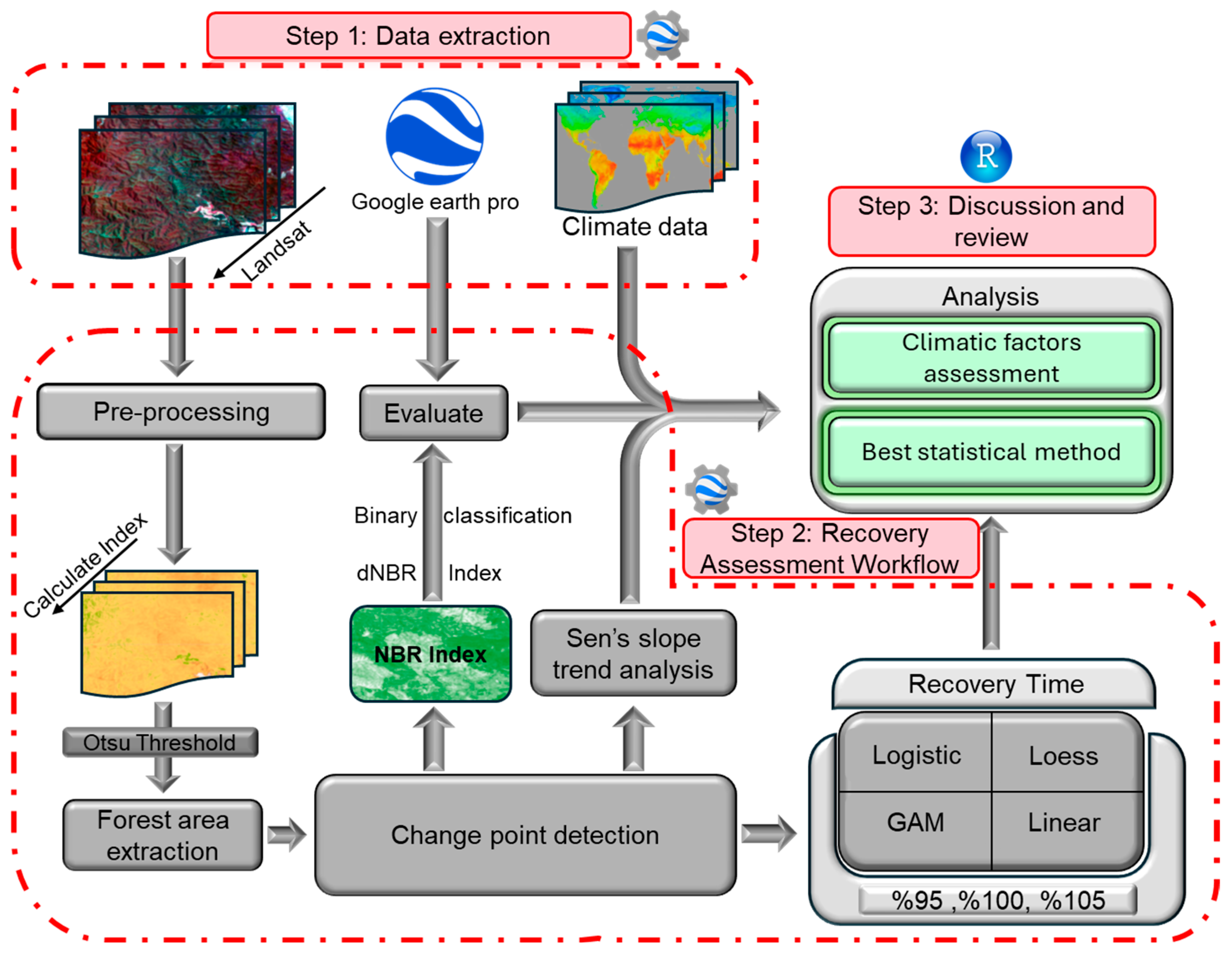
- Quantify post-fire vegetation recovery trajectories using long-term Landsat time series and examine how nonlinear, multi-phase recovery patterns differ between ecosystems with contrasting fire regimes.
- Assess the capability of GAMs to capture nonlinear, time-dependent recovery processes, including rapid early regrowth, mid-term slowdown, and late-stage stabilization, and compare their performance against commonly used approaches such as linear regression, logistic growth models, and LOESS.
- Evaluate the stability, sensitivity, and robustness of recovery-time estimates derived from GAMs relative to other statistical and time-series methods under different recovery thresholds (95%, 100%, and 105% of baseline conditions).
- Investigate the role of climatic drivers in shaping recovery trajectories and assess whether GAM-based modeling provides improved insight into climate–vegetation relationships compared to simple correlation or trend-based approaches.
2. Materials and Methods
2.1. Study Area
2.2. Materials
2.2.1. Reference and Satellite Data
2.2.2. Climate Data
2.3. Methodology
2.4. Theoretical Background of Methods, Accuracy Assessment & Ecological Metrics
2.4.1. Methods
Pruned Exact Linear Time (PELT)
Linear Model
Logistic
Locally Estimated Scatterplot Smoothing (LOESS)
Generalized Additive Model (GAM)
2.5. Accuracy Assessment & Ecological Metrics
3. Results
3.1. Disturbance and Burn Severity Patterns
3.2. Post-Fire Recovery Modeling
4. Discussion
4.1. Ecological Insights into Disturbance and Recovery
4.2. Performance Assessment of Recovery Modeling Approaches
4.3. Limitation and Future Work
5. Conclusions
Author Contributions
Funding
Institutional Review Board Statement
Informed Consent Statement
Data Availability Statement
Acknowledgments
Conflicts of Interest
Appendix A
Appendix B



| Region | USA Recovery | AUS Recovery | |||||
|---|---|---|---|---|---|---|---|
| Span | Evaluation Criteria | 0.95 | 1 | 1.05 | 0.95 | 1 | 1.05 |
| 0.1 | RMSE | 24.3 | 25.9 | 27.1 | 25.4 | 27.6 | 26.1 |
| R2 | 0.91 | 0.86 | 0.85 | 0.87 | 0.84 | 0.85 | |
| MAE | 17.4 | 19.9 | 20.7 | 19.1 | 21.8 | 20.5 | |
| 0.2 | RMSE | 23.4 | 25.1 | 25.8 | 24.5 | 25.9 | 25.1 |
| R2 | 0.92 | 0.88 | 0.87 | 0.88 | 0.86 | 0.87 | |
| MAE | 17.6 | 19.4 | 19.9 | 18.5 | 20.1 | 19.6 | |
| 0.3 | RMSE | 23.1 | 24.3 | 24.7 | 23.9 | 24.6 | 24.0 |
| R2 | 0.92 | 0.89 | 0.88 | 0.89 | 0.87 | 0.88 | |
| MAE | 17.8 | 18.9 | 19.3 | 18.1 | 19.2 | 19.0 | |
| 0.4 | RMSE | 24.8 | 23.1 | 23.4 | 22.0 | 23.1 | 22.4 |
| R2 | 0.91 | 0.93 | 0.94 | 0.92 | 0.93 | 0.92 | |
| MAE | 19.1 | 17.4 | 17.8 | 17.1 | 17.9 | 17.5 | |
| 0.5 | RMSE | 27.0 | 24.9 | 25.4 | 24.2 | 25.6 | 25.3 |
| R2 | 0.89 | 0.9 | 0.89 | 0.88 | 0.88 | 0.89 | |
| MAE | 21.1 | 18.9 | 19.5 | 18.4 | 20.0 | 19.8 | |


References
- De Marzo, T.; Pflugmacher, D.; Baumann, M.; Lambin, E.F.; Gasparri, I.; Kuemmerle, T. Characterizing forest disturbances across the Argentine Dry Chaco based on Landsat time series. Int. J. Appl. Earth Obs. Geoinf. 2021, 98, 102310. [Google Scholar] [CrossRef]
- Földi, L.; Kuti, R. Characteristics of forest fires and their impact on the environment. AARMS—Acad. Appl. Res. Mil. Public Manag. Sci. 2016, 15, 5–17. [Google Scholar] [CrossRef]
- Song, L.; Jie, D.; Xie, F.; Gao, G.; Cao, X. Enhanced human activities have disturbed the vegetation-climate relationship over the last millennium in the Changbai Mountains, north-east China. Glob. Planet. Change 2025, 246, 104701. [Google Scholar] [CrossRef]
- van Lierop, P.; Lindquist, E.; Sathyapala, S.; Franceschini, G. Global forest area disturbance from fire, insect pests, diseases and severe weather events. For. Ecol. Manag. 2015, 352, 78–88. [Google Scholar] [CrossRef]
- Silveira, F.A.; Rossatto, D.R.; Heilmeier, H.; Overbeck, G.E. Fire and vegetation: Introduction to the special issue. Flora 2022, 286, 151985. [Google Scholar] [CrossRef]
- Shivaprasad, K.; Sowmya, M.; Danakumara, T.; Gowda, M.M.; Kumar, R.; Kumar, S.D.; Kumar, B.S. Forest fire and its impact on forest biodiversity. In Forests for Inclusive and Sustainable Economic Growth; Elsevier: Amsterdam, The Netherlands, 2025; pp. 37–53. [Google Scholar]
- Dastour, H.; Ahmed, M.R.; Hassan, Q.K. Analysis of forest fire patterns and their relationship with climate variables in Alberta’s natural subregions. Ecol. Inform. 2024, 80, 102531. [Google Scholar] [CrossRef]
- Bostani, A.M.; Pourebrahim, S. Integrated Fire Risk Assessment Using Time-Series Satellite Data and Multi-Criteria Decision-Making Techniques. Environ. Sustain. Indic. 2025, 28, 100916. [Google Scholar] [CrossRef]
- Gholamnia, K.; Gudiyangada Nachappa, T.; Ghorbanzadeh, O.; Blaschke, T. Comparisons of diverse machine learning approaches for wildfire susceptibility mapping. Symmetry 2020, 12, 604. [Google Scholar] [CrossRef]
- Kaloudis, S.; Raptis, D.; Galanopoulou, S.; Demestichas, K.; Lykoudi, E.; Ntalianis, F.; Zografakis, D.; Sykas, D.; Costopoulou, C. Assessing Post-Fire Rehabilitation: Development and Validation of a Continuous Monitoring Index. Int. J. Disaster Risk Reduct. 2025, 133, 105924. [Google Scholar] [CrossRef]
- De Faria, B.L.; Marano, G.; Piponiot, C.; Silva, C.A.; Dantas, V.d.L.; Rattis, L.; Rech, A.R.; Collalti, A. Model-based estimation of Amazonian forests recovery time after drought and fire events. Forests 2020, 12, 8. [Google Scholar] [CrossRef]
- Buthelezi, M.N.M.; Lottering, R.T.; Peerbhay, K.Y.; Mutanga, O. Exploring forest rehabilitation and restoration: A brief systematic review. Trees For. People 2025, 20, 100898. [Google Scholar] [CrossRef]
- Pérez-Cabello, F.; Montorio, R.; Alves, D.B. Remote sensing techniques to assess post-fire vegetation recovery. Curr. Opin. Environ. Sci. Health 2021, 21, 100251. [Google Scholar] [CrossRef]
- Arij, N.; Latifi, H.; Fakhri, A.; Esmaili, R. Four decades of spatio-temporal trends in Miankaleh Wetland’s water body and vegetation as revealed by remote sensing time series. Ecol. Inform. 2025, 91, 103374. [Google Scholar] [CrossRef]
- Shafeian, E.; Fassnacht, F.E.; Latifi, H. Detecting semi-arid forest decline using time series of Landsat data. Eur. J. Remote Sens. 2023, 56, 2260549. [Google Scholar] [CrossRef]
- Cao, P.; Zang, Z.; Zhang, M.; Wang, X.; Tang, X.; Xiang, J.; Tang, S.; Wang, J.; Zhang, Y. Using LandTrendr to analyze forest disturbance, recovery, and attribution in Hunan province from 2001 to 2024. Ecol. Indic. 2025, 176, 113712. [Google Scholar] [CrossRef]
- Naimaee, R.; Kiani, A.; Jarahizadeh, S.; Haji Seyed Asadollah, S.B.; Melgarejo, P.; Jodar-Abellan, A. Long-term water quality monitoring: Using satellite images for temporal and spatial monitoring of thermal pollution in water resources. Sustainability 2024, 16, 646. [Google Scholar] [CrossRef]
- Nguyen, T.H.; Jones, S.; Soto-Berelov, M.; Haywood, A.; Hislop, S. Landsat time-series for estimating forest aboveground biomass and its dynamics across space and time: A review. Remote Sens. 2019, 12, 98. [Google Scholar] [CrossRef]
- Cuevas-González, M.; Gerard, F.; Balzter, H.; Riano, D. Analysing forest recovery after wildfire disturbance in boreal Siberia using remotely sensed vegetation indices. Glob. Change Biol. 2009, 15, 561–577. [Google Scholar] [CrossRef]
- Chen, W.; Moriya, K.; Sakai, T.; Koyama, L.; Cao, C. Monitoring of post-fire forest recovery under different restoration modes based on time series Landsat data. Eur. J. Remote Sens. 2014, 47, 153–168. [Google Scholar] [CrossRef]
- Morresi, D.; Vitali, A.; Urbinati, C.; Garbarino, M. Forest spectral recovery and regeneration dynamics in stand-replacing wildfires of central Apennines derived from Landsat time series. Remote Sens. 2019, 11, 308. [Google Scholar] [CrossRef]
- Bright, B.C.; Hudak, A.T.; Kennedy, R.E.; Braaten, J.D.; Henareh Khalyani, A. Examining post-fire vegetation recovery with Landsat time series analysis in three western North American forest types. Fire Ecol. 2019, 15, 8. [Google Scholar] [CrossRef]
- Qiu, J.; Wang, H.; Shen, W.; Zhang, Y.; Su, H.; Li, M. Quantifying forest fire and post-fire vegetation recovery in the daxin’anling area of northeastern China using landsat time-series data and machine learning. Remote Sens. 2021, 13, 792. [Google Scholar] [CrossRef]
- Bonannella, C.; Chirici, G.; Travaglini, D.; Pecchi, M.; Vangi, E.; D’amico, G.; Giannetti, F. Characterization of wildfires and harvesting forest disturbances and recovery using Landsat time series: A case study in Mediterranean forests in central Italy. Fire 2022, 5, 68. [Google Scholar] [CrossRef]
- Peña-Molina, E.; Moya, D.; Marino, E.; Tomé, J.L.; Fajardo-Cantos, Á.; González-Romero, J.; Lucas-Borja, M.E.; de las Heras, J. Fire vulnerability, resilience, and recovery rates of mediterranean pine forests using a 33-year time series of satellite imagery. Remote Sens. 2024, 16, 1718. [Google Scholar] [CrossRef]
- Shatto, C.; Kiene, M.; Hofmann, P.; Walentowitz, A.; Wilkens, V.; Heuser, T.; Weiser, F. Assessing the recovery of Pinus canariensis stands after wildfires and volcanic eruption on La Palma, Canary Islands. For. Ecol. Manag. 2024, 572, 122317. [Google Scholar] [CrossRef]
- Xie, P.; Yang, Z.; Liu, F.; Wu, X. Drivers of short-term recovery in vegetation greenness and canopy height in burned areas of Southwest China. Environ. Sustain. Indic. 2025, 28, 100950. [Google Scholar] [CrossRef]
- Penot, V.; Opitz, T.; Pimont, F.; Merlin, O. Improved fire severity prediction using pre-fire remote sensing and meteorological time series: Application to the French Mediterranean area. Agric. For. Meteorol. 2025, 371, 110588. [Google Scholar] [CrossRef]
- Chen, L.; Jin, Z.; Michishita, R.; Cai, J.; Yue, T.; Chen, B.; Xu, B. Dynamic monitoring of wetland cover changes using time-series remote sensing imagery. Ecol. Inform. 2014, 24, 17–26. [Google Scholar] [CrossRef]
- Keeley, J.E.; Brennan, T.J.; Syphard, A.D. The effects of prolonged drought on vegetation dieback and megafires in southern California chaparral. Ecosphere 2022, 13, e4203. [Google Scholar] [CrossRef]
- Levin, D. Determinants of Post-Fire Vegetation Recovery in the Santa Monica Mountains, Southern California. Master’s Thesis, University of Pennsylvania, Philadelphia, PA, USA, 2020. [Google Scholar]
- Swenson, J.J.; Franklin, J. The effects of future urban development on habitat fragmentation in the Santa Monica Mountains. Landsc. Ecol. 2000, 15, 713–730. [Google Scholar] [CrossRef]
- Stork, N.; Mainzer, A.; Martin, R. Native and non-native plant regrowth in the Santa Monica Mountains National Recreation Area after the 2018 Woolsey Fire. Ecosphere 2023, 14, e4567. [Google Scholar] [CrossRef]
- Davey, S.M.; Sarre, A. The 2019/20 Black Summer bushfires. Aust. For. 2020, 83, 47–51. [Google Scholar] [CrossRef]
- Wood, S.N. Generalized Additive Models: An Introduction with R; Chapman and Hall/CRC: Boca Raton, FL, USA, 2017. [Google Scholar]
- Wood, S.W.; Wardlaw, T.J.; Pryde, E.C.; Baker, S.C. Landscape structure and mature forest biodiversity in wet eucalypt forests: A spatial analysis of timber production areas in south-eastern Australia. Forests 2017, 8, 89. [Google Scholar] [CrossRef]
- Amoakoh, A.O.; Aplin, P.; Rodríguez-Veiga, P.; Moses, C.; Alonso, C.P.; Cortés, J.A.; Delgado-Fernandez, I.; Kankam, S.; Mensah, J.C.; Nortey, D.D.N. Predictive Modelling of Land Cover Changes in the Greater Amanzule Peatlands Using Multi-Source Remote Sensing and Machine Learning Techniques. Remote Sens. 2024, 16, 4013. [Google Scholar] [CrossRef]
- Roy, D.P.; Kovalskyy, V.; Zhang, H.; Vermote, E.F.; Yan, L.; Kumar, S.; Egorov, A. Characterization of Landsat-7 to Landsat-8 reflective wavelength and normalized difference vegetation index continuity. Remote Sens. Environ. 2016, 185, 57–70. [Google Scholar] [CrossRef]
- Muñoz-Sabater, J.; Dutra, E.; Agustí-Panareda, A.; Albergel, C.; Arduini, G.; Balsamo, G.; Boussetta, S.; Choulga, M.; Harrigan, S.; Hersbach, H. ERA5-Land: A state-of-the-art global reanalysis dataset for land applications. Earth Syst. Sci. Data 2021, 13, 4349–4383. [Google Scholar] [CrossRef]
- Soci, C.; Hersbach, H.; Simmons, A.; Poli, P.; Bell, B.; Berrisford, P.; Horányi, A.; Muñoz-Sabater, J.; Nicolas, J.; Radu, R. The ERA5 global reanalysis from 1940 to 2022. Q. J. R. Meteorol. Soc. 2024, 150, 4014–4048. [Google Scholar] [CrossRef]
- Chiaravalloti, F.; Caloiero, T.; Coscarelli, R. The long-term ERA5 data series for trend analysis of rainfall in Italy. Hydrology 2022, 9, 18. [Google Scholar] [CrossRef]
- Qiu, J.; Yang, J.; Wang, Y.; Su, H. A comparison of NDVI and EVI in the DisTrad model for thermal sub-pixel mapping in densely vegetated areas: A case study in Southern China. Int. J. Remote Sens. 2018, 39, 2105–2118. [Google Scholar] [CrossRef]
- Suthaharan, S. Support vector machine. In Machine Learning Models and Algorithms for Big Data Classification: Thinking with Examples for Effective Learning; Springer: Berlin/Heidelberg, Germany, 2016; pp. 207–235. [Google Scholar]
- Foody, G.M. Status of land cover classification accuracy assessment. Remote Sens. Environ. 2002, 80, 185–201. [Google Scholar] [CrossRef]
- Liu, X.-H.; Skidmore, A.K.; Van Oosten, H. Integration of classification methods for improvement of land-cover map accuracy. ISPRS J. Photogramm. Remote Sens. 2002, 56, 257–268. [Google Scholar] [CrossRef]
- Smits, P.; Dellepiane, S.; Schowengerdt, R. Quality assessment of image classification algorithms for land-cover mapping: A review and a proposal for a cost-based approach. Int. J. Remote Sens. 1999, 20, 1461–1486. [Google Scholar] [CrossRef]
- Dash, P.; Sanders, S.L.; Parajuli, P.; Ouyang, Y. Improving the accuracy of land use and land cover classification of landsat data in an agricultural watershed. Remote Sens. 2023, 15, 4020. [Google Scholar] [CrossRef]
- Palanisamy, P.A.; Jain, K.; Bonafoni, S. Machine learning classifier evaluation for different input combinations: A case study with landsat 9 and sentinel-2 data. Remote Sens. 2023, 15, 3241. [Google Scholar] [CrossRef]
- Tang, W.; Zhao, C.; Lin, J.; Jiao, C.; Zheng, G.; Zhu, J.; Pan, X.; Han, X. Improved spectral water index combined with Otsu algorithm to extract muddy coastline data. Water 2022, 14, 855. [Google Scholar] [CrossRef]
- Kennedy, R.E.; Yang, Z.; Cohen, W.B. Detecting trends in forest disturbance and recovery using yearly Landsat time series: 1. LandTrendr—Temporal segmentation algorithms. Remote Sens. Environ. 2010, 114, 2897–2910. [Google Scholar] [CrossRef]
- Wang, S.; Fan, F. Analysis of the response of long-term vegetation dynamics to climate variability using the Pruned Exact Linear Time (PELT) Method and Disturbance Lag Model (DLM) based on remote sensing data: A case study in Guangdong Province (China). Remote Sens. 2021, 13, 1873. [Google Scholar] [CrossRef]
- Killick, R. Novel Methods for Changepoint Problems; Lancaster University: Lancaster, UK, 2012. [Google Scholar]
- Killick, R.; Eckley, I.A. changepoint: An R package for changepoint analysis. J. Stat. Softw. 2014, 58, 1–19. [Google Scholar] [CrossRef]
- Wang, X.; Andrinopoulou, E.-R.; Veen, K.M.; Bogers, A.J.; Takkenberg, J.J. Statistical primer: An introduction to the application of linear mixed-effects models in cardiothoracic surgery outcomes research—A case study using homograft pulmonary valve replacement data. Eur. J. Cardio-Thorac. Surg. 2022, 62, ezac429. [Google Scholar] [CrossRef]
- Acevedo, M.A.; Marcano, M.; Fletcher, R.J., Jr. A diffusive logistic growth model to describe forest recovery. Ecol. Model. 2012, 244, 13–19. [Google Scholar] [CrossRef]
- Cao, L.; Shi, P.-J.; Li, L.; Chen, G. A new flexible sigmoidal growth model. Symmetry 2019, 11, 204. [Google Scholar] [CrossRef]
- Wright, R.E. Logistic regression. In Reading and Understanding Multivariate Statistics; American Psychological Association: Worcester, MA, USA, 1995; pp. 217–244. [Google Scholar]
- Cleveland, W.S. Robust locally weighted regression and smoothing scatterplots. J. Am. Stat. Assoc. 1979, 74, 829–836. [Google Scholar] [CrossRef]
- Opsomer, J.D.; Breidt, F.J.; Moisen, G.G.; Kauermann, G. Model-assisted estimation of forest resources with generalized additive models. J. Am. Stat. Assoc. 2007, 102, 400–409. [Google Scholar] [CrossRef]
- Hastie, T.J. Generalized Additive Models, 1st ed.; Routledge: New York, NY, USA, 2017; pp. 249–307. [Google Scholar]
- Akaike, H. Akaike’s information criterion. In International Encyclopedia of Statistical Science; Springer: Berlin/Heidelberg, Germany, 2025; pp. 41–42. [Google Scholar]
- Bozdogan, H. Model selection and Akaike’s information criterion (AIC): The general theory and its analytical extensions. Psychometrika 1987, 52, 345–370. [Google Scholar]
- Neath, A.A.; Cavanaugh, J.E. The Bayesian information criterion: Background, derivation, and applications. Wiley Interdiscip. Rev. Comput. Stat. 2012, 4, 199–203. [Google Scholar]
- Chai, T.; Draxler, R.R. Root mean square error (RMSE) or mean absolute error (MAE)?—Arguments against avoiding RMSE in the literature. Geosci. Model Dev. 2014, 7, 1247–1250. [Google Scholar] [CrossRef]
- Arlot, S.; Celisse, A. A survey of cross-validation procedures for model selection. Stat. Surv. 2010, 4, 40–79. [Google Scholar] [CrossRef]
- Blanco-Rodríguez, M.Á.; Ameztegui, A.; Gelabert, P.; Rodrigues, M.; Coll, L. Short-term recovery of post-fire vegetation is primarily limited by drought in Mediterranean forest ecosystems. Fire Ecol. 2023, 19, 68. [Google Scholar]
- Kusumastuti, R.D.; Husodo, Z.A.; Suardi, L.; Danarsari, D.N. Developing a resilience index towards natural disasters in Indonesia. Int. J. Disaster Risk Reduct. 2014, 10, 327–340. [Google Scholar] [CrossRef]
- Zuecco, G.; Penna, D.; Borga, M.; van Meerveld, H.J. A versatile index to characterize hysteresis between hydrological variables at the runoff event timescale. Hydrol. Process. 2016, 30, 1449–1466. [Google Scholar]
- Wambui, G.D.; Waititu, G.A.; Wanjoya, A. The power of the pruned exact linear time (PELT) test in multiple changepoint detection. Am. J. Theor. Appl. Stat. 2015, 4, 581. [Google Scholar] [CrossRef]
- Zhang, N.R.; Siegmund, D.O. A modified Bayes information criterion with applications to the analysis of comparative genomic hybridization data. Biometrics 2007, 63, 22–32. [Google Scholar] [CrossRef]
- Maisey, A.C.; Collins, L.; Newell, G.; Bennett, A.F. Effects of a megafire vary with fire severity and forest type: The impact of Australia’s ‘black Summer’fires on the superb lyrebird (Menura novaehollandiae), an iconic forest species. Biol. Conserv. 2023, 288, 110356. [Google Scholar] [CrossRef]
- Hislop, S.; Stone, C.; Gibson, R.K.; Roff, A.; Choat, B.; Nolan, R.H.; Nguyen, T.H.; Carnegie, A.J. Using dense Sentinel-2 time series to explore combined fire and drought impacts in eucalypt forests. Front. For. Glob. Change 2023, 6, 1018936. [Google Scholar]
- Chambers, M.E.; Fornwalt, P.J.; Malone, S.L.; Battaglia, M.A. Patterns of conifer regeneration following high severity wildfire in ponderosa pine–dominated forests of the Colorado Front Range. For. Ecol. Manag. 2016, 378, 57–67. [Google Scholar] [CrossRef]
- Nolan, R.H.; Boer, M.M.; Collins, L.; Resco de Dios, V.; Clarke, H.; Jenkins, M.; Kenny, B.; Bradstock, R.A. Causes and consequences of eastern Australia’s 2019–20 season of mega-fires. Glob. Change Biol. 2020, 26, 1039–1041. [Google Scholar] [CrossRef]
- Aspinall, J.; Chasmer, L.; Coburn, C.; Hopkinson, C. Post-fire vegetation regeneration during abnormally dry years following severe montane fire: Southern Alberta, Canada. For. Ecol. Manag. 2025, 587, 122750. [Google Scholar] [CrossRef]
- Bowman, D.M.; Murphy, B.P.; Neyland, D.L.; Williamson, G.J.; Prior, L.D. Abrupt fire regime change may cause landscape-wide loss of mature obligate seeder forests. Glob. Change Biol. 2014, 20, 1008–1015. [Google Scholar] [CrossRef] [PubMed]
- Van Dijk, A.I.; Beck, H.E.; Crosbie, R.S.; De Jeu, R.A.; Liu, Y.Y.; Podger, G.M.; Timbal, B.; Viney, N.R. The Millennium Drought in southeast Australia (2001–2009): Natural and human causes and implications for water resources, ecosystems, economy, and society. Water Resour. Res. 2013, 49, 1040–1057. [Google Scholar] [CrossRef]
- Keeley, J.E.; Bond, W.J.; Bradstock, R.A.; Pausas, J.G.; Rundel, P.W. Fire in Mediterranean Ecosystems: Ecology, Evolution and Management; Cambridge University Press: Cambridge, UK, 2011. [Google Scholar]
- Losso, A.; Challis, A.; Gauthey, A.; Nolan, R.H.; Hislop, S.; Roff, A.; Boer, M.M.; Jiang, M.; Medlyn, B.E.; Choat, B. Canopy dieback and recovery in Australian native forests following extreme drought. Sci. Rep. 2022, 12, 21608. [Google Scholar] [CrossRef]
- Singh, S.S.; Jeganathan, C. Quantifying forest resilience post forest fire disturbances using time-series satellite data. Environ. Monit. Assess. 2024, 196, 26. [Google Scholar] [CrossRef] [PubMed]
- Magnabosco Marra, D.; Trumbore, S.E.; Higuchi, N.; Ribeiro, G.H.; Negrón-Juárez, R.I.; Holzwarth, F.; Rifai, S.W.; Dos Santos, J.; Lima, A.J.; Kinupp, V.F. Windthrows control biomass patterns and functional composition of Amazon forests. Glob. Change Biol. 2018, 24, 5867–5881. [Google Scholar] [CrossRef]
- Moghli, A.; Santana, V.M.; Baeza, M.J.; Pastor, E.; Soliveres, S. Fire recurrence and time since last fire interact to determine the supply of multiple ecosystem services by Mediterranean forests. Ecosystems 2022, 25, 1358–1370. [Google Scholar] [CrossRef]
- Celebrezze, J.V.; Franz, M.C.; Andrus, R.A.; Stahl, A.T.; Steen-Adams, M.; Meddens, A.J. A fast spectral recovery does not necessarily indicate post-fire forest recovery. Fire Ecol. 2024, 20, 54. [Google Scholar] [CrossRef]
- López-García, J.; Cruz-Bello, G.M.; de Lourdes Manzo-Delgado, L. A long-term analysis, modeling and drivers of forest recovery in Central Mexico. Environ. Monit. Assess. 2024, 197, 87. [Google Scholar] [CrossRef] [PubMed]
- Rifai, S.W.; De Kauwe, M.G.; Gallagher, R.V.; Cernusak, L.A.; Meir, P.; Pitman, A.J. Burn severity and post-fire weather are key to predicting time-to-recover from Australian forest fires. Earth’s Future 2024, 12, e2023EF003780. [Google Scholar] [CrossRef]
- Jönsson, P.; Eklundh, L. TIMESAT—A program for analyzing time-series of satellite sensor data. Comput. Geosci. 2004, 30, 833–845. [Google Scholar] [CrossRef]
- Simpson, G.L. Modelling palaeoecological time series using generalised additive models. Front. Ecol. Evol. 2018, 6, 149. [Google Scholar] [CrossRef]
- Hastie, T.; Tibshirani, R.; Friedman, J. The Elements of Statistical Learning; Springer: Berlin/Heidelberg, Germany, 2009. [Google Scholar]
- Leathwick, J.R.; Elith, J.; Hastie, T. Comparative performance of generalized additive models and multivariate adaptive regression splines for statistical modelling of species distributions. Ecol. Model. 2006, 199, 188–196. [Google Scholar] [CrossRef]
- Pedersen, E.J.; Miller, D.L.; Simpson, G.L.; Ross, N. Hierarchical generalized additive models in ecology: An introduction with mgcv. PeerJ 2019, 7, e6876. [Google Scholar] [CrossRef]


| Data Source | Year | Number of Data | Spatial Resolution | Temporal Resolution | Data Reliability | ||
|---|---|---|---|---|---|---|---|
| Region | SMM | MDSF | SMM | MDSF | |||
| Landsat 5 | 2007–2010 | - | 37 | - | 30 m (multispectral), 120 m (thermal) | 16 days | RMSE < 12 m; Radiometric accuracy: 5% |
| Landsat 8 | 2013–2024 | 2015–2024 | 88 | 110 | 30 m (multispectral), 100 m (thermal), 15 m (panchromatic) | RMSE < 12 m; Radiometric accuracy: 3% | |
| Precipitation | 2007–2024 | 2015–2024 | 125 | 110 | 0.25° (~31 km) | Monthly (aggregated from hourly ERA5 data) | High (reanalysis using satellite + ground observations) |
| Temperature | Monthly (mean of hourly ERA5 data) | High (validated atmospheric reanalysis) | |||||
| Soil Moisture | Moderate–High (satellite assimilation + land model) | ||||||
| Metric | Type | Formula/Definition | Interpretation and Application |
|---|---|---|---|
| AIC (Akaike Information Criterion) | Evaluation | Measures the trade-off between model fit and complexity. Lower AIC indicates a more efficient model with better parsimony [61,62]. | |
| BIC (Bayesian Information Criterion) | Similarly to AIC but penalizes model complexity more strongly. Lower BIC reflects preference for simpler, more generalizable models [63]. | ||
| RMSE-in (In-sample Root Mean Square Error) | Quantifies model fit on the training data. Smaller values indicate better in-sample accuracy, though not necessarily better generalization [64]. | ||
| RMSE-CV (Cross-validation RMSE) | Evaluates model performance on unseen data using cross-validation. Lower RMSE-CV reflects higher predictive stability and reduced overfitting [65]. | ||
| Recovery_rate | Ecological | Ecological metric quantifying vegetation recovery speed. Higher values indicate faster ecosystem regeneration after fire disturbance [66]. | |
| Time to half months | Time required for vegetation to recover to 50% of pre-disturbance state. Shorter values indicate faster ecological recovery. | ||
| Resilience index | Measures the ecosystem’s ability to return to pre-disturbance conditions. Higher RI indicates stronger resilience [67] | ||
| Hysteresis index | Quantifies asymmetry between degradation and recovery pathways. Higher HI reflects path-dependence and ecological instability [68]. | ||
| Nadir Date | argmin(y_t) | The date when vegetation reaches its minimum level post-disturbance, marking the true impact point and start of recovery. |
| Variable | Region | Pearson_r | Pearson_p | Spearman_r | Spearman_p |
|---|---|---|---|---|---|
| Temperature | SMM | −0.045 | 0.620 | −0.088 | 0.331 |
| MDSF | 0.155 | 0.105 | 0.513 | 1.14 × 10⁻⁸ | |
| Precipitation | SMM | −0.003 | 0.972 | 0.026 | 0.769 |
| MDSF | −0.076 | 0.428 | 0.105 | 0.273 | |
| Soil moisture | SMM | 0.074 | 0.415 | 0.136 | 0.136 |
| MDSF | −0.034 | 0.723 | −0.150 | 0.118 |
| Region | Model | Recovery Rate | Time to Half Months | Resilience Index | Hysteresis Index | Nadir Date |
|---|---|---|---|---|---|---|
| SMM | Linear | 2.143 | 14 | 0.712 | 0.147 | 15 February 2019 |
| LOESS | 4.988 | 1.224 | 0.117 | |||
| Logistic | 1.76 | 0.369 | 0.113 | |||
| GAM | 4.760 | 1.112 | 0.117 | |||
| MDSF | Linear | 2.143 | 6 | 0.983 | 0.548 | 15 April 2020 |
| LOESS | 1.229 | 1.013 | 0.547 | |||
| Logistic | 0.964 | 1.006 | 0.548 | |||
| GAM | 1.890 | 1.004 | 0.542 |
| Method | Region | AIC | BIC | RMSE_in | RMSE_cv |
|---|---|---|---|---|---|
| Linear | SMM | 162.967 | 165.091 | 45.299 | 117.004 |
| MDSF | 103.739 | 109.091 | 0.734 | 2.069 | |
| LOESS | SMM | 147.246 | 150.148 | 24.927 | 109.380 |
| MDSF | 91.289 | 97.9 | 0.627 | 2.384 | |
| Logistic | SMM | 168.256 | 171.962 | 47.2 | 113.362 |
| MDSF | 104.162 | 111.299 | 0.721 | 2.380 | |
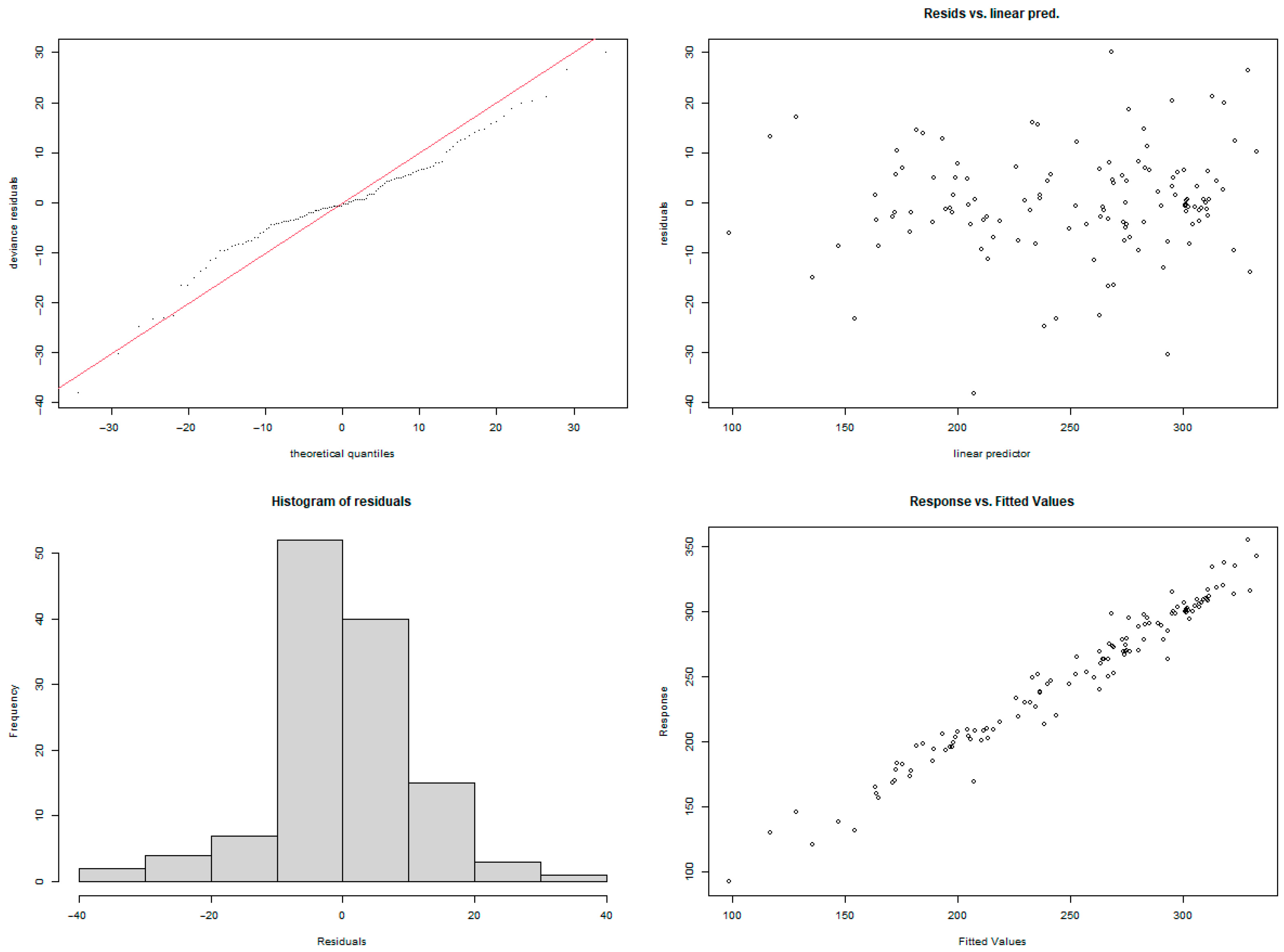
| GAM | SMM | 142.887 | 146.377 | 20.396 | 112.862 |
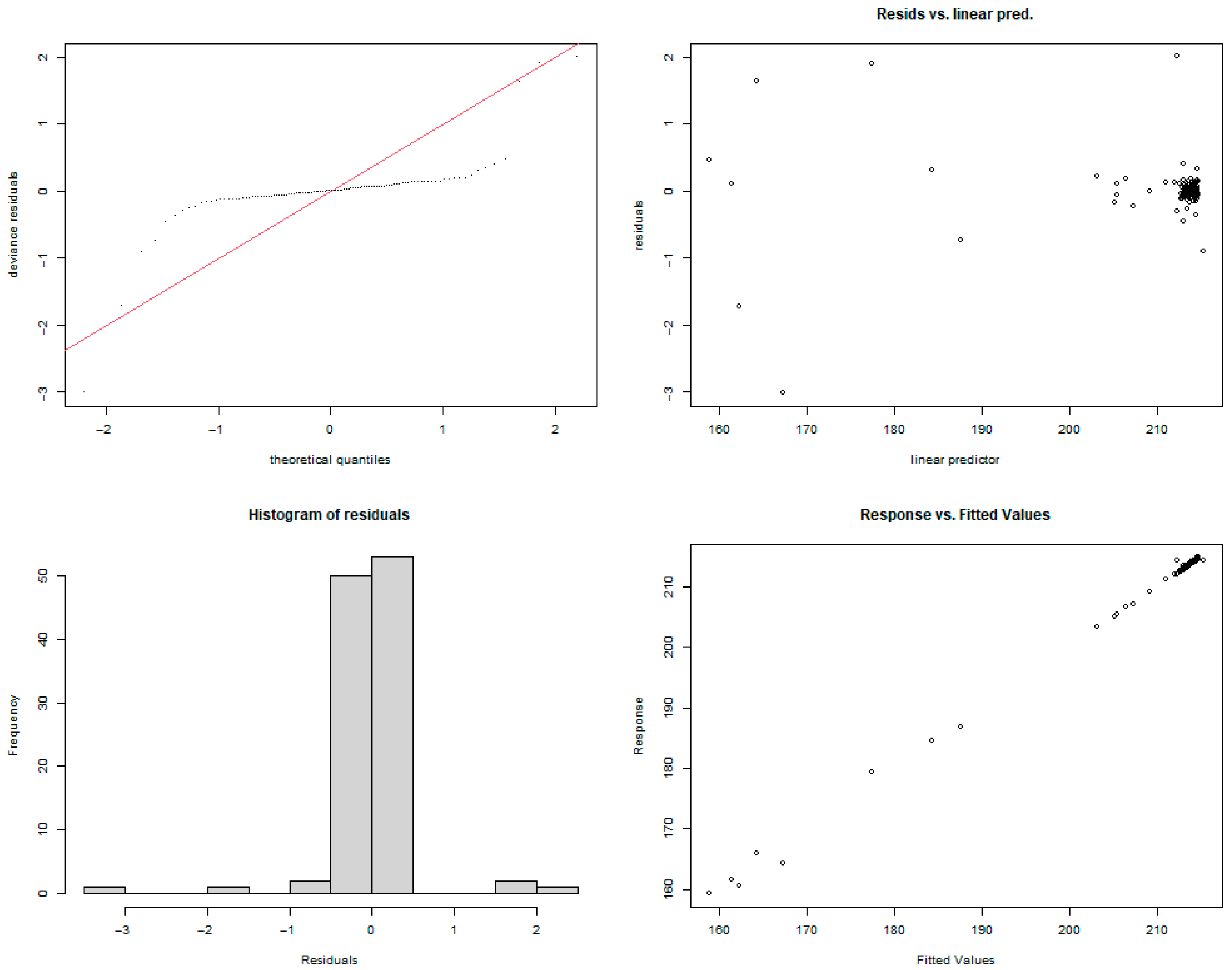
| MDSF | 46.699 | 64.395 | 0.328 | 2.260 |
Disclaimer/Publisher’s Note: The statements, opinions and data contained in all publications are solely those of the individual author(s) and contributor(s) and not of MDPI and/or the editor(s). MDPI and/or the editor(s) disclaim responsibility for any injury to people or property resulting from any ideas, methods, instructions or products referred to in the content. |
© 2026 by the authors. Licensee MDPI, Basel, Switzerland. This article is an open access article distributed under the terms and conditions of the Creative Commons Attribution (CC BY) license.
Share and Cite
Arij, N.; Malihi, S.; Kiani, A. Post-Fire Forest Pulse Recovery: Superiority of Generalized Additive Models (GAM) in Long-Term Landsat Time-Series Analysis. Sensors 2026, 26, 493. https://doi.org/10.3390/s26020493
Arij N, Malihi S, Kiani A. Post-Fire Forest Pulse Recovery: Superiority of Generalized Additive Models (GAM) in Long-Term Landsat Time-Series Analysis. Sensors. 2026; 26(2):493. https://doi.org/10.3390/s26020493
Chicago/Turabian StyleArij, Nima, Shirin Malihi, and Abbas Kiani. 2026. "Post-Fire Forest Pulse Recovery: Superiority of Generalized Additive Models (GAM) in Long-Term Landsat Time-Series Analysis" Sensors 26, no. 2: 493. https://doi.org/10.3390/s26020493
APA StyleArij, N., Malihi, S., & Kiani, A. (2026). Post-Fire Forest Pulse Recovery: Superiority of Generalized Additive Models (GAM) in Long-Term Landsat Time-Series Analysis. Sensors, 26(2), 493. https://doi.org/10.3390/s26020493