Therefore, the resonance frequencies for designing the SRR are directly obtained from the coupling matrix.
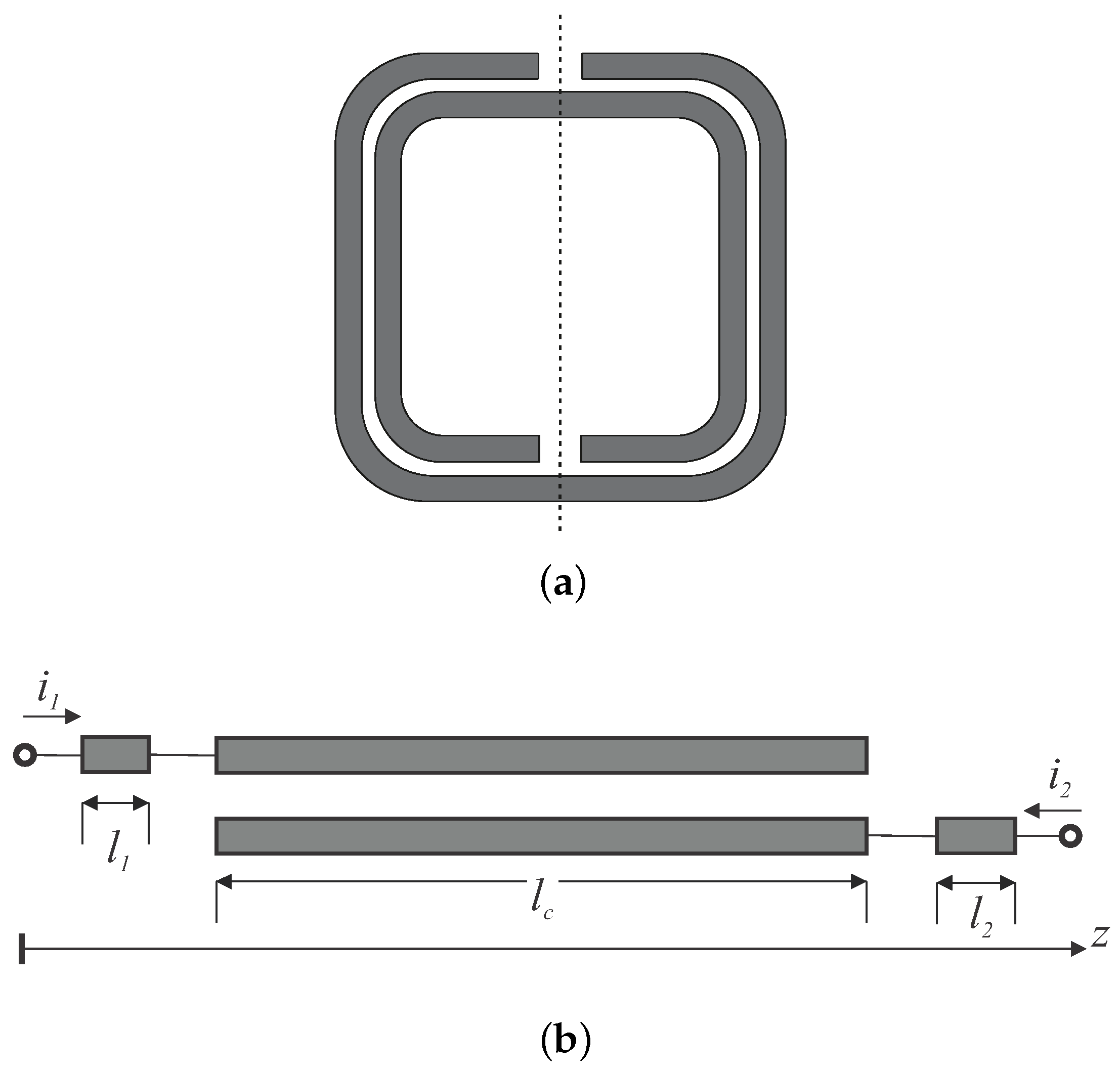
An ideal uncoupled resonator exhibits a zero bandwidth at its resonance frequency. The introduction of bandwidth to the resonator is determined by the external quality factor (Q), which governs its coupling with external elements and other resonators. Bandwidth expansion occurs when energy is exchanged with the resonator, a process driven by the external Q. The achievable bandwidth is thus limited by the maximum external Q, which depends on the resonator’s coupling efficiency to its surroundings. When the resonator is strongly coupled, a greater amount of energy is extracted from the system during each cycle, reducing the external quality factor . Magnetic energy constitutes a significant component of the total stored energy, and the proportion of magnetic energy in the storage process influences the resonator’s ability to retain its energy relative to the amount of energy transferred to the external environment.
3.1. Dual-Band Prototype with BWR 1:2
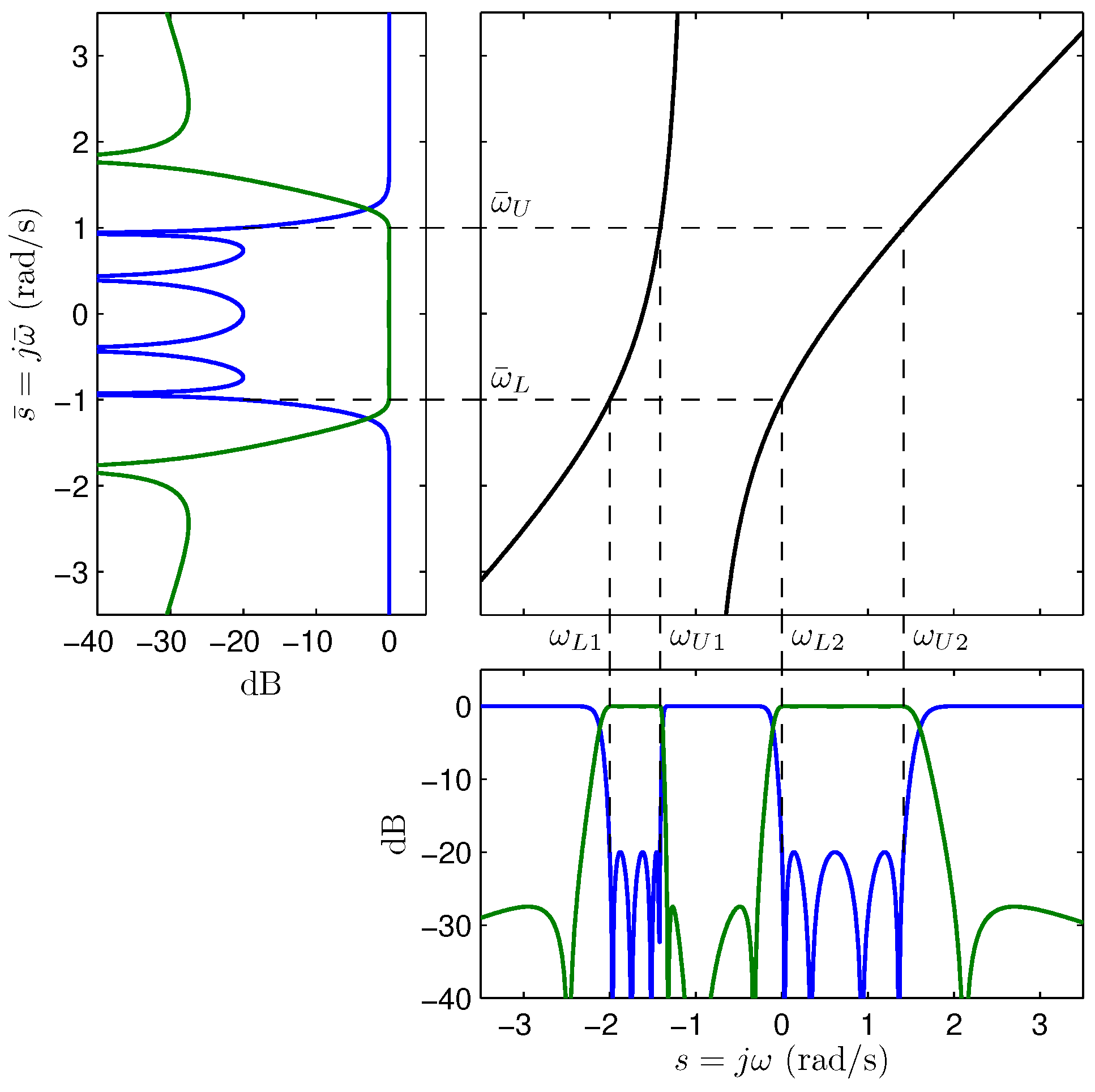
The first step for the filter design is to compute the normalized cutoff frequencies from the specifications, using the conventional bandpass-to-lowpass transform , where the (arbitrary) normalization parameters are GHz and GHz. The resulting cutoff frequencies are and , with a transmission zero located at . The third-order transmission zero between the bands is specified in the coupling matrix, which is determined by the resonance frequency of the inner ring. Alternatively, the center frequencies are and , and the bandwidths and .
The single-band cutoff frequencies are
, or equivalently, the center frequency is
and the bandwidth
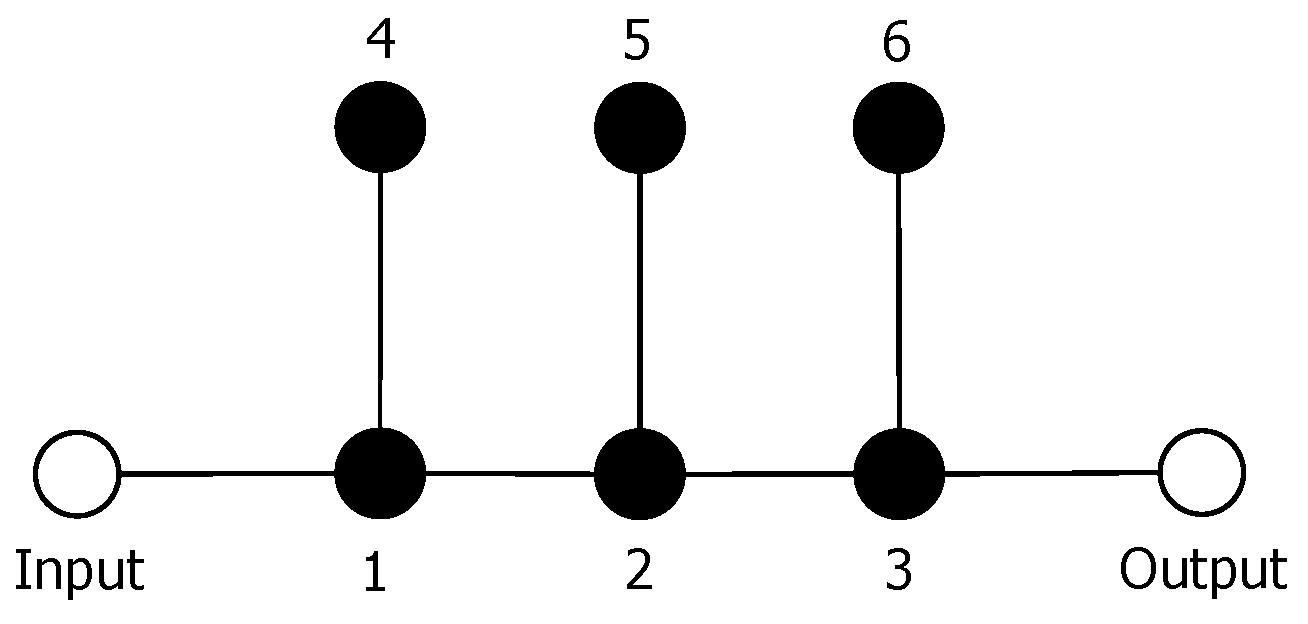
. These values are used to synthesize the coupling matrix corresponding to a third-order directly coupled filter (
dB), which is completed with coupling coefficient
and susceptance
, computed using (
1) and (
2). The full dual-band coupling matrix is (
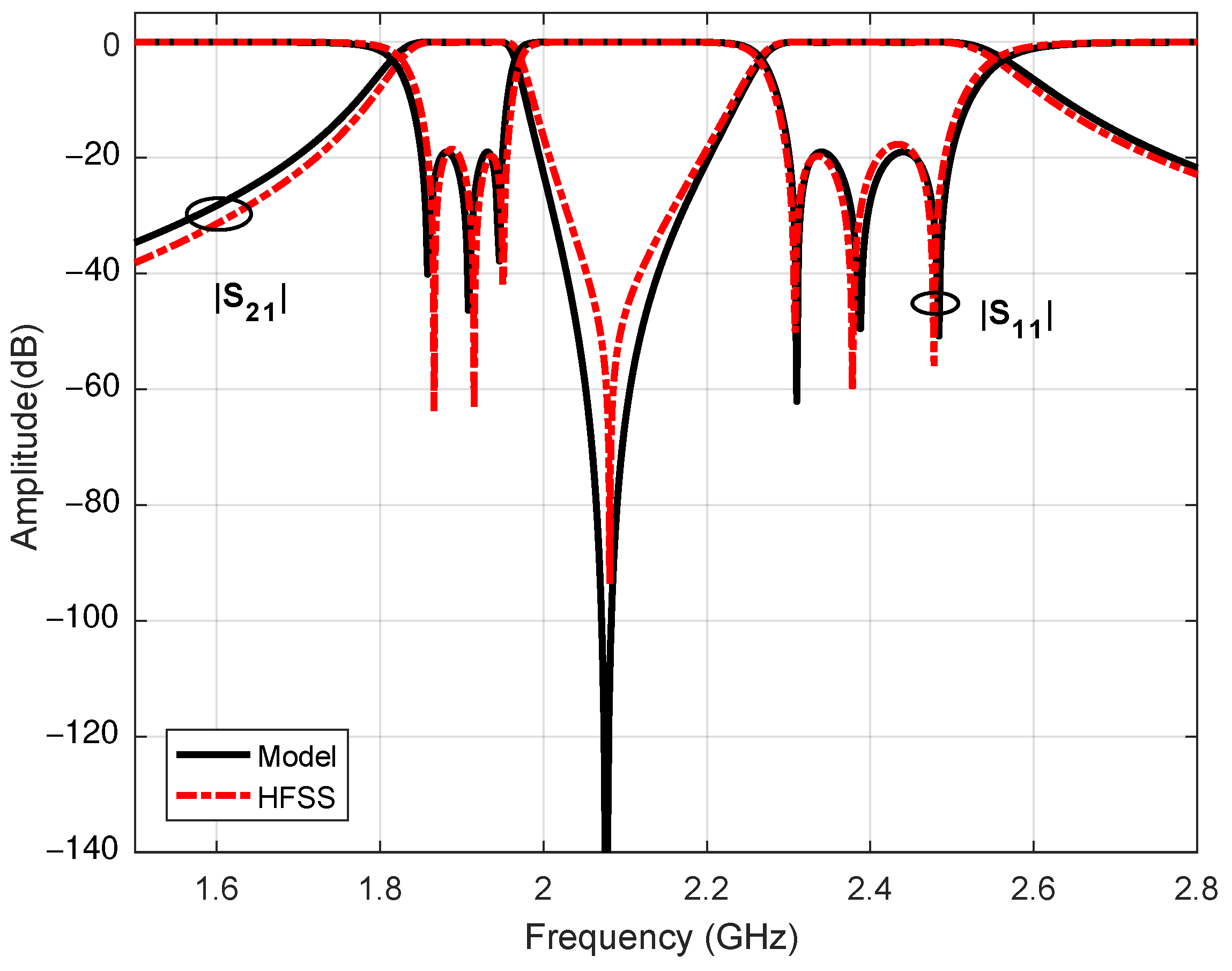
11). The frequency response of the model is shown in
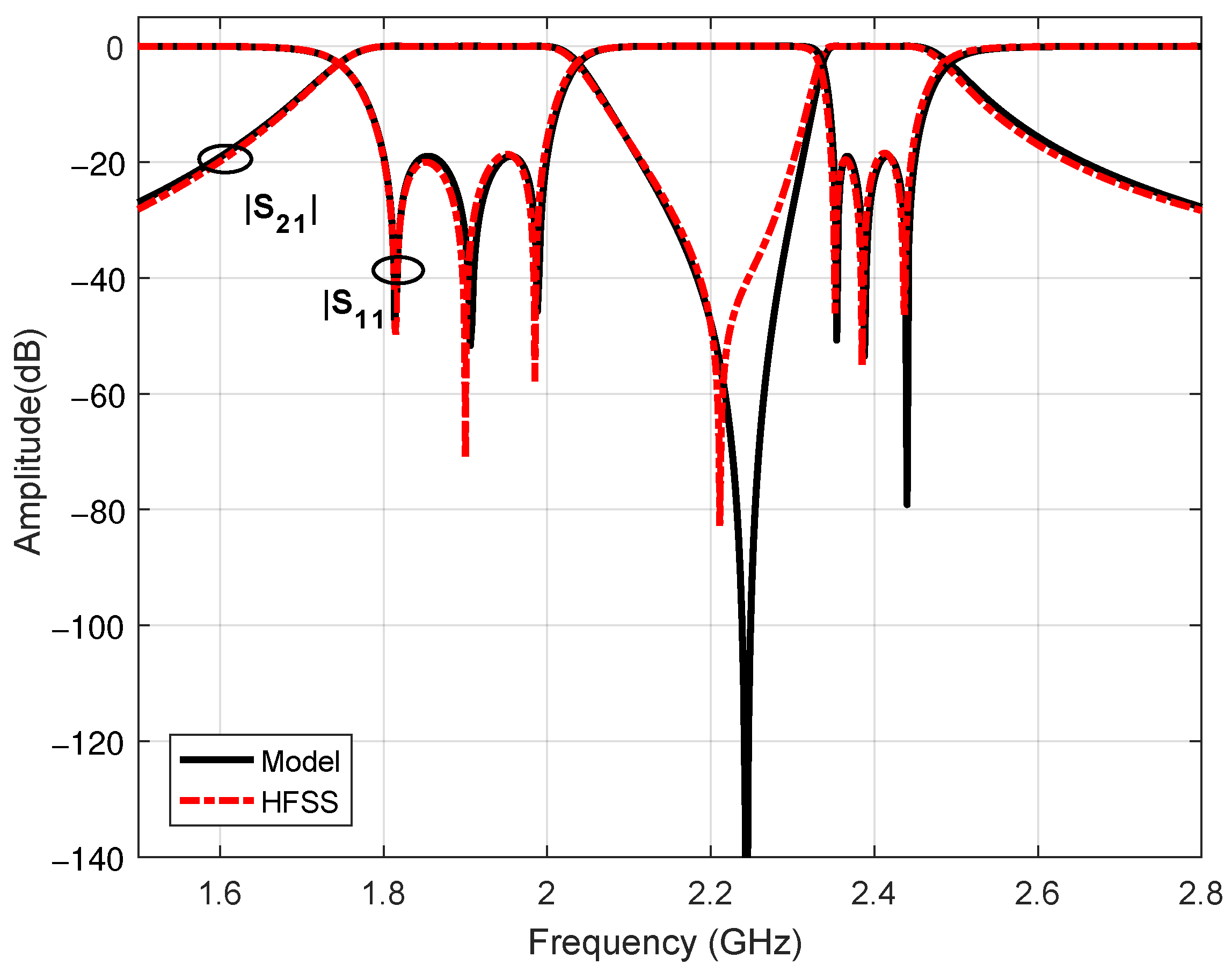
Figure 4, where a comparison between the ideal circuit and electromagnetic model without losses is seen.
The cross-coupling between the inner rings is weak enough to be considered zero valued in the respective positions of the coupling matrix. Otherwise, an additional transmission zero would appear. This is validated with the only transmission zero between the two passbands shown in simulations and in measurements of
Figure 4.
The next step is to design each one of the three SRRs. Again, the specifications of the SRR are the resonance frequencies
, the
, and the parameters
w and
s. The resonance frequencies of each isolated ring are taken from the calculated coupling matrix. All the resonators have the same resonance frequencies as can be seen in (
11). The diagonal coefficients of the coupling matrix become the resonant frequencies of the rings after the lowpass-to-bandpass transformation (
GHz,
GHz), while the bandpass coupling coefficient is
.
Finally, the resonant frequencies of the whole SRRs are computed as explained in
Section 2.1, resulting in
GHz. In order to fulfill the SRR specifications, (
4) and (
6) are used to get
. Notice that the non-linear nature of the frequency transform slightly decreases the required BWR (originally
). The unloaded quality factors (
) of the SRR were extracted by EM simulations, with values of 91 and 94 at
and
GHz, respectively.
The substrate used to design the microstrip prototypes is Rogers RO3010 with dielectric thickness of mm, relative permittivity and dielectric loss .
The experimental validation presented in this work is specific to the Rogers RO3010 substrate. Since the effective permittivity, distributed inductance/capacitance, coupling strength, and loss mechanisms depend on the substrate properties, any change of substrate requires re-optimization of the SRR dimensions, coupling distances, unloaded quality factor, and attainable BWR range. Therefore, the results reported here should be interpreted as substrate-specific validations of the proposed design methodology.
The distributed inductances of each section of the SRR (single transmission lines and coupled lines) have been extracted from EM simulations, and their respective values are shown in the first column of
Table 2. According to [
15], to determine the dimensions of SRRs, certain design parameters are required. The overall open circuit impedance matrix of the half resonator, together with the currents at the symmetry plane and the junctions between sections, is shown in
Table 3, at both resonances. The stored magnetic energies at each resonance and the calculated BWR are also shown in
Table 3. As stated above, the initial values of ring width and inter-ring spacing are
mm and
mm, respectively. These values are fine-tuned iteratively to meet the specifications as defined in the method of [
15]. From these design parameters, the physical dimensions of the SRR are
mm,
mm, and
mm. The initial SRR design has been changed to account for the input and output coupling adjustments in the EM analysis, resulting in geometric differences between the SRRs. A lossless full-wave simulation was performed using Ansys HFSS 2025 R1 to verify the proposed model. The frequency response is compared to the model frequency response in
Figure 4.
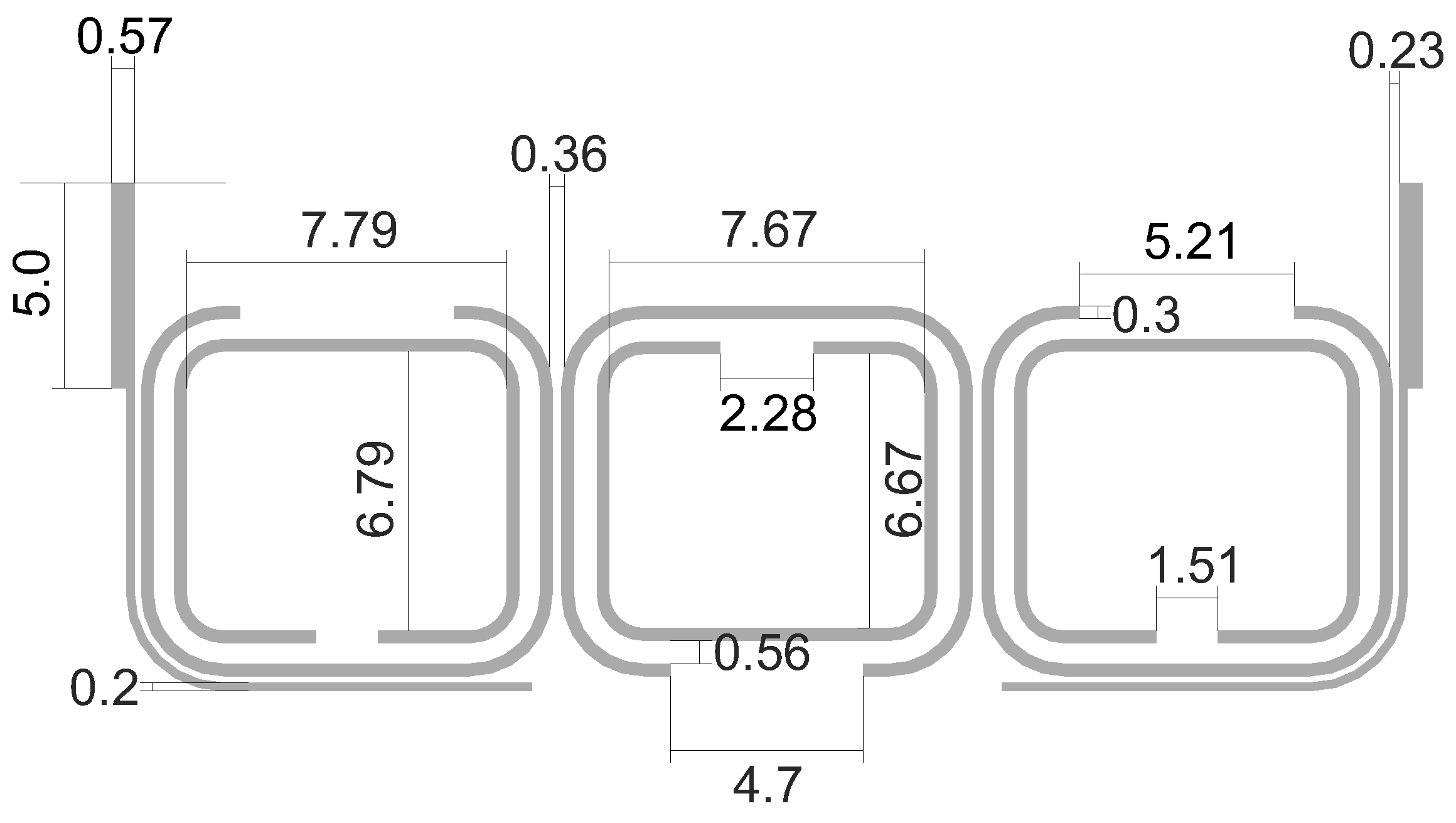
The layout of the dual-band filter, resulting from the final adjustment taking into account the whole circuit, is shown in
Figure 5. The overall dimensions are
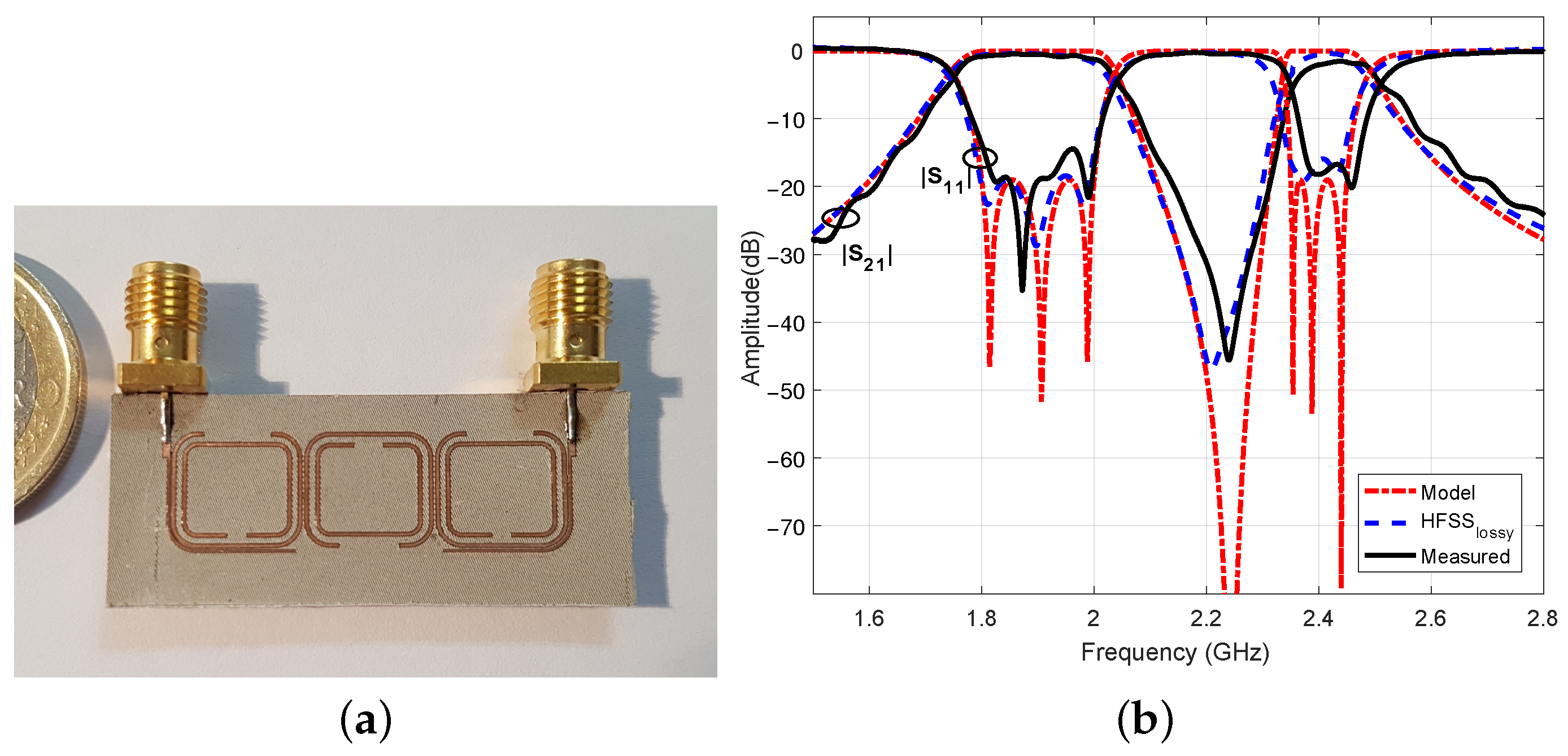
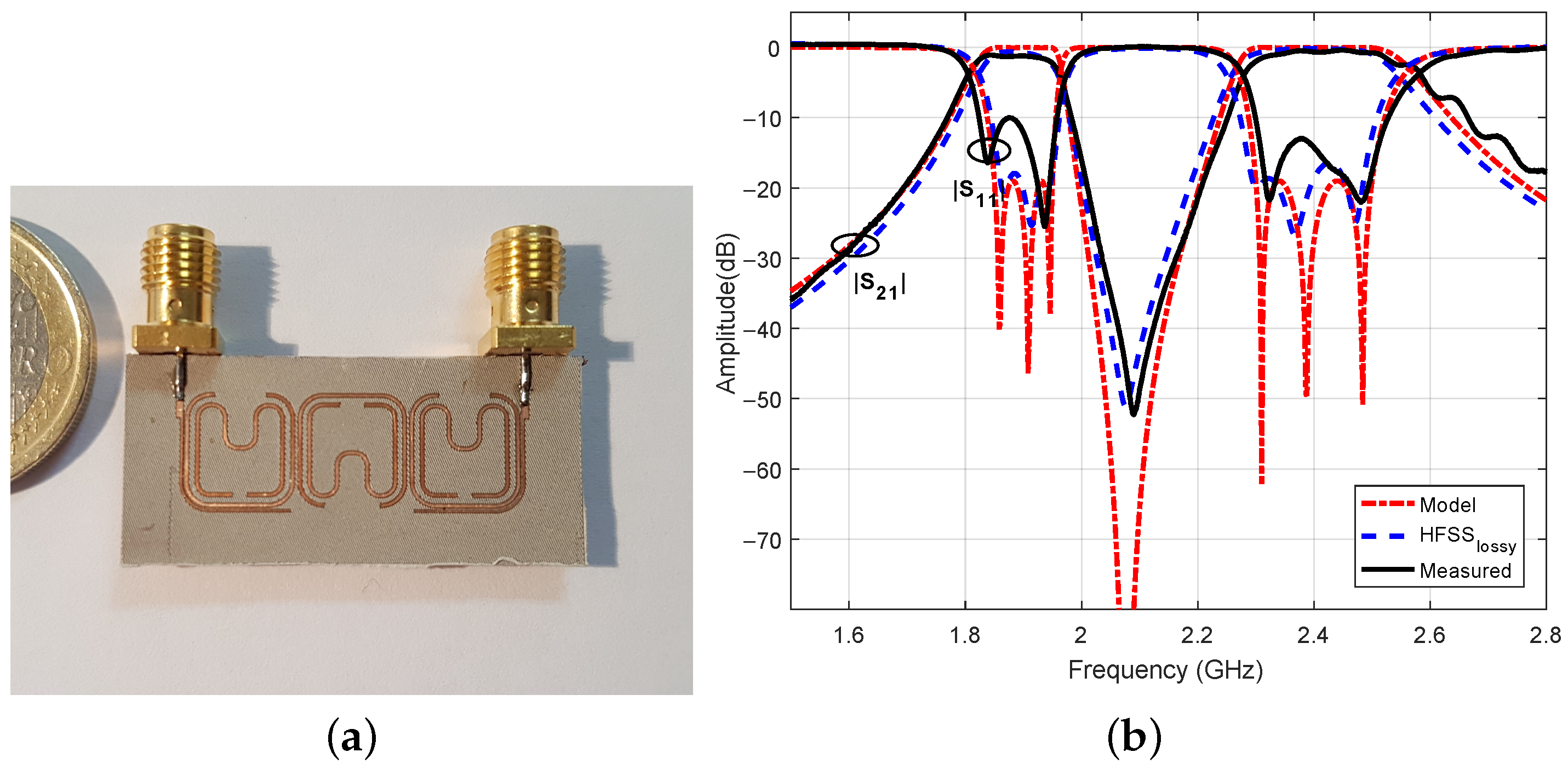
, and the manufactured prototype is shown in
Figure 6a. The simulated and measured scattering parameters of the prototype are shown together with the proposed model in
Figure 6b. A comparison between the lossy HFSS model and measurements of the manufactured prototype is shown; the circuit response is included for reference. A full-wave simulation with losses included was performed. Measurements were obtained with an Anritsu VNA Master MS2027C/10. The measured traces were acquired over the 1.5–2.8 GHz range. A full two-port SOLT calibration was applied using a coaxial calibration line, with the reference planes set at 0 mm at both ports and a reference impedance of 50
. No smoothing or aperture post-processing were used in the measurement. The device under test was measured through coaxial connections identified in the instrument file as N-type connectors. The exported traces were then used to compare the measured response with the lossy HFSS simulations and the circuit model, as shown in
Figure 6. A comparison of the specifications obtained from simulation and measurements is shown in
Table 4. Raw VNA screenshots and exported measured |S11| and |S21| traces for both prototypes are provided as
Supplementary Material.
The measured responses exhibit the non-ideal features typically expected in practical microwave measurements and therefore should not be interpreted as perfectly smooth or idealized traces. In particular, the measured results show small ripple effects, frequency shifts with respect to the simulated passbands, a reduction and displacement of the reflection zeros, and an increase in insertion loss relative to the lossy HFSS model. These discrepancies are consistent with the cumulative effect of connector transitions, calibration residuals, fabrication tolerances in narrow-gap regions, and small deviations in the realized coupling dimensions. In the present prototypes, such effects are more evident in the narrowest passband, where the response is intrinsically more sensitive to local perturbations. Therefore, the measured-to-simulated mismatch should be interpreted as a realistic manifestation of practical non-idealities rather than as an inconsistency of the proposed design methodology.
Before making the final prototype, a choice on the manufacturing technology was required. Although laser drilling provides more accurate gap and strip widths, it was found to cause deeper substrate removal around the microstrip lines, which is inconsistent with the assumptions of the proposed design method. For this reason, a photolithographic process was selected. In the prototype with BWR 1:2, the main measurement-to-simulation discrepancy is concentrated in the upper passband, where the narrower bandwidth makes the response more sensitive to small deviations in coupling gaps and strip widths. This explains the larger measured insertion loss in that band and the visible ripple at the upper-frequency side of the response.
A good overall agreement between the circuit model, the lossy HFSS simulation, and the measured response can still be observed in
Figure 6b. Nevertheless, the measured response shows a reduction in and small displacement of the reflection zeros, as well as a local increase in
around 1.97 GHz. These effects are attributed to the combined influence of fabrication tolerances in the narrow feed-coupling regions and the sensitivity of the external coupling to small geometrical deviations. As a consequence, the observed resonant behavior differs slightly from the nominal symmetric assumption used in the initial synthesis stage.
3.2. Dual-Band Prototype with BWR 2:1
The specifications for the second prototype are also shown in
Table 1; now the upper passband is twice as wide as the lower passband, i.e.,
. Since the design procedure is identical to the first prototype, only the results will be briefly stated.
The lowpass specifications of the network are: the cutoff frequencies
and
, with the bandpass-to-lowpass transform parameters
GHz and
GHz. The transmission zero is located at
, the center frequencies are
and
, and the bandwidths
and
. The single-band passband is
, or alternatively, the center frequency is
and the bandwidth
. The resulting coupling coefficient is
, and the susceptance
. The resulting coupling matrix is (
12), with the frequency response in
Figure 7.
Now, after lowpass-to-bandpass transformation, the resonant frequencies of the inner and outer rings of one SRR are
GHz and
GHz, respectively, while the bandpass coupling coefficient is
. Finally, the resonant frequencies of the whole SRR are
GHz, with
. Again, the SRRs are designed with the same substrate as the previous prototype. The distributed inductances of each section composing the SRRs are included in the last column of
Table 2, while the design parameters (impedance matrix, currents and stored magnetic energies at the resonances) are shown in
Table 5. The initial value of the width of the rings is
mm and the space between the rings is
mm. The physical dimensions of the SRR are
mm,
mm and
mm. The frequency response of the EM lossless simulation is shown in
Figure 7.
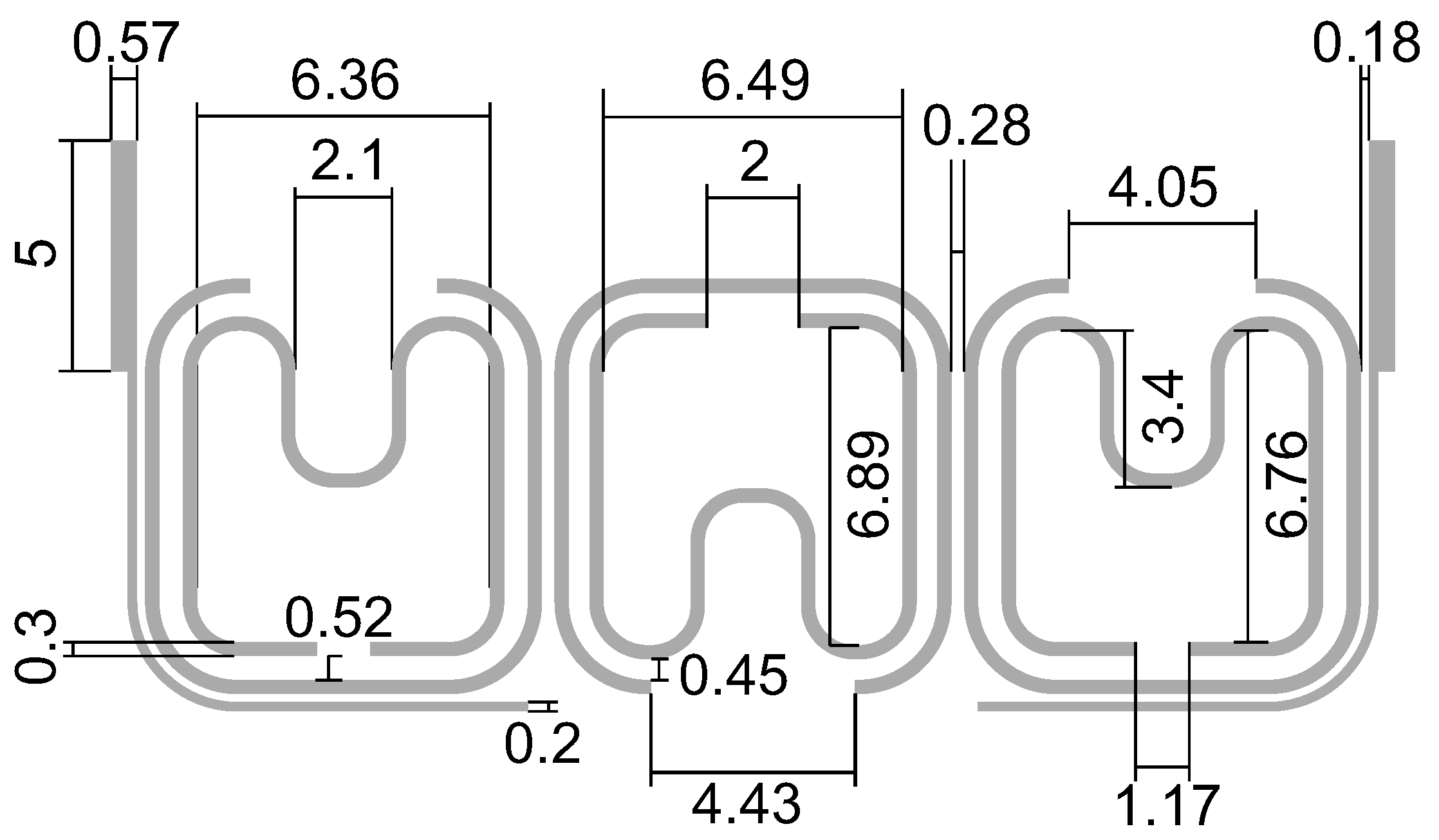
The layout of the filter is shown in
Figure 8. The overall footprint is in this case
mm
2, and the manufactured prototype is shown in
Figure 9a. Notice that since the inner ring of each SRR is electrically larger than the outer ring, one of its transmission line sections has been meandered. The simulated (losses considered) and measured scattering parameters are presented in
Figure 9b with a comparison between simulated and measured results in
Table 6. Again, a small reduction in bandwidth occurs due to the presence of losses. In this case, the frequency deviations of the measured response are smaller than in the first prototype. As in the previous prototype, the measured response exhibits practical non-idealities associated with losses, coupling tolerances, and connector/coupling imperfections, although in this case the deviations are less pronounced.
From
Figure 9, it can be seen that center reflection zeros have been reduced due to a shift from the imaginary axis in both measured bands. In addition, there is a small increase in the
parameter at around
GHz and
GHz that can be produced due to the fabrication tolerance in the photolithographic process that can hardly reach the required width of
mm and the spacing of
mm of the input and output lines.
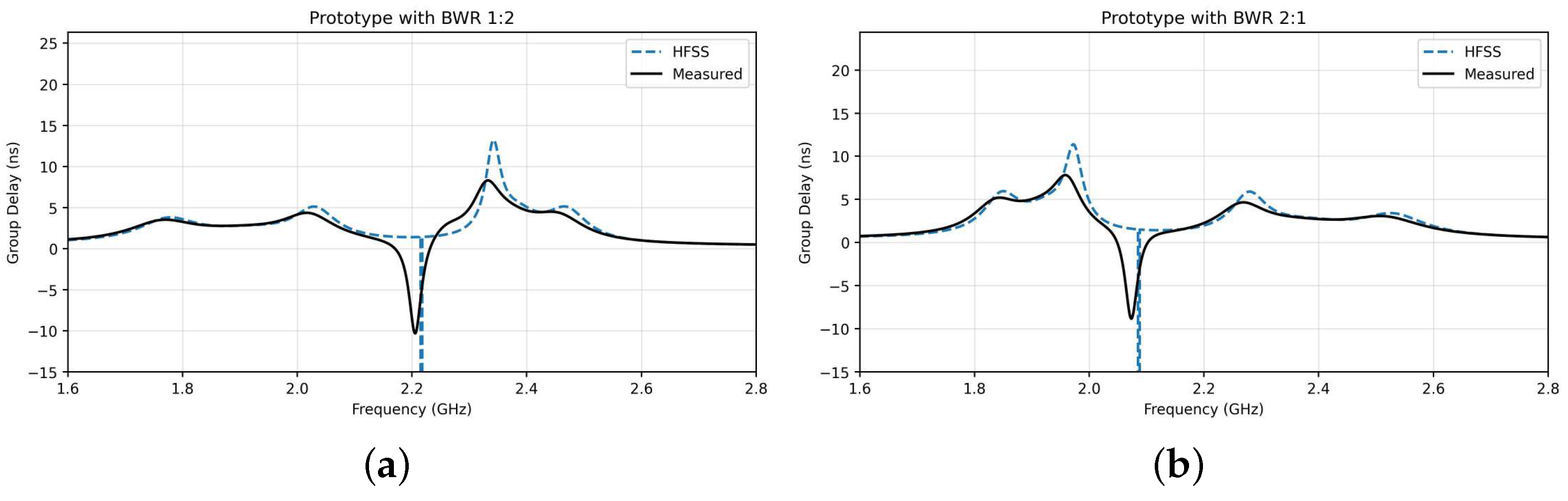
To complement the amplitude-response analysis, the group delay was extracted from the phase of
for both the simulated and measured responses. The obtained results show reasonably smooth in-band behavior for the two prototypes, with no abrupt excursions inside the useful passbands. From
Figure 10, for the prototype with BWR 1:2, the average group delay is approximately 3.1 ns in the lower passband and 4.9 ns (simulation)/4.5 ns (measurement) in the upper passband. For the prototype with BWR 2:1, the corresponding average values are approximately 5.4 ns/5.4 ns in the lower passband and 3.0 ns/2.9 ns in the upper passband. In both filters, the narrower passband exhibits a higher delay and greater in-band variation, whereas the wider passband shows a flatter response. This trend is consistent with the expected phase behavior of narrow dual-band microstrip filters and indicates acceptable phase linearity for the intended 4G/WLAN operation, since the group delay remains bounded and moderately smooth within each passband.
As for the previous resonator, the
of this SRR has been extracted for each resonance by EM simulations, with values of 91 and 95 at
and
GHz. The geometric parameters of the SRR determine the resonance locations and the
of the structures. Thus, the
of the SRR has been characterized and compared with other types of resonators used to implement dual-band filters, as can be seen in
Table 7. The obtained
values of the SRR could be increased by increasing the ring width, but the coupling will decrease as the resonance positions vary.
As shown in
Table 7, the unloaded quality factors (
) of the proposed SRR-based filters are comparable to or slightly higher than those reported in recent literature. Both Filter A (BWR 1:2) and Filter B (BWR 2:1) exhibit
values above 90 in both passbands, confirming efficient energy storage and low insertion loss. Compared to loop resonators and CRLH-based structures [
2,
4], the proposed designs demonstrate improved or equivalent performance without the need for multilayer structures or complex geometries. The values also surpass earlier NB-SRR implementations [
14] and match or exceed those of compact stub-loaded resonators [
1,
3]. These results validate the proposed method’s effectiveness in preserving high
while enabling compact layout and controllable bandwidths.
The quality factors reported in
Table 7 confirm that the proposed SRR-based filters exhibit comparable or superior
values compared to recent designs. Filters using CRLH structures [
2] and metamaterial-inspired resonators [
1,
18] perform well, but often involve more complex topologies. Our design maintains high
in both bands with simpler geometry and no multilayer requirements.
For fair comparison, the insertion loss values reported for our prototypes correspond to measured IL at band centers (
Table 4 and
Table 6), and the fractional bandwidths are computed from measured 3 dB bandwidths.
Table 8 summarizes a comparison with recent dual-band bandpass filters in terms of in-band insertion loss for both passbands, inter-band attenuation, normalized footprint, and fractional bandwidth (FBW). In this context, designs based on multiple transmission zeros can achieve high selectivity, but they do not necessarily provide an explicit and systematic degree of freedom to prescribe the ratio of the bandwidth between passbands. Compared to CRLH/metamaterial-inspired and transmission-zero-based solutions, the proposed SRR-based prototypes maintain a compact planar implementation while achieving low measured insertion loss and strong inter-band rejection, which makes them suitable for multistandard wireless front-ends.
Recent works have demonstrated various dual-band filter solutions with good return loss and miniaturization, such as in [
1,
3]. However, these designs tend to offer either symmetric bandwidths or limited control over BWR. Others employ reconfigurable elements or multilayer techniques to address tunability [
8,
19], which increases complexity and fabrication cost. In contrast, the filters presented in this work achieve full analytical control of both FBW and BWR using a single-layer planar topology with SRRs. This feature provides a practical, efficient solution for applications that require asymmetric passbands without compromising performance or simplicity.
A greater fractional bandwidth (FBW) could be achieved; this consideration is contingent on the strongest coupling achievable between the feed lines and the SRRs. External couplings control the overall bandwidth, while internal couplings of the SRR define the resonance positions. Consequently, achieving a larger FBW is dependent on the specific distribution of these couplings.
To emphasize the distinctive advantages of the proposed method,
Table 9 compares it with recent representative dual-band filter designs.
It can be summarized that the proposed method is fully flexible with respect to the specifications of the two passbands, and the only limitation of the total and relative bandwidth (this last one, measured as the BWR) is technological, imposed by the materials and the manufacturing process: the minimum and maximum coupling. This is the case for both the coupling between SRRs (for the total, absolute bandwidth) and the coupling between the rings inside each SRR (for the relative bandwidth). The second advantage is that the design is divided into two steps, thanks to the frequency transformation. First, some filter elements are designed to achieve specific characteristics of the required bandpass response, including the band order and in-band reflection loss. Only then are the two passbands generated.
As a result, the two-stage procedure simplifies tuning, although the final response remains sensitive to narrow-gap and feed-line tolerances.
As shown in
Table 9, the proposed method offers greater flexibility than recent dual-band filter design approaches. While previous works such as [
1,
3] offer compact structures and acceptable return loss, they generally rely on fixed or symmetric BWRs and limited coupling control. More advanced structures, such as those in [
2,
4], introduce complexity due to multilayer or CRLH-based implementations and still lack explicit BWR control.
In contrast, our approach provides full analytical control over the FBW and BWR of each passband. This is achieved through coupling-matrix synthesis combined with electromagnetic energy modeling of SRRs, enabling predictable, flexible design tuning. Additionally, the design process remains simple and compact, making it suitable for modern multiband applications without compromising performance.
The methods compared in
Table 9 illustrate the trade-offs between tunability, design complexity, and performance in recent DB-BPFs. While solutions like [
2,
8] provide partial bandwidth control, they lack analytical frameworks for BWR control. Our method stands out by combining compact layout, full analytical synthesis, and high design simplicity.
3.3. Sensitivity to Fabrication Tolerances
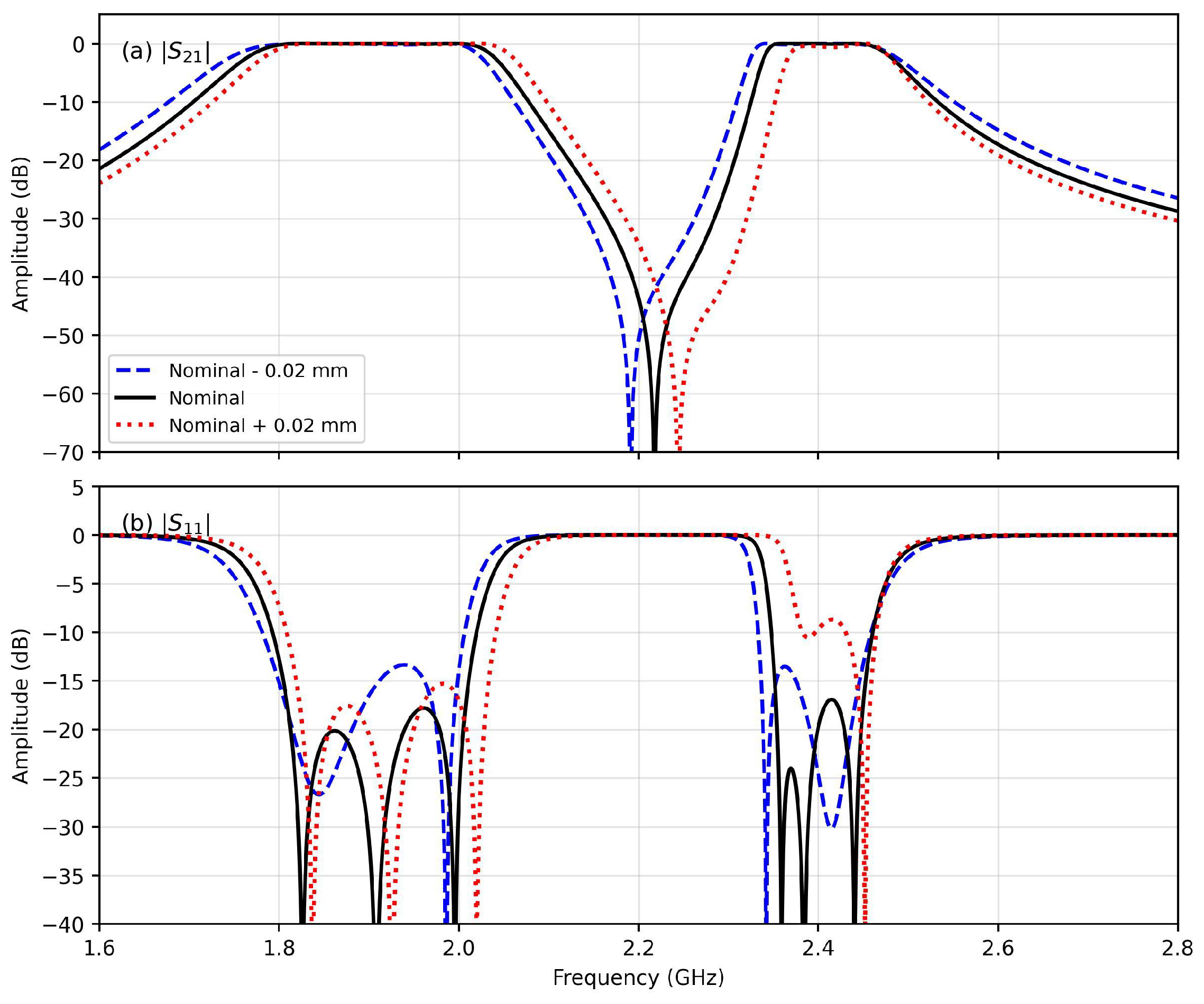
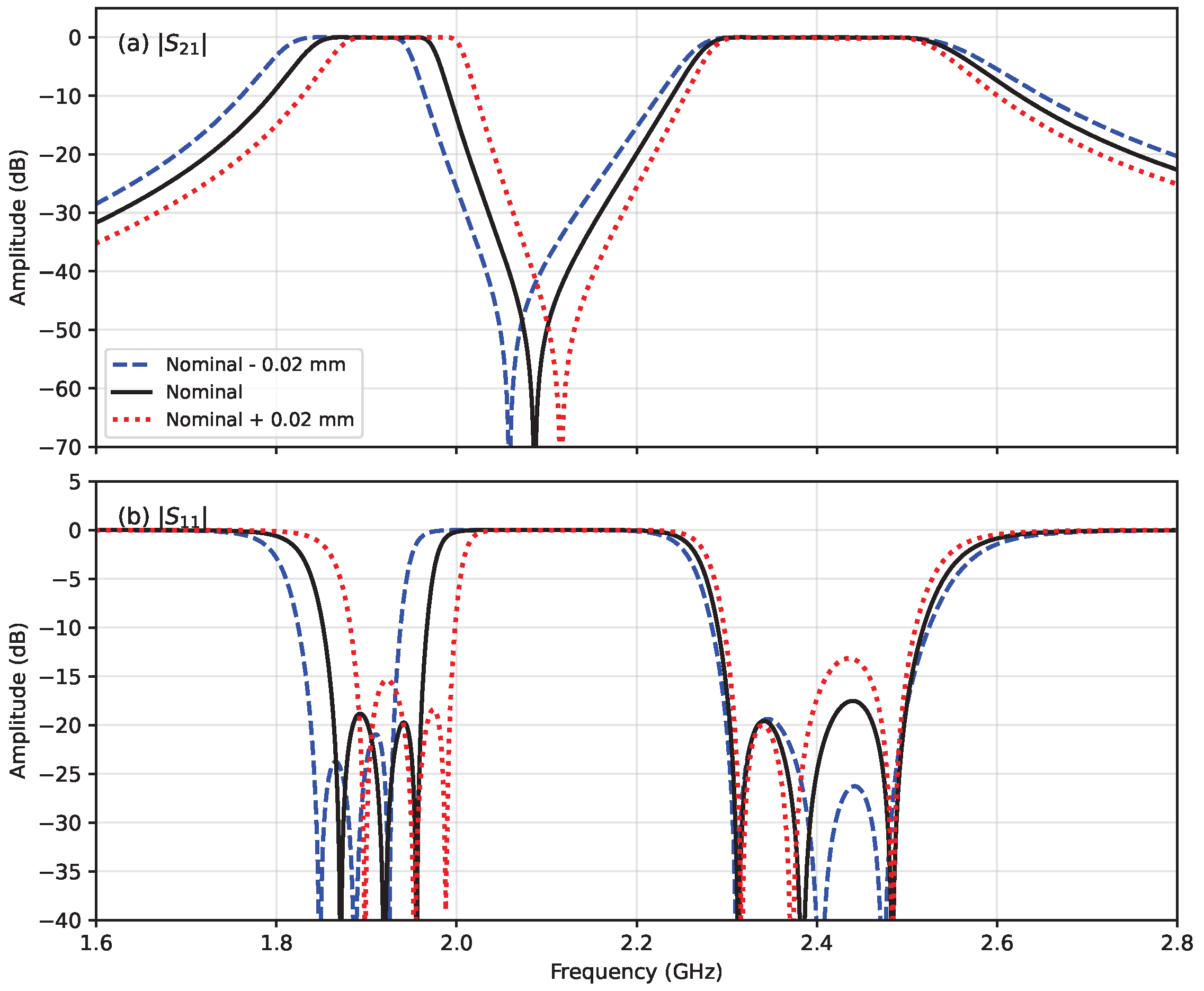
To quantify the effect of fabrication tolerances on the proposed SRR-based filters, a combined geometrical sensitivity analysis was carried out for both prototypes by simultaneously perturbing the most critical dimensions of the structure by mm around their nominal values. In particular, the inter-ring gap, the feed-coupling gap, and the strip width were varied together in order to emulate a realistic fabrication deviation affecting the narrow coupling regions of the filters. For each perturbed case, the corresponding S-parameters were recomputed, and the main response quantities were extracted, namely the center frequencies of the two passbands, the 3 dB bandwidths, the return loss, and the BWR.
Figure 11 and
Figure 12, together with
Table 10 and
Table 11, summarize the effect of the combined geometrical perturbation on the prototypes with BWR 1:2 and BWR 2:1, respectively. For the BWR 1:2 prototype, the nominal response exhibits center frequencies of 1.908 GHz and 2.384 GHz, with bandwidths of 284 MHz and 146 MHz, giving BWR = 0.514. Under the
mm perturbation, the response shifts to 1.986 GHz and 2.342 GHz and the BWR increases to 0.581, whereas for the
mm perturbation the upper passband shifts upward to 2.452 GHz, its bandwidth decreases to 118 MHz, and the BWR is reduced to 0.414. For the BWR 2:1 prototype, the nominal case yields center frequencies of 1.920 GHz and 2.384 GHz, with bandwidths of 146 MHz and 288 MHz, giving BWR = 1.973. When the dimensions are simultaneously reduced by 0.02 mm, the BWR increases to 2.108, whereas for the
mm perturbation it decreases to 1.812. In both prototypes, the results show that simultaneous dimensional deviations produce measurable shifts in center frequency and bandwidth, and that the passband maintaining the asymmetric response is the most sensitive to the perturbation: the upper passband in the BWR 1:2 case and, again, the wider upper passband in the BWR 2:1 case. Overall, the combined tolerance analysis confirms that the final response of the proposed narrow-gap SRR-based structures remains sensitive to realistic manufacturing deviations. Since the three critical dimensions were perturbed simultaneously, the obtained results should be interpreted as the cumulative effect of fabrication tolerances rather than as the isolated contribution of a single geometrical parameter. These results therefore provide quantitative support for the tolerance discussion and reinforce the practical limitations associated with tightly coupled SRR implementations, particularly in the dimensions that control the asymmetric bandwidth response. That is consistent with broader reports showing that fabrication inaccuracies and material variations can shift the frequency response of microwave circuits, even though the exact mechanisms depend on the specific manufacturing technology. Ref. [
20] showed systematic S-parameter frequency shifts in a fabricated microstrip filter due to inaccurate milling depth, and [
21] described significant substrate-permittivity variation in 3D-printed microwave structures that required post-fabrication compensation.
The proposed synthesis methodology remains valid, since the target dual-band response can still be prescribed through the coupling-matrix-to-SRR design flow. However, the numerical tolerance analysis indicates that the final response is sensitive to geometric deviations in the structure’s strongly coupled regions. Consistent with the design formulation, the inter-ring spacing s is expected to be especially critical, since it governs the internal SRR coupling and directly affects the resonance splitting and the bandwidth ratio. The feed-coupling gap mainly influences the external coupling and, consequently, the passband matching and the realized bandwidths. The combined results obtained for the two prototypes confirm that even small simultaneous variations of mm already produce measurable shifts in center frequency and noticeable changes in the BWR. Therefore, the method should be regarded as analytically well-defined but is sensitive to fabrication tolerances in narrow-gap regions.