Article

Density-Based Detection Rapid Exploration Random Tree for Multirobot Formation Cooperative Path Planning

1
College of Information Technology, Tianjin College of Commerce, Tianjin 300350, China
2
School of Computer and Information Engineering, Tianjin Chengjian University, Tianjin 300384, China
3
School of Control and Mechanical Engineering, Tianjin Chengjian University, Tianjin 300384, China
4
School of Information and Communication Engineering, Hainan University, Haikou 570228, China
*
Author to whom correspondence should be addressed.
Sensors 2025, 25(7), 2201; https://doi.org/10.3390/s25072201
Submission received: 10 February 2025 / Revised: 21 March 2025 / Accepted: 27 March 2025 / Published: 31 March 2025
(This article belongs to the Special Issue Intelligent Control and Robotic Technologies in Path Planning)

Abstract

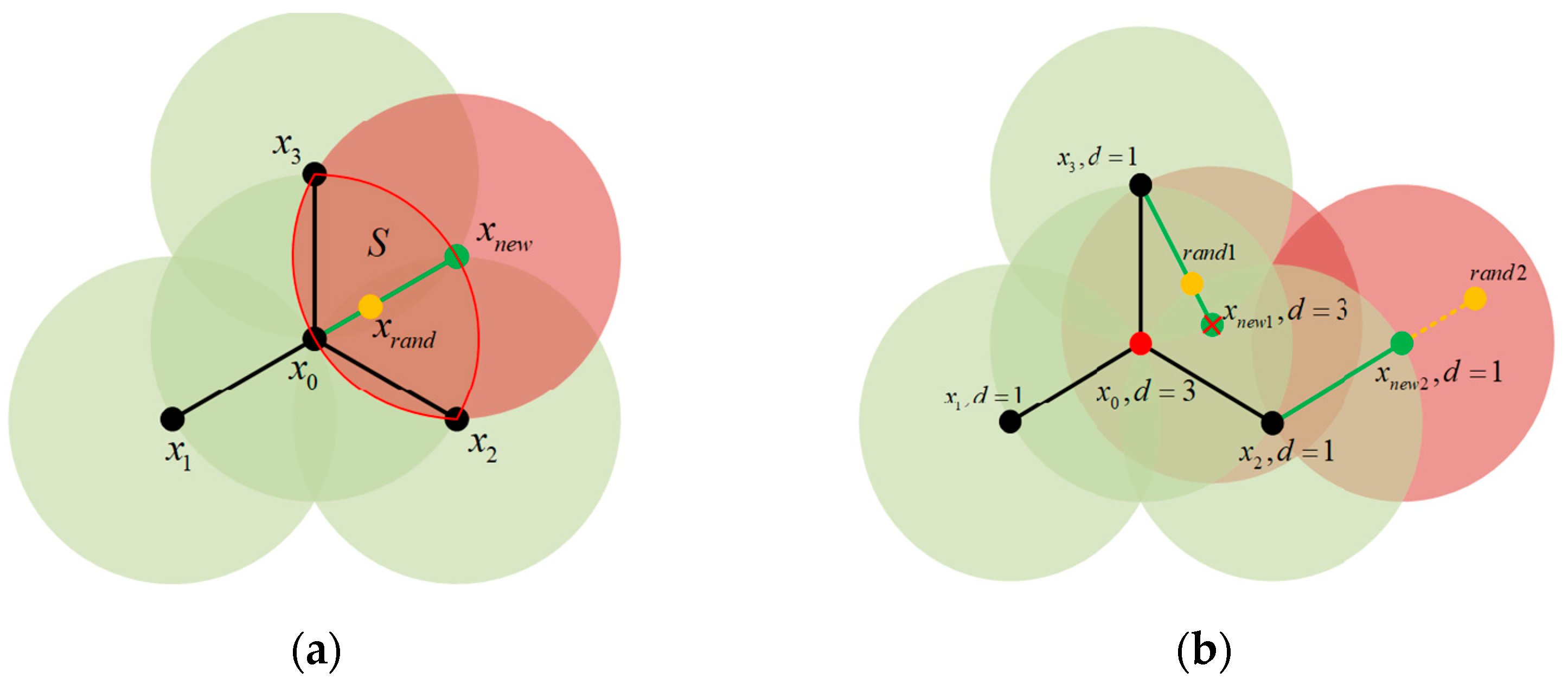
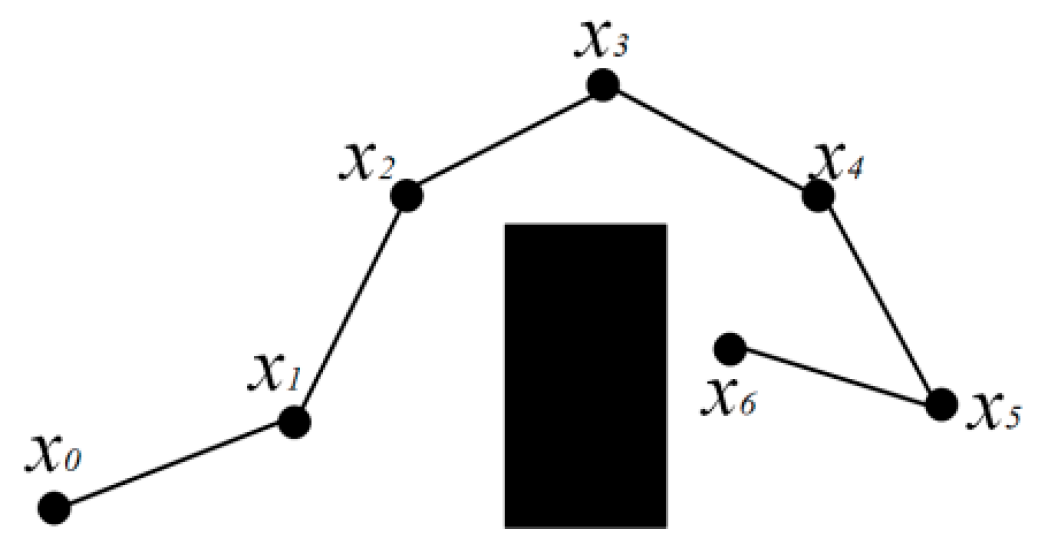
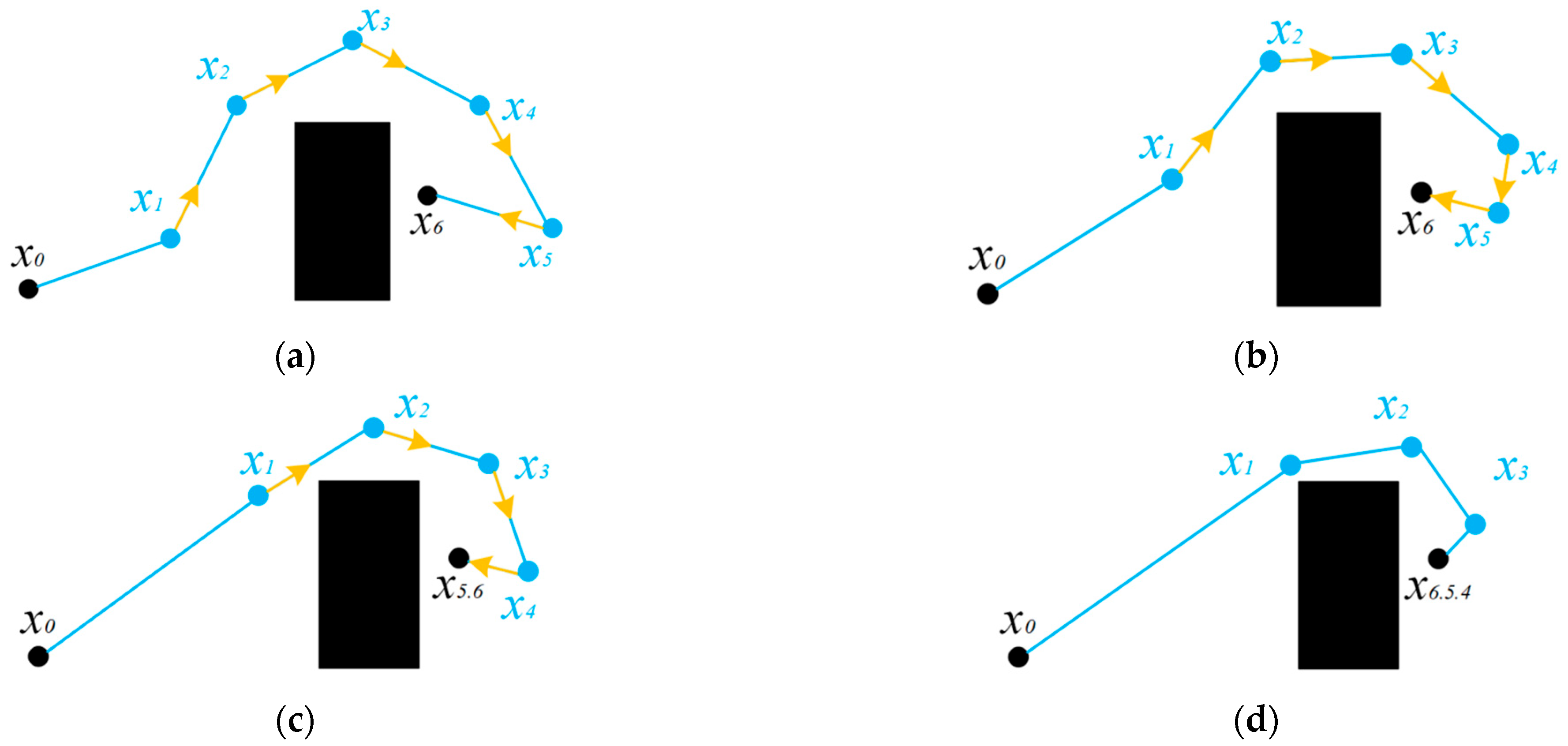
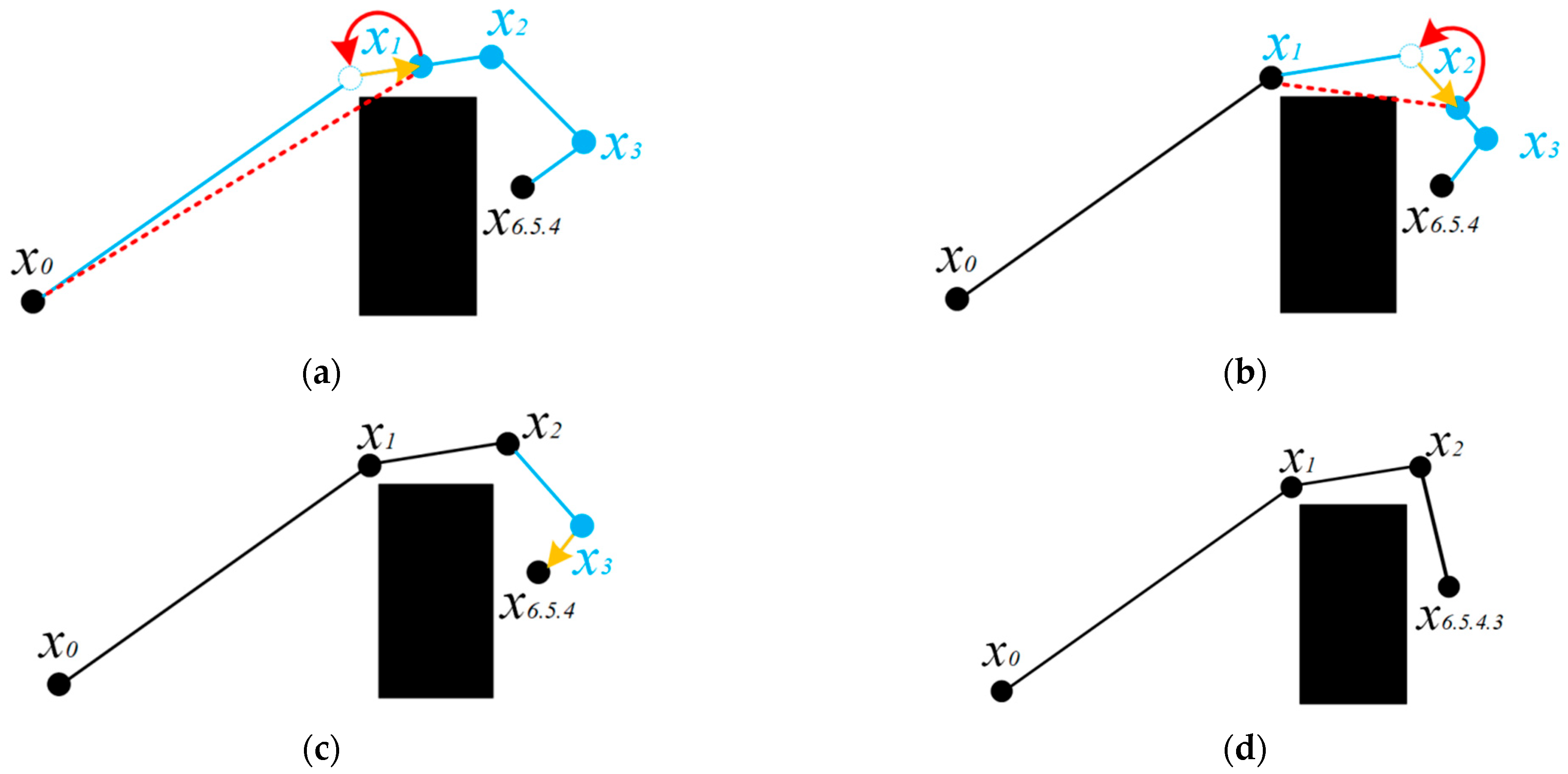
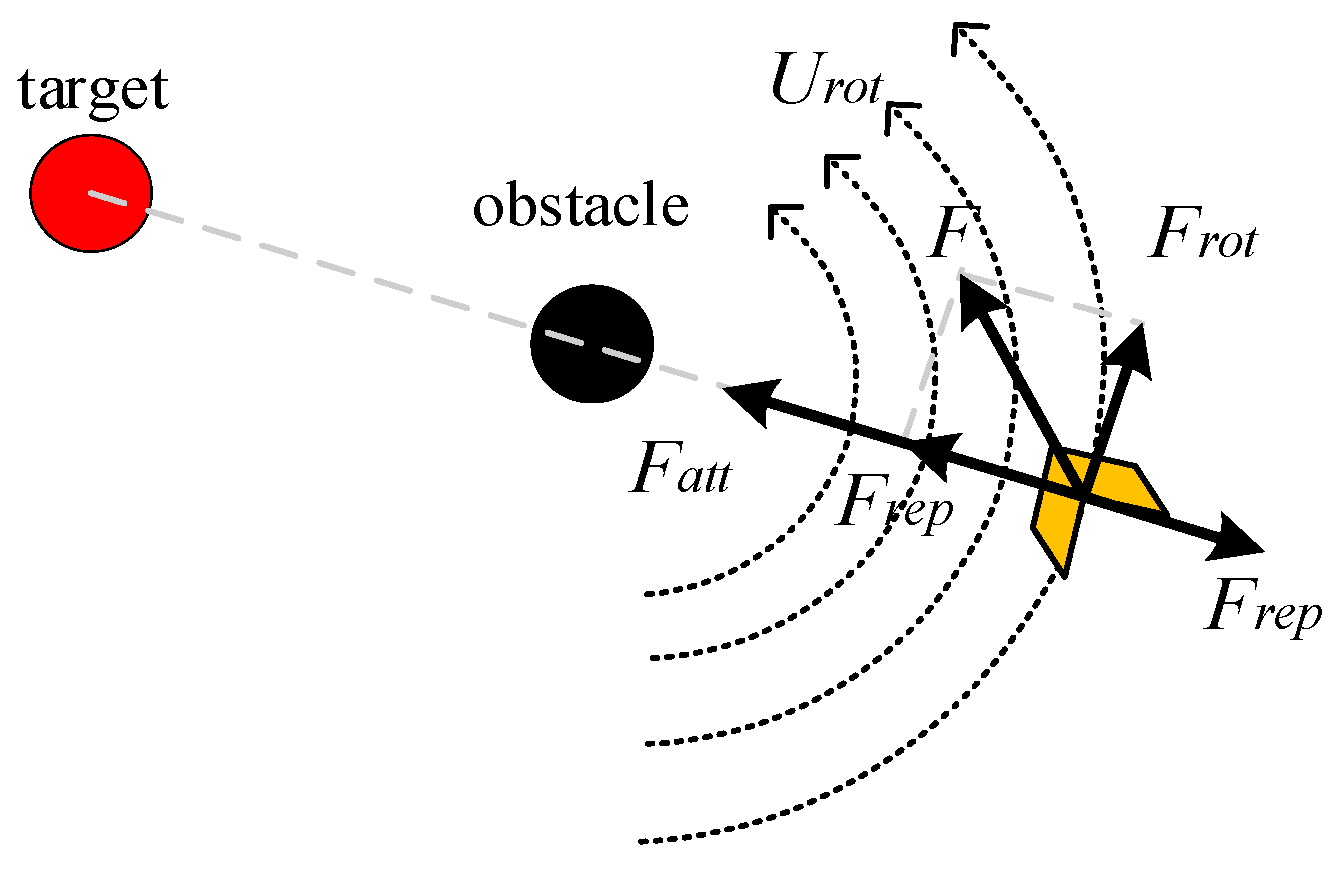
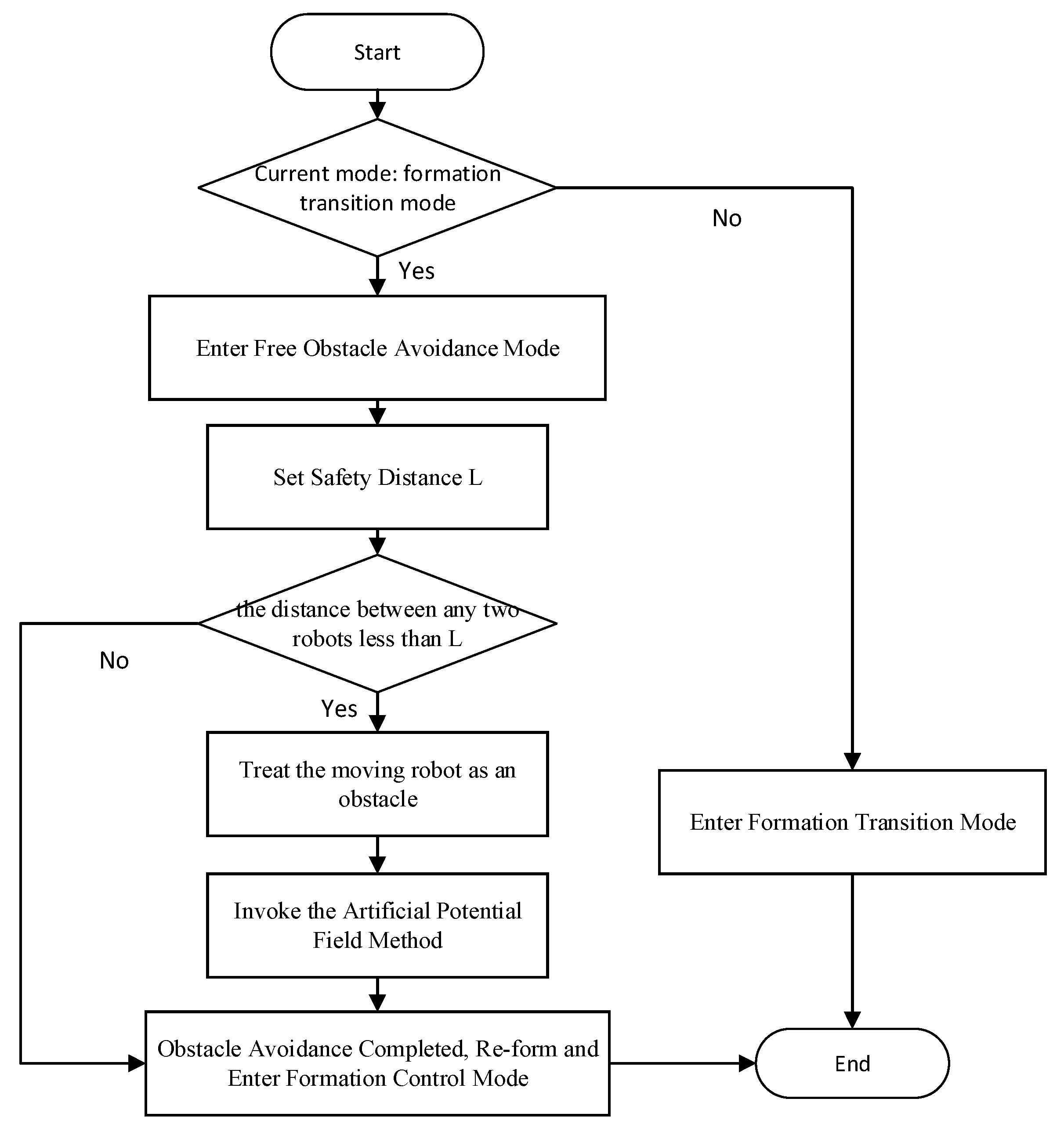
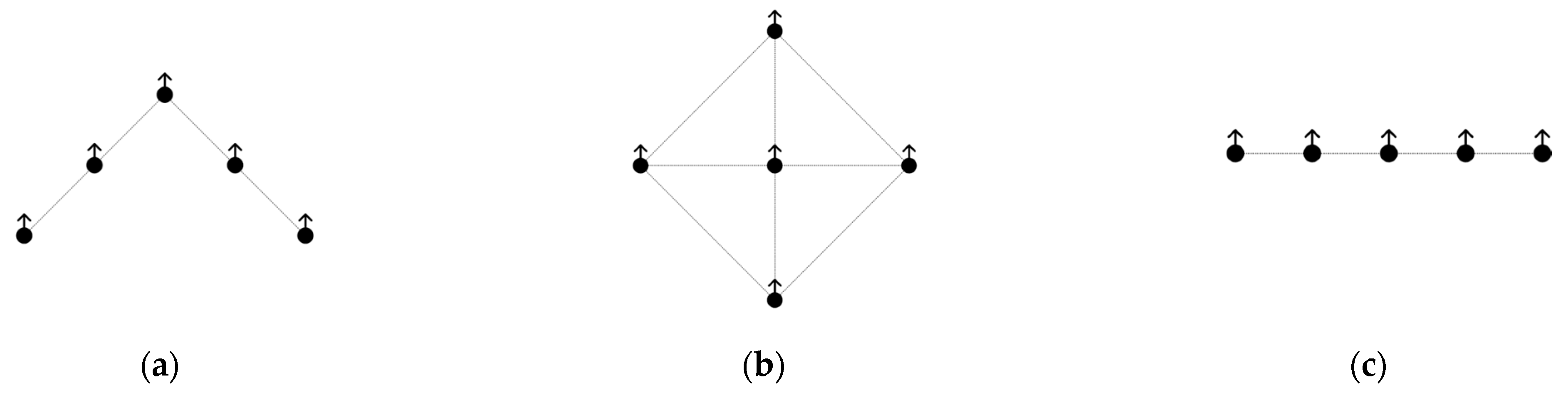
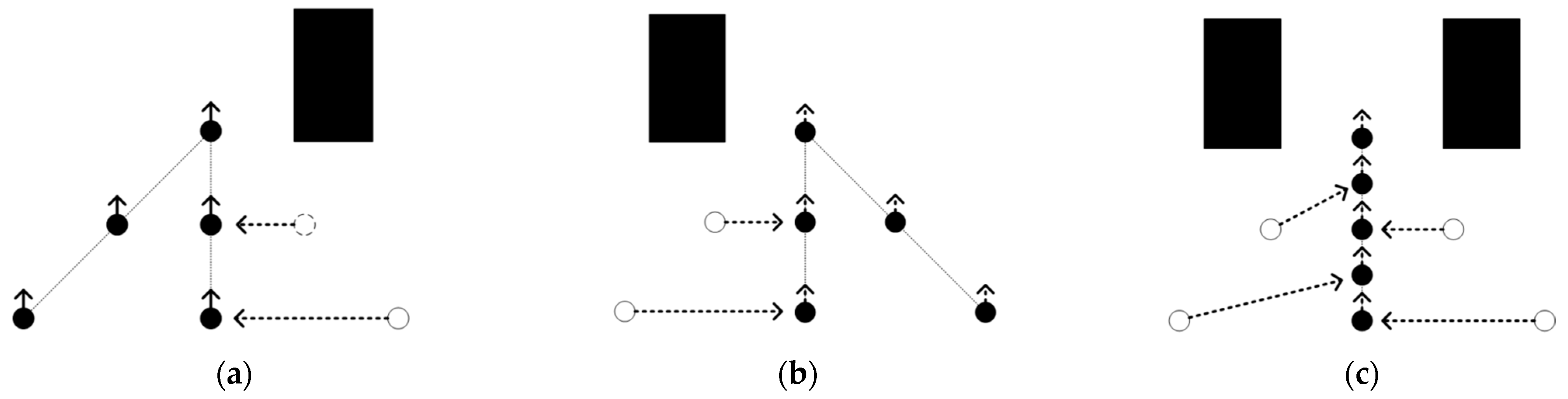
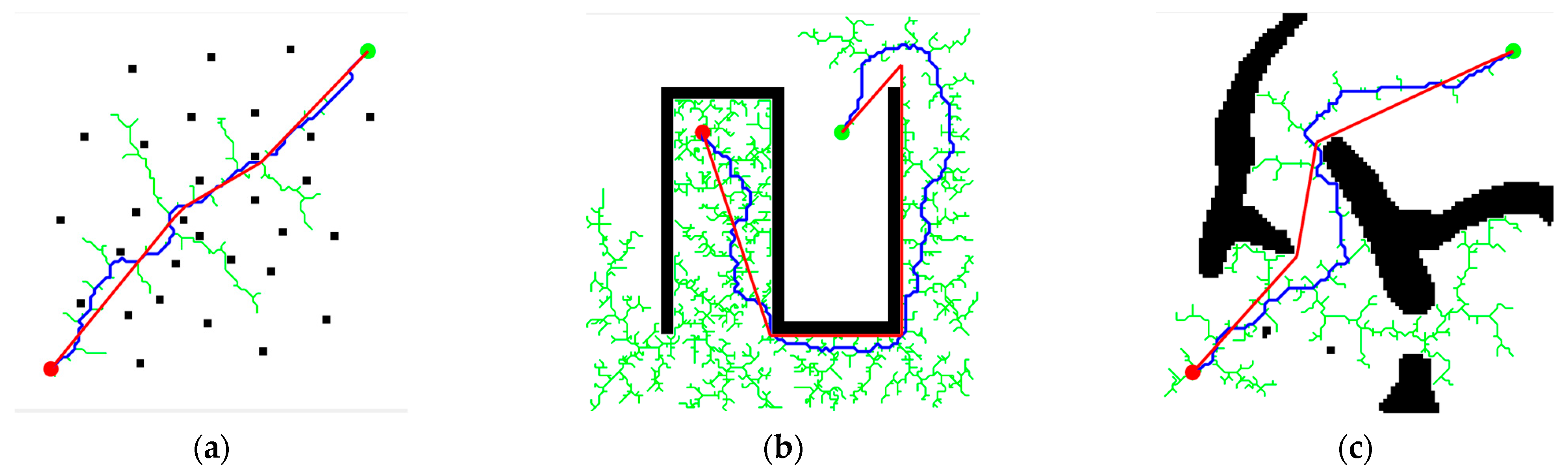
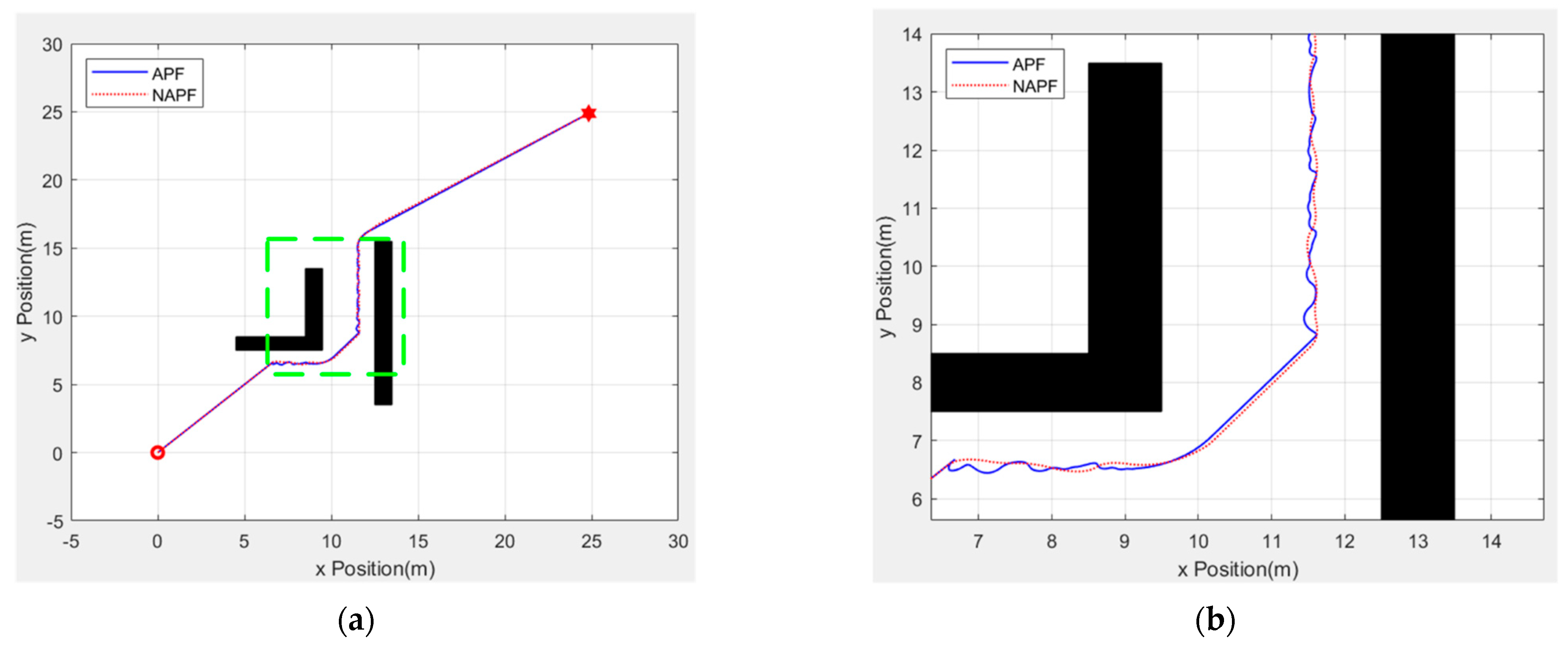
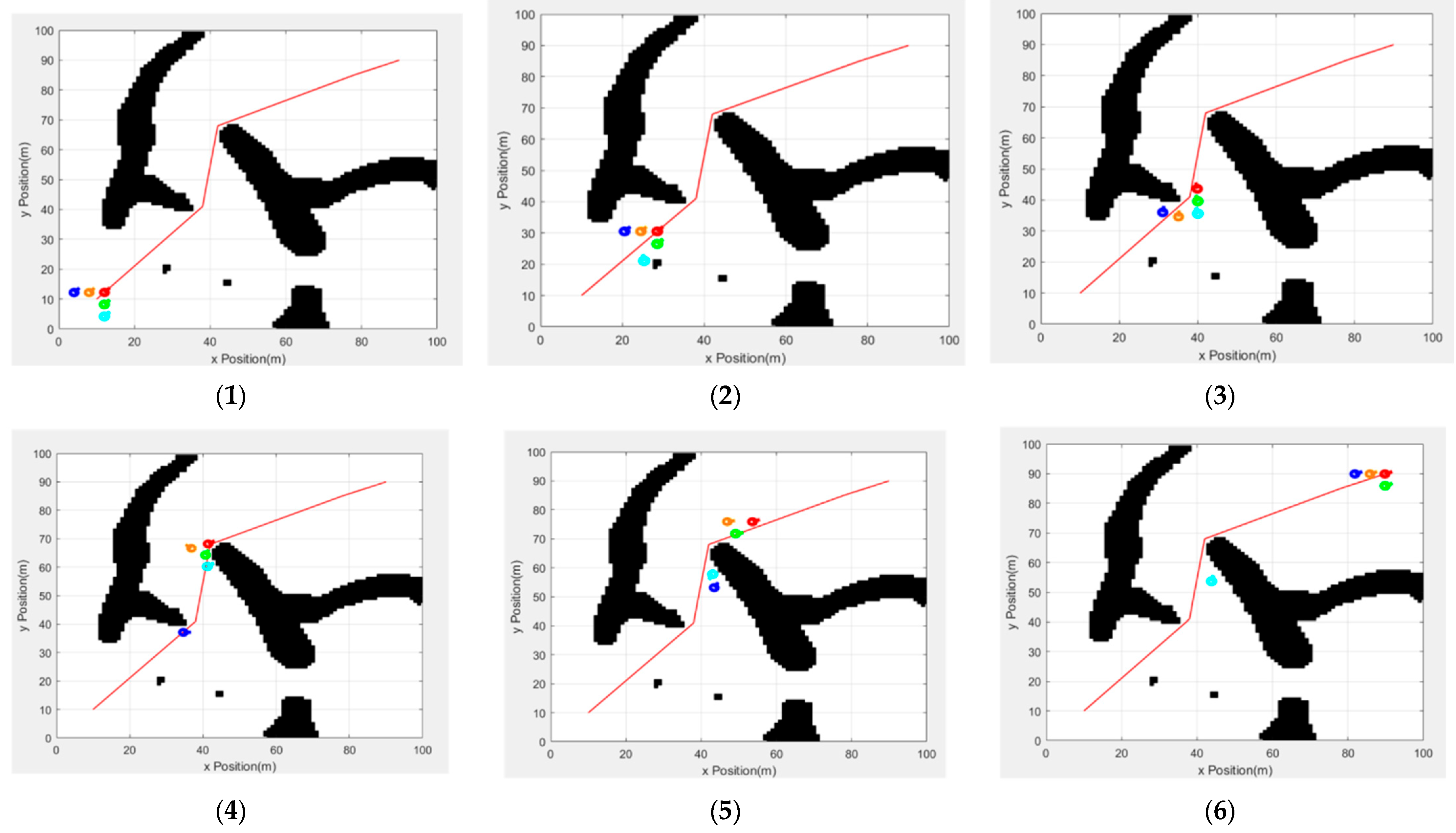
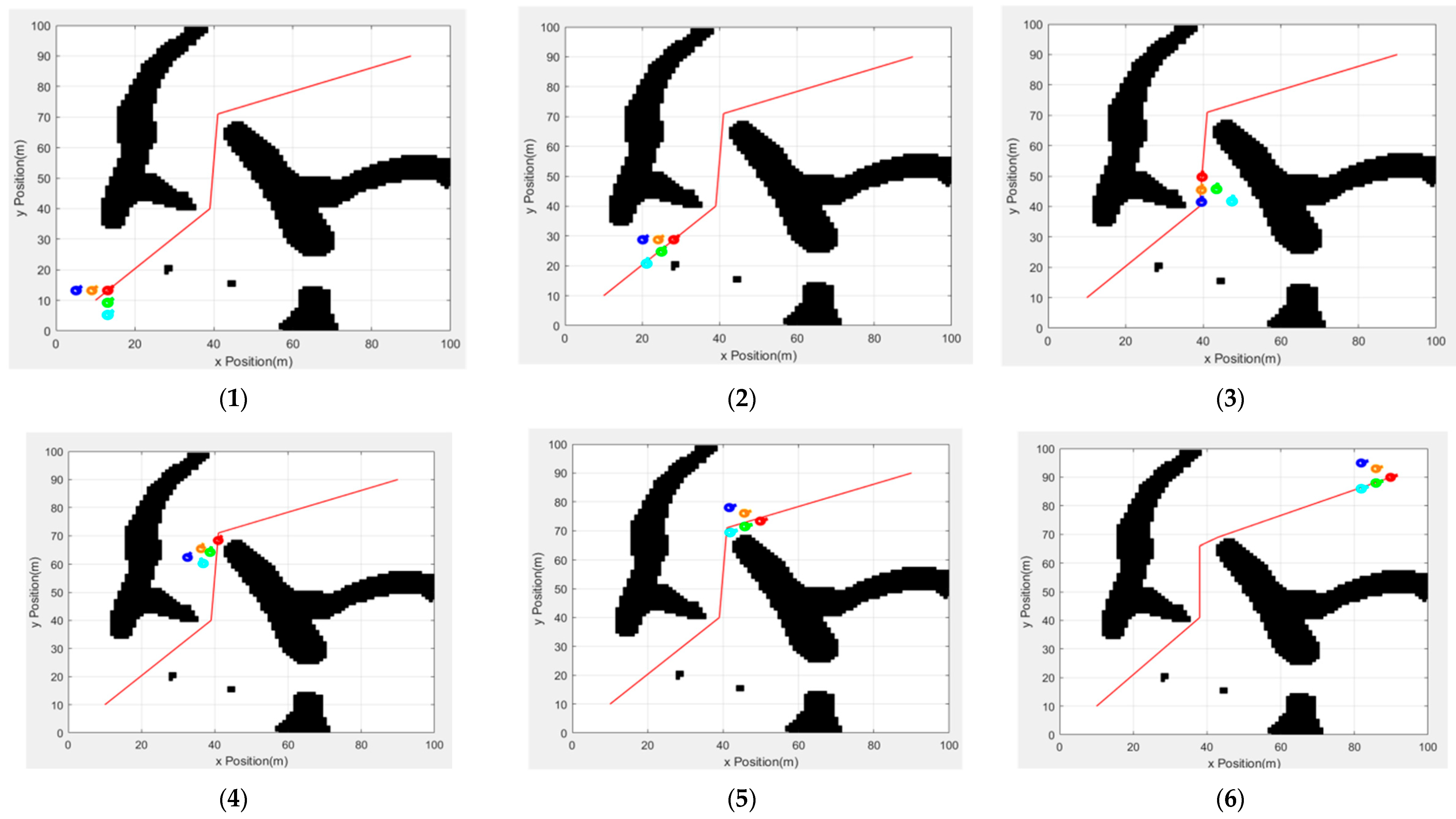
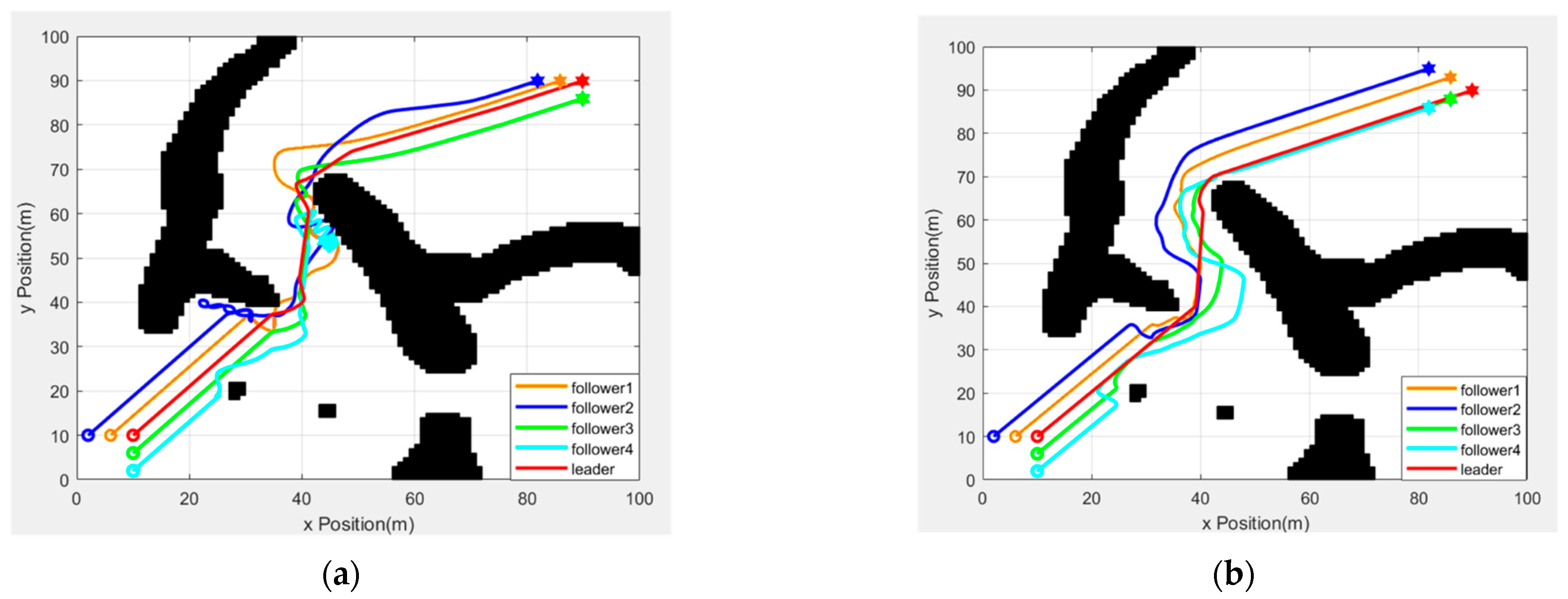
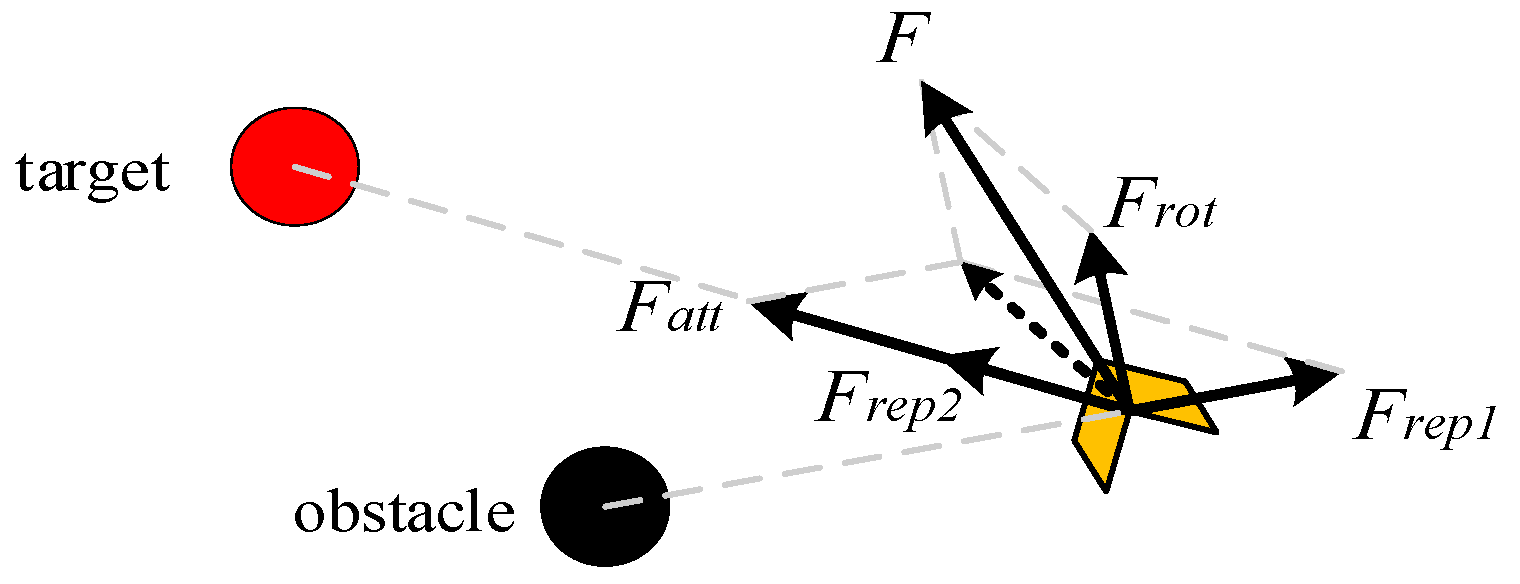
This paper proposes a multirobot formation path planning method based on the leader–follower formation control method to ensure smooth operation in the multirobot formation control area. First, on the basis of the rapidly exploring random tree (RRT), a density detection rapidly exploring random tree (DDRRT) algorithm is designed to avoid repeated exploration of by the RRT, to quickly generate a global path from the starting point to the destination for the leader robot, and to propose a rope shrinkage path optimization mechanism for path optimization. Second, the repulsion field function in the artificial potential field (APF) is optimized for local collaborative obstacle avoidance to enable multiple robots, and a rotational potential field is introduced to solve the problems of unreachable targets and local oscillations. Finally, a control law based on consistency control is used to control the followers and introduce a formation change mechanism based on polar coordinate transformation to enhance the formation control capability. The simulation results show that the proposed strategy can provide high-quality paths for robot formations in multiple obstacle areas and guide robot formations to avoid various local obstacles quickly through formation transformation.
Keywords: multirobot formation; density testing; RRT algorithm; artificial potential field method; consistency control multirobot formation; density testing; RRT algorithm; artificial potential field method; consistency control