Article

Cognitive Effort during Visuospatial Problem Solving in Physical Real World, on Computer Screen, and in Virtual Reality

by
Raimundo da Silva Soares, Jr.
1,2,*,
Kevin L. Ramirez-Chavez
1,
Altona Tufanoglu
1,
Candida Barreto
1,
João Ricardo Sato
2 and
Hasan Ayaz
1,3,4,5,6,7,*
1
School of Biomedical Engineering, Science and Health Systems, Drexel University, Philadelphia, PA 19104, USA
2
Center of Mathematics Computation and Cognition, Universidade Federal do ABC, São Bernardo do Campo 09606-405, Brazil
3
Department of Psychological and Brain Sciences, College of Arts and Sciences, Drexel University, Philadelphia, PA 19104, USA
4
Drexel Solutions Institute, Drexel University, Philadelphia, PA 19104, USA
5
A.J. Drexel Autism Institute, Drexel University, Philadelphia, PA 19104, USA
6
Department of Family and Community Health, University of Pennsylvania, Philadelphia, PA 19104, USA
7
Center for Injury Research and Prevention, Children’s Hospital of Philadelphia, Philadelphia, PA 19104, USA
*
Authors to whom correspondence should be addressed.
Sensors 2024, 24(3), 977; https://doi.org/10.3390/s24030977
Submission received: 13 December 2023 / Revised: 30 January 2024 / Accepted: 30 January 2024 / Published: 2 February 2024

Abstract

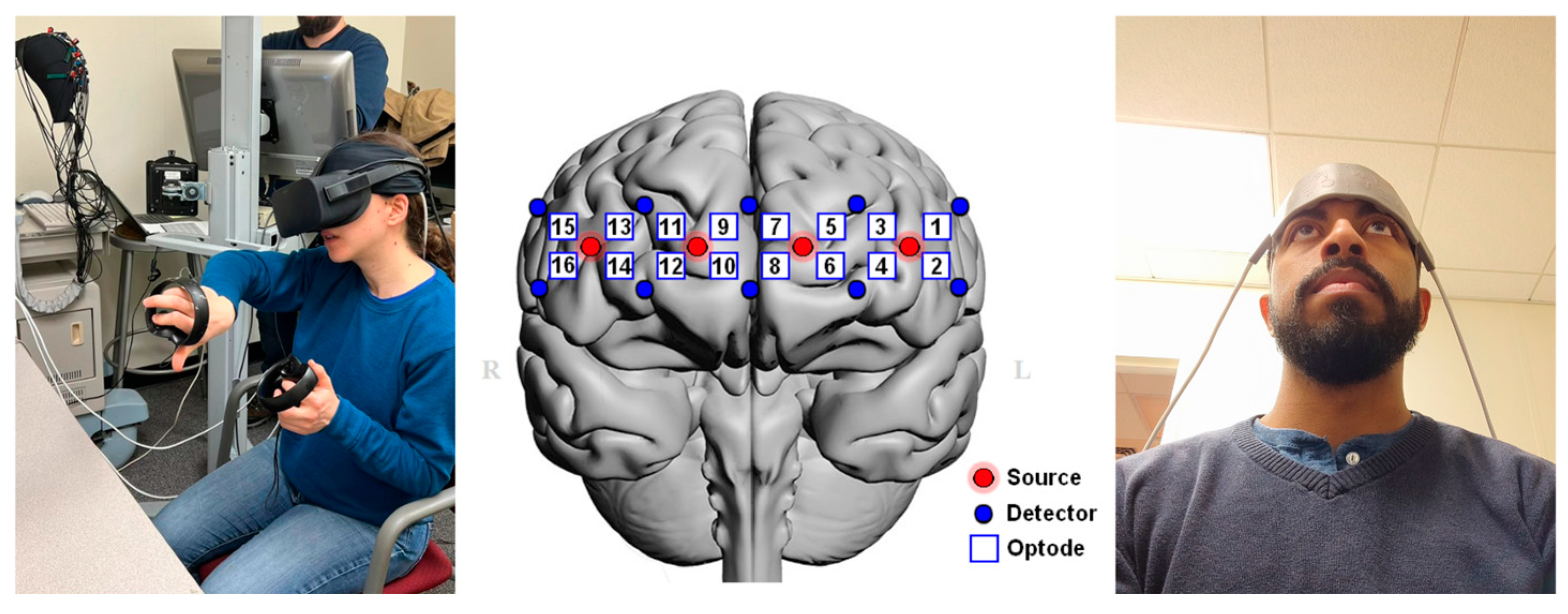
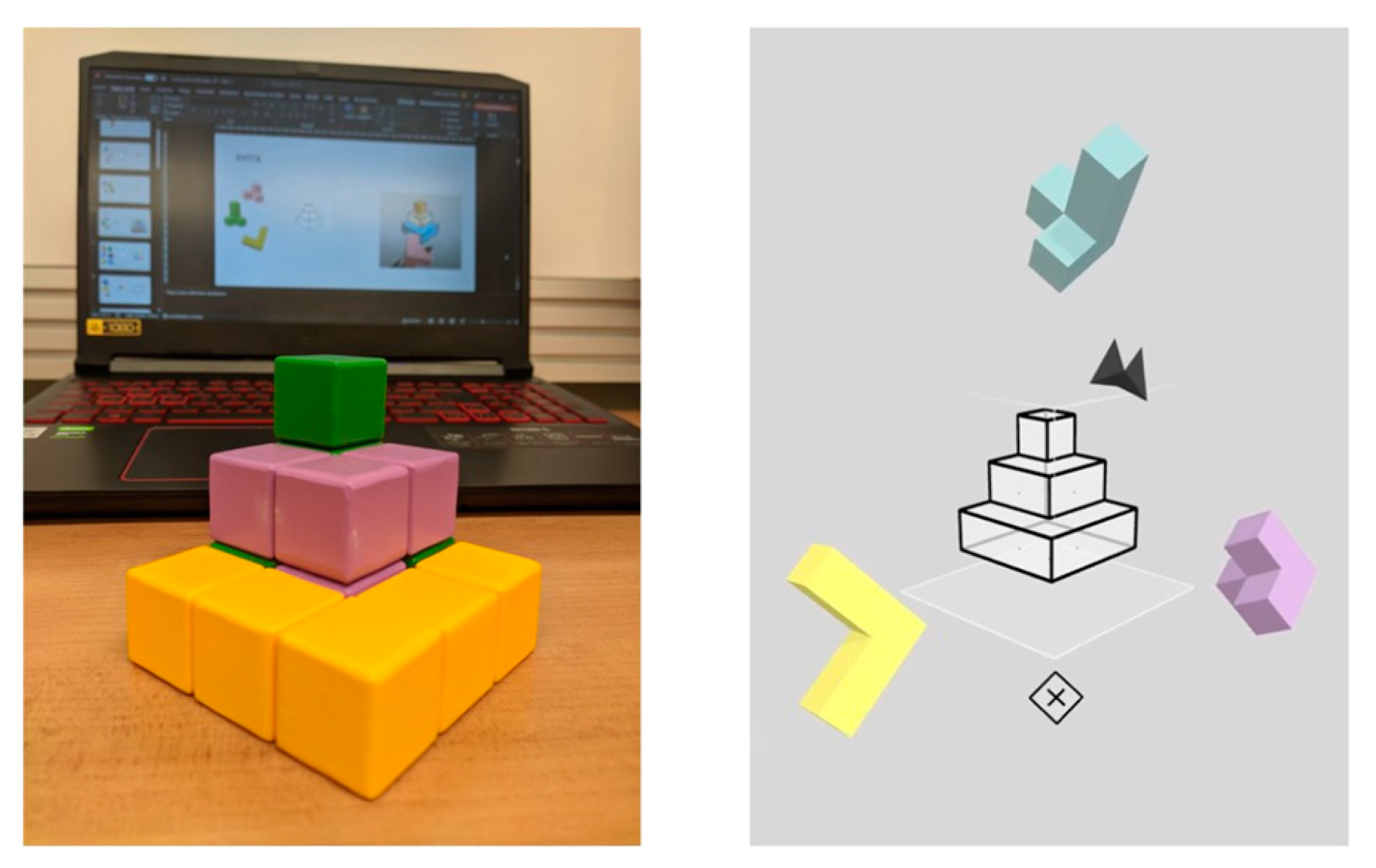
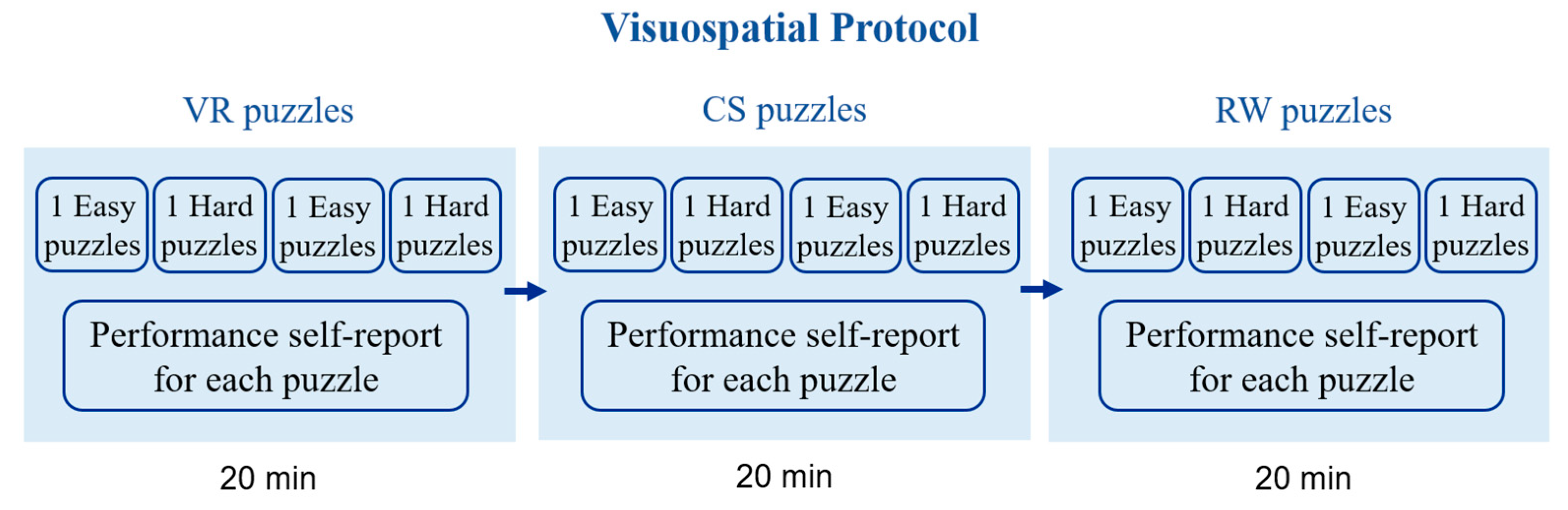
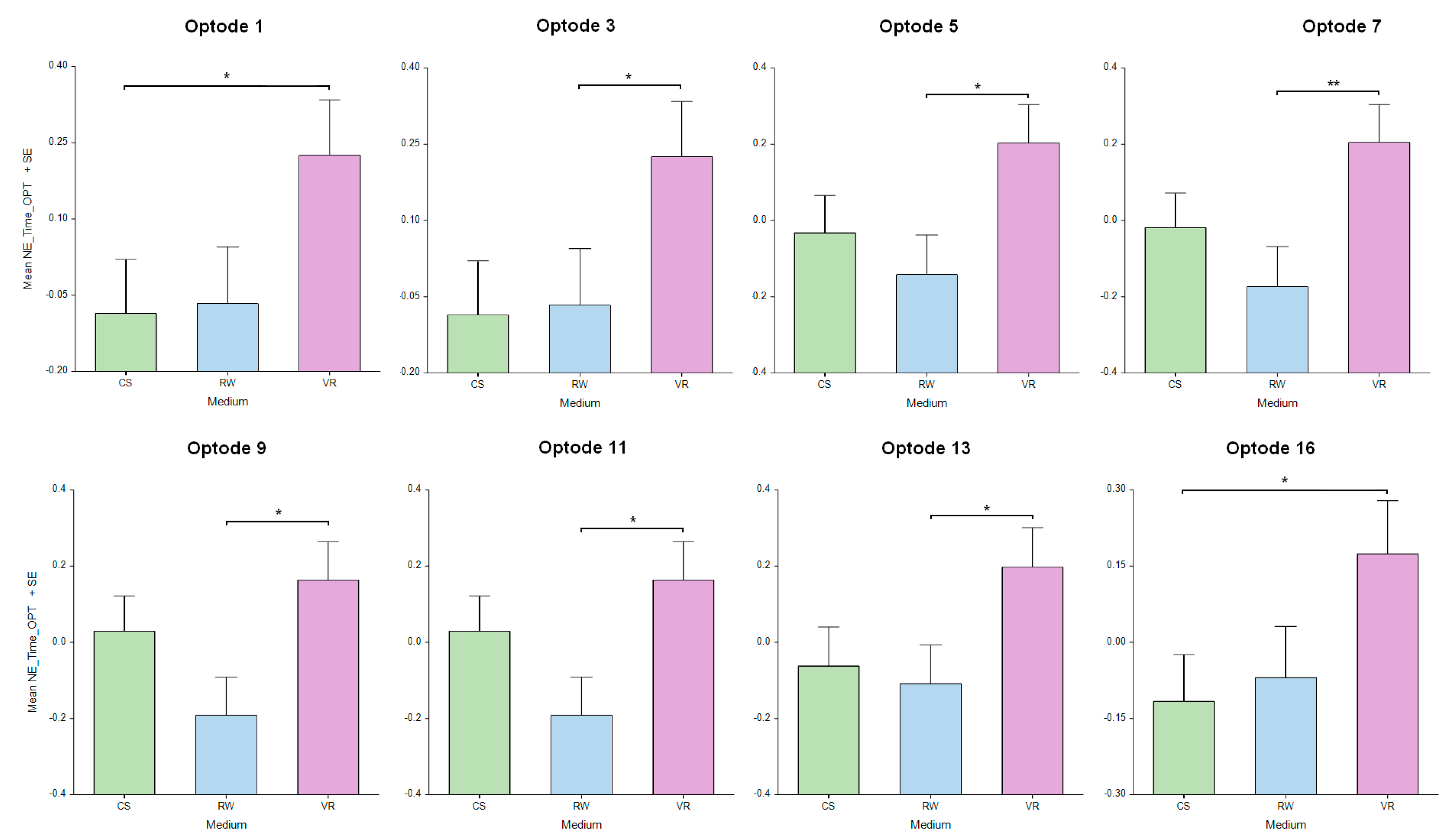
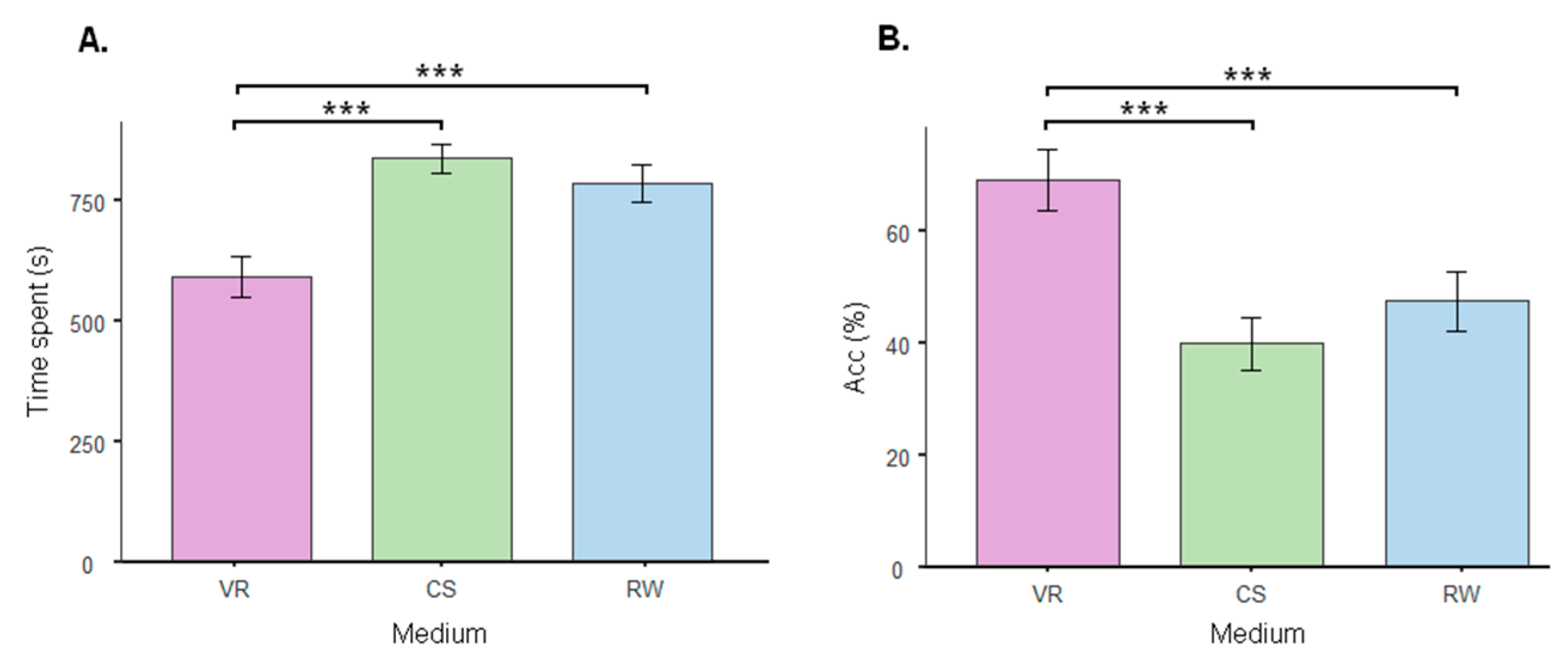
Spatial cognition plays a crucial role in academic achievement, particularly in science, technology, engineering, and mathematics (STEM) domains. Immersive virtual environments (VRs) have the growing potential to reduce cognitive load and improve spatial reasoning. However, traditional methods struggle to assess the mental effort required for visuospatial processes due to the difficulty in verbalizing actions and other limitations in self-reported evaluations. In this neuroergonomics study, we aimed to capture the neural activity associated with cognitive workload during visuospatial tasks and evaluate the impact of the visualization medium on visuospatial task performance. We utilized functional near-infrared spectroscopy (fNIRS) wearable neuroimaging to assess cognitive effort during spatial-reasoning-based problem-solving and compared a VR, a computer screen, and a physical real-world task presentation. Our results reveal a higher neural efficiency in the prefrontal cortex (PFC) during 3D geometry puzzles in VR settings compared to the settings in the physical world and on the computer screen. VR appears to reduce the visuospatial task load by facilitating spatial visualization and providing visual cues. This makes it a valuable tool for spatial cognition training, especially for beginners. Additionally, our multimodal approach allows for progressively increasing task complexity, maintaining a challenge throughout training. This study underscores the potential of VR in developing spatial skills and highlights the value of comparing brain data and human interaction across different training settings.
Keywords: geometry puzzle; tangram; spatial cognition; cognitive workload; virtual reality; fNIRS; neuroergonomics geometry puzzle; tangram; spatial cognition; cognitive workload; virtual reality; fNIRS; neuroergonomics