Article

Decentralized IoT Data Authentication with Signature Aggregation
by
Jay Bojič Burgos
* and
Matevž Pustišek
Faculty of Electrical Engineering, University of Ljubljana, 1000 Ljubljana, Slovenia
*
Author to whom correspondence should be addressed.
Sensors 2024, 24(3), 1037; https://doi.org/10.3390/s24031037
Submission received: 31 December 2023 / Revised: 23 January 2024 / Accepted: 1 February 2024 / Published: 5 February 2024
(This article belongs to the Special Issue Recent Trends and Advances in Telecommunications and Sensing)

Abstract

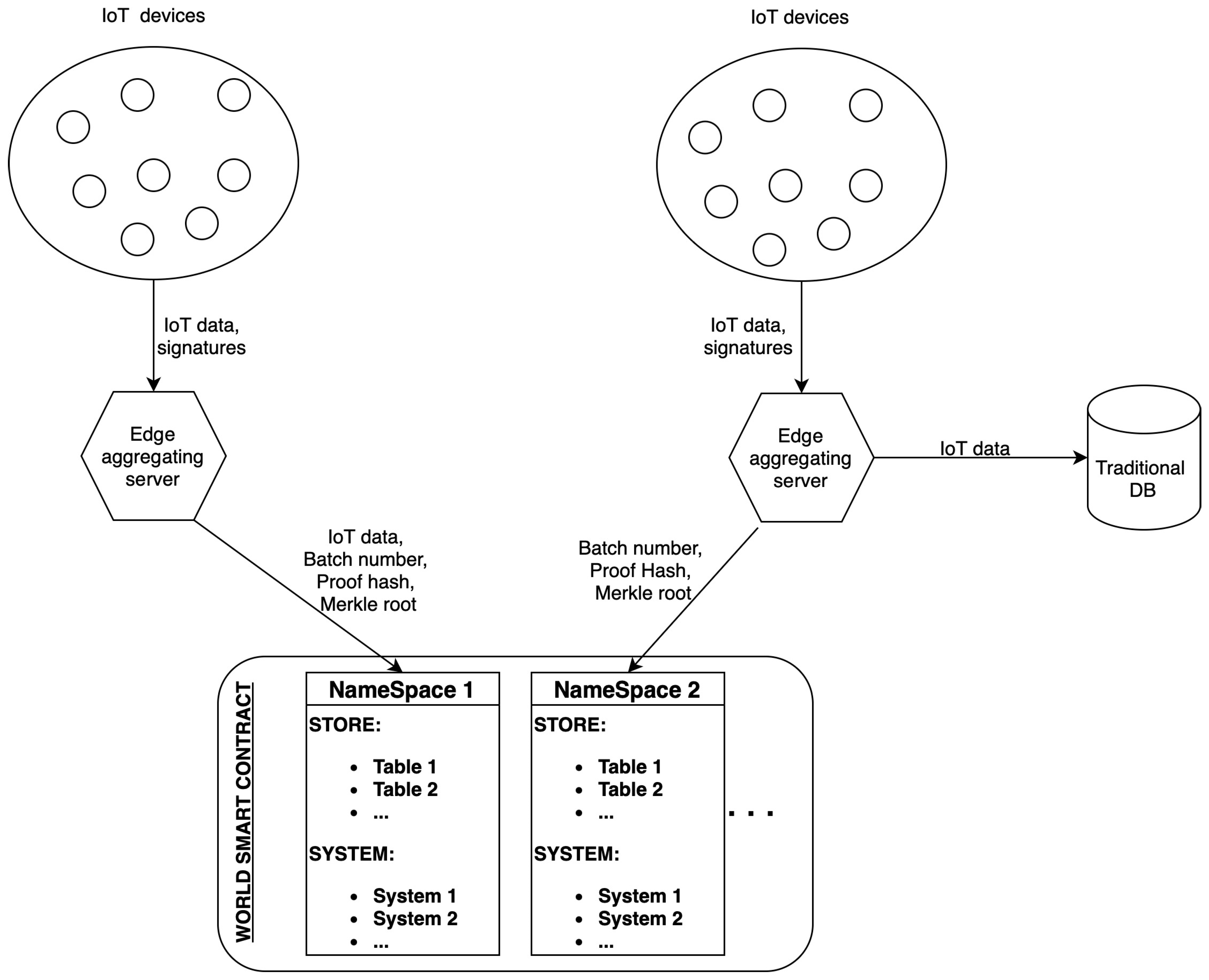
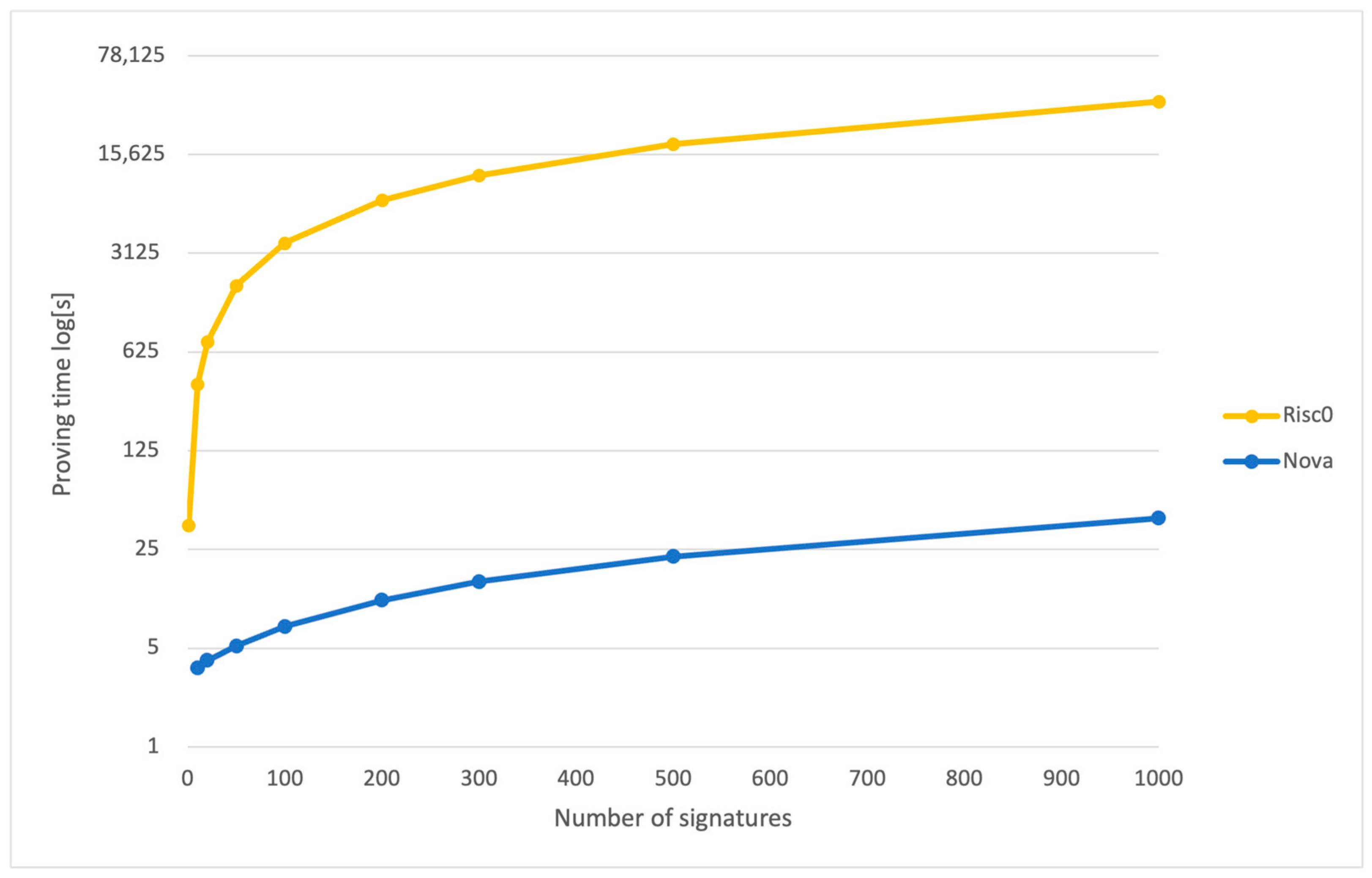
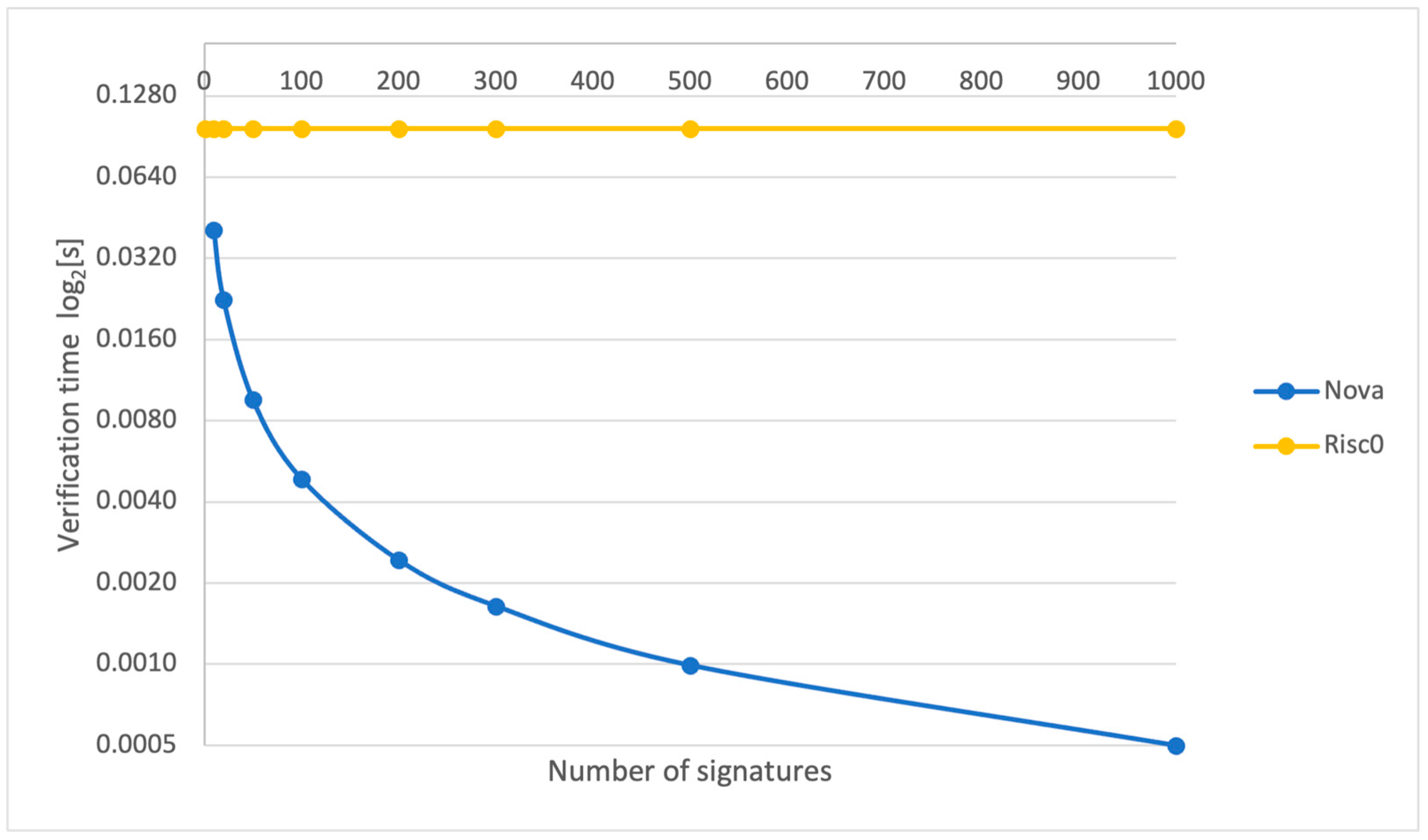
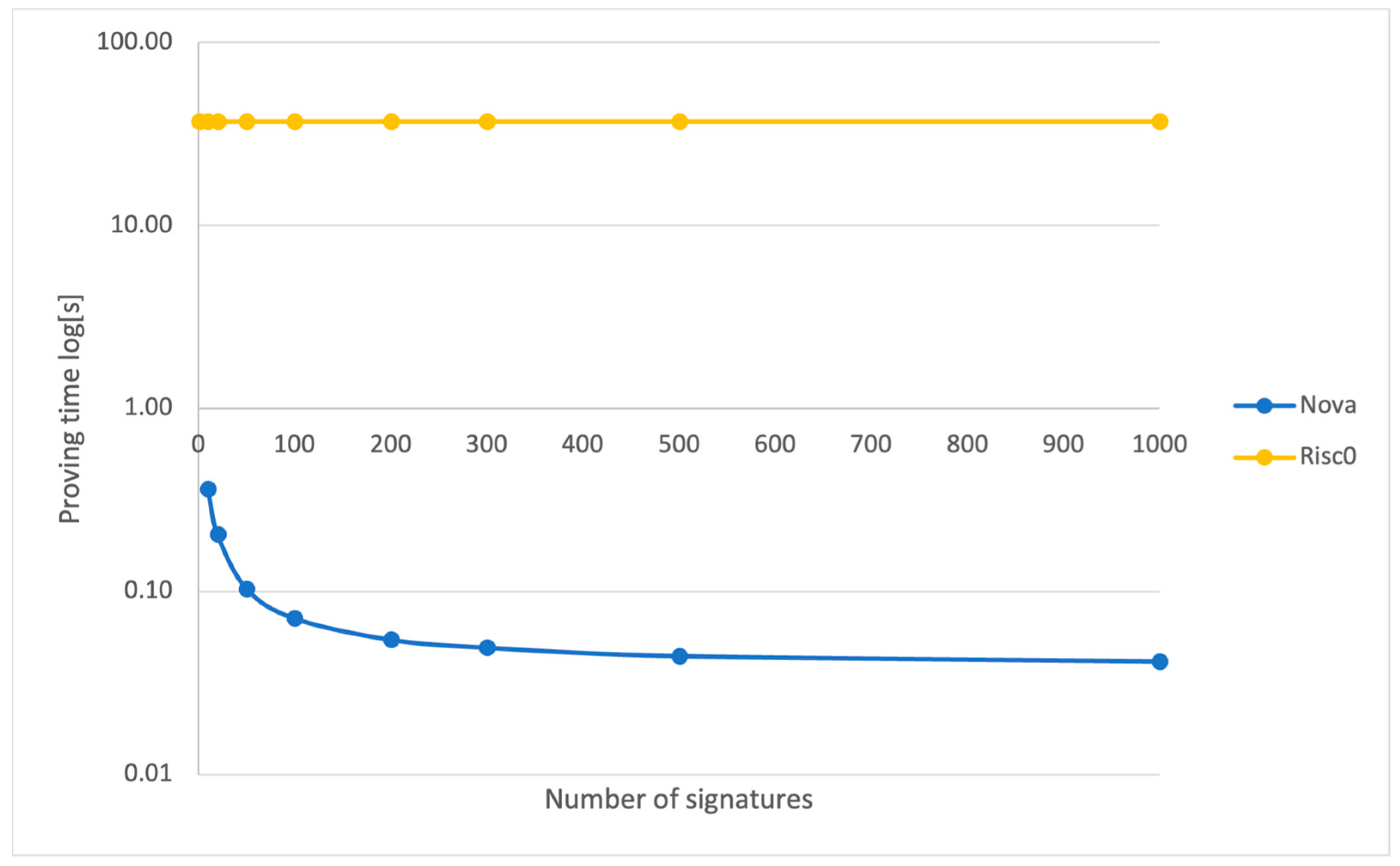
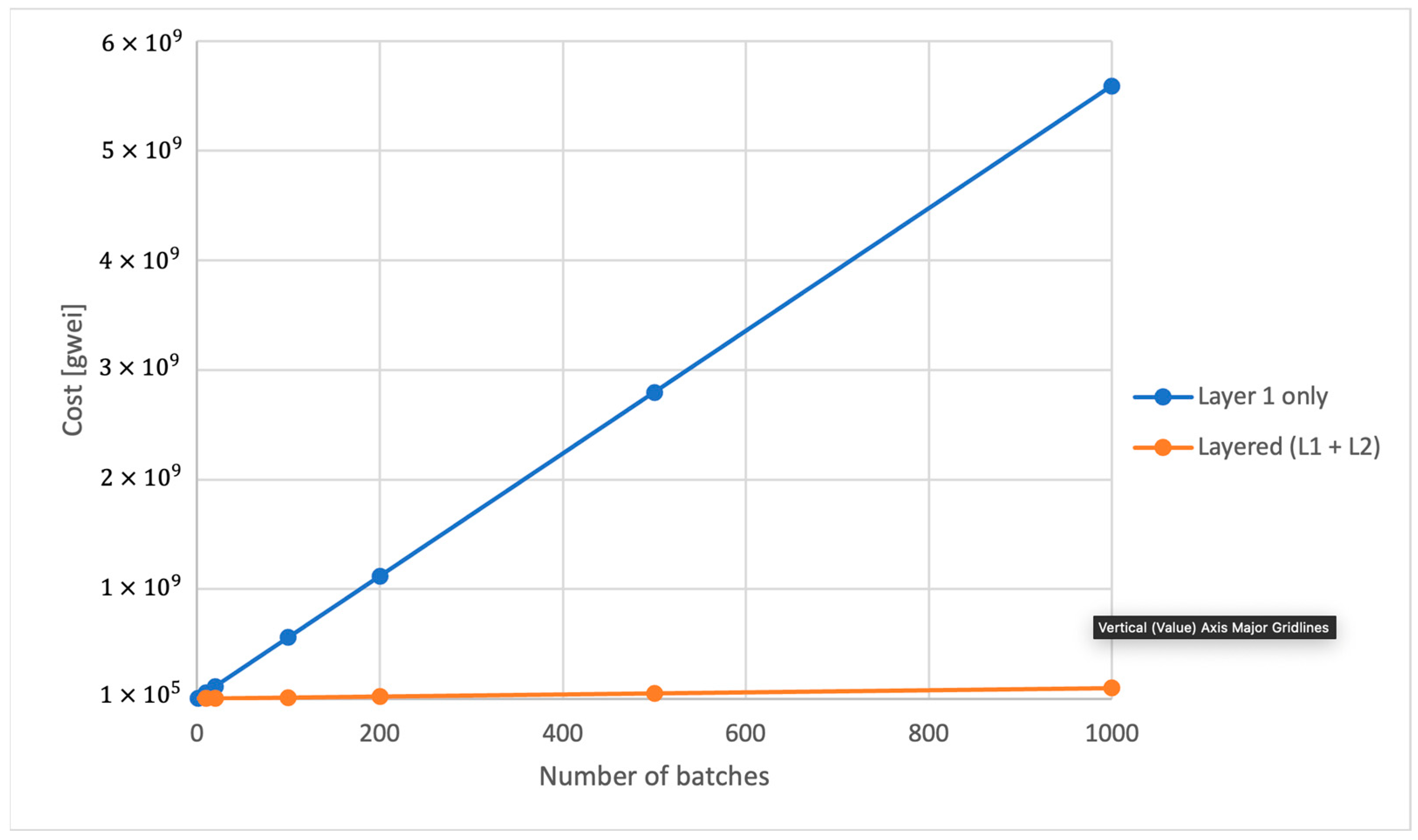
The rapid expansion of the Internet of Things (IoT) has introduced significant challenges in data authentication, necessitating a balance between scalability and security. Traditional approaches often rely on third parties, while blockchain-based solutions face computational and storage bottlenecks. Our novel framework employs edge aggregating servers and Ethereum Layer 2 rollups, offering a scalable and secure IoT data authentication solution that reduces the need for continuous, direct interaction between IoT devices and the blockchain. We utilize and compare the Nova and Risc0 proving systems for authenticating batches of IoT data by verifying signatures, ensuring data integrity and privacy. Notably, the Nova prover significantly outperforms Risc0 in proving and verification times; for instance, with 10 signatures, Nova takes 3.62 s compared to Risc0’s 369 s, with this performance gap widening as the number of signatures in a batch increases. Our framework further enhances data verifiability and trust by recording essential information on L2 rollups, creating an immutable and transparent record of authentication. The use of Layer 2 rollups atop a permissionless blockchain like Ethereum effectively reduces on-chain storage costs by approximately 48 to 57 times compared to direct Ethereum use, addressing cost bottlenecks efficiently.
Keywords: blockchain; IoT; data authentication; signature aggregation; rollup; SNARK blockchain; IoT; data authentication; signature aggregation; rollup; SNARK