Article

Comprehensive Separation Algorithm for Single-Channel Signals Based on Symplectic Geometry Mode Decomposition

Key Lab of Intelligent Computing & Signal Processing, Ministry of Education, Anhui University, Hefei 230601, China
*
Author to whom correspondence should be addressed.
Sensors 2024, 24(2), 462; https://doi.org/10.3390/s24020462
Submission received: 6 December 2023 / Revised: 8 January 2024 / Accepted: 10 January 2024 / Published: 11 January 2024

Abstract

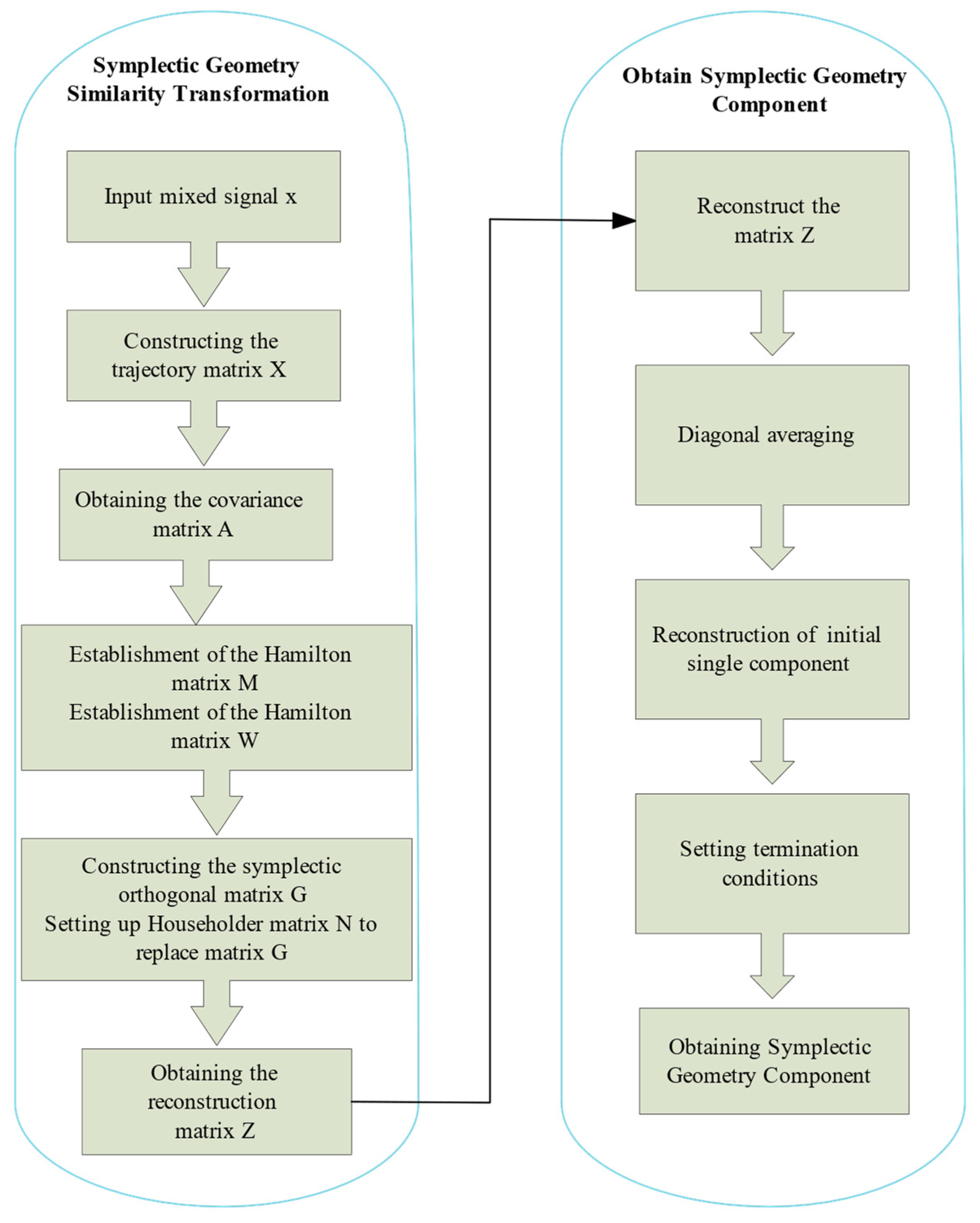
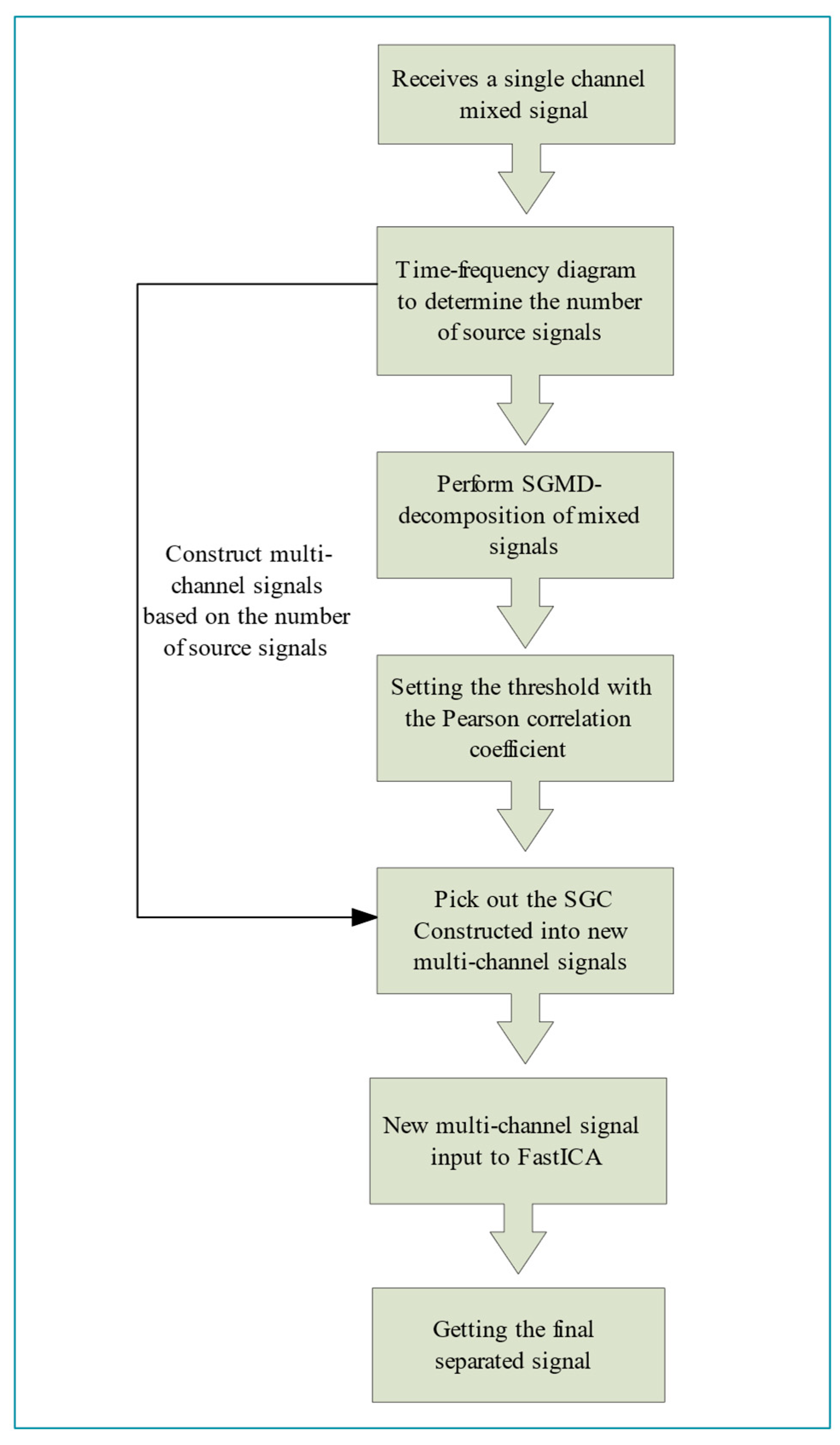
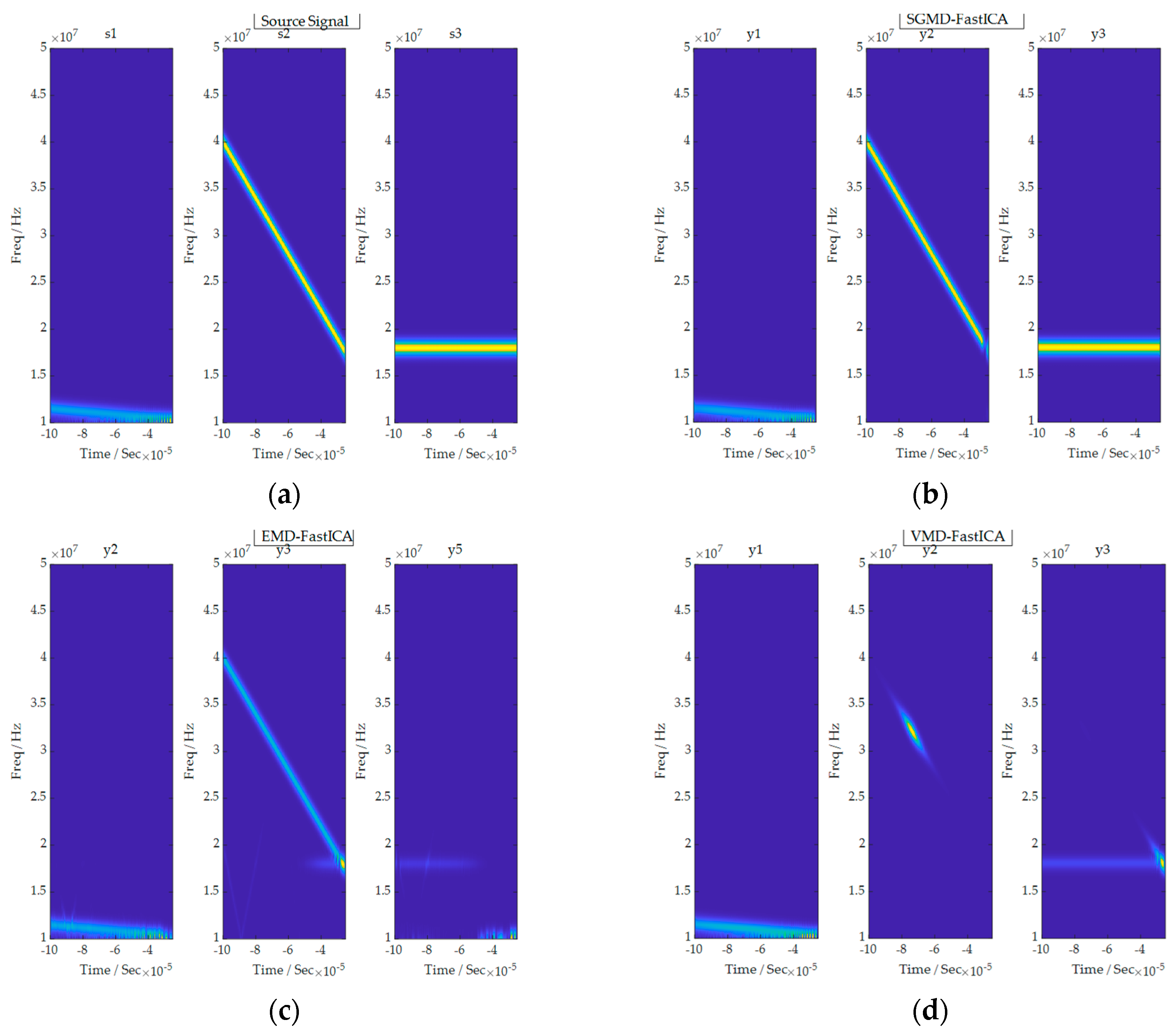
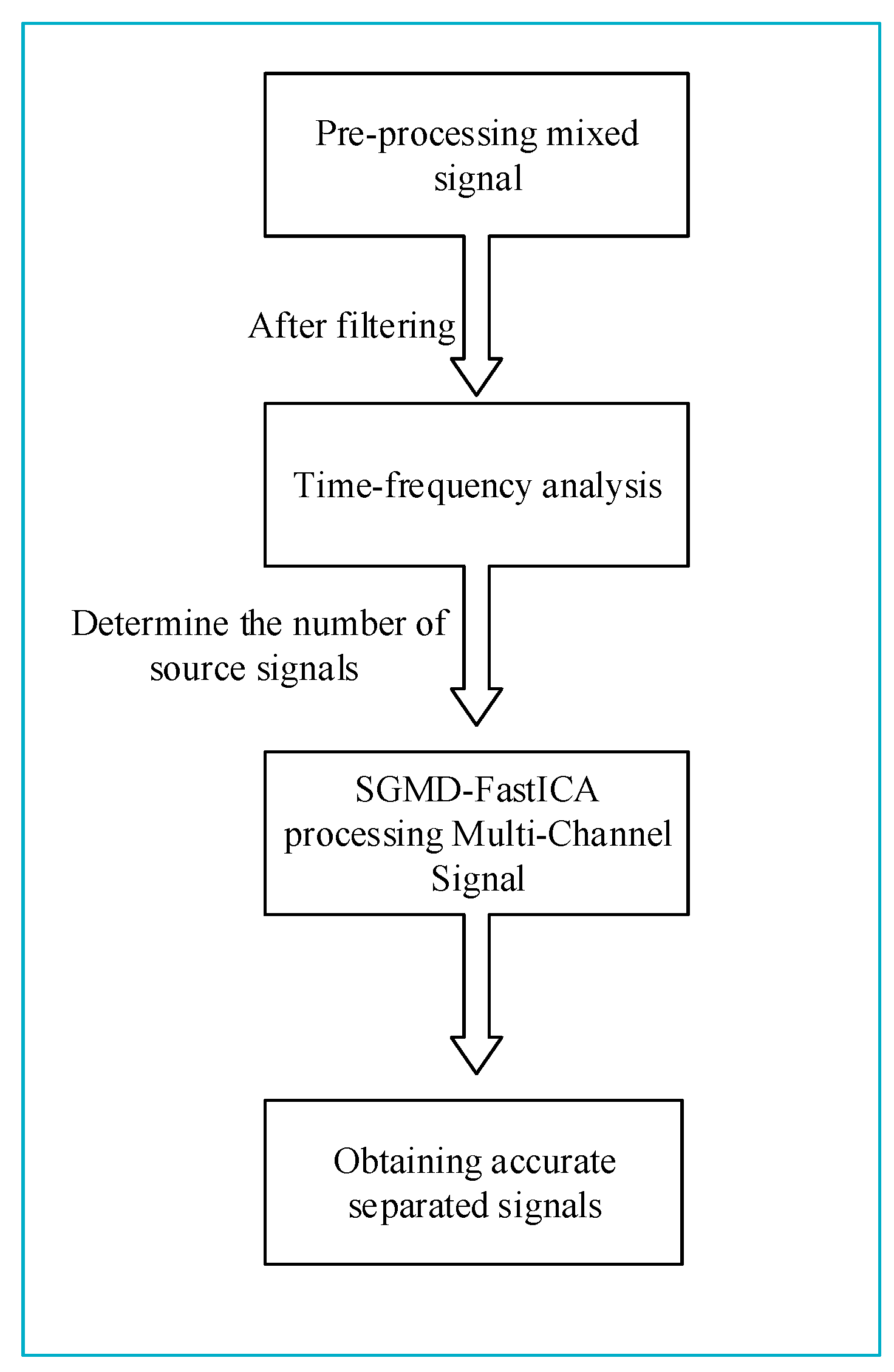
This paper aims to explore the difficulty of obtaining source signals from complex mixed signals and the issue that the FastICA algorithm cannot directly decompose the received single-channel mixed signals and distort the signal separation in low signal-to-noise environments. Thus, in this work, a comprehensive single-channel mixed signal separation algorithm was proposed based on the combination of Symplectic Geometry Mode Decomposition (SGMD) and the FastICA algorithm. First, SGMD-FastICA uses SGMD to decompose single-channel mixed signals, and then it uses the Pearson correlation coefficient to select the Symplectic Geometry Components that exhibit higher correlation coefficients with the mixed signals. Then, these components are expanded with the single-channel mixed signals into virtual multi-channel signals and input into the FastICA algorithm. The simulation results show that the SGMD algorithm could eliminate noise interference while keeping the raw time series unchanged, which is achievable through symplectic geometry similarity transformation during the decomposition of mixed signals. Comparative experiment results also show that compared with the EMD-FastICA and VMD-FastICA, the SGMD-FastICA algorithm has the best separation effect for single-channel mixed signals. The SGMD-FastICA algorithm represents an improved solution that addresses the limitations of the FastICA algorithm, enabling the direct separation of single-channel mixed signals, while also addressing the challenge of proper signal separation in noisy environments.
Keywords: FastICA; SGMD; Symplectic Geometry Component; signal separation FastICA; SGMD; Symplectic Geometry Component; signal separation