Article

Characterizing Bodyweight-Supported Treadmill Walking on Land and Underwater Using Foot-Worn Inertial Measurement Units and Machine Learning for Gait Event Detection

by
Seongmi Song
1,
Nathaniel J. Fernandes
2 and
Andrew D. Nordin
1,3,4,*
1
Division of Kinesiology, Texas A&M University, College Station, TX 77843, USA
2
Department of Computer Science & Engineering, Texas A&M University, College Station, TX 77843, USA
3
Department of Biomedical Engineering, Texas A&M University, College Station, TX 77843, USA
4
Texas A&M Institute for Neuroscience, Texas A&M University, College Station, TX 77843, USA
*
Author to whom correspondence should be addressed.
Sensors 2023, 23(18), 7945; https://doi.org/10.3390/s23187945
Submission received: 25 July 2023 / Revised: 6 September 2023 / Accepted: 14 September 2023 / Published: 17 September 2023
(This article belongs to the Special Issue Wearable Sensors for Biomechanics Applications)

Abstract

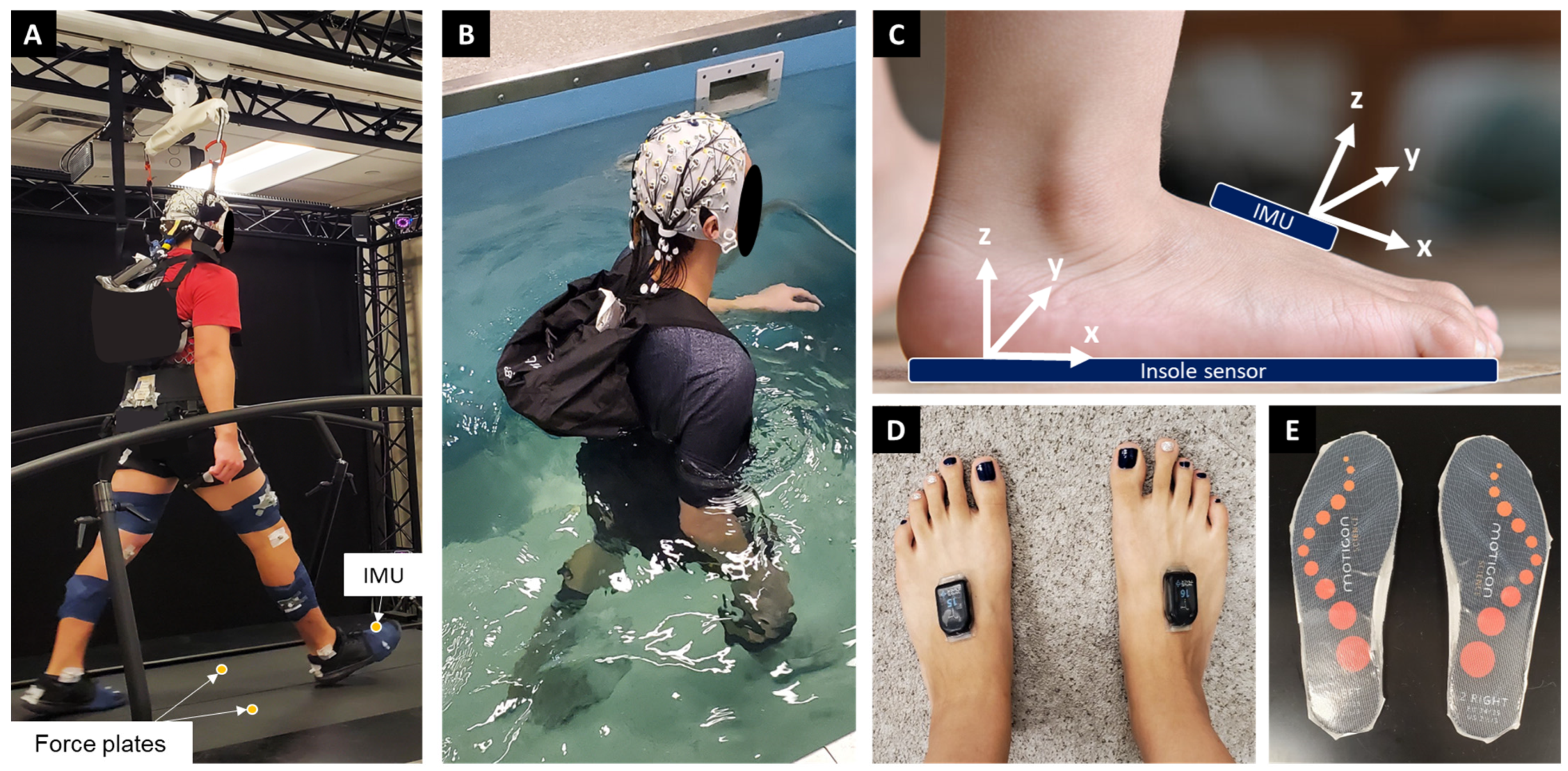
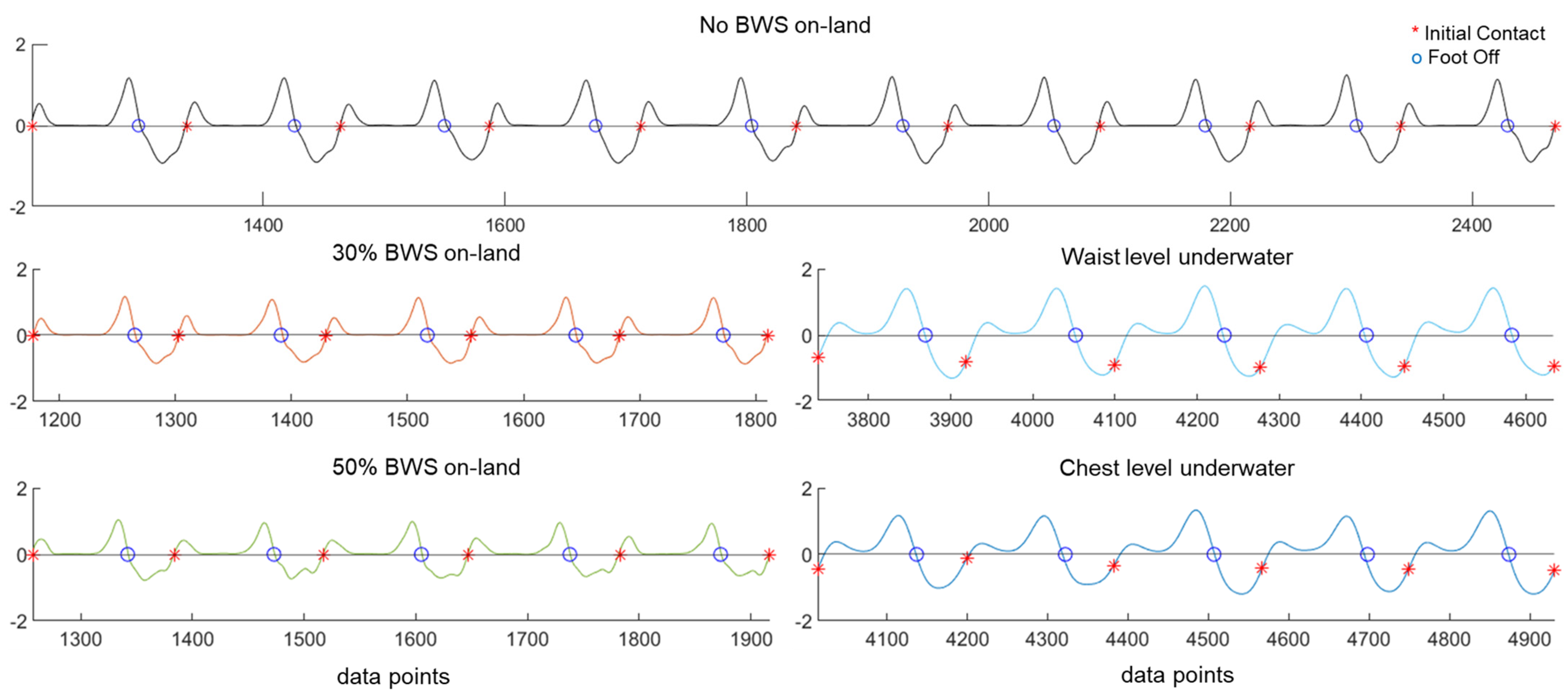
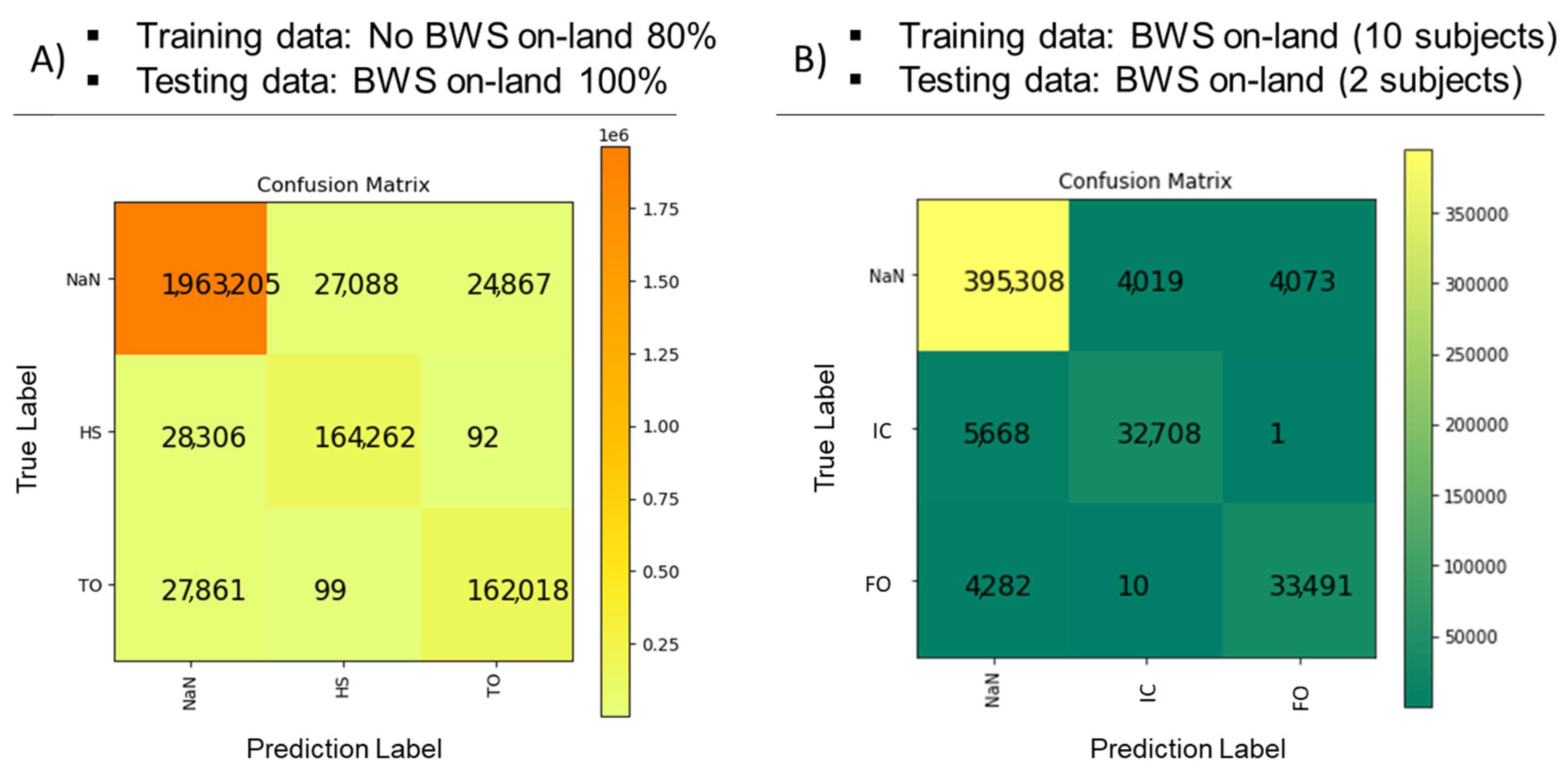
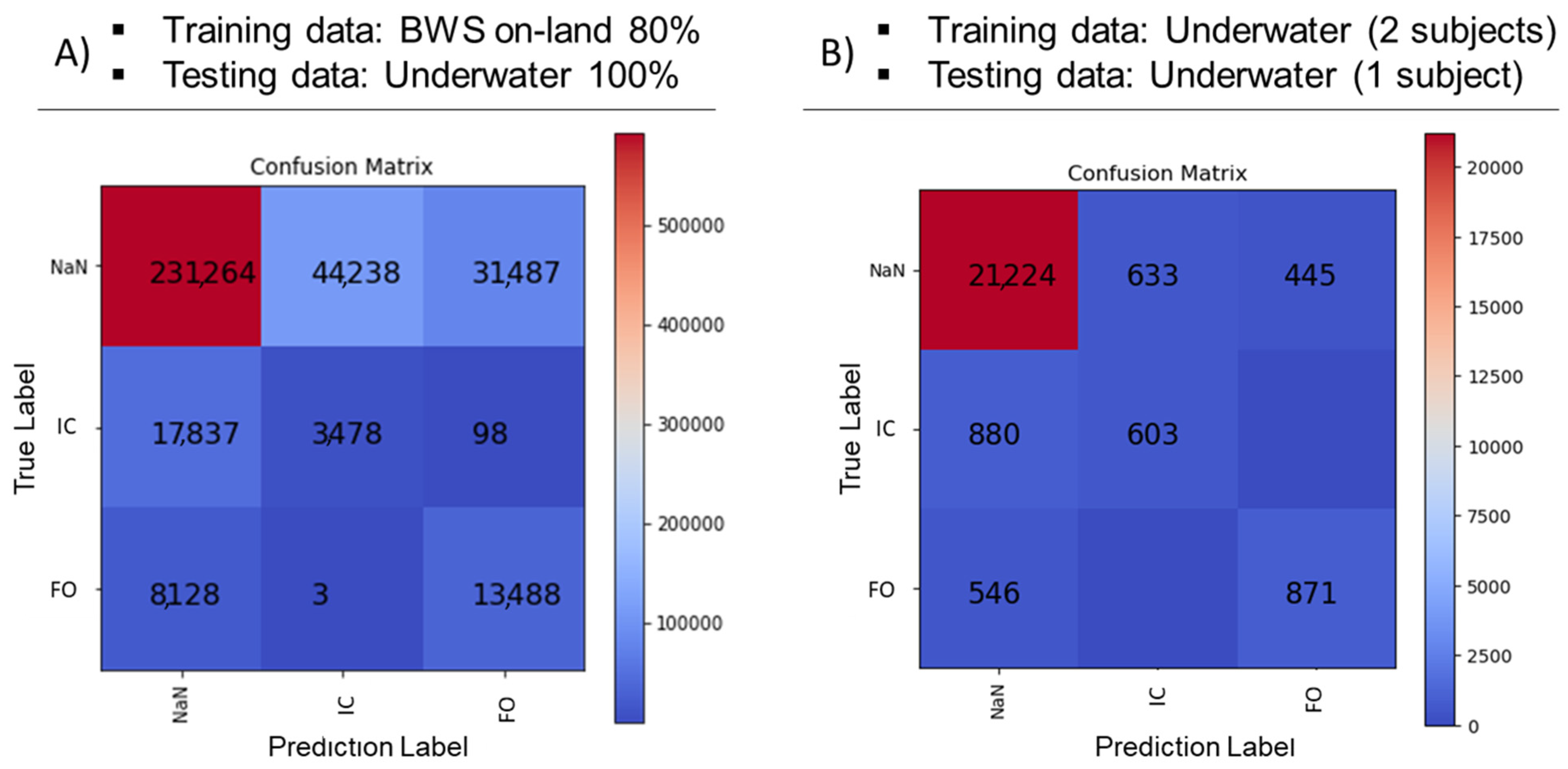
Gait rehabilitation commonly relies on bodyweight unloading mechanisms, such as overhead mechanical support and underwater buoyancy. Lightweight and wireless inertial measurement unit (IMU) sensors provide a cost-effective tool for quantifying body segment motions without the need for video recordings or ground reaction force measures. Identifying the instant when the foot contacts and leaves the ground from IMU data can be challenging, often requiring scrupulous parameter selection and researcher supervision. We aimed to assess the use of machine learning methods for gait event detection based on features from foot segment rotational velocity using foot-worn IMU sensors during bodyweight-supported treadmill walking on land and underwater. Twelve healthy subjects completed on-land treadmill walking with overhead mechanical bodyweight support, and three subjects completed underwater treadmill walking. We placed IMU sensors on the foot and recorded motion capture and ground reaction force data on land and recorded IMU sensor data from wireless foot pressure insoles underwater. To detect gait events based on IMU data features, we used random forest machine learning classification. We achieved high gait event detection accuracy (95–96%) during on-land bodyweight-supported treadmill walking across a range of gait speeds and bodyweight support levels. Due to biomechanical changes during underwater treadmill walking compared to on land, accurate underwater gait event detection required specific underwater training data. Using single-axis IMU data and machine learning classification, we were able to effectively identify gait events during bodyweight-supported treadmill walking on land and underwater. Robust and automated gait event detection methods can enable advances in gait rehabilitation.
Keywords: machine learning; gait event detection; reduced gravity; mechanical body weight support; underwater walking machine learning; gait event detection; reduced gravity; mechanical body weight support; underwater walking