Article

Method to Solve Underwater Laser Weak Waves and Superimposed Waves

1
College of Geomatics and Geoinformation, Guilin University of Technology, Guilin 541004, China
2
Key Laboratory of Spatial Information and Geomatics, Guilin University of Technology, Guilin 541004, China
*
Author to whom correspondence should be addressed.
Sensors 2023, 23(13), 6058; https://doi.org/10.3390/s23136058
Submission received: 15 May 2023 / Revised: 21 June 2023 / Accepted: 27 June 2023 / Published: 30 June 2023
(This article belongs to the Section Physical Sensors)

Abstract

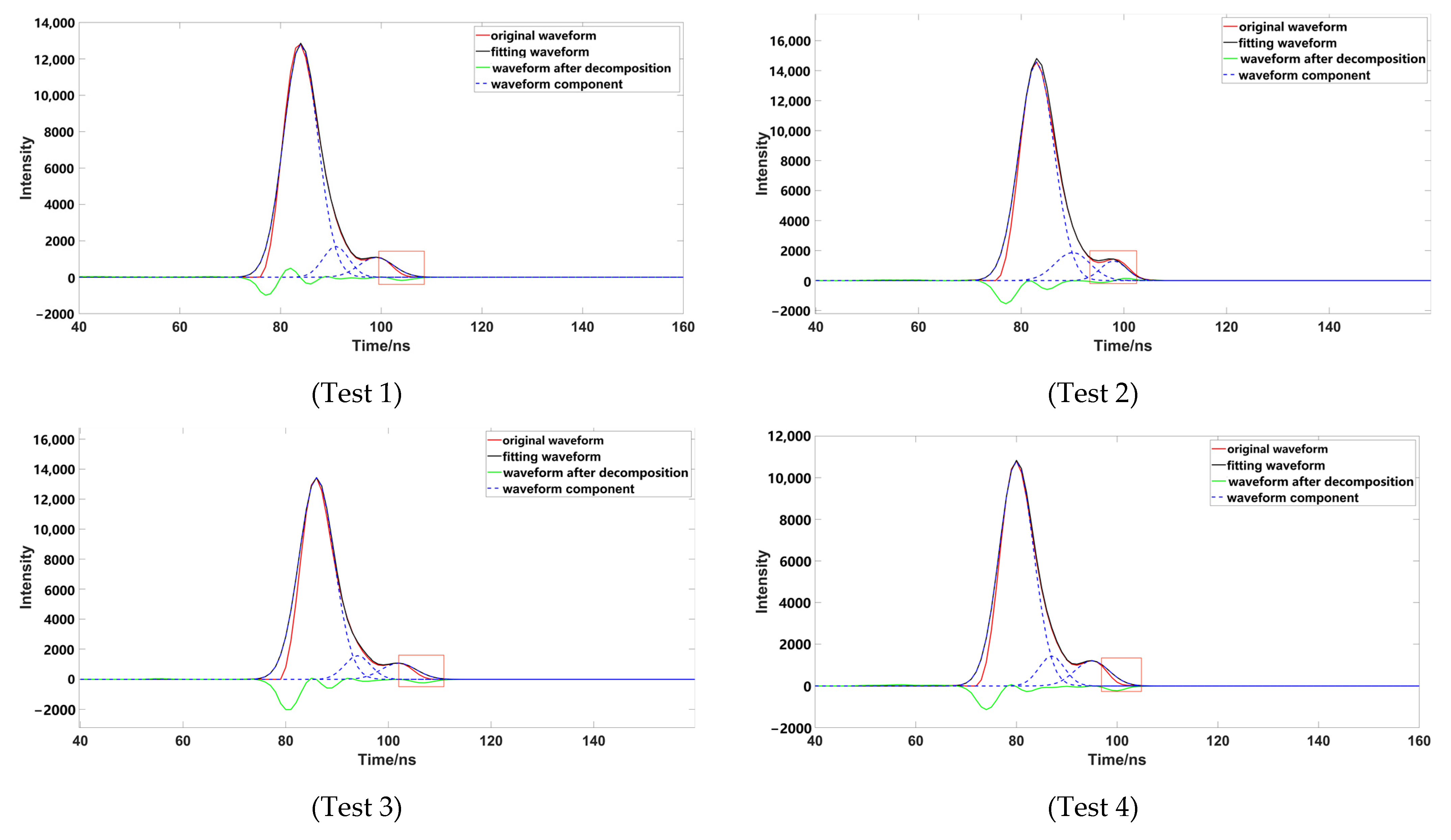
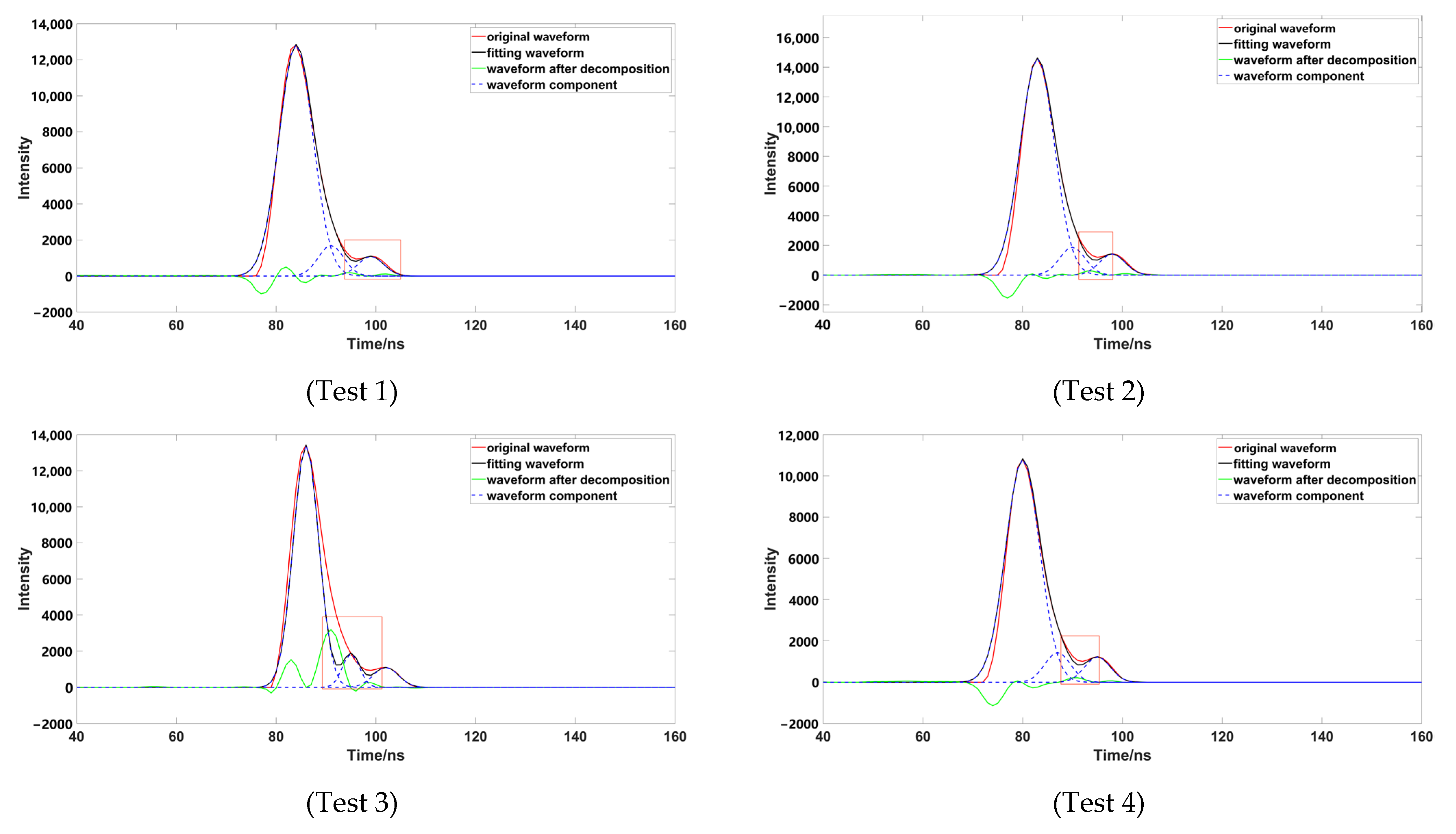
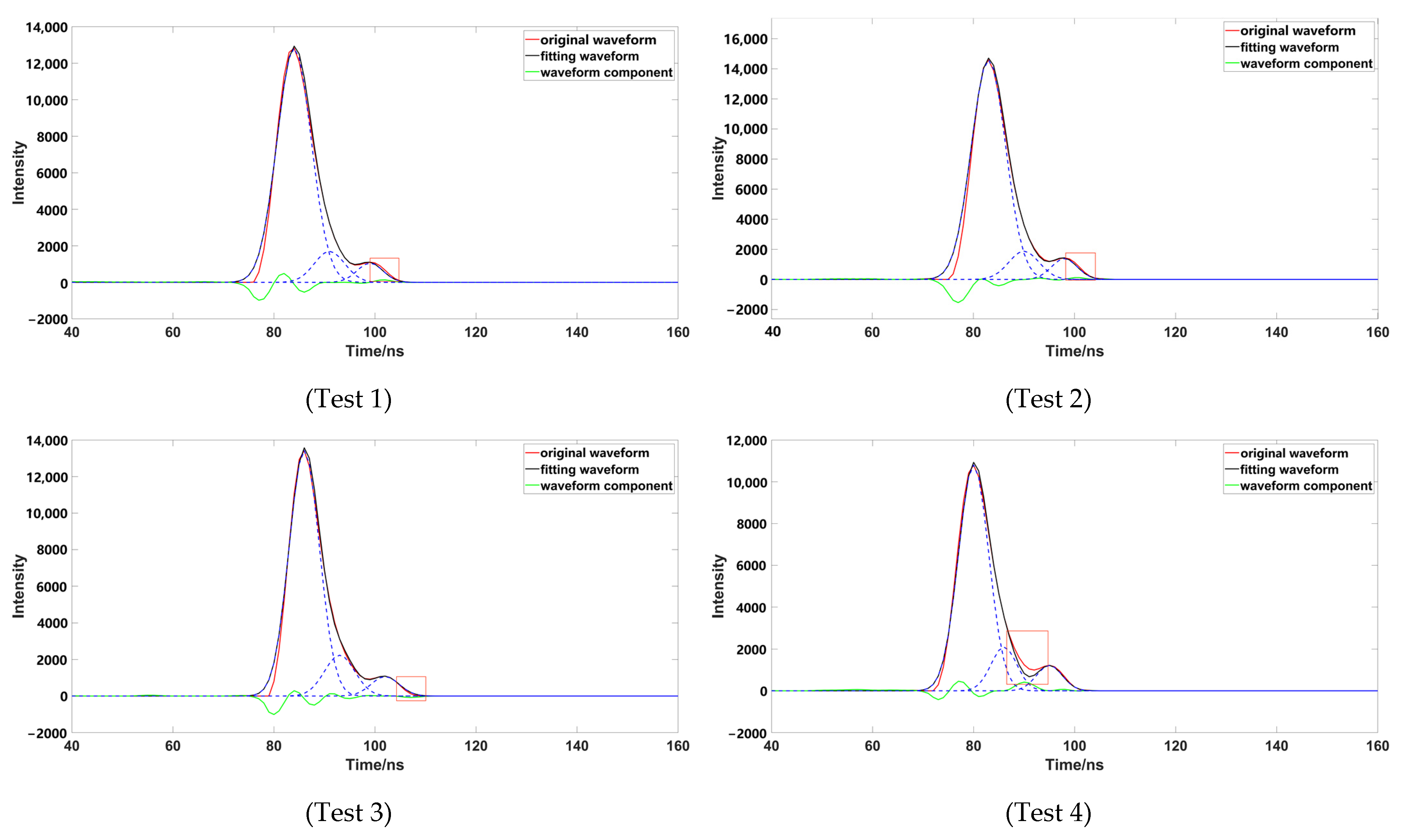
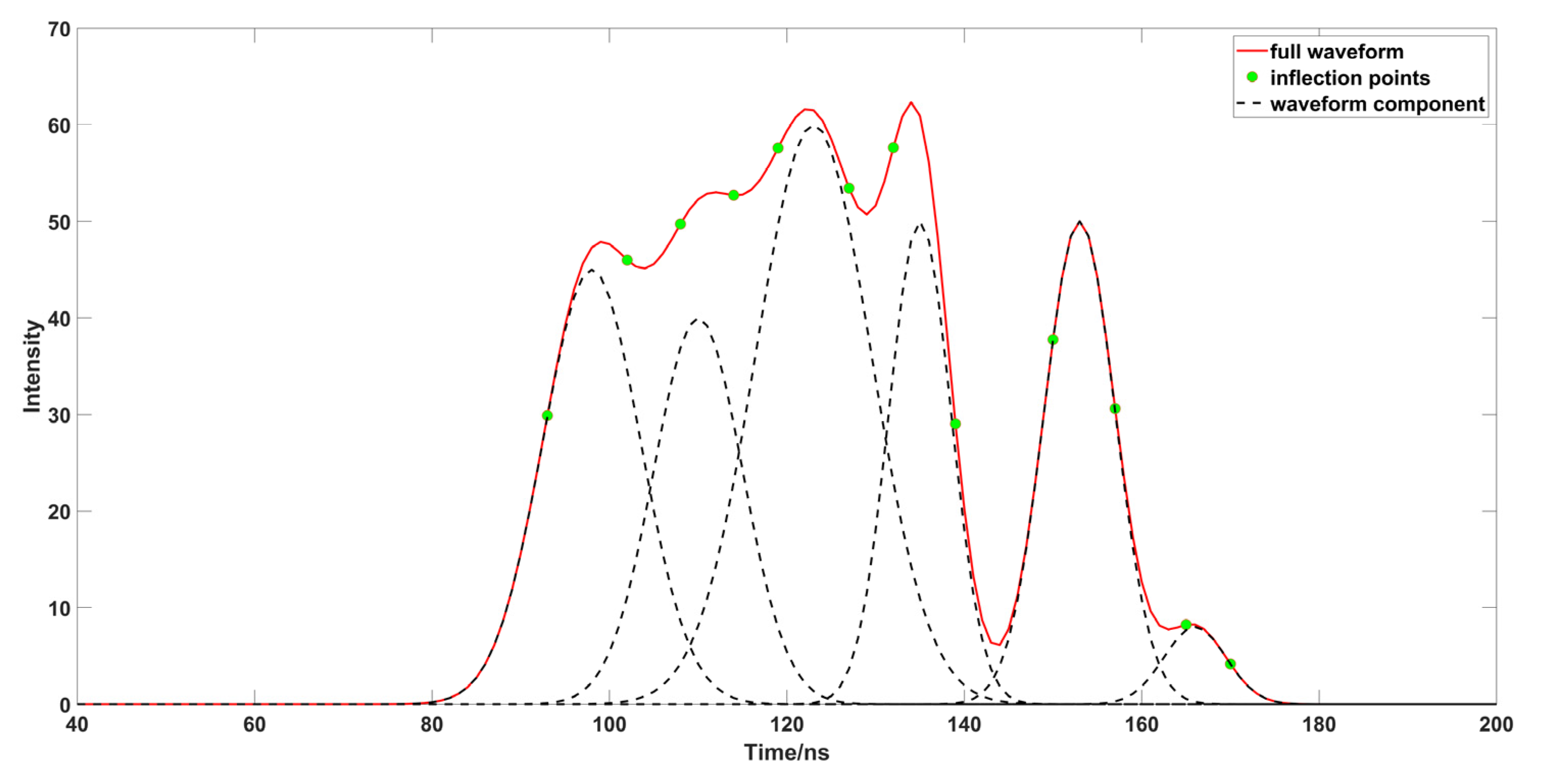
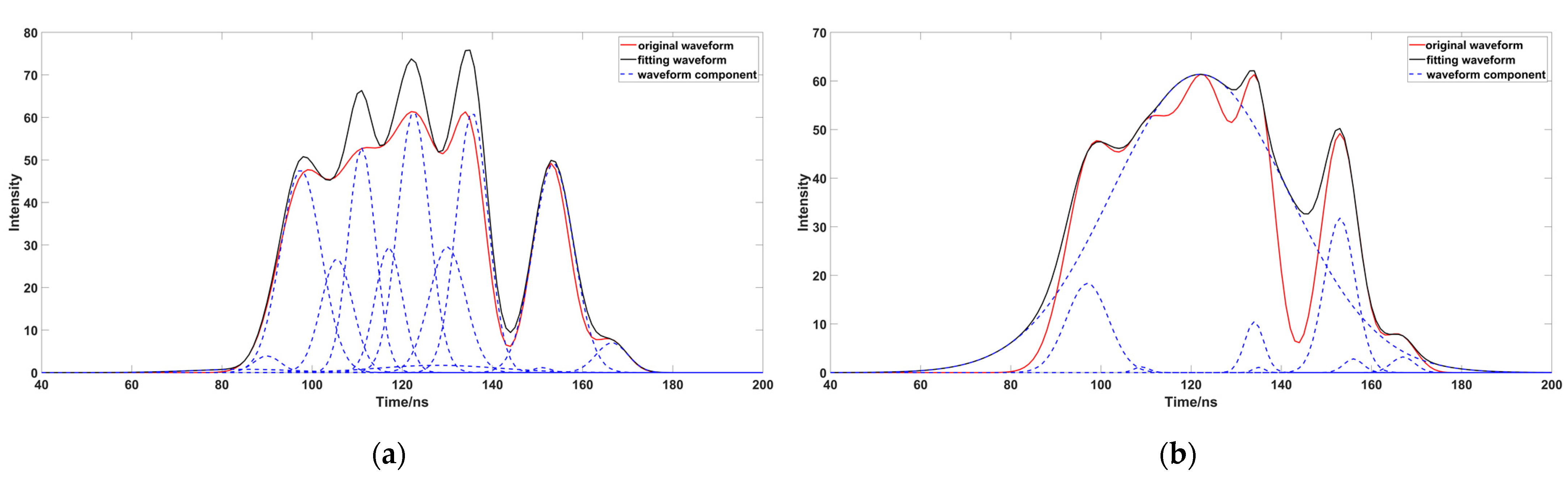
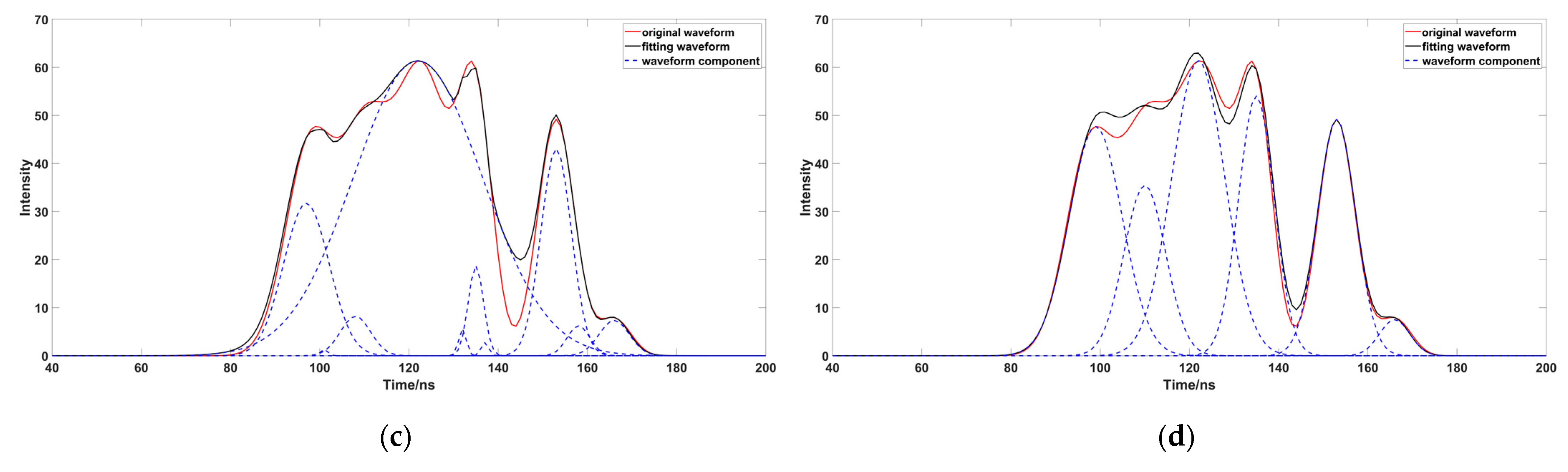
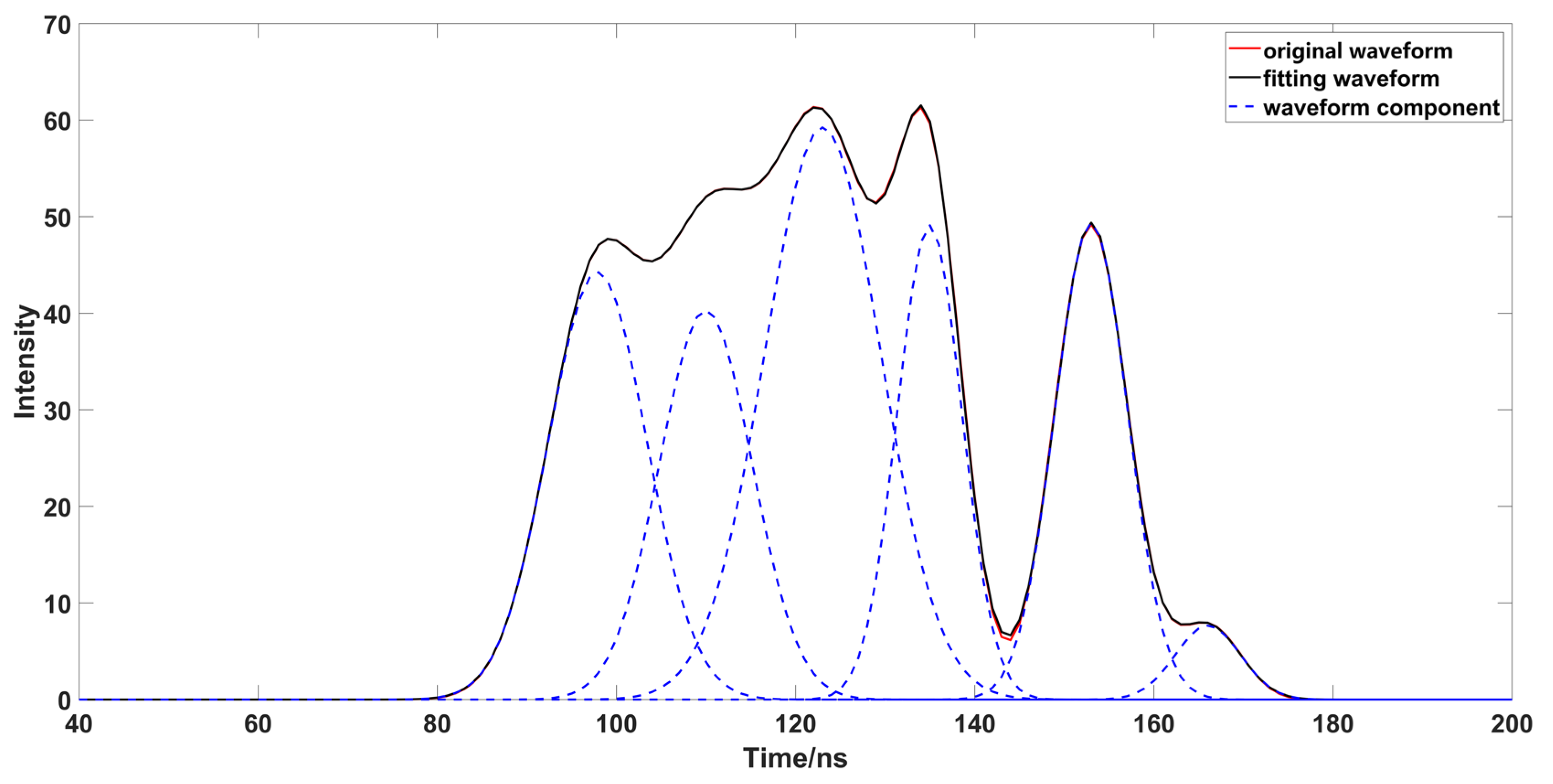
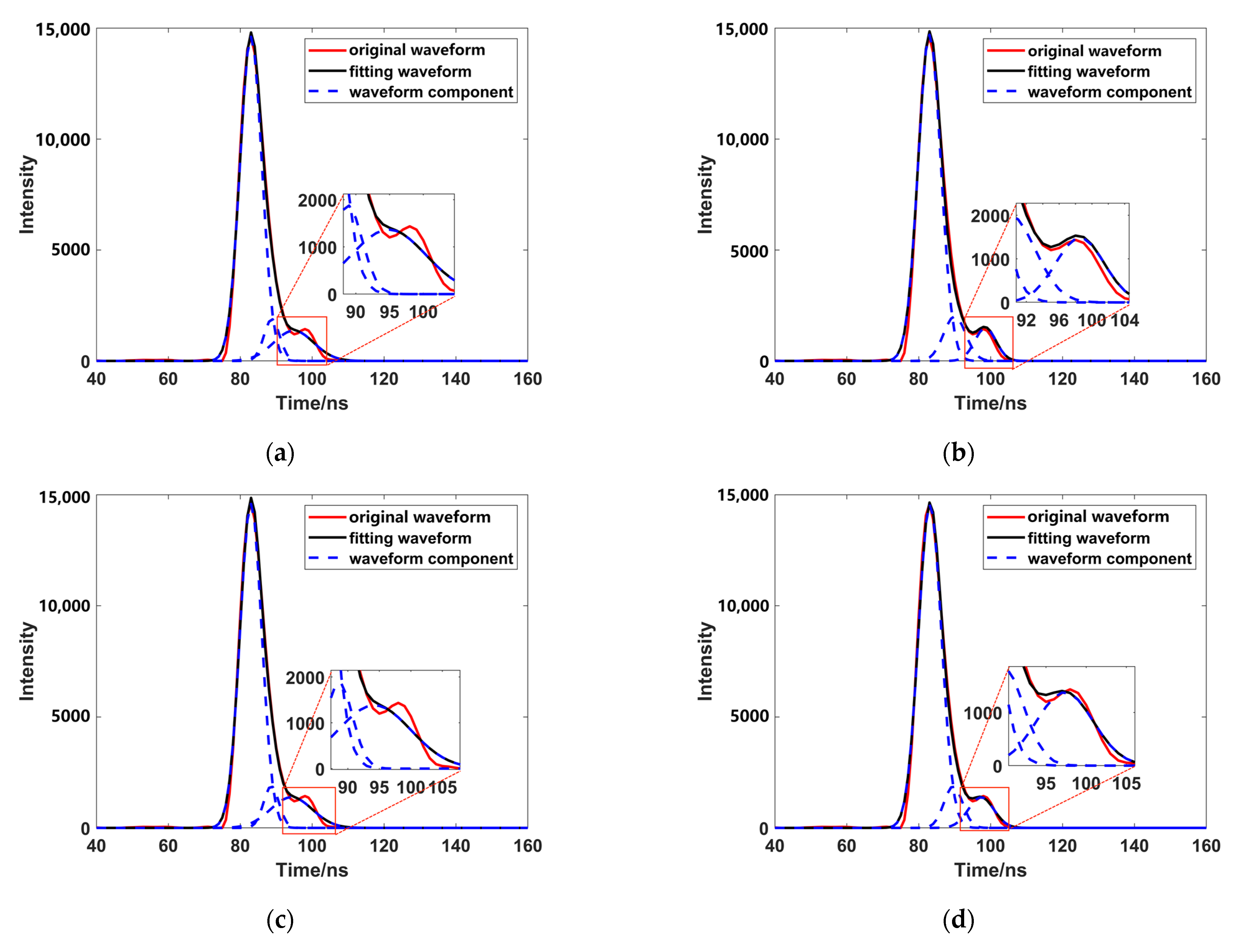
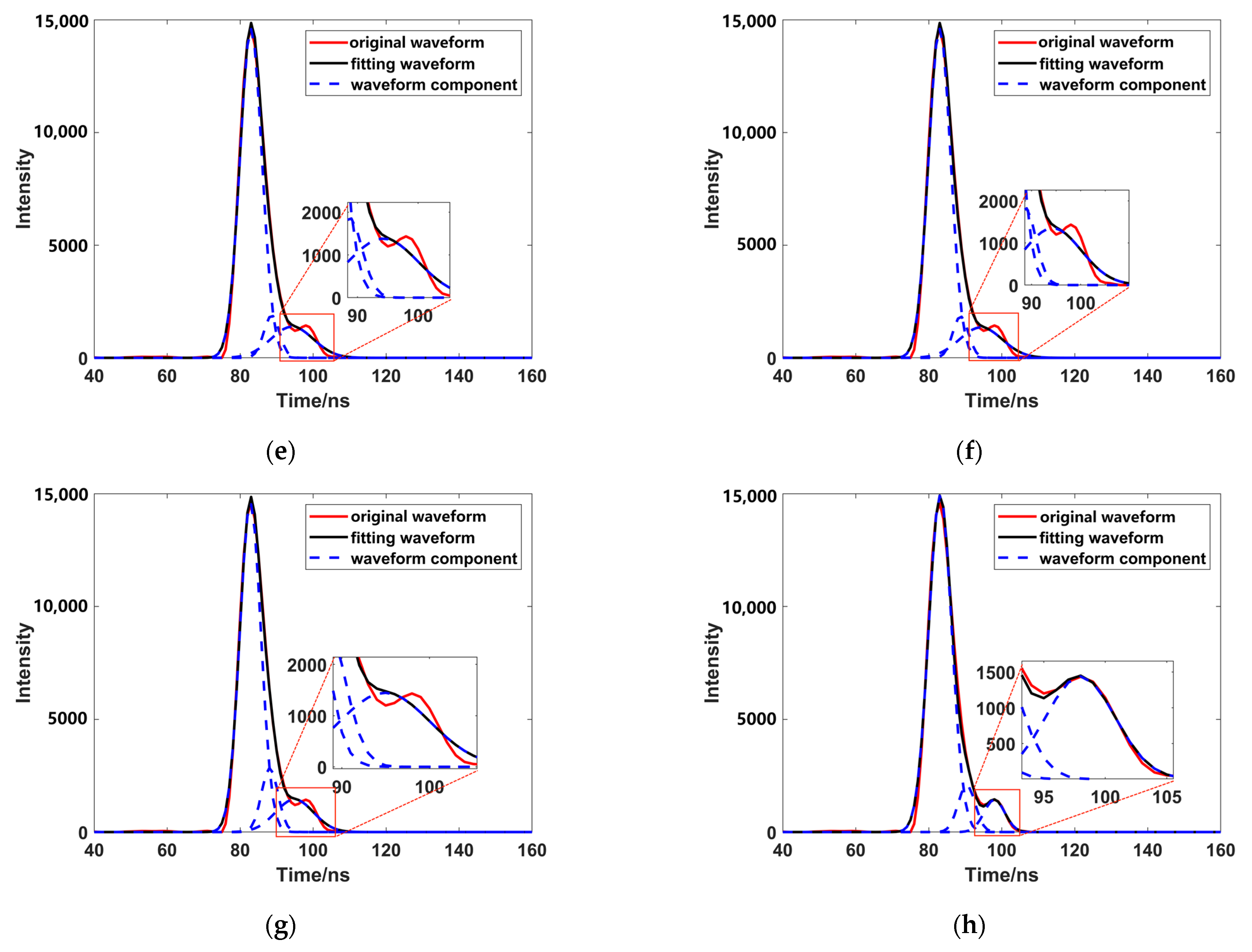
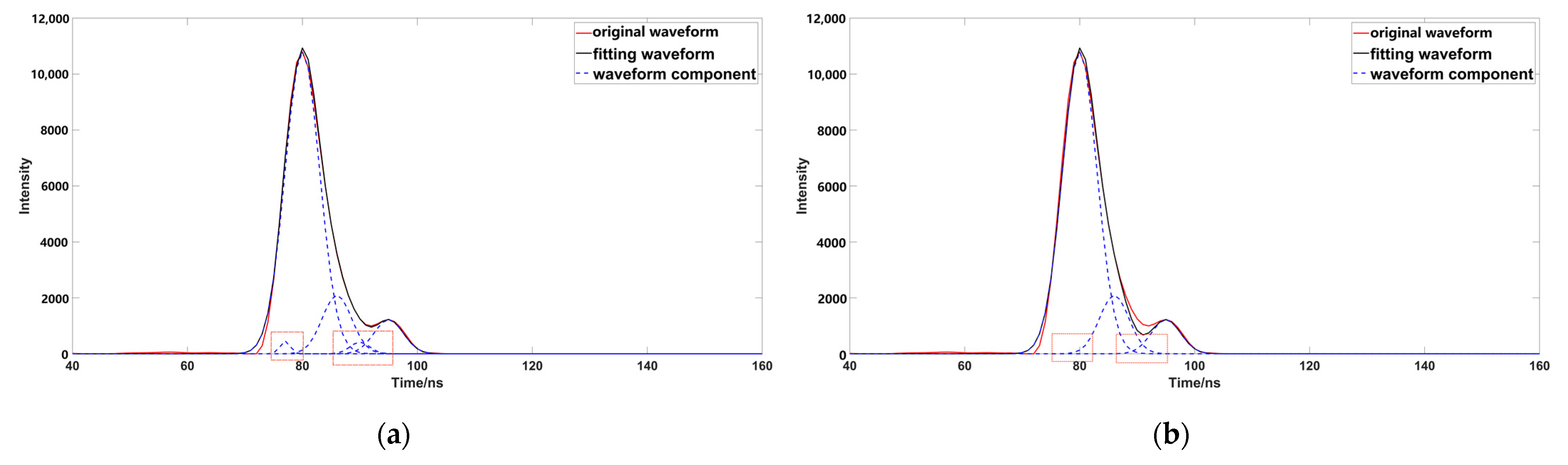
With the rapid development of Lidar technology, the use of Lidar for underwater terrain detection has become feasible. There is still a challenge in the process of signal resolution: the underwater laser echo signal is different to propagating in the air, and it is easy to produce weak waves and superimposed waves. However, existing waveform decomposition methods are not effective in processing these waveform signals, and the underwater waveform signal cannot be correctly decomposed, resulting in subsequent data-processing errors. To address these issues, this study used a drone equipped with a 532 nm laser to detect a pond as the study background. This paper proposes an improved inflection point selection decomposition method to estimate the parameter. By comparing it with other decomposition methods, we found that the RMSE is 2.544 and R2 is 0.995975, which is more stable and accurate. After estimating the parameters, this study used oscillating particle swarm optimization (OPSO) and the Levenberg–Marquardt algorithm (LM) to optimize the estimated parameters; the final results show that the method in this paper is closer to the original waveform. In order to verify the processing effect of the method on complex waveform, this paper decomposes and optimizes the simulated complex waveforms; the final RMSE is 0.0016, R2 is 1, and the Gaussian component after decomposition can fully represent the original waveform. This method is better than other decomposition methods in complex waveform decomposition, especially regarding weak waves and superimposed waves.
Keywords: laser radar; waveform solution; LM algorithm; underwater exploration laser radar; waveform solution; LM algorithm; underwater exploration