Communication

Lightweight LSTM-Based Adaptive CQI Feedback Scheme for IoT Devices

1
Department of Electronic Engineering, Sogang University, Seoul 04107, Republic of Korea
2
Department of Electrical and Computer Engineering, Queen’s University, Kingston, ON K7L 3N6, Canada
*
Author to whom correspondence should be addressed.
Sensors 2023, 23(10), 4929; https://doi.org/10.3390/s23104929
Submission received: 17 April 2023 / Revised: 17 May 2023 / Accepted: 18 May 2023 / Published: 20 May 2023
(This article belongs to the Special Issue Next-Generation Wireless Systems for the Internet of Things (IoT))

Abstract

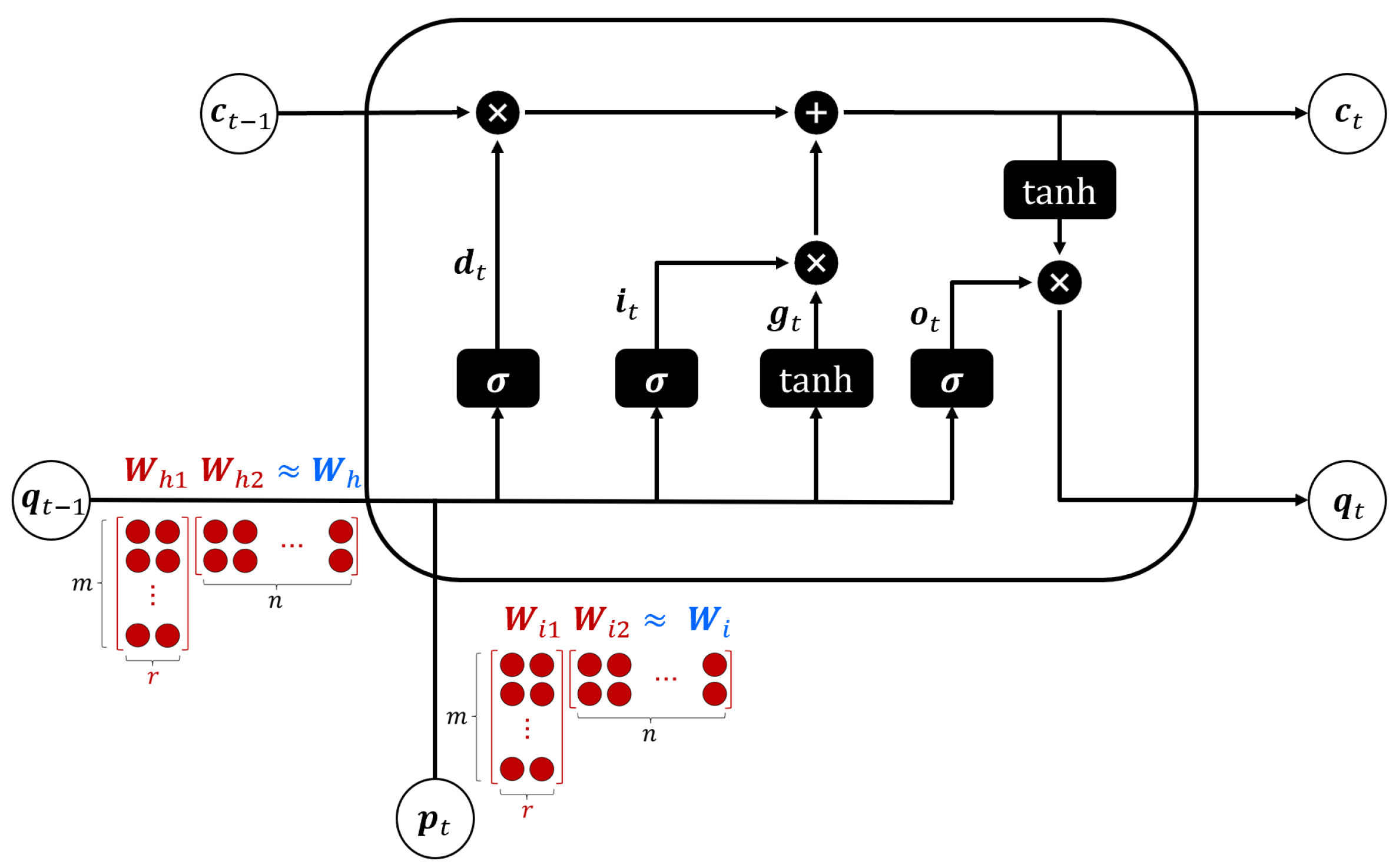
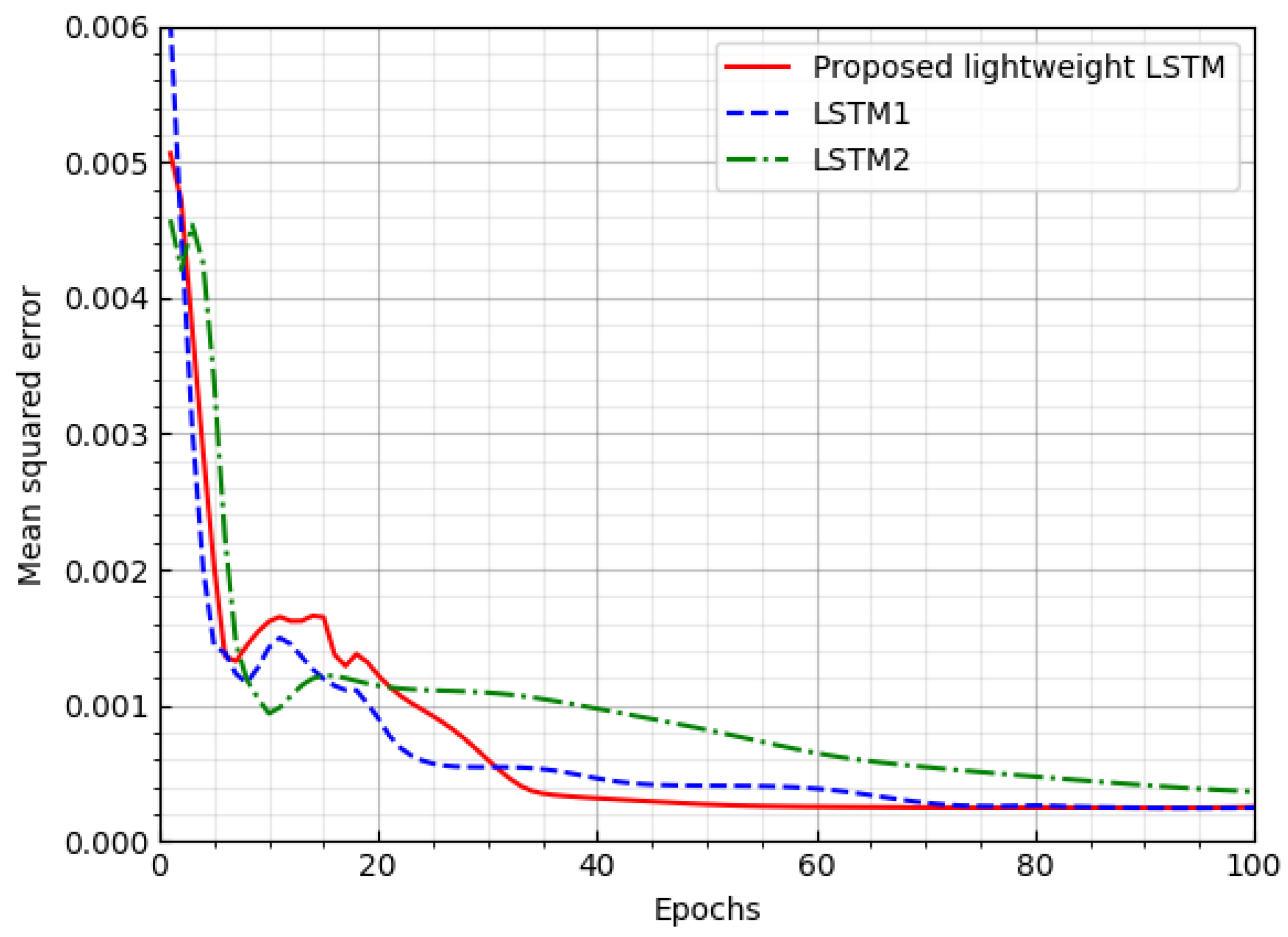
As the number of Internet of things (IoT) devices increases exponentially, scheduling and managing the radio resources for IoT devices has become more important. To efficiently allocate radio resources, the base station (BS) needs the channel state information (CSI) of devices every time. Hence, each device needs to periodically (or aperiodically) report its channel quality indicator (CQI) to the BS. The BS determines the modulation and coding scheme (MCS) based on the CQI reported by the IoT device. However, the more a device reports its CQI, the more the feedback overhead increases. In this paper, we propose a long short-term memory (LSTM)-based CQI feedback scheme, where the IoT device aperiodically reports its CQI relying on an LSTM-based channel prediction. Additionally, because the memory capacity of IoT devices is generally small, the complexity of the machine learning model must be reduced. Hence, we propose a lightweight LSTM model to reduce the complexity. The simulation results show that the proposed lightweight LSTM-based CSI scheme dramatically reduces the feedback overhead compared with that of the existing periodic feedback scheme. Moreover, the proposed lightweight LSTM model significantly reduces the complexity without sacrificing performance.
Keywords: channel quality indicator feedback; long short-term memory; lightweight model; modulation and coding scheme; feedback overhead channel quality indicator feedback; long short-term memory; lightweight model; modulation and coding scheme; feedback overhead