Article

Progressive Learning of a Multimodal Classifier Accounting for Different Modality Combinations

Guardian Robot Project, RIKEN, Seika-cho, Kyoto 619-0288, Japan
*
Author to whom correspondence should be addressed.
Sensors 2023, 23(10), 4666; https://doi.org/10.3390/s23104666
Submission received: 31 March 2023 / Revised: 9 May 2023 / Accepted: 9 May 2023 / Published: 11 May 2023
(This article belongs to the Special Issue Advanced-Sensors-Based Emotion Sensing and Recognition)

Abstract

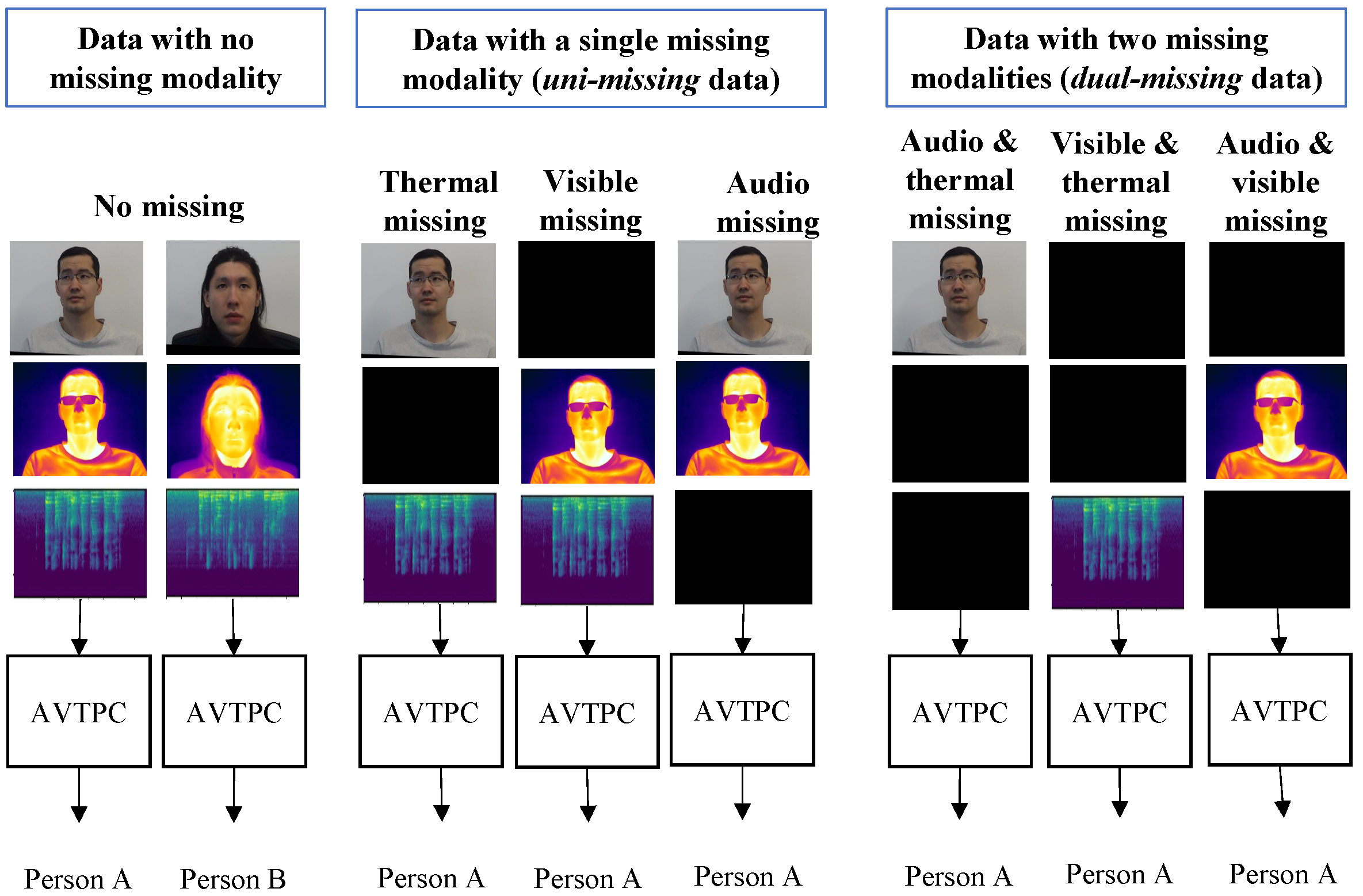
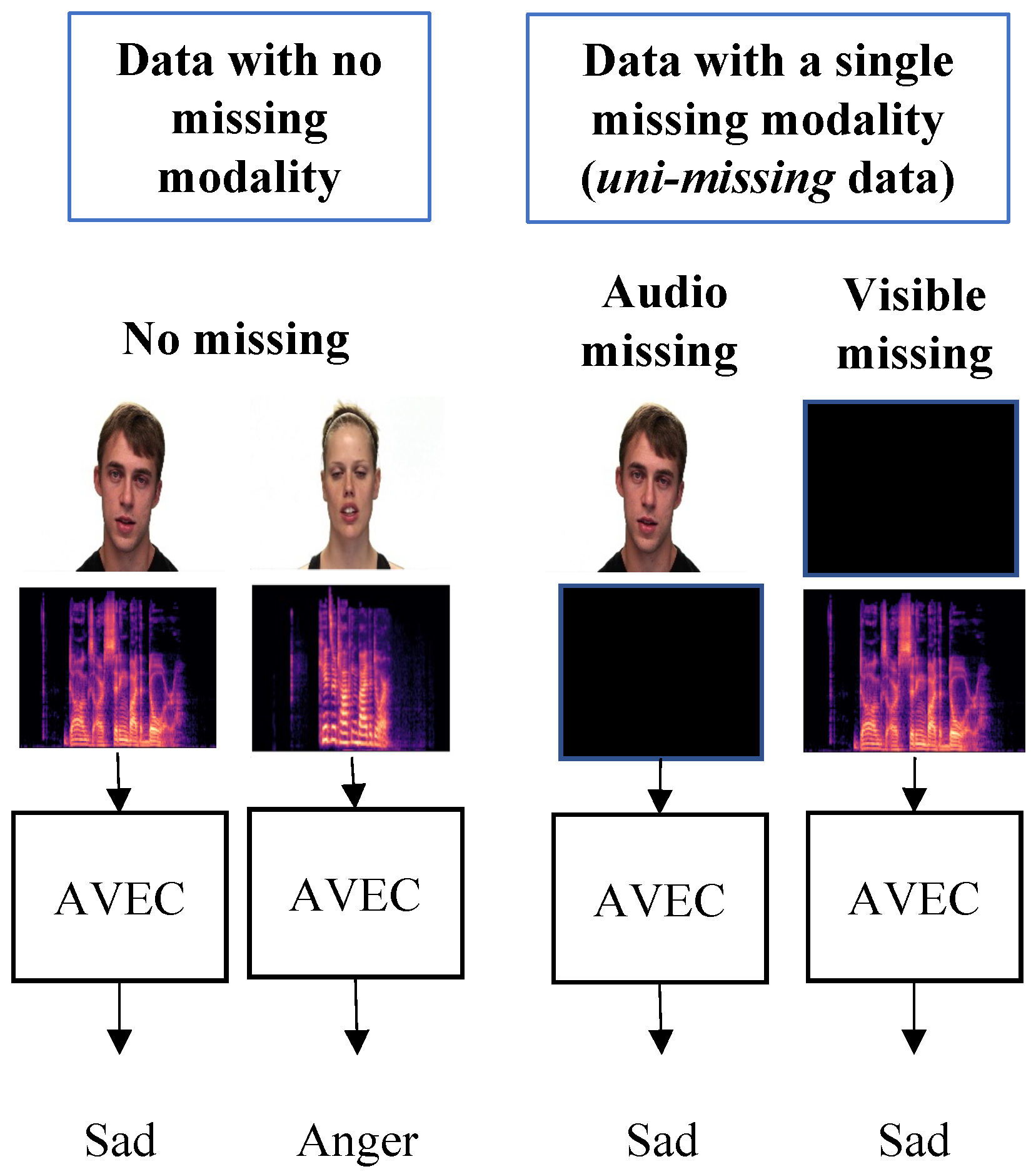
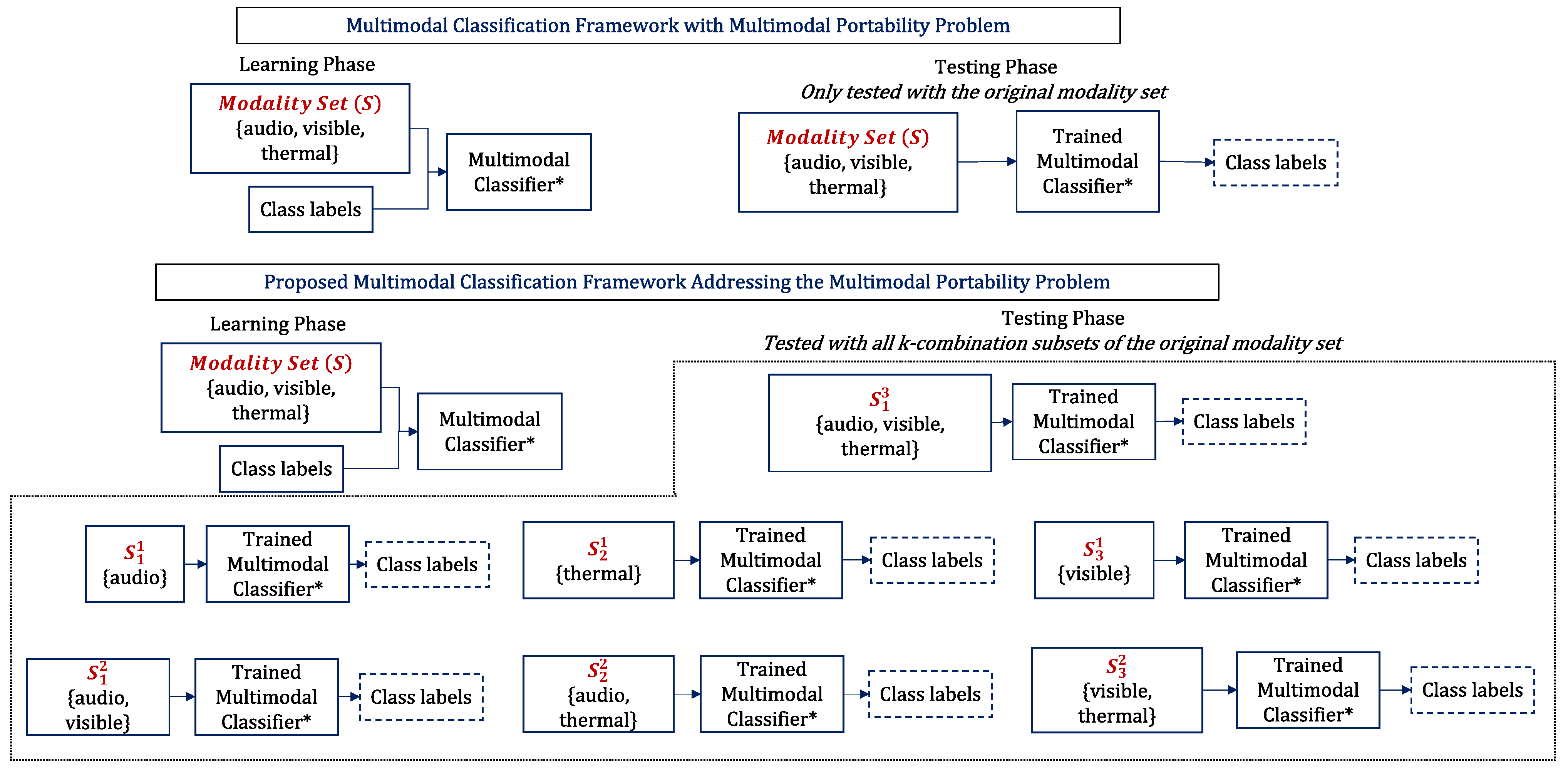
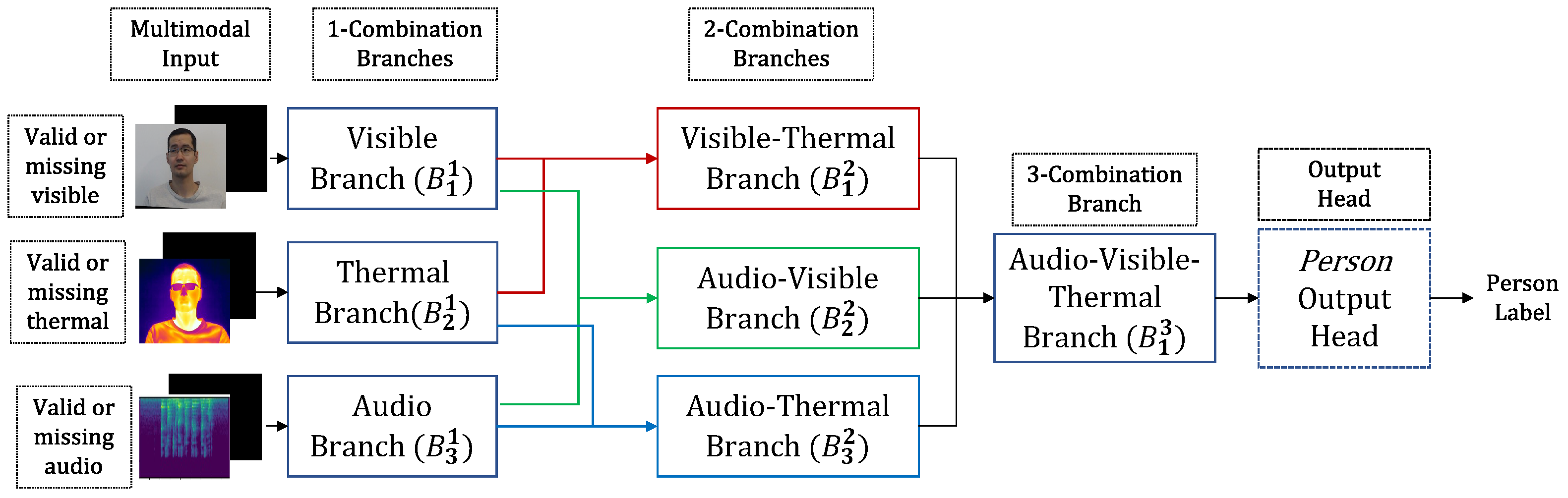
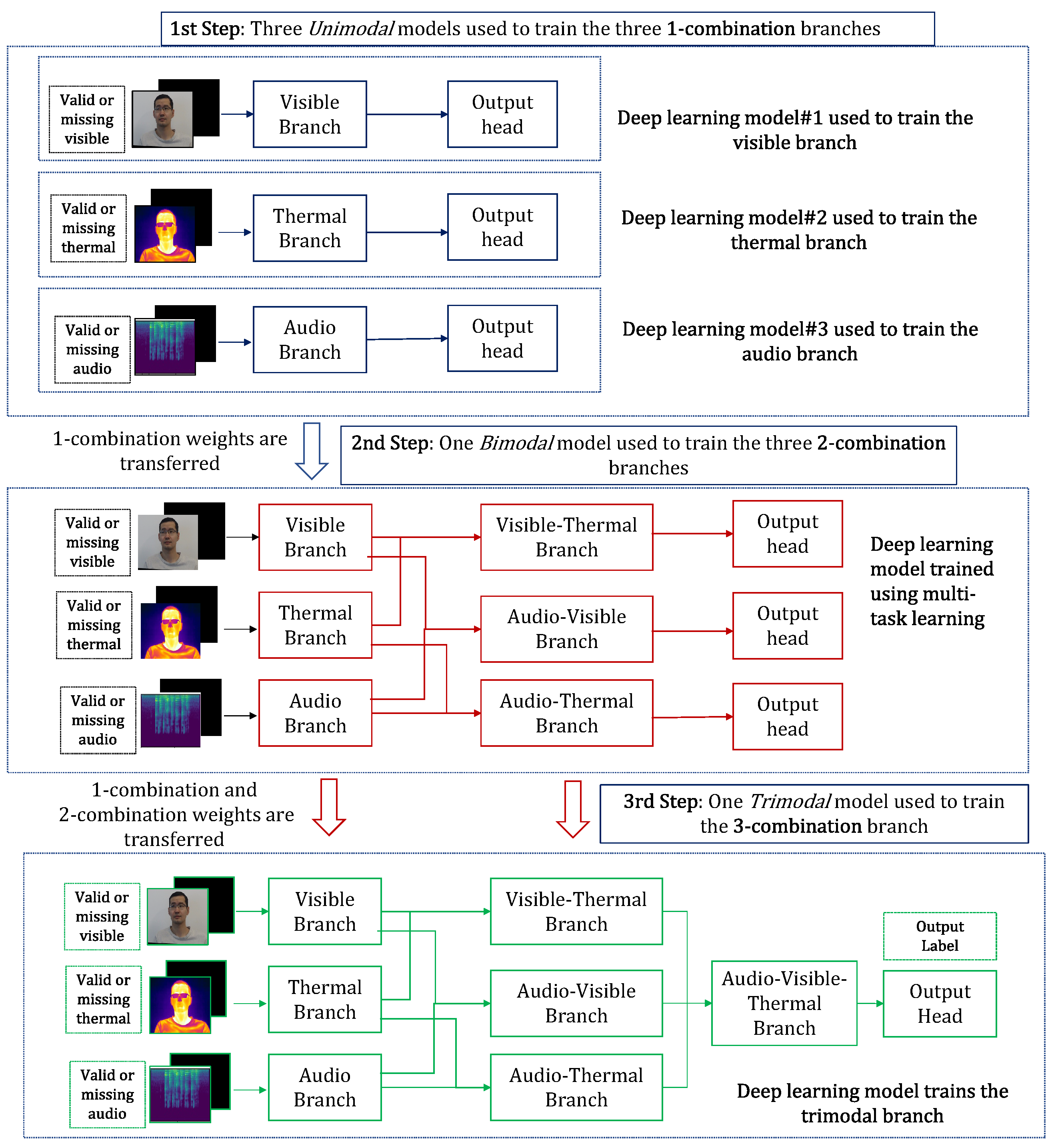
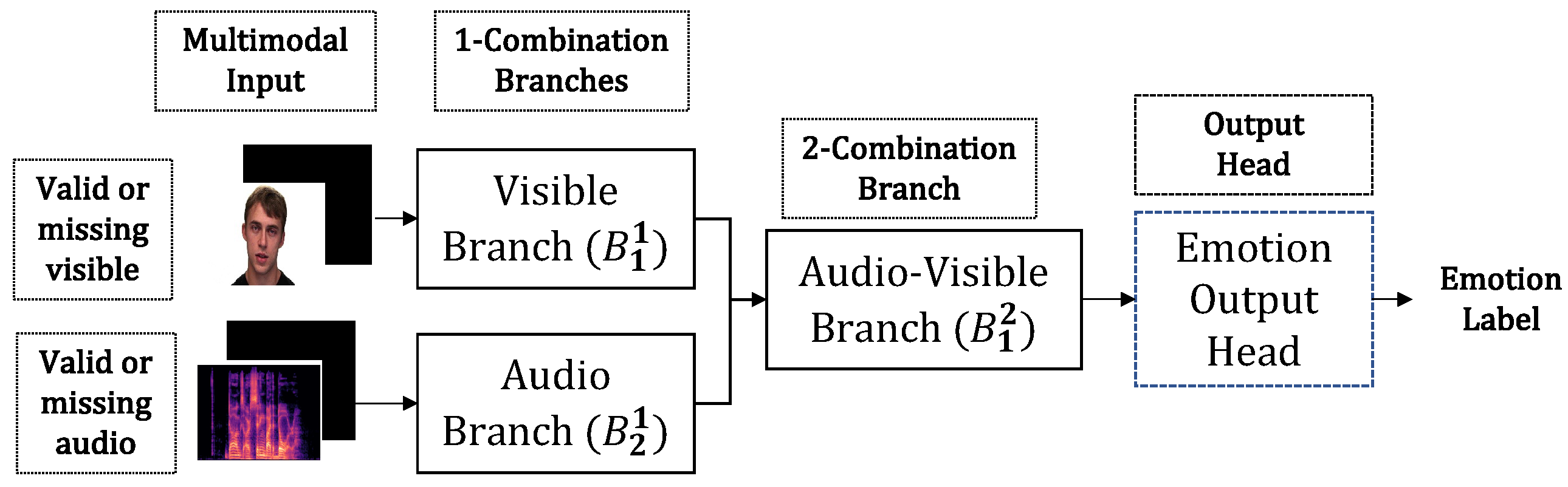
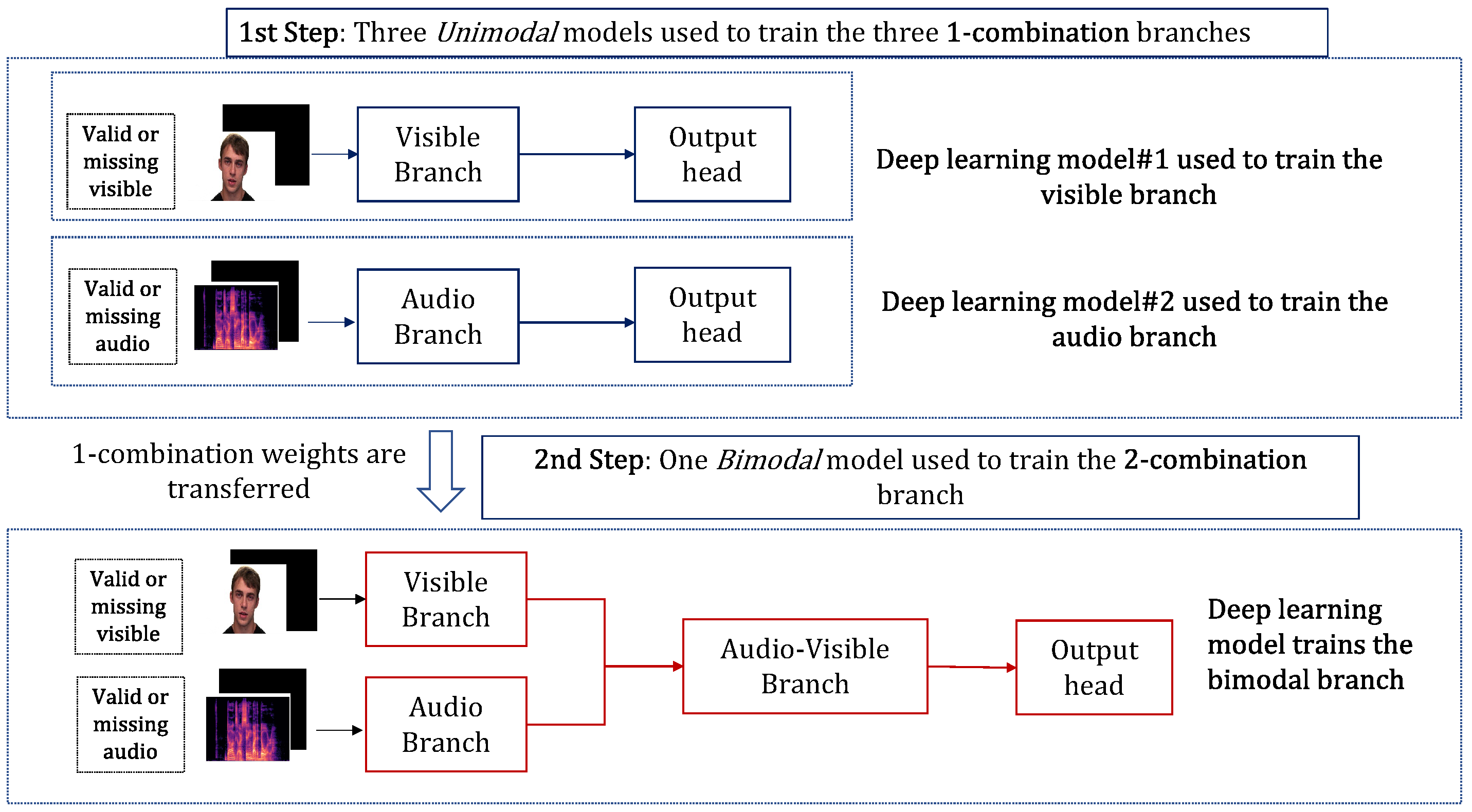
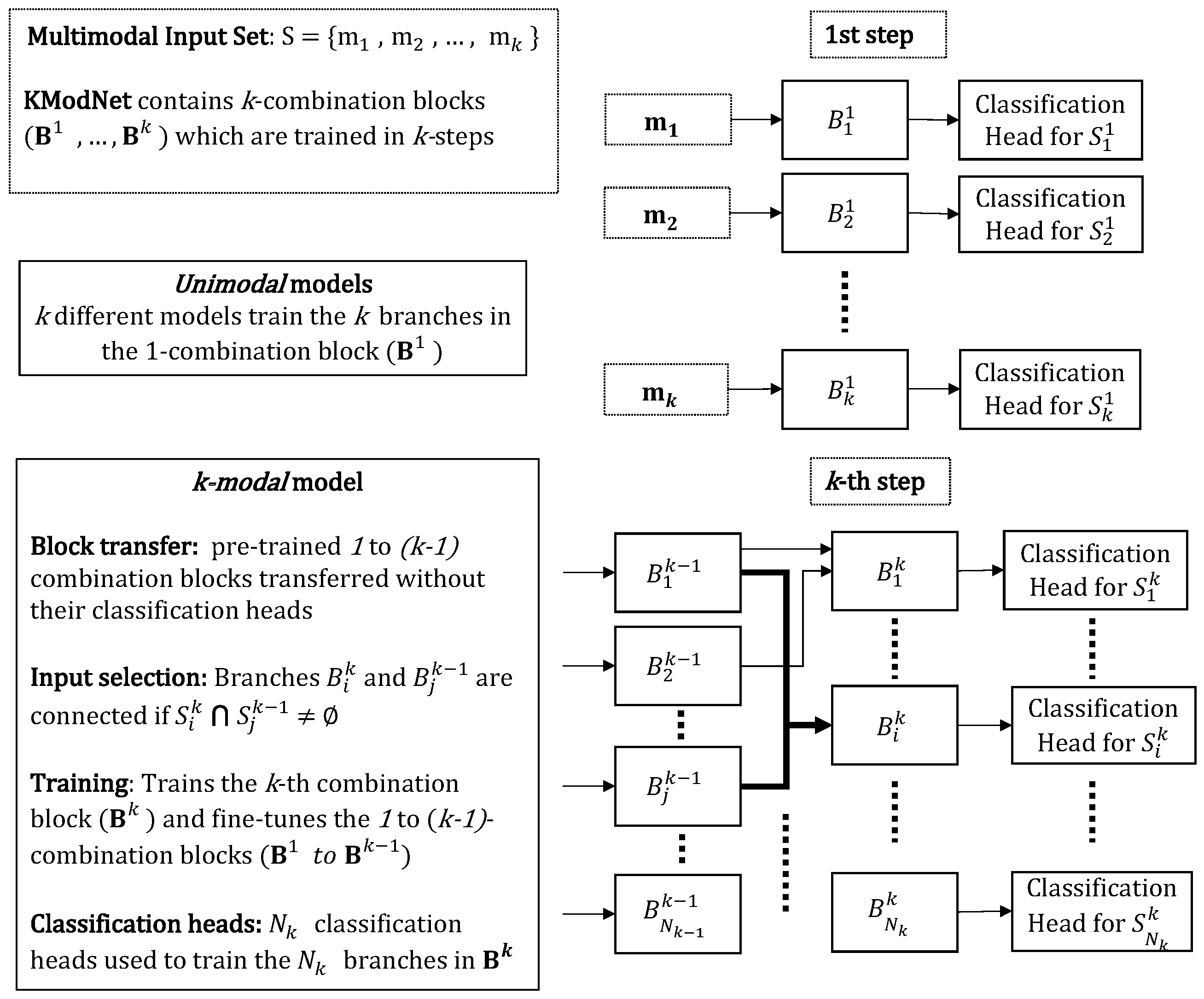
In classification tasks, such as face recognition and emotion recognition, multimodal information is used for accurate classification. Once a multimodal classification model is trained with a set of modalities, it estimates the class label by using the entire modality set. A trained classifier is typically not formulated to perform classification for various subsets of modalities. Thus, the model would be useful and portable if it could be used for any subset of modalities. We refer to this problem as the multimodal portability problem. Moreover, in the multimodal model, classification accuracy is reduced when one or more modalities are missing. We term this problem the missing modality problem. This article proposes a novel deep learning model, termed KModNet, and a novel learning strategy, termed progressive learning, to simultaneously address missing modality and multimodal portability problems. KModNet, formulated with the transformer, contains multiple branches corresponding to different k-combinations of the modality set S. KModNet is trained using a multi-step progressive learning framework, where the k-th step uses a k-modal model to train different branches up to the k-th combination branch. To address the missing modality problem, the training multimodal data is randomly ablated. The proposed learning framework is formulated and validated using two multimodal classification problems: audio-video-thermal person classification and audio-video emotion classification. The two classification problems are validated using the Speaking Faces, RAVDESS, and SAVEE datasets. The results demonstrate that the progressive learning framework enhances the robustness of multimodal classification, even under the conditions of missing modalities, while being portable to different modality subsets.
Keywords: multimodal learning; person classification; emotion classification; missing modality; multimodal portability; sensor fusion multimodal learning; person classification; emotion classification; missing modality; multimodal portability; sensor fusion