Article

A UWB-Based Lighter-Than-Air Indoor Robot for User-Centered Interactive Applications

Center for Healthcare Robotics, School of Integrated Technology, Gwangju Institute of Science and Technology (GIST), Gwangju 61005, Korea
*
Author to whom correspondence should be addressed.
These authors contributed equally to this work.
Sensors 2022, 22(6), 2093; https://doi.org/10.3390/s22062093
Submission received: 14 January 2022 / Revised: 21 February 2022 / Accepted: 6 March 2022 / Published: 8 March 2022

Abstract

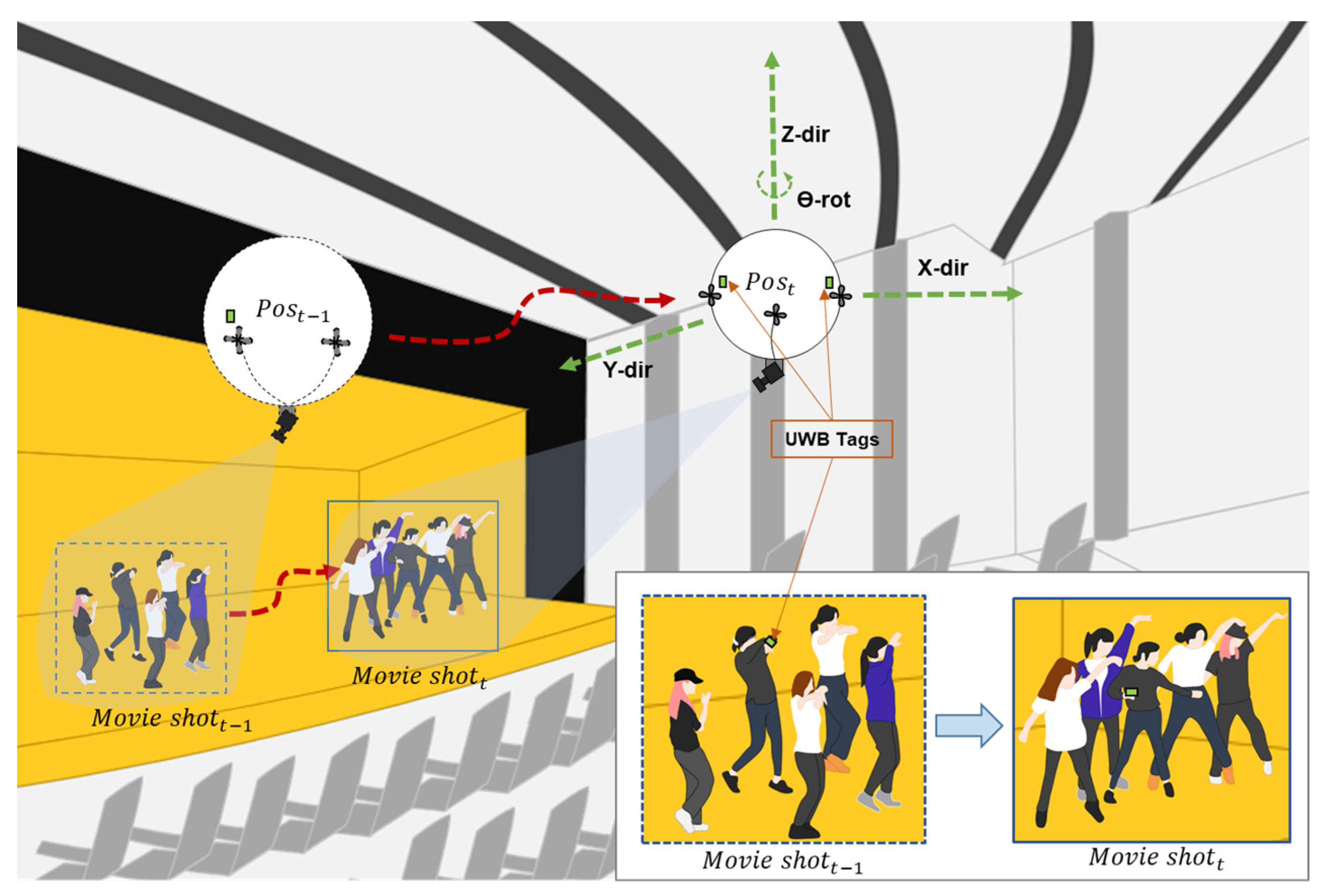
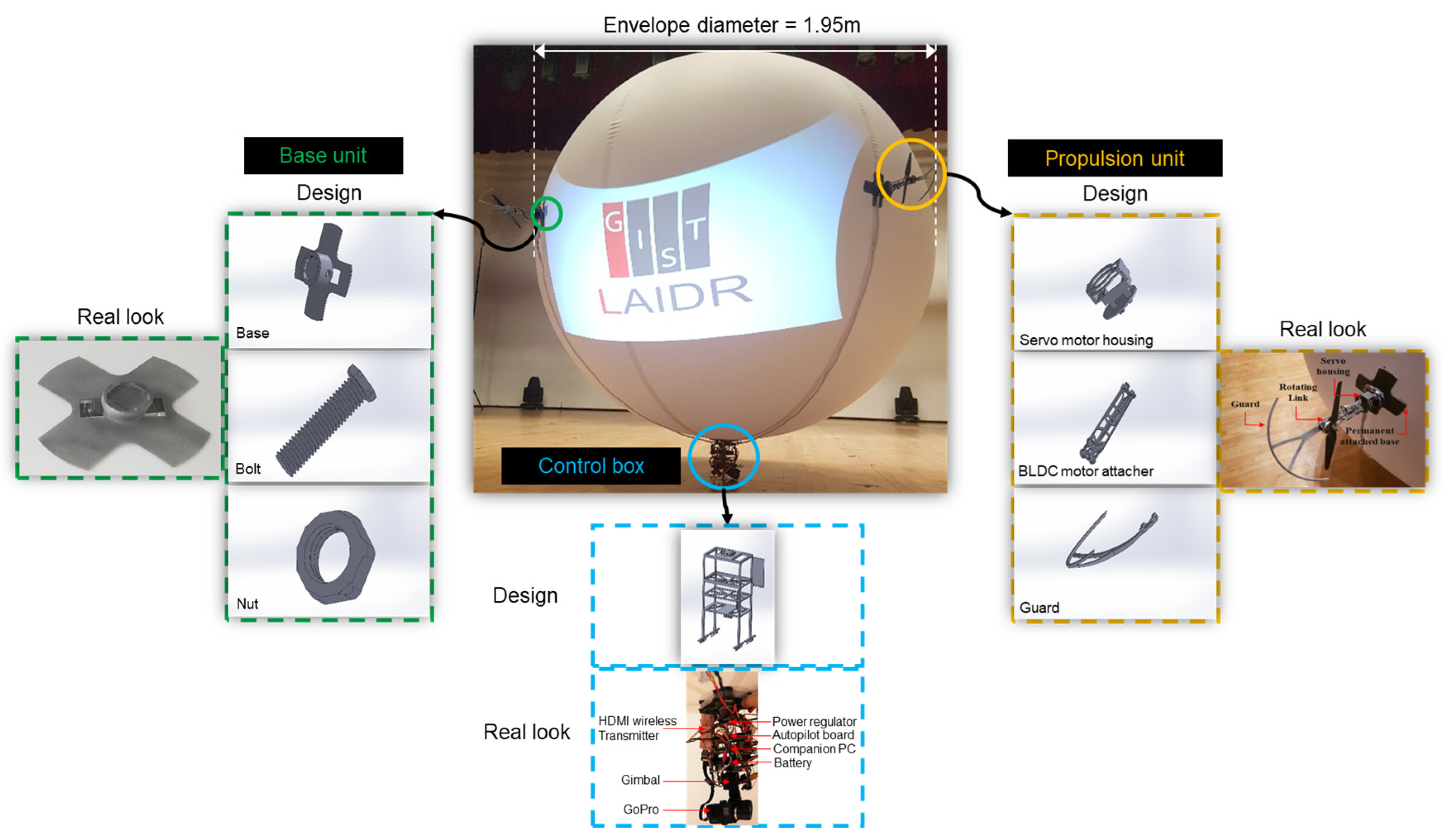
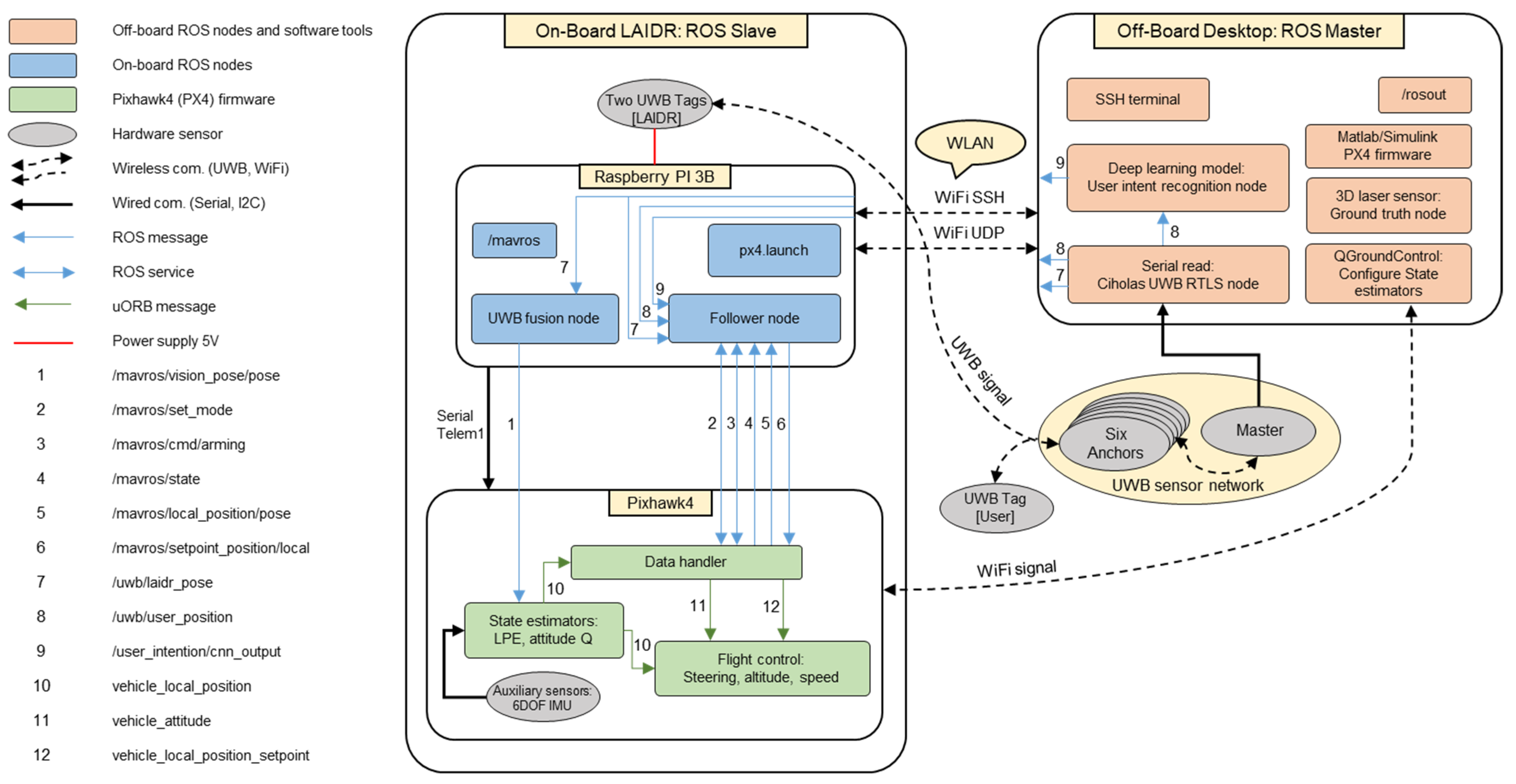
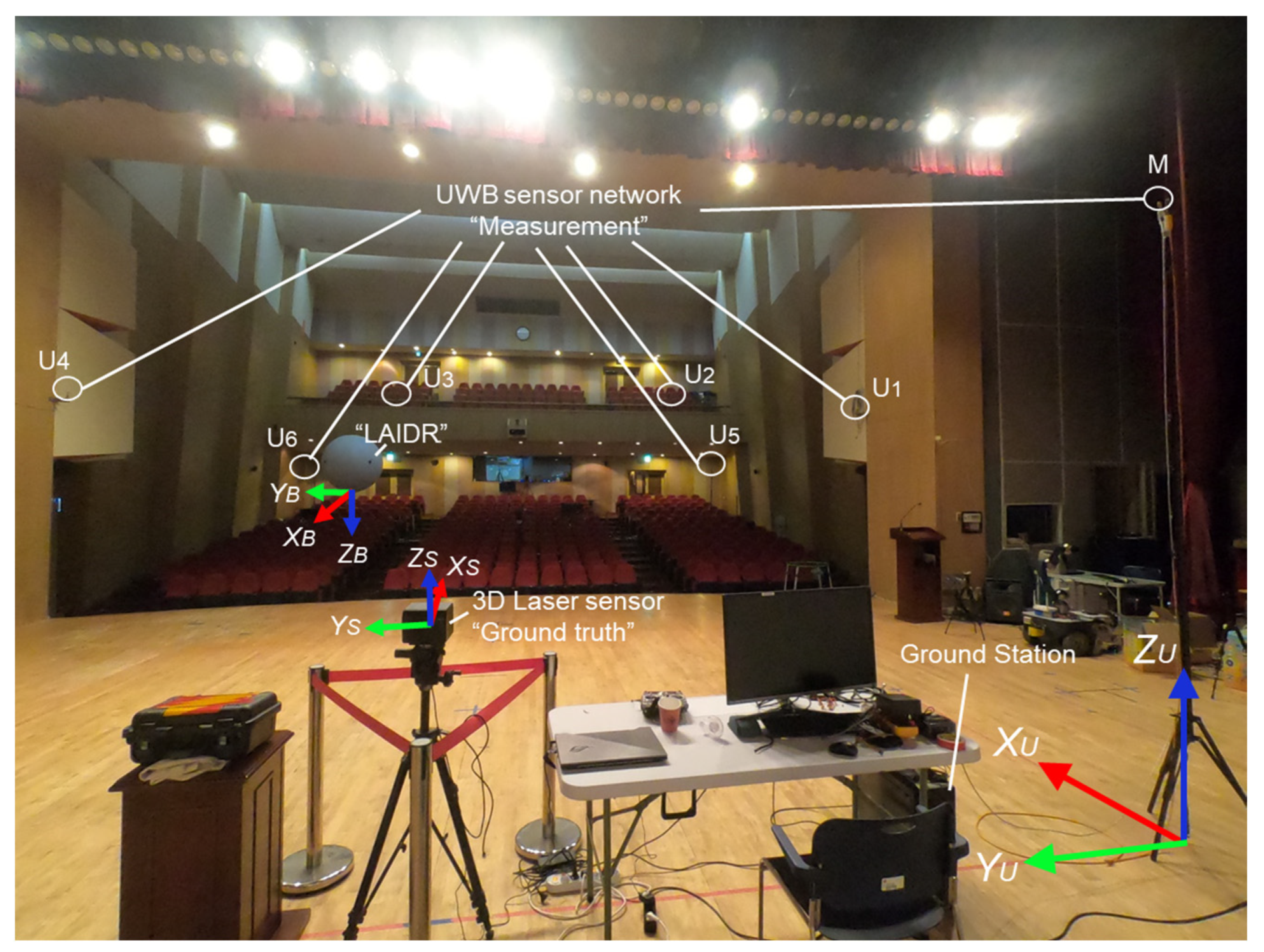
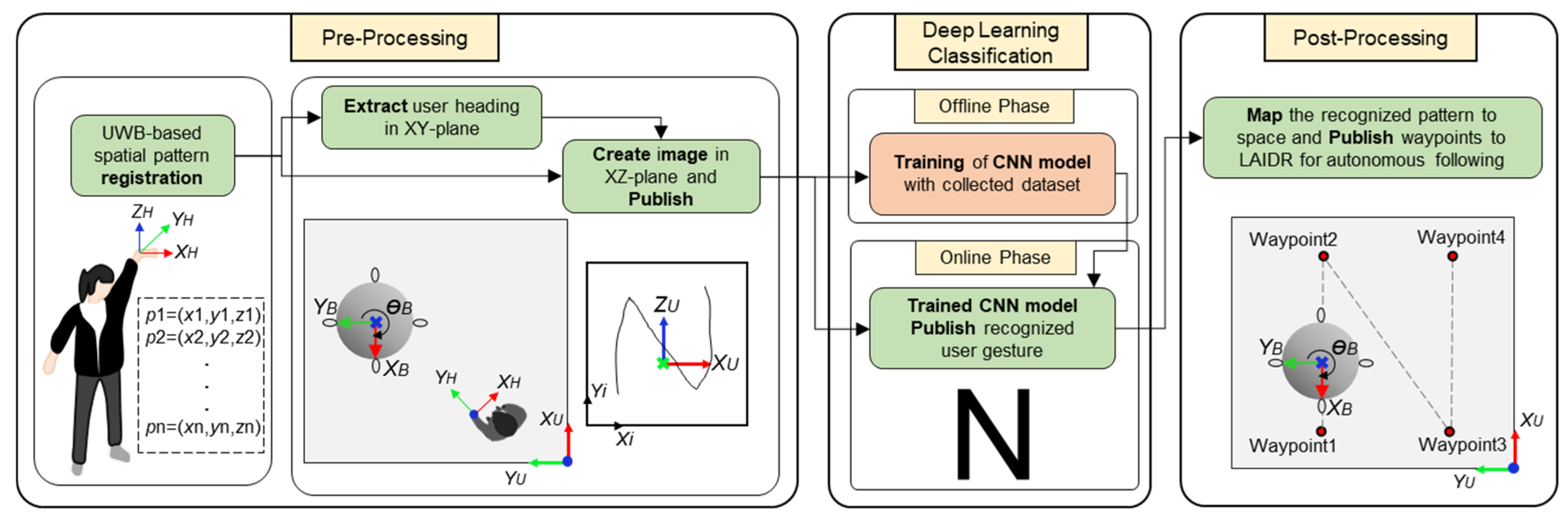
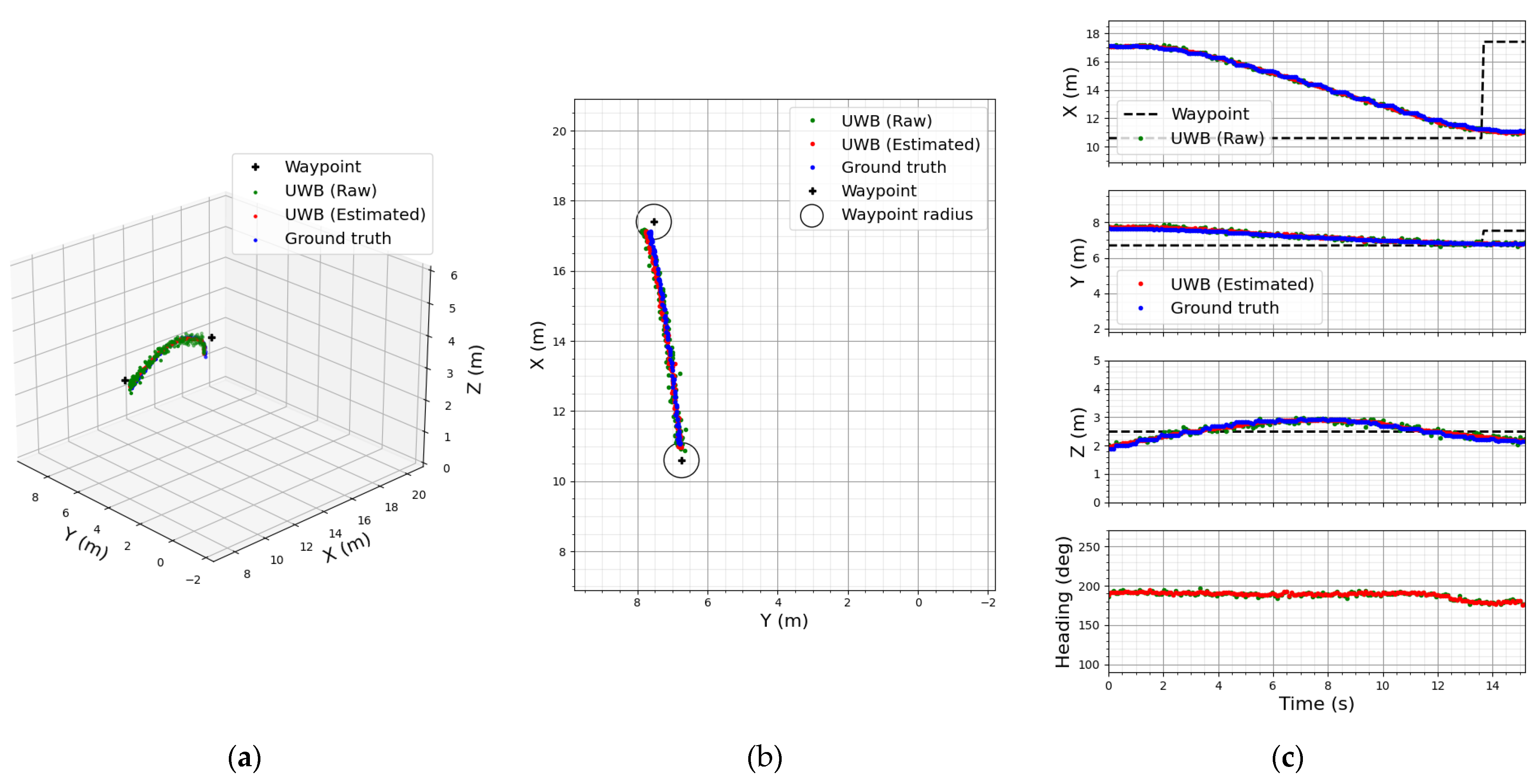
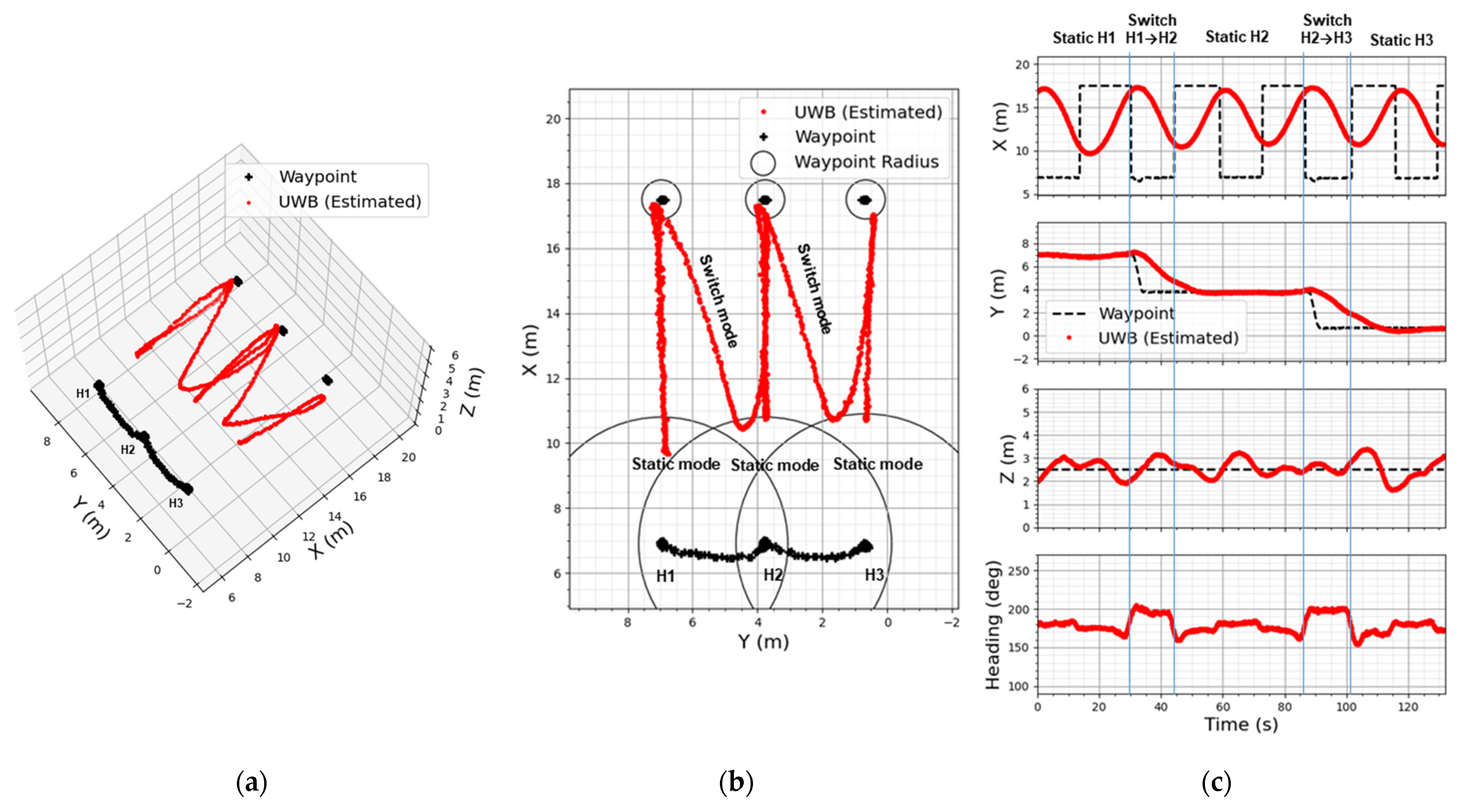
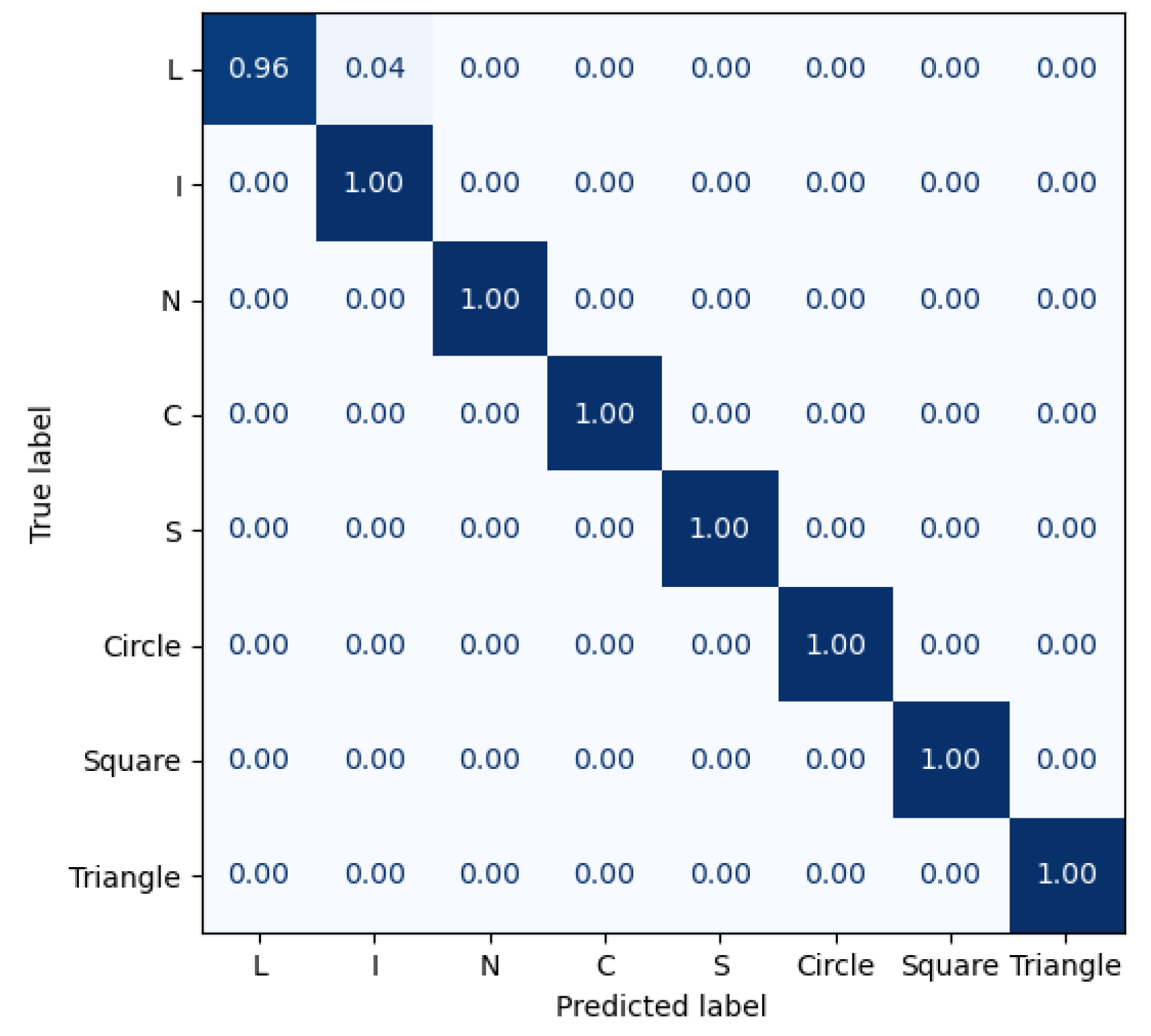
Features such as safety and longer flight times render lighter-than-air robots strong candidates for indoor navigation applications involving people. However, the existing interactive mobility solutions using such robots lack the capability to follow a long-distance user in a relatively larger indoor space. At the same time, the tracking data delivered to these robots are sensitive to uncertainties in indoor environments such as varying intensities of light and electromagnetic field disturbances. Regarding the above shortcomings, we proposed an ultra-wideband (UWB)-based lighter-than-air indoor robot for user-centered interactive applications. We developed the data processing scheme over a robot operating system (ROS) framework to accommodate the robot’s integration needs for a user-centered interactive application. In order to explore the user interaction with the robot at a long-distance, the dual interactions (i.e., user footprint following and user intention recognition) were proposed by equipping the user with a hand-held UWB sensor. Finally, experiments were conducted inside a professional arena to validate the robot’s pose tracking in which 3D positioning was compared with the 3D laser sensor, and to reveal the applicability of the user-centered autonomous following of the robot according to the dual interactions.
Keywords: autonomous vehicle; control; human–robot interaction; indoor tracking; UWB sensor; wearables autonomous vehicle; control; human–robot interaction; indoor tracking; UWB sensor; wearables