Article

Sym3DNet: Symmetric 3D Prior Network for Single-View 3D Reconstruction
Department of Computer Science and Engineering, Kyung Hee University, Giheung-gu, Yongin-si 17104, Gyeonggi-do, Korea
*
Author to whom correspondence should be addressed.
Sensors 2022, 22(2), 518; https://doi.org/10.3390/s22020518
Submission received: 14 December 2021 / Revised: 30 December 2021 / Accepted: 4 January 2022 / Published: 11 January 2022
(This article belongs to the Collection Robotics and 3D Computer Vision)

Abstract

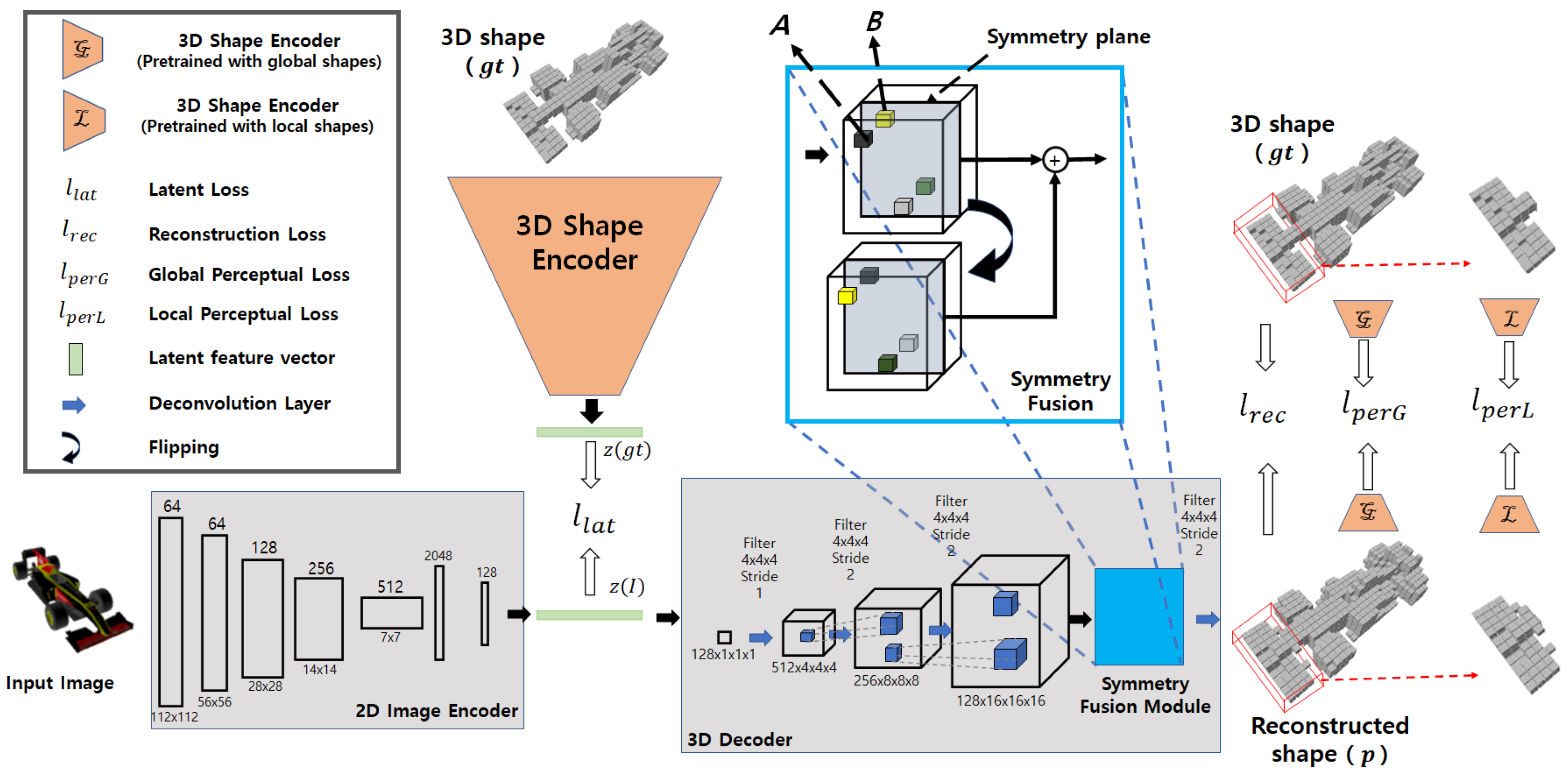
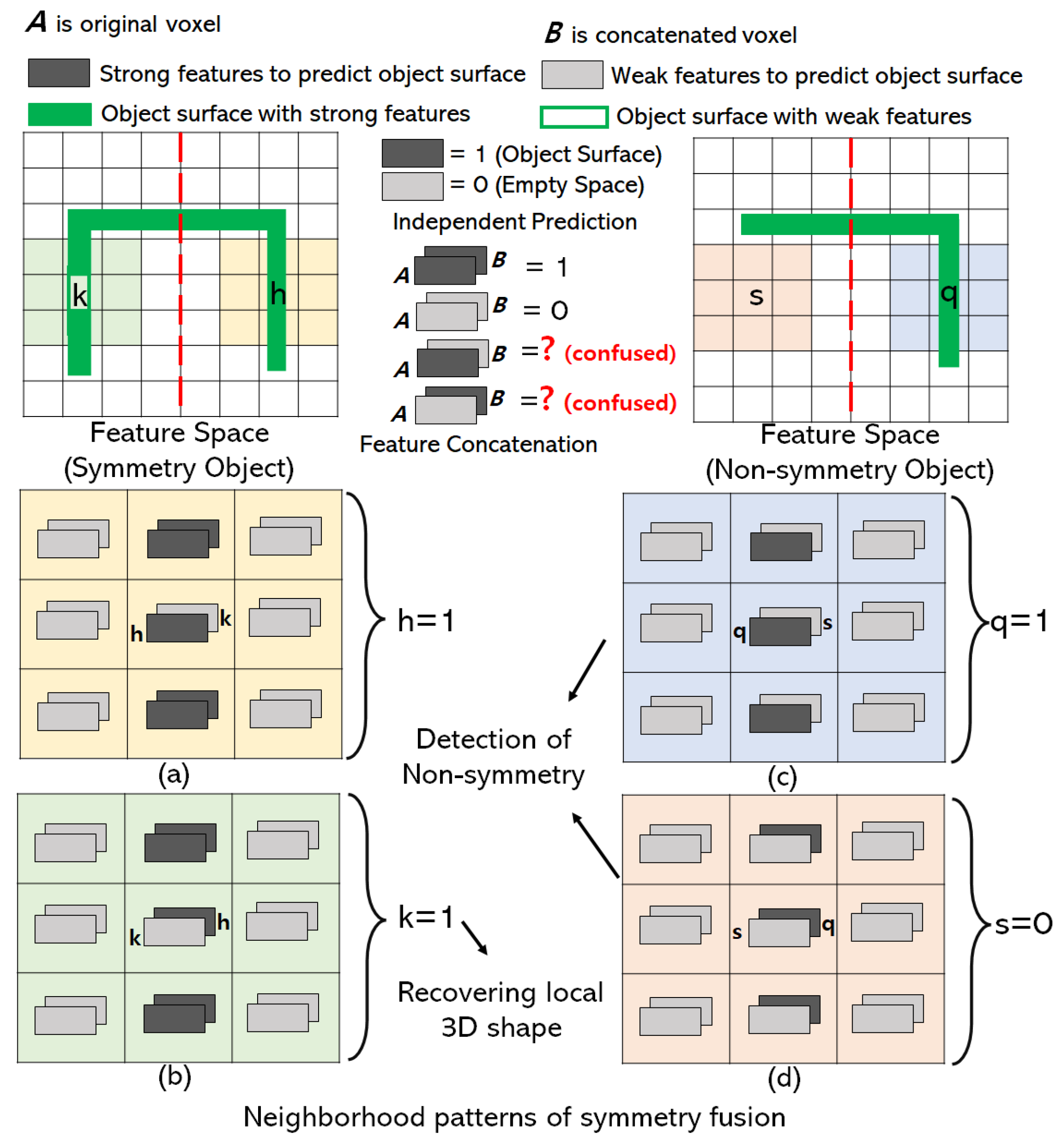
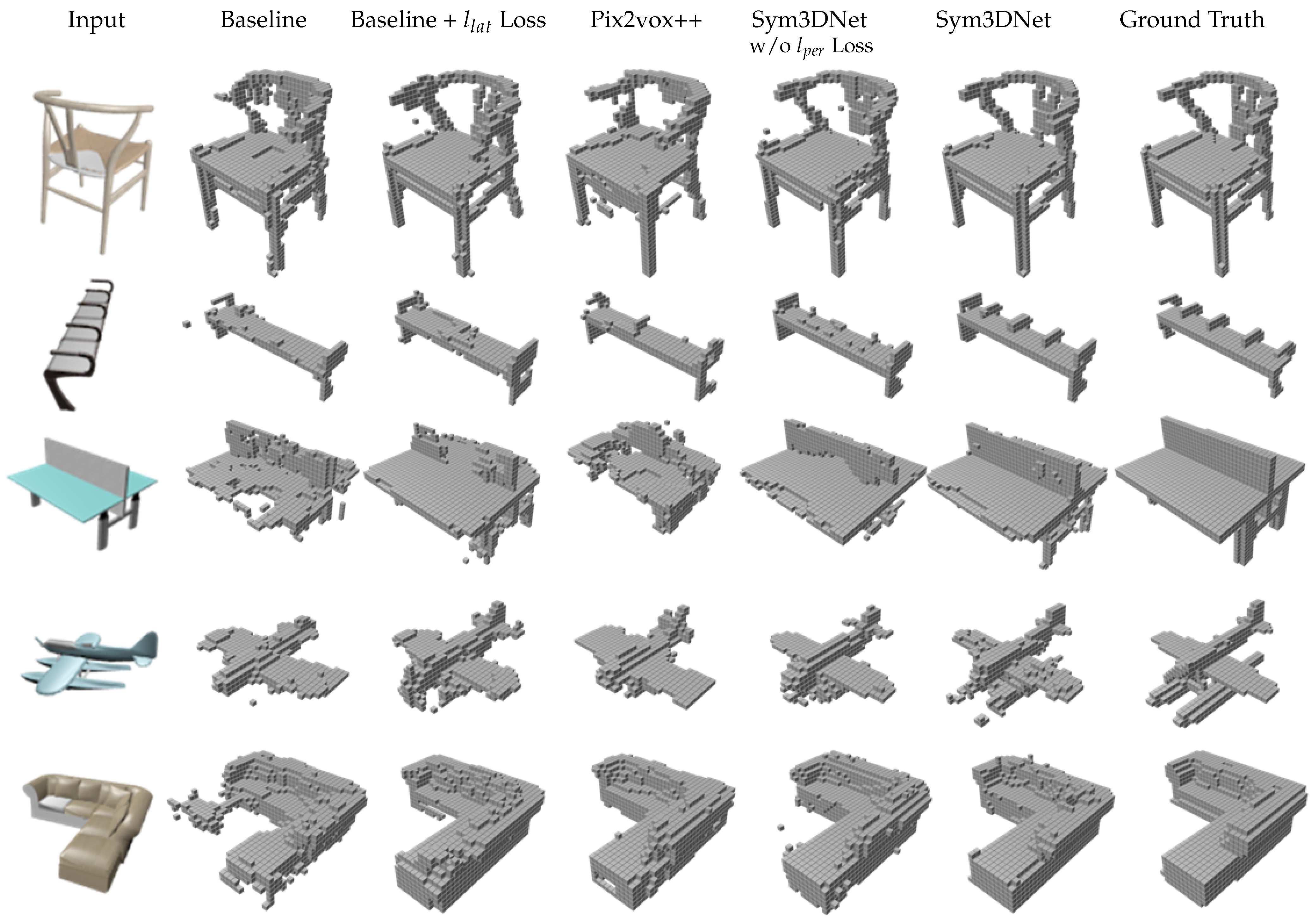
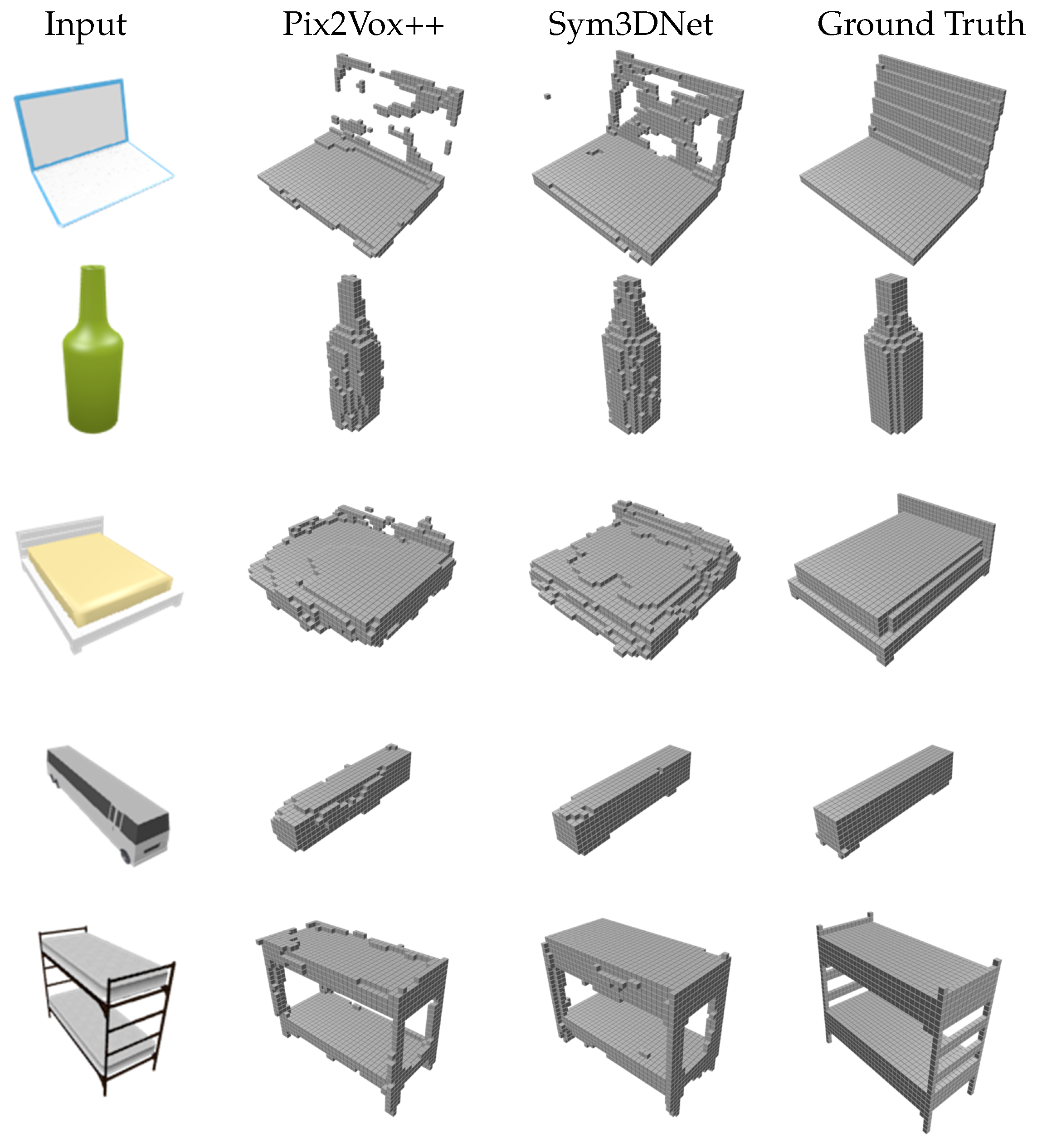
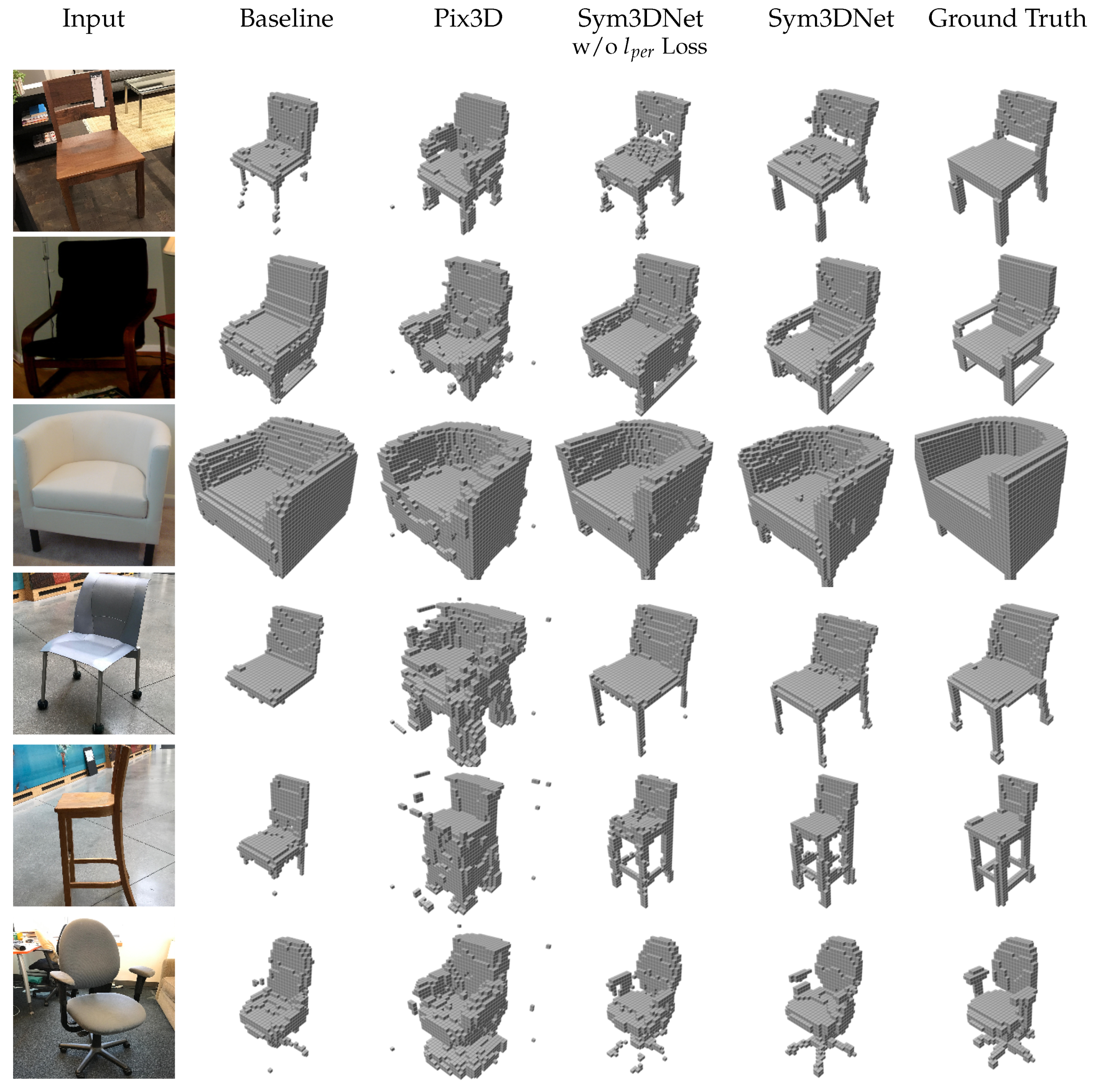
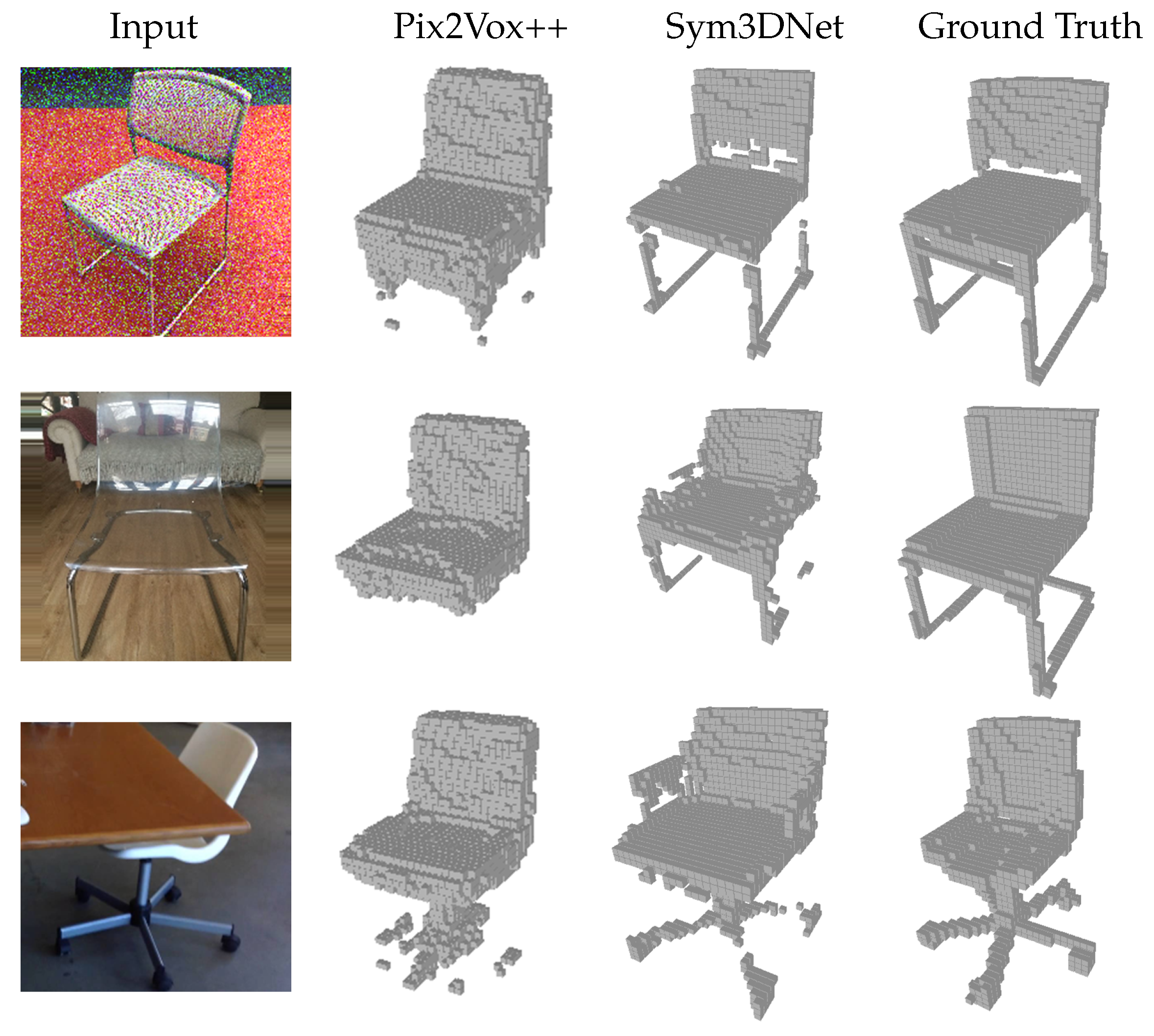
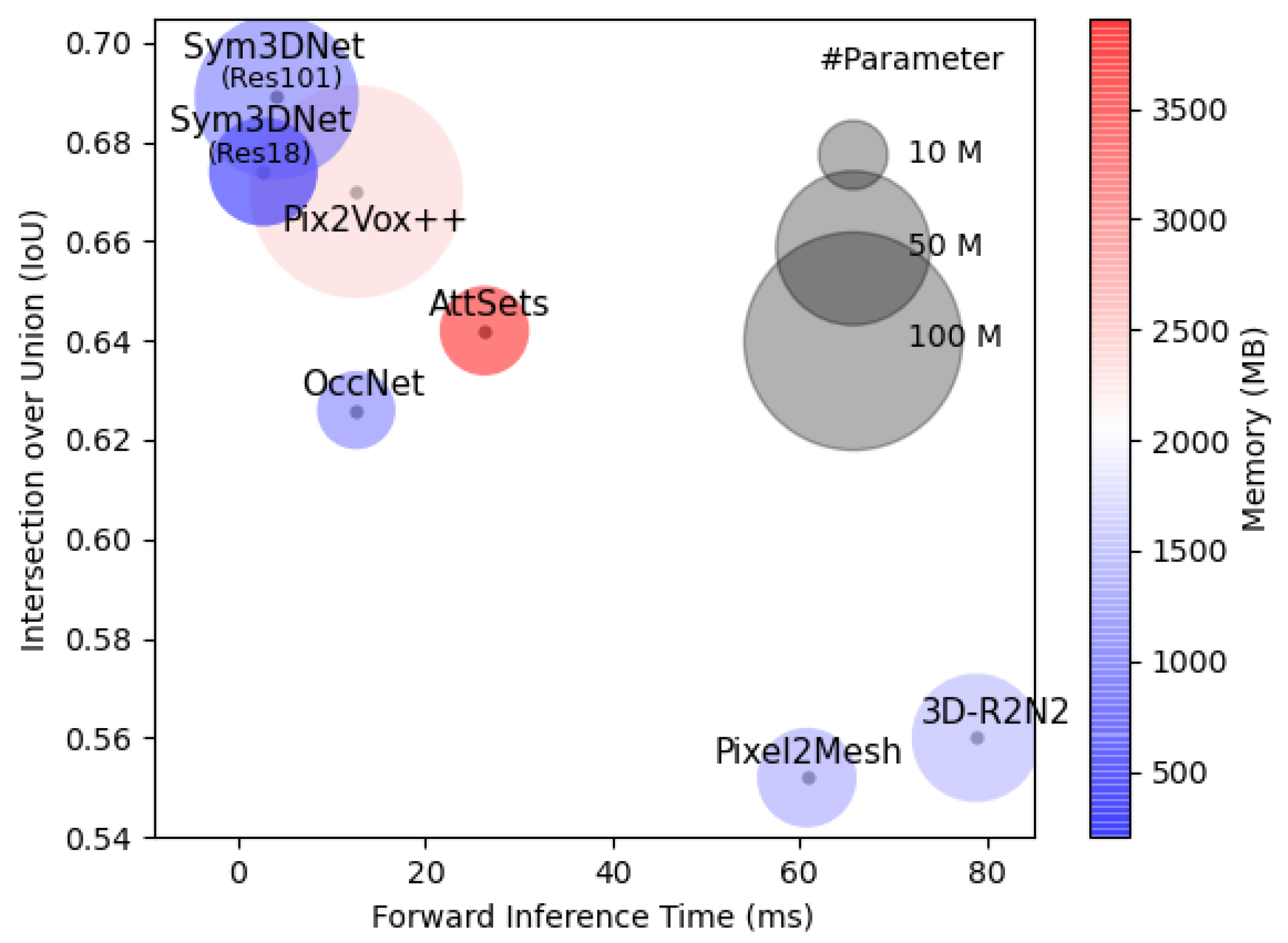
The three-dimensional (3D) symmetry shape plays a critical role in the reconstruction and recognition of 3D objects under occlusion or partial viewpoint observation. Symmetry structure prior is particularly useful in recovering missing or unseen parts of an object. In this work, we propose Sym3DNet for single-view 3D reconstruction, which employs a three-dimensional reflection symmetry structure prior of an object. More specifically, Sym3DNet includes 2D-to-3D encoder-decoder networks followed by a symmetry fusion step and multi-level perceptual loss. The symmetry fusion step builds flipped and overlapped 3D shapes that are fed to a 3D shape encoder to calculate the multi-level perceptual loss. Perceptual loss calculated in different feature spaces counts on not only voxel-wise shape symmetry but also on the overall global symmetry shape of an object. Experimental evaluations are conducted on both large-scale synthetic 3D data (ShapeNet) and real-world 3D data (Pix3D). The proposed method outperforms state-of-the-art approaches in terms of efficiency and accuracy on both synthetic and real-world datasets. To demonstrate the generalization ability of our approach, we conduct an experiment with unseen category samples of ShapeNet, exhibiting promising reconstruction results as well.
Keywords: 3D object reconstruction; reflection symmetry; deep learning 3D object reconstruction; reflection symmetry; deep learning