Article

Novel Algorithm for Radon Real-Time Measurements with a Pixelated Detector

1
Radiation Protection Institute (IRP)—Italian National Agency for New Technologies, Energy and Sustainable Economic Development (ENEA), Via Anguillarese 301, 00123 Rome, Italy
2
National Institute of Ionizing Radiation Metrology (INMRI)—Italian National Agency for New Technologies, Energy and Sustainable Economic Development (ENEA), Via Anguillarese 301, 00123 Rome, Italy
3
Radiation Protection Institute (IRP)—Italian National Agency for New Technologies, Energy and Sustainable Economic Development (ENEA), Via Enrico Fermi 45, 00044 Rome, Italy
4
Physics Department, University of Rome “Tor Vergata”, Via Della Ricerca Scientifica 1, 00133 Rome, Italy
*
Author to whom correspondence should be addressed.
Sensors 2022, 22(2), 516; https://doi.org/10.3390/s22020516
Submission received: 19 December 2021 / Revised: 6 January 2022 / Accepted: 6 January 2022 / Published: 10 January 2022

Abstract

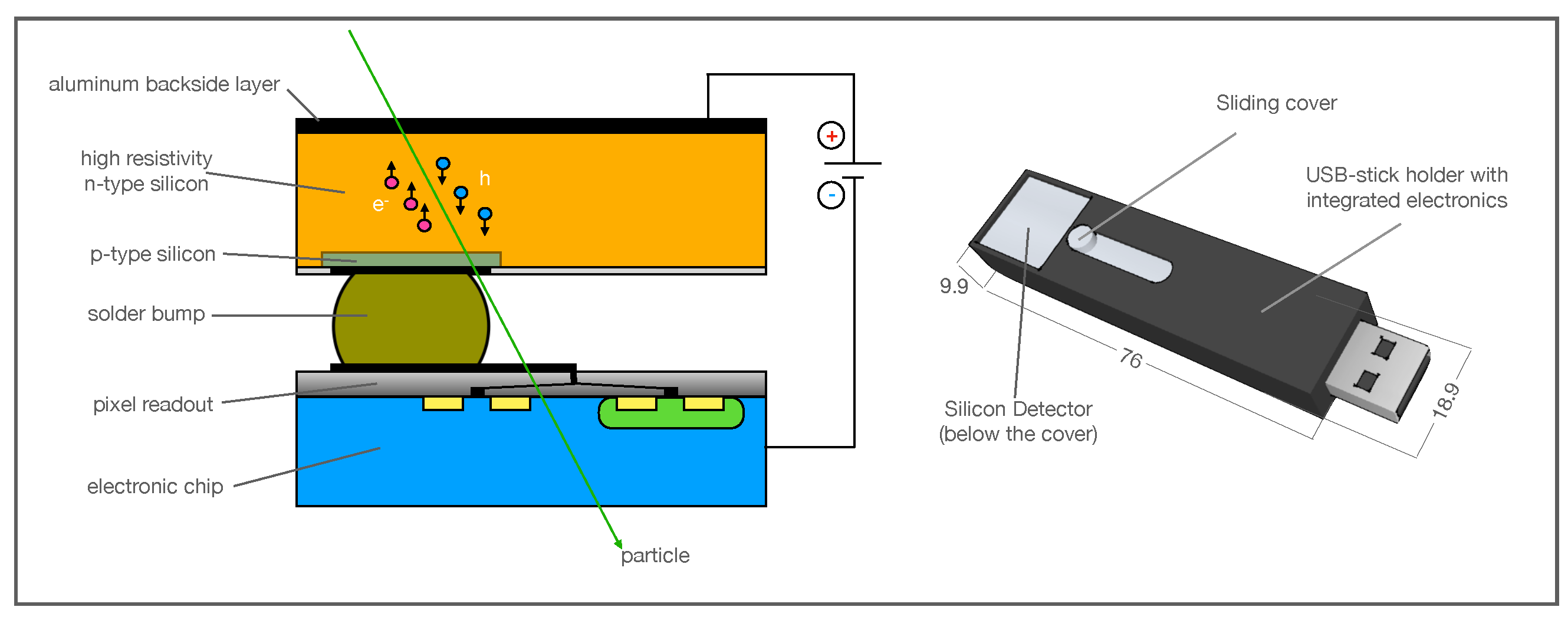
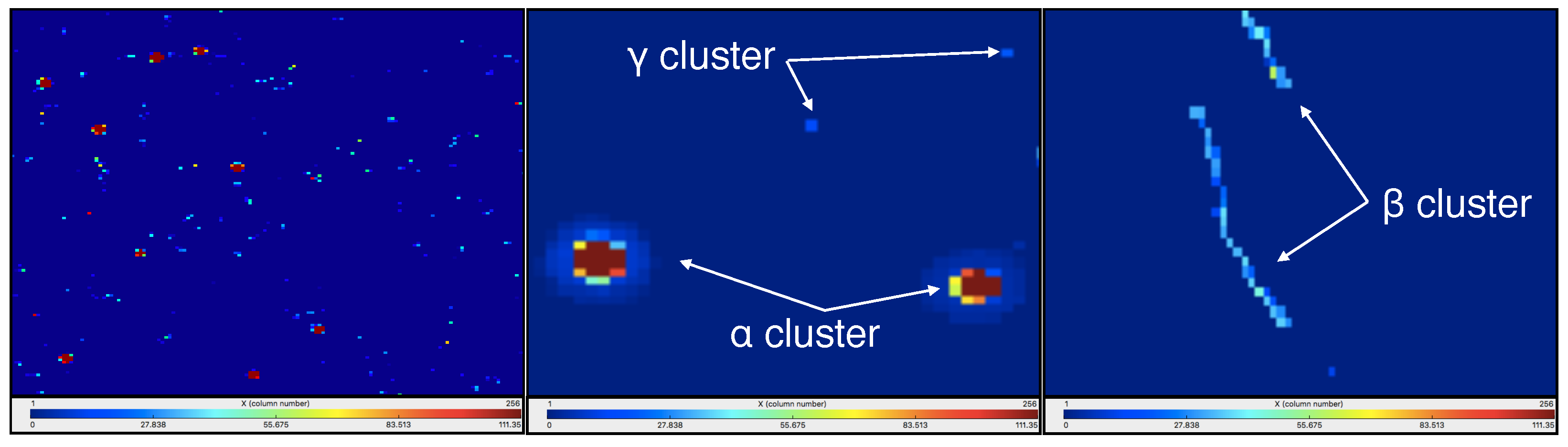
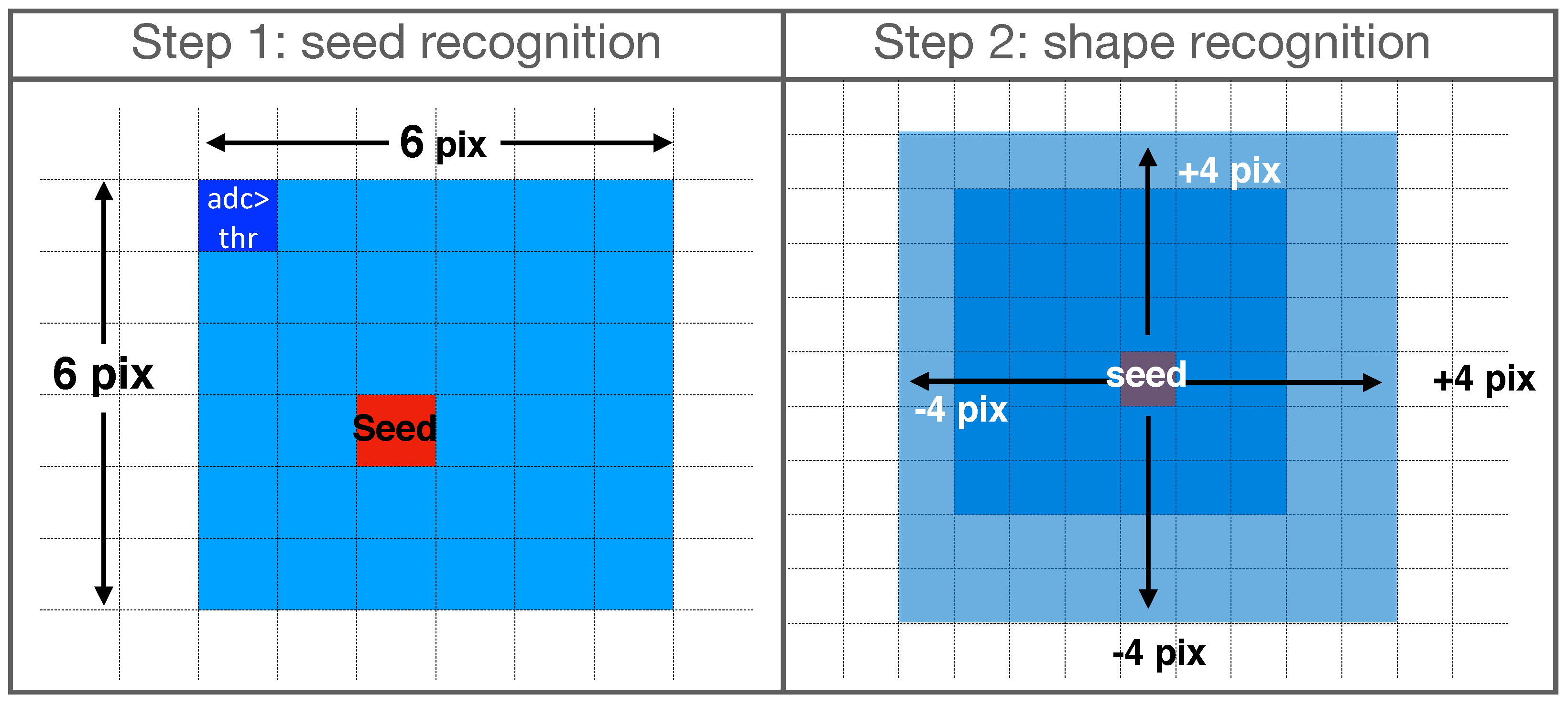
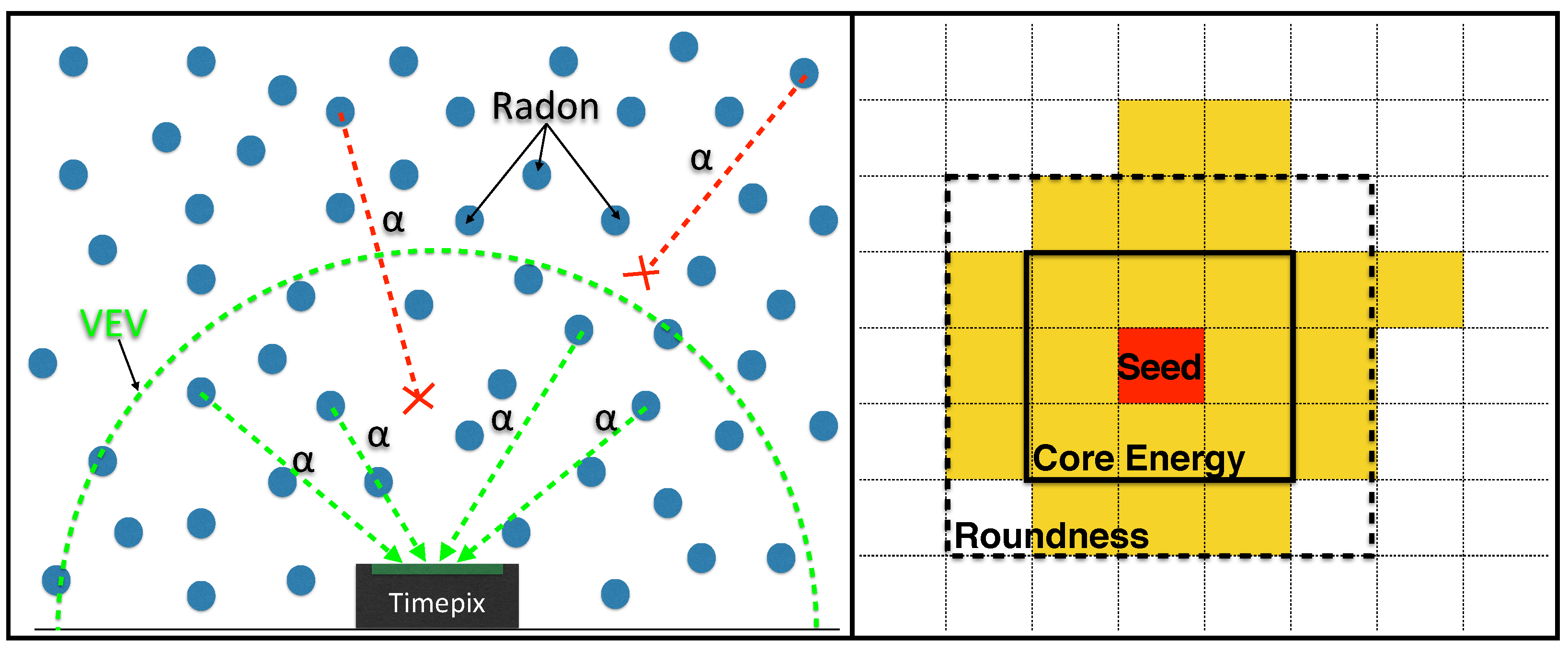
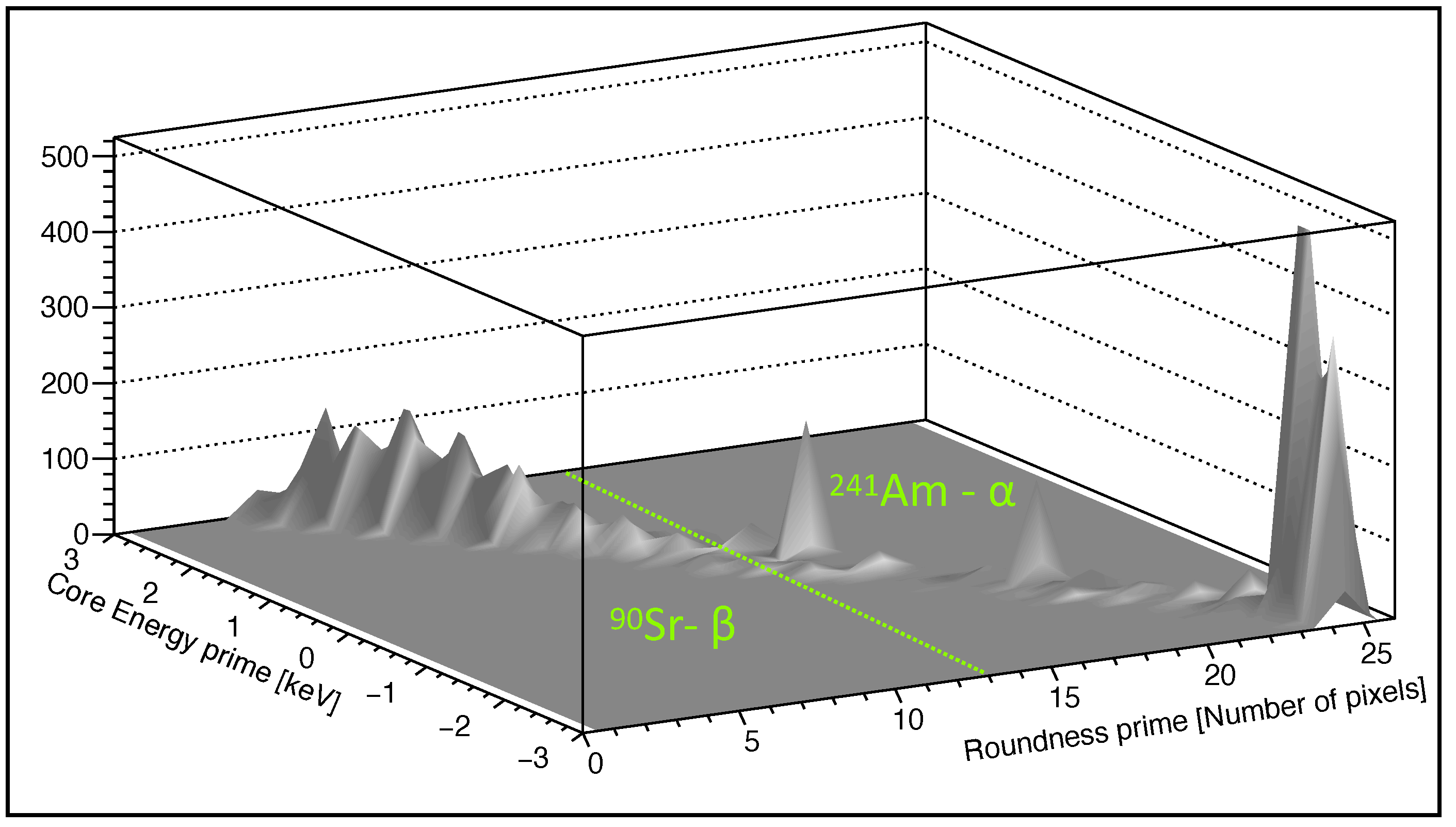
Nowadays, radon gas exposure is considered one of the main health concerns for the population because, by carrying about half the total dose due to environmental radioactivity, it is the second cause of lung cancer after smoking. Due to a relatively long half-life of 3.82 days, the chemical inertia and since its parent Ra-226 is largely diffuse on the earth’s crust and especially in the building materials, radon can diffuse and potentially saturate human habitats, with a concentration that can suddenly change during the 24 h day depending on temperature, pressure, and relative humidity. For such reasons, ‘real-time’ measurements performed by an active detector, possibly of small dimensions and a handy configuration, can play an important role in evaluating the risk and taking the appropriate countermeasures to mitigate it. In this work, a novel algorithm for pattern recognition was developed to exploit the potentialities of silicon active detectors with a pixel matrix structure to measure radon through the α emission, in a simple measurement configuration, where the device is placed directly in air with no holder, no collection filter or electrostatic field to drift the radon progenies towards the detector active area. This particular measurement configuration (dubbed as bare) requires an α/β-discrimination method that is not based on spectroscopic analysis: as the gas surrounds the detector the α particles are emitted at different distances from it, so they lose variable energy amount in air depending on the traveled path-length which implies a variable deposited energy in the active area. The pixels matrix structure allows overcoming this issue because the interaction of α, β and γ particles generate in the active area of the detector clusters (group of pixels where a signal is read) of different shape and energy dispersion. The novel algorithm that exploits such a phenomenon was developed using a pixelated silicon detector of the TimePix family with a compact design. An α (Am-241) and a β (Sr-90) source were used to calibrate the algorithm and to evaluate its performances in terms of β rejection capability and α recognition efficiency. Successively, the detector was exposed to different radon concentrations at the ENEA-INMRI radon facility in ‘bare’ configuration, in order to check the linearity of the device response over a radon concentration range. The results for this technique are presented and discussed, highlighting the potential applications especially the possibility to exploit small and handy detectors to perform radon active measurements in the simplest configuration.
Keywords: radon; real-time measurements; TimePix; MediPix; pattern recognition algorithm radon; real-time measurements; TimePix; MediPix; pattern recognition algorithm