1. Introduction
Since their introduction, Global Navigation Satellite Systems (GNSS) are the enabling technology for applications such as navigation, autonomous vehicles and emergency services. While GNSS can provide worldwide coverage and require only a receiver to use, they are typically not useful for indoor spaces. On one hand, building walls significantly reduce the signal strength, often making positioning impossible or reducing the accuracy [
1]. However, even the nominal accuracy of GNSS (around 5 m [
2]) is insufficient for indoor positioning, where an error of a couple of meters can mean that the user is located in one of several rooms. In order to provide indoor location, researchers have developed many Indoor Positioning Systems (IPS), yet a single standard like GNSS was not achieved. Indoor environments come in many different varieties and can favor different positioning technologies. Current systems are often based on Wi-Fi in order to reduce infrastructure cost; however, their accuracy is limited to a couple of meters [
3]. Other technologies such as Ultra-WideBand (UWB) [
4] and ultrasound [
5] can provide much higher accuracy (centimeters), at the cost of additional specialized infrastructure.
With the introduction of solid-state lighting, a new type of indoor positioning has emerged. In Visible Light Positioning (VLP), light intensities are modulated at speeds imperceptible to the human eye, which allows for a one way transmission from transmitter to receiver. Similar to other positioning systems, the Received Signal Strength (RSS) or signal travel time can be used to determine the receiver location. Due to the local character of light, the influence of multipath is significantly reduced, resulting in an accuracy that can be as low as a couple of centimeters [
6]. Existing lighting infrastructure can also be reused for positioning, thereby reducing the overall system cost significantly. These advantages led to an increasing research interest in recent years. However, the installation of new VLP systems remains an important issue. The majority of indoor positioning systems require some form of calibration. For example, systems that use range measurements to determine the receiver position via triangulation assume the locations of all transmitters to be known. Manually measuring transmitter locations can be a cumbersome process, as the transmitters are often mounted on ceilings and walls [
7]. Fingerprinting systems also require a calibration procedure, in order to build an RSS map that can later be used for positioning. These site surveys can be lengthy and labor-intensive processes. Additionally, this RSS map may have to be updated when changes occur in the environment.
Several calibration procedures have been proposed for IPS using technologies such as UWB [
8], Wi-Fi [
9,
10] and Radio Frequency Identification (RFID) [
11,
12]. In the field of visible light positioning, little literature is available on this subject. Our previous work [
13] proposed a proof-of-concept calibration procedure with a mobile robot. In that procedure, the total number of lights needed to be determined manually [
13]. Counting the number of transmitters is significantly less time-consuming compared to manually measuring the positions. However, it is still a tedious process that is prone to errors. In this work, we therefore introduce an improved calibration algorithm. Detected light sources are filtered based on their measured coordinates, as well as their place in the frequency spectrum. Using this new procedure, the number of light sources is no longer required. Additionally, accuracy is significantly improved. As [
13] is a proof-of-concept, much remains unknown about the robustness of the approach. For example, which parameters have an effect on the accuracy of the procedure? To find out, we investigate the impact of a variety of factors on the calibration procedure. Finally, the goal of a calibration procedure is to prepare the system for positioning. The relation between calibration errors and positioning errors may be complex. In order to determine whether our system has satisfactory performance, we use the calibrated parameters for positioning. Following this approach, we close the loop between calibration and positioning and enable high-performance systems that are easy to deploy.
Our main contributions can therefore be summarized as follows:
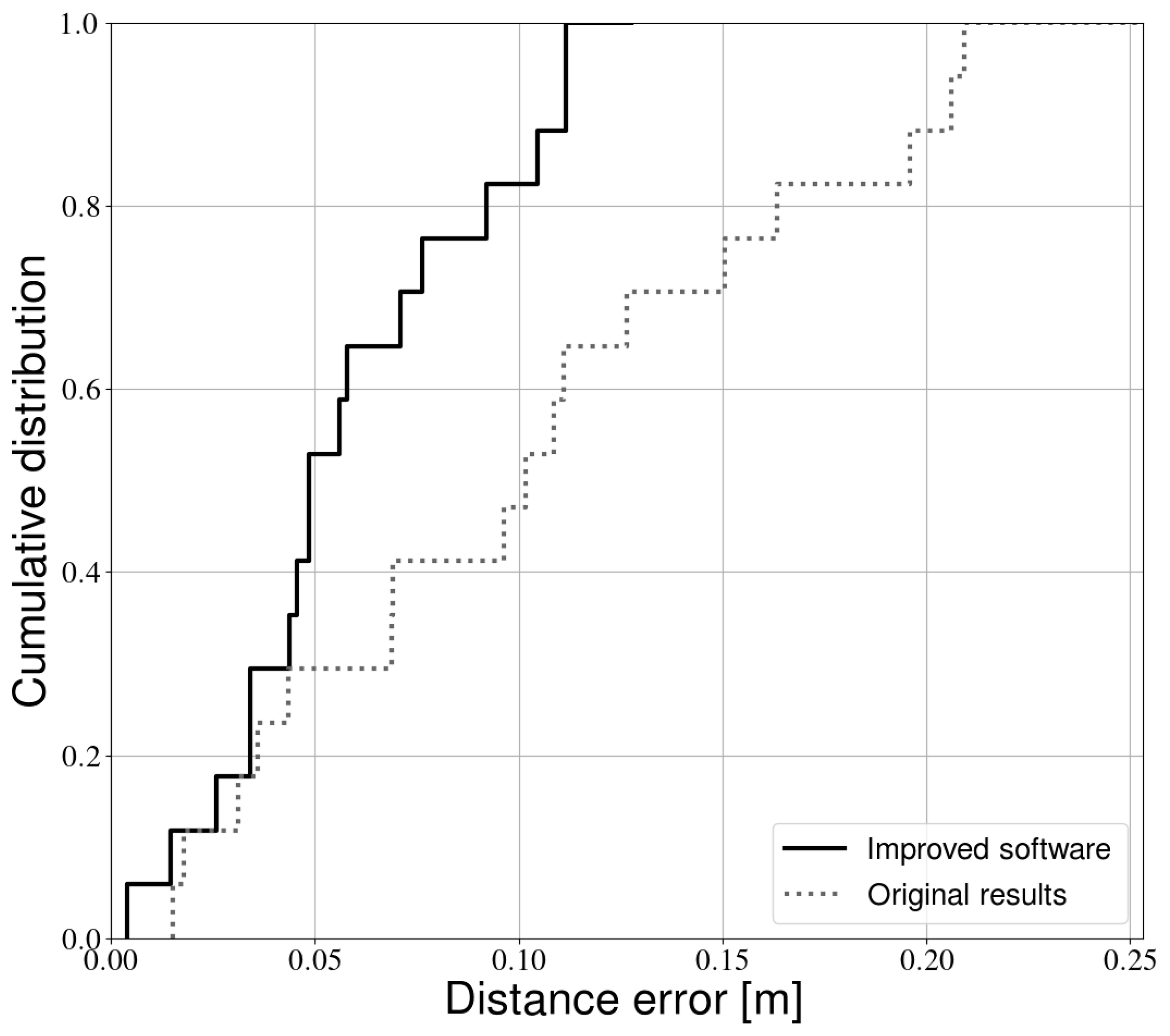
Improved calibration procedure with nearly double the accuracy compared to previous work [
13].
Extensive parameter study that investigates the influence of the transmitter waveform, lighting conditions, robot trajectory, camera resolution, Field Of View (FOV) and transmitter–receiver distance.
The calibrated parameters are used for positioning. The accuracy of the resulting location data are evaluated independently from the calibration.
The rest of this paper is structured as follows:
Section 2 describes related work, and
Section 3 introduces the materials and methods used in this paper. Experimental results are presented in
Section 4 and discussed in
Section 5. Finally, a conclusion is drawn in
Section 6.
2. Related Work
Table 1 provides an overview of calibration procedures proposed for different types of indoor positioning systems. In
Table 1, “positioning technology” refers to the technology that is actually used for positioning (after the calibration has completed). During the calibration itself, other signals such as RGB-D cameras [
10] or PDR [
14] may be used. The following section will describe the broad categories of calibration methods in more detail.
Fingerprinting-based IPS operate in two stages. In the first (offline) stage, a signal strength map is constructed. RSS values are measured at known locations throughout the entire space. It is possible to record just one type of signal (e.g., Wi-Fi). However, accuracy is generally improved by including multiple sources of information (e.g., magnetic field, Bluetooth, etc.) [
38]. Signals already present in the environment are often used, in order to avoid the need for additional infrastructure. In the second (online) stage, the receiver location is unknown and one or more RSS values are measured. By matching the current signal fingerprint to the database, the receiver position is recovered. Contrary to triangulation-based IPS, fingerprinting approaches do not require transmitter coordinates. To ensure positioning accuracy, it is however important that the signal strength map is accurate. The map may also have to be updated periodically, if changes to the environment are made.
We distinguish four methods to construct the signal strength map:
Manual site survey
Robot site survey
SignalSLAM
Crowdsourcing
In manual site surveys, a trained expert records signal fingerprints at known locations. The entire space needs to be visited by the surveyor and as mentioned before, this process may have to be repeated. Manual site survey is time-consuming and labor-intensive and is thus not always practical in large indoor spaces [
35]. The use of mobile robots has therefore been proposed to simplify this task. Mobile robots have been used to collect fingerprints for RFID [
11,
12] and Wi-Fi systems [
10]. Some authors have even proposed algorithms that enable a robot to collect data without human intervention [
9,
15]. These navigation algorithms were relatively simple and did not follow the optimal trajectory (in terms of accuracy or time required), but they did succeed in covering the space eventually.
The goal of Simultaneous Localization And Mapping (SLAM) is to reconstruct a map of the environment, while simultaneously estimating the trajectory of the observer relative to that map. Solutions to the SLAM problem are most commonly based on Bayesian filtering [
39]. SLAM algorithms have mainly been used for robotics applications, as earlier implementations required expensive sensors such as laser scanners (LIDAR) or depth cameras [
40]. Recently, researchers started using sensors embedded in conventional smartphones to construct signal strength maps. This approach is sometimes also referred to as signalSLAM. Pedestrian Dead Reckoning (PDR) is often used to obtain a rough estimate of the user’s trajectory, and drift is corrected by using absolute location fixes (for example, from GNSS signals or near-field communication tags) [
16]. Alternatively, other signals of opportunity such as Wi-Fi, magnetic field or even ambient light [
35] can be used to compensate PDR drift. When using signalSLAM to calibrate fingerprinting IPS, the main goal is to reconstruct the trajectory of the user and to add the measured signal strengths to the map based on that trajectory. Recent approaches tend to use a modified version of graphSLAM [
36]. The main challenge with graph-based signalSLAM is the reduction of false positives when performing loop closures [
14,
16,
17].
SignalSLAM calibration still requires surveyor to visit the entire indoor space. It is more efficient compared to manual site survey, as the surveyor can walk around continuously. In manual calibration, the surveyor has to stop and record his or her location periodically. Crowdsourcing approaches attempt to improve efficiency even further by removing the dedicated surveyor entirely. Initially, users can go about their regular tasks, while the systems collect both inertial and signal strength data from their smartphones in the background. As more data are collected, these systems obtain a more complete picture of the indoor environment, and position accuracy increases. In contrast to single site surveys, the map can continuously be updated. Crowdsourcing presents a number of interesting advantages, yet some challenges still remain. Kim et al. [
18] assumed the initial location of the user was known and suggested it can be obtained from GNSS when the user enters the building. In contrast, the system described in [
19] did not require the initial position, stride length or phone placement. Instead, a map of the environment was used to impose constraints that can filter improbable locations. The obtained trajectories were optimized through backpropagation, and Wi-Fi signal strength was added to the map based on the optimized path. In the work of Wang et al. [
20], seed landmarks were extracted from the floor plan (e.g., doors), which can be used to obtain global observations. Additional landmarks were learned as more data entered the system. Yang et al. [
21] first transformed the map into a stress-free floor plan, which is a high dimensional space in which the distance between two points reflects their walking distance (taking constraints such as walls into account). The similarity between the stress-free floor plan and the fingerprint space was used to label RSS signatures with their real locations. Crowdsourcing-based calibration does require users to give up their personal data, which may be an important barrier to some. Moreover, the approaches discussed above often required a floor plan, which may not always be available. Finally, the accuracy of both signalSLAM and crowdsourcing is typically low (in the range of several meters). Due to the relatively low quality input data (PDR and radio frequency signals), it is challenging to obtain robust and accurate systems with signalSLAM or crowdsourcing.
The calibration methods discussed so far are only applicable to fingerprinting-based IPS. Another category of positioning systems obtains the receiver position based on ranging. The travel time of a signal or the signal strength are used to determine the distance between transmitter and receiver. From the measured distances, the receiver position can then be obtained via triangulation. These types of IPS require accurate knowledge of the transmitter locations. Depending on the positioning technology used, additional parameters may also be required. For example, UWB systems often correct the bias on the distance measurements [
8]. VLP systems based on RSS sometimes calibrate the gain [
30] or Lambertian emission order [
33]. For the calibration of range-based systems, we can again distinguish a few possible methods:
Similar to fingerprinting systems, range-based IPS can be calibrated manually. In this case, the transmitter locations would be measured relative to some reference with rulers or laser-based measurement devices. While measuring the transmitter locations manually requires less work than performing a manual site survey for fingerprinting, it is still a tedious process. Transmitters are often mounted on the ceiling, which can make the process somewhat inconvenient. Ranging systems can also be calibrated based on known receiver locations, which may be easier to obtain than the transmitter coordinates [
22,
23,
24]. However, ground truth measurements of the receiver locations are still required, which often requires an additional positioning system. Moreover, errors on the receiver location while calibrating will subsequently lead to errors on the transmitter locations. If sufficient transmitter positions are known, the others can be extrapolated without extra measurements [
25].
Some IPS can use the same ranging techniques that enable receiver positioning to obtain the distance between transmitters, from which the transmitter locations can also be obtained [
27,
28]. These interbeacon ranging techniques (sometimes also referred to as autocalibration) do assume that beacons can communicate with each other. Additionally, the transmitters must be placed sufficiently close together such that they are within measurement range of each other, which may disqualify them from positioning technologies such as Bluetooth.
Finally, range-based IPS can also be calibrated based on a set of transmitter–receiver distances. If the quantity of data is large enough, no receiver or transmitter locations are required; a set of range measurements is sufficient. Calibration can then be formulated as an optimization problem that minimizes the residual of the trilateration equations [
7,
8,
26,
27,
29]. Results from these approaches are not always unique, for example, in the case of rotational symmetry. Additionally, accuracy of the solution can be heavily dependent on the initial conditions [
29].
Both ranging and fingerprinting can be used for VLP. Ranging is generally more accurate and robust. However, as the transmitters are lights that also illuminate the space, they are generally mounted on the ceiling and are pointing downwards. Therefore, transmitters likely do not have a line of sight (LOS) to each other. Even when VLP transmitters are within range of each other, they lack the necessary hardware for receiving signals. Therefore, autocalibration methods cannot be used by most conventional VLP systems. In fact, VLP calibration in general is not yet explored in depth. Rodríguez-Navarro et al. [
30] proposed a method for calibrating the electrical parameters of a VLP amplification circuit. They performed an extensive parameter study and found that manufacturing tolerances on the resistors and capacitors contributed most to positioning errors due to incorrect calibration. By performing multiple intensity measurements at known locations, a system of equations can be constructed. The solution that minimizes the error provides the optimal calibration of the receiver parameters. In [
31,
32], calibration of transmitter coordinates based on known receiver locations was proposed. Similarly, Ref [
33,
37] were able to calibrate the channel model based on known receiver locations. However, these works either did not indicate how the receiver position should be obtained [
31,
32,
33] or used an additional positioning system to obtain it [
37]. Note that not all VLP systems require a calibrated channel model. Camera-based implementations such as [
41] only detect the relative position of the light to the camera center, while photodiode-based systems use the signal strength to obtain the transmitter–receiver distance. Camera-based VLP systems therefore only need the location of each transmitter. However, the channel model of VLP is relatively well known; therefore, model-based fingerprinting is sometimes also possible given the transmitter locations [
34].
In this work, we will focus on the calibration of light source locations and identifiers without prior knowledge or additional positioning systems, of which there are few examples. Liang and Liu [
35] crowdsourced the construction of a signal strength map of opportunistic signals. Similar to [
14,
16], user trajectories were obtained with the help of a modified graphSLAM algorithm. Contrary to similar works, they also mapped the location of light sources and used them as landmarks in the positioning stage. However, as the lights were not modulated, their identity cannot be uniquely determined, resulting in a relatively low positioning accuracy (several meters) [
35]. Additionally, unmodulated light sources are not easily distinguished from sunlight, as both increase the ambient lighting. In contrast, Yue et al. [
36] did use modulated Light Emitting Diodes (LED). A modified version of graphSLAM was again used to construct the signal strength database. Absolute location fixes were obtained by detecting doors with changes in light intensity and magnetic field strength. Following calibration, positioning was performed by fusing PDR with fingerprint observations via a Kalman filter. Positioning accuracy after calibration was about 0.8 m on average, which is an improvement of approximately 70% over Wi-Fi-based fingerprinting under the same conditions. However, in rare occasions the positioning error can exceed 2 m.
5. Discussion
Amsters et al. [
13] proposed a proof of concept for a calibration procedure of VLP systems. Contrary to [
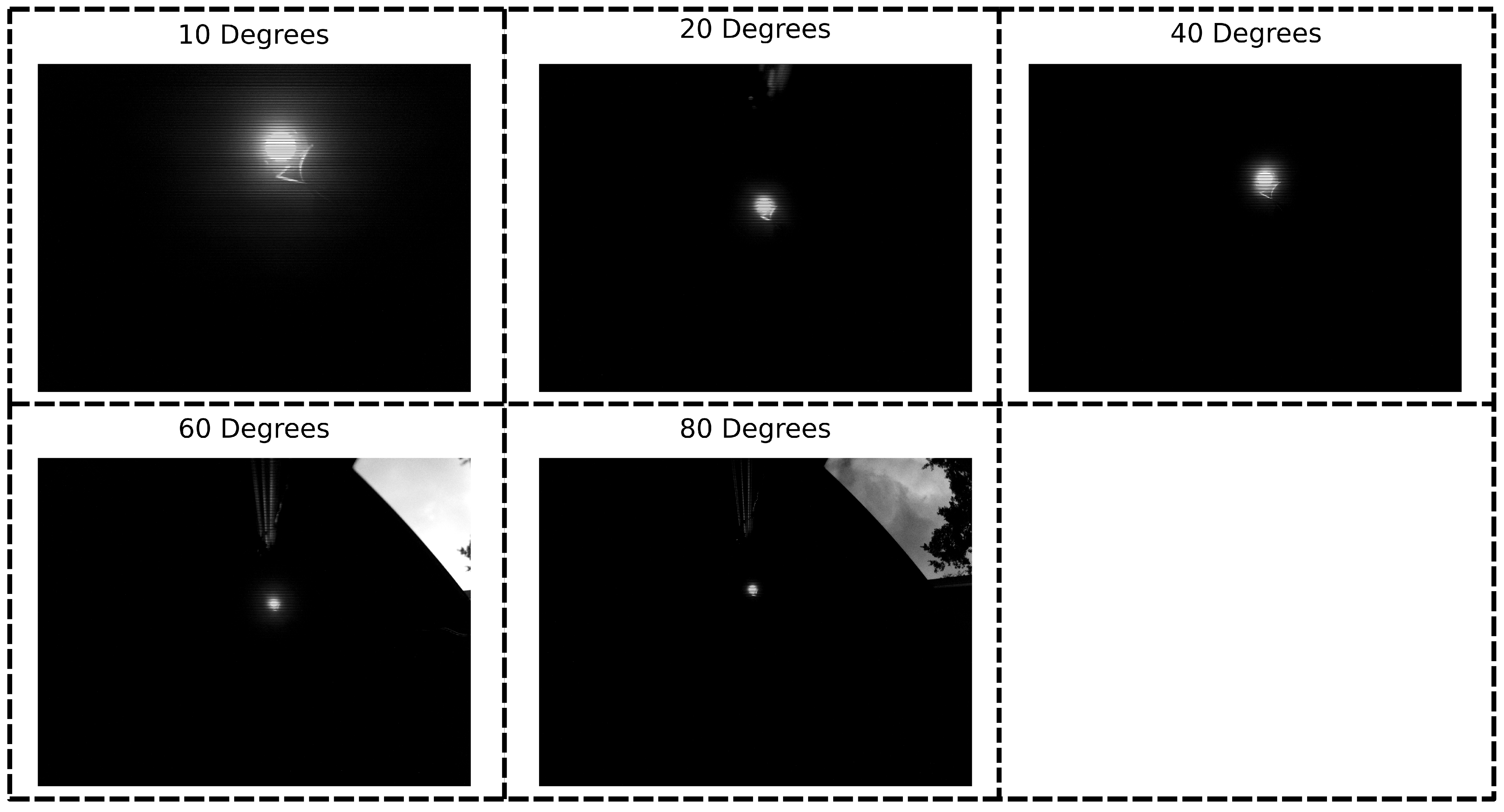
13], the improved procedure described in this paper does not require prior knowledge of the number of light sources. In the vast majority of cases, the algorithm was able to determine the correct number of light sources. When using the zigzag trajectory, or a FOV of 80 degrees, the number of transmitters could be underestimated. In all the other tests that were performed (29 experiments in total), the calibration algorithm correctly determined the number of LEDs.
This type of calibration procedure for VLP systems has not been used before. Therefore, it was unclear how robust the approach is and which factors can influence the results. During our parameter study (
Section 4.2), we obtained several key insights. For example, a limitation of the procedure is that it cannot be used for calibrating transmitters modulated with sine waves, which is a consequence of using a camera as a receiver. However, the majority of VLP systems described in literature use On-Off Keying (OOK) as a modulation scheme, even if only frequencies are transmitted [
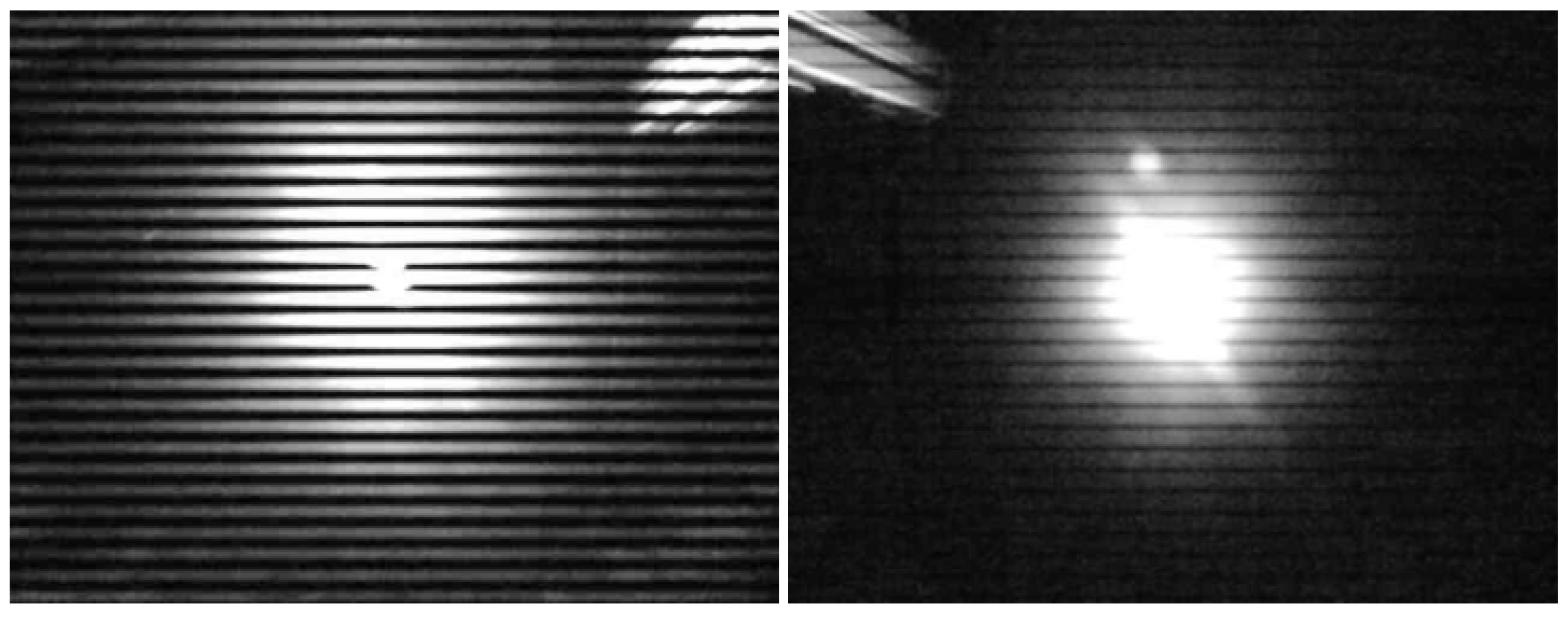
49]. In case code division is used, researchers also often opt for OOK. While we performed experiments with FDMA as a multiple access technology, it would be relatively straightforward to include code division multiplexing by expanding the image processing pipeline. Another limitation is that we can only determine the two-dimensional position of the LEDs. Some positioning approaches require knowledge of the ceiling height, which would have to be measured separately.
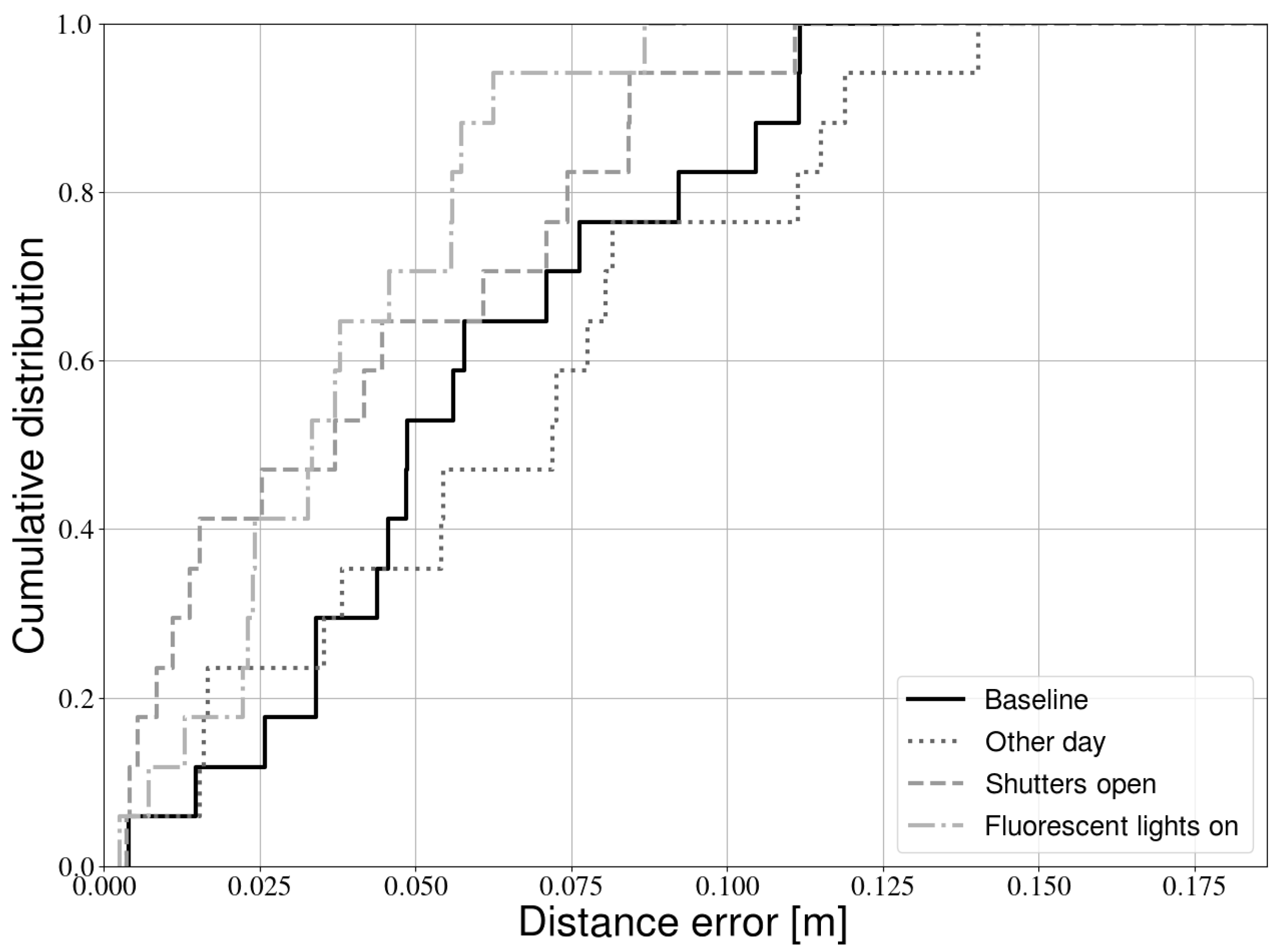
The proposed calibration procedure was also not influenced significantly by the ambient lighting, similar to the positioning approach used as an evaluation [
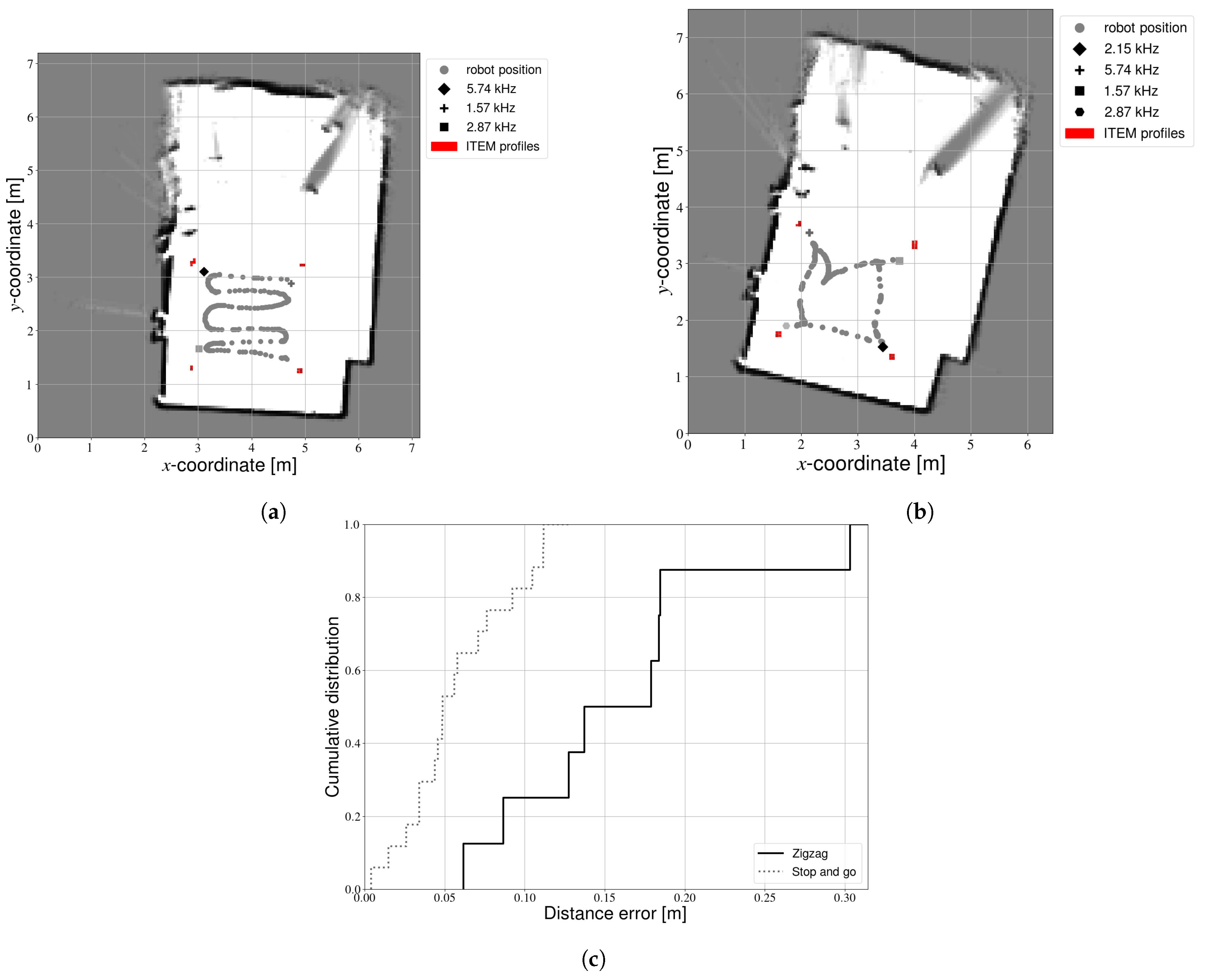
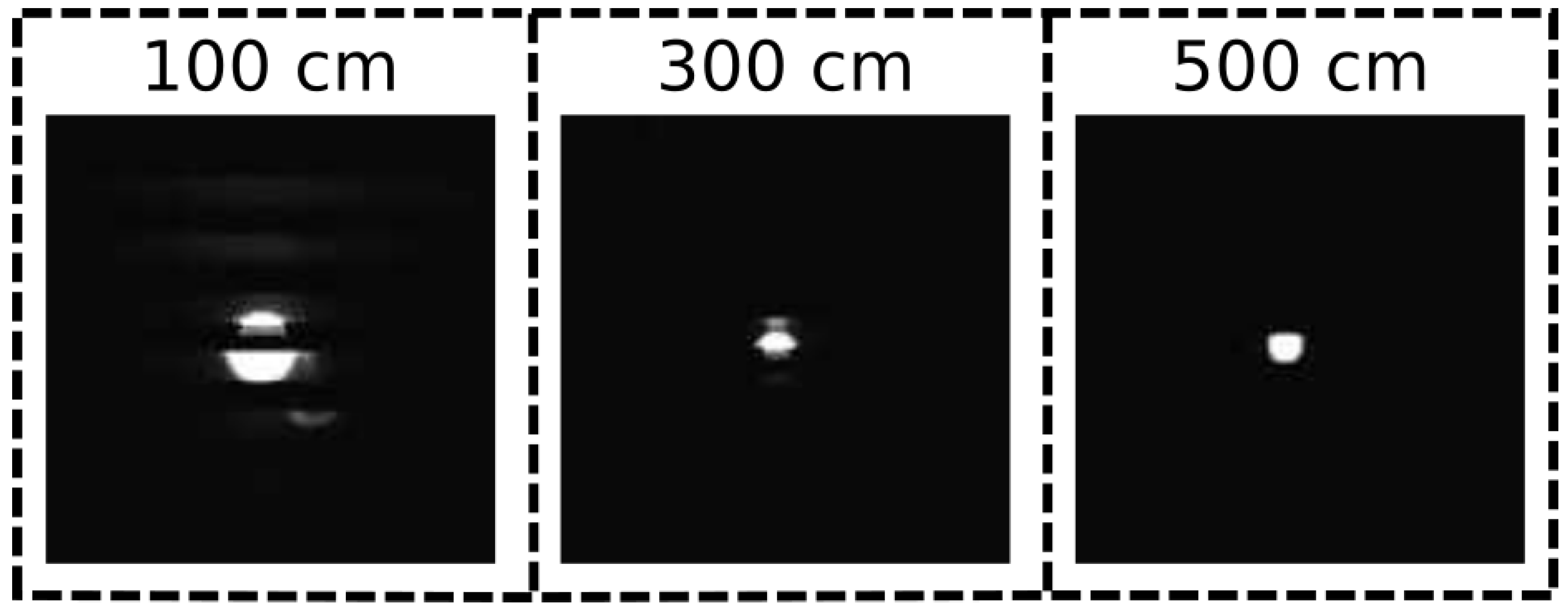
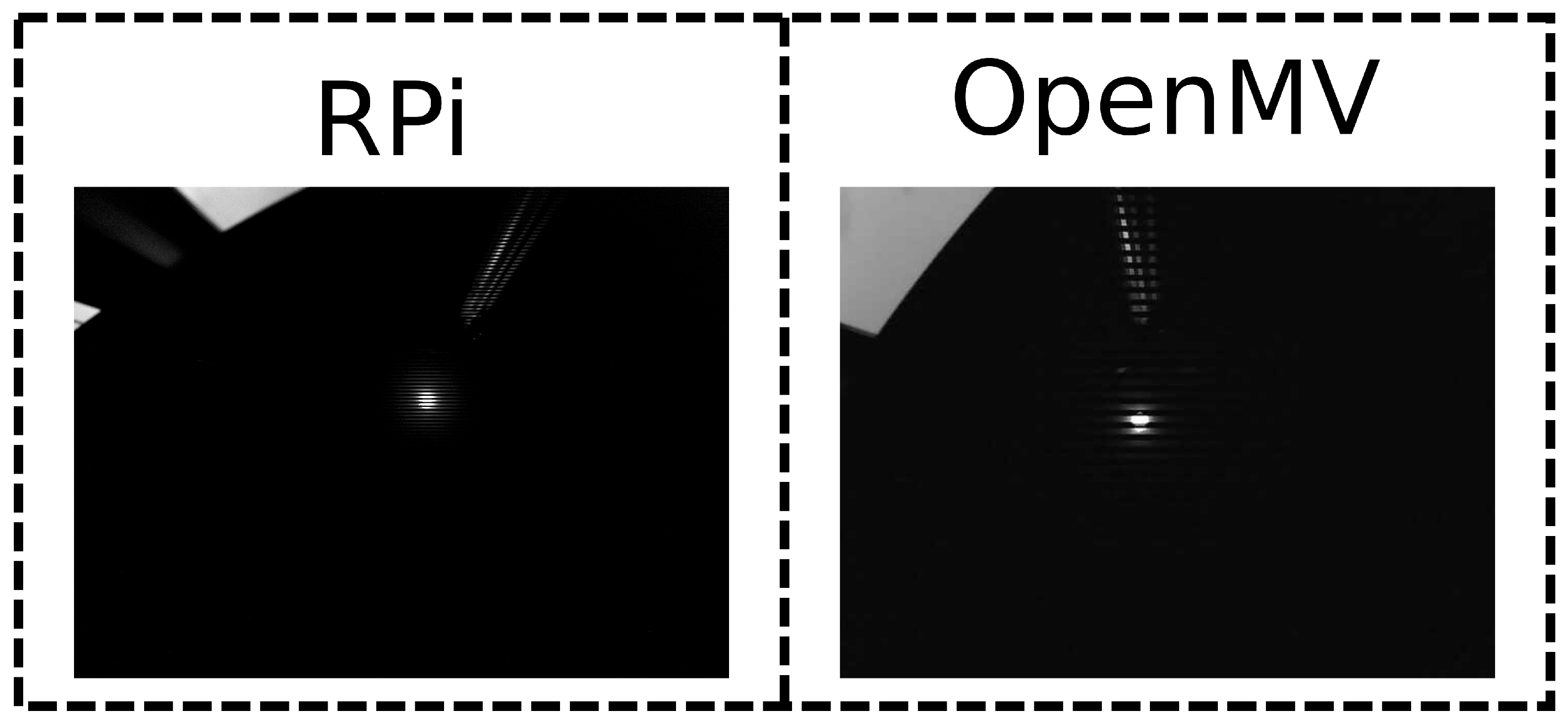
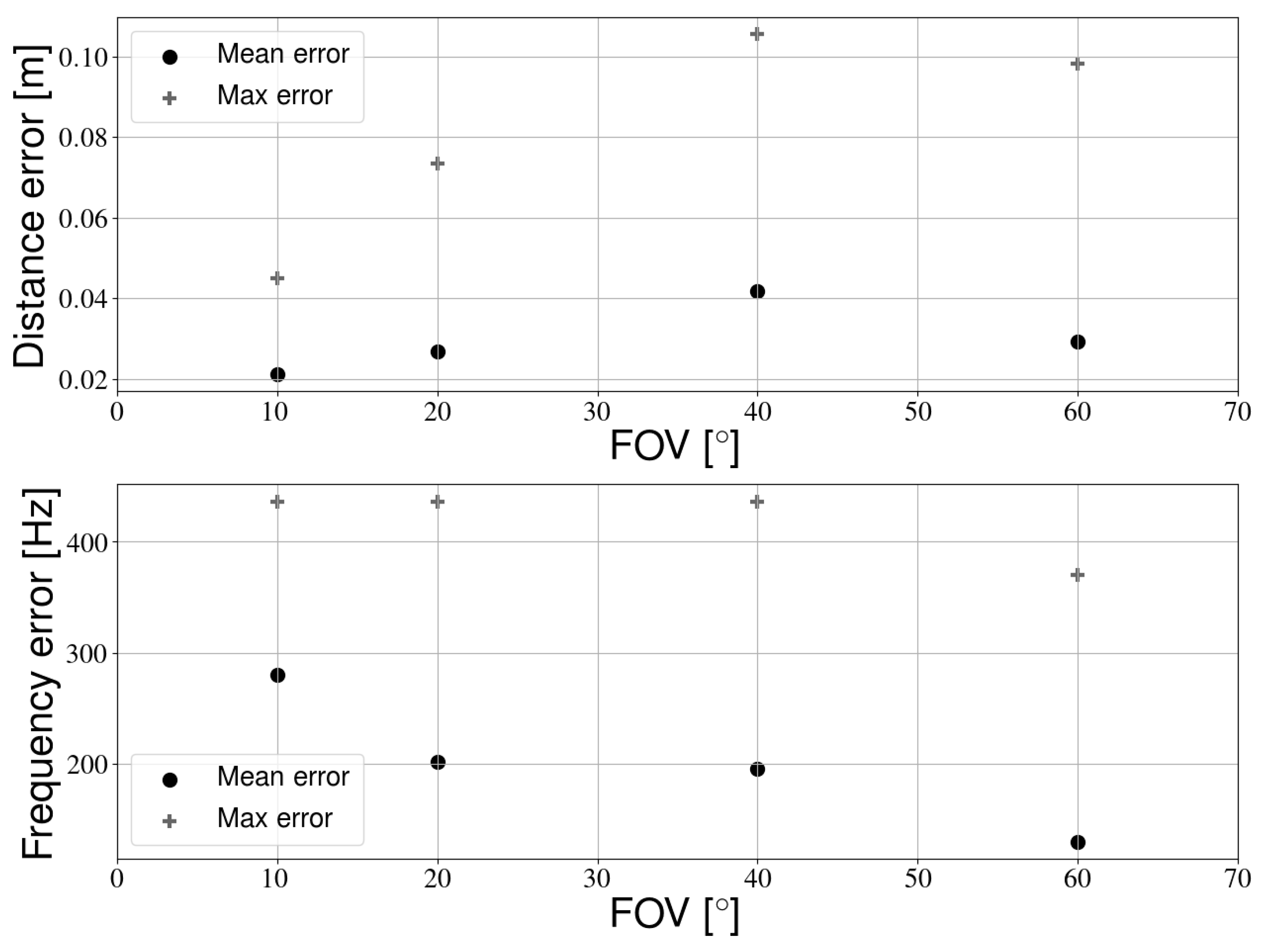
41]. In contrast, the robot trajectory, height, FOV and resolution all had an impact on calibration accuracy. A large resolution should be used to increase accuracy of both frequency detection and transmitter positioning. However, we recommend the use of a USB camera in order to capture pictures faster. In our experiments, a FOV of 60 degrees provided a good trade-off between positioning and frequency detection accuracy. In case the distance between transmitter and receiver is large (as is the case with high ceilings), a smaller FOV may be required to detect the light sources. Finally, care should be taken to stop the robot at each light source, rather than using a continuous motion. The latter could lead to poor accuracy and an underestimation of the number of light sources.
The main objective of the technique is to calibrate the parameters of the system, so that these can be used for positioning in a later stage. The experimental results in
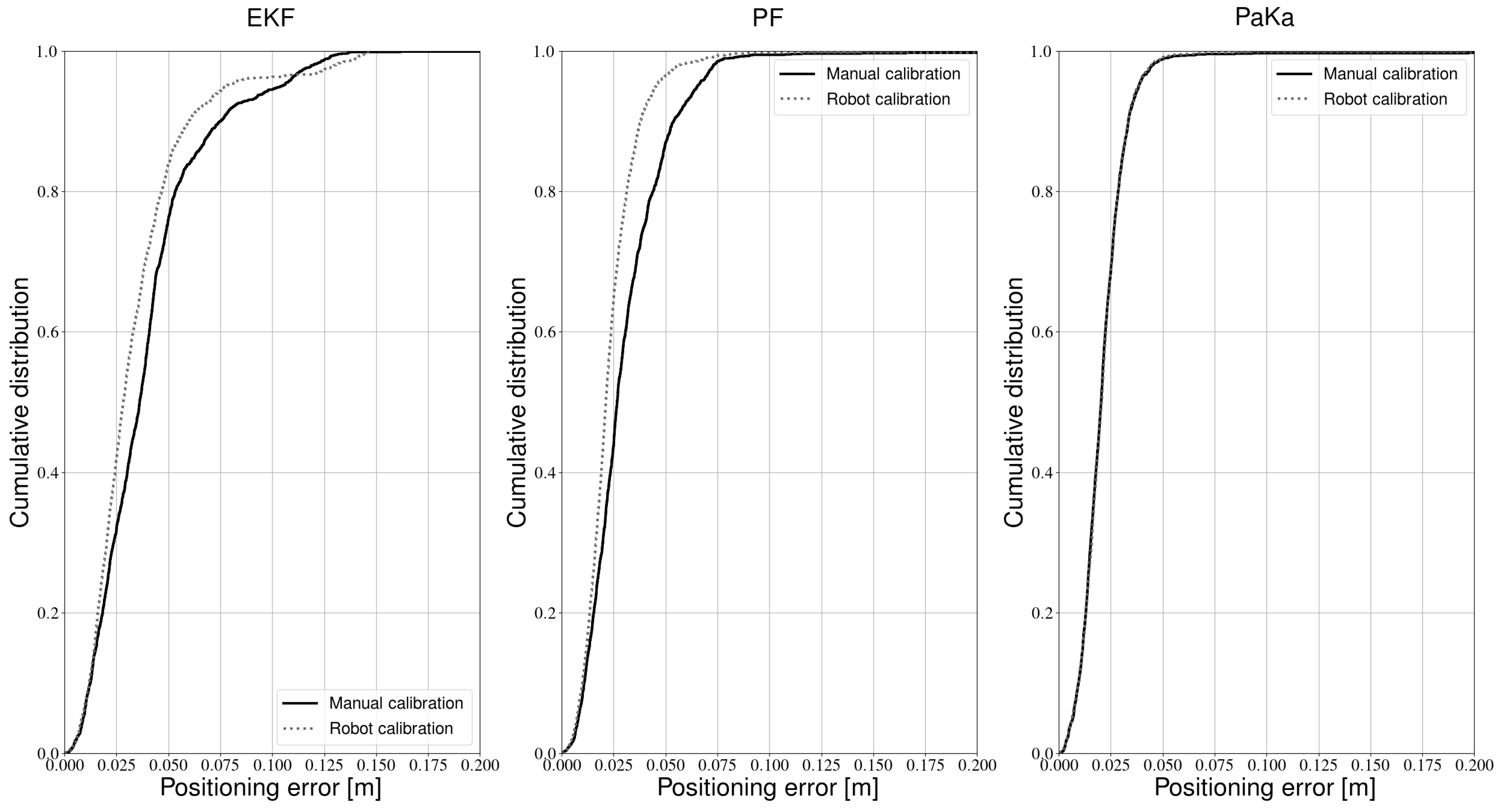
Section 4.3 showed that the parameters of the experimental setup can be determined with sufficient accuracy. The error on the light source locations did not result in increased positioning errors. In the case of our experimental setup, the transmitter frequencies could also be determined with sufficient accuracy so as to not cause ambiguity. It is important to note that one should take care that the modulation frequencies are sufficiently far apart, as some error is introduced when calibrating the modulation frequency. We should also note that certain positioning approaches are more susceptible to calibration errors than others. The positioning approach used as an evaluation tool made use of sensor fusion. In case of large measurement errors, the filters can fall back on odometry data. However, this is only the case when the error on the observation is sufficiently large. More subtle disturbances such as errors on the transmitter coordinates cannot be filtered. Additionally, with this work we showed that it is possible to close the loop between calibration and positioning. That is, we can efficiently calibrate the setup with a mobile robot and then use the determined parameters for high-accuracy positioning. Manual calibration also leads to errors on the transmitter locations. As evidenced by our positioning case, these errors are likely of the same order of magnitude as the robot calibration.
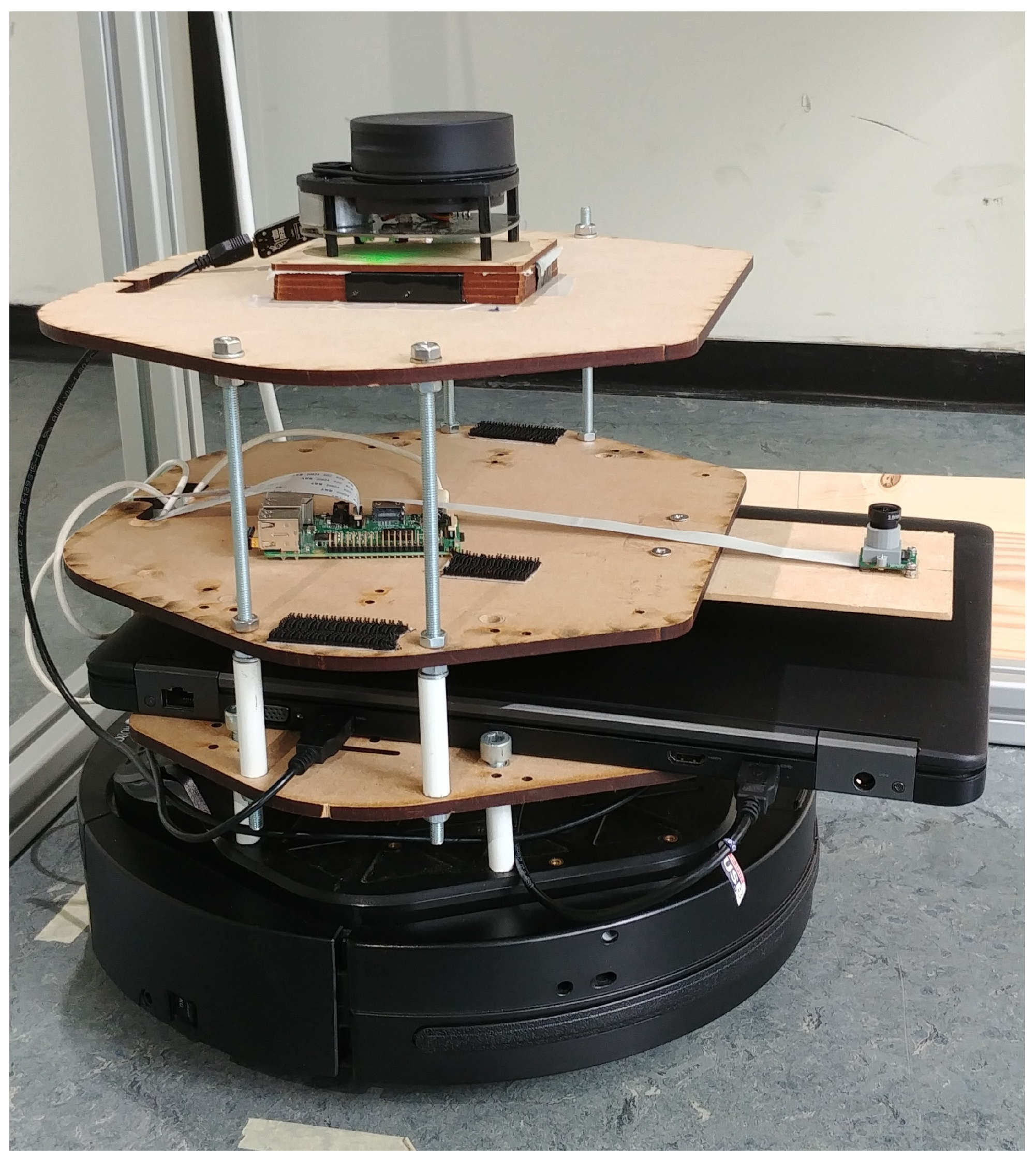
Our work shares similarities with robot-based RFID calibration. Hähnel et al. [
11] also used a mobile robot equipped with a LIDAR and used it to reconstruct a map of the environment. The position of RFID tags was later estimated based on the path of the robot. Similarly, Milella et al. [
12] also mapped indoor spaces with a mobile robot in order to localize RFID tags. They used fuzzy logic to determine the likelihood of a tag location. Mirowski et al. [
16] proposed the use of a mobile robot for calibration of Wi-Fi localization systems. Contrary to [
11,
12], they used Quick Response (QR) codes to aid with loop closures, which raises the question as to how these QR codes should be localized.
Literature on the subject of VLP calibration is limited. Most examples focused on obtaining the parameters of the channel model [
33,
37], which we cannot calibrate. However, the approach which we used as an evaluation tool does not require these parameters as the channel model is not used [
41]. This does limit the calibration procedure to mostly camera-based positioning systems. It is possible to further extend the proposed calibration system by including a photodiode on the robot platform and using the intensity measurements to obtain the parameters of the channel model.
In order to obtain the transmitter locations and identities, we obtained the receiver position through SLAM, rather than the manual measurements used in [
31,
50]. Contrary to [
35], we were also able to obtain light source identities. Yue et al. [
36] did use modulated LEDs, yet they have significantly lower accuracy compared to our work. However, our approach required a dedicated procedure rather than crowdsourcing the required data. Additionally, our robot needed to be manually driven by a human operator. Nevertheless, it may be possible to let the robot perform the calibration autonomously, whereas crowdsourcing will always require the cooperation of humans.