Article

Architecture Design and VLSI Implementation of 3D Hand Gesture Recognition System †
Department of Electrical Engineering, National Central University, Taoyuan City 32001, Taiwan
*
Author to whom correspondence should be addressed.
Tsai, T.H.; Tsai, Y.R. Design and implementation of a 3D hand gesture architecture system under complicated environment. In Proceedings of the International Symposium on VLSI Design, Automation and Test (VLSI-DAT), Hsinchu, Taiwan, 24–27 April 2017.
Sensors 2021, 21(20), 6724; https://doi.org/10.3390/s21206724
Submission received: 17 August 2021 / Revised: 4 October 2021 / Accepted: 7 October 2021 / Published: 10 October 2021
(This article belongs to the Special Issue Multi-Sensor for Human Activity Recognition)

Abstract

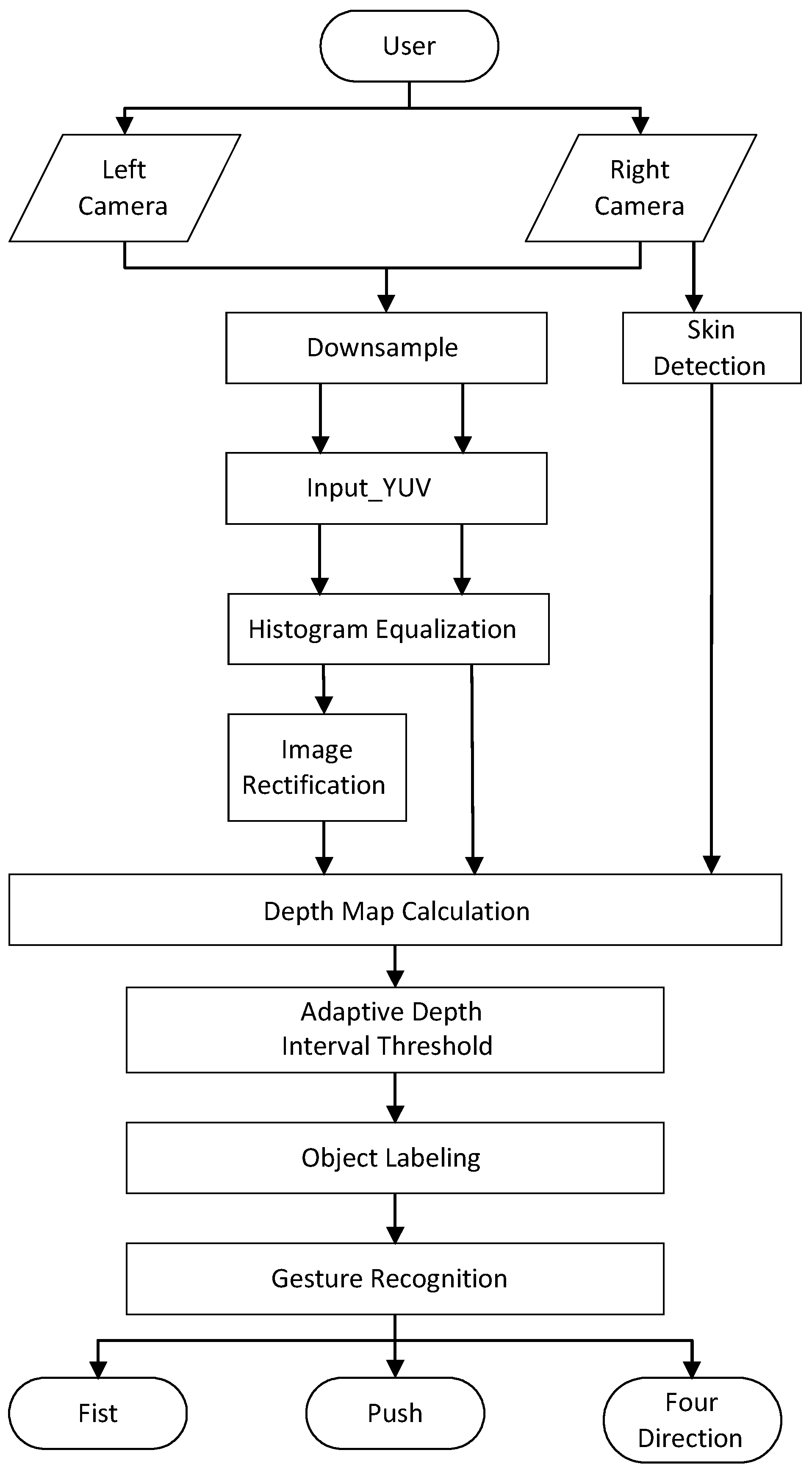
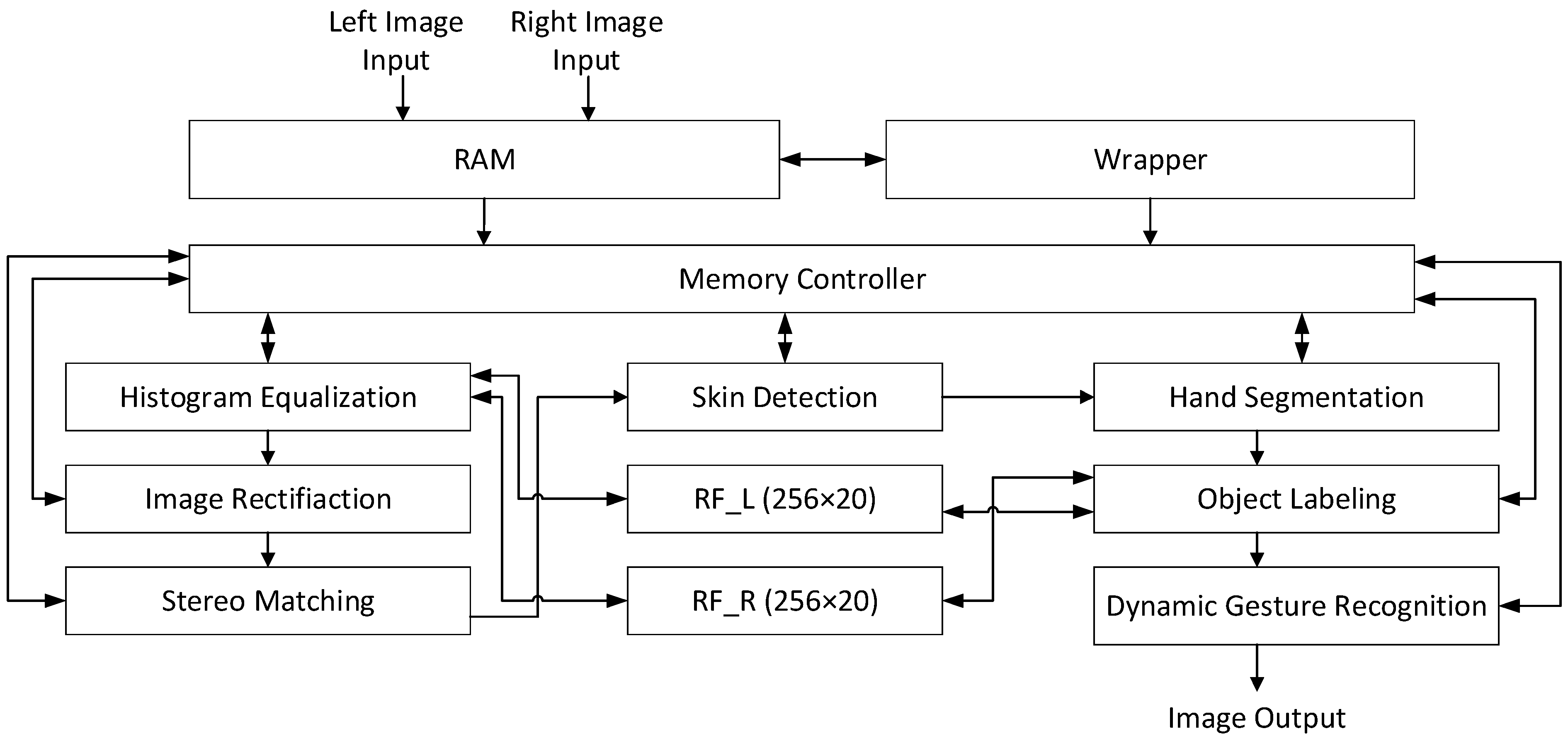
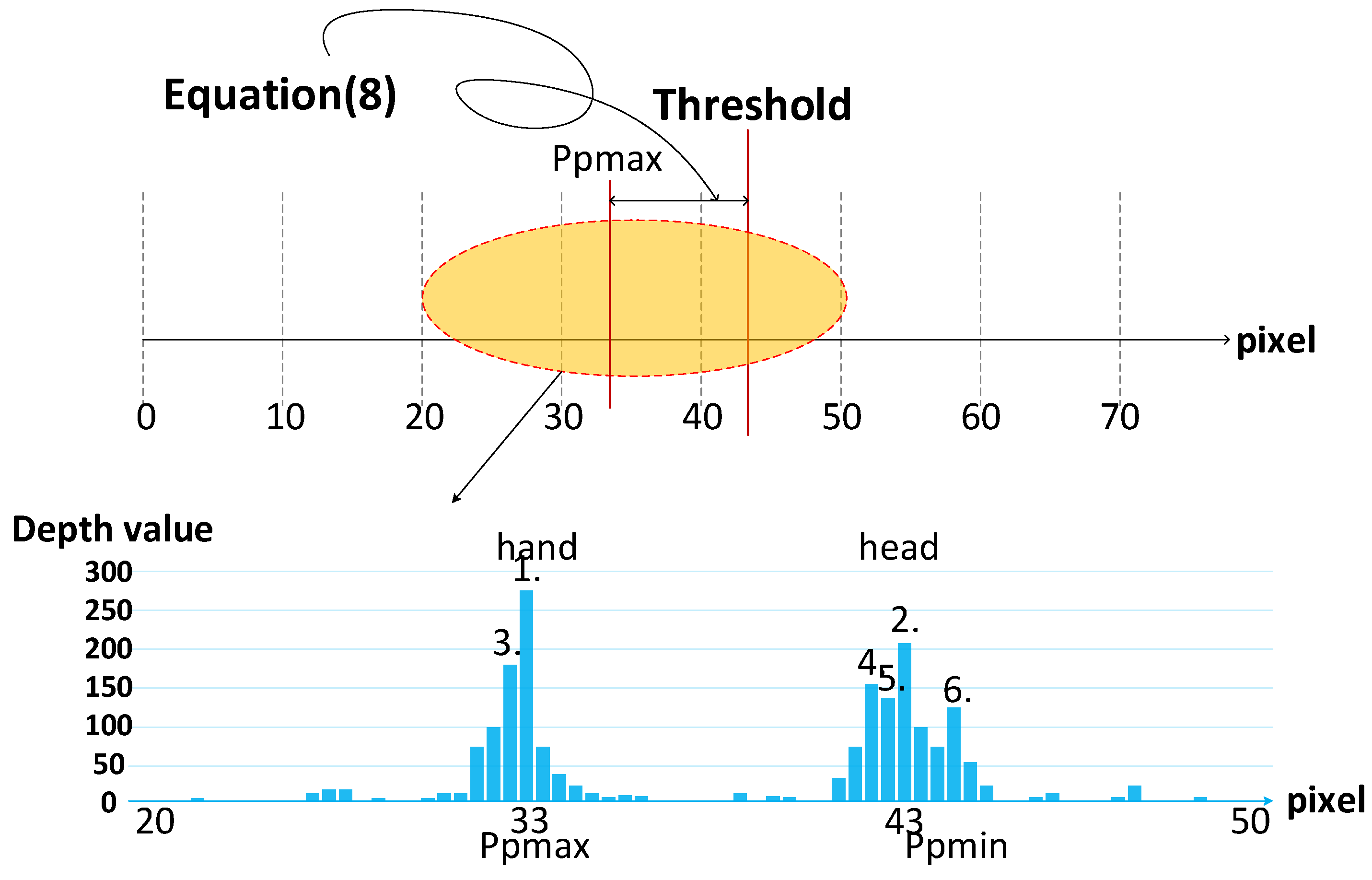
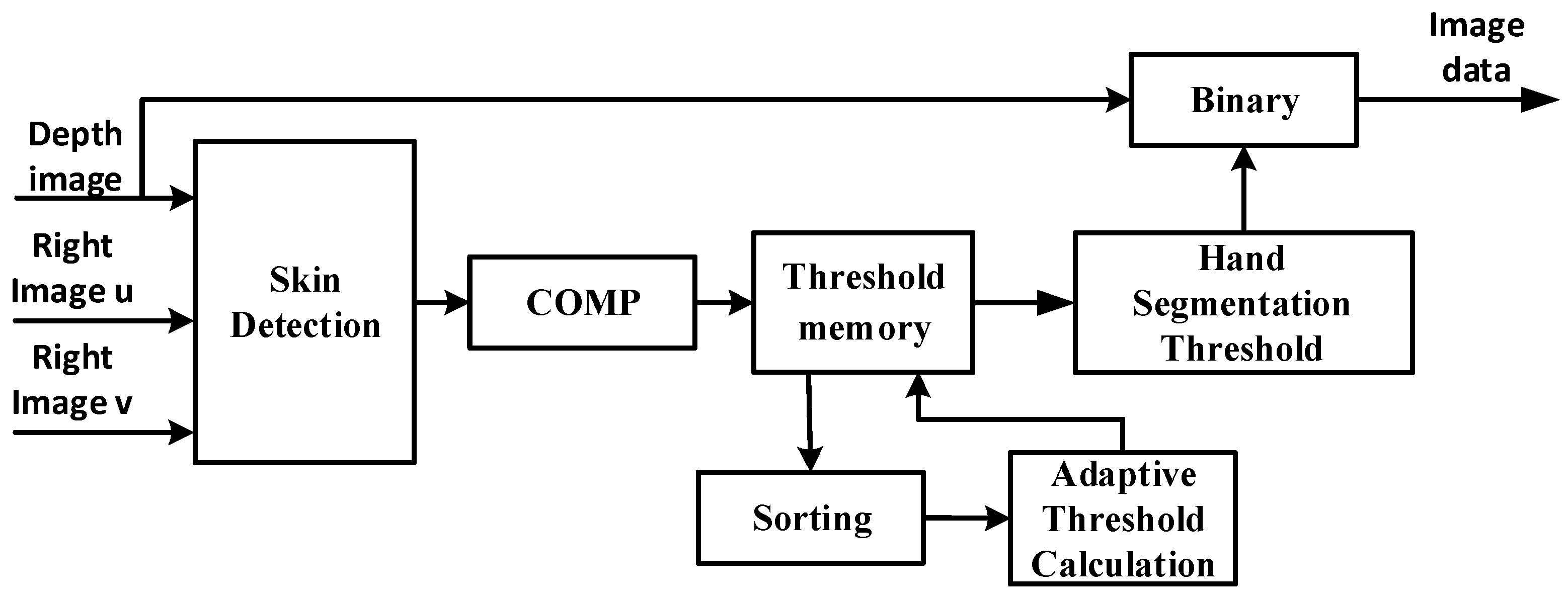
With advancements in technology, more and more research is being focused on enhancing daily life quality and convenience. Along with the increase in the development of gesture control systems, many controllers, such as the keyboard, mouse, and other devices, have been replaced with remote control products, which are gradually becoming more intuitive for users. However, vision-based hand gesture recognition systems still have many problems to overcome. Most hand detection methods adopt a skin filter or motion filter for pre-processing. However, in a noisy environment, it is not easy to correctly extract interesting objects. In this paper, a VLSI design with dual-cameras has been proposed to construct a depth map with a stereo matching algorithm and recognize hand gestures. The proposed system adopts an adaptive depth filter to separate interesting foreground objects from the background. We also propose dynamic gesture recognition using depth and coordinate information. The system can perform static and dynamic gesture recognition. The ASIC design is implemented in TSMC 90 nm with about 47.3 K gate counts, and 27.8 mW of power consumption. The average accuracy of each gesture recognition is 83.98%.
Keywords: VLSI; ASIC; FPGA; hand gesture recognition; SAD matching; object labeling VLSI; ASIC; FPGA; hand gesture recognition; SAD matching; object labeling