Article

Using an Optimization Algorithm to Detect Hidden Waveforms of Signals


by
Yen-Ching Chang
1 and
Chin-Chen Chang
2,3,*
1
Department of Medical Informatics, Chung Shan Medical University, Taichung 40201, Taiwan
2
Department of Information Engineering and Computer Science, Feng Chia University, Taichung 40724, Taiwan
3
School of Computer Science and Technology, Hangzhou Dianzi University, Hangzhou 310018, China
*
Author to whom correspondence should be addressed.
Sensors 2021, 21(2), 588; https://doi.org/10.3390/s21020588
Submission received: 14 December 2020 / Revised: 8 January 2021 / Accepted: 12 January 2021 / Published: 15 January 2021

Abstract

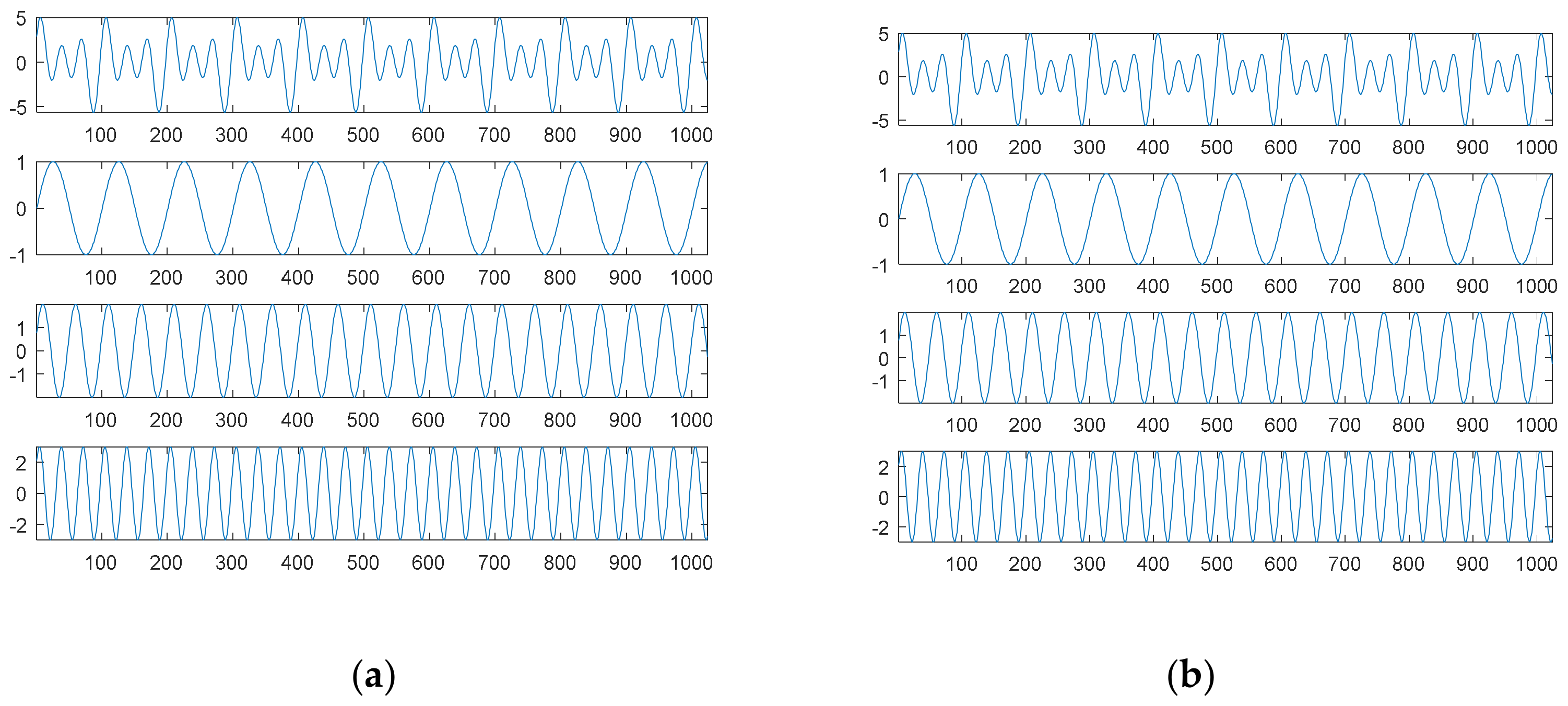
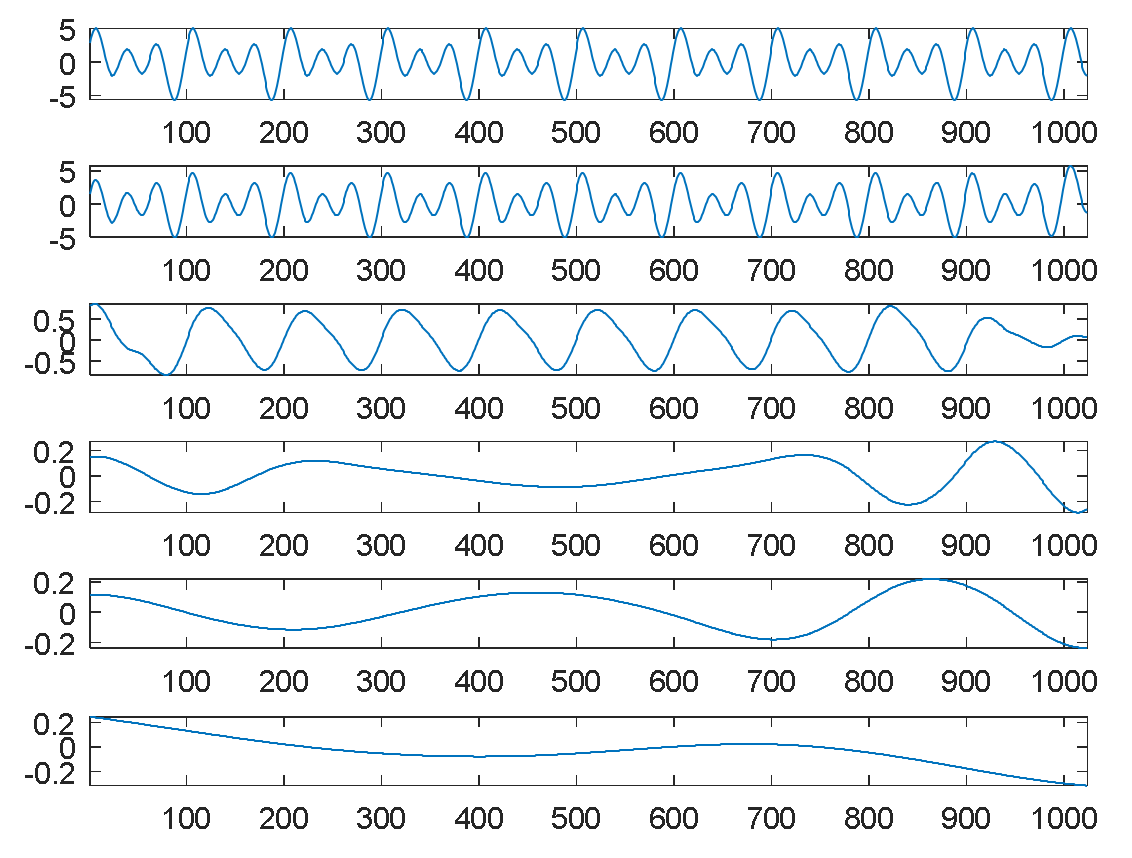
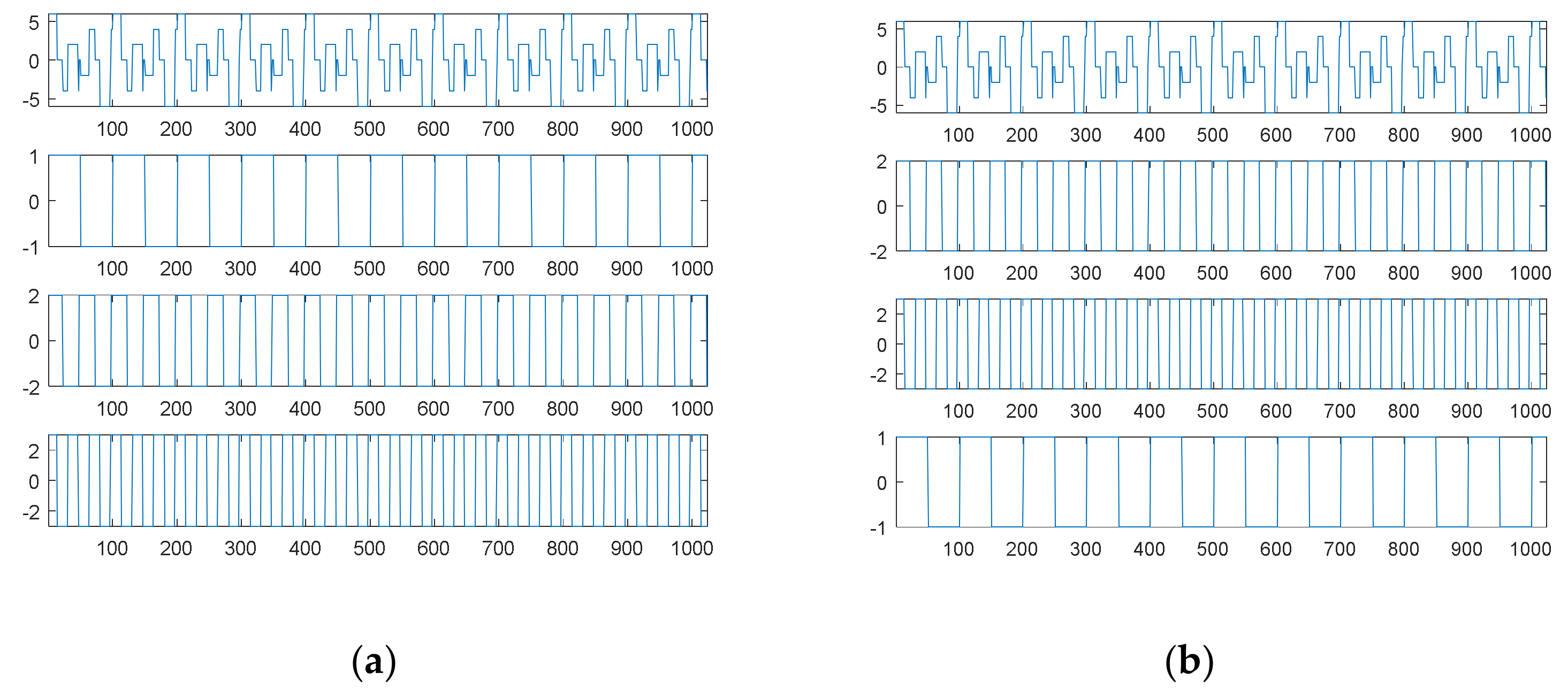
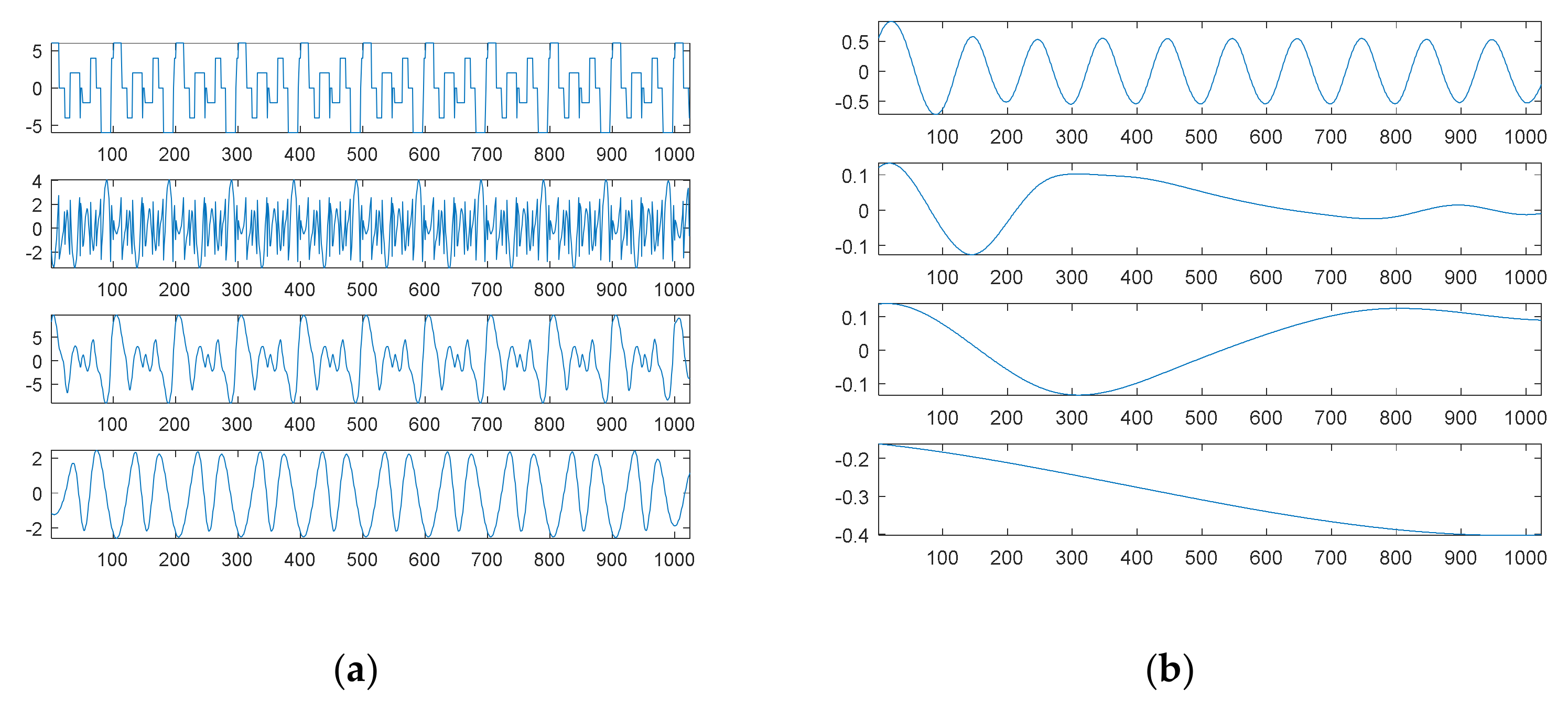
Source signals often contain various hidden waveforms, which further provide precious information. Therefore, detecting and capturing these waveforms is very important. For signal decomposition (SD), discrete Fourier transform (DFT) and empirical mode decomposition (EMD) are two main tools. They both can easily decompose any source signal into different components. DFT is based on Cosine functions; EMD is based on a collection of intrinsic mode functions (IMFs). With the help of Cosine functions and IMFs respectively, DFT and EMD can extract additional information from sensed signals. However, due to a considerably finite frequency resolution, EMD easily causes frequency mixing. Although DFT has a larger frequency resolution than EMD, its resolution is also finite. To effectively detect and capture hidden waveforms, we use an optimization algorithm, differential evolution (DE), to decompose. The technique is called SD by DE (SDDE). In contrast, SDDE has an infinite frequency resolution, and hence it has the opportunity to exactly decompose. Our proposed SDDE approach is the first tool of directly applying an optimization algorithm to signal decomposition in which the main components of source signals can be determined. For source signals from four combinations of three periodic waves, our experimental results in the absence of noise show that the proposed SDDE approach can exactly or almost exactly determine their corresponding separate components. Even in the presence of white noise, our proposed SDDE approach is still able to determine the main components. However, DFT usually generates spurious main components; EMD cannot decompose well and is easily affected by white noise. According to the superior experimental performance, our proposed SDDE approach can be widely used in the future to explore various signals for more valuable information.
Keywords: signal detection; hidden waveform; optimization algorithm; discrete Fourier transform; empirical mode decomposition; intrinsic mode function; signal decomposition signal detection; hidden waveform; optimization algorithm; discrete Fourier transform; empirical mode decomposition; intrinsic mode function; signal decomposition