Article

Use of Pressure-Measuring Insoles to Characterize Gait Parameters in Simulated Reduced-Gravity Conditions

1
Department of Kinesiology and Nutrition Sciences, University of Nevada, Las Vegas, NV 89154, USA
2
Department of Mechanical Engineering, University of Nevada, Las Vegas, NV 89154, USA
*
Author to whom correspondence should be addressed.
Sensors 2021, 21(18), 6244; https://doi.org/10.3390/s21186244
Submission received: 28 July 2021 / Revised: 28 August 2021 / Accepted: 14 September 2021 / Published: 17 September 2021
(This article belongs to the Special Issue Sensors and Musculoskeletal Dynamics to Evaluate Human Movement)

Abstract

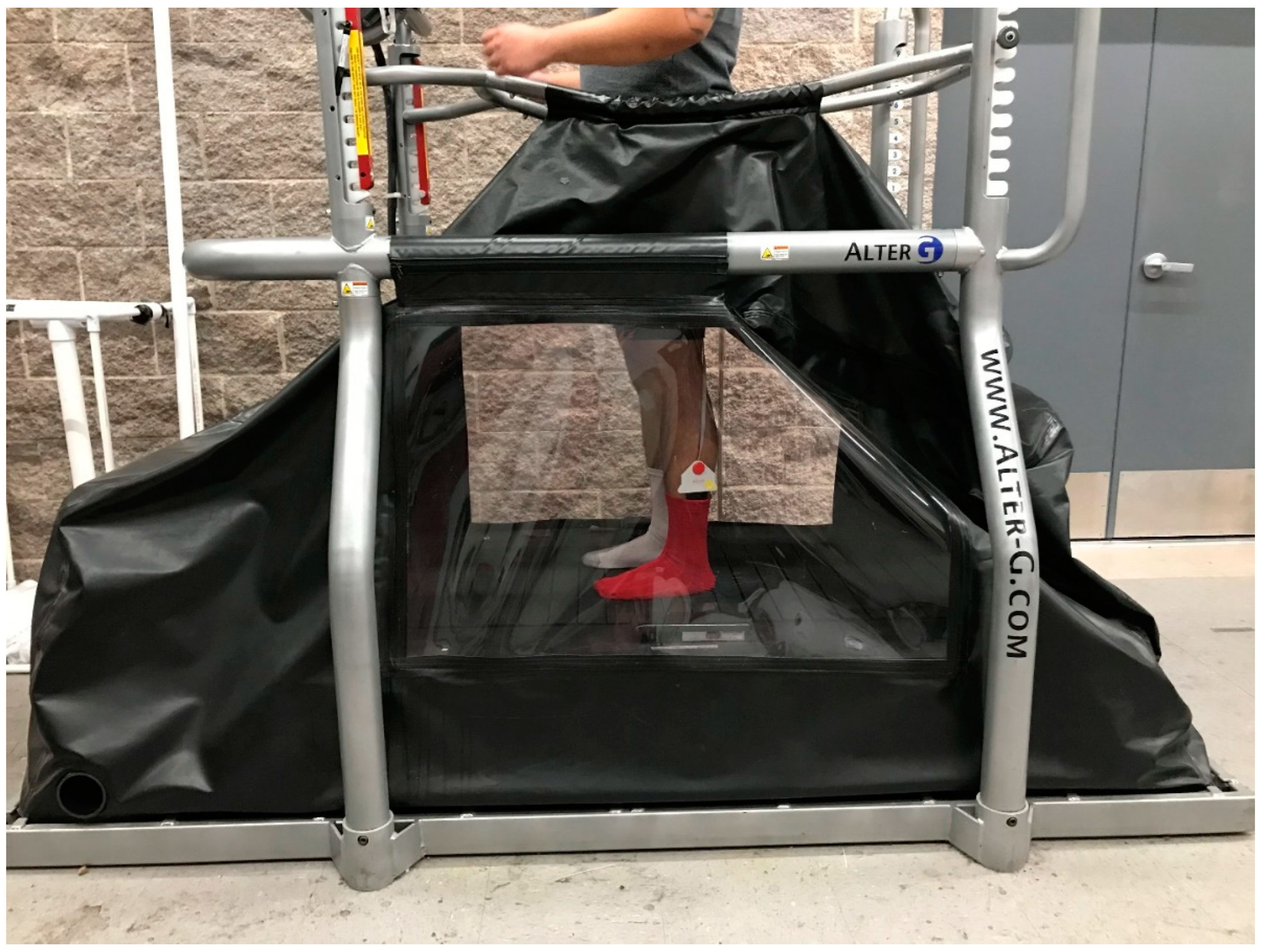
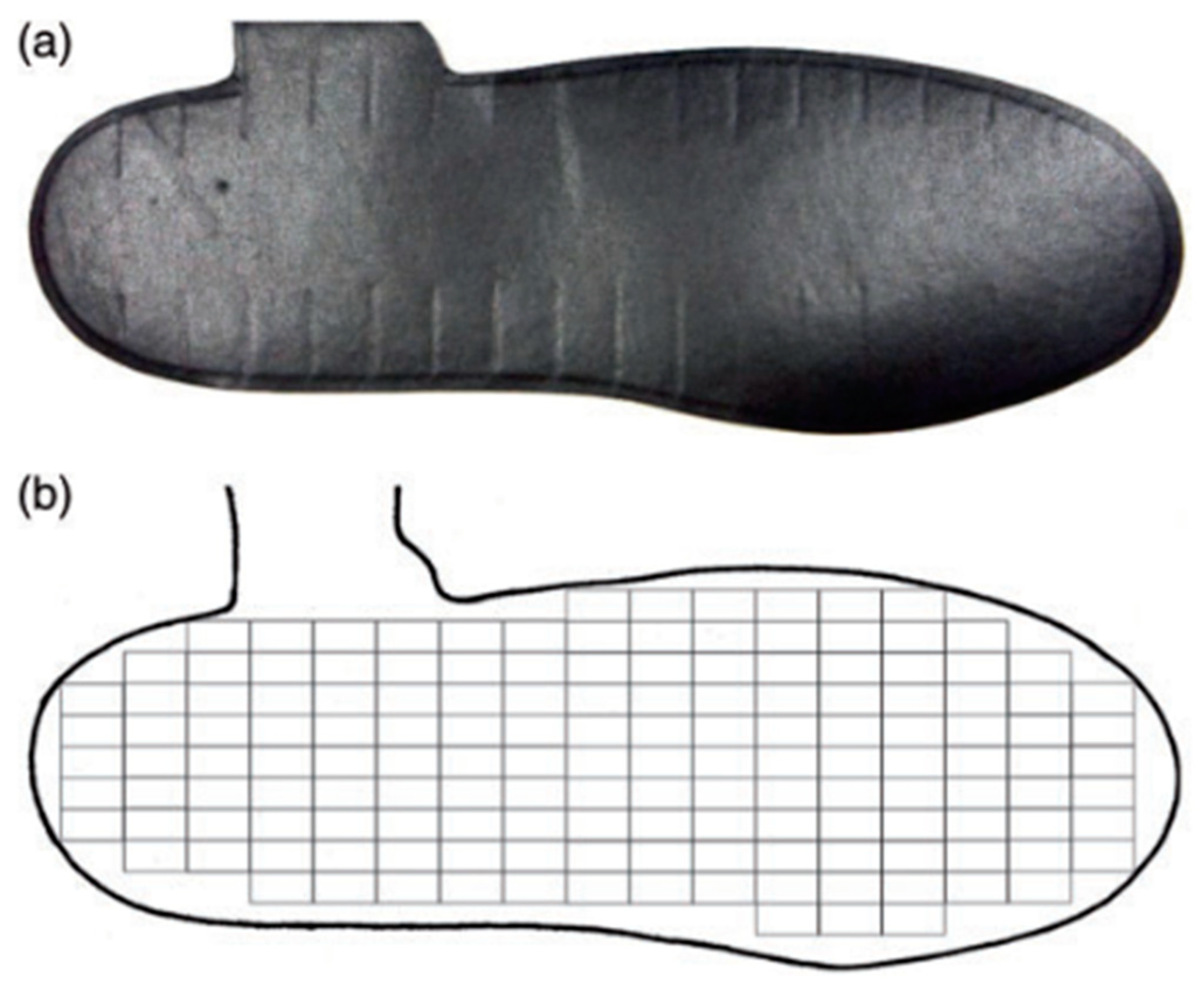
Prior researchers have observed the effect of simulated reduced-gravity exercise. However, the extent to which lower-body positive-pressure treadmill (LBPPT) walking alters kinematic gait characteristics is not well understood. The purpose of the study was to investigate the effect of LBPPT walking on selected gait parameters in simulated reduced-gravity conditions. Twenty-nine college-aged volunteers participated in this cross-sectional study. Participants wore pressure-measuring insoles (Medilogic GmBH, Schönefeld, Germany) and completed three 3.5-min walking trials on the LBPPT (AlterG, Inc., Fremont, CA, USA) at 100% (normal gravity) as well as reduced-gravity conditions of 40% and 20% body weight (BW). The resulting insole data were analyzed to calculate center of pressure (COP) variables: COP path length and width and stance time. The results showed that 100% BW condition was significantly different from both the 40% and 20% BW conditions, p < 0.05. There were no significant differences observed between the 40% and 20% BW conditions for COP path length and width. Conversely, stance time significantly differed between the 40% and 20% BW conditions. The findings of this study may prove beneficial for clinicians as they develop rehabilitation strategies to effectively unload the individual’s body weight to perform safe exercises.
Keywords: biomechanics; gait analysis; gait characteristics; pressure-measuring insoles; anti-gravity treadmill; reduced-gravity exercise; center of pressure; stance time biomechanics; gait analysis; gait characteristics; pressure-measuring insoles; anti-gravity treadmill; reduced-gravity exercise; center of pressure; stance time