Article

Multi-Channel Fusion Classification Method Based on Time-Series Data

1
School of Artificial Intelligent, Beijing Technology and Business University, Beijing 100048, China
2
China Light Industry Key Laboratory of Industrial Internet and Big Data, Beijing Technology and Business University, Beijing 100048, China
*
Author to whom correspondence should be addressed.
Sensors 2021, 21(13), 4391; https://doi.org/10.3390/s21134391
Submission received: 14 April 2021 / Revised: 4 June 2021 / Accepted: 15 June 2021 / Published: 26 June 2021
(This article belongs to the Special Issue Wearable Sensor for Activity Analysis and Context Recognition)

Abstract

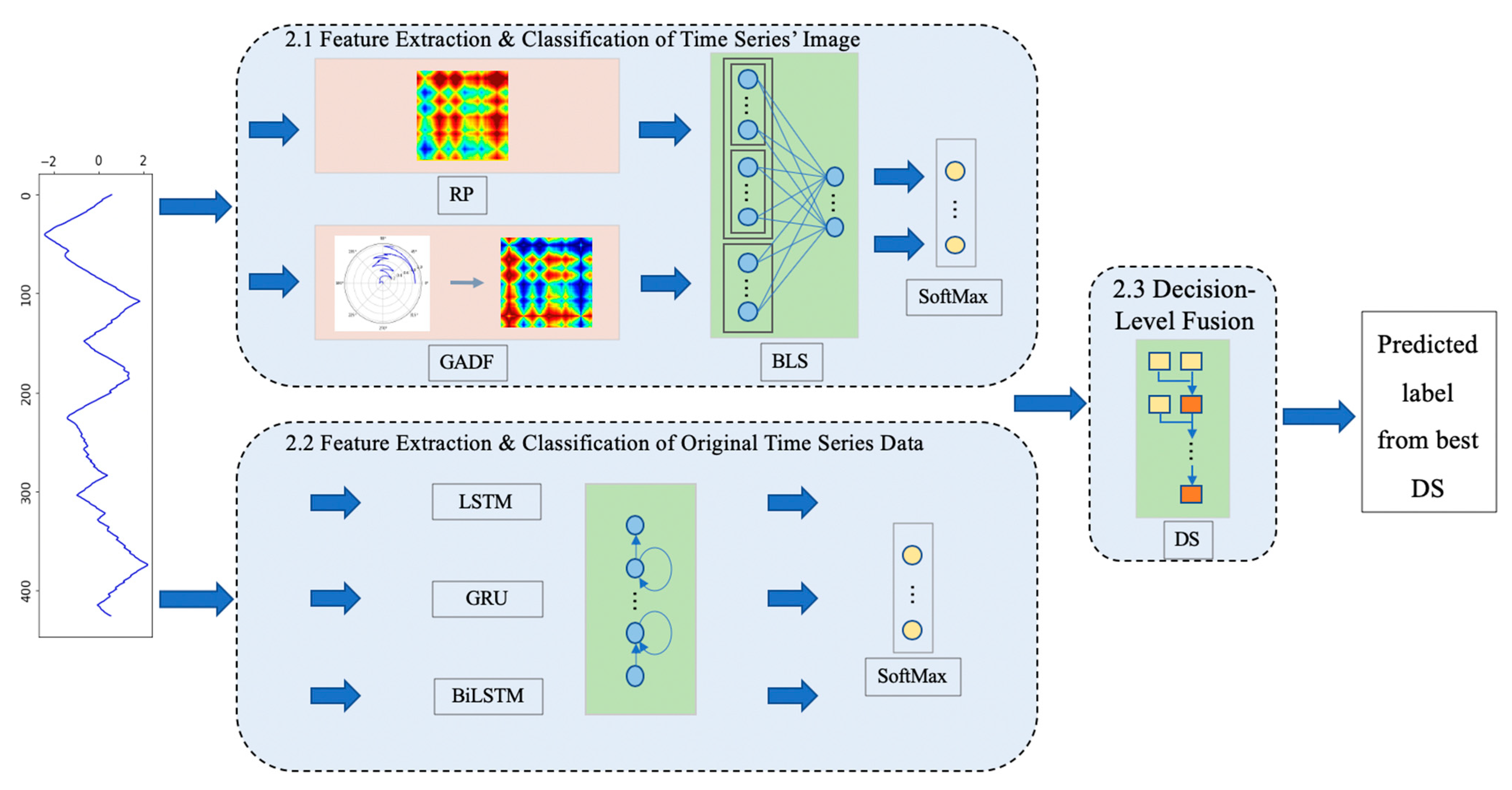
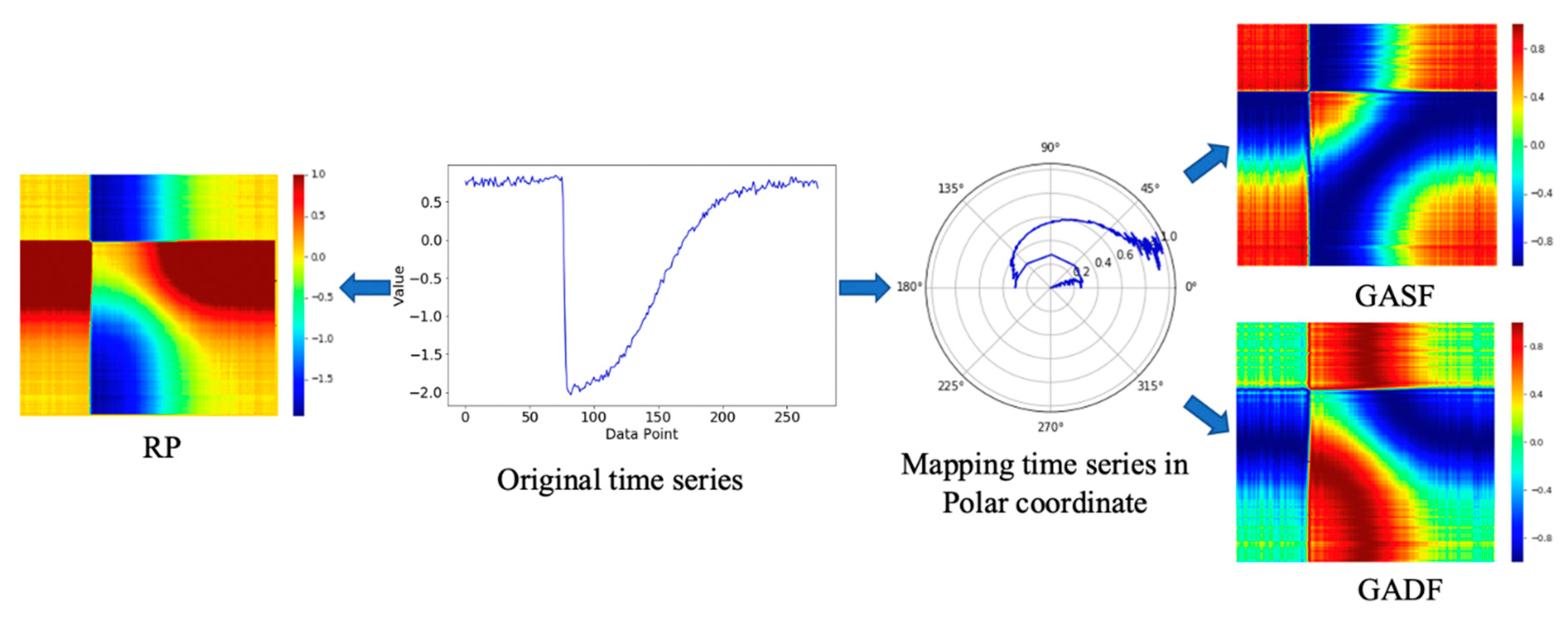
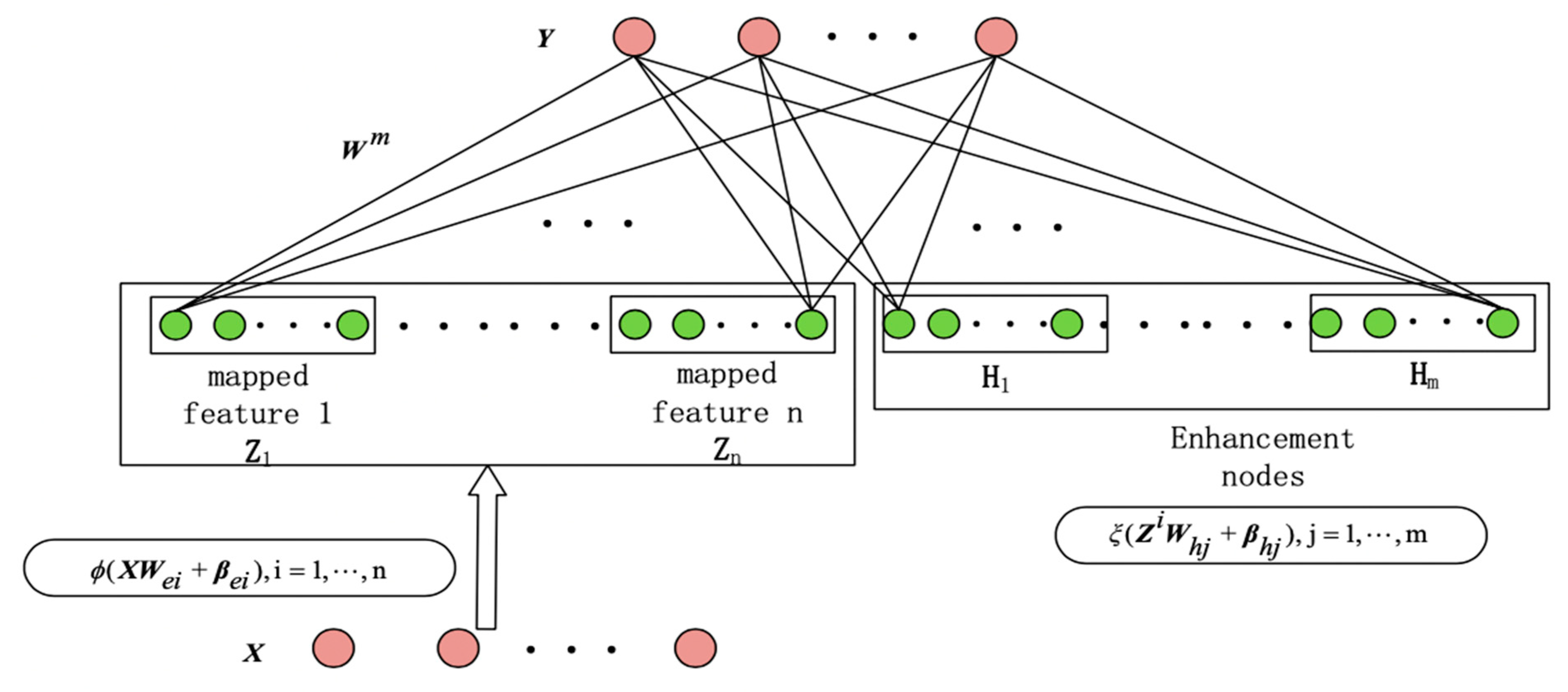
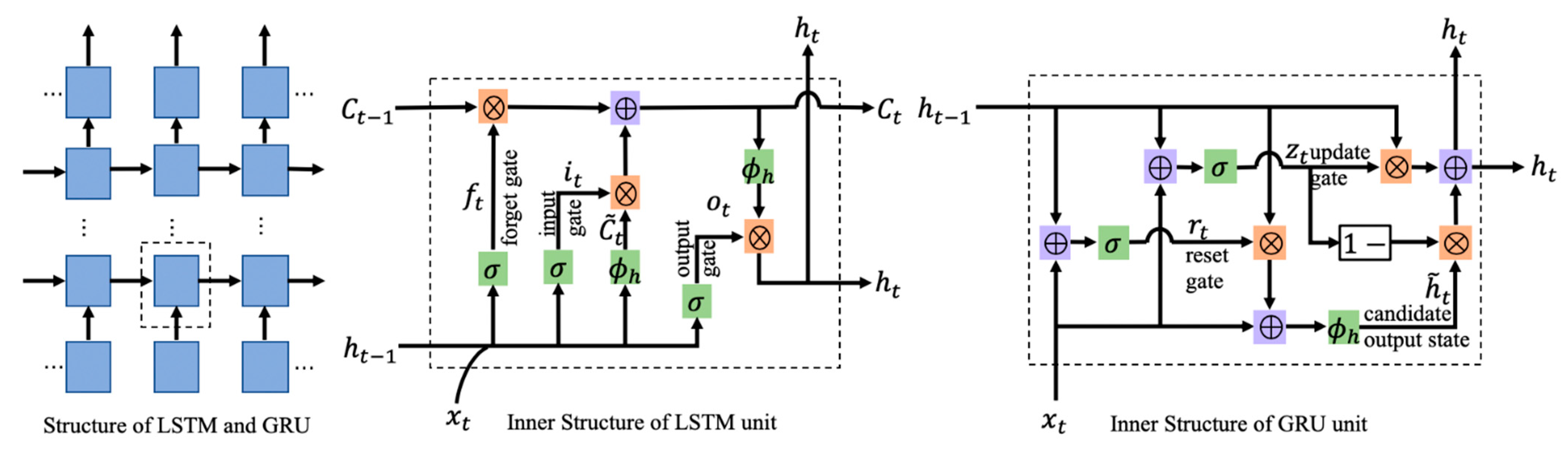
Time-series data generally exists in many application fields, and the classification of time-series data is one of the important research directions in time-series data mining. In this paper, univariate time-series data are taken as the research object, deep learning and broad learning systems (BLSs) are the basic methods used to explore the classification of multi-modal time-series data features. Long short-term memory (LSTM), gated recurrent unit, and bidirectional LSTM networks are used to learn and test the original time-series data, and a Gramian angular field and recurrence plot are used to encode time-series data to images, and a BLS is employed for image learning and testing. Finally, to obtain the final classification results, Dempster–Shafer evidence theory (D–S evidence theory) is considered to fuse the probability outputs of the two categories. Through the testing of public datasets, the method proposed in this paper obtains competitive results, compensating for the deficiencies of using only time-series data or images for different types of datasets.
Keywords: time-series; classification; deep learning; broad learning system; fusion time-series; classification; deep learning; broad learning system; fusion