Article

Improvement of Robot Accuracy with an Optical Tracking System


1
Shanghai Key Laboratory of Intelligent Manufacturing and Robotics, School of Mechatronic Engineering and Automation, Shanghai University, Shanghai 201900, China
2
Shanghai Robot Industrial Technology Research Institute, Shanghai 200062, China
*
Authors to whom correspondence should be addressed.
Sensors 2020, 20(21), 6341; https://doi.org/10.3390/s20216341
Submission received: 21 September 2020 / Revised: 15 October 2020 / Accepted: 3 November 2020 / Published: 6 November 2020
(This article belongs to the Section Sensors and Robotics)

Abstract

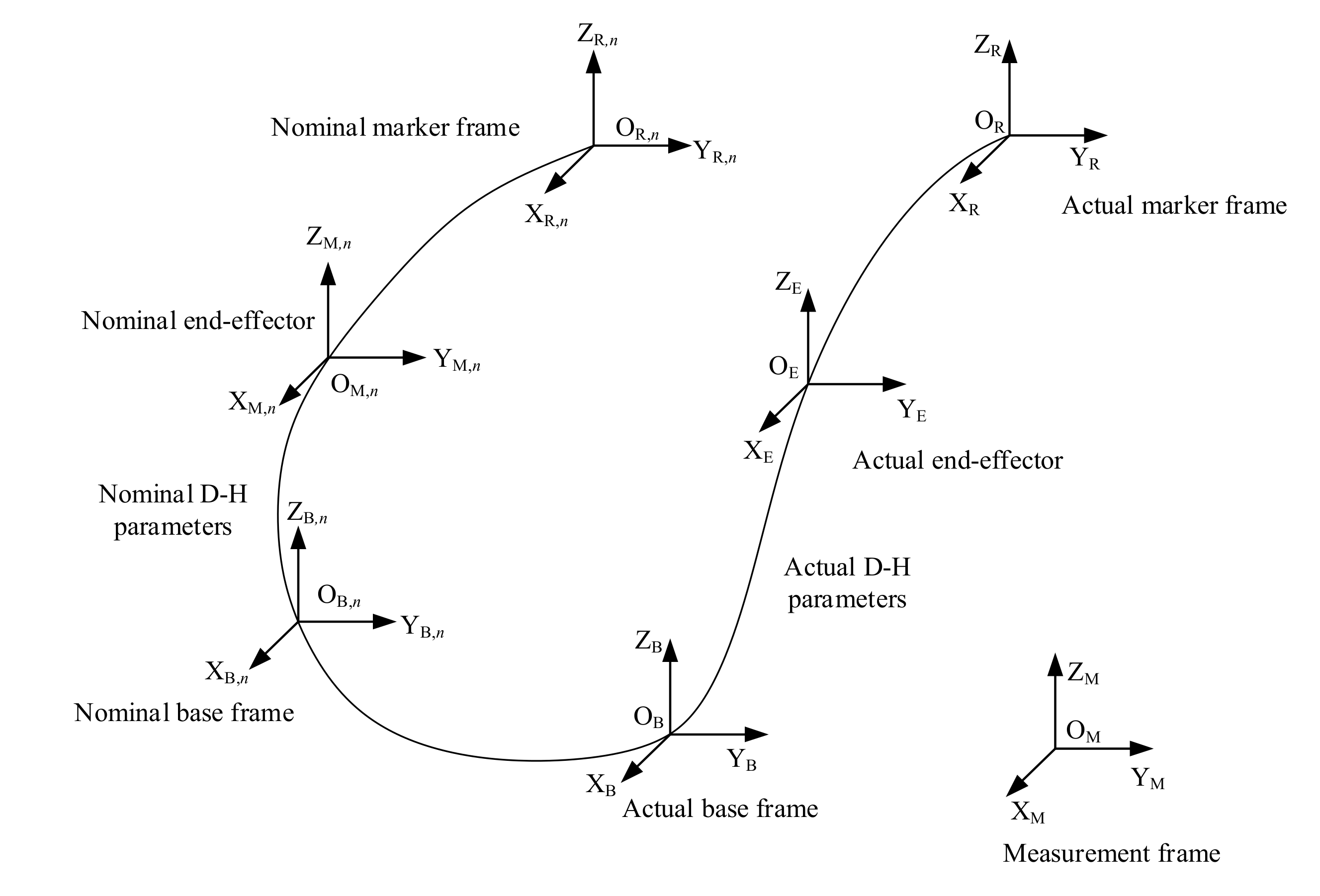
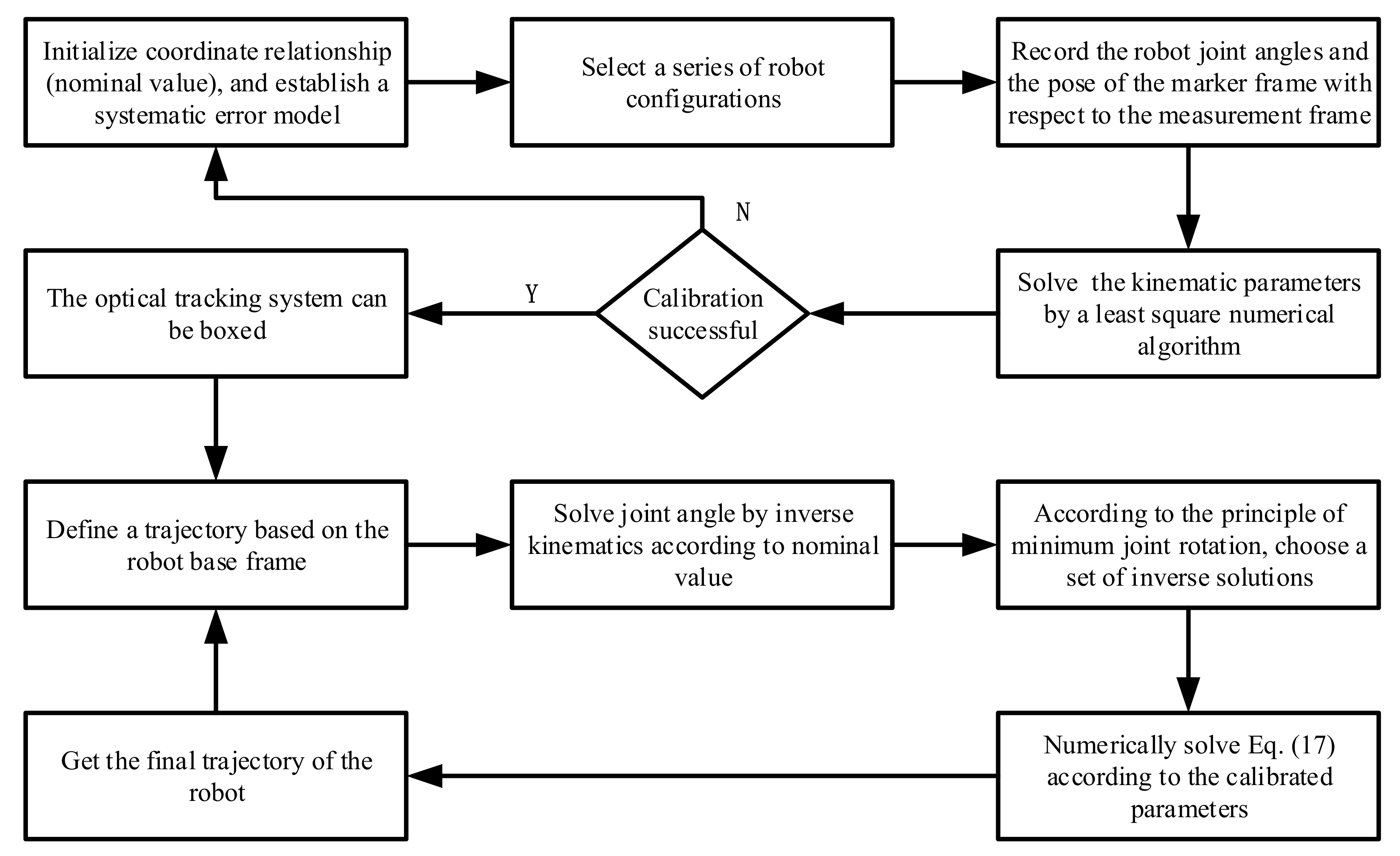
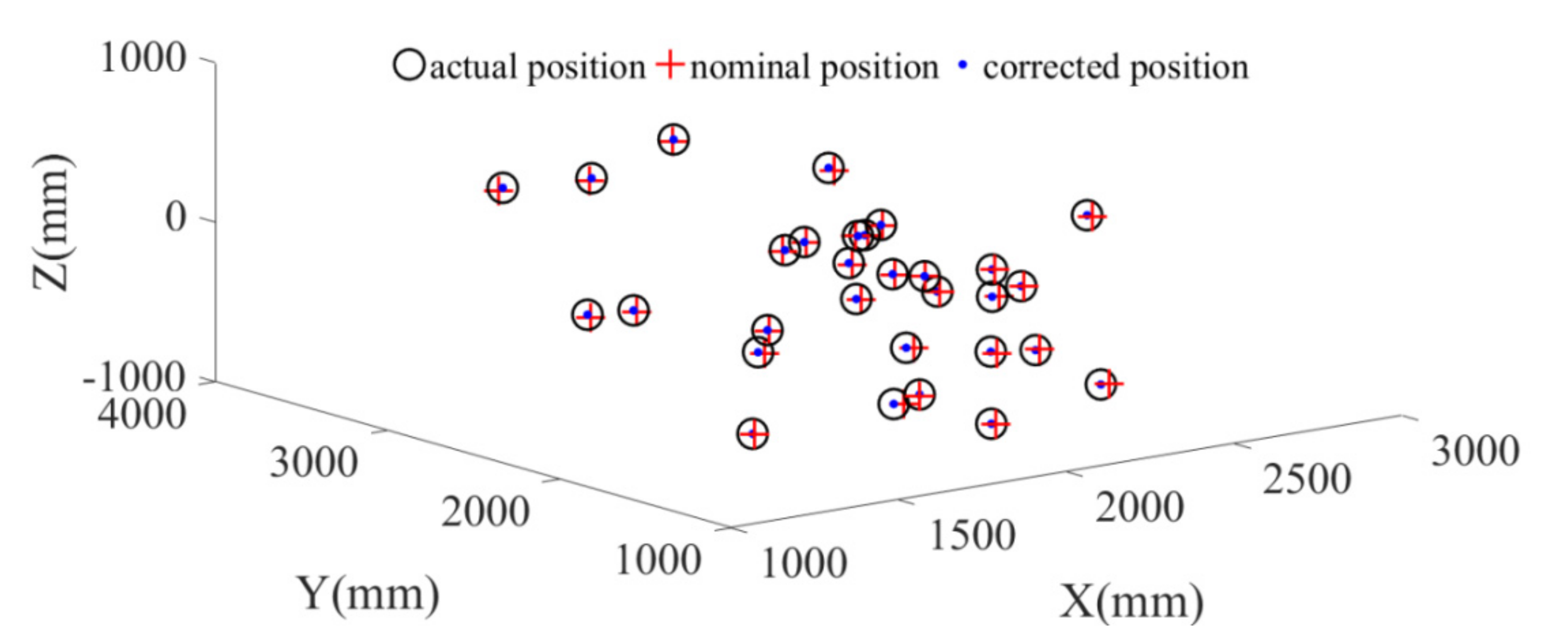
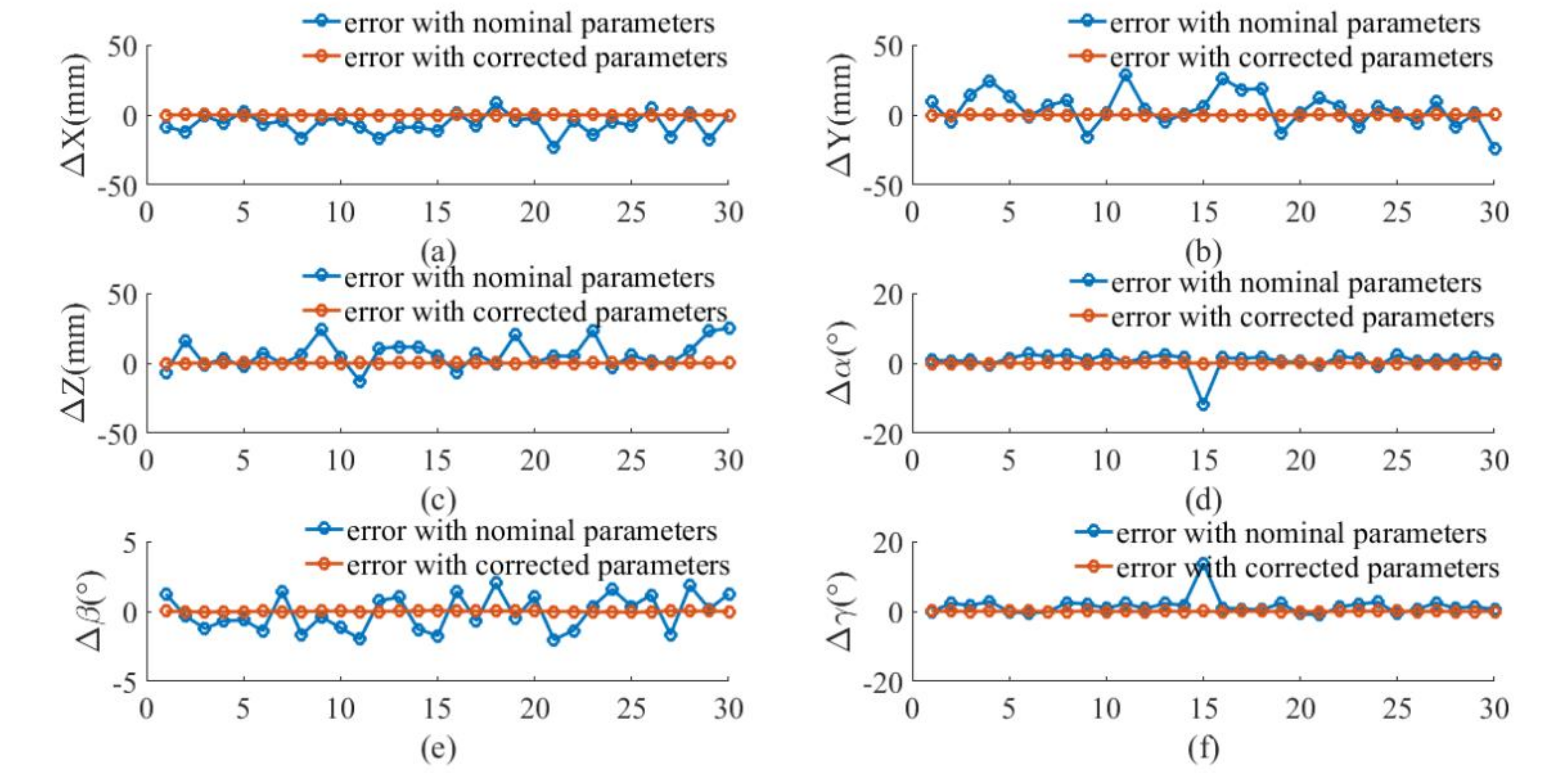
Robot positioning accuracy plays an important role in industrial automation applications. In this paper, a method is proposed for the improvement of robot accuracy with an optical tracking system that integrates a least-square numerical algorithm for the identification of kinematic parameters. In the process of establishing the system kinematics model, the positioning errors of the tool and the robot base, and the errors of the Denavit-Hartenberg parameters are all considered. In addition, the linear dependence among the parameters is analyzed. Numerical simulation based on a 6-axis UR robot is performed to validate the effectiveness of the proposed method. Then, the method is implemented on the actual robot, and the experimental results show that the robots can reach desired poses with an accuracy of ±0.35 mm for position and ±0.07° for orientation. Benefitting from the optical tracking system, the proposed procedure can be easily automated to improve the robot accuracy for applications requiring high positioning accuracy such as riveting, drill, and precise assembly.
Keywords: robot; kinematic parameter identification; optical tracking system robot; kinematic parameter identification; optical tracking system