

Preparation of pH-Indicative and Flame-Retardant Nanocomposite Films for Smart Packaging Applications


 , , ,
, , ,  , ,
, ,
Abstract
1. Introduction
2. Experimental
2.1. Materials and Methods
2.2. Preparation of the Nanocomposite Films (NCFs)
2.3. Characterization of the NCFs
2.3.1. Water Swelling
2.3.2. Water Solubility
2.3.3. FTIR Spectroscopy
2.3.4. Thermal Analysis and Flame-Retardant Property of the NCFs
2.3.5. Mechanical Analysis
2.3.6. XRD Analysis
2.3.7. SEM Analysis
2.3.8. Optical Properties of the Film
2.3.9. Sensing Shrimp Spoilage
2.3.10. Statistical Analysis
3. Results and Discussion
3.1. Optimization of Film Fabricating Parameters
3.2. Characterization of the NCFs
3.2.1. FTIR Analysis
3.2.2. Thermal Analysis
3.3. XRD Analysis
3.4. SEM Analysis
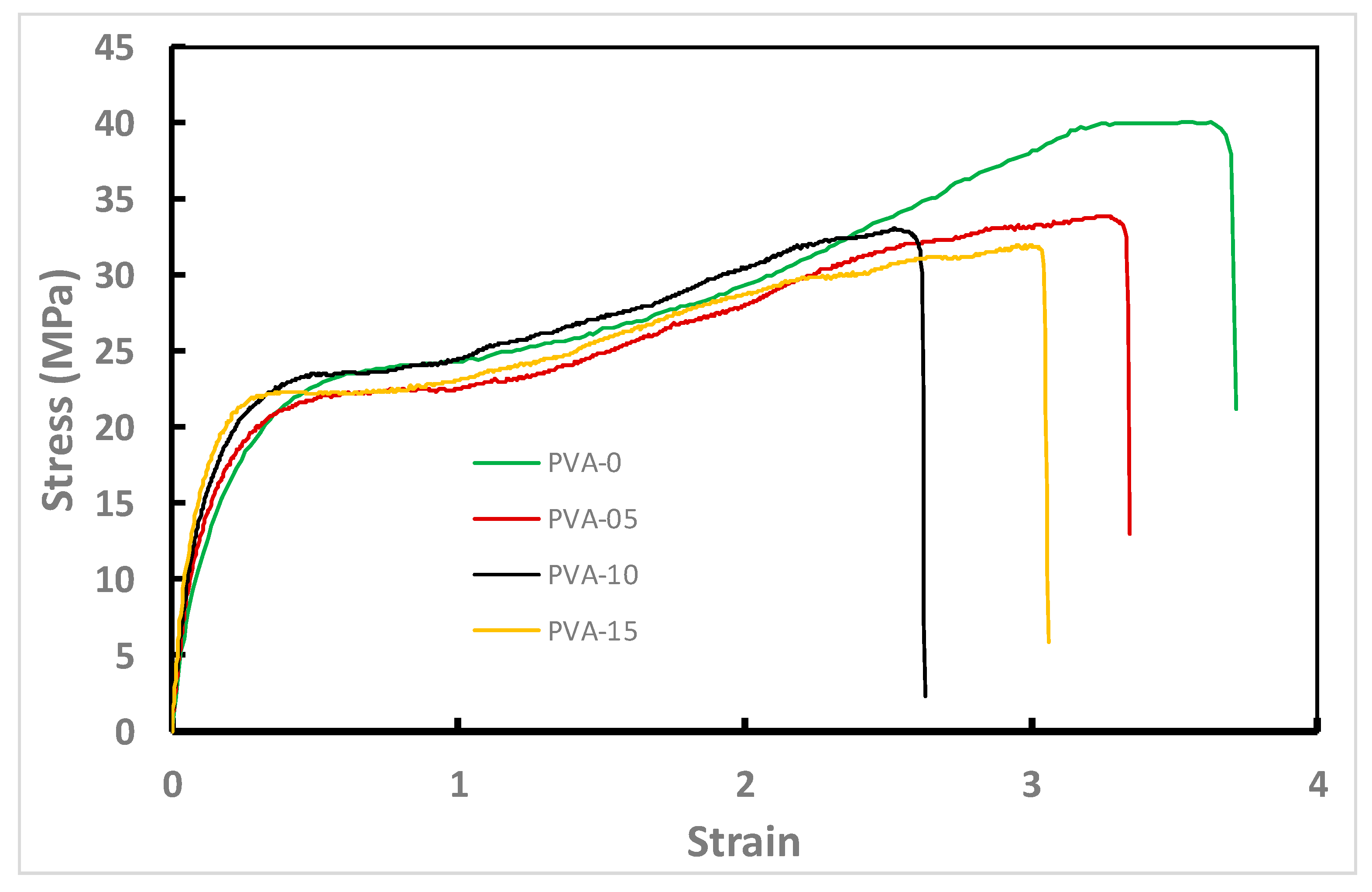
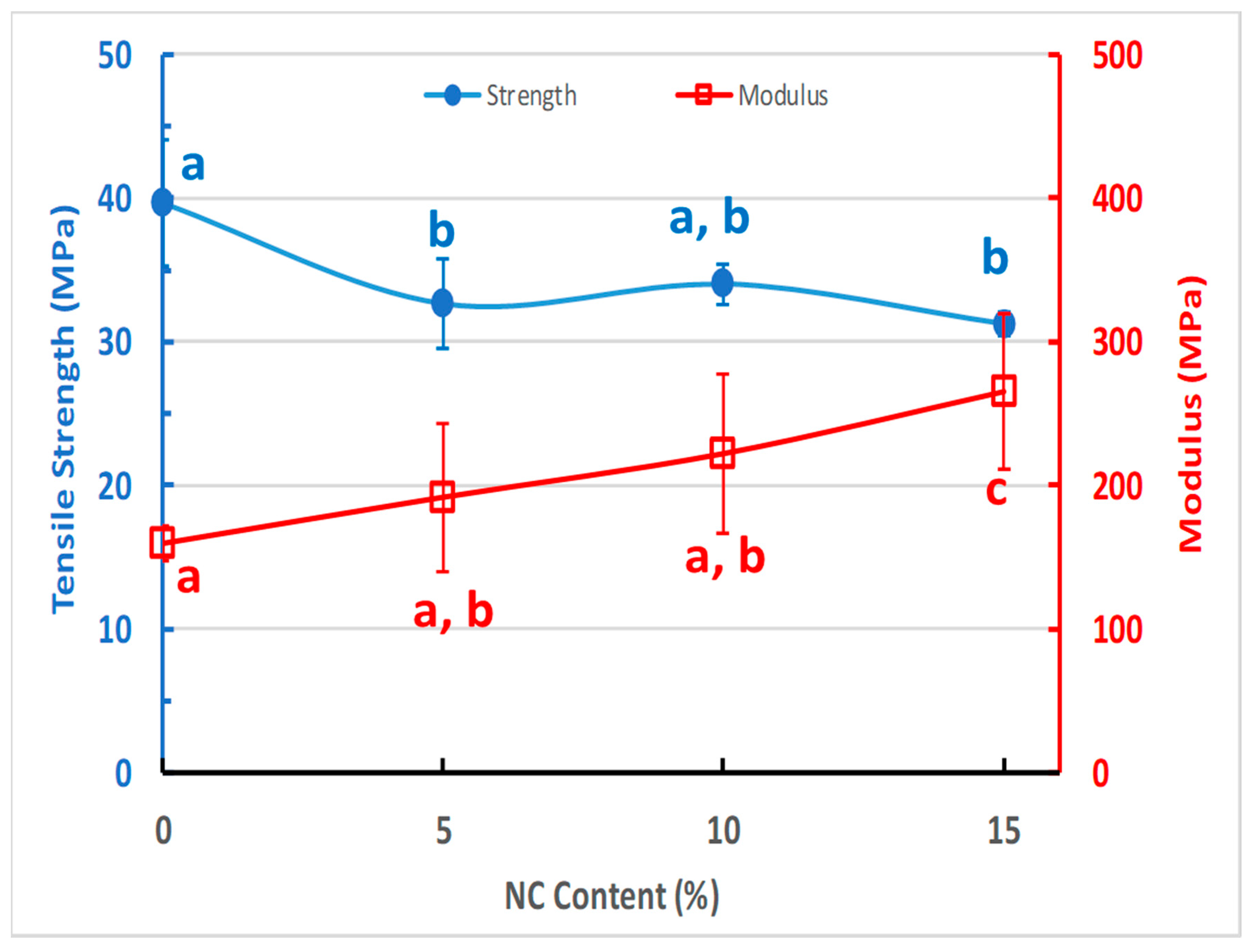
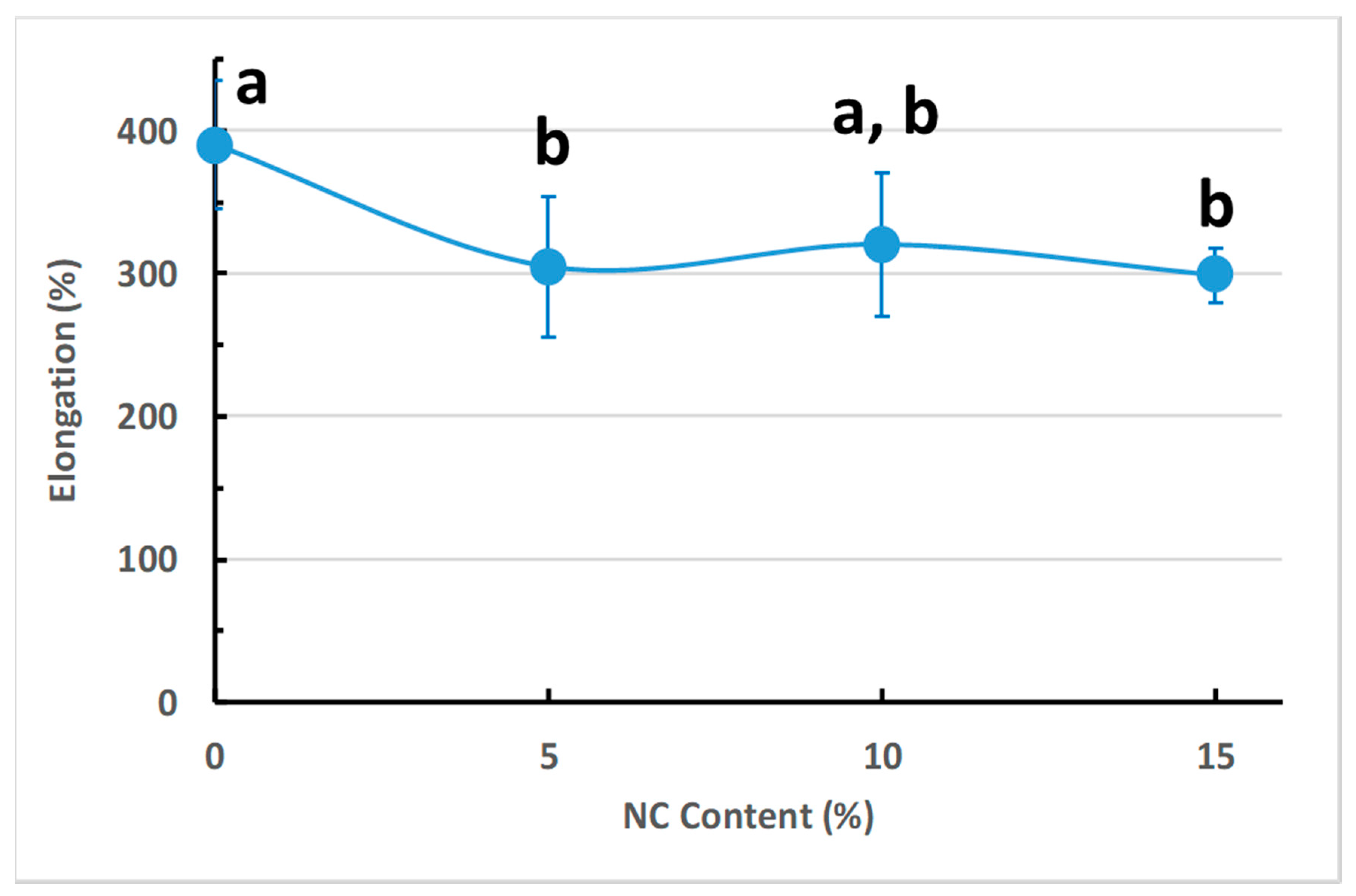
3.5. Mechanical Properties of the NCFs
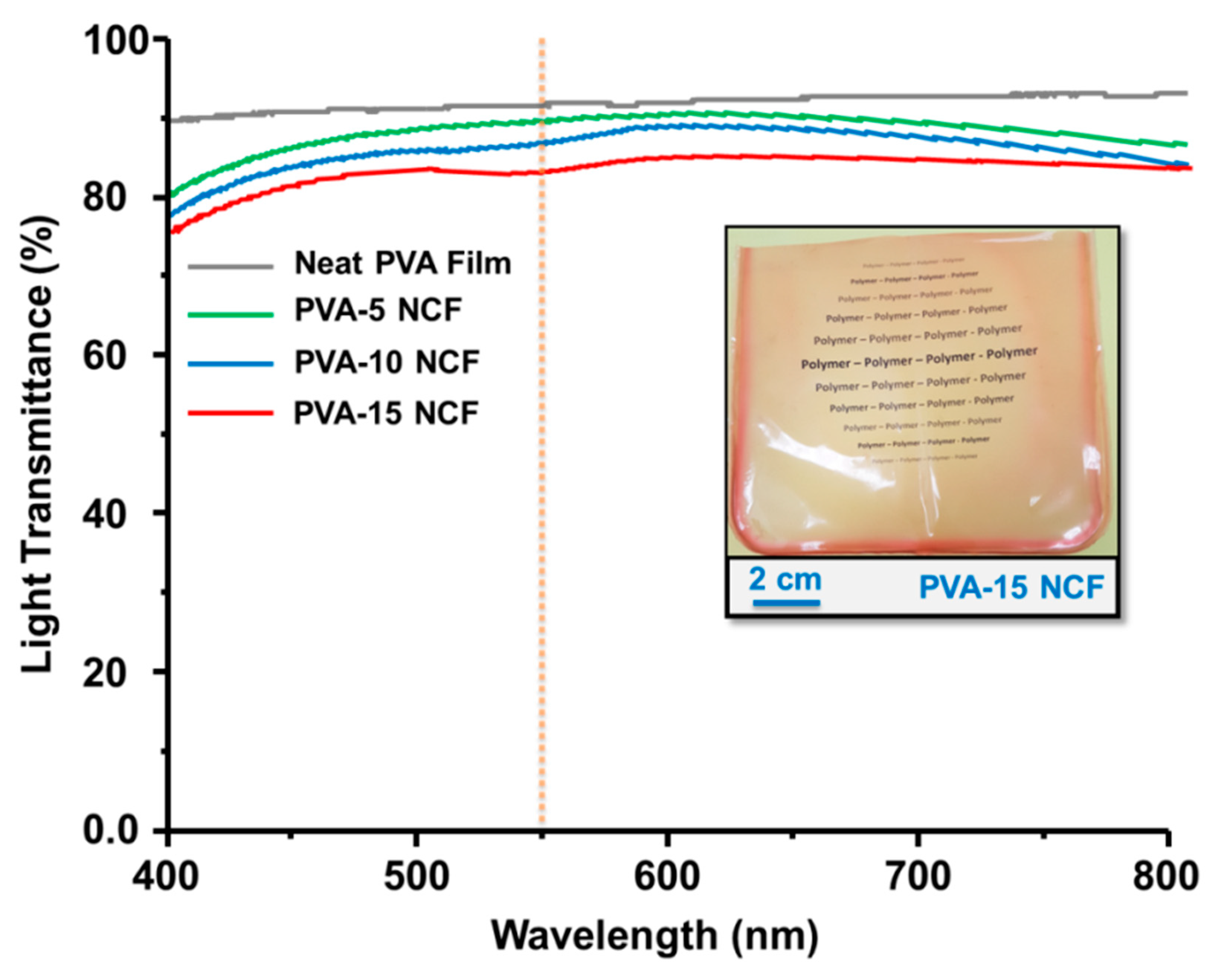
3.6. Optical Properties of the NCFs
3.7. Application of the NCFs as pH-Indicative Films for Food Packaging
4. Conclusions
Author Contributions
Funding
Conflicts of Interest
References
- Biji, K.B.; Ravishankar, C.N.; Mohan, C.O.; Srinivasa Gopal, T.K. Smart packaging systems for food applications: A review. J. Food Sci. Technol. 2015, 52, 6125–6135. [Google Scholar] [CrossRef] [Scilit] [PubMed]
- Hannon, J.C.; Kerry, J.P.; Cruz-Romero, M.; Azlin-Hasim, S.; Morris, M.; Cummins, E. Kinetic desorption models for the release of nanosilver from an experimental nanosilver coating on polystyrene food packaging. Innov. Food Sci. Emerg. Technol. 2017, 44, 149–158. [Google Scholar] [CrossRef] [Scilit]
- Gómez-Estaca, J.; López-de-Dicastillo, C.; Hernández-Muñoz, P.; Catalá, R.; Gavara, R. Advances in antioxidant active food packaging. Trends Food Sci. Technol. 2014, 35, 42–51. [Google Scholar] [CrossRef] [Scilit]
- Hadian, M.; Rajaei, A.; Mohsenifar, A.; Tabatabaei, M. Encapsulation of Rosmarinus officinalis essential oils in chitosan-benzoic acid nanogel with enhanced antibacterial activity in beef cutlet against Salmonella typhimurium during refrigerated storage. LWT 2017, 84, 394–401. [Google Scholar] [CrossRef] [Scilit]
- Ahmad, V.; Khan, M.S.; Jamal, Q.M.S.; Alzohairy, M.A.; Al Karaawi, M.A.; Siddiqui, M.U. Antimicrobial potential of bacteriocins: In therapy, agriculture and food preservation. Int. J. Antimicrob. Agents 2017, 49, 1–11. [Google Scholar] [CrossRef] [Scilit] [PubMed]
- MacGowan, A.; Macnaughton, E. Antibiotic resistance. Medicine 2017, 45, 622–628. [Google Scholar] [CrossRef] [Scilit]
- Nordström, R.; Malmsten, M. Delivery systems for antimicrobial peptides. Adv. Colloid Interface Sci. 2017, 242, 17–34. [Google Scholar] [CrossRef] [Scilit]
- Ribeiro-Santos, R.; Andrade, M.; Sanches-Silva, A. Application of encapsulated essential oils as antimicrobial agents in food packaging. Curr. Opin. Food Sci. 2017, 14, 78–84. [Google Scholar] [CrossRef] [Scilit]
- Marsh, K.; Bugusu, B. Food Packaging? Roles, Materials, and Environmental Issues. J. Food Sci. 2007, 72, R39–R55. [Google Scholar] [CrossRef] [Scilit]
- Mellinas, C.; Valdés, A.; Ramos, M.; Burgos, N.; Garrigós, M.D.C.; Jiménez, A. Active edible films: Current state and future trends. J. Appl. Polym. Sci. 2015, 133, 42631. [Google Scholar] [CrossRef] [Scilit]
- Nemes, S.A.; Szabo, K.; Vodnar, D.C. Applicability of Agro-Industrial By-Products in Intelligent Food Packaging. Coatings 2020, 10, 550. [Google Scholar] [CrossRef] [Scilit]
- Guerrero, P.; Arana, P.; O’Grady, M.; Kerry, J.; De la Caba, K. Valorization of industrial by-products: Development of active coatings to reduce food losses. J. Clean. Prod. 2015, 100, 179–184. [Google Scholar] [CrossRef] [Scilit]
- Halonen, N.J.; Palvölgyi, P.S.; Bassani, A.; Fiorentini, C.; Nair, R.; Spigno, G.; Kordas, K. Bio-based smart materials for food packaging and sensors—A review. Front. Mater. 2020, 7, 82. [Google Scholar] [CrossRef] [Scilit]
- Barlow, C.Y.; Morgan, D.C. Polymer film packaging for food: An environmental assessment. Resour. Conserv. Recycl. 2013, 78, 74–80. [Google Scholar] [CrossRef] [Scilit]
- Valdés, A.; Mellinas, A.C.; Ramos, M.; Garrigós, M.C.; Jiménez, A. Natural additives and agricultural wastes in biopolymer formulations for food packaging. Front. Chem. 2014, 2, 6. [Google Scholar] [CrossRef] [Scilit]
- Ramos, M.; Jiménez, A.; Peltzer, M.; Garrigós, M.C. Development of novel nano-biocomposite antioxidant films based on poly (lactic acid) and thymol for active packaging. Food Chem. 2014, 162, 149–155. [Google Scholar] [CrossRef] [Scilit]
- Martins, N.; Roriz, C.L.; Morales, P.; Barros, L.; Ferreira, I.C. Food colorants: Challenges, opportunities and current desires of agro-industries to ensure consumer expectations and regulatory practices. Trends Food Sci. Technol. 2016, 52, 1–15. [Google Scholar] [CrossRef] [Scilit]
- Chethana, S.; Nayak, C.A.; Raghavarao, K.S.M.S. Aqueous two phase extraction for purification and concentration of betalains. J. Food Eng. 2007, 81, 679–687. [Google Scholar] [CrossRef] [Scilit]
- Roy, S.; Rhim, J.-W. Anthocyanin food colorant and its application in pH-responsive color change indicator films. Crit. Rev. Food Sci. Nutr. 2020. [Google Scholar] [CrossRef] [Scilit]
- Alexandra Pazmiño-Durán, E.; Giusti, M.M.; Wrolstad, R.E.; Glória, M.B.A. Anthocyanins from banana bracts (Musa X paradisiaca) as potential food colorants. Food Chem. 2001, 73, 327–332. [Google Scholar] [CrossRef] [Scilit]
- Bueno, J.M.; Sáez-Plaza, P.; Ramos-Escudero, F.; Jiménez, A.M.; Fett, R.; Asuero, A.G. Analysis and Antioxidant Capacity of Anthocyanin Pigments. Part II: Chemical Structure, Color, and Intake of Anthocyanins. Crit. Rev. Anal. Chem. 2012, 42, 126–151. [Google Scholar] [CrossRef] [Scilit]
- Uranga, J.; Etxabide, A.; Guerrero, P.; de la Caba, K. Development of active fish gelatin films with anthocyanins by compression molding. Food Hydrocoll. 2018, 84, 313–320. [Google Scholar] [CrossRef] [Scilit]
- Prietto, L.; Mirapalhete, T.C.; Pinto, V.Z.; Hoffmann, J.F.; Vanier, N.L.; Lim, L.-T.; Guerra Dias, A.R.; da Rosa Zavareze, E. pH-sensitive films containing anthocyanins extracted from black bean seed coat and red cabbage. LWT 2017, 80, 492–500. [Google Scholar] [CrossRef] [Scilit]
- Pourjavaher, S.; Almasi, H.; Meshkini, S.; Pirsa, S.; Parandi, E. Development of a colorimetric pH indicator based on bacterial cellulose nanofibers and red cabbage (Brassica oleraceae) extract. Carbohydr. Polym. 2017, 156, 193–201. [Google Scholar] [CrossRef] [Scilit]
- Ahmad, N.A.; Yook Heng, L.; Salam, F.; Mat Zaid, M.H.; Abu Hanifah, S. A colorimetric pH sensor based on Clitoria sp and Brassica sp for monitoring of food spoilage using chromametry. Sensors 2019, 19, 4813. [Google Scholar] [CrossRef] [Scilit]
- Dudnyk, I.; Janeček, E.-R.; Vaucher-Joset, J.; Stellacci, F. Edible sensors for meat and seafood freshness. Sens. Actuators B Chem. 2018, 259, 1108–1112. [Google Scholar] [CrossRef] [Scilit]
- Kuswandi, B.; Asih, N.P.N.; Pratoko, D.K.; Kristiningrum, N.; Moradi, M. Edible pH sensor based on immobilized red cabbage anthocyanins into bacterial cellulose membrane for intelligent food packaging. Packag. Technol. Sci. 2020, 33, 321–332. [Google Scholar] [CrossRef] [Scilit]
- Dyrby, M.; Westergaard, N.; Stapelfeldt, H. Light and heat sensitivity of red cabbage extract in soft drink model systems. Food Chem. 2001, 72, 431–437. [Google Scholar] [CrossRef] [Scilit]
- Giusti, M.M.; Wrolstad, R.E. Characterization of Red Radish Anthocyanins. J. Food Sci. 1996, 61, 322–326. [Google Scholar] [CrossRef] [Scilit]
- Gutiérrez, T.J.; Alvarez, V.A. Bionanocomposite films developed from corn starch and natural and modified nano-clays with or without added blueberry extract. Food Hydrocoll. 2018, 77, 407–420. [Google Scholar] [CrossRef] [Scilit]
- Ma, Q.; Wang, L. Preparation of a visual pH-sensing film based on tara gum incorporating cellulose and extracts from grape skins. Sens. Actuators B Chem. 2016, 235, 401–407. [Google Scholar] [CrossRef] [Scilit]
- Silva-Pereira, M.C.; Teixeira, J.A.; Pereira-Júnior, V.A.; Stefani, R. Chitosan/corn starch blend films with extract from Brassica oleraceae (Red cabbage) as a visual indicator of fish deterioration. LWT Food Sci. Technol. 2015, 61, 258–262. [Google Scholar] [CrossRef] [Scilit]
- Veiga-Santos, P.; Ditchfield, C.; Tadini, C.C. Development and evaluation of a novel pH indicator biodegradable film based on cassava starch. J. Appl. Polym. Sci. 2010, 120, 1069–1079. [Google Scholar] [CrossRef] [Scilit]
- Chandrasekhar, J.; Madhusudhan, M.C.; Raghavarao, K.S.M.S. Extraction of anthocyanins from red cabbage and purification using adsorption. Food Bioprod. Process. 2012, 90, 615–623. [Google Scholar] [CrossRef] [Scilit]
- De Moura, M.R.; Aouada, F.A.; Avena-Bustillos, R.J.; McHugh, T.H.; Krochta, J.M.; Mattoso, L.H.C. Improved barrier and mechanical properties of novel hydroxypropyl methylcellulose edible films with chitosan/tripolyphosphate nanoparticles. J. Food Eng. 2009, 92, 448–453. [Google Scholar] [CrossRef] [Scilit]
- Priya, B.; Gupta, V.K.; Pathania, D.; Singha, A.S. Synthesis, characterization and antibacterial activity of biodegradable starch/PVA composite films reinforced with cellulosic fibre. Carbohydr. Polym. 2014, 109, 171–179. [Google Scholar] [CrossRef] [Scilit]
- Thakur, V.K.; Thakur, M.K. Recent Advances in Graft Copolymerization and Applications of Chitosan: A Review. ACS Sustain. Chem. Eng. 2014, 2, 2637–2652. [Google Scholar] [CrossRef] [Scilit]
- Ma, Q.; Liang, T.; Cao, L.; Wang, L. Intelligent poly (vinyl alcohol)-chitosan nanoparticles-mulberry extracts films capable of monitoring pH variations. Int. J. Biol. Macromol. 2018, 108, 576–584. [Google Scholar] [CrossRef] [Scilit]
- Bonilla, J.; Fortunati, E.; Atarés, L.; Chiralt, A.; Kenny, J.M. Physical, structural and antimicrobial properties of poly vinyl alcohol–chitosan biodegradable films. Food Hydrocoll. 2014, 35, 463–470. [Google Scholar] [CrossRef] [Scilit]
- Pal, K.; Banthia, A.K.; Majumdar, D.K. Preparation and characterization of polyvinyl alcohol-gelatin hydrogel membranes for biomedical applications. Aaps Pharmscitech 2007, 8, 21. [Google Scholar] [CrossRef] [Scilit]
- Abdullah, Z.W.; Dong, Y.; Davies, I.J.; Barbhuiya, S. PVA, PVA blends, and their nanocomposites for biodegradable packaging application. Polym. Plast. Technol. Eng. 2017, 56, 1307–1344. [Google Scholar] [CrossRef] [Scilit]
- Tripathi, R.; Pudake, R.N.; Shrivastav, B.; Shrivastav, A. Antibacterial activity of poly (vinyl alcohol)—Biogenic silver nanocomposite film for food packaging material. Adv. Nat. Sci. Nanosci. Nanotechnol. 2018, 9, 025020. [Google Scholar] [CrossRef] [Scilit]
- Sarwar, M.S.; Niazi, M.B.K.; Jahan, Z.; Ahmad, T.; Hussain, A. Preparation and characterization of PVA/nanocellulose/Ag nanocomposite films for antimicrobial food packaging. Carbohydr. Polym. 2018, 184, 453–464. [Google Scholar] [CrossRef] [Scilit] [PubMed]
- Mathew, S.; Mathew, J.; Radhakrishnan, E. Polyvinyl alcohol/silver nanocomposite films fabricated under the influence of solar radiation as effective antimicrobial food packaging material. J. Polym. Res. 2019, 26, 223. [Google Scholar] [CrossRef] [Scilit]
- Yu, Z.; Wang, W.; Sun, L.; Kong, F.; Lin, M.; Mustapha, A. Preparation of cellulose nanofibril/titanium dioxide nanoparticle nanocomposites as fillers for PVA-based packaging and investigation into their intestinal toxicity. Int. J. Biol. Macromol. 2020, 156, 1174–1182. [Google Scholar] [CrossRef] [Scilit] [PubMed]
- Choo, K.; Ching, Y.C.; Chuah, C.H.; Julai, S.; Liou, N.-S. Preparation and characterization of polyvinyl alcohol-chitosan composite films reinforced with cellulose nanofiber. Materials 2016, 9, 644. [Google Scholar] [CrossRef] [Scilit]
- Silva, M.A.D.; Bierhalz, A.C.K.; Kieckbusch, T.G. Alginate and pectin composite films crosslinked with Ca2+ ions: Effect of the plasticizer concentration. Carbohydr. Polym. 2009, 77, 736–742. [Google Scholar] [CrossRef] [Scilit]
- Wang, X.; Ji, S.-L.; Wang, X.-Q.; Bian, H.-Y.; Lin, L.-R.; Dai, H.-Q.; Xiao, H. Thermally conductive, super flexible and flame-retardant BN–OH/PVA composite film reinforced by lignin nanoparticles. J. Mater. Chem. C 2019, 7, 14159–14169. [Google Scholar] [CrossRef] [Scilit]
- Patel, H.A.; Somani, R.S.; Bajaj, H.C.; Jasra, R.V. Nanoclays for polymer nanocomposites, paints, inks, greases and cosmetics formulations, drug delivery vehicle and waste water treatment. Bull. Mater. Sci. 2006, 29, 133–145. [Google Scholar] [CrossRef] [Scilit]
- Bumbudsanpharoke, N.; Ko, S. Nanoclays in Food and Beverage Packaging. J. Nanomater. 2019, 2019, 1–13. [Google Scholar] [CrossRef] [Scilit]
- Allison, P.G.; Moser, R.D.; Chandler, M.Q.; Caminero-Rodriguez, J.A.; Torres-Cancel, K.; Rivera, O.G.; Goodwin, J.R.; Gore, E.R.; Weiss, C.A. Mechanical, thermal, and microstructural analysis of polyvinyl alcohol/montmorillonite nanocomposites. J. Nanomater. 2015. [Google Scholar] [CrossRef] [Scilit]
- Turhan, Y.; Alp, Z.G.; Alkan, M.; Doğan, M. Preparation and characterization of poly (vinylalcohol)/modified bentonite nanocomposites. Microporous Mesoporous Mater. 2013, 174, 144–153. [Google Scholar] [CrossRef] [Scilit]
- Qiu, K.; Netravali, A.N. Halloysite nanotube reinforced biodegradable nanocomposites using noncrosslinked and malonic acid crosslinked polyvinyl alcohol. Polym. Compos. 2013, 34, 799–809. [Google Scholar] [CrossRef] [Scilit]
- Sapalidis, A.; Katsaros, F.; Steriotis, T.A.; Kanellopoulos, N. Properties of poly (vinyl alcohol)—Bentonite clay nanocomposite films in relation to polymer–clay interactions. J. Appl. Polym. Sci. 2012, 123, 1812–1821. [Google Scholar] [CrossRef] [Scilit]
- Yang, C.-C.; Chiu, S.-J.; Kuo, S.-C. Preparation of poly (vinyl alcohol)/montmorillonite/poly (styrene sulfonic acid) composite membranes for hydrogen–oxygen polymer electrolyte fuel cells. Curr. Appl. Phys. 2011, 11, S229–S237. [Google Scholar] [CrossRef] [Scilit]
- Strawhecker, K.; Manias, E. Structure and properties of poly (vinyl alcohol)/Na+ montmorillonite nanocomposites. Chem. Mater. 2000, 12, 2943–2949. [Google Scholar] [CrossRef] [Scilit]
- Das, P.; Malho, J.-M.; Rahimi, K.; Schacher, F.H.; Wang, B.; Demco, D.E.; Walther, A. Nacre-mimetics with synthetic nanoclays up to ultrahigh aspect ratios. Nat. Commun. 2015, 6, 1–14. [Google Scholar] [CrossRef] [Scilit]
- Abdullah, Z.W.; Dong, Y. Biodegradable and water resistant poly (vinyl) alcohol (PVA)/starch (ST)/glycerol (GL)/halloysite nanotube (HNT) nanocomposite films for sustainable food packaging. Front. Mater. 2019, 6, 58. [Google Scholar] [CrossRef] [Scilit]
- Laoutid, F.; Bonnaud, L.; Alexandre, M.; Lopez-Cuesta, J.-M.; Dubois, P. New prospects in flame retardant polymer materials: From fundamentals to nanocomposites. Mater. Sci. Eng. R Rep. 2009, 63, 100–125. [Google Scholar] [CrossRef] [Scilit]
- Shaw, S.D.; Blum, A.; Weber, R.; Kannan, K.; Rich, D.; Lucas, D.; Koshland, C.P.; Dobraca, D.; Hanson, S.; Birnbaum, L.S. Halogenated flame retardants: Do the fire safety benefits justify the risks? Rev. Environ. Health 2010, 25, 261. [Google Scholar] [CrossRef] [Scilit]
- Sharmin, E.; Zafar, F. Introductory Chapter: Flame Retardants. In Flame Retardants 2019; IntechOpen: London, UK, 2019. [Google Scholar]
- Zhao, J.; Zhang, X.; Tu, R.; Lu, C.; He, X.; Zhang, W. Mechanically robust, flame-retardant and anti-bacterial nanocomposite films comprised of cellulose nanofibrils and magnesium hydroxide nanoplatelets in a regenerated cellulose matrix. Cellulose 2014, 21, 1859–1872. [Google Scholar] [CrossRef] [Scilit]
- Peng, S.; Zhou, M.; Liu, F.; Zhang, C.; Liu, X.; Liu, J.; Zou, L.; Chen, J. Flame-retardant polyvinyl alcohol membrane with high transparency based on a reactive phosphorus-containing compound. R. Soc. Open Sci. 2017, 4, 170512. [Google Scholar] [CrossRef] [Scilit] [PubMed]
- Balakrishnan, H.; Hassan, A.; Isitman, N.A.; Kaynak, C. On the use of magnesium hydroxide towards halogen-free flame-retarded polyamide-6/polypropylene blends. Polym. Degrad. Stab. 2012, 97, 1447–1457. [Google Scholar] [CrossRef] [Scilit]
- Pilarska, A.; Bula, K.; Myszka, K.; Rozmanowski, T.; Szwarc-Rzepka, K.; Pilarski, K.; Chrzanowski, Ł.; Czaczyk, K.; Jesionowski, T. Functional polypropylene composites filled with ultra-fine magnesium hydroxide. Open Chem. 2014, 1. [Google Scholar] [CrossRef] [Scilit]
- Hornsby, P.; Wang, J.; Rothon, R.; Jackson, G.; Wilkinson, G.; Cossick, K. Thermal decomposition behaviour of polyamide fire-retardant compositions containing magnesium hydroxide filler. Polym. Degrad. Stab. 1996, 51, 235–249. [Google Scholar] [CrossRef] [Scilit]
- Pilarska, A.A.; Klapiszewski, Ł.; Jesionowski, T. Recent development in the synthesis, modification and application of Mg(OH)2 and MgO: A review. Powder Technol. 2017, 319, 373–407. [Google Scholar] [CrossRef] [Scilit]
- Titelman, G.; Gonen, Y.; Keidar, Y.; Bron, S. Discolouration of polypropylene-based compounds containing magnesium hydroxide. Polym. Degrad. Stab. 2002, 77, 345–352. [Google Scholar] [CrossRef] [Scilit]
- Pereira, C.; Martins, M. Flame retardancy of fiber-reinforced polymer composites based on nanoclays and carbon nanotubes. In Polymer Green Flame Retardants; Elsevier: Amsterdam, The Netherlands, 2014; pp. 551–595. [Google Scholar]
- Kim, H.; Park, J.-W.; Kim, H.-J.; Di Sia, P. Flame retardant nano-composites containing nano-fillers. In Science and Applications of Tailored Nanostructures; Sia, P.D., Ed.; One Central Press: Cheshire, UK, 2017; pp. 2–24. [Google Scholar]
- Shang, K.; Ye, D.-D.; Kang, A.-H.; Wang, Y.-T.; Liao, W.; Xu, S.; Wang, Y.-Z. Robust and fire retardant borate-crosslinked poly (vinyl alcohol)/montmorillonite aerogel via melt-crosslink. Polymer 2017, 131, 111–119. [Google Scholar] [CrossRef] [Scilit]
- Yacoob, C.; Liu, W.; Adanur, S. Properties and flammability of electrospun PVA and PVA/Laponite® membranes. J. Ind. Text. 2010, 40, 33–48. [Google Scholar] [CrossRef] [Scilit]
- Laufer, G.; Kirkland, C.; Cain, A.A.; Grunlan, J.C. Clay–chitosan nanobrick walls: Completely renewable gas barrier and flame-retardant nanocoatings. ACS Appl. Mater. Interfaces 2012, 4, 1643–1649. [Google Scholar] [CrossRef] [Scilit]
- Riehle, F.; Hoenders, D.; Guo, J.; Eckert, A.; Ifuku, S.; Walther, A. Sustainable chitin nanofibrils provide outstanding flame-retardant nanopapers. Biomacromolecules 2019, 20, 1098–1108. [Google Scholar] [CrossRef] [Scilit] [PubMed]
- Ahmed, L.; Zhang, B.; Shen, R.; Agnew, R.J.; Park, H.; Cheng, Z.; Mannan, M.S.; Wang, Q. Fire reaction properties of polystyrene-based nanocomposites using nanosilica and nanoclay as additives in cone calorimeter test. J. Therm. Anal. Calorim. 2018, 132, 1853–1865. [Google Scholar] [CrossRef] [Scilit]
- Wang, X.C.; Geng, T.; Han, J.; Liu, C.T.; Shen, C.Y.; Turng, L.S.; Yang, H.E. Effects of nanoclays on the thermal stability and flame retardancy of microcellular thermoplastic polyurethane nanocomposites. Polym. Compos. 2018, 39, E1429–E1440. [Google Scholar] [CrossRef] [Scilit]
- Karkamkar, A.; Aardahl, C.; Autrey, T. Advanced applications of engineered nanomaterials. Mater. Matters 2007, 2, 10–15. [Google Scholar]
- Abu-Thabit, N.; Umar, Y.; Ratemi, E.; Ahmad, A.; Ahmad Abuilaiwi, F. A flexible optical pH sensor based on polysulfone membranes coated with ph-responsive polyaniline nanofibers. Sensors 2016, 16, 986. [Google Scholar] [CrossRef] [Scilit]
- Patro, T.U.; Wagner, H.D. Layer-by-layer assembled PVA/Laponite multilayer free-standing films and their mechanical and thermal properties. Nanotechnology 2011, 22, 455706. [Google Scholar] [CrossRef] [Scilit]
- Gaaz, T.S.; Sulong, A.B.; Akhtar, M.N.; Kadhum, A.A.H.; Mohamad, A.B.; Al-Amiery, A.A. Properties and applications of polyvinyl alcohol, halloysite nanotubes and their nanocomposites. Molecules 2015, 20, 22833–22847. [Google Scholar] [CrossRef] [Scilit]
- Khoo, W.; Ismail, H.; Ariffin, A. Tensile, swelling, and oxidative degradation properties of crosslinked polyvinyl alcohol/chitosan/halloysite nanotube composites. Int. J. Polym. Mater. Polym. Biomater. 2013, 62, 390–396. [Google Scholar] [CrossRef] [Scilit]
- Truong, Y.B.; Choi, J.; Mardel, J.; Gao, Y.; Maisch, S.; Musameh, M.; Kyratzis, I.L. Functional Cross-Linked Electrospun Polyvinyl Alcohol Membranes and Their Potential Applications. Macromol. Mater. Eng. 2017, 302, 1700024. [Google Scholar] [CrossRef] [Scilit]
- Thomas, L.V.; Arun, U.; Remya, S.; Nair, P.D. A biodegradable and biocompatible PVA–citric acid polyester with potential applications as matrix for vascular tissue engineering. J. Mater. Sci. Mater. Med. 2009, 20, 259. [Google Scholar] [CrossRef] [Scilit]
- Yun, Y.-H.; Na, Y.-H.; Yoon, S.-D. Mechanical properties with the functional group of additives for starch/PVA blend film. J. Polym. Environ. 2006, 14, 71–78. [Google Scholar] [CrossRef] [Scilit]
- Birck, C.; Degoutin, S.; Tabary, N.; Miri, V.; Bacquet, M. New crosslinked cast films based on poly (vinyl alcohol): Preparation and physico-chemical properties. Express Polym. Lett. 2014, 8, 941–952. [Google Scholar] [CrossRef] [Scilit]
- Zhou, W.Y.; Guo, B.; Liu, M.; Liao, R.; Rabie, A.B.M.; Jia, D. Poly (vinyl alcohol)/halloysite nanotubes bionanocomposite films: Properties and in vitro osteoblasts and fibroblasts response. J. Biomed. Mater. Res. Part A Off. J. Soc. Biomater. Jpn. Soc. Biomater. Aust. Soc. Biomater. Korean Soc. Biomater. 2010, 93, 1574–1587. [Google Scholar] [CrossRef] [Scilit] [PubMed]
- Rynkowska, E.; Fatyeyeva, K.; Marais, S.; Kujawa, J.; Kujawski, W. Chemically and Thermally Crosslinked PVA-Based Membranes: Effect on Swelling and Transport Behavior. Polymers 2019, 11, 1799. [Google Scholar] [CrossRef] [Scilit] [PubMed]
- Chuang, C.-S.; Sheen, H.-J. Effects of added nanoclay for styrene-acrylic resin on intumescent fire retardancy and CO/CO2 emission. J. Coat. Technol. Res. 2020, 17, 115–125. [Google Scholar] [CrossRef] [Scilit]
- Li, C.; Hou, T.; She, X.; Wei, X.; She, F.; Gao, W.; Kong, L. Decomposition properties of PVA/graphene composites during melting-crystallization. Polym. Degrad. Stab. 2015, 119, 178–189. [Google Scholar] [CrossRef] [Scilit]
- Pandit, A.H.; Mazumdar, N.; Imtiyaz, K.; Rizvi, M.M.A.; Ahmad, S. Periodate-Modified Gum Arabic Cross-linked PVA Hydrogels: A Promising Approach toward Photoprotection and Sustained Delivery of Folic Acid. ACS Omega 2019, 4, 16026–16036. [Google Scholar] [CrossRef] [Scilit]
- Wang, J.; Cheng, Q.; Lin, L.; Chen, L.; Jiang, L. Understanding the relationship of performance with nanofiller content in the biomimetic layered nanocomposites. Nanoscale 2013, 5, 6356–6362. [Google Scholar] [CrossRef] [Scilit]
- Dong, H.; Ling, Z.; Zhang, X.; Zhang, X.; Ramaswamy, S.; Xu, F. Smart colorimetric sensing films with high mechanical strength and hydrophobic properties for visual monitoring of shrimp and pork freshness. Sens. Actuators B Chem. 2020, 309, 127752. [Google Scholar] [CrossRef] [Scilit]
- Rouhi, M.; Razavi, S.H.; Mousavi, S.M. Optimization of crosslinked poly (vinyl alcohol) nanocomposite films for mechanical properties. Mater. Sci. Eng. C 2017, 71, 1052–1063. [Google Scholar] [CrossRef] [Scilit]
- Morris, B.A. The Science and Technology of Flexible Packaging: Multilayer Films from Resin and Process to End Use; William Andrew: Norwich, NY, USA, 2016. [Google Scholar]
- Mechanical Properties of “SoarnoLTM”. Available online: http://www.soarnol.com/eng/barrier/pdf/s_data23.pdf (accessed on 15 September 2020).
- Alkasir, R.S.; Ornatska, M.; Andreescu, S. Colorimetric paper bioassay for the detection of phenolic compounds. Anal. Chem. 2012, 84, 9729–9737. [Google Scholar] [CrossRef] [Scilit] [PubMed]
- Đorđević, Đ.; Buchtová, H. Variability of selected physicochemical characteristics of defrosted whiteleg shrimps (Litopenaeus vannamei) after culinary processing. Acta Aliment. 2016, 45, 525–531. [Google Scholar] [CrossRef] [Scilit]
- Merz, B.; Capello, C.; Leandro, G.C.; Moritz, D.E.; Monteiro, A.R.; Valencia, G.A. A novel colorimetric indicator film based on chitosan, polyvinyl alcohol and anthocyanins from jambolan (Syzygium cumini) fruit for monitoring shrimp freshness. Int. J. Biol. Macromol. 2020, 153, 625–632. [Google Scholar] [CrossRef] [Scilit] [PubMed]
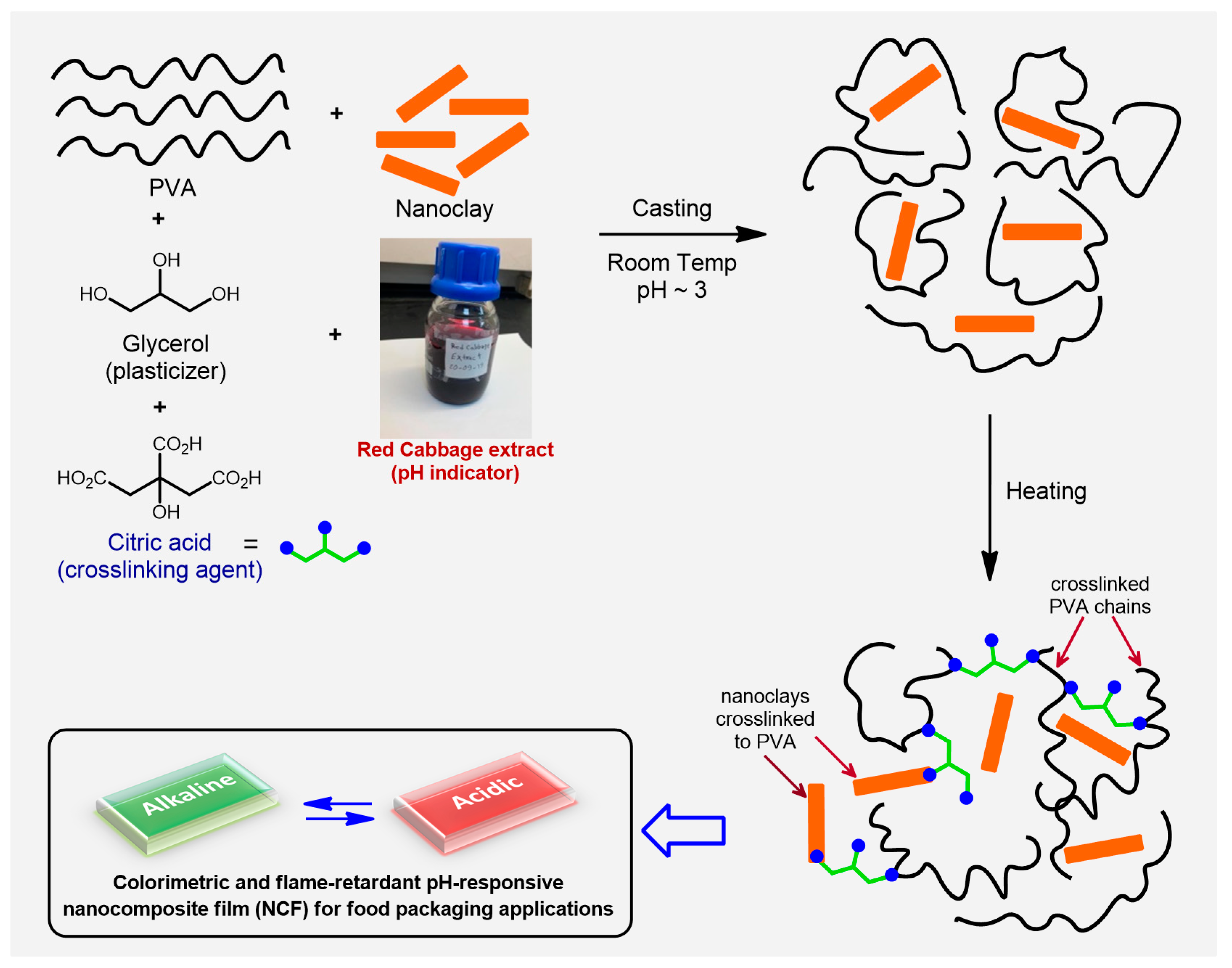
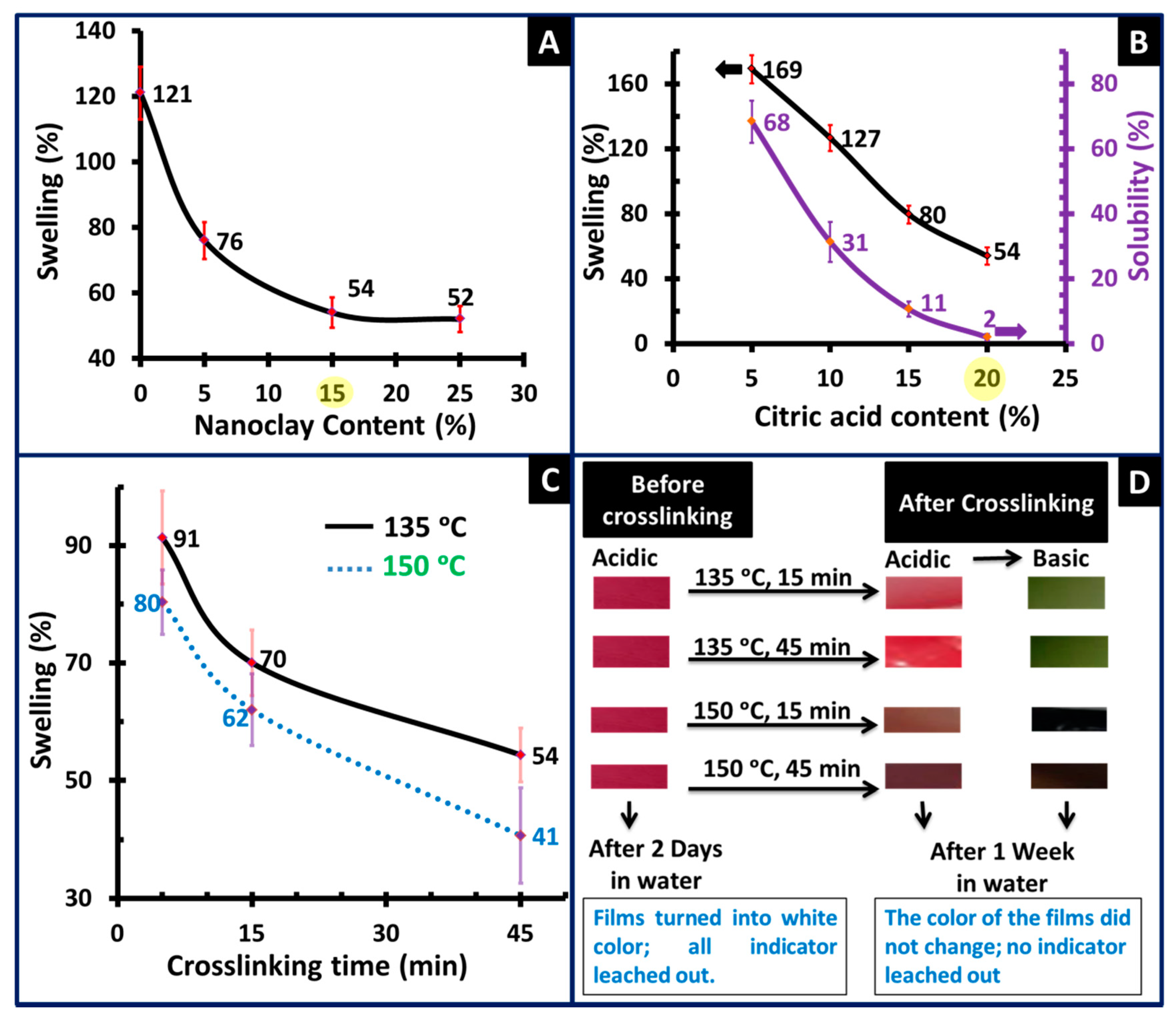
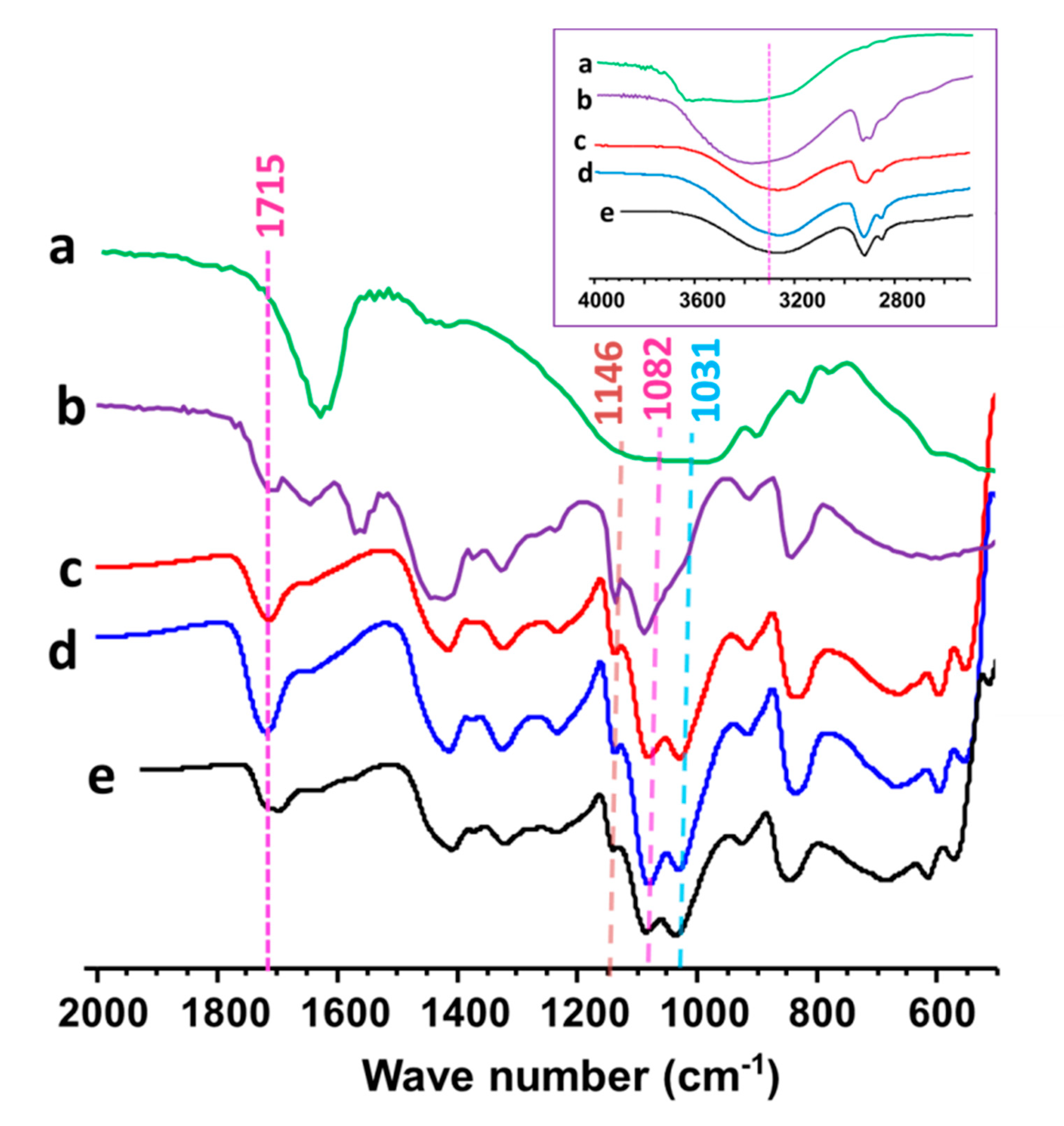
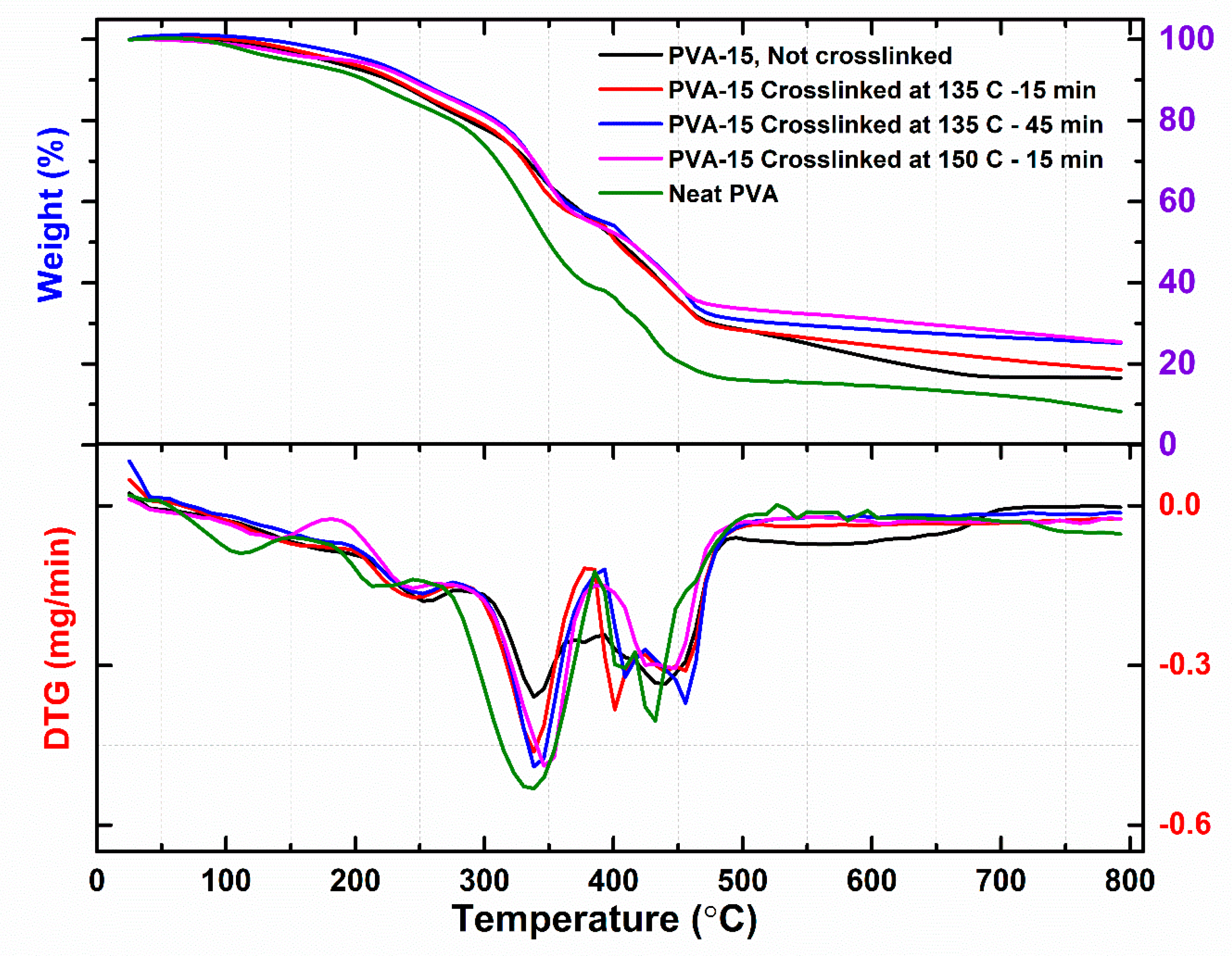
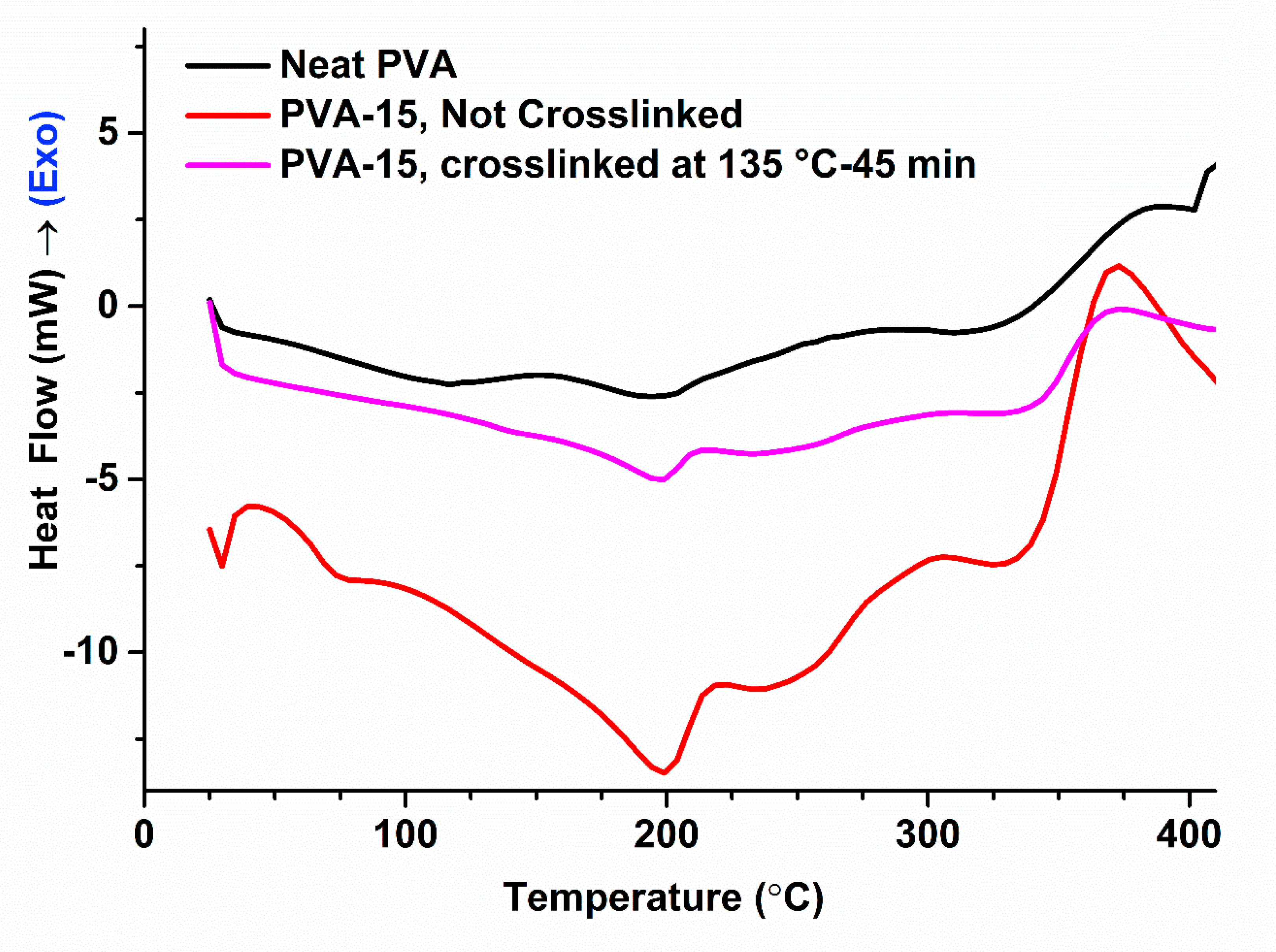
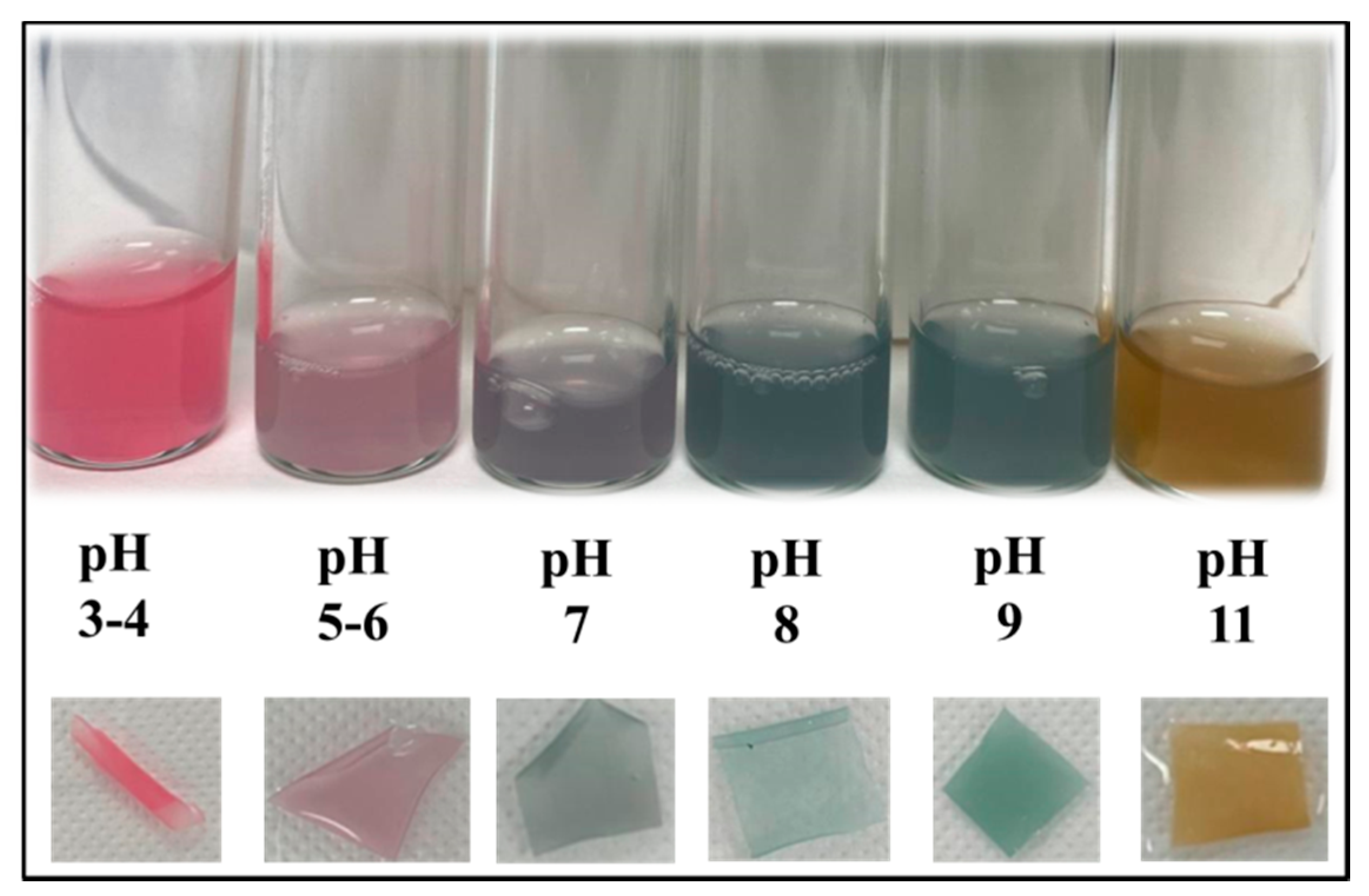
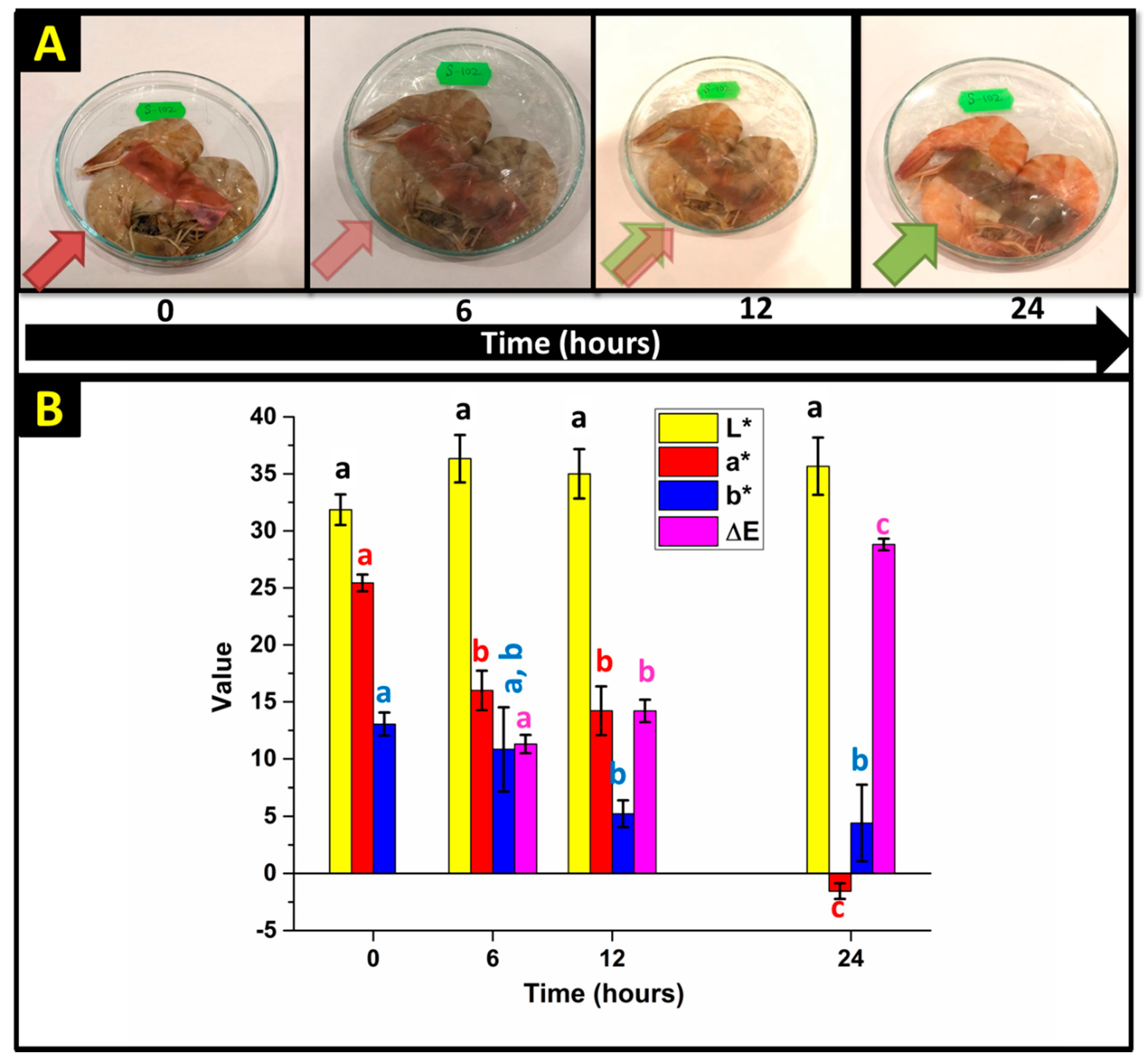

| Tg (°C) | Tm1 (°C) | ΔHm1 (J/g) | Tm2 (°C) | ΔHm2 (J/g) | Td (°C) | ΔHd (J/g) | χc (%) | |
|---|---|---|---|---|---|---|---|---|
| Neat PVA | 76.2 ± 1.1 b | 194.0 ± 0.1 b | 34.4 ± 0.8 a | - | - | 310.0 ± 1.5 b | 165.0 ± 2.9 a | 25 ± 0.8 a |
| PVA-15, Not crosslinked | 81.1 ± 0.7 a | 199.0 ± 0.08 a | 25.3 ± 0.6 b | 232.6 ± 1.5 a | 15.6 ± 1.2 a | 326.0 ± 0.6 a | 55.0 ± 1.4 a | 18 ± 0.6 b |
| PVA-15, Crosslinked at 135 °C, 45 min | Not detected | 199.2 ± 0.04 a | 14.2 ± 0.7 c | 232.8 ± 1.3 a | 7.6 ± 0.7 b | 326 ± 0.4 a | 26.2 ± 0.8 c | 10 ± 1.2 c |
| Elongation at Break (%) | Tensile Strength at Break (MPa) | Modulus (MPa) | Reference | |
|---|---|---|---|---|
| LDPE | 130–540 | 22–26 | 240–290 | [94] |
| LLDPE | 570–850 | 35–50 | 190–220 | [94] |
| EVA | 530 | 31 | 48 | [94] |
| EVOH | 13–16 | 24–42 | 3550–5200 | [95] |
| PVA-15 NCFs | 310 ± 20 | 31 ± 1 | 265 ± 45 | This study |
| pH | L * | a * | b * | ∆E |
|---|---|---|---|---|
| ∆E is calculated with reference to pH = 7 | ||||
| pH 3 | 59.65 ± 0.41 c | 37.50 ± 0.46 a | 2.53 ± 0.05 e | 32.73 ± 0.18 e |
| pH 6 | 62.81 ± 0.30 a | 18.60 ± 0.30 b | 6.42 ± 0.20 d | 14.60 ± 0.22 g |
| pH 7 | 57.69 ± 0.10 d | 5.25 ± 0.05 d | 8.03 ± 0.11 c | 0 i |
| pH 8 | 62.00 ± 0.11 b | −1.40 ± 0.12 e | 8.11 ± 0.09 c | 7.94 ± 0.10 h |
| pH 9 | 54.27 ± 0.21 e | −11.27 ± 0.07 f | 9.28 ± 0.02 b | 16.94 ± 0.16 f |
| pH 11 | 57.83 ± 0.07 d | 12.92 ± 0.02 c | 41.11 ± 0.10 a | 33.88 ± 0.06 d |
| ∆E is calculated with reference to pH = 3 | ||||
| pH 8 | 61.80 ± 0.13 b | −1.37 ± 0.03 e | 8.03 ± 0.05 c | 39.31 ± 0.05 c |
| pH 9 | 54.23 ± 0.06 e | −11.28 ± 0.07 f | 9.24 ± 0.06 b | 49.59 ± 0.01 a |
| pH 11 | 57.84 ± 0.15 d | 13.00 ± 0.10 c | 41.3 ± 0.03 a | 45.85 ± 0.05 b |
© 2020 by the authors. Licensee MDPI, Basel, Switzerland. This article is an open access article distributed under the terms and conditions of the Creative Commons Attribution (CC BY) license (http://creativecommons.org/licenses/by/4.0/).
Share and Cite
Abu-Thabit, N.; Hakeem, A.S.; Mezghani, K.; Ratemi, E.; Elzagheid, M.; Umar, Y.; Primartomo, A.; Al Batty, S.; Azad, A.K.; Al Anazi, S.; et al. Preparation of pH-Indicative and Flame-Retardant Nanocomposite Films for Smart Packaging Applications. Sensors 2020, 20, 5462. https://doi.org/10.3390/s20195462
Abu-Thabit N, Hakeem AS, Mezghani K, Ratemi E, Elzagheid M, Umar Y, Primartomo A, Al Batty S, Azad AK, Al Anazi S, et al. Preparation of pH-Indicative and Flame-Retardant Nanocomposite Films for Smart Packaging Applications. Sensors. 2020; 20(19):5462. https://doi.org/10.3390/s20195462
Chicago/Turabian StyleAbu-Thabit, Nedal, Abbas Saeed Hakeem, Khaled Mezghani, Elaref Ratemi, Mohamed Elzagheid, Yunusa Umar, Adhi Primartomo, Sirhan Al Batty, Abdul Kalam Azad, Sami Al Anazi, and et al. 2020. "Preparation of pH-Indicative and Flame-Retardant Nanocomposite Films for Smart Packaging Applications" Sensors 20, no. 19: 5462. https://doi.org/10.3390/s20195462
APA StyleAbu-Thabit, N., Hakeem, A. S., Mezghani, K., Ratemi, E., Elzagheid, M., Umar, Y., Primartomo, A., Al Batty, S., Azad, A. K., Al Anazi, S., & Ahmad, A. (2020). Preparation of pH-Indicative and Flame-Retardant Nanocomposite Films for Smart Packaging Applications. Sensors, 20(19), 5462. https://doi.org/10.3390/s20195462

