1. Introduction
The usage of composites in air-foil and wind turbine blades has dramatically reduced the weight of these structures and, meanwhile, increased their deflections largely. The extreme deflection of the A350XWB wing, whose span is 64.75 m, is about 5.2 m, while Boeing 787’s wing deflection can go up to 7.9 m for a span of 60.1 m. An in-flight break-up accident of NASA’s Helios wing in 2003 and the awareness that part of the failure was due to excessive wing deformations has led to an urgency to develop a robust real-time shape sensing methodology [
1].
Although various sensing technologies exist for monitoring the geometrical shape of a wing structure, such as the strain sheet measuring method, the vision measurement method, the photo elastic method, the laser scan measuring method and the three-coordinate measuring method [
2,
3,
4,
5,
6], their instalments require enormous space. They are only suitable for the ground testing of the wing shape and not applicable for the real-time monitoring of the aerodynamic shape of a morphing wing during flight [
7].
Fibre optic sensors (FOS), due to their advantages such as immunity from electromagnetic interference, low weight and small size, which can be largely embedded in airplanes to form a sensor network, are generally viewed as the technology with the highest potential for the continuous real-time monitoring of aircraft structures by the scientific, industrial, and end-user communities [
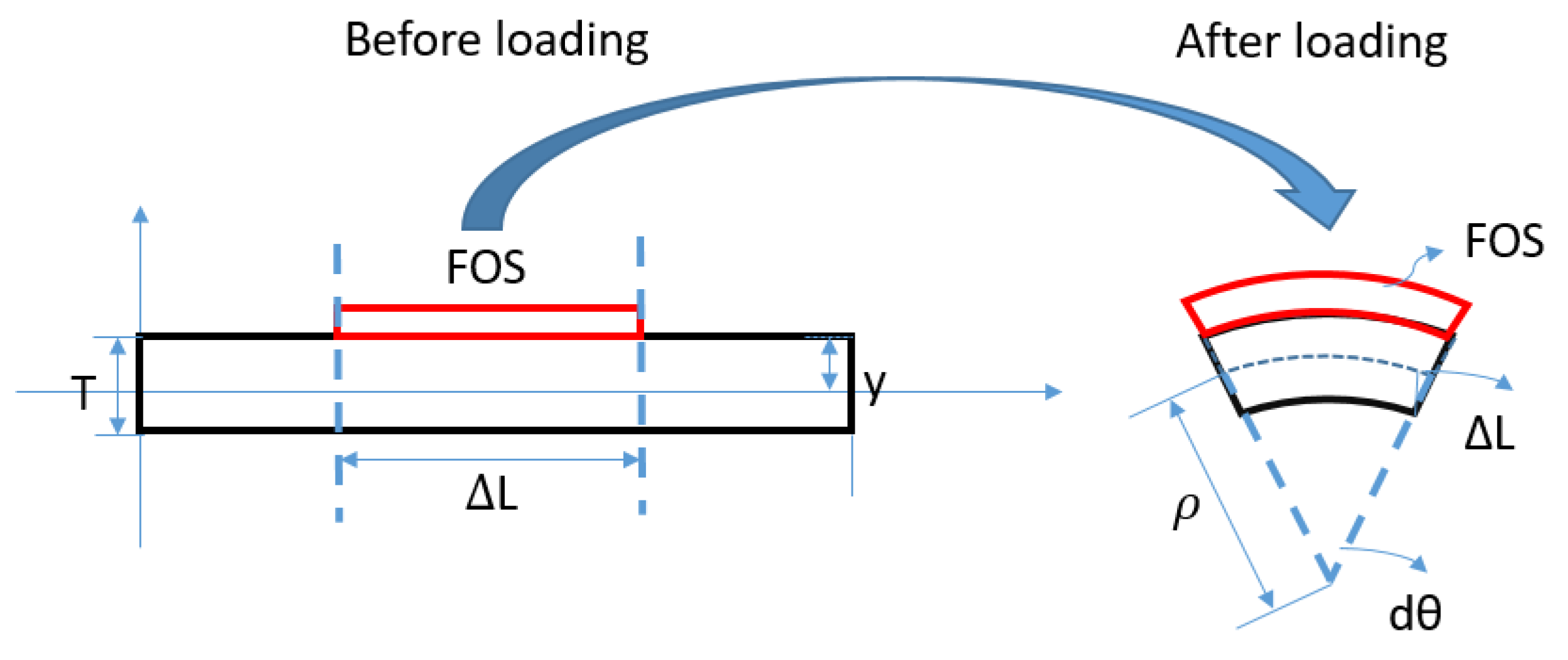
1]. The principle of shape sensing with the FOS system is to measure the strain along the structure and then configure the real-time shape via the strain-shape algorithm.
FOS can be classified into three main types: single point FOS, multi-point FOS and distributed FOS [
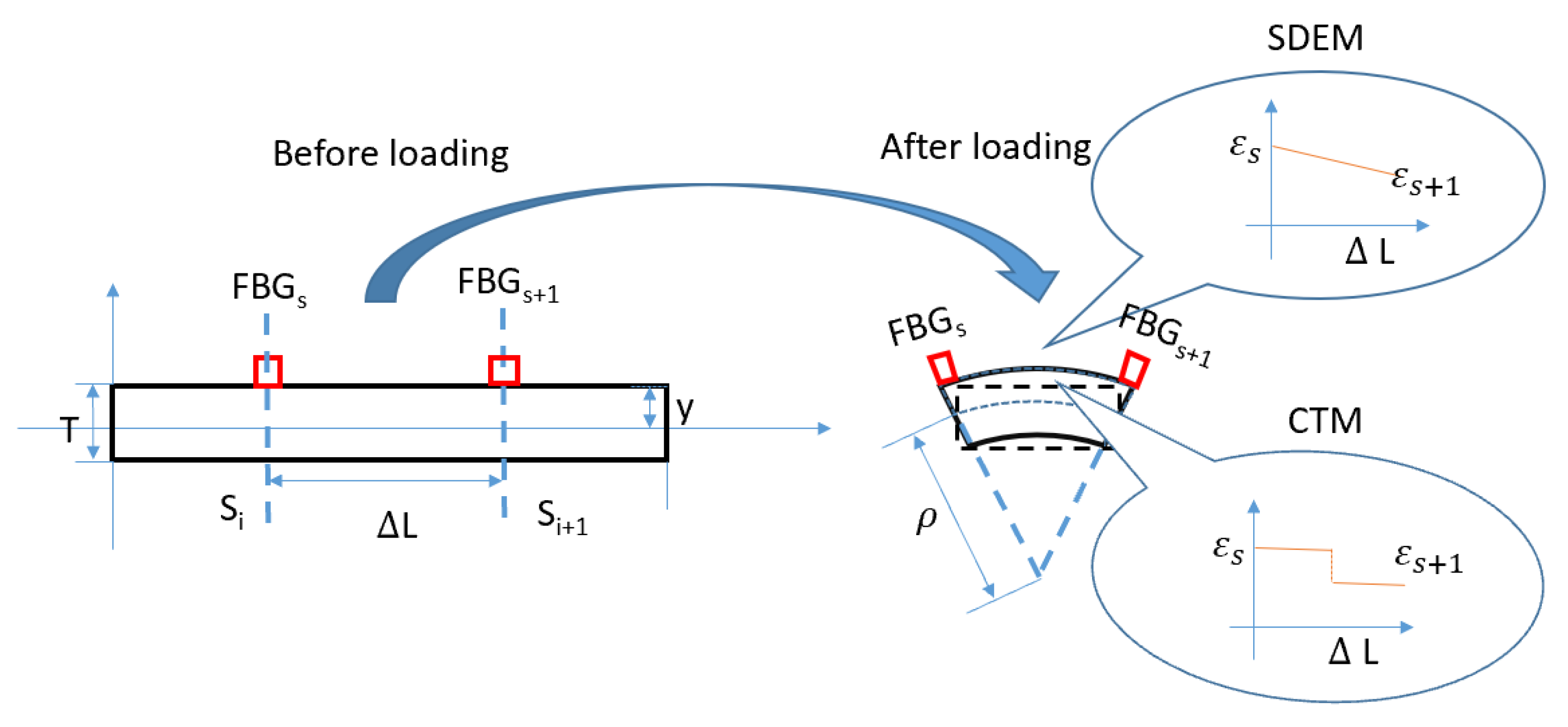
1]. Most of the interferometric FOS are regarded as single point FOS. Although they have a higher strain resolution, their lack of a multiplexing capability limits their application in shape sensing. Grating-based FOS and backscattering-based FOS are regarded as multi-point and distributed FOS, respectively. Among them, fibre Bragg grating (FBG) has been researched the most in the last two decades. Various studies have been reported in the literature applying FBG in shape sensing. The NASA Armstrong Flight Research Centre (AFRC) has developed an instrumentation system and analysis techniques to realize the shape sensing of air-foil in lightweight vehicles [
8,
9,
10]. Nicolas et al. [
11] realized the shape sensing of the composite beam using FBGs based on the strain deflection equation method (SDEM), the algorithm originally developed by [
12]. A structural shape measurement system using multi-core fibre sensing method with FBGs was developed by Childlers et al. [
13]. The coordinate transformation method (CTM) was proposed by P. Ferreira et al. [
14] for the shape sensing of a composite paddle using FBGs. In distributed FOS, the optical fibre itself becomes the sensor, by detecting changes in the characteristics of the light scattered along the fibre length caused by the local variation of physical quantities such as strain or temperature. There are three types of scattering: Rayleigh, Brillouin and Raman [
1]. Rayleigh backscatter is an elastic physical phenomenon caused by random fluctuations in the reflection index profile along the length of the tested fibre. Brillouin scattering is an inelastic type of scattering caused by the interaction of sound waves traveling in opposite directions. Another inelastic type of scattering is Raman scattering, which is caused by the interaction of the light wave with molecular vibrations in the transmission medium. It is only sensitive to temperature and therefore cannot be used in strain measurement. For strain measurements, Rayleigh and Brillouin scattering are of current interest [
1]. However, unlike RBS, Brillouin scattering sensors are mostly used for static measurements [
1].
Compared to multi-point techniques that use FBG sensors for strain-based shape reconstruction [
8,
9,
10,
11,
13,
14], the main advantage offered by distributed sensing is the large availability of strain data, due to continuous lateral sensing over long fibre spans. This can therefore improve substantially the application of algorithms used for shape reconstruction based on strain measurements and makes it possible to take into account existing non-uniformities in the measured strain profiles, thus improving the accuracy of the shape reconstruction [
1].
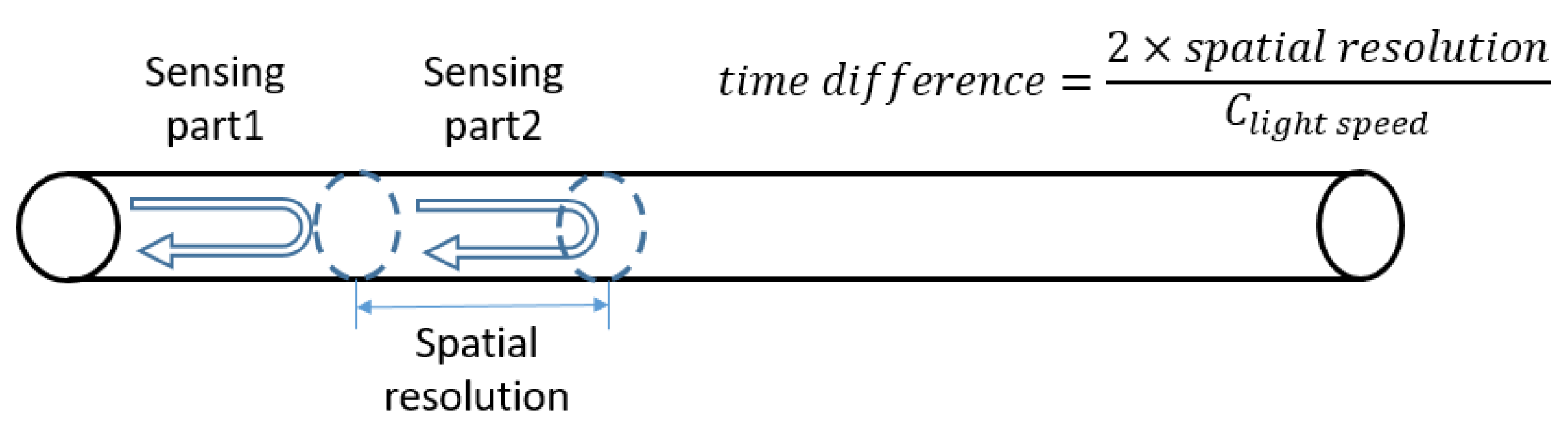
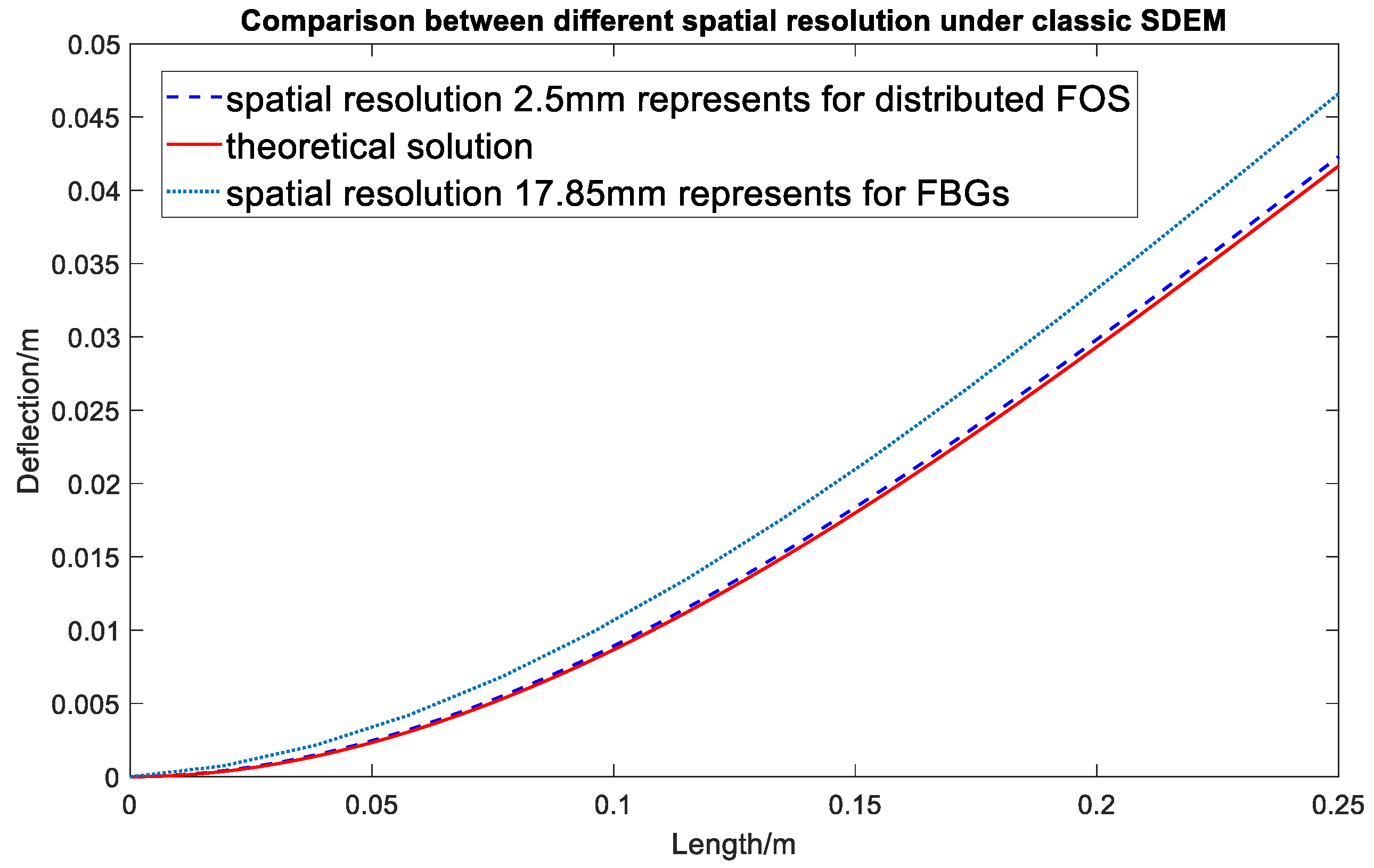
The main problem in distributed FOS’s application in shape sensing is their spatial resolution. There are different types of distributed FOS systems based on different principles or demodulation techniques. Most of them have a spatial resolution around the tens of centimetres. This leads to uncertainties in the accurate measurement location. The parameters of different distributed FOS systems’ spatial resolution are listed in
Table 1. Currently, the only application of shape sensing with backscattering FOS is the work published by Nishio et al. [
15], in which shape sensing with the Pre-pump pulse Brillouin Optical Time-Domain Analysis (PPP-BOTDA) technique has been carried out with a spatial resolution of 10 cm. The large spatial resolution reduced the measurement reliability of the Brillouin scattering based sensor (BBS), since the non-uniform strain distribution within BBS’ sensing parts leads to a distortion in the convex profile of each sensor in the Brillouin gain spectrum (BSG) and consequently influences the strain measurement reliability of the BBS sensor [
15,
16]. Although the continuous lateral sensing capability leads to a more integrated measured strain profile, the reliability of each sensing part is lower than the FBG sensors.
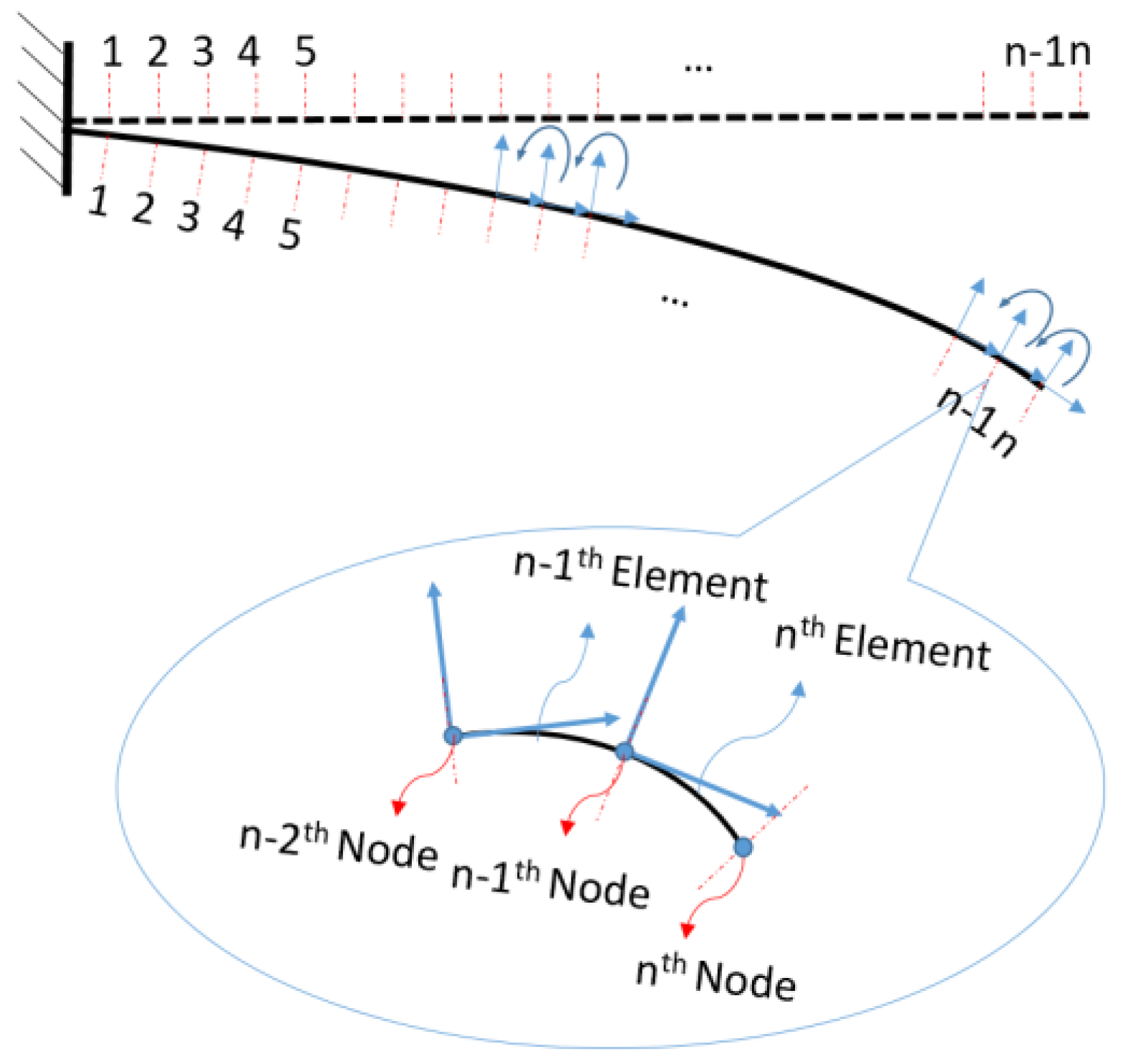
Most of the published work on shape sensing requires some assumptions for the strain distributions between two adjacent sensors, due to their low spectral resolution of strain profile and the discontinuity in sensing parts. Previous work related to continuous lateral sensing had a lower spatial resolution than FBG, which has led to a lower accuracy and robustness. Thus, the main objective of this work is to apply RBS in shape sensing and its targeted shape sensing algorithm based on coordinate transformation and strain-deflection relation, to improve current shape sensing system’s performance in predicting the deformed shape of beam-like structures under non-uniform loading.
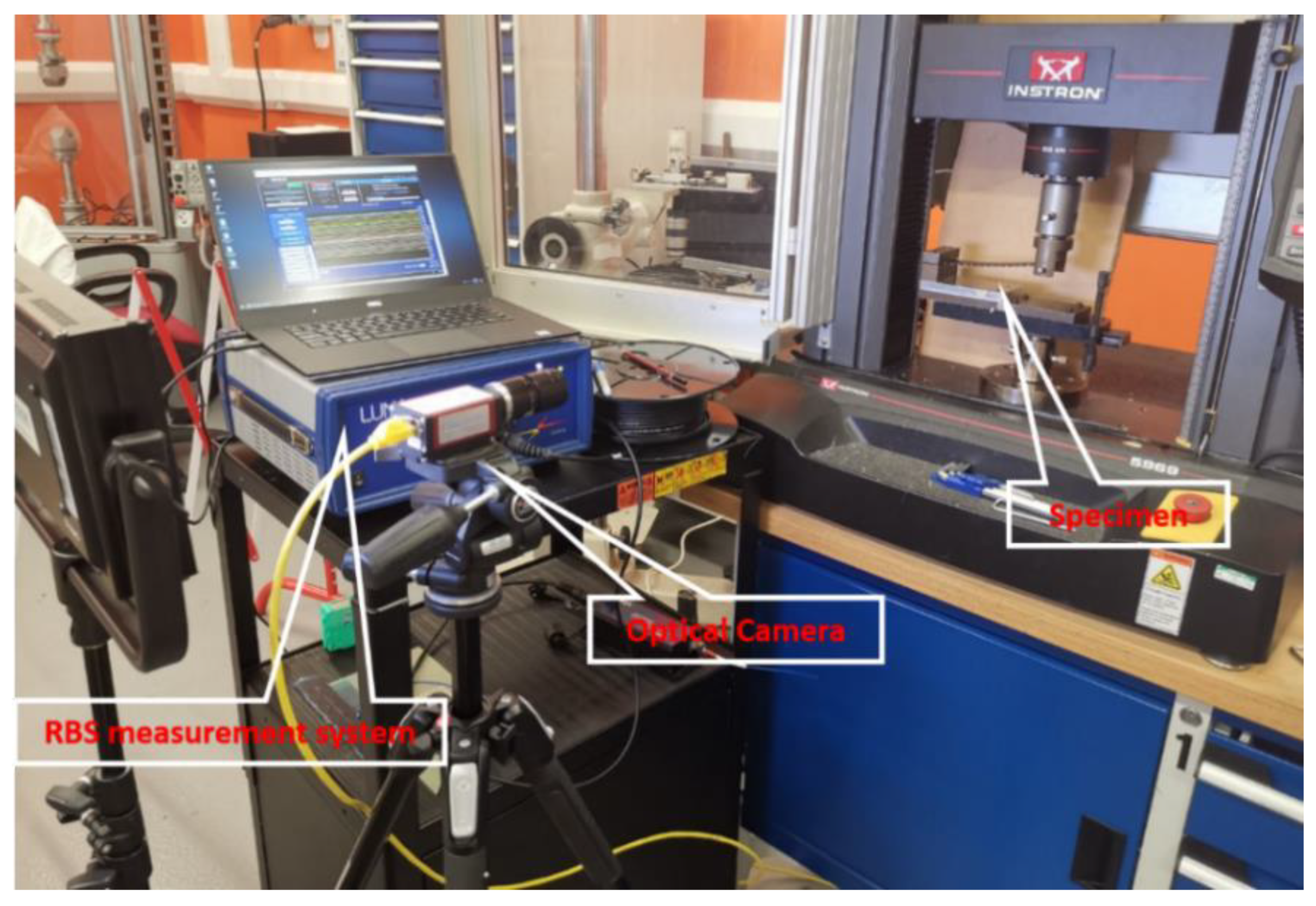
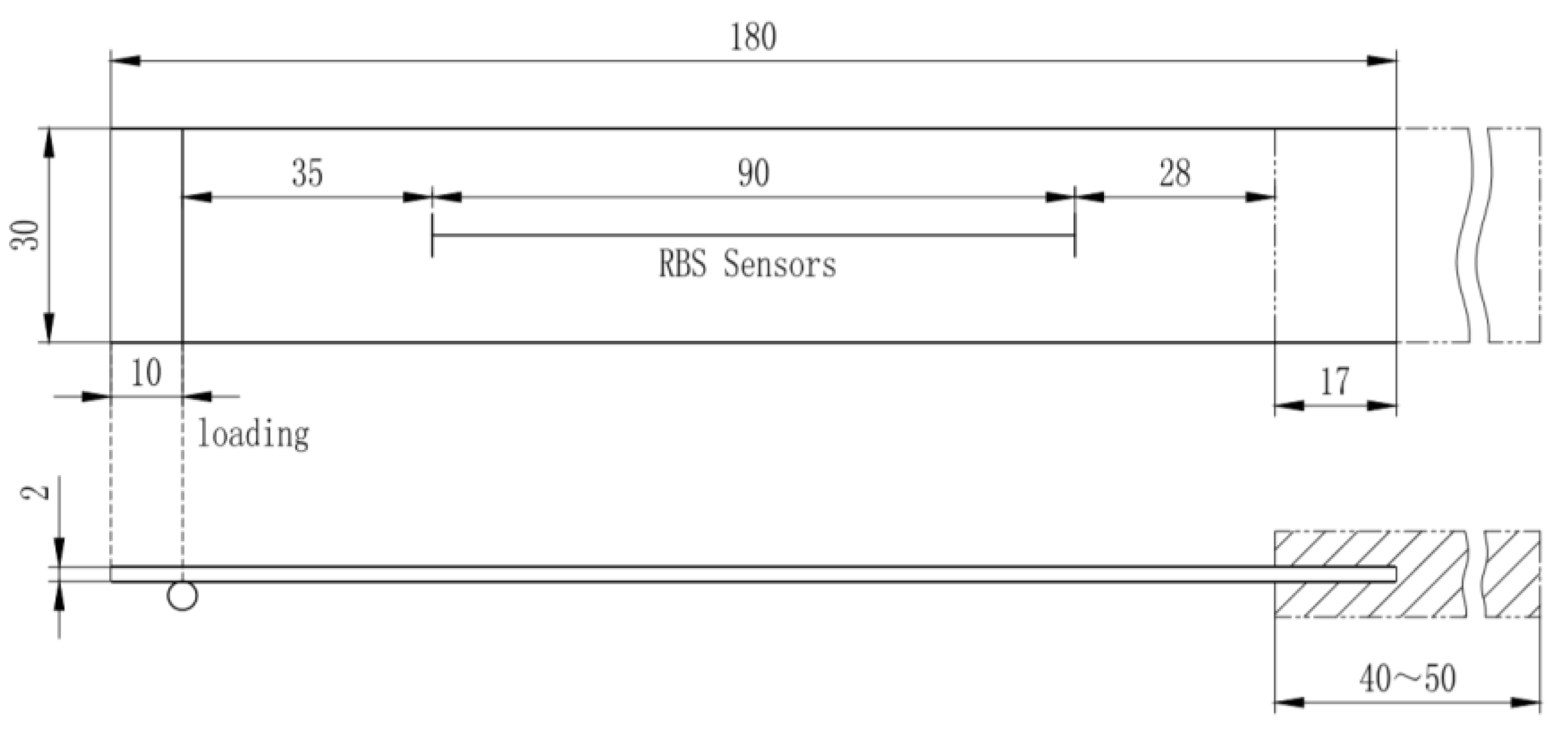
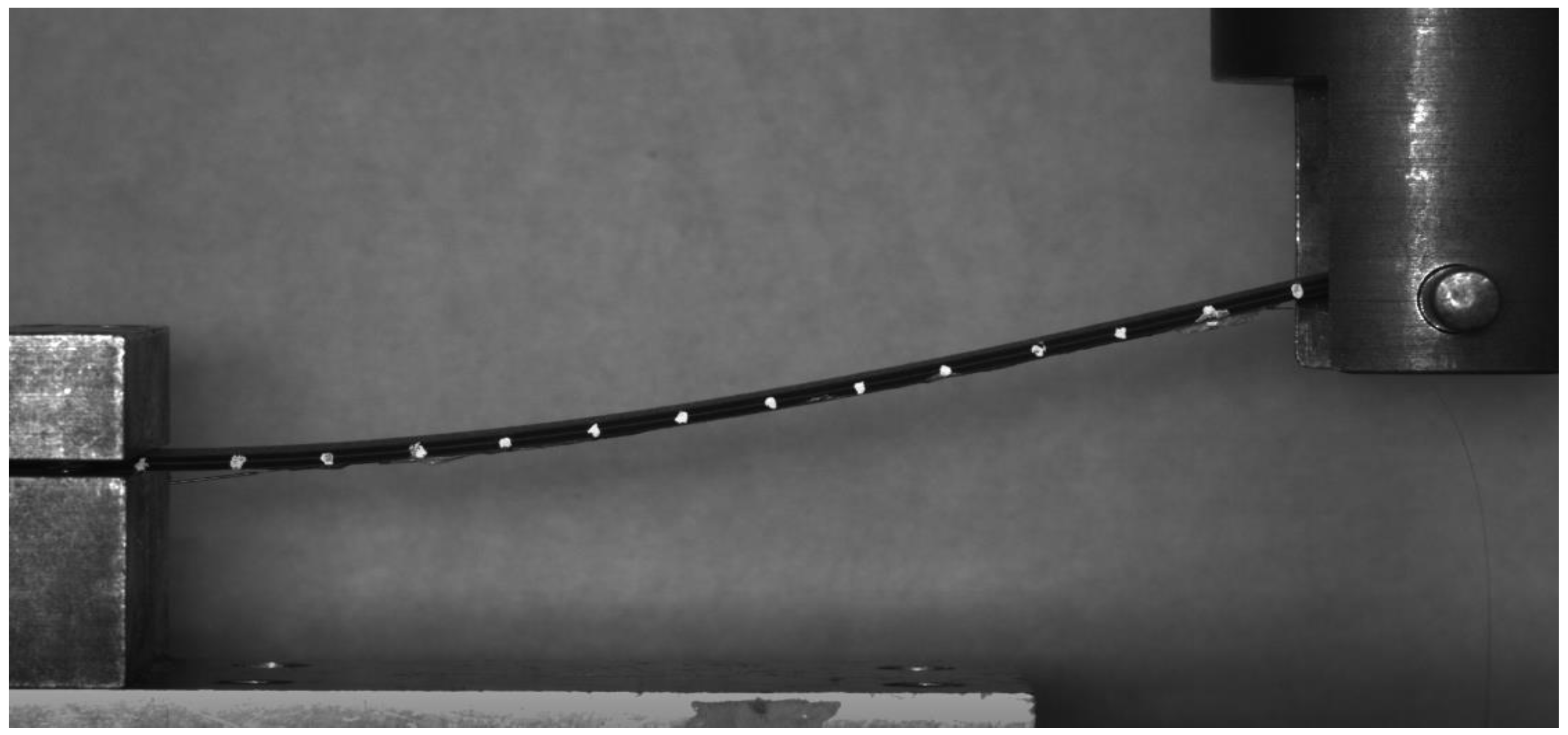
In this paper, an RBS system with a spatial resolution of 2.5 mm is utilized in the shape sensing of composite beam-like structures. The paper first starts with the principle and the validation of the RBS system in strain sensing. It is then followed by different FOS strain-based shape sensing algorithms’ derivations and then optimizes the algorithms to increase their accuracy and robustness under complex and combine loading. The performance of the system is then validated through numerical simulation. Afterwards an experiment is conducted in which the RBS are bonded on one side of a composite cantilever-beam specimen to realize the real-time shape sensing of this structure. The measured result from the RBS-based shape sensing system is then compared with the results recorded by an optical camera.
4. Distributed FOS Algorithm Optimization
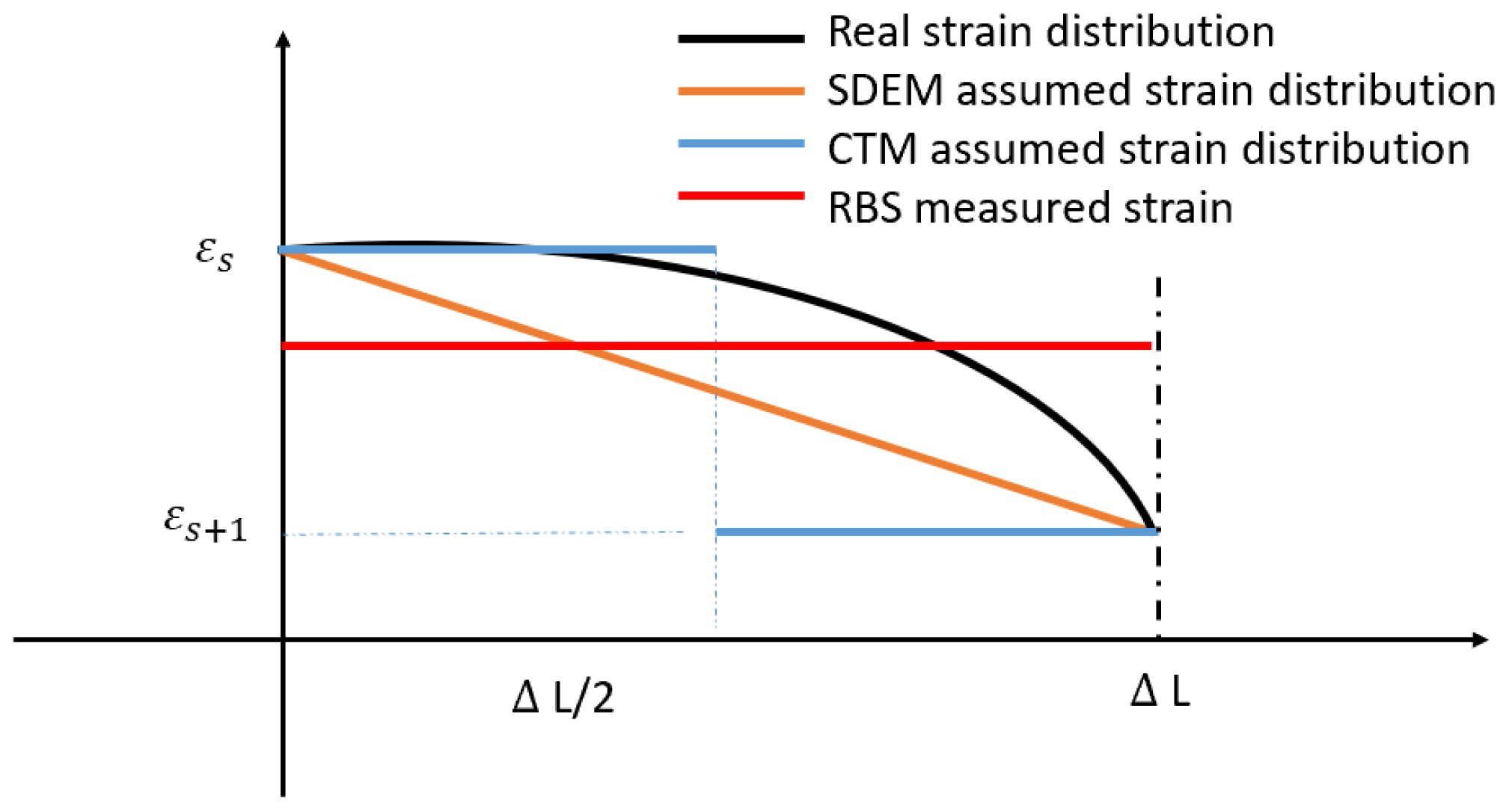
The algorithm for shape sensing with distributed FOS was derived in the last section. However, using the uniform average strain as the strain distribution within each element part will cause an error, since in real situations, external loading is more likely to be distributed and non-uniform.
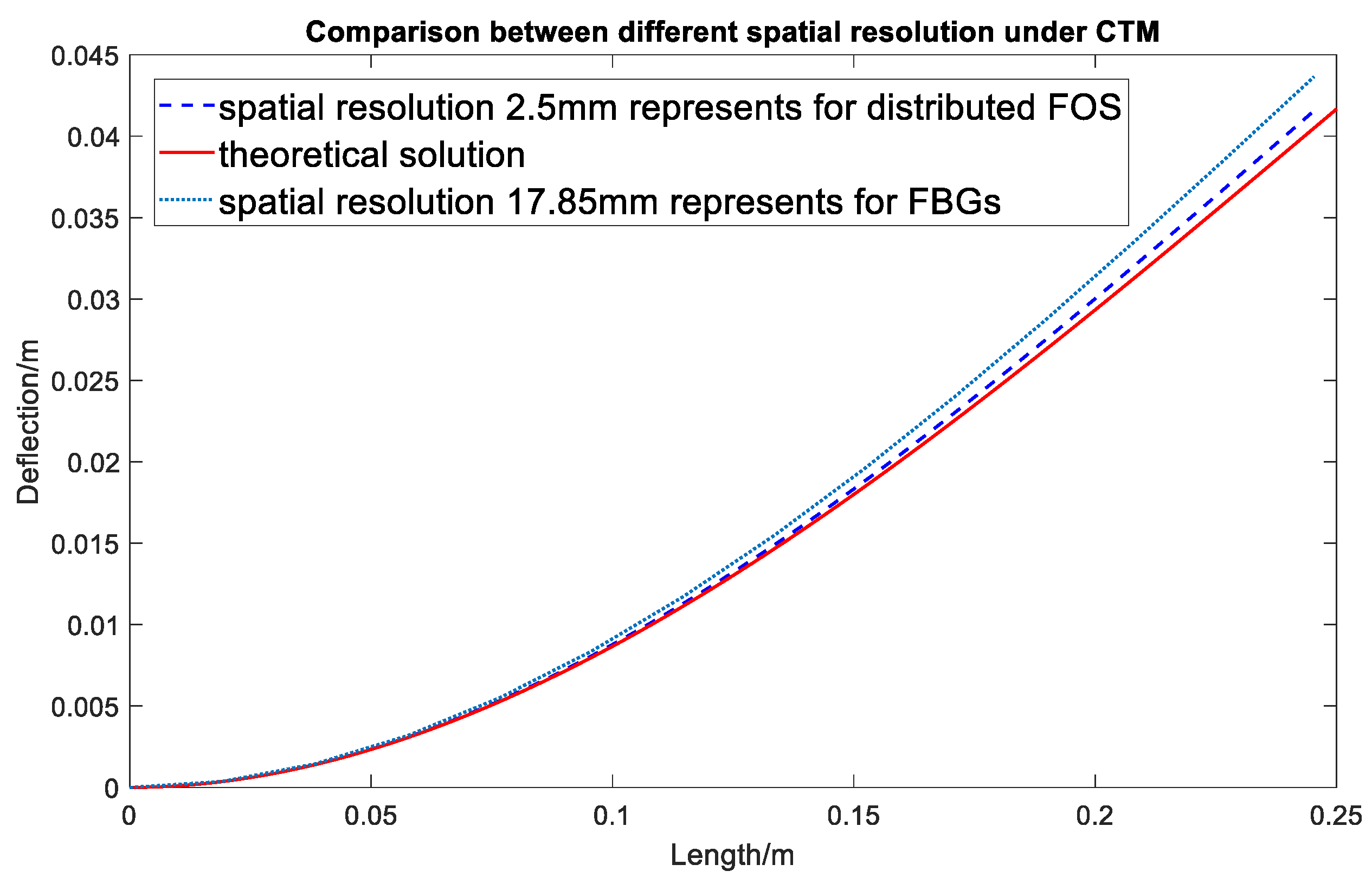
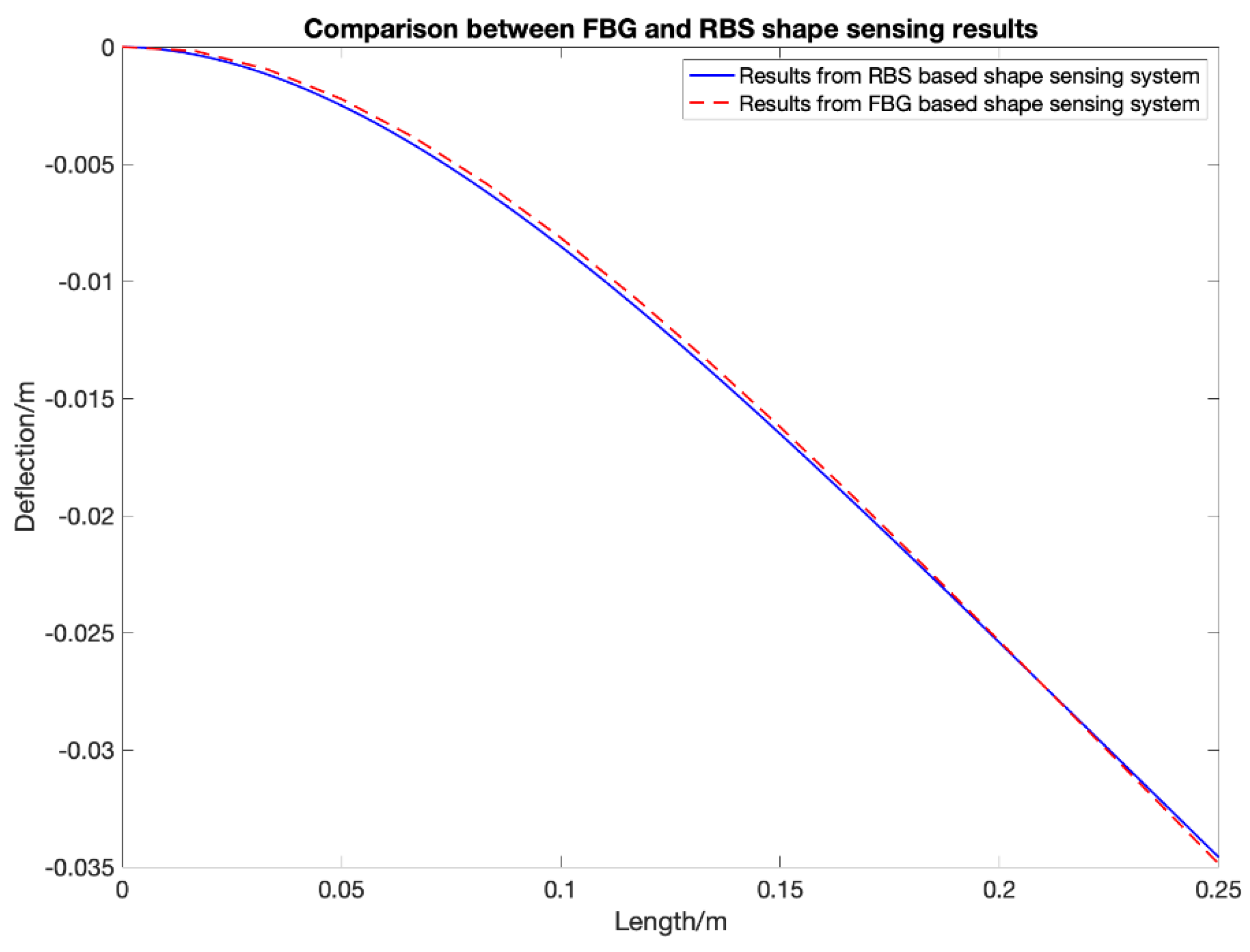
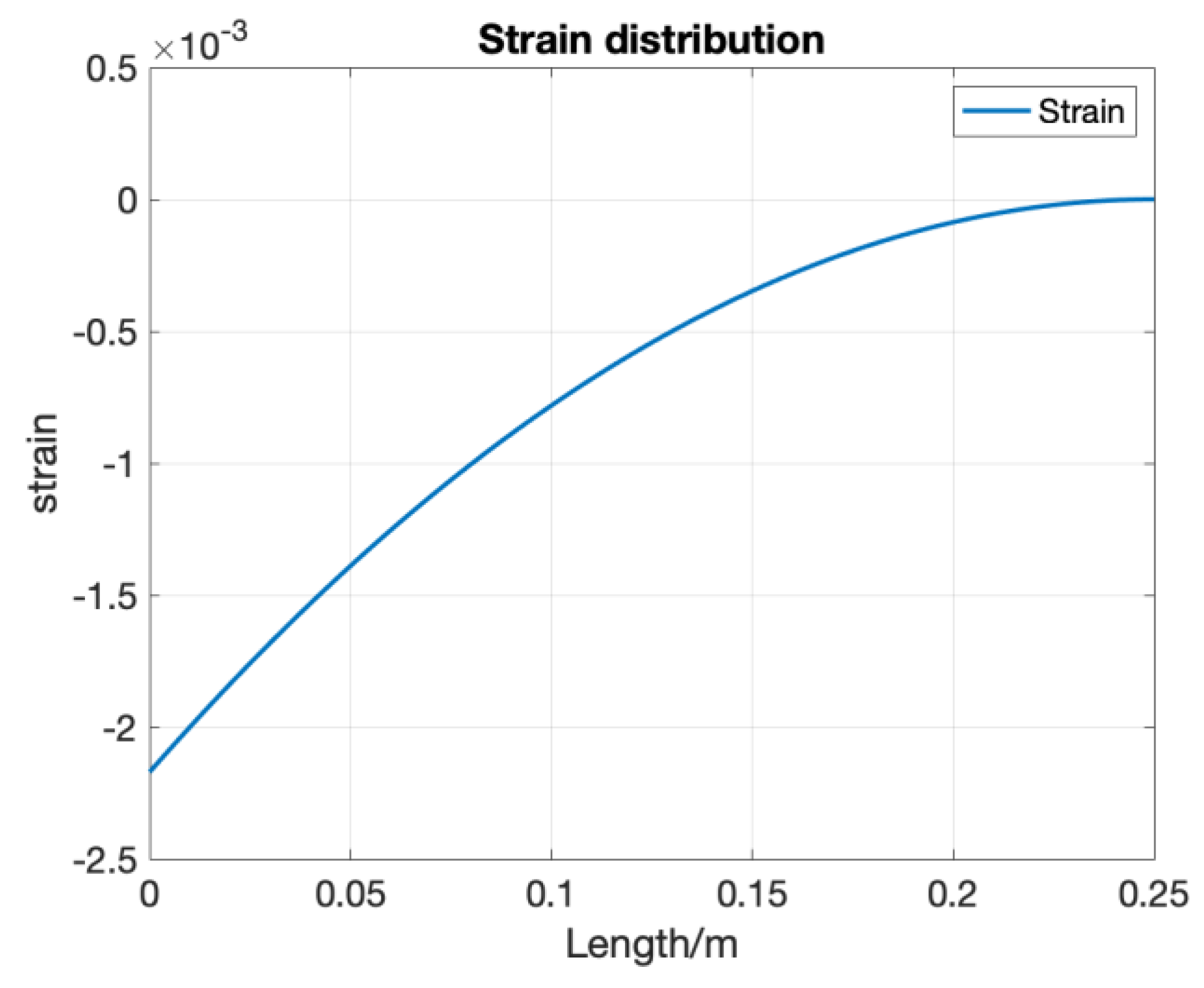
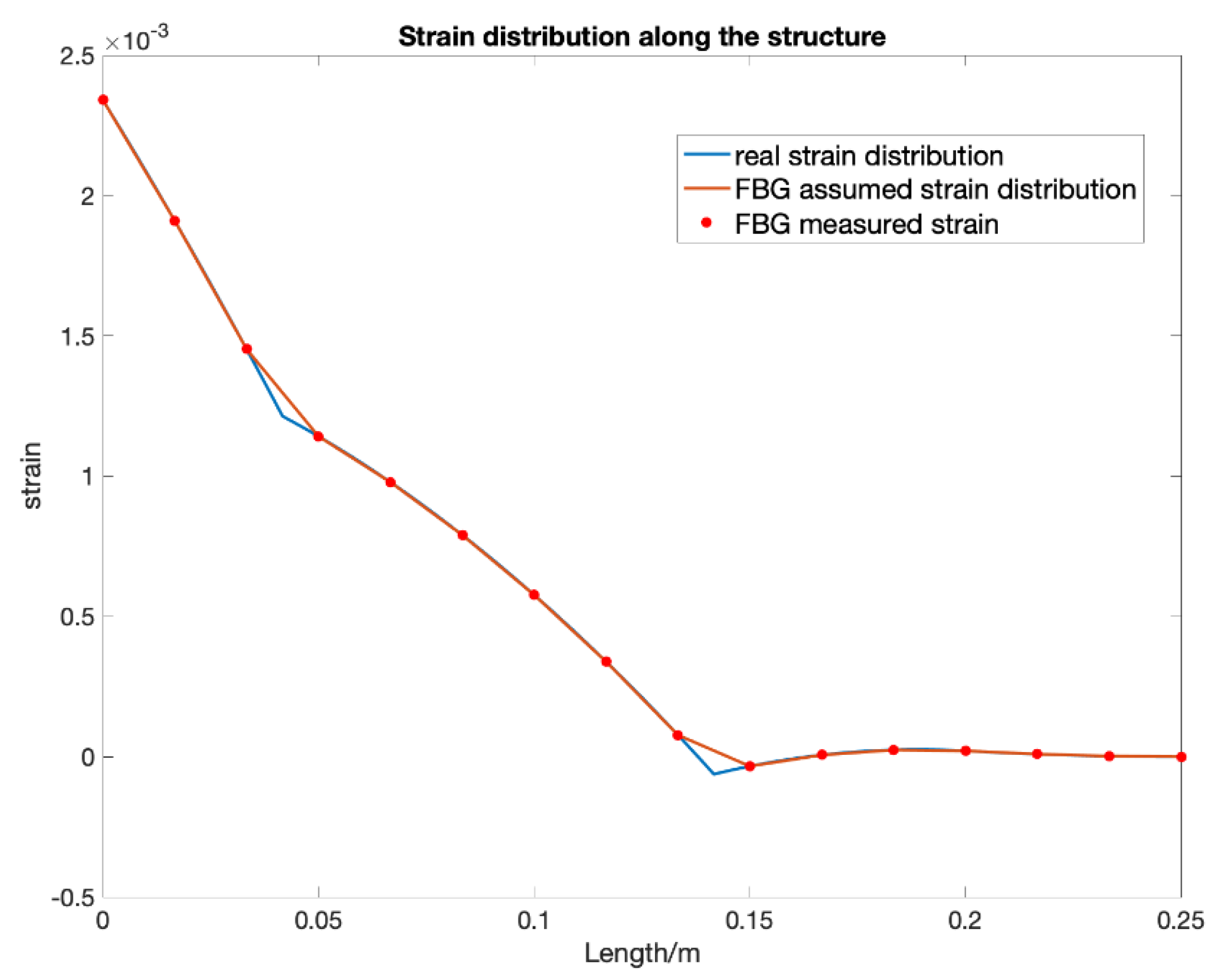
Figure 13 shows the comparison between FBG-based and RBS-based shape sensing results when the structure is under the strain distribution shown in
Figure 14 which represents the structure under a uniform distributed loading. Although the RBS system has a higher spatial resolution, its accuracy in shape sensing is still similar to the FBG’s system. This shows that using the uniform average strain as the strain distribution within each element will lead to an error which counteracts the improvements made due to a higher spatial resolution.
Furthermore, for FBG and BBS, a malfunction is more likely to be an error in the measured spectrum, since the distortion of the spectrum will lead to the difficulties in the centre wavelength configuration. Therefore, Nishio [
15] proposed to apply the reliability calculation and curve fitting method after measuring the strain profile to decrease the error caused by the BBS system’s low spatial resolution and spectrum distortion. By contrast, in terms of RBS, as mentioned in
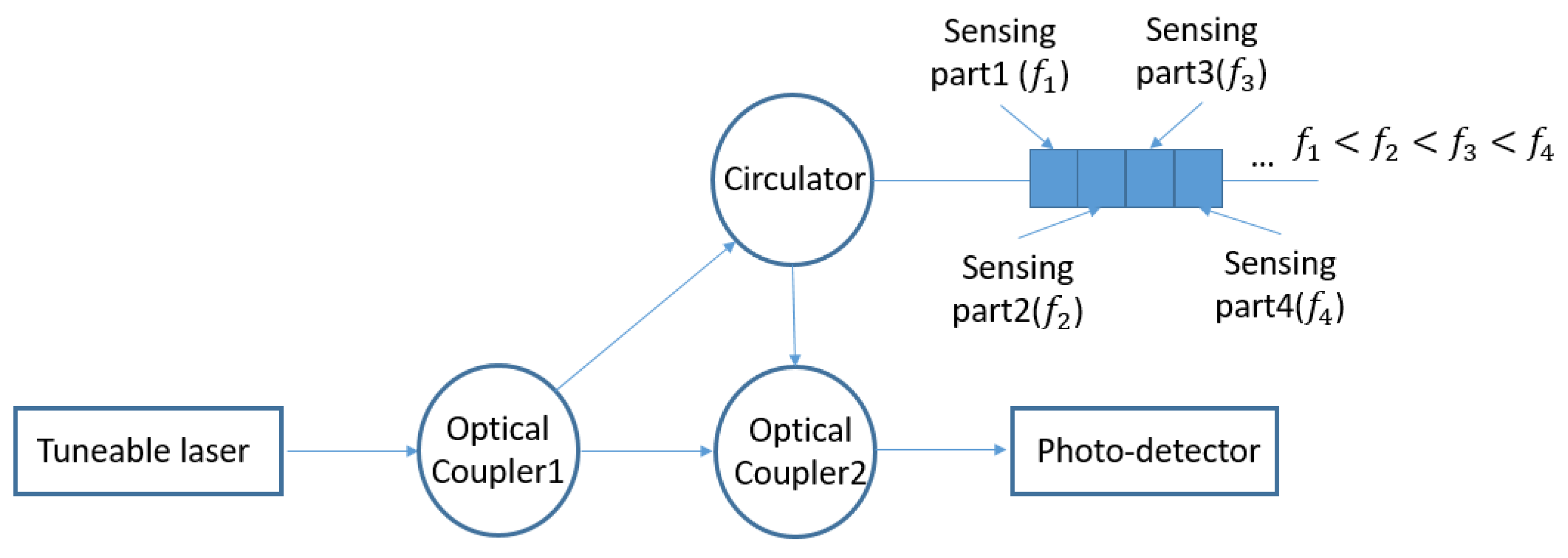
Section 2, the sensing part is identified by cross-correlation analysis. A distorted spectrum is more likely to lead to the failure of identifying the correct location, which means “no signal” or “not a number” in the system output. A method to increase the system’s robustness is required to make sure the system still performs well when some sensing part cannot be identified.
In addition, for shape sensing of large structures such as aircraft wings or turbine blades, the self-weight of the structure will cause a noticeable strain in both axial and bending directions. In this scenario, the axial displacement should be taken into consideration. In the next section, modified algorithms are proposed which enable the RBS-based shape sensing system to have a higher accuracy under complex or combine loading (tension and bending) and a higher robustness in case of sensor failure.
4.1. Complex Loading and Sensor Malfunction
To increase the accuracy of the shape sensing as well as increasing the robustness of the sensing system, the interpolation method with spline interpolation of order three is proposed. The third order interpolation is more suitable for non-uniform external loading distribution. Furthermore, if one or more sensors within the optic fiber fails, the error caused by the malfunction is minimized as well.
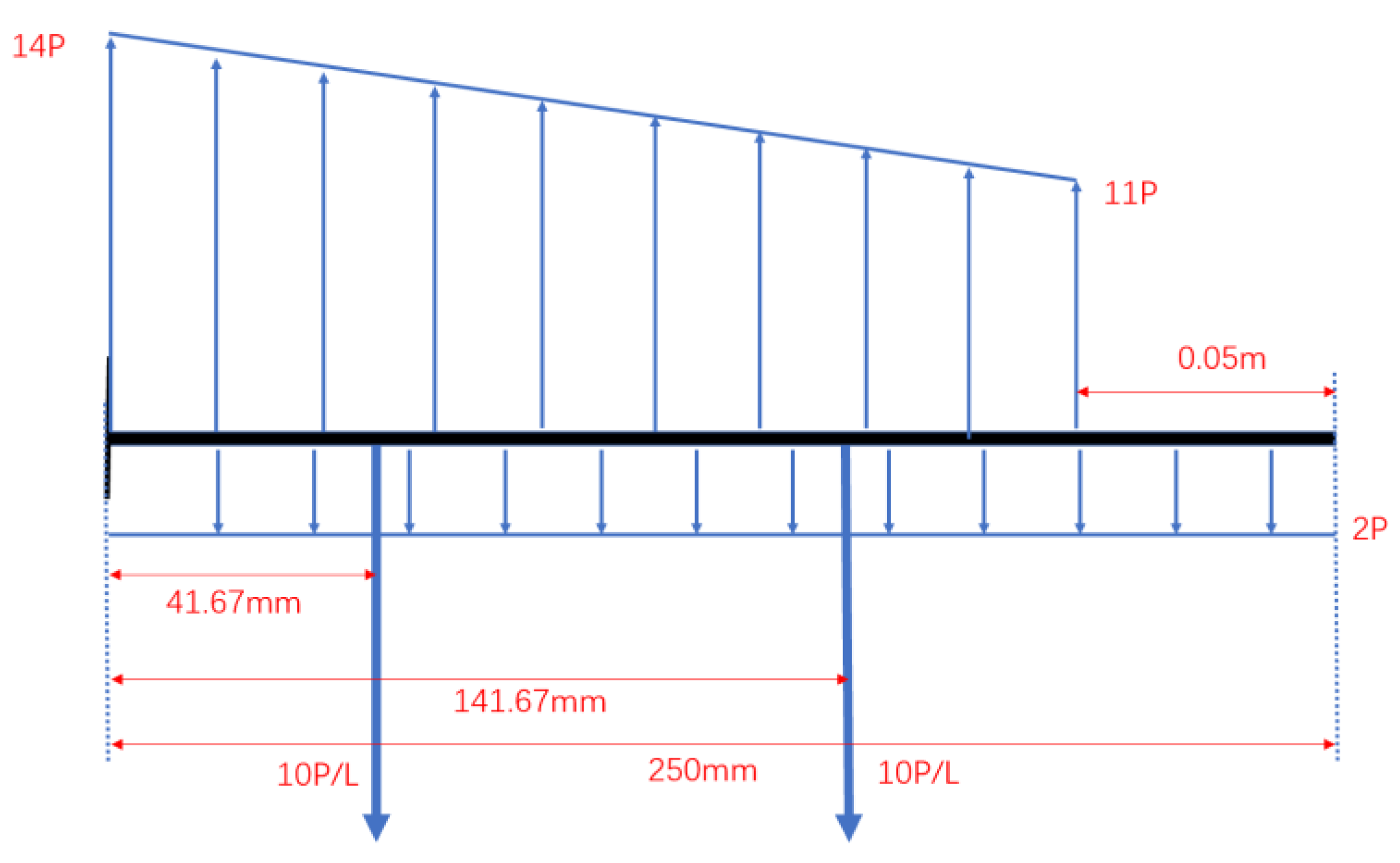
Similar to the previous sections, a numerical simulation is carried out to validate the shape sensing system’s performance under a more realistic air-foil loading, where a combination of distributed loads and point loads are applied, see
Figure 15. The real strain distribution is the result calculated from the Euler–Bernoulli beam theory. The cantilever specimen is of the same size as the one presented in
Section 3.2., the resulting strain distribution along the beam is shown in
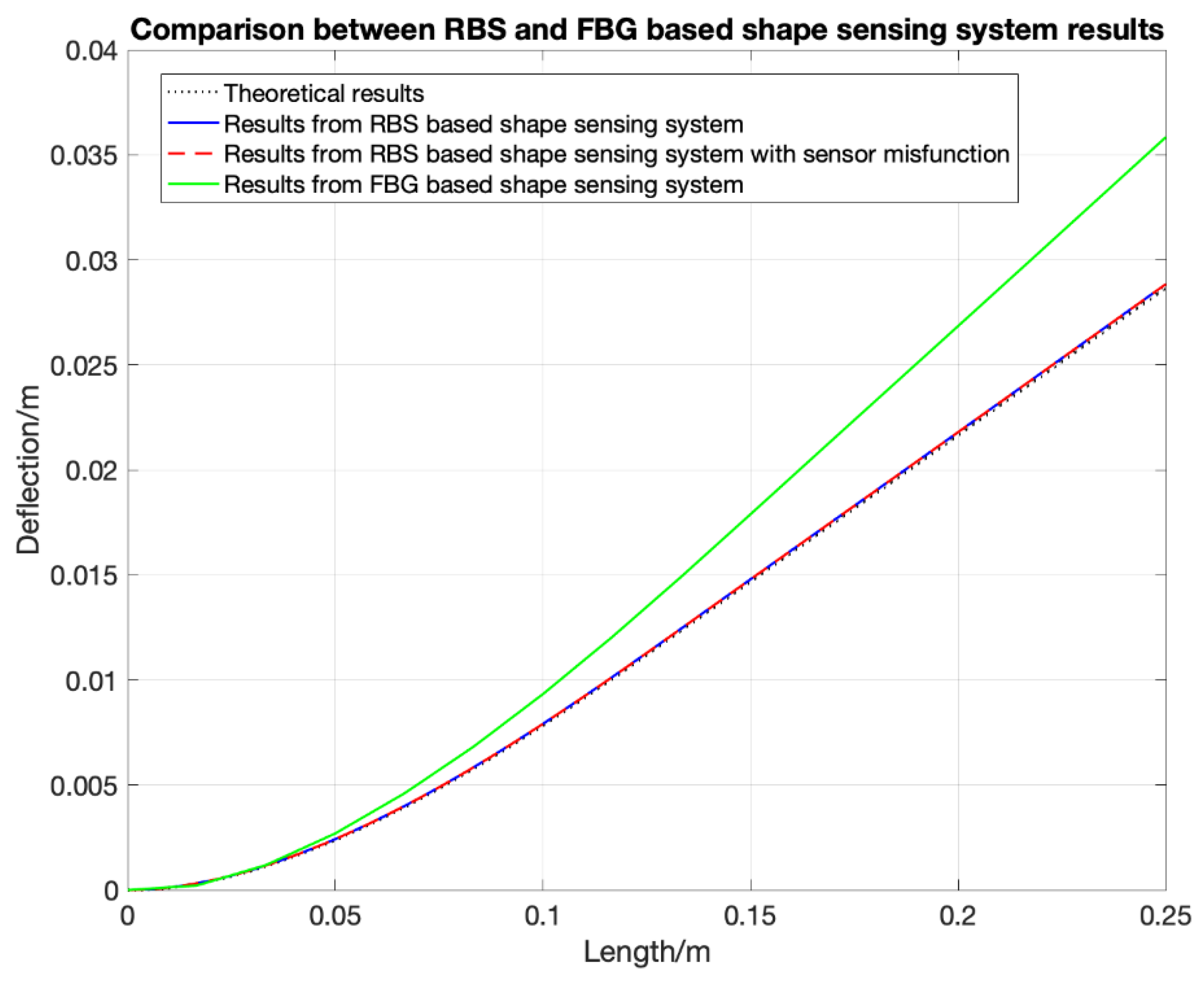
Figure 16 and is no longer linear. The loading is a more realistic representation of a wing structure, where the distributed loading of different amplitudes are applied at the top and bottom of the cantilever, with 2 concentrated loads at 41.67 mm and 141.67 mm with magnitude 10 PL (P is a unit of pressure load), which represents the weight of two engines. RBS sensors are bonded on the top surface through the whole structure. The RBS sensing system has a spatial resolution of 2.5 mm, while FBG sensors are bonded at fifteen equidistance points. The predicted deformations are shown in
Figure 17 with the solid blue and green lines representing the shape sensing based on continuous (RBS) and point sensing (FBG), respectively. After that, the shape reconstruction algorithm is applied again but this time considering that the three sensors have failed: 3rd to 5th in RBS’s sensing part. The results are then shown in
Figure 17 with the dashed red lines. The theoretical solution is shown with a black dash line which is the analytical solution calculated by MATLAB from the ordinary differential equation of the beam. The simulated results show that when applying the SDEM algorithm with the FBG sensor in a real air-foil loading, the error can go up to around 30% compared to the theoretical solution. While the error with the RBS sensing system is within 1% even through only two data are interpolated between two adjacent measured data. Little error is introduced when three sensing parts failed to measure any data. These results validated that after the interpolation, the continuous lateral sensing (RBS) with a 3rd order interpolation function has a better performance than the current shape sensing systems with FBG under real air-foil loading. Furthermore, a higher robustness is achieved when using interpolation. The example studied in this section only considered transverse loading. To fully assess the benefits of the two different sensing systems, their performance under combined axial and transverse loading is assessed in the next section.
4.2. Combined Loading
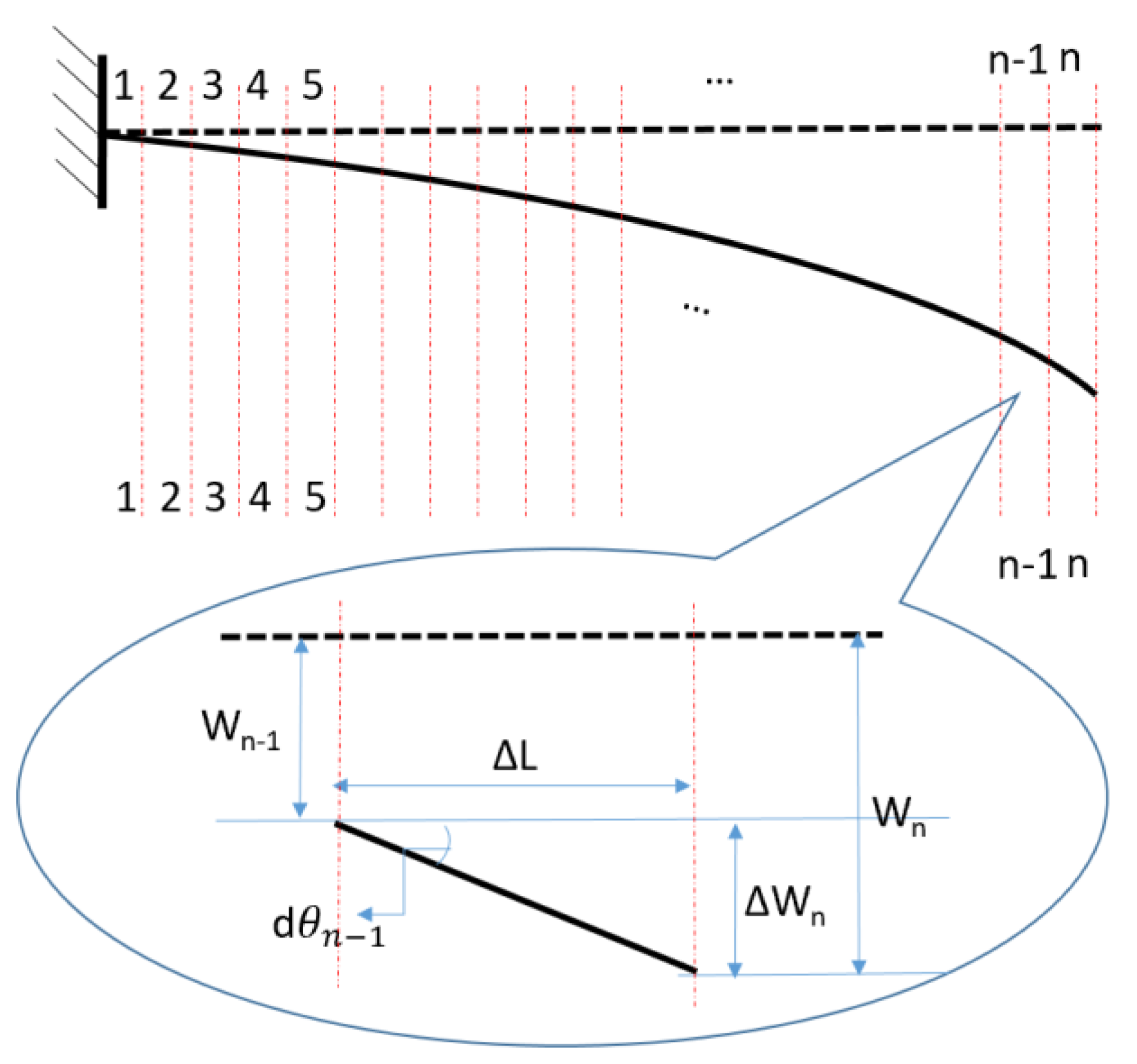
When the structure is under combined loading, which involves both axial (tension or compression) and transversal (bending) loading, taking the axial displacement into consideration can improve the accuracy of the shape sensing. In that case, the rotation–deflection relationship
in Equations (7)–(12) has been changed into
, where
is the axial strain within the optic fibre. It can be measured by bonding the FOSs on both sides of the structure. Therefore, the strain caused by bending can be calculated as:
, while the strain caused by tension or compression can be calculated as:
in combination will result in Equation (13) for obtaining the transverse deflection of any sensor part
:
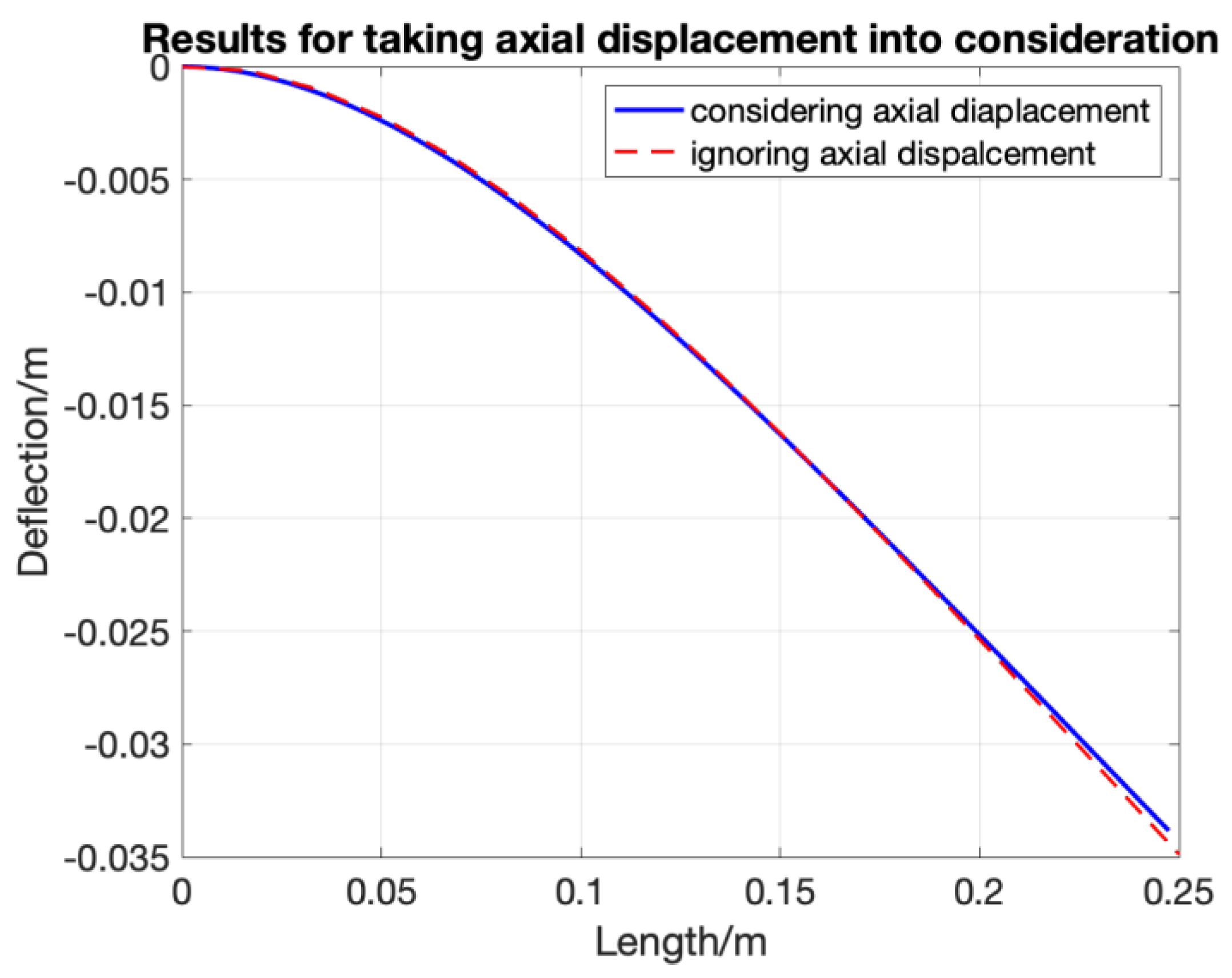
By modifying the algorithm, the axial strain is taken into consideration. The numerical simulation result for considering an axial strain with a magnitude of 2000
and a uniform distributed loading, which is same as the one shown in
Figure 14, is presented here, in
Figure 18.
The results show that when considering the axial displacement, the error in the deflection direction can be reduced by maximum 4%. This is not a noticeable improvement.
In this section, an improved algorithm when under more realistic air-foil loading or combine loading is proposed. The simulated results show that the optimized distributed (RBS-based) shape sensing system has a higher performance under realistic loading air-foil loading compared to point sensing (FBG-based) system. In next section, an experiment is carried out and reported to validate and verify the RBS-based shape sensing system.
6. Discussion
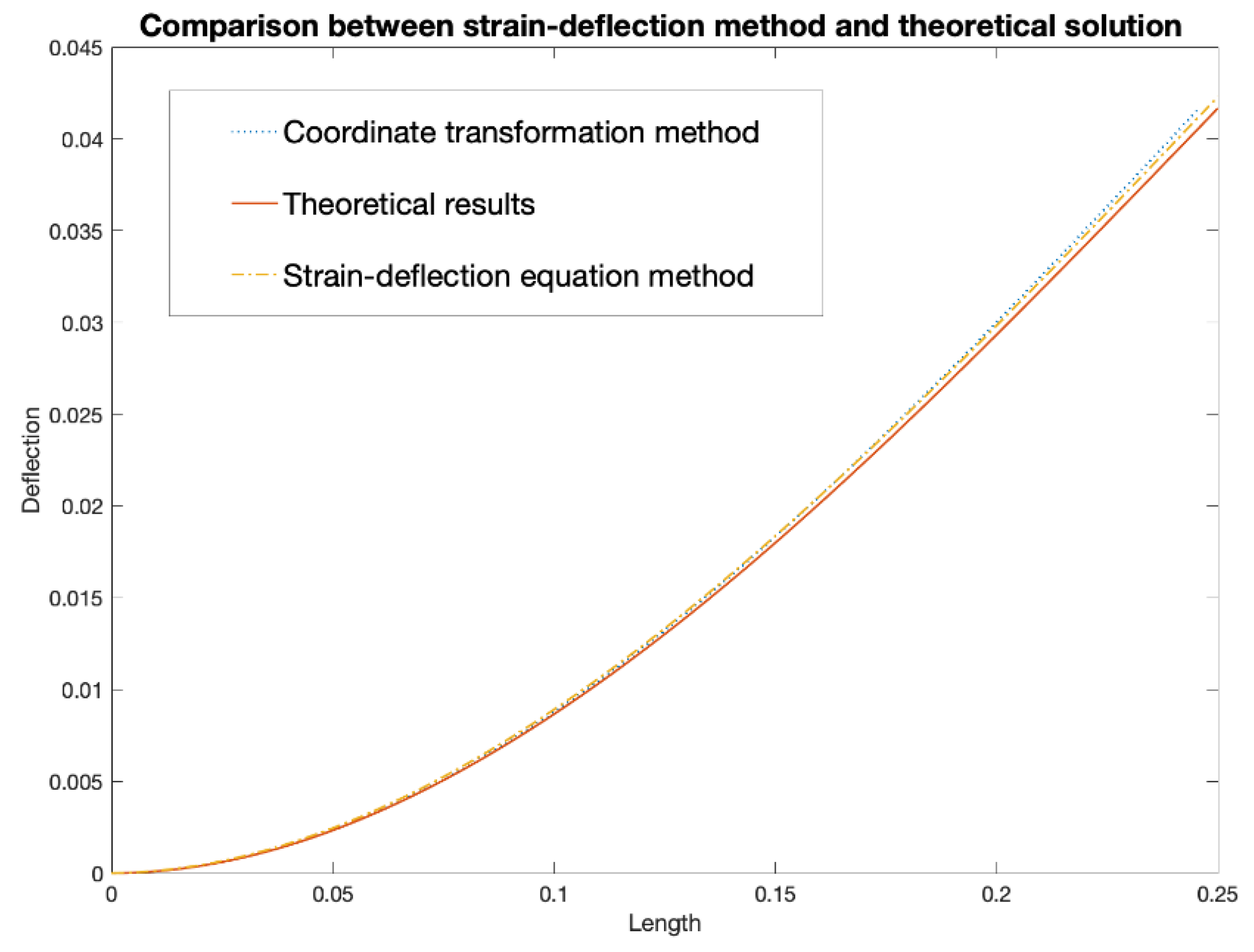
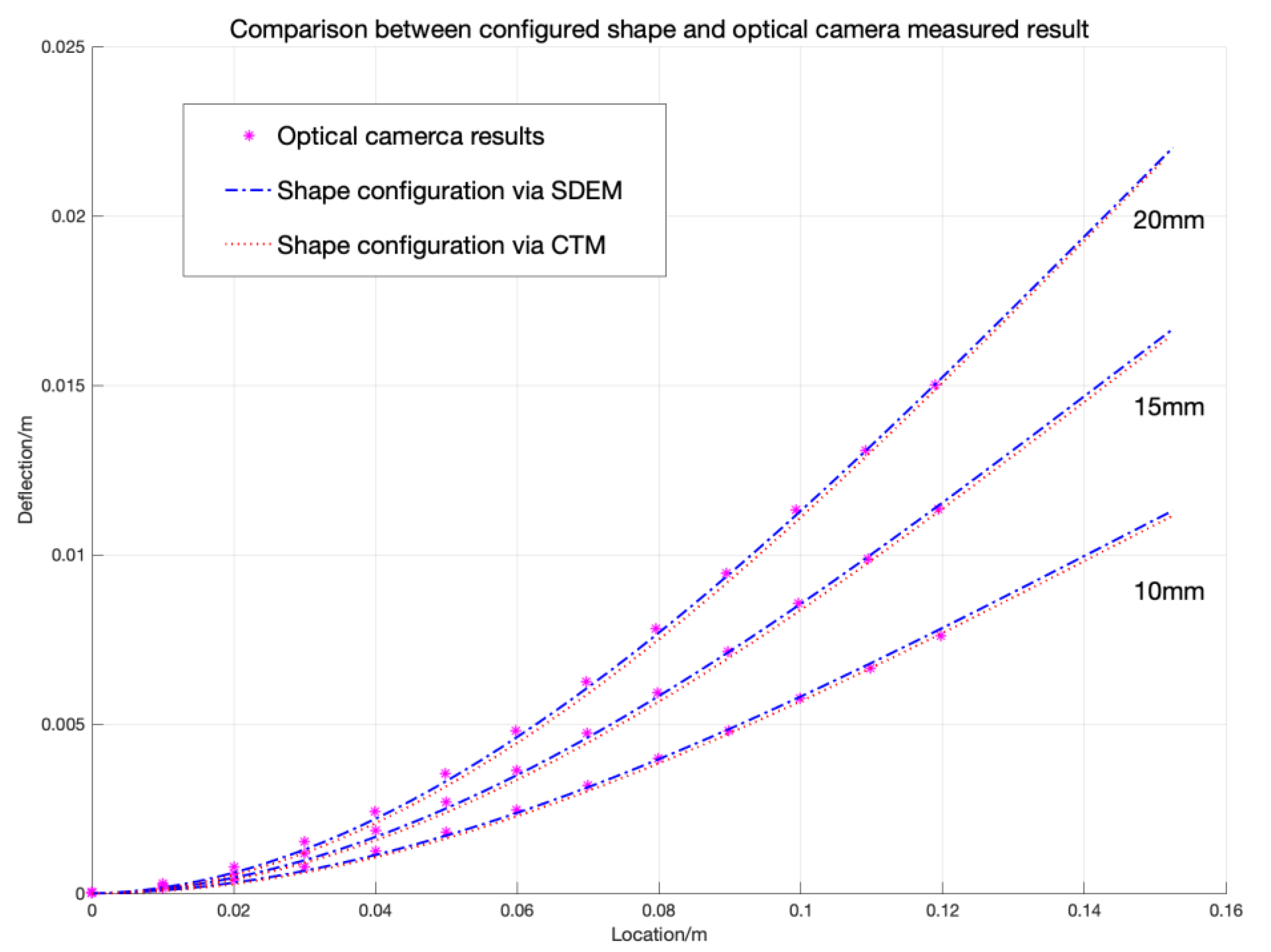
The shape configuration resulting from the RBS strain distributions with both CTM and SDEM algorithms are shown in
Figure 22 with red dotted line and blue dot-dash line, respectively. The predicted deformed shapes under three different conditions are compared, in which the displacements of the loading head are 10 mm, 15 mm, and 20 mm, respectively.
The comparison between distributed the FOS-based shape sensing and optical camera results shows that both the strain-shape algorithms predicted the deformed shapes with high accuracy, and they match well with the optical camera results, which validate the RBS-based shape sensing system. It is worth noting that the load profile in this example is a constant point load. However, in the previous sections it was demonstrated that the complexity of the loading (e.g., combined load, non-uniform distributions) will change the accuracy of the prediction on the basis of the resolution of the RBS sensors. The objective of this research was also to investigate this effect experimentally. However, the current experimental set up was not able to apply combined loading simultaneously. This will be considered in the next step of the research to improve the reliability and robustness of the algorithm.
7. Conclusions
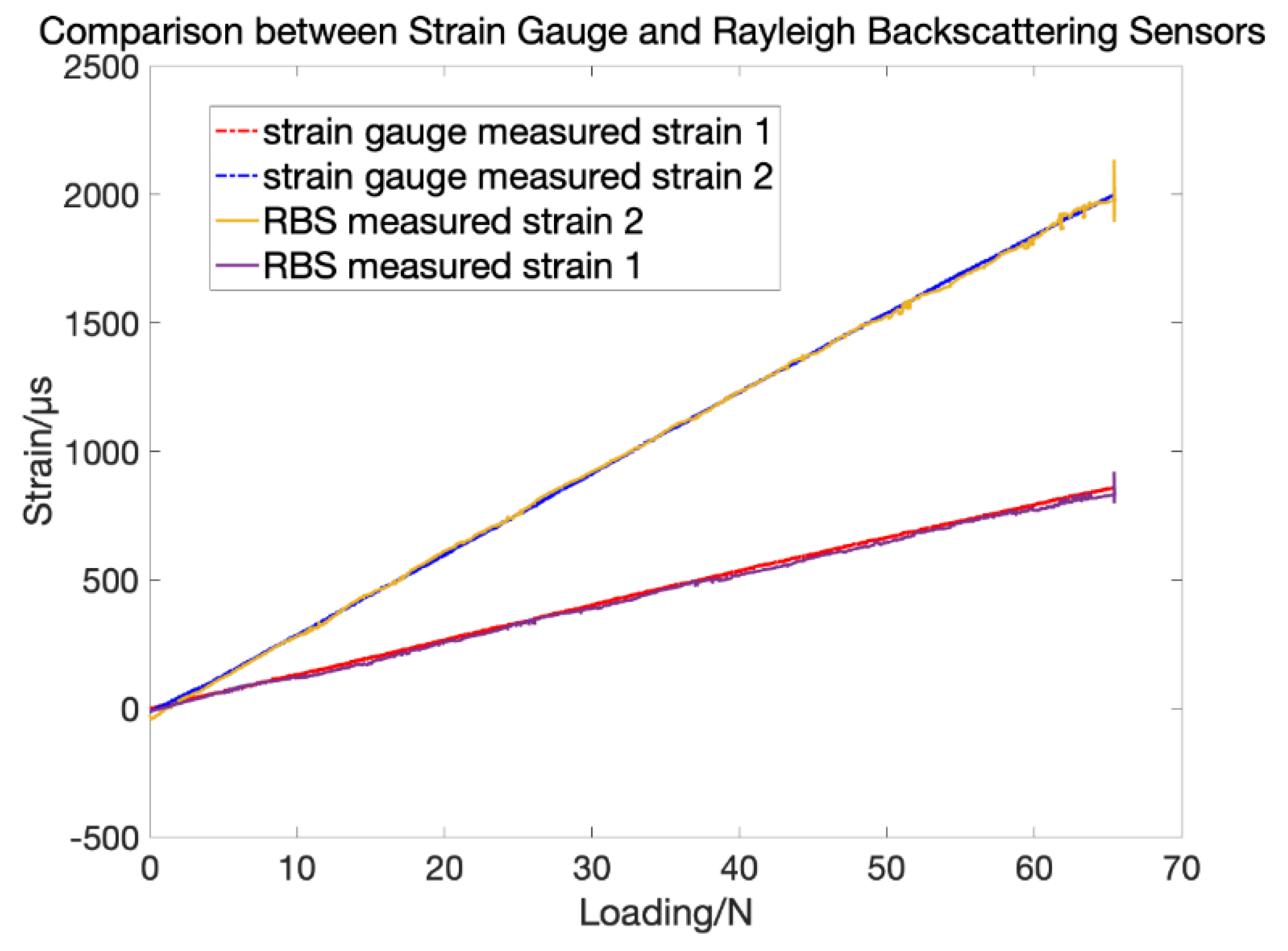
By comparing the spatial resolution of different distributed FOS, the most suitable distributed FOS, RBS, was selected which has the advantage of both continuous lateral shape sensing and high spatial resolution. RBS is then applied in shape sensing to improve current FOS-based shape sensing system’s performance. The RBS’s strain sensing accuracy was validated by an experiment comparing it with strain gauges. After that, two shape sensing algorithms (CTM and SDEM) based on the distributed FOS’ input strain data were derived and tested. A comparison between the two algorithms were made, which showed that the error between the two algorithms for small deformation is negligible. The algorithm was then optimized according to the distributed FOS’s feature, to make it applicable to complex loading situations and to improve its accuracy in case of sensor failures. After that, numerical simulations were carried out to validate the algorithms’ accuracy. The simulations showed that compared to the FBG-based system, the RBS-based system has a better performance in configuring the shape when the structure is under complex loading or combine loading.
Finally, an experiment was carried out, in which the RBS sensors were used to configure the shape of a composite cantilever-beam-like specimen under concentrated loading. The configured shape was then compared with the deformed shape measured by an optical camera. The experimental results show that both shape sensing algorithms predict the shape comparably well with the optical camera measured result.