Article

Robust Stride Segmentation of Inertial Signals Based on Local Cyclicity Estimation


by
Sebastijan Šprager
*,† and
Matjaž B. Jurič
Faculty of Computer and Information Science, University of Ljubljana, Večna pot 113, SI-1000 Ljubljana, Slovenia
*
Author to whom correspondence should be addressed.
These authors contributed equally to this work.
Sensors 2018, 18(4), 1091; https://doi.org/10.3390/s18041091
Submission received: 5 February 2018 / Revised: 27 March 2018 / Accepted: 29 March 2018 / Published: 4 April 2018
(This article belongs to the Section Physical Sensors)

Abstract

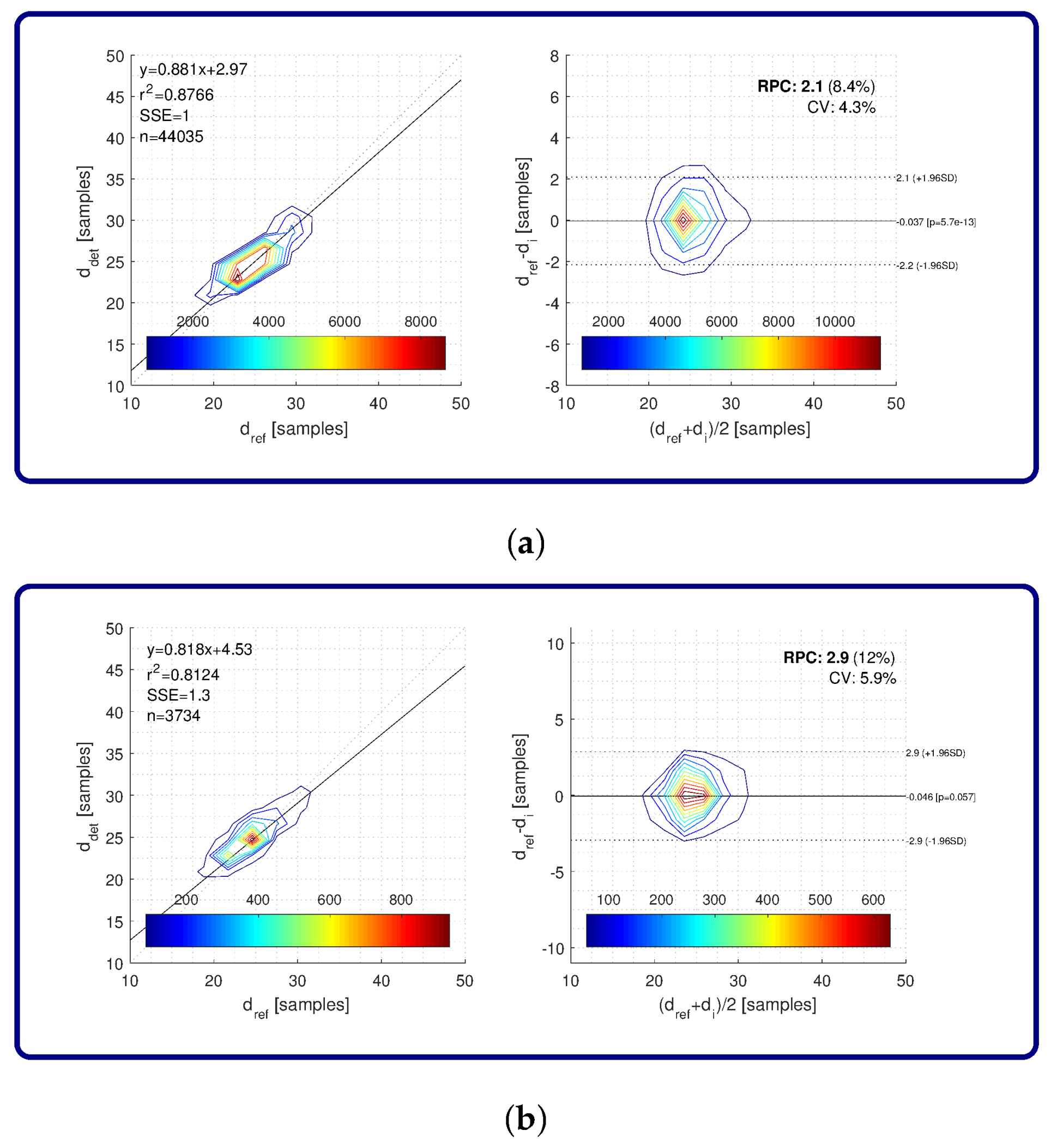
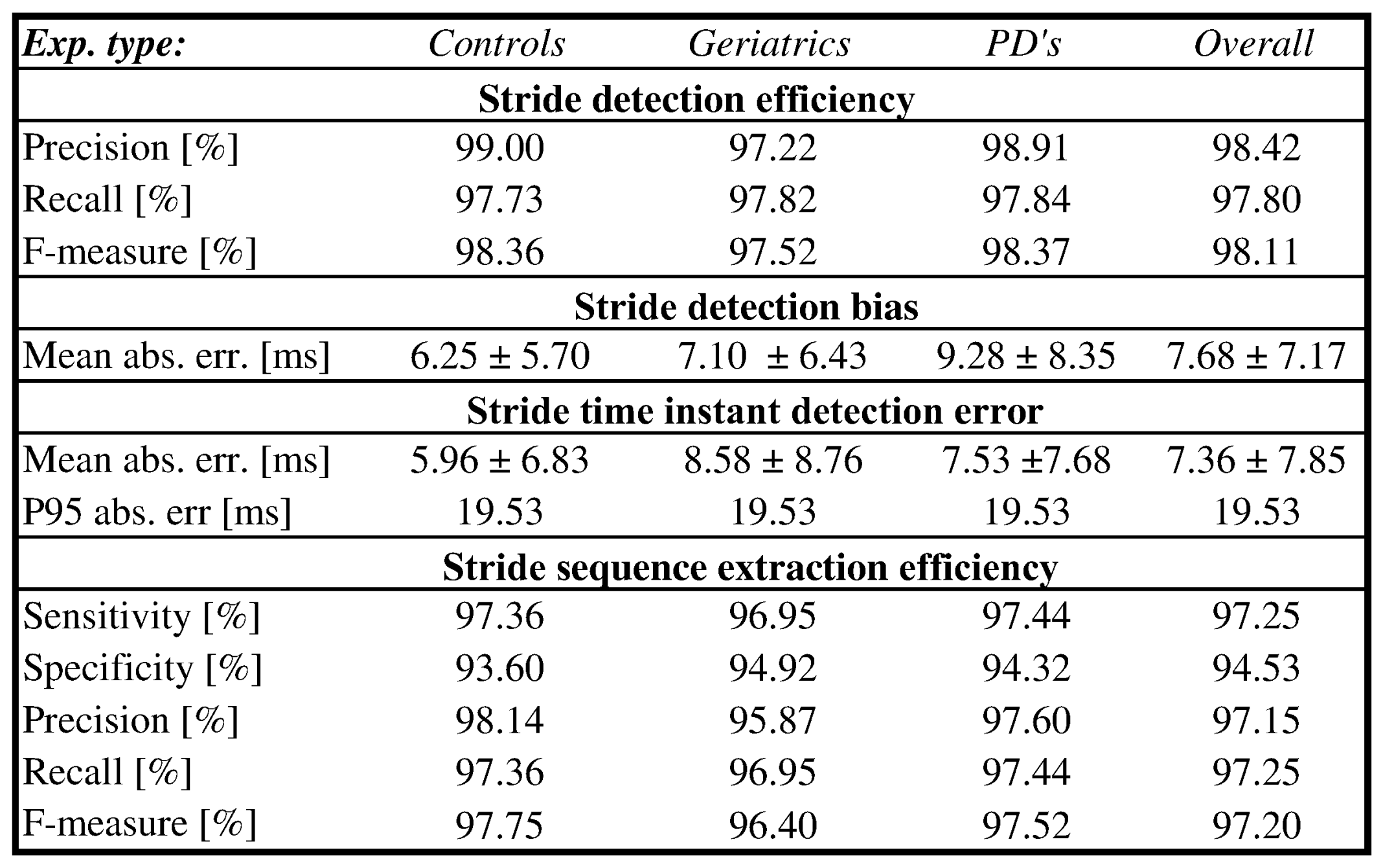
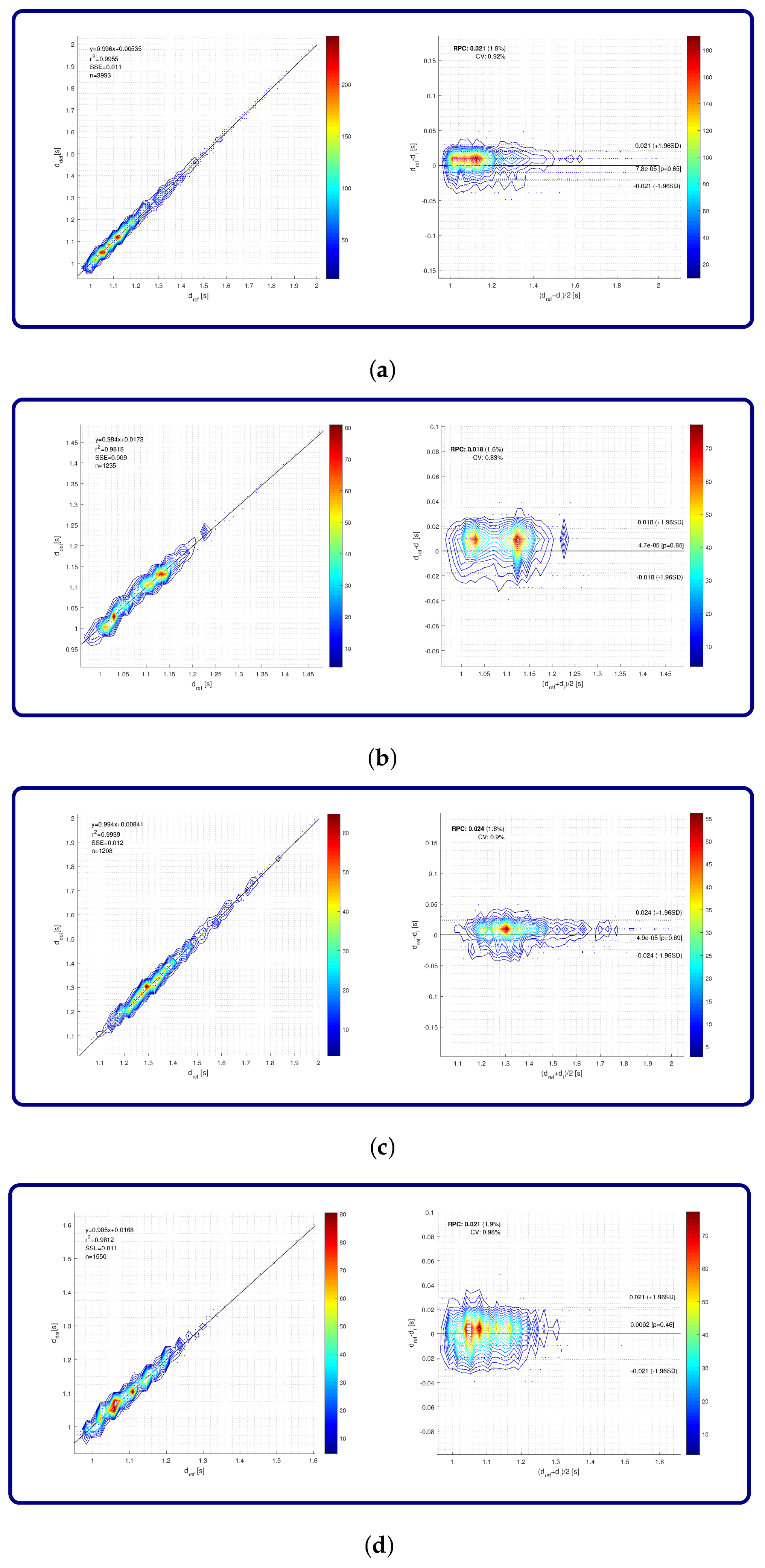
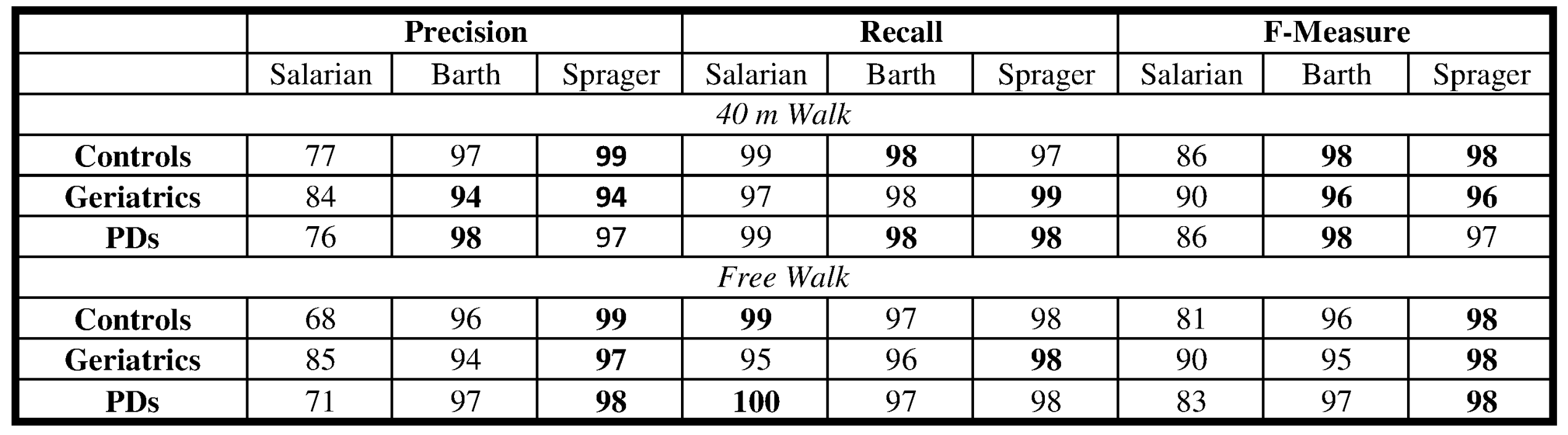
A novel approach for stride segmentation, gait sequence extraction, and gait event detection for inertial signals is presented. The approach operates by combining different local cyclicity estimators and sensor channels, and can additionally employ a priori knowledge on the fiducial points of gait events. The approach is universal as it can work on signals acquired by different inertial measurement unit (IMU) sensor types, is template-free, and operates unsupervised. A thorough evaluation was performed with two datasets: our own collected FRIgait dataset available for open use, containing long-term inertial measurements collected from 57 subjects using smartphones within the span of more than one year, and an FAU eGait dataset containing inertial data from shoe-mounted sensors collected from three cohorts of subjects: healthy, geriatric, and Parkinson’s disease patients. The evaluation was performed in controlled and uncontrolled conditions. When compared to the ground truth of the labelled FRIgait and eGait datasets, the results of our evaluation revealed the high robustness, efficiency (F-measure of about 98%), and accuracy (mean absolute error MAE in about the range of one sample) of the proposed approach. Based on these results, we conclude that the proposed approach shows great potential for its applicability in procedures and algorithms for movement analysis.
Keywords: inertial sensors; stride segmentation; gait assessment; inertial signals; biomedical signal processing inertial sensors; stride segmentation; gait assessment; inertial signals; biomedical signal processing