1. Introduction
Mediterranean endemic seagrass
Posidonia oceanica (L.) Delile is one of the most important foundation species of coastal ecosystems in the Mediterranean Sea. Often referred to as the “lungs of the Mediterranean,”
P. oceanica meadows provide a wide range of essential ecosystem services, including long-term carbon sequestration (blue carbon storage), sediment stabilization, coastal protection, nutrient cycling, and the creation of structurally complex habitats that support high levels of biodiversity [
1,
2,
3]. Because of their ecological importance and sensitivity to environmental change,
P. oceanica meadows are widely recognized as valuable bioindicators of the ecological status of Mediterranean coastal ecosystems [
4].
Despite their ecological significance, seagrass ecosystems worldwide are experiencing rapid decline due to increasing anthropogenic pressures and climate-related stressors [
5]. Coastal development, anchoring activities, intense marine tourism, and deterioration of water quality can directly damage seagrass meadows or alter the environmental conditions necessary for their survival. In addition, climate change-related factors such as rising sea temperatures, changes in hydrodynamics and increased frequency of extreme events may further threaten the persistence of these ecosystems [
6]. Even in protected areas, these combined pressures may influence the structure and functioning of seagrass habitats.
Gökova Bay, located in the southeastern Aegean Sea, hosts extensive
P. oceanica meadows and has been designated as a Special Environmental Protection Area (SEPA) due to its ecological importance. Although this region supports some of the most valuable seagrass habitats along the Turkish coastline, environmental conditions within the bay are not homogeneous. Hydrodynamic circulation patterns, freshwater inputs, and varying levels of coastal use create spatial heterogeneity in environmental conditions across the bay. Recent ecological monitoring studies conducted within the Gökova SEPA have revealed differences in benthic community structure, sediment composition and anthropogenic pressures among stations, indicating that
P. oceanica meadows within the bay may experience different levels of environmental stress [
7].
Traditional monitoring approaches for seagrass ecosystems often rely on morphological indicators such as shoot density, leaf length, or meadow coverage. However, these structural changes typically become visible only after substantial physiological damage has already occurred. Molecular approaches can advance understanding of plant responses to environmental stress by detecting changes in gene expression before visible symptoms appear. For this reason, the analysis of stress-related gene expression has emerged as a powerful tool for assessing the physiological condition of marine macrophytes and for identifying early-warning indicators of ecosystem degradation [
8,
9,
10]. Quantitative real-time PCR (qPCR) is particularly suitable for such studies because it enables the sensitive detection of transcriptional changes in key metabolic and stress-response pathways.
Environmental stress in plants frequently leads to the accumulation of reactive oxygen species (ROS), which can cause oxidative damage to cellular components, including proteins, lipids, and nucleic acids. To mitigate this damage, plants activate antioxidant defense mechanisms involving enzymes such as superoxide dismutase (SOD), ascorbate peroxidase (APX), glutathione reductase (GR), and glutathione S-transferase (GST), which collectively maintain cellular redox homeostasis [
11]. In addition to oxidative stress responses, increased sea temperatures can disrupt protein stability and cellular homeostasis. Heat shock proteins (HSPs) and heat shock transcription factors (HSFs) therefore play a crucial role in protecting cellular proteins under stress conditions by acting as molecular chaperones that stabilize or refold damaged proteins [
12,
13,
14].
Photosynthesis represents another key physiological process that is highly sensitive to environmental variability. Genes encoding components of the photosystem II reaction center, such as
psbA and
psbD, together with genes involved in carbon fixation, including the large and small subunits of ribulose-1,5-bisphosphate carboxylase/oxygenase (
rbcL and
rbcS), are commonly used as molecular indicators of photosynthetic performance and energy metabolism in marine plants [
9]. Furthermore, metallothioneins (MT) and metal transport proteins (MTP) play an important role in metal homeostasis and detoxification processes, and their expression may reflect environmental stress related to exposure to metal [
15].
Although previous studies have examined molecular responses of
P. oceanica to specific environmental stressors such as temperature increase, light variability, or ocean acidification, most of these investigations have been conducted under controlled laboratory conditions or in limited geographic regions of the Mediterranean Sea [
9,
14]. Consequently, relatively little is known about how natural populations of
P. oceanica respond at the transcriptional level to spatial environmental variability within protected coastal ecosystems. In particular, molecular data describing stress-related gene expression patterns of
P. oceanica populations from the eastern Mediterranean and the Aegean Sea remain scarce. Moreover, integrated studies examining multiple physiological pathways across natural environmental gradients in seagrass habitats are still limited.
Therefore, the present study provides the first bay-scale molecular assessment of P. oceanica across 17 sampling stations within the Gökova SEPA, one of the most environmentally heterogeneous coastal ecosystems in the eastern Aegean Sea. Unlike previous studies that primarily examined individual stressors, this work simultaneously evaluates four major stress response pathways, including photosynthesis, antioxidant defense, heat-shock response, and metal homeostasis, thereby providing an integrated assessment of physiological acclimation under natural environmental conditions.
Recent large-scale ecological assessments conducted in Gökova SEPA have documented pronounced spatial variability in hydrodynamic conditions, temperature regimes, water quality, habitat characteristics, and anthropogenic pressures, highlighting the complex environmental mosaic experienced by seagrass meadows [
16,
17].
We therefore hypothesized that meadows exposed to contrasting local environmental conditions would exhibit distinct transcriptional profiles. Specifically, genes associated with photosynthesis (psbA, psbD, rbcL, and rbcS), oxidative stress defense (SOD, APX3, GR, and GST), cellular stress protection (SHSP, HSP90, DehSP, DSP5, LBP, CYP, and HSFA5), and metal homeostasis (MT and MTP) were expected to show differential expression among stations, reflecting physiological acclimation to spatial environmental heterogeneity across Gökova Bay.
2. Materials and Methods
2.1. Sample Collection
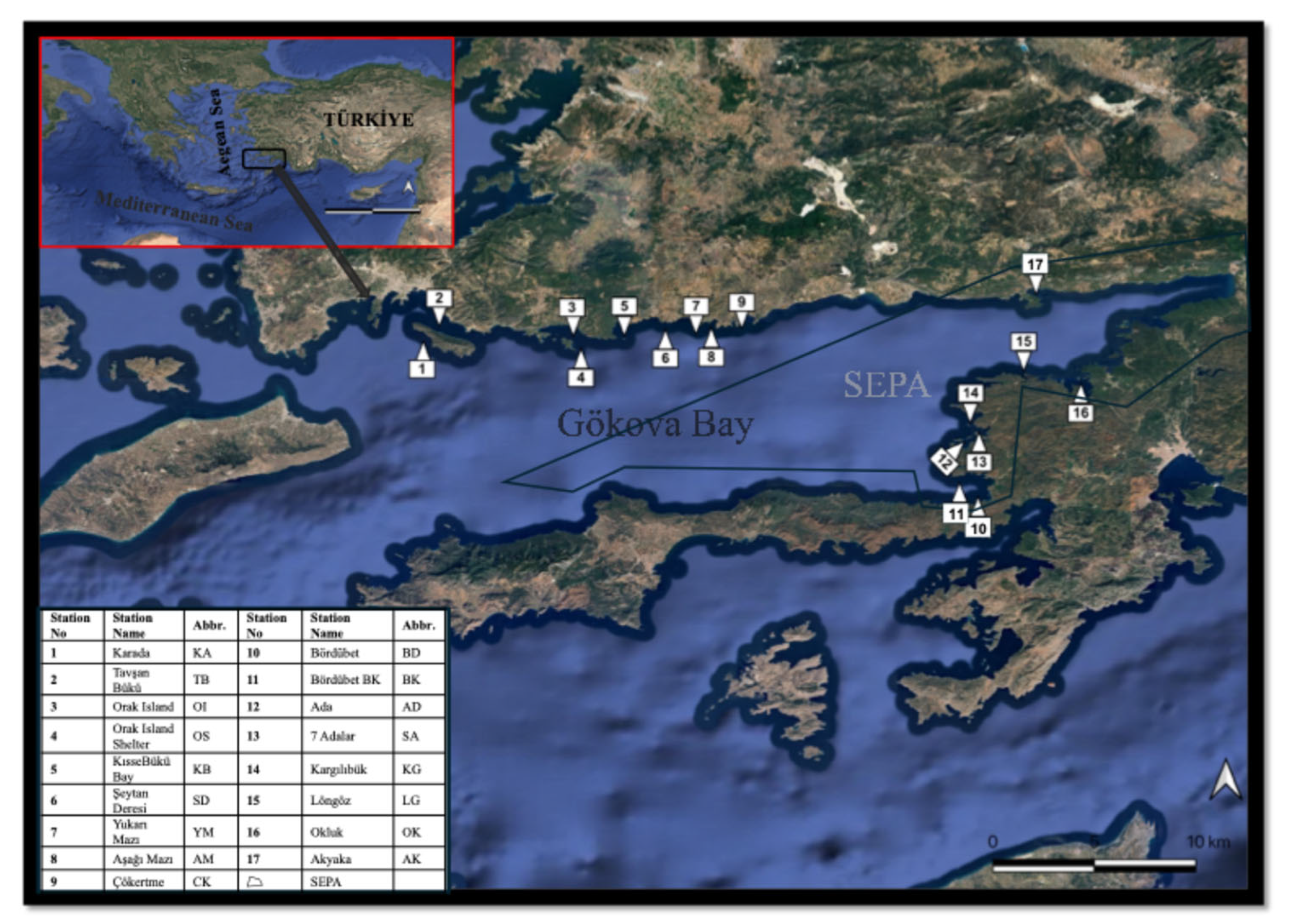
P. oceanica samples were collected from multiple stations within the Gökova SEPA, located in the southeastern Aegean Sea along the southwestern coast of Türkiye (
Figure 1). Sampling was conducted by diving at a depth of approximately 10 m, where well-developed
P. oceanica meadows were present [
18]. The geographic coordinates, station abbreviations, water temperature, pH, and salinity measurements are provided in
Table 1. As spatial proxies for potential anthropogenic influence, the distance of each sampling station to the nearest coastline and harbor was calculated using OpenStreetMap spatial data accessed through the OSMnx package (version 2.0.6) in Python (version 3.12; Python Software Foundation, Wilmington, DE, USA). These variables were used to characterize spatial gradients associated with coastal proximity and harbor accessibility among sampling sites. Because these metrics represent indirect spatial proxies rather than direct measurements of human pressure, they were interpreted cautiously and were not considered comprehensive indicators of anthropogenic impact (
Table S1).
Healthy leaf tissues were collected from randomly selected shoots to minimize sampling bias. For each station, three independent biological replicates were collected. After collection, samples were immediately placed in sterile tubes and RNALater (Thermo Fisher Scientific, Waltham, MA, USA) buffer and transported to the laboratory in cooled containers. The samples were subsequently stored at −20 °C until RNA extraction.
2.2. RNA Isolation and cDNA Synthesis
Total RNA was isolated from P. oceanica leaf tissues using TRIzol reagent (Thermo Fisher Scientific, Waltham, MA, USA) according to the manufacturer’s instructions. Approximately 100 mg of leaf tissue was homogenized prior to RNA extraction.
RNA concentration and purity were determined using a NanoDrop spectrophotometer (Thermo Fisher Scientific, Waltham, MA, USA). RNA quality was assessed based on absorbance ratios A260/A280 and A260/A230, and only samples with ratios between 1.8 and 2.1 were used for further analysis.
For cDNA synthesis, equal amounts of RNA (250 ng) were used for each reaction to ensure comparability among samples. Complementary DNA (cDNA) was synthesized using the EvoScript Universal Reverse Transcriptase kit (Roche Diagnostics GmbH, Mannheim, Germany) following the manufacturer’s protocol. The resulting cDNA samples were stored at −20 °C until quantitative PCR analysis.
2.3. Gene Expression Analysis
Primer specificity and amplification efficiency were first verified by conventional PCR using pooled cDNA samples. The PCR reaction mixture contained 2.5 µL of 10× Thermo DreamTaq buffer (Thermo Fisher Scientific, Waltham, MA, USA) (containing KCl and 20 mM MgCl2), 1 µL of 10 mM dNTP mix, 1 µL each of forward and reverse primers (10 µM), 0.5 µL of DreamTaq DNA polymerase, 2 µL of cDNA template, and 17 µL of ultrapure water, resulting in a final reaction volume of 25 µL.
PCR amplification was carried out under the following thermal conditions: initial denaturation at 95 °C for 2 min, followed by 35 cycles of 95 °C for 30 s, annealing at the gene-specific temperature for 50 s, and extension at 72 °C for 1 min, with a final extension step at 72 °C for 10 min. PCR products were visualized on a 1.5% agarose gel stained with RedSafe Nucleic Acid Staining Solution (iNtRON Biotechnology, Seongnam, Gyeonggi, Republic of Korea) and electrophoresed at 100 V.
Quantitative real-time PCR (RT-qPCR) was performed using the LightCycler 480 system (Roche Diagnostics GmbH, Mannheim, Germany). Target genes were selected to represent key physiological pathways, including photosynthesis (
psbA,
psbD,
rbcL,
rbcS,
FD, and
ATPA), oxidative stress response (
SOD,
APX3,
GR,
GST,
GPX,
GSH-S,
LPX, and
AOX), cellular stress protection (
SHSP,
HSP90,
HSFA5,
DehSP,
DSP5,
LBP, and
CYP), and metal detoxification (
MT and
MTP). Primer sequences used in the study are provided in
Table S1.
Each qPCR reaction consisted of 4 µL of LightCycler 480 SYBR Green I Master mix (Roche Diagnostics GmbH, Mannheim, Germany), 1 µL each of forward and reverse primers (10 µM), 2 µL of cDNA template, and 12 µL of nuclease free water, resulting in a final reaction volume of 20 µL. The thermal cycling program included an initial denaturation step at 95 °C for 5 min, followed by 40 cycles of 95 °C for 10 s, annealing at the primer-specific temperature for 10 s and extension at 72 °C for 20 s [
19].
The stability of candidate reference genes (
18S,
eIF4A, and
NTUB) was evaluated using the RefFinder platform, which integrates four commonly used algorithms (geNorm, NormFinder, BestKeeper, and the comparative ΔCt method) to generate a comprehensive stability ranking. Detailed rankings obtained from each algorithm, together with BestKeeper descriptive statistics, are provided in
Supplementary Tables S2–S5 and
Supplementary Figures S1 and S2. Based on the comprehensive RefFinder ranking,
18S was identified as the most stable reference gene and was therefore selected as the internal reference gene for normalization.
PCR amplification efficiency for each primer pair was determined using standard curves generated from serial dilutions of pooled cDNA. Amplification efficiency (E) was calculated from the slope of the standard curve according to the equation E (%) = (10 − 1/slope − 1) × 100, and only primer pairs showing acceptable efficiencies and linearity (R
2) were used for quantitative analyses. Relative gene expression was calculated using the 2
−ΔΔCt method. Primer characteristics, including annealing temperature, amplicon length, amplification efficiency, and regression coefficient (R
2), are presented in
Supplementary Table S1.
Relative Gene Expression Analysis
Candidate reference genes (
18S,
eIF4A, and
NTUB) were evaluated for expression stability across all samples. Reference gene stability was assessed using the RefFinder platform, which integrates the algorithms geNorm, NormFinder, BestKeeper and the comparative ΔCt method. Based on the integrated stability ranking,
18S was identified as the most stable transcript across all stations and experimental conditions and was subsequently used as the normalization control (
Table S2).
Relative gene expression levels were calculated using the 2
−ΔΔCt method [
20].
All qPCR reactions were performed with three biological replicates, and each reaction was conducted in technical duplicates.
2.4. Statistical Analysis
Statistical analyses were performed using GraphPad Prism 10 (GraphPad Software, USA) and PAST version 5.0 [
21]. Relative gene expression values were calculated using the 2
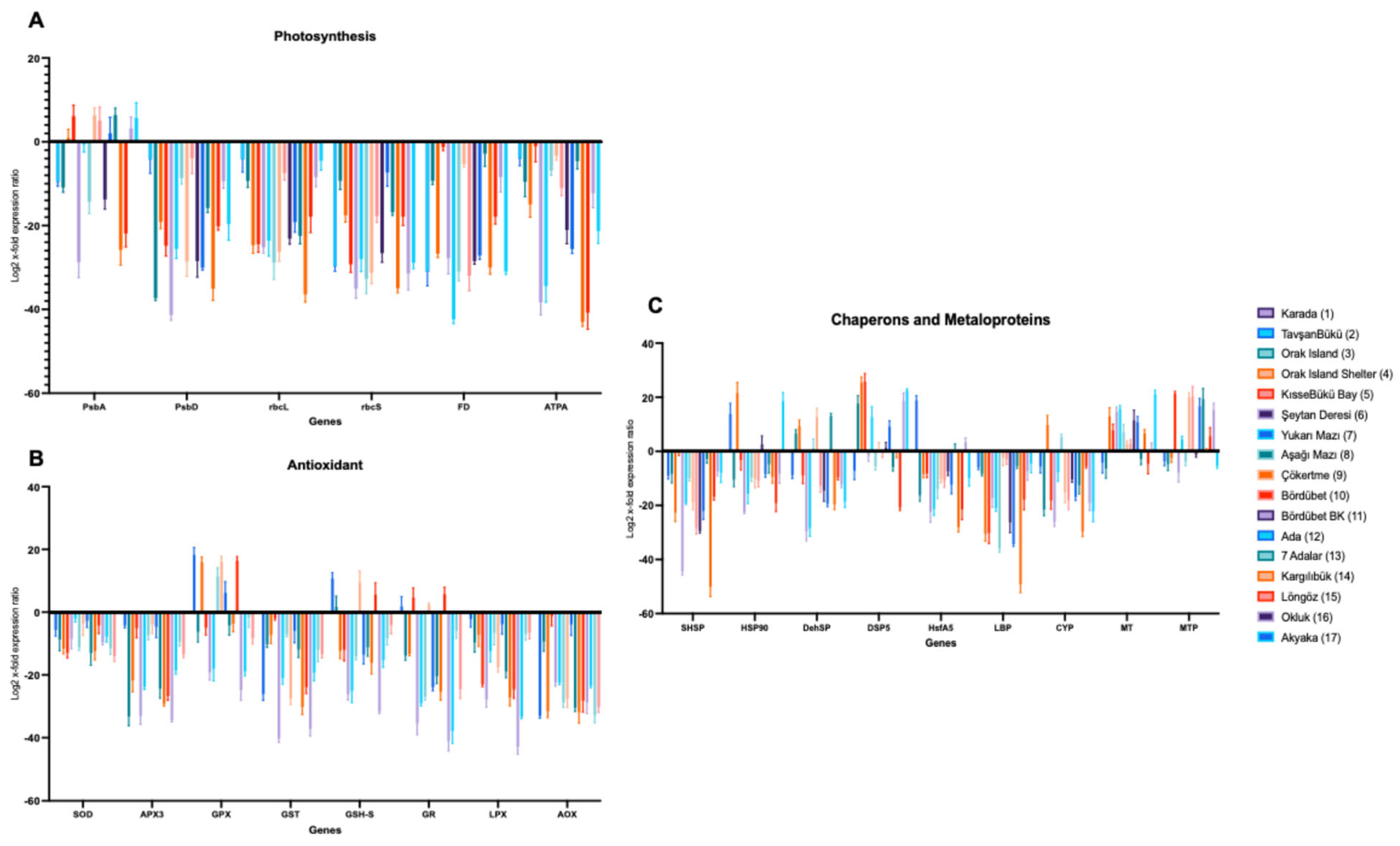
−ΔΔCt method and expressed as mean ± standard error (SE) based on three biological replicates.
To evaluate spatial variability in transcriptional responses, genes were grouped into functional categories including photosynthesis, antioxidant defense, and chaperone/metal tolerance pathways. Differences among stations and gene categories were assessed using two-way analysis of variance (two-way ANOVA), with sampling station and gene identity treated as fixed factors. The proportion of explained variance attributable to each factor was calculated from the ANOVA sums of squares.
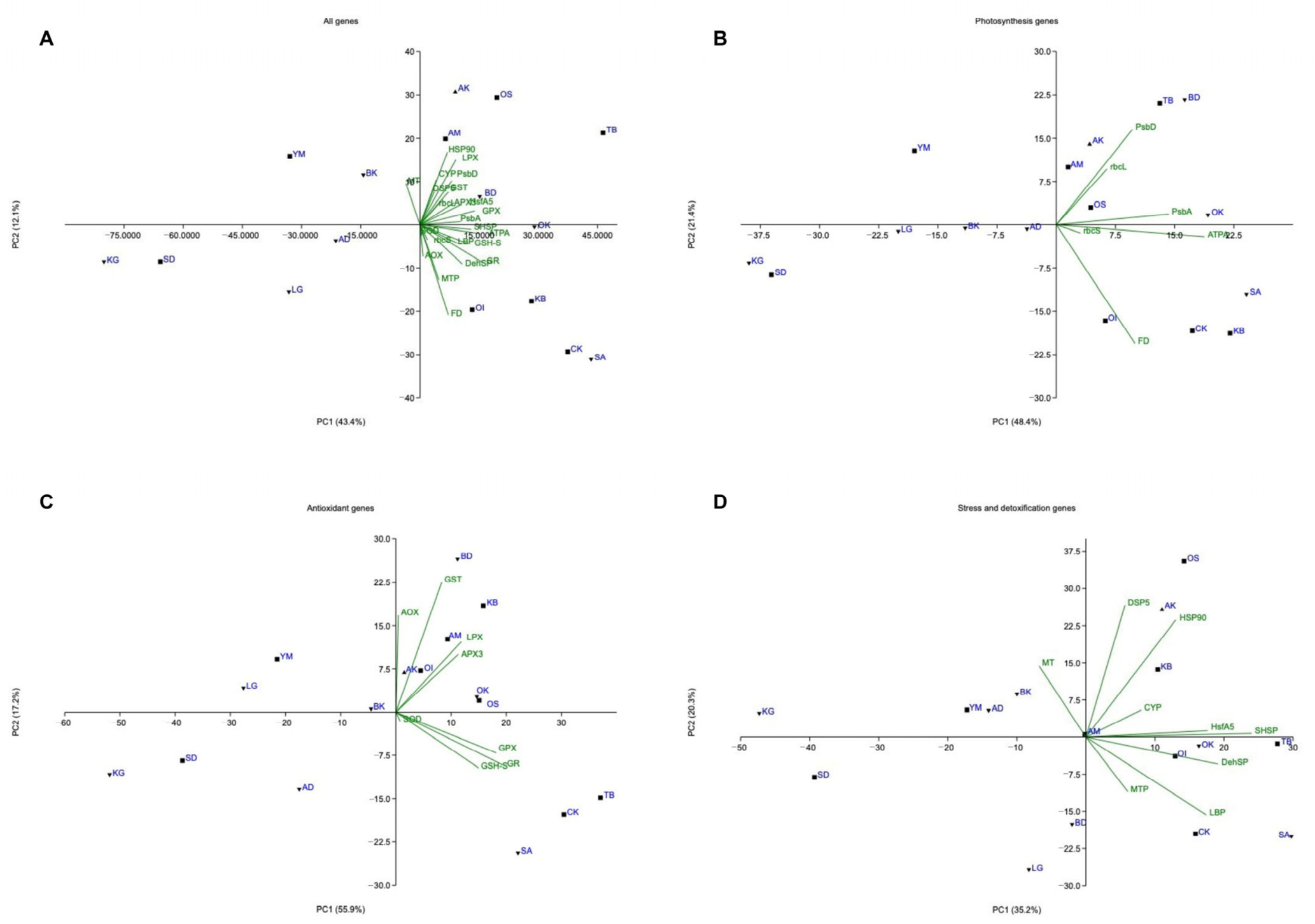
Multivariate patterns in gene expression were explored using Principal Component Analysis (PCA) based on station-averaged expression values. PCA was performed separately for photosynthetic, antioxidant defense, stress-related and integrated gene datasets. As an exploratory multivariate ordination method, PCA was used to visualize the major patterns of transcriptional variation among sampling stations and was interpreted based on the proportion of variance explained by the principal components.
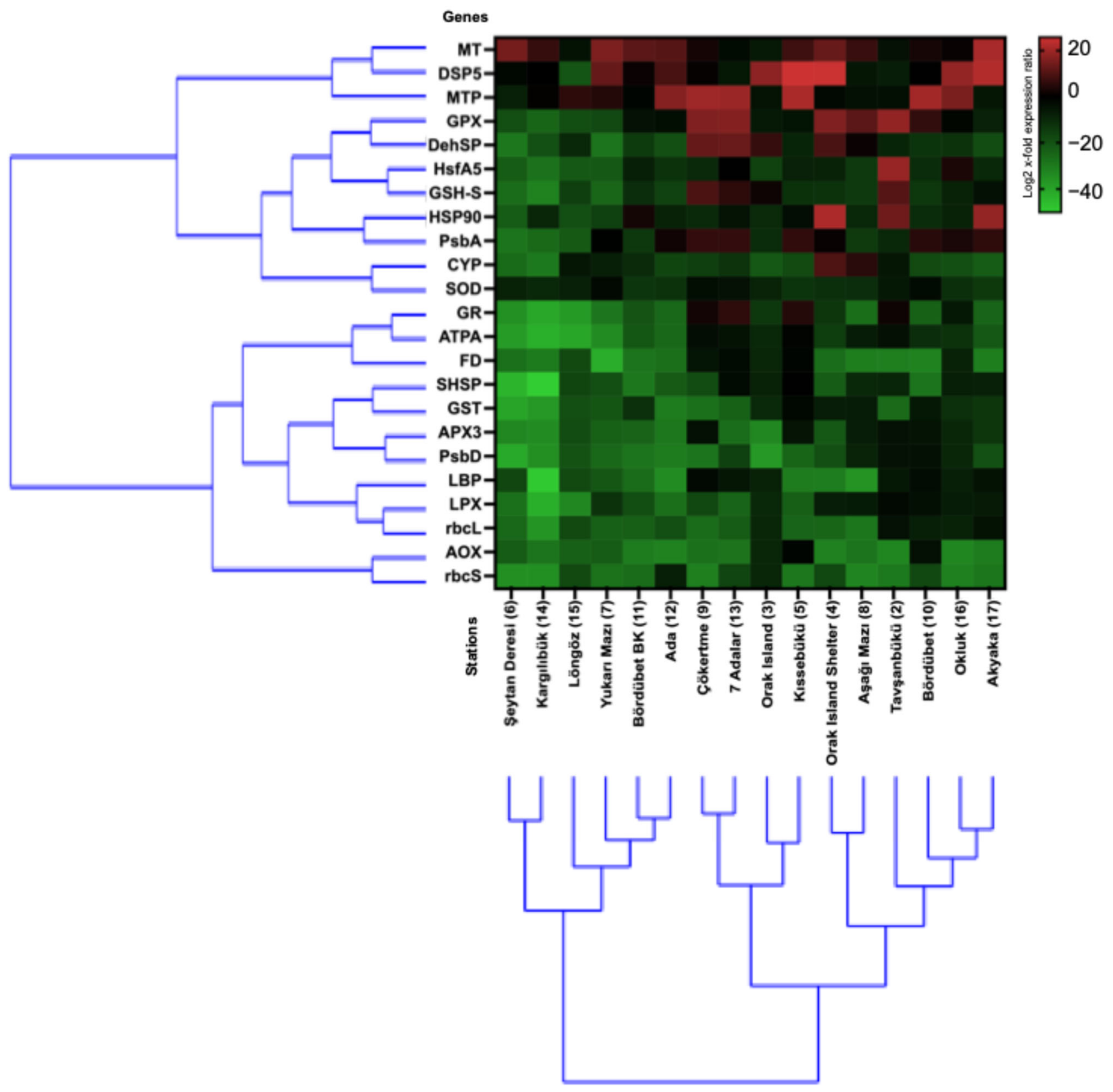
Hierarchical clustering analysis was conducted using Euclidean distance and Ward’s linkage method. Cluster results were visualized as heatmaps of log2 transformed relative expression values.
To investigate potential relationships between transcriptional patterns and environmental variables, Pearson correlation analyses were performed between the first principal component (PC1) scores obtained from the integrated PCA and measured physicochemical parameters (temperature, pH and salinity).
The combined influence of environmental variables on gene expression patterns was further evaluated using redundancy analysis (RDA). Gene expression data were used as response variables, whereas temperature, pH and salinity were included as explanatory variables. Statistical significance of the constrained ordination model was assessed using a Monte Carlo permutation test with 999 permutations. Statistical significance was accepted at p < 0.05.
4. Discussion
The present study demonstrates that the pronounced spatial heterogeneity of Gökova Bay is reflected at the molecular level in
P. oceanica populations. RT-qPCR analyses, two-way ANOVA, PCA, hierarchical clustering, and heatmap visualization consistently revealed strong station-specific differences in photosynthetic, antioxidant, chaperone, and metal tolerance pathways. Significant effects of gene identity, station, and gene × station interactions across all functional gene groups indicate that
P. oceanica does not respond through a uniform transcriptional program but rather through highly gene-specific acclimation strategies reflecting pronounced spatial heterogeneity across the bay. These findings support growing evidence that seagrasses respond to multiple interacting environmental drivers operating simultaneously within coastal ecosystems [
22,
23,
24,
25].
The physical oceanography of Gökova Bay provides an important framework for interpreting these patterns. Previous hydrographic studies identified a basin-scale cyclonic circulation generating a dominant westward flow along the northern coastline [
26]. This circulation creates spatial differences in water renewal, residence times, and thermal retention while potentially influencing the transport of thermal and chemical inputs originating from the thermal power complex [
27]. Consequently, hydrodynamic connectivity likely contributes to the spatial transcriptional patterns observed across Gökova Bay.
Photosynthesis-related genes showed marked spatial variation among stations, indicating substantial differences in photosynthetic performance and energy metabolism across Gökova Bay. Because these genes are directly involved in PSII function, electron transport, and carbon fixation, their coordinated suppression is consistent with chronic environmental stress, as previously reported for
P. oceanica under thermal stress, altered irradiance, and ocean acidification [
9,
14]. The PCA results further supported this interpretation, with
ATPA,
PsbA,
FD, and
PsbD contributing most strongly to the primary axis of variation. This pattern indicates that differences in photosynthetic energy production, PSII maintenance and electron transport represent major drivers of physiological variability among
P. oceanica meadows in Gökova Bay.
The expression patterns of
psbA and
psbD were particularly informative in distinguishing active acclimation from physiological deterioration. Because
psbA encodes the rapidly turning over D1 protein of PSII, increased
psbA expression is generally interpreted as evidence of active repair and photoprotection. In contrast, coordinated suppression of both
psbA and
psbD is typically associated with severe or prolonged stress and impaired photosynthetic stability [
14,
28]. Despite the overall trend of photosynthetic suppression, several stations located within the northern circulation corridor exhibited molecular signatures consistent with active physiological acclimation.
Such transcriptional profiles suggest maintenance of photoprotective repair mechanisms and coordinated activation of cellular defense pathways, indicating active acclimation rather than generalized metabolic decline [
14,
28].
Hydrodynamic connectivity may contribute to this enhanced resilience. Stations such as Kıssebükü and Çökertme are influenced by the active northern branch of the cyclonic circulation system [
26], where continuous water exchange likely reduces the persistence of localized thermal anomalies, nutrient accumulation, and hypoxic conditions. The close clustering of Kıssebükü and Çökertme in the photosynthetic PCA further supports the existence of shared local conditions and similar physiological responses along the northern circulation corridor. Although elevated expression of
MT and
MTP was detected at several stations, multivariate analyses indicated that photosynthetic performance and cellular stress responses contributed more strongly to station differentiation than metal tolerance pathways alone. MTs and MTPs play central roles in intracellular metal homeostasis and detoxification but may also be induced by oxidative stress and other environmental stressors. Previous studies conducted in Gökova Bay have reported spatial variation in trace metal concentrations in sediments and the water column, identifying terrestrial runoff, agricultural and domestic inputs, tourism-related activities, and maritime traffic as important regional sources of metal contamination [
29,
30]. Sediment assessments from different locations within the bay have also identified spatial variation in trace metal distribution, indicating that metal availability may differ considerably among coastal habitats [
7]. However, because trace metal concentrations were not measured in the present study, the observed
MT and
MTP expression patterns should be interpreted as components of general stress-responsive pathways rather than direct evidence of metal exposure.
In contrast, Şeytan Deresi, Kargılıbük, and Löngöz displayed broad suppression of photosynthetic, antioxidant, and heat-shock pathways, indicating advanced physiological stress. Hydrodynamic isolation, elevated residence times, and enhanced thermal retention have previously been described for sheltered inner-bay environments [
26,
31], potentially increasing vulnerability to nutrient accumulation and oxygen depletion. This interpretation is supported by the inverse relationship between temperature and dissolved oxygen reported for the northern coastline of Gökova Bay [
32]. Field observations of mucilage accumulation further suggest that shading and diffusion limitations may have contributed to the severe transcriptional suppression observed. Together, these findings indicate that
P. oceanica populations across Gökova Bay occupy different positions along a continuum ranging from active acclimation to advanced physiological deterioration.
Glutathione-dependent antioxidant metabolism appears to represent one of the principal mechanisms underlying spatial physiological differentiation among P. oceanica meadows. These genes showed the strongest contributions to the primary axis of variation and highlight the central role of glutathione metabolism in maintaining redox homeostasis under heterogeneous environmental conditions.
Glutathione-dependent antioxidant metabolism appears to represent one of the principal mechanisms underlying spatial physiological differentiation among
P. oceanica meadows. This finding highlights the importance of glutathione mediated redox regulation as a key component of the antioxidant defense system, enabling seagrasses to maintain cellular homeostasis under heterogeneous environmental conditions. Elevated temperature, nutrient enrichment, reduced circulation, and hypoxia are all known to increase ROS production and disrupt cellular homeostasis [
11,
33,
34,
35], making antioxidant activation a critical adaptive response. The observed spatial variability in antioxidant gene expression further suggests that individual meadows experience distinct local stress regimes, resulting in different physiological acclimation strategies across Gökova Bay.
Heat-shock proteins and stress-related transcription factors constituted a second major physiological response associated with environmental heterogeneity. The predominance of molecular chaperones within the stress response network suggests that maintaining protein stability is a central component of acclimation in
P. oceanica. Heat-shock proteins and stress-related transcription factors are well recognized for their roles in protein stabilization, osmotic adjustment and cellular stress tolerance [
12,
13]. Their differential expression among sampling stations indicates substantial variation in the capacity of local populations to maintain protein homeostasis and activate protective cellular mechanisms under contrasting environmental conditions. Overall, these findings suggest that protein quality control and molecular chaperone activity represent key adaptive mechanisms enabling
P. oceanica to cope with heterogeneous environmental stress across Gökova Bay.
The relatively limited contribution of
MT and
MTP to the major PCA axes suggests that metal detoxification pathways played a secondary role in explaining the observed spatial variability. Although metal-related stress cannot be excluded, the overall transcriptional patterns indicate that protein maintenance, antioxidant defense and photosynthetic regulation were the dominant physiological processes shaping the responses of
P. oceanica across Gökova Bay. This observation does not diminish the potential ecological importance of metal exposure but rather suggests that multiple environmental drivers act simultaneously and that cellular stress-management mechanisms represent the primary acclimation strategy under current environmental conditions [
15].
Multivariate analyses further demonstrated that molecular responses were organized primarily according to physiological condition rather than geographic proximity. Stations that were geographically distant frequently clustered together when they exhibited similar transcriptional profiles, whereas neighboring stations sometimes displayed markedly different molecular responses. Similar discrepancies between ecological condition and nominal protection status have also been reported for Aegean phytobenthic habitats [
18]. These findings emphasize the importance of cumulative environmental pressures in shaping seagrass responses and suggest that local environmental heterogeneity may override simple geographic patterns.
To assess whether the major transcriptional gradient identified by the integrated PCA was associated with measured environmental conditions, Pearson correlation and redundancy analyses were performed using temperature, pH and salinity. Neither Pearson correlation nor redundancy analysis identified significant relationships between transcriptional variation and the measured physicochemical variables, indicating that additional environmental drivers are likely responsible for the observed molecular heterogeneity. Instead, hydrodynamic processes, local environmental heterogeneity and unmeasured stressors are likely to play a more important role in shaping transcriptional responses of P. oceanica across Gökova Bay.
A particularly informative example was Ada station, where severe downregulation of
psbD,
GR and
LPX coincided with extensive dead leaf accumulation. This pattern may be consistent with advanced physiological deterioration and accelerated senescence. Similar transcriptomic shifts have previously been proposed as early indicators of meadow decline in
P. oceanica [
22] and may represent an early molecular stage preceding broader habitat regression.
Akyaka exhibited a distinct transcriptional profile characterized by elevated expression of several antioxidant defense and stress response genes. Its position within the multivariate analyses suggests the influence of localized environmental conditions associated with urban activities, freshwater inputs, and increased coastal use. The combination of these factors may contribute to the unique physiological signature observed at this station relative to the other meadows examined in the study.
The distinctive transcriptional profile observed at Akyaka may be associated with site-specific environmental conditions and its proximity to coastal and harbour-related activities. However, because direct quantitative measurements of anthropogenic pressure, such as boating intensity, nutrient loading, or coastal-use intensity, were not available for all stations, this interpretation should be considered cautiously.
Collectively, these findings demonstrate that transcriptional biomarkers provide a highly sensitive framework for detecting environmental stress before visible degradation becomes apparent at the meadow scale. The combined evidence from ANOVA, PCA, hierarchical clustering, and RDA suggests that hydrodynamic connectivity, spatial environmental heterogeneity, and unmeasured stressors play important roles in shaping the physiological condition of
P. oceanica populations across Gökova Bay. These results complement recent ecological studies conducted in Gökova Bay, which have highlighted the importance of habitat heterogeneity, ecological restoration, and adaptive management for maintaining the resilience of Mediterranean coastal ecosystems [
16,
17]. Together, these findings demonstrate that molecular biomarkers can reveal fine-scale physiological variation that may not be detected using conventional ecological assessments alone. Integrating transcriptomic biomarkers with long-term environmental monitoring and ecological surveys will improve our understanding of seagrass resilience and provide valuable support for the conservation and management of
P. oceanica meadows in the eastern Mediterranean. Future studies integrating transcriptomic biomarkers with continuous environmental monitoring, quantitative anthropogenic-pressure indices, nutrient concentrations, dissolved oxygen, sediment characteristics and contaminant loads will provide a more comprehensive understanding of the environmental drivers shaping transcriptional variation in
P. oceanica across Gökova Bay.
Only a small proportion of the observed transcriptional variation was explained by the measured physicochemical variables, indicating that temperature, pH and salinity alone are insufficient to account for the complex molecular responses observed across Gökova Bay. This finding suggests that additional environmental drivers, including hydrodynamic processes, nutrient availability, dissolved oxygen, sediment characteristics, contaminant exposure, trace metal availability and other site-specific factors, are likely to contribute to the observed spatial transcriptional heterogeneity. Because these environmental stressors were not directly quantified, the observed transcriptional patterns should be interpreted as indicators of physiological stress responses rather than definitive signatures of specific stressors. Future studies integrating transcriptomic biomarkers with direct measurements of these environmental variables will provide a more comprehensive understanding of the mechanisms underlying spatial transcriptional variability in P. oceanica.