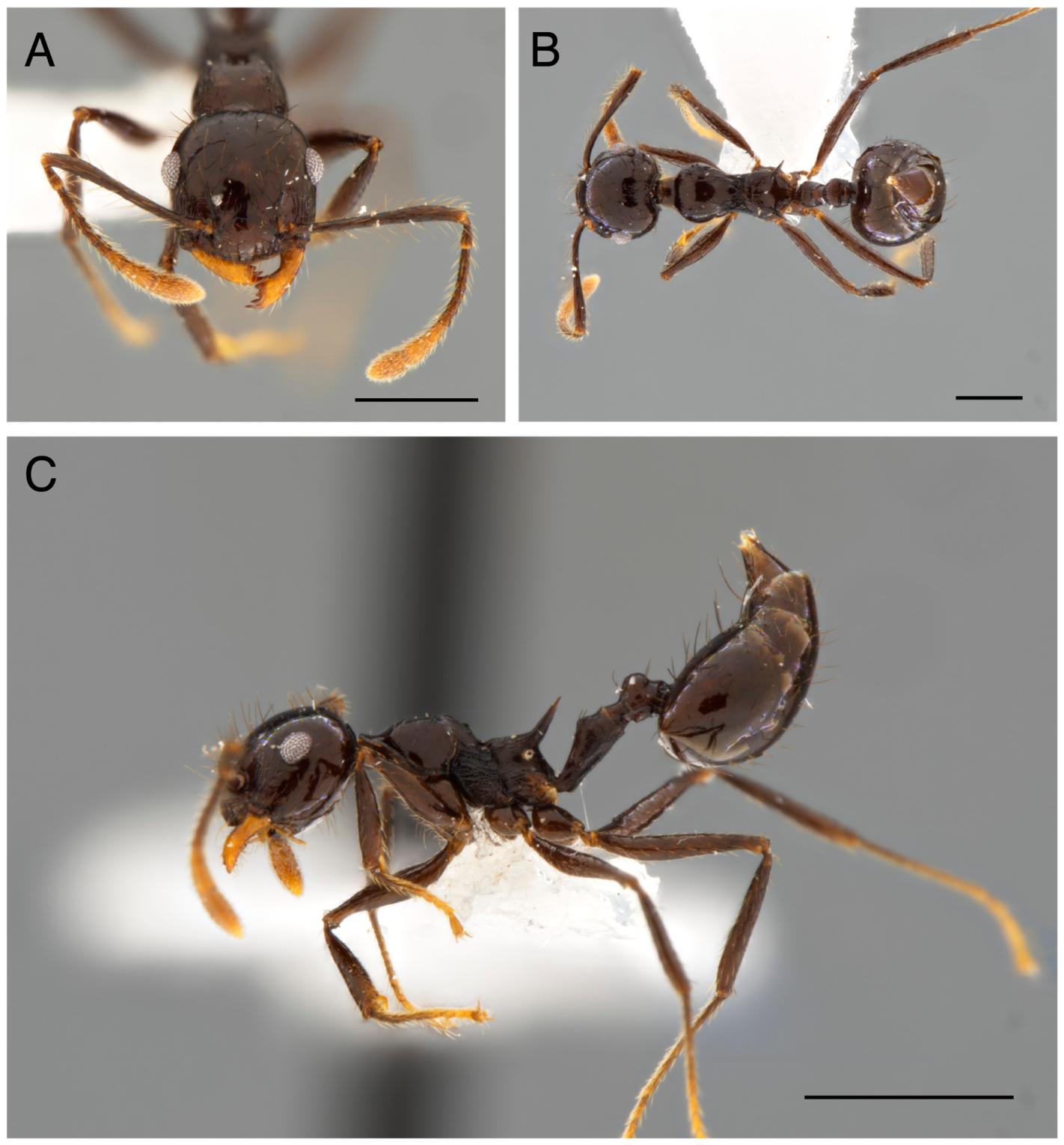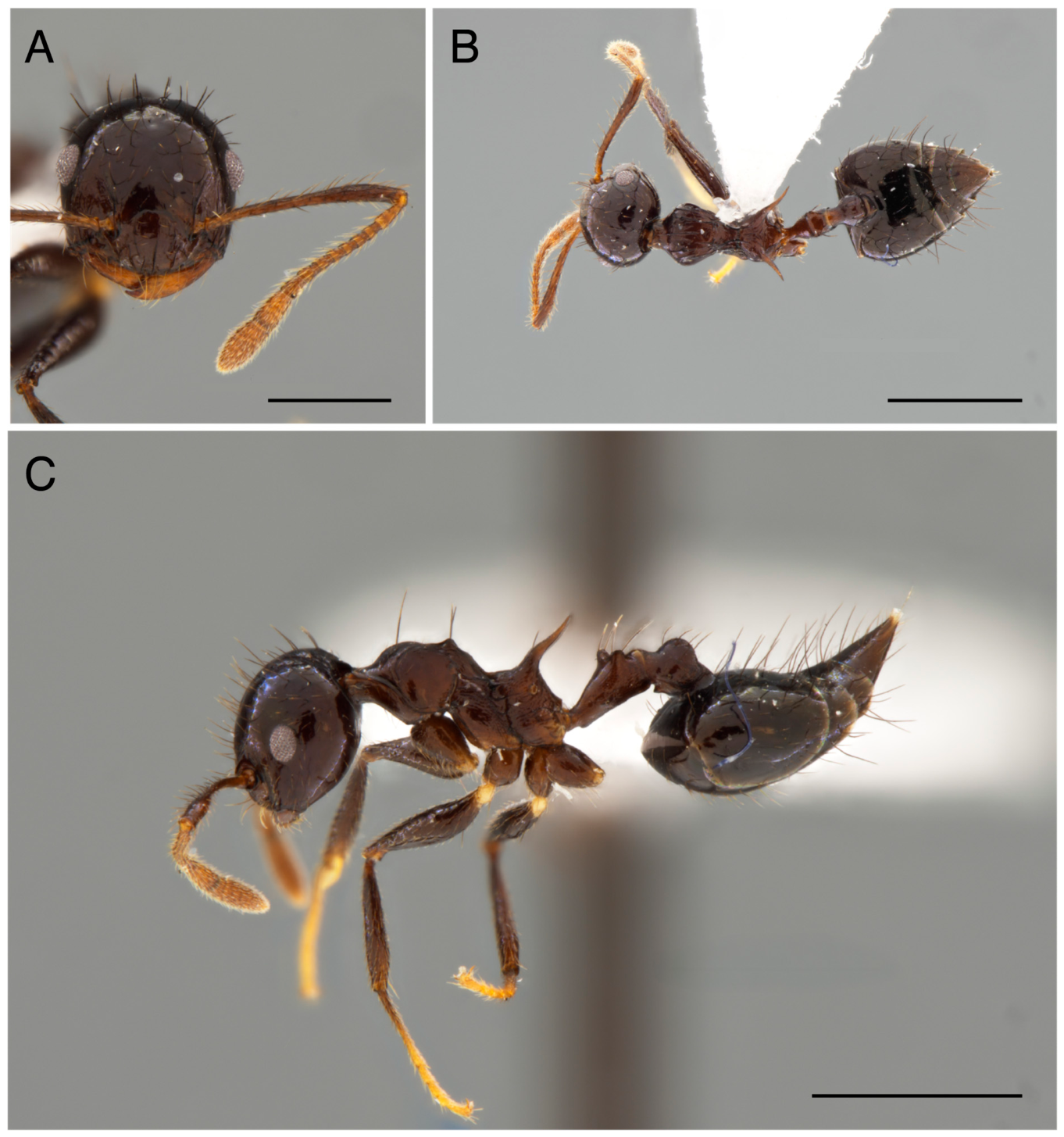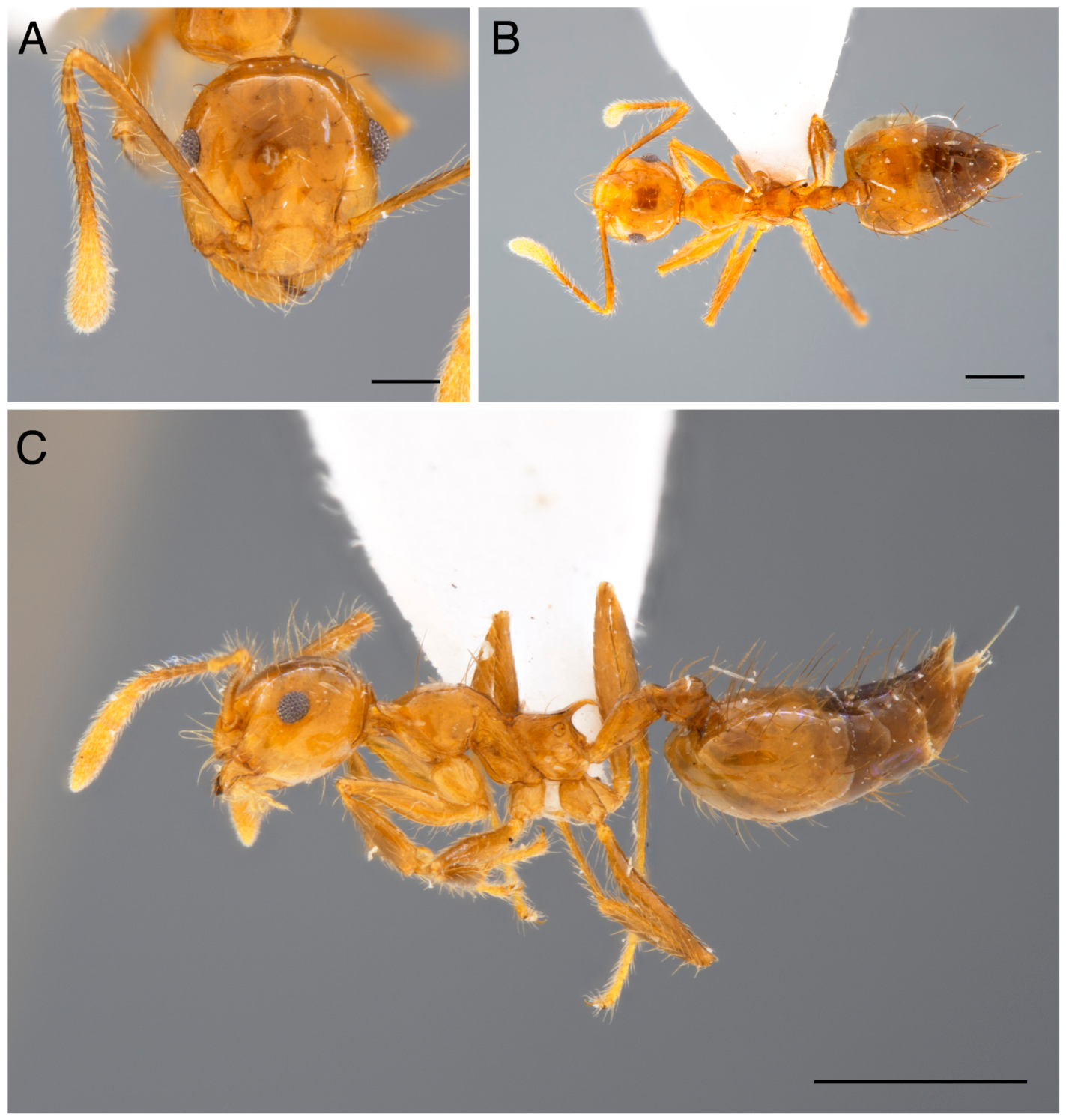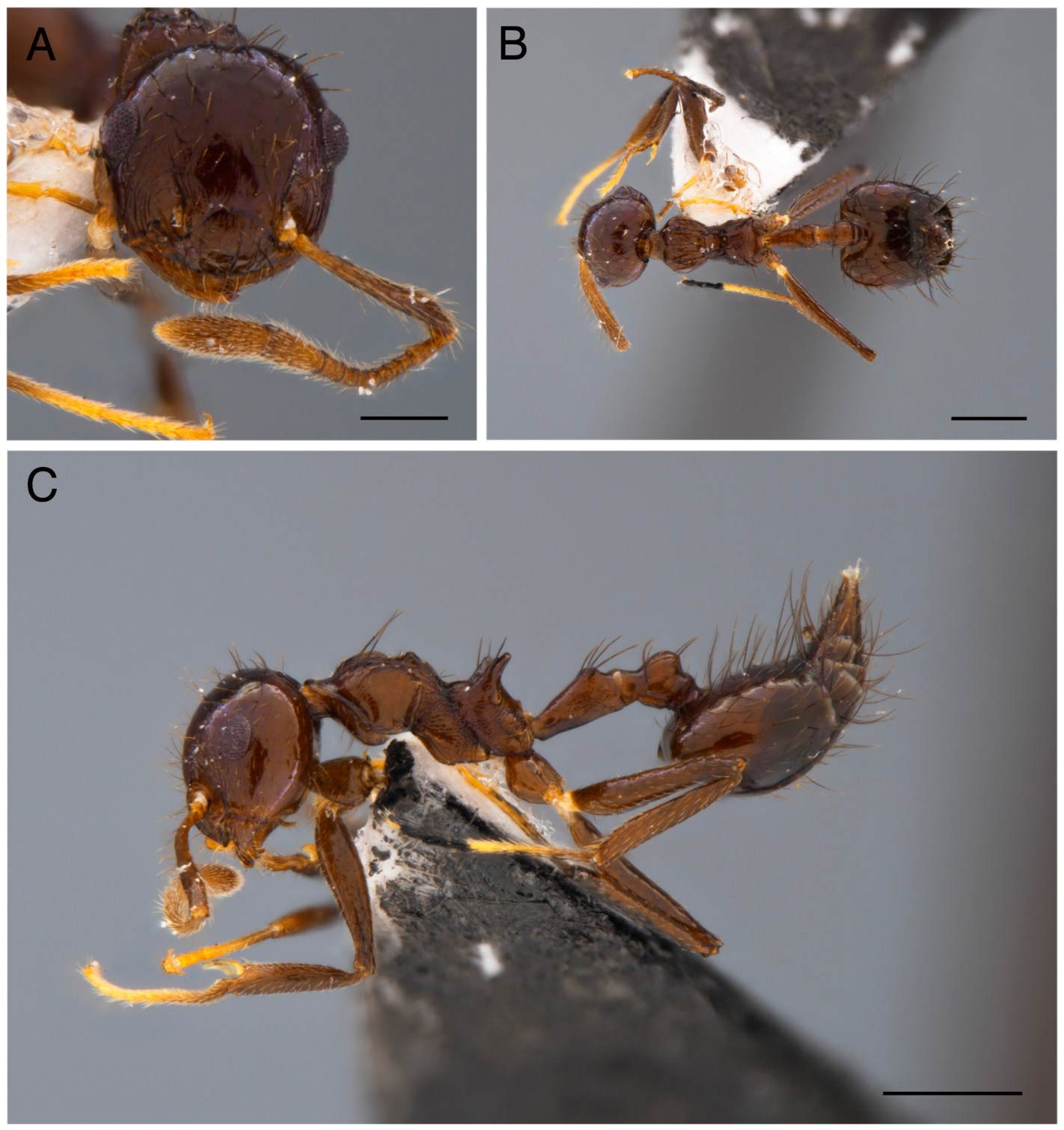


Description of New Species Within the Crematogaster limata Species Complex (Formicidae: Myrmicinae) in Colombia



Abstract
Share and Cite
Tocora, M.C.; Pedraza, L.; Fiorentino, G.; Fernández, F. Description of New Species Within the Crematogaster limata Species Complex (Formicidae: Myrmicinae) in Colombia. Diversity 2026, 18, 338. https://doi.org/10.3390/d18060338
Tocora MC, Pedraza L, Fiorentino G, Fernández F. Description of New Species Within the Crematogaster limata Species Complex (Formicidae: Myrmicinae) in Colombia. Diversity. 2026; 18(6):338. https://doi.org/10.3390/d18060338
Chicago/Turabian StyleTocora, María C., Lina Pedraza, Gianpiero Fiorentino, and Fernando Fernández. 2026. "Description of New Species Within the Crematogaster limata Species Complex (Formicidae: Myrmicinae) in Colombia" Diversity 18, no. 6: 338. https://doi.org/10.3390/d18060338
APA StyleTocora, M. C., Pedraza, L., Fiorentino, G., & Fernández, F. (2026). Description of New Species Within the Crematogaster limata Species Complex (Formicidae: Myrmicinae) in Colombia. Diversity, 18(6), 338. https://doi.org/10.3390/d18060338