


Abstract
Traditional markets play an important role in the exchange of plant resources and the preservation of traditional food knowledge. This study documents the diversity of food plants traded in Renmin Market, located in Youjiang District, Baise City, Guangxi, China, and evaluates their cultural importance using the Cultural Food Significance Index (CFSI). Field surveys were conducted through market observations and interviews with vendors and local informants. All edible plant species were recorded, including their scientific names, vernacular names, used parts, and modes of consumption. A total of 104 food plant taxa were documented, representing a wide range of plant families and growth forms. The recorded plants were used in four main utilization categories: vegetables, spices, fruits, and beverages. Frequently used plant parts included fruits, leaves, shoots, and underground organs such as roots, rhizomes, and tubers. The CFSI values showed considerable variation in cultural importance among species, ranging from 21.6 to 1764. The highest CFSI values were recorded for Cucurbita pepo, Allium cepa, Cucurbita maxima, and Houttuynia cordata, reflecting their frequent consumption and versatility in local cuisine. Comparative analysis with previous studies in Baise City indicated that 38 species were shared among three markets, while 30 species were recorded exclusively in Renmin Market. These findings highlight the diversity of food plants available in local markets and their importance in maintaining regional culinary traditions and plant-based dietary diversity.
Keywords:
Baise City; China; edible plants; ethnobotany; local market; local vegetables; traditional knowledge 1. Introduction
Urban markets play a crucial role in sustaining and transmitting ethnobotanical knowledge, particularly knowledge related to food plants [1]. Beyond their economic function, markets serve as dynamic socio-cultural spaces where traditional knowledge, culinary practices, and plant resources are continuously exchanged among vendors, consumers, and producers [2]. In rapidly urbanizing regions, such markets often represent one of the most accessible interfaces between urban populations and plant-based food traditions rooted in rural landscapes, forests, and agroecosystems [3]. Consequently, urban markets have become increasingly important settings for ethnobotanical research aimed at understanding how traditional food knowledge persists, adapts, or transforms under modern socio-economic pressures [4].
Urbanization and globalization profoundly reshape food systems and human–plant relationships worldwide. The expansion of cities is frequently associated with changes in dietary preferences, reduced direct access to wild and semi-wild food resources, and increasing reliance on standardized commercial foods [5]. In urban environments, consumers often prefer food plants that are convenient to prepare, available year-round, and compatible with modern cooking practices, which can influence the types of species traded in markets. At the same time, globalization facilitates the circulation of plant products, culinary practices, and cultural influences across regions, potentially homogenizing food consumption patterns while also enabling new forms of cultural adaptation [6]. For example, widely cultivated vegetables and condiments distributed through regional supply chains are increasingly incorporated into local diets alongside traditional food plants. Within this context, urban markets function as adaptive socio-ecological systems where locally sourced food plants coexist with introduced and commercially dominant species, reflecting both continuity and transformation of traditional ethnobotanical knowledge [7].
Baise City, located in the Guangxi Zhuang Autonomous Region of southwestern China, represents a particularly suitable setting for examining these dynamics. The region has a long history of human settlement and cultural exchange and is characterized by complex topography, including mountains, river systems, forests, and agricultural landscapes [8]. These geographical features, combined with a subtropical climate, have historically supported a high diversity of food plant species and fostered rich local knowledge related to food plant use. Traditional practices of cultivation, gathering, and market exchange have long played an important role in local livelihoods and food culture [9].
Despite this historical and ecological richness, ethnobotanical research in Baise City remains limited. Only a small number of studies have begun to document plant use and traditional food knowledge in this area in recent years, and systematic investigations focusing on urban markets are still largely lacking [3,10,11]. In particular, the role of urban markets as repositories of food plant diversity and ethnobotanical knowledge under conditions of rapid urbanization and increasing globalization has received little scholarly attention. This gap is notable given the pace of socio-economic transformation occurring in the region.
Renmin Market, located in the Youjiang District of Baise City, serves as a major urban marketplace linking surrounding rural communities with urban consumers. The market brings together farmers, wild plant collectors, vendors, and consumers, facilitating the continuous exchange of food plants and associated traditional knowledge. The objectives of this study are to: (1) document the diversity of food plants traded in Renmin Market; (2) examine patterns of food plant use among communities associated with the market; and (3) assess the cultural importance of food plants within the local urban market context. By addressing these objectives, this research contributes new empirical data on the ethnobotany of food plants in Baise City and provides insights into how traditional knowledge systems adapt and persist in urban markets amid ongoing urbanization and globalization.
2. Materials and Methods
2.1. Study Area
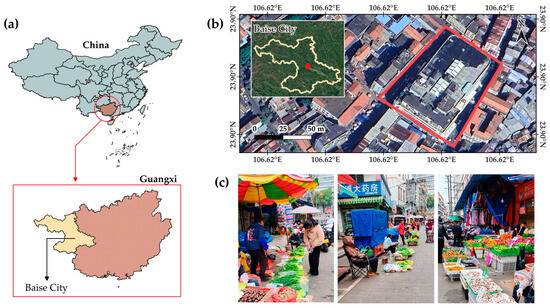
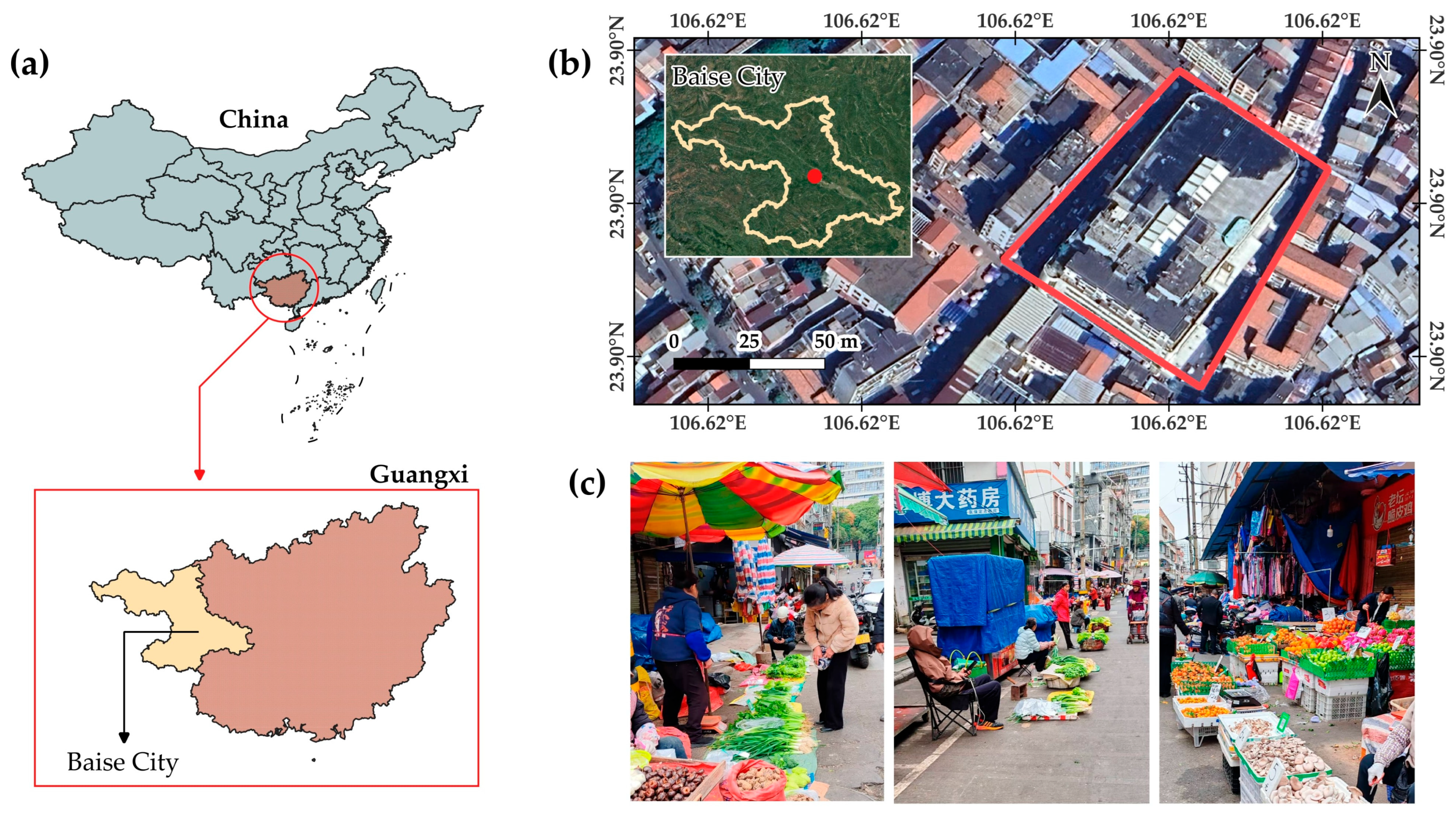
The present study was conducted at Renmin Market, the earliest established traditional market in Youjiang District since the district’s formation. Located in Baise City, western Guangxi Zhuang Autonomous Region (Figure 1), the market occupies a central position in the district’s urban landscape and has long functioned as a focal point for food trade and daily provisioning.
Figure 1.
Location of the study site at Renmin Market, Baise City, Guangxi, China: (a) administrative boundaries of Baise City; (b) location of Renmin Market within Baise City; and (c) photograph of the entrance to the market (map created with “QGIS” program ver. 3.34 [12], geographic system ID: WGS 84, EPSG 4326).
Baise City is characterized by a subtropical monsoon climate with distinct wet and dry seasons. Mean annual temperatures range from approximately 17.5 to 23.5 °C, while annual rainfall averages 1200–1600 mm. Combined with diverse landforms, including low mountain ranges, rolling hills, and river valleys, these environmental conditions support a wide range of agricultural practices and contribute to high plant diversity in the surrounding region [13].
Despite rapid urbanization and economic transformation in recent decades, agriculture remains an important livelihood for communities in and around Baise City. Small-scale farming, home gardening, and the collection of wild and semi-wild food plants from nearby forests and fallow lands continue to be commonly practiced. This coexistence of urban development and long-standing agricultural traditions has created a dynamic urban–rural interface that is particularly conducive to ethnobotanical research [3].
The population of Baise City is ethnically diverse, with Zhuang people forming the majority, alongside Han, Yao, and other minority groups. Mandarin Chinese and Zhuang are widely spoken, and local belief systems and Buddhism remain influential in everyday life. This multi-ethnic setting underpins a rich diversity of food traditions and contributes to the persistence of ethnobotanical knowledge related to food plants [14].
As the first traditional market established in Youjiang District, Renmin Market continues to serve as a major trading venue for both urban residents and nearby rural communities. Vendors typically source their products from home gardens, cultivated fields, forest margins, and semi-wild habitats, facilitating the continuous flow of food plant resources and associated traditional knowledge from surrounding landscapes into the urban food system.
2.2. Field Survey and Data Collection
Field surveys and plant specimen collection were conducted throughout 2025 at Renmin Market, located in Youjiang District, Baise City, Guangxi Zhuang Autonomous Region, southern China. The survey aimed to document all food plant species traded in the market, including both wild-collected and cultivated plants, to provide a comprehensive overview of plant diversity represented in local food trade.
Plant species were documented through direct observation and specimen collection when fresh materials were available and collection was permissible. In cases where plant materials were encountered only in processed forms, such as dried, sliced, fermented, or otherwise prepared products, high-resolution photographs were taken and detailed field notes describing diagnostic morphological characteristics were recorded to support taxonomic identification.
For each recorded species, basic collection data were documented, including collection date, market location, plant condition (fresh or processed), and plant part(s) present. When feasible, supplementary field visits were conducted to cultivation sites or natural collection habitats in the surrounding area to obtain additional reference materials and to support accurate species identification.
All plant specimens and photographic records were systematically labeled and documented to ensure traceability between market observations and collected materials. These records formed the basis for subsequent taxonomic identification and further analytical procedures presented in this study.
Representative plant materials were prepared as voucher specimens following standard herbarium procedures [15]. All vouchers were curated and preserved by the research team at the Agriculture and Food Engineering College, Baise University, Baise City, Guangxi, China, where a plant specimen collection is maintained for teaching and research purposes. The institution is currently planning to establish a formal herbarium, and the voucher specimens from this study will be deposited there once the herbarium collection is formally established.
Taxonomic identification was performed using authoritative floristic references, including the Flora of China (http://www.efloras.org) (accessed on 15 November 2025) [16] and relevant regional literature. Scientific names and accepted nomenclature were cross-checked using Plants of the World Online (POWO) (https://powo.science.kew.org/) (accessed on 15 November 2025) [17]. Each voucher specimen was labeled with detailed collection information to ensure accurate identification and data traceability.
2.3. Ethnobotanical Data Collection
Ethnobotanical investigations were carried out throughout 2025 within the study area to document traditional knowledge associated with food plant use. Data collection employed established qualitative ethnobotanical methods, including semi-structured interviews, participant observation, and guided field walks conducted together with knowledgeable local residents.
A total of 60 informants were involved in the study, comprising 30 men and 30 women. Informants were selected using purposive sampling techniques [18], with emphasis on individuals recognized for their knowledge of plant use, such as elderly community members, experienced plant collectors, traditional healers, and others known locally for their familiarity with food plants. The age of participants ranged from 20 to 71 years.
Interviews were conducted in the local language or dialect and focused on vernacular plant names, plant parts utilized, preparation and consumption practices, collection habitats, and the nutritional or symbolic importance of each species. Guided field walks were undertaken to locate and recognize plant species in their natural or cultivated settings, allowing accurate documentation and facilitating the collection of voucher specimens when appropriate.
All interviews were conducted by a native Chinese-speaking author, and Mandarin Chinese was used consistently during data collection to ensure clear communication and to reduce the risk of misinterpretation of ethnobotanical information.
Before the commencement of interviews, the objectives and procedures of the research were clearly explained to all participants, and Prior Informed Consent (PIC) was obtained. The study followed the ethical principles outlined in the International Society of Ethnobiology (ISE) Code of Ethics [19] and complied with the Nagoya Protocol on Access and Benefit-Sharing [20]. Participation was entirely voluntary, and informants were informed of their right to withdraw from the study at any time without negative consequences.
As this study did not involve the collection of sensitive personal data, no formal institutional ethics review was required. All research activities were conducted in accordance with internationally accepted ethical standards for ethnobotanical research, ensuring respect, transparency, and ethical responsibility toward participating communities.
2.4. Data Analysis
2.4.1. Cultural Food Significance Index (CFSI)
The Cultural Food Significance Index (CFSI) was employed to quantitatively evaluate the cultural importance of food plant species sold at Renmin Market. This index, originally proposed by Andrea Pieroni [21], integrates multiple ethnobotanical parameters into a single composite value, enabling comparison of the relative significance of plant species within a local food system. In the present study, the CFSI framework was adapted to better capture market-based food practices and culinary uses, while also accounting for species that serve both food and medicinal roles. Detailed descriptions and scoring schemes for each CFSI component applied in this study are provided in Table S2.
The CFSI was calculated using the following equation:
CFSI = QI × AI × FUI × PUI × MFFI × TSAI × FMRI × 10−2
- QI (Quotation Index) = the proportion of informants citing a particular food plant species.
- AI (Availability Index) = the abundance of the species in the market, scored from rare (1.0) to very common (4.0).
- FUI (Frequency of Utilization Index) = consumption frequency, ranging from rare or seasonal use (1.0) to more than once per week (5.0).
- PUI (Parts Used Index) = the variety of plant parts consumed, including leaves, fruits, roots, and inflorescences.
- MFFI (Multifunctional Food Use Index) = the diversity of culinary preparations, such as boiling, stir-frying, steaming, fermenting, or beverage preparation.
- TSAI (Taste Score Appreciation Index) = informants’ evaluations of taste, ranging from poor (4.0) to excellent (10.0).
- FMRI (Food–Medicinal Role Index) = species used exclusively as food (1.0) or also recognized for medicinal or health-related purposes (up to 5.0).
Species with higher CFSI values are considered to have greater cultural relevance, more frequent consumption, broader culinary applications, and deeper integration into local food traditions.
2.4.2. Cluster Analysis of Food Plant Use Patterns
Cluster analysis was conducted to identify similarities among food plant species based on their use categories, utilized plant parts, and modes of consumption. A clustered heatmap was generated to visually represent these relationships and to facilitate the identification of groups of species sharing comparable culinary roles within the local food system.
The analysis was performed using the online Bioinformatics platform (www.bioinformatics.com.cn) (accessed on 20 February 2026) [22]. Ethnobotanical data were organized into a matrix and analyzed through hierarchical clustering using Euclidean distance and the complete linkage method. The resulting heatmap revealed distinct clusters corresponding to shared patterns of use, including leafy vegetables, fruit-based foods, multipurpose species, and plants used for both food and beverage preparation.
Prior to clustering, the dataset derived from the Cultural Food Significance Index (CFSI) analysis was organized and processed using Microsoft Excel and is presented in Table S2. The raw values were standardized by converting each variable into percentages relative to the total value within the same column. The resulting percentage matrix was then used as the input dataset for the clustering analysis by directly uploading it to the Bioinformatics platform.
3. Results
3.1. Diversity of Food Plants
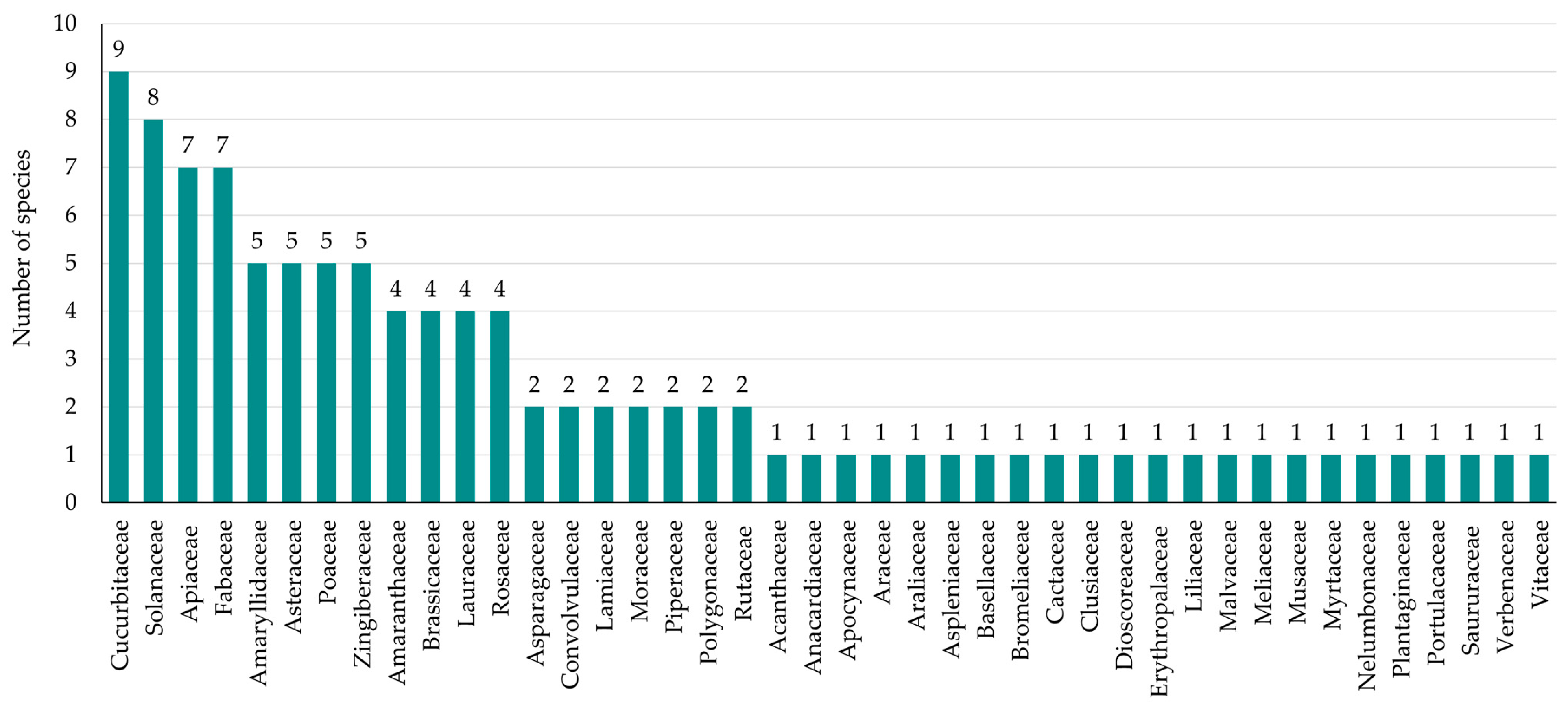
A total of 104 food plant species belonging to 86 genera and 42 families were documented at Renmin Market (Figure 2, Table 1 and Table S1). The recorded taxa represent a diverse assemblage of edible plants traded in the market, including vegetables, fruits, spices, and plants used for beverage preparation. This diversity reflects the role of traditional urban markets as important nodes for the circulation of plant-based food resources within regional food systems.
Figure 2.
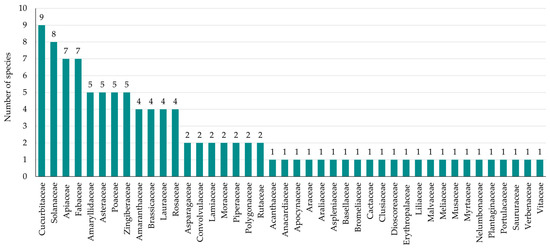
Distribution of food plant species across plant families recorded at the Renmin Market.
Table 1.
Food plant species traded in Renmin Market, Youjiang District, including family, scientific name, vernacular name, used parts, utilization, modes of consumption, and cultural food significance index (CFSI).
Among the recorded families, Cucurbitaceae was the most species-rich with nine species, followed by Solanaceae with eight species. Apiaceae and Fabaceae were each represented by seven species, while Amaryllidaceae, Asteraceae, Poaceae, and Zingiberaceae each contributed five species. Several other families, including Amaranthaceae, Brassicaceae, Lauraceae, and Rosaceae, were represented by four species each, whereas a number of families were represented by one or two species only.
The dominance of families such as Cucurbitaceae, Solanaceae, and Apiaceae reflects the strong representation of vegetables and culinary herbs in the market food assemblage. Many of these taxa are widely cultivated and commonly used in daily cooking, suggesting that the composition of plant diversity in the market is closely linked to household dietary practices and local culinary traditions. At the same time, the presence of numerous families represented by only one or two species indicates the inclusion of more specialized or seasonal food plants, contributing to the overall diversity of plant resources available to consumers.
The diversity of plant taxa documented at Renmin Market illustrates the capacity of traditional urban markets to maintain a broad spectrum of edible plant resources, thereby supporting dietary diversity and reflecting the interaction between agricultural production, trade networks, and local food culture.
3.2. Origin and Growth Habits of Food Plants
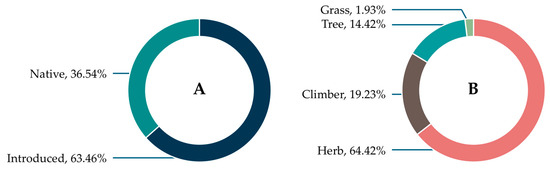
Of the 104 food plant species recorded at Renmin Market (Figure 3), 66 species (63.46%) were classified as introduced to China, whereas 38 species (36.54%) were identified as native. This predominance of introduced species suggests that the local urban food system is strongly influenced by agricultural globalization and long-distance trade networks. Over time, many introduced crops have become culturally integrated into local diets and culinary practices, illustrating how food systems evolve through the gradual incorporation of external plant resources.
Figure 3.
Proportional composition of food plant species documented at Renmin Market, illustrating: (A) their distribution status in China; and (B) growth habits.
In terms of growth form (Figure 3), herbaceous plants represented the largest group, comprising 67 species (64.42%). Climbers accounted for 20 species (19.23%), followed by trees with 15 species (14.42%), while grasses were the least represented with only two species (1.93%).
The predominance of herbaceous species reflects the functional characteristics of plants that are commonly traded in fresh food markets. Herbaceous crops typically have rapid growth cycles, high productivity, and are suitable for frequent harvesting, making them particularly compatible with intensive vegetable production systems supplying urban markets. Climbers, mainly represented by cucurbit species, also contribute substantially to the market assemblage, reflecting their importance in regional diets and agricultural production.
The relatively smaller representation of woody species and grasses likely reflects both the focus of the market on fresh vegetables and fruits and the fact that staple cereals and perennial tree crops are often distributed through different commercial channels. Together, these patterns illustrate how plant growth forms in urban markets are shaped by agricultural production systems, market demand, and the logistical requirements of fresh food distribution.
3.3. Utilization of Food Plants
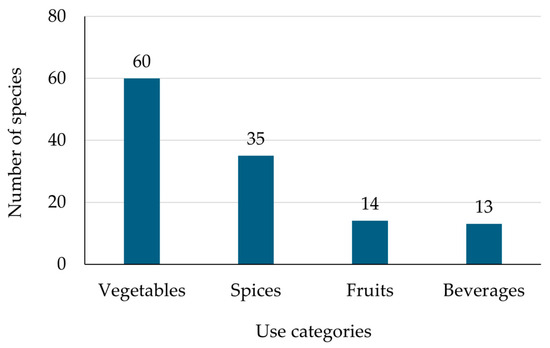
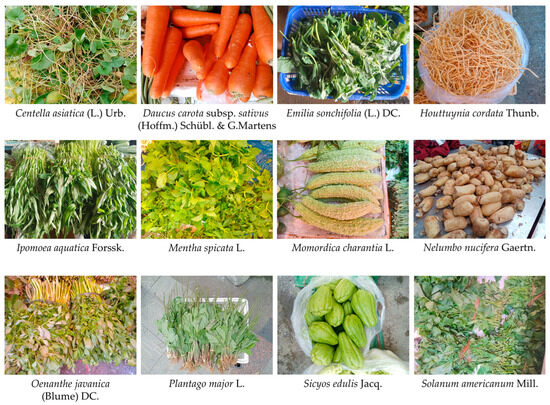
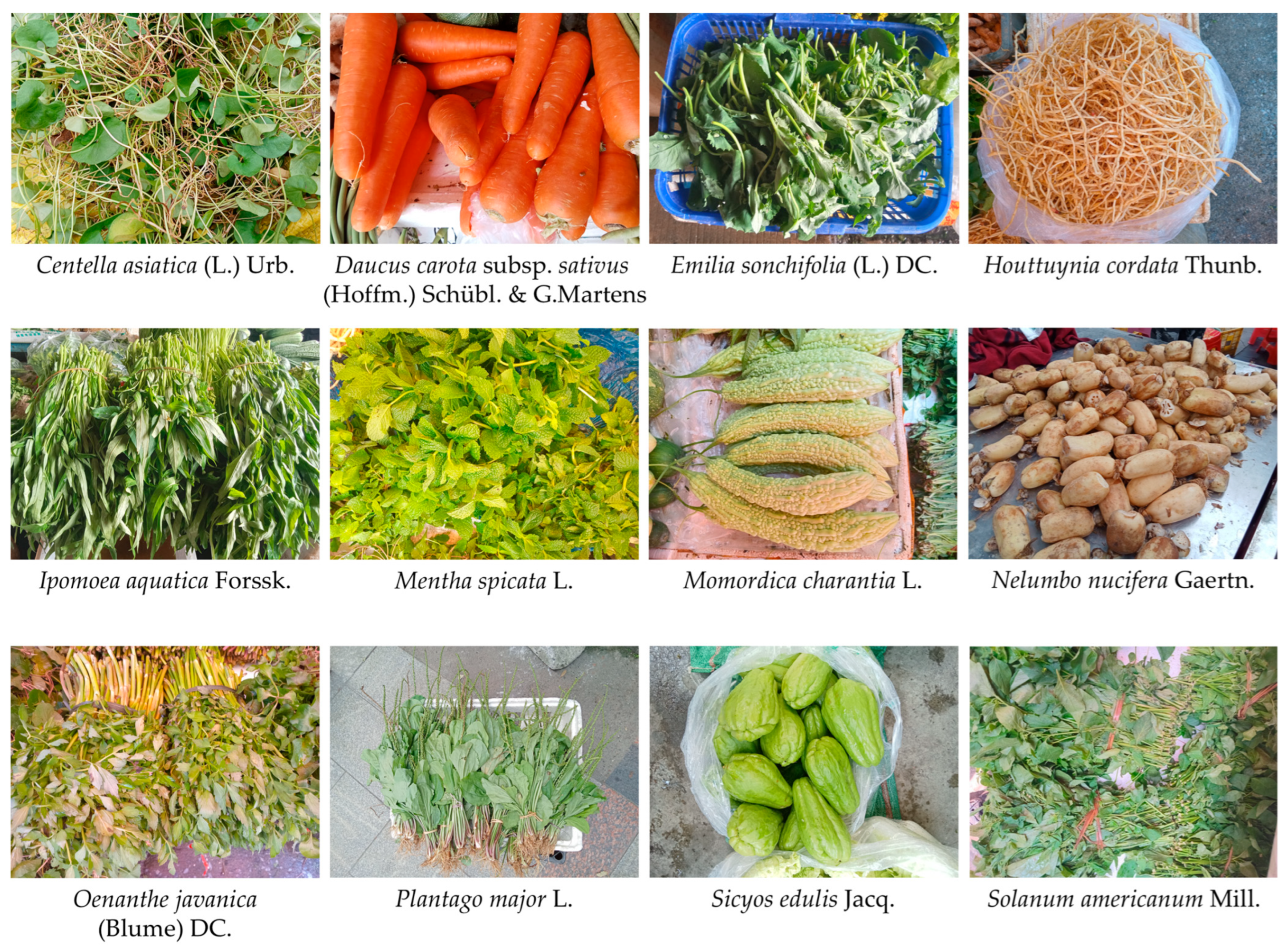
The food plants recorded at Renmin Market were categorized according to their principal modes of utilization (Figure 4 and Figure 5). Vegetables constituted the largest use category with 60 species, followed by spices and flavoring plants with 35 species. Fruit plants accounted for 14 species, while 13 species were recorded as being used in beverage preparation.
Figure 4.
Number of species categorized by types of use.
Figure 5.
Representative examples of food plants traded in Renmin Market. Photographs by Bin Huang.
Many species were assigned to more than one use category, reflecting the multifunctional roles of food plants within the local food system. Such overlapping uses demonstrate the flexibility of plant utilization in everyday culinary practices, where the same species may serve multiple dietary or cultural functions depending on preparation methods, seasonal availability, and household preferences.
The predominance of vegetable species highlights the central role of plant-based foods in local diets, while the diversity of spices, fruits, and beverage plants illustrates the complex culinary traditions associated with food preparation in the region. These patterns emphasize that urban markets function not only as places of food exchange but also as spaces where diverse culinary knowledge and plant use practices are maintained.
3.3.1. Food Plants Used as Beverages
A total of 13 food plant species traded at Renmin Market were recorded as being used for beverage preparation (Table 1), either exclusively or in combination with other food uses. Most of these species were fruit-based, with fruits representing the primary plant parts utilized. Common modes of consumption included eating fresh fruits, preparing juices, or processing ripe fruits into beverages.
Several widely consumed fruits—such as Ananas comosus, Citrullus lanatus, Garcinia mangostana, Malus domestica, Mangifera indica, Morus alba, Prunus persica, Psidium guajava, Pyrus pyrifolia, Selenicereus undatus, and Vitis vinifera—were consumed both fresh and as beverages. In general, ripe fruits were preferentially used for drink preparation, whereas unripe fruits were more commonly eaten fresh.
In addition to fruit species, leaves and aerial parts were also used for beverage preparation. Centella asiatica leaves were consumed as vegetables, either stir-fried or eaten fresh, and were also commonly prepared as herbal beverages. Verbena officinalis was primarily used in medicinal cuisine and herbal drinks, typically prepared by boiling or decoction of its aerial parts.
3.3.2. Food Plants Used as Fruits
A total of 14 food plant species recorded at Renmin Market were used primarily as fruits (Table 1). In most cases, the fruit constituted the main edible part; however, Pachyrhizus erosus was consumed for its tuberous root but was utilized in a manner similar to fruit. These plants were commonly eaten fresh and contributed to daily diets as snacks, desserts, or complementary food items.
Both ripe and unripe fruits were consumed, depending on species and local preferences. Unripe fruits were typically eaten raw or incorporated into dishes, while ripe fruits were mainly consumed fresh or processed into beverages. Several fruit species, including pineapple, watermelon, mangosteen, apple, mango, peach, guava, pear, dragon fruit, and grape, served dual roles as fresh fruits and as raw materials for beverage preparation.
Some species exhibited additional uses beyond fruit consumption. Cucumis sativus was eaten raw as a fresh vegetable or snack and also prepared in stir-fried or boiled dishes. Fruits of Musa × paradisiaca were consumed at different ripening stages, reflecting flexible culinary practices.
3.3.3. Food Plants Used as Spices
A total of 35 food plant species recorded at Renmin Market were used as spices (Table 1), either exclusively or in combination with vegetable uses. These species were employed to enhance aroma, flavor, pungency, and color, or to reduce undesirable odors during cooking. A wide range of plant parts was utilized, including leaves, bulbs, rhizomes, fruits, seeds, bark, roots, and young shoots.
Leaves were the most frequently used plant parts, particularly in aromatic herbs such as Allium fistulosum, Coriandrum sativum, Eryngium foetidum, Mentha spicata, Perilla frutescens, and Persicaria spp., which were commonly added fresh to soups, stir-fried dishes, salads, and mixed foods. Bulbs and rhizomes—including A. sativum, Alpinia galanga, Curcuma longa, Kaempferia galanga, and Zingiber officinale—were widely used as key seasoning ingredients.
Fruits and seeds of species such as Capsicum annuum, Citrus × limon, Lanxangia tsao-ko, Litsea spp., Piper nigrum, and Foeniculum vulgare were used fresh, dried, pickled, or ground in soups, sauces, hot pot broths, and stir-fried dishes. Several species, including Cucurbita pepo, Foeniculum vulgare, Houttuynia cordata, Persicaria odorata, and Toona sinensis, displayed dual roles as both vegetables and spices.
3.3.4. Food Plants Used as Vegetables
A total of 60 food plant species traded at Renmin Market were recorded as being used as vegetables (Table 1), representing the largest food-use category documented in this study. These species exhibited substantial diversity in both utilized plant parts and preparation methods. Commonly consumed parts included leaves, young shoots, fruits, tubers, bulbs, inflorescences, seeds, and rhizomes.
Leafy vegetables and tender shoots constituted the dominant group, with most species consumed after stir-frying, boiling, blanching, or incorporation into soups and mixed dishes. Several species were also eaten fresh or lightly processed, particularly leafy greens and aromatic vegetables. Fruit vegetables—such as cucurbits, solanaceous crops, and legumes—were widely prepared in stir-fried and boiled dishes, while tuberous species were commonly boiled, steamed, or consumed as staple or supplementary foods.
Some vegetable plants exhibited multifunctional uses, serving simultaneously as vegetables and spices or beverages. In addition, several wild or semi-wild species were typically blanched prior to consumption to reduce bitterness or irritation. Fermentation was also documented, particularly for bamboo shoots, which were commonly consumed as pickled vegetables.
3.4. Cultural Food Significance Index (CFSI) of Food Plants
A total of 104 food plant taxa recorded in Renmin Market were evaluated using the Cultural Food Significance Index (CFSI), revealing marked variation in the cultural importance of individual species. CFSI values ranged widely, from 21.6 to 1764, indicating substantial differences in frequency of use, versatility, and perceived cultural relevance among food plants traded in the market (Table 1 and Table S3).
The highest CFSI values were recorded for Cucurbita pepo (1764), Allium cepa (1470), and Cucurbita maxima (1404), highlighting their central role in everyday diets and culinary practices. These species are widely available, used in multiple preparation modes, and consumed across different households, reflecting their strong integration into local food systems. Other species with notably high CFSI values included Houttuynia cordata (1300), Sicyos edulis (1098.9), and Brassica rapa (945), which are commonly used as vegetables and flavoring ingredients and are closely associated with regional food traditions.
A large proportion of species exhibited moderate CFSI values (approximately 300–900), such as Apium graveolens, Basella alba, Brassica juncea, Foeniculum vulgare, and Solanum americanum. These plants are regularly consumed but tend to have a narrower variety of culinary uses or are associated with specific seasons, indicating stable but less dominant cultural roles. Leafy vegetables, culinary herbs, and commonly cultivated crops were particularly well represented in this group.
Species with lower CFSI values (below 100) included a range of spices, medicinal food plants, and less frequently consumed tubers and rhizomes, such as Curcuma longa, Dioscorea oppositifolia, Kaempferia galanga, Lanxangia tsao-ko, and Polygonatum odoratum. Although these taxa are culturally recognized and valued, their use is often specialized, seasonal, or restricted to particular dishes, medicinal cuisine, or ritual contexts.
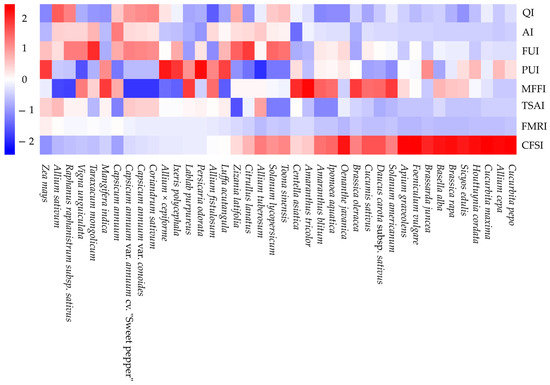
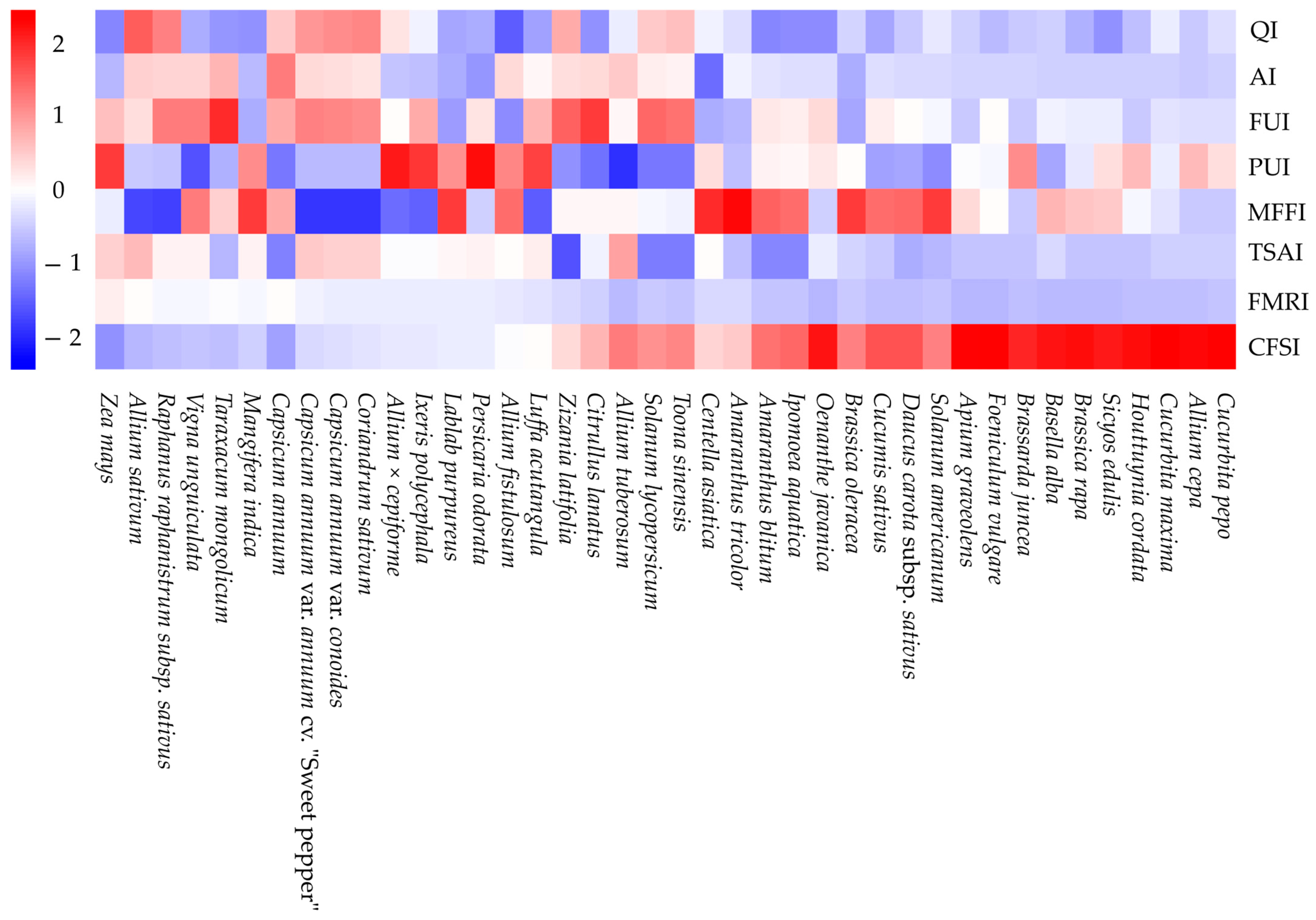
The heat map constructed from the component indices (QI, AI, FUI, PUI, MFFI, TSAI, and FMRI) illustrates variation in food plant use patterns and their contributions to the overall Cultural Food Significance Index (CFSI) (Figure 6). Color intensity reflects the relative magnitude of each index, allowing comparison among species and across use dimensions.
Figure 6.
Heat map depicting the top 40 food plant species with the highest Cultural Food Significance Index (CFSI) values recorded at the Renmin Market.
The heat map shows that species with the highest CFSI values, such as Cucurbita pepo, Allium cepa, Cucurbita maxima, and Houttuynia cordata, exhibit consistently high values across multiple indices, particularly QI, FUI, PUI, and MFFI. This pattern indicates that these species are not only frequently consumed but also widely available, used in diverse preparation modes, and strongly embedded in daily food practices.
Several species display moderate CFSI values characterized by high scores in selected indices but lower values in others. For example, leafy vegetables such as Brassica rapa, Basella alba, and Amaranthus spp. show relatively high AI and FUI values but more moderate PUI or TSAI values, reflecting regular consumption with a narrower range of preparation or temporal use. Similarly, species used primarily as vegetables or herbs tend to cluster together, sharing comparable index profiles.
Species with lower overall CFSI values generally show reduced intensity across most indices or are characterized by specialization in a limited number of use dimensions. These plants often have lower QI or MFFI values, indicating less frequent use, restricted culinary roles, or more context-specific consumption. In the heat map, such species form clusters with lighter color intensity, distinguishing them from culturally dominant food plants.
3.5. Comparison of the Present Findings with Previous Studies
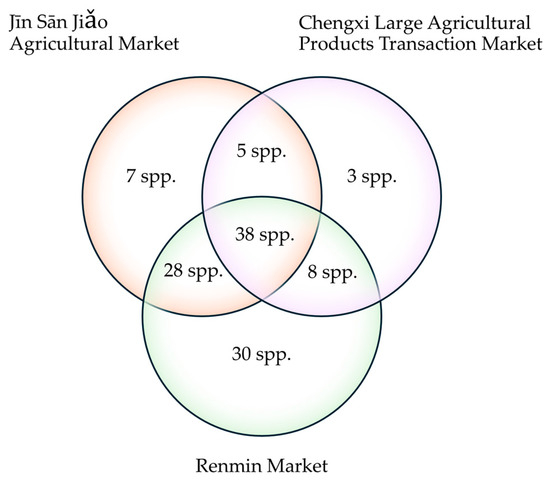
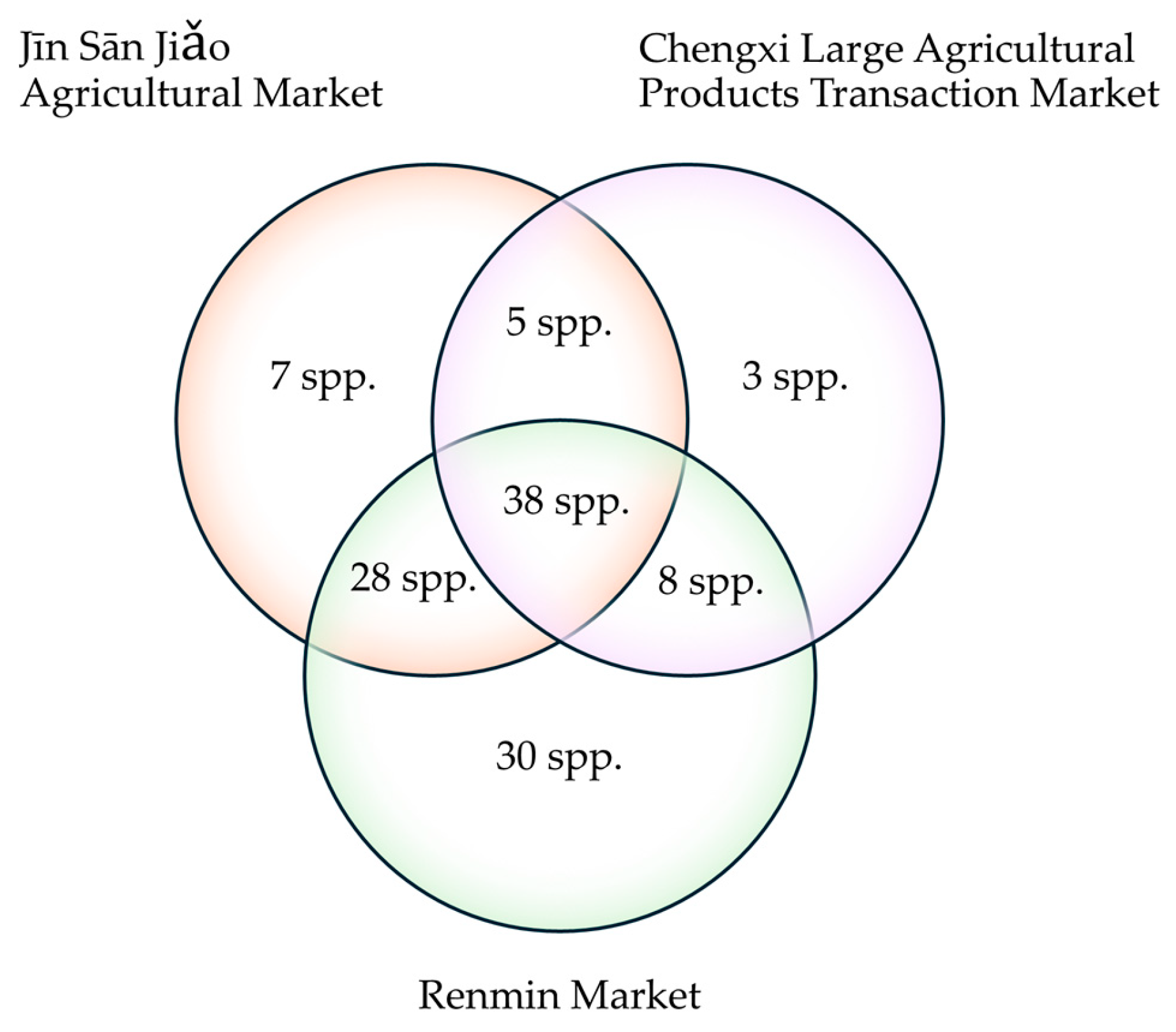
A comparison of food plant species traded in Renmin Market, Jīn Sān Jiǎo Agricultural Market [10], and Chengxi Large Agricultural Products Transaction Market [3], all located in Youjiang District, Baise City, showed both shared and market-specific species (Figure 7). A total of 38 food plant species were recorded in all three markets. In addition, 30 species were found exclusively in Renmin Market and were not observed in the other two markets.
Figure 7.
Venn diagram showing shared and unique edible plant species recorded in the Renmin Market, Chengxi Large Agricultural Products Transaction Market, and the Jīn Sān Jiǎo Agricultural Market in Baise City, Guangxi, China.
4. Discussion
4.1. Urban Markets as Biocultural Hubs for Food Plant Diversity
The diversity of 104 food plant species documented in Renmin Market supports research objective 1, indicating that urban marketplaces act as dynamic reservoirs of agrobiodiversity. This diversity reflects locally embedded knowledge that guides plant selection, preparation, and consumption, rather than solely mirroring agricultural supply chains [23]. The coexistence of widely cultivated staples and culturally specialized species suggests that urban markets sustain a layered structure of plant use, balancing nutritional needs with the preservation of culinary traditions [24,25,26].
By linking rural production with urban consumption, markets function as interfaces where plant diversity is continuously negotiated and reshaped by economic exchange, culinary practices, and consumer preferences [27]. These patterns align with studies in Guangxi and Southeast Asia, where traditional markets support both indigenous and introduced species within urban food systems [10,28].
4.2. Influence of Globalization on Market Assemblages
The predominance of introduced species reflects the influence of agricultural globalization on local food systems, while their full integration into regional diets shows that global crops do not displace native species but expand local food repertoires [29]. Similar trends have been documented in southern China and across Southeast Asia, where traditional markets exhibit hybrid assemblages of native and introduced crops [10,28,30,31,32,33].
This coexistence demonstrates that culinary traditions are adaptable. The integration of new crops expands ingredient diversity while maintaining continuity with established practices, supporting research objective 3 that urban markets facilitate knowledge persistence amid globalization.
4.3. Functional Traits and Market-Driven Plant Diversity
The predominance of herbaceous species illustrates the interplay between plant functional traits, agricultural practices, and market logistics. Rapid growth cycles and high productivity make herbaceous vegetables and herbs suitable for peri-urban farming supplying urban markets, reinforcing research objective 1 [34,35]. Similar patterns occur across southern China and Southeast Asia, where leafy vegetables, cucurbits, and aromatic herbs dominate traditional market trade [3,36].
Climbing plants, including cucurbits and legumes, further highlight the importance of diversified, space-efficient cultivation for continuous urban supply [37,38]. Woody species and cereals are less represented due to reliance on wholesale networks, but the presence of perennial fruits and spice-producing plants shows the integration of agroforestry resources into market assemblages [39,40].
4.4. Cultural Food Significance and Market Centrality
CFSI analysis indicates that certain food plants act as cultural keystone species, confirming research objective 2. High-CFSI species combine quotation frequency (QI), market availability (AI), frequency of use (FUI), culinary versatility (PUI, MFFI), taste preference (TSAI), and food–medicinal roles (FMRI) to achieve their multidimensional importance [41]. For example, Cucurbita pepo and Allium cepa demonstrate how market accessibility, culinary versatility, and cultural familiarity reinforce daily consumption. Moderate-CFSI species support dietary diversity in specialized or seasonal roles [42], while low-CFSI species contribute to cultural depth through medicinal or ritual use [43]. Heat map analyses further confirm that cultural importance emerges from the interaction of availability, preparation diversity, consumption frequency, and social recognition [44].
Global examples, such as Chinese ethnic stores in Barcelona, show that markets can preserve culinary traditions and cultural identity among migrant communities [1]. These findings suggest that while markets globally function as reservoirs of ethnobotanical knowledge, the drivers of species composition vary depending on local socio-ecological versus diaspora-driven contexts.
4.5. Urban Markets as Mediators of Food Knowledge and Food Security
The coexistence of native and introduced species and the embedded “food as medicine” knowledge illustrate that markets support both dietary diversity and household-level health, consistent with research objective 3 [45,46,47,48]. Vendor–consumer interactions provide informal, experiential learning environments where ethnobotanical knowledge is observed, reinforced, and adapted, showing that markets are active sites for knowledge transmission [49,50]. Even when explicit medicinal uses are not articulated, perceptions of health benefits influence consumption patterns, highlighting how traditional knowledge persists within daily dietary practices in urbanizing contexts.
4.6. Limitations and Future Research
This study is limited to a single market, so findings may not generalize to other regions. CFSI components such as taste appreciation and food–medicinal roles are influenced by informant perceptions. Seasonal variation and household-level consumption were only partially captured.
Future research should include multi-site comparisons, longitudinal monitoring of seasonal and urbanization effects, and integration of household-level data. Expanding to include medicinal plants, animal food resources, and agroecological production systems would further clarify the complex interactions among biodiversity, culture, and food security in urbanizing landscapes.
5. Conclusions
This study demonstrates that Renmin Market in Baise City, Guangxi, China, functions as a dynamic biocultural space, linking rural production and urban consumption while maintaining diverse food plant assemblages, supporting the research objective 1. A total of 104 food plant species from 42 botanical families were documented, illustrating considerable diversity of edible plant resources circulating within this traditional urban market. Vegetables dominate the market, with herbaceous species forming the structural core of the assemblage, while introduced crops comprise a substantial proportion of the recorded taxa, reflecting the integration of globalized agricultural species into local diets. At the same time, native plants and culturally significant vegetables remain essential components of regional culinary traditions.
Quantitative analysis using the Cultural Food Significance Index (CFSI) highlights a subset of species with high cultural importance, confirming research objective 2. These plants are widely available, versatile in preparation, and culturally familiar, forming the functional backbone of the local food system and sustaining culinary practices and dietary diversity.
The study also demonstrates that traditional urban markets act as mediators of ethnobotanical knowledge and food practices, supporting research objective 3. Through repeated interactions between vendors and consumers, markets facilitate the transmission and persistence of plant knowledge, including food–medicinal uses, even in the context of globalization and urbanization. The documentation of 30 species not previously recorded in the Youjiang District further emphasizes the value of localized ethnobotanical research, revealing overlooked components of plant diversity and traditional knowledge.
These findings underscore the importance of maintaining plant diversity in traditional urban markets to sustain dietary diversity, cultural continuity, and resilient urban food systems. Future research should adopt comparative and longitudinal approaches across multiple cities and regions to examine how urbanization, market integration, and evolving consumer preferences influence the diversity, cultural significance, and use of food plants in contemporary urban food systems.
Supplementary Materials
The following supporting information can be downloaded at: https://www.mdpi.com/article/10.3390/d18040196/s1, Table S1: Food plant species traded in Renmin Market, Youjiang District, Baise City, China; Table S2: Analysis and Calculation of the Cultural Food Significance Index (CFSI); Table S3: Cultural Food Significance Index (CFSI) evaluation of food plants traded in Renmin Market, Youjiang District, Baise City, China.
Author Contributions
Conceptualization, B.H., W.S., Y.Z., J.N., L.L., X.C., P.S., T.B., S.S. and T.J. methodology, B.H., and T.J.; software, T.J.; validation, B.H. and T.J.; formal analysis, T.J.; investigation, B.H., W.S., Y.Z., J.N., L.L., and X.C.; resources, B.H., W.S., Y.Z., J.N., L.L., and X.C.; data curation, B.H., and T.J.; writing—original draft preparation, T.J.; writing—review and editing, T.J. and T.B.; visualization, B.H. and T.J.; supervision, B.H., P.S. and S.S.; project administration, B.H., J.N. and T.J.; funding acquisition, B.H. and S.S. All authors have read and agreed to the published version of the manuscript.
Funding
This research was funded by the Baise Science Research and Technology Development Plan (Bai Ke 20222009) and Mahasarakham University.
Institutional Review Board Statement
Ethical review and approval were waived for this study due to its minimal-risk nature, involving only anonymous interviews with verbal consent and non-invasive observations in public market settings.
Informed Consent Statement
Informed consent was obtained from all subjects involved in the study.
Data Availability Statement
The original contributions presented in this study are included in the article/Supplementary Materials. Further inquiries can be directed to the corresponding author.
Acknowledgments
The authors would like to express their sincere gratitude to the vendors and local informants at Renmin Market in Youjiang District, Baise City, Guangxi, China, for generously sharing their knowledge and experiences regarding traditional food plants. The authors also acknowledge the support of the Agriculture and Food Engineering College, Baise University, for providing resources and laboratory facilities. This research was partially supported by the Baise Science Research and Technology Development Plan (Bai Ke 20222009) and Mahasarakham University, whose support is gratefully acknowledged.
Conflicts of Interest
The authors declare no conflicts of interest.
References
- D’Ambrosio, U.; Pozo, C.; Vallès, J.; Gras, A. East Meets West: Using Ethnobotany in Ethnic Urban Markets of Barcelona Metropolitan Area (Catalonia) as a Tool for Biocultural Exchange. J. Ethnobiol. Ethnomed. 2023, 19, 63. [Google Scholar] [CrossRef] [Scilit] [PubMed]
- Heindorf, C.; Reyes-Agüero, J.A.; van’t Hooft, A. Local Markets: Agrobiodiversity Reservoirs and Access Points for Farmers’ Plant Propagation Materials. Front. Sustain. Food Syst. 2021, 5, 597822. [Google Scholar] [CrossRef] [Scilit]
- Zhang, Y.; Huang, B.; Shen, W.; Lv, L.; Cen, X.; Saensouk, P.; Boonma, T.; Saensouk, S.; Jitpromma, T. Diversity, Ethnobotanical Knowledge, and Cultural Food Significance of Edible Plants Traded in an Urban Market in Baise City, China. Diversity 2026, 18, 93. [Google Scholar] [CrossRef] [Scilit]
- Santana, B.F.d.; Santos-Neves, P.S.; Voeks, R.A.; Funch, L.S. Urban Ethnobotany in Local Markets: A Review of Socioeconomic and Cultural Aspects. S. Afr. J. Bot. 2024, 170, 401–416. [Google Scholar] [CrossRef] [Scilit]
- Oncini, F.; Hirth, S.; Mylan, J.; Robinson, C.H.; Johnson, D. Where the Wild Things Are: How Urban Foraging and Food Forests Can Contribute to Sustainable Cities in the Global North. Urban For. Urban Green. 2024, 93, 128216. [Google Scholar] [CrossRef] [Scilit]
- Jones, R.E.; Patil, S.; Datar, A.; Shaikh, N.I.; Cunningham, S.A. Food choices in the context of globalizing food options among adolescents in rural Southern India. Ecol. Food Nutr. 2022, 61, 422–441. [Google Scholar] [CrossRef] [Scilit]
- Saensouk, P.; Saensouk, S.; Sonthongphithak, P.; Chanthavongsa, K.; Jitpromma, T. Exploring Local Vegetables Cultivated in Home Gardens of Pa Tio District, Yasothon Province, Thailand: Ethnobotanical Knowledge, Nutritional Value, and Horticultural Potential. J. Ethnobiol. Ethnomed. 2026, 22, 4. [Google Scholar] [CrossRef] [Scilit]
- Wang, M.; Yin, M.Z.; Peng, H.S. Original Plants, Production Areas, and Spread of Sanqi: Based on Historical Materials of the Ming and Qing Dynasties. China J. Chin. Mater. Med. 2025, 50, 2938–2944. [Google Scholar] [CrossRef] [Scilit]
- Jia, G.; Zhonghui, O.; Gaozhe, T. Investigation and Study on Plant Communities in Baise Forest Park. J. Landsc. Res. 2012, 4, 65. [Google Scholar]
- Zhang, Y.; Huang, B.; Shen, W.; Lv, L.; Saensouk, P.; Boonma, T.; Jitpromma, T.; Saensouk, S. From Home Garden to Market: Ethnobotanical Insights from Jīn Sān Jiǎo Agricultural Market, Baise City, Guangxi, China. J. Ethnobiol. Ethnomed. 2025, 21, 78. [Google Scholar] [CrossRef] [Scilit]
- Shen, W.; Huang, B.; Zhang, Y.; Cen, X.; Lv, L.; Saensouk, P.; Sonthongphithak, P.; Saensouk, S.; Jitpromma, T. Diversity and Ethnobotanical Knowledge of Spice Plants and Pickled Vegetables in Youjiang District, Baise City, Guangxi, China. Diversity 2026, 18, 100. [Google Scholar] [CrossRef] [Scilit]
- QGIS Development Team. QGIS Geographic Information System. Open Source Geospatial Foundation Project. 2023. Available online: https://qgis.org (accessed on 23 February 2026).
- Huang, K.; Huang, K.; Su, S.L. Ethnobotanical study on wild edible plants in diet culture of the Zhuang nationality in western Guangxi. J. Plant Res. Environ. 2017, 26, 97–106. [Google Scholar]
- Chaisingkananont, S. The Quest for Zhuang Identity: Cultural Politics of Promoting the Buluotuo Cultural Festival in Guangxi, China. Ph.D. Thesis, National University of Singapore, Singapore, 2014. [Google Scholar]
- Glime, J.M.; Wagner, D.H. Herbarium Methods and Exchanges. In Bryophyte Ecology; Glime, J.M., Ed.; Volume 3: Methods; Updated 20 January 2023; Michigan Technological University and the International Association of Bryologists: Houghton, MI, USA, 2017. [Google Scholar]
- Flora of China Editorial Committee. Flora of China; Missouri Botanical Garden: St. Louis, MO, USA; Harvard University Herbaria: Cambridge, MA, USA, 1995; Available online: http://www.efloras.org/flora_page.aspx?flora_id=2 (accessed on 15 November 2025).
- Plant of the World Online, Facilitated by the Royal Botanic Gardens, Kew. Available online: https://powo.science.kew.org (accessed on 15 November 2025).
- Tajik, O.; Golzar, J.; Noor, S. Purposive Sampling. Int. J. Educ. Lang. Stud. 2025, 1–9. [Google Scholar]
- International Society of Ethnobiology (ISE). International Society of Ethnobiology Code of Ethics (With 2008 Additions). 2006. Available online: https://www.ethnobiology.net/wp-content/uploads/ISE-COE_Eng_rev_24Nov08.pdf (accessed on 25 November 2025).
- Secretariat of the Convention on Biological Diversity. Nagoya Protocol on Access to Genetic Resources and the Fair and Equitable Sharing of Benefits Arising from Their Utilization to the Convention on Biological Diversity; United Nations: Montreal, QC, Canada, 2011; Available online: https://www.cbd.int/abs/ (accessed on 25 November 2025).
- Pieroni, A. Evaluation of the cultural significance of wild food botanicals traditionally consumed in northwestern Tuscany, Italy. J. Ethnobiol. 2001, 21, 89–104. [Google Scholar]
- Basic Cluster Heatmap Tool. Available online: https://www.bioinformatics.com.cn (accessed on 20 February 2026).
- Fernández-Llamazares, Á.; Teixidor-Toneu, I.; Armstrong, C.G.; Caviedes, J.; Ibarra, J.T.; Lepofsky, D.; McAlvay, A.C.; Molnár, Z.; Moraes, R.M.; Odonne, G.; et al. The global relevance of locally grounded ethnobiology. J. Ethnobiol. Ethnomed. 2024, 20, 53. [Google Scholar] [CrossRef] [Scilit]
- Otamendi-Urroz, I.; Quintas-Soriano, C.; Hanspach, J.; Requena-Mullor, J.M.; Lagies, A.S.; Castro, A.J. Exploring biocultural diversity: A systematic analysis and refined classification to inform decisions on conservation and sustainability. Ambio 2025, 54, 1581–1597. [Google Scholar] [CrossRef] [Scilit]
- Manzanero-Medina, G.I.; Vásquez-Dávila, M.A.; Lustre-Sánchez, H.; Pérez-Herrera, A. Ethnobotany of food plants (quelites) sold in two traditional markets of Oaxaca, Mexico. S. Afr. J. Bot. 2020, 130, 215–223. [Google Scholar] [CrossRef] [Scilit]
- Muvengwi, J.; Mbiba, M. Medicinal plants trade in Harare’s urban markets: Diversity, conservation status, and economic significance. J. Ethnobiol. Ethnomed. 2025, 21, 28. [Google Scholar] [CrossRef] [Scilit]
- Nandi, R.; Nedumaran, S. Rural market food diversity and farm production diversity: Do they complement or substitute each other in contributing to a farm household’s dietary diversity? Front. Sustain. Food Syst. 2022, 6, 843697. [Google Scholar] [CrossRef] [Scilit]
- Marpaung, A.A.; Fitmawati, F.; Nobis, M. Wild plants in traditional markets of the Jakarta Metropolitan Area and their use in Indonesian culture: An ethnobotanical survey. Acta Soc. Bot. Pol. 2025, 94, 1–19. [Google Scholar] [CrossRef] [Scilit]
- Rapinski, M.; Raymond, R.; Davy, D.; Herrmann, T.; Bedell, J.-P.; Ka, A.; Odonne, G.; Chanteloup, L.; Lopez, P.J.; Foulquier, É.; et al. Local Food Systems under Global Influence: The Case of Food, Health and Environment in Five Socio-Ecosystems. Sustainability 2023, 15, 2376. [Google Scholar] [CrossRef] [Scilit]
- Liu, S.; Huang, X.; Bin, Z.; Yu, B.; Lu, Z.; Hu, R.; Long, C. Wild edible plants and their cultural significance among the Zhuang ethnic group in Fangchenggang, Guangxi, China. J. Ethnobiol. Ethnomed. 2023, 19, 52. [Google Scholar] [CrossRef] [Scilit] [PubMed]
- Saensouk, S.; Saensouk, P.; Sonthongphithak, P.; Junsongduang, A.; Koompoot, K.; Shen, W.; Huang, B.; Jitpromma, T. Ethnobotanical study of edible plants sold in Nong Muen Than Forest Product Market at Roi Et Province, Thailand. Ethnobot. Res. Appl. 2026, 33, 1–22. [Google Scholar]
- Nguyen, T.S.; Xia, N.H.; Chu, T.V.; Sam, H.V. Ethnobotanical study on medicinal plants in traditional markets of Son La province, Vietnam. For. Soc. 2019, 3, 171–192. [Google Scholar] [CrossRef] [Scilit]
- Łuczaj, Ł.; Lamxay, V.; Tongchan, K.; Xayphakatsa, K.; Phimmakong, K.; Radavanh, S.; Kanyasone, V.; Pietras, M.; Karbarz, M. Wild food plants and fungi sold in the markets of Luang Prabang, Lao PDR. J. Ethnobiol. Ethnomed. 2021, 17, 6. [Google Scholar] [CrossRef] [Scilit]
- Nzima, W.M.; Ip, R.H.L.; Bhatti, M.A.; Godfrey, S.S.; Eik, L.O.; Gondwe, S.R.; Divon, S.A. Diversity and heterogeneity of smallholder vegetable farming systems and their impact on food security and income in Malawi. Front. Sustain. Food Syst. 2024, 8, 1387912. [Google Scholar] [CrossRef] [Scilit]
- Knez, M.; Mattas, K.; Gurinovic, M.; Gkotzamani, A.; Koukounaras, A. Revealing the power of green leafy vegetables: Cultivating diversity for health, environmental benefits, and sustainability. Glob. Food Secur. 2024, 43, 100816. [Google Scholar] [CrossRef] [Scilit]
- Iskandar, B.S.; Iskandar, J.; Mulyanto, D.; Alfian, R.L.; Suroso. Traditional market, social relations, and diversity of edible plants traded in Beringharjo Market, Yogyakarta, Indonesia. Biodiversitas 2021, 22, 2012–2024. [Google Scholar] [CrossRef] [Scilit]
- Mota-Cruz, C.; Casas, A.; Ortega-Paczka, R.; Perales, H.; Vega-Peña, E.; Bye, R. Milpa, a Long-Standing Polyculture for Sustainable Agriculture. Agriculture 2025, 15, 1737. [Google Scholar] [CrossRef] [Scilit]
- Toromade, A.; Soyombo; Kupa; Ijomah, P. Urban farming and food supply: A comparative review of USA and African cities. Int. J. Adv. Econ. 2024, 6, 275–287. [Google Scholar] [CrossRef] [Scilit]
- Klepacki, B.; Perkowska, A. Specificity of the supply chain on the cereals market. Ekon. Organ. Logist. 2020, 4, 25–36. [Google Scholar] [CrossRef] [Scilit]
- Thwaites, H.J.; Suh, J.; Coote, G.M.; Nursey-Bray, M.; Cavagnaro, T.R.; Salomon, M.J. Urban food forests: Seeing the fruit for the trees—A systematic quantitative literature review and emerging research gaps. J. Clean. Prod. 2025, 501, 145358. [Google Scholar] [CrossRef] [Scilit]
- Luo, B.; Li, F.; Ahmed, S.; Long, C. Diversity and use of medicinal plants for soup making in traditional diets of the Hakka in West Fujian, China. J. Ethnobiol. Ethnomed. 2019, 15, 60. [Google Scholar] [CrossRef] [Scilit] [PubMed]
- Luo, B.; Tong, Y.; Liu, Y.; Zhang, Y.; Qin, Y.; Hu, R. Ethnobotanical insights into the traditional food plants of the Baiku Yao community: A study of cultural significance, utilization, and conservation. J. Ethnobiol. Ethnomed. 2024, 20, 52. [Google Scholar] [CrossRef] [Scilit] [PubMed]
- Mandal, S.K.; Saha, S.; Saha, S. The importance of wild edible plant and macrofungi diversity to attain food security for the tribes of eastern India—A quantitative study. Front. Sustain. Food Syst. 2023, 7, 1198187. [Google Scholar] [CrossRef] [Scilit]
- Hou, S.; Huang, P.; Yao, Z. Ethnobotany study on wild edible plants used by the Tujia ethnic group in Laifeng, southwest Hubei, China. J. Ethnobiol. Ethnomed. 2024, 20, 94. [Google Scholar] [CrossRef] [Scilit]
- Alrhmoun, M.; Guiggi, V.; Gillani, S.W.; Manzoor, M.; Sulaiman, N.; Pieroni, A. Diachronic changes in local food heritage: The ethnobiology of wild foods in central Tuscany. J. Ethnobiol. Ethnomed. 2025, 21, 48. [Google Scholar] [CrossRef] [Scilit]
- Russo, A.; Esperon-Rodriguez, M.; St-Denis, A.; Tjoelker, M.G. Native vs. Non-Native Plants: Public Preferences, Ecosystem Services, and Conservation Strategies for Climate-Resilient Urban Green Spaces. Land 2025, 14, 954. [Google Scholar] [CrossRef] [Scilit]
- Abdul Aziz, M.; Ullah, Z.; Adnan, M.; Sõukand, R.; Pieroni, A. The Fading Wild Plant Food–Medicines in Upper Chitral, NW Pakistan. Foods 2021, 10, 2494. [Google Scholar] [CrossRef] [Scilit]
- Defraeye, T.; Bahrami, F.; Kowatsch, T.; Annaheim, S.; Bragt, M.C.E.; Rossi, R.M.; Greger, M. Advances in food-as-medicine interventions and their impact on future food production, processing, and supply chains. Adv. Nutr. 2025, 16, 100421. [Google Scholar] [CrossRef] [Scilit]
- Ben Sbih, H.; El Fatehi, S.; Chakkour, S.; Kadaoui, K.; Houssni, M.; Sahli, A.; Kassout, J.; Ater, M.; Hmimsa, Y. Ethnobotanical study of wild edible plants gathered and sold by Jbala society in the Tingitan Peninsula (Northwest Morocco). J. Ethnobiol. Ethnomed. 2026, 22, 10. [Google Scholar] [CrossRef] [Scilit]
- Emery, M.R.; Hurley, P.T. Ethnobiology in the city: Embracing the urban ecological moment. J. Ethnobiol. 2016, 36, 807–819. [Google Scholar] [CrossRef] [Scilit]

Disclaimer/Publisher’s Note: The statements, opinions and data contained in all publications are solely those of the individual author(s) and contributor(s) and not of MDPI and/or the editor(s). MDPI and/or the editor(s) disclaim responsibility for any injury to people or property resulting from any ideas, methods, instructions or products referred to in the content. |
© 2026 by the authors. Licensee MDPI, Basel, Switzerland. This article is an open access article distributed under the terms and conditions of the Creative Commons Attribution (CC BY) license.