1. Introduction
Șovârv is the popular name in Romanian for the herbaceous, perennial species
O. vulgare L. (Lamiaceae), which grows on sunny, dry slopes, forest clearings, edges of woods, scrubland, and grassy rocky areas, from lowland regions up to the subalpine zone, being widespread throughout Romania. According to
Flora României [
1], only one species of
Origanum occurs in the spontaneous flora of Romania, namely
O. vulgare L., represented by two subspecies differentiated by the presence or absence of pubescence on the bracts:
O. vulgare L. subsp.
vulgare and
O. vulgare L. subsp.
barcense (Simonk.) [
2,
3].
Flora României [
1] also describes several morphological forms within
O. vulgare, including one form with white flowers and four forms with purple flowers, distinguished by the shape of the spikelets and the pubescence of the leaves and bracts, as well as one variety,
O. vulgare var.
barcense, considered the most widespread in Romania. This variety is characterized by short cylindrical or prismatic spikelets and by bracts and calyx bearing numerous golden glands. At the European level,
Origani herba is officially defined and standardized in the European Pharmacopoeia, which specifies the accepted botanical sources and minimum essential oil requirements [
4].
The aerial parts of
O. vulgare harvested from the wild during the flowering period (
Origani herba) are traditionally used for medicinal purposes. In Romanian pharmacognostic and phytotherapeutic literature, the plant is recommended for upper respiratory tract disorders as an expectorant and antispasmodic, as well as for digestive conditions as an aperitif and carminative, with additional antimicrobial and antifungal properties.
Origani herba is included in antibronchial and sedative herbal teas (Plafar) and in pharmaceutical specialties such as Galov and Sedocalm (Plantavorel) [
5,
6,
7,
8]. Flora României also mentions diuretic, sudorific, vermifuge, and emmenagogue effects, with indications in indigestion, intestinal and biliary colic, migraine, and respiratory disorders, while Butură (1979) reports its use in digestive disorders, bronchial asthma, rheumatism, and oral cavity affections [
1,
9]. In addition, the European Medicines Agency has issued an assessment report on aerial parts of
Origanum vulgare L., addressing its traditional use, safety profile, and quality aspects within the framework of herbal medicinal products [
10].
Phytochemical studies have shown that
Origani herba contains volatile oil, flavonoids, anthocyanosides, tannins, depsides, and triterpenes [
7,
8,
11]. Detailed analyses of flavonoids and polyphenolic compounds from indigenous
O. vulgare, as well as investigations of the biological activity of hydroalcoholic extracts, have been reported by Tămaș et al. (2006), Gîrd et al. (2016), and Oniga et al. (2018) [
12,
13,
14].
In contrast, the chemical composition of the essential oil of
O. vulgare originating from the spontaneous flora of Romania remained insufficiently investigated until the late 1970s. Therefore, earlier Romanian treatises relied largely on qualitative and quantitative data obtained from plant material collected in other European regions, especially from southwestern Europe. Thus, Coiciu and Racz (1962) reported a thymol content of approximately 15% [
5], Crăciun et al. (1977) referred to a “high” thymol content [
6], Ciulei et al. (1993) cited values of 56–68% thymol [
7], and Grigorescu et al. (1986) mentioned contents as high as 90% [
15]. Eliu-Ceaușescu et al. (1988) reported thymol concentrations ranging from 45 to 75% [
16], whereas Hoppe (1975) did not mention phenolic derivatives in the essential oil [
17].
The first study performed on essential oil isolated from indigenous
O. vulgare populations in Romania was published in 1978, when Tămaș and Roșca analyzed the volatile oil by thin-layer chromatography and spectrophotometric determination of phenolic derivatives [
18]. Their results indicated either the absence of phenolic compounds or their presence only in trace amounts in a single sample. Subsequent investigations conducted in Romania confirmed the absence of phenolic derivatives in the essential oil of
O. vulgare harvested from spontaneous flora [
19,
20]. Similar findings were reported for
O. vulgare subsp.
vulgare collected from wild populations in Poland [
21].
According to Flora Europaea [
22] and current taxonomic databases (POWO, Euro+Med) [
23,
24], the genus
Origanum includes several taxa, with
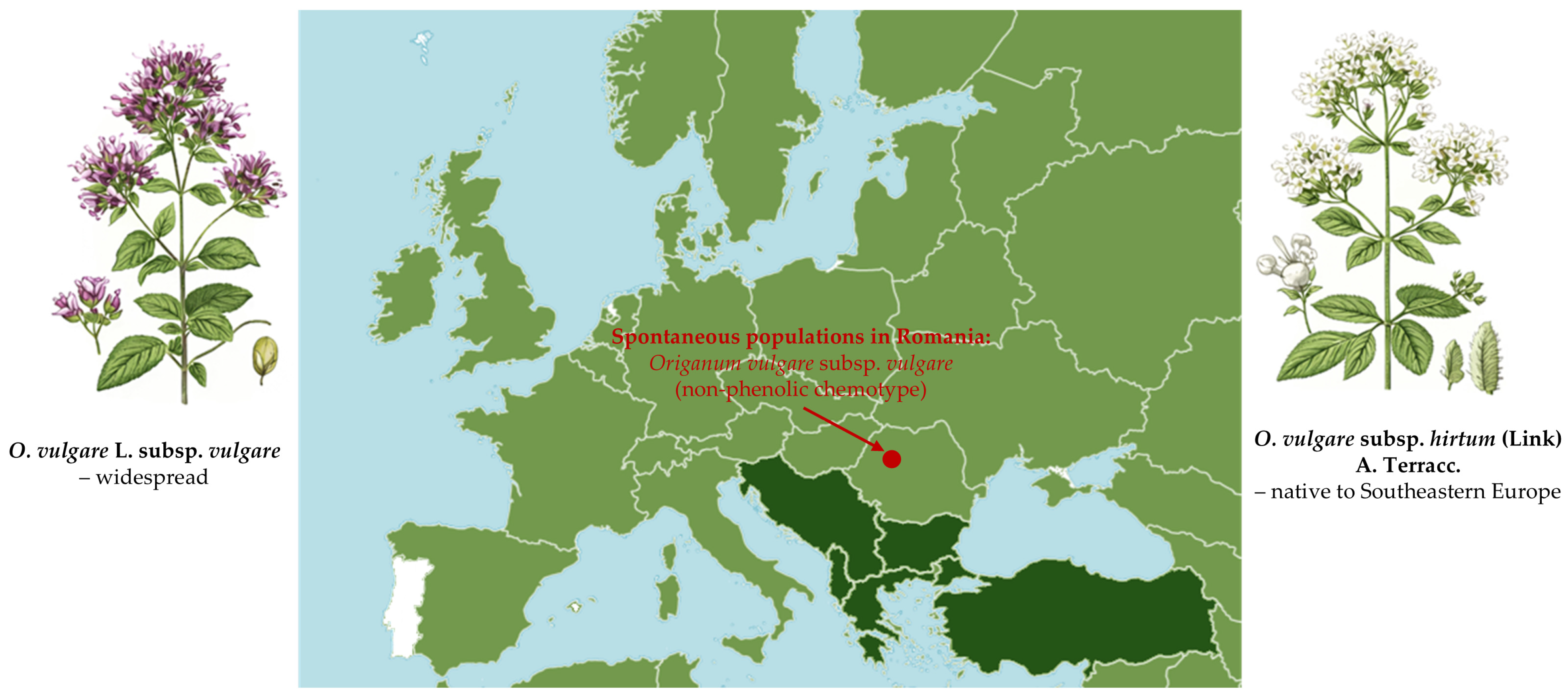
O. vulgare L. having a broad distribution across most of the continent (primarily
O. vulgare subsp.
vulgare in central and northern Europe, including Romania), while
O. vulgare subsp.
hirtum (Link) A.Terracc. (syn.
O. heracleoticum L.,
O. hirtum Link) is restricted to southeastern Europe (from the Balkans to Türkiye) (
Figure 1). After 1990, plant material marketed as “oregano” began to be imported into Romania, being used primarily as a culinary spice. These products, commercialized as dried powder, seedlings, or seeds, cannot be identical to
O. vulgare from the spontaneous Romanian flora. Instead, they are characterized by essential oils rich in the phenolic compounds thymol and carvacrol, conferring an aroma similar to that of
Satureja hortensis or
Thymus vulgaris, species well known for their high phenolic content [
25].
The first comparative GC–MS analysis performed in Romania between essential oils obtained from indigenous
O. vulgare and those isolated from commercial oregano products was published in 2003 by Tămaș and Oprean [
25]. The authors demonstrated the absence of thymol and carvacrol in the essential oil of
O. vulgare collected from wild populations in Cluj and Gorj counties, whereas the commercial oregano product contained approximately 64% thymol and carvacrol. Due to the early vegetative stage of the commercial material, the botanical identity of that product could not be conclusively established at the time.
Despite this evidence, several recent studies continue to report high carvacrol or thymol contents in essential oils attributed to
O. vulgare, often without specifying the origin of the plant material or providing botanical authentication. For example, Drăgan et al. (2022) investigated essential oil extracted from cultivated plants in western Romania, reporting carvacrol as the main component, but did not document the source of seeds or seedlings, voucher specimens, or comparisons with spontaneous populations [
26]. Such inconsistencies highlight a broader methodological issue in phytochemical research, namely the insufficient integration of classical botanical knowledge with modern analytical approaches. Recent conceptual frameworks emphasize that accurate taxonomic identification, supported by complementary analytical tools, is essential for meaningful interpretation of chemical and biological data and for avoiding misleading conclusions in exploratory research on medicinal plants [
27].
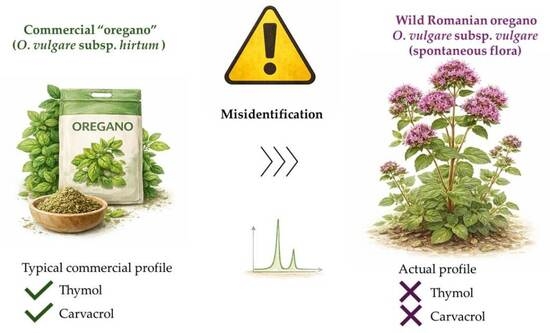
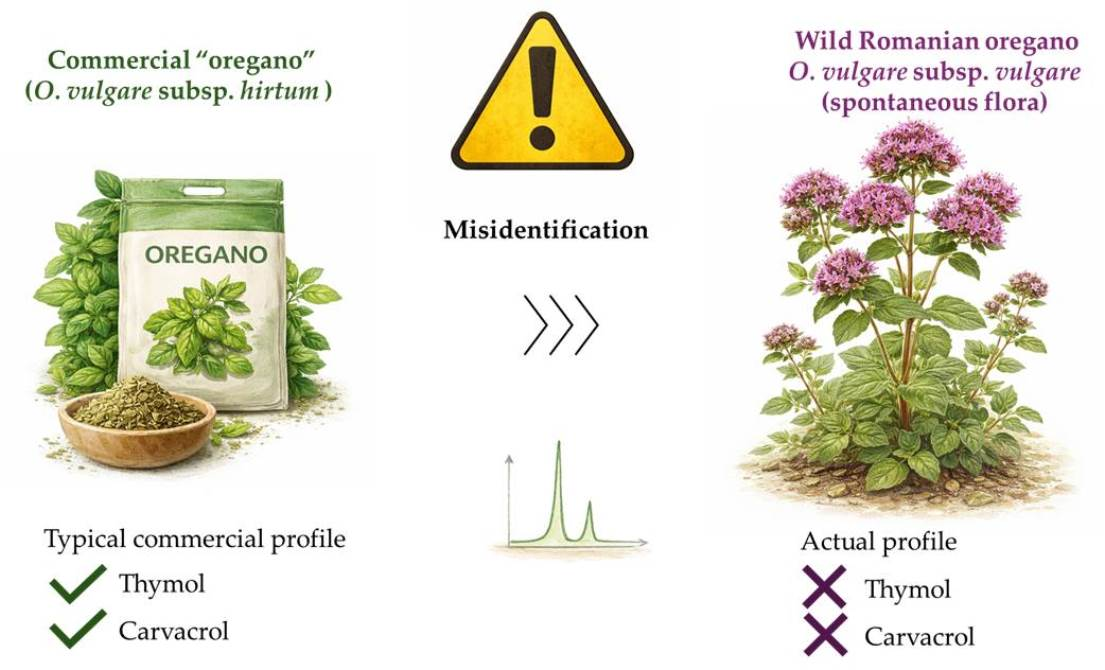
Considering the persistent inconsistencies in the literature and the frequent confusion between O. vulgare and other phenolic-rich Origanum species, the present study aims to clarify the identity of commercial oregano in relation to O. vulgare from the spontaneous flora of Romania. By combining comparative morphological analysis with thin-layer chromatography screening and GC–MS characterization of essential oils, this work seeks to establish clear criteria for differentiating O. vulgare from O. heracleoticum and to emphasize the necessity of accurate botanical identification in phytochemical research. Beyond its phytochemical relevance, the present study addresses an important biodiversity and ethnobotanical issue, namely the frequent misidentification and substitution of wild medicinal taxa by commercially cultivated species, with potential consequences for traditional use, scientific research, and biodiversity conservation.
2. Materials and Methods
2.1. Plant Material
Five plant samples were used in this study. Sample I consisted of Origani herba collected from wild populations of Origanum vulgare L. subsp. vulgare growing in the spontaneous flora of Mărișel (Cluj County, Romania).
Samples II and III were obtained from the aerial parts of O. vulgare subsp. hirtum (Link) A.Terracc. (syn. O. heracleoticum L., O. hirtum Link), commercially available as seedlings produced by S.C. Prestoagri SRL (Alexandria, Teleorman County, Romania) from imported seeds (France). Two samples were collected from these plants, before flowering (Sample II) and during flowering (Sample III).
Sample IV consisted of Origanum vulgare L. subsp. vulgare plants grown from seeds commercialized by S.C. Agrosel Câmpia Turzii (Cluj County, Romania) and cultivated in pots in the Botanical Garden of Babeș–Bolyai University, Cluj-Napoca.
Sample V was represented by a commercial herbal product labeled as Origani herba (Fares Orăștie, Orăștie, Romania).
The voucher specimens were deposited at the Pharmacognosy Department, Faculty of Pharmacy, “Iuliu Hatieganu” University of Medicine and Pharmacy, Cluj-Napoca, Romania (sample I—voucher number OV-1; sample II—voucher number OH–1; sample III—voucher number OH–2; sample IV—voucher number OV–2; sample V—voucher number OV–3).
All plant materials were air-dried at room temperature and ground to a fine powder using an electric grinder prior to analysis.
2.2. Essential Oil Isolation
Essential oils were obtained from dried aerial parts by hydrodistillation using a Neo-Clevenger type apparatus. Briefly, 100 g of powdered plant material was distilled with 1 L of water for 3 h, according to the European Pharmacopoeia 12th ed. [
4]. The obtained essential oils were dried over anhydrous sodium sulfate and stored at 4 °C until analysis.
2.3. Thin-Layer Chromatography (TLC) Analysis
The presence of phenolic derivatives in the plant material was assessed by thin-layer chromatography as a rapid screening method, without prior isolation of the essential oil. For each sample, 0.5 g of dried plant material was finely ground in a glass mortar, extracted with 5 mL of chloroform for 1 min, filtered, and adjusted to a final volume of 5 mL with the same solvent.
TLC was performed on silica gel G plates (Merck, Darmstadt, Germany) (10 × 15 cm, Merck) using toluene–ethyl acetate (4:1,
v/
v) as the mobile phase. Samples (20 µL) were applied as linear bands (1 cm width), and plates were developed over a migration distance of 10 cm. Chromatographic development was performed at room temperature in a saturated chamber. After drying, plates were sprayed with vanillin–sulfuric acid reagent [
28] and heated at 105–110 °C until maximum coloration was achieved. Thymol was used as a reference standard and prepared as a 0.1% (
w/
v) solution in chloroform.
TLC was used as a qualitative screening method for the detection of phenolic derivatives.
2.4. GC–MS Analysis
Gas chromatography–mass spectrometry (GC–MS) analysis of essential oils was performed using a Thermo Scientific system consisting of a Trace 1310 gas chromatograph coupled to a TSQ 8000 Evo triple quadrupole mass spectrometer (Thermo Fisher Scientific, Waltham, MA, USA), equipped with an AI/AS 1310 autosampler. One microliter of each essential oil sample was injected into a straight liner maintained at 250 °C using a split ratio of 1:20.
Chromatographic separation was achieved on a Zebron ZB-5ms capillary column (30 m × 250 µm i.d., 0.25 µm film thickness; Phenomenex, Torrance, CA, USA), using helium as carrier gas at a constant flow rate of 1 mL/min. The oven temperature program was as follows: initial temperature 75 °C (held for 1 min), increased to 140 °C at 5 °C/min, followed by a second ramp to 250 °C at 10 °C/min, with a final hold of 2 min. The transfer line temperature was set at 280 °C. Ionization was performed by electron impact (EI) at 70 eV and an ion source temperature of 230 °C. Mass spectra were recorded in full-scan mode over the m/z range 40–500, with a dwell time of 0.1 s.
Compound identification was carried out by comparison of mass spectra with those from the NIST library and by comparison of retention behavior with literature data. Quantitative determination of thymol was performed using an external five-point calibration curve prepared from an authentic reference standard, in the concentration range of 0.1–2 mM. Essential oil samples were diluted in methanol prior to analysis to ensure that thymol concentrations fell within the linear range of the calibration curve. The final thymol concentration was calculated by applying the corresponding dilution factor and expressed relative to the undiluted essential oil.
3. Results
3.1. Morphological Characterization
Based on the comparative morphological analysis, Origanum vulgare L. subsp. vulgare from the spontaneous flora of Romania is a perennial herbaceous species characterized by a horizontal rhizome with underground stolons. The stems are erect, tetragonal, and lignified at the base, reaching 30–50 cm in height (occasionally up to 89 cm). They are branched, pubescent, reddish-brown in color, and bear sterile axillary shoots. The leaves are petiolate, entire, ovate, and pubescent, particularly on the abaxial surface, with an obtuse apex and a base abruptly attenuated into the petiole. The margins are slightly crenate–serrate, and the lamina presents 3–5 pairs of secondary veins, with glandular punctations on both surfaces.
The inflorescence is corymbiform, composed of contracted cymes forming cylindrical or prismatic spikelets, arranged terminally or axillary. Bracts are purple, ovate, sessile, approximately equal in length to the calyx, and glandular on the lower (outer) surface. Flowers are polygamous dioecious; the calyx is campanulate, glabrescent, hairy on the inner surface, and provided with five equal, triangular teeth. The corolla is bilabiate, tubular-infundibuliform, 4–6 mm long, predominantly purple and only rarely white, with an erect, emarginate upper lip and a trilobed lower lip with rounded, equal lobes. The androecium consists of four stamens, either enclosed or exserted, with divergent filaments, and a long style. The fruits are ovoid, smooth, slightly trimucate, brown nutlets, approximately 1 mm in length. Flowering occurs mainly in July–August.
O. vulgare subsp.
hirtum (Link) A.Terracc. (syn.
O. heracleoticum L.,
O. hirtum Link) is also a perennial species with rhizomes, native to southeastern Europe (Albania, Bulgaria, Greece including islands, Cyprus, Türkiye, and parts of the former Yugoslav territories; absent from Sardinia and most of Italy according to current taxonomic databases such as POWO and Euro+Med PlantBase). According to
Flora Europaea [
22], the stems may reach up to 60 cm in height and bear hairy branches. Leaves are smaller, measuring 15–22 mm in length and 6–15 mm in width, ovate or oblong, entire or slightly serrated, sparsely pubescent, glandular-punctate, and petiolate. The inflorescences consist of spikes 5–20 mm long, ovoid or oblong, compact or loose and often interrupted, arranged in a panicle. Bracts are 2–3 mm long, approximately twice as long as the calyx, ovate and densely glandular, green or only rarely purple, glabrous or hairy. The calyx may be glabrous or pubescent and bears yellow dotted glands, while the corolla is 4–5 mm long, white and only rarely pink. Considerable variability was observed in the color and degree of hairiness of the bracts and calyx.
Plants grown from commercial seedlings obtained from Alexandria (Teleorman County, Alexandria, Romania) and cultivated in pots under open-field conditions developed normally and flowered during the vegetation period. In contrast, plants grown from commercially available seeds (Agrosel Câmpia Turzii), although germinating and developing well initially under greenhouse conditions and subsequently outdoors, did not flower by the end of the growing season (October). Nevertheless, both categories of cultivated plants exhibited the characteristic habitus and botanical features of
O. vulgare subsp.
hirtum, commonly referred to as white oregano in
Flora Europaea [
22].
The main morphological features differentiating
O. vulgare subsp.
hirtum from
Origanum vulgare subsp.
vulgare in the spontaneous flora of Romania include the overall dimensions of the main stems, which are larger in wild subsp.
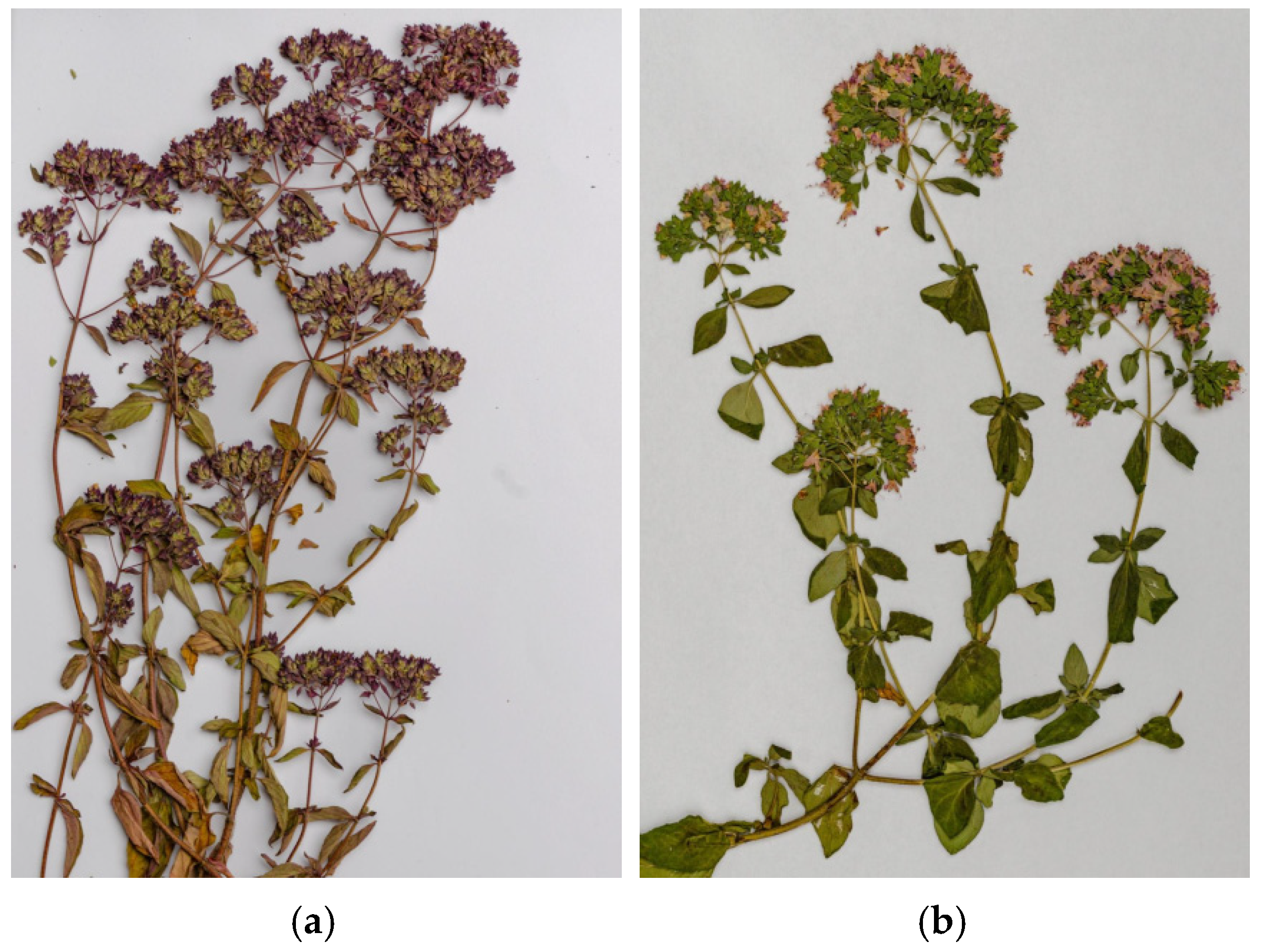
vulgare in both height and thickness, although both species display tetragonal and pubescent stems (
Figure 2). Stem coloration also differs, being brown-purple in
O. vulgare subsp.
vulgare (
Figure 2a) and green in
O. vulgare subsp.
hirtum (
Figure 2b). While the stems of
O. vulgare are predominantly erect, those of oregano are less lignified and frequently decumbent or descending. Leaf morphology further distinguishes the two taxa:
O. vulgare subsp.
vulgare exhibits larger, rhomboid-elongated to oval leaves, whereas
O. vulgare subsp.
hirtum presents smaller, ovate leaves with a width equal to or greater than their length; pubescence is present in both taxa.
Additional diagnostic traits include the coloration of the bracts and calyx, which are brown-purple in O. vulgare subsp. vulgare and green in O. vulgare subsp. hirtum, as well as corolla color, which is predominantly pink in O. vulgare subsp. vulgare and white in O. vulgare subsp. hirtum. The aroma released upon crushing the leaves and inflorescences also differs markedly, being fragrant and delicate in wild O. vulgare subsp. vulgare, whereas O. vulgare subsp. hirtum emits a strong scent reminiscent of garden thyme. Taken together, these consistent morphological and sensory differences clearly distinguish wild O. vulgare subsp. vulgare from oregano-type cultivated material (O. vulgare subsp. hirtum), while highlighting the morphological inconsistency of commercially sourced plants with authentic spontaneous Romanian populations.
3.2. Thin-Layer Chromatography (TLC) Analysis
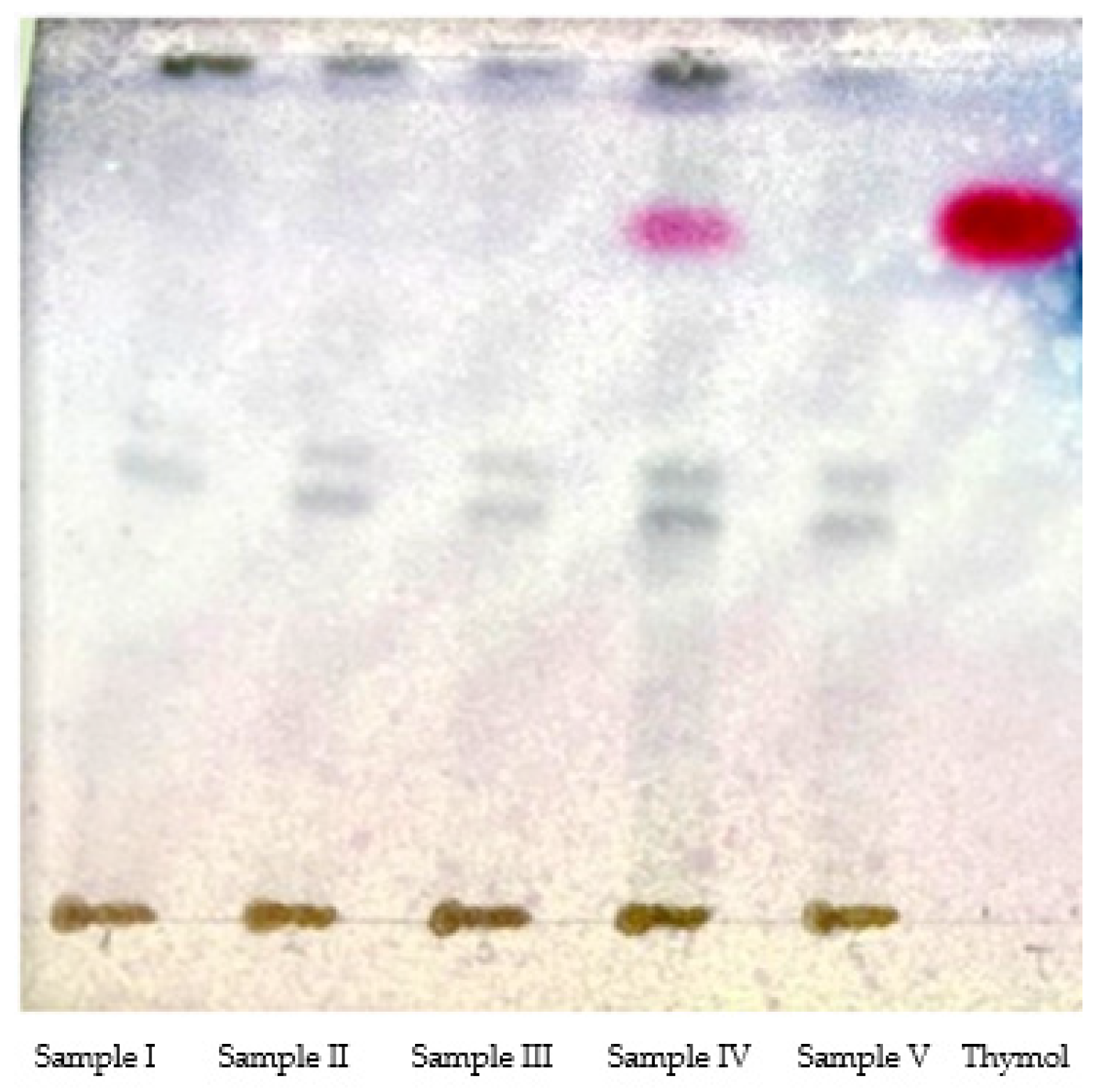
TLC screening of chloroform extracts obtained from dried aerial parts revealed clear qualitative differences in the presence of phenolic compounds among the analyzed samples. Extracts derived from wild Origanum vulgare L. subsp. vulgare (Sample I) did not show detectable zones corresponding to thymol under the applied chromatographic conditions. Similar TLC profiles, characterized by the absence of phenolic zones, were obtained for samples II, III, and V.
In contrast, a single intense colored zone with chromatographic behavior consistent with thymol was observed exclusively in Sample IV, corresponding to plants grown from commercially available seeds labeled as
O. vulgare (Agrosel). These results indicate that plant material cultivated from commercial seeds marketed as
O. vulgare does not share the same phytochemical profile as wild populations from the spontaneous flora of Romania, nor with the authenticated
O. vulgare subsp.
hirtum reference material analyzed here (
Figure 3).
3.3. GC–MS Analysis of Essential Oils
GC–MS analysis of essential oils isolated by hydrodistillation revealed marked differences in chemical composition between wild
O. vulgare subsp.
vulgare samples and oregano-type samples of commercial origin. The volatile compounds identified in the commercial essential oil (Sample IV) are listed in
Table 1.
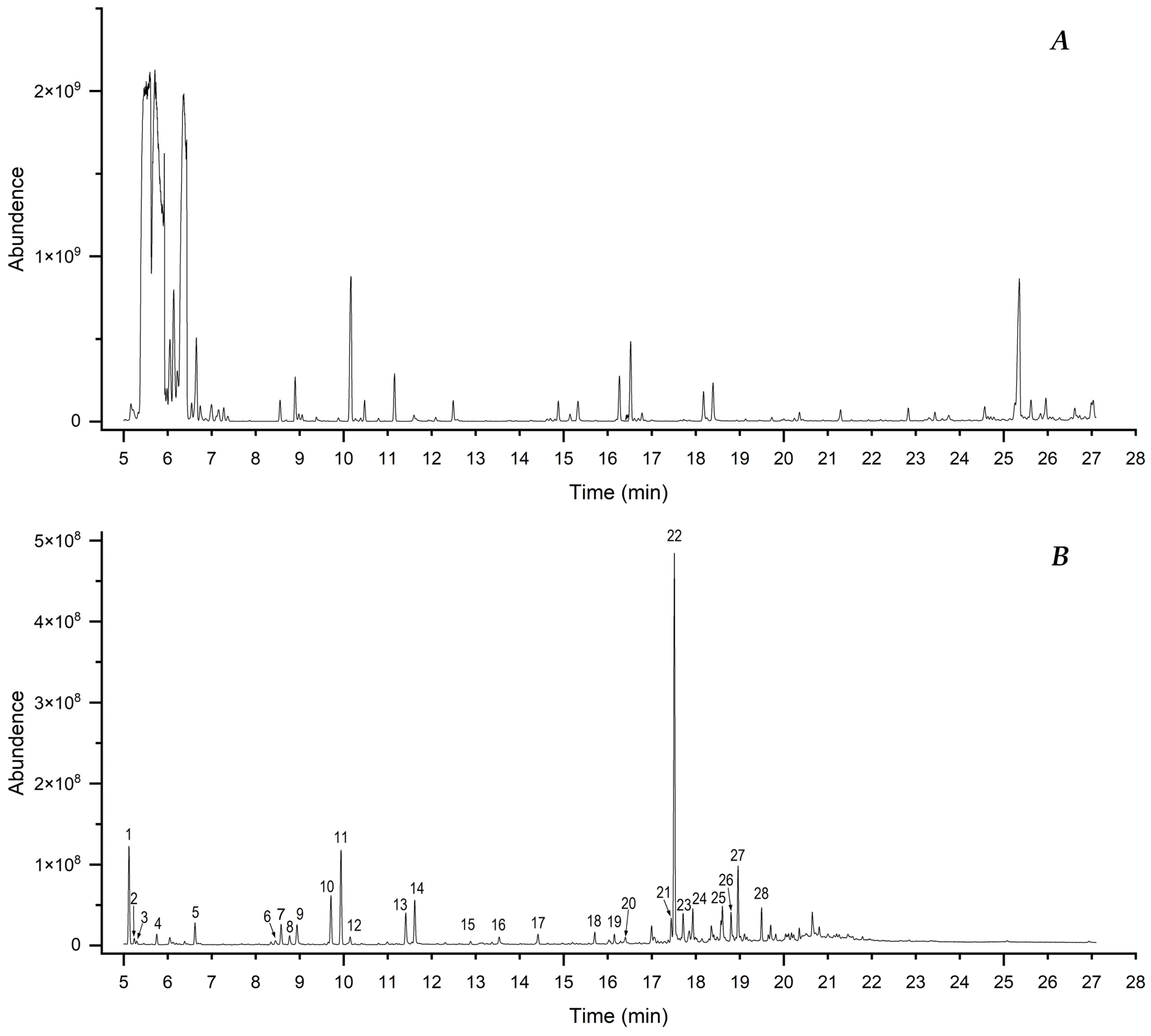
The essential oil obtained from wild O. vulgare subsp. vulgare collected from the spontaneous flora of Romania was characterized by the complete absence of phenolic monoterpenes. Thymol and carvacrol were not detected, and no chromatographic peaks attributable to phenolic derivatives were observed. The chemical profile was dominated by monoterpene hydrocarbons, oxygenated monoterpenes, and sesquiterpenes, including o-cymene, α-pinene, eucalyptol (1,8-cineole), linalool, terpinen-4-ol, and caryophyllene, together with several oxygenated sesquiterpenes.
In contrast, the essential oil from commercial-origin oregano (Sample IV) exhibited a distinct phenolic-rich profile. Thymol (2-isopropyl-5-methylphenol), a phenolic monoterpene, was identified as a major constituent and confirmed using an authentic reference standard, while carvacrol (5-isopropyl-2-methylphenol), a structural isomer of thymol, was also detected as a major phenolic monoterpene based on mass spectral matching with the NIST database. The chromatographic profiles of these samples were dominated by phenolic monoterpenes, accompanied by monoterpene hydrocarbons and oxygenated sesquiterpenes.
Representative total ion chromatograms illustrating the contrasting GC–MS profiles of wild
O. vulgare subsp.
vulgare and commercial oregano samples are shown in
Figure 4.
Quantitative GC–MS analysis confirmed the absence of thymol in the essential oil obtained from wild
O. vulgare subsp.
vulgare (Sample I). In contrast, oregano samples of commercial origin (sample IV) exhibited high thymol concentrations, with an average value of approximately 60.4 mM (range: 54.3–66.8 mM)
Table 2.
Overall, morphological analysis, TLC screening, and GC–MS data clearly differentiated wild O. vulgare subsp. vulgare (Sample I) from commercial oregano samples. The essential oil of spontaneous Romanian populations lacked phenolic compounds, while commercial material (Sample IV) exhibited phenolic-rich profiles dominated by thymol and carvacrol, consistent with typical subsp. hirtum chemotypes. The unexpected absence of phenolics in the authenticated subsp. hirtum reference (II–III) may reflect chemotypic variability or adaptation to temperate cultivation conditions, warranting further investigation on multi-year or multi-site samples.
4. Discussion
The results of the present study address the issue of botanical identity and chemical composition of plant material marketed as oregano in Romania. By integrating morphological observations with TLC screening and GC–MS analysis, clear and consistent differences were demonstrated between wild populations of O. vulgare subsp. vulgare from the spontaneous flora and oregano-type material of commercial origin.
Comparative morphological analysis revealed that wild O. vulgare subsp. vulgare displays a stable set of diagnostic traits, including stem coloration and habitus, leaf morphology, inflorescence structure, and corolla color, which are consistent with classical botanical descriptions. In contrast, plants cultivated from commercial seedlings and from seeds labeled as O. vulgare exhibited divergent morphological features and failed to reproduce the characteristic phenotype of authentic wild O. vulgare subsp. vulgare. Although several of these traits overlap with descriptions of taxa belonging to the Origanum section Majorana, morphological evidence alone does not allow an unambiguous taxonomic reassignment of the commercial material. Instead, the observed differences clearly indicate that commercially sourced plant material does not correspond morphologically to wild O. vulgare subsp. vulgare populations from the spontaneous flora.
TLC screening provided a rapid qualitative differentiation between the analyzed samples and revealed an important diagnostic contrast. Thymol was absent in chloroform extracts obtained from wild
O. vulgare subsp.
vulgare, while a distinct thymol-related zone was detected exclusively in plants grown from commercially available seeds labeled as
O. vulgare. Notably, thymol was not detected in authenticated
O. vulgare subsp.
hirtum plant material analyzed in this study, indicating that the phenolic profile observed in the commercial seed-derived plants is inconsistent with both wild subsp.
vulgare and subsp.
hirtum. The absence of phenolic monoterpenes in our authenticated subsp.
hirtum reference material contrasts with the typical high-thymol (47–65%) or high-carvacrol (81–85%) profiles reported for thymol and carvacrol chemotypes of
O. vulgare in southern Europe [
29]. Similarly, a recent multi-country survey of cultivated
O. vulgare across Europe identified six chemotypes, with only two samples meeting the European Pharmacopoeia requirement of ≥60% combined thymol + carvacrol, highlighting substantial intraspecific and environmental variability [
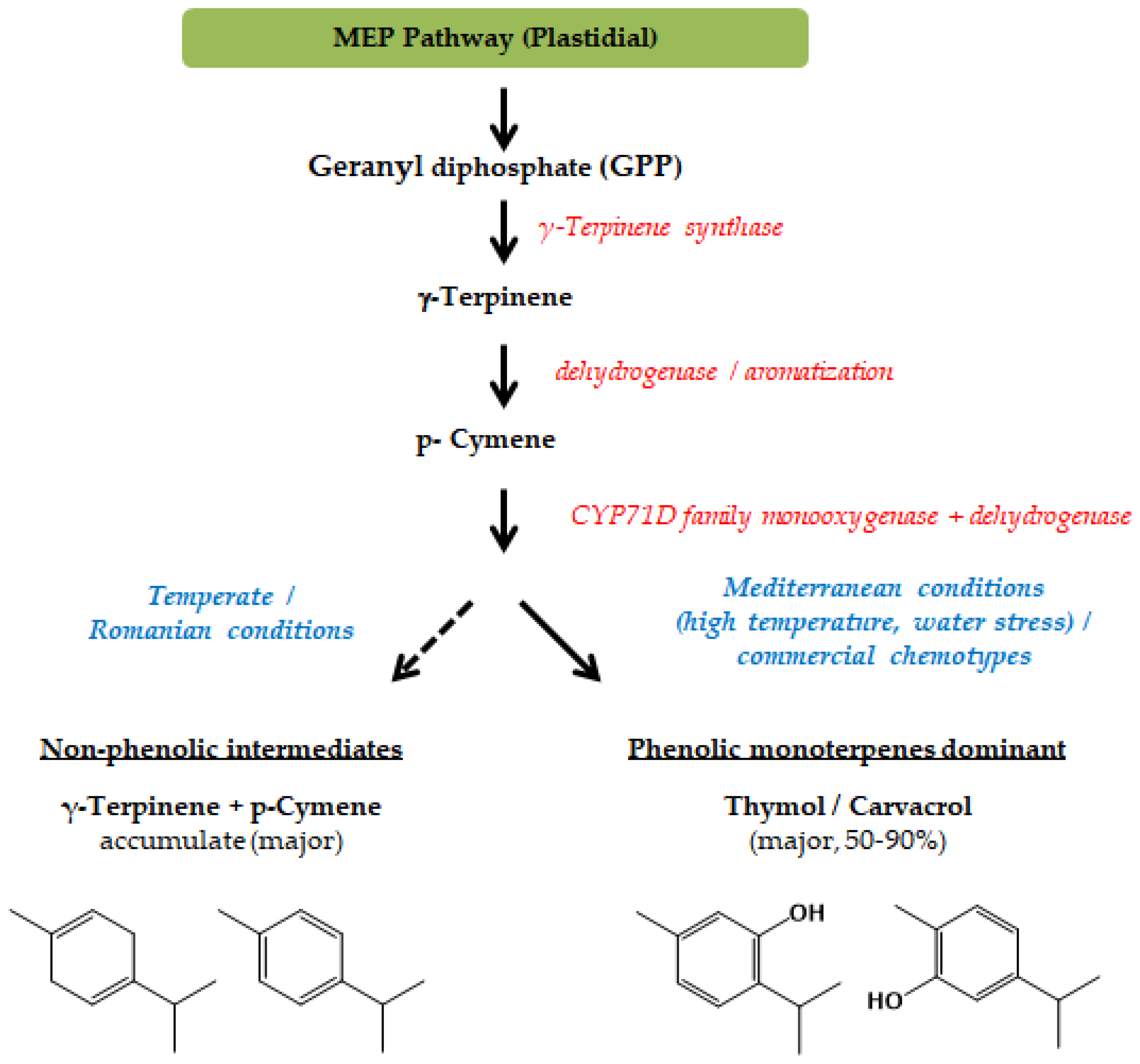
30]. This variability may explain our low-phenolic result under temperate Romanian cultivation conditions (
Figure 5).
Although TLC does not allow definitive compound identification, these qualitative patterns were fully corroborated by GC–MS analysis. GC–MS analysis confirmed these differences at the molecular level. The essential oil of wild O. vulgare subsp. vulgare lacked phenolic monoterpenes and was dominated by monoterpene hydrocarbons, oxygenated monoterpenes, and sesquiterpenes, a profile previously reported for indigenous populations from Central and Eastern Europe. In contrast, essential oils obtained from oregano-type commercial samples exhibited phenolic-rich profiles, with thymol and carvacrol identified as major constituents. Thymol, confirmed using an authentic reference standard, was present at high concentrations in commercial samples and remained undetectable in wild O. vulgare subsp. vulgare (Sample I). These findings reinforce the view that phenolic monoterpenes are not a general feature of O. vulgare and should not be used as diagnostic markers for this species.
From a chemotaxonomic perspective, the present results highlight the importance of combining botanical authentication with chemical profiling when evaluating oregano-type plant material. Reports of thymol- or carvacrol-rich essential oils attributed to
O. vulgare in the literature are likely influenced by the use of inadequately authenticated or mislabeled plant material rather than by true intraspecific chemical variability. Recent studies reinforce this perspective. In a large-scale study, Lievens et al., 2023 [
31], combined metabarcoding and digital PCR to analyze 285 commercial oregano samples originating from 20 EU countries. They revealed a high prevalence of botanical impurities, including olive leaf (27%) and myrtle leaf (17%), with more than 95% of samples containing DNA reads from non-declared species. These findings highlight the pronounced susceptibility of oregano to botanical adulteration and underline the limitations of morphological or chemical profiling when applied in isolation [
31]. Complementary evidence is provided by untargeted HS-GC-IMS approaches, which enabled the detection of olive leaf adulteration in up to 43% of commercial oregano samples based on volatile fingerprints, offering a rapid and non-destructive quality control strategy [
32]. Consistent results were reported earlier through DNA metabarcoding analyses, which documented frequent substitutions in oregano products, supporting the notion that the attribution of phenolic-rich essential oils to
O. vulgare is often a consequence of insufficient botanical authentication [
33].
The widespread use of the generic commercial term “oregano” further contributes to this ambiguity, as it encompasses multiple taxa with distinct botanical and phytochemical characteristics. This has important implications for ethnobotanical documentation, phytochemical research, biological activity studies, and quality control of herbal products, where inaccurate species identification may compromise data interpretation and reproducibility. These findings align with observations from Romanian populations, where even cultivated varieties (e.g.,
O. vulgare var.
aureum from western Romania) show non-phenolic or intermediate profiles dominated by γ-terpinene and p-cymene, contrasting with the phenolic-rich commercial material [
34]. In the Romanian context, these results suggest that the traditional use of wild, non-phenolic
O. vulgare subsp.
vulgare may be associated with a different biological activity profile compared to imported, phenolic-rich commercial products, highlighting the need to re-evaluate national phytotherapeutic recommendations and quality standards.
Nevertheless, despite the consistency of the results, the limited number of samples and the absence of molecular analyses (e.g., DNA barcoding) represent limitations that should be addressed in future studies in order to confirm the distribution of chemotypes in the spontaneous Romanian flora and on the commercial market.
Altogether, the combined morphological and chromatographic approach applied in this study provides a robust framework for distinguishing authentic wild O. vulgare from chemically divergent oregano-type commercial material and underscores the necessity of rigorous botanical authentication in studies addressing medicinal plants and biodiversity.
5. Conclusions
The present study offers the first combined morphological and chemotaxonomic comparison between spontaneous Romanian O. vulgare subsp. vulgare and commercially marketed oregano-type material in Romania.
Wild populations exhibited consistent diagnostic traits and a non-phenolic essential oil profile dominated by monoterpene hydrocarbons, oxygenated monoterpenes and sesquiterpenes, consistent with Central and Eastern European indigenous accessions. In contrast, commercial samples consistently showed phenolic-rich oils (high thymol and carvacrol) alongside divergent morphological features, failing to match either wild O. vulgare subsp. vulgare or authenticated O. vulgare subsp. hirtum reference plants (which also lacked phenolics, likely due to temperate cultivation effects or chemotypic variation).
Collectively, these results demonstrate that several samples of oregano sold in Romania represent mislabeled or substituted material, primarily phenolic chemotypes of subsp. hirtum origin. Such misidentification compromises the validity of phytochemical and biological studies, distorts ethnobotanical records and may increase pressure on authentic wild populations through overharvesting risks.
The combined approach (morphology, TLC and GC–MS) provides a practical, cost-effective framework for authentication. It highlights the urgent need for mandatory botanical verification in herbal product quality control, Pharmacopoeial compliance and future research on medicinal and aromatic plants in Romania and beyond.




 ,
,