Article

Genetic Diversity and Population Structure among Arabian Horse Genealogical Lineages in Bulgaria


1
Department of Ecosystem Research, Environmental Risk Assessment and Conservation Biology, Institute of Biodiversity and Ecosystem Research, Bulgarian Academy of Sciences, 1113 Sofia, Bulgaria
2
Department of Animal Diversity and Resources, Institute of Biodiversity and Ecosystem Research, Bulgarian Academy of Sciences, 1113 Sofia, Bulgaria
3
Research Center of Stockbreeding and Agriculture, Agricultural Academy, 4700 Smolyan, Bulgaria
4
Department of Experimental Parasitology, Institute of Experimental Morphology, Pathology and Anthropology with Museum, Bulgarian Academy of Sciences, 1113 Sofia, Bulgaria
5
Executive Agency for Selection and Reproduction in Animal Breeding, 1766 Sofia, Bulgaria
*
Author to whom correspondence should be addressed.
Diversity 2024, 16(5), 281; https://doi.org/10.3390/d16050281
Submission received: 21 March 2024 / Revised: 2 May 2024 / Accepted: 8 May 2024 / Published: 9 May 2024

Abstract

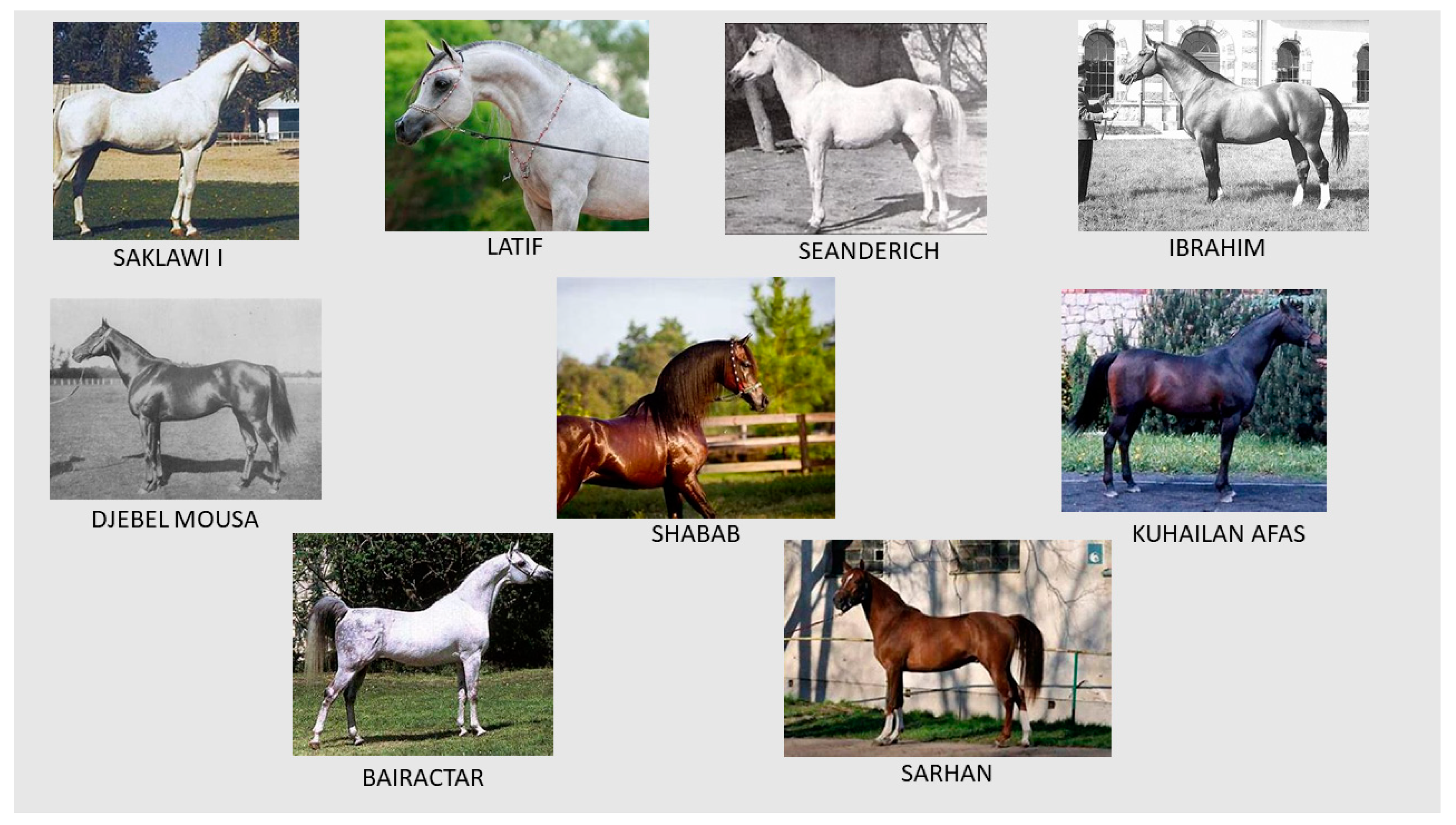
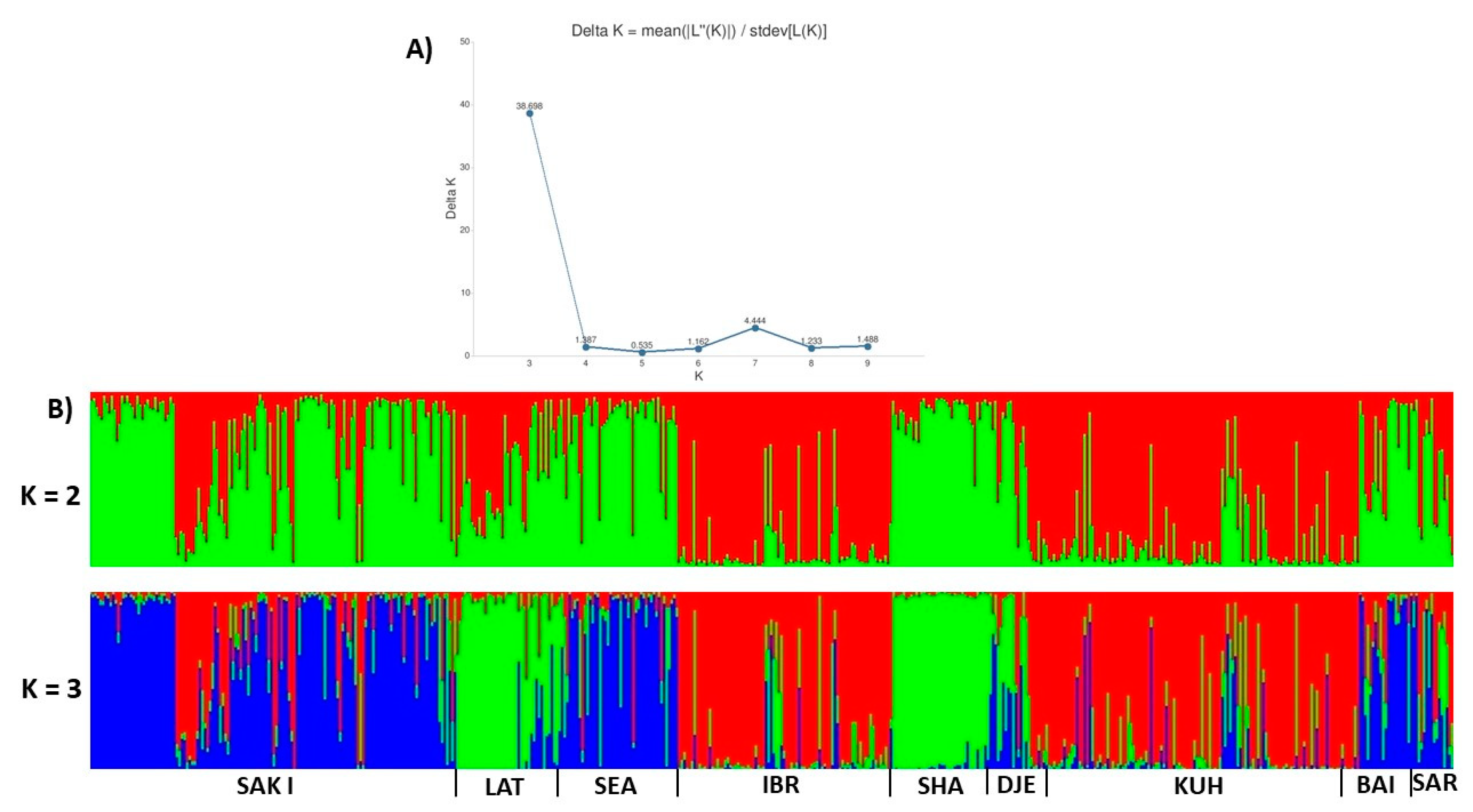
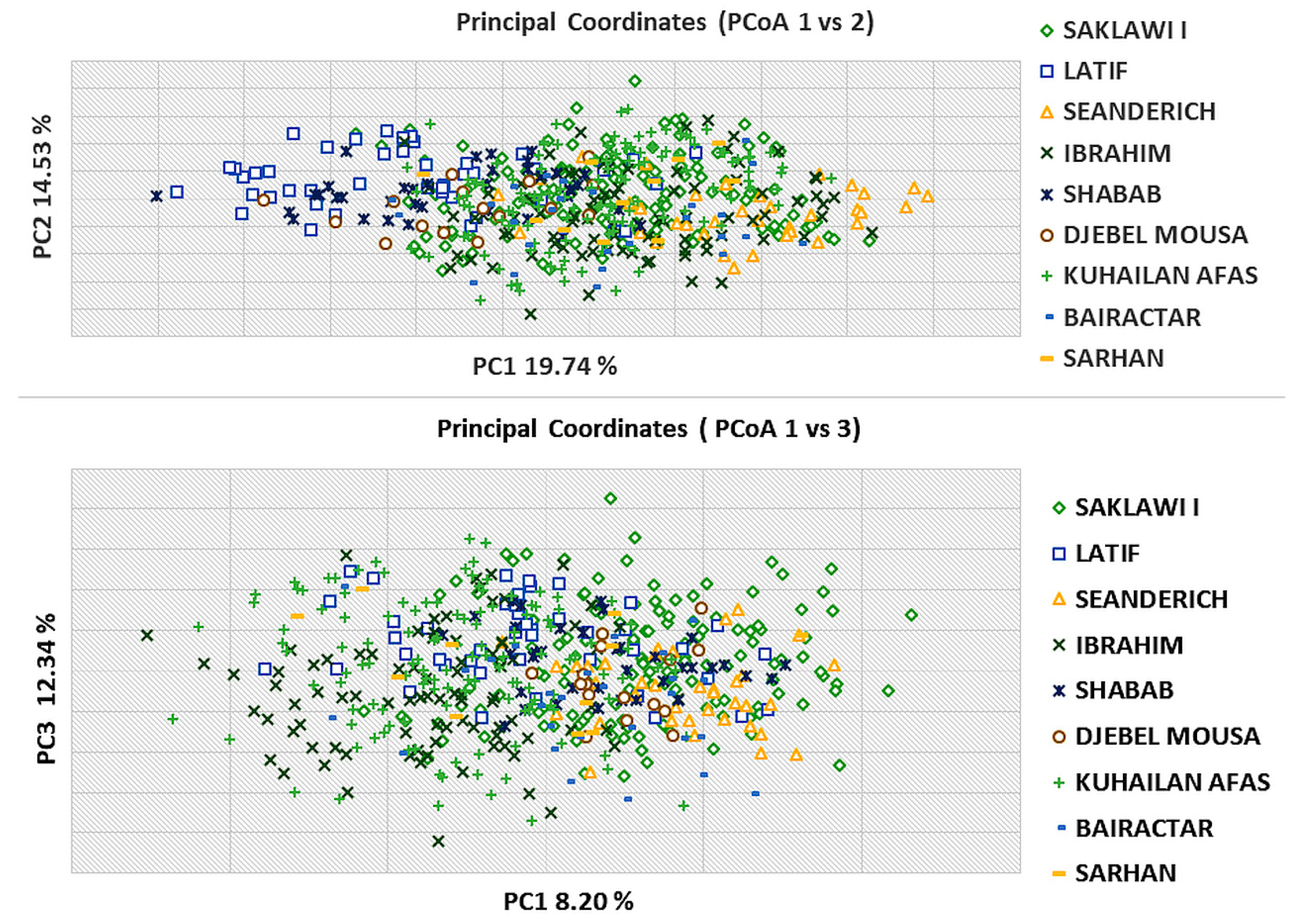
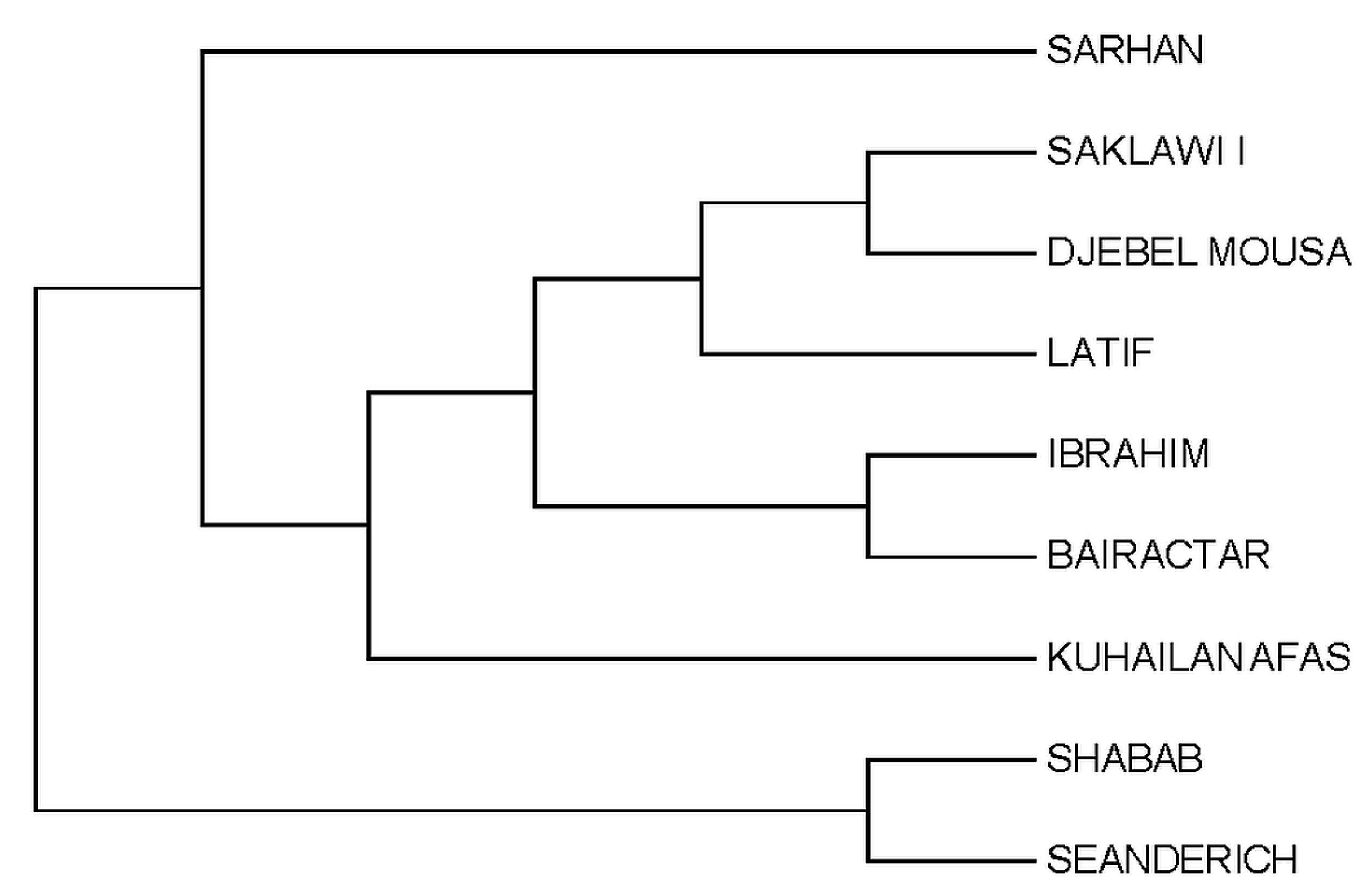
The present research aimed to characterize the genetic diversity and relationships among extant Arabian horse sire lines in Bulgaria, using 15 equine microsatellite markers. The evaluation included 537 Arabian horses representing nine sire lines (SAKLAWI I, LATIF, SEANDERICH, IBRAHIM, SHABAB, DJEBEL MOUSA, KUHAILAN AFAS, BAIRACTAR, and SARHAN). The obtained results indicated that within these lines, the mean number of alleles ranged from 4.15 in SARHAN to 5.54 in SAKLAWI I and LATIF. The mean expected heterozygosity (He) ranged from 0.54 in the SEANDERICH line to 0.67 in SAKLAWI I. The inbreeding coefficient for the entire Arabian populations was rather low: FIS = −0.109, fluctuating from −0.204 in SHABAB to −0.041 in SAKLAWI I. The mean genetic differentiation, FST, was 0.096, demonstrating that nearly 90% of the total genetic variation was due to genetic differentiation within each population. STRUCTURE analysis indicated a genetic similarity between SHABAB and LATIF, between IBRAHIM and KUHAILAN AFAS, as well as between SAKLAWI I, SEANDERICH, and BAIRACTAR. This study of the genetic diversity of Arabian sire lines in Bulgaria can assist in developing a national strategy for the exclusion of non-purebred animals from breeding programs in order to preserve the genetic profile of the original Arabian lines.
Keywords: Arabian sire lines; microsatellites; genetic variability; genetic differentiation; conservation Arabian sire lines; microsatellites; genetic variability; genetic differentiation; conservation