
Article

Two Novel Species and Two New Records within the Genus Pluteus (Agaricomycetes, Agaricales) from Thailand

by
Nopparat Wannathes
1,
Nakarin Suwannarach
2,3,
Surapong Khuna
2,3 and
Jaturong Kumla
2,3,*
1
Microbiology Program, Faculty of Science and Technology, Pibulsongkram Rajabhat University, Phitsanulok 65000, Thailand
2
Research Center of Microbial Diversity and Sustainable Utilization, Chiang Mai University, Chiang Mai 50200, Thailand
3
Department of Biology, Faculty of Science, Chiang Mai University, Chiang Mai 50200, Thailand
*
Author to whom correspondence should be addressed.
Diversity 2022, 14(3), 156; https://doi.org/10.3390/d14030156
Submission received: 26 January 2022 / Revised: 21 February 2022 / Accepted: 22 February 2022 / Published: 23 February 2022
(This article belongs to the Topic Fungal Diversity)

Abstract

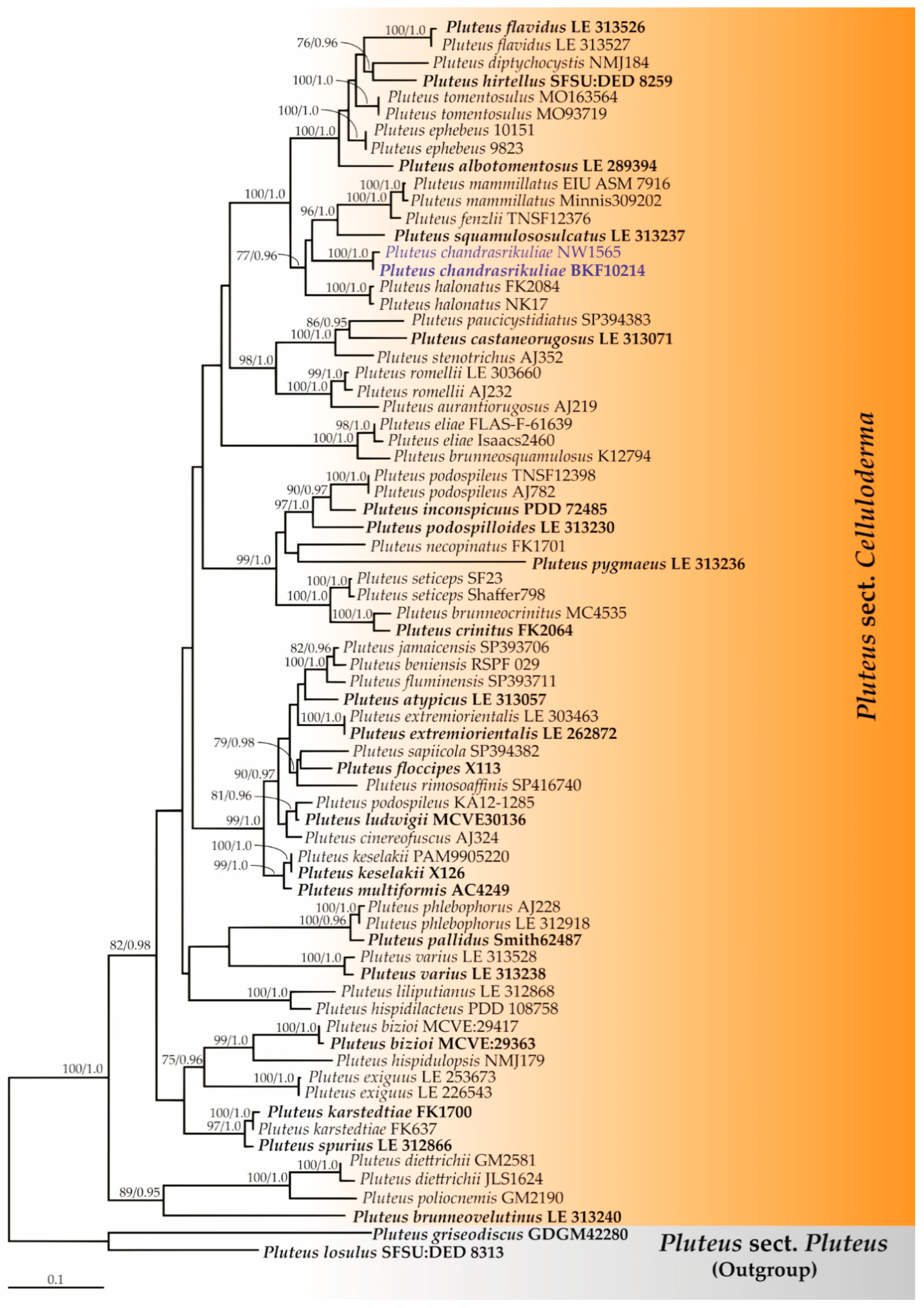
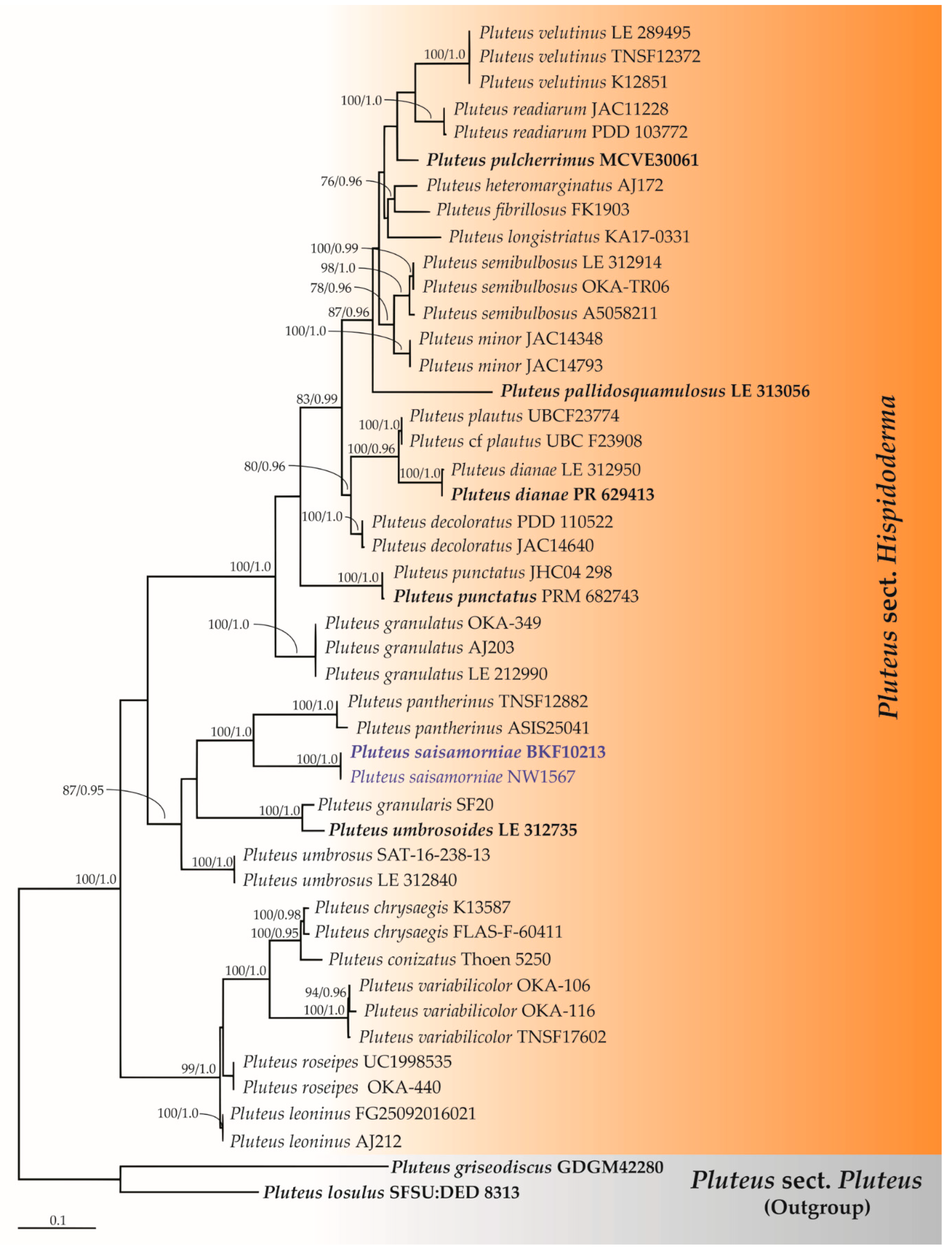
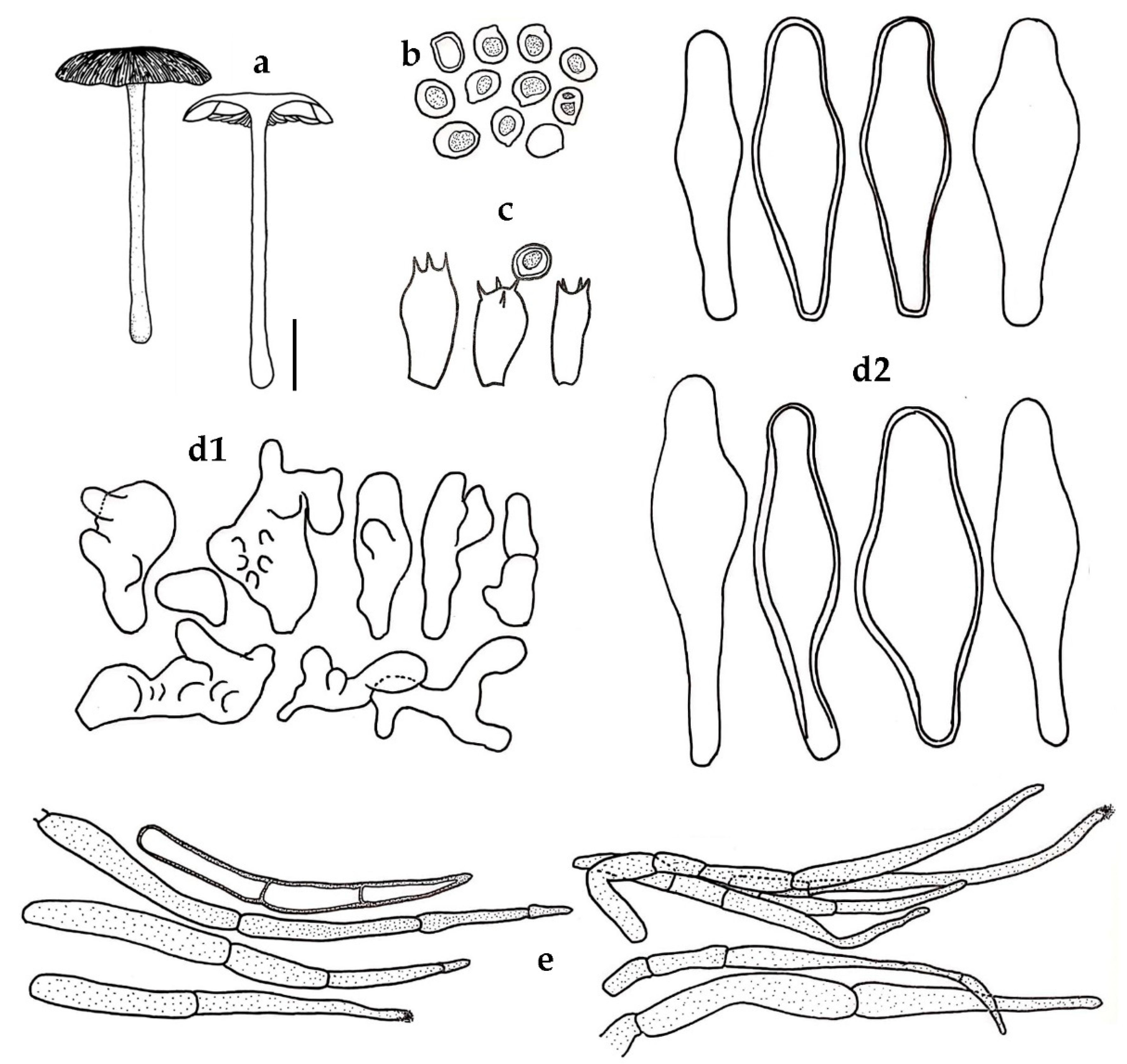
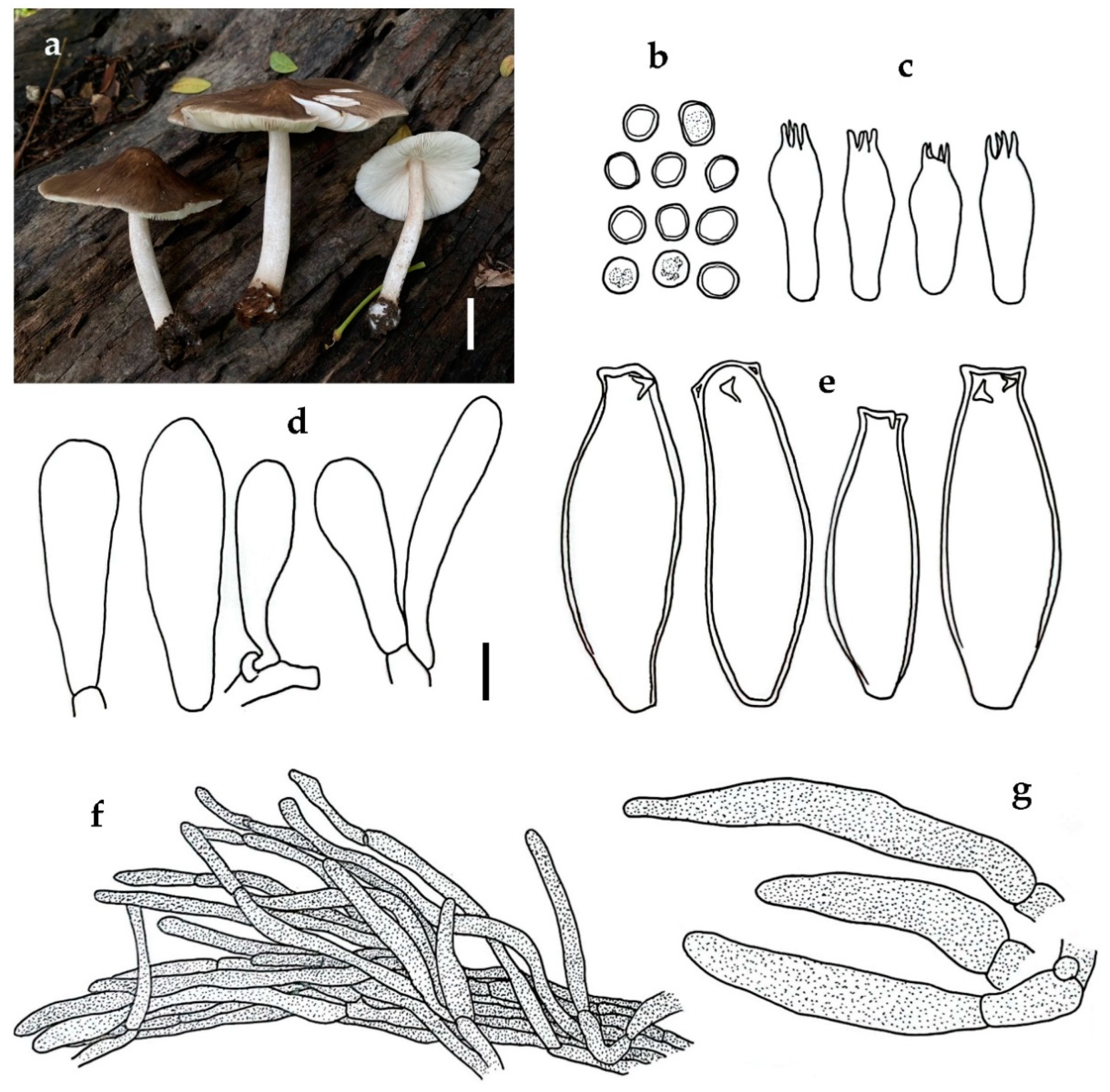
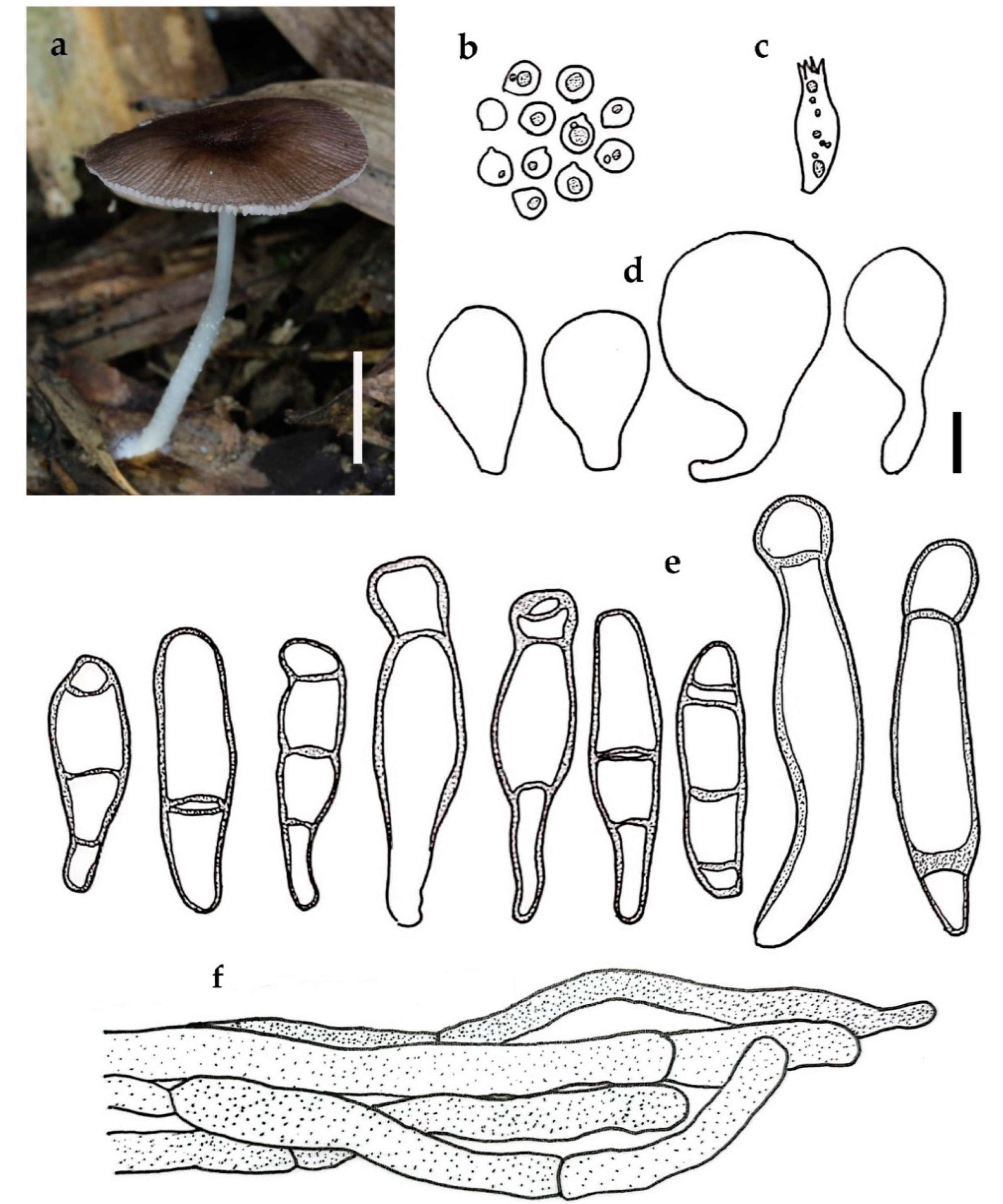
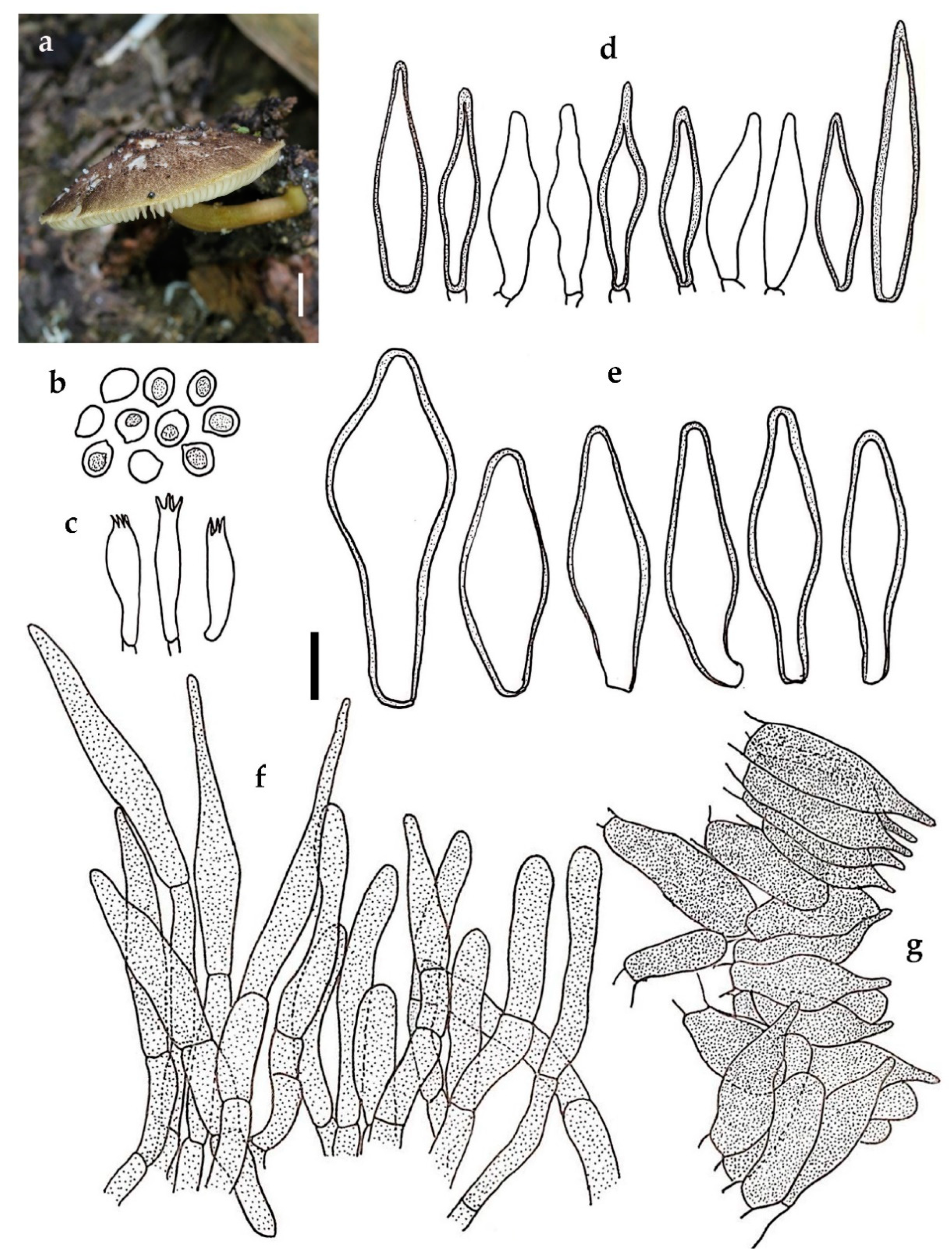
Pluteus is a species-rich genus of saprotrophic agaric in the family Pluteaceae and is widely distributed in tropical, subtropical, and temperate areas throughout the world. Some species in this genus are threatened species according to the International Union for Conservation of Nature (IUCN) red list. During investigations of agarics in northern Thailand, four Pluteus taxa were collected. Morphological characteristics and phylogenic analyses were investigated. Two new species, namely P. chandrasikuliae and P. saisamorniae, were introduced. Pluteus chandrasikuliae is characterized by its relatively large basidiomata, an applanate, dark brown scaly pileus with a cutis pileipellis, two types of hymenial cystidia viz. irregular, as well as diverticulate cells and lageniform cells. In accordance with the phylogenetic results, this new species belongs to the Pluteus sect. Celluloderma. Moreover, P. saisamorniae is distinguished by a plano-convex with a broad umbo, dark brown minute squamules pileus, light brown lamellar edges, greyish orange stipe covered with brown granules, subglobose to broadly ellipsoid basidiospores, an abundance of thin- to thick-walled cheilocystidia and pleurocystidia, a trichohymeniderm pileipellis, and brown caulocystidia in clusters. Pluteus saisamorniae is a member of Pluteus sect. Hispidoderma. Additionally, P. losulus and P. septocystidiatus were discovered in Thailand for the first time and they belong to Pluteus sect. Pluteus. Comprehensive descriptions along with illustrations, photographs, phylogenetic trees showing their positions, and a comparison with phenetically similar taxa are provided.
Keywords: agaric; Basidiomycota; morphology; phylogeny; Southeast Asia; taxonomy agaric; Basidiomycota; morphology; phylogeny; Southeast Asia; taxonomy