Article

Bird Functional Traits Respond to Forest Structure in Riparian Areas Undergoing Active Restoration


by
Augusto F. Batisteli
1,*,
Marcel O. Tanaka
2 and
Andréa L.T. Souza
2
1
Graduate Program in Environmental Sciences, Federal University of São Carlos, Rod. Washington Luiz km 235, 13565-905 São Carlos, SP, Brazil
2
Department of Environmental Sciences, Federal University of São Carlos, Rod. Washington Luiz km 235, 13565-905 São Carlos, SP, Brazil
*
Author to whom correspondence should be addressed.
Diversity 2018, 10(3), 90; https://doi.org/10.3390/d10030090
Submission received: 5 July 2018 / Revised: 3 August 2018 / Accepted: 8 August 2018 / Published: 14 August 2018
(This article belongs to the Special Issue Feature Papers for Celebrating the tenth Founding Year of Diversity)

Abstract

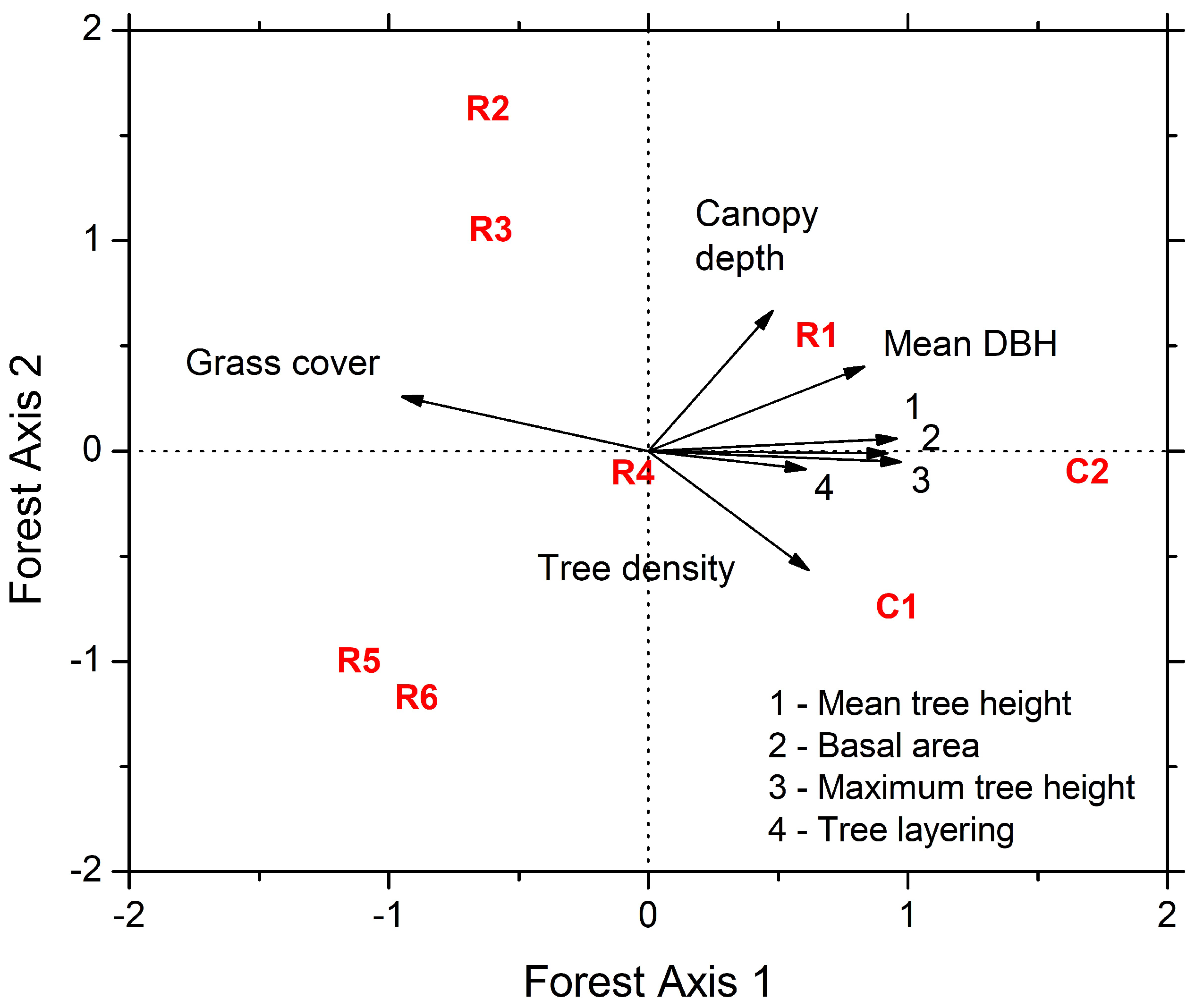
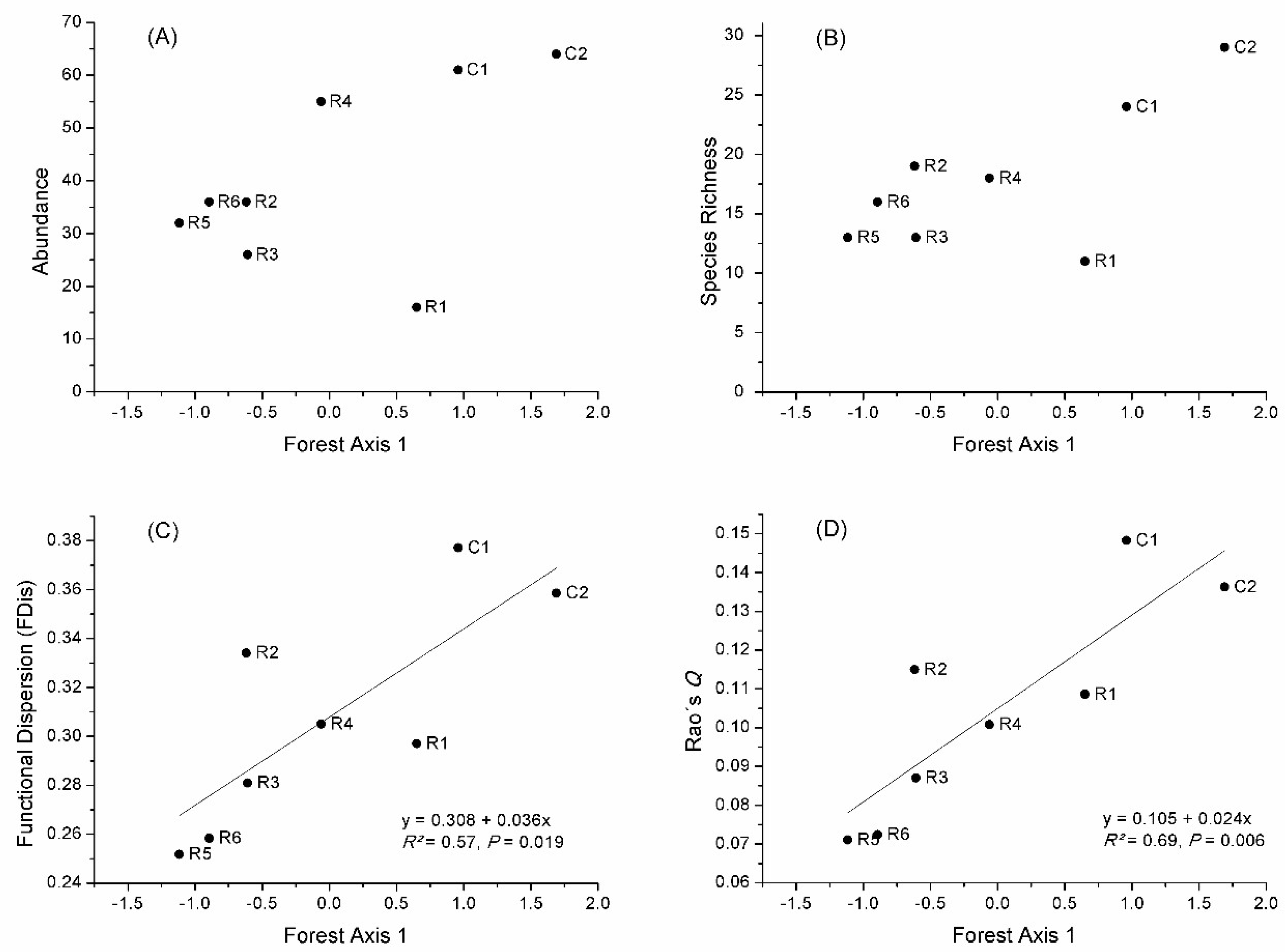
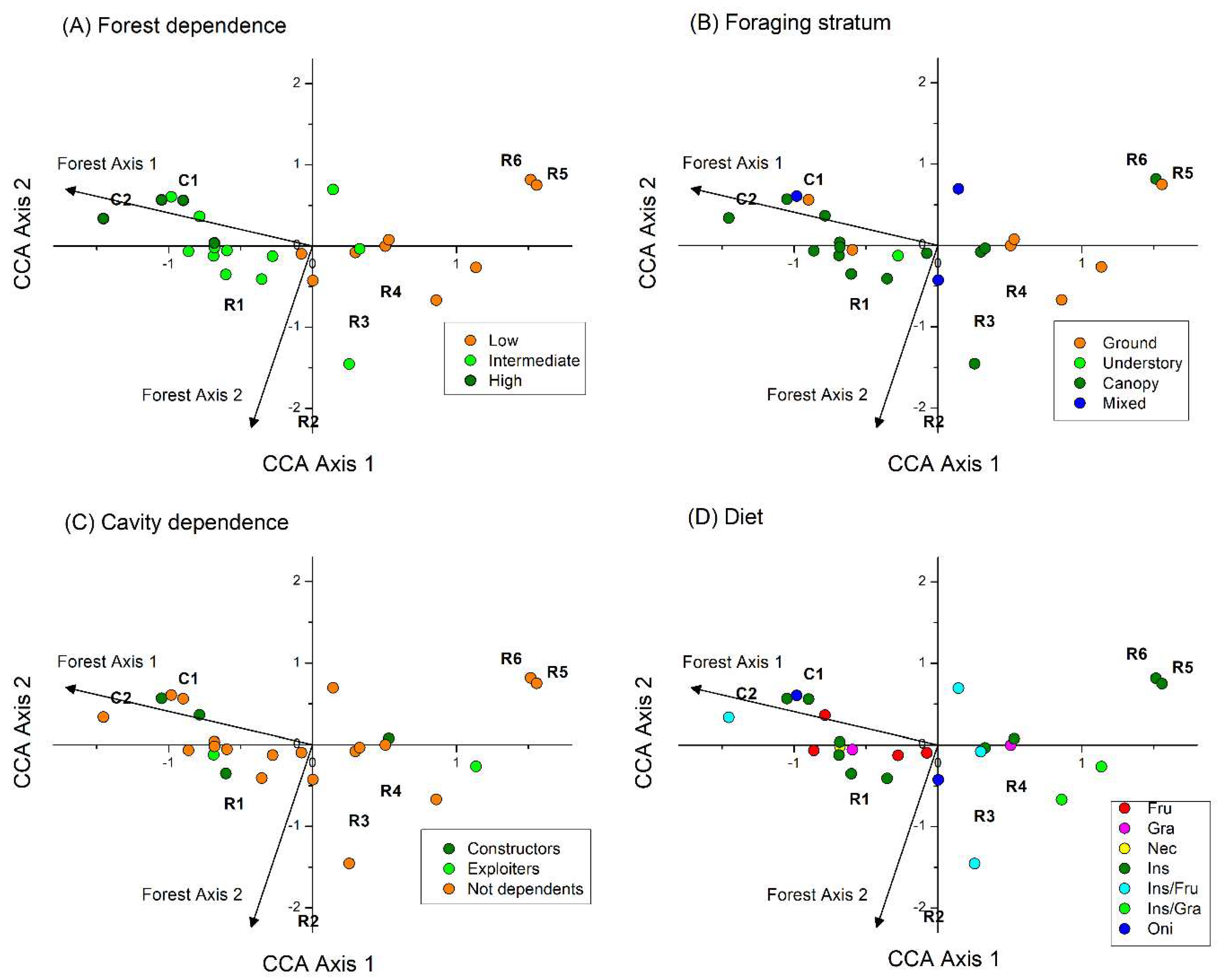
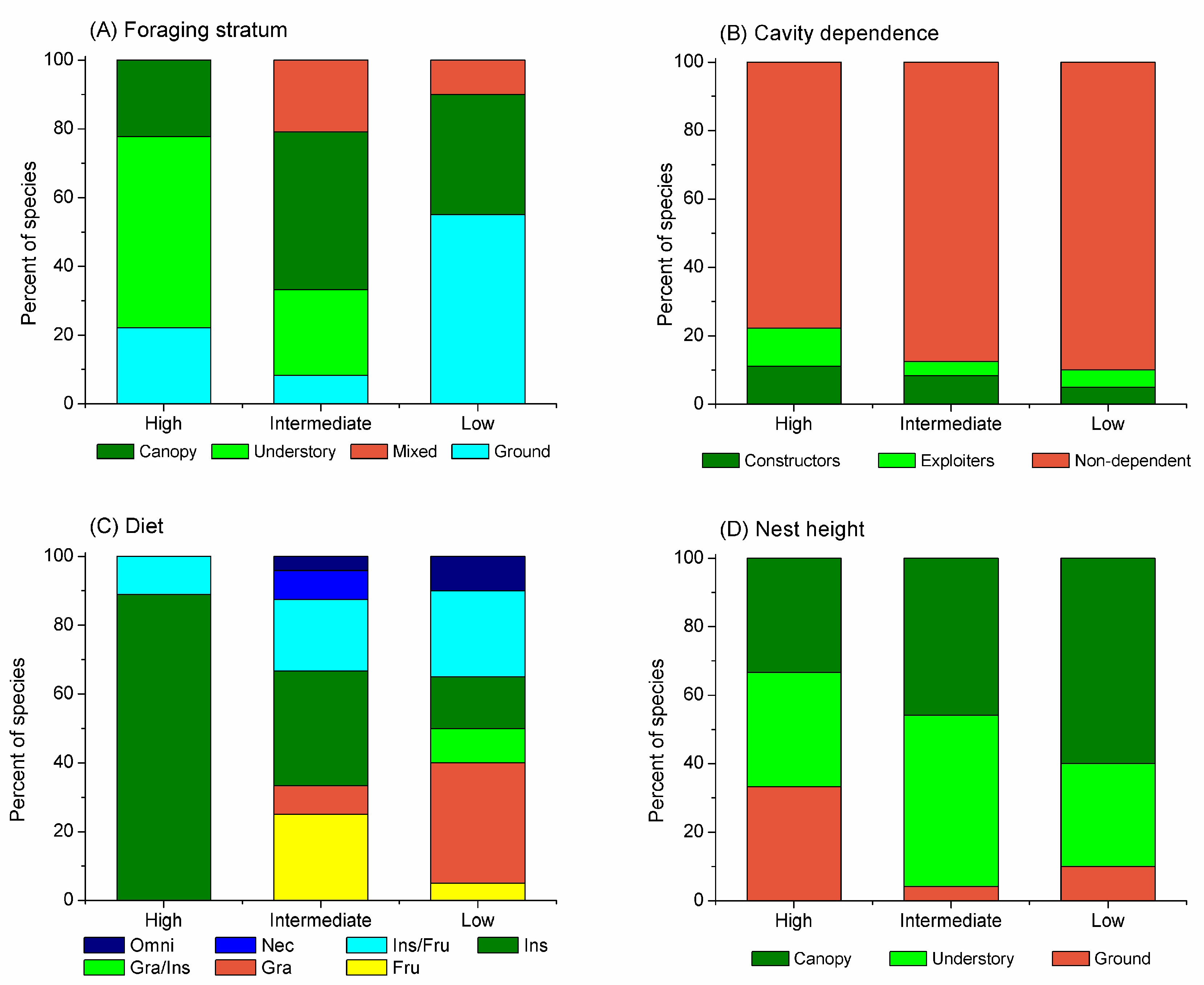
Monitoring wildlife responses is essential to assess restoration projects. Birds are widely used as bioindicators of ecosystem restoration, but most studies use only taxonomic descriptors to compare categories of reference and restoring sites. Here, we used forest structure as a continuous predictor variable to evaluate avifaunal taxonomic and functional indicators in riparian forest reference and restoration sites on southeastern Brazil. Reference sites were riparian forest remnants, and restoration sites were pasture before seedling reintroduction. Forest structure variables (mean tree height, canopy depth, mean diameter at breast height, basal area, tree layering, tree density, and grass cover) were reduced into two axes using a Principal Component Analysis (PCA), Forest Axis 1 (tree biomass vs. grass cover) and Forest Axis 2 (canopy depth vs. tree density). Bird species were classified in relation to five functional categories (i.e., diet, foraging stratum, nest height, cavity dependence for nesting, and forest dependence). Forest Axis 1 influenced the functional diversity of bird assemblages and the relative abundance within levels of each functional category (except for nest height). The relative abundance of all functional categories combined was also affected by Forest Axis 2. Therefore, forest structure affected the predominant functional traits of bird species in riparian sites under restoration. Sites with higher tree biomass were the richest, with canopy birds that were insectivores and frugivores of high forest dependence, whereas more open sites were associated with birds of low forest dependence and ground-foraging insectivores. Forest structures of similar-aged sites were strongly variable, due to natural and anthropic disturbances, so restoration age was a poor indicator of forest development. These unpredictable disturbances can change the development of sites under restoration, so that forest structure can be a better descriptor of the trajectory of these ecosystems.
Keywords: avifauna; forest dependence; functional diversity; monitoring; riparian forests avifauna; forest dependence; functional diversity; monitoring; riparian forests