Communication

Eco-Friendly Synthesis of Perimidine Derivatives Using Recyclable Fe3O4@Nano-Cellulose/Ti(IV)

by
Ghaffar Pasdar
1,2,*,
Abdolhamid Bamoniri
1,* and
Bi Bi Fatemeh Mirjalili
3
1
Department of Chemistry, College of Science, University of Kashan, Kashan P.O. Box 87317-51167, Iran
2
Institute of Organic Chemistry, Johannes Kepler University Linz, 4040 Linz, Austria
3
Department of Chemistry, College of Science, Yazd University, Yazd P.O. Box 89195-741, Iran
*
Authors to whom correspondence should be addressed.
Molbank 2026, 2026(3), M2181; https://doi.org/10.3390/M2181
Submission received: 27 April 2026 / Revised: 12 May 2026 / Accepted: 15 May 2026 / Published: 21 May 2026
(This article belongs to the Collection Heterocycle Reactions)

Abstract

A novel bio-capable method has been implemented for the synthesis of newly substituted derivatives of perimidine using Fe3O4@nano-cellulose/Ti(IV) as a magnetic, sustainable, and eco-friendly Lewis acid nanocatalyst. The catalyst was thoroughly characterized by XRD, FESEM, and TGA analyses, confirming its crystalline structure, uniform nanoscale morphology, and high thermal stability. The reaction proceeded smoothly in eco-friendly solvents, providing outstanding yields under mild and rapid conditions, especially with ultrasonics. The catalyst, derived from renewable materials, exhibited remarkable activity, easy magnetic recovery, and excellent reusability over several cycles without significant loss of efficiency. Spectral characterization, IR, 1H NMR, 13C NMR, 19F NMR, and HRMS analyses verified that perimidine derivatives were synthesized properly. This sustainable and efficient approach demonstrates the prospect of green Lewis acid nanocatalysts for the sustainable synthesis of valuable heterocyclic compounds.

1. Introduction

Heterocycles containing nitrogen are fundamental building blocks for applications in diverse essential natural and synthetic compounds [1,2,3]. In between, perimidines stand out due to their specific electronic and aromatic properties. The unique arrangement of π-excessive and π-deficient systems within their tricyclic framework, combined with the presence of nitrogen atoms bearing lone pairs, allows for significant electron delocalization into the naphthalene ring [4]. This specific electronic configuration enables these synthetic products to show a different biological specification, making them valuable in fields such as medicine. It exhibits potent properties against several diseases with demonstrated antitumor [5], antimicrobial [6], antifungal [7], antiulcer [8], antioxidant [9], and anti-inflammatory [10] properties, and it acts as a selective antagonist for corticotropin-releasing factor (CRF) receptors [10]. Numerous strategies have been developed for synthesizing perimidine derivatives [7,11,12]. While these methods offer certain benefits, they are often accompanied by drawbacks such as suboptimal yields, prolonged reaction times, and complex purification processes. Furthermore, the use of environmentally harmful and non-recyclable catalysts limits their practical utility [13,14]. Recently, remarkable advances have been made in the green chemistry-based synthesis of heterocyclic compounds [15,16,17]. Notably, the application of nanocatalysts in the bio-based synthesis of heterocycles has garnered substantial attention, providing sustainable and efficient alternatives to conventional methods. Some of these studies have demonstrated promising results under green protocols, achieving high efficiency within shorter reaction times. To achieve these goals, the use of metal nanocatalysts supported on bio-based materials has been successfully reported [18,19,20]. The use of titanium (IV) as a Lewis acid supported on various bases, such as silica, has been reported for the synthesis of this heterocyclic compound. Specifically, it has been employed in the synthesis of dihydropyrimidones via the Biginelli condensation reaction [21] and in the preparation of 2,4,5-tetrasubstituted imidazoles [22]. In this research, we introduce a new green method for the synthesis of various substituted perimidine derivatives using Fe3O4@nano-cellulose/Ti (IV) as an eco-friendly magnetically recoverable nanocatalyst.

2. Results and Discussion

The Fe3O4@NCs/Ti(IV)-catalyzed condensation of 1,8-diaminonaphthalene with a series of aromatic aldehydes under optimized conditions efficiently afforded the corresponding 2,3-dihydro-1H-perimidine derivatives. The reactions proceeded smoothly in ethanol under either thermal or ultrasonic conditions, providing the desired products in good to excellent yields. Notably, ultrasonic irradiation significantly enhanced the reaction rate and yield, reducing the reaction time. All synthesized derivatives were isolated by simple work-up and purified when necessary, and their structures were fully confirmed by FT-IR, 1H NMR, 13C NMR, (19F NMR where applicable), and HRMS analyses.

2.1. Structural and Morphological Characterization of Fe3O4@NCs/Ti(IV) Nanocatalysts

The structural, morphological, magnetic, and thermal properties of the Fe3O4@NCs/Ti(IV) nanocatalyst were investigated through a combination of advanced techniques, including FT-IR spectroscopy, FESEM, XRD, VSM, and TGA analyses.

2.2. FT-IR Analysis

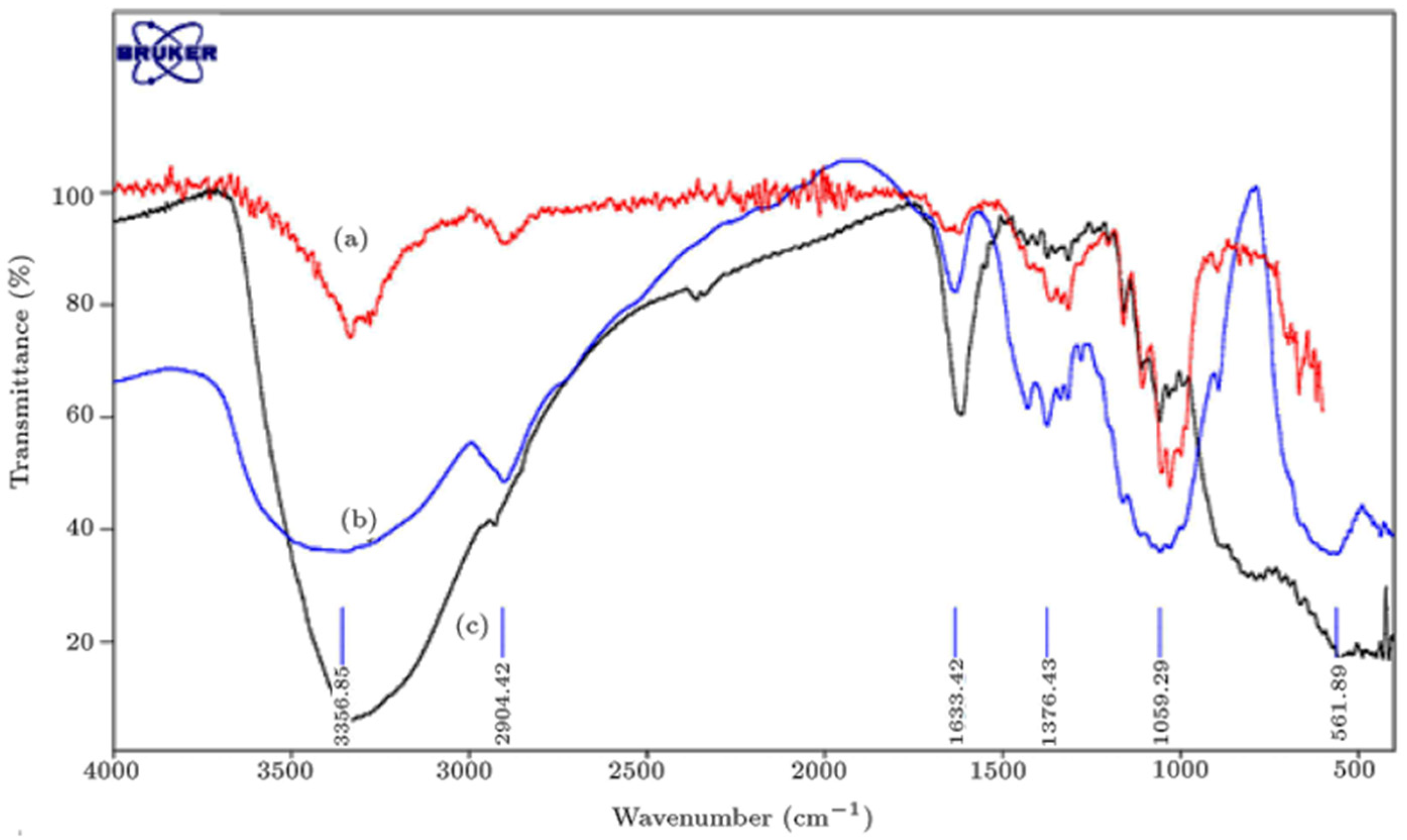
The FT-IR spectra of nano-cellulose, Fe3O4@NCs, and Fe3O4@NCs/Ti (IV) (Figure 1) confirm successful composite formation. Nano-cellulose shows characteristic O-H stretching at 3337 cm−1 and C-O stretching at 1055 cm−1 and 1108 cm−1. Fe3O4@NCs exhibits additional Fe-O stretching bands at 586 cm−1 and 634 cm−1, indicating Fe3O4 nanoparticles are coated with nano-cellulose. For Fe3O4@NCs/Ti (IV), peaks at 794 cm−1 (C-O-Ti stretching) and 406 cm−1 (O-Ti-O bending) confirm Ti bonding to the cellulosic shell, which shifts Fe-O stretching vibrations to lower wavenumbers (558 cm−1 and 606 cm−1).

2.3. FESEM Analysis

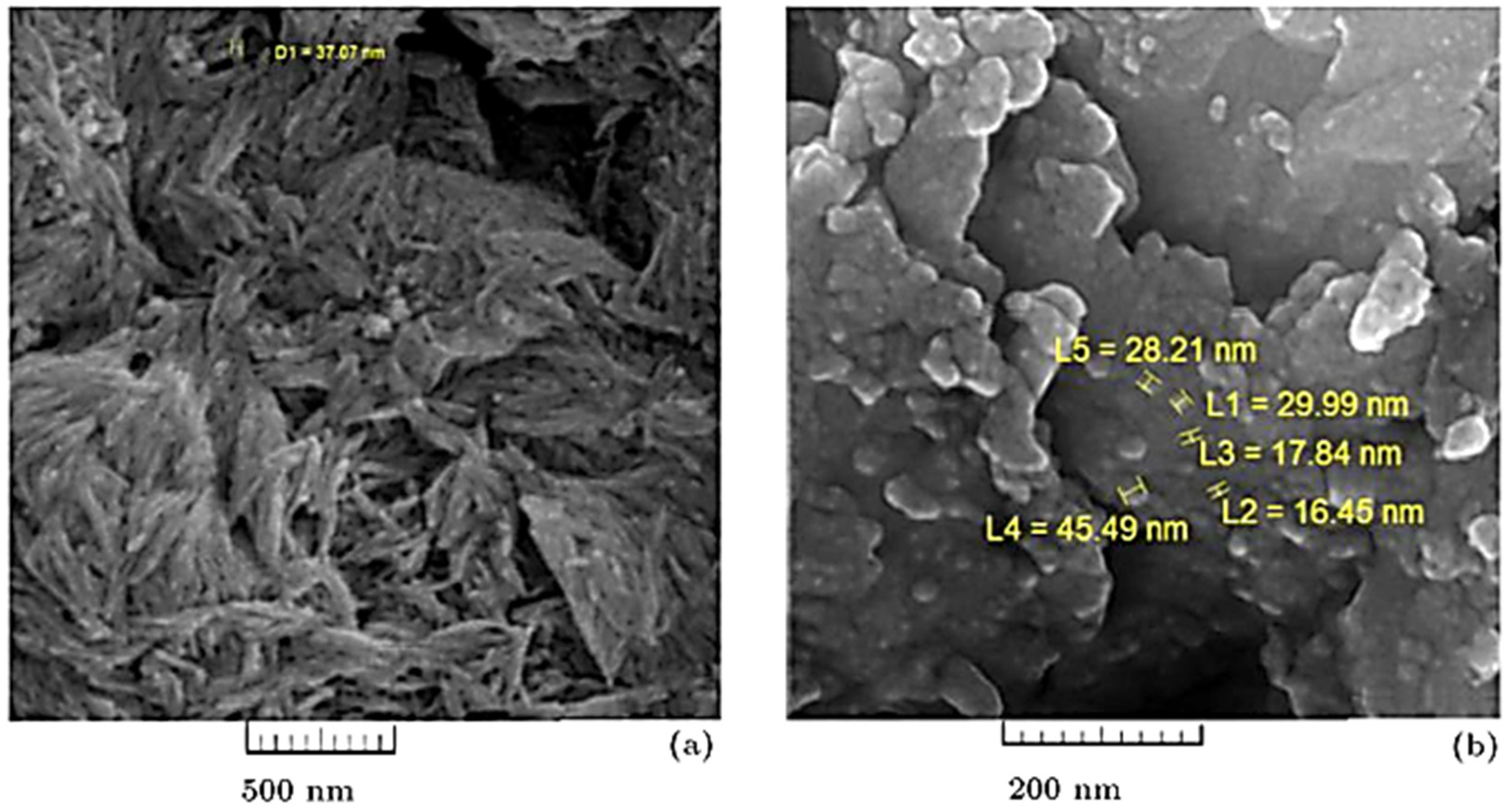
The morphology and particle size of nano-cellulose and Fe3O4@NCs/Ti (IV) were investigated using field emission scanning electron microscopy (FESEM). The analysis revealed that both nano-cellulose and Fe3O4@NCs/Ti(IV) exhibit uniform and well-defined structures with particle sizes consistently below 50 nm. The FESEM images (Figure 2) confirm the successful incorporation of Ti(IV) into the nano-cellulose-coated Fe3O4 nanoparticles, maintaining their nanoscale dimensions and uniform distribution. This indicates the effectiveness of the synthesis process in producing homogeneous composite material.

2.4. XRD Analysis

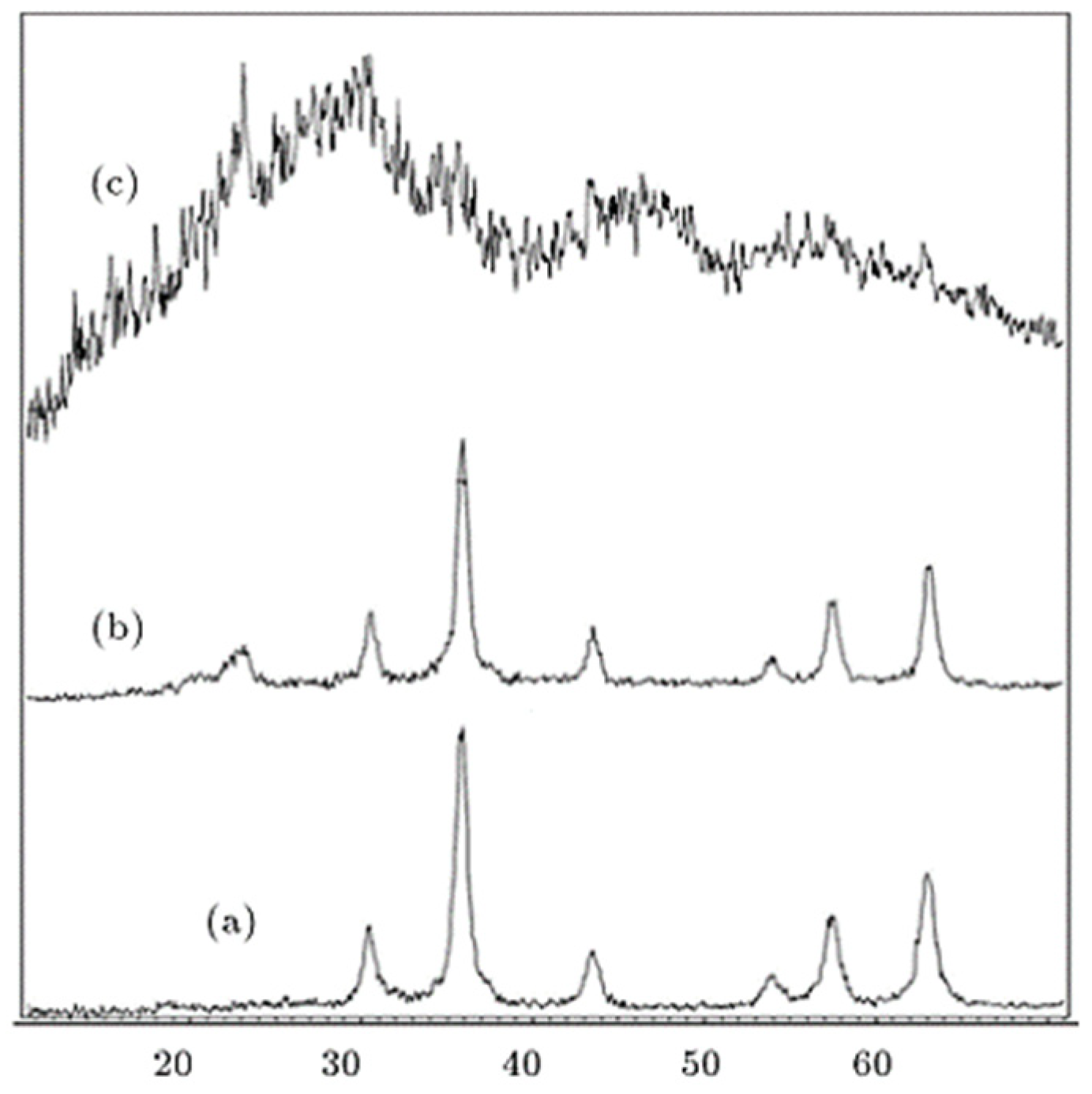
High-angle XRD analysis (Figure 3) was used to study the structural and phase purity of Fe3O4, Fe3O4@NCs, and Fe3O4NCs/Ti(IV). The XRD pattern of Fe3O4 showed characteristic peaks consistent with its cubic spinel structure. Similar peaks were observed for Fe3O4@NCs, confirming the preservation of the ferrite core after cellulose coating, along with a new peak at 2θ = 23.04°, attributed to the cellulose layer. The XRD pattern of Fe3O4@NCs/Ti(IV) revealed an amorphous structure, with weak peaks corresponding to Fe3O cores and additional peaks in the range of 2θ = 21–23°, indicating the presence of cellulose and Ti bonding to the shell.

2.5. Magnetic Properties Analysis

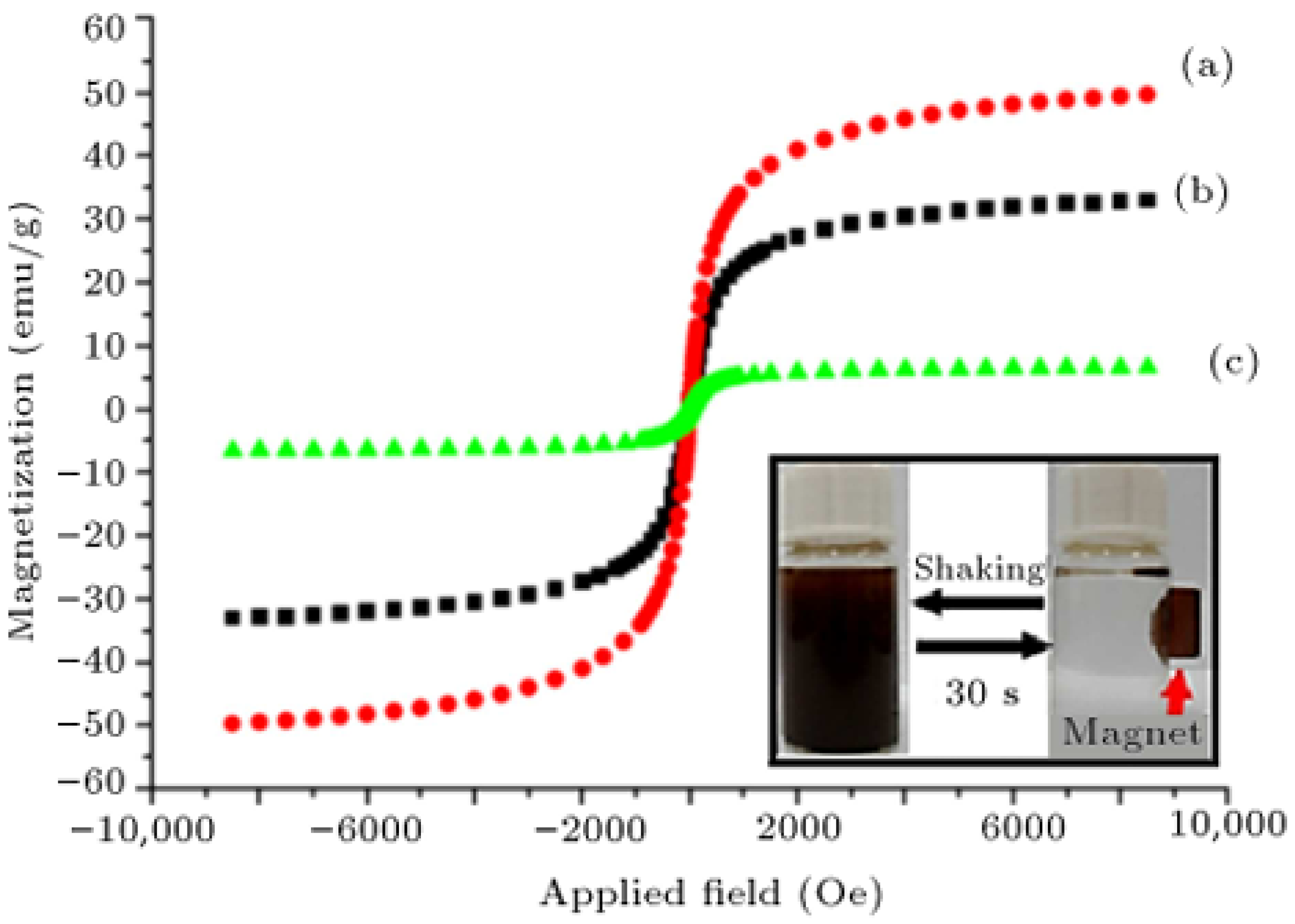
The magnetic behavior of the catalyst was examined by vibrating sample magnetometry (VSM) measurements carried out at 300 K (Figure 4). The absence of a hysteresis loop, remanence, and coercivity confirms the superparamagnetic behavior of all samples at room temperature. The saturation magnetization values were 49.177 emu/g for Fe3O4, 33.057 emu/g for Fe3O4@NCs, and 6.062 emu/g for Fe3O4@NCs/Ti(IV), indicating a reduction in magnetic properties due to the nano-cellulose and Ti(IV) coating.

2.6. Thermal Stability Analysis

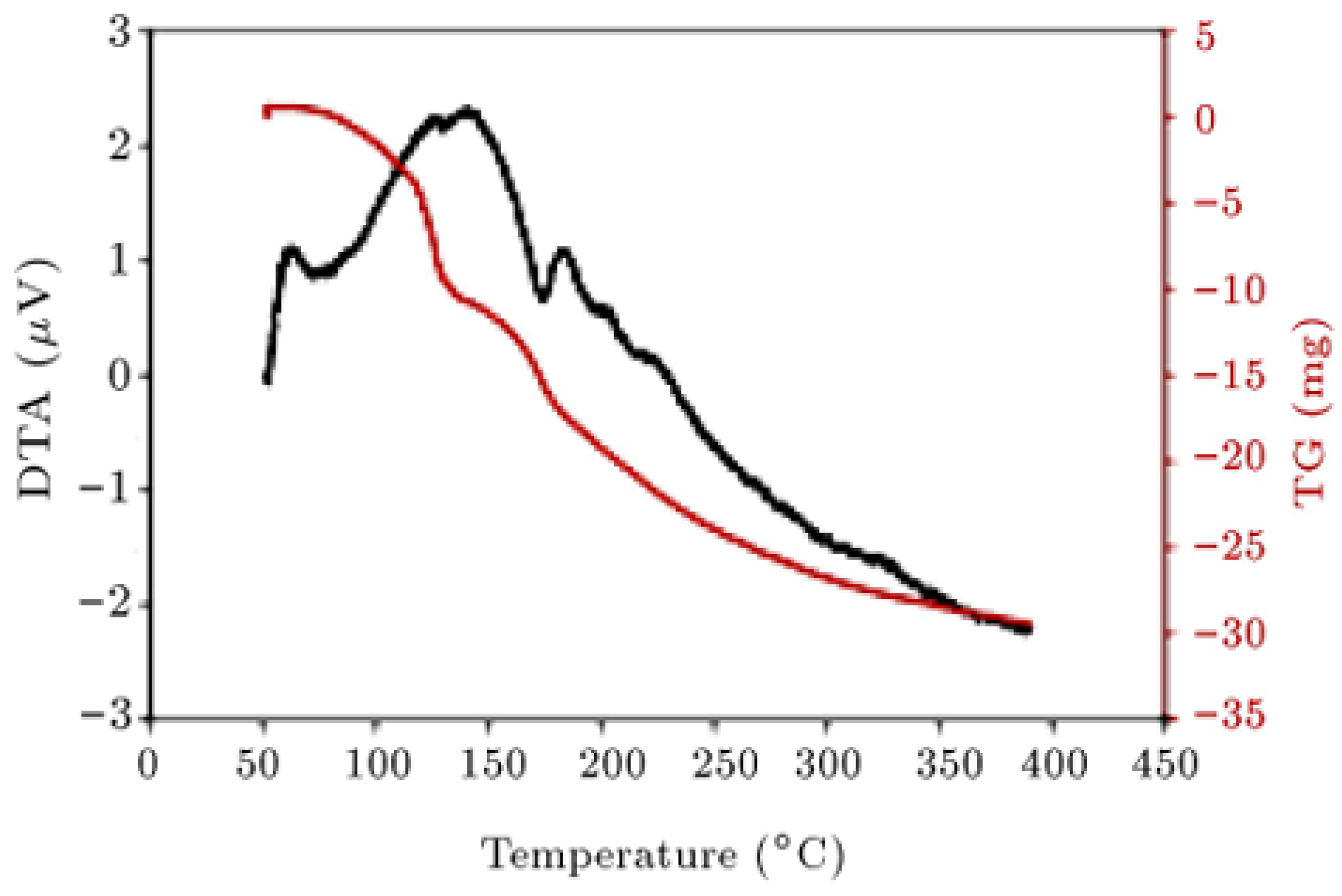
The thermal stability of Fe3O4@NCs/Ti(IV) was examined using a thermogravimetric analysis (TGA) across the temperature range of 50–372 °C (Figure 5). The curve shows four distinct stages of mass loss. The first weight reduction of 2.14%, occurring between 50 °C and 100 °C, is associated with the desorption of physically adsorbed water molecules from the catalyst surface.

2.7. Catalyst Activity Evaluation and Scope

Following the characterization of Fe3O4@NCs/Ti(IV), its catalytic activity was tested in the synthesis of 2,3-dihydro -1H-perimidine derivatives. To optimize the reaction conditions, a model reaction between 1,8-diaminonaphthalene and benzaldehyde was conducted (Table 1).
As shown in entry 13 (Table 1), the reaction between 1,8-diaminonaphthalene and benzaldehyde in the presence of Fe3O4@NCs/Ti (IV) under ultrasonic conditions resulted in a significantly improved yield. Ultrasonic irradiation promotes the reaction via acoustic cavitation, generating localized high temperatures and pressures that enhance catalyst–substrate interactions and accelerate the reaction rate. This approach reduces reaction time and improves efficiency, providing a greener and more energy-efficient pathway for synthesizing 2,3-dihydro-2-phenyl-1H-perimidine derivatives.
Table 2 highlights the excellent performance of Fe3O4@NCs/Ti (IV), which produced high yields of products under environmentally friendly conditions compared to other catalysts. The optimized reaction parameters were successfully applied to synthesize a variety of 2,3-dihydro-2-phenyl-1H-perimidine derivatives with the outcomes summarized in Table 3.
The recyclability of the Fe3O4@NCs/Ti(IV) catalyst was investigated using the model reaction. Benefiting from its inherent magnetic properties, the catalyst was easily isolated from the reaction medium by applying an external magnet, followed by simple ethanol washing and air drying. This efficient magnetic recovery underscores its suitability for environmentally friendly, sustainable, and cost-effective catalytic processes.
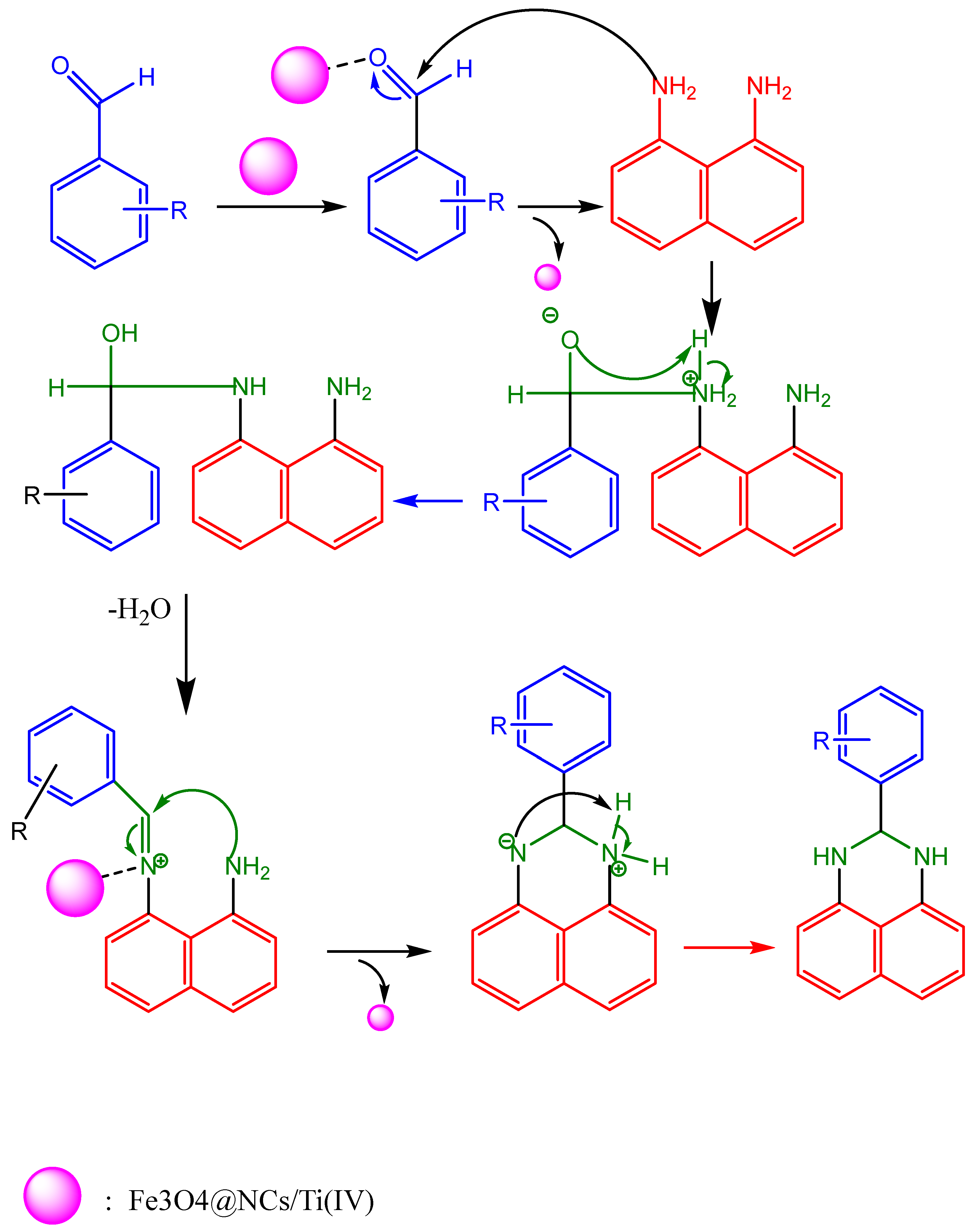
Under optimized conditions, aromatic aldehydes with electron-donating and electron-withdrawing groups were effectively converted into products with high yields. In the first step of the mechanism, the hydrogen from the catalyst forms a bond with the lone pair of oxygen in the aldehyde, activating the C=O bond for nucleophilic attack. In the next step, 1,8-diaminonaphthalene attacks the carbonyl group, leading to the displacement of a hydrogen atom and the loss of a water molecule. This results in the formation of the desired 2,3-dihydroperimidine (Scheme 1).
The reusability of Fe3O4@NCs/Ti(IV) highlights its value in sustainable catalysis, offering both environmental and economic benefits. The catalyst was recovered by dissolving the reaction mixture in a minimal amount of hot ethanol, followed by separation using filtration and an external magnetic field. After washing with ethanol (EtOH) and drying at ambient temperature, it was reused in subsequent reactions.
The catalyst maintained its efficiency in the synthesis of 1,4-dihydroperimidine derivatives over multiple cycles. As shown in Figure 6, these results confirm its good recyclability and demonstrate the robustness and sustainability of the catalytic system.

3. Materials and Methods

All chemicals and solvents utilized in this research work were procured from Merck, BLD Farm, and Thermo Fisher Scientific and were also used as received without further purification.
In order to investigate the surface morphology of the synthesized materials, the surface area of the catalyst was examined using FESEM (MIRA3 TESCAN, Kashan, Iran), while the crystalline structure was analyzed through XRD measurements performed on a PANalytical X’Pert PRO diffractometer (Yazd, Iran) with Cu-Kα radiation. Due to the importance of thermal stability, the TGA method on a Mettler Toledo TGA/DSC 1 system (Kashan, Iran) was applied.
Nuclear magnetic resonance (NMR) spectra, consisting of 1H NMR and 13C NMR, were recorded on a Bruker Avance III (Linz, Austria) 300 and 700 MHz spectrometer with DMSO-d6 as solvent and also TMS as the internal standard. High-resolution mass spectra (HRMS, Linz Austria) were obtained using a Thermo Fisher Scientific LTQ Orbitrap XL (Linz, Austria) equipped with an Ion Max API Source, with analyses conducted in both negative and positive ionization modes.
Fourier-transform infrared (FT-IR) spectra were measured. IR spectra were obtained using a Bruker Alpha II FTIR spectrometer (Yazd, Iran) with a diamond ATR module. Melting points (MP) were determined using a Büchi M-560 apparatus (Kashan, Iran) and are reported in degrees Celsius (°C). Ultrasonic irradiations were carried out using an Elmasonic S 40H ultrasonic device (Yazd, Iran).

3.1. Preparation of Catalyst

Under a fume hood, TiCl4 (3.0 mL) was added dropwise to a suspension of Fe3O4@NCs (0.30 g) in chloroform (15 mL). The reaction mixture was stirred at room temperature for 2 h, then filtered and washed repeatedly with chloroform to remove unreacted species. The resulting solid was dried at room temperature to afford Fe3O4@NCs/Ti(IV) (0.38 g).

3.2. General Procedure for the Synthesis of 2,3-Dihydro-1H-perimidine

A reaction mixture consisting of 1,8-diaminonaphthalene (1 mmol), various aromatic aldehydes (1 mmol), Fe3O4@nano-cellulose/Ti (IV) (0.03 g), and ethanol (8 mL) was heated under reflux or subjected to ultrasonic irradiation at 70 °C. The progress of the reaction was monitored by thin-layer chromatography (TLC) using a solvent system of ethyl acetate and n-heptane (1:3). After the reaction was complete, the catalyst was efficiently separated using an external magnet and stored for reuse in subsequent cycles. The reaction mixture was cooled to room temperature and poured into chilled ethanol to precipitate the product. The solid was collected by filtration, washed with hot ethanol, and recrystallized from ethanol to afford the desired compound in excellent yield. Certain derivatives required additional purification by column chromatography on silica gel (mesh size 25) using ethyl acetate/n-heptane as eluents or by preparative TLC under the same solvent system to ensure high purity.

3.3. Spectroscopic Data of Products

3.3.1. 1a: 2-Phenyl-2,3-dihydro-1H-perimidine

White Solid, Melting point: 300 °C, FT-IR (ATR)/ῡ(cm−1): 3343–3375, 3043, 2921, 1599, 1H NMR (300 MHz, DMSO-d6)/δ ppm: 5.38 (1H, s, CH), 6.47 (2H, d, J = 6.5 Hz, CH), 6.75 (2H, s, NH), 6.97 (2H, d, J = 7.0 Hz, CH), 7.14 (2H, t, J = 7.7 Hz, CH), 7.40 (3H, m, CH), 7.60 (2H, m, CH). 13C NMR (75 MHz, DMSO-d6, 298 K)/δ ppm: 67, 104, 112, 115, 127.2, 128.3, 128.6, 128.8, 134, 142, 143. HRMS for C17H14N2[M + H]+: m/z: 247.123, found: 247.1238.

3.3.2. 1b: 2-(3,4,5-Trifluorophenyl)-2,3-dihydro-1H-perimidine

Dark yellow solid, Melting point: 176–179 °C, FT-IR (ATR)/ῡ (cm−1): 3440, 3073, 2864, 1572, 1H NMR (300 MHz, DMSO-d6)/δ ppm: 5.42 (1H, s, CH), 6.50 (2H, d, J = 7.2 Hz, CH), 6.93 (2H, s, NH), 6.98 (2H, d, J = 8.4 Hz, CH), 7.14 (2H, t, J = 7.6 Hz, CH), 7.40 (2H, m, CH). 13C NMR (75 MHz, DMSO-d6, 298 K)/δ ppm: 64, 105, 112.4, 112.6, 112.7, 112.8, 116, 127, 134, 142, 19F NMR (DMSO, 298 K)/δ ppm: −161, −135.09, −135.01. HRMS for C17H11F3N2[M + H]+: m/z: 301.0947 found: 301.0947.

3.3.3. 1c: 2-(4-Fluorophenyl)-2,3-dihydro-1H-perimidine

Dark yellow solid, Melting point: 182–189 °C, FT-IR (ATR)/ῡ (cm−1): 3440, 3076, 2849, 15,742, 1H NMR (300 MHz, DMSO-d6)/δ ppm: 5.38 (1H, s, CH), 6.49 (2H, d, J = 8.1 Hz, CH), 6.76 (2H, s, NH), 6.98 (2H, d, J = 8.4 Hz, CH), 7.14 (2H, t, J = 7.3Hz, CH), 7.2 (2H, t, J = 8.7 Hz, CH), 7.62 (2H, m, CH). 13C NMR (75 MHz, DMSO-d6, 298 K)/δ ppm: 66, 104, 112, 115.2, 115.5, 127, 130.3, 130.4, 134, 138.5, 143, 161, 164, 19F NMR (DMSO-d6, 298 K)/δ ppm: −113.8. HRMS for C17H13FN2[M + H]+: m/z: 265.1136 found: 265.1139.

3.3.4. 1d: 2-(3-Methyl-5-(trifluoromethyl)phenyl)-2,3-dihydro-1H-perimidine

Pink solid, Melting point: 182–184 °C, FT-IR (ATR)/ῡ (cm−1): 3444, 3073, 2865, 1582, 1168, 1H NMR (300 MHz, DMSO-d6)/δ ppm: 5.62 (1H, s, CH), 6.50 (2H, d, J = 7.2 Hz, CH), 6.93 (2H, s, NH), 7.02 (4H, d, J = 7.6 Hz, CH), 7.2 (2H, t, J = 7.6Hz, CH), 8.14 (1H, s, CH), 8.28 (2H, s, CH), 13C NMR (75 MHz, DMSO-d6, 298 K)/δ ppm: 19F NMR (DMSO-d6, 298 K)/δ ppm: −60.18, HRMS for C19H15F6N2[M + H]+: m/z: 383.0977 found: 383.0979.

3.3.5. 1e: 2-(Anthracen-9-yl)-2,3-dihydro-1H-perimidine

Yellow Solid, Melting point: 258–261 °C, FT-IR (ATR)/ῡ (cm−1): 3350, 3043, 2921, 1596, 1383, 1H NMR (300 MHz, DMSO-d6)/δ ppm: 6.50 (2H, d, J = 7.5 Hz, CH), 6.91 (1H, s, CH), 7.03 (2H, s, NH), 7.08 (2H, d, J = 8.1 Hz, CH), 7.19 (2H, t, J = 7.7 Hz, CH), 7.51 (4H, m, CH), 8.10 (2H, m, CH), 8.70 (1H, s, CH). 13C NMR (75 MHz, DMSO-d6, 298 K)/δ ppm: 63, 104, 113, 115, 125, 127, 130, 135, 144. HRMS for C25H18N2[M + H]+: m/z: 347.1543, found: 347.1544.

3.3.6. 1f: 2-([1,1′-Biphenyl]-4-yl)-2,3-dihydro-1H-perimidine

Pink Solid, Melting point: 191–194 °C, FT-IR (ATR)/ῡ (cm−1): 3378, 2845, 1593, 1396, 1H NMR (300 MHz, DMSO-d6)/δ ppm: 5.42 (1H, s, CH), 6.50 (2H, d, J = 7.21 Hz, CH), 6.83 (2H, s, NH), 6.98 (2H, d, J = 8.0 Hz, CH), 7.14 (2H, t, J = 7.6 Hz, CH), 7.36 (1H, m, CH), 7.46 (2H, t, J = 7.5 Hz, CH), 7.67 (6H, m, CH). 13C NMR (75 MHz, DMSO, 298 K)/δ ppm: 66, 104, 112, 115, 127.0, 127.2, 127.3, 128, 129, 134, 140.3, 140.9, 141, 143, HRMS for C23H18N2[M + H]+: m/z: 323.1543, found: 323.1543.

3.3.7. 1g: 2-(Pyren-1-yl)-2,3-dihydro-1H-perimidine

Red Solid, Melting point: 242–245 °C, FT-IR (ATR)/ῡ (cm−1): 3429, 2864, 1610, 1397, 1H NMR (300 MHz, DMSO-d6)/δ ppm: 6.34 (1H, s, CH), 6.58 (2H, d, J = 7.9 Hz, CH), 7.03 (2H, s, NH), 7.08 (2H, d, J = 7.1 Hz, CH), 7.21 (2H, t, J = 7.6 Hz, CH), 8.08. (2H, t, J = 7.7 Hz, CH), 8.21 (7H, m, CH), 8.96 (1H, d, CH). 13C NMR (75 MHz, DMSO-d6, 298 K)/δ ppm: 66, 104, 113, 115, 124.4, 124.7, 125.0, 125.1, 125,7, 125.8, 126.5, 126.7, 127.3, 127.5, 127.6, 127.8, 128, 129, 130, 131.2, 131.6, 134, 135, 144. HRMS for C27H18N2[M + H]+: m/z: 369.1386, found: 369.1386.

3.3.8. 1h: 2-(Naphthalen-2-yl)-2,3-dihydro-1H-perimidine

White Solid, Melting point: 202–205 °C, FT-IR (ATR)/ῡ (cm−1): 3437, 2847, 1601, 1398, 1H NMR (300 MHz, DMSO:d6)/δ ppm: 5.52 (1H, s, CH), 6.50 (2H, d, J = 7.5 Hz, CH), 6.83 (2H, s, NH), 6.99 (2H, d, J = 8.0 Hz, CH), 7.14 (2H, t, J = 7.7 Hz, CH), 7.53 (2H, m, CH), 7.76 (1H, m, CH), 7.93 (3H, m, CH), 8.11 (1H, s, CH). 13C NMR (75 MHz, DMSO:d6, 298 K)/δ ppm: 67, 104, 112, 112, 115, 126.2, 126.3, 127.3, 127.4, 127.3, 128.0, 128.3, 128.4, 133.0, 133.4, 134, 139, 143. HRMS for C21H16N2[M + H]+: m/z: 297.1386, found: 297.1385.

3.3.9. 1i: 2-(Perfluorophenyl)-2,3-dihydro-1H-perimidine

Dark yellow solid, Melting point: 163–166 °C, FT-IR (ATR)/ῡ (cm−1): 3431, 3083, 2673, 1608, 1582, 1H NMR (300 MHz, DMSO-d6)/δ ppm: 5.91 (1H, s, CH), 6.50 (2H, m, CH), 6.95 (2H, s, NH), 7.09 (2H, d, J = 7.8 Hz, CH), 7.21 (2H, t, J = 7.5 Hz, CH). 13C NMR (75 MHz, DMSO-d6, 298 K)/δ ppm: 58, 104, 112.4, 112, 116, 127, 134, 142, 19F NMR (DMSO-d6, 298 K)/δ ppm: −162 (2F), −154 (1F), −1431 (2F). HRMS for C17H9F5N2[M + H]+: m/z: 337.0759, found: 337.0759.

3.3.10. 1j: 2-(4-Methylnaphthalen-1-yl)-2,3-dihydro-1H-perimidine

Yellow dark, Melting point: 174–177 °C, FT-IR (ATR)/ῡ (cm−1): 3414, 3053, 2802, 1609, 144, 1H NMR (300 MHz, DMSO:d6)/δ ppm: 3.07 (3H, s, CH3), 5.98 (1H, s, CH), 6.50 (2H, m, CH), 6.81 (2H, s, NH), 7.07 (2H, m, CH), 7.20 (2H, t, J = 7.5 Hz, CH), 7.44 (1H, m, CH), 7.51 (2H, m, CH), 7.72 (1H, d, J = 7.23 Hz, CH), 8.12 (1H, m, CH), 8.76 (1H, d, J = 7.91 Hz, CH), 13C NMR (75 MHz, DMSO-d6, 298 K)/δ ppm: 19, 67, 104, 112, 115, 124, 125, 126.2, 126.3, 126.3, 126.9, 127,31, 133, 134.4, 134.9. 144. HRMS for C22H18N2[M + H]+: m/z: 309.1386, found: 309.1389.

3.3.11. 1k: 2-(4-Bromophenyl)-2,3-dihydro-1H-perimidine

Brown solid, Melting point: 141–144 °C, FT-IR (ATR)/ῡ (cm−1): 3443, 3079, 2856, 15,842, 1H NMR (300 MHz, DMSO-d6)/δ ppm: 5.36 (1H, s, CH), 6.48 (2H, d, J = 7.27 Hz, CH), 6.74 (2H, s, NH), 6.98 (2H, d, J = 7.87 Hz, CH), 7.13 (2H, t, J = 7.67 Hz, CH), 7.53 (2H, d, J = 8.47 Hz, CH), 7.62 (2H, d, J = 8.56 Hz, CH). 13C NMR (75 MHz, DMSO-d6, 298 K)/δ ppm: 65, 104, 112, 115, 121, 127, 130, 131, 134, 141, 143, HRMS for C17H13BrN2[M + H]+: m/z: 325.0325, found: 325.0327.

3.3.12. 1l: 2-(4-Ethynylphenyl)-2,3-dihydro-1H-perimidine

Yellow solid, Melting point: 169–172 °C, FT-IR (ATR)/ῡ (cm−1): 3444, 3063, 2842, 1563, 1H NMR (300 MHz, DMSO-d6)/δ ppm: 4.21 (1H, s, CH), 5.38 (1H, s, CH), 6.48 (2H, d, J = 7.2 Hz, CH), 6.80 (2H, s, NH), 6.97 (2H, d, J = 7.8 Hz, CH), 7.12 (2H, t, J = 7.8 Hz, CH), 7.50 (2H, d, J = 8.2 Hz, CH), 7.58 (2H, d, J = 8.2 Hz, CH), 13C NMR (75 MHz, DMSO-d6, 298 K)/δ ppm: 66, 81, 83, 104, 112, 115, 122, 127, 128, 132, 134, 143.1, 143.2, HRMS for C19H14N2[M + H]+: m/z: 271.123, found: 271.1232.

3.3.13. 1e-A: 2-(Anthracen-9-yl)-2,3-dihydro-1H-perimidine

1H NMR (700 MHz, DMSO-d6)/δ ppm: 6.50 (2H, d, J = 7.5 Hz, CH), 6.91 (1H, s, CH), 7.03 (2H, s, NH), 7.08 (2H, d, J = 8.1 Hz, CH), 7.19 (2H, t, J = 7.7 Hz, CH), 7.51 (4H, m, CH), 8.14 (2H, m, CH), 8.56 (1H, m, CH), 8.73 (1H, s, CH), 9.48 (1H, m, CH).

3.3.14. 1e-B: 2-(Anthracen-9-yl)-2,3-dihydro-1H-perimidine

1H NMR (700 MHz, DMSO-d6:D2O)/δ ppm: 6.50 (2H, d, J = 7.5 Hz, CH), 6.91 (1H, s, CH), 7.08 (2H, d, J = 8.1 Hz, CH), 7.19 (2H, t, J = 7.7 Hz, CH), 7.51 (4H, m, CH), 8.14 (2H, m, CH), 8.56 (1H, m, CH), 8.73 (1H, s, CH), 9.48 (1H, m, CH).

4. Conclusions

In this study, we describe the development of a highly efficient and environmentally benign two-component reaction for the synthesis of novel 2,3-dihydroperimidine derivatives, utilizing Fe3O4@NCs/Ti(IV) as a robust, magnetically separable, eco-friendly, cost-effective, and innovative bio-based heterogeneous catalyst. The methodology is characterized by several remarkable features, including environmentally benign conditions, rapid reaction times, high product yields, simplified purification processes, and exceptional product quality. Moreover, this green approach enables the creation of new 2,3-dihydroperimidine derivatives, which demonstrates its versatility and promising potential for advancing sustainable synthetic chemistry.

Supplementary Materials

The following supporting information can be downloaded online: Figures S1–S52: FTIR spectra, 1H NMR spectra, 13C NMR spectra, 19F NMR spectra, and HRMS data of compounds 1a-1e-B.

Author Contributions

G.P.—investigation, data analysis, and writing; A.B.—supervision and writing (original draft, review, and editing); B.B.F.M.—supervision and writing. All authors have read and agreed to the published version of the manuscript.

Funding

The APC was funded by Johannes Kepler University Open Access Publishing Fund and the federal state of Upper Austria.

Data Availability Statement

Data are contained within the article and Supplementary Materials.

Acknowledgments

Supported by Johannes Kepler University Open Access Publishing Fund and the federal state of Upper Austria. The authors gratefully acknowledge the Research Council of Kashan University for financial support of this work. We also thank Mario Waser (Johannes Kepler University Linz, Austria) for assistance with NMR measurements and chemicals, and Himmelsbach (Institute of Analytical Chemistry, JKU Linz) for support with HRMS analysis.

Conflicts of Interest

The authors declare that there are no conflicts of interest regarding the publication of this manuscript.

Abbreviations

The following abbreviations are used in this manuscript:
NMRNuclear Magnetic Resonance
FT-IRFourier Transform Infrared Spectroscopy
BETBrunauer–Emmett–Teller (Surface Area Analysis Method)
FESEMField Emission Scanning Electron Microscopy
HRMSHigh-Resolution Mass Spectrometry
XRDX-ray Diffraction
VSMVibrating Sample Magnetometry (or Vibrating Sample Magnetometer)
TGAThermogravimetric Analysis

References

  1. Vitaku, E.; Smith, D.T.; Njardarson, J.T. Analysis of the structural diversity, substitution patterns, and frequency of nitrogen heterocycles among U.S. FDA approved pharmaceuticals. J. Med. Chem. 2014, 57, 10257–10274. [Google Scholar] [CrossRef] [PubMed]
  2. Zhou, Q.; Wang, M. Nitrogen-containing heterocycles: Versatile synthetic building blocks for pharmaceuticals and agrochemicals. Chem. Soc. Rev. 2012, 41, 3501–3520. [Google Scholar]
  3. Gaba, M.; Singh, S. Recent advances in the medicinal chemistry of imidazole derivatives: Current developments and structure–activity relationships. Eur. J. Med. Chem. 2014, 85, 758–777. [Google Scholar]
  4. Woodgate, P.D.; Herbert, J.M.; Denny, W.A. The preparation of pyrido [4,3,2-de] quinazoline and pyrido [3,4,5-de]quinazoline. Heterocycles 1987, 26, 1029–1032. [Google Scholar] [CrossRef]
  5. Elgemeie, G.H.; Elghandour, A.H.; Abd El-Galil, E. Synthesis and reactions of new perimidine derivatives with potential biological activity. Arch. Pharm. 2000, 333, 197–202. [Google Scholar]
  6. Elgemeie, G.H.; Fahmy, H.H.; Elghandour, A.H. Synthesis and antimicrobial activity of some new perimidine derivatives. Pharmazie 1991, 46, 287–289. [Google Scholar]
  7. Kumar, S.; Bawa, S.; Gupta, H. Biological activities of perimidine derivatives: A review. Med. Chem. 2009, 9, 164–175. [Google Scholar]
  8. Elgemeie, G.H.; Elghandour, A.H.; Fahmy, H.H. Synthesis and antioxidant activity of novel perimidine derivatives. Eur. J. Med. Chem. 2005, 40, 1214–1220. [Google Scholar]
  9. Elgemeie, G.H.; Elghandour, A.H.; Fahmy, H.H. Synthesis and anti-inflammatory activity of perimidine derivatives. Bioorg. Med. Chem. Lett. 2007, 17, 1527–1531. [Google Scholar]
  10. Grigoriadis, D.E.; Lovenberg, T.W.; Chalmers, D.T.; Liaw, C.W.; De Souza, E.B. Characterization of corticotropin-releasing factor receptor subtypes. Ann. N. Y. Acad. Sci. 1996, 780, 60–80. [Google Scholar] [CrossRef]
  11. Benkli, K.; Karaburun, A.Ç.; Gündoğdu-Karaburun, N.; Demirayak, Ş.; Güven, K. Synthesis and antimicrobial activities of some new nitroimidazole derivatives. Arch. Pharm. 2003, 336, 251–257. [Google Scholar] [CrossRef]
  12. Patil, N.T.; Shinde, V.S.; Gajula, B. N-Heterocyclic carbene-catalyzed multicomponent reactions: A versatile strategy for rapid access to molecular complexity. Chem. Soc. Rev. 2012, 41, 3491–3505. [Google Scholar]
  13. Zhang, Z.; Wang, Y. Recent advances in the development of sustainable catalysts for multicomponent reactions. Green Chem. 2012, 14, 2141–2160. [Google Scholar] [CrossRef]
  14. Kumar, S.; Sharma, A.; Maurya, R.A.; Verma, A.K. Multicomponent reactions: A simple and efficient route to bioactive molecules. Chem. Rev. 2021, 121, 13944–14031. [Google Scholar]
  15. Patil, N.T.; Kavthe, R.D.; Shinde, V.S. Gold-catalyzed tandem reactions: An expedient approach to molecular complexity. Chem. Commun. 2014, 50, 14018–14029. [Google Scholar]
  16. Ramazani, A.; Shaghaghi, Z.; Aghahosseini, H.; Asiabi, A.; Joo, W. Silica nanoparticles as a highly efficient catalyst for the one-pot synthesis of sterically congested acetamide derivatives. Bull. Chem. Soc. Ethiop. 2017, 30, 413–420. [Google Scholar] [CrossRef]
  17. Sahiba, N.; Agarwal, S. Recent advances in the synthesis of perimidines and their applications. Top. Curr. Chem. 2020, 378, 44. [Google Scholar] [CrossRef]
  18. Sultan Alwan, E. The applications of nanocatalysts in the synthesis of heterocyclic compounds. Bull. Chem. Soc. Ethiop. 2024, 39, 123–129. [Google Scholar] [CrossRef]
  19. Mirjalili, B.F.; Aref, F. Nano-cellulose/BF3/Fe3O4: A magnetic bio-based nano-catalyst for synthesis of pyrimido [2,1-b]benzothiazoles. Res. Chem. Intermed. 2018, 44, 4519–4531. [Google Scholar] [CrossRef]
  20. Safajoo, N.; Mirjalili, B.F.; Bamoniri, A. Fe3O4@nano-cellulose/Cu(II): A bio-based and magnetically recoverable nano-catalyst. RSC Adv. 2019, 9, 1278–1283. [Google Scholar] [CrossRef]
  21. Mirjalili, B.F.; Zamani, L. Nano-TiCl4.SiO2: Synthesis of dihydropyrimidinones. S. Afr. J. Chem. 2014, 67, 21–26. [Google Scholar]
  22. Mirjalili, B.F.; Bamoniri, A.H.; Zamani, L. One-pot synthesis of 1,2,4,5-tetrasubstituted imidazoles. Sci. Iran. 2012, 19, 565–568. [Google Scholar] [CrossRef]
  23. Siqueira, C.; Santos, T.J.C.D.; Theisen, R.; Saba, S.; Rafique, J.; Gallina, A.L.; Botteselle, G.V. Direct utilization of waste glycerol for synthesis of perimidines. Lett. Org. Chem. 2025, 22, 723–729. [Google Scholar] [CrossRef]
  24. Mobinikhaledi, A.; Ahadi, N.; Omidi, M.; Mirzaei, E. Cu-immobilized ovalbumin nanoparticles as green bio-catalyst. React. Kinet. Mech. Catal. 2024, 137, 991–1013. [Google Scholar] [CrossRef]
  25. Kalhor, M.; Zarnegara, Z. Fe3O4/SO3H@zeolite-Y as multifunctional catalyst. RSC Adv. 2019, 9, 19333–19346. [Google Scholar] [CrossRef]
  26. Harry, N.A.; Radhika, S.; Neetha, M.; Anilkumar, G. A Novel Catalyst-Free Mechanochemical Protocol for the Synthesis of 2,3-Dihydro-1H-perimidines. J. Heterocycl. Chem. 2020, 57, 2037–2043. [Google Scholar] [CrossRef]
  27. Harry, N.A.; Cherian, R.M.; Radhika, S.; Anilkumar, G. A novel catalyst-free, eco-friendly, on-water protocol for the synthesis of 2,3-dihydro-1H-perimidines. Tetrahedron Lett. 2019, 60, 150946. [Google Scholar] [CrossRef]
Figure 1. FT-IR spectra of (a) nano-cellulose, (b) Fe3O4@NCs, and (c) Fe3O4@NCs/Ti (IV).
Molbank 2026 m2181 g001
Figure 2. FESEM image of (a) nano-cellulose and (b) Fe3O4@NCs/Ti(IV).
Molbank 2026 m2181 g002
Figure 3. XRD patterns of (a) Fe3O4, (b) Fe3O4@NCs, and (c) Fe3O4@NCs/Ti(IV).
Molbank 2026 m2181 g003
Figure 4. Magnetization loops of (a) Fe3O4, (b) Fe3O4@NCs, and (c) Fe3O4@NCs/Ti(IV).
Molbank 2026 m2181 g004
Figure 5. Thermal gravimetric analysis pattern of Fe3O4@NCs/Ti(IV).
Molbank 2026 m2181 g005
Scheme 1. Proposed mechanism for the synthesis of 2,3-dihydroperimidine derivatives.
Molbank 2026 m2181 sch001
Figure 6. Reusability of catalysts.
Molbank 2026 m2181 g006
Table 1. Optimization of reaction conditions for the synthesis of 2,3-dihydro-2-phenyl-1H-perimidine(1a) using a nanocatalyst.
Molbank 2026 m2181 i001
EntrySolventCatalystConditionTime (min)Yield (%) a
1H2OFe3O4@NCs/Ti (IV)70 °C13065
2H2OFe3O4@NCs/Ti (IV)25 °C12070
3H2OFe3O4@NCs/Ti (IV)35 °C15065
4H2OFe3O4@NCs/BF3100 °C12072
5H2OFe3O4@NCs/BF370 °C12035
6C2H5OHFe3O4@NCs/Ti (IV)70 °C3055
7C2H5OHFe3O4@NCs/Ti (IV)60 °C3060
8C2H5OHFe3O4@NCs/Ti (IV)50 °C3066
9C2H5OHFe3O4@NCs/Ti (IV)25 °C36078
10C2H5OHFe3O4@NCs/Ti (IV)35 °C36050
11C2H5OHFe3O4@NCs/BF380 °C3048
12C2H5OHFe3O4@NCs/BF370 °C2845
13C2H5OHFe3O4@NCs/Ti (IV)Ultrasonic1089
14C2H5OHFe3O4@NCs/Ti (IV)Ultrasonic6088
15C2H5OHFe3O4@NCs/BF3Ultrasonic1060
a: isolated yield.
Table 2. Comparison of the catalytic efficiency of Fe3O4@NCs/Ti (IV) with other catalysts under green conditions.
EntrySolventCatalystConditionTime (min)Yield (%) a
1-Glycerol25 °C3090 [23]
2C2H5OH:H2O (1:1)OVL@Cu25 °C3095 [24]
3C2H5OHFe3O4/SO3H@zeolite-Y25 °C2595 [25]
4C2H5OHFe3O4@NCs/Ti (IV)Ultrasonic1089 (This Work)
a: Isolated yield.
Table 3. C synthesis of 2,3-dihydro-perimidine derivative using nanocatalyst Fe3O4@NCs/Ti (IV).
Molbank 2026 m2181 i002
EntryRProductProduct StructureTimeYieldM.P °CRef.
1Molbank 2026 m2181 i0031bMolbank 2026 m2181 i0041080176–179 °CThis work
2Molbank 2026 m2181 i0051cMolbank 2026 m2181 i0061075182–185 °C[26]
3Molbank 2026 m2181 i0071dMolbank 2026 m2181 i0081073182–184 °CThis Work
4Molbank 2026 m2181 i0091eMolbank 2026 m2181 i0103055258–261 °CThis Work
5Molbank 2026 m2181 i0111fMolbank 2026 m2181 i0124552160–163 °C[27]
6Molbank 2026 m2181 i0131gMolbank 2026 m2181 i0144540242–245 °CThis Work
7Molbank 2026 m2181 i0151hMolbank 2026 m2181 i0165028202–205 °CThis Work
8Molbank 2026 m2181 i0171iMolbank 2026 m2181 i0181090163–166 °CThis Work
9Molbank 2026 m2181 i0191jMolbank 2026 m2181 i0206035174–177 °CThis Work
10Molbank 2026 m2181 i0211kMolbank 2026 m2181 i0222270138–141 °C[27]
11Molbank 2026 m2181 i0231lMolbank 2026 m2181 i02412020169–172 °CThis Work
Disclaimer/Publisher’s Note: The statements, opinions and data contained in all publications are solely those of the individual author(s) and contributor(s) and not of MDPI and/or the editor(s). MDPI and/or the editor(s) disclaim responsibility for any injury to people or property resulting from any ideas, methods, instructions or products referred to in the content.