Integrative Exploration of Paenibacillus sp. JSM-10 as a Potential Multi-Stress-Tolerant Microbial Inoculant for Sustainable Agriculture
 , and
, and 
Abstract
1. Introduction
2. Results
2.1. Isolation, Identification, and Microscopic Evaluation of Paenibacillus sp. JSM-10
2.1.1. Isolation of JSM-10 Strain
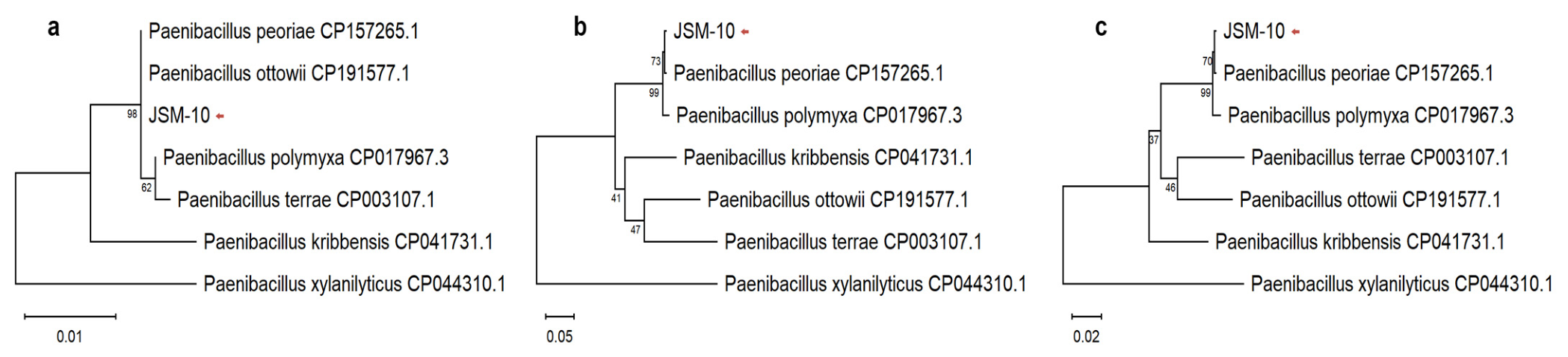
2.1.2. Identification of Glyphosate-Tolerant Strain JSM-10
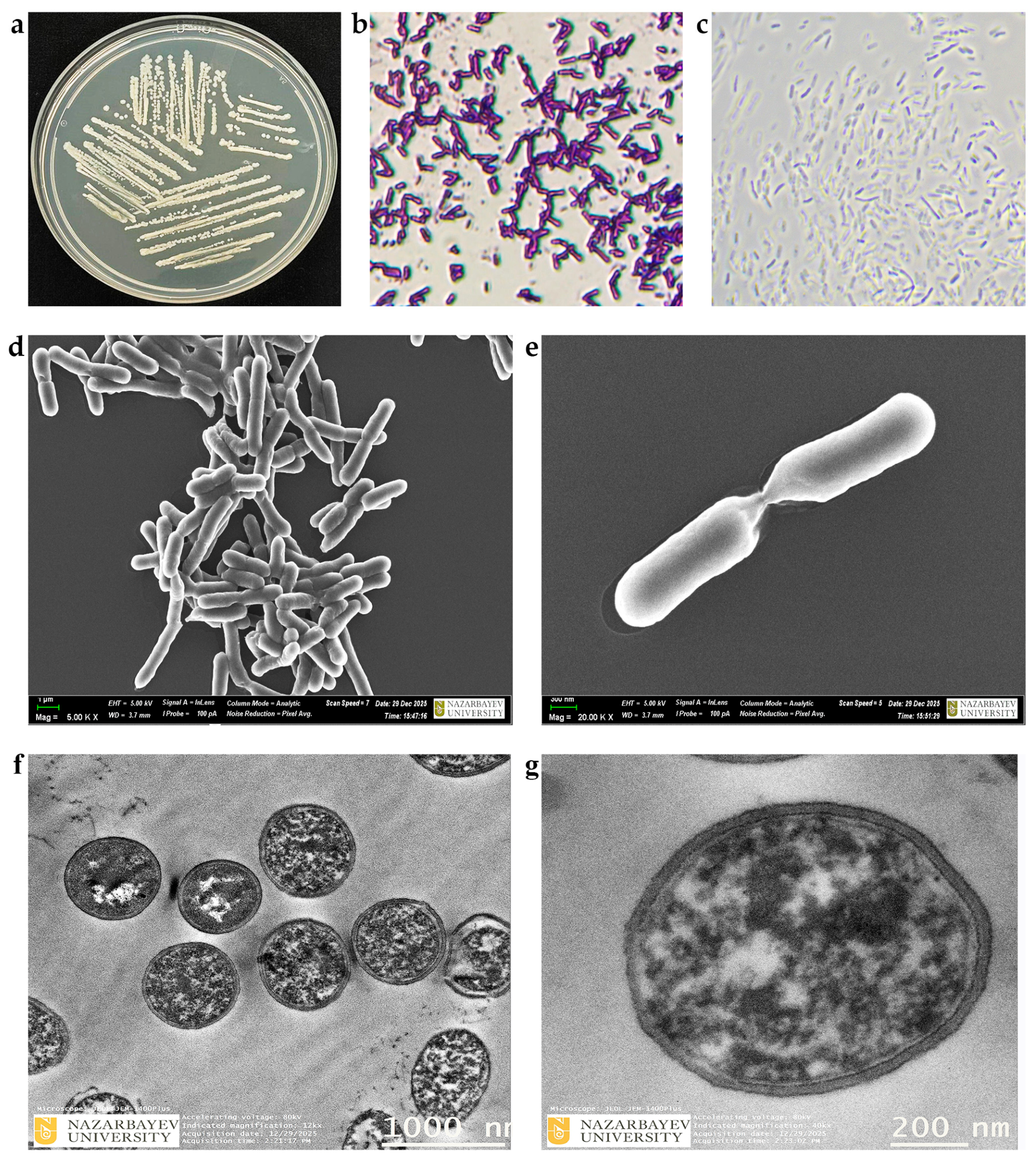
2.1.3. Microscopic Evaluation of Paenibacillus sp. JSM-10
2.2. Abiotic Stress Tolerance of Paenibacillus sp. JSM-10
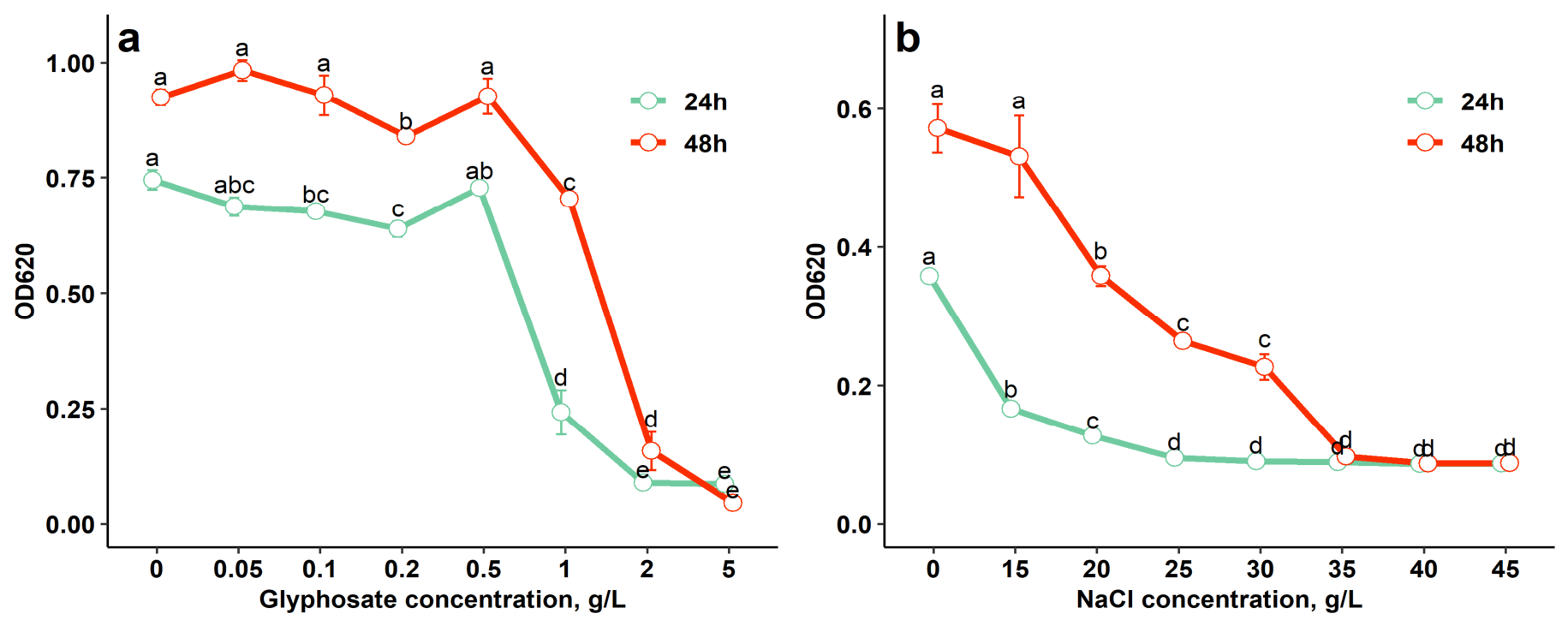
2.2.1. Evaluation of Glyphosate and NaCl Tolerance
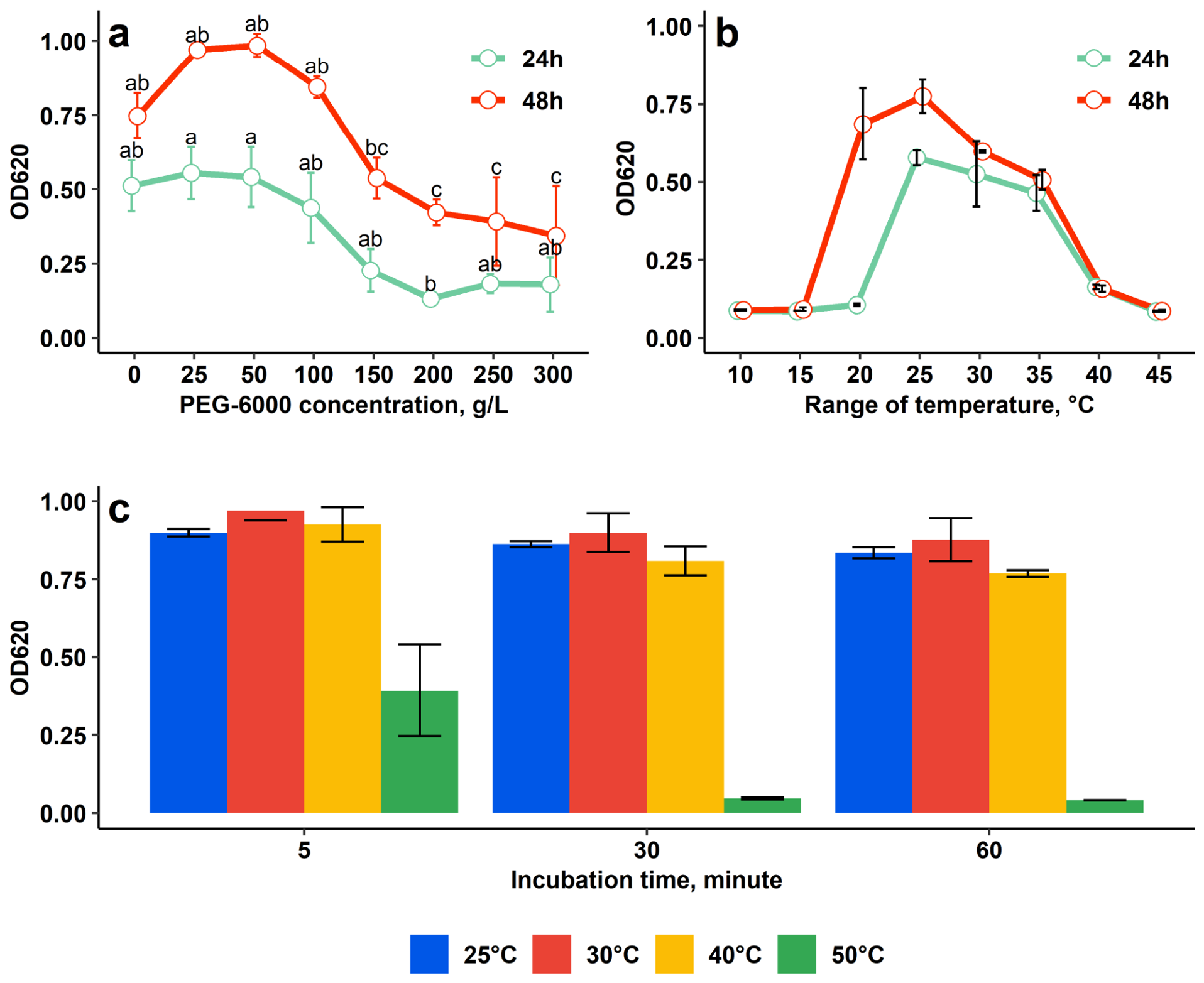
2.2.2. Examination of Drought Tolerance, Optimal Temperature Range, and Resistance to Heat-Shock Exposure
2.3. PGPB Characteristics of JSM-10
2.3.1. Indole-3-Acetic Acid (IAA) Synthesis, Phosphorus Solubilization, and Siderophore Production of Paenibacillus sp. JSM-10
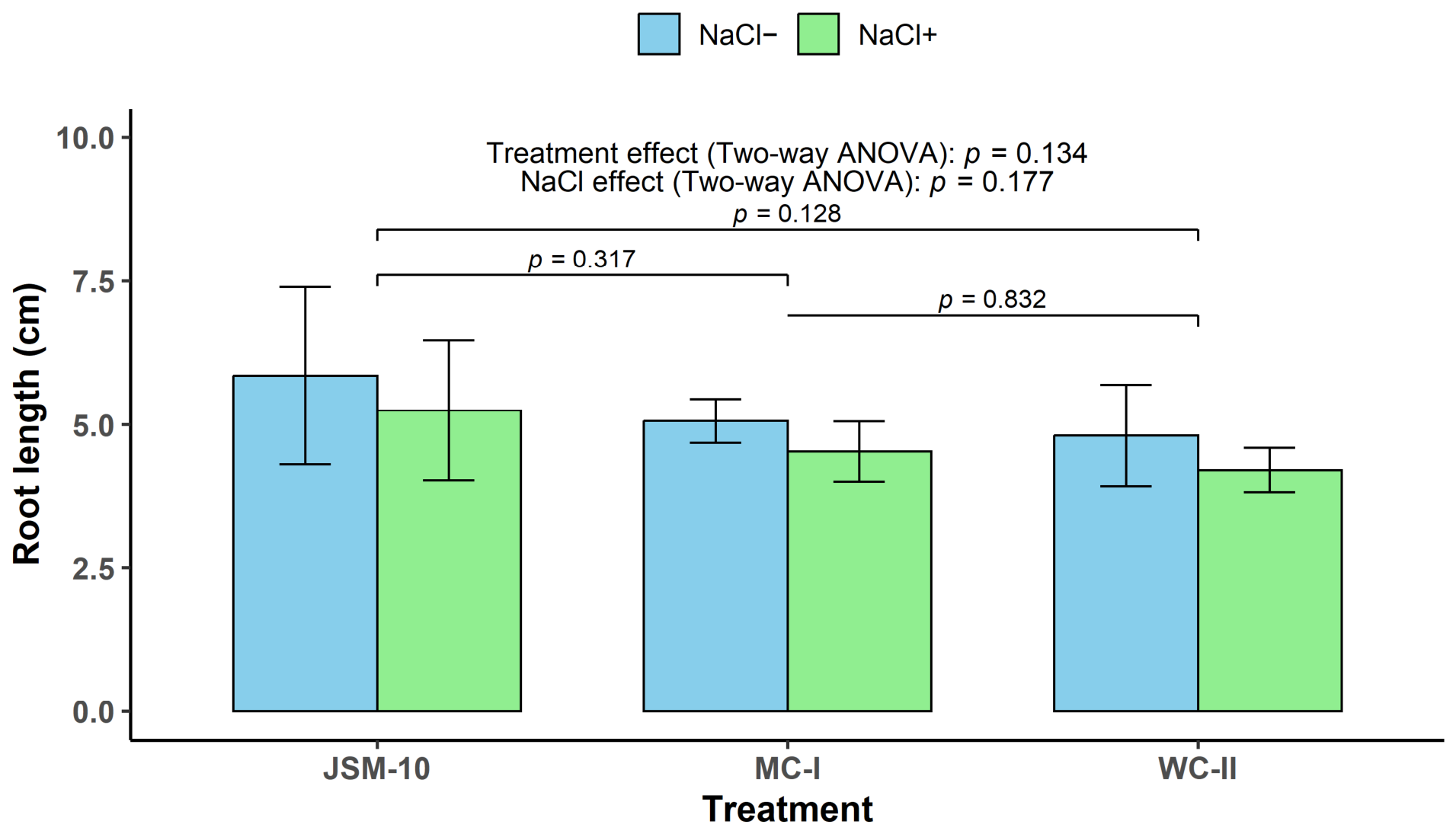
2.3.2. The Effect of Paenibacillus sp. JSM-10 and Its Cell-Free Culture Filtrates (CCFs) on Buckwheat Growth
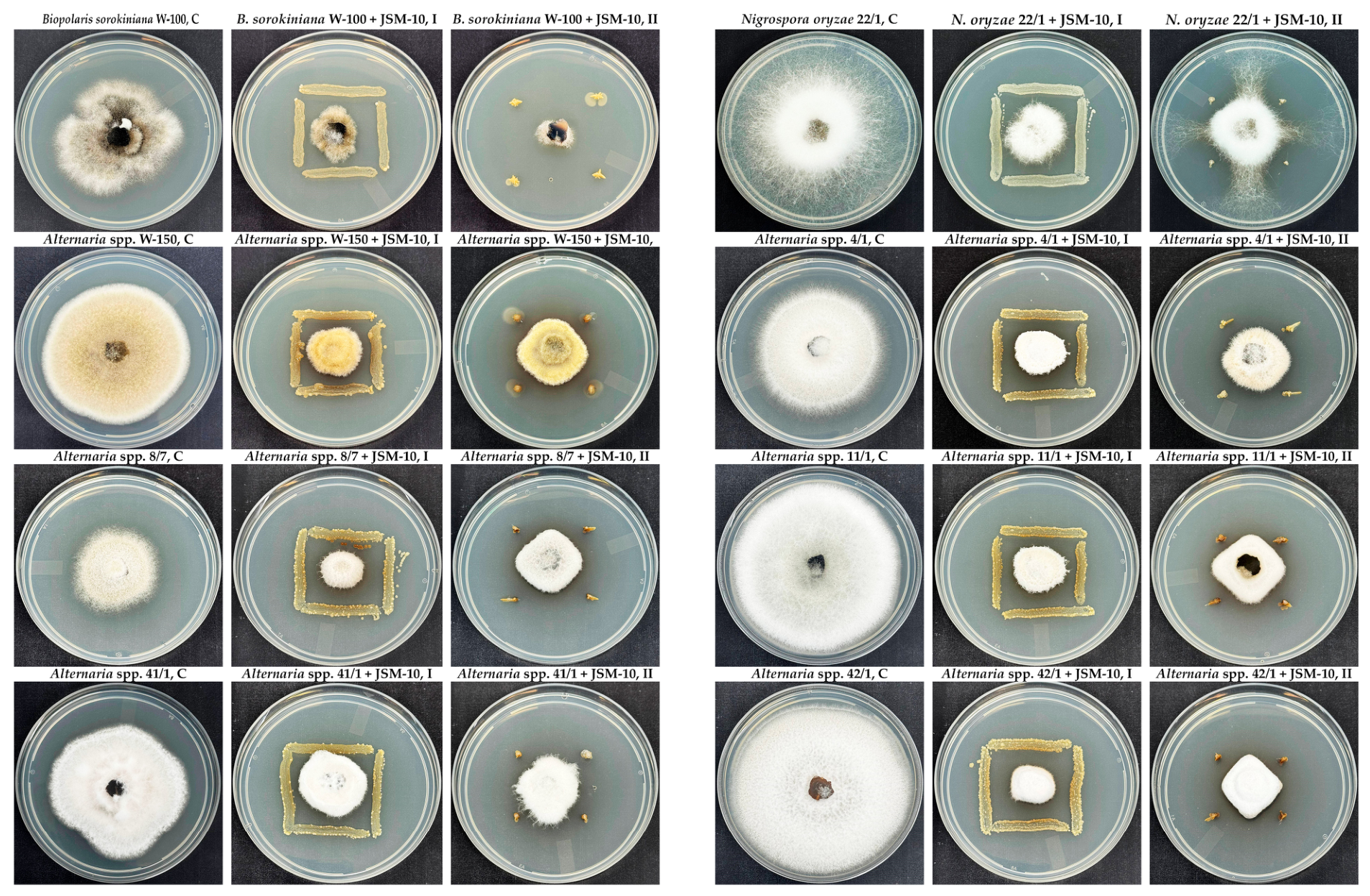
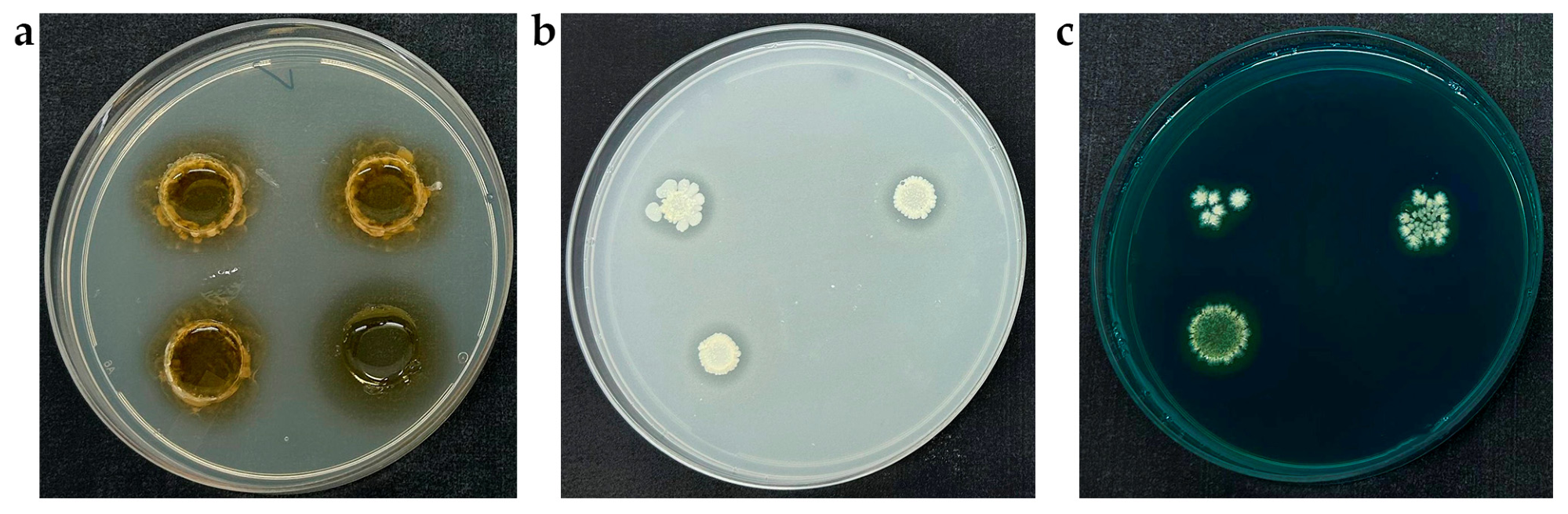
2.4. Antagonistic Potential of Glyphosate-Tolerant JSM-10 Against Different Pathogenic Species
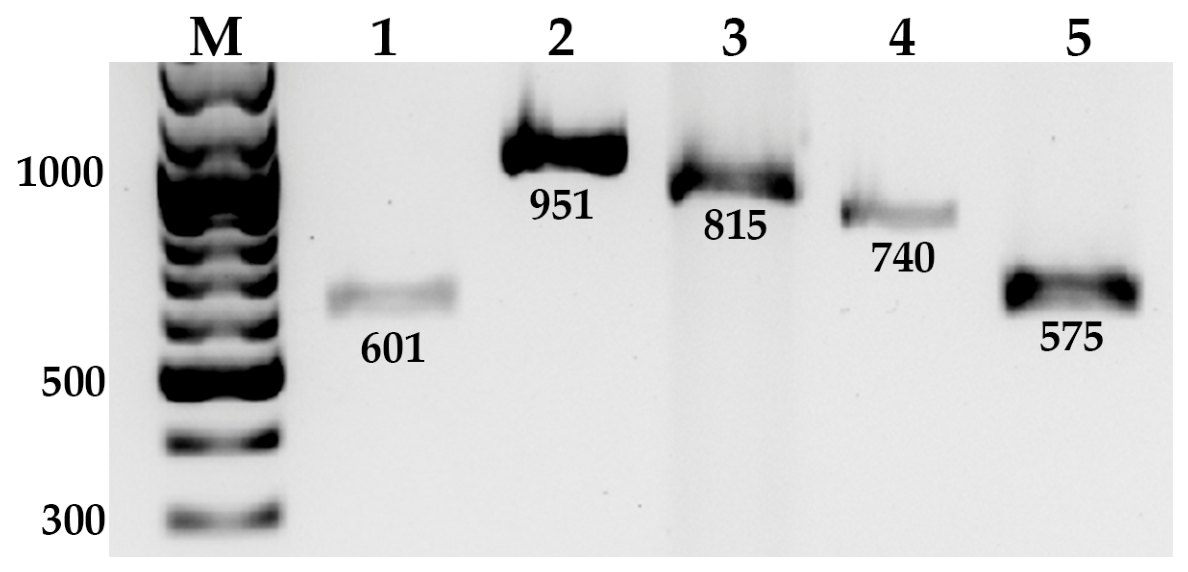
2.5. Molecular Detection of Genes Associated with Plant Growth Promotion and Stress Tolerance
3. Discussion
3.1. Plant Growth-Promoting (PGP) Potential and Mechanisms of Paenibacillus
3.1.1. Paenibacillus as a Promising PGPB Genus
3.1.2. PGP Mechanisms of Paenibacillus sp. JSM-10 Strain
3.1.3. Enhancement of Buckwheat Growth by JSM-10 Under Normal and Saline Conditions
3.2. Antagonistic Activity and Biocontrol Potential
3.3. Eco-Physiological Characterization of JSM-10
3.3.1. Tolerance to Glyphosate Exposure
3.3.2. Tolerance to Salinity and Drought Stress
3.4. Ultrastructural Characterization of Cell Morphology and Structure
3.5. Molecular Detection of Genes Putatively Involved in PGP and Stress Tolerance of JSM-10
3.6. Potential Agricultural Applications, Current Limitations, and Future Perspectives
4. Materials and Methods
4.1. Isolation, Molecular Identification, and Microscopic Observation of Paenibacillus sp. JSM-10
4.1.1. Isolation of Glyphosate-Tolerant JSM-10
4.1.2. Molecular Identification and Detection of Functional Genes in JSM-10
4.1.3. Microscopic Evaluations of Glyphosate-Tolerant Paenibacillus sp. JSM-10
4.2. Abiotic Stress Tolerance of JSM-10
4.2.1. Glyphosate Tolerance Evaluation
4.2.2. Examination of Salinity Tolerance
4.2.3. Drought Tolerance Assay
4.2.4. Determination of an Optimal Temperature Range
4.2.5. Heat-Shock Stress Examination
4.3. Plant Growth-Promoting Traits of JSM-10 Strain
4.3.1. Indole-3-Acetic Acid (IAA) Synthesis
4.3.2. Phosphorus Solubilization Capacity
4.3.3. Siderophore Production
4.3.4. The Effect of JSM-10 and Its Culture Filtrates on Buckwheat (Fagopyrum esculentum L.) Growth with and Without Saline Conditions
4.4. Antagonistic Activity Assays
4.4.1. Inhibition of Fungal Plant Pathogens
4.4.2. Antagonistic Activity of Living Cultures of Paenibacillus sp. JSM-10 and Its Culture Filtrates Towards Escherichia coli
4.5. Statistical Analyses and Data Visualization
5. Conclusions
Supplementary Materials
Author Contributions
Funding
Institutional Review Board Statement
Informed Consent Statement
Data Availability Statement
Acknowledgments
Conflicts of Interest
References
- FAO. The State of Food and Agriculture 2023—Revealing the True Cost of Food to Transform Agrifood Systems; FAO: Rome, Italy, 2023. [Google Scholar]
- Köninger, J.; Labouyrie, M.; Ballabio, C.; Dulya, O.; Mikryukov, V.; Romero, F.; Franco, A.; Bahram, M.; Panagos, P.; Jones, A.; et al. Pesticide Residues Alter Taxonomic and Functional Biodiversity in Soils. Nature 2026, 650, 367–373. [Google Scholar] [CrossRef] [Scilit]
- Qiu, D.; Wang, Y.; Xu, N.; Chen, B.; Zhu, Y.; Zhang, Z.; Zhang, Q.; Lu, T.; Dong, H.; Shou, J.; et al. Global Variation in Plant-Beneficial Bacteria in Soil under Pesticide Stress. Nat. Commun. 2025, 16, 10685. [Google Scholar] [CrossRef] [Scilit]
- Asrat, A.; Sitotaw, B.; Dawoud, T.M.; Nafidi, H.-A.; Bourhia, M.; Mekuriaw, A.; Wondmie, G.F. Effect of Glyphosate on the Growth and Survival of Rhizobia Isolated from Root Nodules of Grass Pea (Lathyrus sativus L.). Sci. Rep. 2023, 13, 21535. [Google Scholar] [CrossRef] [Scilit]
- Sibalekile, A.; Araya, T.; Castillo Hernandez, J.; Kotzé, E. Glyphosate-Microbial Interactions: Metagenomic Insights and Future Directions. Front. Microbiol. 2025, 16, 1570235. [Google Scholar] [CrossRef] [Scilit]
- Hussain, Q.; Asim, M.; Zhang, R.; Khan, R.; Farooq, S.; Wu, J. Transcription Factors Interact with ABA through Gene Expression and Signaling Pathways to Mitigate Drought and Salinity Stress. Biomolecules 2021, 11, 1159. [Google Scholar] [CrossRef] [Scilit] [PubMed]
- Krishna, R.; Ansari, W.A.; Soumia, P.S.; Yadav, A.; Jaiswal, D.K.; Kumar, S.; Singh, A.K.; Singh, M.; Verma, J.P. Biotechnological Interventions in Tomato (Solanum lycopersicum) for Drought Stress Tolerance: Achievements and Future Prospects. BioTech 2022, 11, 48. [Google Scholar] [CrossRef] [Scilit] [PubMed]
- Liang, X.; Yu, S.; Ju, Y.; Wang, Y.; Yin, D. Multi-Scale Remote-Sensing Phenomics Integrated with Multi-Omics: Advances in Crop Drought–Heat Stress Tolerance Mechanisms and Perspectives for Climate-Smart Agriculture. Plants 2025, 14, 2829. [Google Scholar] [CrossRef] [Scilit] [PubMed]
- Pergner, I.; Lippert, C. On the Effects That Motivate Pesticide Use in Perspective of Designing a Cropping System without Pesticides but with Mineral Fertilizer—A Review. Agron. Sustain. Dev. 2023, 43, 24. [Google Scholar] [CrossRef] [Scilit]
- Foley, J.A.; Ramankutty, N.; Brauman, K.A.; Cassidy, E.S.; Gerber, J.S.; Johnston, M.; Mueller, N.D.; O’Connell, C.; Ray, D.K.; West, P.C.; et al. Solutions for a Cultivated Planet. Nature 2011, 478, 337–342. [Google Scholar] [CrossRef] [Scilit]
- Pérez-Montaño, F.; Aparicio, N.; Arenas, F.; Arjona, J.M.; Camacho, M.; Fernández-García, N.; García-Fraile, P.; Goicoechea, N.; Macías-Naranjo, S.; Matías, J.; et al. Emerging Crops and Plant Growth-Promoting Bacteria (PGPB): A Synergistic Approach to Climate-Resilient Agriculture. Microbiome 2025, 13, 228. [Google Scholar] [CrossRef] [Scilit]
- Zampieri, E.; Franchi, E.; Giovannini, L.; Brescia, F.; Sillo, F.; Fusini, D.; Pietrini, I.; Centritto, M.; Balestrini, R. Diverse Plant Promoting Bacterial Species Differentially Improve Tomato Plant Fitness under Water Stress. Front. Plant Sci. 2023, 14, 1297090. [Google Scholar] [CrossRef] [Scilit]
- Jalal, A.; da Silva Oliveira, C.E.; Galindo, F.S.; Rosa, P.A.; Gato, I.M.; de Lima, B.H.; Teixeira Filho, M.C. Regulatory Mechanisms of Plant Growth-Promoting Rhizobacteria and Plant Nutrition against Abiotic Stresses in Brassicaceae Family. Life 2023, 13, 211. [Google Scholar] [CrossRef] [Scilit]
- Fanai, A.; Bohia, B.; Lalremruati, F.; Lalhriatpuii, N.; Lalrokimi; Lalmuanpuii, R.; Singh, P.K.; Zothanpuia. Plant Growth Promoting Bacteria (PGPB)-Induced Plant Adaptations to Stresses: An Updated Review. PeerJ 2024, 12, e17882. [Google Scholar] [CrossRef] [Scilit]
- Bianco, C. Plant-Growth-Promoting Bacteria. Plants 2024, 13, 1323. [Google Scholar] [CrossRef] [Scilit]
- Montefusco, A.; Nakamura, L.K.; Labeda, D.P. Bacillus peoriae sp. nov. Int. J. Syst. Evol. Microbiol. 1993, 43, 388–390. [Google Scholar] [CrossRef] [Scilit]
- Zheng, T.; Li, M.; Kong, Z.; Ji, L.; Fu, X.; Dai, L.; Kan, J.; Men, Q.; Wang, H.; Du, B.; et al. Identification, Genome Characterization, and Growth Optimization of Paenibacillus peoriae MHJL1 for Biocontrol and Growth Promotion of Cotton Seedlings. Microorganisms 2025, 13, 261. [Google Scholar] [CrossRef] [Scilit]
- Yuan, L.; Jiang, H.; Jiang, X.; Li, T.; Lu, P.; Yin, X.; Wei, Y. Comparative Genomic and Functional Analyses of Paenibacillus peoriae ZBSF16 with Biocontrol Potential against Grapevine Diseases, Provide Insights into Its Genes Related to Plant Growth-Promoting and Biocontrol Mechanisms. Front. Microbiol. 2022, 13, 975344. [Google Scholar] [CrossRef] [Scilit]
- Dobrzyński, J.; Kulkova, I. Paenibacillus peoriae: Current Knowledge and Agricultural Biotechnology Potential of a Close Relative of P. polymyxa. Antonie Van Leeuwenhoek 2025, 118, 120. [Google Scholar] [CrossRef] [Scilit]
- Wang, K.; Lin, Z.; Dou, J.; Jiang, M.; Shen, N.; Feng, J. Identification and Surveys of Promoting Plant Growth VOCs from Biocontrol Bacteria Paenibacillus peoriae GXUN15128. Microbiol. Spectr. 2023, 11, e04346-22. [Google Scholar] [CrossRef] [Scilit] [PubMed]
- Khumairah, F.H.; Setiawati, M.R.; Fitriatin, B.N.; Simarmata, T.; Alfaraj, S.; Ansari, M.J.; El Enshasy, H.A.; Sayyed, R.Z.; Najafi, S. Halotolerant Plant Growth-Promoting Rhizobacteria Isolated From Saline Soil Improve Nitrogen Fixation and Alleviate Salt Stress in Rice Plants. Front. Microbiol. 2022, 13, 905210, Erratum in Front. Microbiol. 2022, 13, 1107282. https://doi.org/10.3389/fmicb.2022.1107282. [Google Scholar] [CrossRef] [Scilit] [PubMed]
- Nader, A.A.; Hauka, F.I.A.; Afify, A.H.; El-Sawah, A.M. Drought-Tolerant Bacteria and Arbuscular Mycorrhizal Fungi Mitigate the Detrimental Effects of Drought Stress Induced by Withholding Irrigation at Critical Growth Stages of Soybean (Glycine max, L.). Microorganisms 2024, 12, 1123. [Google Scholar] [CrossRef] [Scilit]
- Pishchik, V.N.; Filippova, P.S.; Mirskaya, G.V.; Khomyakov, Y.V.; Vertebny, V.E.; Dubovitskaya, V.I.; Ostankova, Y.V.; Semenov, A.V.; Chakrabarty, D.; Zuev, E.V.; et al. Epiphytic PGPB Bacillus megaterium AFI1 and Paenibacillus nicotianae AFI2 Improve Wheat Growth and Antioxidant Status under Ni Stress. Plants 2021, 10, 2334. [Google Scholar] [CrossRef] [Scilit]
- Li, Y.; Li, Y.; Zhang, H.; Wang, M.; Chen, S. Diazotrophic Paenibacillus Beijingensis BJ-18 Provides Nitrogen for Plant and Promotes Plant Growth, Nitrogen Uptake and Metabolism. Front. Microbiol. 2019, 10, 1119. [Google Scholar] [CrossRef] [Scilit]
- Li, X.; Ma, S.; Meng, Y.; Wei, W.; Peng, C.; Ling, C.; Fan, S.; Liu, Z. Characterization of Antagonistic Bacteria Paenibacillus polymyxa ZYPP18 and the Effects on Plant Growth. Plants 2023, 12, 2504. [Google Scholar] [CrossRef] [Scilit]
- Liu, X.; Li, Q.; Li, Y.; Guan, G.; Chen, S. Paenibacillus Strains with Nitrogen Fixation and Multiple Beneficial Properties for Promoting Plant Growth. PeerJ 2019, 7, e7445. [Google Scholar] [CrossRef] [Scilit]
- Yegorenkova, I.V.; Tregubova, K.V.; Krasov, A.I.; Evseeva, N.V.; Matora, L.Y. Effect of Exopolysaccharides of Paenibacillus polymyxa Rhizobacteria on Physiological and Morphological Variables of Wheat Seedlings. J. Microbiol. 2021, 59, 729–735. [Google Scholar] [CrossRef] [Scilit]
- Wang, D.; Poinsot, V.; Li, W.; Lu, Y.; Liu, C.; Li, Y.; Xie, K.; Sun, L.; Shi, C.; Peng, H.; et al. Genomic Insights and Functional Analysis Reveal Plant Growth Promotion Traits of Paenibacillus mucilaginosus G78. Genes 2023, 14, 392. [Google Scholar] [CrossRef] [Scilit]
- Liu, D.; Yang, Q.; Ge, K.; Hu, X.; Qi, G.; Du, B.; Liu, K.; Ding, Y. Promotion of Iron Nutrition and Growth on Peanut by Paenibacillus illinoisensis and Bacillus sp. strains in Calcareous Soil. Braz. J. Microbiol. 2017, 48, 656–670. [Google Scholar] [CrossRef] [Scilit] [PubMed]
- Hu, Y.; Chen, Y.; Chao, S.; Zhang, Y.; Song, L.; Wang, H.; Hu, Y.; Lv, B. Multi-Omics Analyses Reveal the Biocontrol Potential of Endophytic Paenibacillus peoriae 3-B4 against Maize Seedling Blight. Front. Microbiol. 2025, 16, 1686411. [Google Scholar] [CrossRef] [Scilit] [PubMed]
- Koo, Y.M.; Heo, A.Y.; Choi, H.W. Isolation and Identification Antagonistic Bacterium Paenibacillus tianmuensis YM002 against Acidovorax Citrulli. Front. Plant Sci. 2023, 14, 1173695. [Google Scholar] [CrossRef] [Scilit] [PubMed]
- Lin, S.; Chen, X.; Xie, L.; Zhang, Y.; Zeng, F.; Long, Y.; Ren, L.; Qi, X.; Wei, J. Biocontrol Potential of Lipopeptides Produced by Paenibacillus polymyxa AF01 against Neoscytalidium Dimidiatum in Pitaya. Front. Microbiol. 2023, 14, 1188722. [Google Scholar] [CrossRef] [Scilit]
- Khan, M.S.; Gao, J.; Chen, X.; Zhang, M.; Yang, F.; Du, Y.; Moe, T.S.; Munir, I.; Xue, J.; Zhang, X. Isolation and Characterization of Plant Growth-Promoting Endophytic Bacteria Paenibacillus polymyxa SK1 from Lilium Lancifolium. BioMed Res. Int. 2020, 2020, 8650957. [Google Scholar] [CrossRef] [Scilit]
- Wang, X.; Li, Q.; Sui, J.; Zhang, J.; Liu, Z.; Du, J.; Xu, R.; Zhou, Y.; Liu, X. Isolation and Characterization of Antagonistic Bacteria Paenibacillus jamilae HS-26 and Their Effects on Plant Growth. BioMed Res. Int. 2019, 2019, 3638926. [Google Scholar] [CrossRef] [Scilit]
- Khan, I.; Ullah, N.; Maqbool, H.; Hashmi, A.; Khan, B.; Khalid, A.; Naz, I.; Paker, N.P.; Munis, M.F.H.; Chaudhary, H.J. Holistic Review on Paenibacillus: The Multifunctional Genus in Heavy Metal Detoxification, Pesticide Degradation, and Abiotic Stress Mitigation for Sustainable Agriculture. Plant Soil 2026, 518, 1245–1280. [Google Scholar] [CrossRef] [Scilit]
- Tariq, H.; Subramanian, S.; Geitmann, A.; Smith, D.L. Bacillus and Paenibacillus as Plant Growth-Promoting Bacteria in Soybean and Cannabis. Front. Plant Sci. 2025, 16, 1529859. [Google Scholar] [CrossRef] [Scilit]
- Weselowski, B.; Nathoo, N.; Eastman, A.W.; MacDonald, J.; Yuan, Z.-C. Isolation, Identification and Characterization of Paenibacillus polymyxa CR1 with Potentials for Biopesticide, Biofertilization, Biomass Degradation and Biofuel Production. BMC Microbiol. 2016, 16, 244. [Google Scholar] [CrossRef] [Scilit] [PubMed]
- Sun, H.; Zhang, J.; Liu, W.; Wenhui, E.; Wang, X.; Li, H.; Cui, Y.; Zhao, D.; Liu, K.; Du, B.; et al. Identification and Combinatorial Engineering of Indole-3-Acetic Acid Synthetic Pathways in Paenibacillus polymyxa. Biotechnol. Biofuels Bioprod. 2022, 15, 81. [Google Scholar] [CrossRef] [Scilit] [PubMed]
- Zhang, Y.; Ren, J.; Wang, W.; Chen, B.; Li, E.; Chen, S. Siderophore and Indolic Acid Production by Paenibacillus triticisoli BJ-18 and Their Plant Growth-Promoting and Antimicrobe Abilities. PeerJ 2020, 8, e9403. [Google Scholar] [CrossRef] [Scilit]
- Brito, L.F.; López, M.G.; Straube, L.; Passaglia, L.M.P.; Wendisch, V.F. Inorganic Phosphate Solubilization by Rhizosphere Bacterium Paenibacillus sonchi: Gene Expression and Physiological Functions. Front. Microbiol. 2020, 11, 588605. [Google Scholar] [CrossRef] [Scilit]
- Yang, F.; Jiang, H.; Ma, K.; Hegazy, A.; Wang, X.; Liang, S.; Chang, G.; Yu, L.; Tian, B.; Shi, X. Genomic and Phenotypic Analyses Reveal Paenibacillus polymyxa PJH16 Is a Potential Biocontrol Agent against Cucumber Fusarium Wilt. Front. Microbiol. 2024, 15, 1359263. [Google Scholar] [CrossRef] [Scilit]
- Grady, E.N.; MacDonald, J.; Liu, L.; Richman, A.; Yuan, Z.-C. Current Knowledge and Perspectives of Paenibacillus: A Review. Microb. Cell Fact. 2016, 15, 203. [Google Scholar] [CrossRef] [Scilit]
- Suzuki, T.; Noda, T.; Morishita, T.; Ishiguro, K.; Otsuka, S.; Brunori, A. Present Status and Future Perspectives of Breeding for Buckwheat Quality. Breed. Sci. 2020, 70, 48–66. [Google Scholar] [CrossRef] [Scilit]
- Zamaratskaia, G.; Gerhardt, K.; Knicky, M.; Wendin, K. Buckwheat: An Underutilized Crop with Attractive Sensory Qualities and Health Benefits. Crit. Rev. Food Sci. Nutr. 2024, 64, 12303–12318. [Google Scholar] [CrossRef] [Scilit] [PubMed]
- Sofi, S.A.; Ahmed, N.; Farooq, A.; Rafiq, S.; Zargar, S.M.; Kamran, F.; Dar, T.A.; Mir, S.A.; Dar, B.N.; Mousavi Khaneghah, A. Nutritional and Bioactive Characteristics of Buckwheat, and Its Potential for Developing Gluten-Free Products: An Updated Overview. Food Sci. Nutr. 2023, 11, 2256–2276. [Google Scholar] [CrossRef] [Scilit] [PubMed]
- Grover, M.; Bodhankar, S.; Sharma, A.; Sharma, P.; Singh, J.; Nain, L. PGPR Mediated Alterations in Root Traits: Way Toward Sustainable Crop Production. Front. Sustain. Food Syst. 2021, 4, 618230. [Google Scholar] [CrossRef] [Scilit]
- Gupta, A.; Mishra, R.; Rai, S.; Bano, A.; Pathak, N.; Fujita, M.; Kumar, M.; Hasanuzzaman, M. Mechanistic Insights of Plant Growth Promoting Bacteria Mediated Drought and Salt Stress Tolerance in Plants for Sustainable Agriculture. Int. J. Mol. Sci. 2022, 23, 3741. [Google Scholar] [CrossRef] [Scilit]
- Svietlova, N.; Sytar, O.; Volkogon, M.; Storozhenko, V.; Kalinichenko, O.; Ganchurin, V.; Taran, N. Remodeling of the Composition of the Membrane’s Lipids of Buckwheat Plants (Fagopyrum esculentum Moench.) under Conditions of Phosphorous Deficiency and Seed Bacterization with Phosphate Solubilizing Microorganisms. J. Cent. Eur. Agric. 2017, 18, 879–888. [Google Scholar] [CrossRef] [Scilit]
- Basu, A.; Prasad, P.; Das, S.N.; Kalam, S.; Sayyed, R.Z.; Reddy, M.S.; El Enshasy, H. Plant Growth Promoting Rhizobacteria (PGPR) as Green Bioinoculants: Recent Developments, Constraints, and Prospects. Sustainability 2021, 13, 1140. [Google Scholar] [CrossRef] [Scilit]
- Li, W.; Wang, K.; Wang, P.; Yang, P.; Xu, S.; Tong, J.; Zhang, Y.; Yang, Y.; Han, L.; Ye, M.; et al. Impact of Glyphosate on Soil Bacterial Communities and Degradation Mechanisms in Large-Leaf Tea Plantations. J. Hazard. Mater. 2025, 483, 136626. [Google Scholar] [CrossRef] [Scilit]
- Guerrero Ramírez, J.R.; Ibarra Muñoz, L.A.; Balagurusamy, N.; Frías Ramírez, J.E.; Alfaro Hernández, L.; Carrillo Campos, J. Microbiology and Biochemistry of Pesticides Biodegradation. Int. J. Mol. Sci. 2023, 24, 15969. [Google Scholar] [CrossRef] [Scilit] [PubMed]
- Borggaard, O.K.; Gimsing, A.L. Fate of Glyphosate in Soil and the Possibility of Leaching to Ground and Surface Waters: A Review. Pest Manag. Sci. 2008, 64, 441–456. [Google Scholar] [CrossRef] [Scilit] [PubMed]
- Van Bruggen, A.H.C.; He, M.M.; Shin, K.; Mai, V.; Jeong, K.C.; Finckh, M.R.; Morris, J.G. Environmental and Health Effects of the Herbicide Glyphosate. Sci. Total Environ. 2018, 616–617, 255–268. [Google Scholar] [CrossRef] [Scilit] [PubMed]
- Silva, V.; Mol, H.G.J.; Zomer, P.; Tienstra, M.; Ritsema, C.J.; Geissen, V. Pesticide Residues in European Agricultural Soils—A Hidden Reality Unfolded. Sci. Total Environ. 2019, 653, 1532–1545. [Google Scholar] [CrossRef] [Scilit]
- Costas-Ferreira, C.; Durán, R.; Faro, L.R.F. Toxic Effects of Glyphosate on the Nervous System: A Systematic Review. Int. J. Mol. Sci. 2022, 23, 4605. [Google Scholar] [CrossRef] [Scilit]
- Bartholomew, S.K.; Winslow, W.; Sharma, R.; Pathak, K.V.; Tallino, S.; Judd, J.M.; Leon, H.; Turk, J.; Pirrotte, P.; Velazquez, R. Glyphosate Exposure Exacerbates Neuroinflammation and Alzheimer’s Disease-like Pathology despite a 6-Month Recovery Period in Mice. J. Neuroinflamm. 2024, 21, 316. [Google Scholar] [CrossRef] [Scilit]
- Wang, C.; Pei, J.; Li, H.; Zhu, X.; Zhang, Y.; Wang, Y.; Li, W.; Wang, Z.; Liu, K.; Du, B.; et al. Mechanisms on Salt Tolerant of Paenibacillus polymyxa SC2 and Its Growth-Promoting Effects on Maize Seedlings under Saline Conditions. Microbiol. Res. 2024, 282, 127639. [Google Scholar] [CrossRef] [Scilit]
- Ran, J.; Wu, Y.; Zhang, B.; Su, Y.; Lu, N.; Li, Y.; Liang, X.; Zhou, H.; Shi, J. Paenibacillus polymyxa Antagonism towards Fusarium: Identification and Optimisation of Antibiotic Production. Toxins 2023, 15, 138. [Google Scholar] [CrossRef] [Scilit]
- Liu, W.; Sikora, E.; Park, S.-W. Plant Growth-Promoting Rhizobacterium, Paenibacillus polymyxa CR1, Upregulates Dehydration-Responsive Genes, RD29A and RD29B, during Priming Drought Tolerance in Arabidopsis. Plant Physiol. Biochem. 2020, 156, 146–154. [Google Scholar] [CrossRef] [Scilit] [PubMed]
- Devi, N.S.A.; Kumutha, K.; Anandham, R.; Krishnamoorthy, R. Induction of Moisture Stress Tolerance by Bacillus and Paenibacillus in Pigeon Pea (Cajanus cajan. L). 3 Biotech 2021, 11, 355. [Google Scholar] [CrossRef] [Scilit]
- Xie, J.; Shi, H.; Du, Z.; Wang, T.; Liu, X.; Chen, S. Comparative Genomic and Functional Analysis Reveal Conservation of Plant Growth Promoting Traits in Paenibacillus polymyxa and Its Closely Related Species. Sci. Rep. 2016, 6, 21329. [Google Scholar] [CrossRef] [Scilit]
- Mulati, M.; Chai, L.; Xu, H.; Wu, S.; Zhang, W. Diversity of Glyphosate-Degrading Bacteria and Degradation Genes from Xinjiang Cotton Field’s Unique Soil Environment. Environ. Microbiome 2025, 20, 138. [Google Scholar] [CrossRef] [Scilit]
- Zamanzadeh-Nasrabadi, S.M.; Mohammadiapanah, F.; Hosseini-Mazinani, M.; Sarikhan, S. Salinity Stress Endurance of the Plants with the Aid of Bacterial Genes. Front. Genet. 2023, 14, 1049608. [Google Scholar] [CrossRef] [Scilit]
- Zhumakayev, A.R.; Vörös, M.; Szekeres, A.; Rakk, D.; Vágvölgyi, C.; Szűcs, A.; Kredics, L.; Škrbić, B.D.; Hatvani, L. Comprehensive Characterization of Stress Tolerant Bacteria with Plant Growth-Promoting Potential Isolated from Glyphosate-Treated Environment. World J. Microbiol. Biotechnol. 2021, 37, 94. [Google Scholar] [CrossRef] [Scilit] [PubMed]
- Zamule, S.M.; Dupre, C.E.; Mendola, M.L.; Widmer, J.; Shebert, J.A.; Roote, C.E.; Das, P. Bioremediation Potential of Select Bacterial Species for the Neonicotinoid Insecticides, Thiamethoxam and Imidacloprid. Ecotoxicol. Environ. Saf. 2021, 209, 111814. [Google Scholar] [CrossRef] [Scilit]
- Muyzer, G.; de Waal, E.C.; Uitterlinden, A.G. Profiling of Complex Microbial Populations by Denaturing Gradient Gel Electrophoresis Analysis of Polymerase Chain Reaction-Amplified Genes Coding for 16S RRNA. Appl. Environ. Microbiol. 1993, 59, 695–700. [Google Scholar] [CrossRef] [Scilit]
- Iiyama, K.; Otao, M.; Mori, K.; Mon, H.; Lee, J.M.; Kusakabe, T.; Tashiro, K.; Asano, S.-I.; Yasunaga-Aoki, C. Phylogenetic Relationship of Paenibacillus Species Based on Putative Replication Origin Regions and Analysis of an YheCD-like Sequence Found in This Region. Biosci. Biotechnol. Biochem. 2014, 78, 891–897. [Google Scholar] [CrossRef] [Scilit]
- Devi, N.S.A.; Kumutha, K.; Anandham, R.; Krishnamoorthy, R.; Babu, R.; Gnanachitra, M. Plant Growth Promoting Traits of Firmibacteria under Drought Stress. Res. J. Agric. Sci. 2018, 9, 1294–1299. [Google Scholar]
- Shrivastava, U.P.; Ashok, K. A Simple and Rapid Plate Assay for the Screening of Indole-3-Acetic Acid (Iaa) Producing Microorganisms. Int. J. Appl. Biol. Pharm. Technol. 2011, 2, 120–123. [Google Scholar]
- Bric, J.M.; Bostock, R.M.; Silverstone, S.E. Rapid in Situ Assay for Indoleacetic Acid Production by Bacteria Immobilized on a Nitrocellulose Membrane. Appl. Environ. Microbiol. 1991, 57, 535–538. [Google Scholar] [CrossRef] [Scilit]
- Pikovskaya, R.I. Mobilization of Phosphorus in Soil in Connection with the Vital Activity of Some Microbial Species. Microbiology 1948, 17, 362–370. [Google Scholar]
- Teles, E.A.P.; Xavier, J.F.; Arcênio, F.S.; Amaya, R.L.; Gonçalves, J.V.S.; Rouws, L.F.M.; Zonta, E.; Coelho, I.S. Characterization and Evaluation of Potential Halotolerant Phosphate Solubilizing Bacteria from Salicornia fruticosa Rhizosphere. Front. Plant Sci. 2024, 14, 1324056. [Google Scholar] [CrossRef] [Scilit]
- Schwyn, B.; Neilands, J.B. Universal Chemical Assay for the Detection and Determination of Siderophores. Anal. Biochem. 1987, 160, 47–56. [Google Scholar] [CrossRef] [Scilit]
- Lakshmanan, V.; Shantharaj, D.; Li, G.; Seyfferth, A.L.; Janine Sherrier, D.; Bais, H.P. A Natural Rice Rhizospheric Bacterium Abates Arsenic Accumulation in Rice (Oryza sativa L.). Planta 2015, 242, 1037–1050. [Google Scholar] [CrossRef] [Scilit]
- Vörös, M.; Manczinger, L.; Kredics, L.; Szekeres, A.; Shine, K.; Alharbi, N.S.; Khaled, J.M.; Vágvölgyi, C. Influence of Agro-Environmental Pollutants on a Biocontrol Strain of Bacillus velezensis. Microbiologyopen 2019, 8, e00660. [Google Scholar] [CrossRef] [Scilit]
- Shaizadinova, A.; Amanzholova, M.; Rukavitsina, I.; Abeldenov, S.; Zhumakayev, A.R. CRISPR/Cas12a-Based Method Coupled with Isothermal Amplification to Identify Alternaria spp. Isolated from Wheat Grain Samples. Front. Microbiol. 2025, 15, 1468336. [Google Scholar] [CrossRef] [Scilit] [PubMed]
- Pineda-Suazo, D.; Montero-Vargas, J.M.; Ordaz-Ortiz, J.J.; Vázquez-Marrufo, G. Growth Inhibition of Phytopathogenic Fungi and Oomycetes by Basidiomycete Irpex Lacteus and Identification of Its Antimicrobial Extracellular Metabolites. Pol. J. Microbiol. 2021, 70, 131–136. [Google Scholar] [CrossRef] [Scilit]
- Vágvölgyi, C.; Magyar, K.; Papp, T.; Palágyi, Z.; Ferenczy, L.; Nagy, Á. Value of Substrate Utilization Data for Characterization of Mucor Isolates. Can. J. Microbiol. 1996, 42, 613–616. [Google Scholar] [CrossRef] [Scilit]
- Fox, J.; Weisberg, S. An R Companion to Applied Regression, 3rd ed.; Sage: Thousand Oaks, CA, USA, 2019. [Google Scholar]
- de Mendiburu, F. agricolae: Statistical Procedures for Agricultural Research, R package version 1.3-6; R Core Team: Vienna, Austria, 2023. [Google Scholar]
- Ben-Shachar, M.; Lüdecke, D.; Makowski, D. effectsize: Estimation of Effect Size Indices and Standardized Parameters. J. Open Source Softw. 2020, 5, 2815. [Google Scholar] [CrossRef] [Scilit]
- Wickham, H. ggplot2: Elegant Graphics for Data Analysis; Springer-Verlag: New York, NY, USA, 2016. [Google Scholar]
- Pedersen, T.L. patchwork: The Composer of Plots, R package version 1.3.0; R Core Team: Vienna, Austria, 2024. [Google Scholar]




| Sample | CD, cm /OD620 | Inhibition Rate, % |
|---|---|---|
| Fungal Plant Pathogens, Co-Culture Plate Assay | ||
| Bipolaris sorokiniana W-100, C | 3.98 ± 2.14 | - |
| B. sorokiniana W-100 + JSM-10, I | 2.00 ± 0.18 | 49.7 |
| B. sorokiniana W-100 + JSM-10, II | 1.43 ± 0.19 | 64.2 |
| Nigrospora oryzae 22/1, C | 8.10 ± 0.17 | - |
| N. oryzae 22/1 + JSM-10, I | 2.43 ± 0.12 | 70.0 |
| N. oryzae 22/1 + JSM-10, II | 2.33 ± 0.15 | 71.2 |
| Alternaria spp. W-150, C | 7.03 ± 0.29 | - |
| Alternaria spp. W-150 + JSM-10, I | 2.33 ± 0.30 | 66.9 |
| Alternaria spp. W-150 + JSM-10, II | 3.25 ± 0.33 | 53.7 |
| Alternaria spp. 4/1, C | 5.73 ± 1.37 | - |
| Alternaria spp. 4/1 + JSM-10, I | 2.03 ± 0.31 | 64.5 |
| Alternaria spp. 4/1 + JSM-10, II | 2.66 ± 0.21 | 53.5 |
| Alternaria spp. 8/7, C | 3.85 ± 0.07 | - |
| Alternaria spp. 8/7 + JSM-10, I | 1.63 ± 0.23 | 57.6 |
| Alternaria spp. 8/7 + JSM-10, II | 2.43 ± 0.15 | 36.8 |
| Alternaria spp. 11/1, C | 6.60 ± 1.14 | - |
| Alternaria spp. 11/1 + JSM-10, I | 2.16 ± 0.23 | 67.2 |
| Alternaria spp. 11/1 + JSM-10, II | 2.96 ± 0.31 | 55.1 |
| Alternaria spp. 41/1, C | 5.65 ± 0.64 | - |
| Alternaria spp. 41/1 + JSM-10, I | 1.76 ± 0.45 | 68.7 |
| Alternaria spp. 41/1 + JSM-10, II | 2.26 ± 0.06 | 59.9 |
| Alternaria spp. 42/1, C | 6.33 ± 1.53 | - |
| Alternaria spp. 42/1 + JSM-10, I | 1.76 ± 0.15 | 72.1 |
| Alternaria spp. 42/1 + JSM-10, II | 2.70 ± 0.10 | 57.4 |
| Escherichia coli, kinetic measurements | ||
| E. coli, C | 0.15 ± 0.001 | - |
| JSM-10, Ala, 50% | 0.08 ± 0.001 | 45.1 |
| C-CCF, Ala, 50% | 0.13 ± 0.012 | 12.6 |
| JSM-10, Ala, 25% | 0.14 ± 0.005 | 6.8 |
| C-CCF, Ala, 25% | 0.14 ± 0.002 | 5.1 |
| JSM-10, Glu, 50% | 0.08 ± 0.001 | 45.4 |
| C-CCF, Glu, 50% | 0.14 ± 0.008 | 6.8 |
| JSM-10, Glu, 25% | 0.14 ± 0.005 | 4.1 |
| C-CCF, Glu, 25% | 0.14 ± 0.013 | 7.8 |
| Paenibacillus Species | Tested Crops/Pest | Reported Effect | References |
|---|---|---|---|
| PGPB Characteristics | |||
| Paenibacillus nicotianae AFI2 | Wheat (Triticum aestivum L.) | Increased shoot length by 21.1% under Ni stress | [23] |
| Paenibacillus peoriae MHJL1 | Cotton (Gossypium hirsutum) | Plant growth; increased plant height, root length, stem diameter and fresh weight by 14.12–120.47% | [17] |
| Paenibacillus beijingensis BJ-18 | Wheat (T. aestivum L.) | Increased shoot and root dry weight by 86.1% and 46.0% under low-nitrogen conditions | [24] |
| Maize (Zea mays) | Increased shoot and root dry weight by 46.6% and 47.5% under low-nitrogen conditions | ||
| Cucumber (Cucumis sativus) | Increased shoot and root dry weight by 103.6% and 20.3% under low-nitrogen conditions | ||
| Paenibacillus polymyxa ZYPP18 | Wheat (T. aestivum L.) | Enhanced seedling growth and reduced disease incidence by 37.4–65.6% | [25] |
| Paenibacillus sp. | Wheat (T. aestivum L.) | Increased shoot length by 30.9% | [26] |
| Cucumber (C. sativus) | Increased shoot and root length by 50.0% and 94.4% | ||
| Tomato (Solanum lycopersicum) | Increased shoot and root length by 64.6% and 55.2% | ||
| P. polymyxa 92 | Wheat (T. aestivum L.) | Increased shoot and root length up to 22% and dry weight up to 28% | [27] |
| Paenibacillus mucilaginosus G78 | Tomato (S. lycopersicum) | Increased plant height and fresh weight by 44.1% and 90.0% | [28] |
| Paenibacillus illinoisensis YZ29 | Peanut (Arachis hypogaea) | Increased yield by 37.05% | [29] |
| Antagonistic activity | |||
| P. peoriae GXUN15128 | in vitro (plant-pathogenic fungi) | Inhibited growth of 10 fungal species by 48.4–86.1% (in vitro) | [20] |
| P. peoriae 3-B4 | Fusarium verticillioides | Inhibited growth by 59.92% | [30] |
| P. polymyxa ZYPP18 | Rhizoctonia cerealis | Inhibited fungal growth by 92.68% | [25] |
| Paenibacillus sp. | Fusarium graminearum | Formed inhibition zones larger than 25 mm | [26] |
| Fusarium solani | Formed inhibition zones of 5–15 mm | ||
| Paneibacillus tianmuensis YM002 | Acidovorax citrulli (cucumber leaves) | Formed inhibition zones with diameters ranging from 1.95 to 9.97 mm | [31] |
| P. polymyxa AF01 | Botrytis cinerea | Inhibited growth by 78.29% | [32] |
| Bipolaris cactivora | Inhibited growth by 60.94% | ||
| Fusarium equiseti | Inhibited growth by 66.28% | ||
| P. polymyxa SK1 | Botryosphaeria dothidea | Inhibited growth by 66.67% | [33] |
| B. cinerea | Inhibited growth by 61.19% | ||
| Fusarium fujikuroi | Inhibited growth by 60.71% | ||
| Fusarium oxysporum | Inhibited growth by 55.54% | ||
| Paenibacillus jamilae HS-26 | F. oxysporum | Inhibited growth by 46.30% | [34] |
| Bipolaris sorokiniana | Inhibited growth by 63.86% | ||
| Rhizoctonia solani | Inhibited growth by 44% | ||
| Gene | Amplicon Size (bp) | Function | Reference |
|---|---|---|---|
| PGP Characteristics | |||
| gcd | 601 | Glucose-1-dehydrogenase; involved in oxidation of glucose to gluconic acid | [61] |
| ipdC | 951 | Indole-3-pyruvate decarboxylase; involved in indole-3-acetic acid (IAA) biosynthesis | [42,61] |
| Abiotic stress tolerance | |||
| thiO | 815 | Glycine oxidase; involved in glyphosate degradation | [62] |
| ectA | 740 | Diaminobutyric acid acetyltransferase; involved in ectoine biosynthesis (osmoprotection) | [63] |
| groL | 575 | Chaperonin GroEL; assists in protein folding under normal and stress conditions | [63] |
| Amplified Genes and Corresponding Primers F: 5′-3′ R: 3′-5′ | PCR Program | References |
|---|---|---|
| 16S rRNA Eub 341-F: CCTACGGGAGGCAGCAG Eub 1060-R: CGACACGAGCTGACGACA | 95 °C, 2 min (1 cycle); 95 °C, 30 s; 57 °C, 45 s; 72 °C, 1 min (35 cycles); 72 °C, 7 min (1 cycle) | [66] |
| gyrA fragment gyrA1 FW_434_gyrA_1: GCATTAACCTCTTGCTCCTTGAAGCGTAT RV_1326_gyrA_1: TGGAAGGTTTGGTCAAGGCGCTGAACATTC | 95 °C, 30 s (1 cycle); 95 °C, 15 s; 58 °C, 20 s; 72 °C, 58 s (30 cycles), 72 °C, 5 min (1 cycle) | This study |
| gyrA fragment gyrA2 FW_1775_gyrA_2: TCCTTGATGCCTTCGCCACCCATAATGAGTC RV_2415_gyrA_2: GTCGGTGACCGCTTTGGCCGATATTCCA | 95 °C, 30 s (1 cycle); 95 °C, 15 s; 62 °C, 20 s; 72 °C, 58 s (30 cycles), 72 °C, 5 min (1 cycle) | This study |
| rho FW_rho: GCCAATAGCATTTCTACCAACAATCCCG RV_rho: GTTGTTGCCCACCAGAACTGCTTTG | 95 °C, 30 s (1 cycle) 95 °C, 15 s; 56 °C, 20 s; 72 °C, 40 s (32 cycles) 72 °C, 2 min (1 cycle) | This study |
| gcd FW_gcd: CCCAATGTAAAGAAGTTCCGATTGC RV_gcd: CTGACAATGGCTCCTTTGGTAGCTG | 95 °C, 30 s (1 cycle) 95 °C, 15 s; 63 °C, 20 s; 72 °C, 40 s (32 cycles) 72 °C, 2 min (1 cycle) | This study |
| ipdC FW_ipdC: CCTGAAGTTAGGTCAACCAATGAATTAC RV_ipdC: CAATGTGGACGATTTTAGCTTGAGGAG | 95 °C, 30 s (1 cycle) 95 °C, 15 s; 54 °C, 20 s; 72 °C, 57 s (32 cycles) 72 °C, 2 min (1 cycle) | This study |
| thiO FW_thiO: CTGAATGCTTGGTCATAGGTGGAGGTG RV_thiO: CTACGGTCACTTCTTCGTCATATTGATG | 95 °C, 30 s (1 cycle) 95 °C, 15 s; 53 °C, 20 s; 72 °C, 57 s (32 cycles) 72 °C, 2 min (1 cycle) | This study |
| ectA FW_ectA: CTGTTAAAGTAACACTCGGACCGAAAG RV_ectA: CAGCGTTGAATGTACCACGCAGTTTG | 98 °C, 3 min (1 cycle) 98 °C, 15 s; 69 °C, 20 s; 72 °C, 18 s (31 cycles) 72 °C, 2 min (1 cycle) | This study |
| groL FW_groL: CGAACGATGTAGCTGGTGATGGTAC RV_groL: CAGCGTTGAATGTACCACGCAGTTTG | This study |
Disclaimer/Publisher’s Note: The statements, opinions and data contained in all publications are solely those of the individual author(s) and contributor(s) and not of MDPI and/or the editor(s). MDPI and/or the editor(s) disclaim responsibility for any injury to people or property resulting from any ideas, methods, instructions or products referred to in the content. |
© 2026 by the authors. Licensee MDPI, Basel, Switzerland. This article is an open access article distributed under the terms and conditions of the Creative Commons Attribution (CC BY) license.
Share and Cite
Zhaksybek, Z.; Sattarova, A.; Akimbekova, A.; Shamukhan, A.; Rukavitsina, I.; Abeldenov, S.; Zhumakayev, A.R. Integrative Exploration of Paenibacillus sp. JSM-10 as a Potential Multi-Stress-Tolerant Microbial Inoculant for Sustainable Agriculture. Int. J. Mol. Sci. 2026, 27, 4062. https://doi.org/10.3390/ijms27094062
Zhaksybek Z, Sattarova A, Akimbekova A, Shamukhan A, Rukavitsina I, Abeldenov S, Zhumakayev AR. Integrative Exploration of Paenibacillus sp. JSM-10 as a Potential Multi-Stress-Tolerant Microbial Inoculant for Sustainable Agriculture. International Journal of Molecular Sciences. 2026; 27(9):4062. https://doi.org/10.3390/ijms27094062
Chicago/Turabian StyleZhaksybek, Zhasmin, Adel Sattarova, Ainur Akimbekova, Aldan Shamukhan, Irina Rukavitsina, Sailau Abeldenov, and Anuar Rysbekovich Zhumakayev. 2026. "Integrative Exploration of Paenibacillus sp. JSM-10 as a Potential Multi-Stress-Tolerant Microbial Inoculant for Sustainable Agriculture" International Journal of Molecular Sciences 27, no. 9: 4062. https://doi.org/10.3390/ijms27094062
APA StyleZhaksybek, Z., Sattarova, A., Akimbekova, A., Shamukhan, A., Rukavitsina, I., Abeldenov, S., & Zhumakayev, A. R. (2026). Integrative Exploration of Paenibacillus sp. JSM-10 as a Potential Multi-Stress-Tolerant Microbial Inoculant for Sustainable Agriculture. International Journal of Molecular Sciences, 27(9), 4062. https://doi.org/10.3390/ijms27094062