Article

MK2/p38/p53 Suppress Basal IL-1β and Non-Canonical NF-κB Signaling in Macrophages

Institute of Cell Biochemistry, Hannover Medical School, 30625 Hannover, Germany
*
Authors to whom correspondence should be addressed.
Int. J. Mol. Sci. 2026, 27(7), 3232; https://doi.org/10.3390/ijms27073232
Submission received: 5 February 2026 / Revised: 23 March 2026 / Accepted: 29 March 2026 / Published: 2 April 2026

Abstract

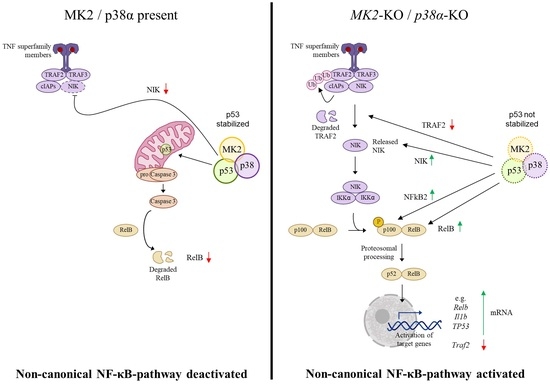
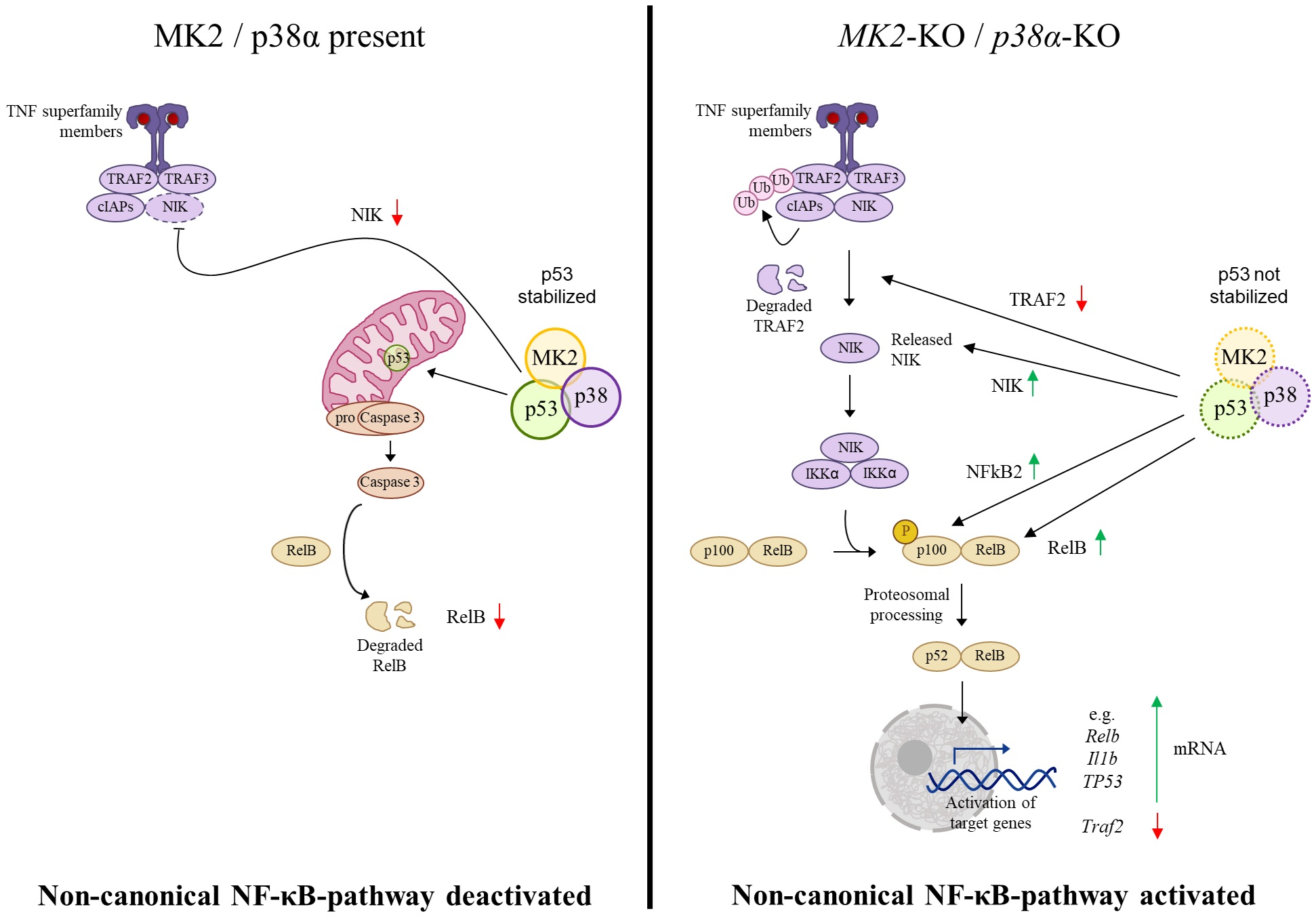
Interleukin (IL)-1β is a pro-inflammatory cytokine implicated in sterile inflammation and tumor development. Investigating the role of MAPKAP kinase 2 (MK2) in IL-1β processing, we found that Il1b mRNA and IL-1β protein levels were elevated in resting MK2-knockout (KO) macrophages and in the serum of MK2/3 double-KO mice. This was linked to activation of the non-canonical NF-κB pathway in the absence of MK2 or its activator, p38α. Rescue by MK2, its kinase-inactive mutant MK2K79R, or p38α suppressed this pathway and reduced Il1b expression. We also observed decreased basal protein levels of tumor suppressor p53 in MK2- or p38α-deficient cells. Mechanistically, p53 interacts with caspase-3, promoting cleavage of RelB, thereby inhibiting non-canonical NF-κB signaling and subsequent Il1b and TP53 expression. These findings explain elevated basal IL-1β levels in MK2-KO macrophages and uncover a new autoregulatory mechanism of TP53 expression. Additionally, they reveal a new mechanism that contributes to the long-discussed link between cancer and inflammation, wherein the tumor suppressor p53 inhibits cytokine production in parallel.

Graphical Abstract

1. Introduction

p38 mitogen-activated protein kinases (p38MAPK) comprise four distinct isoforms—p38α (MAPK14), p38β (MAPK11), p38γ (MAPK12 or ERK6), and p38δ (MAPK13 or SAPK4)—that are part of highly conserved signaling cascades. They are activated by various cellular stresses, such as inflammatory cytokines, growth factors, bacterial lipopolysaccharides (LPS), osmotic stress, and ultraviolet irradiation. p38 signaling affects gene expression at the levels of transcription, mRNA stability, and translation. It also regulates survival, apoptosis, differentiation, aggregation, and migration [1]. MK2 and MK3 are the only MAPK-activated protein kinases (MKs) that are exclusively phosphorylated and activated by p38α/β. MK2 and MK3 are closely related in terms of structure and function and share the same substrates. However, MK2 is expressed and active at higher levels than MK3 in most cells and tissues [2]. p38α/β binds to a docking motif in the C-terminus of MK2 and phosphorylates MK2 regulatory sites in response to stress. Consequently, MK2 and p38 are co-transported from the nucleus to the cytoplasm, where MK2 substrates are phosphorylated [3]. MK2 has several specific substrates, including tristetraprolin (TTP), serum response factor (SRF), heat shock proteins Hsp25/27, receptor-interacting serine/threonine-protein kinase 1 (RIPK1), and RNA-binding motif protein 7 (RBM7). These substrates are involved in the regulation of immediate early gene responses, cytokine expression, cell death and migration [4,5,6,7,8]. Additionally, MK2 stabilizes p38 independently of its catalytic activity through the formation of a binary protein complex [3].
p53 is a transcription factor that is responsible for regulating several genes involved in the cell cycle control, apoptosis, and senescence. It also exhibits transcription-factor-independent functions, particularly in the regulation of apoptosis through the mitochondrial pathway. Its medical significance is highlighted by the fact that p53 mutations are present in over 50% of human tumors [9]. In resting cells, p53 is constitutively expressed, but becomes ubiquitinated by Mouse double minute 2 homolog (MDM2) and subsequently degraded by the proteasomes, maintaining low protein levels. Following exposure to DNA-damaging agents or other stress stimuli, p53 undergoes a series of post-translational modifications that stabilize and activate p53 by reducing its interaction with MDM2. These modifications include the phosphorylation of Ser15 and Ser37 [10,11]. The stabilization of p53 is also adjusted by a broad variety of other interacting proteins. p38 exists in a physical complex with the tumor suppressor p53 and coexpression of p38 stabilizes p53 protein. After UV radiation, p38 phosphorylates p53 at Ser33 and Ser46. These sites are associated with p53-mediated apoptosis and are important for the subsequent phosphorylation of Ser15 and Ser37 of p53 [12].
The transcription factor NF-κB plays a crucial role in regulating the immune responses, cell proliferation and cell death. There are five known NF-κB proteins: NF-κB1 (p105/p50), NF κB2 (p100/p52), RelA (p65), RelB, and c-Rel. These proteins are classified into the canonical and the non-canonical NF-κB pathways. The canonical NF-κB pathway is triggered by a wide variety of receptors that activate TGF-β-activated kinase 1 (TAK1). Then, TAK1 mediates the phosphorylation of the inhibitor of NF-κB kinase (IKK) IKKβ. The activated IKK complex, composed of IKKα, IKKβ and IKKγ/Nuclear Factor-κB-Essential Modulator (NEMO), phosphorylates the inhibitor of κB (IκB) IκBα and the IκB-like molecule p105, which are subsequently ubiquitinated and degraded. The cleavage product of the NF-κB1 precursor protein p105, p50, is translocated to the nucleus as a homodimer or a heterodimer together with RelA or c-Rel. There, they bind to specific DNA elements to induce the transcription of canonical target genes. In contrast, the non-canonical NF-κB pathway is activated only by a subset of TNF receptor superfamily members. Under resting conditions, NF-κB-inducing kinase (NIK) is recruited to a ubiquitin ligase complex consisting of a cellular inhibitor of apoptosis (cIAP), tumor necrosis factor (TNF)-receptor-associated factors (TRAF)-2 and TRAF-3. This leads to the constitutive degradation of NIK. After stimulation, TRAF3 is degraded, resulting in the release and stabilization of NIK. NIK then phosphorylates IKKα, which in turn phosphorylates the NF-κB2 precursor protein p100. Subsequently, the cleavage product p52 and RelB are then translocated into the nucleus, where they activate target genes of the non-canonical NF-κB pathway [13].
Here we demonstrate that in the absence of MK2 or p38α, basal p53 protein level is reduced and in turn, the non-canonical NF-κB pathway is activated. Subsequently, the mRNAs of pro-inflammatory interleukin IL-1β coding gene Il1b and the p53 coding gene TP53 are enriched. Accumulation of p53 activates caspase-3 through the mitochondrial pathway. Caspase-3 cleaves RelB, a direct transcription factor of p53 [14]. Subsequently, the non-canonical NF-κB pathway and TP53 transcription itself are inactivated, indicating a novel autoregulatory mechanism of p53 gene expression.

2. Results

2.1. MK2/3-DKO Mice Display Elevated Levels of IL-1β

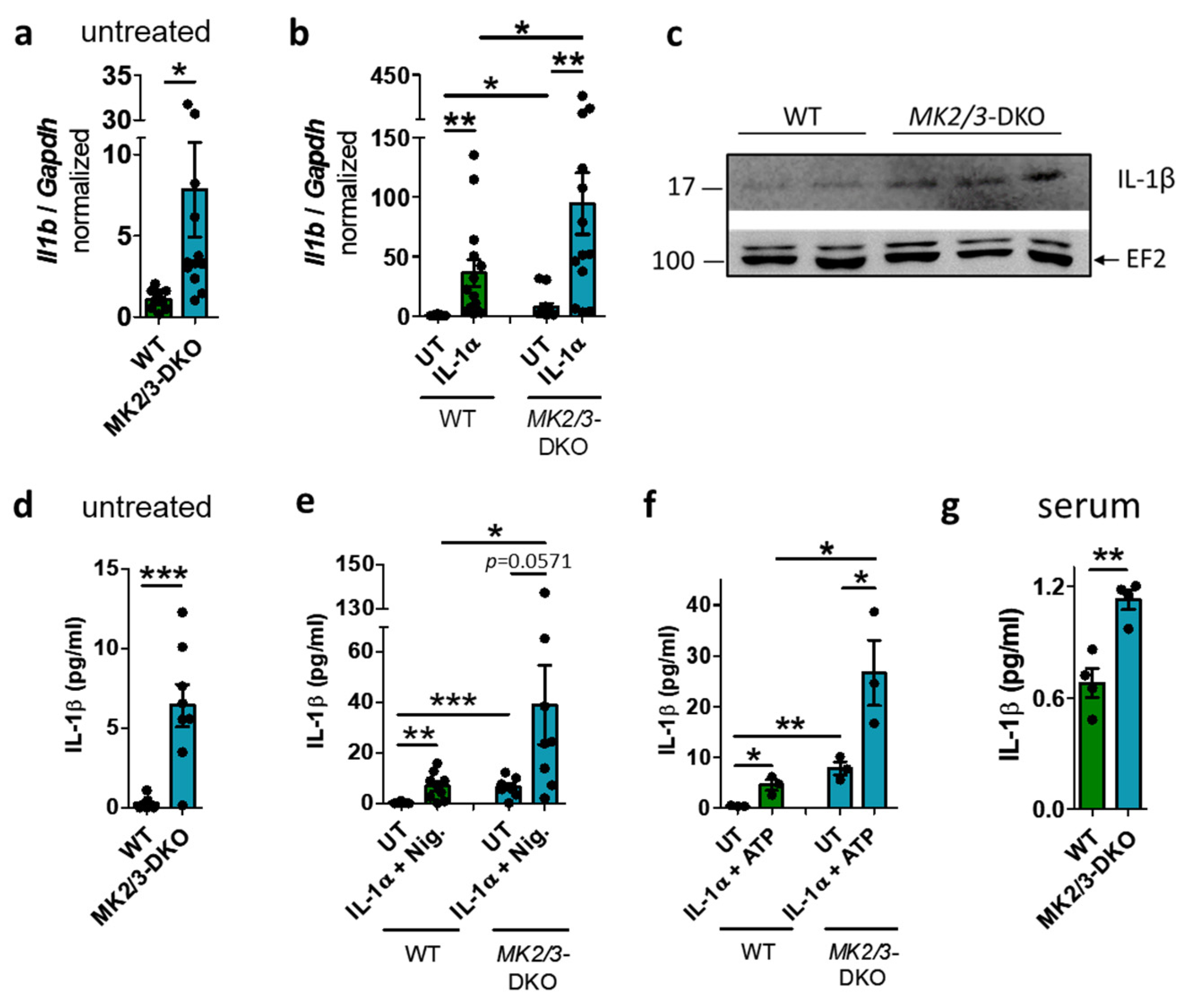
To investigate whether the kinases MK2 and MK3 regulate IL-1β, the Il1b mRNA level was analyzed in bone marrow-derived macrophages (BMDMs) from wild-type (WT) and MK2/3-DKO mice that were either left untreated or stimulated with either IL-1α or LPS. IL-1α is usually released by dying cells, necrotic cells or stressed cells and occurs in sterile chronic diseases, while LPS is derived from bacteria. The expression and release of IL-1β typically occurs in response to two distinct signals. IL-1α or LPS serves as the first signal, resulting in the expression of Il1b. The Il1b mRNA levels were already elevated in unstimulated BMDMs of the MK2/3-DKO (Figure 1a), which increased further after IL-1α stimulation (Figure 1b). The Il1b mRNA levels in LPS-treated BMDMs were strongly increased, but did not differ between the different genotypes (Supplementary Figure S1a). Consistent with the elevated mRNA levels, MK2/3-DKO cells also displayed elevated IL-1β protein levels in unstimulated BMDMs (Figure 1c). Usually, a second signal, such as ATP or nigericin, is required for activation of the inflammasome complex, caspase-1, and the subsequent release of IL-1β. Even without a second stimulus, the concentration of IL-1β in the supernatant of unstimulated MK2/3-DKO-BMDMs was significantly higher than that in WT-BMDMs (Figure 1d), whereas the cell viability was not affected (Supplementary Figure S1b). After the addition of the second stimulus, such as nigericin or ATP, MK2/3-DKO BMDMs pretreated with IL-1α released significantly higher levels of IL-1β compared to WT BMDMs (Figure 1e,f). In contrast, equal concentrations of IL-1β were released after the addition of ATP to LPS-pretreated cells (Supplementary Figure S1c). Analysis of IL-1 receptor mRNA expression (IL-1r1, IL-1r2, and IL-1rn) revealed no differences among WT and MK2/3-DKO BMDMs (Supplementary Figure S1d–f).
Since unstimulated BMDMs from MK2/3-DKO mice exhibit elevated Il1b mRNA and IL-1β protein levels and release more IL-1β than unstimulated BMDMs from WT mice, we analyzed the sera of MK2/3-DKO and WT mice from the same breeding to determine their basal cytokine levels. MK2/3-DKO serum showed significantly higher basal IL-1β levels than WT serum (Figure 1g), demonstrating the relevance in vivo. However, there was no significant difference in the basal levels of TNF-α and CXCL-1 (Supplementary Figure S1g,h).

2.2. MK2 and MK3 Suppress the Basal and IL-1α-Induced IL-1β Level in Rescued Immortalized MK2-KO BMDMs

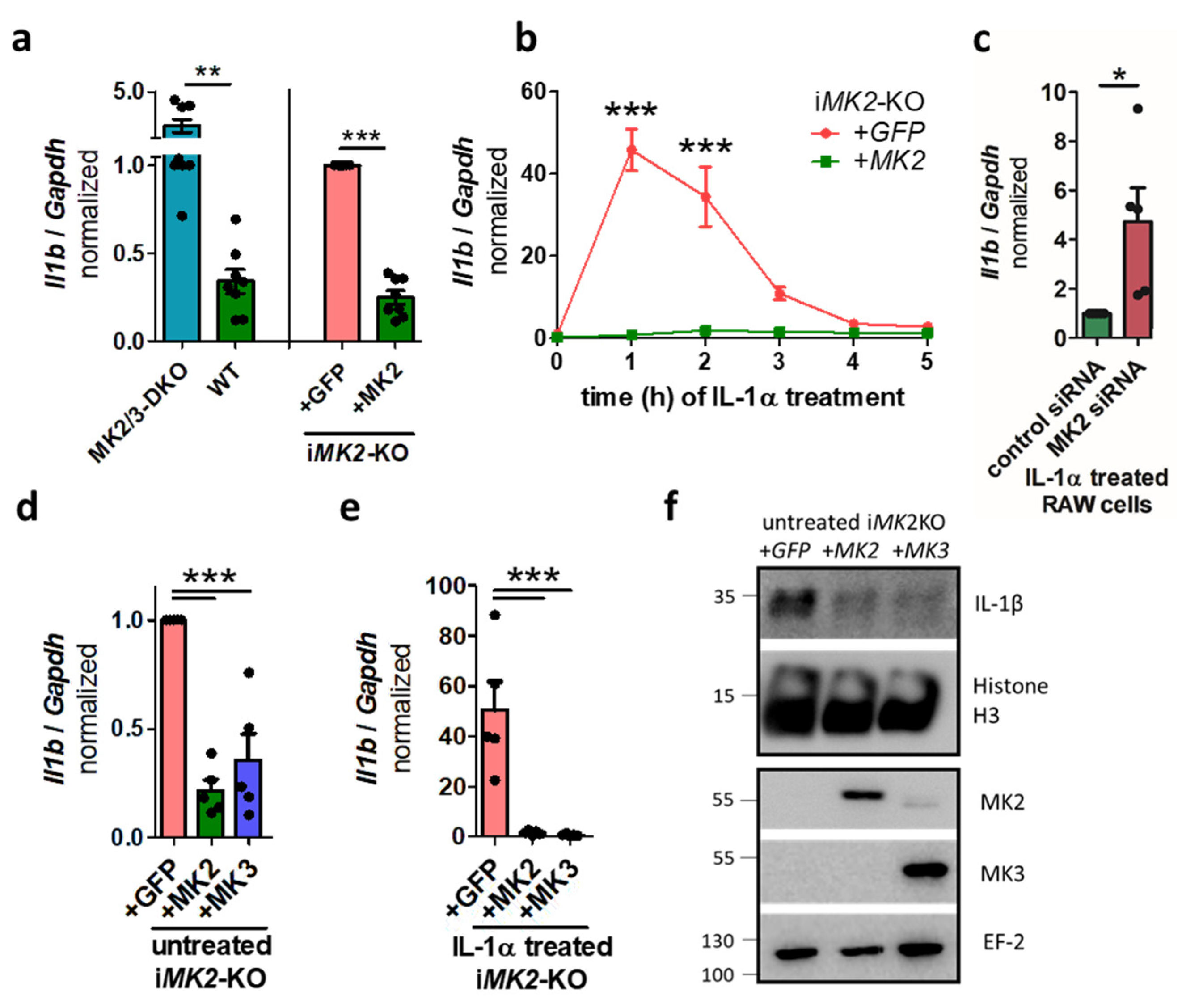
Next, MK2-KO BMDMs were immortalized and transduced with either MK2 (iMK2-KO +MK2) or with an empty vector (iMK2-KO +GFP) as control (Supplementary Figure S1i). Rescuing MK2 suppressed the elevated Il1b mRNA level (Figure 2a) to a level comparable to the WT BMDMs (Figure 1a and Figure 2a). In contrast, the basal Tnf mRNA level was unaffected in iMK2-KO cells, resembling the situation in WT BMDMs (Supplementary Figure S1j). IL-1α treatment increased the differences in the Il1b mRNA levels in iMK2-KO cells as well (Figure 2b). This was confirmed in an additional cell line. RAW macrophages treated with MK2 siRNA had higher Il1b mRNA levels compared to the control after IL-1α stimulation (Figure 2c, Supplementary Figure S2a). To investigate whether MK3 is functionally redundant with MK2, iMK2-KO cells were rescued with MK3. Indeed, MK3 also repressed the Il1b mRNA level in both unstimulated and IL-1α-treated cells (Figure 2d,e), as well as the basal IL-1β protein level (Figure 2f). Therefore, MK2 and MK3 redundantly suppress IL-1β production in these cells.

2.3. MK2 Suppresses the Non-Canonical NF-κB Pathway

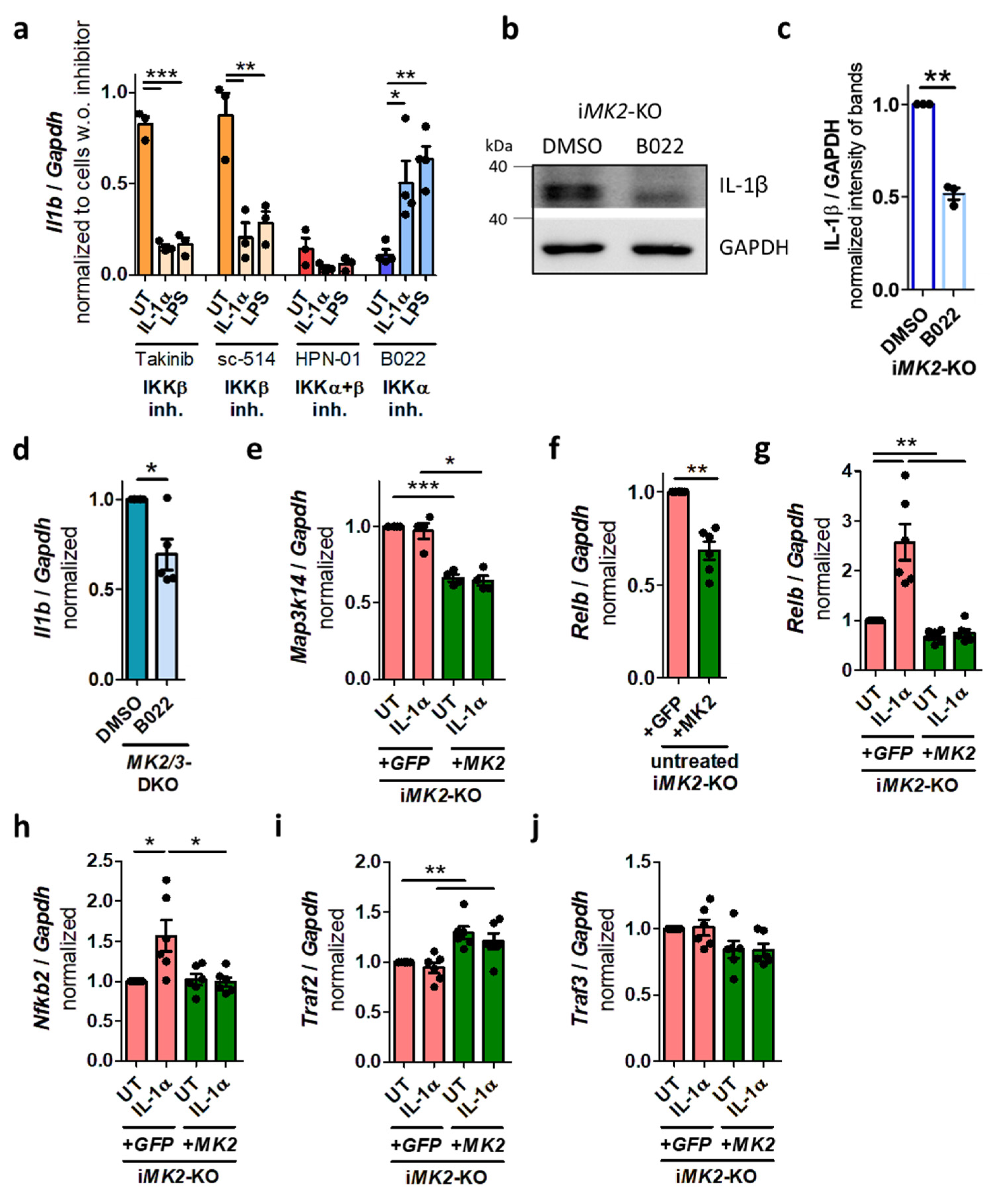
To identify the pathway activated in the absence of MK2, several inhibitors were tested. Actinomycin D, an inhibitor of RNA transcription, was used as a positive control and efficiently suppressed the basal Il1b mRNA level (Supplementary Figure S2b). cFos/AP1 and TRAF6 inhibitors did not affect the Il1b mRNA levels in iMK2-KO cells (Supplementary Figure S2c,d). Suppressing the canonical NF-κB pathway with three specific IKKβ inhibitors (Takinib, sc 514, CAY10657) did not reduce the basal Il1b mRNA level in iMK2-KO cells. However, they suppressed IL-1α- and LPS-induced Il1b mRNA levels (Figure 3a, Supplementary Figure S2e). In contrast, the simultaneous inhibition of IKKα and IKKβ with HPN-01 also inhibited the basal Il1b mRNA expression (Figure 3a). These results were confirmed with BMS-345541. At low concentrations, BMS-345541 solely inhibits IKKβ, resulting in no reduction in the basal Il1b mRNA level. At higher concentrations, where both IKKα and IKKβ are suppressed simultaneously, the basal Il1b mRNA level was significantly reduced in iMK2-KO cells (Supplementary Figure S2f). Consequently, the specific inhibition of the non-canonical NIK/IKKα by B022 decreased in particular the basal Il1b mRNA and Map3k14 mRNA expression in iMK2-KO cells (Figure 3a, Supplementary Figure S2g). Inhibition of the non-canonical NF-κB pathway by B022 also reduced basal IL-1β protein level in iMK2-KO cells (Figure 3b,c) as well as basal Il1b mRNA in primary MK2/3-DKO BMDMs (Figure 3d).
iMK2-KO cells displayed higher basal mRNA expression levels of Map3k14, the NIK-coding gene that activates the non-canonical NF-κB pathway (Figure 3e). Additionally, iMK2-KO cells also showed elevated basal levels of the mRNA of non-canonical Relb (Figure 3f). Relb and Nfkb2 mRNA expression increased after IL-1α treatment solely in iMK2-KO +GFP cells, but not in MK2-rescued iMK2-KO +MK2 cells (Figure 3g,h). There was no significant difference in canonical Nfkb1 and Rela mRNA expression (Supplementary Figure S2h,i). Furthermore, Traf2 and Traf3 were analyzed, as both are known negative regulators of NIK [13,15]. The basal level of Traf2, but not Traf3, mRNA was significantly reduced in iMK2-KO macrophages (Figure 3i,j).
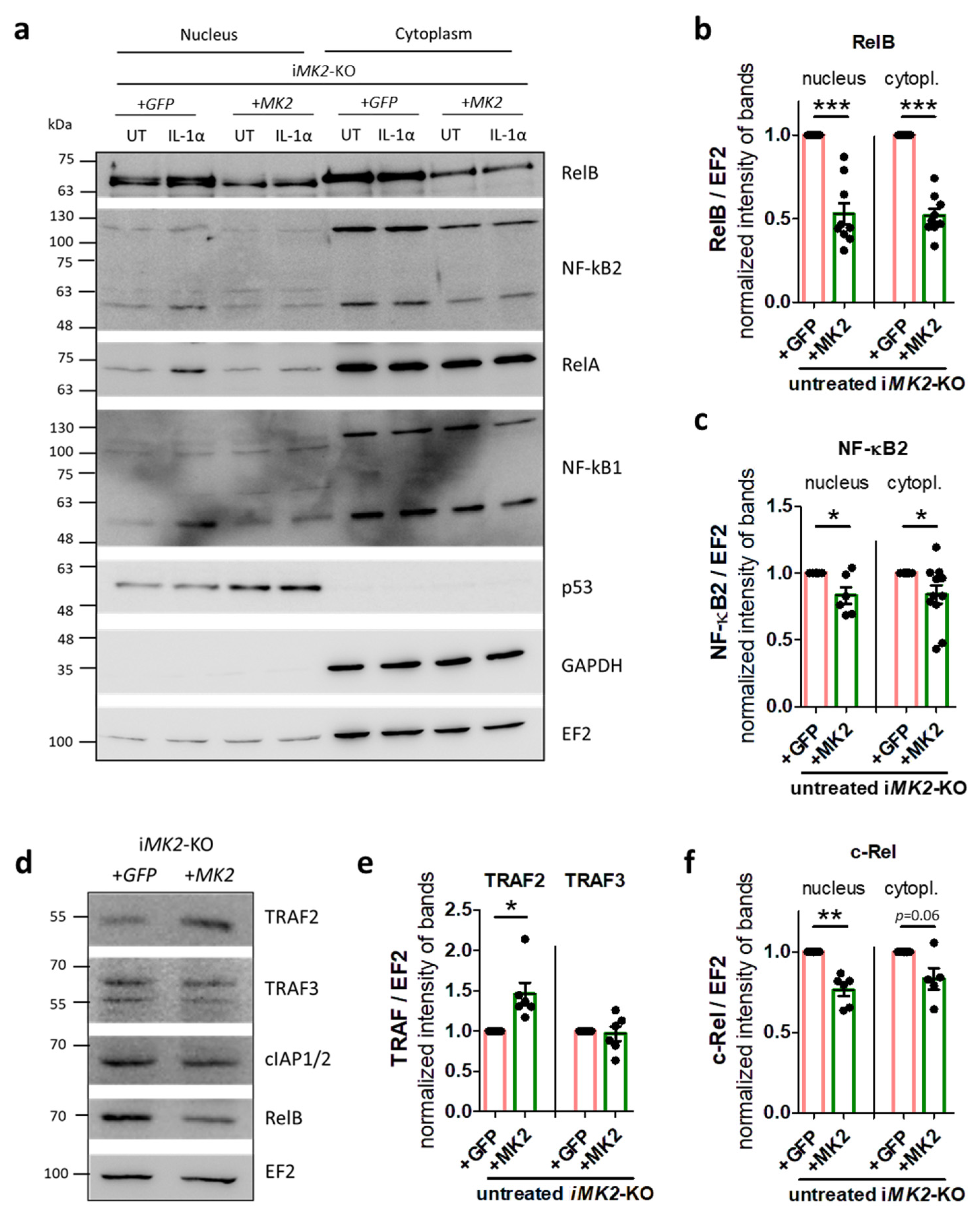
Next, we analyzed the levels of signaling proteins in the nuclear and cytoplasmic fractions of iMK2-KO +GFP and iMK2- KO +MK2 BMDMs using Western blotting. Following IL-1α treatment, the nuclear fraction of the iMK2-KO +GFP cells exhibited higher levels of the non-canonical proteins RelB and NF-κB2, as well as the canonical proteins RelA and NF-κB1 (Figure 4a). Notably, only the non-canonical NF-κB pathway proteins RelB and NF-κB2 were elevated in the nuclear and cytoplasmic fractions of unstimulated iMK2-KO +GFP cells, as compared to the same fractions of iMK2- KO +MK2 cells. No differences in basal protein levels were detected among the members of the canonical NF-κB pathway: RelA, NF-κB1, and IκBα (Figure 4a–c, Supplementary Figure S3a–c). Furthermore, whole-cell lysis revealed decreased TRAF2 protein levels in unstimulated iMK2-KO cells. However, the basal level of TRAF3 and cIAP remained unaffected in the absence of MK2. Whole-cell lysis also confirmed an overall reduction in RelB in the presence of MK2 (Figure 4d,e, Supplementary Figure S3d). Since TRAF2 mediates the proteasome-dependent degradation of the pro-inflammatory transcription factor c-Rel [16], we also analyzed c-Rel protein expression. Indeed, iMK2-KO +GFP cells had higher c-Rel protein levels in the nucleus and cytoplasm than in iMK2- KO +MK2 cells (Figure 4f, Supplementary Figure S3e).
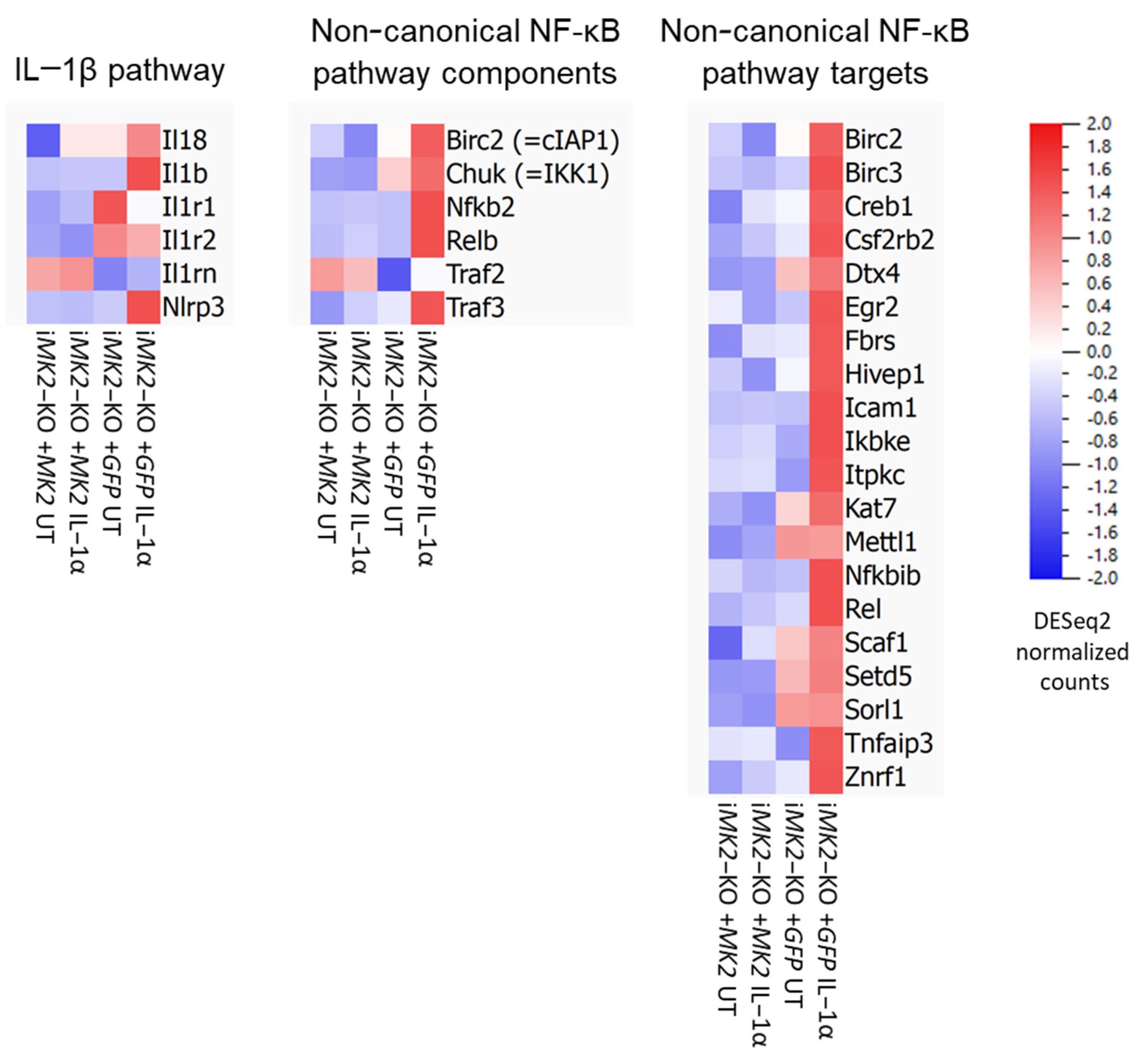
RNA sequencing of the immortalized BMDMs revealed increased mRNA levels of IL-1β pathway components (such as Il1b, Il18, and Nlrp3) and of non-canonical NF-κB pathway components (such as Chuk, Nfkb2, and Relb), as well as a wide range of non-canonical NF-κB pathway targets predicted using known transcription factor target site motifs (such as Birc2, Birc3, Icam1, and Rel) [17,18,19] in iMK2-KO +GFP cells (Figure 5).
MK2-KO macrophages exhibited elevated basal mRNA and protein levels of the non-canonical NF-κB pathway components NIK (MAP3K14), RelB, and NF-κB2. Conversely, they displayed decreased mRNA and protein levels of TRAF2, the negative regulator of NIK. Neither the basal mRNA nor basal protein levels of canonical components RelA, NF-κB1, or IκBα are changed in the absence of MK2. In addition, inhibition of the non-canonical, but not the canonical NF κB pathway, reduced the basal IL1b mRNA level in iMK2-KO cells. Therefore, MK2 suppresses the upregulation of IL1b in unstimulated cells by blocking the non-canonical NF κB pathway.

2.4. Stabilization of the Protein Kinase p38α by MK2/3 Is a Mechanism for Suppressing Il1b

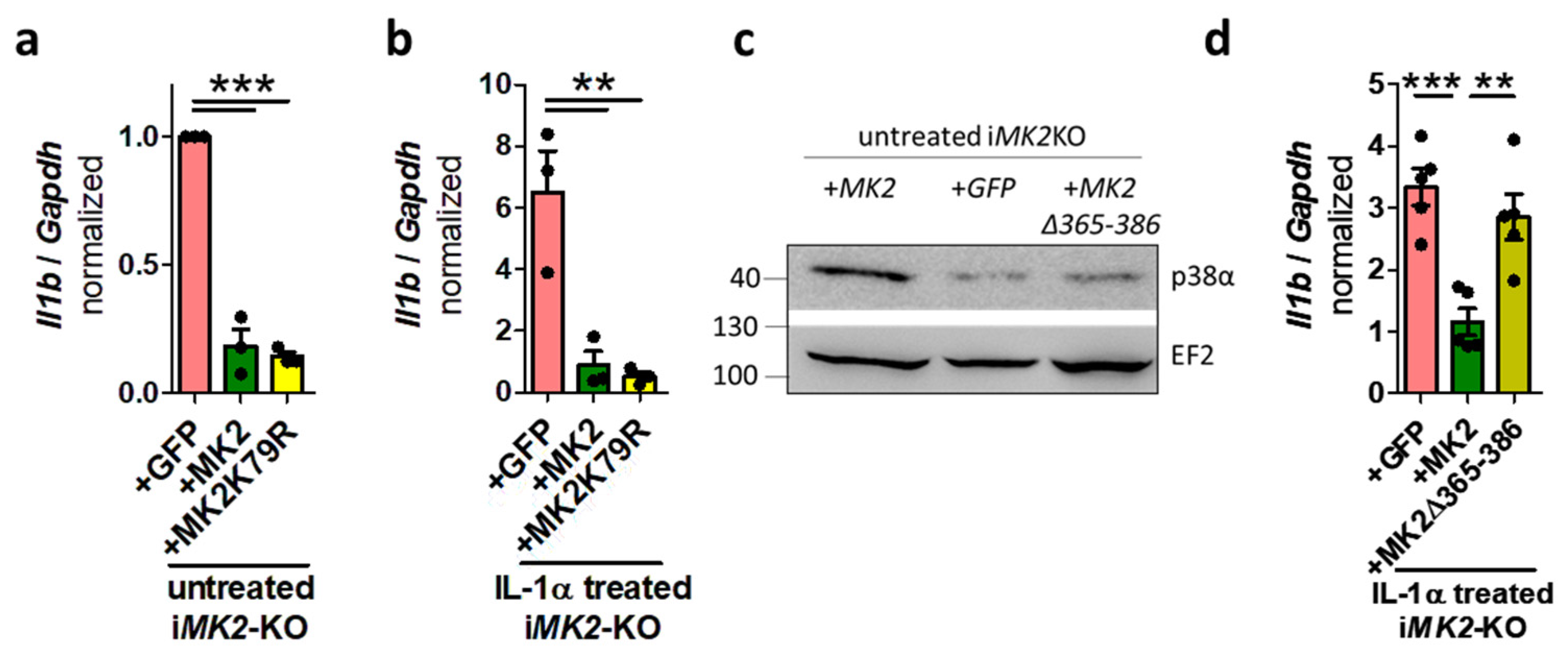
To examine the role of MK2’s catalytic activity in suppressing Il1b, iMK2-KO cells were rescued using the kinase-inactive mutant MK2K79R (Supplementary Figure S4a). Catalytic inactivation of MK2 did not affect the suppression of Il1b mRNA levels in unstimulated or IL-1α-treated cells (Figure 6a,b). In addition to its catalytic activity, MK2 also binds and stabilizes its activator, the protein kinase p38α [20,21,22]. Indeed, iMK2-KO +GFP BMDMs express significantly less endogenous p38α protein than iMK2-KO +MK2 cells, whereas the MAPK14 (p38α) mRNA level is not affected (Figure 6c, Supplementary Figure S4b,c). Because the C-terminal extension of MK2 is involved in binding to p38, a mutant lacking this extension (MK2-Δ365–386) was transduced into iMK2-KO cells that had a comparable level of MAPKAPK2 expression to MK2 (Supplementary Figure S4d). Although this mutant is catalytically active, it could not restore the endogenous p38α protein level and was unable to suppress Il1b mRNA levels in untreated or IL-1α-treated cells (Figure 6c,d, Supplementary Figure S4e). These findings strongly suggest that MK2’s inability to stabilize p38 is the primary reason for Il1b upregulation.

2.5. p38α Suppresses the Non-Canonical NF-κB Pathway Independent of the Kinase Activity

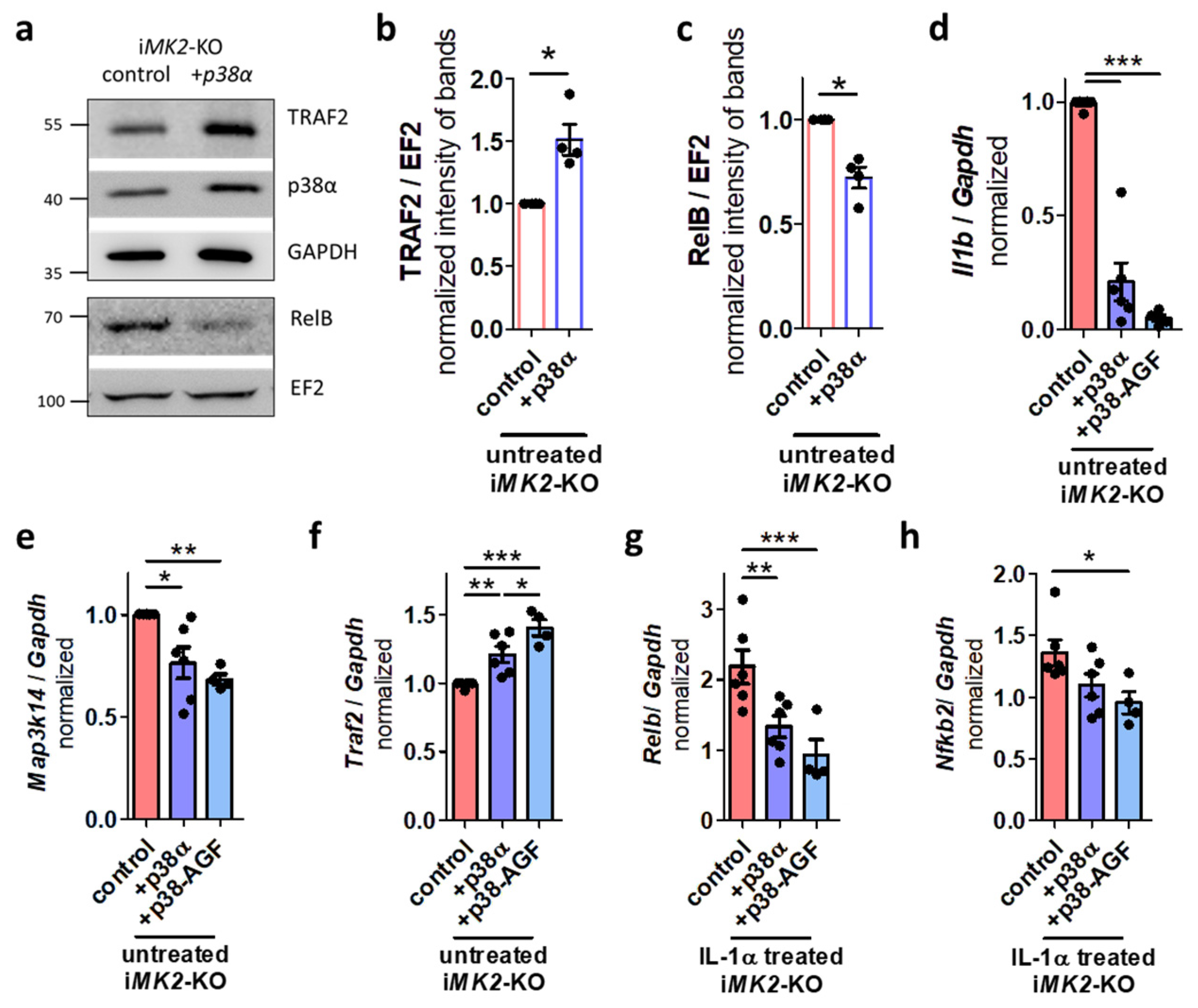
Overexpression of p38α in iMK2-KO cells significantly increased basal TRAF2 levels and reduced basal RelB protein levels (Figure 7a–c). To investigate if the kinase activity of p38α influences the basal non-canonical NF-κB pathway, in addition to p38α, a kinase-inactive mutant p38-AGF was overexpressed in iMK2-KO cells. Surprisingly, basal Il1b mRNA was lowered in iMK2-KO+p38α as well as in iMK2-KO+p38-AGF cells (Figure 7d). In addition, Map3k14 mRNA decreased and Traf2 mRNA increased (Figure 7e,f). Also, Relb, Nfkb2, and Il1b were significantly reduced in IL 1α-treated iMK2-KO cells with overexpressed p38α and p38-AGF (Figure 7g,h, Supplementary Figure S4f).
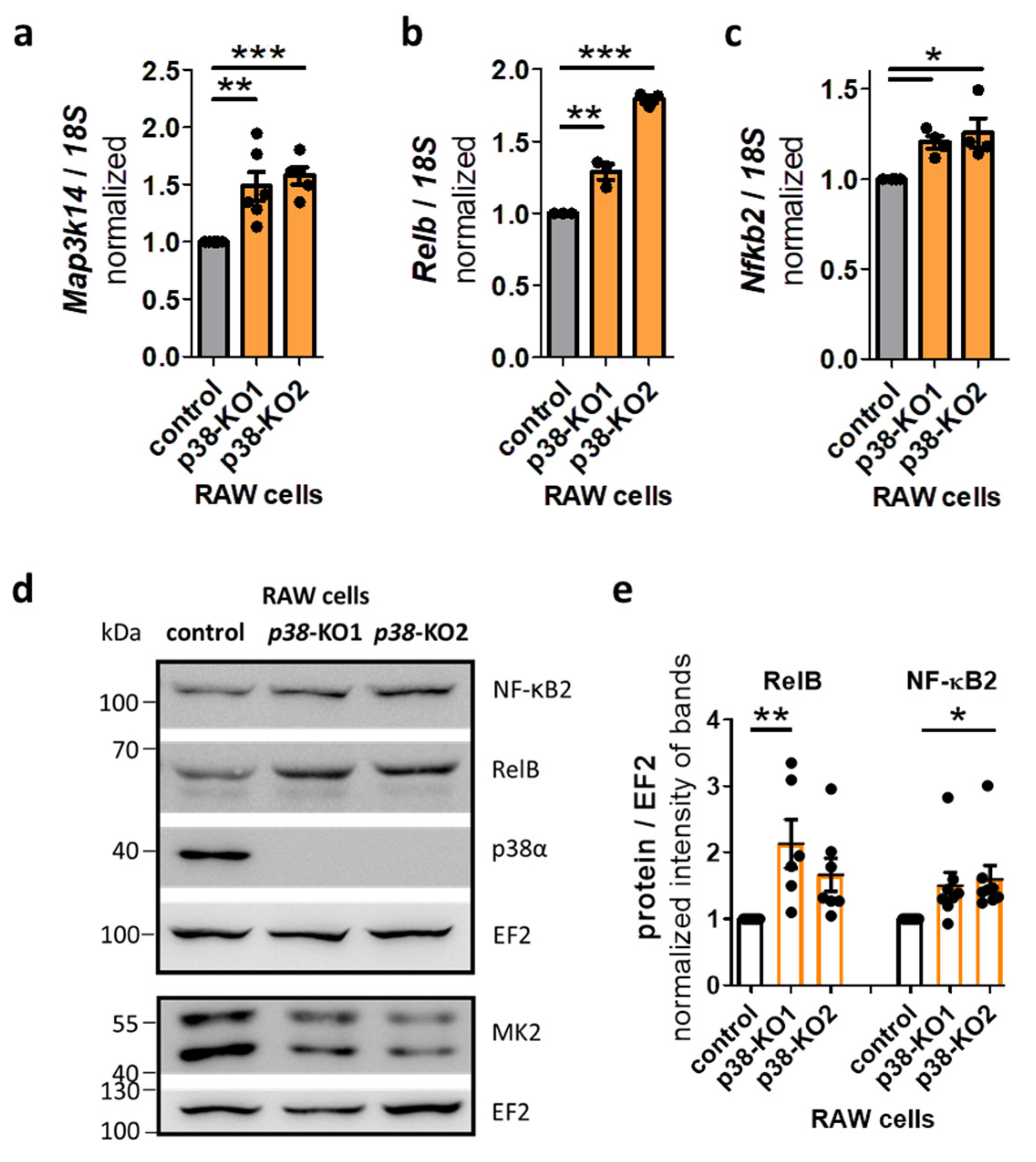
We then generated two p38α-KO RAW 264.7 macrophage cell lines by using CRISPR/Cas9 technology, followed by single-cell sorting. Both p38α-KO cell lines showed increased basal mRNA levels of the non-canonical NF-κB signaling components Map3k14, Relb, and Nfkb2 (Figure 8a–c). Additionally, both p38α-KO cell lines exhibited significantly higher basal levels of the non-canonical NF-κB signaling proteins NF-κB2 and RelB compared to the control (Figure 8d,e). In contrast, the protein level of the canonical NF-κB signaling protein RelA did not change in unstimulated p38α-KO RAW 264.7 macrophages (Supplementary Figure S4g,h). p38α-KO RAW macrophages had a reduced MK2 protein level (Figure 8d).
Overexpression of p38α and the kinase-inactive p38-AGF in iMK2-KO cells decreased the levels of components of the non-canonical NF-κB pathway, such as Map3k14 (NIK), Relb and NFkB2. Consistent with this finding, knocking out p38α in a different macrophage cell line resulted in elevated levels of these components. Therefore, MK2 suppresses the non-canonical NF-κB pathway and resulting IL-1β production independently of its own kinase activity by stabilizing the protein kinase p38α.

2.6. MK2/p38α Stabilize p53, Which Suppresses the Non-Canonical NF-κB Pathway, Il1b, and Its Own Expression

p38α seems to regulate the basal non-canonical NF-κB pathway independent of its kinase activity, therefore stabilizing another protein might be important. It has been described in the literature that p38 and the tumor suppressor p53 exist within the same physical complex and co-expression of p38 stabilizes p53 protein complex [12]. In contrast, there are also p38α kinase-dependent interactions described. Activation of p38 MAPK has been shown to induce rapid degradation of the E3 ubiquitin-protein ligase mouse double minute 2 homolog (MDM2), thereby stabilizing its target, p53 [23]. Additionally, p38 has been demonstrated to phosphorylate the tumor suppressor p53 at residues Ser33 and Ser46 in the N-terminus [12].
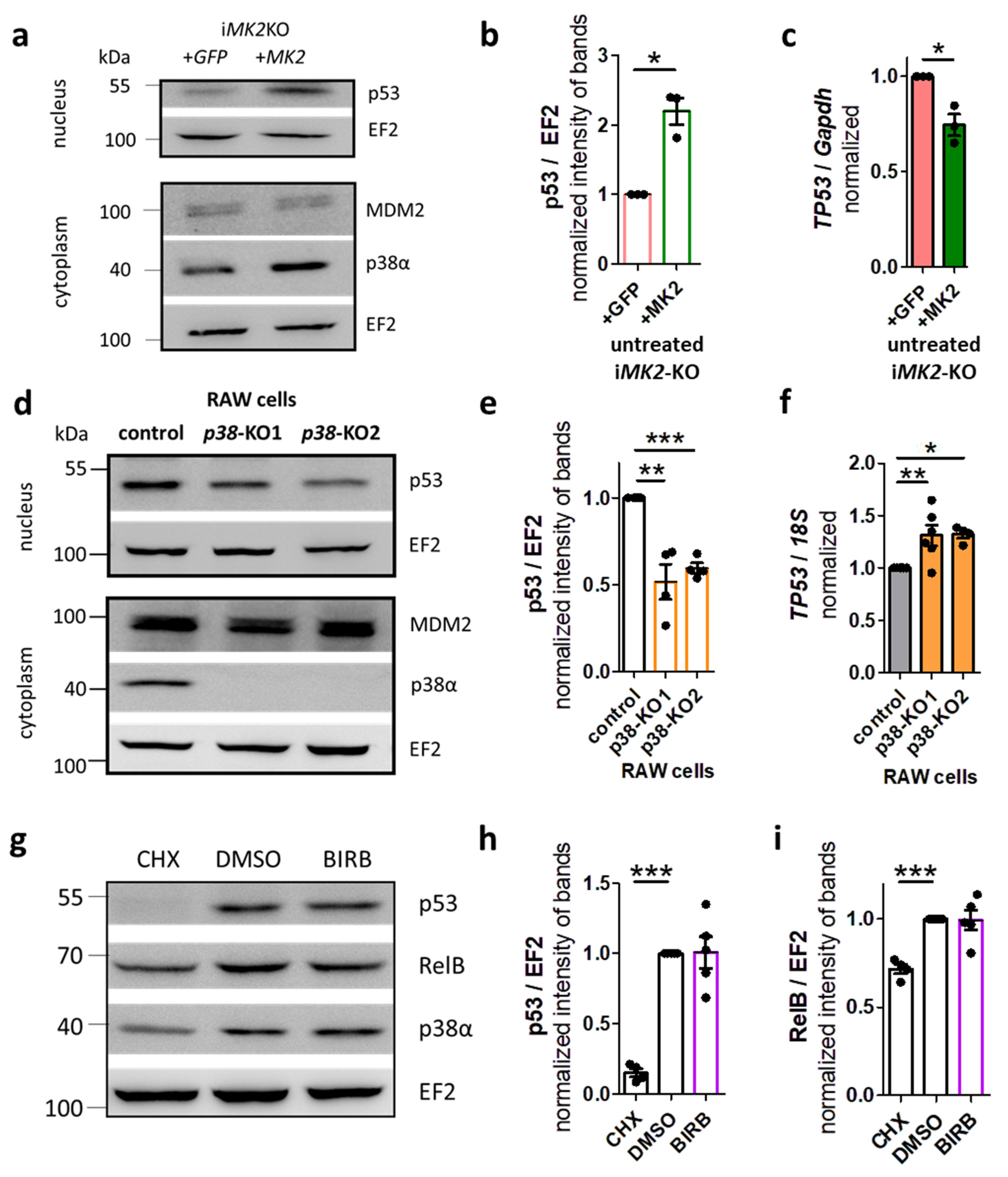
Therefore, we analyzed the protein levels of p53 and MDM2 in iMK2-KO cells. The basal p53 protein level was indeed significantly reduced in iMK2-KO cells. However, the basal MDM2 protein level remained unchanged (Figure 9a,b, Supplementary Figure S4i). We also analyzed the mRNA level of the p53 gene TP53. Unlike the reduced p53 protein levels, the TP53 mRNA levels increased in resting iMK2-KO cells (Figure 9c). This may be due to the previously described increase in RelB protein levels in iMK2-KO cells, since TP53 is a direct target of RelB [14]. Consistent with this finding, p38α-KO macrophages exhibited reduced basal levels of p53 protein, but no significant change in MDM2 protein levels (Figure 9d,e, Supplementary Figure S4j). Similar to iMK2-KO cells, p38α-KO macrophages also showed elevated TP53 transcript levels (Figure 9f). Additionally, inhibiting p38 kinase activity in resting RAW cells with the specific p38 MAPK inhibitor BIRB 796 (Supplementary Figure S5a) neither reduced p53 levels nor increased RelB and IL-1β protein levels (Figure 9g–i, Supplementary Figure S5b,c). Therefore, the basal p53 protein level is stabilized by the MK2-p38-p53 protein interaction, and phosphorylation events are not required.
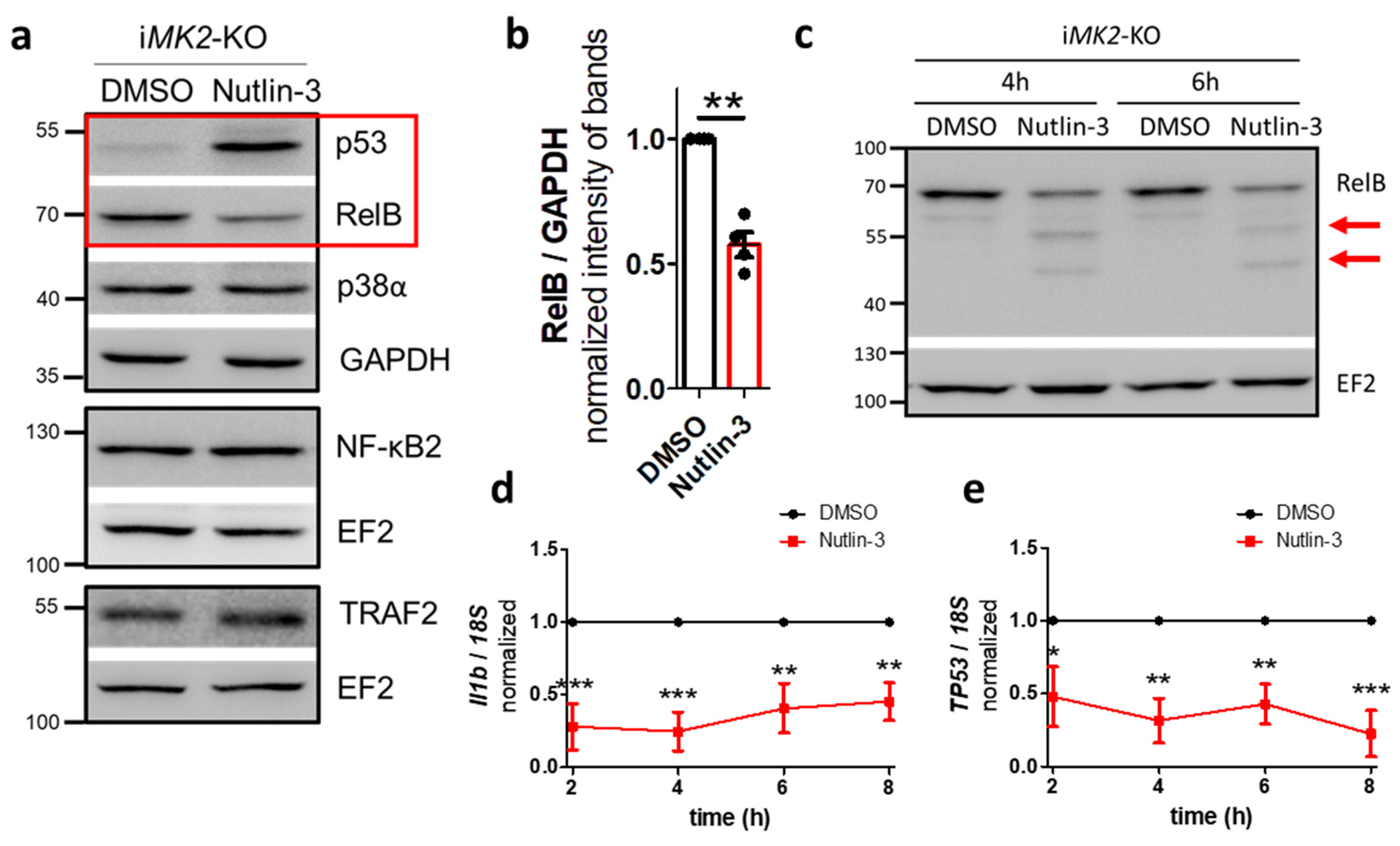
To investigate whether p53 also influences the non-canonical NF-κB pathway, we treated iMK2-KO cells with Nutlin-3. Nutlin-3 is an inhibitor that prevents MDM2 from binding to p53, thereby blocking the subsequent degradation of p53 [24]. As expected, Nutlin-3 treatment resulted in p53 protein accumulation in iMK2-KO cells (Figure 10a). Nutlin-3 also stimulated RelB protein cleavage, as indicated by a weaker RelB band and the appearance of several lower-molecular-weight RelB bands (Figure 10a–c). Similarly, Nutlin-3-treated RAW 264.7 macrophages also exhibited increased p53 and reduced RelB protein levels (Supplementary Figure S5d,e). No changes in NF-κB2 or TRAF2 protein levels were observed in iMK2-KO cells after Nutlin-3 treatment (Figure 10a). Additionally, Il1b and TP53 mRNA levels were significantly reduced in Nutlin-3-treated iMK2-KO cells with no time-dependent effects observed (Figure 10d,e). Also, Map3k14, Relb, and Nfkb2 mRNA levels were significantly reduced following Nutlin-3 treatment, though Traf2 levels were not (Supplementary Figure S5f–i). Therefore, p53 suppresses the non-canonical NF-κB pathway by cleaving RelB, thereby inhibiting basal Il1b and TP53 expression.

2.7. p53 Activates Caspase-3 Through the Mitochondrial Pathway, Which Induces RelB Cleavage

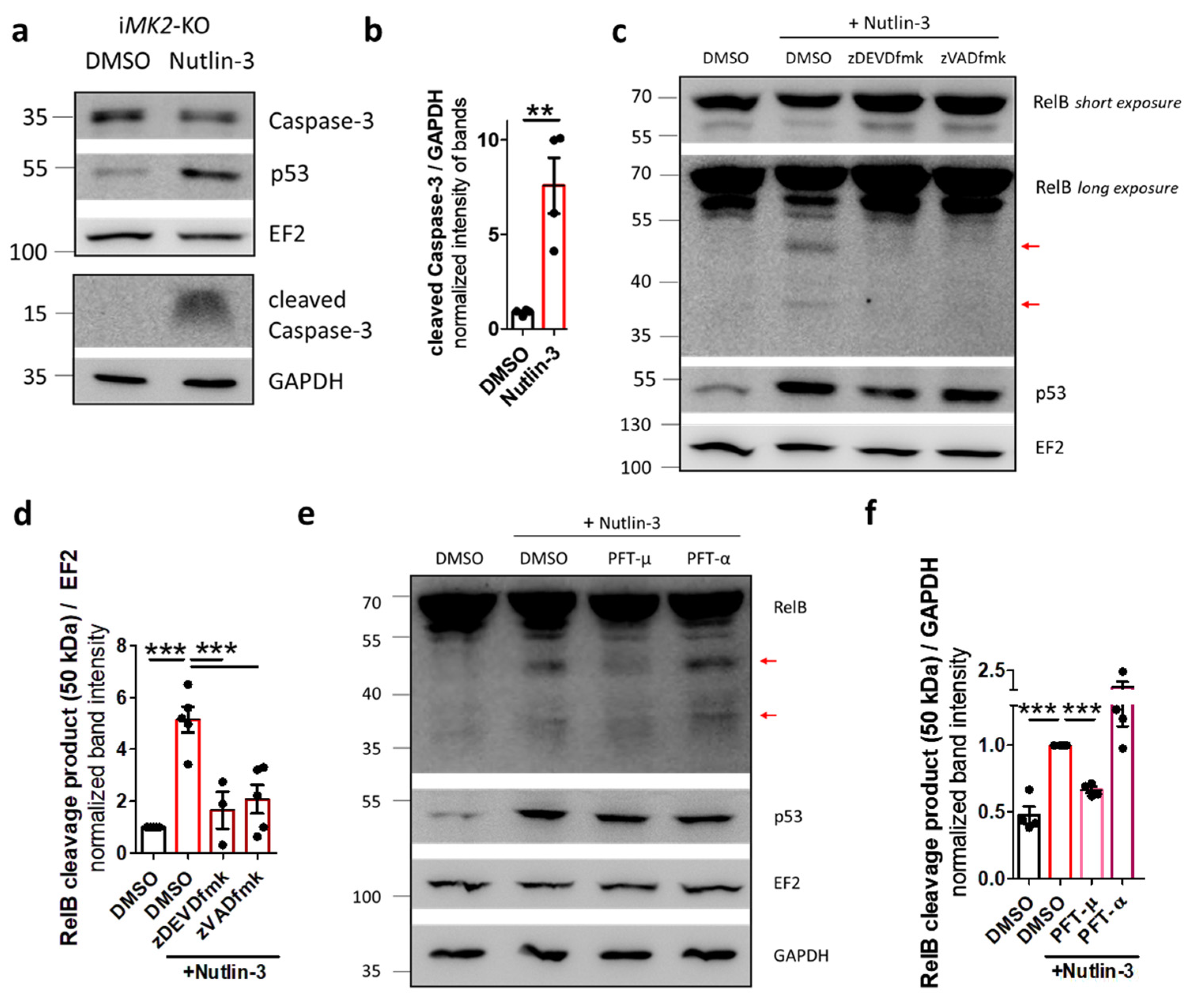
Since RelB can be cleaved by caspase-3 [25,26], we analyzed the level of this protease in iMK2-KO cells. Following Nutlin-3 treatment, iMK2-KO cells exhibited decreased levels of full-length caspase-3 protein (procaspase-3) and increased levels of cleaved Caspase-3 (Figure 11a,b, Supplementary Figure S5j). Furthermore, the caspase-3-specific inhibitor zDEVDfmk and the pan-caspase inhibitor zVADfmk inhibited Nutlin-3-induced RelB cleavage in iMK2-KO macrophages (Figure 11c,d). Because p53 activates caspases by releasing mitochondrial cytochrome c [27], iMK2-KO cells were pre-incubated with either Pifithrin µ (an inhibitor of mitochondrial p53 translocation), or Pifithrin α (a p53-specific transcriptional inhibitor). Pifithrin µ, but not Pifithrin α, reduced Nutlin-3-induced RelB cleavage (Figure 11e,f). Therefore, p53 activates caspase-3 through the mitochondrial pathway, which cleaves the non-canonical RelB protein. To confirm this non-transcriptional effect in resting p38-KO cells, a prominent transcriptional target of p53, the cyclin-dependent kinase inhibitor p21, was analyzed. There was no significant difference in the protein levels of p21 in the nuclear fraction of resting p38-KO and control cells (Supplementary Figure S5k,l).
Since treatment with Nutlin-3 also leads to RelB cleavage in WT RAW 264.7 macrophages (Supplementary Figure S5d,e), MK2 and p38α contribute to RelB cleavage exclusively through the stabilization of the p53 protein. In presence of MK2 and p38, p53 is stabilized within the MK2-p38-p53 complex. Stabilization of p53 activates caspase-3 through the mitochondrial pathway. Caspase-3 cleaves RelB and therefore ensures the activity of the non-canonical NF-κB pathway remains diminished. In contrast, the absence of MK2 or p38α destabilizes the p53 protein. This leads to an increased RelB protein level and activation of the non-canonical NF-κB pathway in resting MK2-KO and p38-KO cells.

3. Discussion

IL-1β plays an important role in maintaining human homeostasis by regulating nutrition, sleep, and temperature [28]. However, it is also a potent endogenous pro-inflammatory pyrogen that influences the innate and adaptive immune systems. Prolonged, uncontrolled release of IL-1β causes the pathological effects of chronic inflammation. It is involved in the pathogenesis of various diseases, including arthritis, gout, Alzheimer’s disease, diabetes mellitus, obesity, atherosclerosis, and tumor growth [29,30,31,32]. The expression of the inactive pro- IL-1β precursor is usually triggered when pattern recognition receptors, such as Toll-like or NOD-like receptors, are stimulated by microbial or viral molecules [33,34]. However, IL-1β can also stimulate its own expression. The main subunits responsible for activating the NF-κB binding site in the Il1b promoter region in response to phorbol 12 myristate 13-acetate (PMA) or LPS stimulation are key components of the canonical NF-κB pathway, including NF-κB1 (p50), RelA (p65), and c-Rel [35,36,37]. Nevertheless, RelB competes with RelA for binding to κB sites of NF-κB-regulated promoters in dendritic cells [38]. Additionally, increased Il1b levels are detected in Relb-KO fibroblasts [39]. In both cases, RelB suppresses LPS-induced inflammatory gene expression. Accordingly, RelB has been shown to prevent RelA from binding to the Il1b promoter in LPS-tolerized cells by forming facultative heterochromatin, which silences Il1b transcription [40,41,42].
In this study, we demonstrate the activation of Il1b transcription through the non-canonical NF-κB pathway in resting iMK2-KO macrophages. The abundance of the non-canonical NF-κB pathway is enhanced in these cells, since basal TRAF2 expression is reduced while basal Map3k14 (NIK), RelB and NF-κB2 expressions are increased. However, components of the canonical pathway, such as RelA and NF-κB1, remain unaffected. Additionally, mRNA analysis of unstimulated iMK2-KO macrophages revealed elevated levels of the targets of the non-canonical NF-κB pathway, including Il1b. Inhibiting the non-canonical NF-κB pathway significantly reduced Il1b in resting iMK2-KO cells, but not in LPS-stimulated cells. In contrast, inhibiting the canonical NF-κB pathway did not lower the basal Il1b level in iMK2-KO cells, but LPS-induced Il1b levels were reduced. These results confirm that LPS activates the canonical NF-κB pathway and Il1b transcription. However, the results also reveal an as-yet-unknown activation of Il1b transcription through the non-canonical NF-κB pathway in quiescent iMK2-KO cells. Similar activation of the Il1b promoter, independent of the canonical NF-κB pathway, has only been described for STAT3 so far [43]. Additionally, STAT3 has been shown to activate the non-canonical NF-κB pathway [44,45,46]. Furthermore, 2,3,7,8-tetrachlorodibenzo-p-dioxin (TCDD) has been shown to induce Il1b promoter activity in a RelB-dependent manner. However, the underlying molecular mechanisms remain unclear [47].
Targeting the human MK2-p38 complex with Zunsemetinib (ATI-450) has been attempted to inhibit IL-1β [48]. However, at low concentrations where ATI-450 specifically inhibits the MK2-p38 complex, IL-1β released from human peripheral blood mononuclear cells (PBMCs) significantly increases. The study above does not discuss the increase in IL-1β levels at low ATI-450 concentrations, but these data align with our findings on the activation of the non-canonical NF-κB pathway and subsequent increase in basal IL-1β secretion. This may also explain why a recent phase IIb trial of ATI-450 in rheumatoid arthritis did not meet the expected endpoints.
We demonstrate that the activation of the non-canonical NF-κB pathway in resting iMK2-KO cells is caused by the destabilization of the p38 and p53 proteins. Accordingly, increased basal levels of non-canonical Map3k14 (NIK), RelB, and NF-κB2 were detected in p38α-KO RAW cells. Levels of the p53 protein were significantly reduced in both, immortalized macrophages derived from MK2-KO mice, as well as in CRISPR-edited p38α-KO RAW 264.7 cells. MK2 is known to phosphorylate MDM2, leading to reduced p53 protein levels. In MK2-KO fibroblasts, p53 protein levels increase following exposure to UV radiation or treatment with anisomycin [49]. These stimuli activate various protein kinases besides p38 and MK2 [50]. Another study found that skin biopsies of MK2-KO mice revealed increased p53 protein levels, as well as reduced Il1b mRNA and IL-1β protein levels after treatment with 7,12 dimethylbenz[a]anthracene (DMBA)/12-O-tetradecanoylphorbol-13-acetate (TPA). Additionally, MDM2 phosphorylation was reduced in MK2-KO keratinocytes in vitro [51]. While these studies analyzed different cell types (such as fibroblasts and keratinocytes) and used different stimuli (such as anisomycin or UV radiation), we examined basal levels of IL-1β and p53 in unstimulated MK2- or p38α-KO macrophages. This explains the opposing effects induced by protein–protein stabilization versus effects dependent on the kinase activity of MK2/p38. Indeed, p38 and p53 are located in the same physical complex, and co-expression of p38 stabilizes p53 [12]. On the other hand, p53-stabilizing effects that depend on p38 kinase activity have also been described. In a cell line that is resistant to the chemotherapeutic agent paclitaxel, constitutively activated p38 induces the rapid degradation of MDM2, thereby stabilizing p53 [23]. Additionally, p38 phosphorylates p53 at Ser33 and Ser46 following UV exposure, which may contribute to p53 stabilization [12]. In conclusion, opposing effects in the stabilization of p53 by MK2 or p38 have been described, highlighting the complexity and cell-type specificity of p53 regulation. Different publications have demonstrated complexes composed of MK2 with p38 and p38 with p53 [12,52,53,54]. In contrast, experimental demonstration of the ternary complex of MK2-p38-p53 in myeloid cells remains elusive and is a task for future work. The current data support the functional role of the MK2-p38–p53 axis, even when the ternary complex has not yet been confirmed.
Adding Nutlin-3 to cells inhibits MDM2 and the subsequent degradation of p53. Nutlin-3 treatment also inhibits the non-canonical NF-κB pathway by cleaving RelB in iMK2-KO cells and RAW macrophages. RelB is a direct transcription factor of TP53 [14]. Indeed, Nutlin-3 treatment also reduced TP53 mRNA and Il1b mRNA. Inhibiting MDM2 with Nutlin-3 leads to p53 accumulation in the nucleus and cytoplasm and p53 translocation to mitochondria [55]. The tumor protein p53 activates caspase 9/-3 through the release of mitochondrial cytochrome c [56,57,58]. In addition, activated caspase-3 can cleave RelB [27,28]. Indeed, treatment with Nutlin-3 activates caspase-3, as evidenced by decreased levels of full-length pro-caspase 3 and increased levels of cleaved caspase-3. Inhibiting the p53 mitochondrial pathway or caspase-3 itself prevents RelB cleavage following Nutlin-3 treatment.
After activation, the non-canonical NF-κB pathway has been shown to regulate the expression of its own components. RelB can bind to its own promoter NF-κB sites, thereby autoregulating Relb mRNA levels [59]. Furthermore, RelB has been shown to repress Traf2 expression [60]. This repression prevents subsequent NIK degradation, which in turn activates the non-canonical NF-κB pathway. Decreased levels of the p53 protein and activation of caspase-3 were observed in Traf2-deficient cells due to activated JNK signaling [61]. In addition to RelB, NF-κB2 is also positively autoregulated [62]. To our knowledge, no study has yet been published regarding the positive regulation of RelB or NF-κB2 with respect to their binding to the NIK promoter region or Map3k14 (NIK) expression. This study describes the significantly reduced Map3k14 mRNA expression in iMK2-KO cells after inhibition of the non-canonical NF-κB pathway. This finding suggests that the non-canonical NF-κB pathway indirectly regulates Map3k14 mRNA levels. It was shown that p53 suppresses the mRNA expression of Map3k14 through the miRNA pathway. Knockdown of the tumor suppressor p53 stabilizes NIK, whereas accumulation of p53 protein decreases endogenous NIK protein [63]. The regulation of NIK transcription by p53 could explain our results, as we observed decreased basal p53 protein levels and increased basal Map3k14 mRNA expression in iMK2-KO and p38α-KO macrophages. Additionally, we measured significantly reduced Map3k14 mRNA levels in Nutlin-3-treated RAW cells with p53 accumulation.
Here we show, that p53 negatively regulates the non-canonical NF-κB pathway through caspase-3-dependent cleavage of RelB. In iMK2-KO and p38α-KO macrophages, accompanied by reduced p53 protein levels, the non-canonical NF-κB pathway is activated. This pathway increases the expression of its target genes, including components of the non-canonical NF-κB pathway itself, as well as Il1b and TP53. Overexpression of p38α in iMK2 KO cells rescued the protein levels of the non-canonical NF-κB pathway components TRAF2 and RelB. Treatment with Nutlin-3 induced p53 protein accumulation and blocked the non-canonical NF-κB pathway by cleaving RelB with caspase-3. Subsequently, the expression of the targets of the non-canonical NF-κB pathway as well as Il1b and TP53 mRNA, decreased. Thus, p53 can downregulate its own TP53 expression. This reveals a new autoregulatory mechanism of p53 protein and TP53 mRNA levels through RelB cleavage. These results uncover a new mechanism contributing to the long-discussed link between cancer and inflammation, in which the tumor suppressor p53 represses cytokine expression. Therefore, p53-negative cancer could be expected to stimulate IL-1beta in the microenvironment and modulate the local control and behavior of the tumor. Consequently, the loss of p53 would lead to oncogenic transformation not only by the absence of its classical tumor suppressive activity, but also by increased local cytokine levels and inflammation confirming Virchow’s classical observation that inflammation and neoplasia occur coincidentally.

4. Materials and Methods

4.1. Cell Lines and Growth Conditions

The wild-type C57BL/6, MK2-, and MK2/3-knockout strains [64,65] were maintained under specific pathogen-free conditions at the Hannover Medical School animal facility. All animal experiments were approved by the appropriate institutional and state animal welfare committees. Procedures were conducted in accordance with local animal use and care committee guidelines, as well as national animal welfare laws. Both male and female adult mice (ages 7 weeks to 9 months) were used. Blood was collected postmortem from the vena cava and heart. After 30 min of clotting, the serum was collected by centrifugation (1500× g, 10 min, 4 °C) and stored at −20 °C. Bone marrow cells were isolated and differentiated into bone marrow-derived macrophages (BMDMs) in DMEM (Gibco, Thermo Fisher Scientific Inc., Waltham, MA, USA) supplemented with 10% fetal bovine serum (FBS, Capricorn Scientific GmbH, Ebsdorfergrund, Germany), penicillin/streptomycin (Capricorn Scientific GmbH, Ebsdorfergrund, Germany), Gentamycin (10 μg/mL)/Amphotericin B (0.25 μg/mL) solution (CELLnTEC Advanced Cell Systems, Bern, Switzerland), MEM non-essential amino acids (Gibco, Thermo Fisher Scientific Inc., Waltham, MA, USA), and rM-CSF (80 ng/mL, Wyeth, Boston, MA, USA) for 8 days in a humidified incubator at 37 °C and 5% CO2. The cells were harvested by incubating them for 30 min with non-enzymatic cell dissociation solution (C5789, Sigma-Aldrich, Merck, St. Louis, MO, USA), followed by scraping, washing and counting. Experiments were performed the next day. The n-values of BMDMs of the same genotype differ in certain experiments because there were not enough cells available for some mice to perform all assays in parallel, and some experiments were performed at a different time with other mice of the same genotype.
p38α-KO cells were generated by transfecting RAW 264.7 cells (Mus musculus, CVCL_0493, ATCC) with either the p38α MAPK14 Double Nickase Plasmid (sc-424051-NIC) or the Control Double Nickase Plasmid (sc-437281), according to the Santa Cruz Biotechnology (SCBT, Dallas, TX, USA) protocol. Then, the cells were sorted by single-cell sorting of GFP-positive cells. To generate MK2 knockdown, RAW cells were treated with either control siRNA (sc-37007) or MK2 siRNA (sc 35856) according to SCBT protocol.
Immortalized MK2-KO (iMK2-KO) macrophages (Mus musculus) were rescued through viral transduction with an empty vector (pMMP-IRES-GFP), MK3, MK2, a kinase-inactive MK2 mutant (MK2K79R) [5,66], or a mutant lacking an NcoI recognition site and the MK2 C terminus pMMP-IRES-MK2-K357R-Δ365–386 (termed as MK2-Δ365–386). The cells were then sorted by the GFP-positive signal. p38α and p38-AGF overexpression in iMK2-KO cells was achieved through viral transduction using either an empty pMSC vector (control), or a pMSC vector containing p38α. The cells were selected using 100 μg/mL of hygromycin (Carl Roth GmbH + Co. KG, Karlsruhe, Germany) for 9 days. Amphotropic retroviruses were generated by transfecting the 293 GPG packaging cell line (Homo sapiens), [67] with the indicated vectors. The RAW 264.7 and iMK2-KO cells were cultured in DMEM supplemented with 10% FBS and penicillin/streptomycin.

4.2. RNA Purification and Analysis

BMDM (5 × 10⁵ cells/well), iMK2-KO or RAW 264.7 cells (both 2 × 10⁵ cells/well) were seeded, and treated one day later with the indicated concentrations and durations of recombinant murine IL-1α (211-11A, PeproTech GmbH, Hamburg, Germany), LPS (Escherichia coli 0127:B8; Sigma-Aldrich, Merck, St. Louis, MO, USA), Actinomycin D (Cayman Chemical Company, Ann-Arbor, MI, USA), B022 (MedChemExpress, Monmouth Junction, NJ, USA), BMS-345541 (Axon Medchem B.V., Groningen, Netherlands), CAY10657 (Cayman Chemical Company, Ann-Arbor, MI, USA), SML1160 (Sigma-Aldrich, Merck, St. Louis, MO, USA), IKK inhibitor XII (HPN-01, Sigma-Aldrich, Merck, St. Louis, MO, USA), sc-514 (Cayman Chemical Company, Ann-Arbor, MI, USA), T-5224 (Cayman Chemical Company, Ann-Arbor, MI, USA), Takinib (MedChemExpress, Monmouth Junction, NJ, USA) or Nutlin-3 (SCBT, Dallas, TX, USA).
RNA was extracted using TRIzol Reagent (Invitrogen, Thermo Fisher Scientific Inc., Waltham, MA, USA), and 0.5 µg RNA (according to the NanoDrop ND-1000 spectrophotometer, Peqlab Biotechnologie GmbH, Erlangen, Germany) was converted to cDNA through reverse transcriptase PCR with Biometra TRIO (Analytik Jena GmbH+Co. KG, Jena, Germany), which contained RevertAid Reverse Transcriptase (EP0442), Oligo(dT)18 Primer (SO132), RiboLock RNase Inhibitor (EO0381) (all from Thermo Fisher Scientific Inc., Waltham, MA, USA), and Deoxynucleotide (dNTP) Solution Mix (N0447S, New England Biolabs GmbH, Frankfurt am Main, Germany). The cDNA was diluted 1:10, and quantitative PCR was performed using a Rotor-Gene Q (QIAGEN GmbH, Hilden, Germany), qPCRBIO SyGreen® Mix Separate-ROX (PCR Biosystems Ltd, London, UK), along with the following mouse primers: Gapdh fw 5′-CAT GGC CTT CCG TGT TCC TA-3′, rev 5′-CCT GCT TCA CCA CCT TCT TGA T-3′; Il1b fw 5′-GTG ATA TTC TCC ATG AGC TTT G-3′, rev 5′-TCT TCT TTG GGT ATT GCT TG-3′; Tnf fw 5′-CAT CTT CTC AAA ATT CGA GTG ACA A-3′, rev 5′-TGG GAG TAG ACA AGG TAC AAC CC-3′; Relb fw 5′-TAC GAC AAG AAG TCC ACC-3′, rev 5′-TTT TTG CAC CTT GTC ACA G-3′; Nfkb2 fw 5′-CTT CAG ATT TCG ATA TGG CTG-3′, rev 5′-AGT TAC AGA TCT TGA CAG TAG G-3′; Rela fw 5′-GTA TCC ATA GCT TCC AGA AC-3′, rev 5′-GAA AGG GGT TAT TGT TGG TC-3′; Nfkb1 fw 5′-TGT ATT AGG GGC TAT AAT CCT G-3′, rev 5′-ATG ATC TCC TTC TCT CTG TC-3′; Traf2 fw 5′-GAC CTT GAA AGA ATA CGA GAG-3′, rev 5′CAG ACC TCA TAG TGT ACC TC-3′; Traf3 fw 5′-GAC TCT TCT AAG GAG TGA GG-3′, rev 5′-TGG ATG CTC TTG TTT TTC TC-3′; TP53 fw 5′-TAG GTA GCG ACT ACA GTT AG-3′, rev 5′-GGA TAT CTT CTG GAG GAA GTA G-3′; Il1r1 fw 5′-ACA ATT GTA TGC TGT GTG TG-3′, rev 5′-CGT ATG TCT TTC CAT CTG AAG; il1r2 fw 5′-ACC AGT ACT CAG AGA ATG ATG-3′, rev 5′-AAG ATG ATC AGA GAC AGA GG-3′; Il1rn fw 5′-CAG AAG ACC TTT TAC CTG AG-3′, rev 5′-GGC ACC ATG TCT ATC TTT TC-3′; 18S fw 5′-GTA ACC CGT TGA ACC CCA TT-3′, rev 5′-CCA TCC AAT CGG TAG TAG CG-3′; Map3k14 fw 5′-GCT TAC TGA GAA ACT CAA GC -3′, rev 5′-CTA GTT CCT CTA CCC GAA AC -3′; MAPKAPK2 fw 5′CCC AGT TCC ACG TCA AGT CGG GCC TGC-3′, rev 5′-GGT TCT CAG GCT TGA CAT CCC GGT GAG C-3; MAPK14 fw 5′GAC CTT CTC ATA GAT GAG TGG AAG A-3′, rev 5′-CAG GAC TCC ATT TCT TCT TGG T-3′. The primers were purchased from either Eurofins Genomics (Ebersberg, Germany), MWG Biotech AG (now Eurofins Genomics, Ebersberg, Germany), or Sigma-Aldrich (Merck, St. Louis, MO, USA). The results were obtained using the ΔCT method with normalized threshold values relative to Gapdh or 18S. Significances were calculated and graphs were generated using GraphPad Prism 5.
Additionally, the Research Core Unit Genomics at Hannover Medical School performed 1 × 75 bp single-read RNA sequencing of total RNA of each one sample after ribo-depletion using an Illumina NextSeq 550. Heatmaps were generated using Qlucore Omics Explorer 3.9.

4.3. Protein Analysis

BMDM (5 × 10⁵ cells/well), iMK2-KO (6 × 10⁵ cells/well), or RAW 264.7 cells (1 × 10⁵ cells/well) were seeded for whole-cell lysis. The next day, the cells were treated with IL-1α, LPS, B022, BIRB 796 (Axon Medchem BV, Groningen, The Netherlands), Nutlin-3 (sc-45061, SCBT, Dallas, TX, USA), zDEVDfmk (HY-12466, Hycultec GmbH, Beutelsberg, Germany), zVADfmk (4026865, Bachem Holding AG, Bubendorf BL, Switzerland), Pifithrin µ (HY-10940, Hycultec GmbH, Beutelsberg, Germany), or Pifithrin α (506132, Sigma-Aldrich, Merck, St. Louis, MO, USA) as indicated, and then lysed using kinase lysis buffer supplemented with protease inhibitors (B14001, Bimake, Houston, TX, USA) and phosphatase inhibitors (B15001, Bimake, Houston, TX, USA).
To isolate nuclear and cytoplasmic proteins, rescued iMK2-KO (2 × 10⁶ cells/plate) were seeded and stimulated the next day as indicated. Cyclohexamide (40 µg/mL; Sigma-Aldrich, Merck, St. Louis, MO, USA), DMSO (Chemsolute, Th. Geyer GmbH & Co. KG, Renningen, Germany) or BIRB 796 was incubated for 5 h prior to nuclear protein extraction. NE-PE Nuclear and Cytoplasmic Extraction Reagents (78835, Thermo Fisher Scientific Inc., Waltham, MA, USA) were used for protein isolation and the Pierce BCA Protein Assay Kit (23227, Thermo Fisher Scientific Inc., Waltham, MA, USA) was used to determine protein concentration according to the provided protocols.
An amount of 20–40 µg of protein was mixed with 4× Laemmli’s SDS sample buffer, heated at 95 °C for 5 min, separated by SDS-PAGE on 7.5% to 16% gradient gels with a PageRuler Prestained Protein Ladder (26616, Thermo Fisher Scientific Inc., Waltham, MA, USA) and transferred to Hybond ECL nitrocellulose membranes (GE Healthcare, Düsseldorf, Germany) through semidry blotting. The primary antibodies GAPDH (MAB374, Merck Millipore, Merck KGaA, Darmstadt, Germany), IκBa (9242, Cell Signaling Technology (CST, Cambridge, UK), MDM2 (D-7) (sc-13161, SCBT, Dallas, TX, USA), EF2 (C-9) (sc-166415, SCBT, Dallas, TX, USA), NF-κB1 p105/p50 (D7H5M) (12540, CST, Cambridge, UK), NF-κB2 p100/p52 (4882, CST, Cambridge, UK), NF-κB p65 (L8F6) (6956, CST, Cambridge, UK), RelB (C1E4) (4922, CST, Cambridge, UK), p53 (1C12) (2524, CST, Cambridge, UK), c-Rel (D4Y6M) (12707, CST, Cambridge, UK), Mouse IL-1β/ IL-1F2 (AF 401 SP, R&D systems, Bio-Techne GmbH, Wiesbaden-Nordenstadt, Germany), Histone H3 (9715, CST, Cambridge, UK), NIK (4994, CST, Cambridge, UK), TRAF2 (C192) (4724, CST, Cambridge, UK), TRAF-3 Isoform 2 (MAB3278 R&D systems, Bio-Techne GmbH, Wiesbaden-Nordenstadt, Germany), MAPKAPK-2 (D1E11) (12155, CST, Cambridge, UK), MAPKAPK-3 (3043, CST, Cambridge, UK), caspase-3 (H-277) (sc-7148, SCBT, Dallas, TX, USA), cleaved Caspase-3 (Asp175) (9661, CST, Cambridge, UK), p21 Waf1/Cip1 (E2R7A) (37543, CST, Cambridge, UK), Human/Mouse cIAP Pan-specific Antibody (MAB3400, R&D systems, Bio-Techne GmbH, Wiesbaden-Nordenstadt, Germany), or p38α Antibody (C-20) (sc-535, SCBT, Dallas, TX, USA) were incubated overnight at 4 °C, followed by a 2 h incubation with secondary horseradish peroxidase-conjugated antibodies (SCBT, Dallas, TX, USA) at room temperature. The chemiluminescence (ECL) detection solution (solution A, 1.2 mM luminol in 0.1 M Tris-HCl [pH 8.6]; solution B, 6.7 mM p-coumaric acid in dimethyl sulfoxide; 35% H2O2 solution; ratio, 3333:333:1) and the LAS 3000 luminescent image analyzer (Fujifilm Europe GmbH, Ratingen, Germany) with the associated Image Reader LAS-3000 software were used for detection. The bands were analyzed using the Fiji image processing software package. Significances were calculated and graphs were generated using GraphPad Prism. Microsoft PowerPoint was used to crop and arrange the Western blots, and to draw the overview image. Western blots were excluded from analysis if the lanes differed in Ponceau staining, if the band intensity of the control proteins (used for normalization) differed, if the bands were too weak, or if the background was too high for analysis with the Fiji software package ImageJ 1.52p. The n-values of the Western blots also differ, because some nuclear extracts had too low protein concentration to perform multiple Western blots from the same sample.

4.4. Cytokine Measurements and Cell Viability

BMDMs (1 × 10⁵ cells/well) were stimulated with IL-1α, LPS, ATP (tlrl-atpl, InvivoGen Europe, Toulouse, France), or Nigericin (11437, Cayman Chemical Company, Ann-Arbor, MI, USA) as indicated. The Mouse IL-1β uncoated ELISA Kit (88 7013-22, Invitrogen, Thermo Fisher Scientific Inc., Waltham, MA, USA) was used to determine the IL-1β concentration in the supernatant. Absorbance was measured using a Cytation 1 instrument (BioTek Instruments, Agilent Technologies, Inc., Santa Clara, CA, USA). Serum of wild-type or MK2/3 double-knockout mice from the same breeding were analyzed for basal IL-1β, TNF-α and CXCL1 using the Fireplex-96 Inflammation (Mouse) Immunoassay panel (ab235659, Abcam, Cambridge, UK), and detected using a BD Accuri C6 flow cytometer (Becton, Dickinson and Company, Franklin Lakes, NJ, USA). The data were analyzed using BD Accuri C6 and GraphPad Prism 5 software. CellTiter-Blue® Cell Viability Assay (G8080, Promega GmbH, Walldorf, Germany) was used to determine the cell viability of resting BMDMs. As negative control, cells were treated with 0.1% Triton X-100 (Sigma-Aldrich, Merck, St. Louis, MO, USA). Absorbance was measured using a Cytation 1 instrument (BioTek Instruments, Agilent Technologies, Inc., Santa Clara, CA, USA).

4.5. Quantification and Statistical Analysis

The number of animals used and the number of times the experiments were repeated are indicated in the figure legends or shown through dot plots. Representative Western blots are depicted. Biological replicates, not technical replicates, are shown. All experiments were non-randomized. The sample size was not determined in advance. The investigators were not blinded. Statistical analyses were performed using Prism, with either a two-sided paired or unpaired t-test, two-way repeated-measure (2W-RM)-ANOVA with Bonferroni post-tests, or 1W-ANOVA followed by Tukey’s or Dunnett’s Multiple Comparison Test. An F-test was used to calculate variance. Samples were excluded from the analysis if the housekeeping gene (qPCR) or the control protein (Western blot) was a significant outlier, as determined using the GraphPad outlier calculator. The statistical details for each experiment, including the tests performed and the significance values (* p < 0.05; ** p  <  0.01; *** p  <  0.001) are provided in the figure legends and figures. Error bars represent the standard error of the mean (SEM).

Supplementary Materials

The following supporting information can be downloaded at: https://www.mdpi.com/article/10.3390/ijms27073232/s1.

Author Contributions

Methodology, S.M.H. and A.K.; investigation, S.M.H., D.S., S.P., L.A.H., A.D., N.R. and T.Y.; resources, R.N. and N.R.; formal analysis, S.M.H., D.S. and S.P.; validation, data curation and visualization, S.M.H.; conceptualization, supervision and project administration, S.M.H., A.K. and M.G.; writing—original draft preparation, review and editing and funding acquisition, S.M.H. and M.G. All authors have read and agreed to the published version of the manuscript.

Funding

This research was funded by Hochschulinterne Leistungsförderung HiLF I, Hannover Medical School (to S.M.H.).

Institutional Review Board Statement

The knockout mice used in this study are free from stress and are therefore classified as non-licensed breeding. Approval from the Institutional Review Board is not required for this manuscript, as all experiments were performed postmortem. Notification of the killing of animals for scientific purposes, in accordance with §4 of the German Animal Welfare Act, was submitted on 3 July 2017 (2017/153) by Dr Alexey Kotlyarov.

Data Availability Statement

The RNA-seq data generated in this study are available in the Gene Expression Omnibus (GEO) database under the accession code GSE299040. The original data presented in the study are openly available in FigShare at https://doi.org/10.6084/m9.figshare.31746814.

Acknowledgments

The authors thank the Research Core Unit Genomics at Hannover Medical School for providing sequencing services. The abstract was shortened using ChatGPT-4o. The authors have reviewed and edited the output and take full responsibility for the content of this publication.

Conflicts of Interest

The authors declare no conflicts of interest.

Abbreviations

The following abbreviations are used in this manuscript:
2W-RMtwo-way repeated measures
BMDMsbone marrow-derived macrophages
cIAPcellular inhibitor of apoptosis
DMBA7,12 dimethylbenz[a]anthracene
IKKinhibitor of NF-κB kinase
ILInterleukin
iMK2-KOimmortalized MK2-KO BMDMs
IκBinhibitor of κB
KOknockout
LPSlipopolysaccharides
MAPKmitogen-activated protein kinase
MDM2Mouse double minute 2 homolog
MK2MAPKAP kinase 2
MKsMAPK-activated protein kinases
NEMONuclear Factor-κB-Essential Modulator
NIKNF-κB-inducing kinase
PBMCshuman peripheral blood mononuclear cells
PMAphorbol 12 myristate 13-acetate
RBM7RNA-binding motif protein 7
RIPK1receptor-interacting serine/threonine-protein kinase 1
SEMstandard error of the mean
SRFserum response factor
TAK1TGF-β-activated kinase 1
TCDD2,3,7,8-tetrachlorodibenzo-p-dioxin
TNFtumor necrosis factor
TPA12-O-tetradecanoylphorbol-13-acetate
TRAFTNF-receptor-associated factors
TTPTristetraprolin
UTuntreated
WTwild-type

References

  1. Young, P.R. Perspective on the Discovery and Scientific Impact of p38 MAP Kinase. SLAS Discov. 2013, 18, 1156–1163. [Google Scholar] [CrossRef]
  2. Ronkina, N.; Kotlyarov, A.; Gaestel, M. MK2 and MK3—A pair of isoenzymes? Front. Biosci. 2008, 13, 5511–5521. [Google Scholar] [CrossRef]
  3. Kotlyarov, A.; Yannoni, Y.; Fritz, S.; Laaß, K.; Telliez, J.B.; Pitman, D.; Lin, L.L.; Gaestel, M. Distinct Cellular Functions of MK2. Mol. Cell Biol. 2002, 22, 4827–4835. [Google Scholar] [CrossRef] [PubMed]
  4. Stokoe, D.; Engel, K.; Campbell, D.G.; Cohen, P.; Gaestel, M. Identification of MAPKAP kinase 2 as a major enzyme responsible for the phosphorylation of the small mammalian heat shock proteins. FEBS Lett. 1992, 313, 307–313. [Google Scholar] [CrossRef] [PubMed]
  5. Ronkina, N.; Menon, M.B.; Schwermann, J.; Arthur, J.S.C.; Legault, H.; Telliez, J.B.; Kayyali, U.S.; Nebreda, A.R.; Kotlyarov, A.; Gaestel, M. Stress induced gene expression: A direct role for MAPKAP kinases in transcriptional activation of immediate early genes. Nucleic Acids Res. 2011, 39, 2503–2518. [Google Scholar] [CrossRef]
  6. Tiedje, C.; Lubas, M.; Tehrani, M.; Menon, M.B.; Ronkina, N.; Rousseau, S.; Cohen, P.; Kotlyarov, A.; Gaestel, M. p38MAPK/MK2-mediated phosphorylation of RBM7 regulates the human nuclear exosome targeting complex. RNA 2015, 21, 262–278. [Google Scholar] [CrossRef]
  7. Tiedje, C.; Diaz-Muñoz, M.D.; Trulley, P.; Ahlfors, H.; Laaß, K.; Blackshear, P.J.; Turner, M.; Gaestel, M. The RNA-binding protein TTP is a global post-transcriptional regulator of feedback control in inflammation. Nucleic Acids Res. 2016, 44, 7418–7440. [Google Scholar] [CrossRef]
  8. Menon, M.B.; Gropengießer, J.; Fischer, J.; Novikova, L.; Deuretzbacher, A.; Lafera, J.; Schimmeck, H.; Czymmeck, N.; Ronkina, N.; Kotlyarov, A.; et al. p38MAPK/MK2-dependent phosphorylation controls cytotoxic RIPK1 signalling in inflammation and infection. Nat. Cell Biol. 2017, 19, 1248–1259. [Google Scholar] [CrossRef]
  9. Perri, F.; Pisconti, S.; Della Vittoria Scarpati, G. P53 mutations and cancer: A tight linkage. Ann. Transl. Med. 2016, 4, 522. [Google Scholar] [CrossRef]
  10. Liu, Y.; Su, Z.; Tavana, O.; Gu, W. Understanding the complexity of p53 in a new era of tumor suppression. Cancer Cell 2024, 42, 946–967. [Google Scholar] [CrossRef] [PubMed]
  11. Shieh, S.Y.; Ikeda, M.; Taya, Y.; Prives, C. DNA damage-induced phosphorylation of p53 alleviates inhibition by MDM2. Cell 1997, 91, 325–334. [Google Scholar] [CrossRef]
  12. Bulavin, D.V.; Saito, S.; Hollander, M.C.; Sakaguchi, K.; Anderson, C.W.; Appella, E.; Fornace, A.J., Jr. Phosphorylation of human p53 by p38 kinase coordinates N-terminal phosphorylation and apoptosis in response to UV radiation. EMBO J. 1999, 18, 6845–6854. [Google Scholar] [CrossRef]
  13. Sun, S.C. The noncanonical NF-κB pathway. Immunol. Rev. 2012, 246, 125–140. [Google Scholar] [CrossRef] [PubMed]
  14. Jacque, E.; Billot, K.; Authier, H.; Bordereaux, D.; Baud, V. RelB inhibits cell proliferation and tumor growth through p53 transcriptional activation. Oncogene 2013, 32, 2661–2669. [Google Scholar] [CrossRef] [PubMed]
  15. Grech, A.P.; Amesbury, M.; Chan, T.; Gardam, S.; Basten, A.; Brink, R. TRAF2 differentially regulates the canonical and noncanonical pathways of NF-kappaB activation in mature B cells. Immunity 2004, 21, 629–642. [Google Scholar] [CrossRef]
  16. Jin, J.; Xiao, Y.; Hu, H.; Zou, Q.; Li, Y.; Gao, Y.; Ge, W.; Cheng, X.; Sun, S.C. Proinflammatory TLR signalling is regulated by a TRAF2-dependent proteolysis mechanism in macrophages. Nat. Commun. 2015, 6, 5930. [Google Scholar] [CrossRef] [PubMed]
  17. Xie, X.; Rigor, P.; Baldi, P. MotifMap: A human genome-wide map of candidate regulatory motif sites. Bioinformatics 2009, 25, 167–174. [Google Scholar] [CrossRef] [PubMed]
  18. Diamant, I.; Clarke, D.J.B.; Evangelista, J.E.; Lingam, N.; Ma’ayan, A. Harmonizome 3.0: Integrated knowledge about genes and proteins from diverse multi-omics resources. Nucleic Acids Res. 2025, 53, D1016–D1028. [Google Scholar] [CrossRef]
  19. Rouillard, A.D.; Gundersen, G.W.; Fernandez, N.F.; Wang, Z.; Monteiro, C.D.; McDermott, M.G.; Ma’aya, A. The harmonizome: A collection of processed datasets gathered to serve and mine knowledge about genes and proteins. Database 2016, 2016, baw100. [Google Scholar] [CrossRef]
  20. Smith, J.A.; Poteet-Smith, C.E.; Lannigan, D.A.; Freed, T.A.; Zoltoski, A.J.; Sturgill, T.W. Creation of a stress-activated p90 ribosomal S6 kinase. The carboxyl-terminal tail of the MAPK-activated protein kinases dictates the signal transduction pathway in which they function. J. Biol. Chem. 2000, 275, 31588–31593. [Google Scholar] [CrossRef]
  21. Lukas, S.M.; Kroe, R.R.; Wildeson, J.; Peet, G.W.; Frego, L.; Davidson, W.; Ingraham, R.H.; Pargellis, C.A.; Labadia, M.E.; Werneburg, B.G. Catalysis and function of the p38 alpha.MK2a signaling complex. Biochemistry 2004, 43, 9950–9960. [Google Scholar] [CrossRef]
  22. White, A.; Pargellis, C.A.; Studts, J.M.; Werneburg, B.G.; Farmer, B.T., 2nd. Molecular basis of MAPK-activated protein kinase 2:p38 assembly. Proc. Natl. Acad. Sci. USA 2007, 104, 6353–6358. [Google Scholar] [CrossRef]
  23. Park, S.H.; Seong, M.A.; Lee, H.Y. p38 MAPK-induced MDM2 degradation confers paclitaxel resistance through p53-mediated regulation of EGFR in human lung cancer cells. Oncotarget 2016, 7, 8184–8199. [Google Scholar] [CrossRef] [PubMed]
  24. Vassilev, L.T.; Vu, B.T.; Graves, B.; Carvajal, D.; Podlaski, F.; Filipovic, Z.; Kong, N.; Kammlott, U.; Lukacs, C.; Klein, C.; et al. In vivo activation of the p53 pathway by small-molecule antagonists of MDM2. Science 2004, 303, 844–848. [Google Scholar] [CrossRef] [PubMed]
  25. Kuboki, M.; Ito, A.; Simizu, S.; Umezawa, K. Activation of apoptosis by caspase-3-dependent specific RelB cleavage in anticancer agent-treated cancer cells: Involvement of positive feedback mechanism. Biochem. Biophys. Res. Commun. 2015, 456, 810–814. [Google Scholar] [CrossRef] [PubMed]
  26. Wu, D.; Wang, Z.; Zhang, J.; Robinson, A.G.; Lyu, B.; Chen, Z.; Wang, C.; Wei, B.; Xia, X.; Zhang, Q.; et al. Apoptotic caspase inhibits innate immune signaling by cleaving NF-κBs in both Mammals and Flies. Cell Death Dis. 2022, 13, 731. [Google Scholar] [CrossRef]
  27. Schuler, M.; Bossy-Wetzel, E.; Goldstein, J.C.; Fitzgerald, P.; Green, D.R. p53 induces apoptosis by caspase activation through mitochondrial cytochrome c release. J. Biol. Chem. 2000, 275, 7337–7342. [Google Scholar] [CrossRef]
  28. Dinarello, C.A. Biologic basis for interleukin-1 in disease. Blood 1996, 87, 2095–2147. [Google Scholar] [CrossRef] [PubMed]
  29. Grebe, A.; Hoss, F.; Latz, E. NLRP3 Inflammasome and the IL-1 Pathway in Atherosclerosis. Circ. Res. 2018, 122, 1722–1740. [Google Scholar] [CrossRef]
  30. Guo, H.; Callaway, J.B.; Ting, J.P. Inflammasomes: Mechanism of action, role in disease, and therapeutics. Nat. Med. 2015, 21, 677–687. [Google Scholar] [CrossRef]
  31. Menu, P.; Vince, J.E. The NLRP3 inflammasome in health and disease: The good, the bad and the ugly. Clin. Exp. Immunol. 2011, 166, 1–15. [Google Scholar] [CrossRef]
  32. Strowig, T.; Henao-Mejia, J.; Elinav, E.; Flavell, R. Inflammasomes in health and disease. Nature 2012, 481, 278–286. [Google Scholar] [CrossRef]
  33. Brennan, K.; Bowie, A.G. Activation of host pattern recognition receptors by viruses. Curr. Opin. Microbiol. 2010, 13, 503–507. [Google Scholar] [CrossRef]
  34. Kawai, T.; Akira, S. Toll-like receptors and their crosstalk with other innate receptors in infection and immunity. Immunity 2011, 34, 637–650. [Google Scholar] [CrossRef]
  35. Hiscott, J.; Marois, J.; Garoufalis, J.; D’Addario, M.; Roulston, A.; Kwan, I.; Pepin, N.; Lacoste, J.; Nguyen, H.; Bensi, G.; et al. Characterization of a functional NF-kappa B site in the human interleukin 1 beta promoter: Evidence for a positive autoregulatory loop. Mol. Cell Biol. 1993, 13, 6231–6240. [Google Scholar] [CrossRef] [PubMed]
  36. Cogswell, J.P.; Godlevski, M.M.; Wisely, G.B.; Clay, W.C.; Leesnitzer, L.M.; Ways, J.P.; Gray, J.G. NF-kappa B regulates IL-1 beta transcription through a consensus NF-kappa B binding site and a nonconsensus CRE-like site. J. Immunol. 1994, 153, 712–723. [Google Scholar] [CrossRef] [PubMed]
  37. Zhang, Y.; Saccani, S.; Shin, H.; Nikolajczyk, B.S. Dynamic protein associations define two phases of IL-1beta transcriptional activation. J. Immunol. 2008, 181, 503–512. [Google Scholar] [CrossRef] [PubMed]
  38. Navarro, H.I.; Daly, A.E.; Rodriguez, B.; Wu, S.; Ngo, K.A.; Fraser, A.; Schiffman, A.; Liu, Y.; Smale, S.T.; Chia, J.J.; et al. NF-κB RelB suppresses the inflammatory gene expression programs of dendritic cells by competing with RelA for binding to target gene promoters. Cell Discov. 2025, 11, 13. [Google Scholar] [CrossRef]
  39. Xia, Y.; Chen, S.; Wang, Y.; Mackman, N.; Ku, G.; Lo, D.; Feng, L. RelB modulation of IkappaBalpha stability as a mechanism of transcription suppression of interleukin-1alpha (IL-1alpha), IL-1beta, and tumor necrosis factor alpha in fibroblasts. Mol. Cell Biol. 1999, 19, 7688–7696. [Google Scholar] [CrossRef]
  40. Yoza, B.K.; Hu, J.Y.; Cousart, S.L.; Forrest, L.M.; McCall, C.E. Induction of RelB participates in endotoxin tolerance. J. Immunol. 2006, 177, 4080–4085. [Google Scholar] [CrossRef]
  41. Chen, X.; El Gazzar, M.; Yoza, B.K.; McCall, C.E. The NF-kappaB factor RelB and histone H3 lysine methyltransferase G9a directly interact to generate epigenetic silencing in endotoxin tolerance. J. Biol. Chem. 2009, 284, 27857–27865. [Google Scholar] [CrossRef]
  42. Yoza, B.K.; McCall, C.E. Facultative heterochromatin formation at the IL-1 beta promoter in LPS tolerance and sepsis. Cytokine 2011, 53, 145–152. [Google Scholar] [CrossRef]
  43. Wan, C.K.; Li, P.; Spolski, R.; Oh, J.; Andraski, A.B.; Du, N.; Yu, Z.X.; Dillon, C.P.; Green, D.R.; Leonard, W.J. IL-21-mediated non-canonical pathway for IL-1β production in conventional dendritic cells. Nat. Commun. 2015, 6, 7988. [Google Scholar] [CrossRef][Green Version]
  44. Nadiminty, N.; Lou, W.; Lee, S.O.; Lin, X.; Trump, D.L.; Gao, A.C. Stat3 activation of NF-κB p100 processing involves CBP/p300-mediated acetylation. Proc. Natl. Acad. Sci. USA 2006, 103, 7264–7269. [Google Scholar] [CrossRef]
  45. Jiang, X.F.; Ding, L.; Tian, Y.; Han, N.; Li, Z.Q. Interaction of STAT3 and RelB modulates MMP-1 in colon cancer. Chem. Biol. Interact. 2018, 293, 94–99. [Google Scholar] [CrossRef]
  46. Yu, L.J.; Wang, B.; Parobchak, N.; Roche, N.; Rosen, T. STAT3 cooperates with the non-canonical NF-κB signaling to regulate pro-labor genes in the human placenta. Placenta 2015, 36, 581–586. [Google Scholar] [CrossRef]
  47. Vogel, C.F.A.; Ishihara, Y.; Campbell, C.E.; Kado, S.Y.; Nguyen-Chi, A.; Sweeney, C.; Pollet, M.; Haarmann-Stemmann, T.; Tuscano, J.M. A Protective Role of Aryl Hydrocarbon Receptor Repressor in Inflammation and Tumor Growth. Cancers 2019, 11, 589. [Google Scholar] [CrossRef] [PubMed]
  48. Wang, C.; Hockerman, S.; Jacobsen, E.J.; Alippe, Y.; Selness, S.R.; Hope, H.R.; Hirsch, J.L.; Mnich, S.J.; Saabye, M.J.; Hood, W.F.; et al. Selective inhibition of the p38α MAPK-MK2 axis inhibits inflammatory cues including inflammasome priming signals. J. Exp. Med. 2018, 215, 1315–1325. [Google Scholar] [CrossRef]
  49. Weber, H.O.; Ludwig, R.L.; Morrison, D.; Kotlyarov, A.; Gaestel, M.; Vousden, K.H. HDM2 phosphorylation by MAPKAP kinase 2. Oncogene 2005, 24, 1965–1972. [Google Scholar] [CrossRef] [PubMed]
  50. Hazzalin, C.A.; Cano, E.; Cuenda, A.; Barratt, M.J.; Cohen, P.; Mahadevan, L.C. p38/RK is essential for stress-induced nuclear responses: JNK/SAPKs and c-Jun/ATF-2 phosphorylation are insufficient. Curr. Biol. 1996, 6, 1028–1031. [Google Scholar] [CrossRef] [PubMed]
  51. Johansen, C.; Vestergaard, C.; Kragballe, K.; Kollias, G.; Gaestel, M.; Iversen, L. MK2 regulates the early stages of skin tumor promotion. Carcinogenesis 2009, 30, 2100–2108. [Google Scholar] [CrossRef]
  52. Ben-Levy, R.; Hooper, S.; Wilson, R.; Paterson, H.F.; Marshall, C.J. Nuclear export of the stress-activated protein kinase p38 mediated by its substrate MAPKAP kinase-2. Curr. Biol. 1998, 8, 1049–1057. [Google Scholar] [CrossRef] [PubMed]
  53. Srivastav, R.K.; Schwede, S.; Klaus, M.; Schwermann, J.; Gaestel, M.; Niedenthal, R. Monitoring protein-protein interactions in mammalian cells by trans-SUMOylation. Biochem. J. 2011, 438, 495–503. [Google Scholar] [CrossRef]
  54. Huang, C.; Ma, W.Y.; Maxiner, A.; Sun, Y.; Dong, Z. p38 kinase mediates UV-induced phosphorylation of p53 protein at serine 389. J. Biol. Chem. 1999, 274, 12229–12235. [Google Scholar] [CrossRef]
  55. Saha, M.N.; Jiang, H.; Chang, H. Molecular mechanisms of nutlin-induced apoptosis in multiple myeloma: Evidence for p53-transcription-dependent and -independent pathways. Cancer Biol. Ther. 2010, 10, 567–578. [Google Scholar] [CrossRef]
  56. Drakos, E.; Thomaides, A.; Medeiros, L.J.; Li, J.; Leventaki, V.; Konopleva, M.; Andreeff, M.; Rassidakis, G.Z. Inhibition of p53-murine double minute 2 interaction by nutlin-3A stabilizes p53 and induces cell cycle arrest and apoptosis in Hodgkin lymphoma. Clin. Cancer Res. 2007, 13, 3380–3387. [Google Scholar] [CrossRef]
  57. Wu, G.S.; Ding, Z. Caspase 9 is required for p53-dependent apoptosis and chemosensitivity in a human ovarian cancer cell line. Oncogene 2002, 21, 1–8. [Google Scholar] [CrossRef] [PubMed]
  58. Li, P.; Nijhawan, D.; Budihardjo, I.; Srinivasula, S.M.; Ahmad, M.; Alnemri, E.S.; Wang, X. Cytochrome c and dATP-dependent formation of Apaf-1/caspase-9 complex initiates an apoptotic protease cascade. Cell 1997, 91, 479–489. [Google Scholar] [CrossRef]
  59. Bren, G.D.; Solan, N.J.; Miyoshi, H.; Pennington, K.N.; Pobst, L.J.; Paya, C.V. Transcription of the RelB gene is regulated by NF-kappaB. Oncogene 2001, 20, 7722–7733. [Google Scholar] [CrossRef]
  60. Ranuncolo, S.M.; Pittaluga, S.; Evbuomwan, M.O.; Jaffe, E.S.; Lewis, B.A. Hodgkin lymphoma requires stabilized NIK and constitutive RelB expression for survival. Blood 2012, 120, 3756–3763. [Google Scholar] [CrossRef] [PubMed]
  61. Tsuchida, M.; Yokosawa, T.; Noguchi, T.; Shimada, T.; Yamada, M.; Sekiguchi, Y.; Hirata, Y.; Matsuzawa, A. Pro-apoptotic functions of TRAF2 in p53-mediated apoptosis induced by cisplatin. J. Toxicol. Sci. 2020, 45, 219–226. [Google Scholar] [CrossRef] [PubMed]
  62. Liptay, S.; Schmid, R.M.; Nabel, E.G.; Nabel, G.J. Transcriptional regulation of NF-kappa B2: Evidence for kappa B-mediated positive and negative autoregulation. Mol. Cell Biol. 1994, 14, 7695–7703. [Google Scholar] [CrossRef]
  63. Jang, H.; Park, S.; Kim, J.; Kim, J.H.; Kim, S.Y.; Cho, S.; Park, S.G.; Park, B.C.; Kim, S.; Kim, J.H. The Tumor Suppressor, p53, Negatively Regulates Non-Canonical NF-κB Signaling through miRNA-Induced Silencing of NF-κB-Inducing Kinase. Mol. Cells 2020, 43, 23–33. [Google Scholar] [CrossRef]
  64. Kotlyarov, A.; Neininger, A.; Schubert, C.; Eckert, R.; Birchmeier, C.; Volk, H.D.; Gaestel, M. MAPKAP kinase 2 is essential for LPS-induced TNF-alpha biosynthesis. Nat. Cell Biol. 1999, 1, 94–97. [Google Scholar] [CrossRef]
  65. Zaru, R.; Ronkina, N.; Gaestel, M.; Arthur, J.S.; Watts, C. The MAPK-activated kinase Rsk controls an acute Toll-like receptor signaling response in dendritic cells and is activated through two distinct pathways. Nat. Immunol. 2007, 8, 1227–1235, Erratum in Nat. Immunol. 2008, 9, 105. https://doi.org/10.1038/ni0108-105b. [Google Scholar] [CrossRef] [PubMed]
  66. Ehlting, C.; Ronkina, N.; Böhmer, O.; Albrecht, U.; Bode, K.A.; Lang, K.S.; Kotlyarov, A.; Radzioch, D.; Gaestel, M.; Häussinger, D.; et al. Distinct functions of the mitogen-activated protein kinase-activated protein (MAPKAP) kinases MK2 and MK3: MK2 mediates lipopolysaccharide-induced signal transducers and activators of transcription 3 (STAT3) activation by preventing negative regulatory effects of MK3. J. Biol. Chem. 2011, 286, 24113–24124. [Google Scholar] [CrossRef] [PubMed]
  67. Ory, D.S.; Neugeboren, B.A.; Mulligan, R.C. A stable human-derived packaging cell line for production of high titer retrovirus/vesicular stomatitis virus G pseudotypes. Proc. Natl. Acad. Sci. USA 1996, 93, 11400–11406. [Google Scholar] [CrossRef]
Figure 1. Interleukin (IL)−1β levels are elevated in MK2/3 double-knockout (DKO) mice. (a) Il1b mRNA levels are increased in untreated and (b) IL-1α-treated (5 ng/mL, 1 h) MK2/3-DKO bone marrow-derived macrophages (BMDMs) compared to wild type (WT). WT n = 14, DKO n = 13. (c) Basal IL-1β protein levels are elevated in MK2/3-DKO BMDM. Elongation factor 2 (EF2) serves as a control. One representative Western blot of total WT n = 4, DKO n = 6. (d) The concentration of IL-1β is higher in the supernatant of untreated and (e) IL-1α (5 ng/mL, 4 h) + Nigericin (20 µM, 8 h) or (f) IL-1α + ATP (5 mM, 5.5 h)-treated MK2/3-DKO BMDM than in WT. (d,e) WT n = 9, DKO n = 8. (f) n = 3/group. (g) The basal concentration of IL-1β is elevated in the serum of MK2/3-DKO mice. n = 6 mice/group, whereby one sample/group was pooled from 3 mouse sera. Mean ± SEM, Student’s t-test, * p < 0.05, ** p < 0.01, *** p < 0.001.
Ijms 27 03232 g001
Figure 2. The level of IL-1β is increased in immortalized MK2-KO (iMK2-KO) cells. (a) iMK2-KO cells transduced with an empty vector (+GFP) showed elevated levels of Il1b mRNA compared to MK2-rescued cells (+MK2) (right, n = 8), similar to those observed in MK2/3-DKO and WT bone-marrow-derived macrophages (BMDMs) (left; WT n = 9, DKO n = 8). (b) iMK2-KO +GFP cells show increased Il1b mRNA after IL-1α treatment (5 ng/mL) compared to MK2-rescued cells. n = 3. (c) RAW cells treated with MK2 siRNA have higher Il1b mRNA levels compared to the control after IL-1α stimulation. (d) Similar to MK2, rescuing MK3 decreases the level of Il1b mRNA in resting or (e) IL-1α (5 ng/mL, 1 h)-treated iMK2-KO cells, (f) as well as the basal level of IL-1β protein. Histone H3 serves as a control. (a,c) Student’s t-test, (b) 2W-RM-ANOVA with Bonferroni posttests, (d,e) 1W-ANOVA with Tukey’s Multiple Comparison Test, mean ± SEM, * p < 0.05, ** p < 0.01, *** p < 0.001.
Ijms 27 03232 g002
Figure 3. The non-canonical NF-κB pathway is activated in iMK2-KO cells (mRNA). (a) Inhibition of the canonical NF-κB pathway using the IKKβ inhibitors Takinib (10 µM, 2 h) and sc-514 (10 µM, 2 h) reduced Il1b mRNA levels in IL-1α- and LPS-treated iMK2-KO cells, but did not affect basal Il1b levels. Inhibiting IKKα and IKKβ with HPN-01 (10 µM, 2 h) reduced Il1b mRNA levels in untreated (UT) and IL-1α (5 ng/mL, 1 h)- or LPS-stimulated cells (100 ng/mL, 1 h). Inhibition of the non-canonical NF-κB pathway by IKKα inhibitor B022 (5 µM, 2 h) mainly reduced basal Il1b mRNA. (b,c) IL-1β protein level is reduced in resting iMK2-KO cells after treatment with B022 (5 µM, 7 h). GAPDH serves as a control. (d) Il1b mRNA is reduced in MK2/3-DKO BMDMs after treatment with B022 (5 µM, 2 h). (e) The level of Map3k14 mRNA is increased in iMK2-KO +GFP. (f) Relb mRNA level is increased in UT iMK2-KO +GFP cells. (g) Relb and (h) Nfkb2 mRNA levels are increased in IL-1α (5 ng/mL, 1 h)-stimulated iMK2-KO +GFP cells. (i) Basal Traf2 mRNA is reduced in iMK2-KO +GFP cells. (j) The Traf3 mRNA level is not changed significantly. (a) 1W-ANOVA with Tukey’s Multiple Comparison Test, (cj) Student’s t-test, mean ± SEM, * p < 0.05, ** p < 0.01, *** p < 0.001.
Ijms 27 03232 g003
Figure 4. The non-canonical NF-κB pathway is activated in iMK2-KO cells (protein). (ac) Compared to iMK2- KO +MK2 cells, untreated (UT) iMK2-KO +GFP cells have higher levels of the non-canonical proteins RelB and NF-κB2 in nuclear and cytoplasmic fractions, but not of the canonical RelA and NF-κB1 proteins. Following IL-1α treatment (5 ng/mL, 2 h), the nuclear fraction of iMK2-KO cells showed elevated protein levels of RelB, NF-κB2, RelA, and NF-κB1. p53 and GAPDH serve as controls for successful nuclear/cytoplasmic separation. EF2 acts as a general control, used for normalization. (d,e) The basal protein level of TRAF2 is reduced in whole-cell lysis of iMK2-KO +GFP cells, whereas TRAF3 and cIAP1/2 are not changed. (f) The protein level of c-Rel is increased in iMK2-KO+GFP cells. Examples of Western blots from different gels are shown. Mean ± SEM, Student’s t-test, * p < 0.05, ** p < 0.01, *** p < 0.001.
Ijms 27 03232 g004
Figure 5. The non-canonical NF-κB pathway is activated in iMK2-KO cells. RNA sequencing revealed increased levels of mRNA for components of the IL-1β and non-canonical NF-κB pathways, as well as for targets of the non-canonical NF-κB pathway, in iMK2-KO +GFP cells. This finding was reinforced by IL-1α treatment (5 ng/mL, 1 h).
Ijms 27 03232 g005
Figure 6. The MK2 kinase activity is not involved, but the MK2 C-terminus is important. (a) The rescued MK2 kinase-inactive mutant, MK2K79R, reduces Il1b mRNA levels to a degree comparable to that of the rescued MK2 in untreated (UT) and (b) IL-1α-treated (5 ng/mL, 1 h) iMK2-KO macrophages. (c) iMK2-KO cells have lower levels of the p38α protein. These levels can be restored by rescuing MK2, but not by rescuing a MK2 mutant lacking the C-terminus MK2-Δ365–386. (d) MK2-Δ365-386 does not affect the Il1b mRNA levels in IL-1α-treated cells. 1W-ANOVA with Tukey’s Multiple Comparison Test, mean ± SEM, ** p < 0.01, *** p < 0.001.
Ijms 27 03232 g006
Figure 7. p38α inactivates the non-canonical NF-κB pathway independent of the kinase activity. (ac) Overexpression of p38α in iMK2-KO cells increases basal TRAF2 and reduces basal RelB protein levels. (d) Overexpression of p38α and kinase inactive mutant p38-AGF reduce basal Il1b and (e) Map3k14 mRNA and (f) increase basal Traf2 mRNA in resting iMK2-KO cells. (g) Relb and (h) Nfkb2 mRNA are reduced in IL-1α-treated (5 ng/mL, 1 h) iMK2-KO+p38α and +p38-AGF cells. (b,c) Student’s t-test, (dh) 1W-ANOVA followed by Tukey’s Multiple Comparison Test, mean ± SEM, * p < 0.05, ** p < 0.01, *** p < 0.001.
Ijms 27 03232 g007
Figure 8. Resting p38α-KO cells have elevated levels of non-canonical NF-κB pathway components. (a) Resting p38α-KO RAW cells harbor increased Map3k14 mRNA, (b) Relb mRNA, and (c) Nfkb2 mRNA levels. (d,e) Resting p38α-KO RAW cells have elevated RelB and NF κB2 protein levels. 1W-ANOVA followed by Dunnett’s Multiple Comparison Test, mean ± SEM, * p < 0.05, ** p < 0.01, *** p < 0.001.
Ijms 27 03232 g008
Figure 9. MK2/p38α stabilize p53 protein. (a,b) Resting iMK2-KO +GFP cells have less p53 protein level in the nucleus fraction, but similar MDM2 protein level in the cytoplasmic fraction compared to iMK2-KO +MK2 macrophages. (c) TP53 mRNA is increased in iMK2-KO cells. (d,e) Resting p38α-KO RAW macrophages have lower levels of p53 protein in the nuclear fraction, but similar levels of MDM2 protein in the cytoplasmic fraction compared to the control cells. (f) TP53 mRNA is increased in p38α-KO cells. (g,i) Effect of the translation inhibitor cycloheximide (CHX, 40 µg/mL, 5 h) and the p38 inhibitor BIRB796 (1 µM, 5 h) on the levels of the p53 and RelB proteins in the nuclear fraction of RAW 264.1 cells. (ac) Student’s t-test, (di) 1W-ANOVA followed by Dunnett’s Multiple Comparison Test, mean ± SEM * p < 0.05, ** p < 0.01, *** p < 0.001.
Ijms 27 03232 g009
Figure 10. p53 inactivates the non-canonical NF-κB pathway through RelB cleavage. (a,b) Nutlin-3 (20 µM, 4 h) treated iMK2-KO cells accumulate p53 and harbor reduced RelB protein, but not NF-κB2, TRAF2 or p38α. (c) RelB cleavage products (arrows) appear in Western blots after Nutlin-3 (20 µM) treatment in iMK2-KO cells. (d) Il1b mRNA and (e) TP53 mRNA are reduced in Nutlin-3 (20 µM)-treated iMK2-KO cells. (b) Student’s t-test, (d,e) n = 4, 2W RM-ANOVA with Bonferroni posttests, mean ± SEM, * p < 0.05, ** p < 0.01, *** p < 0.001.
Ijms 27 03232 g010
Figure 11. p53 activates caspase-3 via the mitochondrial pathway, which cleaves RelB. (a,b) Nutlin-3 (20 µM, 4 h) treated iMK2-KO cells have reduced levels of full-length Pro-caspase-3 and increased levels of cleaved Caspase-3 protein. (c,d) The appearance of RelB cleavage products (arrows) after Nutlin-3 (20 µM, 4 h) treatment in iMK2-KO cells can be blocked by the caspase-3 inhibitor z-DEVD-fmk (100 µM, 1 h), the pan-caspase inhibitor z-VAD-fmk (25 µM, 1 h), and (e,f) the inhibitor of p53 mitochondrial translocation Pifithrin-µ (10 µM, 1 h), but not by the p53 transcriptional inhibitor Pifithrin-α (10 µM, 1 h) in iMK2-KO cells. (b) Student’s t test, (df) 1W-ANOVA followed by Dunnett’s Multiple Comparison Test, mean ± SEM, ** p < 0.01, *** p < 0.001.
Ijms 27 03232 g011
Disclaimer/Publisher’s Note: The statements, opinions and data contained in all publications are solely those of the individual author(s) and contributor(s) and not of MDPI and/or the editor(s). MDPI and/or the editor(s) disclaim responsibility for any injury to people or property resulting from any ideas, methods, instructions or products referred to in the content.