


A Comprehensive Review of Natural Products Against Allergic Rhinitis and Asthma: From Sensitization to Chronic Remodeling

Abstract
1. Introduction
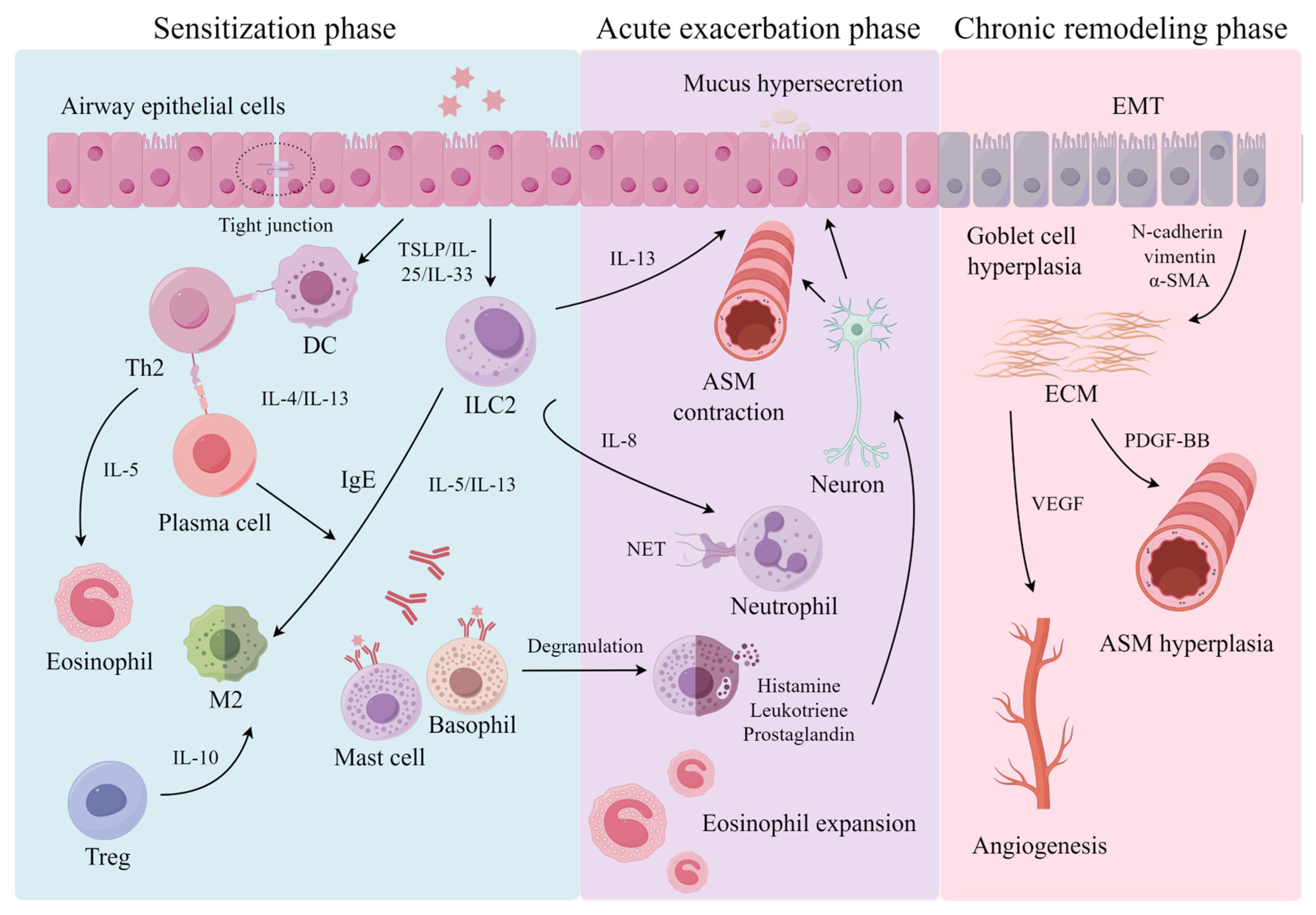
2. Sensitization Phase
2.1. Natural Small Molecules Block Allergen Sensitization by Modulating the Epithelial–DCs Axis
2.2. Natural Small Molecules Attenuate the Expansion of Memory Th2 Cells and the Massive Secretion of IL-4 and IL-13
2.3. Natural Small Molecules Inhibit Allergic Sensitization via Modulating IgE–FcεRI Interaction
2.4. Natural Small Molecules Attenuate M2 Polarization by Targeting IL-4/IL-13/STAT6 and Downstream Signaling Pathways
2.5. Natural Small Molecules Inhibit the Rapid Recruitment and Activation of Eosinophils
2.6. Natural Small Molecules Restore Epithelial Barrier Integrity and Suppress Immune Activation by Modulating the TSLP/IL-33-Tight Junction Axis
2.7. Natural Small Molecules Ameliorate Allergic Inflammation by Modulating the Treg/Th17 Balance
2.8. Natural Small Molecules Regulate Allergic Inflammation by Modulating the Gut Microbiota–SCFA–Treg Axis

| Disease Context | Name | Chemical Type | Research Model | Research System | Year | Reference |
|---|---|---|---|---|---|---|
| Epithelial alarmin release and DC activation | Quercetin | Flavonoid | OVA-induced mouse model | Mouse model | 2023 2016 | [46] [47] |
| Baicalin | Flavonoid | OVA-induced allergic asthma mouse model | Mouse model | 2025 | [48] | |
| Amide alkaloid | Alkaloid | OVA-challenged allergic asthma model | Mouse model | 2022 | [49] | |
| Curcumin | Polyphenol | Mouse model of asthma | Mouse model | 2017 | [50] | |
| Th2 priming | Curcumin | Polyphenol | OVA-sensitized asthma mouse model | Mouse model | 2014 | [52] |
| Apigenin | Flavonoid | OVA-challenged mice | Mouse model | 2020 | [53] | |
| Luteolin | Flavonoid | AR rats | Mouse model | 2021 | [54] | |
| Quercetin | Flavonoid | AR mice | Mouse model | 2023 | [55] | |
| IgE production, mast cell/basophil activation | Baicalin | Flavonoid | OVA-induced mouse model of allergic asthma | Mouse model | 2025 | [48] |
| Resveratrol | Polyphenol | IL-33-mediated mast cell activation model | In vitro system | 2019 | [56] | |
| Hispidulin | Flavonoid | OVA-induced allergic asthma models | Mouse model | 2024 | [57] | |
| Osthole | Coumarin | LL-37-induced rosacea mice; C48/80, substance P, LL-37 or (R)-ZINC-3573-stimulated LAD2, skin mast cells, and mouse peritoneal cells | Mouse model and in vitro system | 2020 | [58] | |
| Tanshinone IIA | Diterpenoid | OVA-induced mouse model of AR; C48/80-induced HMC-1 cells | Mouse model and in vitro system | 2022 | [59] | |
| M2 polarization | Bakuchicin | Coumarin | OVA-induced mouse model | Mouse model | 2024 | [60] |
| Cynaropicrin | Sesquiterpene lactone | Allergic lung inflammation model | Mouse model | 2018 | [61] | |
| Luteolin | Flavonoid | OVA-induced asthma model | Mouse model | 2025 | [62] | |
| Eosinophil activation and recruitment | Lonicerin | Flavonoid | HDM-induced asthma mouse model | Mouse model | 2022 | [63] |
| Galangin | Flavonoid | OVA-induced mouse model of AR | Mouse model | 2024 | [64] | |
| Oroxylin A | Flavonoid | OVA-challenged BALB/c mice | Mouse model | 2016 | [65] | |
| Barrier dysfunction | Alpha-linolenic acid | Fatty acid | Nasal inflammation model | Mouse model | 2025 | [17] |
| Impaired Treg function | Quercetin | Flavonoid | OVA-induced AR mice | Mouse model | 2023 | [55] |
| Luteolin | Flavonoid | AR mouse model | Mouse model | 2023 | [66] | |
| Curcumin | Polyphenol | Patient with perennial AR with chronic episodic allergic asthma | Human study | 2022 | [67] | |
| Gut microbiota–SCFA–Treg axis | Resveratrol | Polyphenol | HDM-induced asthma model | Mouse model | 2022 | [68] |
| Tetrahydrocurcumin | Polyphenol | OVA-induced asthmatic mice | Mouse model | 2021 | [69] |
3. Acute Exacerbation Phase
3.1. Natural Small Molecules Regulate Mast Cell and Basophil Degranulation Through Multi-Target Intervention
3.2. Natural Small Molecules Inhibit Airway Smooth Muscle Contraction and Mucus Hypersecretion
3.3. Natural Small Molecules Suppress Eosinophil and ILC2 Expansion by Targeting the Epithelial-ILC2
3.4. Natural Small Molecules Reduce Early Neutrophil Infiltration and Neurogenic Inflammation
| Disease Context | Name | Chemical Type | Research Model | Research System | Year | Reference |
|---|---|---|---|---|---|---|
| Mast cell and basophil degranulation | Hispidulin | Flavonoid | OVA-induced mouse asthma models; RBL-2H3 cells | Mouse model and in vitro system | 2018 | [57] |
| Quercetin | Flavonoid | CLM-1-knockdown LAD2 cells stimulated by C48/80 | In vitro system | 2024 | [81] | |
| Coptisine | Alkaloid | RBL-2H3 cells sensitized with DNP-IgE/HSA; OVA-induced AR mice | Mouse model and in vitro system | 2018 | [82] | |
| Airway smooth muscle contraction | Quercetin | Flavonoid | Guinea pig tracheal ring models | Mouse model | 2016 | [83] |
| Curcumin nanoparticles (CUR-NPs) | Polyphenol | TGF-β1-treated ASM; OVA-induced mouse asthmatic models | Mouse model and in vitro system | 2024 | [84] | |
| Mucus hypersecretion | Resveratrol | Polyphenol | OVA-challenged murine asthma model | Mouse model | 2016 | [85] |
| Eosinophil and ILC2 expansion | Calycosin | Flavonoid | OVA-exposed asthmatic mice | Mouse model | 2024 | [86] |
| Bilirubin | Tetrapyrrole | IL-33-induced mouse airway inflammatory model | Mouse model | 2022 | [87] | |
| Neutrophil infiltration | Quercetin | Flavonoid | Several asthma models | Mouse model and in vitro system | 2020 | [88] |
| Neurogenic inflammation | Quercetin | Flavonoid | TDI-induced rat model of AR | Mouse model | 2016 | [89] |
4. Chronic Remodeling Phase
4.1. Natural Small Molecules Can Inhibit Chronic-Phase EMT by Blocking the Synergistic TGF-β1/IL-4/IL-13 Signaling
4.2. Natural Small Molecules Precisely Target ASM Hyperplasia to Inhibit Chronic Airway Remodeling
4.3. Natural Small Molecules Block Angiogenesis and Vascular Remodeling During the Chronic Remodeling Phase by Inhibiting VEGF Signaling or Modulating the Angiopoietin/Tie2 System
4.4. Natural Small Molecules Curb ECM Over-Deposition and Cross-Linking During Remodeling by Modulating the MAPK/AKT Signaling Pathway and Inhibiting NF-κB Signaling Pathway
4.5. Natural Small Molecules Reduce Goblet Cell Hyperplasia
| Disease Context | Name | Chemical Type | Research Model | Research System | Year | Reference |
|---|---|---|---|---|---|---|
| EMT | Resveratrol | Polyphenol | OVA-induced asthma mice | Mouse model | 2017 2015 | [117] [118] |
| Quercetin | Flavonoid | TGF-β1-induced invasion in SW480 cells; OVA-induced asthmatic rats | Mouse model and in vitro system | 2018 2023 | [119] [120] | |
| EGCG | Polyphenol | OVA-induced asthmatic mice | Mouse model | 2018 | [121] | |
| Curcumin | Polyphenol | OVA-induced asthmatic mice | Mouse model | 2023 | [122] | |
| Naringenin | Flavonoid | OVA-sensitized and -challenged chronic asthma mice | Mouse model | 2014 | [123] | |
| ASM Hyperplasia | Resveratrol | Polyphenol | OVA-induced asthmatic mice; Chronic allergic airway mice; OVA-induced asthma rats | Mouse model | 2015 2011 2019 | [118] [126] [127] |
| Baicalin | Flavonoid | OVA-induced asthmatic mice | Mouse model | 2023 | [125] | |
| Curcumin | Polyphenol | OVA-induced chronic asthma mice | Mouse model | 2014 | [128] | |
| Baicalein | Flavonoid | OVA-induced airway inflammation and remodeling model | Mouse model | 2024 | [129] | |
| Angiogenesis and vascular remodeling | Quercetin | Flavonoid | OVA-induced AR mice | Mouse model | 2021 | [130] |
| Baicalein | Flavonoid | OVA-induced asthma mice | Mouse model | 2024 | [129] | |
| Luteolin | Flavonoid | Allergic airway disease mice | Mouse model | 2017 2014 | [131] [132] | |
| ECM deposition | Baicalin | Flavonoid | IL-1β-stimulated nasal fibroblasts | In vitro system | 2016 | [133] |
| Naringenin | Flavonoid | OVA-sensitized and -challenged chronic asthma mice | Mouse model | 2014 | [123] | |
| Goblet cell hyperplasia | Glycyrrhizin | Triterpenoid saponin | LPS or IL-4 induced mouse lung tissue | Mouse model | 2010 | [134] |
| Naringenin | Flavonoid | OVA-sensitized and -challenged chronic asthma mice | Mouse model | 2014 | [123] |
5. Conclusions and Future Direction
Author Contributions
Funding
Institutional Review Board Statement
Informed Consent Statement
Data Availability Statement
Conflicts of Interest
Abbreviations
References
- Bernstein, J.A.; Bernstein, J.S.; Makol, R.; Ward, S. Allergic rhinitis: A review. JAMA 2024, 331, 866–877. [Google Scholar] [CrossRef]
- Kim, Y.M.; Kim, Y.S.; Jeon, S.G.; Kim, Y.K. Immunopathogenesis of allergic asthma: More than the Th2 hypothesis. Allergy Asthma Immunol. Res. 2013, 5, 189–196. [Google Scholar] [CrossRef]
- Di Gioacchino, M.; Bonini, S.; Del Giacco, S.; Canonica, G.W. Rights and duties of patients with respiratory allergy. Explor. Asthma Allergy 2025, 3, 100971. [Google Scholar] [CrossRef]
- Liu, M.; Gan, H.; Lin, Y.; Lin, R.; Xue, M.; Zhang, T.; Cheng, Z.J.; Sun, B. Prevalence and disability-adjusted life year rates of asthma in China: Findings from the GBD study 2019 of the G20. Int. J. Environ. Res. Public Health 2022, 19, 14663. [Google Scholar] [CrossRef]
- Sultész, M.; Horváth, A.; Molnár, D.; Katona, G.; Mezei, G.; Hirschberg, A.; Gálffy, G. Prevalence of allergic rhinitis, related comorbidities and risk factors in schoolchildren. Allergy Asthma Clin. Immunol. 2020, 16, 98. [Google Scholar] [CrossRef] [PubMed]
- Levy, M.L.; Bacharier, L.B.; Bateman, E.; Boulet, L.P.; Brightling, C.; Buhl, R.; Brusselle, G.; Cruz, A.A.; Drazen, J.M.; Duijts, L.; et al. Key recommendations for primary care from the 2022 Global Initiative for Asthma (GINA) update. NPJ Prim. Care Respir. Med. 2023, 33, 7. [Google Scholar] [CrossRef]
- Yin, L.; Zhang, F.; Wang, X.; Gao, M.; Liu, A.; Li, F. Prevalence and risk factors of asthma in children: A systematic review and meta-analysis. J. Asthma 2025, 62, 2018–2029. [Google Scholar] [CrossRef]
- GBD 2021 Asthma and Allergic Diseases Collaborators. Global, regional, and national burden of asthma and atopic dermatitis, 1990-2021, and projections to 2050: A systematic analysis of the Global Burden of Disease Study 2021. Lancet Respir. Med. 2025, 13, 425–446. [Google Scholar] [CrossRef] [PubMed]
- Zhang, X.; Zhang, M.; Sui, H.; Li, C.; Huang, Z.; Liu, B.; Song, X.; Liao, S.; Yu, M.; Luan, T.; et al. Prevalence and risk factors of allergic rhinitis among Chinese adults: A nationwide representative cross-sectional study. World Allergy Organ. J. 2023, 16, 100744. [Google Scholar] [CrossRef] [PubMed]
- Braunstahl, G.J. The unified immune system: Respiratory tract-nasobronchial interaction mechanisms in allergic airway disease. J. Allergy Clin. Immunol. 2005, 115, 142–148. [Google Scholar] [CrossRef]
- Duan, S.; Jia, Z.; Zheng, L.; Wu, Y.; Xu, Z.; Peng, H.; Xue, J. Research advances on epigenetic modifications in dendritic cells in allergic rhinitis. Front. Immunol. 2025, 16, 1682821. [Google Scholar] [CrossRef]
- Divekar, R.; Kita, H. Recent advances in epithelium-derived cytokines (IL-33, IL-25, and thymic stromal lymphopoietin) and allergic inflammation. Curr. Opin. Allergy Clin. Immunol. 2015, 15, 98–103. [Google Scholar] [CrossRef]
- Saenz, S.A.; Taylor, B.C.; Artis, D. Welcome to the neighborhood: Epithelial cell-derived cytokines license innate and adaptive immune responses at mucosal sites. Immunol. Rev. 2008, 226, 172–190. [Google Scholar] [CrossRef]
- Komlósi, Z.I.; van de Veen, W.; Kovács, N.; Szűcs, G.; Sokolowska, M.; O’Mahony, L.; Akdis, M.; Akdis, C.A. Cellular and molecular mechanisms of allergic asthma. Mol. Asp. Med. 2022, 85, 100995. [Google Scholar] [CrossRef]
- Qu, L.; Du, W.; Ren, Z.; Chen, M.; Wu, X.; Cao, X.; Rao, G.; Tong, X.; Huang, F.; Sun, Y. Vasicine attenuates allergic asthma by suppressing mast cell degranulation and Th2 inflammation via modulation of the FcεRI/Lyn + Syk/MAPK pathway. Pharmaceuticals 2026, 19, 190. [Google Scholar] [CrossRef]
- Wenzel, S.E. Asthma phenotypes: The evolution from clinical to molecular approaches. Nat. Med. 2012, 18, 716–725. [Google Scholar] [CrossRef] [PubMed]
- Dong, B.; Xie, L.; Li, Y. Exploring the therapeutic role of natural products in allergic rhinitis based on pathophysiology and signaling pathways. J. Asthma Allergy 2025, 18, 1551–1584. [Google Scholar] [CrossRef] [PubMed]
- Akhtar, U.; Gulzar, A.; Saleem, M.; Shahid, A.; Usman, N.; Usman, Z.; Khan, S.; Hayat, R.; Haider, S.; Rasheed, W. Phytochemicals as cancer immunotherapeutics: Bridging natural compounds and advanced treatment strategies. Sch. Acad. J. Biosci. 2025, 13, 164–176. [Google Scholar] [CrossRef]
- Werner, R.; Carnazza, M.; Li, X.M.; Yang, N. Effect of small-molecule natural compounds on pathologic mast cell/basophil activation in allergic diseases. Cells 2024, 13, 1994. [Google Scholar] [CrossRef]
- Liu, T.; Zhang, R.; Jiang, L.; Zhou, L.; Zhang, H.; Liang, F.; Xiong, P.; Chen, H.; Wen, T.; Shen, X.; et al. The potential application and molecular mechanisms of natural products in the treatment of allergic rhinitis: A review. Phytomedicine 2024, 129, 155663. [Google Scholar] [CrossRef] [PubMed]
- Liao, W.; Tran, Q.T.N.; Peh, H.Y.; Chan, C.C.M.Y.; Fred Wong, W.S. Natural products for the management of asthma and COPD. In Natural Products as Sources of Novel Drugs; Handbook of Experimental Pharmacology; Springer: Cham, Switzerland, 2025; Volume 287, pp. 175–205. [Google Scholar] [CrossRef]
- Liu, L.; Dai, J.; Yang, Q.; Lv, L. A comprehensive review on anti-allergic natural bioactive compounds for combating food allergy. Food Res. Int. 2025, 201, 115565. [Google Scholar] [CrossRef]
- Wu, S.; Pang, Y.; He, Y.; Zhang, X.; Peng, L.; Guo, J.; Zeng, J. A comprehensive review of natural products against atopic dermatitis: Flavonoids, alkaloids, terpenes, glycosides and other compounds. Biomed. Pharmacother. 2021, 140, 111741. [Google Scholar] [CrossRef]
- Zhang, P.; Zhang, N.; Huang, L.; Xia, N.; Teng, J. A review on the metabolism and anti-allergic effects of ellagitannins. Crit. Rev. Food Sci. Nutr. 2026, 66, 145–171. [Google Scholar] [CrossRef] [PubMed]
- Han, Z.; Yu, F.; Ding, Z.; Liu, Q.; Zheng, X.; Zhang, L.; Li, D.; Wang, C. Tetramethylpyrazine modulates airway inflammation and remodeling in bronchial asthma: A review. Clinics 2025, 80, 100768. [Google Scholar] [CrossRef]
- Borghi, S.M.; Zaninelli, T.H.; Carra, J.B.; Heintz, O.K.; Baracat, M.M.; Georgetti, S.R.; Vicentini, F.T.M.C.; Verri, W.A.; Casagrande, R. Therapeutic potential of controlled delivery systems in asthma: Preclinical development of flavonoid-based treatments. Pharmaceutics 2022, 15, 1. [Google Scholar] [CrossRef]
- Dębińska, A.; Sozańska, B. Dietary polyphenols-natural bioactive compounds with potential for preventing and treating some allergic conditions. Nutrients 2023, 15, 4823. [Google Scholar] [CrossRef]
- Piazzetta, G.L.; Lobello, N.; Pelaia, C.; Preianò, M.; Lombardo, N.; Chiarella, E. Modulating nasal barrier function and tissue remodeling in inflammatory diseases: The role of ginseng and its bioactive compounds. Tissue Barriers 2025, 13, 2470477. [Google Scholar] [CrossRef] [PubMed]
- Ahmed Abdelmawgood, I.; Sayed, A.M.; Mohamed, O.A.; Ali Ramadan, S.; Waleed Farg, J.; Saad, W.; Sayed Hamdy, R.; Sharaf, B.; Ashry, H.; Kotb, M.A. Ginger and its constituents in asthma: A mini-review. J. Asthma 2024, 61, 1392–1401. [Google Scholar] [CrossRef]
- Yoon, Y.; Chun, Y.; Zhang, L.; Grishina, G.; Grishin, A.; Bunyavanich, S. Unraveling mechanisms of allergen sensitization and allergic rhinitis via the nasal transcriptome. J. Allergy Clin. Immunol. 2026, 157, 110–117. [Google Scholar] [CrossRef] [PubMed]
- Claudio, E.; Wang, H.; Kamenyeva, O.; Tang, W.; Ha, H.L.; Siebenlist, U. IL-25 orchestrates activation of Th cells via conventional dendritic cells in tissue to exacerbate chronic house dust mite-induced asthma pathology. J. Immunol. 2019, 203, 2319–2327. [Google Scholar] [CrossRef]
- Kumagai, T.; Iwata, A.; Furuya, H.; Kato, K.; Okabe, A.; Toda, Y.; Kanai, M.; Fujimura, L.; Sakamoto, A.; Kageyama, T.; et al. A distal enhancer of GATA3 regulates Th2 differentiation and allergic inflammation. Proc. Natl. Acad. Sci. USA 2024, 121, e2320727121. [Google Scholar] [CrossRef] [PubMed]
- Xiao, J.; Chen, X.; Liu, W.; Qian, W.; Bulek, K.; Hong, L.; Miller-Little, W.; Li, X.; Liu, C. TRAF4 is crucial for ST2+ memory Th2 cell expansion in IL-33-driven airway inflammation. JCI Insight 2023, 8, e169736. [Google Scholar] [CrossRef] [PubMed]
- Ogulur, I.; Pat, Y.; Ardicli, O.; Barletta, E.; Cevhertas, L.; Fernandez-Santamaria, R.; Huang, M.; Bel Imam, M.; Koch, J.; Ma, S.; et al. Advances and highlights in biomarkers of allergic diseases. Allergy 2021, 76, 3659–3686. [Google Scholar] [CrossRef]
- Colas, L.; Magnan, A.; Brouard, S. Immunoglobulin E response in health and disease beyond allergic disorders. Allergy 2022, 77, 1700–1718. [Google Scholar] [CrossRef]
- Matsuyama, T.; Salter, B.M.; Emami Fard, N.; Machida, K.; Sehmi, R. TNF superfamily and ILC2 activation in asthma. Biomolecules 2024, 14, 294. [Google Scholar] [CrossRef]
- Qin, M.; Fang, Y.; Zheng, Q.; Peng, M.; Wang, L.; Sang, X.; Cao, G. Tissue microenvironment induces tissue specificity of ILC2. Cell Death Discov. 2024, 10, 324. [Google Scholar] [CrossRef]
- Scott, T.E.; Lewis, C.V.; Zhu, M.; Wang, C.; Samuel, C.S.; Drummond, G.R.; Kemp-Harper, B.K. IL-4 and IL-13 induce equivalent expression of traditional M2 markers and modulation of reactive oxygen species in human macrophages. Sci. Rep. 2023, 13, 19589. [Google Scholar] [CrossRef]
- Kawakami, T.; Kawakami, Y. Anaphylactic or tolerant outcomes with IgE. J. Allergy Clin. Immunol. 2020, 145, 114–115. [Google Scholar] [CrossRef]
- Bao, Y.; Zhu, X. Role of chemokines and inflammatory cells in respiratory allergy. J. Asthma Allergy 2022, 15, 1805–1822. [Google Scholar] [CrossRef]
- Hellings, P.W.; Steelant, B. Epithelial barriers in allergy and asthma. J. Allergy Clin. Immunol. 2020, 145, 1499–1509. [Google Scholar] [CrossRef] [PubMed]
- Akdis, C.A. Does the epithelial barrier hypothesis explain the increase in allergy, autoimmunity and other chronic conditions? Nat. Rev. Immunol. 2021, 21, 739–751. [Google Scholar] [CrossRef]
- Zhang, J.; Zou, Y.; Chen, L.; Xu, Q.; Wang, Y.; Xie, M.; Liu, X.; Zhao, J.; Wang, C.Y. Regulatory T cells, a viable target against airway allergic inflammatory responses in asthma. Front. Immunol. 2022, 13, 902318. [Google Scholar] [CrossRef] [PubMed]
- Suárez-Martínez, C.; Santaella-Pascual, M.; Yagüe-Guirao, G.; García-Marcos, L.; Ros, G.; Martínez-Graciá, C. The early appearance of asthma and its relationship with gut microbiota: A narrative review. Microorganisms 2024, 12, 1471. [Google Scholar] [CrossRef] [PubMed]
- Fujimura, K.E.; Sitarik, A.R.; Havstad, S.; Lin, D.L.; Levan, S.; Fadrosh, D.; Panzer, A.R.; LaMere, B.; Rackaityte, E.; Lukacs, N.W.; et al. Neonatal gut microbiota associates with childhood multisensitized atopy and T cell differentiation. Nat. Med. 2016, 22, 1187–1191. [Google Scholar] [CrossRef]
- Kang, C.; Li, X.; Liu, P.; Liu, Y.; Niu, Y.; Zeng, X.; Liu, J.; Zhao, H.; Qiu, S. Quercetin inhibits the activity and function of dendritic cells through the TLR4/IRAK4/NF-κB signalling pathway. Contemp. Oncol. 2023, 27, 182–189. [Google Scholar] [CrossRef]
- Sozmen, S.C.; Karaman, M.; Micili, S.C.; Isik, S.; Bagriyanik, A.; Ayyildiz, Z.A.; Uzuner, N.; Anal, O.; Karaman, O. Effects of quercetin treatment on epithelium-derived cytokines and epithelial cell apoptosis in allergic airway inflammation mice model. Iran J. Allergy Asthma Immunol. 2016, 15, 487–497. [Google Scholar]
- Zeng, Z.; Ruan, Y.; Ying, H.; Wang, J.; Wang, H.; Chen, S. Baicalin attenuates type 2 immune responses in a mouse allergic asthma model through inhibiting the production of thymic stromal lymphopoietin. Int. Arch. Allergy Immunol. 2025, 186, 203–211. [Google Scholar] [CrossRef] [PubMed]
- Jia, J.; Zeng, M.; Zhu, D.; Jiao, X.; Zhang, B.; Yang, R.; Feng, W.; Zheng, X. An amide alkaloid isolated from Ephedra sinica ameliorates OVA-induced allergic asthma by inhibiting mast cell activation and dendritic cell maturation. Int. J. Mol. Sci. 2022, 23, 13541. [Google Scholar] [CrossRef]
- Yang, X.; Lv, J.N.; Li, H.; Jiao, B.; Zhang, Q.H.; Zhang, Y.; Zhang, J.; Liu, Y.Q.; Zhang, M.; Shan, H.; et al. Curcumin reduces lung inflammation via Wnt/β-catenin signaling in mouse model of asthma. J. Asthma 2017, 54, 335–340. [Google Scholar] [CrossRef]
- Farhan, M.; Rizvi, A.; Aatif, M.; Muteeb, G.; Khan, K.; Siddiqui, F.A. Dietary polyphenols, plant metabolites, and allergic disorders: A comprehensive review. Pharmaceuticals 2024, 17, 670. [Google Scholar] [CrossRef]
- Chong, L.; Zhang, W.; Nie, Y.; Yu, G.; Liu, L.; Lin, L.; Wen, S.; Zhu, L.; Li, C. Protective effect of curcumin on acute airway inflammation of allergic asthma in mice through Notch1-GATA3 signaling pathway. Inflammation 2014, 37, 1476–1485. [Google Scholar] [CrossRef] [PubMed]
- Chen, F.; He, D.; Yan, B. Apigenin attenuates allergic responses of ovalbumin-induced allergic rhinitis through modulation of Th1/Th2 responses in experimental mice. Dose Response 2020, 18, 1559325820904799. [Google Scholar] [CrossRef] [PubMed]
- Dong, J.; Xu, O.; Wang, J.; Shan, C.; Ren, X. Luteolin ameliorates inflammation and Th1/Th2 imbalance via regulating the TLR4/NF-κB pathway in allergic rhinitis rats. Immunopharmacol. Immunotoxicol. 2021, 43, 319–327. [Google Scholar] [CrossRef]
- Ke, X.; Chen, Z.; Wang, X.; Kang, H.; Hong, S. Quercetin improves the imbalance of Th1/Th2 cells and Treg/Th17 cells to attenuate allergic rhinitis. Autoimmunity 2023, 56, 2189133. [Google Scholar] [CrossRef] [PubMed]
- Nakajima, S.; Ishimaru, K.; Kobayashi, A.; Yu, G.; Nakamura, Y.; Oh-Oka, K.; Suzuki-Inoue, K.; Kono, K.; Nakao, A. Resveratrol inhibits IL-33-mediated mast cell activation by targeting the MK2/3-PI3K/Akt axis. Sci. Rep. 2019, 9, 18423. [Google Scholar] [CrossRef]
- Jeong, S.; Kim, Y.Y.; Lee, D.; Kim, S.H.; Lee, S. Hispidulin alleviates mast cell-mediated allergic airway inflammation through FcεR1 and Nrf2/HO-1 signaling pathway. Antioxidants 2024, 13, 528. [Google Scholar] [CrossRef]
- Callahan, B.N.; Kammala, A.K.; Syed, M.; Yang, C.; Occhiuto, C.J.; Nellutla, R.; Chumanevich, A.P.; Oskeritzian, C.A.; Das, R.; Subramanian, H. Osthole, a natural plant derivative inhibits MRGPRX2 induced mast cell responses. Front. Immunol. 2020, 11, 703. [Google Scholar] [CrossRef]
- Chen, Q.; Shao, L.; Li, Y.; Dai, M.; Liu, H.; Xiang, N.; Chen, H. Tanshinone IIA alleviates ovalbumin-induced allergic rhinitis symptoms by inhibiting Th2 cytokine production and mast cell histamine release in mice. Pharm. Biol. 2022, 60, 326–333. [Google Scholar] [CrossRef]
- Kim, Y.Y.; Jeong, S.; Lee, S.W.; Lee, S.J.; Rho, M.C.; Kim, S.H.; Lee, S. Bakuchicin alleviates ovalbumin-induced allergic asthma by regulating M2 macrophage polarization. Inflamm. Res. 2024, 73, 725–737. [Google Scholar] [CrossRef]
- Draijer, C.; Robbe, P.; Boorsma, C.E.; Hylkema, M.N.; Melgert, B.N. Dual role of YM1+ M2 macrophages in allergic lung inflammation. Sci. Rep. 2018, 8, 5105. [Google Scholar] [CrossRef]
- Huang, X.; Yu, H.; Zhou, Y.; Xie, C.; Shi, H.; Chen, M.; Tang, W.; Chen, W.; Song, J.; Gao, Z.; et al. Luteolin attenuates type 2 inflammation in asthmatic mice induced by OVA by regulating IL-33/ST2- GSK3β-M2 macrophage polarization. Mol. Immunol. 2025, 186, 1–12. [Google Scholar] [CrossRef]
- Deng, Z.; Zhang, X.; Wen, J.; Yang, X.; Xue, L.; Ou, C.; Ma, J.; Zhan, H.; Cen, X.; Cai, X.; et al. Lonicerin attenuates house dust mite-induced eosinophilic asthma through targeting Src/EGFR signaling. Front. Pharmacol. 2022, 13, 1051344. [Google Scholar] [CrossRef] [PubMed]
- Chen, J.; Zhou, Y. Ameliorative potential of galangin in murine model of ovalbumin-induced allergic rhinitis: A role of PI3K-PKB pathway. Am. J. Vet. Res. 2024, 85, ajvr.24.02.0031. [Google Scholar] [CrossRef] [PubMed]
- Zhou, D.G.; Diao, B.Z.; Zhou, W.; Feng, J.L. Oroxylin A inhibits allergic airway inflammation in ovalbumin (OVA)-induced asthma murine model. Inflammation 2016, 39, 867–872. [Google Scholar] [CrossRef] [PubMed]
- Yang, Y.; Wang, L.; Wang, S.; Wang, Y.; Du, Y.; Fan, Y. Luteolin restored Treg/Th17 balance to ameliorate allergic rhinitis in a mouse model. Immunopharmacol. Immunotoxicol. 2023, 45, 461–468. [Google Scholar] [CrossRef]
- Waghray, P.; Waghray, K.; Waghray, J. Curcumin in the patient with perennial allergic rhinitis with chronic episodic allergic asthma. Int. J. Res. Med. Sci. 2022, 10, 1545–1548. [Google Scholar] [CrossRef]
- Alharris, E.; Mohammed, A.; Alghetaa, H.; Zhou, J.; Nagarkatti, M.; Nagarkatti, P. The ability of resveratrol to attenuate ovalbumin-mediated allergic asthma is associated with changes in microbiota involving the gut-lung axis, enhanced barrier function and decreased inflammation in the lungs. Front. Immunol. 2022, 13, 805770. [Google Scholar] [CrossRef]
- Wu, Y.; Chen, Y.; Li, Q.; Ye, X.; Guo, X.; Sun, L.; Zou, J.; Shen, Y.; Mao, Y.; Li, C.; et al. Tetrahydrocurcumin alleviates allergic airway inflammation in asthmatic mice by modulating the gut microbiota. Food Funct. 2021, 12, 6830–6840. [Google Scholar] [CrossRef]
- Feng, Y.; Xu, L.; Zhang, J.; Bin, J.; Pang, X.; He, S.; Fang, L. Allergenic protein-induced type I hypersensitivity models: A review. Front. Allergy 2024, 5, 1481011. [Google Scholar] [CrossRef]
- Jackson, C.W.; Pratt, C.M.; Rupprecht, C.P.; Pattanaik, D.; Krishnaswamy, G. Mastocytosis and Mast Cell Activation Disorders: Clearing the Air. Int. J. Mol. Sci. 2021, 22, 11270. [Google Scholar] [CrossRef]
- Méndez-Enríquez, E.; Hallgren, J. Mast cells and their progenitors in allergic asthma. Front. Immunol. 2019, 10, 821. [Google Scholar] [CrossRef]
- Shirasaki, H.; Himi, T. Role of cysteinyl leukotrienes in allergic rhinitis. Adv. Otorhinolaryngol. 2016, 77, 40–45. [Google Scholar] [CrossRef]
- Johnsson, A.K.; Kolmert, J.; Rönnberg, E.; Säfholm, J.; Al-Ameri, M.; Sachs, E.; Vali, K.; Wheelock, C.E.; Dahlén, S.E.; Nilsson, G.P. IgE-activated human lung mast cells preferentially release prostaglandin D(2), thromboxane A(2), and cysteinyl-leukotrienes. J. Allergy Clin. Immunol. 2025, 156, 1669–1678. [Google Scholar] [CrossRef] [PubMed]
- Ramu, S.; Akbarshahi, H.; Mogren, S.; Berlin, F.; Cerps, S.; Menzel, M.; Hvidtfeldt, M.; Porsbjerg, C.; Uller, L.; Andersson, C.K. Direct effects of mast cell proteases, tryptase and chymase, on bronchial epithelial integrity proteins and anti-viral responses. BMC Immunol. 2021, 22, 35. [Google Scholar] [CrossRef]
- Xuan, N.; Zhao, J.; Kang, Z.; Cui, W.; Tian, B.P. Neutrophil extracellular traps and their implications in airway inflammatory diseases. Front. Med. 2023, 10, 1331000. [Google Scholar] [CrossRef] [PubMed]
- Melhem, H.; Regan-Komito, D.; Niess, J.H. Mucins dynamics in physiological and pathological conditions. Int. J. Mol. Sci. 2021, 22, 13642. [Google Scholar] [CrossRef]
- Zhu, X.; Cheng, F.; Duan, H.; Fu, S.; Zhao, C. Novel insights into the study of goblet cell hypersecretion in allergic rhinitis. Front. Immunol. 2025, 16, 1525928. [Google Scholar] [CrossRef] [PubMed]
- Backaert, W.; Steelant, B.; Wils, T.; Qian, Z.; Dilissen, E.; Jonckheere, A.C.; Boonen, B.; Jorissen, M.; Schrijvers, R.; Bullens, D.M.A.; et al. Nasal hyperreactivity in allergic rhinitis and chronic rhinosinusitis with polyps: A role for neuronal pathways. Rhinology 2024, 62, 299–309. [Google Scholar] [CrossRef]
- Jean, E.E.; Good, O.; Rico, J.M.I.; Rossi, H.L.; Herbert, D.R. Neuroimmune regulatory networks of the airway mucosa in allergic inflammatory disease. J. Leukoc. Biol. 2022, 111, 209–221. [Google Scholar] [CrossRef]
- Zhao, C.; Ding, Y.; Huang, Y.; Wang, C.; Guo, B.; Zhang, T. Quercetin attenuates MRGPRX2-mediated mast cell degranulation via the MyD88/IKK/NF-κB and PI3K/AKT/ Rac1/Cdc42 pathway. J. Inflamm. Res. 2024, 17, 7099–7110. [Google Scholar] [CrossRef]
- Fu, S.; Ni, S.; Wang, D.; Hong, T. Coptisine suppresses mast cell degranulation and ovalbumin-induced allergic rhinitis. Molecules 2018, 23, 3039. [Google Scholar] [CrossRef]
- Flores-Soto, E.; Romero-Martínez, B.S.; Solís-Chagoyán, H.; Estrella-Parra, E.A.; Avila-Acevedo, J.G.; Gomez-Verjan, J.C.; Reyes-García, J.; Casas-Hernández, M.F.; Sommer, B.; Montaño, L.M. Chamaecyparis lawsoniana and its active compound quercetin as Ca2+ inhibitors in the contraction of airway smooth muscle. Molecules 2024, 29, 2284. [Google Scholar] [CrossRef]
- Ma, Y.; Ye, S.; Sun, K.; Gu, Y. Effect of curcumin nanoparticles on proliferation and migration of mouse airway smooth muscle cells and airway inflammatory infiltration. Front. Pharmacol. 2024, 15, 1344333. [Google Scholar] [CrossRef] [PubMed]
- Ni, Z.H.; Tang, J.H.; Chen, G.; Lai, Y.M.; Chen, Q.G.; Li, Z.; Yang, W.; Luo, X.M.; Wang, X.B. Resveratrol inhibits mucus overproduction and MUC5AC expression in a murine model of asthma. Mol. Med. Rep. 2016, 13, 287–294. [Google Scholar] [CrossRef] [PubMed]
- Tian, C.; Liu, Q.; Zhang, X.; Li, Z. Blocking group 2 innate lymphoid cell activation and macrophage M2 polarization: Potential therapeutic mechanisms in ovalbumin-induced allergic asthma by calycosin. BMC Pharmacol. Toxicol. 2024, 25, 30. [Google Scholar] [CrossRef] [PubMed]
- He, J.; Jiang, G.; Li, X.; Xiao, Q.; Chen, Y.; Xu, H.; Liu, G.; Lei, A.; Zhou, P.; Shi, K.; et al. Bilirubin represents a negative regulator of ILC2 in allergic airway inflammation. Mucosal Immunol. 2022, 15, 314–326. [Google Scholar] [CrossRef]
- Jafarinia, M.; Sadat Hosseini, M.; Kasiri, N.; Fazel, N.; Fathi, F.; Ganjalikhani Hakemi, M.; Eskandari, N. Quercetin with the potential effect on allergic diseases. Allergy Asthma Clin. Immunol. 2020, 16, 36. [Google Scholar] [CrossRef]
- Kashiwabara, M.; Asano, K.; Mizuyoshi, T.; Kobayashi, H. Suppression of neuropeptide production by quercetin in allergic rhinitis model rats. BMC Complement. Altern. Med. 2016, 16, 132. [Google Scholar] [CrossRef]
- Fattouh, R.; Jordana, M. TGF-beta, eosinophils and IL-13 in allergic airway remodeling: A critical appraisal with therapeutic considerations. Inflamm. Allergy Drug Targets 2008, 7, 224–236. [Google Scholar] [CrossRef][Green Version]
- Sahnoon, L.; Bajbouj, K.; Mahboub, B.; Hamoudi, R.; Hamid, Q. Targeting IL-13 and IL-4 in asthma: Therapeutic implications on airway remodeling in severe asthma. Clin. Rev. Allergy Immunol. 2025, 68, 44. [Google Scholar] [CrossRef]
- Chen, Z.Y.; Zhou, S.H.; Zhou, Q.F.; Tang, H.B. Inflammation and airway remodeling of the lung in guinea pigs with allergic rhinitis. Exp. Ther. Med. 2017, 14, 3485–3490. [Google Scholar] [CrossRef] [PubMed][Green Version]
- Yuksel, H.; Kose, C.; Yilmaz, O.; Ozbilgin, K.; Degirmenci, P.B.; Pinar, E.; Kirmaz, C. Increased expression of tissue vascular endothelial growth factor and foetal liver kinase-1 receptor in seasonal allergic rhinitis and relevance to asthma component. Clin. Exp. Allergy 2007, 37, 1183–1188. [Google Scholar] [CrossRef]
- Cho, J.Y. Recent advances in mechanisms and treatments of airway remodeling in asthma: A message from the bench side to the clinic. Korean J. Intern Med. 2011, 26, 367–383. [Google Scholar] [CrossRef]
- Moon, I.J.; Kim, D.Y.; Rhee, C.S.; Lee, C.H.; Min, Y.G. Role of angiogenic factors in airway remodeling in an allergic rhinitis murine model. Allergy Asthma Immunol. Res. 2012, 4, 37–45. [Google Scholar] [CrossRef]
- Dutt, N.; Mohapatra, P.R.; Saini, V. Lebrikizumab treatment in adults with asthma. N. Engl. J. Med. 2011, 365, 2432–2433. [Google Scholar] [CrossRef]
- Johnson, P.R.; Burgess, J.K.; Ge, Q.; Poniris, M.; Boustany, S.; Twigg, S.M.; Black, J.L. Connective tissue growth factor induces extracellular matrix in asthmatic airway smooth muscle. Am. J. Respir. Crit. Care Med. 2006, 173, 32–41. [Google Scholar] [CrossRef]
- Weckmann, M.; Trian, T.; Oliver, B.G. Reconstruction is not renovation—The role of remodeling in asthma. J. Asthma Allergy 2009, 2, 33–42. [Google Scholar] [CrossRef][Green Version]
- Busch, S.M.; Lorenzana, Z.; Ryan, A.L. Implications for extracellular matrix interactions with human lung basal stem cells in lung development, disease, and airway modeling. Front. Pharmacol. 2021, 12, 645858. [Google Scholar] [CrossRef]
- Ramis, J.; Middlewick, R.; Pappalardo, F.; Cairns, J.T.; Stewart, I.D.; John, A.E.; Naveed, S.U.; Krishnan, R.; Miller, S.; Shaw, D.E.; et al. Lysyl oxidase like 2 is increased in asthma and contributes to asthmatic airway remodelling. Eur. Respir. J. 2022, 60, 2004361. [Google Scholar] [CrossRef] [PubMed]
- Araujo, B.B.; Dolhnikoff, M.; Silva, L.F.; Elliot, J.; Lindeman, J.H.; Ferreira, D.S.; Mulder, A.; Gomes, H.A.; Fernezlian, S.M.; James, A.; et al. Extracellular matrix components and regulators in the airway smooth muscle in asthma. Eur. Respir. J. 2008, 32, 61–69. [Google Scholar] [CrossRef] [PubMed]
- Gueders, M.M.; Foidart, J.M.; Noel, A.; Cataldo, D.D. Matrix metalloproteinases (MMPs) and tissue inhibitors of MMPs in the respiratory tract: Potential implications in asthma and other lung diseases. Eur. J. Pharmacol. 2006, 533, 133–144. [Google Scholar] [CrossRef] [PubMed]
- Santus, P.; Radovanovic, D.; Chiumello, D.A. Mucins and Asthma: Are We Headed to the Revolutionary Road? J. Clin. Med. 2019, 8, 1955. [Google Scholar] [CrossRef] [PubMed]
- Young, H.W.; Williams, O.W.; Chandra, D.; Bellinghausen, L.K.; Pérez, G.; Suárez, A.; Tuvim, M.J.; Roy, M.G.; Alexander, S.N.; Moghaddam, S.J.; et al. Central role of Muc5ac expression in mucous metaplasia and its regulation by conserved 5’ elements. Am. J. Respir. Cell Mol. Biol. 2007, 37, 273–290. [Google Scholar] [CrossRef] [PubMed]
- Evans, C.M.; Raclawska, D.S.; Ttofali, F.; Liptzin, D.R.; Fletcher, A.A.; Harper, D.N.; McGing, M.A.; McElwee, M.M.; Williams, O.W.; Sanchez, E.; et al. The polymeric mucin Muc5ac is required for allergic airway hyperreactivity. Nat. Commun. 2015, 6, 6281. [Google Scholar] [CrossRef]
- Bonser, L.R.; Erle, D.J. Airway mucus and asthma: The role of MUC5AC and MUC5B. J. Clin. Med. 2017, 6, 112. [Google Scholar] [CrossRef]
- Kirkham, S.; Sheehan, J.K.; Knight, D.; Richardson, P.S.; Thornton, D.J. Heterogeneity of airways mucus: Variations in the amounts and glycoforms of the major oligomeric mucins MUC5AC and MUC5B. Biochem. J. 2002, 361, 537–546. [Google Scholar] [CrossRef]
- Dragunas, G.; Woest, M.E.; Nijboer, S.; Bos, S.T.; van Asselt, J.; de Groot, A.P.; Vohlídalová, E.; Vermeulen, C.J.; Ditz, B.; Vonk, J.M.; et al. Cholinergic neuroplasticity in asthma driven by TrkB signaling. FASEB J. 2020, 34, 7703–7717. [Google Scholar] [CrossRef]
- Koster, C.S.; Lavitola, C.; Teodorescu, R.; Bakker, B.A.; Gosens, R. Neuroplasticity and neuroimmune interactions with type 2 inflammation in asthma. Eur. Respir. Rev. 2026, 35, 250159. [Google Scholar] [CrossRef]
- Su, Y.; Xu, J.; Zhu, Z.; Chin, J.; Xu, L.; Yu, H.; Nudell, V.; Dash, B.; Moya, E.A.; Ye, L.; et al. Brainstem Dbh+ neurons control allergen-induced airway hyperreactivity. Nature 2024, 631, 601–609. [Google Scholar] [CrossRef] [PubMed] [PubMed Central]
- Drake, M.G.; Scott, G.D.; Blum, E.D.; Lebold, K.M.; Nie, Z.; Lee, J.J.; Fryer, A.D.; Costello, R.W.; Jacoby, D.B. Eosinophils increase airway sensory nerve density in mice and in human asthma. Sci. Transl. Med. 2018, 10, eaar8477. [Google Scholar] [CrossRef]
- Wang, J.; Zhou, Y.; Zhang, H.; Hu, L.; Liu, J.; Wang, L.; Wang, T.; Zhang, H.; Cong, L.; Wang, Q. Pathogenesis of allergic diseases and implications for therapeutic interventions. Signal Transduct. Target. Ther. 2023, 8, 138. [Google Scholar] [CrossRef]
- Kardas, G.; Daszyńska-Kardas, A.; Marynowski, M.; Brząkalska, O.; Kuna, P.; Panek, M. Role of platelet-derived growth factor (PDGF) in asthma as an immunoregulatory factor mediating airway remodeling and possible pharmacological target. Front. Pharmacol. 2020, 11, 47. [Google Scholar] [CrossRef] [PubMed]
- Johnson, J.R.; Roos, A.; Berg, T.; Nord, M.; Fuxe, J. Chronic respiratory aeroallergen exposure in mice induces epithelial-mesenchymal transition in the large airways. PLoS ONE 2011, 6, e16175. [Google Scholar] [CrossRef]
- Wang, K.; Gao, Q.; Bai, Y.; Yu, R.; Luo, Q. The expression levels of transforming growth factor β1 and tumor necrosis factor receptor associated factor 6 in allergic rhinitis patients and their potential relationship with epithelial—Mesenchymal transition: A pilot prospective observational study. J. Asthma Allergy 2024, 17, 1083–1092. [Google Scholar] [CrossRef] [PubMed]
- Liu, S.; Liu, M.; Zhong, J.; Chen, S.; Wang, Z.; Gao, X.; Li, F. Anti-S100A4 antibody administration alleviates bronchial epithelial-mesenchymal transition in asthmatic mice. Open Med. 2023, 18, 20220622. [Google Scholar] [CrossRef]
- Lee, H.Y.; Kim, I.K.; Yoon, H.K.; Kwon, S.S.; Rhee, C.K.; Lee, S.Y. Inhibitory effects of resveratrol on airway remodeling by transforming growth factor-β/Smad signaling pathway in chronic asthma model. Allergy Asthma Immunol. Res. 2017, 9, 25–34. [Google Scholar] [CrossRef]
- Chen, G.; Tang, J.; Ni, Z.; Chen, Q.; Li, Z.; Yang, W.; Din, J.; Luo, X.; Wang, X. Antiasthmatic effects of resveratrol in ovalbumin-induced asthma model mice involved in the upregulation of PTEN. Biol. Pharm. Bull. 2015, 38, 507–513. [Google Scholar] [CrossRef]
- Feng, J.; Song, D.; Jiang, S.; Yang, X.; Ding, T.; Zhang, H.; Luo, J.; Liao, J.; Yin, Q. Quercetin restrains TGF-β1-induced epithelial-mesenchymal transition by inhibiting Twist1 and regulating E-cadherin expression. Biochem. Biophys. Res. Commun. 2018, 498, 132–138. [Google Scholar] [CrossRef]
- Rajizadeh, M.A.; Bejeshk, M.A.; Doustimotlagh, A.H.; Najafipour, H.; Eftekhari, M.; Mahmoodi, M.; Azizi, M.; Rostamabadi, F.; Pourghadamyari, H. The alleviating impacts of quercetin on inflammation and oxidant-antioxidant imbalance in rats with allergic asthma. Iran J. Allergy Asthma Immunol. 2023, 22, 138–149. [Google Scholar] [CrossRef]
- Yang, N.; Zhang, H.; Cai, X.; Shang, Y. Epigallocatechin-3-gallate inhibits inflammation and epithelial-mesenchymal transition through the PI3K/AKT pathway via upregulation of PTEN in asthma. Int. J. Mol. Med. 2018, 41, 818–828. [Google Scholar] [CrossRef] [PubMed]
- Islam, R.; Singh, R. Curcumin and PCI-34051 combined treatment ameliorates inflammation and fibrosis by affecting MAP kinase pathway. Inflammopharmacology 2023, 31, 3063–3079. [Google Scholar] [CrossRef]
- Shi, Y.; Tan, Y.; Mao, S.; Gu, W. Naringenin inhibits allergen-induced airway remodeling in a murine model of asthma. Mol. Med. Rep. 2014, 9, 1204–1208. [Google Scholar] [CrossRef]
- Benayoun, L.; Druilhe, A.; Dombret, M.C.; Aubier, M.; Pretolani, M. Airway structural alterations selectively associated with severe asthma. Am. J. Respir. Crit. Care Med. 2003, 167, 1360–1368. [Google Scholar] [CrossRef]
- Hu, L.; Li, L.; Yan, C.; Cao, Y.; Duan, X.; Sun, J. Baicalin inhibits airway smooth muscle cells proliferation through the RAS signaling pathway in murine asthmatic airway remodeling model. Oxid. Med. Cell Longev. 2023, 2023, 4144138. [Google Scholar] [CrossRef]
- Royce, S.G.; Dang, W.; Yuan, G.; Tran, J.; El Osta, A.; Karagiannis, T.C.; Tang, M.L. Resveratrol has protective effects against airway remodeling and airway hyperreactivity in a murine model of allergic airways disease. Pathobiol. Aging Age-Relat. Dis. 2011, 1, 7134. [Google Scholar] [CrossRef]
- Jiang, H.; Duan, J.; Xu, K.; Zhang, W. Resveratrol protects against asthma-induced airway inflammation and remodeling by inhibiting the HMGB1/TLR4/NF-κB pathway. Exp. Ther. Med. 2019, 18, 459–466. [Google Scholar] [CrossRef] [PubMed]
- Chauhan, P.S.; Subhashini; Dash, D.; Singh, R. Intranasal curcumin attenuates airway remodeling in murine model of chronic asthma. Int. Immunopharmacol. 2014, 21, 63–75. [Google Scholar] [CrossRef] [PubMed]
- Peng, W.; Xia, Q.; Zhang, Y.; Cao, D.; Zheng, X. VEGF and EGFR signaling pathways are involved in the baicalein attenuation of OVA-induced airway inflammation and airway remodeling in mice. Respir. Res. 2024, 25, 10. [Google Scholar] [CrossRef]
- Okumo, T.; Furuta, A.; Kimura, T.; Yusa, K.; Asano, K.; Sunagawa, M. Inhibition of angiogenic factor productions by quercetin in vitro and in vivo. Medicines 2021, 8, 22. [Google Scholar] [CrossRef]
- Li, X.; Chen, M.; Lei, X.; Huang, M.; Ye, W.; Zhang, R.; Zhang, D. Luteolin inhibits angiogenesis by blocking Gas6/Axl signaling pathway. Int. J. Oncol. 2017, 51, 677–685. [Google Scholar] [CrossRef] [PubMed]
- Shibata, T.; Ismailoglu, U.B.; Kittan, N.A.; Moreira, A.P.; Coelho, A.L.; Chupp, G.L.; Kunkel, S.L.; Lukacs, N.W.; Hogaboam, C.M. Role of growth arrest-specific gene 6 in the development of fungal allergic airway disease in mice. Am. J. Respir. Cell Mol. Biol. 2014, 51, 615–625. [Google Scholar] [CrossRef]
- Shin, J.M.; Kang, J.H.; Lee, S.A.; Park, I.H.; Lee, H.M. Baicalin down-regulates IL-1β-stimulated extracellular matrix production in nasal fibroblasts. PLoS ONE 2016, 11, e0168195. [Google Scholar] [CrossRef] [PubMed]
- Nishimoto, Y.; Hisatsune, A.; Katsuki, H.; Miyata, T.; Yokomizo, K.; Isohama, Y. Glycyrrhizin attenuates mucus production by inhibition of MUC5AC mRNA expression in vivo and in vitro. J. Pharmacol. Sci. 2010, 113, 76–83. [Google Scholar] [CrossRef] [PubMed]
- Harwood, M.; Danielewska-Nikiel, B.; Borzelleca, J.F.; Flamm, G.W.; Williams, G.M.; Lines, T.C. A critical review of the data related to the safety of quercetin and lack of evidence of in vivo toxicity, including lack of genotoxic/carcinogenic properties. Food Chem. Toxicol. 2007, 45, 2179–2205. [Google Scholar] [CrossRef] [PubMed]
- Brown, V.A.; Patel, K.R.; Viskaduraki, M.; Crowell, J.A.; Perloff, M.; Booth, T.D.; Vasilinin, G.; Sen, A.; Schinas, A.M.; Piccirilli, G.; et al. Repeat dose study of the cancer chemopreventive agent resveratrol in healthy volunteers: Safety, pharmacokinetics, and effect on the insulin-like growth factor axis. Cancer Res. 2010, 70, 9003–9011. [Google Scholar] [CrossRef]
- Bendjilali-Sabiani, J.J.; Cardinale, A.; Lamy, A.; Pouget, A.M.; Boyer, J.C.; Taillard, V.; Reboul, P. Licorice-induced pseudohyperaldosteronism highlights an underestimated etiology of hypertension. Kidney Int. Rep. 2026, 11, 103731. [Google Scholar] [CrossRef]
Disclaimer/Publisher’s Note: The statements, opinions and data contained in all publications are solely those of the individual author(s) and contributor(s) and not of MDPI and/or the editor(s). MDPI and/or the editor(s) disclaim responsibility for any injury to people or property resulting from any ideas, methods, instructions or products referred to in the content. |
© 2026 by the authors. Licensee MDPI, Basel, Switzerland. This article is an open access article distributed under the terms and conditions of the Creative Commons Attribution (CC BY) license.
Share and Cite
Zhang, X.; Zhou, W.; Zhang, J.; Liu, C. A Comprehensive Review of Natural Products Against Allergic Rhinitis and Asthma: From Sensitization to Chronic Remodeling. Int. J. Mol. Sci. 2026, 27, 3171. https://doi.org/10.3390/ijms27073171
Zhang X, Zhou W, Zhang J, Liu C. A Comprehensive Review of Natural Products Against Allergic Rhinitis and Asthma: From Sensitization to Chronic Remodeling. International Journal of Molecular Sciences. 2026; 27(7):3171. https://doi.org/10.3390/ijms27073171
Chicago/Turabian StyleZhang, Xuesong, Wenchu Zhou, Jie Zhang, and Chenggang Liu. 2026. "A Comprehensive Review of Natural Products Against Allergic Rhinitis and Asthma: From Sensitization to Chronic Remodeling" International Journal of Molecular Sciences 27, no. 7: 3171. https://doi.org/10.3390/ijms27073171
APA StyleZhang, X., Zhou, W., Zhang, J., & Liu, C. (2026). A Comprehensive Review of Natural Products Against Allergic Rhinitis and Asthma: From Sensitization to Chronic Remodeling. International Journal of Molecular Sciences, 27(7), 3171. https://doi.org/10.3390/ijms27073171

