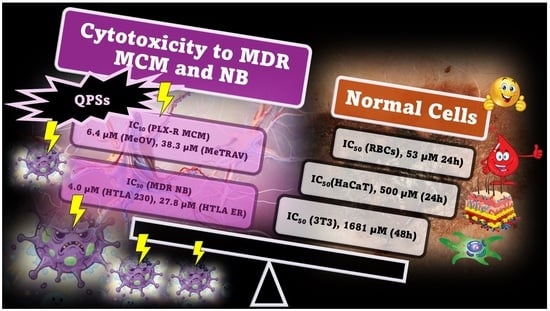
Quaternary Phosphonium Salts Outperformed Vemurafenib (PLX) and Etoposide Against BRAFV600D,V600E PLX-Resistant Melanoma and MDR Neuroblastoma, Exhibiting No/Low Toxicity on 3T3/HaCaT Cells

 ,
,  ,
,  ,
,  and
and 
Abstract
1. Introduction
The Rationale of the Study
2. Results and Discussion
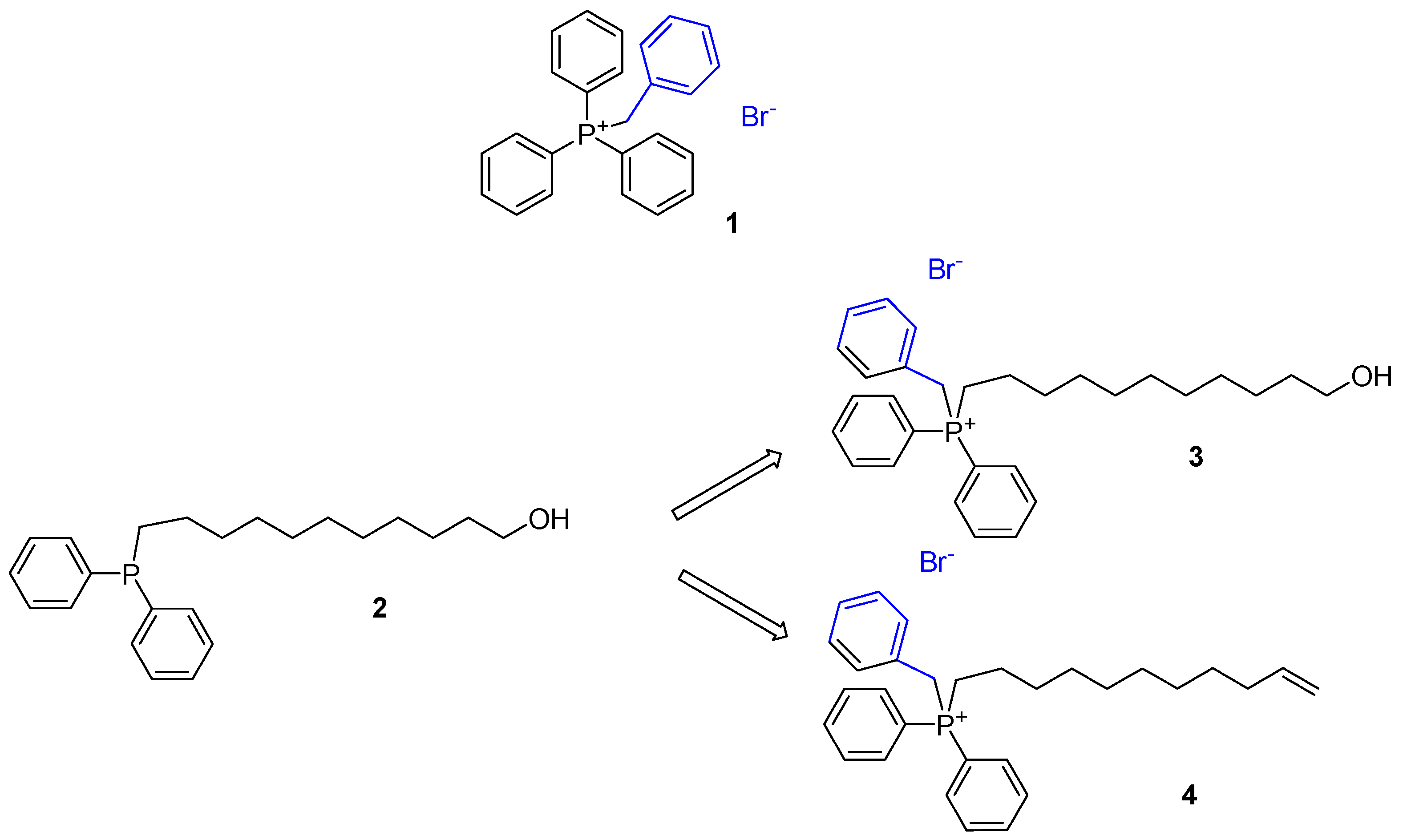
2.1. Synthesis of Phosphine Compound 2 and Benzyl Phosphonium Salts 1, 3 and 4
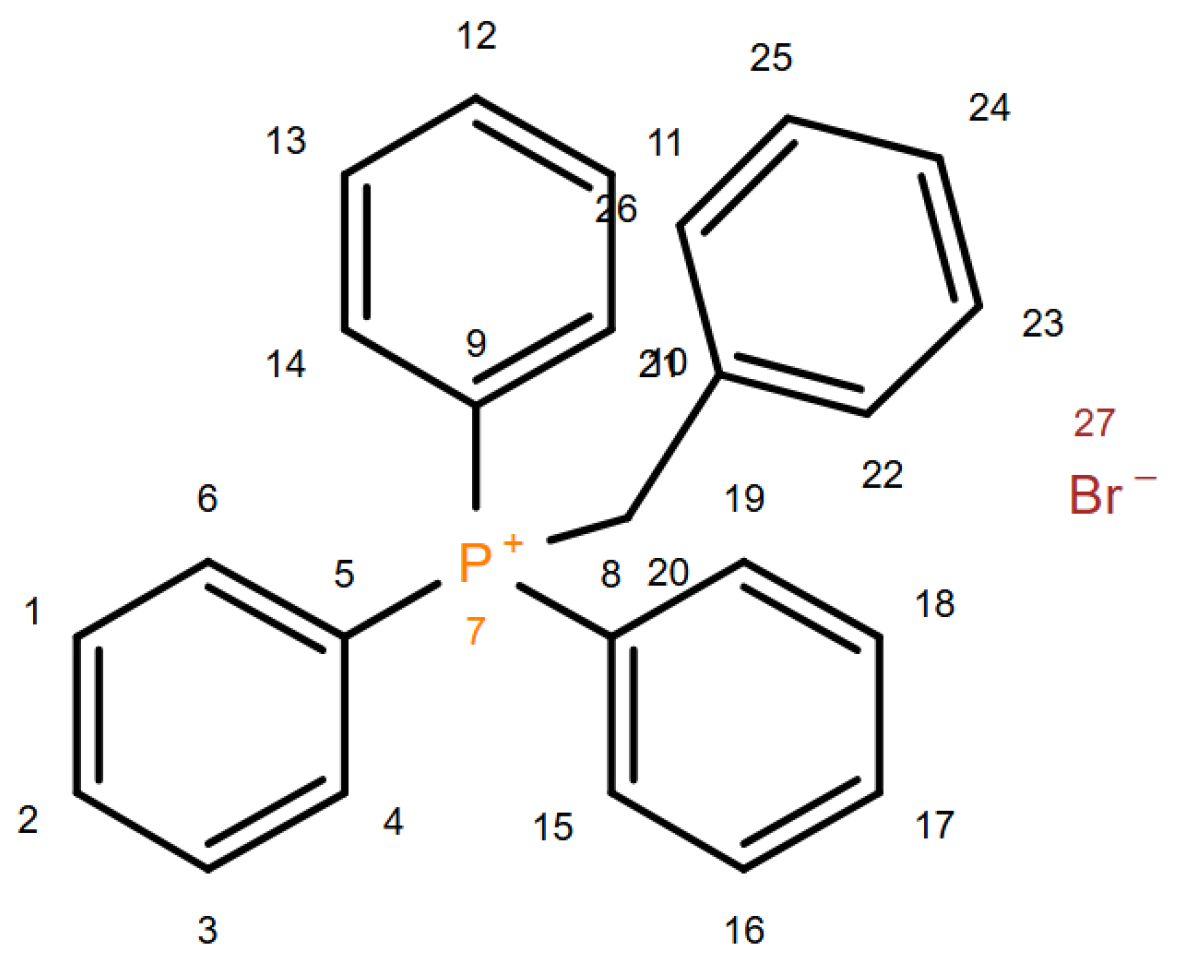
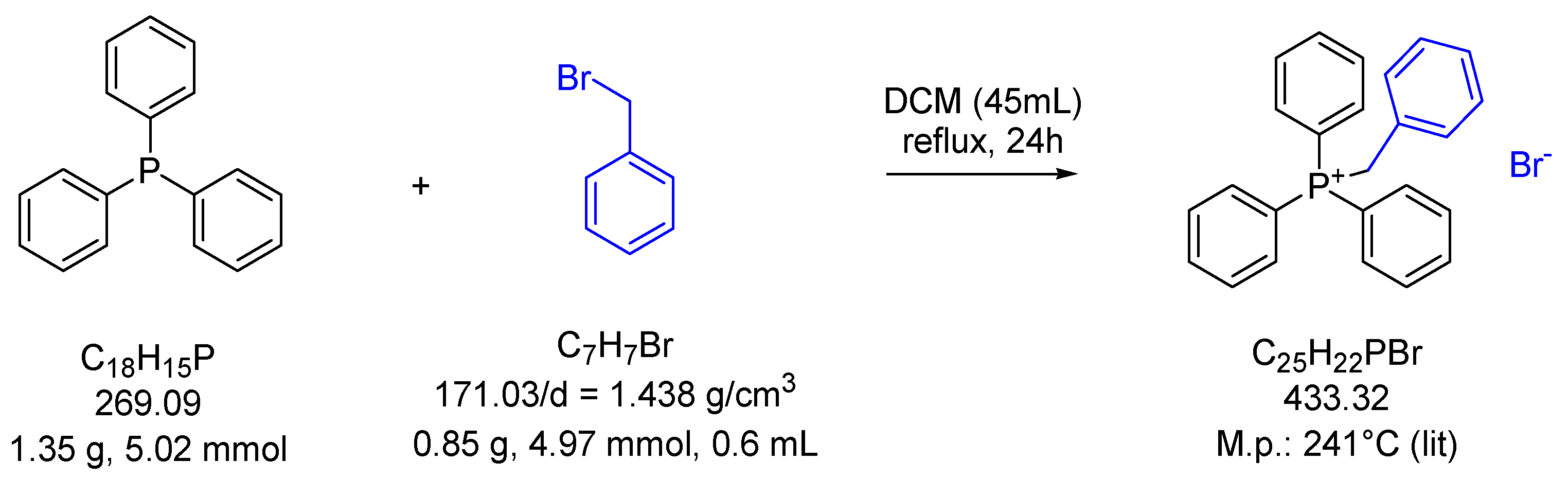
2.1.1. Benzyl Triphenyl Phosphonium Bromide 1
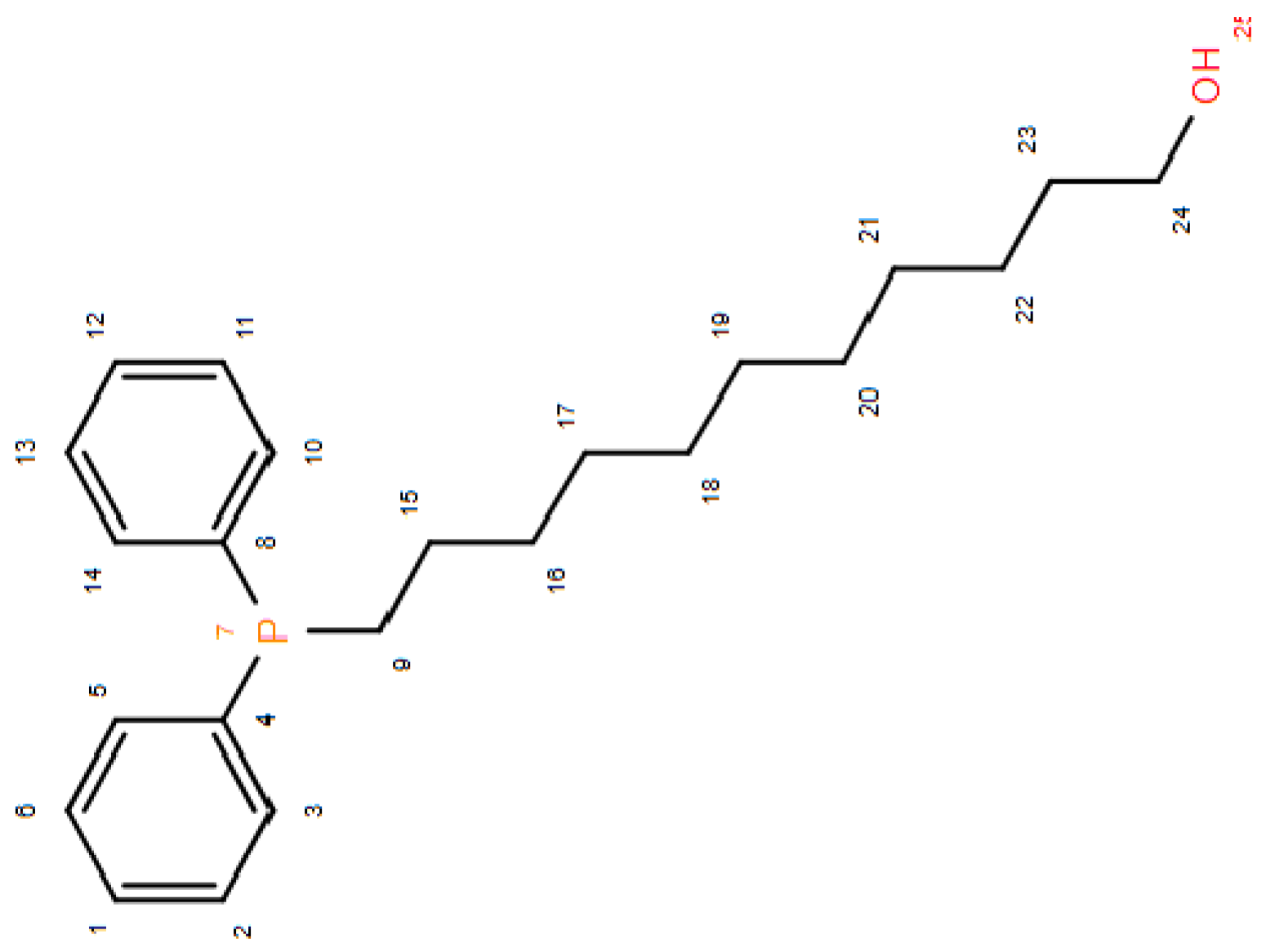
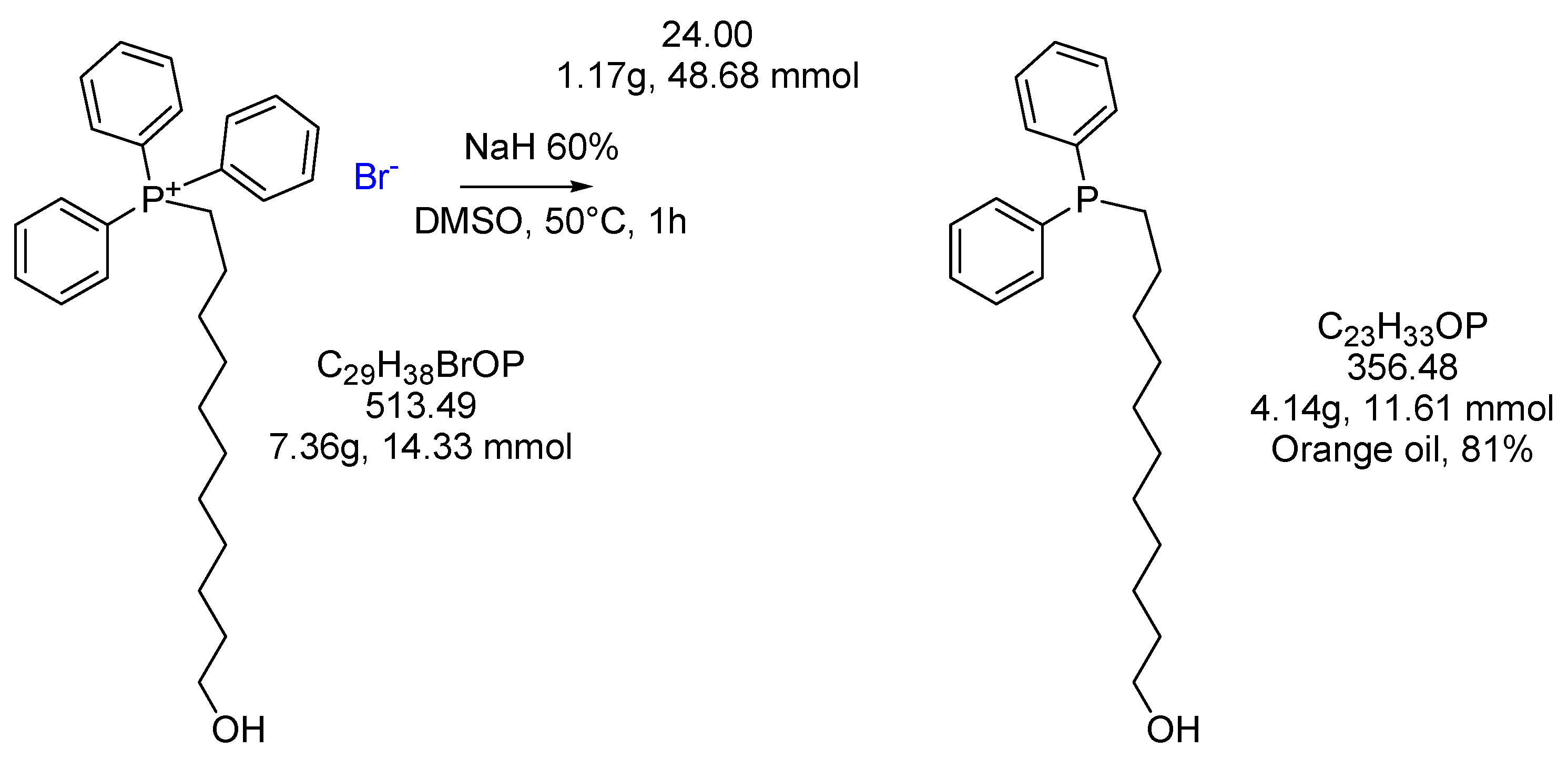
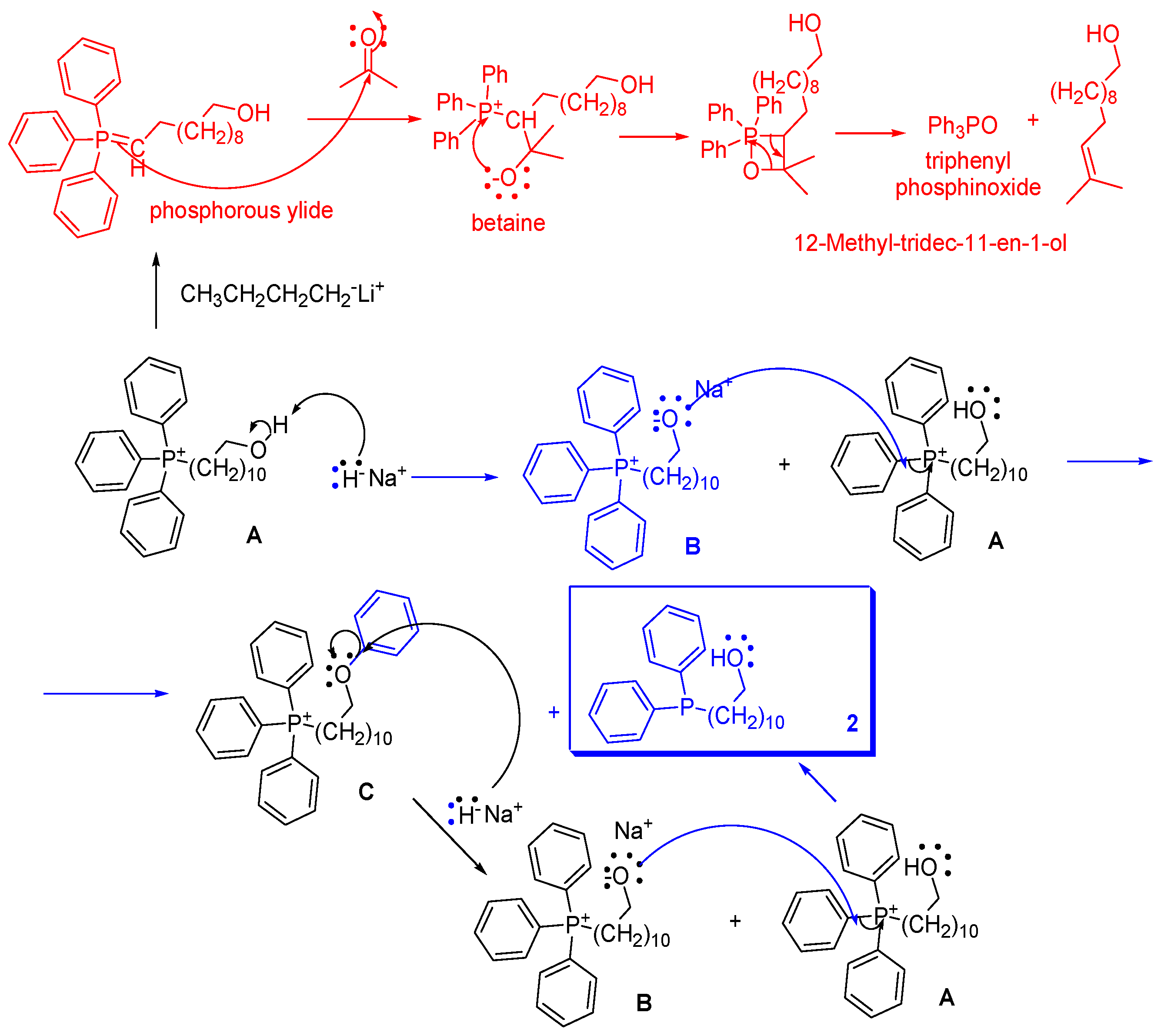
2.1.2. 11-(Di-phenyl-phosphine)-1-undecanol (2) [43]
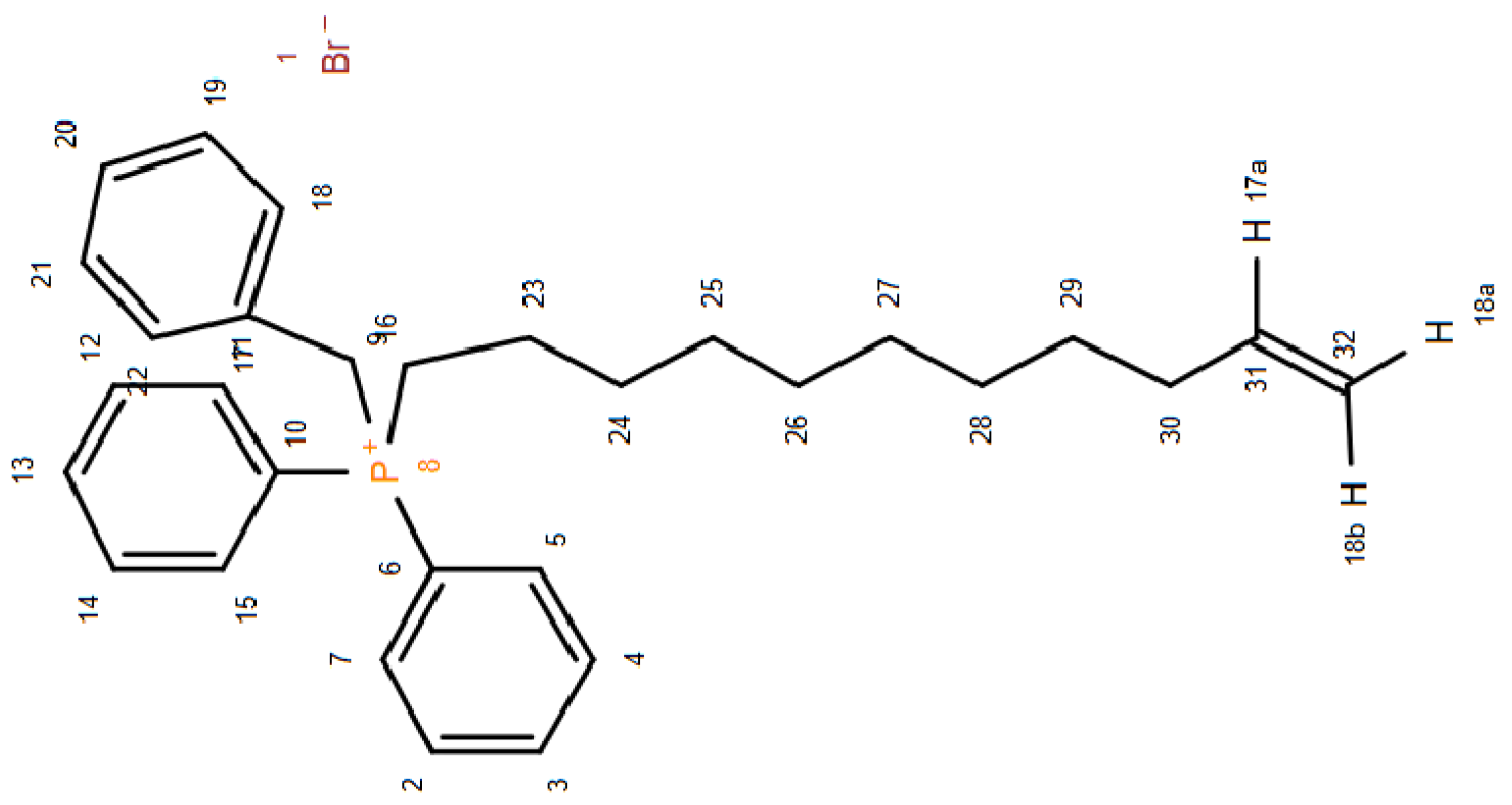
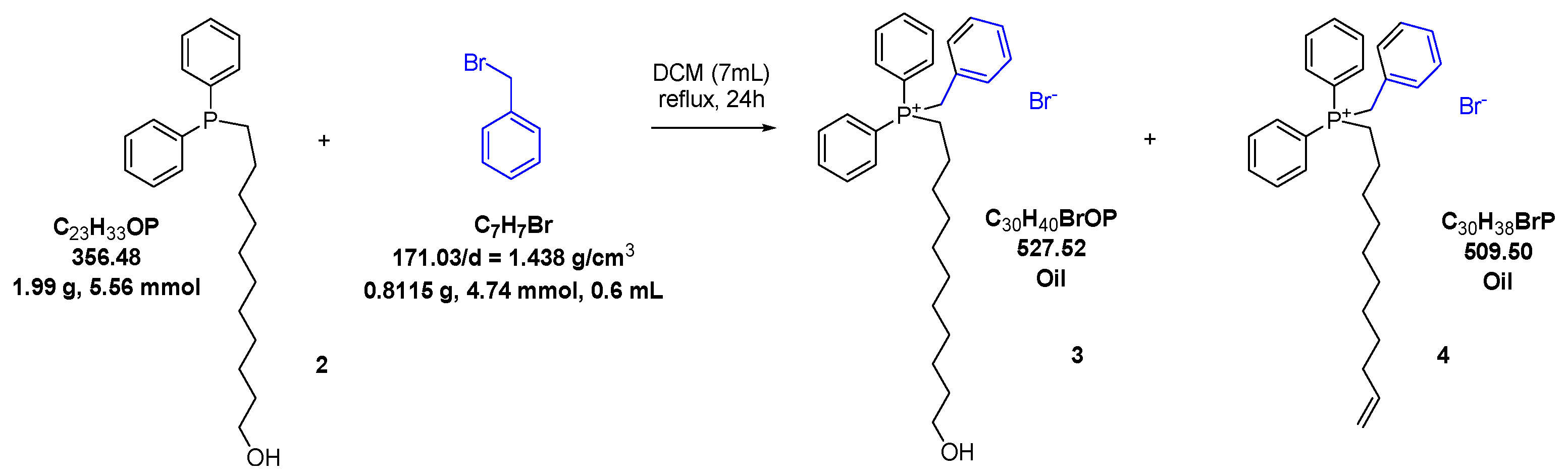
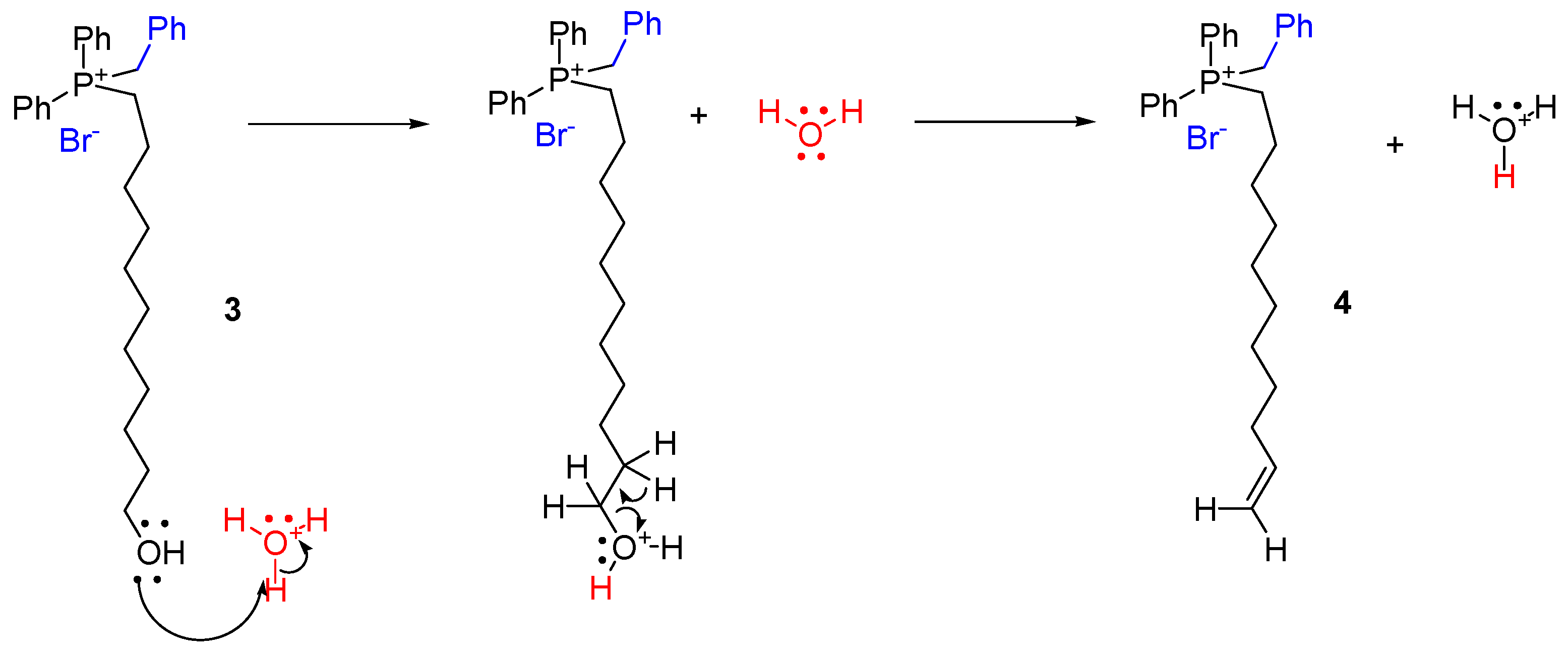
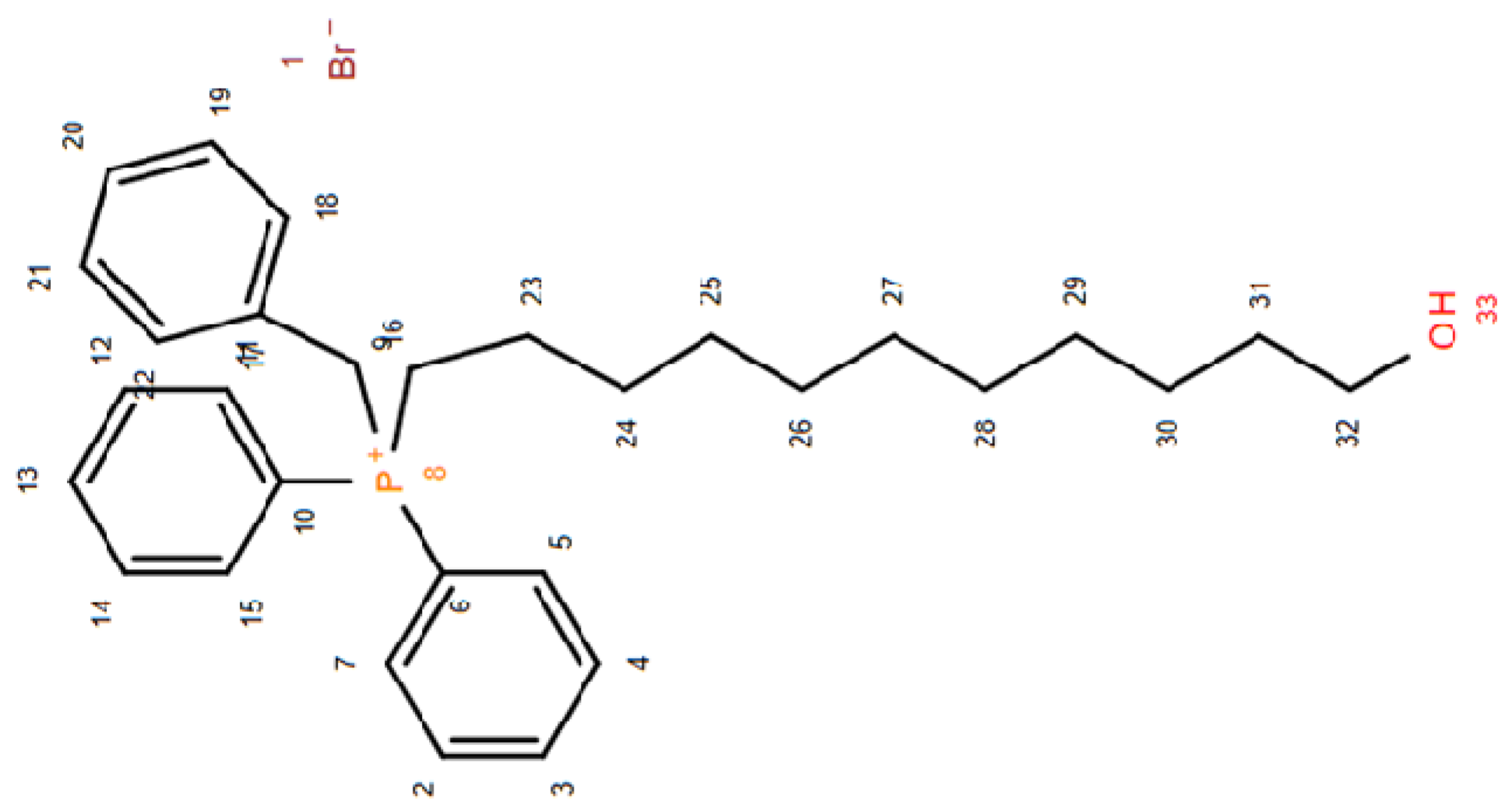
2.1.3. Benzyl-(11-hydroxy-undecyl)-diphenyl-phosphonium Bromide 3 and Benzyl-diphenyl-undec-10-enyl-phosphonium Bromide 4
2.2. ATR-FTIR Spectra of Compounds 1–4
2.3. UV-Vis Spectra
2.4. Principal Component Analysis (PCA) of ATR-FTIR UV-Vis and NMR Spectral Data
2.4.1. PCA of ATR-FTIR and UV-Vis Spectral Data
2.4.2. PCA of NMR Spectral Data
2.5. Optical Microscopy Analyses
2.6. Biological Effects of Compounds 1, 3, and 4 on Tumoral and Non-Tumoral Human Cell Models
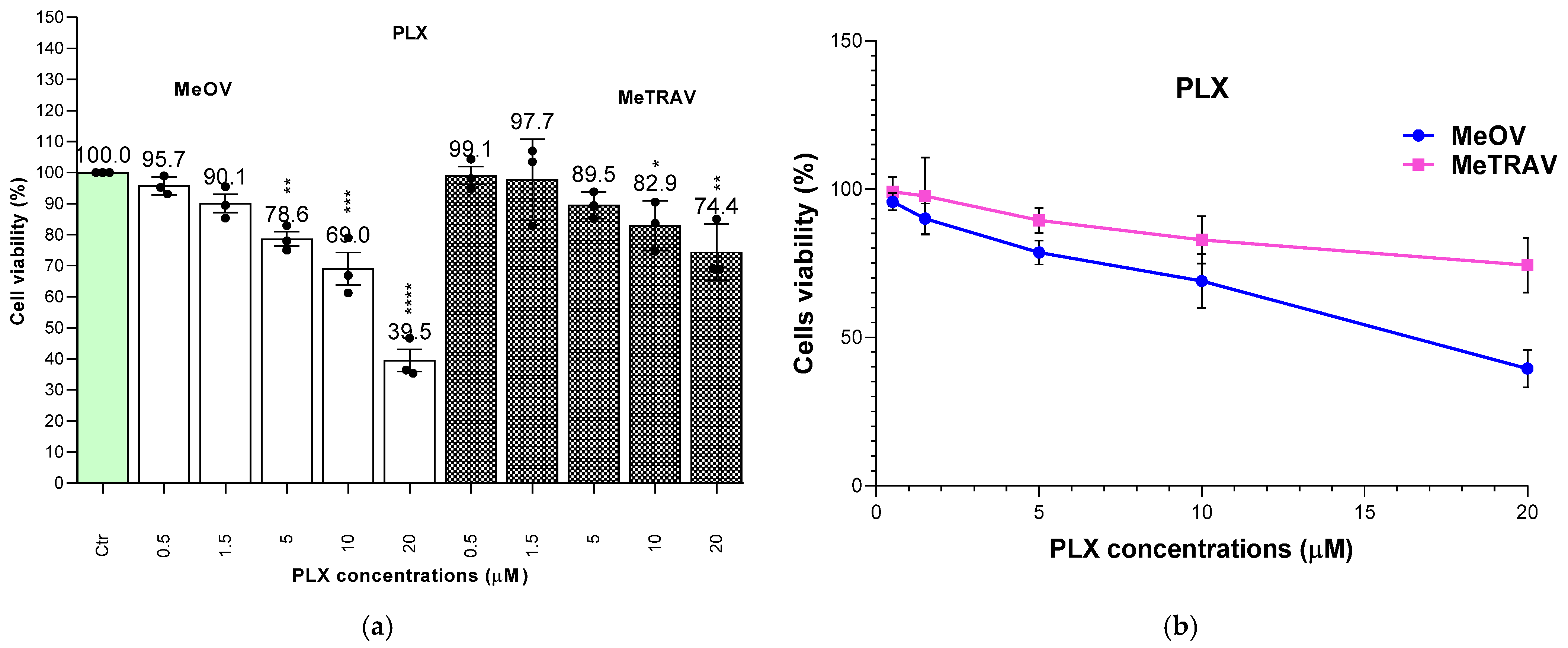
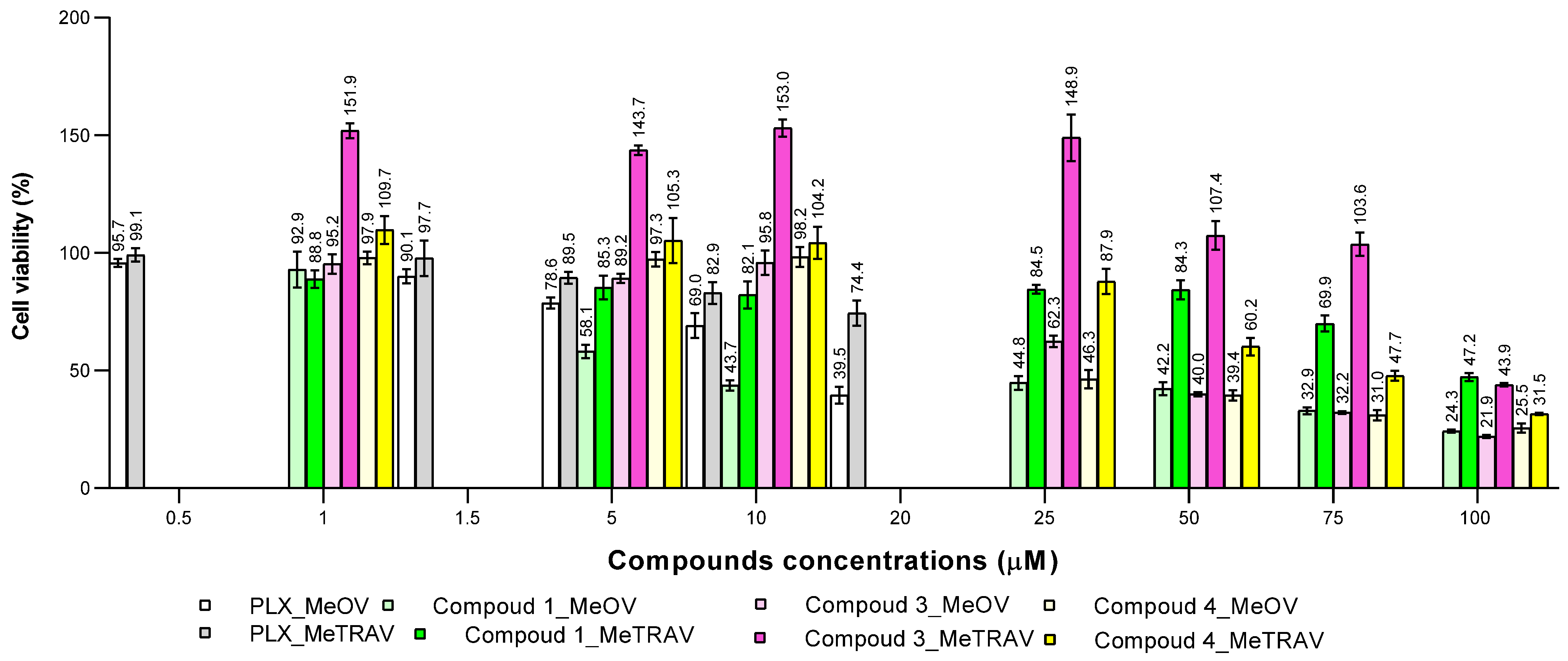
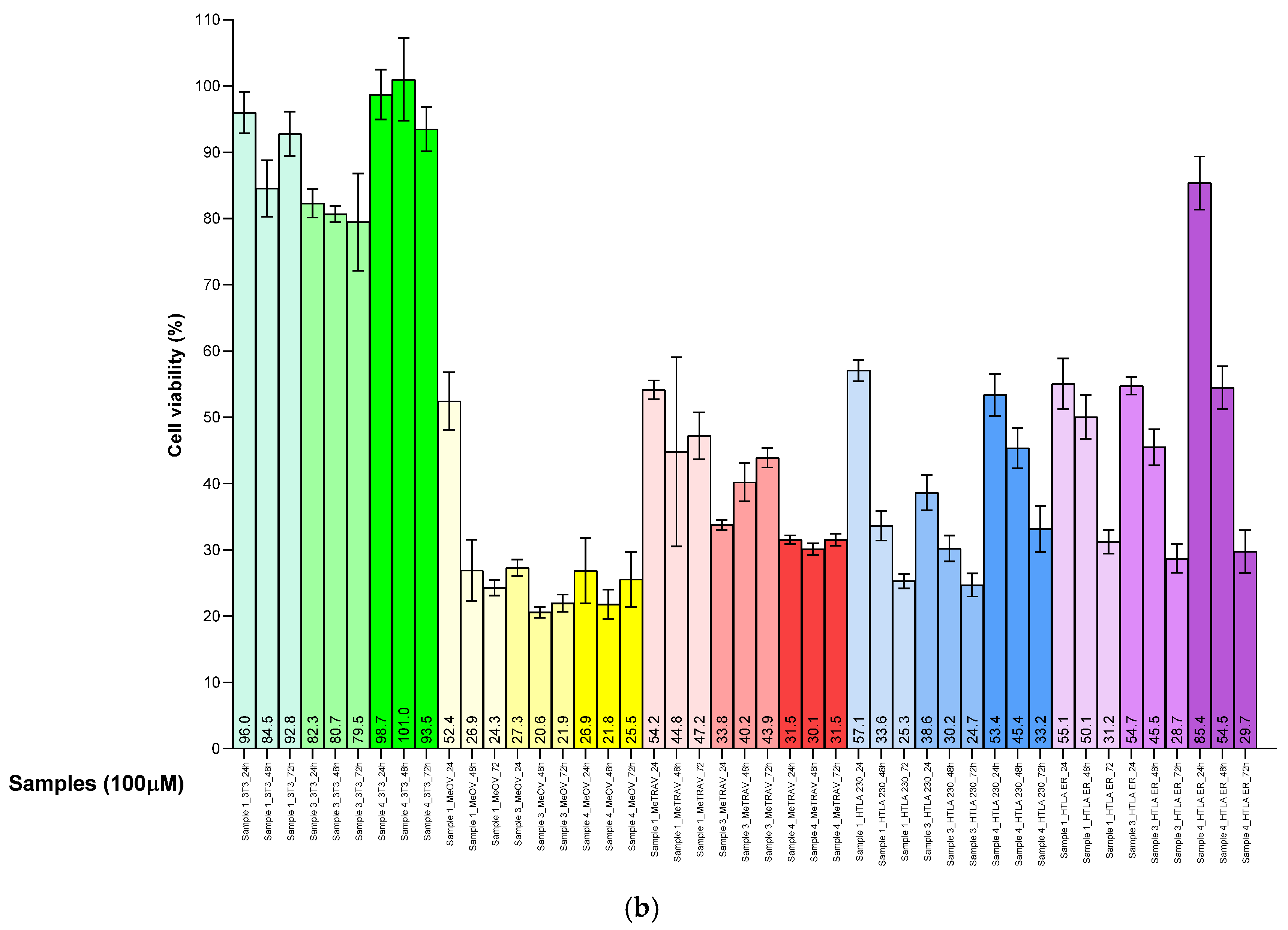
2.6.1. Concentration- and Time-Dependent Anticancer Effects of 1, 3, and 4 on PLX-R MeOV, and MeTRAV Cell Viability
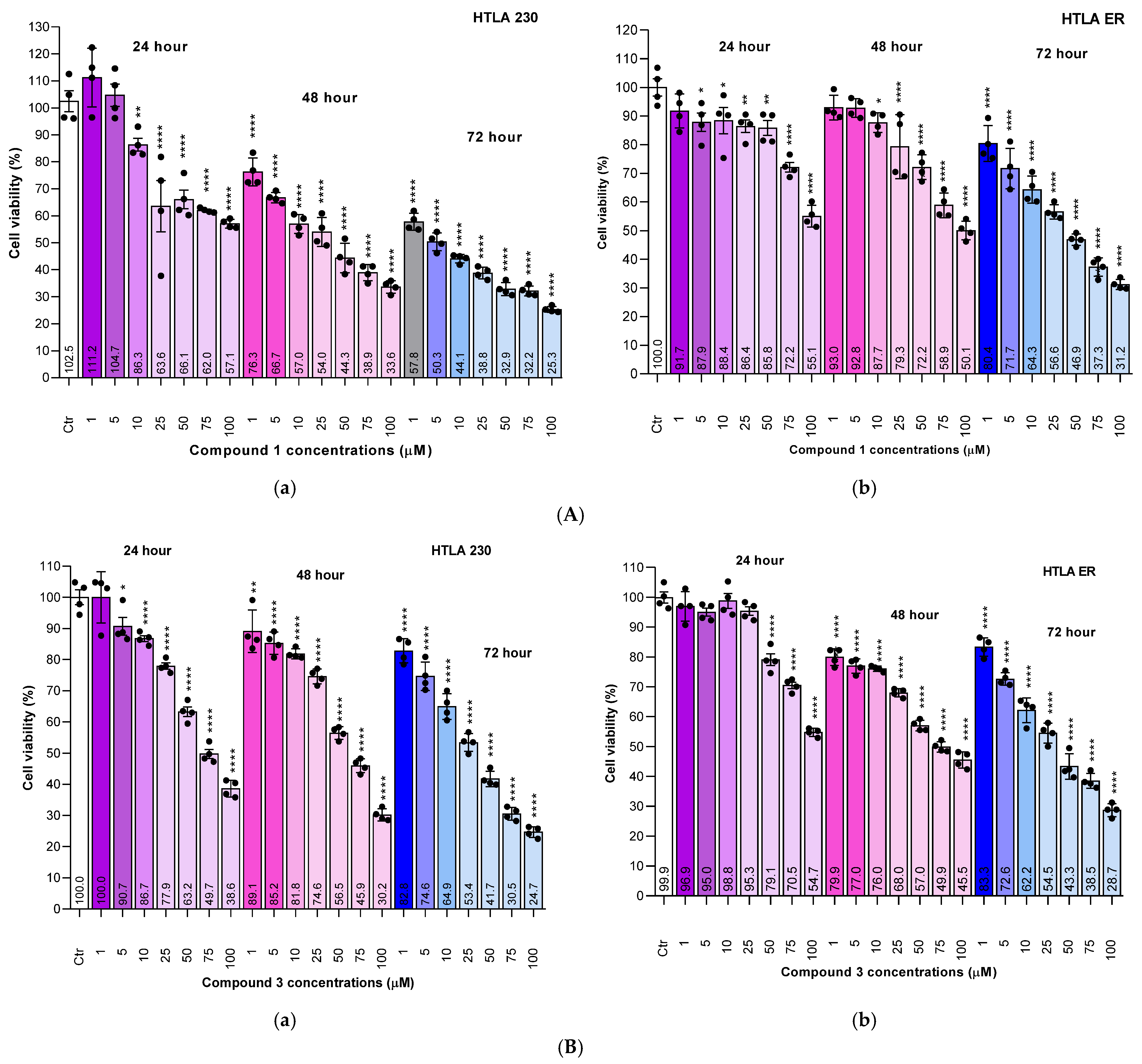
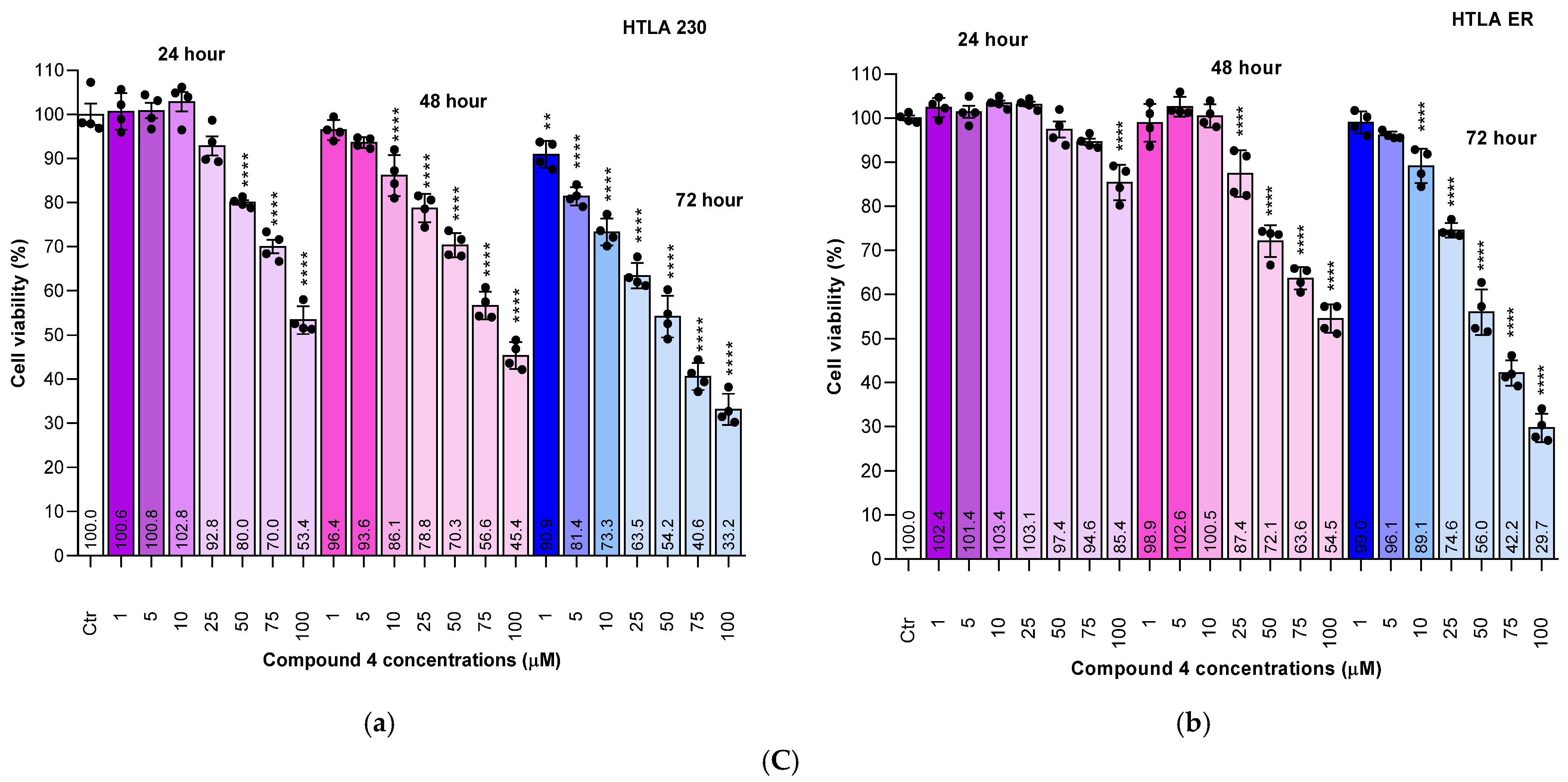
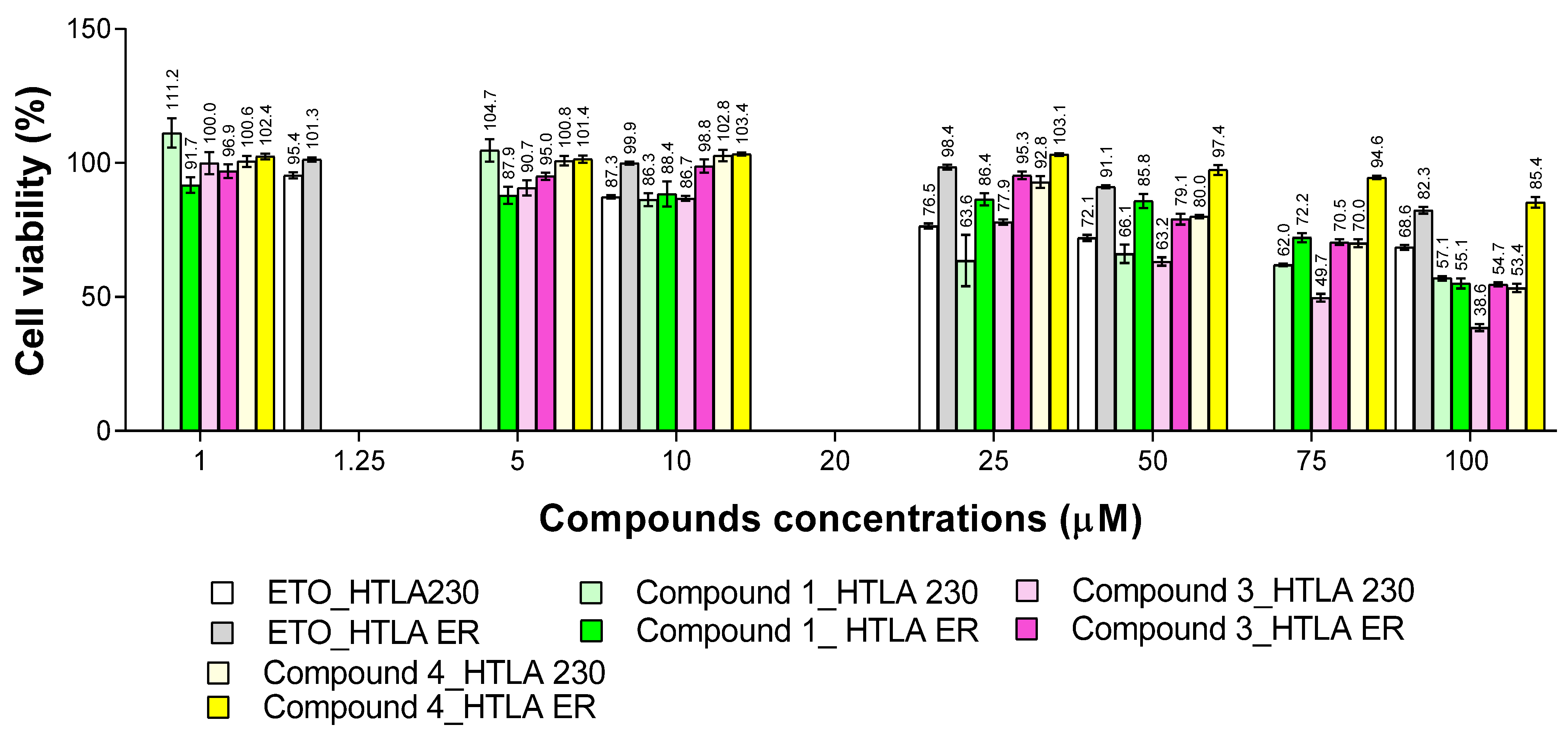
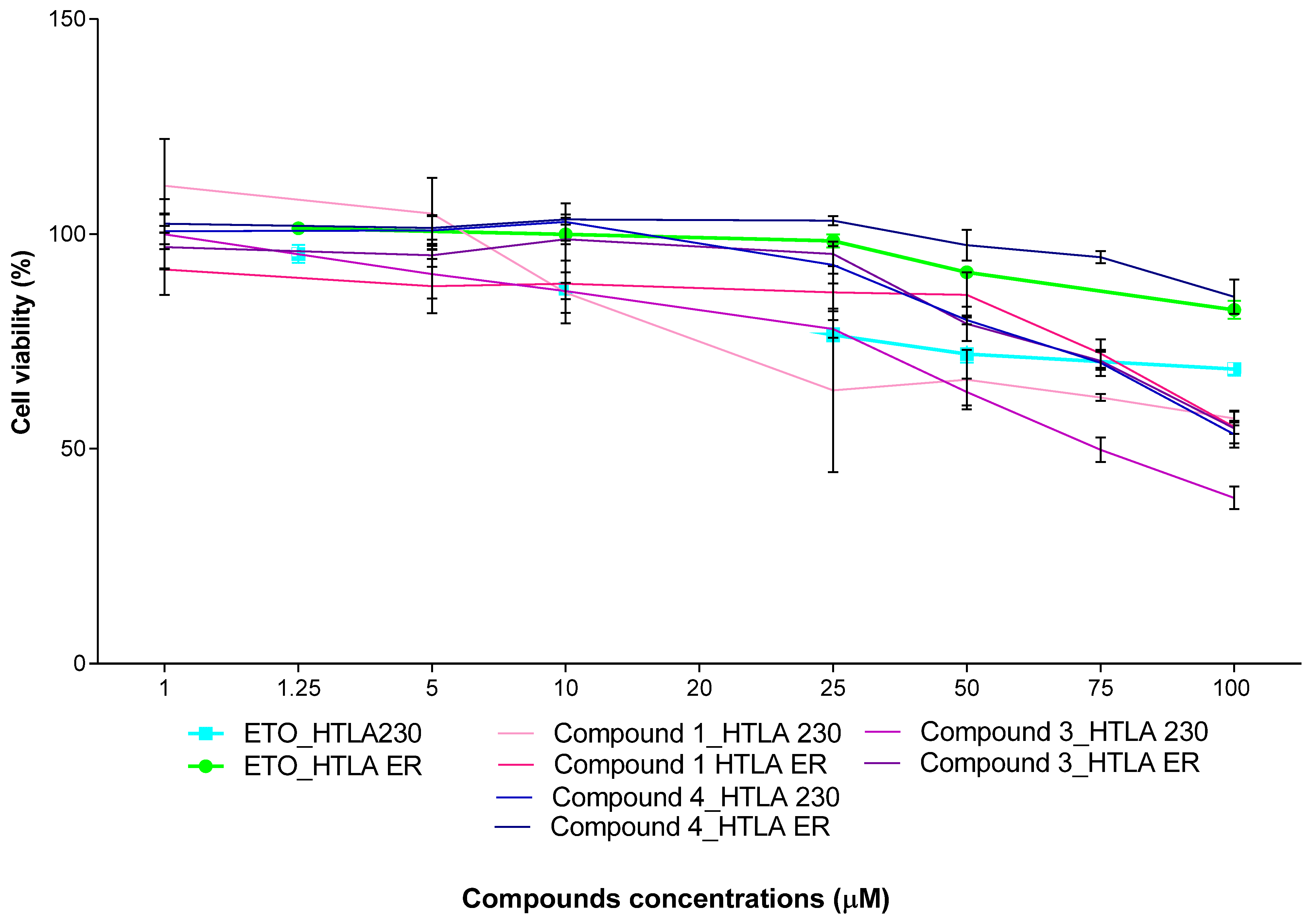
2.6.2. Concentration- and Time-Dependent Effects of 1, 3, and 4 on HTLA 230 and MDR HTLA ER NB Cell Viability
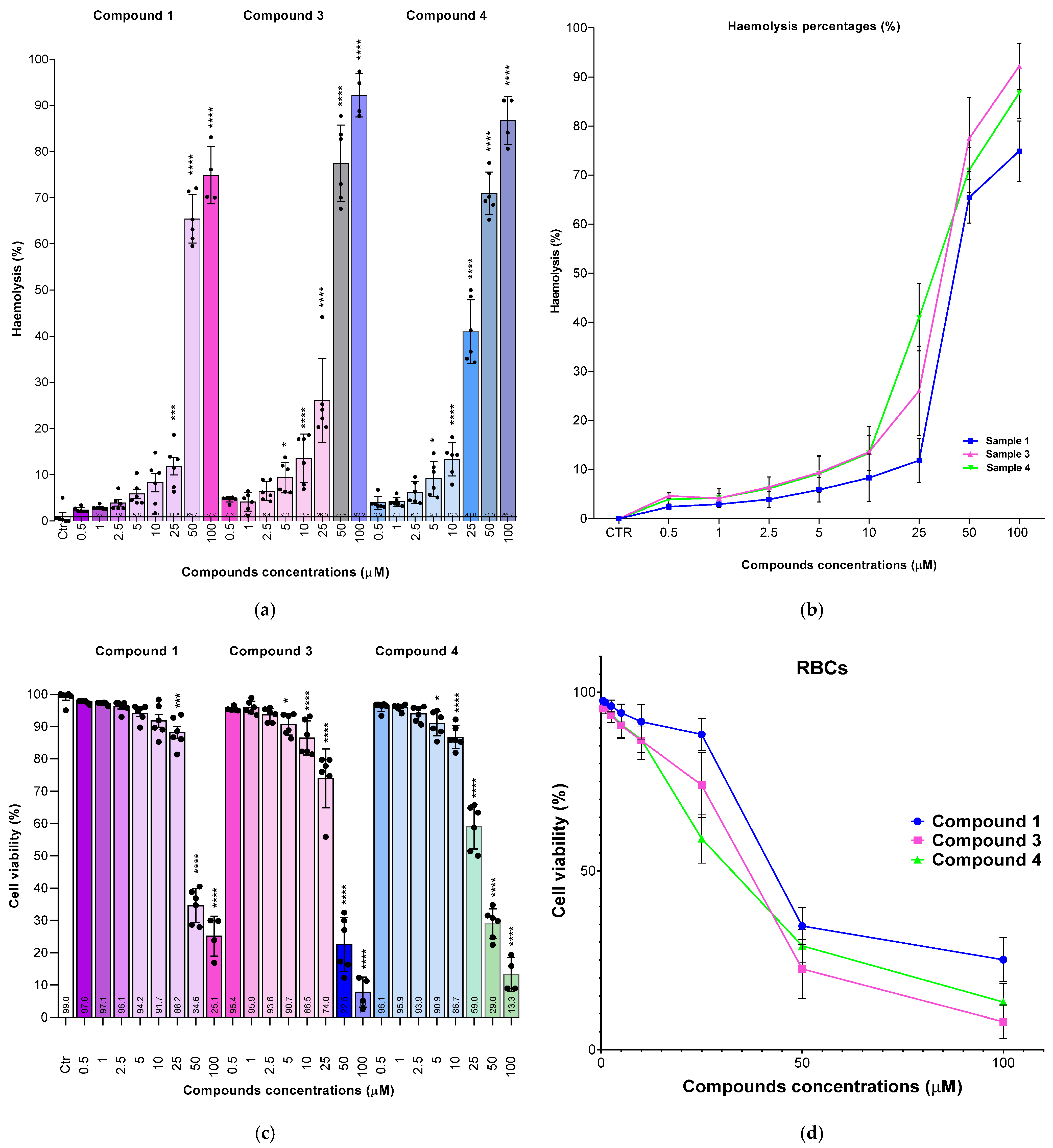
2.6.3. In Vitro Hemolytic Toxicity of Compounds 1, 3, and 4 on Red Blood Cells (RBCs)
2.6.4. Concentration- and Time-Dependent Effects of Samples 1, 3, and 4 on HaCaT and 3T3 Cell Viability
2.6.5. Why Did HaCaT and 3T3 Cells Demonstrate a Substantial Different Sensitivity to QPSs 1, 3, and 4?
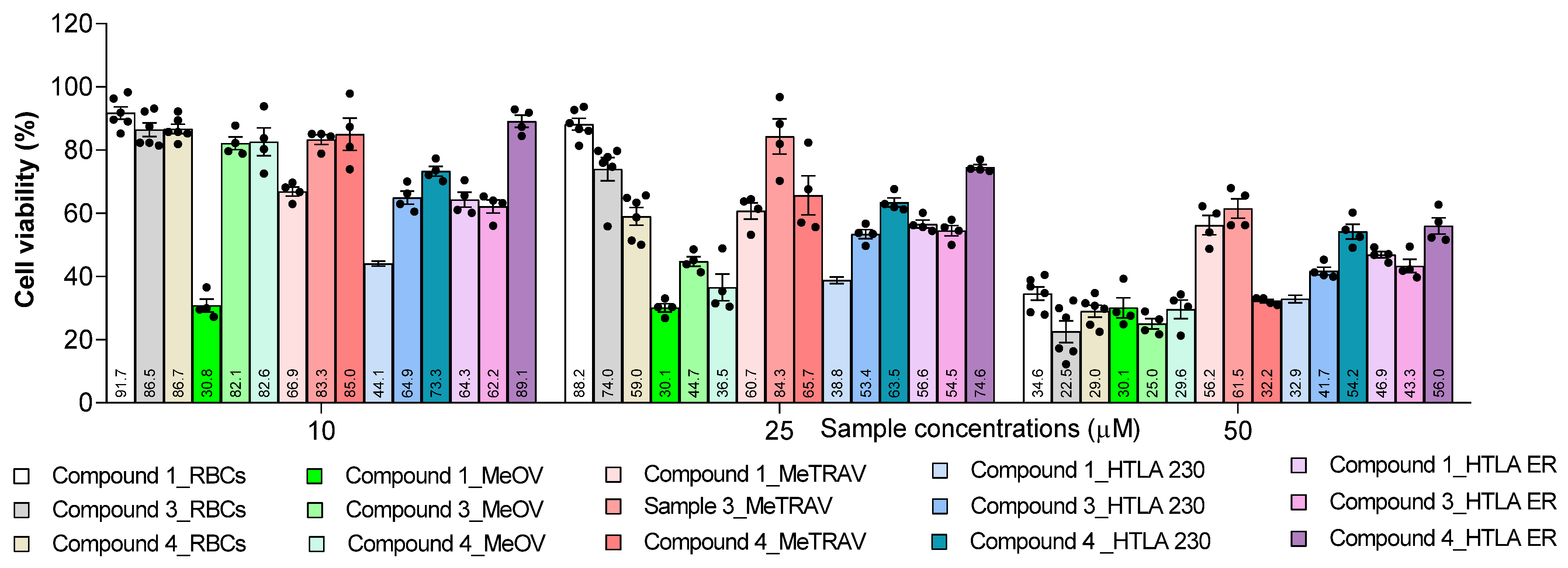
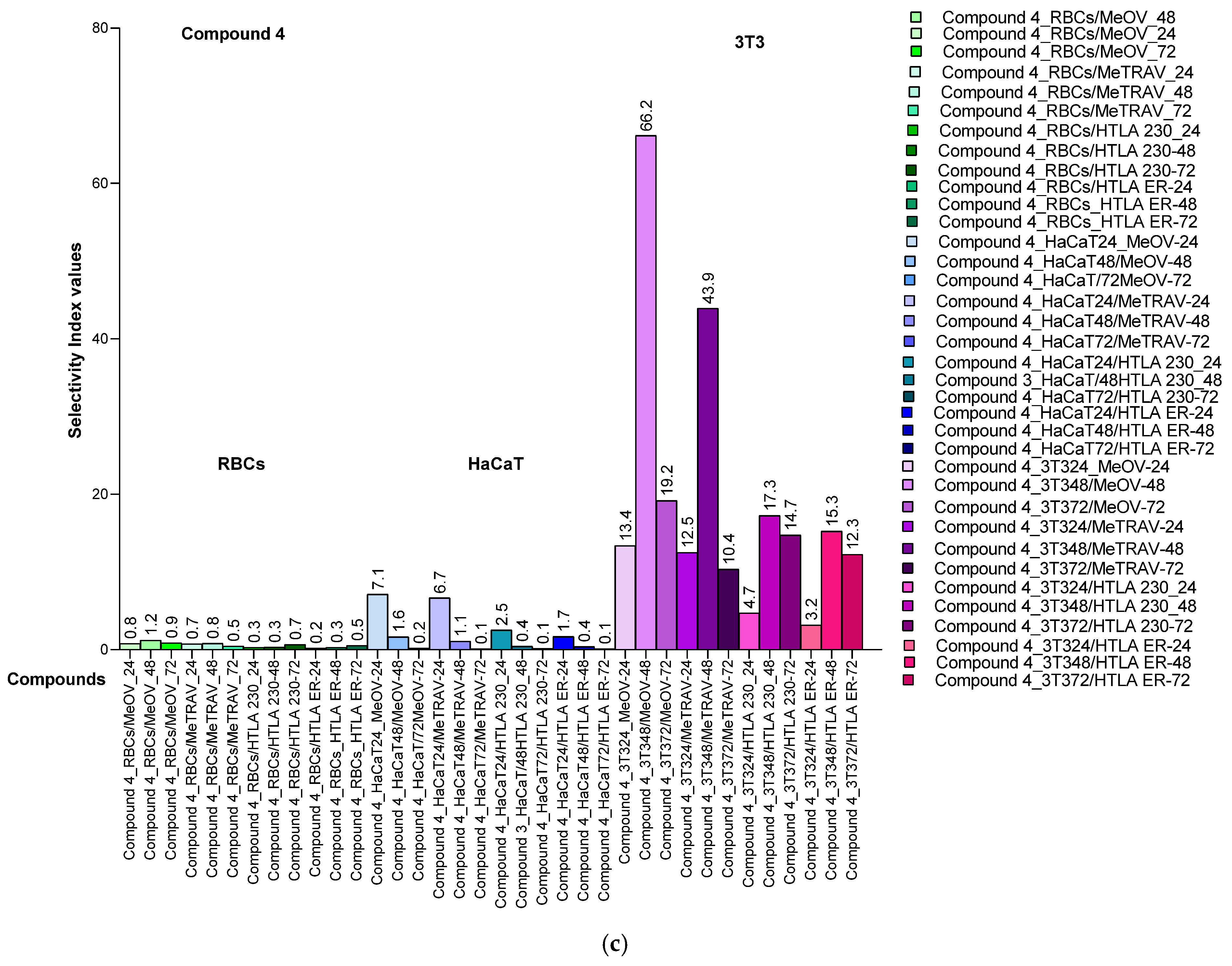
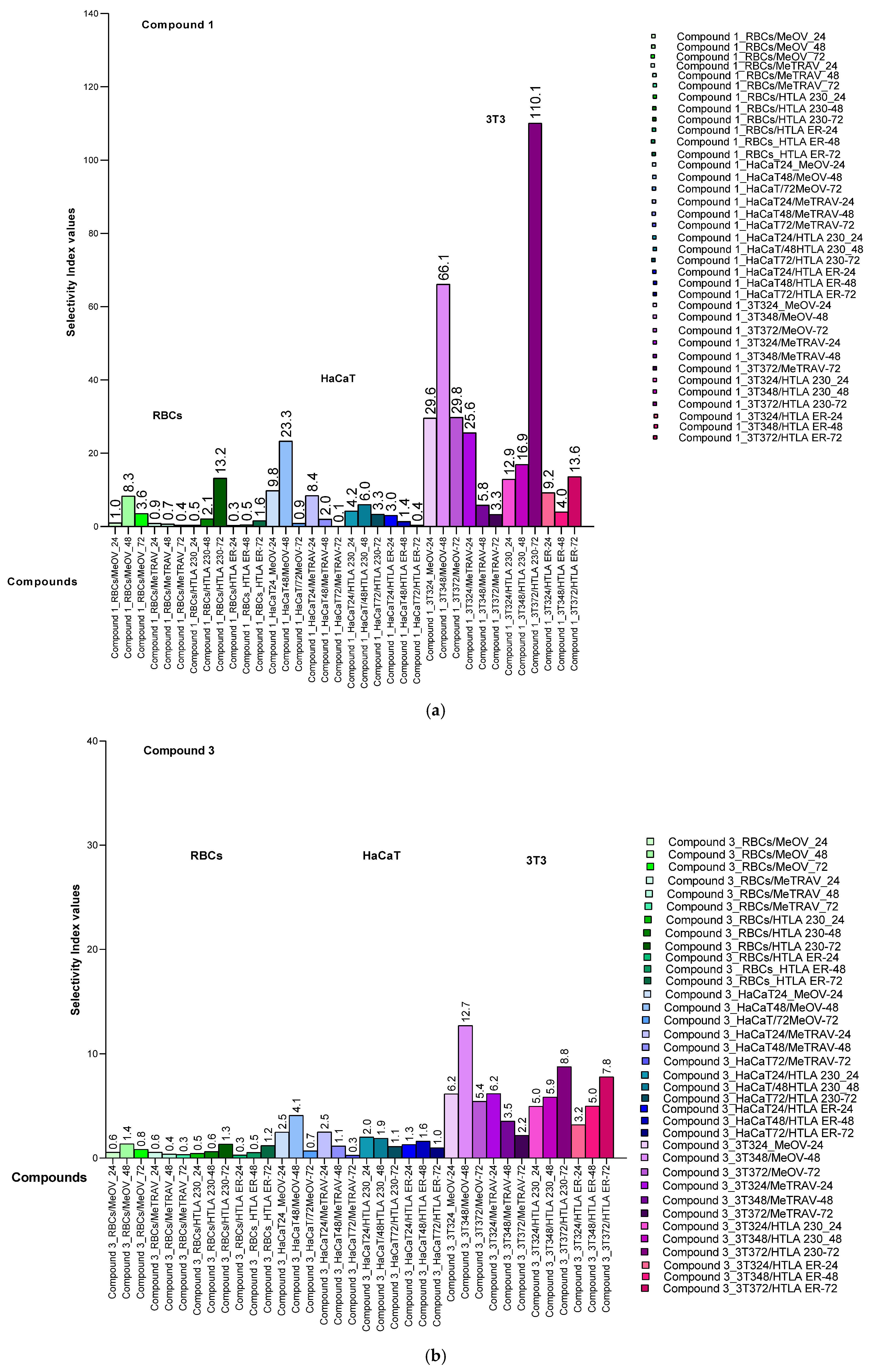
2.6.6. Selectivity Index
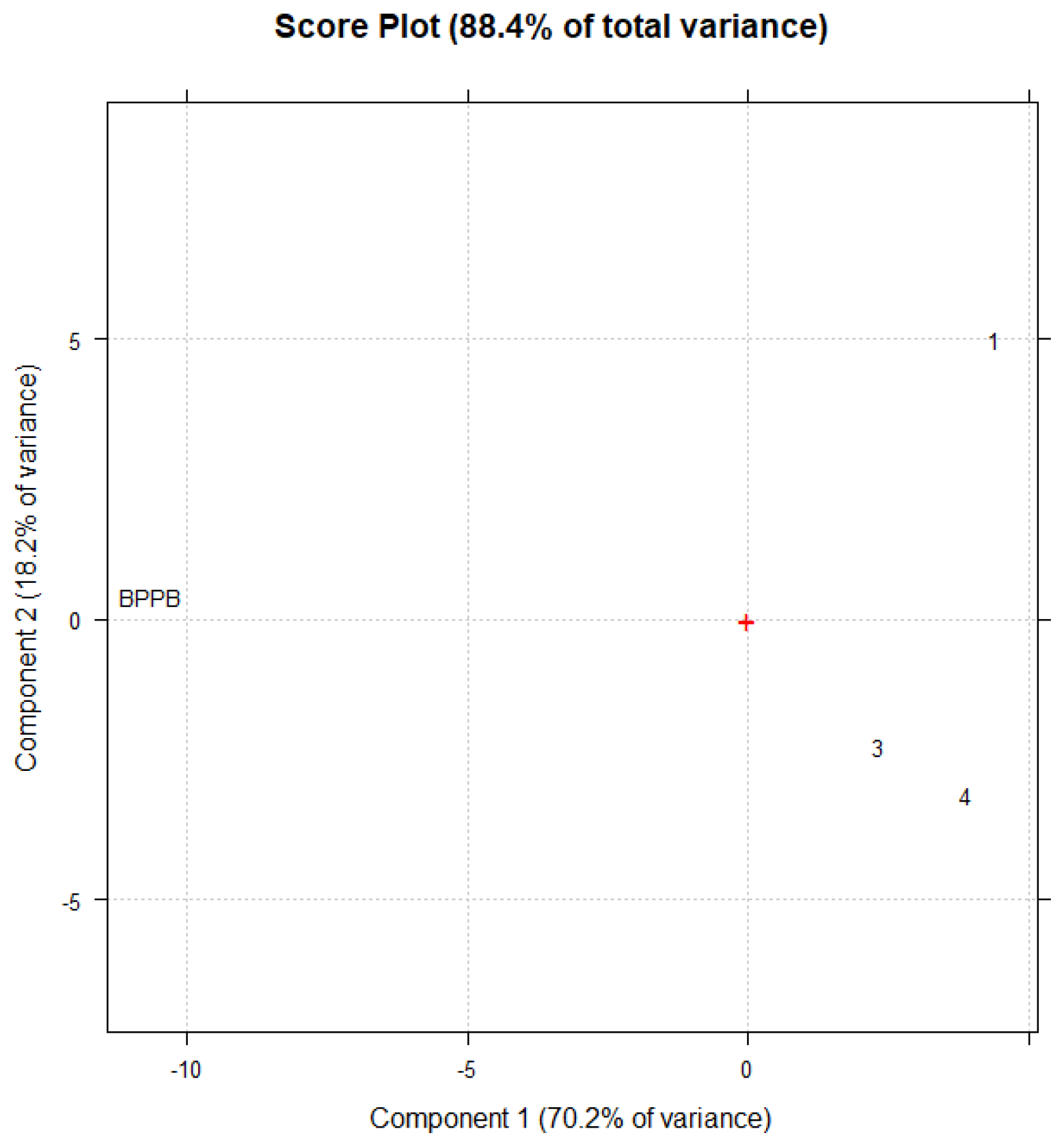
2.6.7. Comparison of 1, 3, and 4 Biological Effects with Those of BPPB Using PCA
3. Materials and Methods
3.1. Chemicals and Instruments
3.2. Synthesis of Phosphor-Containing Compounds 1–4
3.2.1. Benzyl Triphenyl Phosphonium Bromide (1) [40]
- M.p.: 293–294 °C; 298 °C (lit) [41], 298–301 °C (lit) [42]. ATR-FTIR (ν, cm−1): 3085, 3052, 3010 (=C-H stretching), 2859, 2773 (C-H stretching), 1456, 1436 (C-H banding), 719, 689 (C-P stretching). 1H NMR (400 MHz, CDCl3, ambient °C): δ (ppm) = 7.71 (s, J = 7.7, 7.4, 3.7 Hz, 6 equivalent H), 7.65 (s, J = 13.3, 7.7 Hz, 6 equivalent H), 7.45 (t, J = 7.4 Hz, 3 equivalent H), 7.26 (s, J = 7.6, 7.4 Hz, 2 equivalent H), 7.22 (s, J = 7.6, 3.3 Hz, 2 equivalent H), 7.22 (t, J = 7.4 Hz, 1H), 5.97 ppm (d, J = 15.2 Hz, 2H CH2). 13C NMR (101 MHz, CDCl3, ambient °C): δ (ppm) = 135.1 (s, 3 equivalent C), 134.3, (d, J2C-P = 10.20 Hz, 6 equivalent C), 132.2 (d, J3C-P = 5.26 Hz, 2 equivalent C), 130.2 (d, J3C-P = 5.26 Hz, 2 equivalent C), 130.2 (d, conjugated J3C-P = 12.70 Hz, 6 equivalent C), 130.0 (d, J4C-P = 3.20 Hz, 2 equivalent C), 129.6 (s, 1C), 128.5 (d, not conjugated J2C-P = 8.68 Hz, 1C), 117.1 (d, aromatic J1C-P = 86.20 Hz, 3 equivalent C), 28.1 (d, aliphatic J1C-P = 48.10 Hz, CH2). 31P NMR (162 MHz, CHCl3, ambient °C): δ (ppm) = −5 (PPh3), +21.76 (s, 1P). Calcd. for C25H22BrP, Mol. Wt. (MW): 433.32. Found exact mass: 432.06; (GC/MS) (m/z): m/e: 432.06 (100.0%), 434.06 (97.3%), 433.07 (28.1%), 435.07 (27.7%), 434.07 (3.8%), 436.07 (3.7%). Anal. Calcd. C, 69.29%; H, 5.12%; Br, 18.44%; P, 7.15%. Found: C, 69.57%; H, 4.98%; Br, 18.61%; P, 6.99%.
3.2.2. 11-(Di-phenyl-phosphine)-1-undecanol 2 [43]
- Oil. ATR-FTIR (ν, cm−1): 3366 (O-H stretching), 3056 (=C-H stretching), 2924, 2852 (C-H stretching), 1484–1437 (C-H banding), 1173, 1120 (C-O stretching), 746, 721, 691 (C-P stretching). 1H NMR (400 MHz, CDCl3, ambient °C): δ (ppm) = 7.46 (t, J = 7.5, 7.0 Hz, 4 equivalent H), 7.05 (s, J = 7.5 Hz, 4 equivalent H), 6.97 (s, J = 7.5 Hz, 2 equivalent H), 3.57 (td, J = 6.4, 5.0 Hz, 2H, CH2), 2.29 (dt, J = 8.0, 6.6 Hz, 2H, CH2), 1.54 (dtt, J = 8.8, 7.2, 6.6 Hz, 2H, CH2), 1.53 (quin, J = 6.9, 6.4 Hz, 2H, CH2), 1.37 (s, J = 7.7, 6.8 Hz, 2H, CH2), 1.33 (s, J = 6.9, 6.8 Hz, 2H, CH2), 1.29 (s, J = 7.5, 7.2, 4.8 Hz, 2H, CH2), 1.28 (s, J = 7.7 Hz, 2H, CH2), 1.28 (s, J = 7.7 Hz, 2H, CH2), 1.28 (s, J = 7.7, 7.5, 6.0 Hz, 2 equivalent H, CH2), 1.27 ppm (s, J = 7.7 Hz, 2H, CH2). 13C NMR (101 MHz, CDCl3, ambient °C): δ (ppm) = 132.7 (d, J2C-P = 17.76 Hz, 4 equivalent C), 128.6 (d, J3C-P = 6.00 Hz, 4 equivalent C), 128.4 (d, J4C-P = 7.00 Hz, 2 equivalent C), 62.9 (s, CH2OH), 33.0 (s, CH2), 29.8 aliphatic J1C-P = 12.24 Hz CH2), 29.7, 29.7, 29.6 (3s, CH2), 29.5 (d, aliphatic J5C-P = 4.97 Hz, CH2), 29.3 (d, aliphatic J4C-P = 5.00 Hz, CH2), 29.0 (d, aliphatic J3C-P = 10.55 Hz, CH2), 26.3 (s, CH2), 25.8 (d, aliphatic J2C-P = 14.84 Hz, CH2). 31P NMR (162 MHz, CHCl3, ambient °C): δ (ppm) = −5 (PPh3), −15.40 (s, 1P). Calcd. for C23H33OP, Mol. Wt.: 356.48. Found exact mass: 356.23. GC/MS (m/e): 356.23 (100.0%), 357.23 (26.1%), 358.23 (3.3%). Calcd.: C, 77.49%; H, 9.33%; O, 4.49%; P, 8.69%. Found: C, 77.16%; H, 9.61%; O, 4.47%; P, 9.00%.
3.2.3. Benzyl-(11-hydroxyundecyl)-diphenyl-phosphonium Bromide (3) and Benzyl-diphenyl-undec-10-enyl-phosphonium bromide (4)
- Compound 3. Brown oil. ATR-FTIR (ν, cm−1): 3334 (O-H stretching), 3056, 3026 (=C-H stretching), 2924, 2852 (C-H stretching), 1455–1437 (C-H banding), 1160, 1120 (C-O stretching), 743, 720, 694 (C-P stretching). 1H NMR (400 MHz, CDCl3, ambient °C): δ (ppm) = 8.37 (dd, J = 7.7, 5.6 Hz, 4 equivalent H), 7.60 (s, J = 7.4 Hz, 2 equivalent H), 7.52 (s, J = 7.7, 7.4, 5.0 Hz, 4 equivalent H), 7.45 (dd, J = 7.6, 3.3 Hz, 2 equivalent H), 7.28 (t, J = 7.4 Hz, 1H), 7.17 (t, J = 7.6, 7.4 Hz, 2 equivalent H), 4.27 (d, J = 13.9 Hz, 2H, CH2), 3.65 (td, J = 6.4, 5.0 Hz, 2H, CH2), 3.12 (dt, J = 11.9, 6.8 Hz, 2H, CH2), 1.53 (quin, J = 6.9, 6.4 Hz, 2H, CH2), 1.47 (s, J = 7.9, 7.2, 6.8 Hz, 2H, CH2), 1.45 (s, J = 7.5, 7.2 Hz, 2H, CH2), 1.32 (quin, J = 6.9, 6.8 Hz, 2H, CH2), 1.23 (s, J = 7.7, 6.80 Hz, CH2), 1.23 (s, J = 7.7, 7.5, 6.0 Hz, 2 equivalent H, CH2), 1.21 (s, J = 7.7 Hz, 2H, CH2), 1.19 (s, J = 7.7 Hz, 2H, CH2), 1.16 ppm (s, J = 7.7 Hz, 2H, CH2). 13C NMR (101 MHz, CDCl3, ambient °C): δ (ppm) = 134.5 (s, 2 equivalent C), 132.5 (d, J2C-P = 10.38 Hz, 4 equivalent C), 130.96 (d, not conjugated J3C-P = 5.30 Hz, 2 equivalent C), 130.4 (d, conjugated J3C-P = 12.60 Hz, 4 equivalent C), 128.9 (d, not conjugated J4C-P = 3.20 Hz, 2 equivalent C), 128.5 (s, 1C), 128.1 (d, not conjugated J2C-P = 8.90 Hz 1C), 117.4 (d, aromatic J1C-P = 83.73 Hz, 2 equivalent C), 62.3 (s, CH2OH), 32.4 (s, CH2), 30.3 (d, aliphatic J3C-P = 13.85 Hz CH2), 29.8 (d, aliphatic J4C-P = 5.00 Hz CH2), 29.6, 29.6 (2s, 2CH2), 29.5 (d, aliphatic J5C-P = 4.97 Hz CH2), 29.6 (d, aliphatic J1C-P = 47.30 Hz CH2), 28.6, 25.8 (2s, CH2), 23.2 (d, aliphatic J1C-P = 45.20 Hz CH2), 21.9 (d, aliphatic J2C-P = 4.05 Hz CH2). 31P NMR (162 MHz, CHCl3, ambient °C): δ (ppm) = −5 (PPh3), +23.82 (s, 1P). Calcd. for C30H40BrOP, Mol. Wt. (MW): 527.52. Found exact mass: 526.20; (GC/MS) (m/e): 526.20 (100.0%), 528.20 (97.5%), 527.20 (33.4%), 529.20 (33.1%), 528.21 (5.6%), 530.20 (5.4%). Anal. Calcd. C, 68.31; H, 7.64; Br, 15.15; O, 3.03; P, 5.87. Found: C, 68.05%; H, 7.88%; Br, 14.93%; P, 5.58%.
- Compound 4. Brown oil. ATR-FTIR (ν, cm−1): 3056, 3029 (=C-H stretching), 2925, 2853 (C-H stretching), 1454–1437 (C-H banding), 743, 720, 694 (C-P stretching). 1H NMR (400 MHz, CDCl3, ambient °C): δ (ppm) = 8.37 (dd, J = 7.7, 5.6 Hz, 4 equivalent H), 7.60 (s, J = 7.4 Hz, 2 equivalent H), 7.52 (s, J = 7.7, 7.4, 5.0 Hz, 1H), 7.45 (dd, J = 7.6, 3.3 Hz, 4 equivalent H), 7.45 (dd, J = 7.6, 3.3 Hz, 1H), 7.28 (t, J = 7.4 Hz, 1H), 7.17 (t, J = 7.6, 7.4 Hz, 2 equivalent H), 5.76 (ddt, J = 15.3, 12.1, 6.4, 6.3 Hz, 1H, CH=CH2), 4.99 (d, J = 15.3 Hz, 1Hb, CH=CH2), 4.94 (d, J = 12.1 Hz, 1Ha, CH=CH2), 4.27 (d, J = 13.9 Hz, 2H, CH2), 3.12 (dt, J = 11.9, 6.8 Hz, 2H, CH2), 2.07 (s, J = 16.7, 6.9, 6.3 Hz, 2 equivalent H, CH2), 1.47 (s, J = 7.9, 7.2, 6.8 Hz, 2H, CH2), 1.45 (s, J = 7.5, 7.2 Hz, 2H, CH2), 1.37 (quin, J = 6.9 Hz, 2H, CH2), 1.25 (s, J = 7.7, 7.5, 6.0 Hz, 2 equivalent H, CH2), 1.24 (s, J = 7.5, 6.9, 6.0 Hz, 2 equivalent H, CH2), 1.20 (s, J = 7.7 Hz, 2H, CH2), 1.19 ppm (s, J = 7.7, 7.5 Hz, 2H, CH2). 13C NMR (101 MHz, CDCl3, ambient °C): δ (ppm) = 138.4 (s, 1C, CH=CH2), 134.5 (s, 2 equivalent C), 132.5 (d, J2C-P = 10.38 Hz, 4 equivalent C), 130.96 (d, 3J2C-P = 5.30 Hz, 2 equivalent C), 130.4 (d, conjugated J3C-P = 12.60 Hz, 4 equivalent C), 128.9 (d, not conjugated J4C-P = 3.20 Hz, 2 equivalent C), 128.5 (s, 1C), 128.1 (d, not conjugated J2C-P = 8.90 Hz 1C), 117.4 (d, J1C-P = 83.73 Hz, 2 equivalent C), 114.4 (s, 1C, CH=CH2), 33.6 (s, CH2), 30.3 (d, aliphatic J3C-P = 13.85 Hz CH2), 29.7 (d, aliphatic J4C-P = 5.00 Hz CH2), 29.6 (d, aliphatic J1C-P = 47.30 Hz CH2), 29.3 (d, aliphatic J5C-P = 4.97 Hz CH2), 29.03, 28.97, 28.31 (3s, CH2), 23.2 (d, aliphatic J1C-P = 45.20 Hz CH2), 21.9 (d, aliphatic J2C-P = 4.05 Hz, CH2). 31P NMR (162 MHz, CHCl3, ambient °C): δ (ppm) = −5 (PPh3), +23.82 (s, 1P). Calcd. for C30H38BrP, Mol. Wt. (MW): 509.50. Found exact mass: 508.19; (GC/MS) (m/e): 508.19 (100.0%), 510.19 (97.3%), 509.19 (33.4%), 511.19 (33.0%), 510.20 (5.6%), 512.19 (5.2%). Anal. Calcd. C, C, 70.72; H, 7.52; Br, 15.68; P, 6.08. Found: C, 70.91%; H, 7.94%; Br, 15.99%; P, 5.95%.
3.3. ATR-FTIR Spectroscopy of Compounds 1–4
3.4. UV-Vis Analyses
3.5. Multivariate Analysis of ATR-FTIR, UV-Vis, and NMR Spectral Data
3.5.1. ATR-FTIR and UV-Vis Spectral Data
3.5.2. NMR Spectral Data
3.5.3. Biological Findings
3.6. Optical Microscopy Analyses
3.7. Cytotoxicity Experiments Using Compounds 1, 3, and 4 on PLX-Resistant MCM (MeOV and MeTRAV) Cells, as Well as on ETO-Sensitive (HTLA 230) and MDR (HTLA ER) NB Cells
3.7.1. Cell Lines and Culture Conditions
3.7.2. Treatments
3.7.3. Cell Viability Assay
3.8. In Vitro Hemolytic Toxicity of Samples 1, 3, and 4 Using Red Blood Cells (RBCs)
3.9. Evaluation of Cytotoxicity of Samples 1, 3, and 4 on Human Keratinocytes (HaCaT) and Murine Fibroblasts (3T3)
3.9.1. Cell Culture
3.9.2. Treatments
3.9.3. Viability Assay
3.10. Comparison Between the Biological Effects of 1, 3, and 4 and Those of BPPB by PCA
3.11. Statistical Analyses
4. Conclusions
Supplementary Materials
Author Contributions
Funding
Institutional Review Board Statement
Informed Consent Statement
Data Availability Statement
Conflicts of Interest
References
- Long, G.V.; Swetter, S.M.; Menzies, A.M.; Gershenwald, J.E.; Scolyer, R.A. Cutaneous Melanoma. Lancet 2023, 402, 485–502, Erratum in Lancet 2023, 402, 450. https://doi.org/10.1016/S0140-6736(23)01581-7. [Google Scholar] [CrossRef] [PubMed]
- Drugs in Clinical Development for Melanoma. Pharm. Med. 2012, 26, 171–183. [CrossRef]
- Ferlay, J.; Ervik, M.; Lam, F.; Laversanne, M.; Colombet, M.; Mery, L.; Piñeros, M.; Znaor, A.; Soerjomataram, I.; Bray, F. Global Cancer Observatory: Cancer Today International Agency for Research on Cancer. Available online: https://gco.iarc.fr/today/en (accessed on 21 January 2025).
- Gandini, S.; Sera, F.; Cattaruzza, M.S.; Pasquini, P.; Abeni, D.; Boyle, P.; Melchi, C.F. Meta-Analysis of Risk Factors for Cutaneous Melanoma: I. Common and Atypical Naevi. Eur. J. Cancer 2005, 41, 28–44. [Google Scholar] [CrossRef] [PubMed]
- Bliss, J.M.; Ford, D.; Swerdlow, A.J.; Armstrong, B.K.; Cristofolini, M.; Elwood, J.M.; Green, A.; Holly, E.A.; Mack, T.; Mackie, R.M.; et al. Risk of Cutaneous Melanoma Associated with Pigmentation Characteristics and Freckling: Systematic Overview of 10 Case-control Studies. Int. J. Cancer 1995, 62, 367–376. [Google Scholar] [CrossRef]
- Davies, H.; Bignell, G.R.; Cox, C.; Stephens, P.; Edkins, S.; Clegg, S.; Teague, J.; Woffendin, H.; Garnett, M.J.; Bottomley, W.; et al. Mutations of the BRAF Gene in Human Cancer. Nature 2002, 417, 949–954. [Google Scholar] [CrossRef]
- Holderfield, M.; Deuker, M.M.; McCormick, F.; McMahon, M. Targeting RAF Kinases for Cancer Therapy: BRAF-Mutated Melanoma and Beyond. Nat. Rev. Cancer 2014, 14, 455–467. [Google Scholar] [CrossRef]
- Haq, R.; Fisher, D.E.; Widlund, H.R. Molecular Pathways: BRAF Induces Bioenergetic Adaptation by Attenuating Oxidative Phosphorylation. Clin. Cancer Res. 2014, 20, 2257–2263. [Google Scholar] [CrossRef]
- Patel, B.; Patel, M.; Gami, B.; Patel, A. Cultivation of Bioenergy Crops in Gujarat State: A Consultative Survey Process to Understand the Current Practices of Landowners. Environ. Dev. Sustain. 2021, 23, 8991–9013. [Google Scholar] [CrossRef]
- Boutros, A.; Croce, E.; Ferrari, M.; Gili, R.; Massaro, G.; Marconcini, R.; Arecco, L.; Tanda, E.T.; Spagnolo, F. The Treatment of Advanced Melanoma: Current Approaches and New Challenges. Crit. Rev. Oncol. Hematol. 2024, 196, 104276. [Google Scholar] [CrossRef]
- Berk-Krauss, J.; Stein, J.A.; Weber, J.; Polsky, D.; Geller, A.C. New Systematic Therapies and Trends in Cutaneous Melanoma Deaths Among US Whites, 1986–2016. Am. J. Public Health 2020, 110, 731–733. [Google Scholar] [CrossRef]
- Marengo, B.; Monti, P.; Miele, M.; Menichini, P.; Ottaggio, L.; Foggetti, G.; Pulliero, A.; Izzotti, A.; Speciale, A.; Garbarino, O.; et al. Etoposide-Resistance in a Neuroblastoma Model Cell Line Is Associated with 13q14.3 Mono-Allelic Deletion and MiRNA-15a/16-1 down-Regulation. Sci. Rep. 2018, 8, 13762. [Google Scholar] [CrossRef] [PubMed]
- Schwab, M.; Westermann, F.; Hero, B.; Berthold, F. Neuroblastoma: Biology and Molecular and Chromosomal Pathology. Lancet Oncol. 2003, 4, 472–480. [Google Scholar] [CrossRef] [PubMed]
- Cheung, N.-K.V.; Dyer, M.A. Neuroblastoma: Developmental Biology, Cancer Genomics and Immunotherapy. Nat. Rev. Cancer 2013, 13, 397–411. [Google Scholar] [CrossRef] [PubMed]
- Morandi, F.; Airoldi, I.; Marimpietri, D.; Bracci, C.; Faini, A.C.; Gramignoli, R. CD38, a Receptor with Multifunctional Activities: From Modulatory Functions on Regulatory Cell Subsets and Extracellular Vesicles, to a Target for Therapeutic Strategies. Cells 2019, 8, 1527. [Google Scholar] [CrossRef]
- Colla, R.; Izzotti, A.; De Ciucis, C.; Fenoglio, D.; Ravera, S.; Speciale, A.; Ricciarelli, R.; Furfaro, A.L.; Pulliero, A.; Passalacqua, M.; et al. Glutathione-Mediated Antioxidant Response and Aerobic Metabolism: Two Crucial Factors Involved in Determining the Multi-Drug Resistance of High-Risk Neuroblastoma. Oncotarget 2016, 7, 70715–70737. [Google Scholar] [CrossRef]
- Seeger, R.C.; Brodeur, G.M.; Sather, H.; Dalton, A.; Siegel, S.E.; Wong, K.Y.; Hammond, D. Association of Multiple Copies of the N-Myc Oncogene with Rapid Progression of Neuroblastomas. N. Engl. J. Med. 1985, 313, 1111–1116. [Google Scholar] [CrossRef]
- Garbarino, O.; Valenti, G.E.; Monteleone, L.; Pietra, G.; Mingari, M.C.; Benzi, A.; Bruzzone, S.; Ravera, S.; Leardi, R.; Farinini, E.; et al. PLX4032 Resistance of Patient-Derived Melanoma Cells: Crucial Role of Oxidative Metabolism. Front. Oncol. 2023, 13, 1210130. [Google Scholar] [CrossRef]
- Alfei, S.; Torazza, C.; Bacchetti, F.; Signorello, M.G.; Passalacqua, M.; Domenicotti, C.; Marengo, B. Tri-Phenyl-Phosphonium-Based Nano Vesicles: A New In Vitro Nanomolar-Active Weapon to Eradicate PLX-Resistant Melanoma Cells. Int. J. Mol. Sci. 2025, 26, 3227. [Google Scholar] [CrossRef]
- Alfei, S.; Torazza, C.; Bacchetti, F.; Milanese, M.; Passalaqua, M.; Khaledizadeh, E.; Vernazza, S.; Domenicotti, C.; Marengo, B. TPP-Based Nanovesicles Kill MDR Neuroblastoma Cells and Induce Moderate ROS Increase, While Exert Low Toxicity To-Wards Primary Cell Cultures: An in Vitro Study. Int. J. Mol. Sci. 2025, 26, 4991. [Google Scholar] [CrossRef]
- Alfei, S.; Zuccari, G.; Athanassopoulos, C.M.; Domenicotti, C.; Marengo, B. Strongly ROS-Correlated, Time-Dependent, and Selective Antiproliferative Effects of Synthesized Nano Vesicles on BRAF Mutant Melanoma Cells and Their Hyaluronic Acid-Based Hydrogel Formulation. Int. J. Mol. Sci. 2024, 25, 10071. [Google Scholar] [CrossRef]
- Alfei, S.; Giannoni, P.; Signorello, M.G.; Torazza, C.; Zuccari, G.; Athanassopoulos, C.M.; Domenicotti, C.; Marengo, B. The Remarkable and Selective In Vitro Cytotoxicity of Synthesized Bola-Amphiphilic Nanovesicles on Etoposide-Sensitive and -Resistant Neuroblastoma Cells. Nanomaterials 2024, 14, 1505. [Google Scholar] [CrossRef]
- Nuraje, N.; Bai, H.; Su, K. Bolaamphiphilic Molecules: Assembly and Applications. Prog. Polym. Sci. 2013, 38, 302–343. [Google Scholar] [CrossRef]
- Dhanya, D.; Giuseppe, P.; Rita, C.A.; Annaluisa, M.; Stefania, S.M.; Francesca, G.; Vitale, D.V.; Anna, R.; Claudio, A.; Pasquale, L.; et al. Phosphonium Salt Displays Cytotoxic Effects Against Human Cancer Cell Lines. Anti-Cancer Agents Med. Chem. 2018, 17, 1796–1804, Erratum in Anti-Cancer Agents Med. Chem. 2018, 18, 765. https://doi.org/10.2174/187152061805180821121547. [Google Scholar] [CrossRef] [PubMed]
- Lukáč, M.; Pisárčik, M.; Garajová, M.; Mrva, M.; Dušeková, A.; Vrták, A.; Horáková, R.; Horváth, B.; Devínsky, F. Synthesis, Surface Activity, and Biological Activities of Phosphonium and Metronidazole Salts. J. Surfactants Deterg. 2020, 23, 1025–1032. [Google Scholar] [CrossRef]
- Bachowska, B.; Kazmierczak-Baranska, J.; Cieslak, M.; Nawrot, B.; Szczęsna, D.; Skalik, J.; Bałczewski, P. High Cytotoxic Activity of Phosphonium Salts and Their Complementary Selectivity towards HeLa and K562 Cancer Cells: Identification of Tri-n-butyl-n-hexadecylphosphonium Bromide as a Highly Potent Anti-HeLa Phosphonium Salt. ChemistryOpen 2012, 1, 33–38. [Google Scholar] [CrossRef] [PubMed]
- Terekhova, N.V.; Tatarinov, D.A.; Shaihutdinova, Z.M.; Pashirova, T.N.; Lyubina, A.P.; Voloshina, A.D.; Sapunova, A.S.; Zakharova, L.Y.; Mironov, V.F. Design and Synthesis of Amphiphilic 2-Hydroxybenzylphosphonium Salts with Antimicrobial and Antitumor Dual Action. Bioorg. Med. Chem. Lett. 2020, 30, 127234. [Google Scholar] [CrossRef]
- Bacchetti, F.; Schito, A.M.; Milanese, M.; Castellaro, S.; Alfei, S. Anti Gram-Positive Bacteria Activity of Synthetic Quaternary Ammonium Lipid and Its Precursor Phosphonium Salt. Int. J. Mol. Sci. 2024, 25, 2761. [Google Scholar] [CrossRef]
- Alfei, S.; Zuccari, G.; Bacchetti, F.; Torazza, C.; Milanese, M.; Siciliano, C.; Athanassopoulos, C.M.; Piatti, G.; Schito, A.M. Synthesized Bis-Triphenyl Phosphonium-Based Nano Vesicles Have Potent and Selective Antibacterial Effects on Several Clinically Relevant Superbugs. Nanomaterials 2024, 14, 1351. [Google Scholar] [CrossRef]
- Jędrzejczyk, M.; Sulik, M.; Mielczarek-Puta, M.; Lim, G.Y.; Podsiad, M.; Hoser, J.; Bednarczyk, P.; Struga, M.; Huczyński, A. Anticancer Activity of Salinomycin Quaternary Phosphonium Salts. Eur. J. Med. Chem. 2025, 282, 117055. [Google Scholar] [CrossRef]
- Jeena, M.T.; Kim, S.; Jin, S.; Ryu, J.-H. Recent Progress in Mitochondria-Targeted Drug and Drug-Free Agents for Cancer Therapy. Cancers 2019, 12, 4. [Google Scholar] [CrossRef]
- Liu, Y.; Sun, Y.; Guo, Y.; Shi, X.; Chen, X.; Feng, W.; Wu, L.-L.; Zhang, J.; Yu, S.; Wang, Y.; et al. An Overview: The Diversified Role of Mitochondria in Cancer Metabolism. Int. J. Biol. Sci. 2023, 19, 897–915. [Google Scholar] [CrossRef] [PubMed]
- Borges, D.G.F.; Carvalho, D.S.; Bomfim, G.C.; Ramos, P.I.P.; Brzozowski, J.; Góes-Neto, A.; Andrade, R.F.S.; El-Hani, C. On the Origin of Mitochondria: A Multilayer Network Approach. PeerJ 2023, 11, e14571. [Google Scholar] [CrossRef] [PubMed]
- Ermolaev, V.V.; Arkhipova, D.M.; Miluykov, V.A.; Lyubina, A.P.; Amerhanova, S.K.; Kulik, N.V.; Voloshina, A.D.; Ananikov, V.P. Sterically Hindered Quaternary Phosphonium Salts (QPSs): Antimicrobial Activity and Hemolytic and Cytotoxic Properties. Int. J. Mol. Sci. 2021, 23, 86. [Google Scholar] [CrossRef] [PubMed]
- Nunes, B.; Cagide, F.; Borges, F.; Simões, M. Antimicrobial Activity and Cytotoxicity of Novel Quaternary Ammonium and Phosphonium Salts. J. Mol. Liq. 2024, 401, 124616. [Google Scholar] [CrossRef]
- Kodjo Amengor, C.D.; Amaning Danquah, C.; Adusei, E.B.A.; Kekessie, F.K.; Ofosu-Koranteng, F.; Peprah, P.; Harley, B.K.; Orman, E.; Adu, J.; Saaka, Y. Synthesized Phosphonium Compounds Demonstrate Resistant Modulatory and Antibiofilm Formation Activities against Some Pathogenic Bacteria. Heteroat. Chem. 2022, 2022, 7411957. [Google Scholar] [CrossRef]
- Galkina, I.; Bakhtiyarova, Y.; Andriyashin, V.; Galkin, V.; Cherkasov, R. Synthesis and Antimicrobial Activities of Phosphonium Salts on Basis of Triphenylphosphine and 3,5-Di-Tert-Butyl-4-Hydroxybenzyl Bromide. Phosphorus Sulfur Silicon Relat. Elem. 2013, 188, 15–18. [Google Scholar] [CrossRef]
- Milenković, M.R.; Živković-Radovanović, V.; Andjelković, L. Synthesis and Antimicrobial Activity of (3-Formyl-4-Hydroxybenzyl)Triphenylphosphonium Chloride Acylhydrazones. Russ. J. Gen. Chem. 2020, 90, 1716–1720. [Google Scholar] [CrossRef]
- Valenti, G.E.; Alfei, S.; Caviglia, D.; Domenicotti, C.; Marengo, B. Antimicrobial Peptides and Cationic Nanoparticles: A Broad-Spectrum Weapon to Fight Multi-Drug Resistance Not Only in Bacteria. Int. J. Mol. Sci. 2022, 23, 6108. [Google Scholar] [CrossRef]
- Cui, M.; Li, Z.; Tang, R.; Jia, H.; Liu, B. Novel (E)-5-Styryl-2,2′-Bithiophene Derivatives as Ligands for β-Amyloid Plaques. Eur. J. Med. Chem. 2011, 46, 2908–2916. [Google Scholar] [CrossRef]
- Cabiddu, S.; Maccioni, A.; Secci, M. Application of the Wittig Syntheses. III. Electronic Effects of Substituents and Stereochemistry of the Reaction. Ann. Chim. 1964, 54, 1153–1164. [Google Scholar]
- Improvements in the Production of Quaternary Phosphonium Halides, Patent, GB812522A, United Kingdom (GB), 29-04-1959, EXPIRED. Available online: https://patents.google.com/patent/GB812522A/en#citedBy (accessed on 24 March 2026).
- Hands, A.R.; Mercer, A.J.H. Reactions of Sodium Hydride with ω-Hydroxyalkyl-Phosphonium, -Arsonium and -Ammonium Salts. J. Chem. Soc. C 1968, 1331–1337. [Google Scholar] [CrossRef]
- Petrucci, M.G.L.; Kakkar, A.K. Heterogenizing Homogeneous Catalysis Using Molecular Self-Assembly of Long Alkane Chain Phosphines Bound to Rh(I) Complexes. Chem. Mater. 1999, 11, 269–276. [Google Scholar] [CrossRef]
- Ammer, J.; Nolte, C.; Karaghiosoff, K.; Thallmair, S.; Mayer, P.; Devivie-Riedle, R.; Mayr, H. Ion-Pairing of Phosphonium Salts in Solution: C-H⋯halogen and C-H⋯π Hydrogen Bonds. Chem. Eur. J. 2013, 19, 14612–14630. [Google Scholar] [CrossRef] [PubMed]
- Arunan, E.; Desiraju, G.R.; Klein, R.A.; Sadlej, J.; Scheiner, S.; Alkorta, I.; Clary, D.C.; Crabtree, R.H.; Dannenberg, J.J.; Hobza, P.; et al. Definition of the Hydrogen Bond (IUPAC Recommendations 2011). Pure Appl. Chem. 2011, 83, 1637–1641. [Google Scholar] [CrossRef]
- Daasch, L.; Smith, D. Infrared Spectra of Phosphorus Compounds. Anal. Chem. 1951, 23, 853–868. [Google Scholar] [CrossRef]
- Bergel’son, L.D.; Solodovik, V.D.; Shemyakin, M.M. Stereoregulated Synthesis of Unsaturated Compounds Communication 9. Stereochemistry of the Reactions of Aldehydes with β,γ-Unsaturated Triphenylphosphonium Ylides [Alkylidenetriphenylphosphoranes]. Bull. Acad. Sci. USSR Div. Chem. Sci. 1966, 15, 468–473. [Google Scholar] [CrossRef]
- Ceccacci, F.; Sennato, S.; Rossi, E.; Proroga, R.; Sarti, S.; Diociaiuti, M.; Casciardi, S.; Mussi, V.; Ciogli, A.; Bordi, F.; et al. Aggregation Behaviour of Triphenylphosphonium Bolaamphiphiles. J. Colloid Interface Sci. 2018, 531, 451–462. [Google Scholar] [CrossRef]
- Alfei, S.; Brullo, C.; Caviglia, D.; Zuccari, G. Preparation and Physicochemical Characterization of Water-Soluble Pyrazole-Based Nanoparticles by Dendrimer Encapsulation of an Insoluble Bioactive Pyrazole Derivative. Nanomaterials 2021, 11, 2662. [Google Scholar] [CrossRef]
- Alfei, S.; Schito, A.M.; Zuccari, G. Considerable Improvement of Ursolic Acid Water Solubility by Its Encapsulation in Dendrimer Nanoparticles: Design, Synthesis and Physicochemical Characterization. Nanomaterials 2021, 11, 2196. [Google Scholar] [CrossRef]
- Graikioti, D.; Athanassopoulos, C.M.; Schito, A.M.; Alfei, S. Synthesis and Characterization of Triphenyl Phosphonium-Modified Triterpenoids with Never Reported Antibacterial Effects Against Clinically Relevant Gram-Positive Superbugs. Pharmaceutics 2025, 17, 1614. [Google Scholar] [CrossRef]
- Alfei, S.; Oliveri, P.; Malegori, C. Assessment of the Efficiency of a Nanospherical Gallic Acid Dendrimer for Long-Term Preservation of Essential Oils: An Integrated Chemometric-Assisted FTIR Study. ChemistrySelect 2019, 4, 8891–8901. [Google Scholar] [CrossRef]
- Erdei, E.; Torres, S.M. A New Understanding in the Epidemiology of Melanoma. Expert Rev. Anticancer Ther. 2010, 10, 1811–1823. [Google Scholar] [CrossRef] [PubMed]
- Leary, M.; Heerboth, S.; Lapinska, K.; Sarkar, S. Sensitization of Drug Resistant Cancer Cells: A Matter of Combination Therapy. Cancers 2018, 10, 483. [Google Scholar] [CrossRef] [PubMed]
- Bollag, G.; Hirth, P.; Tsai, J.; Zhang, J.; Ibrahim, P.N.; Cho, H.; Spevak, W.; Zhang, C.; Zhang, Y.; Habets, G.; et al. Clinical Efficacy of a RAF Inhibitor Needs Broad Target Blockade in BRAF-Mutant Melanoma. Nature 2010, 467, 596–599. [Google Scholar] [CrossRef] [PubMed]
- Hallmeyer, S.; Gonzalez, R.; Lawson, D.H.; Cranmer, L.D.; Linette, G.P.; Puzanov, I.; Taback, B.; Cowey, C.L.; Ribas, A.; Daniels, G.A.; et al. Vemurafenib Treatment for Patients with Locally Advanced, Unresectable Stage IIIC or Metastatic Melanoma and Activating Exon 15 BRAF Mutations Other than V600E. Melanoma Res. 2017, 27, 585–590. [Google Scholar] [CrossRef]
- Joseph, R.; Swaika, A.; Crozier, J.A. Vemurafenib: An Evidence-Based Review of Its Clinical Utility in the Treatment of Metastatic Melanoma. Drug Des. Dev. Ther. 2014, 8, 775–787. [Google Scholar] [CrossRef]
- Tanda, E.T.; Vanni, I.; Boutros, A.; Andreotti, V.; Bruno, W.; Ghiorzo, P.; Spagnolo, F. Current State of Target Treatment in BRAF Mutated Melanoma. Front. Mol. Biosci. 2020, 7, 154. [Google Scholar] [CrossRef]
- Calabrese, E.; Iavicoli, I.; Calabrese, V. Hormesis. Hum. Exp. Toxicol. 2013, 32, 120–152. [Google Scholar] [CrossRef]
- Bondy, S.C. The Hormesis Concept: Strengths and Shortcomings. Biomolecules 2023, 13, 1512. [Google Scholar] [CrossRef]
- Calabrese, E.J.; Mattson, M.P. How Does Hormesis Impact Biology, Toxicology, and Medicine? npj Aging Mech. Dis. 2017, 3, 13, Erratum in npj Aging 2023, 9, 6. https://doi.org/10.1038/s41514-023-00101-9. [Google Scholar] [CrossRef]
- Calabrese, E.J. Hormesis: Why It Is Important to Toxicology and Toxicologists. Environ. Toxicol. Chem. 2008, 27, 1451–1474. [Google Scholar] [CrossRef] [PubMed]
- Seledtsov, V.I.; Seledtsova, G.V.; Darinskas, A.; von Delwig, A. Low Antibody Dosing in Cancer Therapy: Targeted Cytotoxicity Combined with Anti-Tumour Immunostimulation. Int. J. Mol. Sci. 2025, 26, 7724. [Google Scholar] [CrossRef] [PubMed]
- Tomás, A.; Roque, L.; Francisco, I.; Silva, A.L.; Nunes, H.; Gouveia, E.; Carvalho, E.; Farricha, V.; Moura, C.; Rosa, J.C.; et al. A Novel Patient-Derived Cutaneous Melanoma Cell Line Reveals Key Features of Metastatic Melanoma. Front. Oncol. 2025, 15, 1531013. [Google Scholar] [CrossRef] [PubMed]
- Zengarini, C.; Mussi, M.; Veronesi, G.; Alessandrini, A.; Lambertini, M.; Dika, E. BRAF V600K vs. BRAF V600E: A Comparison of Clinical and Dermoscopic Characteristics and Response to Immunotherapies and Targeted Therapies. Clin. Exp. Dermatol. 2022, 47, 1131–1136. [Google Scholar] [CrossRef]
- Robertson, B.M.; Fane, M.E.; Weeraratna, A.T.; Rebecca, V.W. Determinants of Resistance and Response to Melanoma Therapy. Nat. Cancer 2024, 5, 964–982. [Google Scholar] [CrossRef]
- Ascierto, P.A.; Kirkwood, J.M.; Grob, J.-J.; Simeone, E.; Grimaldi, A.M.; Maio, M.; Palmieri, G.; Testori, A.; Marincola, F.M.; Mozzillo, N. The Role of BRAF V600 Mutation in Melanoma. J. Transl. Med. 2012, 10, 85. [Google Scholar] [CrossRef]
- Florent, L.; Saby, C.; Slimano, F.; Morjani, H. BRAF V600-Mutated Metastatic Melanoma and Targeted Therapy Resistance: An Update of the Current Knowledge. Cancers 2023, 15, 2607. [Google Scholar] [CrossRef]
- Borbényi-Galambos, K.; Erdélyi, K.; Ditrói, T.; Jurányi, E.P.; Szántó, N.; Szatmári, R.; Czikora, Á.; Schmidt, E.E.; Garai, D.; Cserepes, M.; et al. Realigned Transsulfuration Drives BRAF-V600E-Targeted Therapy Resistance in Melanoma. Cell Metab. 2025, 37, 1171–1188.e9. [Google Scholar] [CrossRef]
- Li, K.; Xiao, G.; Richardson, J.J.; Tardy, B.L.; Ejima, H.; Huang, W.; Guo, J.; Liao, X.; Shi, B. Targeted Therapy against Metastatic Melanoma Based on Self-Assembled Metal-Phenolic Nanocomplexes Comprised of Green Tea Catechin. Adv. Sci. 2019, 6, 1801688. [Google Scholar] [CrossRef]
- Chapman, P.B.; Robert, C.; Larkin, J.; Haanen, J.B.; Ribas, A.; Hogg, D.; Hamid, O.; Ascierto, P.A.; Testori, A.; Lorigan, P.C.; et al. Vemurafenib in Patients with BRAFV600 Mutation-Positive Metastatic Melanoma: Final Overall Survival Results of the Randomized BRIM-3 Study. Ann. Oncol. 2017, 28, 2581–2587. [Google Scholar] [CrossRef]
- Chandrasekhar, B.; Gor, R.; Ramalingam, S.; Thiagarajan, A.; Sohn, H.; Madhavan, T. Repurposing FDA-Approved Compounds to Target JAK2 for Colon Cancer Treatment. Discov. Oncol. 2024, 15, 226. [Google Scholar] [CrossRef]
- Di Raimondo, C.; Lozzi, F.; Di Domenico, P.P.; Campione, E.; Bianchi, L. The Diagnosis and Management of Cutaneous Metastases from Melanoma. Int. J. Mol. Sci. 2023, 24, 14535. [Google Scholar] [CrossRef] [PubMed]
- Boukamp, P.; Petrussevska, R.T.; Breitkreutz, D.; Hornung, J.; Markham, A.; Fusenig, N.E. Normal Keratinization in a Spontaneously Immortalized Aneuploid Human Keratinocyte Cell Line. J. Cell Biol. 1988, 106, 761–771. [Google Scholar] [CrossRef] [PubMed]
- Ölschläger, V.; Schrader, A.; Hockertz, S. Comparison of Primary Human Fibroblasts and Keratinocytes with Immortalized Cell Lines Regarding Their Sensitivity to Sodium Dodecyl Sulfate in a Neutral Red Uptake Cytotoxicity Assay. Arzneimittelforschung 2011, 59, 146–152. [Google Scholar] [CrossRef]
- Schoop, V.M.; Fusenig, N.E.; Mirancea, N. Epidermal Organization and Differentiation of HaCaT Keratinocytes in Organotypic Coculture with Human Dermal Fibroblasts. J. Investig. Dermatol. 1999, 112, 343–353. [Google Scholar] [CrossRef]
- Mukherjee, S.P.; Davoren, M.; Byrne, H.J. In Vitro Mammalian Cytotoxicological Study of PAMAM Dendrimers—Towards Quantitative Structure Activity Relationships. Toxicol. In Vitro 2010, 24, 169–177. [Google Scholar] [CrossRef]
- Hoh, A.; Maier, K. Comparative Cytotoxicity Test with Human Keratinocytes, HaCaT Cells, and Skin Fibroblasts to Investigate Skin-Irritating Substances. In Cell and Tissue Culture Models in Dermatological Research; Springer: Berlin/Heidelberg, Germany, 1993; pp. 341–347. [Google Scholar]
- Andreeva, O.V.; Voloshina, A.D.; Lyubina, A.P.; Garifullin, B.F.; Strobykina, I.Y.; Belenok, M.G.; Babaeva, O.B.; Babaev, V.M.; Aznagulov, R.F.; Saifina, L.F.; et al. Antimicrobial Activity of Triphenylphosphonium (TPP) Conjugates of Alkynyl−substituted Nucleic Bases and Their Analogues. J. Antibiot. 2025, 78, 731–756. [Google Scholar] [CrossRef]
- Andreeva, O.V.; Voloshina, A.D.; Lyubina, A.P.; Garifullin, B.F.; Sapunova, A.S.; Amerhanova, S.K.; Strobykina, I.Y.; Belenok, M.G.; Babaeva, O.B.; Babaev, V.M.; et al. Triphenylphosphonium (TPP) Conjugates of 1,2,3-Triazolyl Nucleoside Analogues. Synthesis, Cytotoxicity and Antimicrobial Activity. Med. Chem. Res. 2025, 34, 367–391. [Google Scholar] [CrossRef]
- Zhang, K.; Na, T.; Wang, L.; Gao, Q.; Yin, W.; Wang, J.; Yuan, B.-Z. Human Diploid MRC-5 Cells Exhibit Several Critical Properties of Human Umbilical Cord-Derived Mesenchymal Stem Cells. Vaccine 2014, 32, 6820–6827. [Google Scholar] [CrossRef]
- Alfei, S.; Caviglia, D.; Piatti, G.; Zuccari, G.; Schito, A.M. Synthesis, Characterization and Broad-Spectrum Bactericidal Effects of Ammonium Methyl and Ammonium Ethyl Styrene-Based Nanoparticles. Nanomaterials 2022, 12, 2743. [Google Scholar] [CrossRef]
- Alfei, S.; Marengo, B.; Domenicotti, C. Polyester-Based Dendrimer Nanoparticles Combined with Etoposide Have an Improved Cytotoxic and Pro-Oxidant Effect on Human Neuroblastoma Cells. Antioxidants 2020, 9, 50. [Google Scholar] [CrossRef]
- Alfei, S.; Marengo, B.; Zuccari, G.; Turrini, F.; Domenicotti, C. Dendrimer Nanodevices and Gallic Acid as Novel Strategies to Fight Chemoresistance in Neuroblastoma Cells. Nanomaterials 2020, 10, 1243. [Google Scholar] [CrossRef]


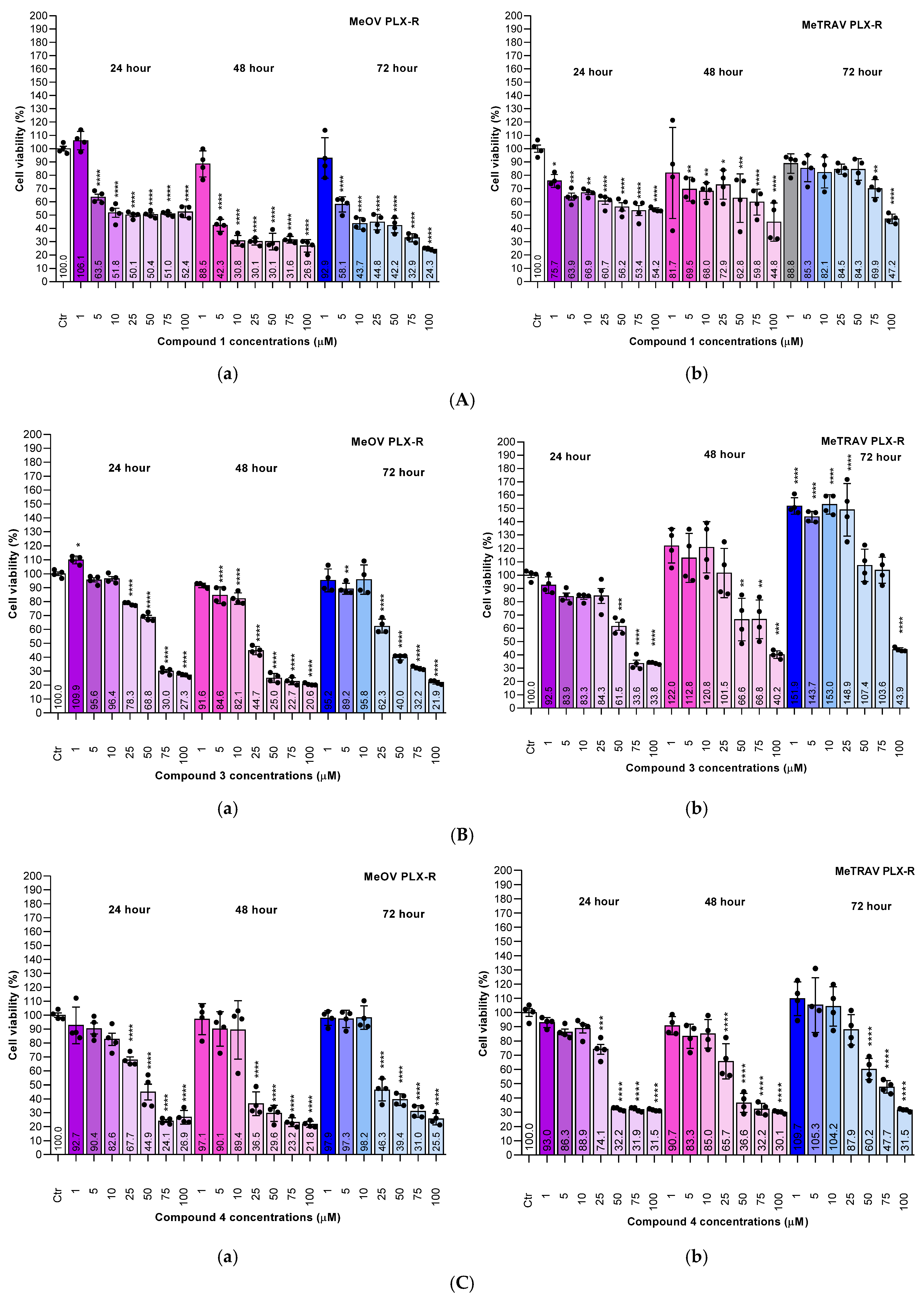








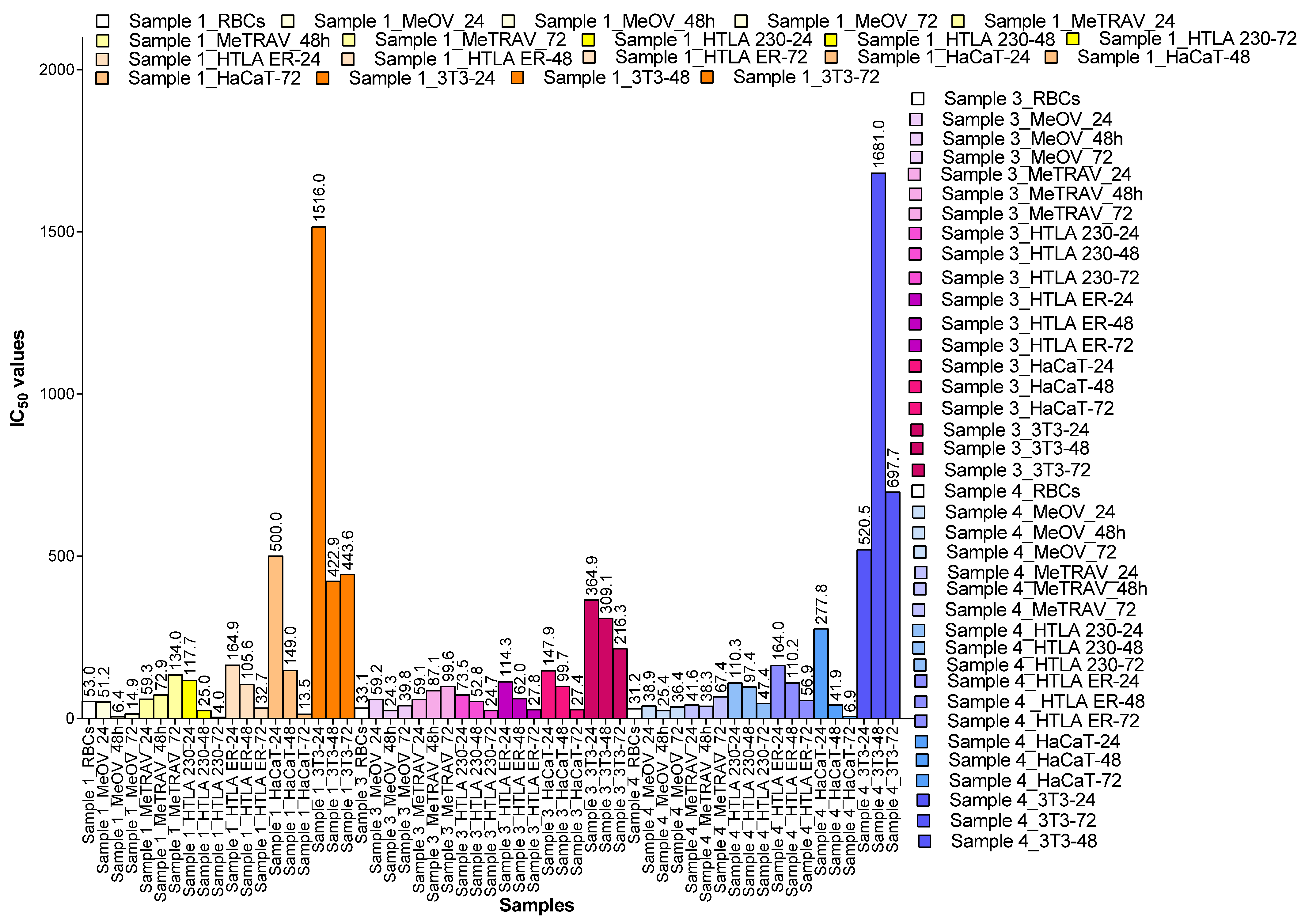
| Compound | Exposure Time (h) | PLX-R IC50 MeOV (µM) | PLX-R IC50 MeTRAV (µM) |
|---|---|---|---|
| 1 | 24 | 51.23 ± 42.33 * | 59.72 ± 27.23 * |
| 48 | 6.37 ± 3.02 | 72.93 ± 37.22 * | |
| 72 | 14.89 ± 5.25 | 134.0 ± 40.25 * | |
| 3 | 24 | 62.05 ± 14.00 * | 59.06 ± 11.03 * |
| 48 | 23.73 ± 3.22 | 87.11 ± 27.62 * | |
| 72 | 39.45 ± 6.71 | 99.64 ± V.W. * | |
| 4 | 24 | 38.86 ± 7.13 | 41.62 ± 6.24 |
| 48 | 25.40 ± 6.90 | 38.26 ± 7.00 | |
| 72 | 36.35 ± 8.13 | 67.40 ± 10.16 * | |
| Vemurafenib (PLX) | 72 | 16.86 ± 3.48 | 53.43 ± 20.91 * |
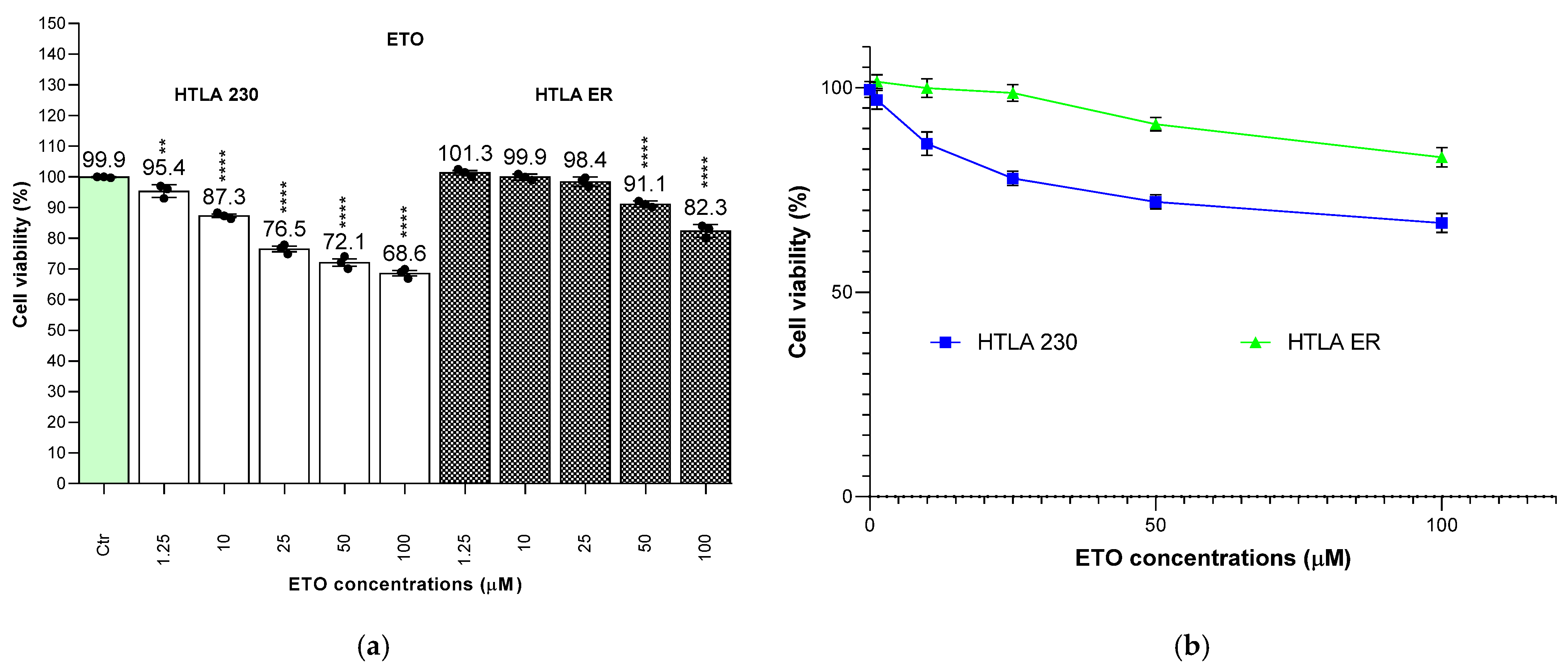
| Compound | Exposure Time (h) | IC50 HTLA 230 (µM) | IC50 MDR HATLA ER (µM) |
|---|---|---|---|
| 1 | 24 | 117.70 ± 71.64 * | 164.90 ± 38.30 * |
| 48 | 25.02 ± 4.73 | 105.60 ± 14.58 * | |
| 72 | 4.03 ± 0.91 | 32.71 ± 8.79 | |
| 3 | 24 | 73.47 ± 7.89 * | 114.30 ± 12.50 * |
| 48 | 57.92 ± 8.95 * | 62.03 ± 15.24 * | |
| 72 | 24.67 ± 3.29 | 27.76 ± 3.56 | |
| 4 | 24 | 110.30 ± 9.95 * | 164.00 ± 56.45 * |
| 48 | 97.40 ± 12.72 * | 110.20 ± 12.20 * | |
| 72 | 47.36 ± 5.81 | 56.88 ± 3.09 * | |
| ETO | 24 | 145.60 ± 35.40 * | 531.20 ± 147.35 * |
| Cells | Sample 1 | Sample 3 | Sample 4 |
|---|---|---|---|
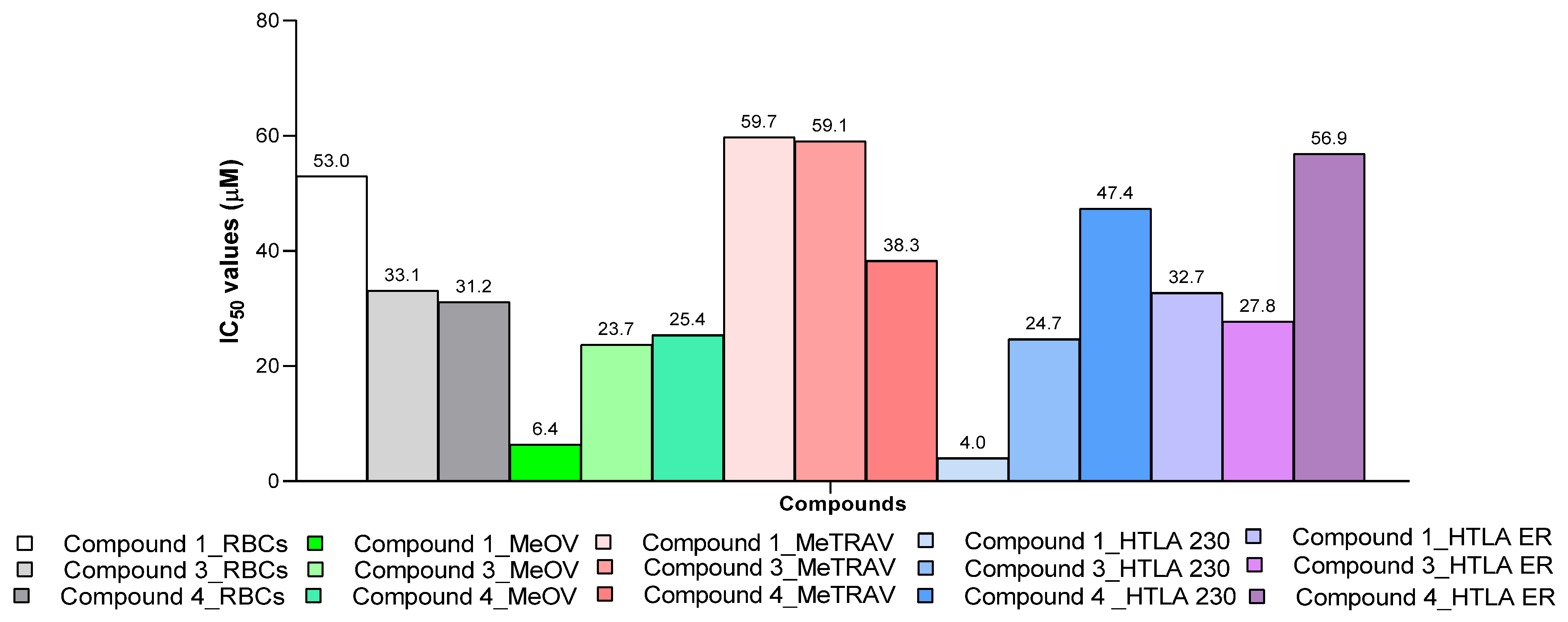
| RBCs ° | 52.97 ± 10.93 * | 33.12 ± 6.91 | 31.15 ± 4.13 |
| MeOV 24 h | 51.23 ± 42.33 * | 62.05 ± 14.00 * | 38.86 ± 7.13 |
| MeTRAV 24 h | 59.72 ± 27.23 * | 59.06 ± 11.03 * | 41.62 ± 6.24 |
| HTLA 230 24 h | 117.70 ± 71.64 * | 73.47 ± 7.98 * | 110.30 ± 9.55 * |
| HTLA ER 24 h | 164.90 ± 38.30 * | 114.30 ± 12.50 * | 164.00 ± 56.45 * |
| MeOV 48 h | 6.37 ± 3.02 | 23.73 ± 3.22 | 25.40 ± 6.90 |
| MeTRAV 48 h | 72.93 ± 37.22 * | 87.11 ± 27.62 * | 38.26 ± 7.00 |
| HTLA 230 48 h | 25.02 ± 4.73 | 57.92 ± 8.95 * | 97.40 ± 12.72 * |
| HTLA ER 48 h | 105.60 ± 15.58 * | 62.03 ± 15.24 * | 110.20 ± 12.10 * |
| MeOV 72 h | 14.89 ± 5.25 | 39.45 ± 6.71 | 36.35 ± 8.13 |
| MeTRAV 72 h | 134.0 ± 40.25 * | 99.64 ± V.W. * | 67.40 ± 10.16 * |
| HTLA 230 72 h | 4.03. ± 0.91 | 24.67 ± 3.29 | 46.36 ± 5.81 |
| HTLA ER 72 h | 32.71 ± 8.79 | 27.26 ± 3.56 | 56.88 ± 3.09 * |
Disclaimer/Publisher’s Note: The statements, opinions and data contained in all publications are solely those of the individual author(s) and contributor(s) and not of MDPI and/or the editor(s). MDPI and/or the editor(s) disclaim responsibility for any injury to people or property resulting from any ideas, methods, instructions or products referred to in the content. |
© 2026 by the authors. Licensee MDPI, Basel, Switzerland. This article is an open access article distributed under the terms and conditions of the Creative Commons Attribution (CC BY) license.
Share and Cite
Alfei, S.; Signorello, M.G.; Tirendi, S.; Khaledizadeh, E.; Giordani, P.; Reggio, C.; Marengo, B.; Domenicotti, C. Quaternary Phosphonium Salts Outperformed Vemurafenib (PLX) and Etoposide Against BRAFV600D,V600E PLX-Resistant Melanoma and MDR Neuroblastoma, Exhibiting No/Low Toxicity on 3T3/HaCaT Cells. Int. J. Mol. Sci. 2026, 27, 3170. https://doi.org/10.3390/ijms27073170
Alfei S, Signorello MG, Tirendi S, Khaledizadeh E, Giordani P, Reggio C, Marengo B, Domenicotti C. Quaternary Phosphonium Salts Outperformed Vemurafenib (PLX) and Etoposide Against BRAFV600D,V600E PLX-Resistant Melanoma and MDR Neuroblastoma, Exhibiting No/Low Toxicity on 3T3/HaCaT Cells. International Journal of Molecular Sciences. 2026; 27(7):3170. https://doi.org/10.3390/ijms27073170
Chicago/Turabian StyleAlfei, Silvana, Maria Grazia Signorello, Sara Tirendi, Elaheh Khaledizadeh, Paolo Giordani, Caterina Reggio, Barbara Marengo, and Cinzia Domenicotti. 2026. "Quaternary Phosphonium Salts Outperformed Vemurafenib (PLX) and Etoposide Against BRAFV600D,V600E PLX-Resistant Melanoma and MDR Neuroblastoma, Exhibiting No/Low Toxicity on 3T3/HaCaT Cells" International Journal of Molecular Sciences 27, no. 7: 3170. https://doi.org/10.3390/ijms27073170
APA StyleAlfei, S., Signorello, M. G., Tirendi, S., Khaledizadeh, E., Giordani, P., Reggio, C., Marengo, B., & Domenicotti, C. (2026). Quaternary Phosphonium Salts Outperformed Vemurafenib (PLX) and Etoposide Against BRAFV600D,V600E PLX-Resistant Melanoma and MDR Neuroblastoma, Exhibiting No/Low Toxicity on 3T3/HaCaT Cells. International Journal of Molecular Sciences, 27(7), 3170. https://doi.org/10.3390/ijms27073170