Bone Organoids as Advanced Models for Osteoporosis: Development, Application, and Future Prospects


Abstract
1. Introduction
2. Development of Bone Organoids: Strategies and Key Milestones
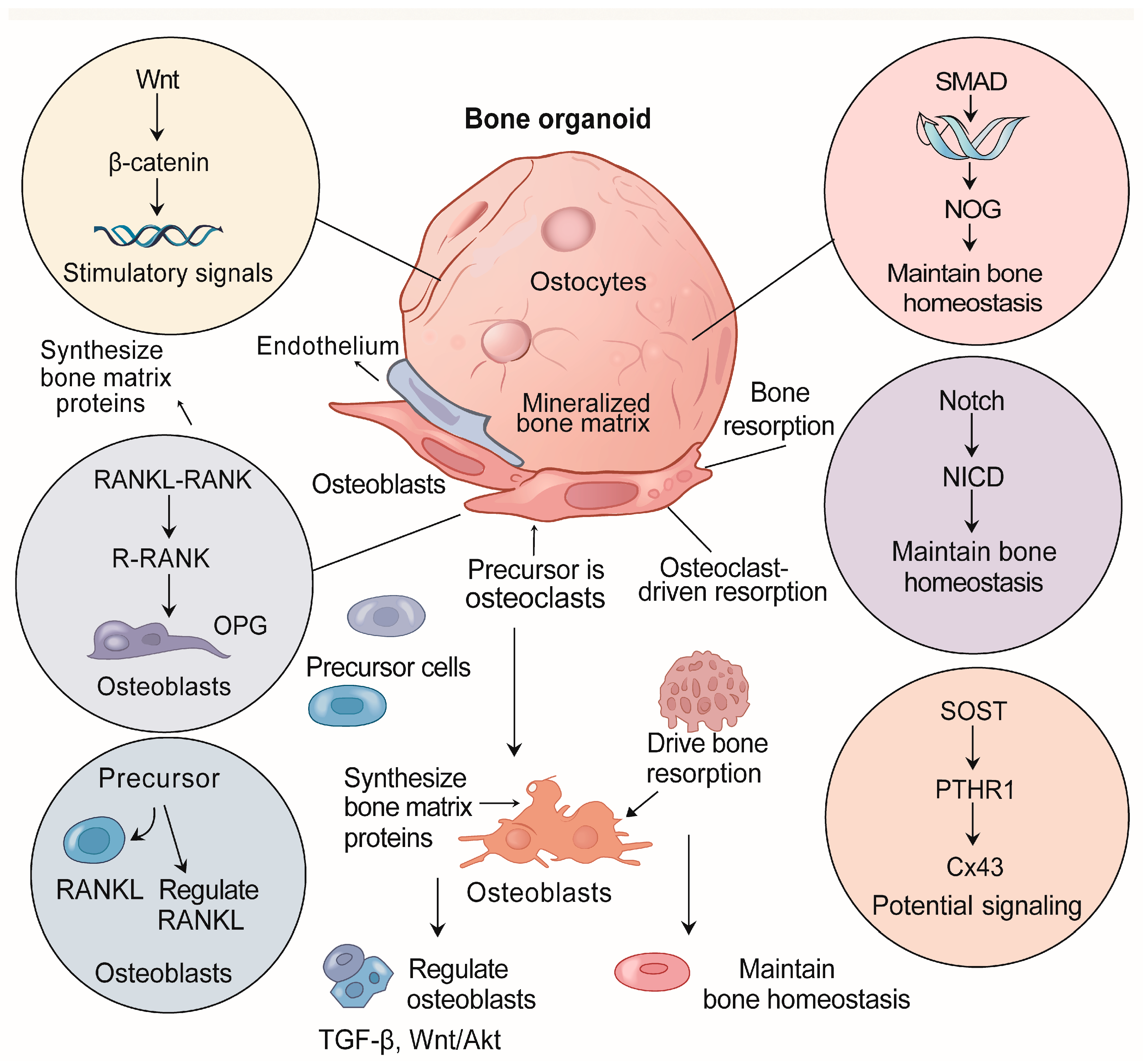
3. Cellular and Molecular Complexity of Bone Organoids
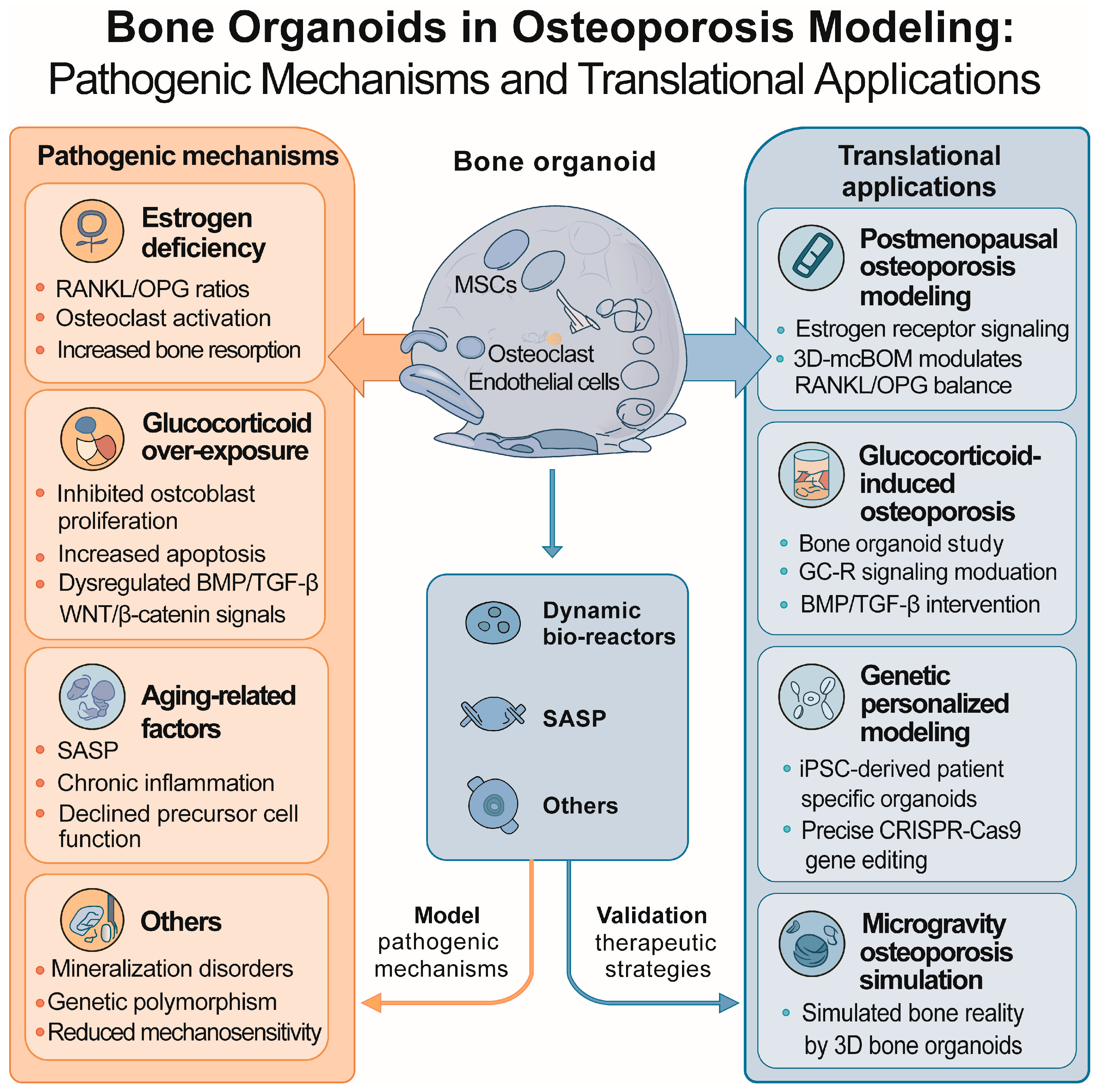
4. Use of Bone Organoids as Models to Study Pathogenesis of Osteoporosis
5. Applications in Therapeutic Screening and Regenerative Research
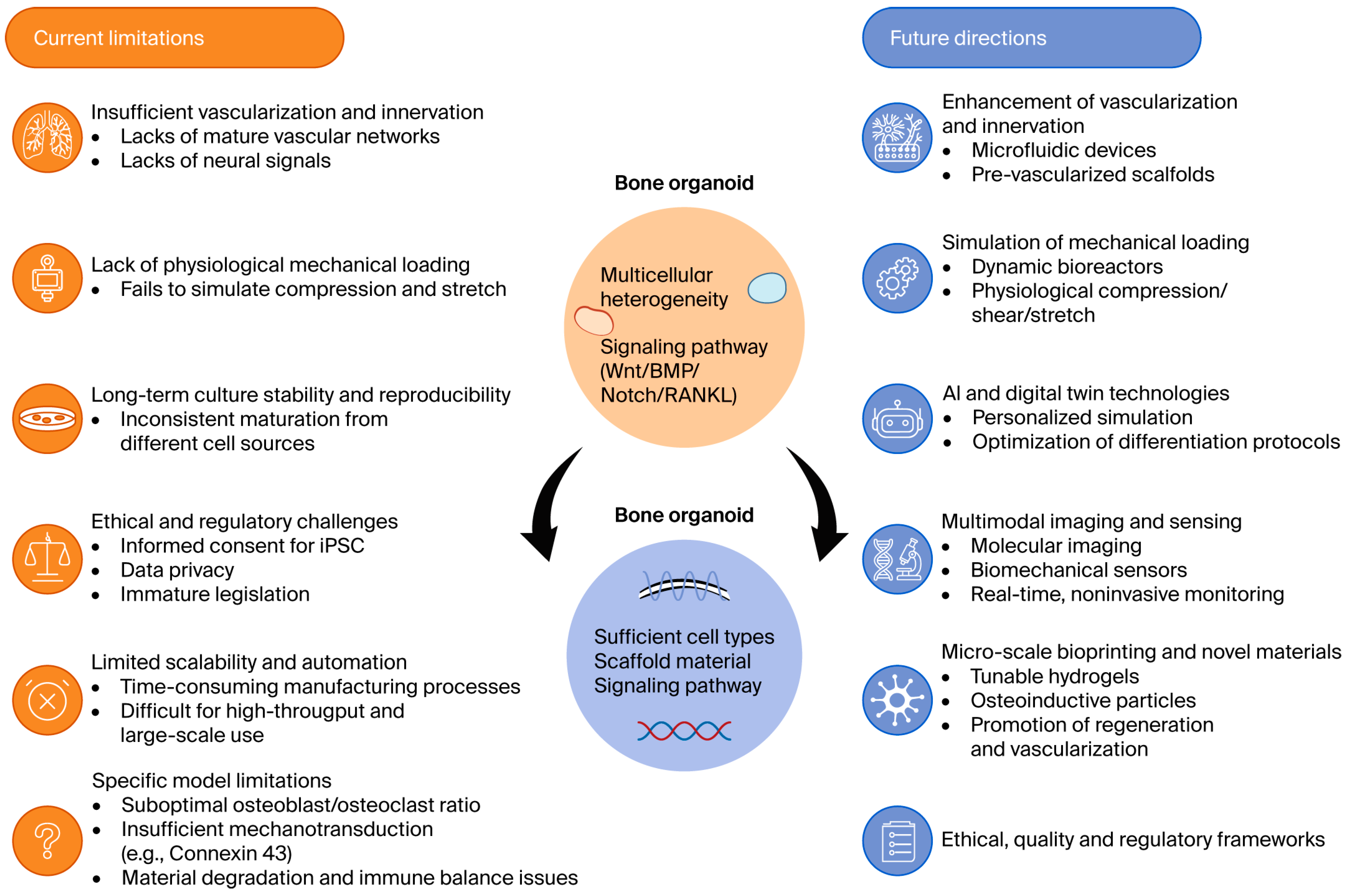
6. Current Limitations and Technical Challenges
7. Current Capabilities Versus Aspirational Goals: Benchmarking the Translational Readiness of Bone Organoids
7.1. Experimentally Validated Capabilities of Current Bone Organoid Platforms
7.2. Aspirational but Not Yet Fully Validated Capabilities
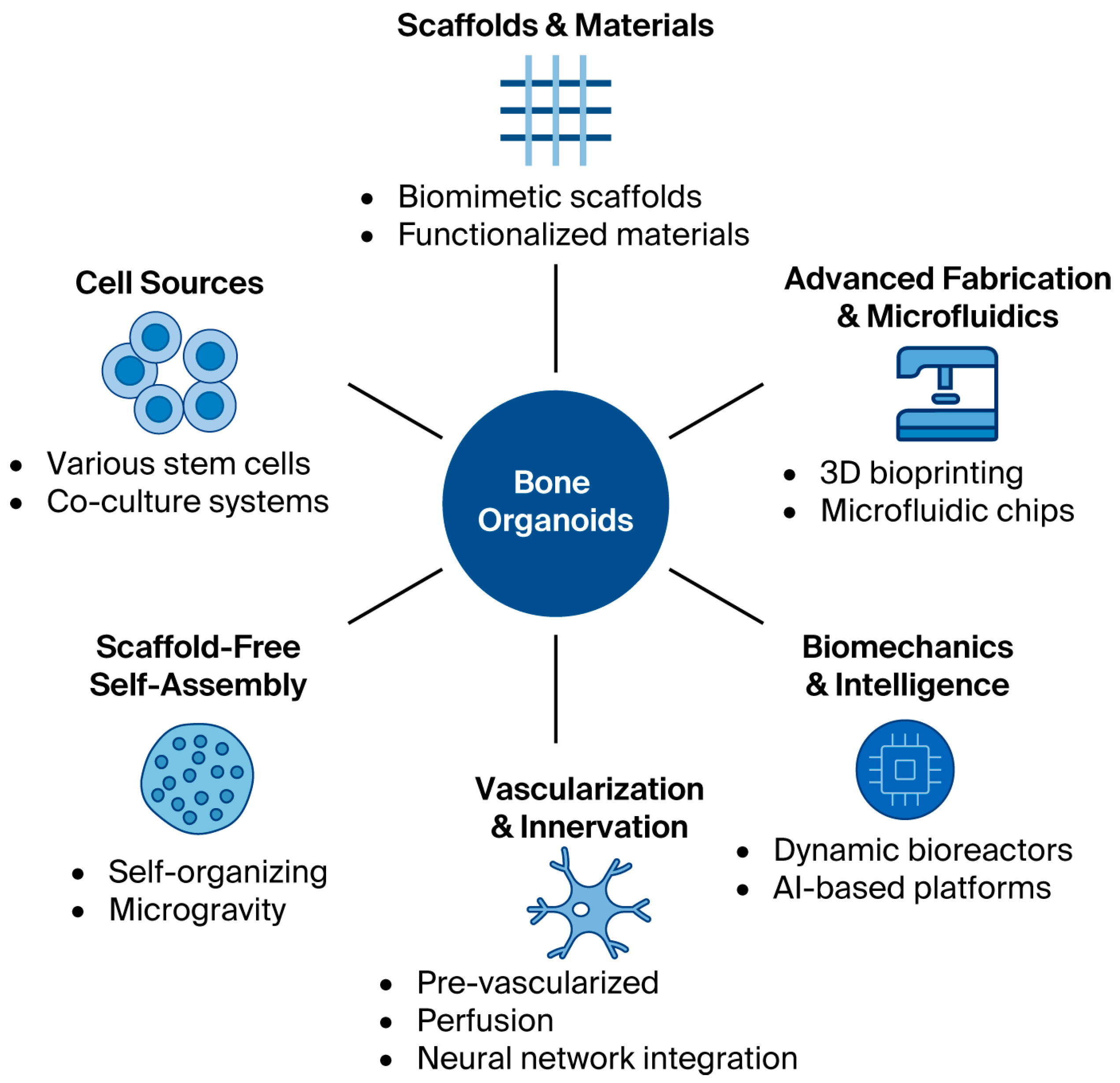
7.3. Quantitative Benchmarking: Comparison with Existing Models
7.4. Failed or Incomplete Solutions: Lessons from Current Platforms
7.5. Pathways Toward Translational and Regulatory Readiness
8. Discussion
Author Contributions
Funding
Institutional Review Board Statement
Informed Consent Statement
Data Availability Statement
Acknowledgments
Conflicts of Interest
Abbreviations
| 2D | two-dimensional |
| hPSCs | human pluripotent stem cells |
| hESCs | human embryonic stem cells |
| hiPSCs | induced pluripotent stem cells |
| MSCs | mesenchymal stem cells |
| PLGA | poly(lactic-co-glycolic acid) |
| DBP | demineralized bone paper |
| HUVECs | human umbilical vein endothelial cells |
| SOST | sclerostin |
| PTHR1 | parathyroid hormone receptor 1 |
| SASP | senescence-associated secretory phenotype |
References
- Johnell, O.; Kanis, J.A. An estimate of the worldwide prevalence and disability associated with osteoporotic fractures. Osteoporos. Int. 2006, 17, 1726–1733. [Google Scholar] [CrossRef] [PubMed]
- Clarke, B. Normal bone anatomy and physiology. Clin. J. Am. Soc. Nephrol. 2008, 3, S131–S139. [Google Scholar] [CrossRef] [PubMed]
- Killinger, M.; Kratochvilová, A.; Reihs, E.I.; Matalová, E.; Klepárník, K.; Rothbauer, M. Microfluidic device for enhancement and analysis of osteoblast differentiation in three-dimensional cell cultures. J. Biol. Eng. 2023, 17, 77, Correction in J. Biol. Eng. 2025, 19, 33. [Google Scholar] [CrossRef] [PubMed]
- Brassard, J.A.; Lutolf, M.P. Engineering stem cell self-organization to build better organoids. Cell Stem Cell 2019, 24, 860–876. [Google Scholar] [CrossRef]
- Park, Y.; Cheong, E.; Kwak, J.G.; Carpenter, R.; Shim, J.H.; Lee, J. Trabecular bone organoid model for studying the regulation of localized bone remodeling. Sci. Adv. 2021, 7, eabd6495. [Google Scholar] [CrossRef]
- Iordachescu, A.; Hughes, E.A.B.; Joseph, S.; Hill, E.J.; Grover, L.M.; Metcalfe, A.D. Trabecular bone organoids: A micron-scale ‘humanised’ prototype designed to study the effects of microgravity and degeneration. npj Microgravity 2021, 7, 17. [Google Scholar] [CrossRef]
- Frenz-Wiessner, S.; Fairley, S.D.; Buser, M.; Goek, I.; Salewskij, K.; Jonsson, G.; Illig, D.; zu Putlitz, B.; Petersheim, D.; Li, Y.; et al. Generation of complex bone marrow organoids from human induced pluripotent stem cells. Nat. Methods 2024, 21, 868–881. [Google Scholar] [CrossRef]
- Undale, A.H.; Westendorf, J.J.; Yaszemski, M.J.; Khosla, S. Mesenchymal stem cells for bone repair and metabolic bone diseases. In Mayo Clinic Proceedings; Elsevier: Amsterdam, The Netherlands, 2009; pp. 893–902. [Google Scholar]
- Matai, I.; Kaur, G.; Seyedsalehi, A.; McClinton, A.; Laurencin, C.T. Progress in 3D bioprinting technology for tissue/organ regenerative engineering. Biomaterials 2020, 226, 119536. [Google Scholar] [CrossRef]
- Bai, L.; Zhou, D.; Li, G.; Liu, J.; Chen, X.; Su, J. Engineering bone/cartilage organoids: Strategy, progress, and application. Bone Res. 2024, 12, 66. [Google Scholar] [CrossRef]
- Cengiz, A. Bone Tissue Engineering with Mesenchymal Stem Cell Seeded Scaffold Assisted Perfusion Bioreactors: Fen Bilimleri Enstitüsü. Ph.D. Thesis, Hacettepe University, Ankara, Turkey, 2017. [Google Scholar]
- von Knoch, F.; Jaquiery, C.; Kowalsky, M.; Schaeren, S.; Alabre, C.; Martin, I.; Rubash, H.E.; Shanbhag, A.S. Effects of bisphosphonates on proliferation and osteoblast differentiation of human bone marrow stromal cells. Biomaterials 2005, 26, 6941–6949. [Google Scholar] [CrossRef]
- Persson, M.; Lehenkari, P.P.; Berglin, L.; Turunen, S.; Finnilä, M.A.J.; Risteli, J.; Skrifvars, M.; Tuukkanen, J. Osteogenic differentiation of human mesenchymal stem cells in a 3D woven scaffold. Sci. Rep. 2018, 8, 10457. [Google Scholar] [CrossRef]
- de Peppo, G.M.; Marcos-Campos, I.; Kahler, D.; Alsalman, D.; Shang, L.; Vunjak-Novakovic, G.; Marolt, D. Engineering bone tissue substitutes from human induced pluripotent stem cells. Proc. Natl. Acad. Sci. USA 2013, 110, 8680–8685. [Google Scholar] [CrossRef]
- Takebe, T.; Wells, J.M. Organoids by design. Science 2019, 364, 956–959. [Google Scholar] [CrossRef]
- Nasello, G.; Alamán-Díez, P.; Schiavi, J.; Pérez, M.Á.; McNamara, L.; García-Aznar, J.M. Primary human osteoblasts cultured in a 3D microenvironment create a unique representative model of their differentiation into osteocytes. Front. Bioeng. Biotechnol. 2020, 8, 336. [Google Scholar] [CrossRef] [PubMed]
- Murphy, S.V.; Atala, A. 3D bioprinting of tissues and organs. Nat. Biotechnol. 2014, 32, 773–785. [Google Scholar] [CrossRef]
- Barabaschi, G.D.; Manoharan, V.; Li, Q.; Bertassoni, L.E. Engineering pre-vascularized scaffolds for bone regeneration. In Engineering Mineralized and Load Bearing Tissues; Springer: Cham, Switzerland, 2015; pp. 79–94. [Google Scholar]
- Sui, B.-D.; Hu, C.-H.; Liu, A.-Q.; Zheng, C.-X.; Xuan, K.; Jin, Y. Stem cell-based bone regeneration in diseased microenvironments: Challenges and solutions. Biomaterials 2019, 196, 18–30. [Google Scholar] [CrossRef] [PubMed]
- Nulty, J.; Freeman, F.E.; Browe, D.C.; Burdis, R.; Ahern, D.P.; Pitacco, P.; Bin Lee, Y.; Alsberg, E.; Kelly, D.J. 3D bioprinting of prevascularised implants for the repair of critically-sized bone defects. Acta Biomater. 2021, 126, 154–169. [Google Scholar] [CrossRef] [PubMed]
- Zhou, G.; Zhou, Q.; Li, R.; Sheng, S.; Gao, Q.; Zhou, D.; Bai, L.; Geng, Z.; Hu, Y.; Zhang, H.; et al. Synthetically Engineered Bacterial Extracellular Vesicles and IL-4-Encapsulated Hydrogels Sequentially Promote Osteoporotic Fracture Repair. ACS Nano 2025, 19, 16064–16083. [Google Scholar] [CrossRef] [PubMed]
- Zhu, M.; Zhang, H.; Zhou, Q.; Sheng, S.; Gao, Q.; Geng, Z.; Chen, X.; Lai, Y.; Xu, K.; Bai, L.; et al. Dynamic GelMA/DNA Dual-Network Hydrogels Promote Woven Bone Organoid Formation and Enhance Bone Regeneration. Adv. Mater. 2025, 37, e2501254. [Google Scholar] [CrossRef]
- Bukhari, M.M.; Khabooshani, M.; Naqvi, S.M.; McNamara, L.M. Estrogen deficiency alters vascularization and mineralization dynamics: Insight from a novel 3-D humanized and vascularized bone organoid model. Am. J. Physiol.-Cell Physiol. 2025, 328, C743–C756. [Google Scholar] [CrossRef]
- Gao, Q.; Teissier, V.; Zhu, W.; Makarcyzk, M.J.; Shinohara, I.; Murayama, M.; Susuki, Y.; Chow, S.K.; Bunnell, B.A.; Wu, J.; et al. Personalized bone organoid using iPSC-derived cells for clinically relevant applications. Res. Sq. 2024. preprint. [Google Scholar] [CrossRef]
- Li, L.; Li, H.; Wang, Q.; Xue, Y.; Dai, Y.; Dong, Y.; Shao, M.; Lyu, F. Hydroxyapatite nanoparticles promote the development of bone microtissues for accelerated bone regeneration by activating the FAK/Akt pathway. ACS Biomater. Sci. Eng. 2024, 10, 4463–4479. [Google Scholar] [CrossRef] [PubMed]
- Shao, H.; Nian, Z.; Jing, Z.; Zhang, T.; Zhu, J.; Li, X.; Gong, Y.; He, Y. Additive manufacturing of hydroxyapatite bioceramic scaffolds with projection based 3D printing. Chin. J. Mech. Eng. Addit. Manuf. Front. 2022, 1, 100021. [Google Scholar] [CrossRef]
- Zhang, J.; Griesbach, J.; Ganeyev, M.; Zehnder, A.-K.; Zeng, P.; Schädli, G.N.; de Leeuw, A.; Lai, Y.; Rubert, M.; Müller, R. Long-term mechanical loading is required for the formation of 3D bioprinted functional osteocyte bone organoids. Biofabrication 2022, 14, 035018. [Google Scholar] [CrossRef] [PubMed]
- Wu, J.; Wu, Z.; Xue, Z.; Li, H.; Liu, J. PHBV/bioglass composite scaffolds with co-cultures of endothelial cells and bone marrow stromal cells improve vascularization and osteogenesis for bone tissue engineering. RSC Adv. 2017, 7, 22197–22207. [Google Scholar] [CrossRef]
- Mansoorifar, A.; Gordon, R.; Bergan, R.C.; Bertassoni, L.E. Bone-on-a-chip: Microfluidic technologies and microphysiologic models of bone tissue. Adv. Funct. Mater. 2021, 31, 2006796. [Google Scholar] [CrossRef]
- Langhans, S.A. Three-dimensional in vitro cell culture models in drug discovery and drug repositioning. Front. Pharmacol. 2018, 9, 6. [Google Scholar] [CrossRef]
- Zhao, D.; Saiding, Q.; Li, Y.; Tang, Y.; Cui, W. Bone organoids: Recent advances and future challenges. Adv. Healthc. Mater. 2024, 13, 2302088. [Google Scholar] [CrossRef]
- Florencio-Silva, R.; Sasso, G.R.d.S.; Sasso-Cerri, E.; Simões, M.J.; Cerri, P.S. Biology of bone tissue: Structure, function, and factors that influence bone cells. BioMed Res. Int. 2015, 2015, 421746. [Google Scholar] [CrossRef]
- Boskey, A.L.; Coleman, R. Aging and bone. J. Dent. Res. 2010, 89, 1333–1348. [Google Scholar] [CrossRef]
- Baron, R.; Kneissel, M. WNT signaling in bone homeostasis and disease: From human mutations to treatments. Nat. Med. 2013, 19, 179–192. [Google Scholar] [CrossRef]
- Boyce, B.F.; Xing, L. Functions of RANKL/RANK/OPG in bone modeling and remodeling. Arch. Biochem. Biophys. 2008, 473, 139–146. [Google Scholar] [PubMed]
- Fois, M.G.; van Griensven, M.; Giselbrecht, S.; Habibović, P.; Truckenmüller, R.K.; Birgani, Z.N.T. Mini-bones: Miniaturized bone in vitro models. Trends Biotechnol. 2024, 42, 910–928. [Google Scholar] [CrossRef] [PubMed]
- Bonewald, L.F. The amazing osteocyte. J. Bone Miner. Res. 2011, 26, 229–238. [Google Scholar] [CrossRef] [PubMed]
- Stewart, S.; Darwood, A.; Masouros, S.; Higgins, C.; Ramasamy, A. Mechanotransduction in osteogenesis. Bone Jt. Res. 2020, 9, 1–14. [Google Scholar] [CrossRef]
- Kanczler, J.; Oreffo, R. Osteogenesis and angiogenesis: The potential for engineering bone. Eur. Cell. Mater. 2008, 15, 100–114. [Google Scholar]
- Ramasamy, S.K. Structure and functions of blood vessels and vascular niches in bone. Stem Cells Int. 2017, 2017, 5046953. [Google Scholar] [CrossRef]
- Baccin, C.; Al-Sabah, J.; Velten, L.; Helbling, P.M.; Grünschläger, F.; Hernández-Malmierca, P.; Nombela-Arrieta, C.; Steinmetz, L.M.; Trumpp, A.; Haas, S. Combined single-cell and spatial transcriptomics reveal the molecular, cellular and spatial bone marrow niche organization. Nat. Cell Biol. 2020, 22, 38–48. [Google Scholar] [CrossRef]
- Xi, H.; Langerman, J.; Sabri, S.; Chien, P.; Young, C.; Younesi, S.; Hicks, M.; Gonzalez, K.; Fujiwara, W.; Marzi, J.; et al. A human skeletal muscle atlas identifies the trajectories of stem and progenitor cells across development and from human pluripotent stem cells. Cell Stem Cell 2020, 27, 158–176.e10. [Google Scholar] [CrossRef]
- Trompet, D.; Melis, S.; Chagin, A.S.; Maes, C. Skeletal stem and progenitor cells in bone development and repair. J. Bone Miner. Res. 2024, 39, 633–654. [Google Scholar] [CrossRef]
- Clevers, H.; Nusse, R. Wnt/β-catenin signaling and disease. Cell 2012, 149, 1192–1205. [Google Scholar] [CrossRef]
- Chen, G.; Deng, C.; Li, Y.-P. TGF-β and BMP signaling in osteoblast differentiation and bone formation. Int. J. Biol. Sci. 2012, 8, 272. [Google Scholar] [CrossRef] [PubMed]
- Regan, J.; Long, F. Notch signaling and bone remodeling. Curr. Osteoporos. Rep. 2013, 11, 126–129. [Google Scholar] [CrossRef] [PubMed]
- Deng, A.; Zhang, H.; Hu, Y.; Li, J.; Wang, J.; Chen, X.; Geng, Z.; Xu, K.; Lai, Y.; Wang, J.; et al. Microsphere Strategy to Generate Conformal Bone Organoid Units with Osteoimmunomodulation and Sustainable Oxygen Supply for Bone Regeneration. Adv. Sci. 2025, 12, e1437. [Google Scholar] [CrossRef] [PubMed]
- Duan, J.; Fang, Y.; Tian, Y.; Wang, Z.; Yang, B.; Xiong, Z. 3D Bioprinting of Prevascularized Bone Organoids for Rapid In Situ Cranial Bone Reconstruction. Adv. Healthc. Mater. 2025, 14, e2501376. [Google Scholar] [CrossRef]
- Jiang, S.; Zhang, X.; Chen, F.; Zhao, Z.; Zhang, C.; Sun, Y. Ketone body 3-hydroxybutyrate mitigates apoptosis and enhances osteogenesis in bone organoid construction via the cAMP/PKA/CREB signaling pathway. FASEB J. Off. Publ. Fed. Am. Soc. Exp. Biol. 2025, 39, e70510. [Google Scholar] [CrossRef]
- Fuller, J.; Lefferts, K.S.; Shah, P.; Cottrell, J.A. Methodology and Characterization of a 3D Bone Organoid Model Derived from Murine Cells. Int. J. Mol. Sci. 2024, 25, 4225. [Google Scholar] [CrossRef]
- Toni, R.; Barbaro, F.; Di Conza, G.; Zini, N.; Remaggi, G.; Elviri, L.; Spaletta, G.; Quarantini, E.; Quarantini, M.; Mosca, S.; et al. A bioartificial and vasculomorphic bone matrix-based organoid mimicking microanatomy of flat and short bones. J. Biomed. Mater. Res. Part B Appl. Biomater. 2024, 112, e35329. [Google Scholar] [CrossRef]
- Lu, Z.; Kleine-Nulend, J.; Li, B. Bone microenvironment, stem cells, and bone tissue regeneration. Stem Cells Int. 2017, 2017, 1315243. [Google Scholar] [CrossRef]
- Bonucci, E.; Ballanti, P. Osteoporosis—Bone remodeling and animal models. Toxicol. Pathol. 2014, 42, 957–969. [Google Scholar] [CrossRef]
- Raisz, L.G. Pathogenesis of osteoporosis: Concepts, conflicts, and prospects. J. Clin. Investig. 2005, 115, 3318–3325. [Google Scholar] [CrossRef]
- Sundeep, K.; Merry, J.; David, G.M. Estrogen and the skeleton. Trends Endocrinol. Metab. 2012, 23, 576–581. [Google Scholar] [CrossRef] [PubMed]
- Cheng, C.-H.; Chen, L.-R.; Chen, K.-H. Osteoporosis due to hormone imbalance: An overview of the effects of estrogen deficiency and glucocorticoid overuse on bone turnover. Int. J. Mol. Sci. 2022, 23, 1376. [Google Scholar] [CrossRef] [PubMed]
- Cho, S.-K.; Sung, Y.-K. Update on glucocorticoid induced osteoporosis. Endocrinol. Metab. 2021, 36, 536–543. [Google Scholar] [CrossRef] [PubMed]
- Mohanty, S.; Sahu, A.; Mukherjee, T.; Kispotta, S.; Mal, P.; Gupta, M.; Prabhakar, P.K. Molecular mechanisms and treatment strategies for estrogen deficiency-related and glucocorticoid-induced osteoporosis: A comprehensive review. Inflammopharmacology 2025, 33, 2409–2445. [Google Scholar] [CrossRef]
- Docaj, A.; Carriero, A. Bone health: Quality vs. quantity. J. Pediatr. Orthop. Soc. N. Am. 2024, 7, 100054, Correction in J. Pediatr. Soc. N. Am. 2024, 8, 100102. [Google Scholar] [CrossRef]
- Pignolo, R.J.; Law, S.F.; Chandra, A. Bone aging, cellular senescence, and osteoporosis. J. Bone Miner. Res. Plus 2021, 5, e10488. [Google Scholar] [CrossRef]
- Gómez, A.E.; Addish, S.; Alvarado, K.; Boatemaa, P.; Onyali, A.C.; Ramirez, E.G.; Rojas, M.F.; Rai, J.; Reynolds, K.A.; Tang, W.J.; et al. Multiple mechanisms explain genetic effects at the CPED1-WNT16 bone mineral density locus. Curr. Osteoporos. Rep. 2023, 21, 173–183. [Google Scholar] [CrossRef]
- Yang, G.K.; Chen, H.; Cheng, K.L.; Tang, M.F.; Wang, Y.; Hung, L.A.; Cheng, C.J.; Mak, K.K.; Lee, Y.W. Potential Interaction between WNT16 and Vitamin D on Bone Qualities in Adolescent Idiopathic Scoliosis Patients and Healthy Controls. Biomedicines 2024, 12, 250. [Google Scholar] [CrossRef]
- Carey, J.J.; Wu, P.C.-H.; Bergin, D. Risk assessment tools for osteoporosis and fractures in 2022. Best Pract. Res. Clin. Rheumatol. 2022, 36, 101775. [Google Scholar] [CrossRef]
- Wu, S.; Wu, X.; Wang, X.; Su, J. Hydrogels for bone organoid construction: From a materiobiological perspective. J. Mater. Sci. Technol. 2023, 136, 21–31. [Google Scholar] [CrossRef]
- Aboul-Soud, M.A.; Alzahrani, A.J.; Mahmoud, A. Induced pluripotent stem cells (iPSCs)—Roles in regenerative therapies, disease modelling and drug screening. Cells 2021, 10, 2319. [Google Scholar] [CrossRef]
- Kong, Y.; Yang, Y.; Hou, Y.; Wang, Y.; Li, W.; Song, Y. Advance in the application of organoids in bone diseases. Front. Cell Dev. Biol. 2024, 12, 1459891. [Google Scholar] [CrossRef]
- Wu, Y.; Fuh, J.; Ozbolat, I.T. 3D Bioprinting in Tissue and Organ Regeneration; Academic Press: Cambridge, MA, USA, 2022. [Google Scholar]
- Loewa, A.; Feng, J.J.; Hedtrich, S. Human disease models in drug development. Nat. Rev. Bioeng. 2023, 1, 545–559, Correction in Nat. Rev. Bioeng. 2023, 1, 606. [Google Scholar] [CrossRef] [PubMed]
- Badr-Eldin, S.M.; Aldawsari, H.M.; Kotta, S.; Deb, P.K.; Venugopala, K.N. Three-dimensional in vitro cell culture models for efficient drug discovery: Progress so far and future prospects. Pharmaceuticals 2022, 15, 926. [Google Scholar] [CrossRef] [PubMed]
- Bandeira, L.; Lewiecki, E.M. Anabolic therapy for osteoporosis: Update on efficacy and safety. Arch. Endocrinol. Metab. 2022, 66, 707–716. [Google Scholar] [CrossRef] [PubMed]
- Ensrud, K.E.; Schousboe, J.T. Anabolic therapy for osteoporosis. JAMA 2021, 326, 350–351. [Google Scholar] [CrossRef]
- Zhao, C.; Pan, Y.; Yu, G.; Zhao, X.Z.; Chen, X.; Rao, L. Vesicular antibodies: Shedding light on antibody therapeutics with cell membrane nanotechnology. Adv. Mater. 2023, 35, 2207875. [Google Scholar] [CrossRef]
- Fang, Y.; Ji, M.; Wu, B.; Xu, X.; Wang, G.; Zhang, Y.; Xia, Y.; Li, Z.; Zhang, T.; Sun, W.; et al. Engineering highly vascularized bone tissues by 3D bioprinting of granular prevascularized spheroids. ACS Appl. Mater. Interfaces 2023, 15, 43492–43502. [Google Scholar] [CrossRef]
- Shao, Y.; Fu, J. Engineering multiscale structural orders for high-fidelity embryoids and organoids. Cell Stem Cell 2022, 29, 722–743. [Google Scholar] [CrossRef]
- Wu, Y.; Ye, W.; Gao, Y.; Yi, Z.; Chen, Z.; Qu, C.; Huang, J.; Liu, F.; Liu, Z. Application of organoids in regenerative medicine. Stem Cells 2023, 41, 1101–1112. [Google Scholar] [CrossRef]
- Xue, X.; Hu, Y.; Wang, S.; Chen, X.; Jiang, Y.; Su, J. Fabrication of physical and chemical crosslinked hydrogels for bone tissue engineering. Bioact. Mater. 2022, 12, 327–339. [Google Scholar] [CrossRef]
- Tayler, I.M.; Stowers, R.S. Engineering hydrogels for personalized disease modeling and regenerative medicine. Acta Biomater. 2021, 132, 4–22. [Google Scholar] [CrossRef] [PubMed]
- Stacy, N.I.; Harvey, J.W. Structure of the Bone Marrow. In Schalm’s Veterinary Hematology; John Wiley & Sons: Hoboken, NJ, USA, 2022; pp. 18–26. [Google Scholar]
- Rausch, M.; Iqbal, N.; Pathak, S.; Owston, H.E.; Ganguly, P. Organoid models and next-generation sequencing for bone marrow and related disorders. Organoids 2023, 2, 123–139. [Google Scholar] [CrossRef]
- Jalal, S.; Dastidar, S.; Tedesco, F.S. Advanced models of human skeletal muscle differentiation, development and disease: Three-dimensional cultures, organoids and beyond. Curr. Opin. Cell Biol. 2021, 73, 92–104. [Google Scholar] [CrossRef] [PubMed]
- Saberi, A.; Kouhjani, M.; Mohammadi, M.; Hosta-Rigau, L. Novel scaffold platforms for simultaneous induction osteogenesis and angiogenesis in bone tissue engineering: A cutting-edge approach. J. Nanobiotechnol. 2023, 21, 351. [Google Scholar] [CrossRef]
- Draghici, A.E.; Taylor, J.A. Mechanisms of bone blood flow regulation in humans. J. Appl. Physiol. 2021, 130, 772–780. [Google Scholar] [CrossRef]
- Zhai, Y.; Schilling, K.; Wang, T.; El Khatib, M.; Vinogradov, S.; Brown, E.B.; Zhang, X. Spatiotemporal blood vessel specification at the osteogenesis and angiogenesis interface of biomimetic nanofiber-enabled bone tissue engineering. Biomaterials 2021, 276, 121041. [Google Scholar] [CrossRef]
- Liu, Z.; Wang, Q.; Zhang, J.; Qi, S.; Duan, Y.; Li, C. The mechanotransduction signaling pathways in the regulation of osteogenesis. Int. J. Mol. Sci. 2023, 24, 14326. [Google Scholar] [CrossRef]
- Di, X.; Gao, X.; Peng, L.; Ai, J.; Jin, X.; Qi, S.; Li, H.; Wang, K.; Luo, D. Cellular mechanotransduction in health and diseases: From molecular mechanism to therapeutic targets. Signal Transduct. Target. Ther. 2023, 8, 282. [Google Scholar] [CrossRef]
- Hao, S.; Wang, M.; Yin, Z.; Jing, Y.; Bai, L.; Su, J. Microenvironment-targeted strategy steers advanced bone regeneration. Mater. Today Bio 2023, 22, 100741. [Google Scholar] [CrossRef]
- Hofer, M.; Lutolf, M.P. Engineering organoids. Nat. Rev. Mater. 2021, 6, 402–420. [Google Scholar] [CrossRef] [PubMed]
- Yin, X.; Li, Q.; Shu, Y.; Wang, H.; Thomas, B.; Maxwell, J.T.; Zhang, Y. Exploiting urine-derived induced pluripotent stem cells for advancing precision medicine in cell therapy, disease modeling, and drug testing. J. Biomed. Sci. 2024, 31, 47. [Google Scholar] [CrossRef] [PubMed]
- Mollaki, V. Ethical challenges in organoid use. BioTech 2021, 10, 12. [Google Scholar] [CrossRef] [PubMed]
- Chen, Y.; Sun, H.; Yao, X.; Yu, Y.; Tian, T.; Xu, W.; Zhou, Y.; Ouyang, H. Pharmaceutical therapeutics for articular regeneration and restoration: State-of-the-art technology for screening small molecular drugs. Cell. Mol. Life Sci. 2021, 78, 8127–8155. [Google Scholar] [CrossRef]
- Chen, S.; Chen, X.; Geng, Z.; Su, J. The horizon of bone organoid: A perspective on construction and application. Bioact. Mater. 2022, 18, 15–25. [Google Scholar] [CrossRef]
- Grässel, S.; Muschter, D. Peripheral nerve fibers and their neurotransmitters in osteoarthritis pathology. Int. J. Mol. Sci. 2017, 18, 931. [Google Scholar] [CrossRef]
- Visconti, R.J.; Kolaja, K.; Cottrell, J.A. A functional three-dimensional microphysiological human model of myeloma bone disease. J. Bone Miner. Res. Off. J. Am. Soc. Bone Miner. Res. 2021, 36, 1914–1930. [Google Scholar] [CrossRef]
- Huch, M.; Knoblich, J.A.; Lutolf, M.P.; Martinez-Arias, A. The hope and the hype of organoid research. Development 2017, 144, 938–941. [Google Scholar] [CrossRef]
- Porter, J.R.; Henson, A.; Popat, K.C. Biodegradable poly(ε-caprolactone) nanowires for bone tissue engineering applications. Biomaterials 2009, 30, 780–788. [Google Scholar] [CrossRef]
- Duan, Q.; Shao, H.; Luo, N.; Wang, F.; Cheng, L.; Ying, J.; Zhao, D. 3D-printed artificial bone scaffolds: The design of materials, the incorporation of bioactive substances, and the integration of vascularized tissue flaps. Front. Bioeng. Biotechnol. 2025, 13, 1614727. [Google Scholar] [CrossRef]
- Thompson, B.; Towler, D.A. Arterial calcification and bone physiology: Role of the bone–vascular axis. Nat. Rev. Endocrinol. 2012, 8, 529–543. [Google Scholar] [CrossRef]
- Clevers, H. Modeling development and disease with organoids. Cell 2016, 165, 1586–1597. [Google Scholar] [CrossRef]
- Barker, R.A.; Carpenter, M.; Jamieson, C.H.; Murry, C.E.; Pellegrini, G.; Rao, R.C.; Song, J. Lessons learnt, and still to learn, in first in human stem cell trials. Stem Cell Rep. 2023, 18, 1599–1609. [Google Scholar] [CrossRef] [PubMed]
- Kumar, N.; Saraber, P.; Ding, Z.; Kusumbe, A.P. Diversity of vascular niches in bones and joints during homeostasis, ageing, and diseases. Front. Immunol. 2021, 12, 798211. [Google Scholar] [CrossRef] [PubMed]
- Matsui, T.K.; Tsuru, Y.; Hasegawa, K.; Kuwako, K.-I. Vascularization of human brain organoids. Stem Cells 2021, 39, 1017–1024. [Google Scholar] [CrossRef] [PubMed]
- Sun, X.-Y.; Ju, X.-C.; Li, Y.; Zeng, P.-M.; Wu, J.; Zhou, Y.-Y.; Shen, L.-B.; Dong, J.; Chen, Y.-J.; Luo, Z.-G. Generation of vascularized brain organoids to study neurovascular interactions. elife 2022, 11, e76707. [Google Scholar] [CrossRef]
- Wang, P.; Wang, X. Mimicking the native bone regenerative microenvironment for in situ repair of large physiological and pathological bone defects. Eng. Regen. 2022, 3, 440–452. [Google Scholar] [CrossRef]
- Shi, H.; Kowalczewski, A.; Vu, D.; Liu, X.; Salekin, A.; Yang, H.; Ma, Z. Organoid intelligence: Integration of organoid technology and artificial intelligence in the new era of in vitro models. Med. Nov. Technol. Devices 2024, 21, 100276. [Google Scholar] [CrossRef]
- Yang, J.; Fischer, N.G.; Ye, Z. Revolutionising oral organoids with artificial intelligence. Biomater. Transl. 2024, 5, 372. [Google Scholar]
- Thangaraj, P.M.; Benson, S.H.; Oikonomou, E.K.; Asselbergs, F.W.; Khera, R. Cardiovascular care with digital twin technology in the era of generative artificial intelligence. Eur. Heart J. 2024, 45, 4808–4821. [Google Scholar] [CrossRef]
- Maharjan, S.; Ma, C.; Singh, B.; Kang, H.; Orive, G.; Yao, J.; Zhang, Y.S. Advanced 3D imaging and organoid bioprinting for biomedical research and therapeutic applications. Adv. Drug Deliv. Rev. 2024, 208, 115237. [Google Scholar] [CrossRef]
- Wu, J.; Gu, N. New orientation of interdisciplinarity in medicine: Engineering medicine. Engineering 2025, 45, 252–261. [Google Scholar] [CrossRef]



| Dimension | Bone Organoids | 2D Cell Culture | Animal Models |
|---|---|---|---|
| Predictive validity (drug response direction) | Moderate (qualitative concordance) | Low | High |
| Throughput | Low–moderate | High | Low |
| Inter-laboratory reproducibility | Variable | High | Moderate |
| Cost per experimental condition | Moderate–high | Low | High |
| Human biological relevance | High | Low | High |
Disclaimer/Publisher’s Note: The statements, opinions and data contained in all publications are solely those of the individual author(s) and contributor(s) and not of MDPI and/or the editor(s). MDPI and/or the editor(s) disclaim responsibility for any injury to people or property resulting from any ideas, methods, instructions or products referred to in the content. |
© 2026 by the authors. Licensee MDPI, Basel, Switzerland. This article is an open access article distributed under the terms and conditions of the Creative Commons Attribution (CC BY) license.
Share and Cite
Liu, C.; Zhang, X.; Yu, R. Bone Organoids as Advanced Models for Osteoporosis: Development, Application, and Future Prospects. Int. J. Mol. Sci. 2026, 27, 3118. https://doi.org/10.3390/ijms27073118
Liu C, Zhang X, Yu R. Bone Organoids as Advanced Models for Osteoporosis: Development, Application, and Future Prospects. International Journal of Molecular Sciences. 2026; 27(7):3118. https://doi.org/10.3390/ijms27073118
Chicago/Turabian StyleLiu, Chao, Xueliang Zhang, and Rui Yu. 2026. "Bone Organoids as Advanced Models for Osteoporosis: Development, Application, and Future Prospects" International Journal of Molecular Sciences 27, no. 7: 3118. https://doi.org/10.3390/ijms27073118
APA StyleLiu, C., Zhang, X., & Yu, R. (2026). Bone Organoids as Advanced Models for Osteoporosis: Development, Application, and Future Prospects. International Journal of Molecular Sciences, 27(7), 3118. https://doi.org/10.3390/ijms27073118