Steroidogenic Acute Regulatory Protein in Breast Cancer: Mechanistic Insights into Pathogenesis and Therapeutics


Abstract
1. Introduction
2. Activation of Estrogen Signaling and Its Correlation to Breast Pathogenesis
2.1. The Aromatase Enzyme and Estrogen Regulation
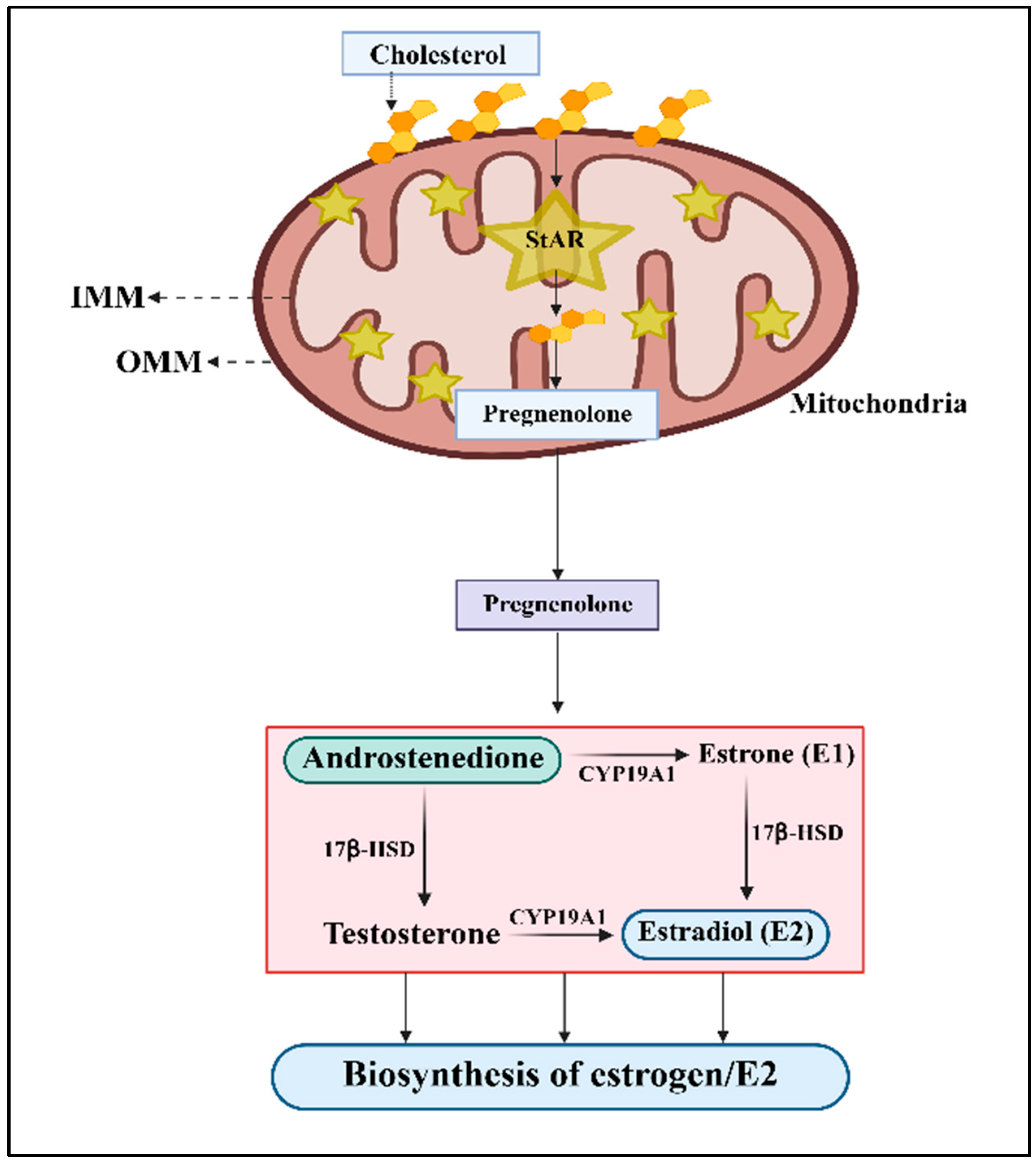
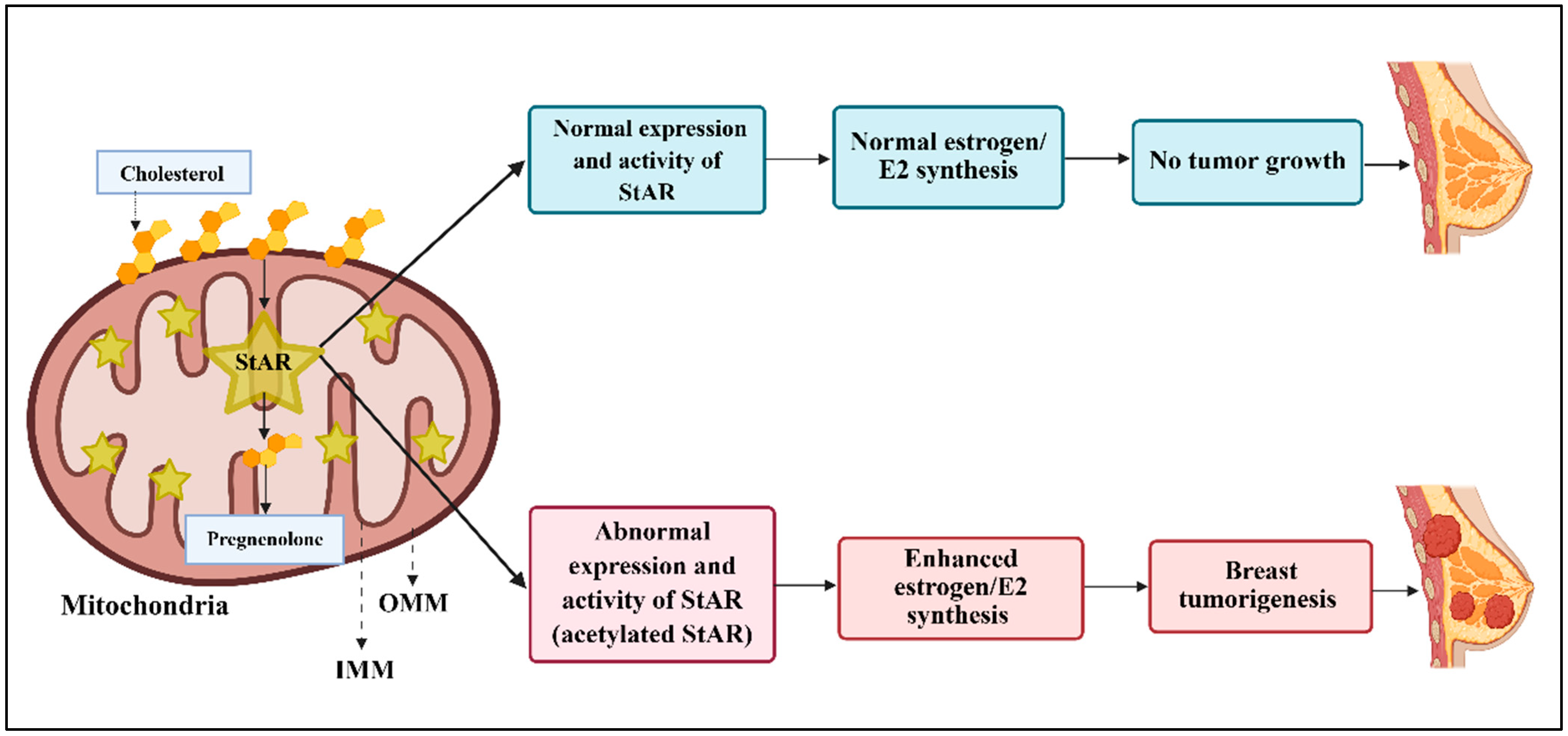
2.2. Role of the StAR Protein in E2 Biosynthesis
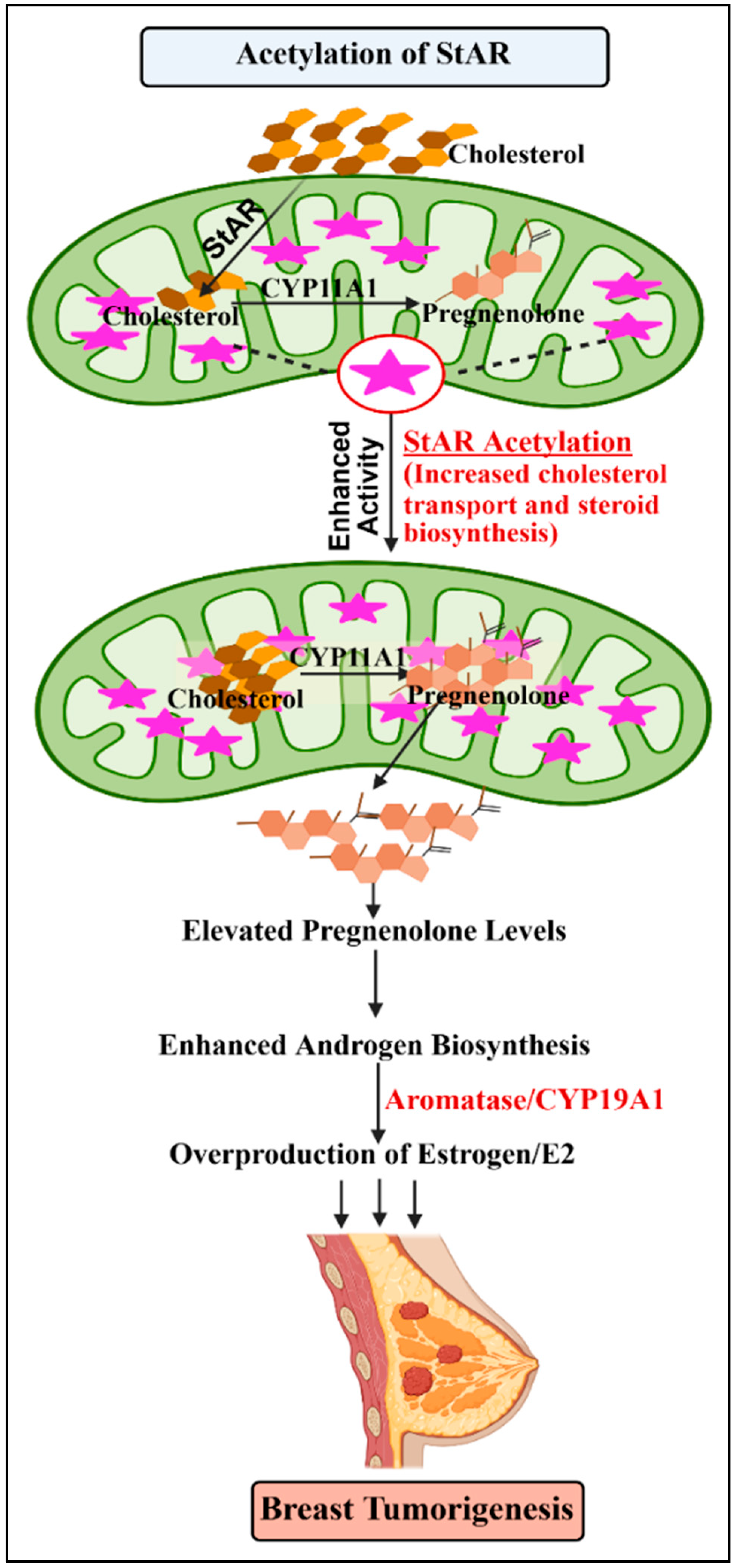
3. Acetylation of StAR and Its Relevance to E2 Overproduction and Breast Pathogenesis
4. Epigenetic Landscape and Its Impact on Breast Tumorigenesis
5. Overview of AIs in BC Therapy and Endocrine Resistance
6. Therapeutic Targeting of StAR in Hormone-Sensitive BC
7. Overdiagnosis and Overtreatment of BC
8. Inhibition of HDACs for BC Therapeutics
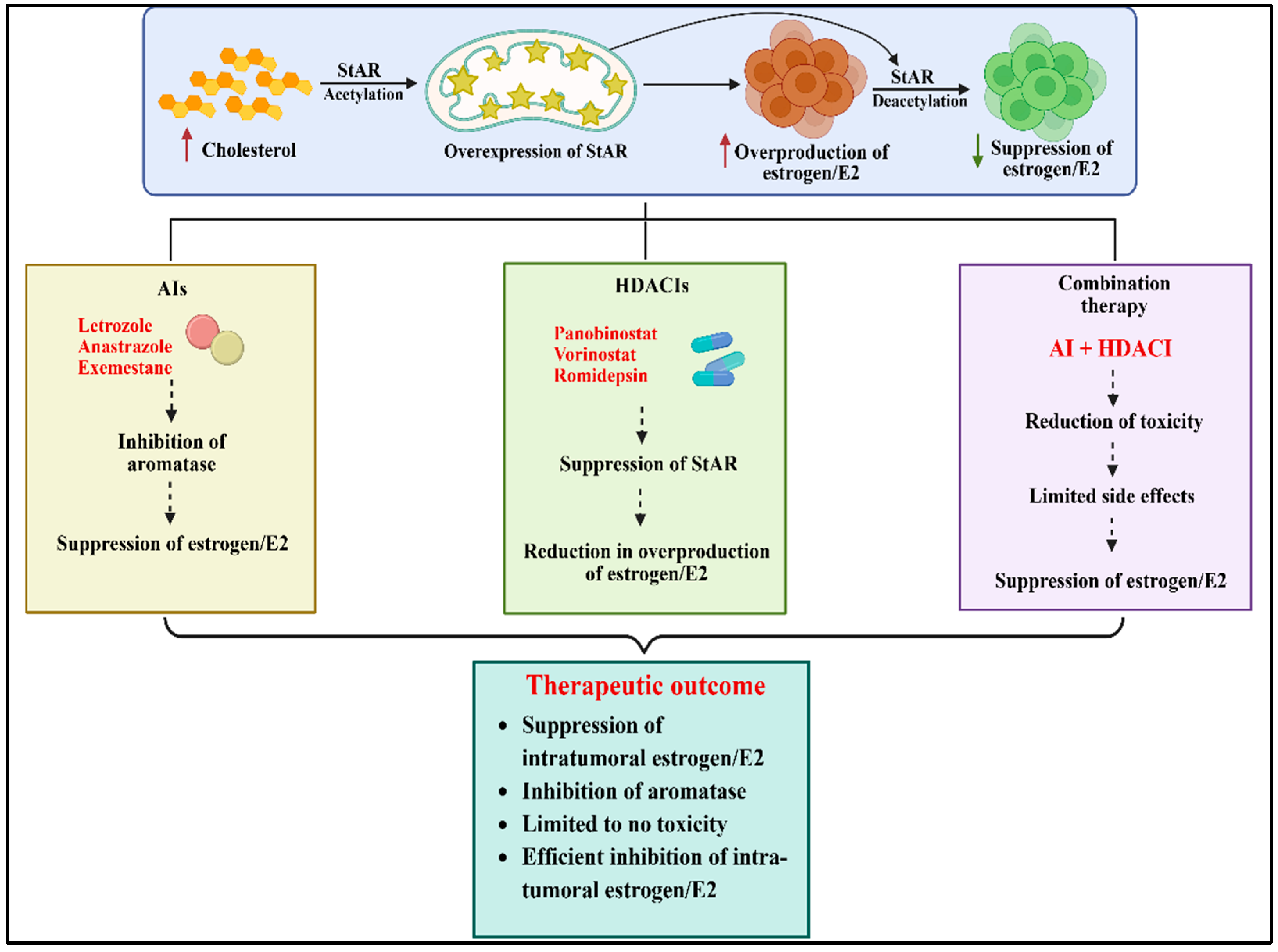
9. Development of a Combination Therapy with AI and HDACI for Mitigating BC
10. Conclusions
Author Contributions
Funding
Institutional Review Board Statement
Informed Consent Statement
Data Availability Statement
Acknowledgments
Conflicts of Interest
References
- Manna, P.R.; Ahmed, A.U.; Molehin, D.; Narasimhan, M.; Pruitt, K.; Reddy, P.H. Hormonal and Genetic Regulatory Events in Breast Cancer and Its Therapeutics: Importance of the Steroidogenic Acute Regulatory Protein. Biomedicines 2022, 10, 1313. [Google Scholar] [CrossRef]
- Manna, P.R.; Ahmed, A.U.; Vartak, D.; Molehin, D.; Pruitt, K. Overexpression of the steroidogenic acute regulatory protein in breast cancer: Regulation by histone deacetylase inhibition. Biochem. Biophys. Res. Commun. 2019, 509, 476–482. [Google Scholar] [CrossRef]
- Manna, P.R.; Ahmed, A.U.; Yang, S.; Narasimhan, M.; Cohen-Tannoudji, J.; Slominski, A.T.; Pruitt, K. Genomic Profiling of the Steroidogenic Acute Regulatory Protein in Breast Cancer: In Silico Assessments and a Mechanistic Perspective. Cancers 2019, 11, 623. [Google Scholar] [CrossRef]
- Manna, P.R.; Ramachandran, S.; Pradeepkiran, J.A.; Molehin, D.; Castro-Piedras, I.; Pruitt, K.; Ganapathy, V.; Reddy, P.H. Expression and Function of StAR in Cancerous and Non-Cancerous Human and Mouse Breast Tissues: New Insights into Diagnosis and Treatment of Hormone-Sensitive Breast Cancer. Int. J. Mol. Sci. 2023, 24, 758. [Google Scholar] [CrossRef]
- Alpy, F.; Tomasetto, C. Give lipids a START: The StAR-related lipid transfer (START) domain in mammals. J. Cell Sci. 2005, 118, 2791–2801. [Google Scholar] [CrossRef]
- Manna, P.R.; Stetson, C.L.; Slominski, A.T.; Pruitt, K. Role of the steroidogenic acute regulatory protein in health and disease. Endocrine 2016, 51, 7–21. [Google Scholar] [CrossRef]
- Stocco, D.M.; Zhao, A.H.; Tu, L.N.; Morohaku, K.; Selvaraj, V. A brief history of the search for the protein(s) involved in the acute regulation of steroidogenesis. Mol. Cell Endocrinol. 2017, 441, 7–16. [Google Scholar] [CrossRef]
- Manna, P.R. The multifaceted landscape of the StAR protein in steroid biosynthesis: From development to degeneration. J. Endocrinol. 2025, 265, e240380. [Google Scholar] [CrossRef]
- Miller, W.L. Thirty years of StAR gazing. Expanding the universe of the steroidogenic acute regulatory protein. J. Endocrinol. 2025, 264, e240310. [Google Scholar] [CrossRef]
- Siegel, R.L.; Kratzer, T.B.; Giaquinto, A.N.; Sung, H.; Jemal, A. Cancer statistics, 2025. CA Cancer J. Clin. 2025, 75, 10–45. [Google Scholar] [CrossRef]
- Pfeiffer, R.M.; Webb-Vargas, Y.; Wheeler, W.; Gail, M.H. Proportion of U.S. Trends in Breast Cancer Incidence Attributable to Long-term Changes in Risk Factor Distributions. Cancer Epidemiol. Biomarkers Prev. 2018, 27, 1214–1222. [Google Scholar] [CrossRef]
- Nardin, S.; Ruffilli, B.; Landolfo, T.L.; Isingrini, G.; Taglialatela, I.; Delbarba, A.; D’Avanzo, F.; Rossi, V.; Celentano, E.; Conte, B.; et al. Aromatase Inhibitors as Adjuvant Therapy in Early Breast Cancer: Insights into Toxicities and Their Management. Cancers 2025, 17, 2726. [Google Scholar] [CrossRef]
- Manna, P.R.; Molehin, D.; Ahmed, A.U.; Yang, S.; Reddy, P.H. Acetylation of Steroidogenic Acute Regulatory Protein Sensitizes 17beta-Estradiol Regulation in Hormone-Sensitive Breast Cancer Cells. Int. J. Mol. Sci. 2024, 25, 8732. [Google Scholar] [CrossRef]
- Tommasi, C.; Airo, G.; Prattico, F.; Testi, I.; Coriano, M.; Pellegrino, B.; Denaro, N.; Demurtas, L.; Dessi, M.; Murgia, S.; et al. Hormone Receptor-Positive/HER2-Positive Breast Cancer: Hormone Therapy and Anti-HER2 Treatment: An Update on Treatment Strategies. J. Clin. Med. 2024, 13, 1873. [Google Scholar] [CrossRef]
- Kay, C.; Martinez-Perez, C.; Meehan, J.; Gray, M.; Webber, V.; Dixon, J.M.; Turnbull, A.K. Current trends in the treatment of HR+/HER2+ breast cancer. Future Oncol. 2021, 17, 1665–1681. [Google Scholar] [CrossRef]
- Russo, J.; Fernandez, S.V.; Russo, P.A.; Fernbaugh, R.; Sheriff, F.S.; Lareef, H.M.; Garber, J.; Russo, I.H. 17-Beta-estradiol induces transformation and tumorigenesis in human breast epithelial cells. FASEB J. 2006, 20, 1622–1634. [Google Scholar] [CrossRef]
- Liu, S.; Benito-Martin, A.; Pelissier Vatter, F.A.; Hanif, S.Z.; Liu, C.; Bhardwaj, P.; Sethupathy, P.; Farghli, A.R.; Piloco, P.; Paik, P.; et al. Breast adipose tissue-derived extracellular vesicles from obese women alter tumor cell metabolism. EMBO Rep. 2023, 24, e57339. [Google Scholar] [CrossRef]
- Brown, K.A. Metabolic pathways in obesity-related breast cancer. Nat. Rev. Endocrinol. 2021, 17, 350–363. [Google Scholar] [CrossRef] [PubMed]
- Shen, S.; Brown, K.A.; Green, A.K.; Iyengar, N.M. Obesity and Cancer: A Translational Science Review. JAMA 2026. [Google Scholar] [CrossRef] [PubMed]
- Holloway, K.R.; Barbieri, A.; Malyarchuk, S.; Saxena, M.; Nedeljkovic-Kurepa, A.; Cameron Mehl, M.; Wang, A.; Gu, X.; Pruitt, K. SIRT1 positively regulates breast cancer associated human aromatase (CYP19A1) expression. Mol. Endocrinol. 2013, 27, 480–490. [Google Scholar] [CrossRef] [PubMed]
- Capper, C.P.; Rae, J.M.; Auchus, R.J. The Metabolism, Analysis, and Targeting of Steroid Hormones in Breast and Prostate Cancer. Horm. Cancer 2016, 7, 149–164. [Google Scholar] [CrossRef]
- Yang, S.; Manna, C.; Manna, P.R. Harnessing the Role of ESR1 in Breast Cancer: Correlation with microRNA, lncRNA, and Methylation. Int. J. Mol. Sci. 2025, 26, 3101. [Google Scholar] [CrossRef]
- Ben Hassen, C.; Goupille, C.; Vigor, C.; Durand, T.; Gueraud, F.; Silvente-Poirot, S.; Poirot, M.; Frank, P.G. Is cholesterol a risk factor for breast cancer incidence and outcome? J. Steroid Biochem. Mol. Biol. 2023, 232, 106346. [Google Scholar] [CrossRef]
- Poirot, M.; Soules, R.; Mallinger, A.; Dalenc, F.; Silvente-Poirot, S. Chemistry, biochemistry, metabolic fate and mechanism of action of 6-oxo-cholestan-3beta,5alpha-diol (OCDO), a tumor promoter and cholesterol metabolite. Biochimie 2018, 153, 139–149. [Google Scholar] [CrossRef]
- Saha, T.; Makar, S.; Swetha, R.; Gutti, G.; Singh, S.K. Estrogen signaling: An emanating therapeutic target for breast cancer treatment. Eur. J. Med. Chem. 2019, 177, 116–143. [Google Scholar] [CrossRef]
- Castro-Piedras, I.; Sharma, M.; den Bakker, M.; Molehin, D.; Martinez, E.G.; Vartak, D.; Pruitt, W.M.; Deitrick, J.; Almodovar, S.; Pruitt, K. DVL1 and DVL3 differentially localize to CYP19A1 promoters and regulate aromatase mRNA in breast cancer cells. Oncotarget 2018, 9, 35639–35654. [Google Scholar] [CrossRef]
- Sharma, R. Breast cancer incidence, mortality and mortality-to-incidence ratio (MIR) are associated with human development, 1990-2016: Evidence from Global Burden of Disease Study 2016. Breast Cancer 2019, 26, 428–445. [Google Scholar] [CrossRef] [PubMed]
- Manna, P.R.; Yang, S.; Reddy, P.H. Epigenetic Dysregulation and Its Correlation with the Steroidogenic Machinery Impacting Breast Pathogenesis: Data Mining and Molecular Insights into Therapeutics. Int. J. Mol. Sci. 2023, 24, 16488. [Google Scholar] [CrossRef] [PubMed]
- Santen, R.J.; Radisky, D.C.; Degnim, A.; Frost, M.H.; Vachon, C.M.; Ghosh, K.; Guestini, F.; McNamara, K.M.; Sasano, H. Aromatase expression in atypical ductal hyperplasia in women. Breast Cancer Res. Treat. 2017, 163, 623–629. [Google Scholar] [CrossRef] [PubMed]
- Romano, F.; Franco, F.; Mognetti, B.; Berta, G.N. Impact of Endocrine Therapy for Cancer on Periodontal Health: A Systematic Review. Cancers 2025, 17, 3066. [Google Scholar] [CrossRef]
- Chan, H.J.; Petrossian, K.; Chen, S. Structural and functional characterization of aromatase, estrogen receptor, and their genes in endocrine-responsive and -resistant breast cancer cells. J. Steroid Biochem. 2016, 161, 73–83. [Google Scholar] [CrossRef]
- Serban, D.; Costea, D.O.; Zgura, A.; Tudosie, M.S.; Dascalu, A.M.; Gangura, G.A.; Smarandache, C.G.; Dan Sabau, A.; Tudor, C.; Faur, M.; et al. Ocular Side Effects of Aromatase Inhibitor Endocrine Therapy in Breast Cancer—A Review. In Vivo 2022, 36, 40–48. [Google Scholar] [CrossRef]
- Kannan, K.; Srinivasan, A.; Kannan, A.; Ali, N. The Underlying Mechanisms and Emerging Strategies to Overcome Resistance in Breast Cancer. Cancers 2025, 17, 2938. [Google Scholar] [CrossRef]
- Prabhu, K.S.; Sadida, H.Q.; Kuttikrishnan, S.; Junejo, K.; Bhat, A.A.; Uddin, S. Beyond genetics: Exploring the role of epigenetic alterations in breast cancer. Pathol. Res. Pract. 2024, 254, 155174. [Google Scholar] [CrossRef]
- Alalhareth, I.S.; Alyami, S.M.; Alshareef, A.H.; Ajeibi, A.O.; Al Munjem, M.F.; Elfifi, A.A.; Alsharif, M.M.; Alzahrani, S.A.; Alqaad, M.A.; Bakir, M.B.; et al. Cellular Epigenetic Targets and Epidrugs in Breast Cancer Therapy: Mechanisms, Challenges, and Future Perspectives. Pharmaceuticals 2025, 18, 207. [Google Scholar] [CrossRef]
- Hu, Z.; Wei, F.; Su, Y.; Wang, Y.; Shen, Y.; Fang, Y.; Ding, J.; Chen, Y. Histone deacetylase inhibitors promote breast cancer metastasis by elevating NEDD9 expression. Signal Transduct. Target. Ther. 2023, 8, 11. [Google Scholar] [CrossRef]
- Li, J.; Yan, Y.; Chen, F. Clinical trial landscape for histone deacetylation inhibitors in breast cancer: A dawn in the darkness? J. Transl. Med. 2024, 22, 1081. [Google Scholar] [CrossRef]
- Xu, X.L.; Huang, Z.Y.; Yu, K.; Li, J.; Fu, X.W.; Deng, S.L. Estrogen Biosynthesis and Signal Transduction in Ovarian Disease. Front. Endocrinol. 2022, 13, 827032. [Google Scholar] [CrossRef]
- Albers, F.E.M.; Lou, M.W.C.; Dashti, S.G.; Swain, C.T.V.; Rinaldi, S.; Viallon, V.; Karahalios, A.; Brown, K.A.; Gunter, M.J.; Milne, R.L.; et al. Sex-steroid hormones and risk of postmenopausal estrogen receptor-positive breast cancer: A case-cohort analysis. Cancer Causes Control 2024, 35, 921–933. [Google Scholar] [CrossRef]
- Rothenberger, N.J.; Somasundaram, A.; Stabile, L.P. The Role of the Estrogen Pathway in the Tumor Microenvironment. Int. J. Mol. Sci. 2018, 19, 611. [Google Scholar] [CrossRef]
- Kim, J.; Munster, P.N. Estrogens and breast cancer. Ann. Oncol. 2025, 36, 134–148. [Google Scholar] [CrossRef]
- Eissa, M.A.; Gohar, E.Y. Aromatase enzyme: Paving the way for exploring aromatization for cardio-renal protection. Biomed. Pharmacother. 2023, 168, 115832. [Google Scholar] [CrossRef]
- Hetemaki, N.; Mikkola, T.S.; Savolainen-Peltonen, H. Female Adipose Tissue Sex Steroid Biosynthesis. Semin. Reprod. Med. 2025, 43, 106–124. [Google Scholar] [CrossRef]
- Wang, X.; Simpson, E.R.; Brown, K.A. Aromatase overexpression in dysfunctional adipose tissue links obesity to postmenopausal breast cancer. J. Steroid Biochem. Mol. Biol. 2015, 153, 35–44. [Google Scholar] [CrossRef] [PubMed]
- Zhao, H.; Zhou, L.; Shangguan, A.J.; Bulun, S.E. Aromatase expression and regulation in breast and endometrial cancer. J. Mol. Endocrinol. 2016, 57, R19–R33. [Google Scholar] [CrossRef] [PubMed]
- Simpson, E.; Santen, R.J. Celebrating 75 years of oestradiol. J. Mol. Endocrinol. 2015, 55, T1–T20. [Google Scholar] [CrossRef]
- Bulun, S.E.; Lin, Z.; Zhao, H.; Lu, M.; Amin, S.; Reierstad, S.; Chen, D. Regulation of aromatase expression in breast cancer tissue. Ann. N. Y. Acad. Sci. 2009, 1155, 121–131. [Google Scholar] [CrossRef] [PubMed]
- Fuentes, N.; Silveyra, P. Estrogen receptor signaling mechanisms. Adv. Protein Chem. Struct. Biol. 2019, 116, 135–170. [Google Scholar] [CrossRef]
- Clusan, L.; Ferriere, F.; Flouriot, G.; Pakdel, F. A Basic Review on Estrogen Receptor Signaling Pathways in Breast Cancer. Int. J. Mol. Sci. 2023, 24, 6834. [Google Scholar] [CrossRef]
- Santen, R.J.; Stuenkel, C.A.; Yue, W. Mechanistic Effects of Estrogens on Breast Cancer. Cancer J. 2022, 28, 224–240. [Google Scholar] [CrossRef]
- Li, Y.; Wang, J.P.; Santen, R.J.; Kim, T.H.; Park, H.; Fan, P.; Yue, W. Estrogen stimulation of cell migration involves multiple signaling pathway interactions. Endocrinology 2010, 151, 5146–5156. [Google Scholar] [CrossRef] [PubMed]
- Jimenez-Salazar, J.E.; Damian-Ferrara, R.; Arteaga, M.; Batina, N.; Damian-Matsumura, P. Non-Genomic Actions of Estrogens on the DNA Repair Pathways Are Associated With Chemotherapy Resistance in Breast Cancer. Front. Oncol. 2021, 11, 631007. [Google Scholar] [CrossRef] [PubMed]
- Frasca, D.; Diaz, A.; Romero, M.; Landin, A.M.; Blomberg, B.B. Age effects on B cells and humoral immunity in humans. Ageing Res. Rev. 2011, 10, 330–335. [Google Scholar] [CrossRef] [PubMed]
- Viger, R.S.; Bouchard, M.F.; Tremblay, J.J. A STAR for the ages: A 30-year historical perspective of the role of transcription factors in the regulation of steroidogenic acute regulatory gene expression. J. Endocrinol. 2024, 263, e240087. [Google Scholar] [CrossRef]
- McNamara, K.M.; Oguro, S.; Omata, F.; Kikuchi, K.; Guestini, F.; Suzuki, K.; Yang, Y.; Abe, E.; Hirakawa, H.; Brown, K.A.; et al. The presence and impact of estrogen metabolism on the biology of triple-negative breast cancer. Breast Cancer Res. Treat. 2017, 161, 213–227. [Google Scholar] [CrossRef]
- Molehin, D.; Rasha, F.; Rahman, R.L.; Pruitt, K. Regulation of aromatase in cancer. Mol. Cell Biochem. 2021, 476, 2449–2464. [Google Scholar] [CrossRef]
- Bhutani, K.; Vishwakarma, S.; Yadav, P.; Yadav, M.K. The current landscape of aromatase inhibitors for the treatment of estrogen receptor-positive breast carcinoma. J. Steroid Biochem. Mol. Biol. 2025, 250, 106729. [Google Scholar] [CrossRef]
- Cerra, B.; Gioiello, A. Discovery and development of steroidal enzyme inhibitors as anti-cancer drugs: State-of-the-art and future perspectives. J. Enzyme Inhib. Med. Chem. 2025, 40, 2483818. [Google Scholar] [CrossRef]
- Da Costa, K.A.; Malvezzi, H.; Dobo, C.; Neme, R.M.; Filippi, R.Z.; Aloia, T.P.A.; Prado, E.R.; Meola, J.; Piccinato, C.A. Site-Specific Regulation of Sulfatase and Aromatase Pathways for Estrogen Production in Endometriosis. Front. Mol. Biosci. 2022, 9, 854991. [Google Scholar] [CrossRef]
- Molehin, D.; Castro-Piedras, I.; Sharma, M.; Sennoune, S.R.; Arena, D.; Manna, P.R.; Pruitt, K. Aromatase Acetylation Patterns and Altered Activity in Response to Sirtuin Inhibition. Mol. Cancer Res. 2018, 16, 1530–1542. [Google Scholar] [CrossRef]
- Barros-Oliveira, M.D.C.; Costa-Silva, D.R.; Dos Santos, A.R.; Pereira, R.O.; Soares-Junior, J.M.; Silva, B.B.D. Influence of CYP19A1 gene expression levels in women with breast cancer: A systematic review of the literature. Clinics 2021, 76, e2846. [Google Scholar] [CrossRef]
- Larsen, M.C.; Lee, J.; Jorgensen, J.S.; Jefcoate, C.R. STARD1 Functions in Mitochondrial Cholesterol Metabolism and Nascent HDL Formation. Gene Expression and Molecular mRNA Imaging Show Novel Splicing and a 1:1 Mitochondrial Association. Front. Endocrinol. 2020, 11, 559674. [Google Scholar] [CrossRef]
- Lim, J.H.; Cheon, Y.P. The Steroidogenic Acute Regulatory (STAR) Gene Anatomy, Expression, and Roles. Dev. Reprod. 2025, 29, 63–80. [Google Scholar] [CrossRef]
- Kaur, J.; Casas, L.; Bose, H.S. Lipoid congenital adrenal hyperplasia due to STAR mutations in a Caucasian patient. Endocrinol. Diabetes Metab. Case Rep. 2016, 2016, 150119. [Google Scholar] [CrossRef]
- Jahan, N.; Jones, C.; Rahman, R.L. Endocrine prevention of breast cancer. Mol. Cell Endocrinol. 2021, 530, 111284. [Google Scholar] [CrossRef]
- Sun, R.; Chu, Y.; Gao, Y.; Cheng, W.; Gao, S. Efficacy and safety of endocrine therapy for breast-cancer prevention in high-risk premenopausal or postmenopausal women: A Bayesian network meta-analysis of nine randomized controlled trials. Menopause 2021, 28, 589–600. [Google Scholar] [CrossRef]
- de Medina, P.; Diallo, K.; Huc-Claustre, E.; Attia, M.; Soules, R.; Silvente-Poirot, S.; Poirot, M. The 5,6-epoxycholesterol metabolic pathway in breast cancer: Emergence of new pharmacological targets. Br. J. Pharmacol. 2021, 178, 3248–3260. [Google Scholar] [CrossRef]
- Bydlowski, S.P.; Poirot, M. Editorial: Lipids, lipid oxidation, and cancer: From biology to therapeutics. Front. Oncol. 2024, 14, 1414992. [Google Scholar] [CrossRef]
- Strauss, J.F., 3rd; Kishida, T.; Christenson, L.K.; Fujimoto, T.; Hiroi, H. START domain proteins and the intracellular trafficking of cholesterol in steroidogenic cells. Mol. Cell Endocrinol. 2003, 202, 59–65. [Google Scholar] [CrossRef]
- King, S.R.; Smith, A.G.; Alpy, F.; Tomasetto, C.; Ginsberg, S.D.; Lamb, D.J. Characterization of the putative cholesterol transport protein metastatic lymph node 64 in the brain. Neuroscience 2006, 139, 1031–1038. [Google Scholar] [CrossRef]
- Qiu, Y.; Zhang, Z.Y.; Du, W.D.; Ye, L.; Xu, S.; Zuo, X.B.; Zhou, F.S.; Chen, G.; Ma, X.L.; Schneider, M.E.; et al. Association analysis of ERBB2 amplicon genetic polymorphisms and STARD3 expression with risk of gastric cancer in the Chinese population. Gene 2014, 535, 225–232. [Google Scholar] [CrossRef]
- Fararjeh, A.F.S.; Al Khader, A.; Kaddumi, E.; Obeidat, M.; Al-Fawares, O. Differential Expression and Prognostic Significance of STARD3 Gene in Breast Carcinoma. Int. J. Mol. Cell Med. 2021, 10, 34–41. [Google Scholar] [CrossRef] [PubMed]
- Fararjeh, A.; Kaddumi, E.; Al-Khader, A.; Aburayyan, W. The significance of StAR-related lipid transfer protein-3 expression in breast cancer. Pol. J. Pathol. 2022, 73, 215–222. [Google Scholar] [CrossRef]
- Thakur, C.; Qiu, Y.; Fu, Y.; Bi, Z.; Zhang, W.; Ji, H.; Chen, F. Epigenetics and environment in breast cancer: New paradigms for anti-cancer therapies. Front. Oncol. 2022, 12, 971288. [Google Scholar] [CrossRef] [PubMed]
- Nitsch, S.; Zorro Shahidian, L.; Schneider, R. Histone acylations and chromatin dynamics: Concepts, challenges, and links to metabolism. EMBO Rep. 2021, 22, e52774. [Google Scholar] [CrossRef] [PubMed]
- Manna, P.R.; Dyson, M.T.; Stocco, D.M. Regulation of the steroidogenic acute regulatory protein gene expression: Present and future perspectives. Mol. Hum. Reprod. 2009, 15, 321–333. [Google Scholar] [CrossRef]
- Li, Y.; Zhao, Y.; Peng, H.; Zhang, J.; Bo, L.; Wen, L.; Liu, W.; Bai, W.; Zhang, H. Histone Deacetylase Inhibitor Trichostatin A Reduces Endothelial Cell Proliferation by Suppressing STAT5A-Related Gene Transcription. Front. Oncol. 2021, 11, 746266. [Google Scholar] [CrossRef]
- Guo, Q.; Sidoli, S.; Garcia, B.A.; Zhao, X. Assessment of Quantification Precision of Histone Post-Translational Modifications by Using an Ion Trap and down To 50 000 Cells as Starting Material. J. Proteome Res. 2018, 17, 234–242. [Google Scholar] [CrossRef]
- Stastna, M. Post-translational modifications of proteins in cardiovascular diseases examined by proteomic approaches. FEBS J. 2025, 292, 28–46. [Google Scholar] [CrossRef]
- Verdin, E.; Ott, M. 50 years of protein acetylation: From gene regulation to epigenetics, metabolism and beyond. Nat. Rev. Mol. Cell Biol. 2015, 16, 258–264. [Google Scholar] [CrossRef]
- Baeza, J.; Smallegan, M.J.; Denu, J.M. Mechanisms and Dynamics of Protein Acetylation in Mitochondria. Trends Biochem. Sci. 2016, 41, 231–244. [Google Scholar] [CrossRef]
- Manna, P.R.; Yang, S.; Manna, C.; Waters, H.; Islam, M.A.; Reddy, A.P.; Rawat, P.; Reddy, P.H. Steroidogenic acute regulatory protein mediated variations of gender-specific sex neurosteroids in Alzheimer’s disease: Relevance to hormonal and neuronal imbalance. Neurosci. Biobehav. Rev. 2025, 169, 105969. [Google Scholar] [CrossRef] [PubMed]
- Sher, G.; Salman, N.A.; Khan, A.Q.; Prabhu, K.S.; Raza, A.; Kulinski, M.; Dermime, S.; Haris, M.; Junejo, K.; Uddin, S. Epigenetic and breast cancer therapy: Promising diagnostic and therapeutic applications. Semin. Cancer Biol. 2022, 83, 152–165. [Google Scholar] [CrossRef] [PubMed]
- Abdel-Hafiz, H.A. Epigenetic Mechanisms of Tamoxifen Resistance in Luminal Breast Cancer. Diseases 2017, 5, 16. [Google Scholar] [CrossRef]
- Regner, M.J.; Garcia-Recio, S.; Thennavan, A.; Wisniewska, K.; Mendez-Giraldez, R.; Felsheim, B.; Spanheimer, P.M.; Parker, J.S.; Perou, C.M.; Franco, H.L. Defining the regulatory logic of breast cancer using single-cell epigenetic and transcriptome profiling. Cell Genom. 2025, 5, 100765. [Google Scholar] [CrossRef]
- Yuan, X.; Rosen, J.M. Histone acetylation modulators in breast cancer. Breast Cancer Res. 2025, 27, 49. [Google Scholar] [CrossRef]
- Heiser, L.M.; Sadanandam, A.; Kuo, W.L.; Benz, S.C.; Goldstein, T.C.; Ng, S.; Gibb, W.J.; Wang, N.J.; Ziyad, S.; Tong, F.; et al. Subtype and pathway specific responses to anticancer compounds in breast cancer. Proc. Natl. Acad. Sci. USA 2012, 109, 2724–2729. [Google Scholar] [CrossRef] [PubMed]
- Xu, P.; Xiong, W.; Lin, Y.; Fan, L.; Pan, H.; Li, Y. Histone deacetylase 2 knockout suppresses immune escape of triple-negative breast cancer cells via downregulating PD-L1 expression. Cell Death Dis. 2021, 12, 779. [Google Scholar] [CrossRef]
- Chen, Y.; Salas, L.A.; Marotti, J.D.; Jenkins, N.P.; Cheng, C.; Miller, T.W.; Kettenbach, A.N.; Christensen, B.C. Extensive epigenomic dysregulation is a hallmark of homologous recombination deficiency in triple-negative breast cancer. Int. J. Cancer 2025, 156, 1191–1202. [Google Scholar] [CrossRef]
- Cao, Y.N.; Li, Q.Z.; Liu, Y.X.; Jin, W.; Hou, R. Discovering the key genes and important DNA methylation regions in breast cancer. Hereditas 2022, 159, 7. [Google Scholar] [CrossRef]
- Cortellesi, E.; Savini, I.; Veneziano, M.; Gambacurta, A.; Catani, M.V.; Gasperi, V. Decoding the Epigenome of Breast Cancer. Int. J. Mol. Sci. 2025, 26, 2605. [Google Scholar] [CrossRef]
- Chen, X.; Zhang, J.; Dai, X. DNA methylation profiles capturing breast cancer heterogeneity. BMC Genomics 2019, 20, 823. [Google Scholar] [CrossRef] [PubMed]
- Kumar, R.; Paul, A.M.; Rameshwar, P.; Pillai, M.R. Epigenetic Dysregulation at the Crossroad of Women’s Cancer. Cancers 2019, 11, 1193. [Google Scholar] [CrossRef]
- Detilleux, D.; Spill, Y.G.; Balaramane, D.; Weber, M.; Bardet, A.F. Pan-cancer predictions of transcription factors mediating aberrant DNA methylation. Epigenetics Chromatin 2022, 15, 10. [Google Scholar] [CrossRef]
- Hong, J.; Lee, J.H.; Zhang, Z.; Wu, Y.; Yang, M.; Liao, Y.; de la Rosa, R.; Scheirer, J.; Pechacek, D.; Zhang, N.; et al. PRC2-Mediated Epigenetic Suppression of Type I IFN-STAT2 Signaling Impairs Antitumor Immunity in Luminal Breast Cancer. Cancer Res. 2022, 82, 4624–4640. [Google Scholar] [CrossRef]
- Yin, J.; Gu, T.; Chaudhry, N.; Davidson, N.E.; Huang, Y. Epigenetic modulation of antitumor immunity and immunotherapy response in breast cancer: Biological mechanisms and clinical implications. Front. Immunol. 2023, 14, 1325615. [Google Scholar] [CrossRef] [PubMed]
- Vasukutty, A.; Bhattarai, P.Y.; Choi, H.S. Enhancer regulation in cancer: From epigenetics to m(6)A RNA modification. Arch. Pharm. Res. 2025, 48, 706–735. [Google Scholar] [CrossRef] [PubMed]
- Amaral, C.; Varela, C.; Azevedo, M.; da Silva, E.T.; Roleira, F.M.; Chen, S.; Correia-da-Silva, G.; Teixeira, N. Effects of steroidal aromatase inhibitors on sensitive and resistant breast cancer cells: Aromatase inhibition and autophagy. J. Steroid Biochem. Mol. Biol. 2013, 135, 51–59. [Google Scholar] [CrossRef]
- Molehin, D.; Filleur, S.; Pruitt, K. Regulation of aromatase expression: Potential therapeutic insight into breast cancer treatment. Mol. Cell Endocrinol. 2021, 531, 111321. [Google Scholar] [CrossRef]
- Dutta, U.; Pant, K. Aromatase inhibitors: Past, present and future in breast cancer therapy. Med. Oncol. 2008, 25, 113–124. [Google Scholar] [CrossRef]
- Dumas, E.; Hamy, A.S.; Wanis, K.N.; Jochum, F.; Coussy, F.; Giacchetti, S.; Gaillard, T.; Laas, E.; Houzard, S.; Le Bihan-Benjamin, C.; et al. Outcomes of Anastrozole, Letrozole, and Exemestane in Patients With Postmenopausal Breast Cancer. JAMA Netw. Open 2025, 8, e2550842. [Google Scholar] [CrossRef]
- Kitagawa, Y.; Nassiri, M.; Mesa, H.; Prakash, J.; Popnikolov, N. Possible role of anastrozole-induced hormonal alterations in pathogenesis of mammary apocrine carcinoma and follicular lymphoma: A case report and review of the literature. J. Med. Case Rep. 2025, 19, 465. [Google Scholar] [CrossRef]
- Bhatnagar, A.S. The early days of letrozole. Breast Cancer Res. Treat. 2007, 105, 3–5. [Google Scholar] [CrossRef] [PubMed]
- Cohen, M.H.; Johnson, J.R.; Justice, R.; Pazdur, R. Approval summary: Letrozole (Femara(R) tablets) for adjuvant and extended adjuvant postmenopausal breast cancer treatment: Conversion of accelerated to full approval. Oncologist 2011, 16, 1762–1770. [Google Scholar] [CrossRef] [PubMed]
- Chaturvedi, S.; Garg, A. A comprehensive review on novel delivery approaches for exemestane. J. Drug Deliv. Sci. Tec. 2022, 75, 103655. [Google Scholar] [CrossRef]
- Wang, X.; Chen, S. Aromatase destabilizer: Novel action of exemestane, a food and drug administration-approved aromatase inhibitor. Cancer Res. 2006, 66, 10281–10286. [Google Scholar] [CrossRef]
- Santen, R.J.; Brodie, H.; Simpson, E.R.; Siiteri, P.K.; Brodie, A. History of aromatase: Saga of an important biological mediator and therapeutic target. Endocr. Rev. 2009, 30, 343–375. [Google Scholar] [CrossRef]
- Kharb, R.; Haider, K.; Neha, K.; Yar, M.S. Aromatase inhibitors: Role in postmenopausal breast cancer. Arch. Pharm. 2020, 353, e2000081. [Google Scholar] [CrossRef] [PubMed]
- Schmid, M.; Jakesz, R.; Samonigg, H.; Kubista, E.; Gnant, M.; Menzel, C.; Seifert, M.; Haider, K.; Taucher, S.; Mlineritsch, B.; et al. Randomized trial of tamoxifen versus tamoxifen plus aminoglutethimide as adjuvant treatment in postmenopausal breast cancer patients with hormone receptor-positive disease: Austrian breast and colorectal cancer study group trial 6. J. Clin. Oncol. 2003, 21, 984–990. [Google Scholar] [CrossRef]
- Allred, D.C.; Anderson, S.J.; Paik, S.; Wickerham, D.L.; Nagtegaal, I.D.; Swain, S.M.; Mamounas, E.P.; Julian, T.B.; Geyer, C.E., Jr.; Costantino, J.P.; et al. Adjuvant tamoxifen reduces subsequent breast cancer in women with estrogen receptor-positive ductal carcinoma in situ: A study based on NSABP protocol B-24. J. Clin. Oncol. 2012, 30, 1268–1273. [Google Scholar] [CrossRef]
- Fisher, B.; Costantino, J.P.; Wickerham, D.L.; Cecchini, R.S.; Cronin, W.M.; Robidoux, A.; Bevers, T.B.; Kavanah, M.T.; Atkins, J.N.; Margolese, R.G.; et al. Tamoxifen for the prevention of breast cancer: Current status of the National Surgical Adjuvant Breast and Bowel Project P-1 study. J. Natl. Cancer Inst. 2005, 97, 1652–1662. [Google Scholar] [CrossRef]
- Rasha, F.; Sharma, M.; Pruitt, K. Mechanisms of endocrine therapy resistance in breast cancer. Mol. Cell Endocrinol. 2021, 532, 111322. [Google Scholar] [CrossRef]
- Brown, K.A.; Andreopoulou, E.; Andreopoulou, P. Endocrine Therapy-related Endocrinopathies-Biology, Prevalence and Implications for the Management of Breast Cancer. Oncol. Hematol. Rev. 2020, 16, 17–22. [Google Scholar] [CrossRef]
- Ghosh, A.; Chaubal, R.; Das, C.; Parab, P.; Das, S.; Maitra, A.; Majumder, P.P.; Gupta, S.; Biswas, N.K. Genomic hallmarks of endocrine therapy resistance in ER/PR+HER2- breast tumours. Commun. Biol. 2025, 8, 207. [Google Scholar] [CrossRef]
- Ryser, M.D.; Etzioni, R.B. Estimation of Breast Cancer Overdiagnosis in a U.S. Breast Screening Cohort. Ann. Intern. Med. 2022, 175, W116–W117. [Google Scholar] [CrossRef] [PubMed]
- Goldvaser, H.; Barnes, T.A.; Seruga, B.; Cescon, D.W.; Ocana, A.; Ribnikar, D.; Amir, E. Toxicity of Extended Adjuvant Therapy With Aromatase Inhibitors in Early Breast Cancer: A Systematic Review and Meta-analysis. J. Natl. Cancer Inst. 2018, 110, 31–39. [Google Scholar] [CrossRef]
- Augusto, T.V.; Correia-da-Silva, G.; Rodrigues, C.M.P.; Teixeira, N.; Amaral, C. Acquired resistance to aromatase inhibitors: Where we stand! Endocr. Relat. Cancer 2018, 25, R283–R301. [Google Scholar] [CrossRef] [PubMed]
- Ma, S.; Tang, T.; Probst, G.; Konradi, A.; Jin, C.; Li, F.; Gutkind, J.S.; Fu, X.D.; Guan, K.L. Transcriptional repression of estrogen receptor alpha by YAP reveals the Hippo pathway as therapeutic target for ER(+) breast cancer. Nat. Commun. 2022, 13, 1061. [Google Scholar] [CrossRef]
- Wang, C.; Lin, Y.; Zhu, H.; Zhou, Y.; Mao, F.; Huang, X.; Sun, Q.; Li, C. Efficacy and Safety Profile of Histone Deacetylase Inhibitors for Metastatic Breast Cancer: A Meta-Analysis. Front. Oncol. 2022, 12, 901152. [Google Scholar] [CrossRef]
- Lin, T.I.; Tseng, Y.R.; Dong, M.J.; Lin, C.Y.; Chung, W.T.; Liu, C.Y.; Tsai, Y.F.; Huang, C.C.; Tseng, L.M.; Chao, T.C.; et al. HDAC inhibitors modulate Hippo pathway signaling in hormone positive breast cancer. Clin. Epigenetics 2025, 17, 37. [Google Scholar] [CrossRef]
- Bibi, R.; Varshetha, L.; Lahary, R.K.; Namburi, J.; Laskar, F.A.; Sarkar, K. Epidrugs in cancer: Mechanisms, applications, and future direction. Clin. Transl. Oncol. 2025, 28, 1085–1100. [Google Scholar] [CrossRef]
- Mahendran, G.; Shangaradas, A.D.; Romero-Moreno, R.; Wickramarachchige Dona, N.; Sarasija, S.; Perera, S.; Silva, G.N. Unlocking the epigenetic code: New insights into triple-negative breast cancer. Front. Oncol. 2024, 14, 1499950. [Google Scholar] [CrossRef]
- Sarkar, S.; Venkatesh, D.; Kandasamy, T.; Ghosh, S.S. Epigenetic Modulations in Breast Cancer: An Emerging Paradigm in Therapeutic Implications. Front. Biosci. Landmark Ed. 2024, 29, 287. [Google Scholar] [CrossRef] [PubMed]
- Chen, S.; Ye, J.; Kijima, I.; Evans, D. The HDAC inhibitor LBH589 (panobinostat) is an inhibitory modulator of aromatase gene expression. Proc. Natl. Acad. Sci. USA 2010, 107, 11032–11037. [Google Scholar] [CrossRef] [PubMed]
- Tan, W.W.; Allred, J.B.; Moreno-Aspitia, A.; Northfelt, D.W.; Ingle, J.N.; Goetz, M.P.; Perez, E.A. Phase I Study of Panobinostat (LBH589) and Letrozole in Postmenopausal Metastatic Breast Cancer Patients. Clin. Breast Cancer 2016, 16, 82–86. [Google Scholar] [CrossRef]
- Mustafa, N.M.; Mustafa, M.T.; Abushanab, A.K.; Alakhras, H.M.; Abed, A.S.; Bani-Said, S.A.; Othman, L.S.; Shdaifat, A. Efficacy and safety of entinostat plus exemestane in hormone receptor-positive breast cancer: A systematic review meta-analysis of randomized controlled trials. Breast Cancer Res. Treat. 2025, 212, 417–426. [Google Scholar] [CrossRef] [PubMed]
- Pradel, L.S.; Ho, Y.L.; Gohlke, H.; Kassack, M.U. The Antioxidant and HDAC-Inhibitor alpha-Lipoic Acid Is Synergistic with Exemestane in Estrogen Receptor-Positive Breast Cancer Cells. Int. J. Mol. Sci. 2024, 25, 8455. [Google Scholar] [CrossRef]
- Gambini, D.; Veronesi, V.; Despini, L.; Ferrero, S.; Rossi, C.; Garrone, O.; Rigoni, M.; Muti, P.C.M.; Runza, L.; Kuhn, E. A Prospective Monocentric Study of Invasive Breast Carcinoma Diagnosed at 80 Years and Older: Survival Outcomes and Peculiar Challenges. Cancers 2024, 16, 4142. [Google Scholar] [CrossRef]
- Tunc, S.; Alagoz, O.; Burnside, E.S. A new perspective on breast cancer diagnostic guidelines to reduce overdiagnosis. Prod. Oper. Manag. 2022, 31, 2361–2378. [Google Scholar] [CrossRef]
- Houssami, N. Overdiagnosis of breast cancer in population screening: Does it make breast screening worthless? Cancer Biol. Med. 2017, 14, 1–8. [Google Scholar] [CrossRef]
- Monticciolo, D.L.; Helvie, M.A.; Hendrick, R.E. Current Issues in the Overdiagnosis and Overtreatment of Breast Cancer. AJR Am. J. Roentgenol. 2018, 210, 285–291. [Google Scholar] [CrossRef]
- Pak, L.M.; Morrow, M. Addressing the problem of overtreatment in breast cancer. Expert. Rev. Anticancer. Ther. 2022, 22, 535–548. [Google Scholar] [CrossRef]
- Esserman, L.J.; Thompson, I.M.; Reid, B.; Nelson, P.; Ransohoff, D.F.; Welch, H.G.; Hwang, S.; Berry, D.A.; Kinzler, K.W.; Black, W.C.; et al. Addressing overdiagnosis and overtreatment in cancer: A prescription for change. Lancet Oncol. 2014, 15, e234–e242, Correction in Lancet Oncol. 2014, 15, e308. [Google Scholar] [CrossRef] [PubMed]
- Vajen, B.; Schaffer, V.; Eilers, M.; Schlegelberger, B.; Skawran, B. Exploring the potential of Gonolobus condurango as a histone deacetylase inhibitor in triple-negative breast cancer cell lines: In vitro study. BMC Complement. Med. Ther. 2025, 25, 177. [Google Scholar] [CrossRef] [PubMed]
- Bolden, J.E.; Peart, M.J.; Johnstone, R.W. Anticancer activities of histone deacetylase inhibitors. Nat. Rev. Drug Discov. 2006, 5, 769–784. [Google Scholar] [CrossRef]
- Schech, A.; Kazi, A.; Yu, S.; Shah, P.; Sabnis, G. Histone Deacetylase Inhibitor Entinostat Inhibits Tumor-Initiating Cells in Triple-Negative Breast Cancer Cells. Mol. Cancer Ther. 2015, 14, 1848–1857. [Google Scholar] [CrossRef] [PubMed]
- Raha, P.; Thomas, S.; Thurn, K.T.; Park, J.; Munster, P.N. Combined histone deacetylase inhibition and tamoxifen induces apoptosis in tamoxifen-resistant breast cancer models, by reversing Bcl-2 overexpression. Breast Cancer Res. 2015, 17, 26. [Google Scholar] [CrossRef]
- Kubo, M.; Kanaya, N.; Petrossian, K.; Ye, J.; Warden, C.; Liu, Z.; Nishimura, R.; Osako, T.; Okido, M.; Shimada, K.; et al. Inhibition of the proliferation of acquired aromatase inhibitor-resistant breast cancer cells by histone deacetylase inhibitor LBH589 (panobinostat). Breast Cancer Res. Treat. 2013, 137, 93–107. [Google Scholar] [CrossRef]
- Garmpis, N.; Damaskos, C.; Garmpi, A.; Kalampokas, E.; Kalampokas, T.; Spartalis, E.; Daskalopoulou, A.; Valsami, S.; Kontos, M.; Nonni, A.; et al. Histone Deacetylases as New Therapeutic Targets in Triple-negative Breast Cancer: Progress and Promises. Cancer Genom. Proteom. 2017, 14, 299–313. [Google Scholar] [CrossRef]
- Das, T.; Bhar, S.; Ghosh, D.; Kabi, B.; Kar, K.; Chandra, A. A promising future for breast cancer therapy with hydroxamic acid-based histone deacetylase inhibitors. Bioorg Chem. 2025, 156, 108169. [Google Scholar] [CrossRef]
- Karagiannis, D.; Rampias, T. HDAC Inhibitors: Dissecting Mechanisms of Action to Counter Tumor Heterogeneity. Cancers 2021, 13, 3575. [Google Scholar] [CrossRef]
- Wang, J.N.; Zhang, Q.Y.; Hu, X.C.; Li, Q.; Sun, T.; Li, W.; Ouyang, Q.C.; Wang, J.F.; Tong, Z.S.; Yan, M.; et al. Entinostat, a class I selective histone deacetylase inhibitor, plus exemestane for Chinese patients with hormone receptor-positive advanced breast cancer: An overall survival update and long-term safety from the randomised, double-blind, placebo-controlled, phase 3 trial. J. Clin. Oncol. 2024, 42, 1050. [Google Scholar] [CrossRef]
- Xu, B.; Zhang, Q.; Hu, X.; Li, Q.; Sun, T.; Li, W.; Ouyang, Q.; Wang, J.; Tong, Z.; Yan, M.; et al. Entinostat, a class I selective histone deacetylase inhibitor, plus exemestane for Chinese patients with hormone receptor-positive advanced breast cancer: A multicenter, randomized, double-blind, placebo-controlled, phase 3 trial. Acta Pharm. Sin. B 2023, 13, 2250–2258. [Google Scholar] [CrossRef]
- Diaz-Tejedor, A.; Rodriguez-Ubreva, J.; Ciudad, L.; Lorenzo-Mohamed, M.; Gonzalez-Rodriguez, M.; Castellanos, B.; Sotolongo-Ravelo, J.; San-Segundo, L.; Corchete, L.A.; Gonzalez-Mendez, L.; et al. Tinostamustine (EDO-S101), an Alkylating Deacetylase Inhibitor, Enhances the Efficacy of Daratumumab in Multiple Myeloma by Upregulation of CD38 and NKG2D Ligands. Int. J. Mol. Sci. 2024, 25, 4718. [Google Scholar] [CrossRef]
- Goldstein, L.J.; Zhao, F.; Wang, M.; Swaby, R.F.; Sparano, J.A.; Meropol, N.J.; Bhalla, K.N.; Pellegrino, C.M.; Katherine Alpaugh, R.; Falkson, C.I.; et al. A Phase I/II study of suberoylanilide hydroxamic acid (SAHA) in combination with trastuzumab (Herceptin) in patients with advanced metastatic and/or local chest wall recurrent HER2-amplified breast cancer: A trial of the ECOG-ACRIN Cancer Research Group (E1104). Breast Cancer Res. Treat. 2017, 165, 375–382. [Google Scholar] [CrossRef] [PubMed]
- Chen, J.; Li, N.; Liu, B.; Ling, J.; Yang, W.; Pang, X.; Li, T. Pracinostat (SB939), a histone deacetylase inhibitor, suppresses breast cancer metastasis and growth by inactivating the IL-6/STAT3 signalling pathways. Life Sci. 2020, 248, 117469. [Google Scholar] [CrossRef] [PubMed]
- Sharma, P.; Abramson, V.G.; O’Dea, A.; Nye, L.E.; Mayer, I.A.; Crane, G.J.; Elia, M.; Yoder, R.; Staley, J.M.; Schwensen, K.; et al. Romidepsin (HDACi) plus cisplatin and nivolumab triplet combination in patients with metastatic triple negative breast cancer (mTNBC). J. Clin. Oncol. 2021, 39, 1076. [Google Scholar] [CrossRef]
- Borbely, G.; Haldosen, L.A.; Dahlman-Wright, K.; Zhao, C. Induction of USP17 by combining BET and HDAC inhibitors in breast cancer cells. Oncotarget 2015, 6, 33623–33635. [Google Scholar] [CrossRef]
- Duex, J.E.; Swain, K.E.; Dancik, G.M.; Paucek, R.D.; Owens, C.; Churchill, M.E.A.; Theodorescu, D. Functional Impact of Chromatin Remodeling Gene Mutations and Predictive Signature for Therapeutic Response in Bladder Cancer. Mol. Cancer Res. 2018, 16, 69–77. [Google Scholar] [CrossRef]
- Hsu, K.W.; Huang, C.Y.; Tam, K.W.; Lin, C.Y.; Huang, L.C.; Lin, C.L.; Hsieh, W.S.; Chi, W.M.; Chang, Y.J.; Wei, P.L.; et al. The Application of Non-Invasive Apoptosis Detection Sensor (NIADS) on Histone Deacetylation Inhibitor (HDACi)-Induced Breast Cancer Cell Death. Int. J. Mol. Sci. 2018, 19, 452. [Google Scholar] [CrossRef]
- Wang, X.; Chen, S.; Shen, T.; Lu, H.; Xiao, D.; Zhao, M.; Yao, Y.; Li, X.; Zhang, G.; Zhou, X.; et al. Trichostatin A reverses epithelial-mesenchymal transition and attenuates invasion and migration in MCF-7 breast cancer cells. Exp. Ther. Med. 2020, 19, 1687–1694. [Google Scholar] [CrossRef]
- Zeleke, T.Z.; Pan, Q.F.; Chiuzan, C.; Onishi, M.; Li, Y.X.; Tan, H.Y.; Alvarez, M.J.; Honan, E.; Yang, M.; Chia, P.L.; et al. Network-based assessment of HDAC6 activity predicts preclinical and clinical responses to the HDAC6 inhibitor ricolinostat in breast cancer. Nat. Cancer 2023, 4, 257–275. [Google Scholar] [CrossRef]
- Saunders, M.P.; Graham, J.; Cunningham, D.; Plummer, R.; Church, D.; Kerr, R.; Cook, S.; Zheng, S.; La Thangue, N.; Kerr, D. CXD101 and nivolumab in patients with metastatic microsatellite-stable colorectal cancer (CAROSELL): A multicentre, open-label, single-arm, phase II trial. ESMO Open 2022, 7, 100594. [Google Scholar] [CrossRef] [PubMed]
- Falandry, C.; Canney, P.A.; Freyer, G.; Dirix, L.Y. Role of combination therapy with aromatase and cyclooxygenase-2 inhibitors in patients with metastatic breast cancer. Ann. Oncol. 2009, 20, 615–620. [Google Scholar] [CrossRef] [PubMed]
- Tfayli, A.; Yang, J.; Kojouri, K.; Kesserwan, C.; Jafari, M.; Ozer, H. Neoadjuvant therapy with celecoxib to women with early stage breast cancer. Neoplasma 2008, 55, 122–126. [Google Scholar]
- Rugo, H.S.; Layman, R.M.; Lynce, F.; Liu, X.; Li, B.; McRoy, L.; Cohen, A.B.; Estevez, M.; Curigliano, G.; Brufsky, A. Comparative overall survival of CDK4/6 inhibitors plus an aromatase inhibitor in HR+/HER2- metastatic breast cancer in the US real-world setting. ESMO Open 2025, 10, 104103. [Google Scholar] [CrossRef] [PubMed]
- Valdez, B.C.; Tsimberidou, A.M.; Yuan, B.; Baysal, M.A.; Chakraborty, A.; Andersen, C.R.; Andersson, B.S. Synergistic Cytotoxicity of Histone Deacetylase and Poly-ADP Ribose Polymerase Inhibitors and Decitabine in Breast and Ovarian Cancer Cells: Implications for Novel Therapeutic Combinations. Int. J. Mol. Sci. 2024, 25, 9241. [Google Scholar] [CrossRef]
- Wu, C.; Wu, J.; Ni, L.; Liang, M.; Feng, R.; Kong, X.; Zhou, H.; Nie, J. Advances of HDAC dual inhibitors in breast cancer treatment. Bioorg Med. Chem. 2025, 130, 118372. [Google Scholar] [CrossRef]
- Duan, Y.C.; Ma, Y.C.; Qin, W.P.; Ding, L.N.; Zheng, Y.C.; Zhu, Y.L.; Zhai, X.Y.; Yang, J.; Ma, C.Y.; Guan, Y.Y. Design and synthesis of tranylcypromine derivatives as novel LSD1/HDACs dual inhibitors for cancer treatment. Eur. J. Med. Chem. 2017, 140, 392–402. [Google Scholar] [CrossRef]
- Goyal, A.; Bauer, J.; Hey, J.; Papageorgiou, D.N.; Stepanova, E.; Daskalakis, M.; Scheid, J.; Dubbelaar, M.; Klimovich, B.; Schwarz, D.; et al. DNMT and HDAC inhibition induces immunogenic neoantigens from human endogenous retroviral element-derived transcripts. Nat. Commun. 2023, 14, 6731. [Google Scholar] [CrossRef]
- Huang, Y.; Liu, N.; Pan, Z.; Li, Z.; Sheng, C. BET-HDAC Dual Inhibitors for Combinational Treatment of Breast Cancer and Concurrent Candidiasis. J. Med. Chem. 2023, 66, 1239–1253. [Google Scholar] [CrossRef]
- Jiang, X.C.; Tu, F.H.; Wei, L.Y.; Wang, B.Z.; Yuan, H.; Yuan, J.M.; Rao, Y.; Huang, S.L.; Li, Q.J.; Ou, T.M.; et al. Discovery of a Novel G-Quadruplex and Histone Deacetylase (HDAC) Dual-Targeting Agent for the Treatment of Triple-Negative Breast Cancer. J. Med. Chem. 2022, 65, 12346–12366. [Google Scholar] [CrossRef]
- Tiwari, S.; Kharbanda, S.; Singh, H. Quatramer mediated co-delivery of PI3-Kdelta/HDAC6 dual inhibitor augments the anti-cancer efficacy of Epirubicin in breast cancer. Eur. J. Pharm. Biopharm. 2022, 179, 184–193. [Google Scholar] [CrossRef]
- Wei, M.; Xie, M.; Zhang, Z.; Wei, Y.; Zhang, J.; Pan, H.; Li, B.; Wang, J.; Song, Y.; Chong, C.; et al. Design and synthesis of novel Flavone-based histone deacetylase inhibitors antagonizing activation of STAT3 in breast cancer. Eur. J. Med. Chem. 2020, 206, 112677. [Google Scholar] [CrossRef]
- Pernas, S.; Sanfeliu, E.; Villacampa, G.; Salvador, J.; Perello, A.; Gonzalez, X.; Jimenez, B.; Merino, M.; Palacios, P.; Pascual, T.; et al. Palbociclib and letrozole for hormone receptor-positive HER2-negative breast cancer with residual disease after neoadjuvant chemotherapy. NPJ Breast Cancer 2024, 10, 101. [Google Scholar] [CrossRef]
- Jacobson, A. Ribociclib Improves Overall Survival in HR+/HER2- Metastatic Breast Cancer Across Common Genomic and Clinical Subtypes. Oncologist 2022, 27, S11–S12. [Google Scholar] [CrossRef]
- Sledge, G.W., Jr.; Toi, M.; Neven, P.; Sohn, J.; Inoue, K.; Pivot, X.; Burdaeva, O.; Okera, M.; Masuda, N.; Kaufman, P.A.; et al. MONARCH 2: Abemaciclib in Combination With Fulvestrant in Women With HR+/HER2- Advanced Breast Cancer Who Had Progressed While Receiving Endocrine Therapy. J. Clin. Oncol. 2017, 35, 2875–2884. [Google Scholar] [CrossRef] [PubMed]
- Beaver, J.A.; Park, B.H. The BOLERO-2 trial: The addition of everolimus to exemestane in the treatment of postmenopausal hormone receptor-positive advanced breast cancer. Future Oncol. 2012, 8, 651–657. [Google Scholar] [CrossRef]
- Narayan, P.; Prowell, T.M.; Gao, J.J.; Fernandes, L.L.; Li, E.; Jiang, X.; Qiu, J.; Fan, J.; Song, P.; Yu, J.; et al. FDA Approval Summary: Alpelisib Plus Fulvestrant for Patients with HR-positive, HER2-negative, PIK3CA-mutated, Advanced or Metastatic Breast Cancer. Clin. Cancer Res. 2021, 27, 1842–1849. [Google Scholar] [CrossRef] [PubMed]
- Swain, S.M.; Baselga, J.; Kim, S.B.; Ro, J.; Semiglazov, V.; Campone, M.; Ciruelos, E.; Ferrero, J.M.; Schneeweiss, A.; Heeson, S.; et al. Pertuzumab, trastuzumab, and docetaxel in HER2-positive metastatic breast cancer. N. Engl. J. Med. 2015, 372, 724–734. [Google Scholar] [CrossRef] [PubMed]
- Blackwell, K.L.; Burstein, H.J.; Storniolo, A.M.; Rugo, H.S.; Sledge, G.; Aktan, G.; Ellis, C.; Florance, A.; Vukelja, S.; Bischoff, J.; et al. Overall survival benefit with lapatinib in combination with trastuzumab for patients with human epidermal growth factor receptor 2-positive metastatic breast cancer: Final results from the EGF104900 Study. J. Clin. Oncol. 2012, 30, 2585–2592. [Google Scholar] [CrossRef]
- Schmid, P.; Adams, S.; Rugo, H.S.; Schneeweiss, A.; Barrios, C.H.; Iwata, H.; Dieras, V.; Hegg, R.; Im, S.A.; Shaw Wright, G.; et al. Atezolizumab and Nab-Paclitaxel in Advanced Triple-Negative Breast Cancer. N. Engl. J. Med. 2018, 379, 2108–2121. [Google Scholar] [CrossRef] [PubMed]
- Robson, M.; Im, S.A.; Senkus, E.; Xu, B.; Domchek, S.M.; Masuda, N.; Delaloge, S.; Li, W.; Tung, N.; Armstrong, A.; et al. Olaparib for Metastatic Breast Cancer in Patients with a Germline BRCA Mutation. N. Engl. J. Med. 2017, 377, 523–533, Correction in N. Engl. J. Med. 2017, 377, 1700. [Google Scholar] [CrossRef]
- Robson, M.E.; Tung, N.; Conte, P.; Im, S.A.; Senkus, E.; Xu, B.; Masuda, N.; Delaloge, S.; Li, W.; Armstrong, A.; et al. OlympiAD final overall survival and tolerability results: Olaparib versus chemotherapy treatment of physician’s choice in patients with a germline BRCA mutation and HER2-negative metastatic breast cancer. Ann. Oncol. 2019, 30, 558–566. [Google Scholar] [CrossRef]
- Munster, P.N.; Thurn, K.T.; Thomas, S.; Raha, P.; Lacevic, M.; Miller, A.; Melisko, M.; Ismail-Khan, R.; Rugo, H.; Moasser, M.; et al. A phase II study of the histone deacetylase inhibitor vorinostat combined with tamoxifen for the treatment of patients with hormone therapy-resistant breast cancer. Br. J. Cancer 2011, 104, 1828–1835. [Google Scholar] [CrossRef]
- Cortes, J.; Rugo, H.S.; Cescon, D.W.; Im, S.A.; Yusof, M.M.; Gallardo, C.; Lipatov, O.; Barrios, C.H.; Perez-Garcia, J.; Iwata, H.; et al. Pembrolizumab plus Chemotherapy in Advanced Triple-Negative Breast Cancer. N. Engl. J. Med. 2022, 387, 217–226. [Google Scholar] [CrossRef]
- Ma, W.; Sun, J.; Xu, J.; Luo, Z.; Diao, D.; Zhang, Z.; Oberly, P.J.; Minnigh, M.B.; Xie, W.; Poloyac, S.M.; et al. Sensitizing Triple Negative Breast Cancer to Tamoxifen Chemotherapy via a Redox-Responsive Vorinostat-containing Polymeric Prodrug Nanocarrier. Theranostics 2020, 10, 2463–2478. [Google Scholar] [CrossRef] [PubMed]
- Chen, W.Y.; Weng, J.H.; Huang, C.C.; Chung, B.C. Histone deacetylase inhibitors reduce steroidogenesis through SCF-mediated ubiquitination and degradation of steroidogenic factor 1 (NR5A1). Mol. Cell. Biol. 2007, 27, 7284–7290. [Google Scholar] [CrossRef] [PubMed]
- Zhang, Y.; Xu, Y.Y.; Yao, C.B.; Li, J.T.; Zhao, X.N.; Yang, H.B.; Zhang, M.; Yin, M.; Chen, J.; Lei, Q.Y. Acetylation targets HSD17B4 for degradation via the CMA pathway in response to estrone. Autophagy 2017, 13, 538–553. [Google Scholar] [CrossRef]
- Chumsri, S.; Brodie, A. Aromatase inhibitors and breast cancer. Horm. Mol. Biol. Clin. Investig. 2012, 9, 119–126. [Google Scholar] [CrossRef]



| Drugs | Types | Drug Information | Targets | Brand Names/ Companies | References |
|---|---|---|---|---|---|
| Anastrozole | Non-steroidal AI | 3rd generation AI (FDA-approved) | Adjuvant therapy for pre- and post-menopausal HR+ BC and metastatic HR+ BC | Arimidex/AstraZeneca | [102] |
| Letrozole | Non-steroidal AI | 3rd generation AI (FDA-approved) | Adjuvant therapy in post-menopausal women | Femara/Teva | [103,104] |
| Exemestane | Steroidal AI | 3rd generation AI (FDA-approved) | Used often after Tamoxifen for BC | Aromasin/Pfizer | [105,106] |
| Formestane | Steroidal AI | 2nd generation AI | Second-line therapy for BC | Lentaron/Novartis | [107,108] |
| Fadrazole | Non-steroidal AI | 2nd generation AI | Second-line therapy for BC | Afema/Novartis | |
| Aminoglutethimide | Non-steroidal AI | 1st generation AI | First-line therapy for BC | Elipten, Cytadren, Orimeten, and others/Willow Birch Pharma | [109] |
| Tamoxifen | SERM (anti-estrogen) | FDA-approved | Adjuvant therapy for pre-, post-menopausal, and metastatic HR+ BC; first-line therapy for metastatic BC | Nolvadex, Solmatox/AstraZeneca | [110,111] |
| Drugs | HDAC Classes | Drug Status | Tumor Types | Companies | References |
|---|---|---|---|---|---|
| Entinostat (MS-275) | Class I, IIa | Phase III clinical trial | BC metastasis | Syndax Pharmaceutical, Inc., National Cancer Institute | [142,143] |
| Tinostamustine (EDO-S101) | HDACI + alkylating agent | Phase I/II | BC, hematologic malignancy | Mundipharma | [144] |
| Vorinostat (SAHA) | HDAC pan-inhibitor | Phase II | BC metastasis | Zolinza/Merk | [145] |
| Panobinostat | HDACIs | Phase I | BC metastasis | Alliance for Clinical Trial Oncology | [125] |
| Pracinostat (SB939) | HDACIs | Preclinical | BC metastasis | Ningxia Medical University | [146] |
| Romidepsin | HDACIs combination therapy | Phase I/II | TNBC or BC metastatic | University of Kansas Medical Center | [147] |
| Mocetinostat (MGCD0103) | Class I/IV | Phase II | BC metastatic | Mirati Therapeutics | [148,149] |
| Belinostat (Beleodaq) | HDACIs | Preclinical | BC metastasis | Taipei Medical University | [150] |
| Trichostatin A | Class I/II | Preclinical | BC metastasis | Sichuan Cancer Hospital and Institute | [151] |
| Ricolinostat | HDAC6I | Phase I | BC metastasis | Columbia University | [152] |
| CXD101 | Class I selective | Phase I/II | Colorectal and other cancers | Celleron Therapeutics | [153] |
| Drug Combinations | Clinical Outcomes | Mechanistic Assessment | Drug Status | References |
|---|---|---|---|---|
| Palbociclib + letrozole | HR+/HER2− metastasis | CDK4/6 inhibition + estrogen deprivation | FDA-approved | [165] |
| Ribociclib + Letrozole | HR+/HER2− metastasis | CDK4/6 blockade | FDA-approved | [166] |
| Abemaciclib +Fulvestrant | HR+/HER2− metastasis | CDK4/6 inhibition + ER degradation | FDA-approved | [167] |
| Everolimus + Exemestane | HR+ metastasis | mTOR inhibition | FDA-approved | [168] |
| Alpelisib + Fulvestrant | HR+/HER2−, PIK3CA-mutant | PI3Kα inhibition | FDA-approved | [169] |
| Trastuzumab + Pertuzumab + Docetaxel | HER2+ metastasis | Dual HER2 blockade and chemotherapy synergy | Phase III | [170] |
| Lapatinib + Trastuzumab | HER2+ | Vertical HER2 pathway inhibition | Phase III | [171] |
| Atezolizumab + Nab-Paclitaxel | TNBC metastasis | Immune checkpoint inhibition and chemo-induced immunogenicity | Previously approved | [172] |
| Olaparib monotherapy + chemotherapy | BRCA mutation-related BC | PARP inhibition | Approved as monotherapy | [173,174] |
| Tamoxifen + Vorinostat (SAHA) | HR+ BC | ER signalling | Phase II | [175] |
| Pembrolizumab + chemotherapy | TNBC metastasis | PD-1 inhibition | FDA- approved | [176] |
Disclaimer/Publisher’s Note: The statements, opinions and data contained in all publications are solely those of the individual author(s) and contributor(s) and not of MDPI and/or the editor(s). MDPI and/or the editor(s) disclaim responsibility for any injury to people or property resulting from any ideas, methods, instructions or products referred to in the content. |
© 2026 by the authors. Licensee MDPI, Basel, Switzerland. This article is an open access article distributed under the terms and conditions of the Creative Commons Attribution (CC BY) license.
Share and Cite
Marick, A.; Manna, B.; Khan, H.; Manna, P.R. Steroidogenic Acute Regulatory Protein in Breast Cancer: Mechanistic Insights into Pathogenesis and Therapeutics. Int. J. Mol. Sci. 2026, 27, 3117. https://doi.org/10.3390/ijms27073117
Marick A, Manna B, Khan H, Manna PR. Steroidogenic Acute Regulatory Protein in Breast Cancer: Mechanistic Insights into Pathogenesis and Therapeutics. International Journal of Molecular Sciences. 2026; 27(7):3117. https://doi.org/10.3390/ijms27073117
Chicago/Turabian StyleMarick, Arpita, Britney Manna, Hafiz Khan, and Pulak R. Manna. 2026. "Steroidogenic Acute Regulatory Protein in Breast Cancer: Mechanistic Insights into Pathogenesis and Therapeutics" International Journal of Molecular Sciences 27, no. 7: 3117. https://doi.org/10.3390/ijms27073117
APA StyleMarick, A., Manna, B., Khan, H., & Manna, P. R. (2026). Steroidogenic Acute Regulatory Protein in Breast Cancer: Mechanistic Insights into Pathogenesis and Therapeutics. International Journal of Molecular Sciences, 27(7), 3117. https://doi.org/10.3390/ijms27073117