Article

Structural Features and Mitogenome-Based Evolutionary Insights into Acanthopleura loochooana (Polyplacophora: Chitonidae)

1
School of Marine Sciences, Nanjing University of Information Science & Technology, Nanjing 210044, China
2
Third Institute of Oceanography, Ministry of Natural Resources, Xiamen 361005, China
3
Naval Architecture and Ocean Engineering, Kunsan National University, Gunsan 54150, Republic of Korea
*
Author to whom correspondence should be addressed.
Int. J. Mol. Sci. 2026, 27(7), 3053; https://doi.org/10.3390/ijms27073053
Submission received: 14 February 2026 / Revised: 23 March 2026 / Accepted: 24 March 2026 / Published: 27 March 2026
(This article belongs to the Special Issue Eukaryotic Mitogenomes: Key Insights)

Abstract

Acanthopleura loochooana is a widely distributed intertidal chiton in the northwestern Pacific, yet its mitochondrial genomic architecture and evolutionary position within Chitonidae have not been comprehensively evaluated. In this study, we sequenced and analyzed the complete mitochondrial genome of A. loochooana using next-generation sequencing. The mitogenome is a circular double-stranded DNA molecule of 15,295 bp that contains the typical 37 mitochondrial genes, including 13 protein-coding genes (PCGs), 22 transfer RNA genes, and 2 ribosomal RNA genes. Codon usage patterns show a clear preference for A- or U-ending codons, consistent with trends observed in other polyplacophoran mitogenomes. Phylogenetic analyses based on concatenated sequences of the 13 mitochondrial PCGs under Bayesian frameworks recovered congruent topologies with strong nodal support. A. loochooana was placed in a well-supported clade with Liolophura japonica and A. vaillantii, providing a reference within Acanthopleurinae. These results provide the complete mitochondrial genome of A. loochooana and contribute new mitogenomic data to the currently limited dataset of Polyplacophora, offering additional insights into mitochondrial genome organization and phylogenetic relationships within Acanthopleurinae.

1. Introduction

Chitons have a long evolutionary history, with early chiton-like lineages traceable to the Late Cambrian–Early Ordovician, whereas the crown-group Polyplacophora was likely established in the Carboniferous [1,2]. Members of this class possess a characteristic eight-plated shell and a relatively conservative body plan, which have made them important taxa for investigating early molluscan evolution and character transformation [3]. Within Polyplacophora, the family Chitonidae is among the most diverse and widely distributed, occurring primarily in intertidal and shallow rocky habitats. Species in this family typically graze on algal biofilms using their radula and are regarded as key components of intertidal benthic communities [4]. Several deep-sea chitons, such as Leptochiton boucheti (Sirenko, 2001), Leptochiton foresti (Leloup, 1981), and Nierstraszella lineata (Nierstrasz, 1905), have been reported from sunken-wood habitats in the West Pacific. These species typically occur at depths of 200–1500 m and inhabit decomposing wood substrates on the seafloor. They are considered microbial grazers that feed on bacterial and fungal biofilms that develop on wood surfaces and often form dense local aggregations in wood-fall ecosystems [5].
Acanthopleura loochooana (Broderip & G. B. Sowerby I, 1829) belongs to the class Polyplacophora, order Chitonida, and family Chitonidae, and is a representative species of the genus Acanthopleura. It is commonly found on intertidal rocky shores in Hainan (China), Japan, and surrounding coastal regions. This species has frequently been recorded in regional biodiversity and ecological surveys, yet detailed genomic information for this taxon remains scarce [6].
Although chitons have long attracted attention in evolutionary and systematic studies, molecular genomic resources remain limited for many species within Chitonidae, particularly for complete mitochondrial genome data. Mitochondrial genomes are widely used in animal phylogenetics because of their conserved gene content, usually maternal inheritance, and relatively rapid evolutionary rate [7]. In Polyplacophora, mitochondrial genomes are generally characterized by a conserved gene order and the apparent absence of a typical control region [8], yet comparative evaluations across closely related taxa remain insufficient. Furthermore, phylogenetic relationships within Acanthopleurinae, including the taxonomic placement of genera such as Acanthopleura and Liolophura, have been discussed based on morphological and limited molecular evidence, but mitogenomic support remains sparse [6,7,9,10]. Nevertheless, most available data are restricted to a small number of taxa. For A. loochooana, previous research has largely focused on morphology and ecology, while its mitochondrial genome organization and phylogenetic placement have not been thoroughly investigated. The lack of such genomic information has constrained further exploration of evolutionary relationships within Chitonidae and patterns of mitochondrial genome evolution in Polyplacophora.
In this study, we sequenced and analyzed the complete mitochondrial genome of A. loochooana and performed a comprehensive evaluation of its genomic organization, nucleotide composition, and codon usage patterns. We further conducted phylogenetic analyses using concatenated mitochondrial protein-coding genes and compared the newly obtained sequence with available mitogenomic data from related polyplacophoran taxa. By integrating structural and evolutionary perspectives, this study provides a systematic assessment of the mitogenome of A. loochooana and contributes to a broader understanding of mitochondrial genome evolution and phylogenetic relationships within Chitonidae.

2. Results

2.1. Structure and Composition of the Mitogenome

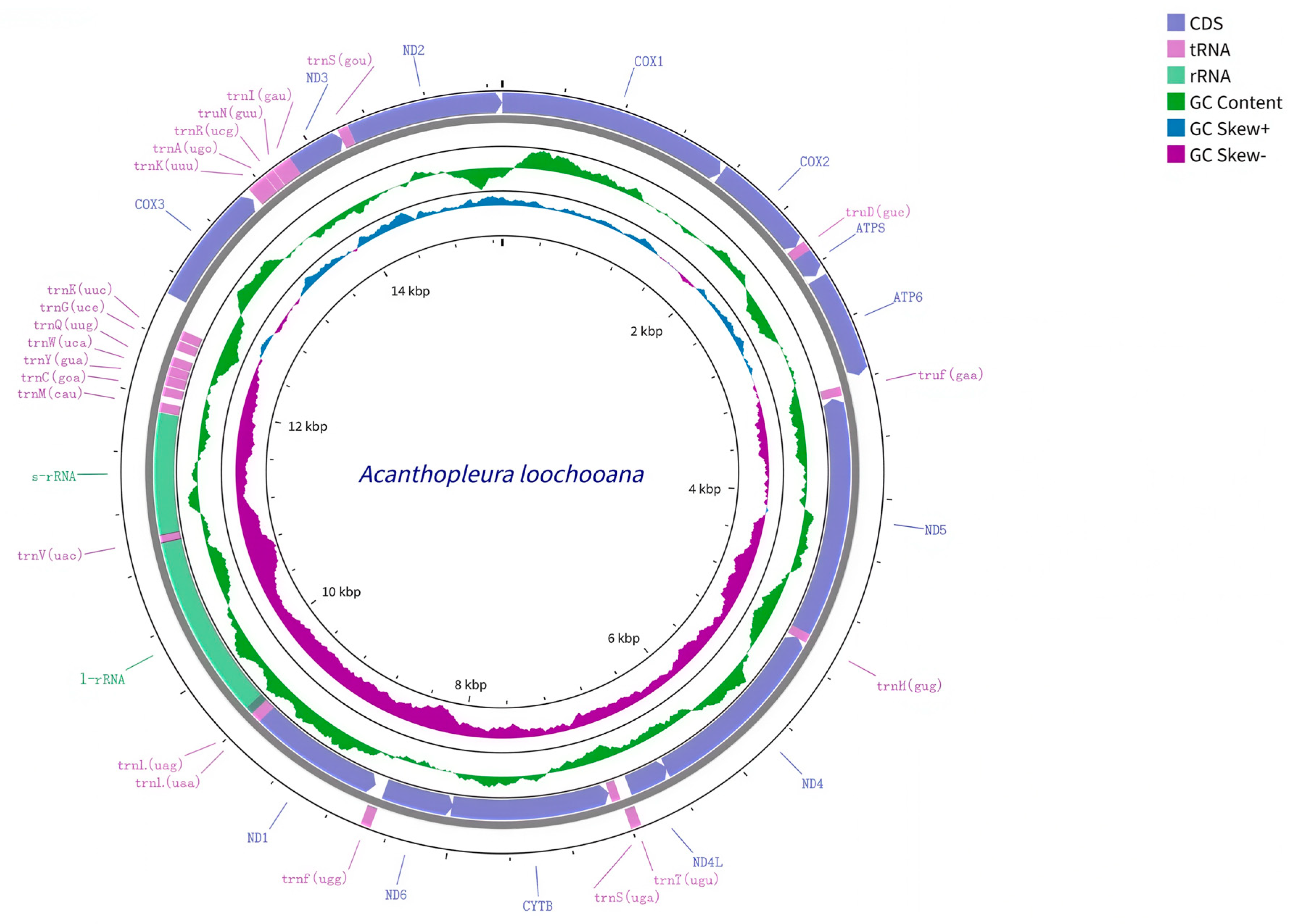
The species identity of A. loochooana (Figure 1) was confirmed based on diagnostic morphological characters described in previous studies [6,7], and was further supported by COI sequence similarity to reference sequences available in GenBank. The mitogenome of A. loochooana is circular, with a total length of 15,295 bp (Figure 2). It comprises 13 protein-coding genes, 2 rRNA genes, and 22 tRNA genes. Among these 37 genes, 13 are located on the heavy strand (H): COX1, COX2, ATP8, ATP6, COX3, trnK(UUU), trnA(UGC), trnR(UCG), trnN(GUU), trnI(GAU), ND3, trnS(GCU), and ND2. The remaining 24 genes are encoded on the light strand (L). Additionally, we identified 20 intergenic spacers (length range: 1–181 bp) and 10 gene overlaps (length range: 1–58 bp). The longest intergenic spacer is located between COX3 and trnE(UUC), whereas the longest gene overlap occurs between 16S rRNA (rrnL) and trnL(UAG) (Table 1). The gene order of this mitogenome is consistent with that of other species in the genus Acanthopleura [11].

2.2. Protein-Coding Genes and Codon Usage

The complete length of the protein-coding genes (PCGs) in A. loochooana was determined to be 11,221 bp, accounting for 73.4% of the total mitogenome sequence. As shown in Table 1, only six PCGs (ND1, ND4, ND4L, ND5, ND6, and CYTB) were located on the light strand (L-strand), while the remaining PCGs were all located on the heavy strand (H-strand). This distribution pattern on the L- and H-strands is consistent with that observed in Schizochiton incisus (G. B. Sowerby II, 1841). Ten of the 13 PCGs use ATG as the start codon and TAA as the stop codon. In contrast, ND1 and ND4 used GTG as the start codon, with TAA and TAG as the stop codons, respectively. ND2 initiates with TTG and terminates with TAA. Among the 13 PCGs, the A + T content was 69.7%, whereas the G + C content was 30.2%, indicating a strong A + T bias in the protein-coding genes of A. loochooana. Nucleotide compositional asymmetry was assessed using AT-skew = (A − T)/(A + T) and GC-skew = (G − C)/(G + C). The AT-skew and GC-skew values of the PCGs were −0.202 and 0.145, respectively, suggesting a higher proportion of T over A and G over C.
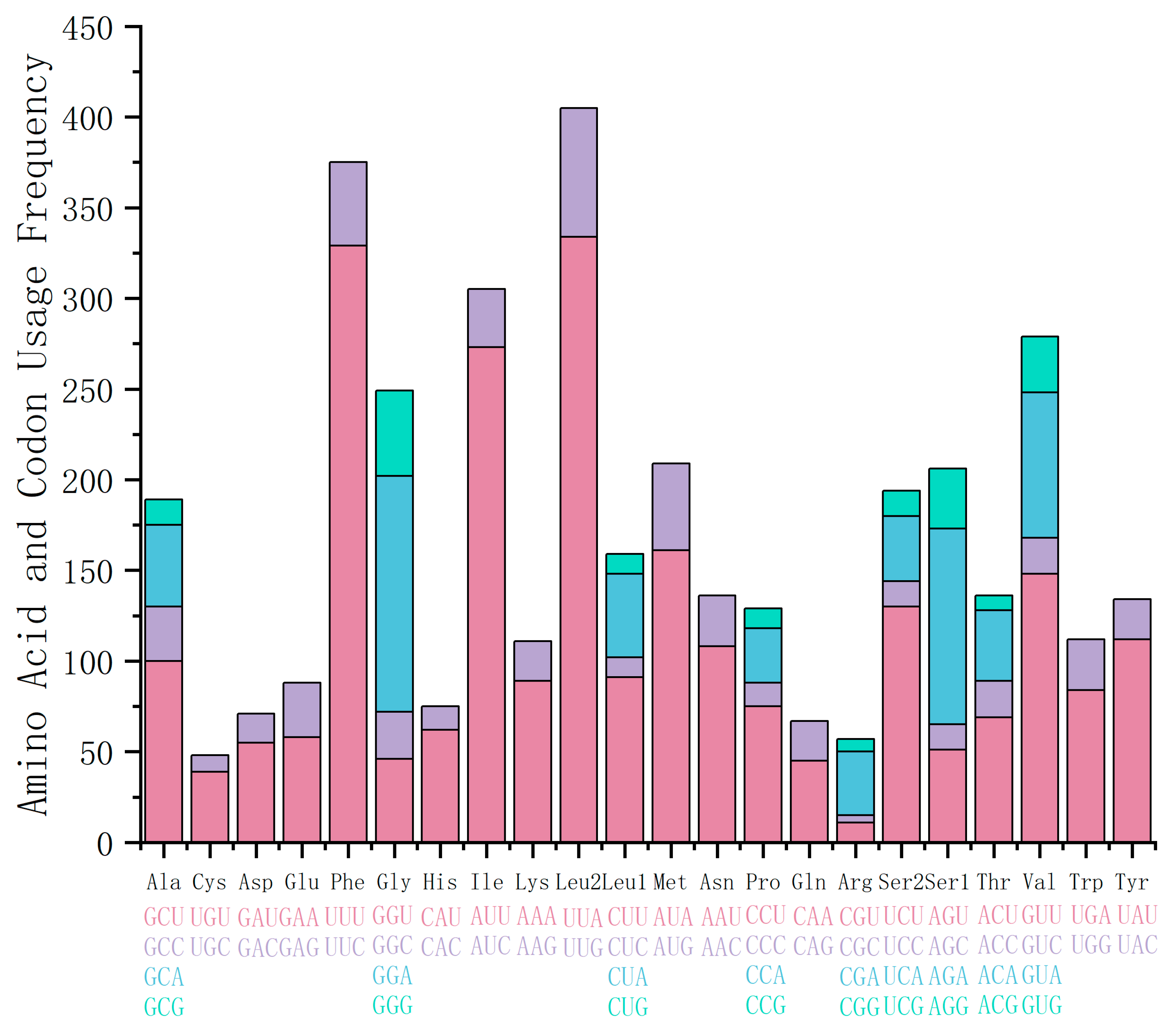
During the translation of genes into proteins, organisms often exhibit a bias toward using specific codons more frequently than others, a phenomenon known as codon usage bias [12,13]. In the 13 PCGs of A. loochooana, a total of 3728 codons were identified (excluding start codons). The most frequently used amino acids were Leu2, Phe, and Ile, while Cys was the least frequent. Among codons, UUA, UUU, and AUU were the most frequently utilized (Figure 3). The results indicate that codons ending in A or U were the most common, and RSCU values for NNU and NNA codons were generally greater than 1.

2.3. Phylogenetic Analysis of the Mitogenome

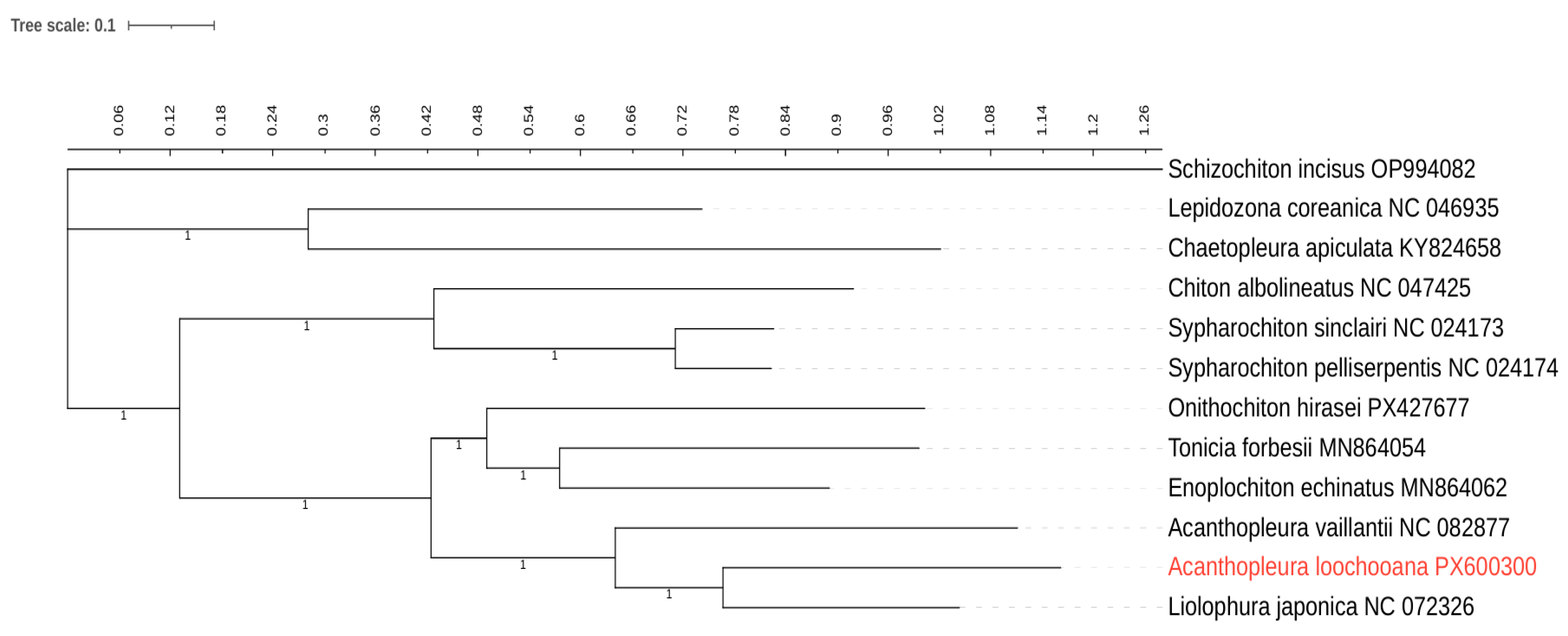
As shown in Figure 4, the phylogenetic tree exhibits a clearly resolved branch structure, and all nodes are supported with posterior probabilities of 1.00. The phylogenetic tree is primarily divided into three major clades, corresponding to two families and one subfamily. The results indicate that L. japonica (Lischke, 1873) and A. loochooana are most closely related, followed by the relationship between A. vaillantii (Rochebrune, 1882) and A. loochooana. The subfamily containing Onithochiton hirasei (Pilsbry, 1901), Tonicia forbesii (Carpenter, 1857), and Enoplochiton echinatus (Barnes, 1824) is closely related to both A. loochooana and the Acanthopleurinae subfamily to which it belongs.

3. Discussion

3.1. Mitogenome Organization and Structural Characteristics of A. loochooana

The mitochondrial genome of A. loochooana exhibits a circular structure and a complete set of genes typical of Polyplacophora. Its genome size (15,295 bp) and gene order are highly similar to those reported for other chitonid species, indicating strong conservation of mitochondrial architecture at the family level [14]. Such structural stability has been repeatedly observed in chitons and contrasts with the extensive gene rearrangements documented in several other molluscan groups, suggesting that distinct evolutionary constraints may act on polyplacophoran mitogenomes [8].
In addition, the presence of multiple intergenic spacers and overlapping genes reflects the compact organization typical of animal mitochondrial genomes [10]. The longest intergenic spacer was located between trnE and COX3. This position coincides with the region where a putative control region has been identified in other polyplacophoran species. Therefore, the corresponding non-coding region in A. loochooana may represent the homologous putative control region, although its precise functional significance remains unclear. Broader comparative analyses across Chitonidae will be necessary to determine whether variation in non-coding regions shows lineage-specific patterns or carries phylogenetic signal.

3.2. Protein-Coding Genes and Codon Usage Bias

Protein-coding genes account for more than 70% of the mitochondrial genome of A. loochooana and exhibit a pronounced A + T bias, consistent with mitochondrial genomes of other mollusks. The observed negative AT-skew and positive GC-skew indicate strand-specific nucleotide asymmetry, which is commonly attributed to asymmetric replication processes in mitochondrial DNA [15].
Codon usage analysis revealed a clear preference for codons ending in A or U, with UUA, UUU, and AUU among the most frequently used. This pattern closely mirrors the underlying nucleotide composition of the mitogenome, indicating that mutational bias plays a primary role in shaping synonymous codon usage [16]. At the same time, deviations from uniform codon usage suggest that selective constraints related to translational efficiency and tRNA availability may also contribute to codon preference. Comparable codon usage patterns have been reported in other chiton mitogenomes, pointing to a conserved trend across Polyplacophora rather than lineage-specific adaptation [17]. Collectively, these results suggest that codon usage bias in A. loochooana is driven by the combined effects of long-term mutational pressure and purifying selection, consistent with the functional constraints expected for mitochondrial protein-coding genes.

3.3. Phylogenetic Implications for Chitonidae and Acanthopleurinae

Mitochondrial genomes have become an important source of data for reconstructing phylogenetic relationships within Polyplacophora. In the present study, phylogenetic analysis based on concatenated mitochondrial protein-coding genes recovered a well-resolved topology with high Bayesian posterior probabilities across major nodes. A. loochooana was recovered as closely related to L. japonica and A. vaillantii, in agreement with previous morphological and molecular evidence [10].
The recovered relationships provide independent mitogenomic support for recent taxonomic proposals advocating the inclusion of Liolophura within Acanthopleura [18]. Although this hypothesis has previously been supported mainly by anatomical evidence and nuclear gene analyses, the present results indicate that mitochondrial genomes also reflect this evolutionary relationship, further supporting the recognition of Acanthopleurinae as a cohesive lineage within Chitonidae [19,20,21].
Nevertheless, the uniformly high support values observed in mitochondrial phylogenies should be interpreted with caution. Early diversification within Chitonidae may have involved rapid lineage splitting, potentially accompanied by incomplete lineage sorting [22]. Moreover, mitochondrial genomes represent a single, maternally inherited locus and may not fully capture evolutionary processes such as introgression or historical gene flow. Consequently, while mitochondrial data provide robust resolution for shallow and intermediate relationships, resolving deeper divergences within Chitonidae will require integrative approaches incorporating nuclear genomic data and detailed morphological assessments.

3.4. Limitations and Future Perspectives

Several limitations of this study should be considered. The mitogenome of A. loochooana was obtained from a single specimen collected at one locality, preventing an assessment of intraspecific variation and population-level mitochondrial diversity. In addition, phylogenetic inference relied exclusively on mitochondrial protein-coding genes, which represent only a subset of the genomic information relevant to evolutionary history. Because mitochondrial genomes are maternally inherited and represent a single genetic locus, they may not fully reflect deeper evolutionary processes such as incomplete lineage sorting, introgression, or historical gene flow. Finally, taxon sampling remains constrained by the limited availability of complete mitogenomes for Polyplacophora, particularly within Chitonidae.
Future research should prioritize expanded geographic sampling and population-level analyses of A. loochooana and related taxa, as well as the integration of nuclear genomic markers. Such integrative datasets will be essential for detecting cryptic diversity, refining species boundaries, and achieving a more comprehensive understanding of evolutionary patterns and processes in chitons. In addition, the present phylogenetic analysis was based on nucleotide sequences rather than amino acid sequences. Although nucleotide data are informative for relatively shallow divergences, amino acid-based analyses may be useful for evaluating deeper relationships and should be explored in future studies.

4. Materials and Methods

4.1. Sample Collection and DNA Extraction

The specimen of A. loochooana was collected in Pingtan, Fuzhou, China (Voucher specimen was deposited at the Third Institute of Oceanography, Ministry of Natural Resources, under the number PX600300. Contact person: Bingpeng Xing, bluprin@tio.org.cn. Coordinates: 119.88° E, 25.57° N). The specimens were preliminarily identified based on the morphological characteristics of A. loochooana [23], preserved in 75% ethanol, and stored at −20 °C for subsequent analyses. Subsequently, approximately 20–30 mg of muscle tissue was taken, and genomic DNA was extracted using the commercial Vazyme FastPure kit (Vazyme, Nanjing, China). PCR amplification of a partial mitochondrial cytochrome c oxidase subunit I gene (COI) fragment was performed using the primer pair dgHCO2198 (forward) and dgLCO1490 (reverse) [24]. The annealing temperature was set at 45 °C, increasing by 0.5 °C per cycle for 15 cycles, followed by 49 °C for 20 cycles. Reactions were carried out in a 25 μL volume, and gradient PCR was applied to determine the optimal annealing temperature. The resulting COI sequence was used solely for preliminary species identification and was not included in mitogenome assembly or subsequent phylogenetic analyses.

4.2. Sequencing and Annotation of the Mitogenome

Next-generation sequencing was performed by Novogene Co., Ltd. (Novogene, Tianjin, China). A paired-end library was constructed using the Illumina TruSeq™ DNA Sample Preparation Kit and sequenced on the Illumina NovaSeq 6000 platform (Illumina, Inc., San Diego, CA, USA), generating 150 bp paired-end reads. The sequencing data showed high quality, with a Q30 ratio above 90%, and provided sufficient depth for mitochondrial genome assembly. Raw read quality was assessed using FastQC v0.11.5, and adapter sequences and low-quality reads were removed using fastp v0.23 [25]. The filtered reads were assembled into the complete mitochondrial genome using GetOrganelle v1.7.5.0 with a k-mer size of 31. Default parameters were used for all other settings. Circularization of the mitogenome was first assessed during the assembly process and then verified by examining terminal overlap consistency, completeness of the mitochondrial gene set, and the correctness of start and stop codons in protein-coding genes. Genome annotation was performed using the MITOS2 online tool (https://usegalaxy.org/) [26] under the invertebrate mitochondrial genetic code. The positions of protein-coding genes, transfer RNAs, and ribosomal RNAs were identified accordingly. Relative synonymous codon usage (RSCU) values and codon usage frequencies were calculated using PhyloSuite v1.2, and the resulting data were visualized using Origin 2024.

4.3. Phylogenetic Tree Construction

The phylogenetic tree was constructed from the newly sequenced mitogenome of A. loochooana and nine other chitonid mitogenomes downloaded from NCBI GenBank, with S. incisus selected as the outgroup (Table 2). Sequence preprocessing and model selection prior to tree construction were performed using PhyloSuite v.1.2. First, the 13 protein-coding sequences were extracted [27,28], followed by sequence alignment using MAFFT v.7.313 [29]. The aligned sequences were subsequently trimmed using Gblocks v0.91 (default parameters) to eliminate poorly aligned regions. The concatenated dataset of the 13 mitochondrial protein-coding genes was analyzed as a single partition. ModelFinder v2.2.0 [30] was used to select the best-fit substitution model, and GTR+F+I+G4 was identified as the optimal model. Bayesian inference was then performed using MrBayes v3.2 [31], for 2,000,000 generations, with the first 25% of sampled trees discarded as burn-in.

5. Conclusions

This study presents the complete mitochondrial genome of A. loochooana, thereby expanding the still-limited mitogenomic resources available for Polyplacophora. The mitogenome exhibits a conserved gene complement and organization typical of chitons, with a compact structure, strong A+T bias, and codon usage patterns broadly consistent with those reported in other members of Chitonidae. These features provide useful comparative data for understanding mitochondrial genome evolution in chitons. Phylogenetic analysis based on concatenated mitochondrial protein-coding genes placed A. loochooana together with L. japonica and A. vaillantii within Acanthopleurinae, providing additional mitogenomic evidence relevant to relationships within this subfamily. However, because mitochondrial genomes are maternally inherited and represent a single locus, caution is needed when interpreting deeper phylogenetic relationships. Overall, the newly generated mitogenome of A. loochooana provides a valuable reference for future integrative studies combining mitochondrial, nuclear, and morphological data to further clarify chiton phylogeny and evolutionary history.

Author Contributions

Conceptualization, X.Q. and B.X.; methodology, X.Q.; software, Q.W.; validation, P.X. and G.C.; formal analysis, X.Q.; investigation, Y.Z.; resources, B.X.; data curation, Q.W.; writing—original draft preparation, X.Q.; writing—review and editing, B.X.; visualization, P.X.; supervision, L.M.; project administration, B.X.; funding acquisition, B.X. All authors have read and agreed to the published version of the manuscript.

Funding

We acknowledge the support of this work by the project “Science & Technology Fundamental Resources Investigation Program” (2023FY100804), “Scientific Research Foundation of Third Institute of Oceanography MNR” (2019015, 2020017), and “Natural Science Foundation of Fujian Province, China” (2023J01208).

Institutional Review Board Statement

The study was conducted according to the guidelines of the Declaration of Helsinki, and all procedures involving animals were in compliance with relevant institutional and national guidelines. Since the research only involves wild marine invertebrates (Acanthopleura loochooana) and does not include human subjects, vertebrate animals, or laboratory animals, ethical approval and institutional review board consent were not required for this study.

Informed Consent Statement

Not applicable. The study does not involve human participants, so informed consent is not applicable.

Data Availability Statement

The original contributions presented in this study are included in the article. Further inquiries can be directed to the corresponding author.

Conflicts of Interest

The authors declare no conflicts of interest.

References

  1. Puchalski, S.S.; Eernisse, D.J.; Johnson, C.C. The effect of sampling bias on the fossil record of chitons (Mollusca, Polyplacophora). Am. Malacol. Bull. 2008, 25, 87–95. [Google Scholar] [CrossRef]
  2. Vinther, J.; Sperling, E.A.; Briggs, D.E.G.; Peterson, K.J. A molecular palaeobiological hypothesis for the origin of aplacophoran molluscs and their derivation from chiton-like ancestors. Proc. R. Soc. B 2012, 279, 1259–1268. [Google Scholar] [CrossRef] [PubMed]
  3. Okusu, A. Towards a phylogeny of chitons (Mollusca, Polyplacophora) based on combined analysis of five molecular loci. Org. Divers. Evol. 2003, 3, 281–302. [Google Scholar] [CrossRef][Green Version]
  4. Denny, M.W.; Gaines, S. (Eds.) Encyclopedia of Tidepools and Rocky Shores; University of California Press: Berkeley, CA, USA, 2007. [Google Scholar] [CrossRef]
  5. Sigwart, J.D.; Sirenko, B.I. Deep-sea chitons from sunken wood in the West Pacific (Mollusca: Polyplacophora: Lepidopleurida): Taxonomy, distribution, and seven new species. Zootaxa 2012, 3195, 1–38. [Google Scholar] [CrossRef]
  6. Zhao, Q.S.; Jin, S.; Cheng, Y.E. Structure and behavior of Chitons. Reserv. Fish. 2007, 46–47. [Google Scholar] [CrossRef]
  7. Chen, X.; Shen, Y.Y.; Zhang, Y.P. The Application of Mitochondrial DNA in Molecular Evolution Research. Zool. Res. 2012, 33, 566–573. [Google Scholar] [CrossRef]
  8. Irisarri, I.; Uribe, J.E.; Eernisse, D.J.; Zardoya, R. A mitogenomic phylogeny of chitons (Mollusca: Polyplacophora). BMC Evol. Biol. 2020, 20, 22. [Google Scholar] [CrossRef]
  9. Li, J.S.; Zhou, S.Q.; Ke, C.H. Comparative Study on Radular Morphology of Polyplacophora in Fujian Coast. Xiamen Daxue Xuebao (Ziran Kexue Ban) 2004, 43, 581–584. [Google Scholar]
  10. Zhou, Q.; Liu, Z.; Dong, W.; Xing, B.; Luo, S.; Xiang, P. Deciphering the First Mitochondrial Genome of the Liolophura Pilsbry, 1893 Genus: An Extensive Phylogenetic Study Within the Chitonidae Family. Genes 2025, 16, 606. [Google Scholar] [CrossRef]
  11. Kim, I.H.; Hwang, U.W. Morphology and mitochondrial genome-based analysis of the systematics and evolution of Acanthochitona species (Polyplacophora: Acanthochitonidae). Mar. Life Sci. Technol. 2026, 8, 49–67. [Google Scholar] [CrossRef]
  12. Choi, E.H.; Yeo, M.Y.; Kim, G.; Park, B.; Shin, C.R.; Baek, S.Y.; Hwang, U.W. Liolophura species discrimination with geographical distribution patterns and their divergence and expansion history on the northwestern Pacific coast. Sci. Rep. 2021, 11, 17602. [Google Scholar] [CrossRef] [PubMed]
  13. Qiu, Z.; Chang, H.; Yuan, H.; Huang, Y.; Lu, H.; Li, X.; Gou, X. Comparative mitochondrial genomes of four species of Sinopodisma and phylogenetic implications (Orthoptera, Melanoplinae). ZooKeys 2020, 969, 23–42. [Google Scholar] [CrossRef] [PubMed]
  14. Tang, L.Y.; Teng, M.X.; Wang, H.; Ye, Z.; Zeng, Q.F. Analysis of Codon Usage Bias Patterns in Mollusks. Period. Ocean Univ. China 2025, 55, 89–98. [Google Scholar] [CrossRef]
  15. Doğan, Ö.; Schrödl, M.; Chen, Z. The complete mitogenome of Arion vulgaris Moquin-Tandon, 1855 (Gastropoda: Stylommatophora): Mitochondrial genome architecture, evolution and phylogenetic considerations within Stylommatophora. PeerJ 2020, 8, e8603. [Google Scholar] [CrossRef]
  16. Gu, J.; Zhou, X.; Song, C.; Wang, Y.; Jin, H.; Lei, T.; Qi, X. Codon Usage Bias in Mitochondrial Genomes Across Three Species of Siphonaria (Mollusca: Gastropoda). Genes 2025, 16, 747. [Google Scholar] [CrossRef]
  17. Zheng, J.; Li, F.; Fan, M.; Gu, Z.; Liu, C.; Wang, A.; Yang, Y. Mitogenomic Phylogeny of Tonnoidea Suter, 1913 (1825) (Gastropoda: Caenogastropoda). Animals 2023, 13, 3342. [Google Scholar] [CrossRef]
  18. Ibáñez, C.M.; Pardo-Gandarillas, M.C.; Méndez, M.A.; Sellanes, J.; Sigwart, J.D.; Sirenko, B. Phylogenetic position and morphological descriptions of Chiton species from the south-eastern Pacific. Zool. J. Linn. Soc. 2021, 191, 695–719. [Google Scholar] [CrossRef]
  19. Jardim, J.A.; Almeida, S.M.; Simone, L.R.L. Towards understanding a confusing and widespread species: An anatomical study of Acanthopleura gemmata (Polyplacophora, Chitonidae) from Thailand. Strombus 2020, 26, 1–14. [Google Scholar]
  20. Alnashiri, H.; Thomas, L.; Thaikkottathil, M.; Philip, S.; Kutty, R.; Sivanpillai, S.; Abo Rasain, A.M. Phylogenetic Affinities of Acanthopleurinae Dall, 1889 Chitons (Mollusca: Polyplacophora: Chitonidae) from Jazan Coast in the Red Sea and Western Indo-Pacific. J. Mar. Sci. Eng. 2023, 11, 158. [Google Scholar] [CrossRef]
  21. Liu, X.; Sigwart, J.D.; Sun, J. Phylogenomic analyses shed light on the relationships of chiton superfamilies and shell-eye evolution. Mar. Life Sci. Technol. 2023, 5, 525–537. [Google Scholar] [CrossRef]
  22. Xing, B.; Lin, L.; Wu, Q. Application of mitochondrial genomes to species identification and evolution. Electron. J. Biotechnol. 2025, 76, 39–48. [Google Scholar] [CrossRef]
  23. Saito, H. Phylogenetic significance of the radula in chitons, with special reference to the Cryptoplacoidea (Mollusca: Polyplacophora). Boll. Malacol. 2003, 5, 83–104. [Google Scholar]
  24. Meyer, C.P. Molecular systematics of cowries (Gastropoda: Cypraeidae) and diversification patterns in the tropics: COWRIE SYSTEMATICS and DIVERSIFICATION PATTERNS. Biol. J. Linn. Soc. 2003, 79, 401–459. [Google Scholar] [CrossRef]
  25. Chen, S.; Zhou, Y.; Chen, Y.; Gu, J. fastp: An ultra-fast all-in-one FASTQ preprocessor. Bioinformatics 2018, 34, i884–i890. [Google Scholar] [CrossRef]
  26. Bernt, M.; Donath, A.; Jühling, F.; Externbrink, F.; Florentz, C.; Fritzsch, G.; Pütz, J.; Middendorf, M.; Stadler, P.F. MITOS: Improved de novo metazoan mitochondrial genome annotation. Mol. Phylogenetics Evol. 2013, 69, 313–319. [Google Scholar] [CrossRef]
  27. Zhang, D.; Gao, F.; Jakovlić, I.; Zou, H.; Zhang, J.; Li, W.X.; Wang, G.T. PhyloSuite: An integrated and scalable desktop platform for streamlined molecular sequence data management and evolutionary phylogenetics studies. Mol. Ecol. Resour. 2020, 20, 348–355. [Google Scholar] [CrossRef]
  28. Xiang, C.; Gao, F.; Jakovlić, I.; Lei, H.; Hu, Y.; Zhang, H.; Zou, H.; Wang, G.; Zhang, D. Using PhyloSuite for molecular phylogeny and tree-based analyses. iMeta 2023, 2, e87. [Google Scholar] [CrossRef]
  29. Katoh, K.; Standley, D.M. MAFFT Multiple Sequence Alignment Software Version 7: Improvements in Performance and Usability. Mol. Biol. Evol. 2013, 30, 772–780. [Google Scholar] [CrossRef]
  30. Kalyaanamoorthy, S.; Minh, B.Q.; Wong, T.K.F.; Von Haeseler, A.; Jermiin, L.S. ModelFinder: Fast model selection for accurate phylogenetic estimates. Nat. Methods 2017, 14, 587–589. [Google Scholar] [CrossRef]
  31. Ronquist, F.; Teslenko, M.; Van Der Mark, P.; Ayres, D.L.; Darling, A.; Höhna, S.; Larget, B.; Liu, L.; Suchard, M.A.; Huelsenbeck, J.P. MrBayes 3.2: Efficient Bayesian Phylogenetic Inference and Model Choice Across a Large Model Space. Syst. Biol. 2012, 61, 539–542. [Google Scholar] [CrossRef]
  32. Veale, A.J.; Williams, L.; Tsai, P.; Thakur, V.; Lavery, S. The complete mitochondrial genomes of two chiton species (Sypharochiton pelliserpentis and Sypharochiton sinclairi) obtained using Illumina next generation sequencing. Mitochondrial DNA Part A 2016, 27, 537–538. [Google Scholar] [CrossRef]
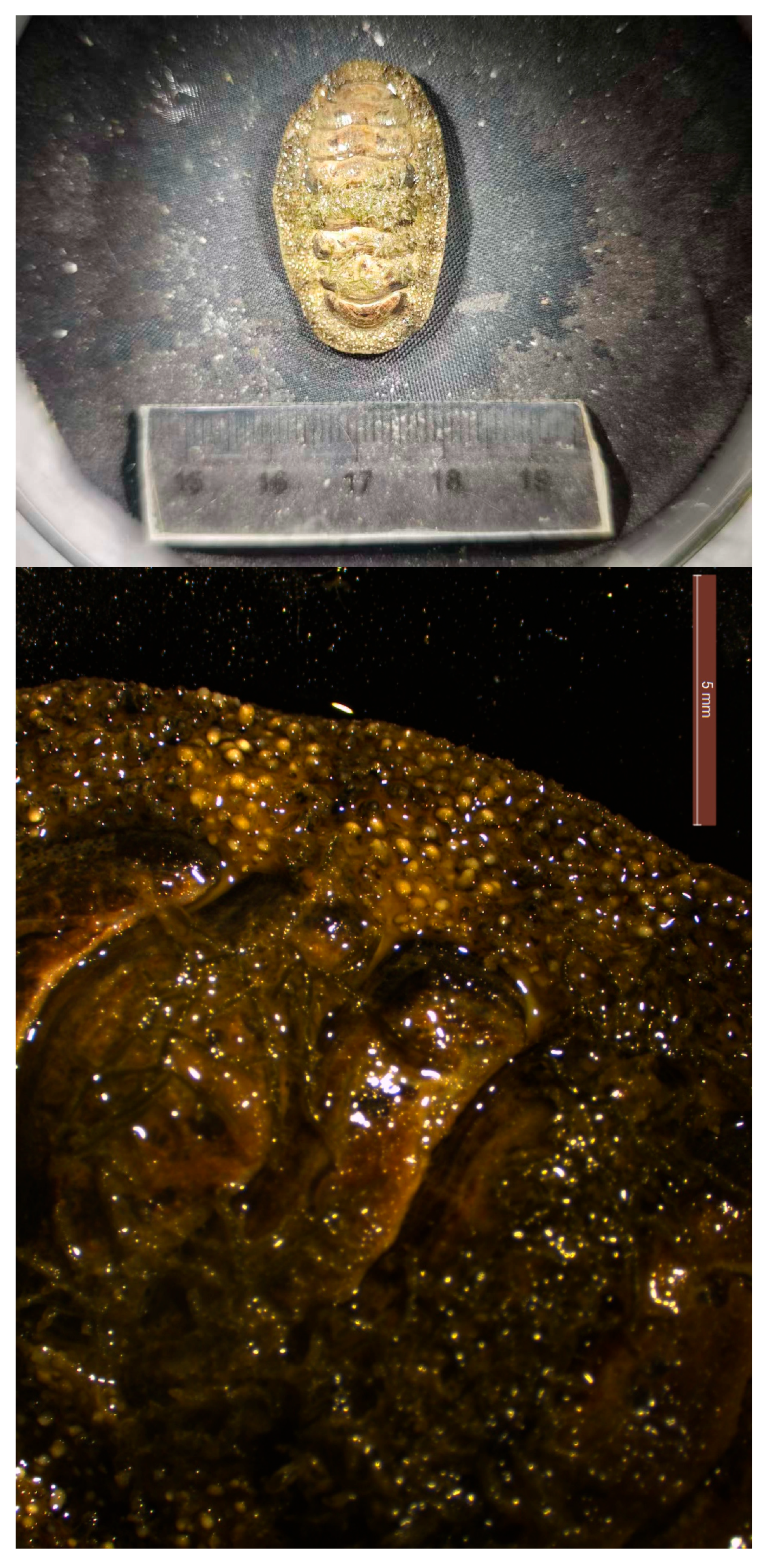
Figure 1. Acanthopleura loochooana and its girdle in detail.
Ijms 27 03053 g001
Figure 2. Mitogenome map of Acanthopleura loochooana. Note: The orientation of the arrows for each gene (CDS, tRNA, rRNA) represents the direction of transcription. Clockwise arrows signify genes encoded on the positive strand, while counterclockwise arrows indicate those on the negative strand. The colored rings represent coding genes (CDS, purple), transfer RNA (tRNA, pink), and ribosomal RNA (rRNA, green), respectively. The innermost ring indicates GC content (blue) and GC skew (GC Skew+/-, purple).
Ijms 27 03053 g002
Figure 3. Amino Acid and Codon Usage Frequencies in the Protein-Coding Genes of the Acanthopleura loochooana mitogenome. Note: Amino acids are provided on the x-axis, with their corresponding synonymous codons listed below each abbreviation. The total usage count of each amino acid is shown on the y-axis. The stacked segments within each bar represent the relative usage of different codons encoding the same amino acid.
Ijms 27 03053 g003
Figure 4. Phylogenetic tree of Chitonida inferred from 13 mitochondrial protein-coding genes (PCGs) using Bayesian inference (BI) analyses. Node values represent Bayesian posterior probabilities.
Ijms 27 03053 g004
Table 1. Mitogenome Composition of Acanthopleura loochooana.
LocusPositionSize (bp)Intergenic Region (bp)Start CodingStop CodingStrand
trnM(cau)1–68683 L
trnC(gca)116–1796447 L
trnY(gua)192–2616912 L
trnW(uca)263–327651 L
trnQ(uug)332–400694 L
trnG(ucc)452–5176651 L
trnE(uuc)527–595699 L
COX3777–1598822181ATGTAAH
trnK(uuu)1626–16946927 H
trnA(ugc)1691–175969−4 H
trnR(ucg)1763–1824623 H
trnN(guu)1829–1892644 H
trnI(gau)1893–1957650 H
ND31958–23143570ATGTAAH
trnS(gcu)2313–238068−2 H
ND22384–340310203TTGTAAH
COX13404–493615330ATGTAAH
COX24945–56376938ATGTAAH
trnD(guc)5636–570368−2 H
ATP85704–58651620ATGTAAH
ATP65888–658369622ATGTAAH
trnF(gaa)6625–66916741 L
ND56698–841317166 L
trnH(gug)8414–8478650 L
ND48474–98261353−5GTGTAAL
ND4L9820–10,122303−7ATGTAGL
trnT(ugu)10,137–10,2077114 L
trnS(uga)10,207–10,27165−1 L
CYTB10,275–11,41411403ATGTAAL
ND611,407–11,913507−8ATGTAAL
trnP(ugg)11,916–11,984692 L
ND111,987–12,9289422GTGTAAL
trnL(uaa)12,929–12,995670 L
trnL(uag)12,996–13,062670 L
l-rRNA13,005–14,3871381−58 L
trnV(uac)14,370–14,43667−18 L
s-rRNA14,429–15,295867−8 L
Table 2. List of Species and Genomic Information for Phylogenetic Analysis in the Order Chitonida.
OrderFamilyGenusSpeciesAccession No.Reference
ChitonidaChitonidaeAcanthopleuraA. loochooanaPX600300This study
A. vaillantiiNC082877Unpublished
LiolophuraL. japonicaNC072326Unpublished
EnoplochitonEnoplochiton echinatusMN864062Irisarri et al., 2020 [8]
ToniciaT. forbesiiMN864054Irisarri et al., 2020 [8]
OnithochitonO. hiraseiPX427677Unpublished
SypharochitonSypharochiton pelliserpentisNC024174Veale et al., 2016 [32]
SypharochitonSypharochiton sinclairiNC024173Veale et al., 2016 [32]
ChitonChiton albolineatusNC047425Unpublished
ChaetopleuridaeChaetopleuraChaetopleura apiculataKY824658Unpublished
IschnochitonidaeLepidozonaLepidozona coreanicaNC046935Unpublished
SchizochitonidaeSchizochitonS. incisusOP994082Unpublished
Disclaimer/Publisher’s Note: The statements, opinions and data contained in all publications are solely those of the individual author(s) and contributor(s) and not of MDPI and/or the editor(s). MDPI and/or the editor(s) disclaim responsibility for any injury to people or property resulting from any ideas, methods, instructions or products referred to in the content.