Genetic Engineering of Lysogenic–Lytic Switch Genes Improves Burkholderia Phage Killing Efficacy

 , , and
Abstract
1. Introduction
2. Results
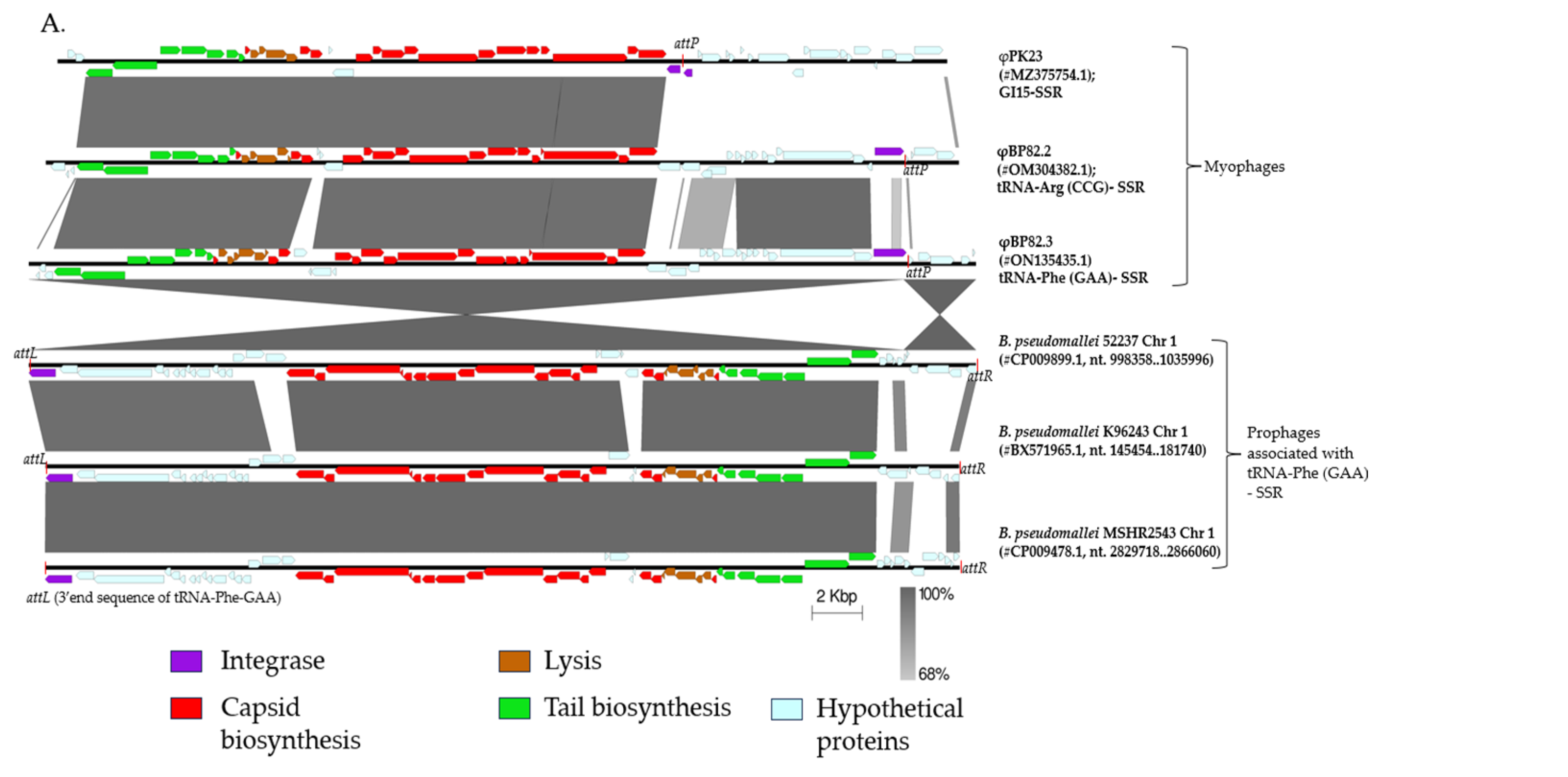
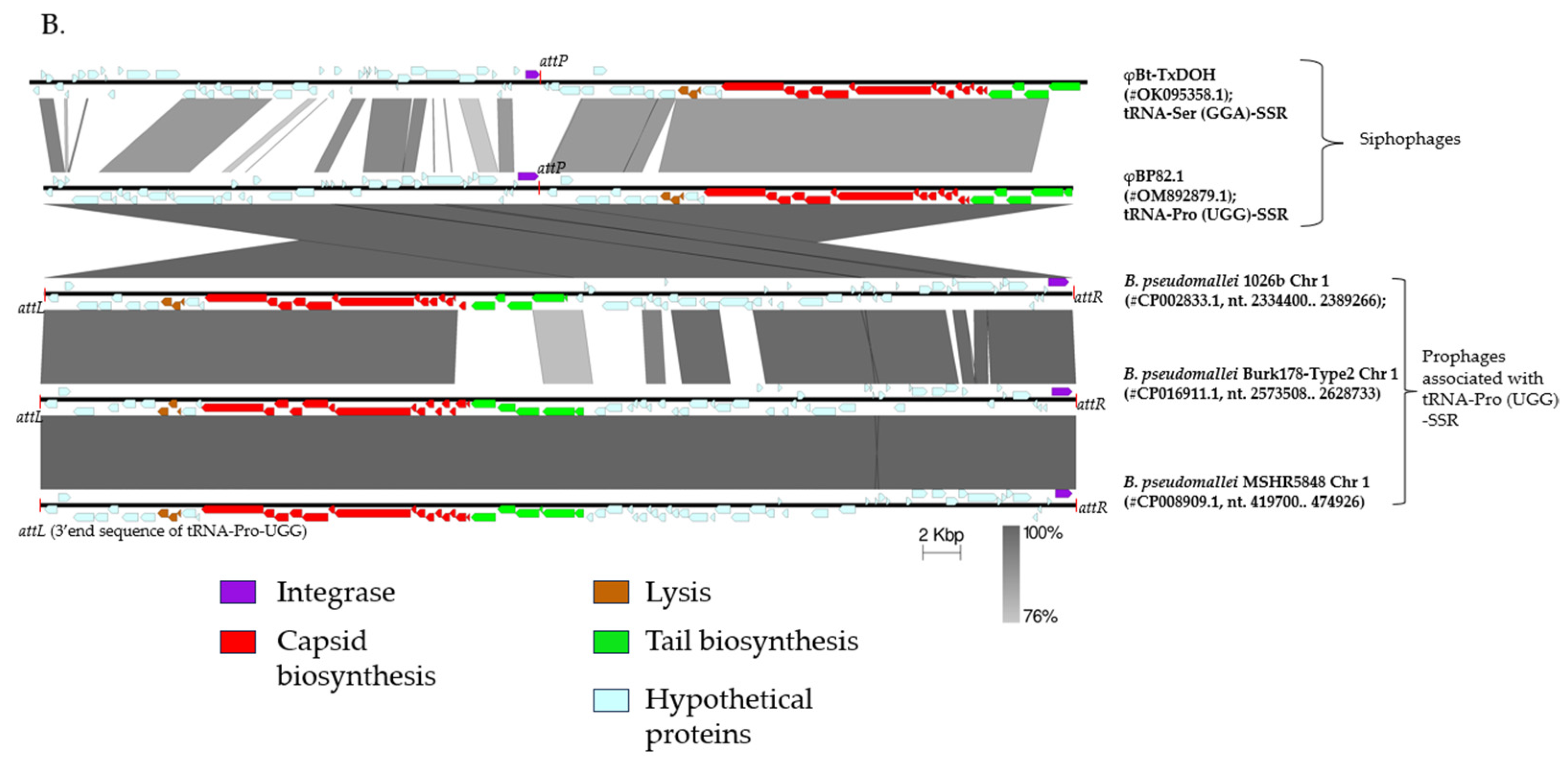
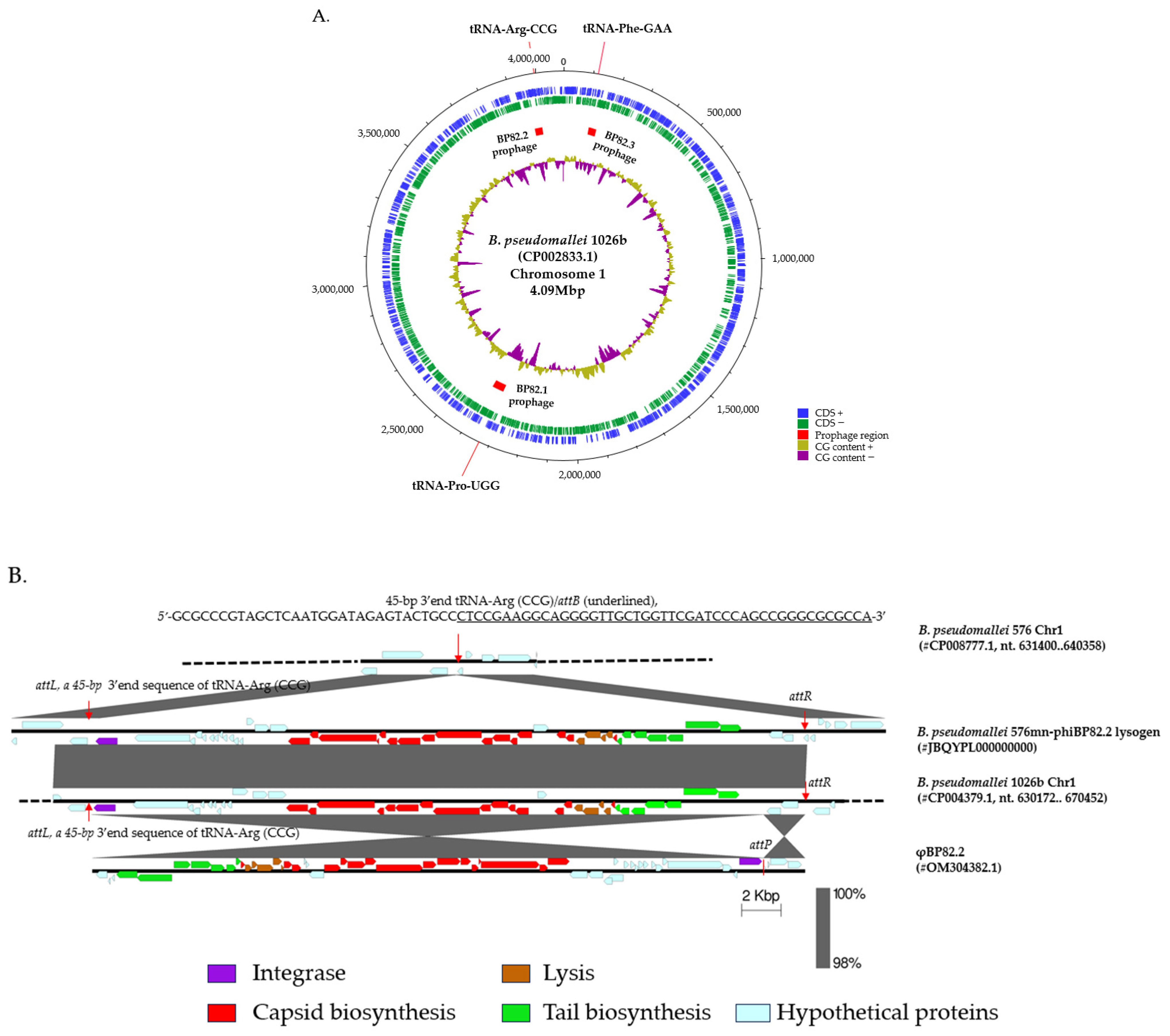
2.1. Genomic Analysis of B. pseudomallei Prophages
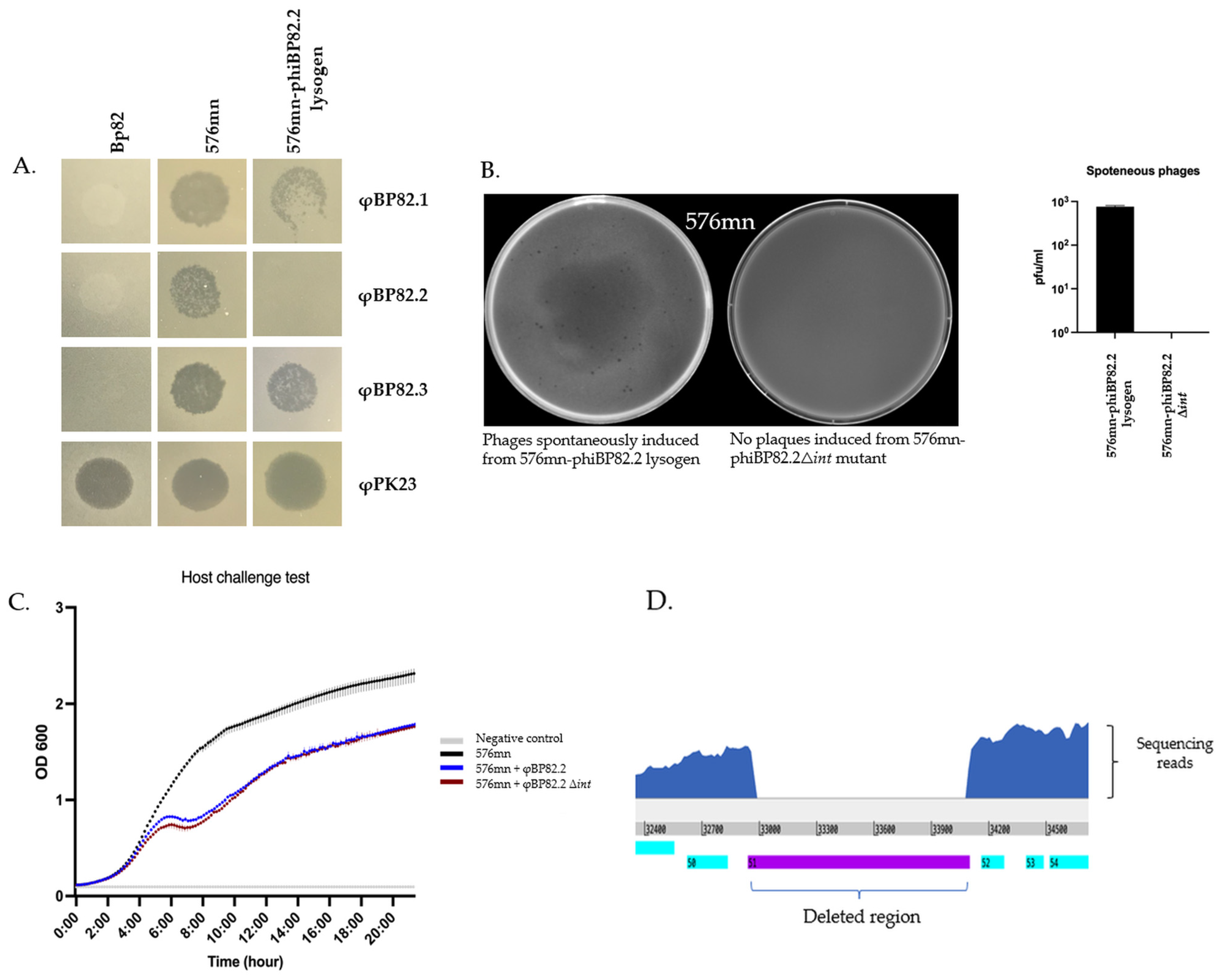
2.2. Isolation of a Lysogenic Clone of B. pseudomallei 576mn Following φBP82.2 Infection
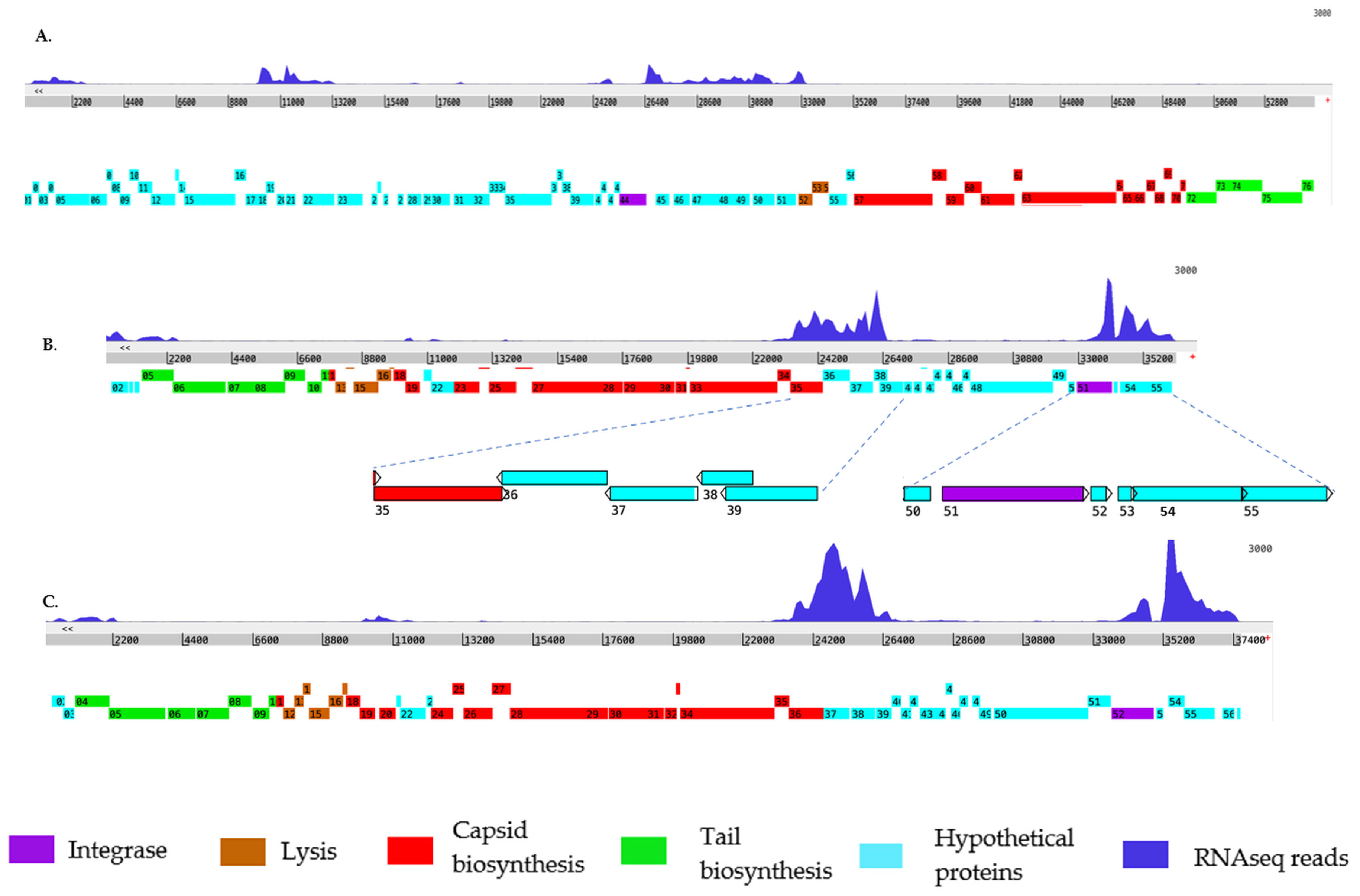
2.3. Expression Profile of the Prophages in B. pseudomallei Bp82 During Normal Exponential Growth
2.4. Deletion of the Integrase Gene gp51 in the φBP82.2 Prophage Resulted in the Loss of Phage Excision
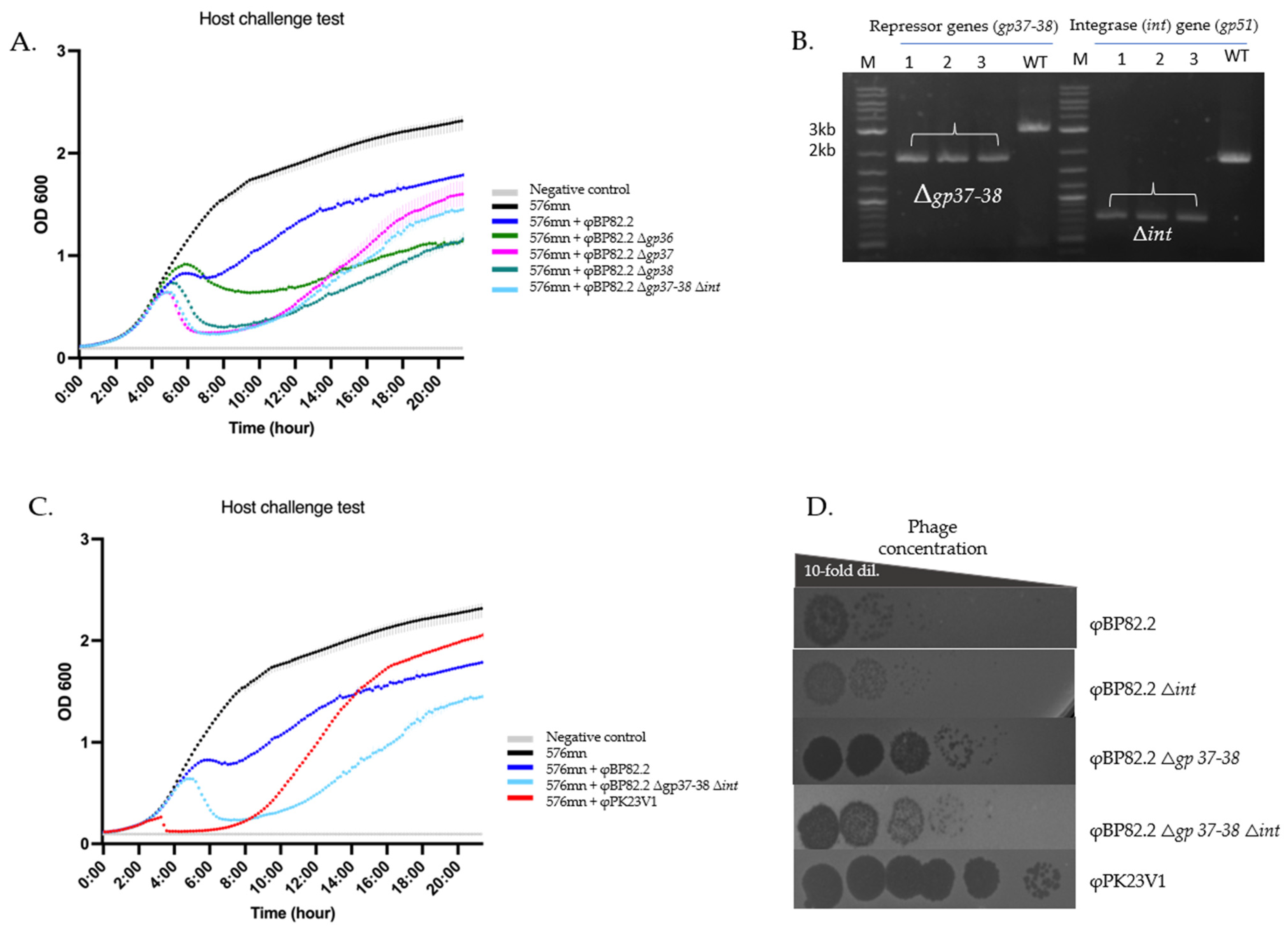
2.5. Lysogeny Regulatory Gene Involvement in the Lysogenic–Lytic Switch
3. Discussion
3.1. Temperate Phages Are Common in B. pseudomallei and May Contribute to Host Survival
3.2. The Integrase Gene Is Required for Phage Excision but Does Not Enhance Lytic Activity
3.3. The Deletion of Lysogeny Regulatory Genes Activates the Lysogenic–Lytic Switch
4. Materials and Methods
4.1. Bacterial Culture Condition
4.2. Prophage Genome Analysis
4.3. Phage Induction and Lysogen Isolation
4.4. RNA Sequencing
4.5. Phage Integrase Gene Mutagenesis
4.6. Construction of Replicative Plasmid for Integrase Supplementation
4.7. Phage Lysogeny Regulatory Gene Mutagenesis
5. Conclusions
Supplementary Materials
Author Contributions
Funding
Institutional Review Board Statement
Informed Consent Statement
Data Availability Statement
Conflicts of Interest
References
- White, N.J. Melioidosis. Lancet 2003, 361, 1715–1722. [Google Scholar] [CrossRef]
- Wiersinga, W.J.; van der Poll, T.; White, N.J.; Day, N.P.; Peacock, S.J. Melioidosis: Insights into the pathogenicity of Burkholderia pseudomallei. Nat. Rev. Microbiol. 2006, 4, 272–282. [Google Scholar] [CrossRef]
- Pongmala, K.; Pierret, A.; Oliva, P.; Pando, A.; Davong, V.; Rattanavong, S.; Silvera, N.; Luangraj, M.; Boithias, L.; Xayyathip, K.; et al. Distribution of Burkholderia pseudomallei within a 300-cm deep soil profile: Implications for environmental sampling. Sci. Rep. 2022, 12, 8674. [Google Scholar] [CrossRef]
- Limmathurotsakul, D.; Golding, N.; Dance, D.A.; Messina, J.P.; Pigott, D.M.; Moyes, C.L.; Rolim, D.B.; Bertherat, E.; Day, N.P.; Peacock, S.J.; et al. Predicted global distribution of Burkholderia pseudomallei and burden of melioidosis. Nat. Microbiol. 2016, 1, 15008. [Google Scholar] [CrossRef]
- Elschner, M.C.; Hnizdo, J.; Stamm, I.; El-Adawy, H.; Mertens, K.; Melzer, F. Isolation of the highly pathogenic and zoonotic agent Burkholderia pseudomallei from a pet green Iguana in Prague, Czech Republic. BMC Vet. Res. 2014, 10, 283. [Google Scholar] [CrossRef]
- Limmathurotsakul, D.; Thammasart, S.; Warrasuth, N.; Thapanagulsak, P.; Jatapai, A.; Pengreungrojanachai, V.; Anun, S.; Joraka, W.; Thongkamkoon, P.; Saiyen, P.; et al. Melioidosis in animals, Thailand, 2006–2010. Emerg. Infect. Dis. 2012, 18, 325–327. [Google Scholar] [CrossRef] [PubMed]
- Wiersinga, W.J.; Virk, H.S.; Torres, A.G.; Currie, B.J.; Peacock, S.J.; Dance, D.A.B.; Limmathurotsakul, D. Melioidosis. Nat. Rev. Dis. Primers 2018, 4, 17107. [Google Scholar] [CrossRef]
- Schweizer, H.P. Mechanisms of antibiotic resistance in Burkholderia pseudomallei: Implications for treatment of melioidosis. Future Microbiol. 2012, 7, 1389–1399. [Google Scholar] [CrossRef] [PubMed]
- Crowe, A.; McMahon, N.; Currie, B.J.; Baird, R.W. Current antimicrobial susceptibility of first-episode melioidosis Burkholderia pseudomallei isolates from the Northern Territory, Australia. Int. J. Antimicrob. Agents 2014, 44, 160–162. [Google Scholar] [CrossRef]
- Dance, D. Treatment and prophylaxis of melioidosis. Int. J. Antimicrob. Agents 2014, 43, 310–318. [Google Scholar] [CrossRef] [PubMed]
- Dance, D.A.; Davong, V.; Soeng, S.; Phetsouvanh, R.; Newton, P.N.; Turner, P. Trimethoprim/sulfamethoxazole resistance in Burkholderia pseudomallei. Int. J. Antimicrob. Agents 2014, 44, 368–369. [Google Scholar] [CrossRef]
- Sullivan, R.P.; Marshall, C.S.; Anstey, N.M.; Ward, L.; Currie, B.J. 2020 Review and revision of the 2015 Darwin melioidosis treatment guideline; paradigm drift not shift. PLoS Neglected Trop. Dis. 2020, 14, e0008659. [Google Scholar] [CrossRef]
- Bugrysheva, J.V.; Sue, D.; Gee, J.E.; Elrod, M.G.; Hoffmaster, A.R.; Randall, L.B.; Chirakul, S.; Tuanyok, A.; Schweizer, H.P.; Weigel, L.M. Antibiotic Resistance Markers in Burkholderia pseudomallei Strain Bp1651 Identified by Genome Sequence Analysis. Antimicrob. Agents Chemother. 2017, 61, e00010-17. [Google Scholar] [CrossRef]
- Sarovich, D.S.; Price, E.P.; Limmathurotsakul, D.; Cook, J.M.; Von Schulze, A.T.; Wolken, S.R.; Keim, P.; Peacock, S.J.; Pearson, T. Development of ceftazidime resistance in an acute Burkholderia pseudomallei infection. Infect. Drug Resist. 2012, 5, 129–132. [Google Scholar] [CrossRef]
- Sommanustweechai, A.; Kasantikul, T.; Somsa, W.; Wongratanacheewin, S.; Sermswan, R.W.; Kongmakee, P.; Thomas, W.; Kamolnorranath, S.; Siriaroonrat, B.; Bush, M.; et al. Environmental management procedures following fatal melioidosis in a captive chimpanzee (Pan troglodytes). J. Zoo Wildl. Med. 2013, 44, 475–479. [Google Scholar] [CrossRef] [PubMed]
- Lim, Y.M.; Vadivelu, J.; Mariappan, V.; Venkatraman, G.; Vellasamy, K.M. Effective Therapeutic Options for Melioidosis: Antibiotics versus Phage Therapy. Pathogens 2022, 12, 11. [Google Scholar] [CrossRef] [PubMed]
- Wang, Y.; Li, X.; Dance, D.A.B.; Xia, H.; Chen, C.; Luo, N.; Li, A.; Li, Y.; Zhu, Q.; Sun, Q.; et al. A novel lytic phage potentially effective for phage therapy against Burkholderia pseudomallei in the tropics. Infect. Dis. Poverty 2022, 11, 87. [Google Scholar] [CrossRef]
- Gatedee, J.; Kritsiriwuthinan, K.; Galyov, E.E.; Shan, J.; Dubinina, E.; Intarak, N.; Clokie, M.R.; Korbsrisate, S. Isolation and characterization of a novel podovirus which infects Burkholderia pseudomallei. Virol. J. 2011, 8, 366. [Google Scholar] [CrossRef] [PubMed]
- Yordpratum, U.; Tattawasart, U.; Wongratanacheewin, S.; Sermswan, R.W. Novel lytic bacteriopphages from soil that lyse Burkholderia pseudomallei. FEMS Microbiol. Lett. 2011, 314, 81–88. [Google Scholar] [CrossRef]
- Guang-Han, O.; Leang-Chung, C.; Vellasamy, K.M.; Mariappan, V.; Li-Yen, C.; Vadivelu, J. Experimental Phage Therapy for Burkholderia pseudomallei Infection. PLoS ONE 2016, 11, e0158213. [Google Scholar] [CrossRef]
- Leclerc, H.; Sureau, P. Research on bacteriophages of the Whitmore bacillus in stagnant waters of Hanoi. Bull. Soc. Pathol. Exot. Fil. 1956, 49, 874–882. [Google Scholar]
- Khrongsee, P.; Irby, I.; Akaphan, P.; Alami-Rose, M.A.; Kaewrakmuk, J.; Tuanyok, A. A comprehensive study of prophage islands in Burkholderia pseudomallei complex. Front. Bacteriol. 2024, 3, 1339809. [Google Scholar] [CrossRef]
- DeShazer, D. Genomic diversity of Burkholderia pseudomallei clinical isolates: Subtractive hybridization reveals a Burkholderia mallei-specific prophage in B. pseudomallei 1026b. J. Bacteriol. 2004, 186, 3938–3950. [Google Scholar] [CrossRef]
- Tuanyok, A.; Leadem, B.R.; Auerbach, R.K.; Beckstrom-Sternberg, S.M.; Beckstrom-Sternberg, J.S.; Mayo, M.; Wuthiekanun, V.; Brettin, T.S.; Nierman, W.C.; Peacock, S.J.; et al. Genomic islands from five strains of Burkholderia pseudomallei. BMC Genom. 2008, 9, 566. [Google Scholar] [CrossRef]
- Khrongsee, P.; Kaewrakmuk, J.; Alami-Rose, M.; Subramaniam, K.; Waltzek, T.B.; Schweizer, H.P.; Tuanyok, A. Exploring Burkholderia pseudomallei-specific bacteriophages: Overcoming O-antigen specificity and adaptive mutation in phage tail fiber. Front. Bacteriol. 2024, 3, 1433593. [Google Scholar] [CrossRef]
- Lopez, C.M.; Rholl, D.A.; Trunck, L.A.; Schweizer, H.P. Versatile dual-technology system for markerless allele replacement in Burkholderia pseudomallei. Appl. Environ. Microbiol. 2009, 75, 6496–6503. [Google Scholar] [CrossRef]
- Dedrick, R.M.; Guerrero Bustamante, C.A.; Garlena, R.A.; Pinches, R.S.; Cornely, K.; Hatfull, G.F. Mycobacteriophage ZoeJ: A broad host-range close relative of mycobacteriophage TM4. Tuberculosis 2019, 115, 14–23. [Google Scholar] [CrossRef]
- Dedrick, R.M.; Guerrero-Bustamante, C.A.; Garlena, R.A.; Russell, D.A.; Ford, K.; Harris, K.; Gilmour, K.C.; Soothill, J.; Jacobs-Sera, D.; Schooley, R.T.; et al. Engineered bacteriophages for treatment of a patient with a disseminated drug-resistant Mycobacterium abscessus. Nat. Med. 2019, 25, 730–733. [Google Scholar] [CrossRef]
- Broussard, G.W.; Oldfield, L.M.; Villanueva, V.M.; Lunt, B.L.; Shine, E.E.; Hatfull, G.F. Integration-dependent bacteriophage immunity provides insights into the evolution of genetic switches. Mol. Cell 2013, 49, 237–248. [Google Scholar] [CrossRef]
- Shitrit, D.; Hackl, T.; Laurenceau, R.; Raho, N.; Carlson, M.C.G.; Sabehi, G.; Schwartz, D.A.; Chisholm, S.W.; Lindell, D. Genetic engineering of marine cyanophages reveals integration but not lysogeny in T7-like cyanophages. ISME J. 2022, 16, 488–499. [Google Scholar] [CrossRef] [PubMed]
- Christie, G.E.; Calendar, R. Bacteriophage P2. Bacteriophage 2016, 6, e1145782. [Google Scholar] [CrossRef]
- Guarente, L.; Nye, J.S.; Hochschild, A.; Ptashne, M. Mutant lambda phage repressor with a specific defect in its positive control function. Proc. Natl. Acad. Sci. USA 1982, 79, 2236–2239. [Google Scholar] [CrossRef]
- Yao, G.; Le, T.; Korn, A.M.; Peterson, H.N.; Liu, M.; Gonzalez, C.F.; Gill, J.J. Phage Milagro: A platform for engineering a broad host range virulent phage for Burkholderia. J. Virol. 2023, 97, e0085023. [Google Scholar] [CrossRef] [PubMed]
- Propst, K.L.; Mima, T.; Choi, K.H.; Dow, S.W.; Schweizer, H.P. A Burkholderia pseudomallei delta-purM mutant is a avirulent in immune competent and immune deficient animals: Candidate strain for exclusion from select agent lists. Infect. Immun. 2010, 78, 3136–3143. [Google Scholar] [CrossRef] [PubMed]
- Norris, M.H.; Rahman Khan, M.S.; Schweizer, H.P.; Tuanyok, A. An avirulent Burkholderia pseudomallei ∆purM strain with atypical type B LPS: Expansion of the toolkit for biosafe studies of melioidosis. BMC Microbiol. 2017, 17, 132. [Google Scholar] [CrossRef] [PubMed]
- Camacho, C.; Coulouris, G.; Avagyan, V.; Ma, N.; Papadopoulos, J.; Bealer, K.; Madden, T.L. BLAST+: Architecture and applications. BMC Bioinform. 2009, 10, 421. [Google Scholar] [CrossRef]
- Quinlan, A.R.; Hall, I.M. BEDTools: A flexible suite of utilities for comparing genomic features. Bioinformatics 2010, 26, 841–842. [Google Scholar] [CrossRef]
- Carver, T.J.; Rutherford, K.M.; Berriman, M.; Rajandream, M.A.; Barrell, B.G.; Parkhill, J. ACT: The Artemis Comparison Tool. Bioinformatics 2005, 21, 3422–3423. [Google Scholar] [CrossRef]
- Sullivan, M.J.; Petty, N.K.; Beatson, S.A. Easyfig: A genome comparison visualizer. Bioinformatics 2011, 27, 1009–1010. [Google Scholar] [CrossRef]
- Bolger, A.M.; Lohse, M.; Usadel, B. Trimmomatic: A flexible trimmer for Illumina sequence data. Bioinformatics 2014, 30, 2114–2120. [Google Scholar] [CrossRef]
- Li, H. Aligning sequence reads, clone sequences and assembly contigs with BWA-MEM. arXiv 2013, arXiv:1303.3997. [Google Scholar] [CrossRef]
- Carver, T.; Harris, S.R.; Berriman, M.; Parkhill, J.; McQuillan, J.A. Artemis: An integrated platform for visualization and analysis of high-throughput sequence-based experimental data. Bioinformatics 2012, 28, 464–469. [Google Scholar] [CrossRef]
- Choi, K.H.; Kumar, A.; Schweizer, H.P. A 10-min method for preparation of highly electrocompetent Pseudomonas aeruginosa cells: Application for DNA fragment transfer between chromosomes and plasmid transformation. J. Microbiol. Methods 2006, 64, 391–397. [Google Scholar] [CrossRef] [PubMed]
- Lee, T.S.; Krupa, R.A.; Zhang, F.; Hajimorad, M.; Holtz, W.J.; Prasad, N.; Lee, S.K.; Keasling, J.D. BglBrick vectors and datasheets: A synthetic biology platform for gene expression. J. Biol. Eng. 2011, 5, 12. [Google Scholar] [CrossRef]
- Liljeruhm, J.; Funk, S.K.; Tietscher, S.; Edlund, A.D.; Jamal, S.; Wistrand-Yuen, P.; Dyrhage, K.; Gynnå, A.; Ivermark, K.; Lövgren, J.; et al. Engineering a palette of eukaryotic chromoproteins for bacterial synthetic biology. J. Biol. Eng. 2018, 12, 8. [Google Scholar] [CrossRef] [PubMed]


Disclaimer/Publisher’s Note: The statements, opinions and data contained in all publications are solely those of the individual author(s) and contributor(s) and not of MDPI and/or the editor(s). MDPI and/or the editor(s) disclaim responsibility for any injury to people or property resulting from any ideas, methods, instructions or products referred to in the content. |
© 2026 by the authors. Licensee MDPI, Basel, Switzerland. This article is an open access article distributed under the terms and conditions of the Creative Commons Attribution (CC BY) license.
Share and Cite
Khrongsee, P.; Doore, S.M.; Somprasong, N.; Schweizer, H.P.; Xiao, Y.-P.; Subramaniam, K.; Mergia, A.; Tuanyok, A. Genetic Engineering of Lysogenic–Lytic Switch Genes Improves Burkholderia Phage Killing Efficacy. Int. J. Mol. Sci. 2026, 27, 2772. https://doi.org/10.3390/ijms27062772
Khrongsee P, Doore SM, Somprasong N, Schweizer HP, Xiao Y-P, Subramaniam K, Mergia A, Tuanyok A. Genetic Engineering of Lysogenic–Lytic Switch Genes Improves Burkholderia Phage Killing Efficacy. International Journal of Molecular Sciences. 2026; 27(6):2772. https://doi.org/10.3390/ijms27062772
Chicago/Turabian StyleKhrongsee, Pacharapong, Sarah M. Doore, Nawarat Somprasong, Herbert P. Schweizer, Yu-Ping Xiao, Kuttichantran Subramaniam, Ayalew Mergia, and Apichai Tuanyok. 2026. "Genetic Engineering of Lysogenic–Lytic Switch Genes Improves Burkholderia Phage Killing Efficacy" International Journal of Molecular Sciences 27, no. 6: 2772. https://doi.org/10.3390/ijms27062772
APA StyleKhrongsee, P., Doore, S. M., Somprasong, N., Schweizer, H. P., Xiao, Y.-P., Subramaniam, K., Mergia, A., & Tuanyok, A. (2026). Genetic Engineering of Lysogenic–Lytic Switch Genes Improves Burkholderia Phage Killing Efficacy. International Journal of Molecular Sciences, 27(6), 2772. https://doi.org/10.3390/ijms27062772