Article

Synthesis of Antioxidative p-Terphenyl Dimers via Boronic Acid-Mediated C–C Coupling

1
Key Laboratory of Marine Drugs, Ministry Education of China, School of Medicine and Pharmacy, Ocean University of China, Qingdao 266003, China
2
State Key Laboratory of Discovery and Utilization of Functional Components in Traditional Chinese Medicine, Guizhou Medical University, Guiyang 550014, China
3
School of Pharmaceutical Sciences, Guizhou Medical University, Guiyang 561113, China
4
Natural Products Research Center of Guizhou Province, Guiyang 550014, China
5
Laboratory for Marine Drugs and Bioproducts, Marine Science and Technology Center, Qingdao 266237, China
*
Authors to whom correspondence should be addressed.
These authors contributed equally to the work.
Int. J. Mol. Sci. 2026, 27(6), 2726; https://doi.org/10.3390/ijms27062726
Submission received: 10 February 2026 / Revised: 8 March 2026 / Accepted: 12 March 2026 / Published: 17 March 2026
(This article belongs to the Section Biochemistry)

Abstract

By investigating the conditions for the C–C coupling reaction of p-terphenyls, we successfully synthesized C–C coupled dimeric p-terphenyls for the first time using a reaction system involving air, silica gel, and B(OH)3. Additionally, we developed a novel method to synthesize furan-fused p-terphenyl dimers through solvent-free reactions by creatively applying rotary evaporation and heating. Compounds 612, 16, 20, and 22 demonstrated DPPH radical scavenging activity that was either stronger than or comparable to the positive control (vitamin C), with IC50 values ranging from 0.14 to 4.61 μM. Compounds 422 also exhibited significant activity against α-glucosidase, with IC50 values ranging from 0.37 to 17.9 μM, exceeding the efficacy of the positive control, acarbose. Moreover, compounds 614, 1618, 21, and 22 demonstrated greater inhibitory activity against PTP1B compared with the positive control, oleanolic acid, with IC50 values between 0.30 and 9.17 μM. These findings highlight their potential as promising leads or dietary supplements for the treatment and prevention of diabetes, as well as possible application as oxidative agents in food preservation.

1. Introduction

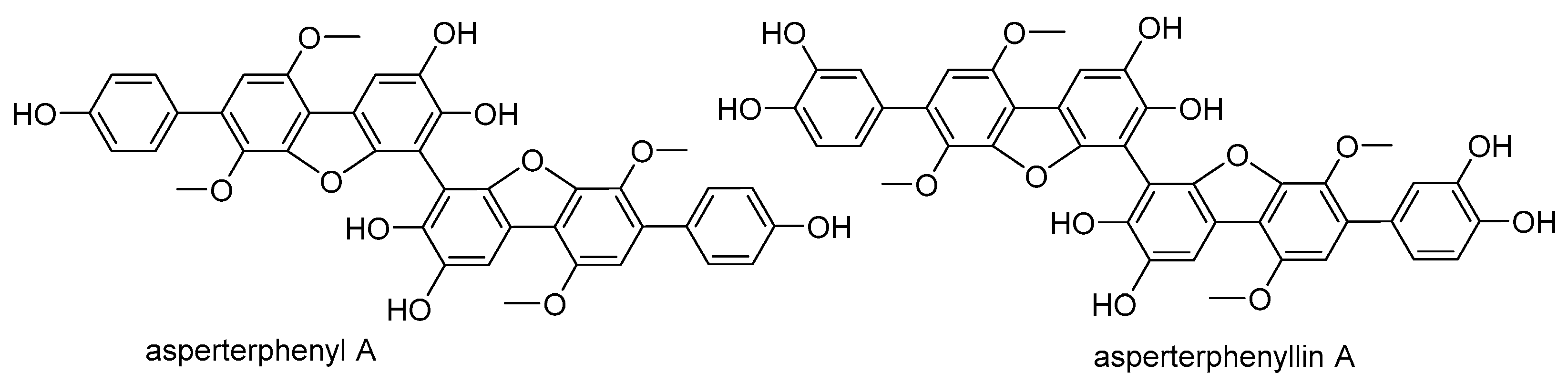
Research into p-terphenyl compounds, known for their antioxidant [1,2], cytotoxic [3,4,5], antibacterial [6], and α-glucosidase inhibitory [7,8,9] and protein tyrosine phosphatase 1B (PTP1B) inhibitory activities [10], dates back to 1877, with over 230 p-terphenyls documented to date [9,10,11,12,13,14]. Among these, only two dimeric p-terphenyl compounds, asperterphenyllin A [10] and asperterphenyl A [13], have been identified from natural sources (Figure 1). Notably, asperterphenyl A demonstrated stronger neuraminidase inhibitory activity and anti-influenza virus A (H1N1) activity compared with its monomer [13]. Additionally, there are limited reports on the synthesis of p-terphenyls [15,16,17,18,19,20], which significantly restricts their structural diversity.
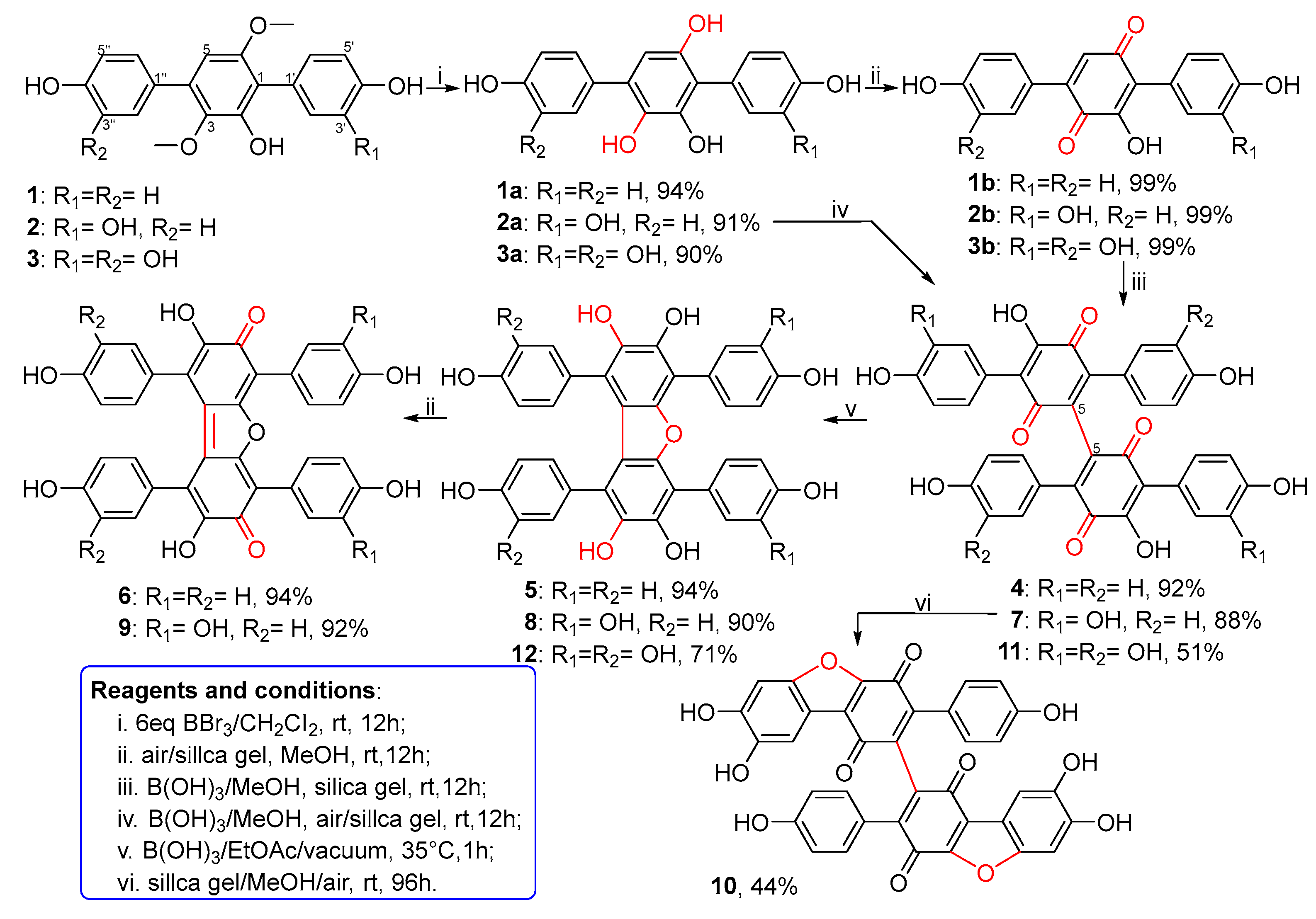
It has been established that antioxidant activity, as well as α-glucosidase and PTP1B inhibitory effects, are closely associated with diabetes. Diabetes has become a major global public health concern [21]. It is classified as a group of metabolic disorders resulting from an absolute or relative deficiency in insulin secretion, with hyperglycemia being the key indicator [22]. Research indicates that an imbalance in the antioxidant system can severely damage islet cells, leading to a reduction in insulin production [23,24,25]. α-Glucosidase inhibitors help reduce the body’s absorption of carbohydrates, while inhibiting PTP1B activity can improve the sensitivity of peripheral tissues to insulin, thus promoting insulin release [25,26,27]. In our previous research, we isolated three lower cytotoxic p-terphenyls, terphenyllin (1), 3′-hydroxyterphyllin (2), and 3′,3″-dihydroxyterphyllin (3) (Scheme 1), from the Aspergillus strain GZWMJZ-055 endophytic with the leaves of Eucommia ulmoides, a plant known for its homologous medicinal and food properties. These compounds demonstrated high content, along with significant antioxidant activity and α-glucosidase inhibition [16]. To continuously search for bioactive compounds derived from microbial metabolites and to enhance the structural diversity of p-terphenyls [25], we explored the C–C coupling reaction of p-terphenyl monomers 13, the primary products of Aspergillus sp. GZWMJZ-055, using B(OH)3/silica gel. Our findings showed that 1,2,4-trihydroxy-p-terphenyls could be effectively transformed to 5,5-dimers (412), with promising yields ranging from 44% to 94% (Scheme 1). In addition, ten additional p-terphenyl derivatives (1322) were also obtained in the yields of 48% to 87% (Scheme 2).

2. Results and Discussion

2.1. Dimerization of p-Terphenyls 13

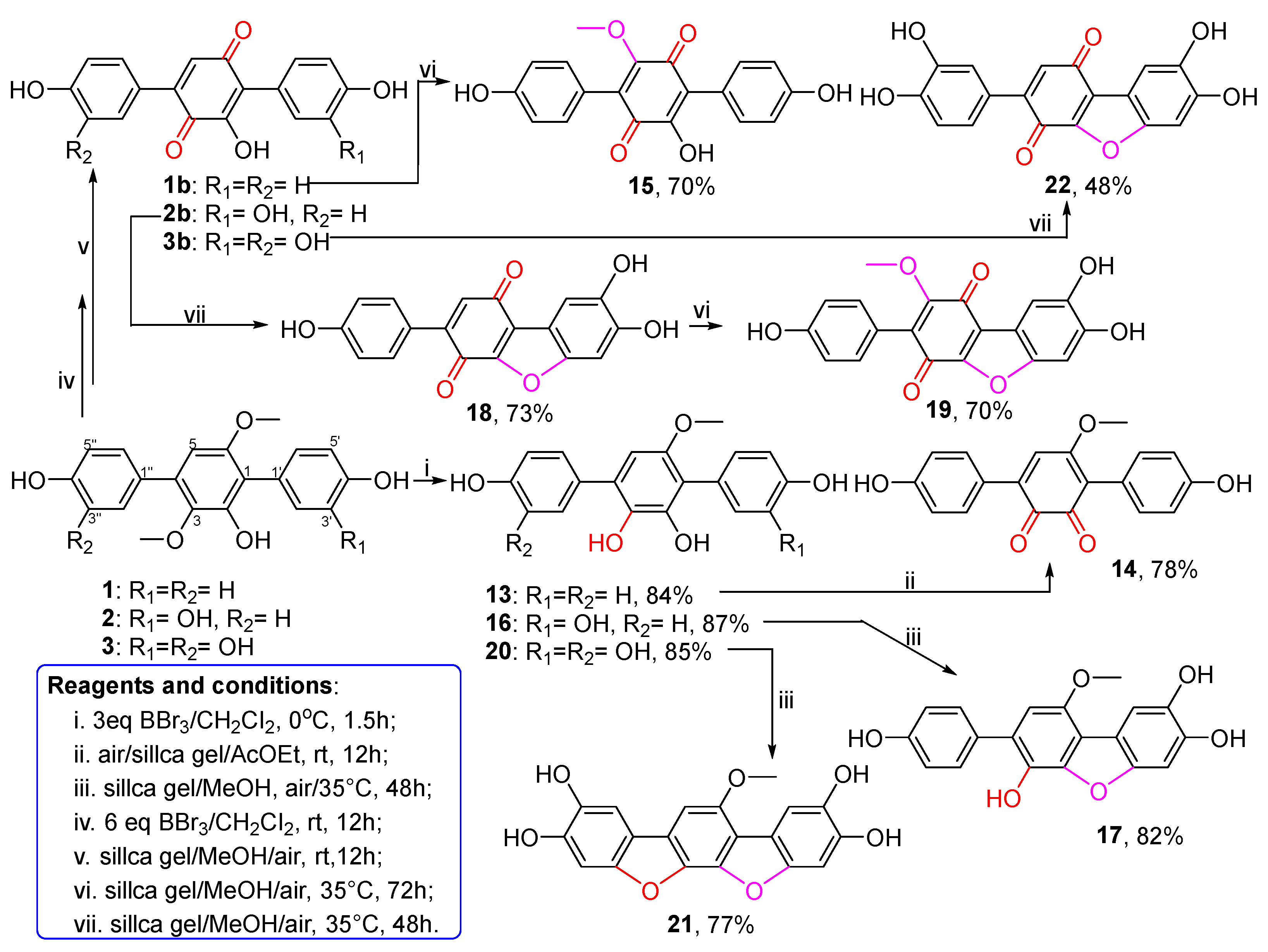
To investigate the dimeric reaction of p-terphenyl monomers, we initially examined the O-demethylation of compound 1. Using three equivalent (eqv) BBr3 and reacting for 1.5 h at 0 °C, we obtained only the 3-O-demethyl product 13. However, by employing six eqv BBr3 and reacting for 12 h at room temperature (rt), both the 3-O-methyl and 6-O-methyl groups were removed, resulting in the formation of 1,2,4-trihydroxy-p-terphenyl (1a) with a satisfactory yield [16]. Under similar conditions, compounds 2 and 3 underwent 3-O-demethyl and 3,6-O-didemethyl reactions smoothly, yielding compounds 2a, 3a, 16, and 20, respectively (Scheme 1 and Scheme 2).
Interestingly, during the isolation of compounds 1a and 13 using a silica gel column, we also obtained a small amount of compounds 1b, 46, 14, and 15 (Scheme 1 and Scheme 2). Considering the oxidative dehydrogenation of silica gel in air, we realized that silica gel may play a crucial role in forming dimers 46 and quinone derivatives 1b, 14, and 15 [16]. Consequently, we carefully studied the reaction of compound 1a in the presence of air and silica gel. When dissolved in methanol (MeOH) with 133 times (w/w) of silica gel, compound 1a was rapidly converted into compound 1b at room temperature.
However, compounds 46 and 15 were not detected until compound 1a was fully transformed into compound 1b at 12 h (Table 1, entry 1), suggesting that the dimeric reaction required quinone substrates. Upon continuous heating to 35 °C in the presence of silica gel and air, compound 1b gradually transformed into compound 15 (Scheme 2). Nonetheless, even when the temperature was raised to 100 °C, the amount of silica gel increased to 500 times (w/w), and the reaction time extended to 7 d, compound 1b did not transform to dimers 46. Upon retrospective analysis, we realized that BBr3 could be hydrolyzed to produce boric acid (B(OH)3) and hydrobromic acid (HBr) during the reaction quenching process by adding water [28], and B(OH)3 might catalyze the C–C dimerization of quinone derivative 1b. Therefore, we investigated the effects of silica gel, B(OH)3, and HBr on the formation of the dimer 4. The results indicated that compound 4 was produced with high yields when B(OH)3 and silica gel were added to the MeOH solution of compound 1b, irrespective of the presence of hydrobromic acid (HBr) (Table 1, entries 2 and 3). However, compound 4 was not formed from 1b if B(OH)3 was used alone (Table 1, entry 4). Furthermore, the use of proton acids such as HBr or p-toluenesulfonic acid (TsOH) did not lead to the dimerization of compound 1b into compound 4, even in the presence of silica gel (Table 1, entries 5 and 6). In contrast, when other Lewis acids, like aluminum trichloride (AlCl3), were utilized alongside silica gel, compound 1b was converted into compound 4, albeit only in trace amounts (Table 1, entry 7). Specifically, compound 1a can be employed directly for dimerization when performed in the presence of B(OH)3 and silica gel under air atmosphere (Table 1, entry 8; Scheme 1). Under the same conditions, intermediates 2a/2b and 3a/3b undergo the dimerization to form compounds 7 and 11, respectively, with high yields (Scheme 1).
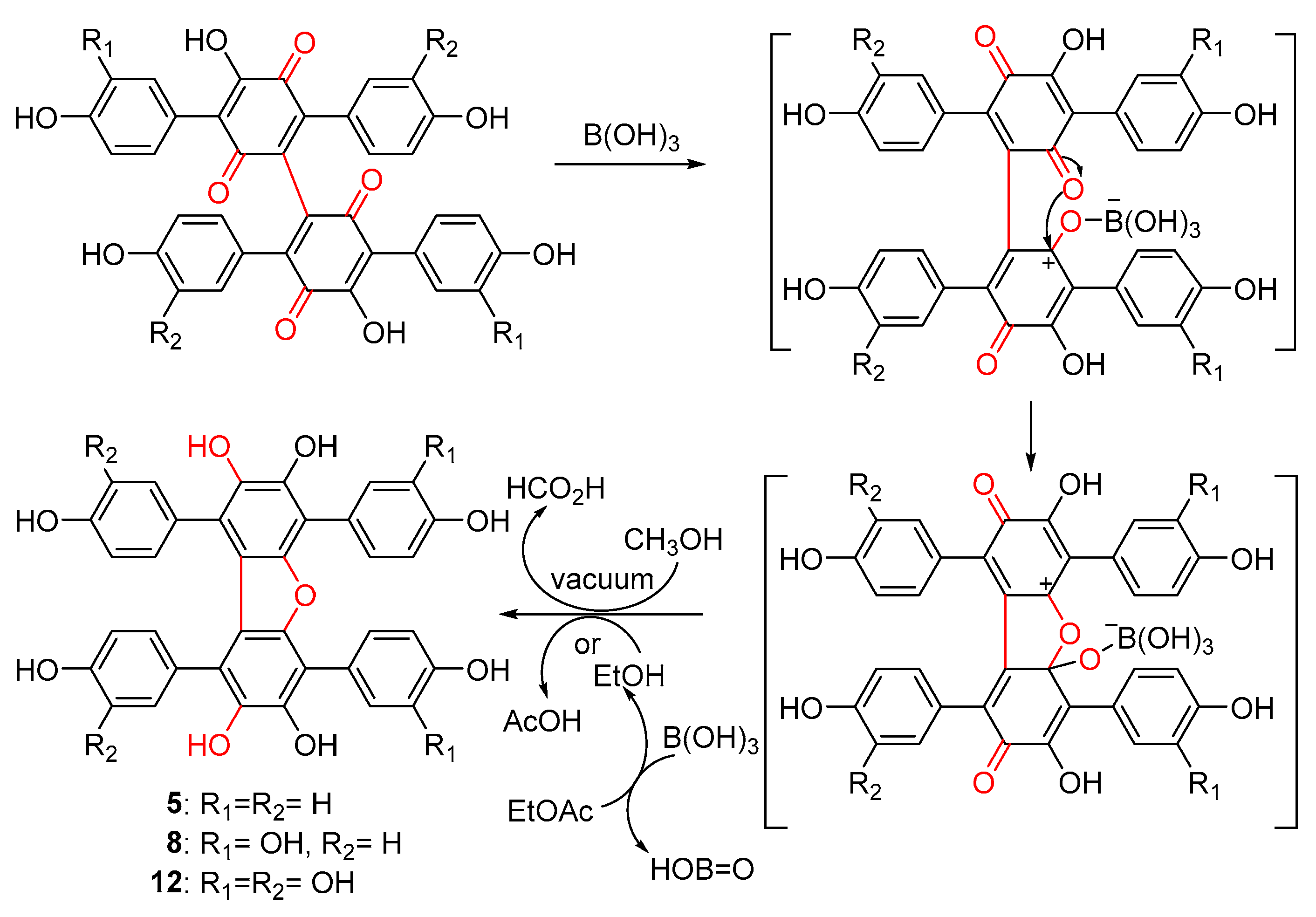
Next, we examined the conversion of compound 4 to compound 5, which features a furan nucleus fused between two p-terphenyls. In our previous work, we used silica gel to synthesize a furan nucleus between two adjacent phenyls of the p-terphenyl, specifically in 3′-hydroxyterphyllin [16]. However, this cyclization reaction did not occur with compound 4 (Table 2, entry 1). In contrast, compounds 2b and 3b successfully underwent cyclization to produce compounds 18 and 22, respectively (Scheme 2), highlighting that the formation of the furan ring necessitates the presence of a hydroxy group. Given the Lewis acid nature of B(OH)3, and its previous use in promoting the formation of 5-hydroxymethylfurfural from glucose [29], we explored the furan-ring-forming reaction of compound 4 using B(OH)3 and silica gel in various solvents. The results demonstrated that compound 5 remained undetectable even with increased amounts of B(OH)3 and silica gel, and a temperature elevation to 60 °C (Table 2, entries 2–4). Surprisingly, compound 5 was detected, albeit in a small amount (4% yield), after the solvent MeOH was removed using a rotary evaporator at 35 °C under reduced pressure (Table 2, entry 5). This suggests that the formation of the furan ring from p-terphenyl quinone (4) necessitates a solvent-free environment. Consequently, we dissolved compound 4 in MeOH with the addition of B(OH)3, followed by vacuum evaporation for 1 h at 35 °C on a rotary evaporator, resulting in the conversion of compound 4 to 5 with an 87% yield (Table 2, entry 6). Using EtOAc as the solvent further increased the yield to 94% (Table 2, entry 7). In contrast, no reaction occurred when CH2Cl2 was used as the solvent (Table 2, entry 8) or when no vacuum was employed using MeOH (Table 2, entry 9).
This transformation could be attributed to the conversion of p-quinone (4) into the key furan-fused tetrahydroxyborate intermediate (4a) with the use of B(OH)3, followed by intramolecular reduction to hydroquinone (5) facilitated by MeOH or EtOAc under reduced pressure (Scheme 3). These optimal reaction conditions are also effective for compounds 7 and 11, resulting in the high-yield production of compounds 8 and 12, respectively (Scheme 1).
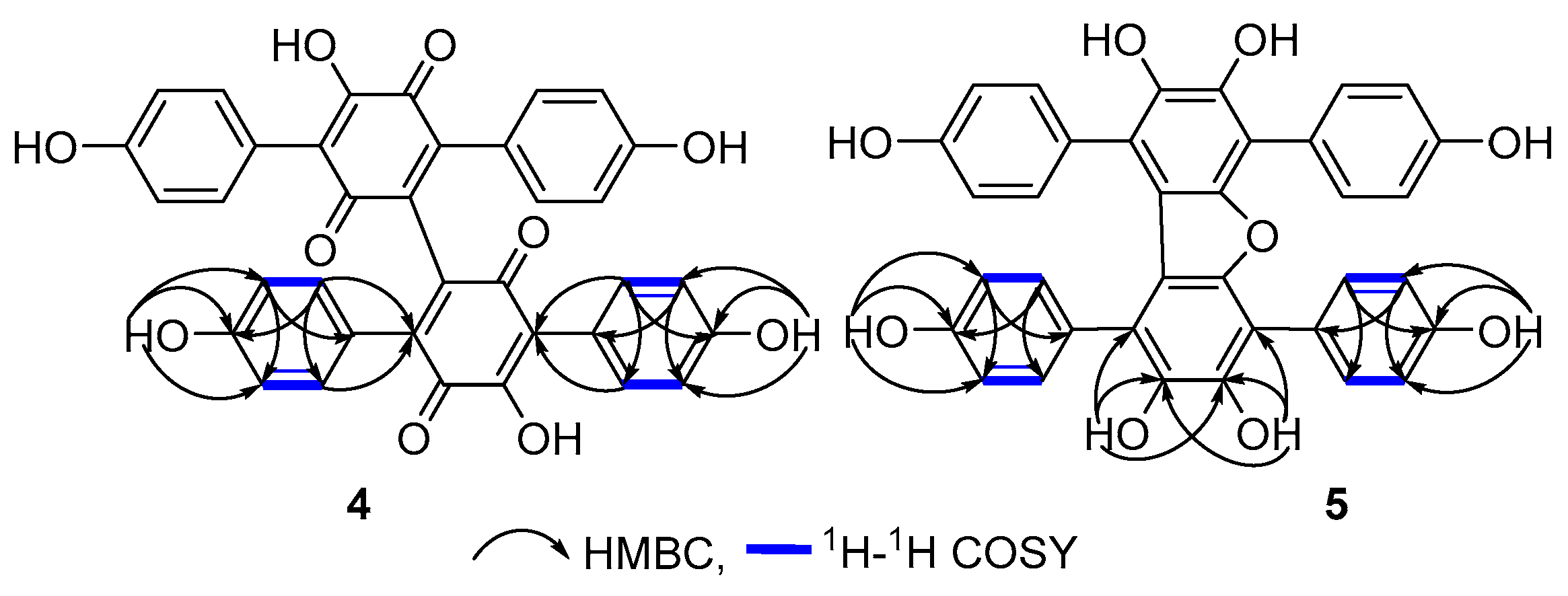
Compound 4 was determined to have a molecular formula of C36H22O10, based on its HRESIMS data at m/z 613.1128 [M − H] (calcd. 613.1140 for C36H21O10). Notably, the 13C NMR spectrum revealed only 18 carbon signals, suggesting that it is a symmetrical dimer. Additionally, the IR spectrum showed characteristic C=O stretching peaks of p-benzoquinone at νmax 1654 and 1617 cm−1. The NMR data were highly similar to those of compound 1b [16], with the main differences being the absence of the aromatic methine signals at δH/C 6.73 (s)/131.2 (CH-5) and the presence of a quaternary carbon signal at δC 139.6 (C-5) (Table 3). Additionally, distinct shifts were observed in the signals for the moderate phenyl ring and the adjacent carbons (C-1′ and C-1″). These findings suggest that compound 4 is the dimer of compound 1b, linked by a single bond between two C-5 positions. This structure was further confirmed through the interpretation of 2D NMR spectra, particularly the COSY correlations between H-2′ and H-3′ as well as H-2″ and H-3″, along with the HMBC connections of H-2′/6′ to C-1′ and H-2″/6″ to C-1″ (Figure 2).
The molecular formula of compound 5 was determined to be C36H24O9 from its HRESIMS data at m/z 618.1745 [M + NH4]+ (calcd. 618.1759 for C36H28O9+), indicating that compound 5 has one less oxygen and two more hydrogens compared with compound 4. Notably, the IR spectrum lacked the characteristic C=O stretching peaks typically observed for p-benzoquinone. The 13C NMR spectrum of 5 also displayed 18 signals; however, the signals corresponding to two carbonyl carbons were absent. Moreover, the NMR data for compound 5 were similar to compound 1a [16], with the primary distinction being the absence of an exchangeable -OH signal and the presence of a quaternary carbon signal at δC 115.1 (C-5), which replaced the aromatic methine signals observed at δH/C 6.28 (s)/106.6 (CH-5) (Table 3). Additionally, significant shifts in the carbon signals for the moderate phenyl ring were noted. These findings suggest that compound 5 is a dimer of compound 1a, connected by a furan nucleus between two C-5 positions and two 6-OH positions. This structure was confirmed by COSY and HMBC correlations that are nearly identical to those observed for compound 4 (Figure 2, Table 3).
Finally, when compounds 5, 8, and 12 were subjected to oxidation using air and silica gel, compounds 5 and 8 were successfully converted to compounds 6 and 9, respectively (Scheme 1). However, the reaction involving compound 12 proved to be complex, resulting in no isolated products. Additionally, compound 7 underwent complete oxidation to yield the dimeric p-terphenyl derivative (10), which contains a furan nucleus, attributed to the presence of the p-hydroxy group (3′-OH) under air and silica gel conditions. Similarly, the reaction involving compound 11 also exhibited complexity, with no products isolated. Notably, all the p-terphenyl dimers 412 could be directly synthesized from compounds 13 without the need to purify all the intermediate products, achieving moderate to high yields.
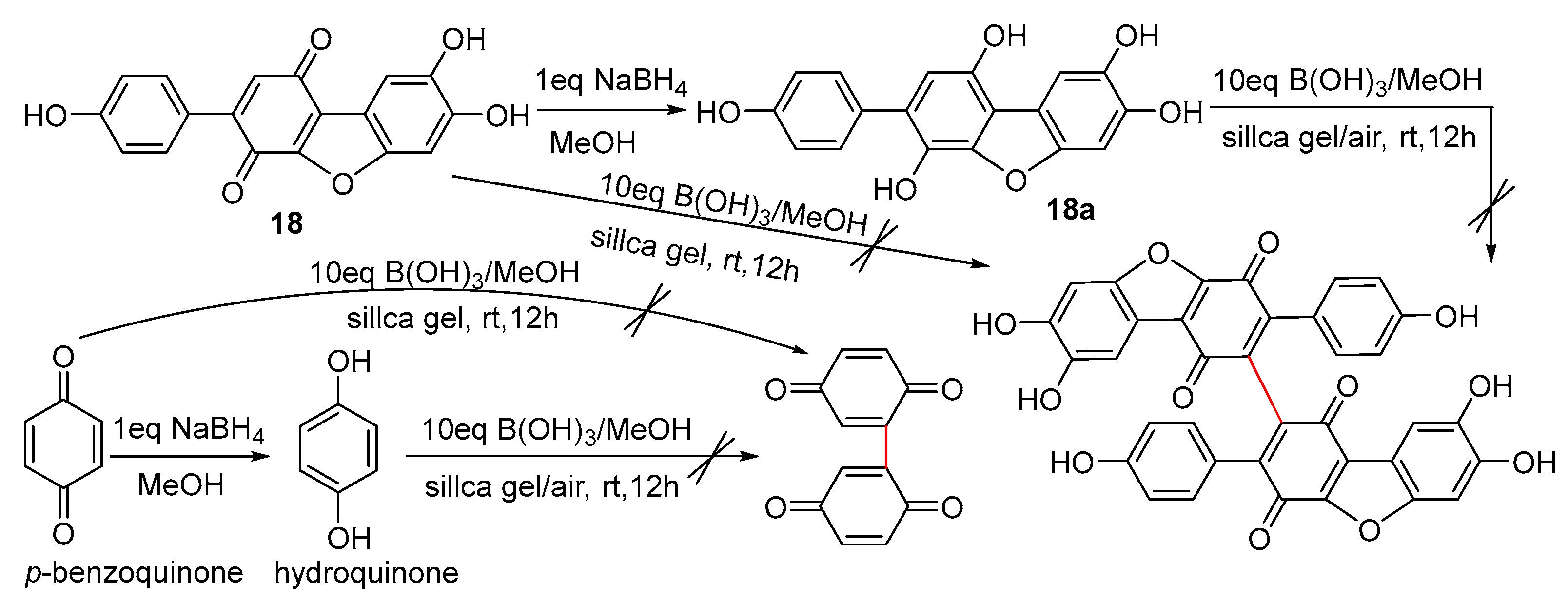
In the exploration of the dimerization of compounds 13, we also obtained some new derivatives of the monomers. To evaluate the bioactivity, we also isolated and identified these compounds, 1321 (Scheme 2). However, compounds 13, along with 13, 14, 1618, 20, and 21, could not be directly transformed into the corresponding dimers under the conditions of air, silica gel, and B(OH)3 (Scheme 4). This indicates that benzene-1,2,4-triol serves as the fundamental framework for the C–C coupling reaction mediated by B(OH)3 and silica gel (Scheme 1).
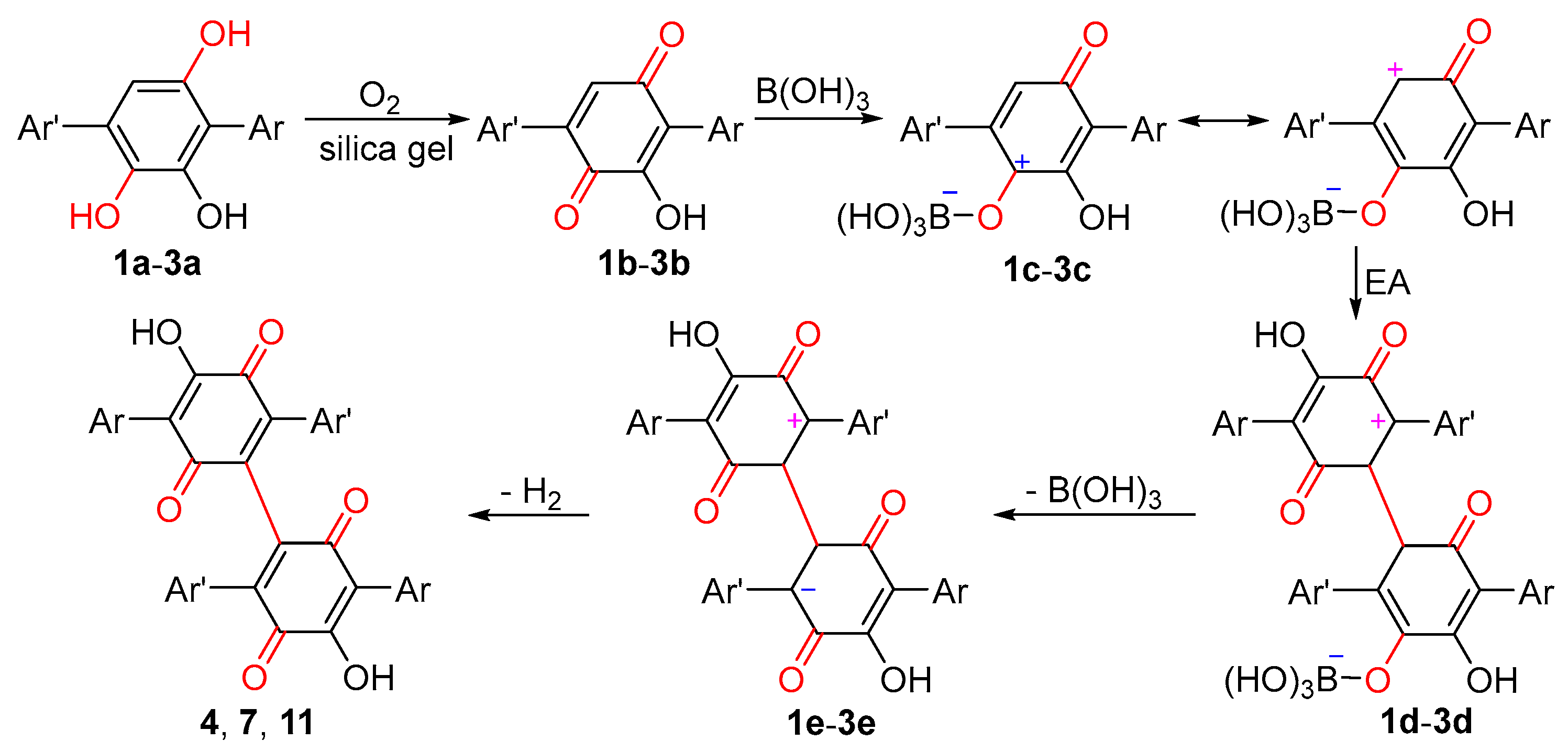
We propose that benzene-1,2,4-triol compounds (1a3a) undergo oxidation to yield 2-hyderoxy-1,4-benthoquinone compounds (1b3b) in the presence of air and silica gel. These p-quinones (1b3b) then interact with B(OH)3 to form complex boric acid intermediates (1c3c). This complex subsequently undergoes electrophilic addition (EA) with another molecule of p-quinones (1b3b), resulting in the formation of boric acid complex salt intermediates (1d3d). Following this, the elimination of B(OH)3 occurs, leading to the generation of intramolecular salt intermediates (1e3e). The p-terphenyl dimers 4, 7, and 11 are then obtained by the elimination of one molecule of hydrogen from intermediates (1e3e). We speculated that silica gel acts as a carrier by adsorbing two molecules of p-terphenyl via hydrogen bonding, thereby bringing the C-5 positions into close spatial proximity, which facilitates C–C coupling (Scheme 5).
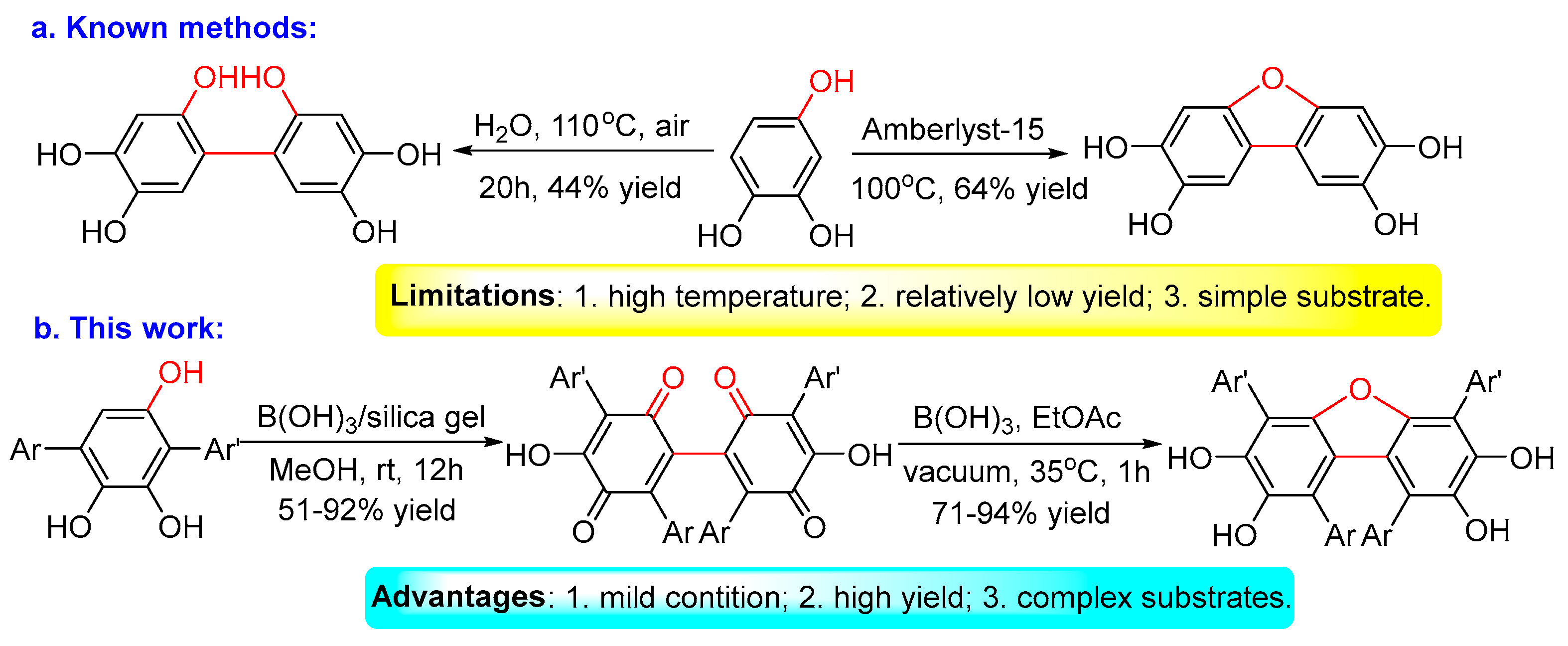
Literature reviews reveal only two reports on the C–C coupling between two molecules of benzene-1,2,4-triol, which involves air-oxidized coupling [30] and acid-catalyzed dehydration [31]. to form a furan ring, achieving yields of 44–64%. However, these methods require high temperatures, specifically 100 or 110 °C (Scheme 6). In response to these limitations, we have developed a green and economical synthetic route for producing p-terphenyl dimers. This method involves C–C coupling, followed by the formation of a fused furan ring from p-terphenyl dimers derived from monomers that possess a benzene-1,2,4-triol structure, achieving yields ranging from moderate to high (51–94%).
The B(OH)3 and silica gel catalyzed C–C coupling reaction of 1,2,4-trihydroxy-p-terphenyls offers several advantages. It is environmentally friendly, as it avoids the use of heavy metal catalysts, thereby reducing environmental and health hazards. The process is cost-effective due to the use of readily available and inexpensive materials like B(OH)3 and silica gel. Additionally, it is energy efficient, as the reaction typically proceeds under milder conditions compared with traditional methods that require high temperatures or metal catalysis. The method also achieves moderate to high yields, enhancing its efficiency and practicality for potential industrial applications. Furthermore, the simplicity and accessibility of the reaction setup make it suitable for laboratory-scale synthesis without the need for complex equipment or procedures.

2.2. Bioactivities of Synthesized p-Terphenyls

The new phenolic compounds 422 were evaluated for their antioxidant activity using the DPPH radical scavenging assay [16] and the oxygen radical absorbance capacity (ORAC) method [16]. The results indicated that compounds 612, 16, 20, and 22 exhibited DPPH radical scavenging activity that was either stronger than or comparable to the positive control (vitamin C, Vic), with IC50 values ranging from 0.14 to 4.61 μM. In contrast, compounds 17 and 21, which contain a 2,6′-fused furan ring and 2,6′:3,6″-difused furan rings, respectively, displayed significantly reduced DPPH radical scavenging activity (Table 4). Furthermore, compounds 422 demonstrated significant antioxidant capacity, as evidenced by their oxygen radical absorbance capacity (ORAC) values, which ranged from 0.91 to 9.23 μM µmol TE/µmol (Table 4). This underscores their potential application in food preservation.
Compounds 422 were also evaluated for their potential in treating diabetes by assessing their inhibitory activities against α-glucosidase [16] and PTP1B (protein tyrosine phosphatase 1B) [25]. The results revealed that compounds 422 showed significant α-glucosidase inhibitory activity, with IC50 values ranging from 0.37 to 17.9 μM, surpassing the efficacy of the positive control, acarbose (AC) (Table 4). Notably, the dimeric p-terphenyls 6, 10, and 12 displayed stronger α-glucosidase inhibitory activity than monomers, with IC50 values below 1 μM. Among these, the furan-fused dimer 10 demonstrated the most potent α-glucosidase inhibition, achieving an IC50 of 0.37 μM. In addition, compounds 614, 1618, 21, and 22 exhibited greater PTP1B inhibitory activity compared with the positive control, oleanolic acid (OA), with IC50 values ranging from 0.30 to 9.17 μM. In contrast, compounds 4 and 15, which have fewer than four hydroxy substitutions on the monomer units, showed poor activity against PTP1B (Table 4). This suggests that the presence of four or more hydroxy groups at the 3-, 3′-, 4′-, 3″-, and 4″-positions significantly enhances the PTP1B inhibitory activity of p-terphenyl derivatives. Unlike their α-glucosidase inhibitory profiles, the monomeric p-terphenyls showed stronger PTP1B inhibitory effects compared with the dimeric counterparts. Furthermore, comparison of compounds 18 (IC50 0.47 μM) and 19 (12.4 μM) revealed that the 5-methoxy substitution significantly diminished the PTP1B inhibitory activity of p-terphenyl-3,6-dione derivatives. This reduction is likely due to the ortho-methoxy group hindering the formation of hydrogen bonds between the carbonyl oxygen and the PTP1B protein. Notably, compounds 13, 14, 18, and 22, which feature structural motifs such as 2,3-dihydroxy, 2,3-benzoquinone, or furan-fused 1,4-benzoquinone, exhibit the strongest activity against PTP1B, with IC50 values below 1 μM. These findings highlight their promise as potential leads or dietary supplements for the treatment and prevention of diabetes.

3. Materials and Methods

3.1. General Experimental Procedures

LC-MS data were acquired using a SHIMADZUR-R-smz-O1-LCMS-2020 HPLC/MS system (Shimadzu Corporation, Takamatsu, Japan) equipped with a reversed-phase C18 column (5 μm, 4.6 × 150 mm) at a flow rate of 1.0 mL/min. For detailed structural analysis, a Varian INOVA-400 MHz (Varian Associates, Palo Alto, CA, USA) and a Bruker 600 MHz superconducting nuclear magnetic resonance (NMR) spectrometer (Bruker, Fällanden, Switzerland) were employed. Infrared (IR) spectra were recorded on a Nicolet Nexus 470 spectrophotometer (Thermo Fisher Scientific, Waltham, MA, USA) using KBr discs. High-resolution electrospray ionization mass spectrometry (HRESIMS) was performed with a Q-TOF Ultima Global GAA076 LC mass spectrometer (Waters Corporation, Milford, MA, USA). Semi-preparative HPLC was conducted using an ODS column (YMC-pack ODS-A (YMC Corporation, Kyoto, Japan,), 10 × 250 mm, 5 μm, 4.0 mL/min). Thin-layer chromatography (TLC) and column chromatography (CC) were carried out on plates pre-coated with silica gel GF254 (10–40 μm) and on silica gel (200–300 mesh, Qingdao Marine Chemical Factory, Qingdao, China), as well as on Sephadex LH-20 (Amersham Biosciences, Uppsala, Sweden). Flash column chromatography (FCC) was executed using silica gel H from Qingdao Marine Chemical Factory.

3.2. Chemical Synthesis Procedures

3.2.1. Synthesis of Compounds 1a3a and 1b3b

Compounds 1a3a and 1b3b were synthesized according to our previous report [16].

3.2.2. Synthesis of the Dimeric p-Terphenyls 4, 7, and 11

Compound 1 (1 g, 2.96 mmol) was dissolved in 75 mL of CH2Cl2, and BBr3 (26.3 mL, 17.76 mmol) was added to the solution. The mixture was stirred at room temperature for 12 h, and then 3 L of EtOAc was added. The solution obtained was washed three times with H2O (300 mL each), and the organic phase was then dried over anhydrous Na2SO4 and concentrated under reduced pressure. The resulting residue was dissolved in 330 mL of MeOH, and B(OH)3 (549 mg, 8.88 mmol), along with 133 g of 200–300 mesh silica gel, were added. The mixture was stirred at rt for another 12 h, after which the solvent was evaporated. The residue was purified by flash column chromatography (FCC) using a 1:1 (v/v) mixture of EtOAc-CH2Cl2 as the eluent, yielding compound 4 as a dark red solid with an Rf value of 0.1 and a yield of 836 mg (92%). Using the same procedures, compound 7 (Rf 0.1, 802 mg, 88% yield) was synthesized starting from compound 2 (1 g, 2.82 mmol) with the addition of BBr3 (25.1 mL, 16.92 mmol), B(OH)3 (1.22 g, 19.74 mmol), and silica gel (133 g). The product was purified by FCC with EtOAc-CH2Cl2 (v/v 2:1) as the eluent. In a similar manner, compound 11 (Rf 0.1, 467 mg, 51% yield) was synthesized from compound 3 (1 g, 2.7 mmol) using BBr3 (24 mL, 16.2 mmol), B(OH)3 (1.67 g, 27 mmol), and silica gel (133 g), followed by purification via FCC with EtOAc-CH2Cl2 (v/v 2:1) as the eluent.

3.2.3. Synthesis of the Dimeric p-Terphenyls 5, 8 and 12

A 20 mg (0.033 mmol) sample of pure or simply-purified compound 4 by FCC, obtained from the above synthesis, was dissolved in EtOAc (30 mL), followed by the addition of B(OH)3 (6.1 mg, 0.099 mmol). The reaction mixture was then rotated on a rotary evaporator at 35 °C for 1 h under vacuum. Subsequently, the reaction product was extracted with EtOAc (200 mL), and the organic layer was washed three times with H2O (20 mL each). The organic layer was then dried over anhydrous Na2SO4, and the solvent was removed under reduced pressure. The resulting residue was purified by semi-preparative HPLC using a YMC-pack ODS-A column (10 × 250 mm). The column was eluted with 50% MeOH/H2O containing 0.15% trifluoroacetic acid (TFA) at a flow rate of 4.0 mL/min, yielding compound 5 with a retention time (tR) of 10.3 min and a yield of 18.6 mg (94% yield). Using the same procedure, compounds 8 (tR 9.7 min, 8.5 mg, 90% yield) and 12 (tR 10.1 min, 7.1 mg, 71% yield) were respectively synthesized from compounds 7 (9.7 mg, 0.015 mmol) with B(OH)3 (6.5 mg, 0.105 mmol) and 11 (10.2 mg, 0.015 mmol) with B(OH)3 (9.3 mg, 0.15 mmol). Both products were purified by HPLC, which was eluted with 45% MeOH/H2O containing 0.15% TFA for 8 and 40% MeOH/H2O containing 0.15% TFA for 12.

3.2.4. Synthesis of the Dimeric p-Terphenyls 6 and 9

Compound 5 (10 mg, 0.0167 mmol) was dissolved in MeOH (4 mL), and 1.3 g of silica gel (200–300 mesh) was added to the mixture. The reaction was allowed to proceed at room temperature for 12 h. Following this period, the MeOH was removed under vacuum, and the residue was purified by flash column chromatography (FCC), eluting with EtOAc-CH2Cl2 (v/v 1:5), which resulted in the isolation of compound 6 as a brown solid (Rf 0.2, 9.4 mg, 94% yield). In a similar manner, compound 9 (Rf 0.1, 4.6 mg, 92% yield) was synthesized by the reaction of compound 8 (5 mg, 0.0079 mmol) with 0.67 g of silica gel in MeOH, following the same procedures.

3.2.5. Synthesis of the Dimeric p-Terphenyl 10

Compound 7 (9.7 mg, 0.015 mmol) was dissolved in MeOH (4 mL), and 1.3 g of silica gel (200–300 mesh) was added to the solution. The mixture was stirred at room temperature for 96 h. After this period, the solvent was evaporated, and the resulting residue was purified using FCC, eluting with EtOAc-CH2Cl2 (v/v 1:5). This process yielded compound 10 (Rf 0.1) as a dark red solid, with a final weight of 4.2 mg and a yield of 44%.
The physicochemical properties of the dimeric p-terphenyls 412, along with the synthesis procedures for the monomeric p-terphenyls 1322, are detailed in the Supplementary Materials file. Additionally, this section includes the physicochemical properties of the monomeric p-terphenyls 1322, the MS spectra of compounds 1a/b–3a/b, the MS and NMR spectra of compounds 422, as well as the HPLC profile of compound 22 (Supplementary Figures S1–S70).

3.2.6. Bioactivity Assays

According to our previous report on the activity study of p-terphenyls [16,25], compounds 422 were assessed for their antioxidant activities through the measurement of DPPH radical scavenging activity and oxygen radical absorbance capacity (ORAC) [16]. Additionally, their antidiabetic effects in vitro were evaluated by determining the inhibitory activities against PTP1B [25] and α-glucosidase from Saccharomyces cerevisiae [16], following previously established methods. Detailed protocols for these assays can be found in the Supplementary Materials file.

4. Conclusions

In summary, we have developed a mild, cost-effective, and environmentally friendly method for the gram-scale synthesis of p-terphenyl dimers. This procedure utilizes only B(OH)3, silica gel, and air, yet it yields satisfactory results for dimeric p-terphenyls 412. Additionally, we synthesized ten new p-terphenyl monomers (1322). The innovative application of rotary evaporation and heating offers a novel approach for solvent-free reactions in the synthesis of furan-fused p-terphenyl dimers 5, 8, and 12. Several of the newly synthesized compounds exhibited significant DPPH radical scavenging effects and demonstrated inhibitory activities against α-glucosidase and PTP1B. These findings highlight their potential as promising leads or dietary supplements for the treatment and prevention of diabetes, as well as possible application as oxidative agents in food preservation. However, the paper lacks sufficient experimental evidence regarding the proposed C–C coupling reaction mechanism, which remains an important aspect to be addressed in our future research.

Supplementary Materials

The following supporting information can be downloaded at: https://www.mdpi.com/article/10.3390/ijms27062726/s1. Refs. [16,32,33,34,35,36] are cited in Supplementary Materials file.

Author Contributions

Conceptualization, P.F., L.W. and W.Z.; Methodology, Y.W., L.W. and W.Z.; Validation, L.C., D.W. and L.W.; Formal analysis, Y.X. and P.F.; Investigation, Y.W.; Resources, Y.X. and L.W.; Data curation, Y.W., Y.X., L.C. and D.W.; Writing—original draft, Y.W.; Writing—review & editing, W.Z.; Supervision, W.Z.; Project administration, W.Z.; Funding acquisition, W.Z. All authors have read and agreed to the published version of the manuscript.

Funding

This work was financially supported by the National Key Research and Development Program of China (No. 2024YFC2815900) and the National Natural Science Foundation of China (Nos. 82473838, U1906213 and 30670219).

Institutional Review Board Statement

Not applicable.

Informed Consent Statement

Not applicable.

Data Availability Statement

The original contributions presented in this study are included in the article/Supplementary Materials. Further inquiries can be directed to the corresponding authors.

Conflicts of Interest

The authors declare no conflict of interest.

Abbreviations

CH2Cl2Dichloromethane
MeOHMethanol
BBr3Boron Tribromide
B(OH)3Boric acid
NaBH4Sodium Borohydride
EtOAcEthyl Acetate
Na2SO4Sodium Sulfate
DPPH1,1-Diphenyl-2-picryl hydrazyl
LC-MSLiquid Chromatography Mass Spectrometry
HPLCHigh-Performance Liquid Chromatography
HRESI-MSHigh-resolution electrospray ionization mass spectroscopy
rtRoom temperature
2D NMRTwo-Dimensional Nuclear Magnetic Resonance
HMBCHeteronuclear Multiple Bond
COSYCorrelation Spectroscopy
m/zMass to Charge Ratio
RfRetention Factor
IC50Half Maximal Inhibitory Concentration
μMMicromoles per liter

References

  1. Liu, J.K.; Hu, L.; Dong, Z.J.; Hu, Q. DPPH Radical Scavenging Activity of Ten Natural p-Terphenyl Derivatives Obtained from Three Edible Mushrooms Indigenous to China. Chem. Biol. 2004, 1, 601–605. [Google Scholar] [CrossRef]
  2. Lee, I.K.; Yun, B.S.; Cho, S.M.; Kim, W.G.; Kim, J.P.; Ryoo, I.J.; Koshino, H.; Yoo, I.D. Betulinans A and B, Two Benzoquinone Compounds from Lenzites betulina. J. Nat. Prod. 1996, 59, 1090–1092. [Google Scholar] [CrossRef] [PubMed]
  3. Norikura, T.; Fujiwara, K.; Yanai, T.; Sano, Y.; Sato, T.; Tsunoda, T.; Kushibe, K.; Todate, A.; Morinaga, Y.; Iwai, K. p-Terphenyl Derivatives from the Mushroom Thelephora aurantiotincta Suppress the Proliferation of Human Hepatocellular Carcinoma Cells via Iron Chelation. J. Agric. Food Chem. 2013, 61, 1258–1264. [Google Scholar] [CrossRef]
  4. Cali, C.S.V.; Tringali, C. Polyhydroxy-p-terphenyls and Related p-Terphenylquinones from Fungi: Overview and Biological Properties. Stud. Nat. Prod. Chem. 2003, 29, 263–307. [Google Scholar] [CrossRef]
  5. Liu, S.S.; Zhao, B.B.; Lu, C.H.; Huang, J.J.; Shen, Y.M. Two New p-Terphenyl Derivatives from the Marine Fungal Strain Aspergillus sp. AF119. Nat. Prod. Commun. 2012, 7, 1057–1062. [Google Scholar] [CrossRef]
  6. Li, W.; Gao, W.; Zhang, M.; Li, Y.L.; Li, L.; Li, X.B.; Chang, W.Q.; Zhao, Z.T.; Lou, H.X. p-Terphenyl Derivatives from the Endolichenic Fungus Floricola striata. J. Nat. Prod. 2016, 79, 2188–2194. [Google Scholar] [CrossRef] [PubMed]
  7. Wang, S.M.; Han, J.J.; Ma, K.; Jin, T.; Bao, L.; Pei, Y.F.; Liu, H.W. New α-Glucosidase Inhibitors with p-Terphenyl Skeleton from the Mushroom Hydnellum concrescens. Fitoterapia 2014, 98, 149–155. [Google Scholar] [CrossRef]
  8. Ma, K.; Han, J.; Bao, L.; Wei, T.; Liu, H. Two Sarcoviolins with Antioxidative and α-Glucosidase Inhibitory Activity from the Edible Mushroom Sarcodon leucopus Collected in Tibet. J. Nat. Prod. 2014, 77, 942–947. [Google Scholar] [CrossRef]
  9. Li, W.; Li, X.B.; Lou, H.X. Structural and Biological Diversity of Natural p-Terphenyls. J. Asian Nat. Prod. Res. 2017, 20, 1–13. [Google Scholar] [CrossRef]
  10. Zhou, G.; Zhang, X.; Shah, M.; Che, Q.; Zhang, G.; Gu, Q.; Zhu, T.; Li, D. Polyhydroxy p-Terphenyls from a Mangrove Endophytic Fungus Aspergillus candidus LDJ-5. Mar. Drugs 2021, 19, 82. [Google Scholar] [CrossRef]
  11. Wang, D.; Qu, P.; Zhou, J.; Wang, Y.; Wang, L.; Zhu, W. p-Terphenyl Alcohols from a Marine Sponge-derived Fungus, Aspergillus Candidus OUCMDZ-1051. Mar. Life Sci. Technol. 2020, 2, 262–267. [Google Scholar] [CrossRef]
  12. Xu, K.; Gao, Y.; Li, Y.L.; Xie, F.; Zhao, Z.T.; Lou, H.X. Cytotoxic p-Terphenyls from the Endolichenic Fungus Floricola striata. J. Nat. Prod. 2018, 81, 2041–2049. [Google Scholar] [CrossRef]
  13. Qi, X.; Chen, W.; Chen, L.; Hu, Y.; Wang, X.; Han, W.; Xiao, J.; Pang, X.; Yao, X.; Liu, S.; et al. Structurally Various p-Terphenyls with Neuraminidase Inhibitory from a Sponge Derived Fungus Aspergillus sp. SCSIO41315. Bioorg. Chem. 2023, 132, 106357. [Google Scholar] [CrossRef] [PubMed]
  14. Wang, D.; Wang, Y.; Ouyang, Y.; Fu, P.; Zhu, W. Cytotoxic p-Terphenyls from a Marine-derived Nocardiopsis Species. J. Nat. Prod. 2019, 82, 3504–3508. [Google Scholar] [CrossRef]
  15. Zhang, X.Q.; Mou, X.F.; Mao, N.; Hao, J.J.; Liu, M.; Zheng, J.Y.; Wang, C.Y.; Gu, Y.C.; Shao, C.L. Design, Semisynthesis, α-Glucosidase Inhibitory, Cytotoxic, and Antibacterial Activities of p-Terphenyl Derivatives. Eur. J. Med. Chem. 2018, 146, 232–244. [Google Scholar] [CrossRef] [PubMed]
  16. Xu, Y.; Wang, Y.; Wu, D.; He, W.; Wang, L.; Zhu, W. p-Terphenyls from Aspergillus sp. GZWMJZ-055: Identification, Derivation, Antioxidant and α-Glycosidase Inhibitory Activities. Front. Microbiol. 2021, 12, 654963. [Google Scholar] [CrossRef] [PubMed]
  17. Qiu, D.; Meng, H.; Jin, L.; Wang, S.; Tang, S.; Wang, X.; Mo, F.; Zhang, Y.; Wang, J. Synthesis of Aryl Trimethylstannanes from Aryl Amines: A Sandmeyer-type Stannylation Reaction. Angew. Chem. Int. Ed. 2013, 125, 11581–11584. [Google Scholar] [CrossRef]
  18. Peters, M.; Trobe, M.; Tan, H.; Kleineweischede, R.; Breinbauer, R. A Modular Synthesis of Teraryl-based α-Helix Mimetics, Part 1: Synthesis of Core Fragments with Two Electronically Differentiated Leaving Groups. Chem.-Eur. J. 2013, 19, 2442–2449. [Google Scholar] [CrossRef]
  19. Jin, Z.; Li, Y.J.; Ma, Y.Q.; Qiu, L.L.; Fang, J.X. Biphenyl-based Diaminophosphine Oxides as Air-Stable Preligands for the Nickel-catalyzed Kumada-tamao-corriu Coupling of Deactivated Aryl Chlorides, Fuorides, and Tosylates. Chem. Eur. J. 2012, 18, 446–450. [Google Scholar] [CrossRef]
  20. Borhade, S.R.; Waghmode, S.B. Studies on Pd/NiFe2O4 Catalyzed Ligand-free Suzuki Reaction in Aqueous Phase: Synthesis of Biaryls, Terphenyls and Polyaryls. Beilstein J. Org. Chem. 2011, 7, 310–319. [Google Scholar] [CrossRef]
  21. Kanyin, L.O. Global, Regional, and National Burden of Diabetes from 1990 to 2021, with Projections of Prevalence to 2050: A Systematic Analysis for the Global Burden of Disease Study 2021. Lancet 2023, 402, 203–234, Erratum in Lancet 2023, 402, 1132. https://doi.org/10.1016/S0140-6736(23)02044-5; Erratum in Lancet 2025, 405, 202. https://doi.org/10.1016/S0140-6736(25)00053-4. [Google Scholar] [CrossRef]
  22. Reddy, V.P.; Zhu, X.; Perry, G.; Smith, M.A. Oxidative Stress in Diabetes and Alzheimer’s Disease. J. Alzheimers Dis. 2009, 16, 763–774. [Google Scholar] [CrossRef] [PubMed]
  23. Nishikawa, T.; Araki, E. Impact of Mitochondrial Ros Production in the Pathogenesis of Diabetes Mellitus and Its Complications. Antioxid. Redox Signal. 2007, 9, 343–353. [Google Scholar] [CrossRef] [PubMed]
  24. Drews, G.; Krippeit-Drews, P.; Dufer, M. Oxidative Stress and Beta-cell Dysfunction. Pflug. Arch.-Eur. J. Physiol. 2010, 460, 703–718. [Google Scholar] [CrossRef] [PubMed]
  25. Wang, Y.; Xu, Y.; Wu, D.; Wang, D.; Fu, P.; Zhu, W.; Wang, L. Semisynthesis of Nocarterphenyl A and Its Analogues. J. Nat. Prod. 2025, 88, 133–140. [Google Scholar] [CrossRef]
  26. He, R.J.; Yu, Z.H.; Zhang, R.Y.; Zhang, Z.Y. Protein Tyrosine Phosphatases as Potential Therapeutic Targets. Acta Pharmacol. Sin. 2014, 35, 1227–1246. [Google Scholar] [CrossRef]
  27. Lessard, L.; Stuible, M.; Tremblay, M.L. The Two Faces of PTP1B in Cancer. Biochim. Biophys. Acta 2010, 1804, 613–619. [Google Scholar] [CrossRef]
  28. Ma, Z.R.; Zeng, Z.Z. Chemical Determination of Bromine and Boron in Boron Tribromide. Gansu J. Sci. 2008, 20, 89–90. [Google Scholar] [CrossRef]
  29. Matsumiya, H.; Hara, T. Conversion of Glucose into 5-Hydroxymethylfurfural with Boric Acid in Molten Mixtures of Choline Salts and Carboxylic Acids. Biomass Bioenerg. 2015, 72, 227–232. [Google Scholar] [CrossRef]
  30. Randolph, C.; Lahive, C.W.; Sami, S.; Havenith, R.W.A.; Heeres, H.J.; Deuss, P.J. Biobased Chemicals: 1,2,4-Benzenetriol, Selective Deuteration and Dimerization to Bifunctional Aromatic Compounds. Org. Process Res. Dev. 2018, 22, 1663–1671. [Google Scholar] [CrossRef]
  31. Cai, T.; Deng, Q.; Peng, H.; Zhong, J.; Wang, J.; Dai, G.; Zeng, Z.; Zou, J.J.; Deng, S. Selective Synthesis of Bioderived Dibenzofurans and Bicycloalkanes from a Cellulose-based Route. ACS Sustain. Chem. Eng. 2021, 9, 6748–6755. [Google Scholar] [CrossRef]
  32. Huang, D.; Ou, B.; Hampsch-woodill, M.; Flanagan, J.A.; Prior, R.L. High-throughput assay of oxygen radical absorbance capacity (ORAC) using a multichannel liquid handling system coupled with a microplate fluorescence reader in 96-well format. J. Agric. Food. Chem. 2002, 50, 4437−4444. [Google Scholar] [CrossRef]
  33. Wang, W.L.; Zhu, T.J.; Tao, H.W.; Lu, Z.Y.; Fang, Y.C.; Gu, Q.Q. Three novel, structurally unique spirocyclic alkaloids from the halotolerant B-17 fungal strain of Aspergillus variecolor. Chem. Biodivers. 2007, 4, 2913−2919. [Google Scholar] [CrossRef] [PubMed]
  34. Xu, Y.; Wang, C.; Liu, H.; Zhu, G.; Fu, P.; Wang, L.; Zhu, W. Meroterpenoids and isocoumarinoids from a Myrothecium fungus associated with Apocynum venetum. Mar. Drugs 2018, 16, 363. [Google Scholar] [CrossRef] [PubMed]
  35. Li, D.; Zhang, S.; Yang, C.; Li, Q.; Wang, S.; Xu, X.; Hao, J.; Li, C. A novel PTP1B inhibitor-phosphate of polymannuronic acid ame-liorates insulin resistance by regulating IRS-1/Akt signaling. Int. J. Mol. Sci. 2021, 22, 12693. [Google Scholar] [CrossRef] [PubMed]
  36. Luo, J.; Hou, Y.; Xie, M.; Ma, W.; Shi, D.; Jiang, B. CYC31, A natural bromophenol PTP1B inhibitor, activates insulin signaling and improves long chain-fatty acid oxidation in C2C12 myotubes. Mar. Drugs 2020, 18, 267. [Google Scholar] [CrossRef]
Figure 1. Structure of asperterphenyllin A and asperterphenyl A.
Ijms 27 02726 g001
Scheme 1. The synthesis of p-terphenyl dimers 412 from the monomers 13.
Ijms 27 02726 sch001
Scheme 2. The synthesis of p-terphenyl monomers 1322 from compounds 13.
Ijms 27 02726 sch002
Scheme 3. The postulated pathway for transforming dimeric p-quinones into furan-fused hydroquinone dimers.
Ijms 27 02726 sch003
Figure 2. Selected COSY and HMBC correlations of compounds 4 and 5.
Ijms 27 02726 g002
Scheme 4. Attempts at C–C coupling of phenol compounds.
Ijms 27 02726 sch004
Scheme 5. The proposed mechanism of C–C coupling of benzene-1,2,4-triol compounds.
Ijms 27 02726 sch005
Scheme 6. Advantage of B(OH)3/silica gel mediated C–C coupling of benzene-1,2,4-triol compounds.
Ijms 27 02726 sch006
Table 1. The synthetic conditions of compound 4 from 1a and 1b.
EntryCompoundConditions aProduct (%)
11aB(OH)3 or not, MeOH, rt, 12 h
21bB(OH)3, HBr, MeOH, rt, 12 h4 (92%)
31bB(OH)3, MeOH, rt, 12 h4 (92%)
41bB(OH)3 b, MeOH, rt, 12 h
51bHBr, MeOH, rt, 12 h
61bTsOH, MeOH, rt, 12 h
71bAlCl3, MeOH, rt, 12 h4 (3%)
81aB(OH)3, MeOH, air, rt, 12 h4 (92%)
a With the addition of silica gel. b Without silica gel.
Table 2. The synthetic conditions of compound 5 from 4.
EntryCompoundConditionsProduct (%)
14silica gel, MeOH, air, 60 °C, 12 h0336
24B(OH)3 a, MeOH, air, 60 °C, 12 h
34B(OH)3 a, EtOAc, air, 60 °C, 12 h
44B(OH)3 a, CH2Cl2, air, 60 °C, 12 h
54B(OH)3 a, vacuum, MeOH, 35 °C, 1 h5 (4%)
64B(OH)3, vacuum, MeOH, 35 °C, 1 h5 (87%)
74B(OH)3, vacuum, EtOAc, 35 °C, 1 h5 (94%)
84B(OH)3, vacuum, CH2Cl2, 35 °C, 1 h
94B(OH)3, MeOH, air, 60 °C, 12 h
a With the addition of silica gel.
Table 3. 1H (600 MHz) and 13C (150 MHz) NMR data of compounds 4 and 5 (DMSO-d6).
Position45
δC, TypeδH, Mult
(J in Hz)
COSYHMBCδC, TypeδH, Mult
(J in Hz)
COSYHMBC
1121.0 C 112.0 C
2151.4 C 142.5 C
3182.6 C 139.8 C
4140.1 C 123.3 C
5139.6 C 115.1 C
6186.0 C 148.7 C
1′119.7 C 115.1 C
2′132.1 CH7.11, d (8.6)3′1, 4′, 6′132.1 CH7.57, d (6.9)3′1, 4′, 6′
3′114.4 CH6.77, d (8.6)2′1′, 5′115.1 CH6.85, d (6.9)2′1′, 5′
4′157.1 C 156.7 C
5′114.4 CH6.77, d (8.6)6′1′, 3′115.1 CH6.85, d (6.9)6′1′, 3′
6′132.1 CH7.11, d (8.6)5′1, 2′, 4′132.1 CH7.57, d (6.9)5′1, 2′, 4′
1″122.1 C 128.1 C
2″130.6 CH6.60, d (8.6)3″4, 4″, 6″131.6 CH6.63, d (6.9)3″4, 4″, 6″
3″114.7 CH6.69, d (8.6)2″1″, 5″114.4 CH6.35, d (6.9)2″1″, 5″
4″158.2 C 155.9 C
5″114.7 CH6.69, d (8.6)6″1″, 3″114.4 CH6.63, d (6.9)6″1″, 3″
6″130.6 CH6.60, d (8.6)5″4, 2″, 4″131.6 CH6.35, d (6.9)5″4, 2″, 4″
2-OH 10.78, s 8.39, s 1, 2, 3
3-OH 7.40, s 2, 3, 4
4′-OH 9.61, s 3′, 4′, 5′ 9.48, s 3′, 4′, 5′
4″-OH 9.77, s 3″, 4″, 5″ 8.99, s 3″, 4″, 5″
Table 4. Anti-DPPH, α-glucosidase and PTP1B activities of compounds 422 (IC50, μM).
CompoundDPPHORAC aα-Glucosidase bPTP1B
45.69 ± 0.079.23 ± 0.226.86 ± 0.21>50
57.00 ± 0.132.76 ± 0.132.54 ± 0.0214.31 ± 0.09
62.56 ± 0.034.44 ± 0.090.71 ± 0.048.29 ± 0.11
70.80 ± 0.008.16 ± 0.213.53 ± 0.071.14 ± 0.04
81.03 ± 0.013.14 ± 0.131.34 ± 0.015.77 ± 0.00
91.80 ± 0.012.03 ± 0.111.59 ± 0.036.45 ± 0.11
101.85 ± 0.001.44 ± 0.020.37 ± 0.002.96 ± 0.02
111.55 ± 0.032.09 ± 0.121.87 ± 0.031.95 ± 0.03
120.89 ± 0.021.64 ± 0.050.66 ± 0.014.14 ± 0.04
1313.23 ± 0.375.42 ± 0.186.40 ± 0.150.73 ± 0.01
1425.38 ± 0.868.33 ± 0.324.60 ± 0.100.30 ± 0.02
159.68 ± 0.157.55 ± 0.046.62 ± 0.14>50
160.20 ± 0.004.91 ± 0.134.90 ± 0.869.17 ± 0.17
17>5004.11 ± 0.022.90 ± 0.022.34 ± 0.05
188.90 ± 0.292.43 ± 0.042.83 ± 0.070.47 ± 0.00
195.18 ± 0.112.02 ± 0.013.37 ± 0.0112.44 ± 0.17
200.14 ± 0.001.77 ± 0.016.50 ± 0.0214.04 ± 0.15
21>5000.91 ± 0.1117.9 ± 0.821.74 ± 0.02
224.61 ± 0.116.10 ± 0.001.47 ± 0.070.40 ± 0.03
Vic c4.76 ± 0.07---
AC d--220.67 ± 10.20-
OA e---11.34 ± 0.27
a μmole TE/μmole (TE: trolox equivalents). b From Saccharomyces cerevisiae. c Vitamin C. d Acarbose. e Oleanolic acid.
Disclaimer/Publisher’s Note: The statements, opinions and data contained in all publications are solely those of the individual author(s) and contributor(s) and not of MDPI and/or the editor(s). MDPI and/or the editor(s) disclaim responsibility for any injury to people or property resulting from any ideas, methods, instructions or products referred to in the content.