Cytotoxic and Immunomodulatory Effects of Phormidesmis molle Extract on Human Cells In Vitro

 ,
, 
 ,
,  and
and 
Abstract
1. Introduction
2. Results
2.1. LC-ESI-MS/MS Analysis of Phormidesmis Fractions
2.1.1. Non-Polar Fraction (Negative Ion Mode)
2.1.2. Non-Polar Fraction (Positive Ion Mode)
2.1.3. Polar Fraction (Negative Ion Mode)
2.1.4. Polar Fraction (Positive Ion Mode)
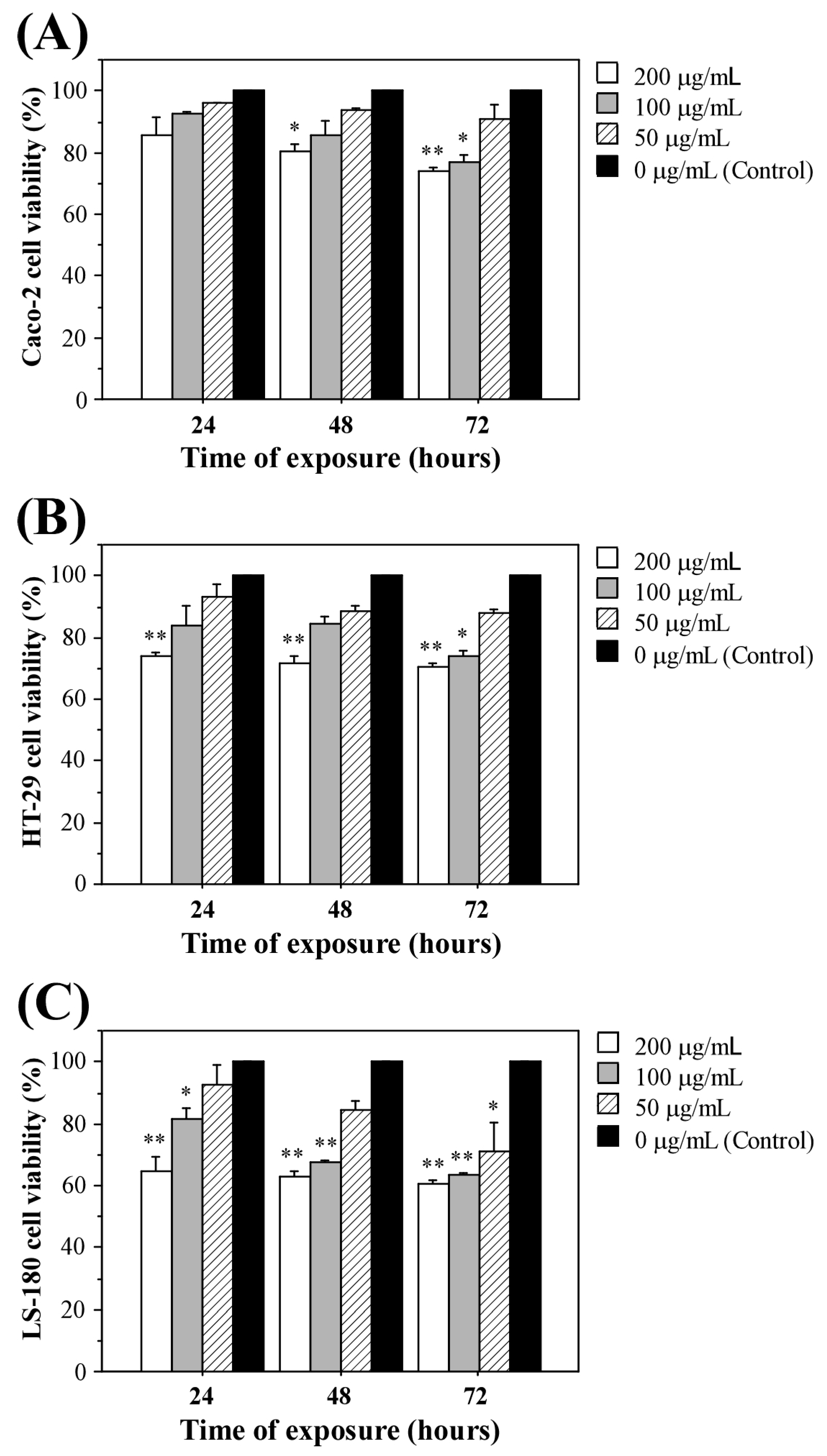
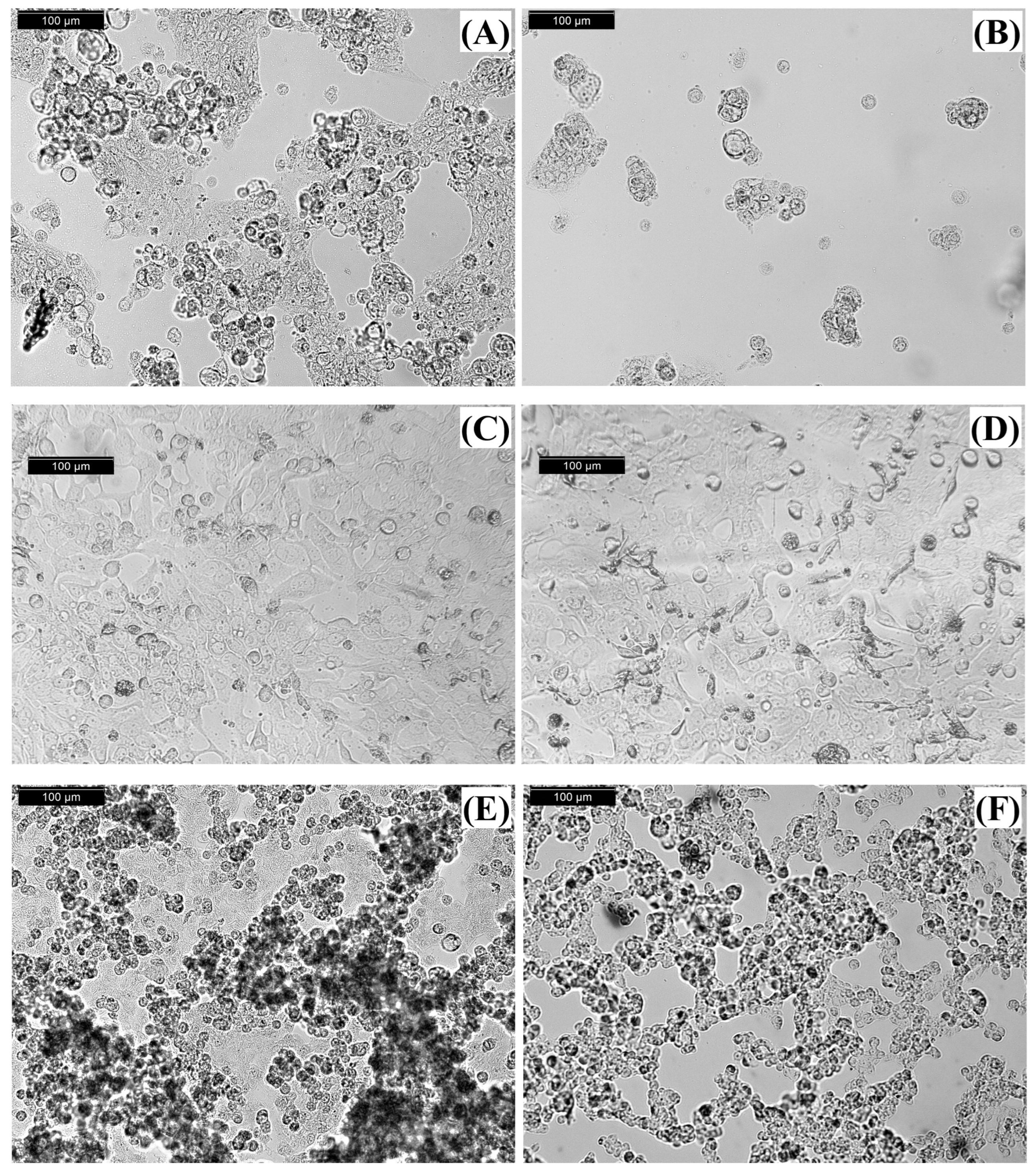
2.2. Cytotoxicity Against Human Colon Cancer Cell Lines
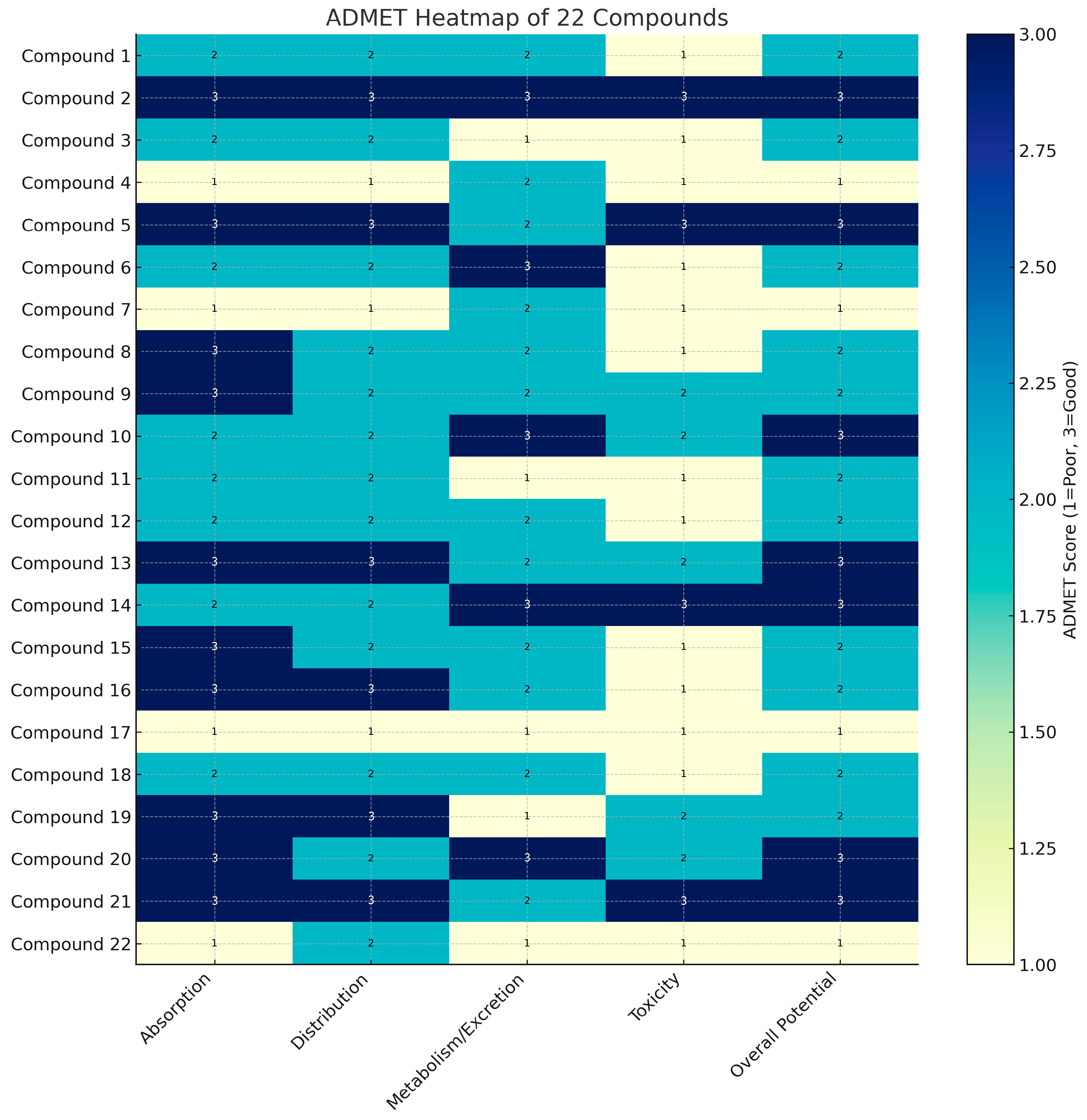
2.3. ADMET Analysis of Selected Metabolites
2.3.1. Absorption and Distribution
2.3.2. Metabolism and Excretion
2.3.3. Toxicity
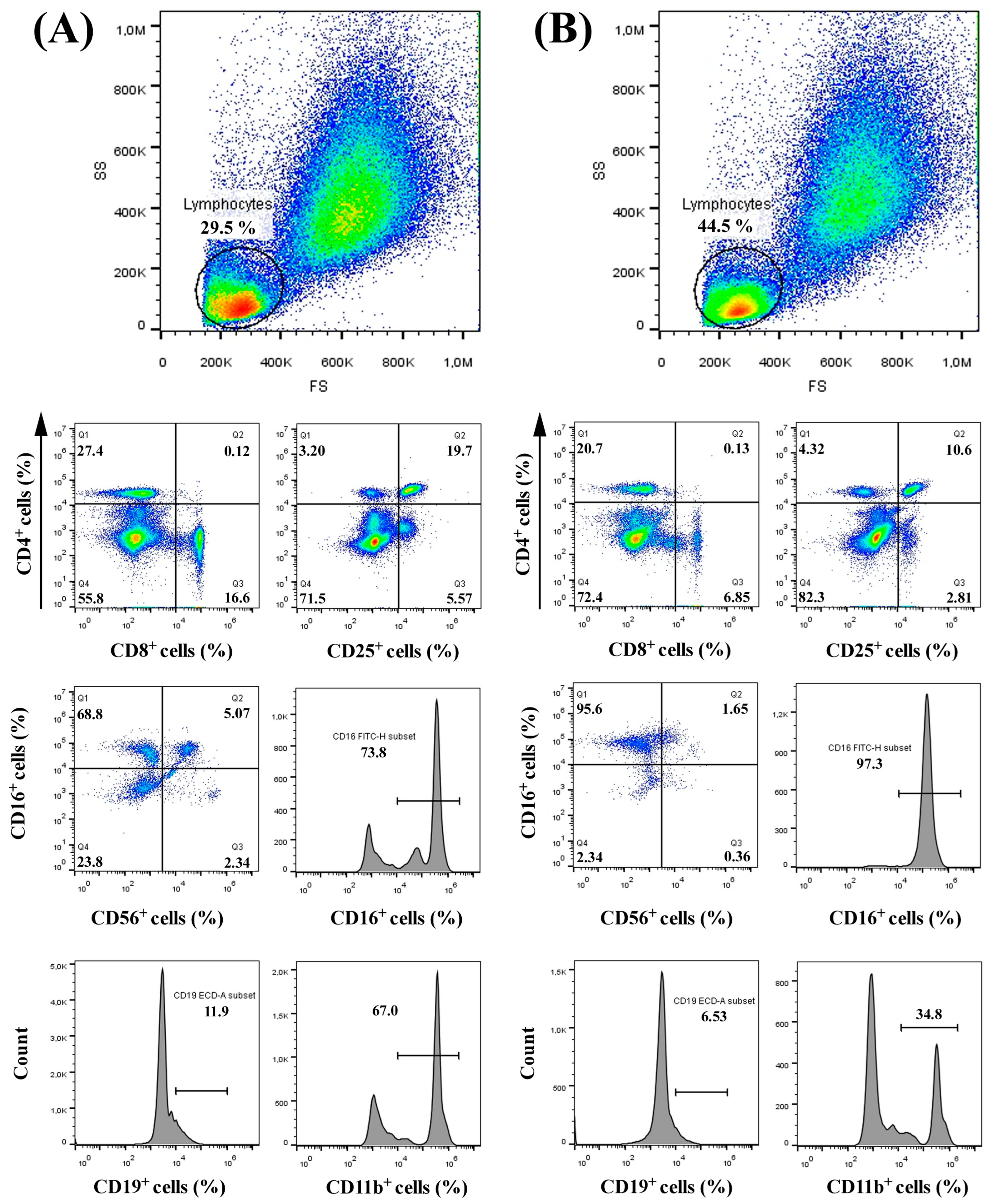
2.4. Immunomodulatory Properties of Phormidesmis molle PACC 8140 Extract
2.4.1. Lymphocyte and Monocyte Proportions
2.4.2. CD4+ and CD8+ T Lymphocyte Subsets
2.4.3. CD25+ Activated T Cells
2.4.4. NK Cells (CD56+ and CD16+ Subsets)
2.4.5. B Cells (CD19+)
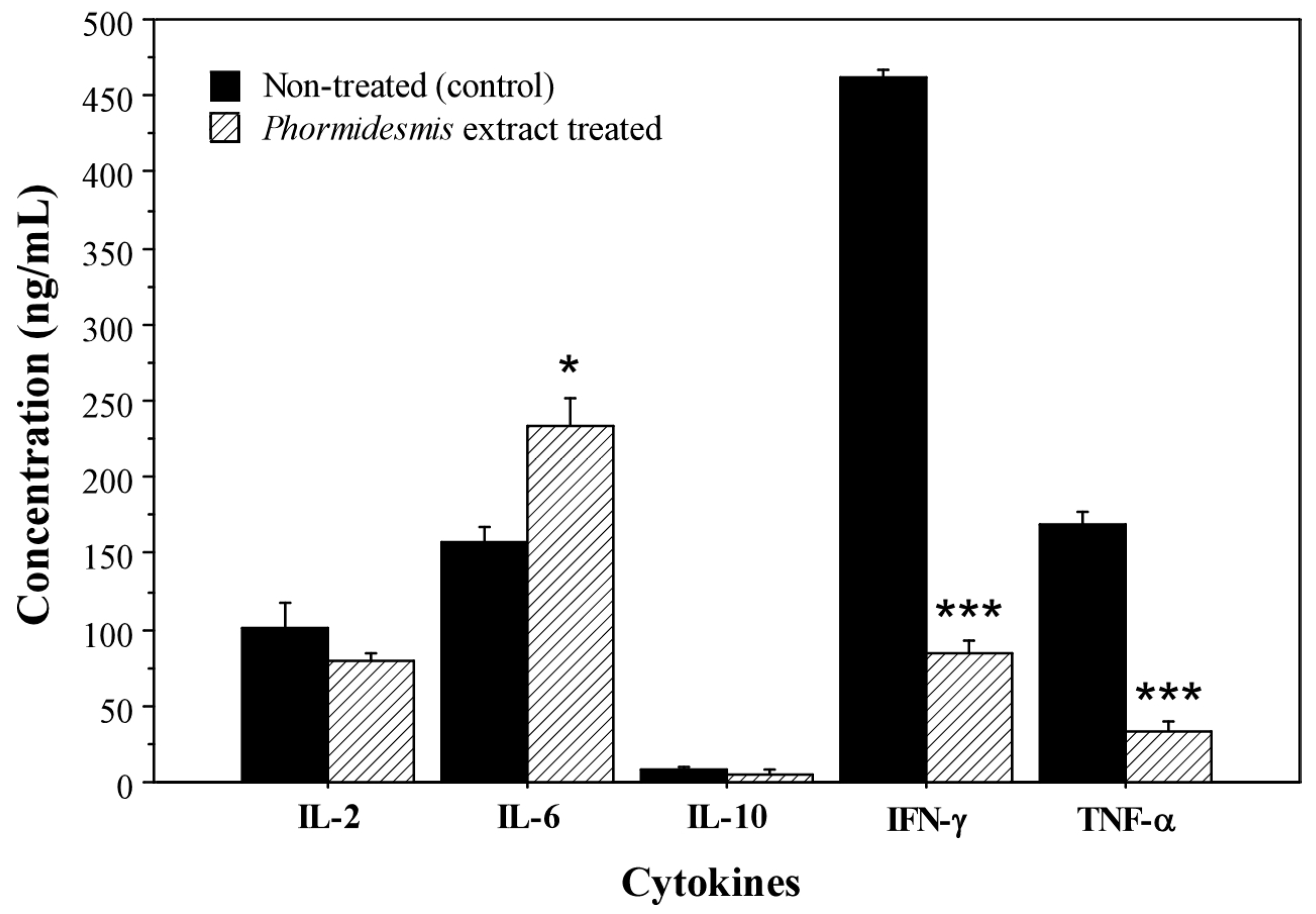
2.4.6. Suppression of Th1-Type Cytokines (IFN-γ, TNF-α, IL-2) by Phormidesmis molle PACC 8140 Extract
2.4.7. Increased IL-6 Production with Minimal IL-10 Response by Phormidesmis molle PACC 8140 Extract
3. Discussion
3.1. Predominant Compound Classes and Bioactivity Potential
3.2. Cytotoxicity
3.3. Immune Modulation
4. Materials and Methods
4.1. Cyanobacterial Cultivation and Extract Preparation
4.2. LC-MS Analysis and Data Treatment
4.3. Cell Lines and In Vitro Cytotoxicity Assays
4.4. ADMET Prediction
4.5. Immunophenotyping of Human PBMCs and Evaluation of Cytokine Levels
4.6. Statistics
5. Limitations and Future Directions
6. Conclusions
Supplementary Materials
Author Contributions
Funding
Institutional Review Board Statement
Informed Consent Statement
Data Availability Statement
Conflicts of Interest
Abbreviations
| ADMET | Absorption, distribution, metabolism, excretion and toxicity |
| ATCC | American Type Culture Collection |
| BBB | Blood–brain barrier |
| CD | Cluster of differentiation |
| CNS | Central nervous system |
| COX | Cyclooxygenase |
| C-PE | C-phycoerythrin |
| CYP | Cytochrome P450 |
| DGDG | Digalactosyldiacylglycerol |
| DMSO | Dimethyl sulfoxide |
| DPBS | Dulbecco’s Phosphate-Buffered Saline |
| ELISA | Enzyme-linked immunosorbent assay |
| EPS | Exopolysaccharides |
| ESI | Electrospray ionization |
| FBS | Fetal bovine serum |
| FcγRIII | Fc gamma receptor III |
| Fu | Fraction unbound |
| HCD | Higher-energy collisional dissociation |
| IC50 | Half-maximal inhibitory concentration |
| IFN-γ | Interferon gamma |
| IL | Interleukin |
| LC-ESI-MS/MS | Liquid chromatography—electrospray ionization—tandem mass spectrometry |
| LPS | Lipopolysaccharides |
| MGDG | Monogalactosyldiacylglycerol |
| MTT | 3-(4,5-dimethylthiazol-2-yl)-2,5-diphenyl tetrazolium bromide |
| NCE | Normalized collision energy |
| NK | Natural killer |
| PACC | Plovdiv Algal Culture Collection |
| PBMCs | Peripheral blood mononuclear cells |
| P-gp | P-glycoprotein |
| SQDGs | Sulfoquinovosyl diacylglycerols |
| TNF-α | Tumor necrosis factor alpha |
References
- Teneva, I.; Dzhambazov, B.; Koleva, L.; Mladenov, R.; Schirmer, K. Toxic potential of five freshwater Phormidium species (Cyanoprokaryota). Toxicon 2005, 45, 711–725. [Google Scholar] [CrossRef]
- Dzhambazov, B.; Teneva, I.; Mladenov, R.; Popov, N. In vitro cytotoxicity and anticancer properties of two Phormidium molle strains (Cyanoprokaryota). Trav. Sci. Univ. Plovdiv Biol.-Plant. 2006, 39, 3–16. [Google Scholar]
- Sousa, M.L.; Ribeiro, T.; Vasconcelos, V.; Linder, S.; Urbatzka, R. Portoamides A and B are mitochondrial toxins and induce cytotoxicity on the proliferative cell layer of in vitro microtumours. Toxicon 2020, 175, 49–56. [Google Scholar] [CrossRef]
- Madamwar, D.; Patel, D.K.; Desai, S.N.; Upadhyay, K.K.; Devkar, R.V. Apoptotic potential of C-phycoerythrin from Phormidium sp. A27DM and Halomicronema sp. A32DM on human lung carcinoma cells. EXCLI J. 2015, 14, 527–539. [Google Scholar] [CrossRef]
- Georgiev, Y.N.; Batsalova, T.G.; Dzhambazov, B.M.; Ognyanov, M.H.; Denev, P.N.; Antonova, D.V.; Wold, C.W.; Yanakieva, I.Z.; Teneva, I.I.; Paulsen, B.S.; et al. Immunomodulating polysaccharide complexes and antioxidant metabolites from Anabaena laxa, Oscillatoria limosa and Phormidesmis molle. Algal Res. 2021, 60, 102538. [Google Scholar] [CrossRef]
- Zampieri, R.M.; Adessi, A.; Caldara, F.; Codato, A.; Furlan, M.; Rampazzo, C.; De Philippis, R.; La Rocca, N.; Dalla Valle, L. Anti-Inflammatory Activity of Exopolysaccharides from Phormidium sp. ETS05, the Most Abundant Cyanobacterium of the Therapeutic Euganean Thermal Muds, Using the Zebrafish Model. Biomolecules 2020, 10, 582. [Google Scholar] [CrossRef]
- Teneva, I.; Batsalova, T.; Bardarov, K.; Moten, D.; Dzhambazov, B. A Novel Approach for Fast Screening of a Complex Cyanobacterial Extract for Immunomodulatory Properties and Antibacterial Activity. Appl. Sci. 2022, 12, 2847. [Google Scholar] [CrossRef]
- Yesudas, R.; Thirumalairaj, V.K.; Durairaj, G.; Chacko, A.; Shanmugaasokan, L.; Gunasekaran, S. Stigmasterol- an Acetylcholinesterase Inhibitor from Phormidium retzii with relevance to Alzheimer’s disease Therapy. Int. J. Mol. Cell Med. 2023, 12, 100–107. [Google Scholar] [CrossRef] [PubMed]
- Pires, D.E.V.; Blundell, T.L.; Ascher, D.B. pkCSM: Predicting Small-Molecule Pharmacokinetic and Toxicity Properties Using Graph-Based Signatures. J. Med. Chem. 2015, 58, 4066–4072. [Google Scholar] [CrossRef] [PubMed]
- Zhou, Y.-X.; Zhang, R.-Q.; Rahman, K.; Cao, Z.-X.; Zhang, H.; Peng, C. Diverse Pharmacological Activities and Potential Medicinal Benefits of Geniposide. Evid.-Based Complement. Altern. Med. 2019, 2019, 4925682. [Google Scholar] [CrossRef]
- Mazur-Marzec, H.; Błaszczyk, A.; Felczykowska, A.; Hohlfeld, N.; Kobos, J.; Toruńska-Sitarz, A.; Devi, P.; Montalvão, S.; D’souza, L.; Tammela, P.; et al. Baltic cyanobacteria—A source of biologically active compounds. Eur. J. Phycol. 2015, 50, 343–360, Correction in Eur. J. Phycol. 2016, 51, 368. https://doi.org/10.1080/09670262.2016.1200346. [Google Scholar] [CrossRef]
- Janssen, E.M. Cyanobacterial peptides beyond microcystins—A review on co-occurrence, toxicity, and challenges for risk assessment. Water Res. 2019, 151, 488–499. [Google Scholar] [CrossRef] [PubMed]
- Yu, D.; Sakurai, Y.; Chen, C.-H.; Chang, F.-R.; Huang, L.; Kashiwada, Y.; Lee, K.-H. Anti-AIDS Agents 69. Moronic Acid and Other Triterpene Derivatives as Novel Potent Anti-HIV Agents. J. Med. Chem. 2006, 49, 5462–5469. [Google Scholar] [CrossRef]
- Kurokawa, M.; Basnet, P.; Ohsugi, M.; Hozumi, T.; Kadota, S.; Namba, T.; Kawana, T.; Shiraki, K. Anti-herpes simplex virus activity of moronic acid purified from Rhus javanica in vitro and in vivo. J. Pharmacol. Exp. Ther. 1999, 289, 72–78. [Google Scholar] [CrossRef] [PubMed]
- CDC/EPA. Insect Repellents. Med. Lett. 2021, 63, 108–112. [Google Scholar]
- Benning, C. Biosynthesis and Function of the Sulfolipid Sulfoquinovosyl Diacylglycerol. Annu. Rev. Plant Physiol. Plant Mol. Biol. 1998, 49, 53–75. [Google Scholar] [CrossRef]
- Wang, H.; Li, Y.-L.; Shen, W.-Z.; Rui, W.; Ma, X.-J.; Cen, Y.-Z. Antiviral activity of a sulfoquinovosyldiacylglycerol (SQDG) compound isolated from the green alga Caulerpa racemosa. Bot. Mar. 2007, 50, 185–190. [Google Scholar] [CrossRef]
- Cumming, B.M.; Chinta, K.C.; Reddy, V.P.; Steyn, A.J.C. Role of Ergothioneine in Microbial Physiology and Pathogenesis. Antioxid. Redox Signal. 2018, 28, 431–444. [Google Scholar] [CrossRef] [PubMed]
- Mussagy, C.U.; Farias, F.O.; Tropea, A.; Santi, L.; Mondello, L.; Giuffrida, D.; Meléndez-Martínez, A.J.; Dufossé, L. Ketocarotenoids adonirubin and adonixanthin: Properties, health benefits, current technologies, and emerging challenges. Food Chem. 2024, 443, 138610. [Google Scholar] [CrossRef] [PubMed]
- Mollazadeh, S.; Sahebkar, A.; Hadizadeh, F.; Behravan, J.; Arabzadeh, S. Structural and functional aspects of P-glycoprotein and its inhibitors. Life Sci. 2018, 214, 118–123. [Google Scholar] [CrossRef]
- Frisch, S.M.; Francis, H. Disruption of epithelial cell-matrix interactions induces apoptosis. J. Cell Biol. 1994, 124, 619–626. [Google Scholar] [CrossRef]
- Elmore, S. Apoptosis: A Review of Programmed Cell Death. Toxicol. Pathol. 2007, 35, 495–516. [Google Scholar] [CrossRef]
- Shi, X.; Luo, X.; Yan, Q.; Zhang, W.; Wu, Y.A.O.; Zhang, M.; Zhao, J.; Peng, Y.; Chen, Y.E.; Zhang, Y.; et al. Suppression of KLF8 induces cell differentiation and sensitizes colorectal cancer to 5-fluorouracil. Oncol. Rep. 2015, 34, 1221–1230. [Google Scholar] [CrossRef]
- Milush, J.M.; López-Vergès, S.; York, V.A.; Deeks, S.G.; Martin, J.N.; Hecht, F.M.; Lanier, L.L.; Nixon, D.F. CD56negCD16+NK cells are activated mature NK cells with impaired effector function during HIV-1 infection. Retrovirology 2013, 10, 158. [Google Scholar] [CrossRef]
- Orrantia, A.; Terrén, I.; Izquierdo-Lafuente, A.; Alonso-Cabrera, J.A.; Sandá, V.; Vitallé, J.; Moreno, S.; Tasias, M.; Uranga, A.; González, C.; et al. A NKp80-Based Identification Strategy Reveals that CD56neg NK Cells Are Not Completely Dysfunctional in Health and Disease. iScience 2020, 23, 101298. [Google Scholar] [CrossRef]
- Cocker, A.T.H.; Guethlein, L.A.; Parham, P. The CD56−CD16+ NK cell subset in chronic infections. Biochem. Soc. Trans. 2023, 51, 1201–1212. [Google Scholar] [CrossRef] [PubMed]
- Mavilio, D.; Lombardo, G.; Benjamin, J.; Kim, D.; Follman, D.; Marcenaro, E.; O’Shea, M.A.; Kinter, A.; Kovacs, C.; Moretta, A.; et al. Characterization of CD56–/CD16+natural killer (NK) cells: A highly dysfunctional NK subset expanded in HIV-infected viremic individuals. Proc. Natl. Acad. Sci. USA 2005, 102, 2886–2891. [Google Scholar] [CrossRef] [PubMed]
- Forconi, C.S.; Oduor, C.I.; Oluoch, P.O.; Ong’echa, J.M.; Münz, C.; Bailey, J.A.; Moormann, A.M. A New Hope for CD56negCD16pos NK Cells as Unconventional Cytotoxic Mediators: An Adaptation to Chronic Diseases. Front. Cell. Infect. Microbiol. 2020, 10, 162. [Google Scholar] [CrossRef] [PubMed]
- Swartzendruber, J.A.; Del Toro, R.M.; Incrocci, R.; Seangmany, N.; Gurr, J.R.; Mayer, A.M.S.; Williams, P.G.; Swanson-Mungerson, M. Lipopolysaccharide from the Cyanobacterium Geitlerinema sp. Induces Neutrophil Infiltration and Lung Inflammation. Toxins 2022, 14, 267. [Google Scholar] [CrossRef]
- Caldwell, J.W.; Kellogg, D.; Isakson, L.; Watkins, S.; Reich, A.; Foss, A.; Sleasman, J. Lyngbyatoxin A, A Cyanobacteria Dervived Aquatic Toxin, Induces Expression Of Pro-inflammatory Cytokines Including Il-4 And Il-5 By Human PBMC. J. Allergy Clin. Immunol. 2010, 125, AB81. [Google Scholar] [CrossRef]
- Tyanova, S.; Albrechtsen, R.; Kronqvist, P.; Cox, J.; Mann, M.; Geiger, T. Proteomic maps of breast cancer subtypes. Nat. Commun. 2016, 7, 10259. [Google Scholar] [CrossRef] [PubMed]
- Teneva, I.; Batsalova, T.; Moten, D.; Petkova, Z.; Teneva, O.; Angelova-Romova, M.; Antova, G.; Dzhambazov, B. Tolypothrix Strains (Cyanobacteria) as a Source of Bioactive Compounds with Anticancer, Antioxidant and Anti-Inflammatory Activity. Int. J. Mol. Sci. 2025, 26, 5086. [Google Scholar] [CrossRef] [PubMed]
- Motulsky, H.; Christopoulos, A. Fitting Models to Biological Data Using Linear and Nonlinear Regression; Oxford University Press (OUP): Oxford, UK, 2004. [Google Scholar]
- Sebaugh, J.L. Guidelines for accurate EC50/IC50 estimation. Pharm. Stat. 2011, 10, 128–134. [Google Scholar] [CrossRef] [PubMed]



| Number | Name of the Selected Compounds |
|---|---|
| 1 | 1,3,5-Tris[4-hydroxy-3,5-bis(2-methyl-2-propanyl)benzyl]-1,3,5-triazinane-2,4,6-trione |
| 2 | Nootkatone |
| 3 | 1-(1-Benzyl-4-piperidinyl)-1-({4′-[(isobutylamino)methyl]-4-biphenylyl}methyl)-3-phenylurea |
| 4 | 1-{3-[(2R,3S,4R,5R,8R,10R,11R,12S,13S,14R)-13-[(2,6-Dideoxy-3-C-methyl-3-O-methyl-α-L-ribo-hexopyranosyl)oxy]-2-ethyl-3,4,10-trihydroxy-3,5,8,10,12,14-hexamethyl-15-oxo-11-{[3,4,6-trideoxy-3-(dime thylamino)-β-D-xylo-hexopyranosyl]oxy}-1-oxa-6-azacyclopentadecan-6-yl]propyl}-3-(2-naphthyl)urea |
| 5 | (3E)-8-Phenyl-3-octen-2-one |
| 6 | (2S,4S,5S)-6-Cyclohexyl-4-hydroxy-2-isopropyl-5-{[(2S)-2-({(2S)-1-[4-(methoxymethoxy)-1-piperidinyl]-1-oxo-3-phenyl-2-propanyl}oxy)hexanoyl]amino}-N-[4-(4-morpholinyl)butyl]hexanamide |
| 7 | 1{3[(2R,3S,4R,5R,8R,10R,11R,12S,13S,14R)-13-[(2,6-Dideoxy-3-C-methyl-3-O-methyl-α-L-ribo-hexopyranosyl)oxy]-2-ethyl-3,4,10-trihydroxy-3,5,8,10,12,14-hexamethyl-15-oxo-11-{[3,4,6-trideoxy-3-(dime thylamino)-β-D-xylo-hexopyranosyl]oxy}-1-oxa-6-azacyclopentadecan-6-yl]propyl}-3-(2-naphthyl)urea |
| 8 | 2,6-Bis(4-ethylphenyl)perhydro-1,3,5,7-tetraoxanaphth-4-ylethane-1,2-diol |
| 9 | Adonirubin |
| 10 | (2S)-1-(β-D-Galactopyranosyloxy)-3-[(9E)-9-hexadecenoyloxy]-2-propanyl (9E,12E)-9,12-octadecadienoate |
| 11 | 1-(1-Benzyl-4-piperidinyl)-1-({4′-[(isobutylamino)methyl]-4-biphenylyl}methyl)-3-phenylurea |
| 12 | N~1~,N~4~-Bis(4-{[6-methoxy-2-(2-methyl-2-propanyl)-8-quinolinyl]amino}pentyl)-L-aspartamide |
| 13 | (5β,15β)-3,16-Dioxo-14,15-epoxybufa-20,22-dienolide |
| 14 | 1,3-Bis(tetradecanoyloxy)-2-propanyl (5Z,8Z,11Z,14Z)-5,8,11,14-icosatetraenoate |
| 15 | (3β)-3-({1-[4-(Cyanomethyl)phenyl]-1H-1,2,3-triazol-4-yl}methoxy)lup-20(29)-en-28-oic acid |
| 16 | (4R,8S,9R,11R)-11-Methyl-2,7-bis(methylene)-6,12-dioxo-5,14-dioxatricyclo[9.2.1.0~4,8~]tetradec-1(13)-en-9-yl methacrylate |
| 17 | 1-Allyl-2-phenylpiperazine |
| 18 | (2S)-2-[[1-(5-hydroxypentyl)indazole-3-carbonyl]amino]-3-methylbutanoic acid |
| 19 | Aceperone |
| 20 | Laurylsulfonic acid |
| 21 | Methyl 4-(24-methoxy-7,12,24-trioxochol-3-en-3-yl)-3,7,12-trioxocholan-24-oate |
| 22 | Paltolide C |
| CD Markers | Non-Treated PBMCs (%) | Mean ± SD (%) | Extract-Treated PBMCs (%) | Mean ± SD (%) | p-Values * | ||||
|---|---|---|---|---|---|---|---|---|---|
| Sample 1 | Sample 2 | Sample 3 | Sample 1 | Sample 2 | Sample 3 | ||||
| CD3+ | 65.7 | 67.5 | 63.0 | 65.4 ± 2.26 | 56.3 | 59.3 | 53.7 | 56.43 ± 2.80 | p = 0.024 |
| CD4+ | 27.4 | 35.7 | 33.5 | 32.2 ± 4.30 | 20.7 | 25.5 | 19.6 | 21.93 ± 3.13 | p = 0.008 |
| CD8+ | 16.6 | 22.8 | 25.35 | 21.5 ± 4.50 | 6.85 | 7.16 | 7.67 | 7.22 ± 0.41 | p < 0.001 |
| CD4+CD25+ | 19.7 | 18.2 | 19.4 | 19.1 ± 0.79 | 10.6 | 10.3 | 11.8 | 10.9 ± 0.79 | p = 0.008 |
| CD19+ | 11.9 | 10.3 | 13.7 | 11.9 ± 1.70 | 6.53 | 5.97 | 5.7 | 6.06 ± 0.42 | p = 0.023 |
| CD11b+ | 67.0 | 66.4 | 65.8 | 66.4 ± 0.60 | 34.8 | 33.4 | 35.0 | 34.4 ± 0.87 | p < 0.001 |
| CD3−CD56+CD16+ | 5.07 | 6.12 | 7.02 | 6.07 ± 0.98 | 1.65 | 1.88 | 2.04 | 1.85 ± 0.19 | p = 0.020 |
| CD3−CD56+CD16− | 2.34 | 1.44 | 2.02 | 1.93 ± 0.46 | 0.36 | 0.12 | 0.28 | 0.25 ± 0.12 | p = 0.061 |
| CD3−CD56−CD16+ | 68.8 | 67.4 | 67.0 | 67.7 ± 0.95 | 95.6 | 93.8 | 94.6 | 94.66 ± 0.90 | p < 0.001 |
Disclaimer/Publisher’s Note: The statements, opinions and data contained in all publications are solely those of the individual author(s) and contributor(s) and not of MDPI and/or the editor(s). MDPI and/or the editor(s) disclaim responsibility for any injury to people or property resulting from any ideas, methods, instructions or products referred to in the content. |
© 2026 by the authors. Licensee MDPI, Basel, Switzerland. This article is an open access article distributed under the terms and conditions of the Creative Commons Attribution (CC BY) license.
Share and Cite
Teneva, I.; Bardarov, K.; Batsalova, T.; Moten, D.; Dzhambazov, B. Cytotoxic and Immunomodulatory Effects of Phormidesmis molle Extract on Human Cells In Vitro. Int. J. Mol. Sci. 2026, 27, 2236. https://doi.org/10.3390/ijms27052236
Teneva I, Bardarov K, Batsalova T, Moten D, Dzhambazov B. Cytotoxic and Immunomodulatory Effects of Phormidesmis molle Extract on Human Cells In Vitro. International Journal of Molecular Sciences. 2026; 27(5):2236. https://doi.org/10.3390/ijms27052236
Chicago/Turabian StyleTeneva, Ivanka, Krum Bardarov, Tsvetelina Batsalova, Dzhemal Moten, and Balik Dzhambazov. 2026. "Cytotoxic and Immunomodulatory Effects of Phormidesmis molle Extract on Human Cells In Vitro" International Journal of Molecular Sciences 27, no. 5: 2236. https://doi.org/10.3390/ijms27052236
APA StyleTeneva, I., Bardarov, K., Batsalova, T., Moten, D., & Dzhambazov, B. (2026). Cytotoxic and Immunomodulatory Effects of Phormidesmis molle Extract on Human Cells In Vitro. International Journal of Molecular Sciences, 27(5), 2236. https://doi.org/10.3390/ijms27052236